It really is an obvious statement!
I am indebted to my son for dropping me an email with a link to a recent BBC Radio programme. It was from the long-running programme series In Our Time, presented by the consummate broadcasting professional Melvyn Bragg.
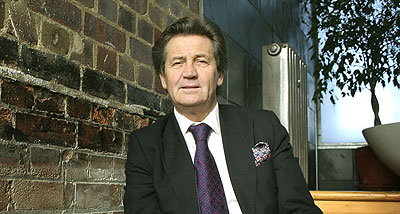
The WikiPedia entry details, The Rt. Honourable The Lord Bragg no less,
Melvyn Bragg, Baron Bragg, FRS, FBA, FRSA, FRSL, FRTS (born 6 October 1939), is an English broadcaster and author, best known for his work with the BBC and for ITV presenting the The South Bank Show (1978–2010). Since 1998 he has presented over 550 weekly episodes of the BBC Radio discussion programme In Our Time.
Bragg was born on 6 October 1939 in Carlisle, the son of Mary Ethel (née Park), a tailor, and Stanley Bragg, a stock keeper turned mechanic.[3]He attended the Nelson Thomlinson School in Wigton and read Modern History at Wadham College, Oxford in the late 1950s and early 1960s.
This particular episode was called Ice Ages; the link will take you to the programme page which includes the ability to listen to the 43 minutes long episode. (Alternatively, you can go straight to the recording via the BBC iPlayer.) The programme page explains:
ICE AGES
Jane Francis, Richard Corfield and Carrie Lear join Melvyn Bragg to discuss ice ages, periods when a reduction in the surface temperature of the Earth has resulted in ice sheets at the Poles. Although the term ‘ice age’ is commonly associated with prehistoric eras when much of northern Europe was covered in ice, we are in fact currently in an ice age which began up to 40 million years ago. Geological evidence indicates that there have been several in the Earth’s history, although their precise cause is not known. Ice ages have had profound effects on the geography and biology of our planet.
With:
Jane Francis
Professor of Paleoclimatology at the University of LeedsRichard Corfield
Visiting Research Fellow in the Department of Earth Sciences at Oxford UniversityCarrie Lear
Senior Lecturer in Palaeoceanography at Cardiff University.Producer: Thomas Morris
LINKS AND FURTHER READING
Professor Jane Francis at the University of Leeds
Dr Caroline Lear at Cardiff University
Climate: Long range Investigation, Mapping, and Prediction – Wikipedia
Now the programme requires careful listening as the conversation ranges rapidly about the number of ice ages, the intervening greenhouse periods and where we are at present. It would be easy to end up thinking that we are in a cooling phase (we are not) or that it’s only a matter of time before we are back in the next ice age (in geological terms, yes).
Go to the programme blog and read this from Melvyn:
Hello
It was a close call. After the programme Jane Francis and Carrie Lear continued to talk about the climbing count of CO2 which was pumping up global warming, in their opinion, which would lead most dramatically to mass flooding. On the programme Richard Corfield did not join in very enthusiastically, pointing out that the CO2 count had been at least twice as high quite recently (geologically speaking) and even higher than that a bit before recently. The situation was beginning to develop into a relevant, contemporary conversation about climate change and the final bell was a merciful release. There was no thought of the ingenuity of men and women combating what would be a gradual increase (if it happens) of rising sea levels – we could have looked at the Dutch in the sixteenth century onwards. But I strayed from my task.
The grim conclusion of Jane Francis was never to buy or rent a house on a flood plain, always to buy or rent a house on a hill, or take a tent, or anything, as long as it’s on a hill and, I think Richard Corfield added, fortify it. Well, well. [my italics]
As I wrote yesterday, either Jane or Carrie, don’t recall whom, said on air just at the end that a CO2 level of nearly 400 ppm (January 2013: 395.55 ppm) is way above the range of levels where the Earth’s atmosphere has traditionally behaved in a stable manner.
In the end it really doesn’t matter geologically.
Our planet is approximately 4,540,000,000 years old. As WikiPedia explains,
There have been five known ice ages in the Earth’s history, with the Earth experiencing the Quaternary Ice Age during the present time. Within ice ages, there exist periods of more severe glacial conditions and more temperate referred to as glacial periods and interglacial periods, respectively. The Earth is currently in an interglacial period of the Quaternary Ice Age, with the last glacial period of the Quaternary having ended approximately 10,000 years ago with the start of the Holocene epoch.
This graph shows the history of ice ages and the fact that we are close to turning upwards towards a hotter geological period.

So we live on a planet that is 4.5 billion years old, towards the end of the current ice age that started 2.58 million years ago.
Contrast that with the age of homo sapiens.
Homo sapiens originated in Africa, where it reached anatomical modernity about 200,000 years ago and began to exhibit full behavioral modernity around 50,000 years ago.
Early man evolved from hunting and gathering into the domestication of plants and animals, in other words farming, about 10,000 years ago. In these short years, from a geological perspective, we have lost total sight of the intimate relationship we had with the planet when our very survival depended on hunting and gathering.
In so little time!
Just reflect on the last 100 years of so-called modern agriculture. It has been characterised by enhanced productivity, the replacement of human labour by synthetic fertilizers and pesticides, selective breeding, and mechanisation. It has been closely tied to political issues such as water pollution, biofuels, genetically modified organisms, tariffs, and farm subsidies. All of which explains the backlash against the external environmental effects of mechanised agriculture, and increasing support for the organic movement and sustainable agriculture.
One might say that we have been farming the planet in the most broadest of senses; as if the planet is nothing more than a bottomless pool of resources.

Chief Jackie Thomas at the recent Forward-On-Climate rally talked about the toll that tar sands are already taking on her neighbors in Alberta, and promised that First Nations communities and their allies in Canada will never allow a pipeline to be built west to the Pacific.
Such peoples still in tune with their ancient heritage understand that humanity is first and foremost in and of the land.
But do you know what?
 Learning from Dogs
In fact, ice is melting at a fast pace in the Artic that in summer, ships can pass through and move from west to east. Though warmer, but this will result in drop in the number of fishes in that region!
LikeLike
The warming of the North will bring with it a war over land and mineral rights as well as access rights to a new East-West trade route.
LikeLike
I am personally pledged to protect the rights of the Sami people in the Arctic so I am dreading the moment I will be forced to act against anyone who harms them or their culture.
LikeLike
Alex, I would be very happy to learn more about the Sami people and write of them here. Feel free to link me to background material. Paul
LikeLike
I will write a blog post with links to them at some point in the next ten days.
LikeLike
Thanks very much, Alex.
LikeLike
Paul, As you rightly point out, Homo Sapiens did not emerge until long after the start of the cool period you refer to as starting less than 3 million years ago. I must admit that I have always thought the term Ice Age is used to refer to the cycles of glaciation that have happened only in the last 1 million years… This is where things start to become relevant… Therefore, I am not sure what you mean by your closing remark but, I think the real thing that humans should take away from all of this is that we should not care what went on the geological past – it is not relevant because we did not exist back then: All life on Earth is adapted to the way things are now.
Many climate scientists will point out that we are not due another Ice Age for at least 60 thousand years. Furthermore, if we manage to make Carbon Capture and Storage work – and if we manage to avoid total environmental catastrophe – there will never be another Ice Age unless or until humans go extinct or wipe themselves out. This is because all we would have to do to prevent it is release carbon dioxide into the atmosphere to warm it up.
LikeLike
Which closing remark was unclear?
LikeLike
Nature does not care!
LikeLike
As in the natural processes that mould this planet do not favour any one species.
LikeLike
OK, thanks for clarifying that. You will hopefully not be surprised to hear that I agree with you: The Earth was not designed with us in mind. We are here because of the way it is. This is not a threat to anyone’s faith in God, it is just a fact. Nevertheless, the improbability of the Earth being as it is today is mind-boggling; as Patrice has very ably demonstrated here.
LikeLike
Thank you all for your comments. Awoke 20 minutes ago at 5am (Cleo wanted a pee) to read your thoughts.
LikeLike
I agree with you post Paul, we humans have not taken care of our planet, we have abused and used her until we destroy our very breath we breathe… We are like parasites which devour and give nothing back in return….
The Native American Indians knew how to live in harmony and took only that which they knew could be replenished, Like the Aboriginals in Australia they take only that which they need… And leave Mother Nature to rebuild…
We however think Earth is a Profit Pot of endless supplies of natural resources… We are not even attempting to use alternative Free Energy . We could so so much more in planning new build homes to have solar energy, Wind Power, and there are very Cheap alternatives to Fuel… But that is out-lawed because of the Big Boys who are in town… the Oil magnets, who run the show …
We each must own up to our own parts in this saga… for we buy the plastic products, we buy the sprays for our homes, in order to change things globally then each and every person has to take responsibility.. We kill thousands of seabirds each year as they feed their young from the sea our garbage of plastic bottle tops, and goodness knows what else… We pollute rivers, we pollute the skies, we cut down rainforests destroying habitats of thousands of species and my heart bleeds for what we do..
Will my heart bleed when Nature fights back.. because she is…… and will my heart bleed when we each draw our last breath… My heart will perhaps say. Nature fought back, and she got rid of those parasites from her back… and I hope she heals well……
As always Paul your posts often provoke an outburst of emotions as I so dearly love this planet.. She is all we have….
LikeLike
My dear Sue, I have just read your comment and, do you know what? I must have a cold coming on! For some reason, I’m sniffing and aware of dampness around my eyes. 😉
Seriously, when one ponders on what is going on all that are left are emotions.
Thank you so much for voicing what so many feel,
Paul
LikeLike
Sniff, sniff, this will I am afraid only make your cold worse my friend… But I needed to share.. We so need to see what we do..
LikeLike
Watched the first 50 seconds and realised where it was heading. Will park that until I’m feeling a little braver.
Too many years ago, I sailed solo from Gibraltar to the Azores and well recall the elation of having the large sea-birds swoop low past my little yacht. It felt like they were welcoming me to their beautiful world. Indeed, my yacht, a Tradewind 33 was called Songbird of Kent.
LikeLike
Beautiful memory Paul, and delete the video its only still photos of the same…. I wouldnt inflict anything too gruesome … Wishing you a pleasant day on the Ark 🙂 and keep sailing high both you and Jean… Such wonderful work you do for our four-legged and two legged friends
LikeLike
Gruesome is where evil is at. Confronting the latter means to be able to withstand the former. With a smirk and a wink.
LikeLike
Yes, another good reminder! To which I would add that having days where one feels exhausted by the journey ahead is just part of being human.
LikeLike
Have just posted this on the BBC Blog page you linked to:
LikeLike
OK, I listened to the show, and found it very stimulating. Thanks, Paul. However, the way it was edited (at least) was hard to accept. 70 meters + flooding was not mentioned, in particular. The colossal certainty oozing about with authority grated on my nerves.
In any case, here is the comment I put jointly on my site and here:
To Old Geezer Pilot, Paul Handover, and others who have mentioned the BBC show of Melvyn Bragg with some noted climate scientists:
I listened to the show, and I came out of it, shaking my head. OK, lots of the details are correct, indeed. The problem is the big picture attached to the little details. It’s full of pernicious oversimplifications, and semantic drift. And it all points out one way: OK, it’s going to be a big change, but we have seen worse before, especially when there was not enough CO2.
I wonder who pays them. Not.
Several remarks: First I do not like their certainty, especially about CO2 levels. When I hear: the CO2 used to be 12 times more, I am not persuaded. They can keep on repeating it, I am skeptical.
They forget to mention those sky high multiples are hotly contested. That’s dishonest.
One thing I don’t like at all is the semantics they kept insisting on. Same story, in depth. It’s misleading to oppose “ICEHOUSE” with “greenhouse” Earth. We are always in a greenhouse world. The Earth would freeze solid without CO2 greenhouse.
Then they tell us the Earth froze over 800 million years ago. That too is controversial, even superficially, although I mentioned it many times myself. Yet, when those scientists claim with authority that the Earth became like Europa, they are JUST LYING. That’s TOTALLY excluded. are they paid to be absurd? What else?
Indeed Earth has always very active volcanoes, they belch out CO2. If Earth was really a SNOWBALL (“Snowball Earth Theory”), the CO2 would be unable to captured and stored, by the soil, so it would build up very quickly, and a massive greenhouse would lead to high temps and melting of the presumed iceshield. INSTANTANEOUSLY.
There was extensive glaciation during Snowball Earth… I do believe that. But Earth did not really become simply a Snowball, and certainly NOT like Europa…. This is a totally grotesque misunderstanding of planetary climatology.
Europa is covered by a solid iceshield, kilometers thick. Maybe 50 kilometers thick. Earth was NEVER like that. Also, they are dishonest when not mentioning that “Snowball Earth” has been contested. Recently. Some scientists think it did not really happen at all.
So sorry, these people are lying on the big message, the emotional one… What they say is: don’t worry, be happy, the glaciers will be gone, but we can take high CO2. What about the 80 meter dams to protect Cambridge USA, and Cambridge, UK? Who is going to pay for that? Shell? Exxon? Chavez? Putin? King Saudi?
They forgot to mention dragonflies were 2 feet across in the Carboniferous Era, and scorpions three feet long. Life was very different…
Long is the arm of the carbon burning industry, subtle its mind, great its wealth…
PA
LikeLike
You are right, Patrice. The programme was very misleading. It appears to have been peddling the myth that we are living on a CO2-deficient planet in the midst of a cooler than average period of Earth history. This is either deeply disingenuous or misconceived and – either way – implies extremely high levels of ideological prejudice and/or willful blindness.
The Earth has indeed been much colder in its very distant past – and CO2 levels have also been much higher – but none of this is relevant to the situation in which humanity now finds itself: Modern civilisation emerged as a result of 10k years of relative climate and sea level stability. Industrialisation has brought this stability to a very sudden end.
I am therefore deeply disappointed that the BBC could have produced and broadcast such a misleading programme: It does indeed suggest that they have been penetrated by ‘deep cover’ climate sceptics.
For anyone who wants a crash course in Earth History, you may enjoy reading my three-part summary of last year’s Australia: The Time Traveller’s Guide TV series (presented by Queensland Professor of Geological Sciences Richard Smith), which starts here.
LikeLike
The previous two comments, from Patrice and then the reply from Martin, were placed incorrectly under yesterday’s post. They have been moved across with all the links updated. However, I was unable to modify the gravatar images so they remain incorrectly showing Pharaoh!
LikeLike
Bottom Line: As an ice age ends, polar ice melts. When polar ice melts, there is a change in the global climate.
LikeLike
Not as simple as that hank667! Just have a look at my essay:
http://patriceayme.wordpress.com/2013/02/19/fragile-earth-syndrome/
This time we risk a RUN AWAY greenhouse. Both Martin & me were outraged by the BBC show. The “experts” behaved like pigeons anxious for crumbs. Hiding big lies behind small truths.
LikeLike
Thank you for your insight Patrice. It would seem that we agree that climate change inevitable as our local universe continues to emerge and failure to adapt has negative consequences.
LikeLike