My current writing project is a book that will be called Better Than Before, about the most fascinating subject ever, the subject of habits. How do we make and break habits—really?
It was my interest in happiness that led me to the subject of habits, and of course, the study of habits is really the study of happiness. Habits are the invisible architecture of everyday life, and a significant element of happiness. If we have habits that work for us, we’re much more likely to be happy, healthy, productive, and creative. Or not.
When I talk to people about their happiness challenges, they often point to hurdles related to a habit they want to make or break.
I asked for reader advice about two questions: had I overlooked any areas, and was there a better name than “Big Five”?
Thank you, readers! I got very helpful answers to both questions.
First: yes, indeed, I’d missed some important areas. Now I have seven areas.
Second: given the new number, a reader had a great idea for a snappy name: the Essential Seven.
Voila! The Essential Seven include…
1. Eat and drink more healthfully (give up sugar, eat more vegetables, drink less alcohol)
2. Exercise regularly
3. Save and spend wisely (save regularly, pay down debt, donate to worthy causes, make purchases that contribute to happiness or habits, pay taxes, stay current with expense reports)
4. Rest, relax, and enjoy (pursue a hobby instead of cruising the internet, enjoy the moment, stop checking email, get enough sleep, spend less time in the car, take time for myself)
5. Stop procrastinating, make consistent progress (practice an instrument, set aside two hours daily for uninterrupted work, learn a language, maintain a blog, keep a gratitude journal)
6. Simplify, clear, and organize (make the bed every day, file regularly, put keys away in the same place, recycle, give away unused clothing)
7. Engage more deeply—with other people, with God, with yourself, with the world (call family members, read the Bible every day, volunteer, spend time with friends, observe the Sabbath, spend time alone in nature)
Of course, the same habit might satisfy different needs for different people. For one person, yoga might be a form of exercise (#2), for someone else, a way to find mental rest (#4); for someone else, a spiritual practice (#7). And people value different habits. For one person, organized files might be a crucial tool for creativity; another person finds inspiration in random juxtapositions.
The argument I’ll make in Better Than Before is that when we change our habits, we change our lives. We can use decision-making to choose the habits we want to form, use willpower to get the habit started, then—and this is the best part—we can allow the extraordinary power of habit to take over. At that point, we’re free from the need to decide and the need to use willpower. We take our hands off the wheel of decision, and our foot off the gas of willpower, and rely on the cruise-control of habits. Mindfully, then mindlessly.
Before and after! It’s what we all crave.
So readers, what do you think of the Essential Seven—the name and the concepts themselves? I very much appreciate all the thoughtful comments that people posted. Very, very helpful.
I must say, it pleases me to have seven. I hate to quote Voldemort, but he was right when he observed, in Harry Potter and the Half-Blood Prince, “Isn’t seven the most powerfully magic number?”
ooOOoo
So there we are.
Always room for improvement, no matter the age or the circumstances.
“That the universe is odd is a given. But it may soon become less odd than it was.”
This quote was in The Economist of August 29th, 2026. It was in the Science & technology section.
I did not understand it but that didn’t stop me from being fascinated by the article.
Then, coincidentally, yesterday Patrice Ayme posted another similarly-themed post. I have his permission to reproduce that post. Again I did not understand it. 😉
ooOOoo
RELATIVITY FASTER THAN LIGHT
FTL FROM REDUCING THE DOMAIN OF DEFINITION OF THE LORENTZ TRANSFORMATION
Abstract: Quantum Entanglement has been experimentally demonstrated with utmost certainty to go Faster Than Light, FTL. FTL is NOT signalling (yet!) However, the two notions are extremely close. Special Relativity is conventionally said to exclude Faster-Than-Light signaling because Lorentz transformations can reverse the temporal order of spacelike-separated events.We readjust that notion to make it Entanglement and FTL signaling compatible.
For an explicit FTL signal with (u=2c), a perfectly ordinary Lorentz transformation indeed assigns a negative reception time in a sufficiently rapidly moving inertial frame. But this does not demonstrate that physical time travel occurs; it demonstrates that coordinate-time ordering is frame-dependent for spacelike intervals.
The essay argues that the real assumption requiring examination is not the mathematics of the Lorentz transformation, but its unrestricted physical interpretation. If FTL influences exist, they need not be required to possess the same relativistic transformation properties as ordinary subluminal processes (and they should not as they potentially come from completely different physics)..
The proposed solution is to introduce a preferredCosmic Manifest Frame (CMF), identified approximately by the Cosmological Microwave Background, CMB,in which FTL propagation and causal ordering are physically defined. Other inertial frames may assign negative coordinate times to the same FTL process, but those coordinates do not represent reversed physical causality. Lorentz symmetry is thereby retained as an effective symmetry for domains where it has been experimentally validated, and theoretically deduced, while it is denied fundamental universality. SQPR adopts precisely such a preferred causal structure, with nonlocal quantum influences propagating at a finite superluminal speed such as TAU (>>>>> c). The proposal thus attempts to separate the mathematical freedom of spacetime coordinates from thephysical ordering of causes and effects.
***
We consider first a concrete numerical example of a specific superluminal speed to make the conventional argument found in Special Relativity textbooks (which we think is erroneous) completely explicit.
The standard argument against Faster Than Light SIGNALING goes as follows:
“Given Special Relativity, SR, if you allow faster‑than‑light signaling, then the Lorentz transformation between inertial frames implies that some observers will see the signal arrive before it is sent. With two such FTL signals, you can construct a closed causal loop, i.e. a form of ‘time travel’ that violates causality.”
We will show that the “closed causal loop” construction is superfluous to make this (erroneous) argument work. The traditional argument can be made more compact, no need for a loop. This irony is significant, because the existence of a sharper (erroneous) argument against FTL from SR shows that the physicists who pretend to have demonstrated that FTL is impossible from SR have not bothered to find the sharpest argument, possibly indicating that they find the subject unappetizing… Or could it be that they were afraid to be cut by the sharpness of the argument, because, as it turns out, the argument doesn’t even need a causal loop? … It’s that basic…
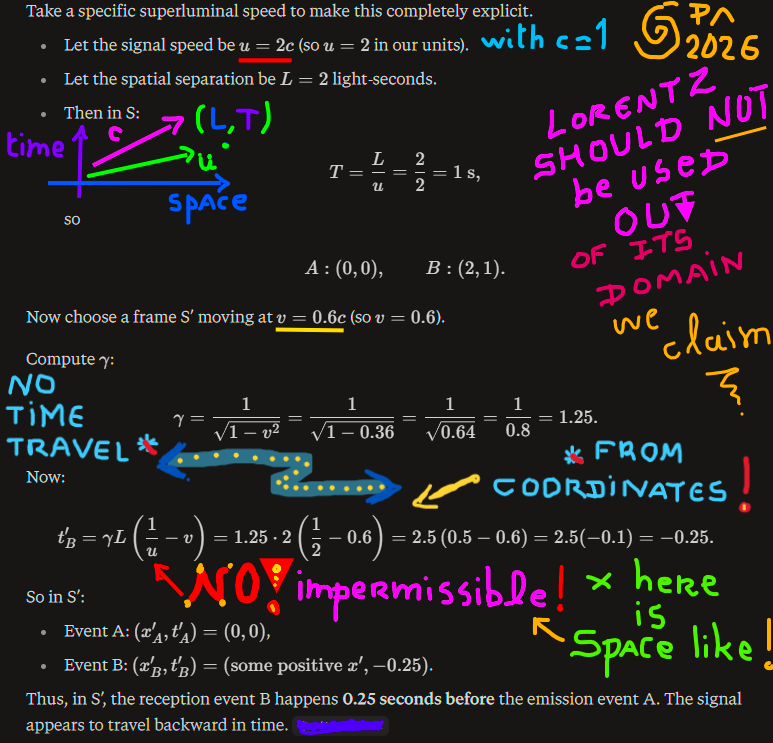
First let’s give a concrete example. Let the Faster than Light (FTL) signal speed be u = 2c. And let the speed of S’ relative to S be .6c. And the separation L be two light second (twice Earth-Moon). Computation shows that, BLINDLY using the Lorentz transformation, the FTL signal is received in S’ at MINUS .25 second. In other words, time travel.
We argue that this is absurd, and caused by a misuse of the Lorentz transformation by overextending its domain of definition over the spacelike subset of Poincaré spacetime. (Poincaré discovered and used Poincaré spacetime and its metric months or years before those who plagiarized him. In particular Poincaré found the full Lorentz Transformation, LT, using the most general argument; this is important because, in spite of his success using it, clearly Poincaré took Poincaré spacetime with a grain of salt; the present essay explains a plausible reason why; there is another; later, following Poincaré once again, Einstein confessed he didn’t like Poincaré spacetime… Make no mistake: Poincaré’s argument about getting LT from Poincaré spacetime was entirely mathematically correct; what was not done is the physical restriction we undertake below).
Recapitulation in the general case:
We set the frame S and S’ such that their space and time origin coincide x = x’ = t = t’ = 0. That’s event A. Event B is at (L,T) in S, such that L/T = u, superluminal: u > c.
What is the time of B in S’? T’(B) is: (T – v L/cc)γ
If the signal is FTL, L> cTL. Then there exists some subluminal v high enough such that:
(T− vL/cc) < 0…. Thus t’(B) < 0.
In other words the FTL signal is received at a negative time in S’ … thus before it is sent.
This is my sharper version of the erroneous argument many physicists have made against FTL.
***
GRAND RETURN OF ABSOLUTE SPACE:
Solution to the riddle of the Lorentz Transformation creating events which have not happened yet: Reject the claim that all inertial frames are equivalent In other words, as observed in Physical Reality, I mean the cosmos out there, there is a preferred frame in the universe, the one in which the CMB is at rest. (Mach and Newton would opine that this absolute space gives us some hope of explaining inertia. Einstein developed General Relativity in the hope of explaining inertia… He completely failed in that hope, but then we got GPS from GR…)
So postulate a special frame in which FTL is defined and causality is enforced. This is the path of SQPR.
In other frames, you might get “backwards in time” coordinates, but you declare that only the preferred frame’s ordering is physically meaningful.
This does not even abandon standard Special Relativity formally, and certainly not in practice (all the usual formulas are still effective, say for GPS, but one cannot extend the domain of the Lorentz Transformation over the space-like domain). SR has no difficulty representing spacelike intervals.
What we reject formally is the additional assumption that an FTLphysical influencemust transform exactly like an ordinary subluminal signal, with every inertial observer’s time coordinate having equal causal status.
The Lorentz transformation is mathematically valid on spacetime, but its physical interpretation as a symmetry of every possible causal process need not be valid. Clearly when Poincaré published on June 5, 1905, the Lorentz Transformation as a rotation of Poincaré spacetime, he could not have guessed the EPR argument of 1935 of the demonstration of FTL by Aspect in 1982 (the latter proving that there are causal processes which are not confined by the speed of light; this outside of the domain of the Lorentz Transformation).
***
We can send (not yet controlled) information faster than light (Bell style experiments). Yes the orientation of the device at A has a real physical effect at B, even if the interval AB is spacelike. That has been amply proven theoretically and experimentally.
We do not reject Poincaré spacetime… After all, it’s the geometrodynamics of light in the first approximation! But it’s just a first approximation; by the way, that seems to have been the point of view of his creator Henri Poincaré, that’s why he talked about the “ether” so much… Similarly Einstein admitted that, in General Relativity, the speed of light varies… The “ether” was a placeholder concept for the sort of hyperspace in which Physical Reality is embedded and that yours truly advocates for…
There are very deep math reasons for this; the math was not yet developed at the time but Poincaré, the world’s greatest topologist then, may have guessed them..
Instead we posit a preferred frame, the CMF, Cosmic Manifest Frame, as given by the CMB, the Cosmic Microwave Background. Call CMF by the letter S (for Stationary).
Causality is fundamentally defined.
FTL influences propagate with some speed u>c. In the case of SQPR one cosmic quantum collapse/entanglement speed is hypothesized: TAU.
The Lorentz transformation is an effective symmetry only for certain classes of phenomena (e.g. electromagnetism), not a fundamental symmetry of all physics…. Just like light is not all of physics, and sure has little to say about the QUANTUM ENTANGLEMENT machinery it is subjected to (see Aspect Nobel Prize winning FTL experiments).
This is exactly the loophole that avoids the “FTL ⇒ time travel” argument.
By the way, this restriction of the Lorentz Transformation proposed here will no doubt do wonders to help avoiding causal time like loops around Black Holes…
As we are into grandiose semi poetic evocations, let’s go all the way. I have an entanglement-clock argument: which questions the elevation of coordinate time to fundamental physical time. In the present essay, I similarly question the elevation of Lorentz-frame equivalence to a universal causal principle.
That gives the essay a much deeper unifying thesis: coordinate transformations need not dictate physical causality. (Ironically that idea is nothing new: it led to the creation of Special and General Relativity; what’s new is to push it beyond the old epistemological frontiers, taking FTL and Entanglement seriously…)
Patrice Ayme
ooOOoo
Just because this entire post is beyond me, it does not mean that I should not publish it. Because there will be others, one hopes, that will understand the science and the mathematics. And the idea that ‘faster than light’ does exist is incredible.
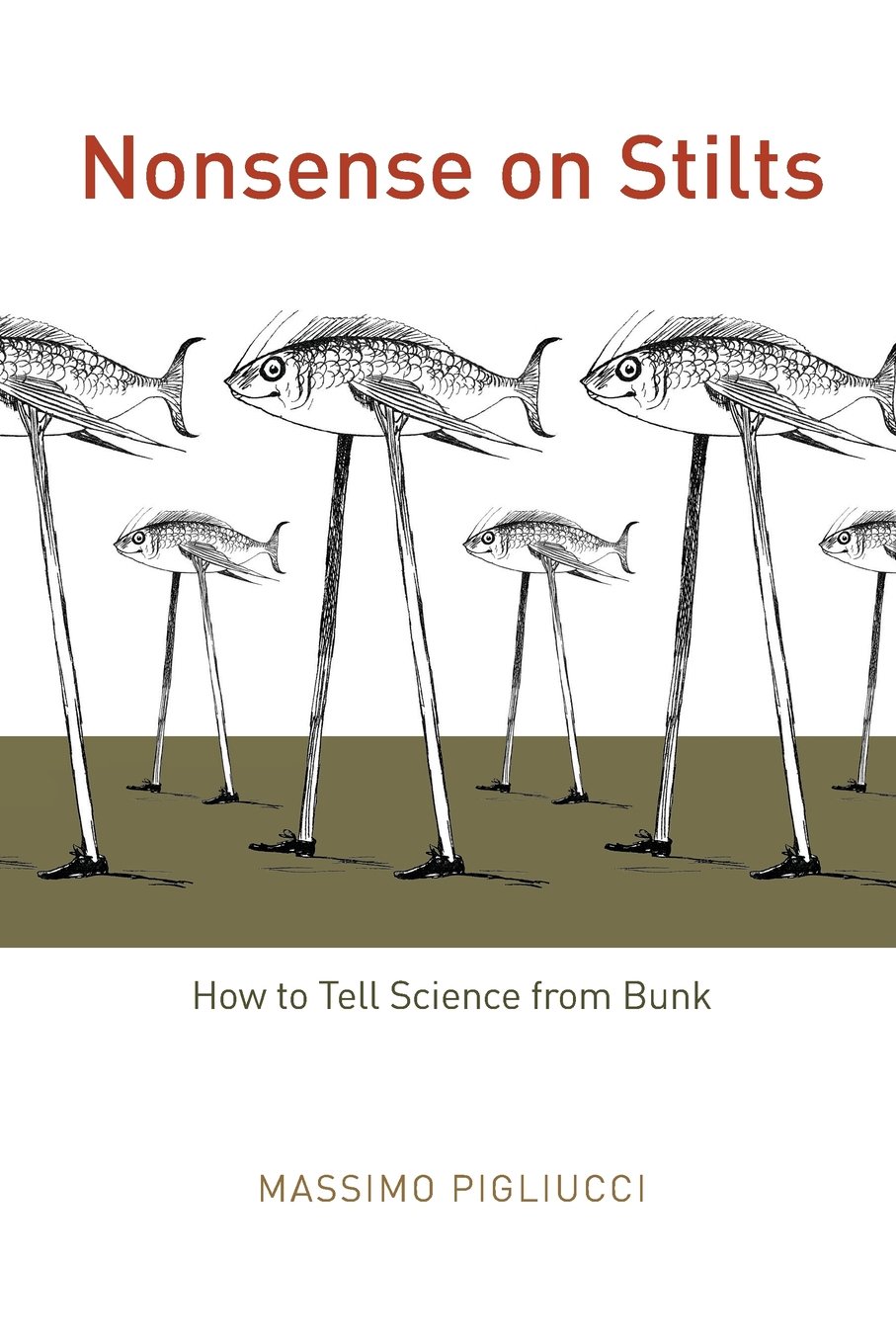
The subtitle of the book is “How to Tell Science from Bunk“
I am up to page 48 and I read something that is so obvious but had not occured to me before now. I have spoken to friends and they, too, had not realised this.
Namely, that the fact that “…. a variation on the old latitudinal hypothesis ….. explains a major causal factor explaining the rise of more successful civilizations in Euroasia, say, than in sub-Saharan Africa or on the American continent, is that Euroasia expands along an East-West axis.“
This East-West expansion provides greater opportunity for the invention of agriculture and the domestication of, say, the horse. Simply because feed crops are easier to grow owing to the smaller change in weather patterns. Unlike, the North-South expansion, where there is the problem of having to adjust to different weather towards the North or towards the South.
I hope that I can republish this photograph. I shall provide all the details.
ooOOoo
Milky Way over Isola delle Correnti
On 07/17/2026 11:00 pm by Enrico Modica | Website | Portopalo di Capopassero, Sicily, Italy
The photograph was captured at approximately 11:00 PM (23:00 CEST) on July 17, 2026, near Isola delle Correnti, the southernmost point of Sicily, Italy, where the Ionian Sea meets the Mediterranean Sea.
The image depicts the Galactic Centre of the Milky Way rising above the island, with the lighthouse beam reflecting across the sea and naturally guiding the viewer’s eye toward the star-filled sky. The bright central bulge of our Galaxy lies in the direction of the constellation Sagittarius, approximately 27,000 light-years from Earth. Also visible are several prominent summer constellations, including Scorpius (with the bright red star Antares), Ophiuchus and Aquila (with Altair).
Camera: Nikon D750 (full-frame DSLR) Lens: Samyang 14 mm f/2.8 Mount: Sky-Watcher Star Adventurer 2i Pro (star tracker)
Sky Camera: Nikon D750 Lens: Samyang 14 mm Star tracker used 30 stacked exposures ISO 800 Aperture: f/3.2 Exposure time: 45 seconds per frame
Foreground 4 untracked exposures ISO 400 Aperture: f/4 Exposure time: 30 seconds per frame Processing
The sky images were calibrated, aligned, and stacked using DeepSkyStacker to improve the signal-to-noise ratio. The RAW files were then developed in Adobe Lightroom Classic, while the final image was completed in Adobe Photoshop, where the tracked sky and the static foreground were blended and refined to achieve a natural representation of the scene while preserving the finest details of the Galactic Centre.
ooOOoo
It is a stunning image.
It takes me back many years to when I was living on Songbird of Kent, a sloop, in Cyprus, and using the summers to cruise. I will never forget the night skies at sea, far from lights from the land.
Of me being born in London, ending up in Merlin, Oregon.
I was reflecting last weekend about how Jean and I ended up in Merlin.
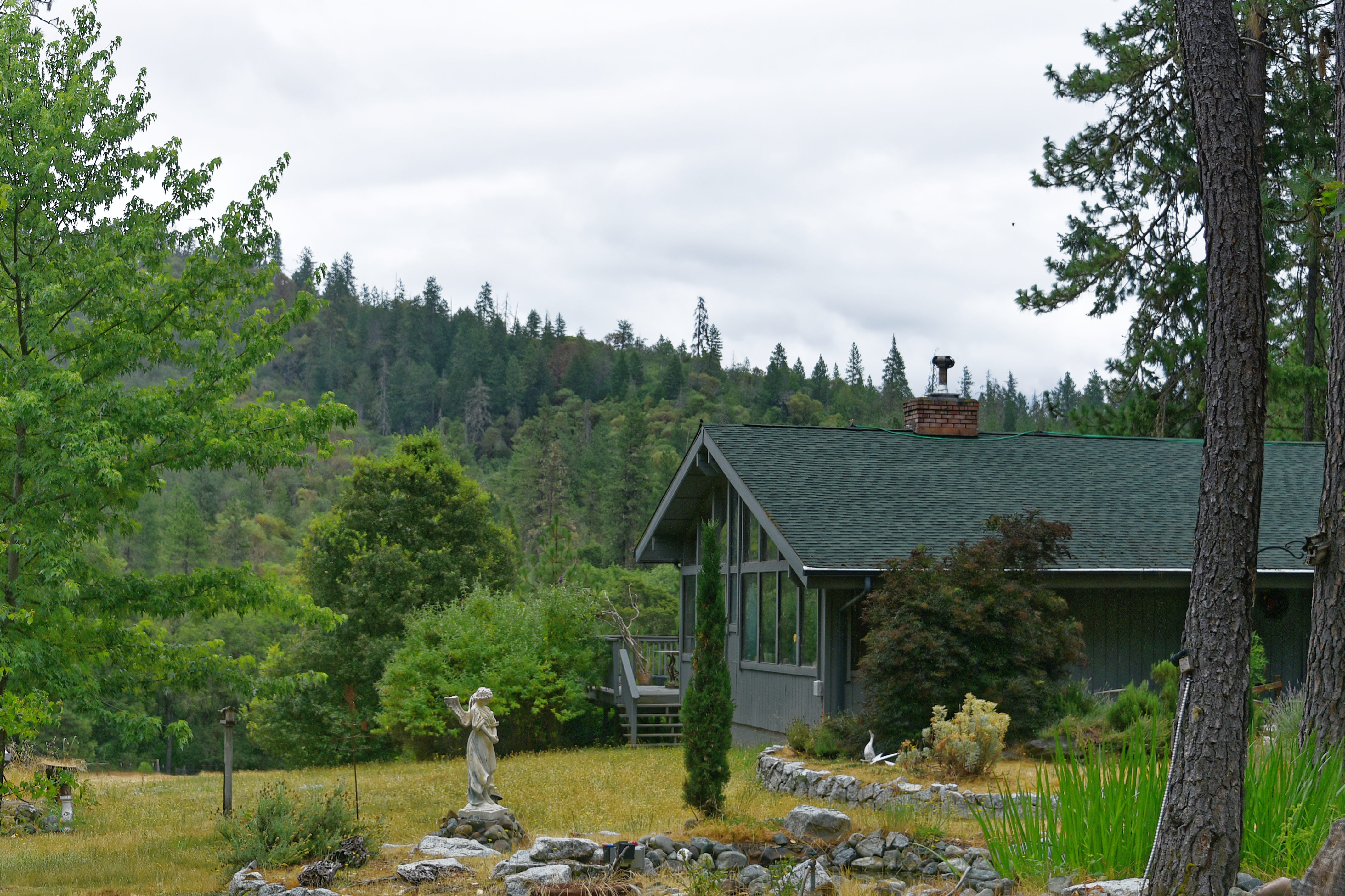
We live in a fabulous property, a single-storey wooden house, on thirteen acres.
If I had not decided to come to California in 2007, I would still be in England (assuming I would still be alive).
In the Summer of 2007, I stayed with Dan, a friend of many years. I was with Dan for a month and near the end of that holiday, Dan’s sister, Suzanne called by and asked me what I was doing for Christmas. I replied, that I did not have a clue. Su then asked me to visit San Carlos, Mexico, where she and her husband, Don, were living.
Thus in December, 2007, I went out to San Carlos and happened to meet Jean. Jean and I fell in love. Jean’s husband had died in 2005. Jean had twenty-three ex-rescue dogs. In 2008 I went out with my GSD, Pharaoh, to live with Jean and her dogs (and cats). In 2010 we came North to Payson, Arizona, with sixteen dogs, seven cats, and we were married.
Coincidentally, Jean was born in North London, some twenty-six miles from where I was born!
My Pharaoh
oooo
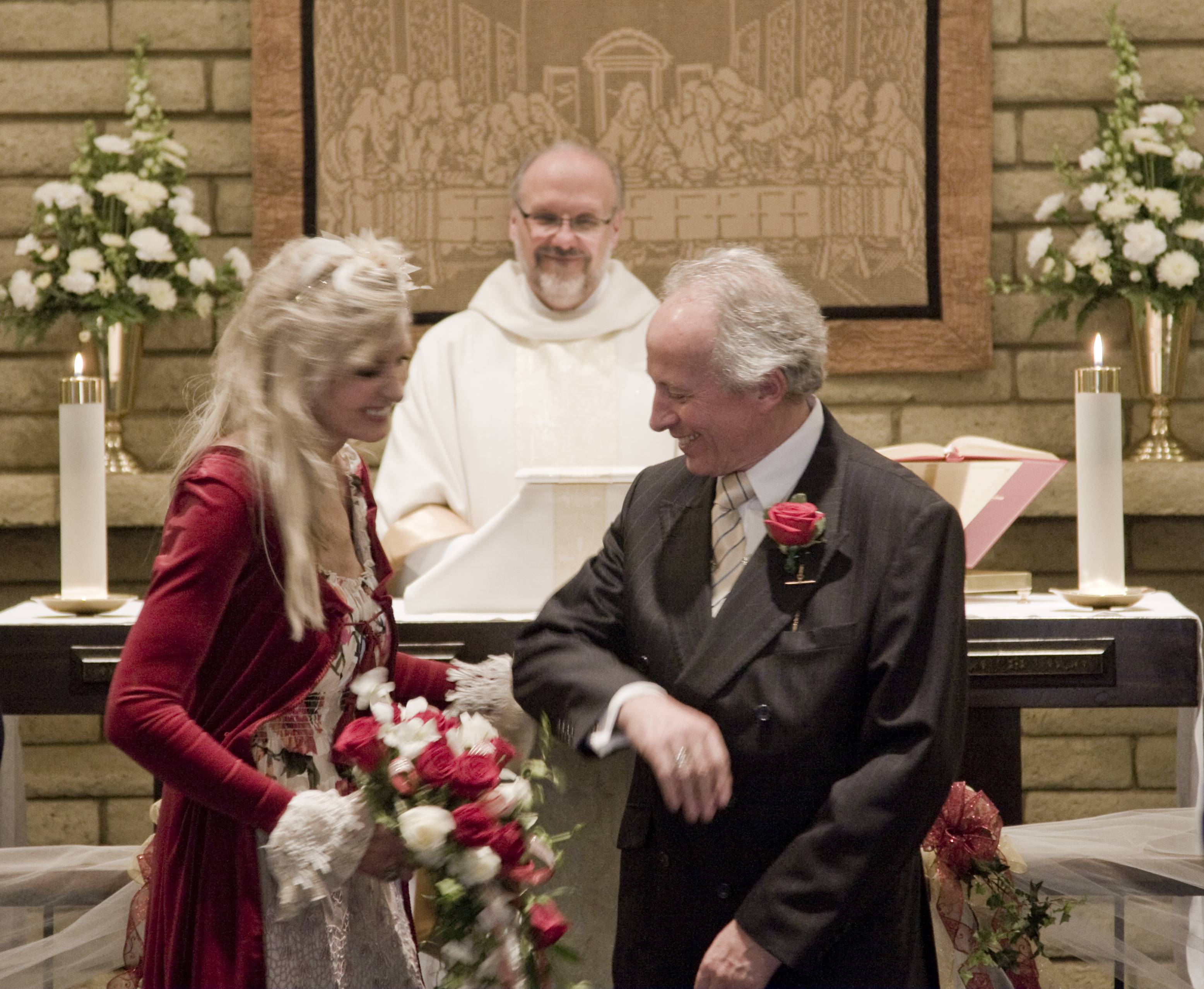
Mr and Mrs Handover
In 2012, we came West to Merlin, Oregon, and we purchased a property that the previous owner had lost to their bank.
That’s my story – what are the odds of it happening!
Saying ‘no’ is difficult. This is an article from The Conversation that talks of our need at times to be the opposite of friendly, to stand one’s ground, and to be true to yourself.
ooOOoo
The science of defiance: A psychology researcher explains why people comply – and how to resist
You’re in a meeting when your boss suggests changing a number to make the quarterly report look stronger. Heads nod. The slides move on. You feel a knot in your stomach: Do you speak up and risk being branded difficult, or stay silent and become complicit?
Most people picture defiance as dramatic outbursts. In reality, it’s often these small, tense moments where conscience collides with compliance.
I first saw the power of defiance not in the workplace, but closer to home. My mother was the ultimate people-pleaser: timid, polite, eager to accommodate. Barely 4 feet, 10 inches tall, she put everyone else’s needs above her own. But one day, when I was 7, I saw a different side to her.
We were walking home from the grocery store in West Yorkshire, England, when a group of teenage boys blocked our path in a narrow alleyway. They hurled racist insults and told us to “go back home.”
My reaction was instantaneous: Stay quiet, avoid conflict and get past them as quickly as possible. I grabbed my mother’s arm, urging her to move with me. But she didn’t. My quiet, deferential, never-confrontational mother did something completely different. She stopped, turned and looked the boys directly in the eyes. Then she asked, calmly but firmly, “What do you mean?”
She wasn’t loud or aggressive. And in that moment, she showed me that defiance doesn’t always roar, and it can come from the people you least expect.
I’ve carried these lessons into my work as a physician-turned-organizational psychologist. For decades, I’ve studied why people comply, staying silent when they don’t want to, and how they can resist wisely. In my book “Defy: The Power of No in a World that Demands Yes,” I offer a framework based on behavioral science research that can help you defy in ways that are intentional, effective and true to your values.
When people think of defiance, they often picture teenagers slamming doors, protesters shouting in the streets or rebels breaking rules just for the thrill of it. But that’s not the kind of defiance I study or the kind that shapes our lives most often.
That pressure can come from anywhere: a boss urging you to fudge the numbers, a friend nudging you toward something you don’t believe in, a culture telling you to stay in your place. Defiance in those moments might be as small as saying “no,” asking for clarification or simply pausing instead of rushing along with the group. Other times, it means speaking up, challenging authority or maybe walking away.
Seen this way, defiance isn’t a fixed trait that some people are born with and others lack. It’s a practice: a skill you can strengthen over time. Some days you might comply, other days you might resist. What matters is that you have the awareness and the tools to make the choice consciously, rather than letting fear or habit decide for you.
Why people comply
If defiance is so important, why do people so often stay silent?
One reason is a psychological process I’ve uncovered in my research: insinuation anxiety. It arises when people worry that not complying with another person’s wishes may be interpreted as a signal of distrust. Turning down a boss’s request to “adjust” the numbers might feel like you’re implying they’re dishonest. To avoid that discomfort, you go along – even when it violates your values.
Behavioral science has long documented this pull toward compliance. In the 1960s, for example, psychologist Stanley Milgram showed that ordinary people would administer what they believed were dangerous electric shocks to strangers simply because an authority figure told them to.
My own research has shown surprisingly high levels of compliance with obviously bad advice, even when given by a stranger with no consequences for disagreeing. People feel immense social pressure to go along with what others suggest. That’s because if you’ve never been trained in how to say no, it feels uncomfortable and awkward.
A framework for action
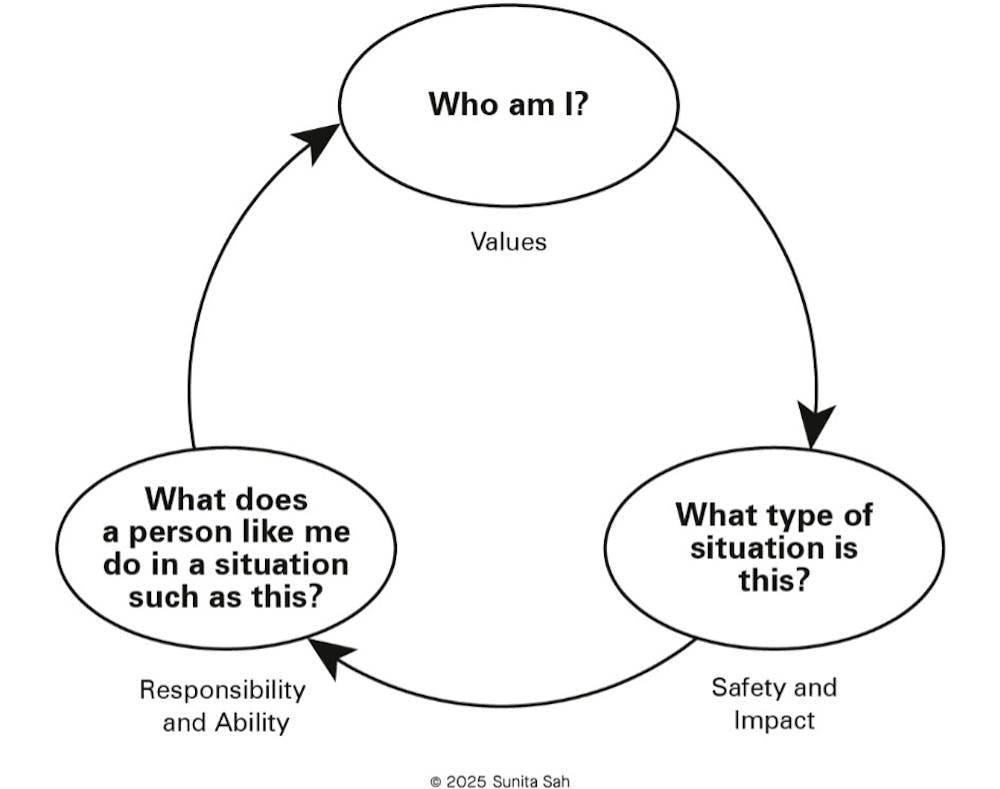
If compliance is the human default, how can you build the muscle of defiance? In my research, I’ve developed a simple actionable guide that I call the Defiance Compass. Like a navigation aid, it orients you in difficult situations by asking three questions:
Who am I? What are the core values that matter most to me?
What type of situation is this? Is it safe to resist? Will it have a positive impact?
What does a person like me do in a situation like this? How can I take responsibility and act in a way that’s consistent with my identity and values?
Three questions can help you zero in on whether the time is right for you to defy. Sunita Sah
Asking these questions shifts defiance from a gut reaction to a conscious practice. And here’s what’s important: That third question (“What does a person like me do?”) circles back to the first (“Who am I?”), because how you act again and again becomes who you are.
Defiance doesn’t always mean open confrontation. Sometimes it means asking a clarifying question, buying time or quietly refusing. It can mean speaking up or walking away. The key is to start small, practice regularly and anchor your choices in your values. Like any skill, the more you practice, the more natural it becomes.
Why defiance matters now
Defiance may be risky, but it’s never been more relevant. At work, employees are pressured to meet targets at any cost. In politics, citizens face waves of misinformation and polarization. In everyday life, people struggle to set healthy boundaries. Across all these contexts, the temptation to comply for the sake of comfort is strong.
Of course, not every act of defiance is safe or guaranteed to make a difference. Sometimes it comes at real personal cost and some people still choose to act even when the impact isn’t certain: think of Rosa Parks refusing to give up her seat, or Colin Kaepernick taking a knee. In those moments, the act itself becomes the message. Both of those individuals were deeply connected to their values and the assessment is personal: What feels worth the risk to one person might not to another.
Defiance does require practice: noticing when values are at stake, pausing before you nod along, and choosing actions that align with who you want to be. Each act of consent, compliance or defiance shapes not just your story but the stories of our societies.
If you practice defiance, and teach it and model it, you can imagine a different type of society. You can start to envision a world where, in that same alleyway from my childhood, one of the boys will step forward and tell his friends, “That’s not OK. Let them pass.”
Across the range of society there will always be persons who choose to act with poor social values. Some are very senior, such as many politicians, some are towards the bottom of society. That is a fact of life.
Sunita Sah does us proud in writing this article, and I am delighted to republish it, with the permission of The Conversation.
Prompted to write this after reading an article in The Conversation.
I turned 12 in November, 1956. My father died on December, 20th, 1956.
My mother eventually remarried and my step-father quickly became a wonderful Dad to me. But the shock of my father’s death never left me, and the fact that I am writing this some 70 years later shows that the episode is still with me, albeit in a much reduced way.
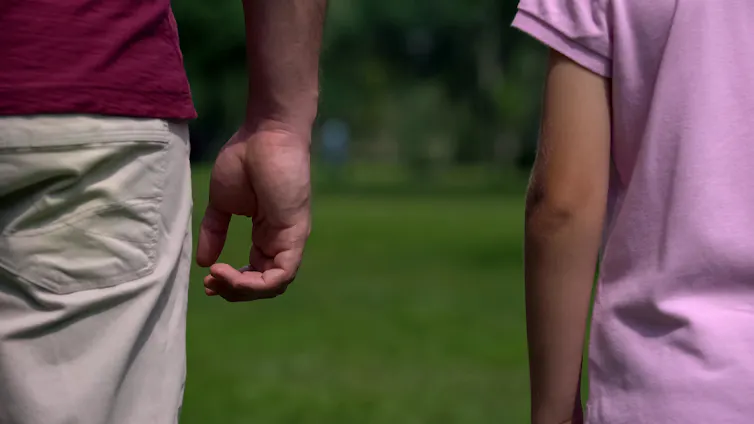
This wasn’t a rhetorical question when I posed it to my wife as our daughter’s birth approached. Before my daughter was born, I had seen my father just once in the past 27 years. That’s over 1,400 Tuesdays. In fact, as a kid I hardly saw fathering any day of the week, save for on TV sitcoms; absent dads were prevalent within my family and among my peers.
My daughter was born on a Saturday. My first Tuesday as a father came and went in a blur of exhaustion. I’d always loved playing and working with kids. I felt generally competent in what to do with my newborn daughter. Yet as I held her, insecurity from my father’s absence kept me questioning: Will I be better than my absent father?
Absence assumes different forms
Years before my daughter’s birth, I was a first-year Ph.D. student intending to study Black men and how their memories of childhood affected them as adults.
My pivot toward focusing on fatherhood began while I was conducting interviews for a larger study on men of all races and unemployment. After completing these interviews, I was surprised to see that 85% of my respondents grew up with absent fathers. The nature of the absences – how they occurred and how they felt – struck me as a more compelling area of study.
Historically, scholars and policymakers looked at whether fathers lived with their kids as the sole criterion when designating them as “present” or “absent.” Yet, my respondents’ stories revealed distinctions that “nonresident” alone did not capture. Specifically, my analysis identified four unique patterns of absence: “consistent,” “inconsistent,” “extended” and “absolute.”
Consistent absence includes regular interactions, like every Tuesday after school or every weekend.
Inconsistent absence involves irregular and unpredictable interactions – a dad who promises to show up on Tuesday but doesn’t appear until Friday, or disappears for weeks at a time.
Extended absence occurs when years pass between interactions: meeting your father for the first time at 9 years old, and then having no interaction with him until he shows up at your high school graduation, for instance.
Finally, absolute absence means interactions never occurred or they can no longer occur, such as a father who died or disappeared, with his whereabouts unknown. Some people in this category didn’t even know their fathers’ names.
These categories complicate what can otherwise be oversimplified.
For example, the fathers of Presidents Bill Clinton and Barack Obama were both absent, but in distinctly different ways.
Clinton’s biological father died in a car accident before he was born – an absolute absence. Obama’s father left the family when Barack was 2 years old and reappeared only once, years later – a relationship characterized by extended absence.
In contrast, other famous people saw their absent fathers more regularly.
The parents of the rapper Ye, formerly known as Kanye West, divorced when he was 3 years old, but he grew up spending summers with his father, putting the absence in the “consistent” category. Similarly, Maroon 5 singer Adam Levine regularly saw his dad on weekends after his parents divorced, which I also classify as a consistent form of absence.
Better than my father, or better than his absence?
Ironically, I became a father as I began my dissertation research on absent fathers. Using the four categories of paternal absence I developed, my dissertation examined how men’s experiences with absence shaped their own aspirations for fatherhood and romantic relationships.
I wanted to showcase the complexity and range of experiences of growing up with an absent father, while also exposing the disparity in how people remembered their absent fathers. Specifically, some people knew their fathers, while others knew only that their father was absent. This memory gap makes it harder for some new dads to envision what it means to be better than their own fathers.
Like me, the men I interviewed for my research relayed anxieties about navigating fatherhood. Like me, they wanted to be better than their fathers.
But we all differed in how prepared we felt for the task. Some had vivid memories to guide them: One respondent, who experienced inconsistent absence, hated that his father never showed curiosity in getting to know him. So when he became a parent, he made sure to ask his daughter questions so she would know he cared about her life.
Yet those with little to no memories of their father may aspire to be, as another respondent put it, “a father like my mother.”
Doing this work, I’ve been able to reimagine my own experience with absence.
I used to assume that the pattern of absence I experienced with my own dad reflected a standard. My parents divorced when I was 3 years old. I saw my father regularly until moving away at 6 – a form of consistent absence. But the rest of my childhood passed without seeing my father, shifting me to extended absence. I used to wrongly dismiss less extreme patterns of absence, such as seeing one’s father weekly or monthly, as “not absence.”
My unique experience of absence has also distinctly shaped how I remember my father. My memories mainly come from 6 years old and earlier. Many are unfavorable, like his smoking in the car, knowing I had asthma. Some fond ones exist, like the two of us walking on the beach or feeding ducks at a local pond.
Still, what I recall most is my fear of my father. The origins of this fear escape me. I’ve been told he abused my mother, but I don’t remember witnessing it.
These scant memories presented a paradox as I entered fatherhood: I didn’t want to be feared like my father, but I didn’t know exactly what made me afraid of my father. This uncertainty loomed throughout my early years of parenting: When my daughter cried in my arms or preferred my wife over me, was it simply a sign of normal fussiness? Or had I unknowingly become a scary figure, like my father?
From abandoned son to present father
I last met my father 20 years ago. I was full of hate when that meeting began, but this hatred soon dissipated. First, I realized I wasn’t angry at my father, because I barely knew my father. I was angry at his absence. Second, I learned that his father was absent, too.
They say “hurt people hurt people.” Before my dad was an absent father, he was missing his dad, too. This doesn’t excuse his absence or his treatment of my mother. But it did make it harder to hate someone who was probably hurting like me.
As I continue to explore the impact of absent fathers as an academic, I continue to reconcile my transition from abandoned son to a present father. Lacking inspiration or guidance from my own father, I’m practicing fatherhood on my terms.
For me, that’s meant building traditions. From the outset, we’ve created routines around music, dancing, bath time, reading and talking about “big emotions.” Our most meaningful tradition has been our weekly daddy-daughter breakfast, which I started when she was 18 months old. She’s now 8.
Sometimes we go on Tuesdays. But any day of the week is fair game.
Now Matthew Alema was much more furtunate than me. At least he saw his father from time to time.
I often reflect how my life would have been different had my father lived for much longer, say until he was in his 70’s or 80’s. There’s no question it would have been significant. I would have had a profession, possibly in the designing of buildings. I would have gone to university, And so on …
I have a son and a daughter, both in their 50’s, and a grandson by my daughter and her husband. I am so grateful to be able to speak to them on a regular basis. They all live in England.
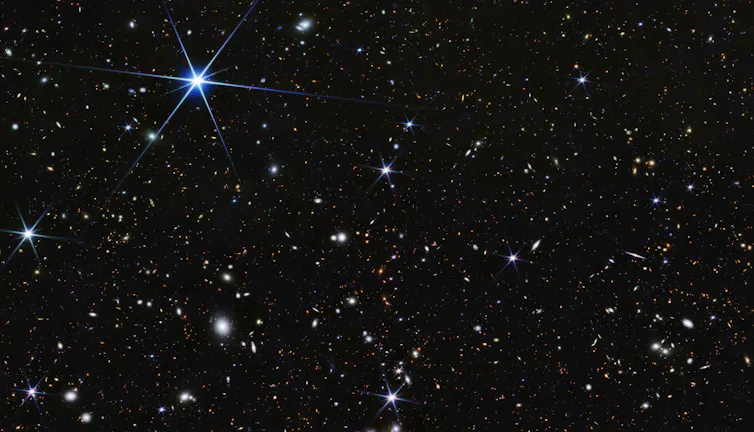
Like many other people, I am fascinated by the dark, clear, night sky. It appears to go on forever.
But this ‘foreverness’ is just our galaxy.
As is said in the following article: “…. if Earth were the size of a pea, the distance to Proxima Centauri would roughly equal the distance between New York and Sydney, Australia.”
The article shows how distant we are, how small we are, how irrelevant we are, in the vastness of the universe.
On May 22, 2026, the Pentagon released a second batch of previously classified photos and videos showing what appear to be unexplained flying objects. These file dumps were the culmination of a process that was set in motion back in July 2023, when a group of government whistleblowers testified before Congress that the U.S. government was secretly in possession of extraterrestrial spacecraft and suspected alien body parts.
That congressional hearing marked the beginning of a cultural shift in which UFO reports are increasingly treated as a matter for serious discussion, both within the government and the scientific community.
The Pentagon released over 200 previously classified UFO files in May 2026. Department of Defense
But is this newfound legitimacy deserved? As an aerospace scientist who studies aircraft and spacecraft design, I approach this question using math, physics and the principles of engineering. To assess the plausibility of alien visitors, it’s necessary to understand the obstacles that an extraterrestrial vessel would need to overcome to reach Earth.
The tyranny of distance
There is no evidence of intelligent alien life in our solar system. So any extraterrestrial visitors would likely have to come from another star system within our Milky Way galaxy.
Proxima Centauri, the star closest to our Sun, is located 4.25 light-years (about 25 trillion miles or 40 trillion kilometers) away.
For perspective, if Earth were the size of a pea, the distance to Proxima Centauri would roughly equal the distance between New York and Sydney, Australia.
Even the stars closest to Earth are incredibly far away.
Since only a fraction of stars are thought to host intelligent life, the nearest alien civilization – if one exists – is surely much farther away than Proxima.
A need for speed
Given the scale of interstellar distances, it’s inevitable that any alien voyage to Earth would span many years and possibly several centuries. But as the time spent in transit increases, so does the risk of catastrophic accidents or system malfunctions that could jeopardize the mission. So it’s important to avoid an overly lengthy journey by traveling as fast as possible.
No object can reach or exceed the speed of light (roughly 186,000 miles or 300,000 kilometers per second). But well before approaching that threshold, engineering constraints begin to assert themselves. Limited fuel availability and the potential for structural damage will restrict the spacecraft’s peak velocity.
There is no universally accepted upper limit on interstellar flight speeds, but studies tend to converge around 19,000 miles per second (30,000 km/s) – 10% of the speed of light – as a realistic cruise velocity. At this speed, a journey of 10 light-years will take approximately 100 years to complete.
Fueling the dream
Finding a way to accelerate the ship to its target cruise speed is the central challenge facing any would-be alien explorers.
Interstellar space is unforgivingly vast, but the emptiness has some advantages. The lack of atmosphere means there is no aerodynamic drag. So when the ship reaches its cruise speed, it can shut down its propulsion system and coast toward the final destination. Unfortunately, the lack of atmosphere also means there is nothing to slow the ship down prior to arrival. So ideally, the propulsion system would be used for both acceleration at the start of the trip and deceleration at the end.
One of the more exotic propulsion strategies employs high-powered laser beams to push the ship through space. The beam is projected from a stationary array near the travelers’ home planet and directed toward a thin reflective sail attached to the ship. The beam’s photons exert radiation pressure on the sail, propelling the ship forward.
This approach has a major advantage in that it requires no onboard fuel. But the amount of energy and infrastructure needed to operate the laser would be staggering. Also, beamed propulsion provides no mechanism for deceleration. At best, this method could be deployed as part of a hybrid strategy that uses a separate system for deceleration.
A more practical approach is to use rocket propulsion. Rockets generate propulsive force, also known as thrust, by expelling high-velocity exhaust in a rearward stream. By reversing the direction of the exhaust, rockets can also be used to slow the ship down.
Their main disadvantage is that rockets must carry their own fuel in addition to carrying the passengers, the habitat and other life-sustaining systems. The extra load necessitates even more fuel. In other words, you need fuel to transport your fuel. The result is a costly snowball effect that can cause the total fuel requirement to balloon to absurd proportions.
Rocket propulsion can be divided into three broad categories.
Chemical propulsion uses chemical reactions – typically combustion – to extract energy from the bonds between atoms. All human space missions thus far have used chemical propulsion. The problem with this method is that it accesses only a tiny fraction of the energy contained within the fuel.
Antimatter propulsion is theoretically the most efficient option. When antimatter comes into contact with ordinary matter, the two undergo mutual annihilation and 100% of their combined mass is converted into energy. This makes it possible to achieve the same cruise velocity – one-tenth the speed of light – with fuel accounting for less than a quarter of the ship’s total mass. This is science fiction-level fuel efficiency, which makes antimatter an attractive option for interstellar propulsion.
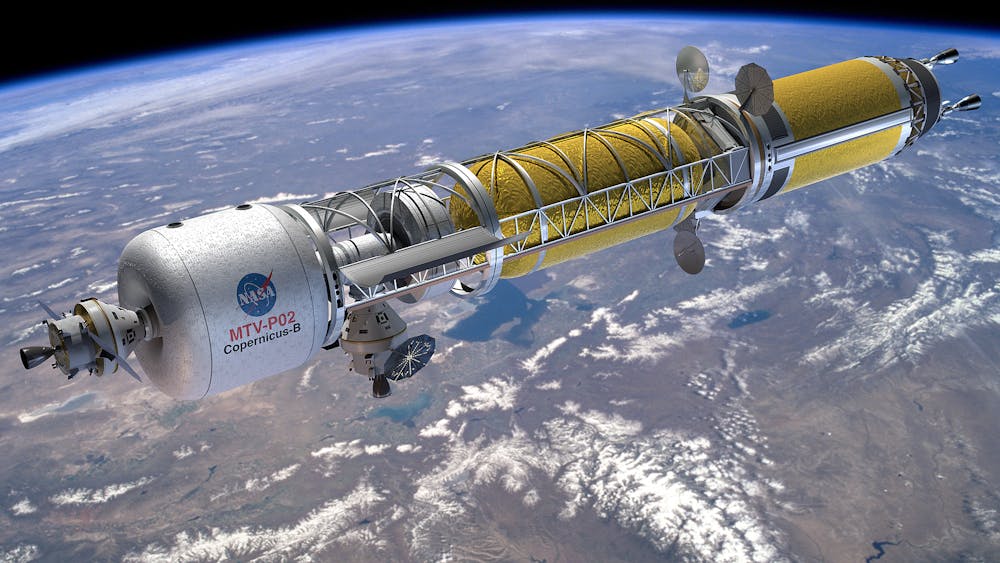
NASA has been working to develop nuclear propulsion. This artist’s impression shows what a nuclear-powered rocket could look like. John Frassanito & Associates/Wikipedia
These numbers assume that our extraterrestrial visitors have figured out how to efficiently convert the energy released by their reactor – whether nuclear fusion or antimatter – into thrust.
Just as importantly, they must be able to create optimized fuel tank structures that are ultra lightweight yet highly secure. Designing the structure of the ship, from the fuel tanks to the hull, would be one of the biggest engineering challenges of the entire mission.
Interstellar space contains a sparse smattering of hydrogen atoms and microscopic grains of cosmic dust. At 19,000 miles per second (30,000 km/s), dust particles would smash into the ship’s hull with the energy of a .22-caliber bullet. The bombardment of hydrogen atoms would produce a violent cascade of radiation that could erode even the most resilient engineering materials.
Surviving the onslaught would require no less than a flying fortress with complex magnetic shielding. This would increase the total mass of the ship, which further drives up the demand for fuel.
This example is just one of the hundreds of delicate design trade-offs that would plague any interstellar vessel. Each individual design requirement acts as a filter, reducing the number of feasible solutions.
Finding a single system that simultaneously satisfies all the requirements is analogous to shopping for a car online. With each new filter you apply – four-wheel drive, black exterior, less than 10,000 miles on the odometer – the number of available options dwindles.
When design requirements are in tension with one another – for example, requiring a structure that is lightweight but also supremely durable – the number of feasible solutions can drop to zero.
No single law of physics prohibits an interstellar voyage to Earth. But the combined effects of hundreds of extreme, often conflicting engineering requirements may render it physically infeasible.
It’s also possible that alien civilizations have discovered novel technologies that outperform anything currently known to humans. But like the examples discussed here, any such technology will inevitably encounter its own engineering hurdles.
The trillion-dollar question
Ultimately, engineering challenges are just some of the many barriers to interstellar travel. Any prospective alien visitors must also have sufficient cognitive ability, technological maturity, physical resources, collective desire and proximity to Earth.
That said, if the stars were to align and an alien vessel made it to Earth intact, it would trigger a torrent of burning questions: Where are they from? What do they want? What are they made of?
But the question that would go furthest in shedding light on the deeper mysteries of the universe is, “How on Earth did they get here?”
Kai James poses the unanswerable questions in the last two paragraphs. And how about this statement: “Consequently, using chemical propulsion on a spacecraft with a cruise velocity of 19,000 miles per second (30,000 km/s) would require more fuel that all the mass in the observable universe.“
Penny sent me this post and I thought that I would be able to post it before now. However, it seems like the perfect item for today.
ooOOoo
How to Design a Stylish Home That Stands Up to Your Dog
Dog owners who care about décor know the daily tug-of-war between stylish pet-friendly interiors and real-life messes. A sofa that looks perfect can turn into a scratch magnet, clean walls collect nose smudges, and “nice” floors don’t always survive muddy paws, spilled water, or surprise zoomies. The heart of dog-friendly home design is balancing aesthetics and functionality without treating every room like a sacrifice zone. With the right mindset, pet damage challenges can become design boundaries that still leave a home feeling pulled together.
Make 7 Upgrades That Survive Paws, Spills, and Zoomies
If you’ve ever tried to keep a home looking pulled-together while living with a dog who treats the hallway like a racetrack, you already know the goal: durable choices that still feel like you. These upgrades focus on the high-impact trouble spots, floors, walls, entryways, feeding zones, and the yard, so your style holds up to real life.
Choose scratch-resistant flooring in the “runway” zones: If you can’t replace every floor, prioritize the routes your dog actually uses, entry → living room → back door. Look for scratch-resistant flooring with a tough wear layer, and use large, low-pile rugs (with a grippy pad) in corners where dogs pivot and launch. Keep nail trims on a 2–4 week rhythm to reduce micro-scratches, especially on stairs and landings.
Create a paw-and-mud landing strip at the entry: Give dirt and water a place to “stop” before it hits your sofa. Add a washable runner, a closed hamper for dog towels, and a hook or basket for wipes right by the door. A shallow boot tray works great as a water bowl “parking spot,” too, especially for sloppy drinkers.
Install a built-in dog feeding station (even a mini version): A built-in feeding station keeps bowls from wandering, helps contain splashes, and makes the feeding area feel intentional instead of cluttered. For a simple DIY approach, dedicate the bottom of a pantry cabinet or a mudroom nook and add a wipeable surface underneath. If your dog is a messy eater, choose deeper bowls and keep a small handheld vacuum nearby for daily 30-second resets.
Protect walls and corners with “invisible armor”: Paint scuffs and body-oil streaks happen right at nose height and shoulder height. Use a durable, wipeable finish on walls, and add corner guards or wood trim where dogs rub and turn. If you’re renting or not ready to build, a narrow console table along a high-traffic wall can act like a stylish bumper.
Set up a safe zoomie zone with flexible barriers: Instead of correcting your dog all day, manage the space. Use baby gates to block off carpeted rooms, kids’ toy areas, or the staircase when you can’t supervise. This is especially helpful during muddy season, post-bath chaos, or when guests are coming and you need a calm, contained zone fast.
Upgrade fabrics to “cleanable by default” seating: Treat your sofa like performance gear: tight weaves, washable covers, and darker or heathered colors hide fur and drool better than flat, light solids. Keep a throw blanket on your dog’s favorite spot and wash it weekly, your couch stays nicer without starting a daily battle.
Design pet-friendly landscaping for safe outdoor dog areas: Skip yard materials that can hurt paws or tempt chewing, and build a clear path where your dog naturally runs. Penn State Extension suggests flagstones or smooth gravel for pathways, which can reduce paw irritation and keep traffic from killing the grass. Aim for one easy-to-clean potty zone, one shaded “hangout” spot, and fencing you can trust, because outdoor durability counts just as much as indoor style.
Plan New-Home Peace of Mind: Ask About Structural Warranties
Those durability upgrades feel even better when your long-term protection matches the care you’re putting into the build. If you’re building a new dog-friendly home, ask your builder about adding a structural warranty or similar long-term protection, specifically, what’s included, how long it lasts, and how claims work. Solid warranty coverage for new builds can help safeguard the home’s underlying integrity if bigger issues show up later, which matters when everyday dog life adds extra wear and tear. It also helps protect the money you’re investing in pet-friendly choices like durable flooring and built-in features, so you’re not left feeling like you upgraded everything except your peace of mind.
Dog-Proof Design Options at a Glance
This quick comparison helps you choose finishes and features that look intentional, not improvised around your dog. Use it to balance durability, safety, and day-to-day convenience across high-traffic floors, outdoor boundaries, and feeding setups.
Option
Benefit
Best For
Consideration
Luxury vinyl plank flooring
Scratch and spill resistance with many modern styles
Busy kitchens, mudrooms, play zones
Can dent under heavy furniture or sharp impacts
Porcelain tile with matte finish
Very tough surface; easy cleanup
Slobbery drinkers, rainy-paw households
Hard underfoot; use runners for traction
Real hardwood plus washable runners
Classic look with replaceable protection
Living rooms where warmth matters
More visible wear; requires routine refinishing over time
Vinyl-coated chain-link fence
Durable, lower cost, secure containment
Large yards and strong pullers
More utilitarian look; needs thoughtful landscaping
If traction and easy cleanup are your top priorities, start with flooring and add rugs where your dog sprints or turns fast. If curb appeal matters most, fence style and a discreet feeding zone can make pet features feel fully “designed in.” Knowing which option fits best makes your next move clear.
Dog-Friendly Design FAQs Homeowners Actually Ask
Q: Can a dog-friendly home still protect resale value? A: Yes, when you choose features that read as timeless upgrades, not pet-only add-ons. Think durable floors in classic tones, washable textiles, and clean-lined storage that hides leashes and toys. Keep any pet-specific elements easy to remove or swap so the home still shows well to non-pet buyers.
Q: How do I keep my floors from looking wrecked in a year? A: Start with prevention: trim nails regularly and place a textured runner where your dog launches into turns. Use felt pads under furniture and wipe up grit fast, since sand acts like sandpaper. A small “paw station” by the door can cut down on tracked-in dirt.
Q: What’s the simplest way to manage shedding and odors without losing the cozy vibe? A: Choose low-pile rugs, slipcovers, and throws you can wash weekly, then stick to a quick two-minute daily sweep in high-shed zones. A lidded hamper for dog blankets keeps smells contained. Ventilate after baths and rainy walks so fabrics stay fresh.
Q: Should I build in a feeding area, or keep it flexible? A: Built-ins look polished, but flexibility often wins for real life. Try a wipeable mat and a tray that can move for cleaning, guests, or a new bowl size. If you love the built-in idea, plan for extra width and a removable insert.
Q: Can my dog’s routine really affect how well my home holds up? A: Absolutely, because calmer dogs tend to do less damage when they are bored or overstimulated. A simple step is choosing the best foods for your dog with your vet, since nutrition can influence energy and behavior. Pair that with predictable exercise and a designated chew zone to protect your furniture.
Make Stylish, Dog-Ready Design Choices That Last
Living with a dog can feel like a constant tug-of-war between a home that looks good and one that can handle real life. The calmer path is a mindset of integrating pets into home life, planning for paws, fur, and play while still aiming for stylish and functional living. When that approach guides confident dog owner design choices, harmonious dog-friendly homes become easier to maintain, not harder to enjoy. Design for the dog you live with, and style will follow. Choose one long-term pet-friendly design change to start this week, and let it set the tone for the rest of your space. A home that supports both of you builds daily ease, deeper connection, and resilience for the years ahead.
ooOOoo
That is an excellent set of recommendations, many of which would not have occurred to me. Neither to Jeannie, who has loads more experience of looking after dogs than I have.
So, thank you, Penny and I look forward to your next ‘guest’ post.






 Learning from Dogs
