2026!
And it couldn’t be better covered than in the following YouTube video:
Dogs are animals of integrity. We have much to learn from them.
Category: History
2026!
And it couldn’t be better covered than in the following YouTube video:
A reminder of July 4th, 2026.
Heather Cox Richardson published a post on YouTube,
Despite the fact that Jeannie and I were born in London, and July, 2026 is now nearly three months ago, this video is splendid.
She introduces it as follows:
From the time of our country’s founding 250 years ago, the story of America has been one of the constant efforts of Americans—from all races, ethnicities, genders, and abilities—to make real the belief that we are all created equal and have a right to have a say in our democracy. We will be telling their stories over the next several weeks because now, as ever, “We Are America.”
Here is the video,
It is called NO PROPHETS.
Over last weekend I finished reading Jared Huffman’s book. To say is was good would be an understatement. It was excellent.
I will print the last paragraph of the last chapter.
CONCLUSION
We don’t need to agree on everything, but right now we must come together as fellow Americans who agree on the most important thing: Our beleaguered democracy remains the best system of government the world has ever seen, and it belongs to all of us. Let us be worthy of it by confronting the myths, defending the facts, and honouring the Enlightenment inheritance that made pluralistic democracy possible. And as we do, let us remember Thomas Paine’s words that echo across the centuries: “The mind once enlightened cannot again become dark.” (My emboldening.)
Here, here!
Dolly, who died on the 25th August, was gorgeous!
Dolly was 80 when she recently died. Dolly was born January 19th, 1946, in Tennessee, and died last Tuesday.

She will be sorely missed.
How us dog owners can tell if a dog is stressed and what to do about it.
This is another delightful article, prepared for me and the readers of this blog, by Penny Martin.
ooOOoo
How Dog Owners Can Spot Stress and Find Simple Ways to Feel Better
Busy dog parents balancing work, home, and a living creature’s needs often feel stressed without knowing what’s actually causing it. The core tension is that dog owner stressors can stack up quietly, pet care challenges, the emotional impact of dog ownership, and the daily responsibilities of dog owners, until even small issues feel heavy. Many people try to fix the feeling first, but the real relief starts with spotting the common stress triggers that keep showing up. Naming what’s draining the most makes it easier to feel steadier and more in control.
Calm Your Nervous System: 6 Everyday Stress Fixes
Once you’ve spotted your biggest dog-owner stress triggers (time crunch, money worry, behavior challenges, guilt, etc.), the goal is simple: lower the daily “background stress” with small moves you can actually repeat.
Explore 4 Alternative Stress-Relief Avenues You May Hear About
Once you’ve covered the basics, sleep, movement, breathing, and better daily boundaries, you might get curious about other stress-support options people talk about. Four alternative avenues you may hear about are:
Simple Stress-Reset Habits You Can Repeat
Small habits matter because stress signals can be subtle in both people and dogs, and consistency makes them easier to notice and respond to. When you repeat a few simple routines, you build confidence, reduce guesswork, and create calmer days for the whole household.
Two-Minute Leash Check-In
Mindful Petting Reset
Three Micro-Moves
One Calm-Enrichment Swap
Weekly Recovery Plan
Common Stress Questions Dog Owners Ask
Q: What if I’m too tired to do anything “extra” for stress?
A: Keep it tiny and tied to something you already do, like pausing before you clip the leash. Aim for one calming breath and one quick body scan of your dog’s face and posture. When you do less but do it consistently, it still counts.
Q: How can I tell if my dog is stressed or just excited?
A: Excitement usually looks loose and bouncy, and it settles once the fun starts. Stress often shows up as stiffness, tucked posture, lip licking, yawning, or scanning the environment. If you’re unsure, choose the gentler option: slow down, add distance, and reward calm.
Q: Can my dog’s behavior really affect my mental health?
A: Yes, it can, and you are not alone. Research links dog behavioural, health-related issues with poorer owner well-being, so feeling stretched makes sense. A practical next step is to pick one trigger to reduce this week, like avoiding crowded routes.
Q: What should I do when I miss a day and feel like I failed?
A: Treat it like brushing your teeth: you just restart at the next opportunity. Choose one “reset cue,” such as filling the water bowl, and do a 20-second calm check when you do it. Progress is built on returns, not perfection.
Q: Why doesn’t cuddling my dog always calm me down?
A: Comfort helps, but it is not a magic switch, especially if you are already overloaded. Many people rely on their pets, yet your body may still need sleep, food, or a quick movement break. Try pairing petting with slower breathing, then reassess what you need next.
Build Calm, Healthy Habits That Help You and Your Dog
Life with a dog can be joyful and still stressful, especially when the days are busy and emotions run high. The most reliable path isn’t doing everything perfectly, it’s using a steady, small-steps mindset to notice stress early and respond with simple, repeatable choices. Over time, that kind of stress management brings real benefits: a steadier mood for the owner, a more settled dog, and wellbeing reinforcement through small wins that keep stacking. Small, consistent care builds the calm both of you can feel.
ooOOoo
Penny has done brilliantly with the ablove article.
Here we have our small chihuahua-cross, Cloudy, and he is a very loveable dog. But he can be a rascal and Jean has more patience with Cloudy than I have.
But I recognise that Cloudy came from a nearby dog rescue centre and Cloudy is so delighted at being loved by Jean and me, and by Oliver.
Once again, well done Penny!
Sustainable Thinking through Time and Place.
Recently I listened to a programme on BBC Radio 4 about sustainable building. Then I saw that this item had been posted as a pdf and it was available to be shared. Here it is.
ooOOoo
By using materials that compost and breakdown into compounds that ecosystems can handle, we are in essence relearning from the people of the Iron Age. Our imprint on the land around us should not adversely affect those that come after.
The Scottish Crannog Centre has always been rooted in experimental archaeology. Oakbank Crannog, which was located on Loch Tay was excavated in the 1980s. During the late 1990s, a one-to-one reconstruction of Oakbank Crannog was built, four miles downstream at the original Scottish Crannog Centre site. The preservation at Oakbank was extraordinary, with the anaerobic conditions allowing many artefacts that would normally decay to survive intact.
In 2018, the organisation became an accredited museum, a fundamental step towards the ambitious desire to become a sector leading museum. With this change came the appreciation that our responsibilities would become broader and wider; our guardianship of the collection for future generations would need to improve and the responsibility to engage with communities would become more important.
Our vision is to be a national treasure loved by all, with social justice at its heart. This acts as our North star and is our guiding light, as Figure 1 highlights. Our mission is to bring the story of the crannog dwellers to life, through the use of our collection and community engagement. Our values of compassion, curiosity and respect help us to carry out this mission. This is seen in our activism, where leadership runs right through the organisation, where the right person in the right place is able to make the decision. We also acknowledge that the abundance is on the outside, and it is only by having strong partnerships with other people, organisations, and communities that the Centre can bring the collections to life.
These changes paved the way and set the foundations for a redevelopment project. The small size of the existing site prevented expansion, and in the long term, the existing site was not sustainable. As a result, in June 2020, the Trust was successful in its application for Community Asset Transfer to buy a new site from Forestry Land Services. The site is located on the other side of the loch from the existing centre, a mile closer to the original Oakbank Crannog site. The proposals for the new centre, embedded within its social and environmental heritage, with co-curated displays and plans to create community-built crannogs, was so strong that the Trust was granted the land for the token sum of £1. This was followed by the securing of £2.3m of Scottish Government funding over two financial years for the delivery of the first phase of the development, supported by the vision of the Scottish Government that the Scottish Crannog Centre becomes a National Museum.
In June 2021, the iconic reconstruction of Oakbank Crannog was destroyed by fire. The outpouring of support from friends near and far was tremendous, and resulted in fundraising campaigns, offers of labour and raw materials, offers of professional services, and much more. Just as the people who lived in Oakbank Crannog 2500 years ago were almost surely grateful to be able to rebuild, we are thankful no one was hurt, we are thankful we have most of our belongings, and now we look forward to rebuilding a crannog once again. The fire meant that the move to the new Dalerb site had to be accelerated. The development was split into two phases and the first phase must now be fast-tracked. While the fire was devastating for all involved it gave us a unique opportunity to reassess our vision and look ahead to the future.
Our new aim is to become Scotland’s most sustainable museum, with a desire to move from sector leading to sector defining. We will do this by embracing the four areas of sustainability: economic, social, environmental, and human. These four areas have now been taken to the core of the Trust and incorporated into the four-branched model of the organisation. These branches are:
Each branch of the model does not represent a specific or single area of sustainability, even though some have a greater focus on a certain aspect. The branches entwine and combine with themselves to create a sustainable system that gives structure, whilst also allowing for flexibility. This also allows us to think both about short- and long-term sustainable goals as we move forward with our development plans. As we look to the future, sustainable thinking must become the norm. With the current climate emergency, there is a clear need for a change in the way we interact with our environment; but it also goes deeper and broader than that. It also must ensure that people are treated fairly, and they have the space to be who they are and are allowed to grow. To ensure that this is possible, financial stability must be considered but it should not be the sole driving factor in decision making.
We have already made some progress on our sustainable journey which is highlighted by:
Working with Universities through Interface, hosting 19 projects with students providing consultant work on going paperless with marketing, sustainable business models and branding.
Creation and delivery of an apprenticeship scheme, where young people can explore and gain experience of a wide range of crafts as well as learning life and career skills.
The new development will allow us to do more. Phase one of Dalerb will focus on moving the collection to its new home, expanding our capacity to deliver an exceptional visitor experience, and using the archaeological record to inform the construction of an Iron Age village, roundhouse, and crannog. With this move we have been able to consider the sustainable practices that the people from 2500 years ago would recognise themselves.
The museum’s ‘Ideas’ collection is a place that shows the skills and materials that will be needed in the construction of the Iron Age buildings. The way that the timbers that were used as uprights in Oakbank crannog show that there was a level of sophistication to their design, with the alder being placed in upside down to extend the life of the timbers. From this we can interpret that the people of Oakbank crannog had excellent woodworking skills. These skills would have been taught for each generation to be able to construct and maintain buildings of their own.
As part of our reconstruction, we will be emulating many of the same actions that the crannog dwellers of 2500 years would have practiced. The materials that we have source have come from as local as possible. The stone from Kenmore, the reed has come upriver from Errol and the timber from Drummond Hill.
We will also learn new skills and techniques while building that will use the resources to their fullest. Working with experts in thatching, dry-stone walling, and turf-roofing, we learn the skills needed to be able to repair and maintain the buildings. Alongside this our apprentices will also be developing their skills in green woodworking, allowing for that knowledge to carry on to a new generation.
We will also be engaging with communities during the construction, with 1000 fingerprints helping to create the new Centre . The Cross-Cut Co-op will be leading part of the build, a women’s woodworking co-operative. They will be working with volunteer groups from a variety of interests and backgrounds, helping to teach new skills and giving people the chance to try their hand at something new.
The nature of the materials that were used during the Iron Age do not survive well, outside of very specific conditions. This contrasts with modern day materials that take hundreds of years to degrade. By using materials that compost and breakdown into compounds that ecosystems can handle, we are in essence relearning from the people of the Iron Age. Our imprint on the land around us should not adversely affect those that come after.
Through all this work we still need to look towards the future and consider more ways that the Centre can embrace sustainable practices. With the skills that will have been developed from the build we will be able to teach more people how to thatch, stone-wall and work wood allowing these traditional skills to prosper.
We will also have the unique opportunity of producing our own resources for the site, with the creation of a coppice on Drummond Hill. This will give us a sustainable source of wood to use in the maintenance of the Iron Age structures. We will also start our own forest garden, using permaculture principles, that will allow us to supply our cafe with locally grown produce.
With all this we will also look at the more modern issues facing the museum. We will look at how to decarbonise transport links by working with partners, move towards a zero-waste site and explore the opportunities for the centre to generate its own electricity.
As a museum we are in the privileged position of inviting our visitors to see the belongings of the people who lived on the shores of Loch Tay 2500 years ago. When those visitors leave, we hope they gain an appreciation for not only the people but the skills and knowledge that they possessed. As we continue our sustainable journey, we will show everyone how sustainable ideas and practices can be incorporated into everyday life, allowing people to see sustainability in action and moving us all towards a fairer future.
ooOOoo
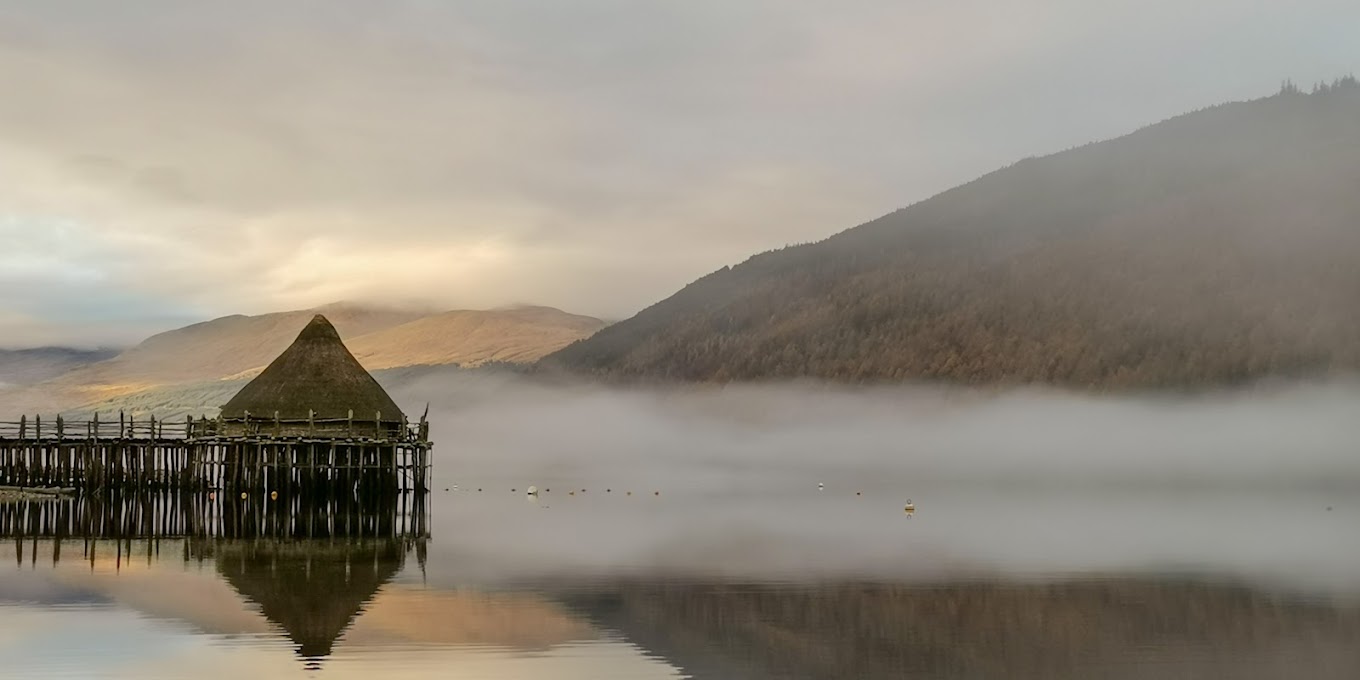
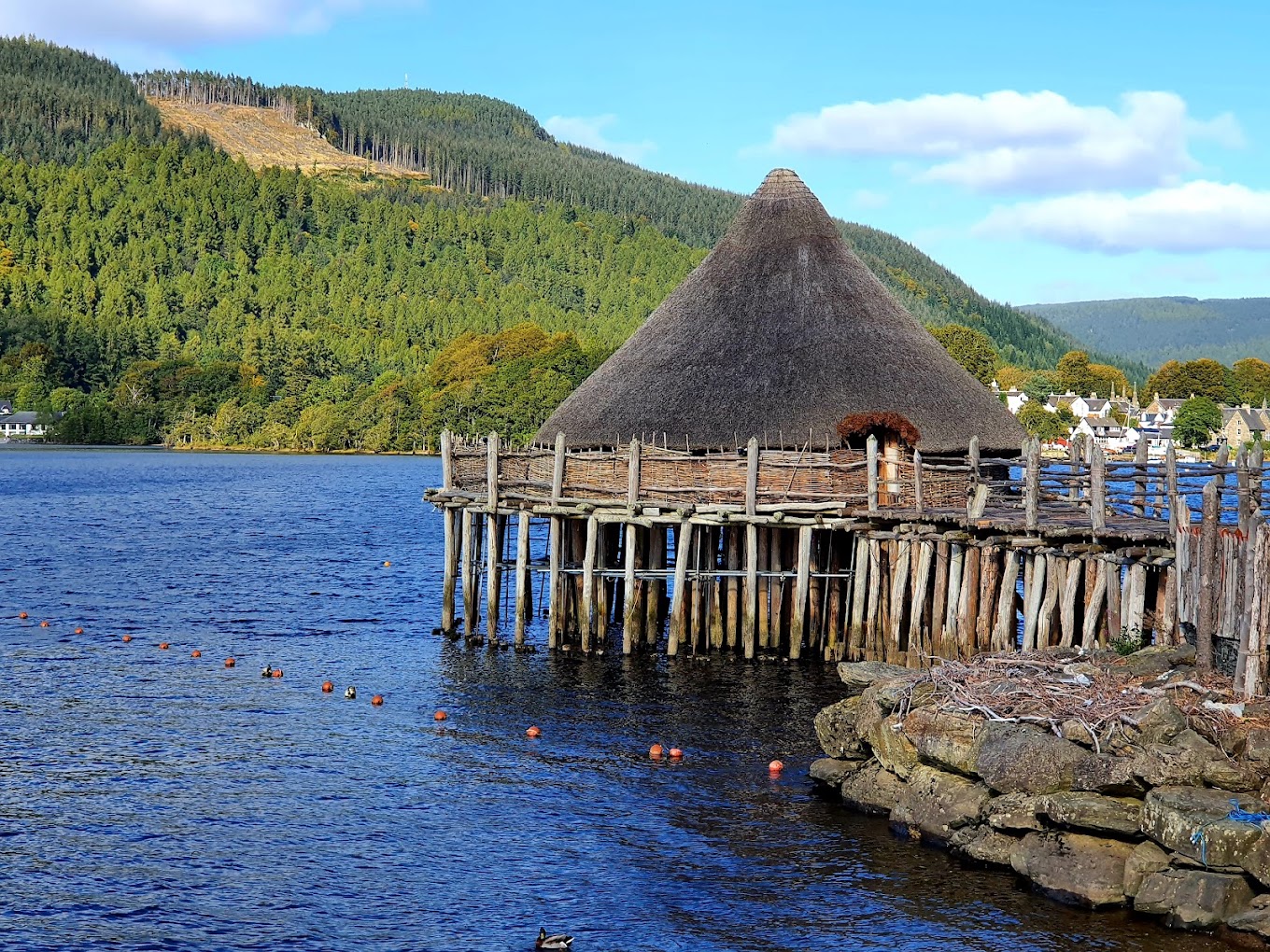
I appreciate that many people, especially those not born in the U.K., may find this article not of interest. Here are some pictures with more appearing on Sunday.

oooo
oooo
oooo

oooo

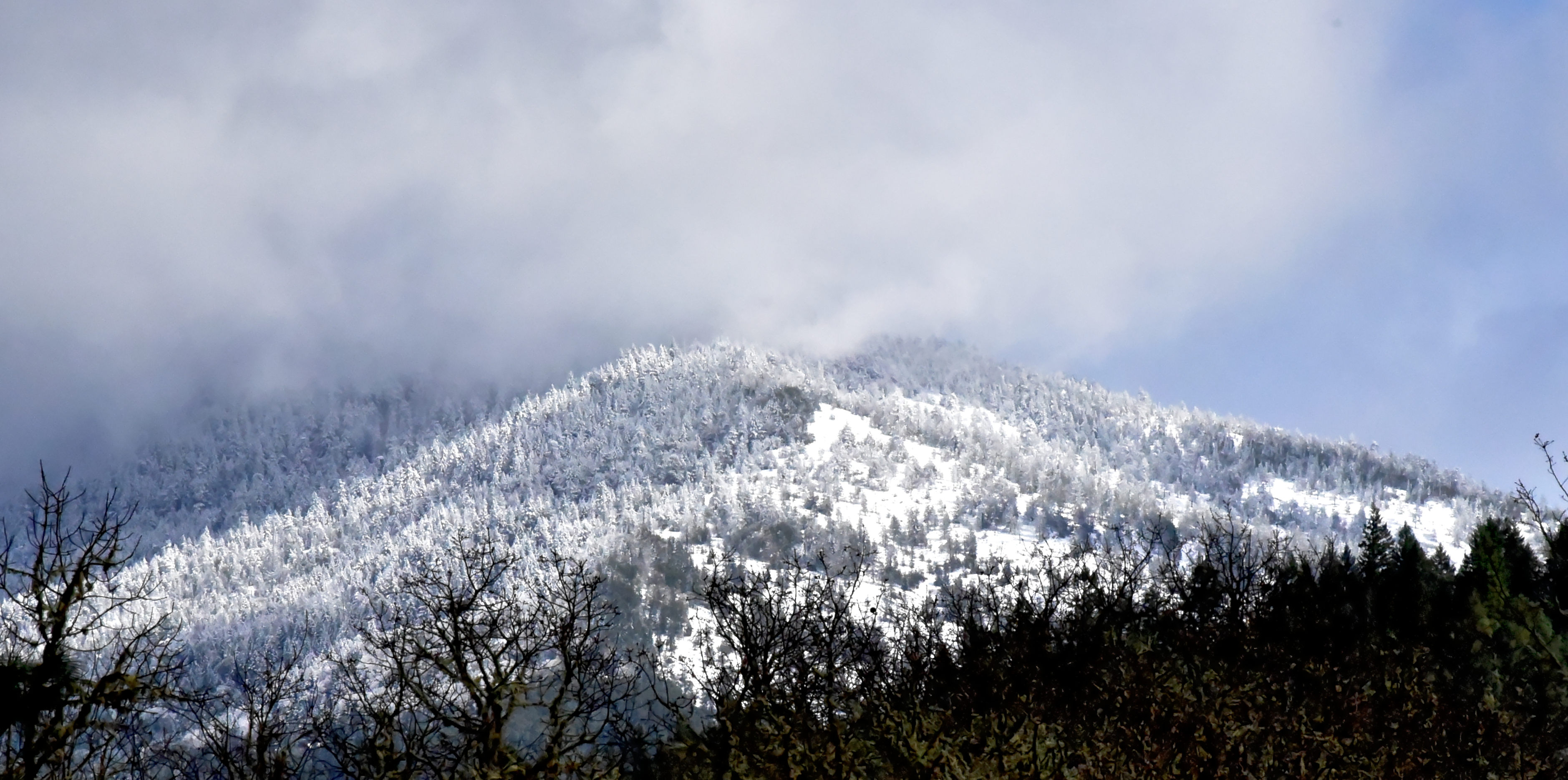
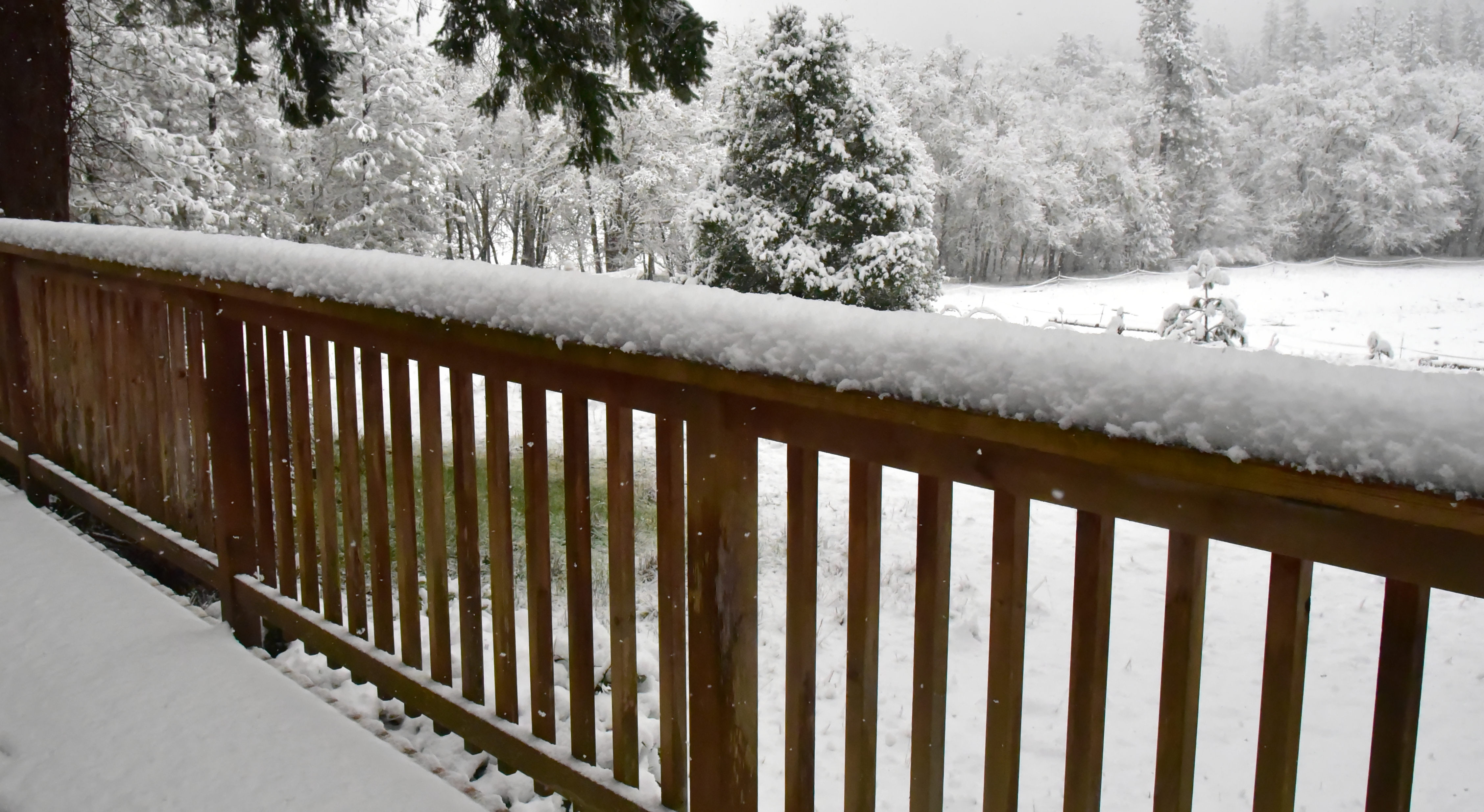
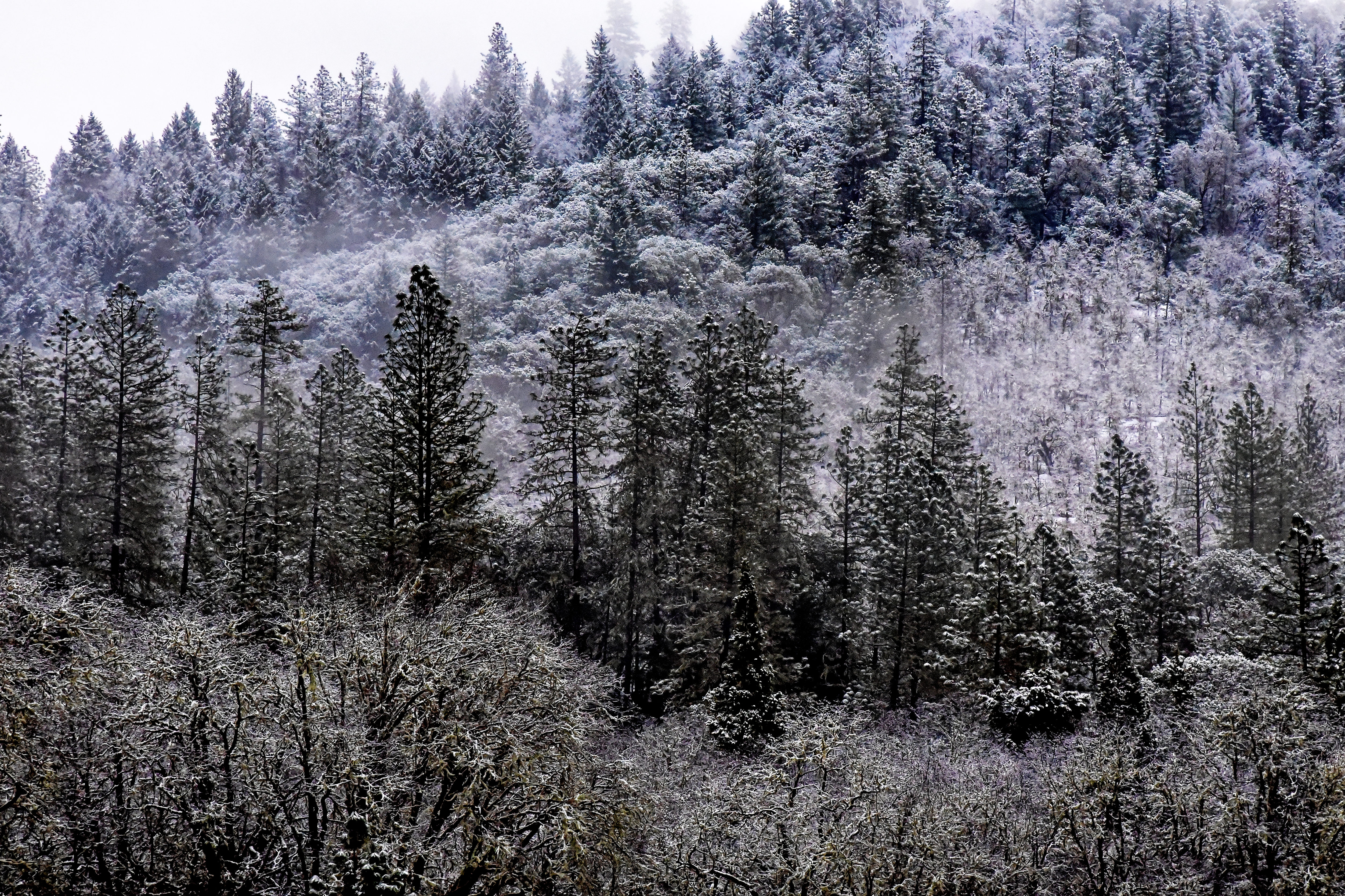
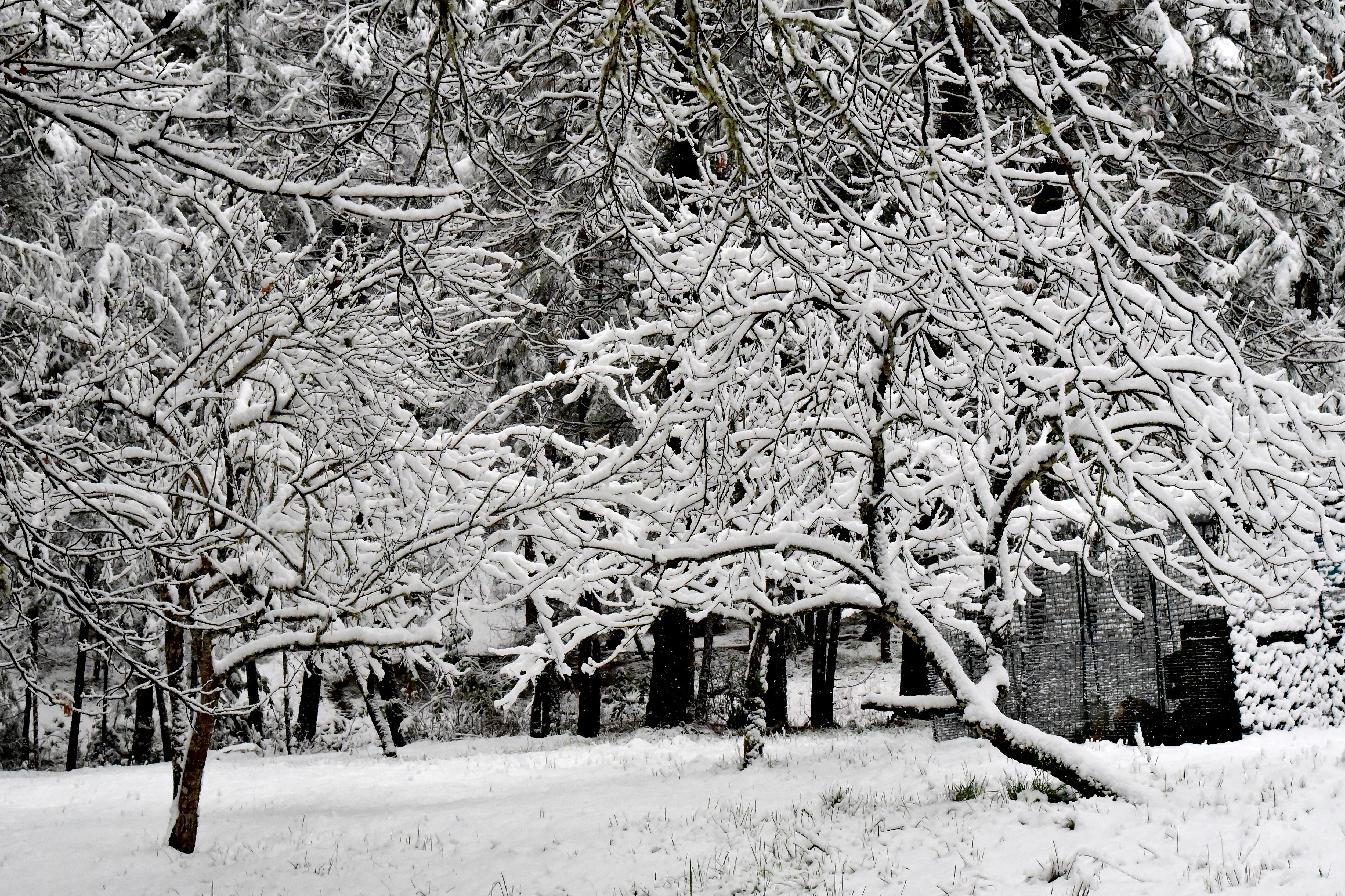
Memories of past weather here at home.
oooo
oooo
oooo
oooo
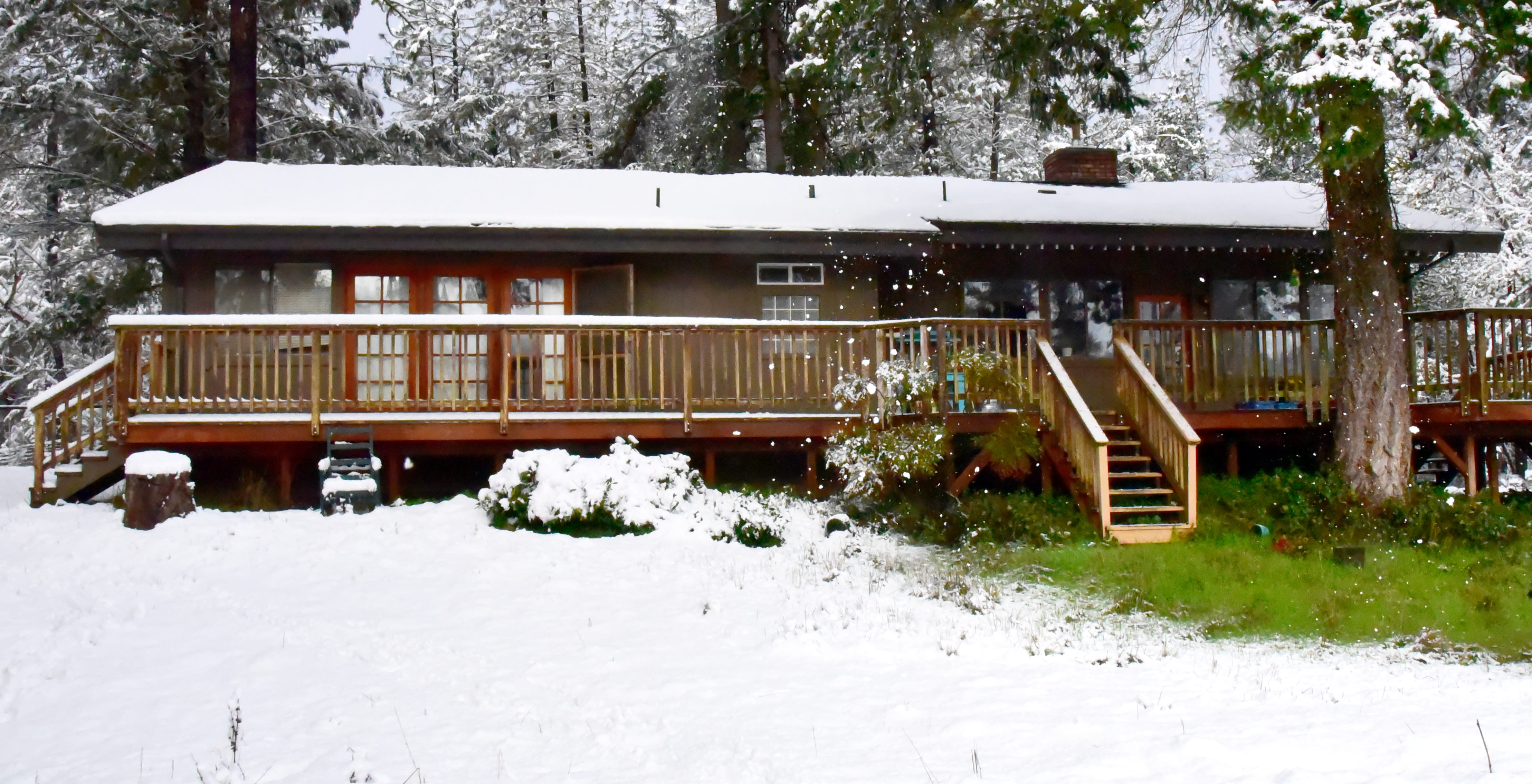
These were taken in 2018.
We are losing our fundamental rights.
I follow George Monbiot, and have had his permission for some time to republish his articles.
I was born in November, 1944, some six months before the end of WWII. Over all these years, I have read countless essays and articles about the state of countries, and the world.
However, George’s latest article is the most serious reflection on the state of things, effected by the rich and powerful, that I have ever read. I’m sure I speak for millions of other people.
Read this now!
ooOOoo
Posted on the 4th August 2026
At astonishing speed, around the world, fundamental rights are being cancelled at the behest of oligarchs and corporations.
By George Monbiot, published in the Guardian 31st July 2026
No more resistance in the US. The era of human rights is over, and dissent is once more forbidden. This is what certain billionaires and their concierges want, and this is the model they’re also seeking to project across the world. If we fail to resist, if our new prime minister is as weak and suggestible as the last one, this is what we will get. In fact, we are halfway there already.
Why? Because successive governments in the UK have succumbed to a global campaign to cancel our fundamental freedoms, a campaign led by oligarchs and corporations, the media they own and the junktanks they fund. A campaign that has become definitional for the second Trump presidency.
At a global summit convened by the US government earlier this month, the Trump administration officials Marco Rubio, Stephen Miller and Scott Bessent explained that they were redirecting counterterrorism efforts away from Islamic jihadism and towards “the political left”. Most of the examples they cited to justify this shift were more than 30 years old. Several times they had to dig down to the 1970s to find a sufficiently menacing threat. You could hear the barrel being scraped.
Without producing a shred of evidence, Rubio, the secretary of state, claimed that the Cuban government is “inextricably linked to the far-left groups and movements across and beyond the west”. The following week, his department sought to justify this claim with a report containing a long list of leftwing legislators, journalists and activists that attempted to link them to Cuba in ways that ranged from the tenuous to the hilarious. This is a well-honed tactic, used prolifically by the Nazis among others: they claimed dissenters, by definition, were part of an international communist conspiracy. They insisted, as Rubio did, that “it is time to crush this evil for ever”.
That wasn’t the only crude reminder. Miller, Donald Trump’s deputy chief of staff, maintained that when you see antifascist protests, “not one of the people that is demonstrating looks like a normal person. Not one looks normal. They’re all deformed in some way – in their appearance, in their dress, in their mannerism … their outer appearance becomes a manifestation of their inner hatred.” I’m just surprised he didn’t say “untermenschen”. The US government, by contrast, promotes “normal, healthy, ordered living”.
But what hit me even harder was Miller’s attack on “jury nullification”: jurors acquitting people who, he said, were “obviously guilty”. Shutting down this possibility has been an aim of illiberal governments and conservative judges around the world. We saw it in the UK in the prosecution of Trudi Warner and others for holding signs that state an ancient principle in English law: “Jurors have an absolute right to acquit a defendant according to their conscience.”
We see it in the astonishing prosecution, being pursued at the moment, of Rajiv Menon KC, who reminded jurors of this right at the trial of the Palestine Action campaigners he was defending. He became, as a result, the first lawyer in English history to be charged with contempt of court for a closing speech. If convicted, he faces up to two years’ imprisonment and will be struck off. Prosecuting lawyers for defending their dissident clients is more or less the definition of authoritarianism.
We also saw it in the assault Keir Starmer launched on jury trials as a whole, greatly curtailing, without any coherent justification, our strongest defence against injustice.
Starmer was a weak man, without a clear vision of his own, who was rolled by any powerful state or corporate lobby. He was no match for a well-funded and highly effective international campaign. A network of groups such as the American Legislative Exchange Council, funded by corporations and billionaires, has been producing “model legislation”. The groups test these laws in sympathetic jurisdictions. If they are found to work, they then press for their adoption elsewhere. The result is a sustained assault on our rights to protest, to political equality and to a habitable planet.
The globalisation of this attack on our fundamental rights is a key conservative aim. As capital operates everywhere, so should its ability to crush our objections. The long series of vicious anti-protest laws in the UK is an outcome of sustained lobbying by junktanks, the media and other governments. The result is a country that now keeps hundreds of political prisoners, a country in which you can get six months in jail for marching slowly down the street.
These oppressive laws have culminated – so far – in an act of parliament passed in April that enables the police to shut down any protest they deem to have a “cumulative” impact on the community. The only protests that have ever succeeded are those with a cumulative impact. Protest is acceptable as long as it’s useless. Let the people have their say, but only if we can’t hear them.
The new laws have been accompanied by that age-old trick, traditionally associated with fascist regimes, of smearing leftwing dissidents as terrorists. As the rights group Liberty has pointed out, the definition of terrorism here has greatly expanded, to incorporate tactics formerly regarded as civil protest. This is what enabled Starmer’s government to ban Palestine Action.
The judge who referred Menon for contempt, Mr Justice Johnson, was also the first – at the same trial – to use the extraordinary powers quietly inserted by the Conservatives into the Sentencing Act 2020. These enable someone tried for one crime to be sentenced for another. The four Palestine Action protesters were convicted of ordinary crimes. But, without informing the jury, Johnson marked the case as having a “terrorist connection”. He then sentenced them for terrorist offences, which means much more prison time.
Already, his example has been followed by another judge: a different group of pro-Palestine protesters, who sprayed red paint and broke some windows of a branch of Barclays Bank, are about to be sentenced as terrorists, though neither they nor the jurors were told of this possibility during their trial for criminal damage. This means, of course, that they were unable to defend themselves against this far more serious charge.
Nothing is safe from the billionaire assault on humanity. None of our rights, however ancient and familiar, are impregnable. Fight for them now or lose them, perhaps for ever.
ooOOoo
Congratulations on George Monbiot for writng this. Congratulations to The Guardian newspaper for publishing this article on July 31st, 2026.
Our human rights, everywhere in the free world, have to be fought for.
As George Monbiot says: “Fight for them now or lose them, perhaps for ever.”
Feel absolutely free to republish this post wherever you wish.
An article about Air Force One.
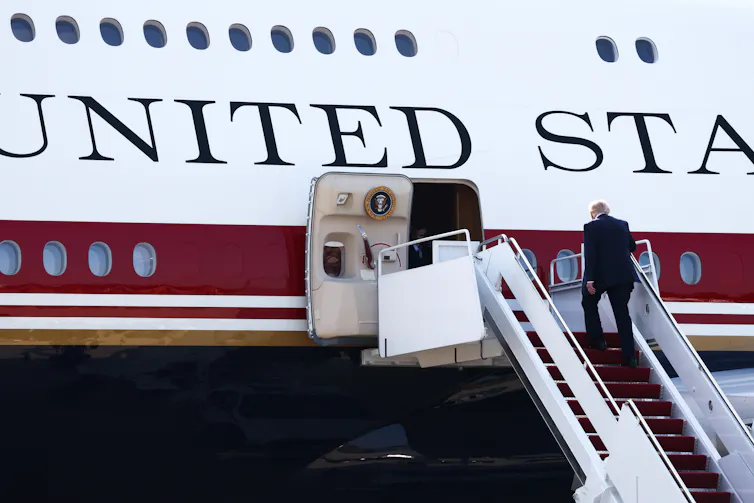
The Boeing 747, that currently serves as the means of air transport for President Trump, has been written about on The Conversation.
Here is that fascinating article:
ooOOoo
Peter Kastor, Washington University in St. Louis
Air Force One used to be a high-flying symbol of American technology, ingenuity and power. For many, it was also a source of national pride.
The current Boeing 747s that serve as Air Force One are a combination transport vehicle, command center, press room, medical center and apartment, complete with bedroom and office for the nation’s chief executive.
Now, to many, Air Force One has become scandalous.
On July 8, 2026, The New York Times reported that the latest version of the presidential aircraft – presented by Qatar as a gift to President Donald Trump – lacks the sophisticated countermeasures that were a ready defense for the 747s that had been in service since 1990. Critics immediately revived earlier claims that the new 747 was a corrupt transaction from the start. Trump later said the plane would be sent to be “maxed out” with upgrades.
This article is not part of that story. Nor is it the standard story of Air Force One that appears in numerous documentaries, which tend to be gee-whiz accounts of the amazing capacities of the president’s airplane.
I am a historian writing a book about the technologies that have shaped the long history of the American presidency, in which Air Force One looms large. I believe it is important to see Air Force One as more than a cool gadget or political flash point. Von Hardesty, a curator at the Smithsonian’s National Air and Space Museum, certainly understood this when he wrote that “by the end of the 20th century, Air Force One had evolved into an essential arm of the American Presidency.”
Put simply, the presidency as we know it today would have been impossible without Air Force One, which has shaped and defined that role for decades.

It was only recently that Americans or their presidents could imagine things this way. When presidents left the capital throughout most of the nation’s history, it was a lengthy, at times arduous, process that severed their connection with government offices.
As a result, presidents rarely traveled while in office and were more likely to depart Washington for extended vacations than for official business. Likewise, no serving president left the United States until Teddy Roosevelt visited the construction of the Panama Canal in 1906. Woodrow Wilson became the first sitting president to cross the Atlantic when he boarded the USS George Washington in 1918 to join the negotiations in Versailles at the end of World War I.
If few presidents got away from Washington to see the country and its residents before 1900, the flip side was also true: Few Americans saw presidential candidates or incumbents in person, especially Americans who lived outside the eastern third of the United States. Instead, the connection between presidents and average citizens was mediated through political parties, the press and eventually through broadcast media.
The first designated presidential aircraft arrived in 1933, but Franklin Roosevelt never flew on it. His first flight as president came in 1943, when American Airlines loaned a flying boat called the Dixie Clipper to ferry Roosevelt to meet with other Allied leaders at the Casablanca Conference. In 1945, Roosevelt traveled to Yalta on a Douglas VC-54C called the Sacred Cow, the first plane specifically built for presidential travel.

Despite these flights to important international meetings, Roosevelt and successors Harry Truman and Dwight Eisenhower made limited domestic use of aircraft, preferring instead to travel by railroad. International trips remained lengthy journeys in loud, propeller-driven aircraft that encountered the greater turbulence of lower altitudes.
All this changed in 1962, when President John Kennedy acquired a brand-new Boeing 707, the first jet-powered Air Force One.
Flying higher, faster and quieter than their predecessors, the jet aircraft used for Air Force One made possible one of the central facets of the modern presidency: The nation’s chief executive could be a ubiquitous player in national politics and world affairs.
Presidential travel increased dramatically, both in its frequency and in the number of stops on each trip. This was not simply the result of the growing use of air travel worldwide. Where Roosevelt, Truman and Eisenhower understood world leadership as their ability to coordinate American power from Washington, Kennedy and his successors sought to make themselves the center of the story.
This seemed particularly important during the Cold War. As the United States asserted its leadership in the struggle against the Soviet Union, American presidents positioned themselves as the symbols of freedom in opposition to communism.
Consider President Richard Nixon traveling to China in 1972 to normalize relations, or Ronald Reagan flying to Iceland for the 1986 Reykjavík conference with Soviet leader Mikhail Gorbachev to negotiate the future of intermediate-range nuclear missiles. The presence of a president at these conferences elevated both the importance of the event and the image of the president as a statesman who was able to quickly pivot back and forth from national to international leadership.
As American presidents struggled to maintain their power and their relevance after the end of the Cold War, their international travel only increased. Bill Clinton, George W. Bush and Barack Obama each made over twice the number of international trips as Ronald Reagan did.
These trips ranged from goodwill visits to maintain old alliances to attempts to build new connections after the collapse of the Soviet empire.
Presidents specifically visited international hot spots, positioning themselves as global peacemakers. The sight of the American president descending the long stairs from Air Force One, smiling and waving along the way, became a symbol of American diplomacy.

If Air Force One enabled presidents to announce themselves as statesmen abroad, it also revolutionized politics at home.
During the 1970s, the two major parties moved from selecting their nominees at national conventions to a system where state primaries decided who would lead the ticket.
This change emerged from demands that political power move from party leaders to party members. But a primary system would have been unimaginable without aircraft to shuttle candidates around the country. That was particularly important for incumbents, as air travel enabled them to be both sitting presidents and active candidates.
Presidents and their handlers learned how to combine official government business, which permitted the use of Air Force One, with campaign opportunities. These moments not only changed how presidents operated; they changed how Americans understood their presidents.
This change began with Kennedy’s use of the jet-powered Air Force One for domestic travel, including the tragic decision to visit Texas in November 1963, where he was assassinated. In just his first year in office, Bill Clinton visited 37 states over the course of 73 days.
Air Force One is a symbol of presidential power, but its problems only reinforce the fact that technology shapes the presidency.
The clearest demonstration was on 9/11. President Bush was in Florida that morning. Air Force One whisked him into the air, delivering him first to the safety of an Air Force base in Louisiana and then to the fortified headquarters of the U.S. Strategic Command in Nebraska, and still had him back at the White House by the end of the day.
It was a grim reminder of the other task for Air Force One: a safe transport for the president during a national crisis or nuclear armageddon. While the aircraft fulfilled its promise to keep the president safe in a crisis, its legendary communication systems faltered. Crucially, Bush struggled to coordinate with senior officials in Washington, leaving him momentarily out of the loop at a terrifying historical juncture.
The role that presidents have assumed at home and abroad, as well as the ways Americans interact with their presidents, have taken form through the possibilities – and the limitations – of presidential aircraft. Air Force One is not just a great way to travel or a nifty gadget, nor is it peripheral to the presidency. It is central to it.
Peter Kastor, Professor of History & American Culture Studies, Washington University in St. Louis
This article is republished from The Conversation under a Creative Commons license. Read the original article.
ooOOoo
The last sentence of the last paragraph spells out how Air Force One is central to the presidency. The aircraft serves as a symbol of presidential power.
A stunning photograph, courtesy of EarthSky.
I hope that I can republish this photograph. I shall provide all the details.
ooOOoo
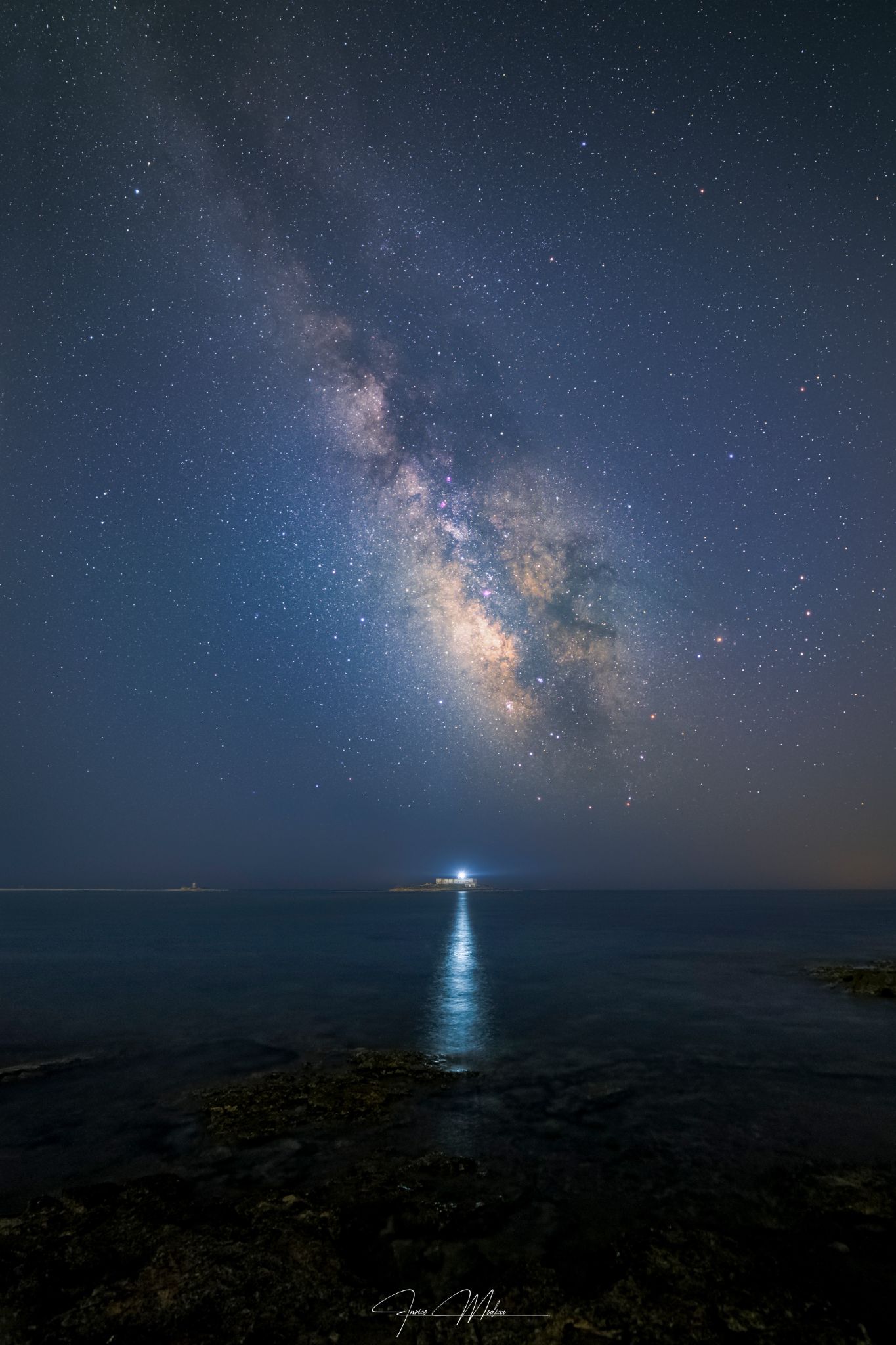
On 07/17/2026 11:00 pm by Enrico Modica | Website | Portopalo di Capopassero, Sicily, Italy
The photograph was captured at approximately 11:00 PM (23:00 CEST) on July 17, 2026, near Isola delle Correnti, the southernmost point of Sicily, Italy, where the Ionian Sea meets the Mediterranean Sea.
The image depicts the Galactic Centre of the Milky Way rising above the island, with the lighthouse beam reflecting across the sea and naturally guiding the viewer’s eye toward the star-filled sky. The bright central bulge of our Galaxy lies in the direction of the constellation Sagittarius, approximately 27,000 light-years from Earth. Also visible are several prominent summer constellations, including Scorpius (with the bright red star Antares), Ophiuchus and Aquila (with Altair).
Camera: Nikon D750 (full-frame DSLR)
Lens: Samyang 14 mm f/2.8
Mount: Sky-Watcher Star Adventurer 2i Pro (star tracker)
Sky
Camera: Nikon D750
Lens: Samyang 14 mm
Star tracker used
30 stacked exposures
ISO 800
Aperture: f/3.2
Exposure time: 45 seconds per frame
Foreground
4 untracked exposures
ISO 400
Aperture: f/4
Exposure time: 30 seconds per frame
Processing
The sky images were calibrated, aligned, and stacked using DeepSkyStacker to improve the signal-to-noise ratio. The RAW files were then developed in Adobe Lightroom Classic, while the final image was completed in Adobe Photoshop, where the tracked sky and the static foreground were blended and refined to achieve a natural representation of the scene while preserving the finest details of the Galactic Centre.
ooOOoo
It is a stunning image.
It takes me back many years to when I was living on Songbird of Kent, a sloop, in Cyprus, and using the summers to cruise. I will never forget the night skies at sea, far from lights from the land.
Beautiful!
 Learning from Dogs