NASA celebrates Hubble’s 36th anniversary with a new image of the Trifid Nebula, a star-forming region it first captured in 1997. The telescope leveraged almost its full operational lifetime to show us changes in the nebula on human time scales with an improved camera. NASA, ESA, STScI; Image Processing: Joseph DePasquale (STScI)
During the week of the 20th to 24th April, 2026, BBC Radio 4, immediately after the World At One, at 13:45-14-00 BST, presented a fifteen-minute series on death. The episode of the April 22nd, 2026 was called Lay This Body Down. It is summarised as follows:
As our society becomes more secular, more people feel like they want to do death their own way. That’s leading to a range of new options for disposing of dead bodies.
Now watch this:
Jean and I have opted for human composting after we have died. It is a natural process and details may be found here.
George Bernard Shaw once remarked that America and Britain are “two countries separated by the same language.”
A long time ago that became a quotable quote. Shaw was born in Dublin in 1856 and died in England in 1950. He was 94.
Although I have visited the USA many times before, I came to live here in Merlin, Oregon, with Jeannie, my gorgeous wife, in 2012. And we love living here.
However, I still think like an Englishman and spell my words in English English.
Read the following. I am sure you will enjoy it.
ooOOoo
Despite all the likes, literallys and dropped g’s, English isn’t decaying before our eyes
While these common gripes point to eccentric speech patterns, they don’t point to grammatical annihilation. English has weathered far worse.
Let’s start with something we can all agree on: Old English, spoken from approximately A.D. 450 to 1100, is pretty unintelligible to us today. Anyone who’s had the pleasure of reading “Beowulf” in high school knows how different English back then used to sound. Word endings did a lot more grammatical work, and verbs followed more complicated patterns. Remnants of those rules fuel lingering debates today, such as when to use “whom” over “who,” and whether the past tense of “sneak” is “snuck” or “sneaked.”
The language went on to experience centuries of tumult: Viking invasions, which introduced Old Norse influence; Anglo-Norman French rule, which shifted the language of the elite to French; and 18th-Century grammarians, who dictated norms with their elocution and grammar guides.
In that time, English has lost almost all of the more complex linguistic trappings it was born with to become the language we know and – at least, sometimes – love today. And as I explain in my new book, “Why We Talk Funny: The Real Story Behind Our Accents,” it was all thanks to the way that language naturally evolves to meet the social needs of its speakers.
From dropping the ‘l’ to dropping the ‘g’
The things we tend to label as “bad” or sloppy English – for instance, the “g” that gets lost from our -ing endings or the deletion of a “t” when we say a word like “innernet” – actually reflect speech habits that are centuries old.
Take, for example, “often.” Originally spoken with the “t,” that pronunciation gradually became less favored around the 15th century, alongside that “l” in “talk” and the “k” in know. Meanwhile, the “s” now stuck on the back of verbs like “does” and “makes” began as a dialectal variant that only became popular in 16th-century London. It gradually replaced “th” whenever third persons were involved, as in “The lady doth protest too much.”
While dropping the “l” in talk may have been initially frowned upon, today it would be strange if you pronounced the letter. And the shift makes sense: It smoothed out some linguistic awkwardness for the sake of efficiency.
If people learned to look at language more like linguists, they might come around to seeing that there is more than one perspective on what good speech consists of.
And yes, that absolutely is a sentence ending with a preposition – something many modern grammar guides discourage, even though the idea only took hold after 18th-century grammarian Robert Lowth intimated it was a less elegant choice based on the model of Latin.
Though Lowth voiced no hard and fast rule against it, many a grammar maven later misconstrued his advice as an admonition. Just like that, a mere suggestion became grammatical law.
The rise of the grammar sticklers
Many of today’s ideas about what constitutes correct English are based on a singular – often mistaken – 19th-century view of the forces that govern our language.
Emulation of upper-crust speech norms became popular among the nouveau riche. With literacy also on the rise, grammarians and elocutionists raced to dictate the terms of “proper” English on and off the page, which led to the rise of usage guides and dictionaries that were eager to sell a certain brand of speech.
Another example of grammarian angst reconfiguring the view of an otherwise perfectly fine form is the droppin’ of the “g.” It became so tied to slovenly speech that it was branded with an apostrophe in the 19th century to make sure no one missed its lackadaisical and nonstandard nature.
Up until the 19th century, however, no one seemed to care whether one pronounced it as “-in” or “-ing.”
In fact, evidence suggests that -ing wasn’t even heard as the correct form. Many elocution guides from the 18th century provide rhyming word pairs like “herring/heron,” “coughing/coffin” and “jerking/jerkin,” which suggest that “-in” may have been the preferred pronunciation of words ending with “-ing.” Even writer and satirist Jonathan Swift – a frequent lobbyist for “proper” English – rhymes “brewing” with “ruin” in his 1731 poem “Verses on the Death of Dr. Swift, D.S.P.D..”
Embrace the change
Language has always shifted and evolved. People often bristle at changes from what they’ve known to what is new. And maybe that’s because this process often begins with speakers that society usually looks less favorably on: the young, the female, the poor, the nonwhite.
But it’s important to remember that being disliked and bad are not the same thing – that today’s speech pariahs are driven by the same linguistic and social needs as the Londoners who started going with “does” instead of “doth” or dropped the “t” in often.
So if you think the speech that comes from your lips is the “correct” version, think again. Thou, like every other English speaker, art literally the product of centuries of linguistic reinvention.
In Alex’s own words, “My main camera is the OM system OM-1 mkii with the 150-400 TCPro lens and had an external 2x teleconverter on the lens giving me over 2000mm effective reach.“
The video is fascinating.
If for any reason you cannot watch the embedded YouTube video above, then try this:
How to Capture Stunning Photos and Videos of Your Dog With Ease
For beginner dog owners who want Instagram dog photos without stressing their pup, the hardest part is how quickly dogs move and how fast those perfect moments disappear. One second brings a head tilt, a goofy grin, or a soulful look, and the next second it’s gone, leaving blurry shots that don’t match the bond dog owners feel in real life. The good news is that pet photography basics don’t require fancy gear to start capturing dog expressions with more consistency. With a little patience and a creative pet photography mindset, everyday walks and couch cuddles can turn into photos and videos that feel true to a dog’s personality.
Quick Summary: Better Dog Photos and Videos
Use natural, soft lighting to flatter your dog and avoid harsh shadows.
Choose calm, comfortable locations so your dog stays relaxed and camera-ready.
Get down to your dog’s eye level and try simple angle changes for more engaging shots.
Use treats or toys to guide attention and capture alert, happy expressions.
Keep edits light with basic photo editing software to enhance, not overhaul, your results.
Set Up the Shot: Light, Gear, Angle, and Composition
A few small setup choices can turn a “cute but blurry” pet photo into something you’re proud to frame or share. Use these quick, beginner-friendly tweaks to make your dog’s expressions look crisp and natural.
Start with gentle natural light: Put your dog near an open doorway, a bright window with indirect light, or outside in open shade (like under a tree or porch). You’ll get softer shadows and truer fur colors, natural light improves photo quality in ways harsh indoor bulbs often can’t. If the sun is strong, turn your dog so the light hits from the side, not straight overhead.
Choose a pet-friendly spot that sets your dog up to succeed: Pick a location where your dog can relax and move safely, your living room rug, a fenced yard, or a quiet park corner away from busy paths. Avoid slippery floors, crowded dog areas, or places with tempting trash and food smells that pull attention. The more comfortable your dog feels, the easier it is to capture genuine expressions without pushing them past their stress threshold.
Stabilize with an adjustable tripod (even for phones): Set an adjustable tripod low for “dog-level” photos, or raise it slightly for a clean, simple background. Stability helps both photos and video look instantly more polished, especially indoors where shutter speeds drop. For extra flexibility, try a wide stance for the tripod legs so it won’t tip if your dog bumps it.
Use a remote shutter or timer to free up your hands: A remote shutter lets you keep your attention on your dog instead of hovering over the screen, which often leads to better eye contact and calmer behavior. If you don’t have a remote, use a 3–10 second timer and cue a simple “sit” or “touch” right as it counts down. This also helps with ethical handling, you can reward quickly and keep sessions short and positive.
Shoot from your dog’s eye level for more personality: Kneel, sit, or even lie on the floor so the camera is level with your dog’s eyes. This angle makes faces look more expressive and avoids the “tiny dog on a huge floor” effect you often get from standing height. For videos, hold that low angle steady for 5–10 seconds at a time so you can capture a full expression or head tilt.
Use simple composition rules to spotlight the face: Put your dog’s eyes near the top third of the frame, and leave a little space in front of their nose in the direction they’re looking. Scan the background for distractions, bright laundry, trash bins, tangled leashes, and shift a step left or right to clean it up. If your dog is dark-coated, place them against a lighter, uncluttered background so their features don’t disappear.
Common Questions About Easy Dog Photos & Videos
Q: What lighting conditions work best for taking Instagram-worthy photos of my dog? A: Aim for soft, even light so fur texture and eye sparkle show up naturally. Bad light, you have bad video, so step near a bright window indoors or choose open shade outside to avoid squinting and harsh contrast. If your dog seems restless, keep it short and try again later rather than forcing the moment.
Q: How can I get my dog to look directly at the camera for photos and videos? A: Make the camera “predict good things” by rewarding calm glances with a tiny treat or gentle praise. Hold a treat near the lens, cue an easy behavior your dog enjoys, then release quickly so it stays fun. If your dog turns away, respect that and capture a candid moment instead.
Q: What types of equipment are worth investing in to improve my dog photography? A: Prioritize stability and speed: a simple tripod or phone clamp and a remote shutter reduce blur and let you focus on your dog. If you shoot lots of video, a small light or reflector can help in dim rooms without startling your pup. Upgrade only when your current setup feels limiting.
Q: How can I edit my dog photos to make them more engaging without overdoing it? A: Start with gentle tweaks: crop to emphasize eyes, brighten slightly, and lower highlights to keep fur detail. Keep colors realistic so your dog still looks like your dog, and avoid heavy smoothing that erases whiskers and texture. Save a “natural” preset so your style stays consistent.
Q: What should I consider if I want to create and share a dedicated Instagram account for my dog? A: Let your dog’s comfort set the pace, not a posting schedule, and skip anything that stresses them for the sake of content. Share moments that reflect your values, like enrichment, consent-based handling, and everyday joy. Use short clips, then optionally clean them up with a web-based video creator to trim, stabilize, and add simple captions.
In early April 2026, the Artemis II mission captivated me and millions of people watching from across the world. The crew’s courage, skill and infectious wonder served as tangible proof of human persistence and technological achievement, all against the mysterious backdrop of space.
People back on Earth got to witness the mission through remarkable photos of space captured by astronauts. Images created and shared by astronauts underscore how photography builds a powerful, authentic connection that goes beyond what technology alone can capture.
As a photographer and the director of the Rochester Institute of Technology’s School of Photographic Arts and Sciences, I am especially drawn to how these photographs have been at the center of the public’s collective experience of this mission.
In an era when image authenticity is often questioned and with the capabilities of autonomous, AI-driven imaging, NASA’s choice to train astronauts in photography has placed meaning over convenience and prioritized their human perspectives and creativity.
Capturing space from the crew’s perspective
Photography was not originally placed as a high priority in NASA’s Apollo era. The astronauts only took photographs if they had the chance and all their other tasks were complete.
‘The Blue Marble’ view of the Earth as seen by the Apollo 17 crew in 1972. NASA
This excitement could be explained by the novelty of photos from space, but these images also distinguish themselves as products of astronauts experiencing these sights and interpreting them through their photographs. These differences require an important distinction around where technology ends and humanity begins.
NASA astronaut Reid Wiseman watches the Moon from one of the Orion spacecraft’s windows. NASA
Human perspective versus AI tools
Photography has long integrated AI-powered software and data-driven tools in a variety of ways: to process raw images, fill in missing color information, drive precise focus and guide image editing, among others. These modern technological assists help human photographers realize their vision.
And AI can generate convincing, realistic images and videos from nothing more than a text prompt, using readily available tools.
Researchers train AI to mimic patterns informed by millions of sample images, and the algorithm can then either take or create a photograph based on what it predicts would be the most likely version of a successful, believable image.
Human-created photos are rooted in direct observation, intent and lived experience, while AI images – or choices made by AI-driven tools – are not. While both can produce compelling and believable visuals, the human photographs carry emotional power because the photographer is drawing from their experiences and perspective in that moment to tell an authentic story.
Artemis II photographs resonate, not only because they are historic, but because they reflect the deliberate choices and intent of a human being in that specific moment and context. The exposure, camera setting, lens choice and composition are all dictated by the astronaut’s vision, skill, perspective and experience. Each image is unique in comparison with the others. These choices give the images narrative power, anchoring them in human perspective.
NASA’s ‘Earthset’ photo captured by the Artemis II crew. NASA
Images to tell a story
Photographers choose what to include in the final version of their image to tell a story. In the Artemis II images, this human perspective comes out. In the “Earthset” photo, you see a striking juxtaposition of the Moon’s monochromatic, textured surface in the foreground against a slivered, bright Earth.
The choice to include both in the frame contrasts these objects literally and figuratively, inviting comparison. It creates a narrative where Earth is contrasted against the Moon – life is contrasted against the absence of it.
Another photo shows the nightside of the whole Earth, featuring the Sun’s halo, auroras and city lights. The choice to include the subtle framing of the window of the capsule in the lower left corner reminds the viewer where and how this image was captured: by a human, inside a capsule, hurtling through space. That detail grounds the photograph in the human perspective.
Both photos are reminiscent of Earthrise and the Blue Marble. These past images hold a place in the global collective consciousness, shaped by a shared historical moment.
The Artemis II photographs are anchored in this collective moment of lived human experience, yet also shaped by each astronaut’s viewpoint. The crew’s unique perspectives exemplify photography’s transformative power by inviting viewers to engage emotionally and intellectually with their journey. These photographs share the astronauts’ awe and wonder and affirm the value of human creativity and its ability to connect us in a captured moment.
I am going to repeat a sentence towards the end of the article: “These past images hold a place in the global collective consciousness, shaped by a shared historical moment.”
Amazingly, Jean and I were being run recently in to somewhere local and Trevor, our driver, was listening to a talk by David Eagleman. I was captivated.
In that talk David Eagleman spoke about Roger Penrose and his research into consciousness. Here’s an AI summary:
Roger Penrose proposes that human consciousness is non-computational and originates from quantum processes within brain neurons, rather than just neural connections. Together with anesthesiologist Stuart Hameroff, he developed the “Orchestrated Objective Reduction” (Orch OR) theory, which suggests consciousness arises from quantum computations in microtubules.
Roger Penrose is the author of The Emperers New Mind.
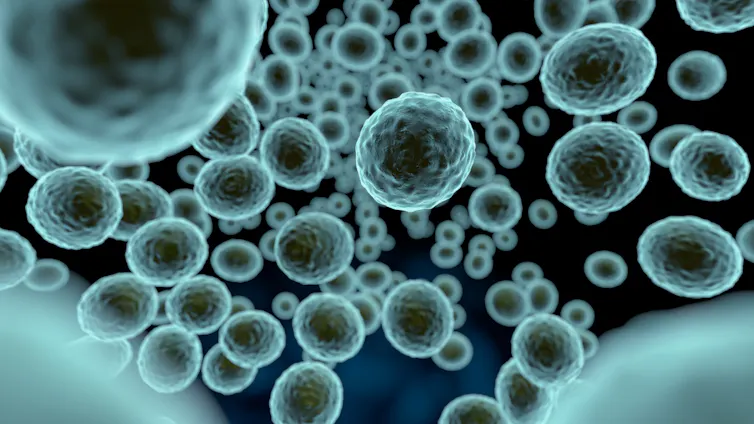
Thus, beyond the eighty-six billion neurons that make up the brain, there are also the microtubals. These are very small and the diameter of several thousand of them are less than the diameter of the human hair. See WikiPedia.
“The brain has deep purpose” was one of the sayings Eagleman spoke of. “Why do we have experience” was another.
There was much more that I did not really understand. But it was still fascinating.
Then we discovered that what Trevor was listening to was also a video. The video is Inner Cosmos. It runs for 75 wonderful minutes.
Here is that video.
To say that this has absolutely updated my mind to a newer level is an understatement; big time!
Jean and I were taken to our regular humanist meeting last Saturday morning. The topic was Christian Nationalism.
Today, I want to explain what these commitments are. Then on Sunday I will post some images.
ooOOoo
Ten Commitments
Guiding Principles for Teaching Values in America’s Public Schools
Altruism
Altruism is the unselfish concern for the welfare of others without expectation of reward, recognition, or return. Opportunities for acts of altruism are everywhere in the family, the classroom, the school, and the wider community. Think of examples of altruistic acts in your experience. What person-to-person and group projects, classroom and school-wide activities, and community service projects might you and your students undertake?
Caring for the World Around Us
Everyone can and ought to play a role in caring for the Earth and its inhabitants. We can directly experience the living things in our homes and neighborhoods like trees, flowers, birds, insects, and pets. Gradually we expand our neighborhood. We learn about deserts and oceans, rivers and forests, the wildlife around us and the wildlife elsewhere. We learn that we are dependent on each other, on the natural world, and all that lives in it for food and shelter, space and beauty.
Critical Thinking
We gain reliable knowledge because we are able to observe, report, experiment, and analyze what goes on around us. We also learn to raise questions that are clear and precise, to gather information, and to reason about the information we receive in a way that tests it for truthfulness, accuracy, and utility. From our earliest years we learn how to think and to share and challenge our ideas and the ideas of others, and consider their consequences. Practice asking “what next?” and “why?” and “how do I/you/we know that?”
Empathy
We human beings are capable of empathy, the ability to understand and enter imaginatively into another living being’s feelings, the sad ones and the happy ones as well. Many of the personal relationships we have (in the family, among friends, between diverse individuals, and amid other living things) are made positive through empathy. With discussion and role-playing, we can learn how other people feel when they are sad or hurt or ignored, as well as when they experience great joys. We can use stories, anecdotes, and classroom events to help us nurture sensitivity to how our actions impact others.
Ethical Development
Questions of fairness, cooperation, and sharing are among the first moral issues we encounter in our ethical development as human beings. Ethical education is ongoing implicitly and explicitly in what is called the “hidden curriculum” that we experience through the media, the family, and the community. Ethics can be taught through discussion, role-playing, storytelling, and other activities that improve analysis and decision-making regarding what’s good and bad, right and wrong.
Global Awareness
We live in a world that is rich in cultural, social, and individual diversity, a world where interdependence is increasing rapidly so that events anywhere are more likely to have consequences everywhere. Much can be done to prepare the next generation for accepting the responsibility of global citizenship. Understanding can be gained regarding the many communities in which we live through history, anthropology, and biology. A linguistic, ethnic, and cultural diversity are present in the classroom and provide lessons of diversity and commonality. We help others reach understanding about the interconnectedness of the welfare of all humanity.
Humility
We must always remember that there’s a lot we don’t know about the universe. There’s still so very much to learn. Science will help us. But sometimes scientists discover surprising things that tell us how some of our old beliefs are false. So we need to be willing to change when our knowledge changes. A good humanist doesn’t try to be sure of things that science can’t show are true.
Peace and Social Justice
A curriculum that values and fosters peace education would promote the human rights of all people and understanding among all nations, cultural and religious groups. Students should have opportunities to learn about the United Nations’ role in preventing conflict as well as efforts to achieve social justice in the United States. They should learn about problems of injustice including what can be done to prevent and respond to these problems with meaningful actions that promote peace and social justice and that protect the inherent human rights of everyone both at home and abroad.
Responsibility
Our behavior is morally responsible when we tell the truth, help someone in trouble, and live up to promises we’ve made. Our behavior is legally responsible when we obey a just law and meet the requirements of membership or citizenship. But we also have a larger responsibility to be a caring member of our family, our community, and our world. Stories and role-playing can help students understand responsibility and its absence or failure. We learn from answering such questions as: What happens when we live in accordance with fair and just rules? What happens when we don’t? What happens when the rules are unjust?
Service and Participation
Life’s fulfillment can emerge from an individual’s participation in the service of humane ideals. School-based service-learning combines community service objectives and learning objectives with the intent that the activities change both the recipient and the provider. It provides students with the ability to identify important issues in real-life situations. Through these efforts we learn that each of us can help meet the needs of others and of ourselves. Through our lifetime, we learn over and over again of our mutual dependence.
ooOOoo
My mother was an atheist and, consequently, I have been an atheist all my life. With the above values, as they are taught in schools, there is no need for a God.