We were out much of the day yesterday so I didn’t have huge time for the blog.
But nevertheless I could let the day go by without sharing this video with you.
Yes, it is an advertising video but so what. It is the most delightful combination of mountain biking and dogs. Alex is a great mountain biking enthusiast.
Time after time we read about the special bond between humans and dogs. And unlike us humans dogs seem to completely forget times in their past when they were treated cruelly.
Take this story of a dog that was an absolute hero.
ooOOoo
Dog Spots A Boy Being Swept Out To Sea And Rushes To Help Him
Max was never trained to be a hero, but when the moment called for it, the Staffordshire terrier/bulldog mix answered the call.
Before Jamie and Rob Osborn adopted Max, he was a neglected pup. He lived mostly outside and was never taken out for walks. But the love of his new parents quickly changed the wary dog.
FACEBOOK/ROBERT OSBORN
“When we got him, he was a bit antisocial,” Jamie Osborn told The Dodo. “If we were patting him too much, he’d get up and walk away. These days, Max is a completely different dog. He’s always happy! He’s really loving and gives us lots of love and affection.”
Max now lives inside as part of the family in Port Noarlunga, Australia. He loves sleeping in bed with his 11-year-old brother, Nev, and — most of all — splashing around in the water.
In the summer, Max spends most of his time at the beach with his family. “We have kayaks and he likes to swim along with us as we paddle, so we got him a life jacket so he wouldn’t get too worn out,” Osborn said. “Rob likes to surf and snorkel, so Max can often be seen at the beach hanging with the surfers waiting for a wave.”In January, Max was enjoying a quiet day at the beach with his dad and brother when something went wrong. A young boy got caught in the current and started to panic. Instead of swimming parallel to the shore to escape the current, he tried to swim against the current and quickly got stuck. Rob spotted the boy and called out to Max for help.
FACEBOOK/JAMIE OSBORN
“Max was just swimming around, wearing his life jacket, having a great time when the young boy got into trouble,” Osborn said. “Rob had the boy call Max over. Max was just doing what he loves best — swimming.” Max obediently swam over to the struggling boy and let him grab ahold of his life jacket. The pup fought the current and towed him back to the safety of the beach.
Later, Max acted as lifeguard yet again. “One of Nev’s friends also found it a bit tough, so he went back and got her, too,” Osborn wrote on Facebook.
Max was declared a hero — but he doesn’t know it. All he knows is that he’s getting a lot more pets and treats, and is happier than ever.
ooOOoo
Isn’t this a terrific story! Max is a real star and hero. But then so are many, many other dogs. All they need is love from us humans and then they bond with us for life.
But first we want to remember Prince Phillip. Dear Prince Phillip. Jeannie and I watched the whole of the funeral and it was very moving.
So in terms of the photographs already shown yesterday, we had done the Hog Creek landing and the next view point and we are now up to the bridge itself.
Except that I forgot to show you another photograph of the Canyon.
The sheer walls of Hellgate Canyon
The very dramatic scene with its incredibly steep flanks was just amazing!
Now to the viewpoint just before the bridge.
We had the very good fortune to take a shot of a fisherman just upstream of us.
A rock formation on the opposite bank.
All around us were spectacular sights.
Take this shot of a bird approaching a tree standing stark on the top of a small ridge. That was just to the right of the road facing the bridge.
And the bridge itself!
It really is a very scenic place.
That is the end of my set of photographs. My eyes were truly opened.
A few days ago there was a conversation on the photography forum Ugly Hedgehog about the camera opening one’s eyes. It struck a note in me and Jeannie and I went out in the early morning, taking the camera, to shoot photographs of the Hellgate Canyon.
It is not the first time we have been there but it is the first time I have gone with my eyes wide open!
But first some history of the Rogue River. And thanks to WikiPedia for the following.
The Rogue River in southwestern Oregon in the United States flows about 215 miles (346 km) in a generally westward direction from the Cascade Range to the Pacific Ocean. Known for its salmon runs, whitewaterrafting, and rugged scenery, it was one of the original eight rivers named in the Wild and Scenic Rivers Act of 1968. Beginning near Crater Lake, which occupies the caldera left by the explosive volcanic eruption and collapse of Mount Mazama, the river flows through the geologically young High Cascades and the older Western Cascades, another volcanic province. Further west, the river passes through multiple exotic terranes of the more ancient Klamath Mountains. In the Kalmiopsis Wilderness section of the Rogue basin are some of the world’s best examples of rocks that form the Earth’s mantle.
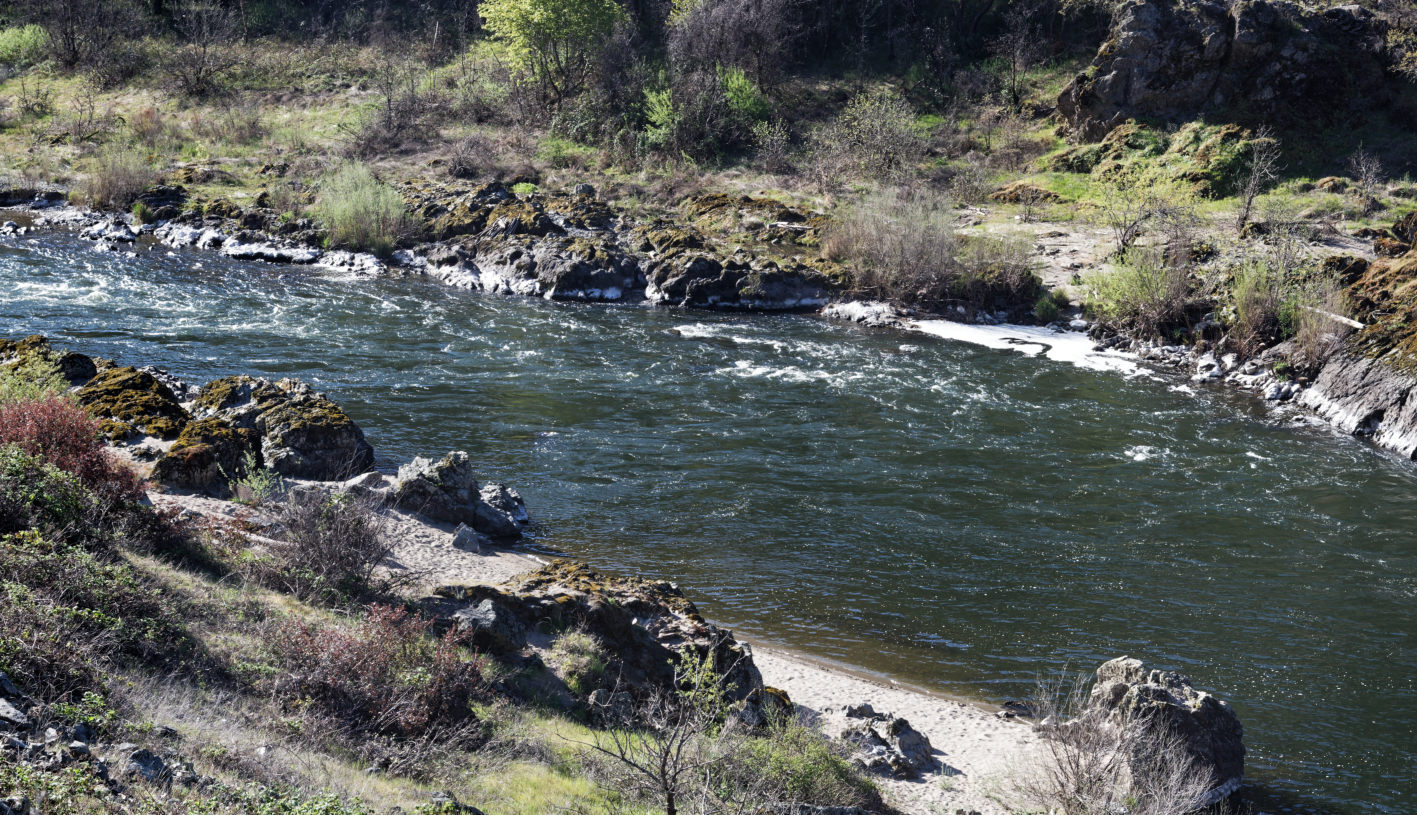
Hellgate Canyon is just 8 miles from where we live on Hugo Road. But just before Hellgate is the Hog Creek parking area. We stopped there and then went down to the landing stage on the edge of the Rogue River. I took some photographs.
Looking downstream.
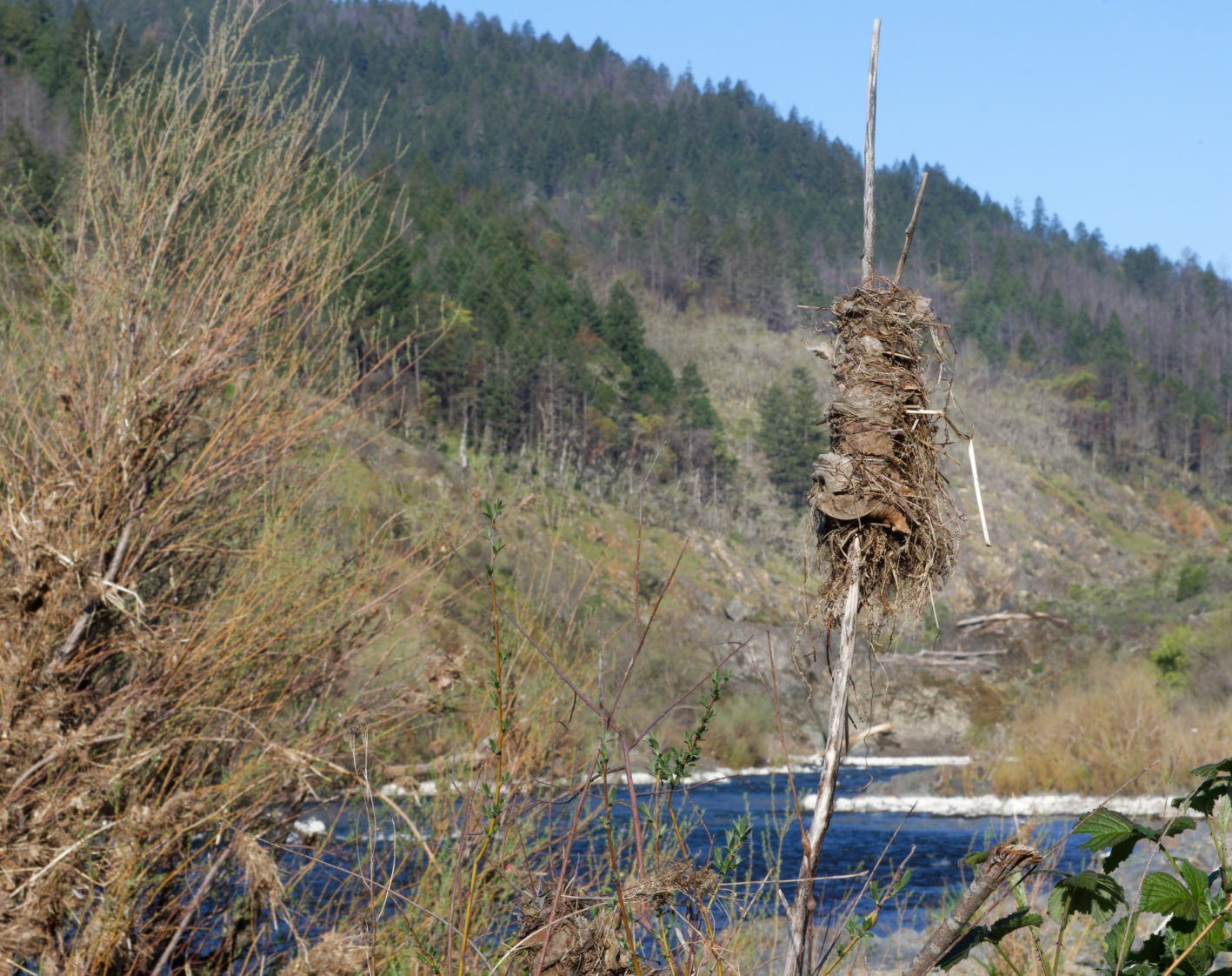
Sign of a previous high water.Just a close-up of a rock.The level of the river seems pretty low.
Then we motored the short distance further on to the view point above the canyon. Took more photographs.
A faint reflection of the rocks and trees on the bank behind the river.
Then onto the viewing spot just before the bridge.
I am going to pause this now and continue it on Sunday.
Yesterday we drove down to Phoenix, Oregon to deliver the Sun Tricycle to the new owners. Daniel and Cherie were a delightful couple, albeit more my age than younger. But they had been through one heck of a disaster. Because last year they were both asked to flee the fires with very little notice and only recently had they found a new home and were still settling in.
Daniel rides his trike and wanted to get one for Cherie. We were delighted with the sale and we hope we all will see each other in the near future.
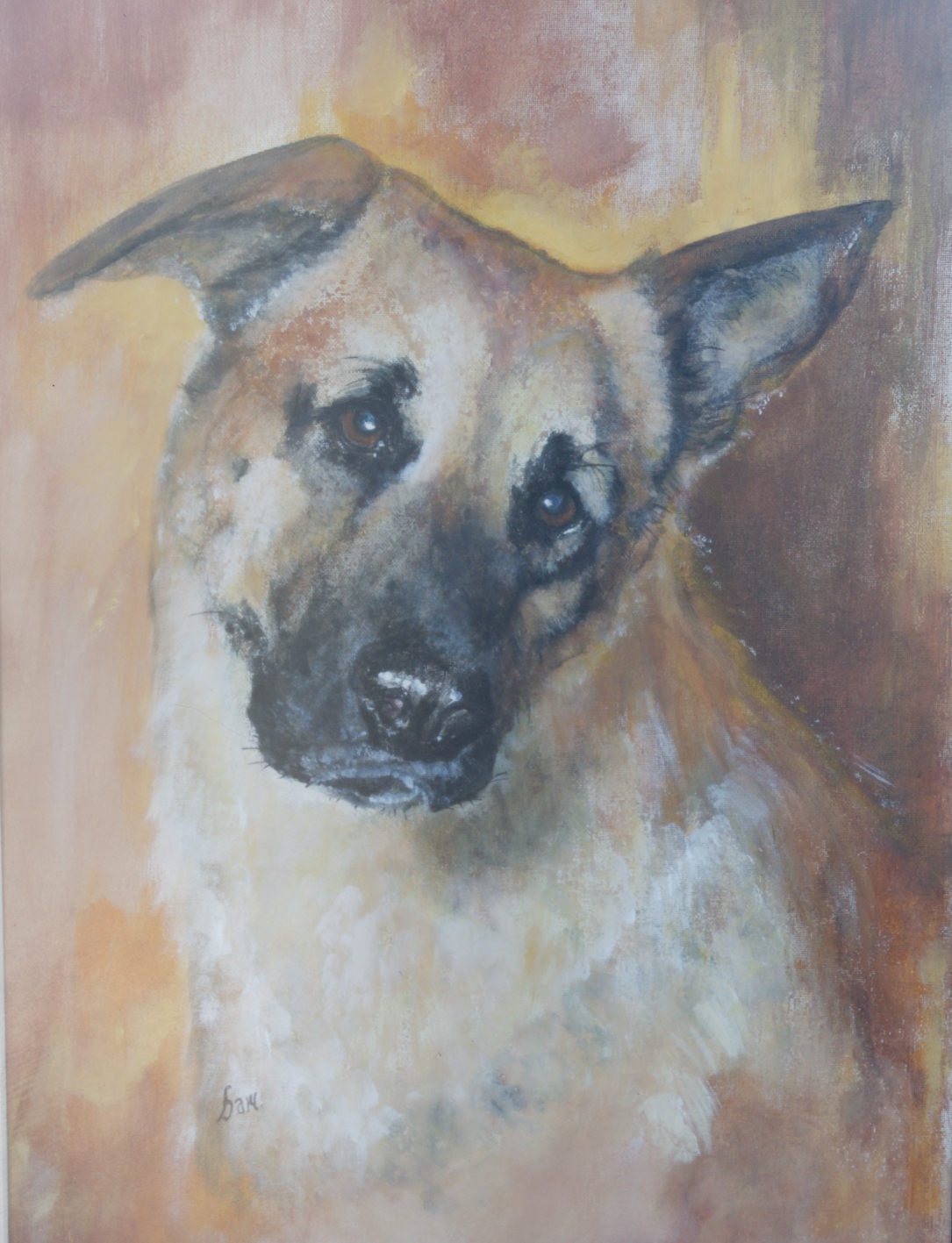
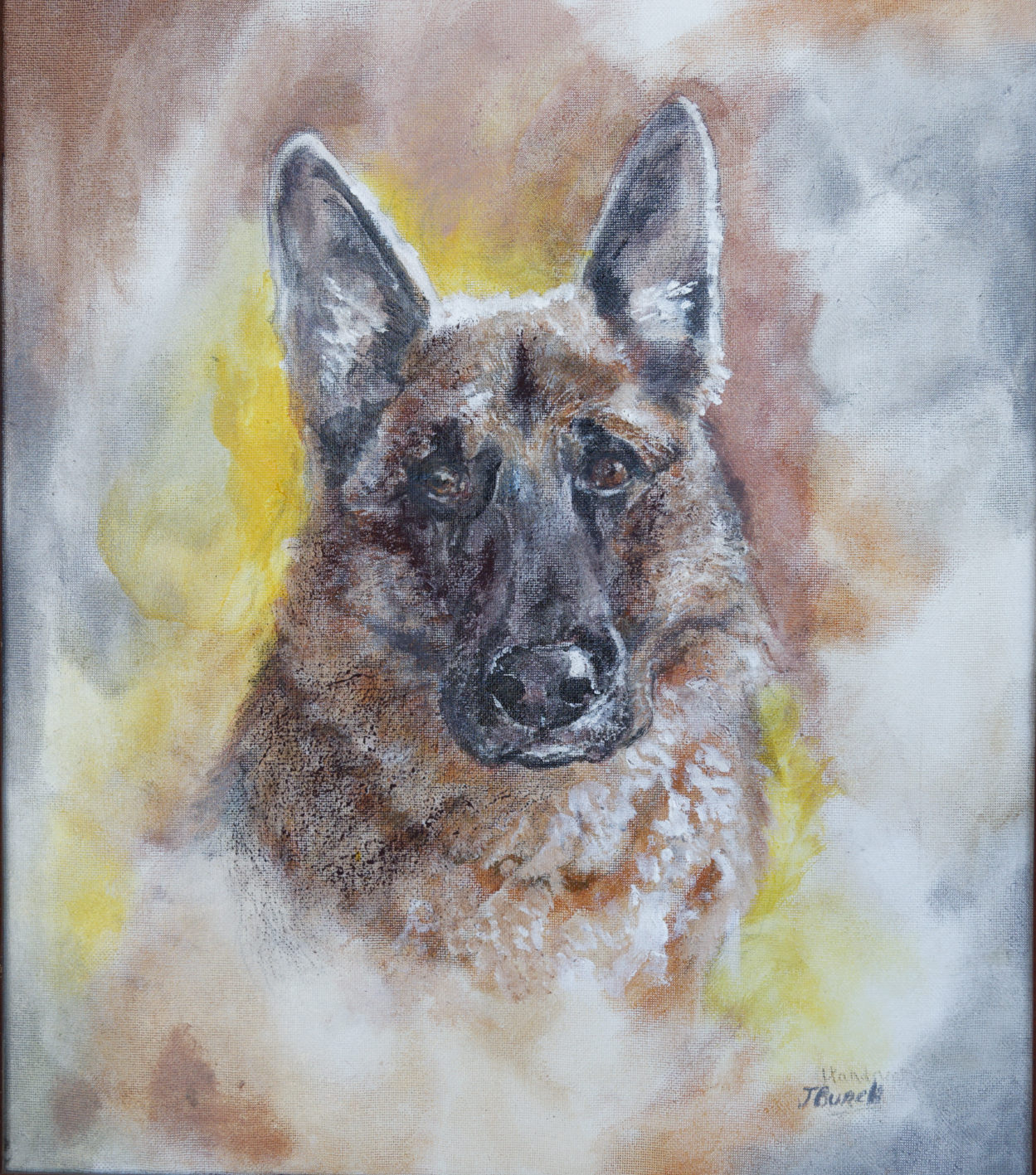
Anyway, Daniel is quite an artist and Jean mentioned she used to paint before the Parkinson’s tremor made it much more difficult. But Daniel insisted on photographs being taken of a few of Jean’s paintings and sent to them via email.
Nothing to do with dogs but everything to do with the future!
An item in The Conversation recently was not only interesting from a scientific point-of-view but also it had real lessons for the way that we humans are interfering with the planet.
As The Conversation introduced the article:
A mile below the surface of the Greenland ice sheet, an ancient Arctic ecosystem is preserved in the frozen soil. How scientists discovered its leaves, twigs and mosses is a story in itself. It starts with a secret military base built into the northern Greenland ice.
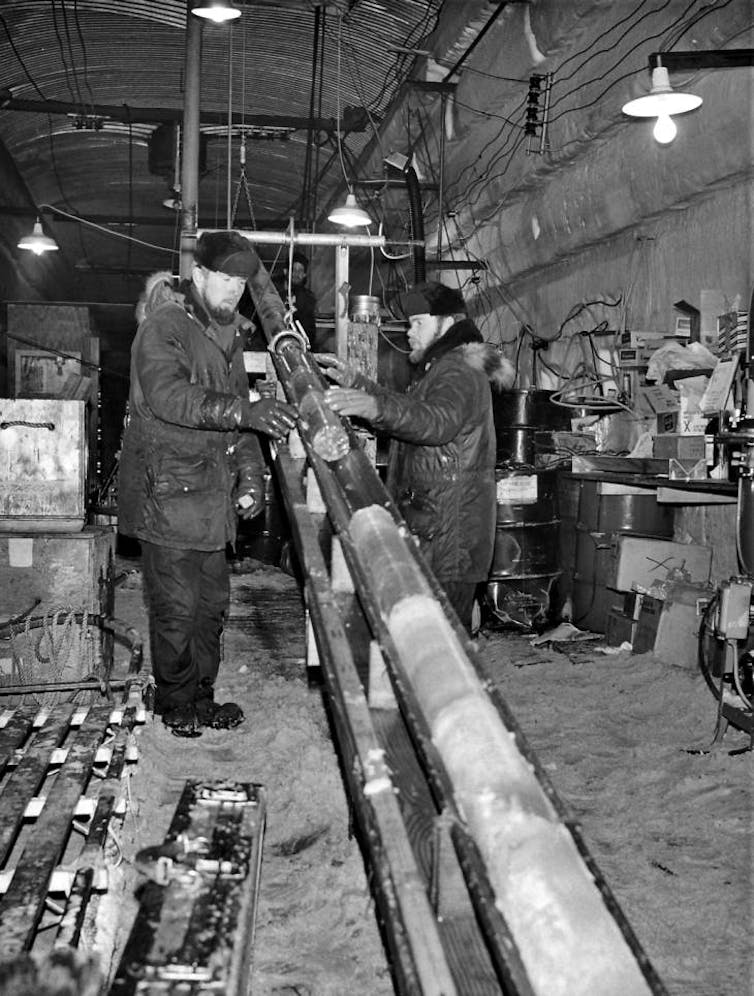
In 1963, inside a covert U.S. military base in northern Greenland, a team of scientists began drilling down through the Greenland ice sheet. Piece by piece, they extracted an ice core 4 inches across and nearly a mile long. At the very end, they pulled up something else – 12 feet of frozen soil.
The ice told a story of Earth’s climate history. The frozen soil was examined, set aside and then forgotten.
Half a century later, scientists rediscovered that soil in a Danish freezer. It is now revealing its secrets.
Using lab techniques unimaginable in the 1960s when the core was drilled, we and an international team of fellow scientists were able to show that Greenland’s massive ice sheet had melted to the ground there within the past million years. Radiocarbon dating shows that it would have happened more than 50,000 years ago. It most likely happened during times when the climate was warm and sea level was high, possibly 400,000 years ago.
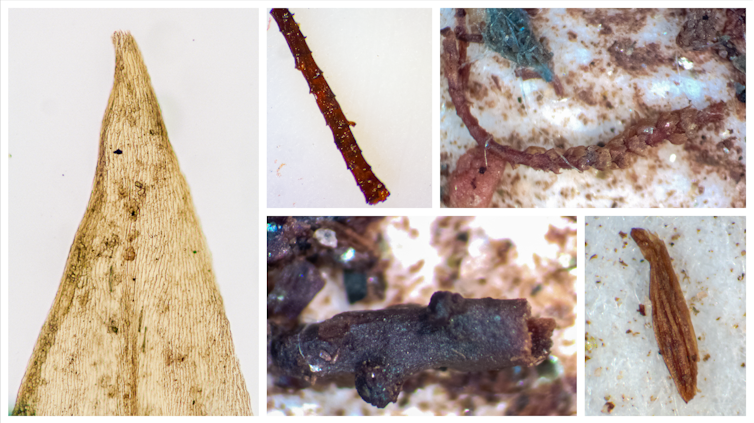
And there was more. As we explored the soil under a microscope, we were stunned to discover the remnants of a tundra ecosystem – twigs, leaves and moss. We were looking at northern Greenland as it existed the last time the region was ice-free. Our peer-reviewed study was published on March 15 in Proceedings of the National Academy of Sciences.
Engineers pull up a section of the 4,560-foot-long ice core at Camp Century in the 1960s. U.S. Army Corps of Engineers
Paul Bierman, a geomorphologist and geochemist, describes what he and his colleagues found in the soil.
With no ice sheet, sunlight would have warmed the soil enough for tundra vegetation to cover the landscape. The oceans around the globe would have been more than 10 feet higher, and maybe even 20 feet. The land on which Boston, London and Shanghai sit today would have been under the ocean waves.
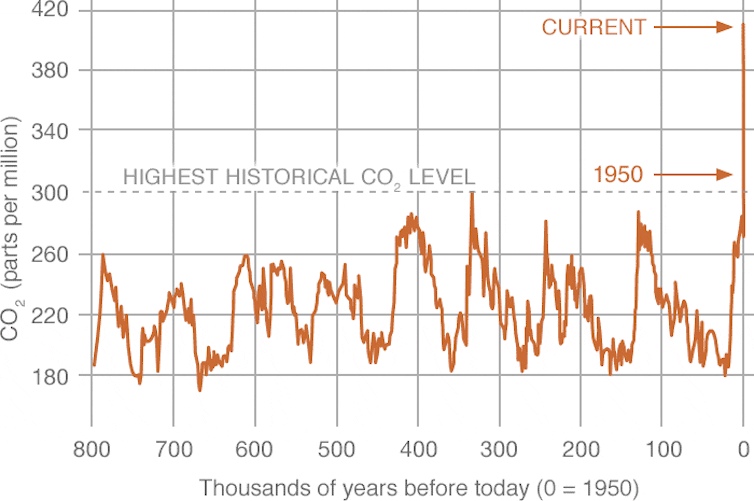
All of this happened before humans began warming the Earth’s climate. The atmosphere at that time contained far less carbon dioxide than it does today, and it wasn’t rising as quickly. The ice core and the soil below are something of a Rosetta Stone for understanding how durable the Greenland ice sheet has been during past warm periods – and how quickly it might melt again as the climate heats up.
Secret military bases and Danish freezers
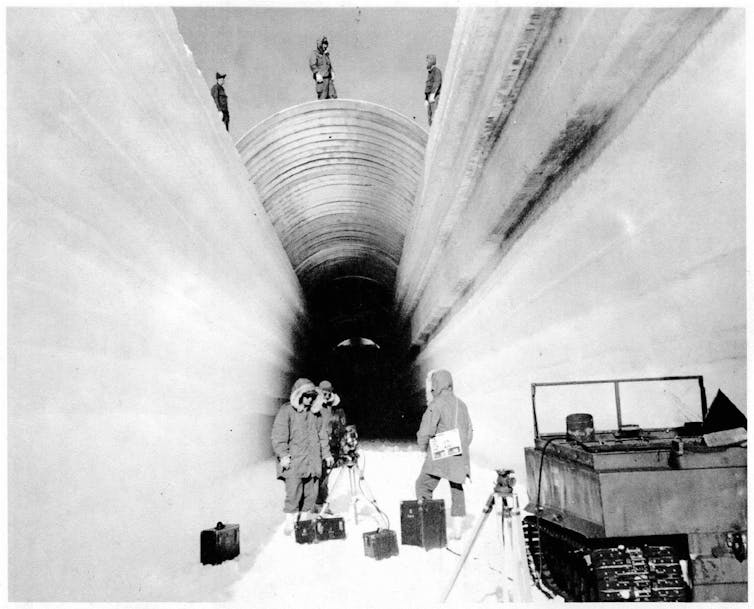
The story of the ice core begins during the Cold War with a military mission dubbed Project Iceworm. Starting around 1959, the U.S. Army hauled hundreds of soldiers, heavy equipment and even a nuclear reactor across the ice sheet in northwest Greenland and dug a base of tunnels inside the ice. They called it Camp Century.
It was part of a secret plan to hide nuclear weapons from the Soviets. The public knew it as an Arctic research laboratory. Walter Cronkite even paid a visit and filed a report.
Workers build the snow tunnels at the Camp Century research base in 1960. U.S. Army Corps of Engineers
Camp Century didn’t last long. The snow and ice began slowly crushing the buildings inside the tunnels below, forcing the military to abandon it in 1966. During its short life, however, scientists were able to extract the ice core and begin analyzing Greenland’s climate history. As ice builds up year by year, it captures layers of volcanic ash and changes in precipitation over time, and it traps air bubbles that reveal the past composition of the atmosphere.
One of the original scientists, glaciologist Chester Langway, kept the core and soil samples frozen at the University at Buffalo for years, then he shipped them to a Danish archive in the 1990s, where the soil was soon forgotten.
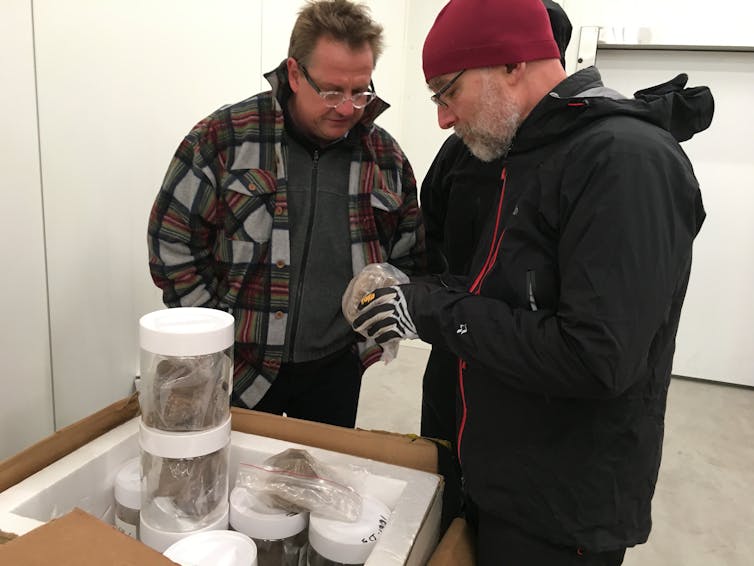
A few years ago, our Danish colleagues found the soil samples in a box of glass cookie jars with faded labels: “Camp Century Sub-Ice.”
Geomorphologist Paul Bierman (right) and geochemist Joerg Schaefer of Columbia University examine the jars holding Camp Century sediment for the first time. They were in a Danish freezer set at -17 F. Paul Bierman, CC BY-ND
A surprise under the microscope
On a hot July day in 2019, two samples of soil arrived at our lab at the University of Vermont frozen solid. We began the painstaking process of splitting the precious few ounces of frozen mud and sand for different analyses.
First, we photographed the layering in the soil before it was lost forever. Then we chiseled off small bits to examine under the microscope. We melted the rest and saved the ancient water.
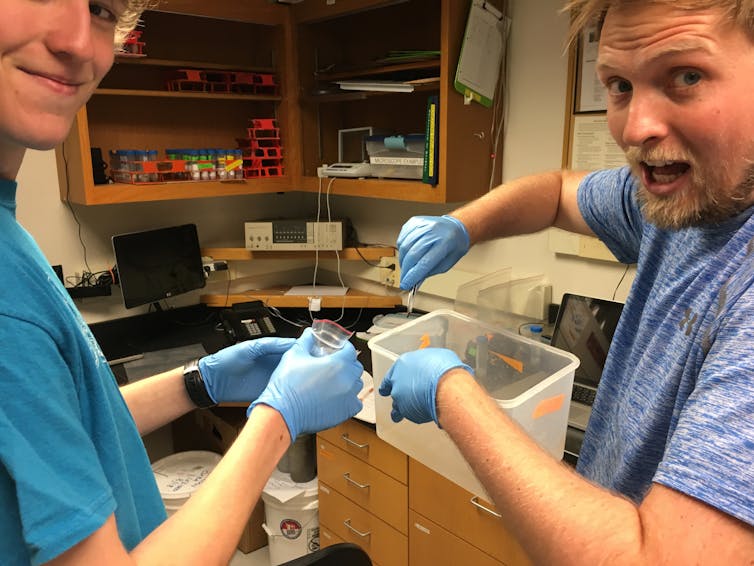
Then came the biggest surprise. While we were washing the soil, we spotted something floating in the rinse water. Paul grabbed a pipette and some filter paper, Drew grabbed tweezers and turned on the microscope. We were absolutely stunned as we looked down the eyepiece.
Staring back at us were leaves, twigs and mosses. This wasn’t just soil. This was an ancient ecosystem perfectly preserved in Greenland’s natural deep freeze.
Glacial geomorphologist Andrew Christ (right), with geology student Landon Williamson, holds up the first twig spotted as they washed a sediment sample from Camp Century. Paul Bierman, CC BY-ND
Dating million-year-old moss
How old were these plants?
Over the last million years, Earth’s climate was punctuated by relatively short warm periods, typically lasting about 10,000 years, called interglacials, when there was less ice at the poles and sea level was higher. The Greenland ice sheet survived through all of human history during the Holocene, the present interglacial period of the last 12,000 years, and most of the interglacials in the last million years.
But our research shows that at least one of these interglacial periods was warm enough for a long enough period of time to melt large portions of the Greenland ice sheet, allowing a tundra ecosystem to emerge in northwestern Greenland.
We used two techniques to determine the age of the soil and the plants. First, we used clean room chemistry and a particle accelerator to count atoms that form in rocks and sediment when exposed to natural radiation that bombards Earth. Then, a colleague used an ultra-sensitive method for measuring light emitted from grains of sand to determine the last time they were exposed to sunlight.
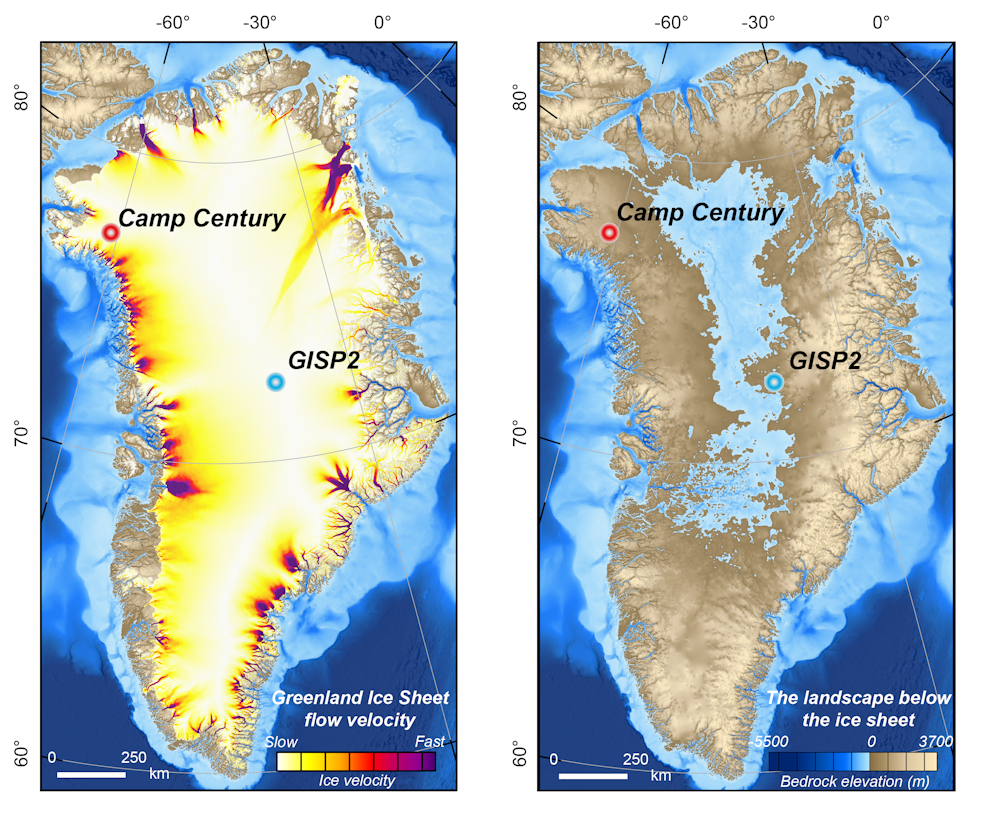
Maps of Greenland show the speed of the ice sheet as it flows (left) and the landscape hidden beneath it (right). BedMachine v3; Copernicus Climate Change Service (C3S), CC BY-ND
The concentration of carbon dioxide in the atmosphere today is well beyond past levels determined from ice cores. On March 14, 2021, the CO2 level was about 417 ppm. NASA Jet Propulsion Laboratory, CC BY-ND
Losing the Greenland ice sheet would be catastrophic to humanity today. The melted ice would raise sea level by more than 20 feet. That would redraw coastlines worldwide.
About 40% of the global population lives within 60 miles of a coast, and 600 million people live within 30 feet of sea level. If warming continues, ice melt from Greenland and Antarctica will pour more water into the oceans. Communities will be forced to relocate, climate refugees will become more common, and costly infrastructure will be abandoned. Already, sea level rise has amplified flooding from coastal storms, causing hundreds of billions of dollars of damage every year.
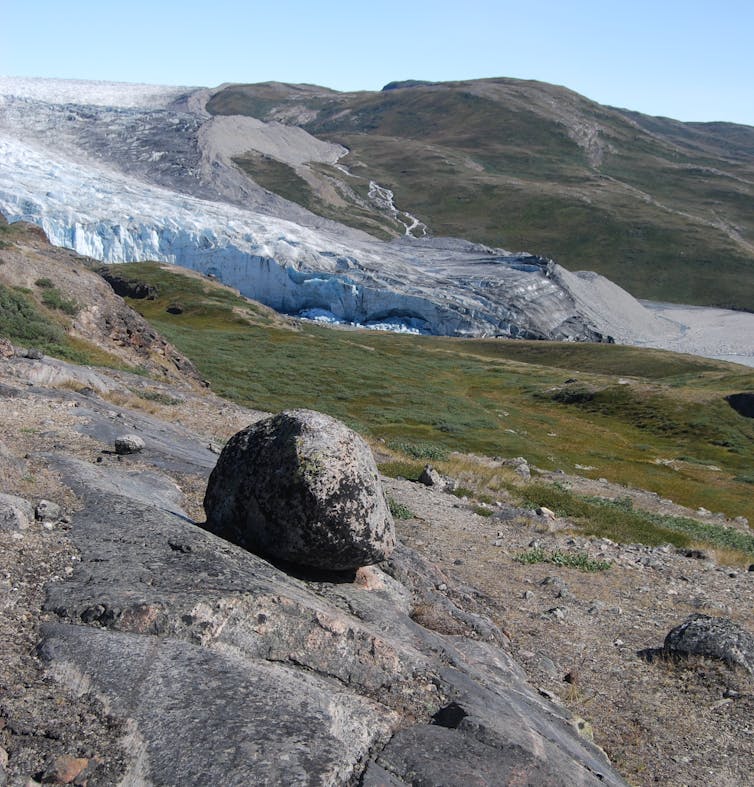
Tundra near the Greenland ice sheet today. Is this what Camp Century looked like before the ice came back sometime in the last million years? Paul Bierman, CC BY-ND
The story of Camp Century spans two critical moments in modern history. An Arctic military base built in response to the existential threat of nuclear war inadvertently led us to discover another threat from ice cores – the threat of sea level rise from human-caused climate change. Now, its legacy is helping scientists understand how the Earth responds to a changing climate.
The article is republished with the full permission of The Conversation.
I hope you read it because the way the climate is changing is affecting all of us now and sooner rather than later we have all got to amend our ways. Indeed, when I look at anyone who has potentially thirty or more years of life in them I ponder what their future is going to be like. And, of course, it won’t be a drastic change in thirty years it is already happening now albeit at times difficult to see.
But there is not one scintilla of doubt that we humans are the cause and we humans have to be the solution!
Gary, aka Nimbushopper, sent me an item that appeared on Newsmax.
It was all about the early settlers. I very much would like to share it with you.
ooOOoo
Study: Dogs Came to N. America With Earliest Humans
Wednesday, 24 February 2021.
A Siberian husky enjoys the snow during a training session in Huy, eastern Germany, on February 11, 2021. – Musher Kerstin Galisch is a multiple participant of national and international competitions and takes care of a pack of fifteen Siberian Husky sled dogs, that live in and around a former and rebuilt feedlot premises administration building. (Photo by Ronny Hartmann / AFP) (Photo by RONNY HARTMANN/AFP via Getty Images)
Scientists said Wednesday they had discovered the oldest remains of a domestic dog in the Americas dating back more than 10,000 years, suggesting the animals accompanied the first waves of human settlers.
Humans are thought to have migrated to North America from Siberia over what is today the Bering Strait at the end of the last Ice Age — between 30,000 and 11,000 years ago.
The history of dogs has been intertwined with man since ancient times, and studying canine DNA can provide a good timeline for human settlement.
A new study led by the University at Buffalo analysed the mitochondrial DNA of a bone fragment found in Southeast Alaska.
The team initially thought the fragment belonged to a bear.
But closer examination revealed it to be part of a femur of a dog that lived in the region around 10,150 years ago, and that shared a genetic lineage with American dogs that lived before the arrival of European breeds.
“Because dogs are a proxy for human occupation, our data help provide not only a timing but also a location for the entry of dogs and people into the Americas,” said Charlotte Lindqvist, an evolutionary biologist from the University at Buffalo and the University of South Dakota.
She said the findings, published in the journal Proceedings of the Royal Society B, supports the theory that humans arrived in North America from Siberia.
“Southeast Alaska might have served as an ice-free stopping point of sorts, and now — with our dog — we think that early human migration through the region might be much more important than some previously suspected,” said Lindqvist.
Older Migrations
A carbon isotope analysis of the bone fragment showed that the ancient Southeast Alaskan dog likely had a marine diet that consisted of fish and seal and whale scraps.
Lindqvist said dogs did not arrive in North America all at once. Some arrived later from East Asia with the Thule people, while Siberian huskies were imported to Alaska during the Gold Rush in the 19th century.
There is a long-standing contention about whether the first humans entered North America through a continental corridor that formed as the ice sheets receded, or along the North Pacific coast thousands of years earlier.
Previous age estimates of dog remains were younger than the fragment found by Lindqvist and the team, suggesting that dogs arrived in the continent during the later, continental migrations.
Lindqvist said her findings supported the theory that dogs in fact arrived in North America among the first waves of humans settlers.
“We also have evidence that the coastal edge of the ice sheet started melting at least around 17,000 years ago, whereas the inland corridor was not viable until around 13,000 years ago,” she told AFP.
“And genetic evidence that a coastal route for the first Americans over 16,000 years ago seems most likely. Our study supports that our coastal dog is a descendant of dogs that participated in this initial migration.”
ooOOoo
I have said it before and no doubt will say it again many times in the future: The bond that dogs have with us humans and, in return, the thanks and love that we have for our dogs goes back a very, very long time indeed.
This is just another article that confirms this.
Just want to repeat the amazing news that Charlotte Lindqvist reported:
But closer examination revealed it to be part of a femur of a dog that lived in the region around 10,150 years ago, and that shared a genetic lineage with American dogs that lived before the arrival of European breeds.
I do hope you read the full article as presented here.
I powered on my Mac to see some malware present. It was the “ActivityInputd” malware.
I spent a great deal of time trying to get rid of it, including a long call with Apple Support and an attempt to install Malwarebytes software. All to no avail at present.
So I just decided to republish the post I published on March 4th, 2018. It was a Picture Parade. Number Two Hundred and Thirty-Three.
Came up to Oregon for the rain, found a property that had been empty for years, Bank owned, put in a silly offer that was accepted, sold our Payson home and moved here, with 12 dogs and 6 cats, in October, 2012! Love the place. Will share some pictures of here next Sunday!
So today I am sharing a few pictures with you all. (All of them taken very recently.)
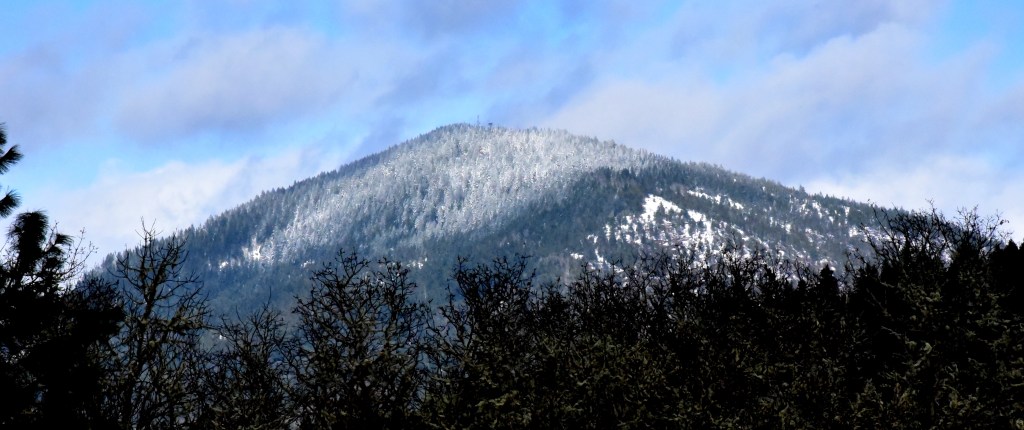
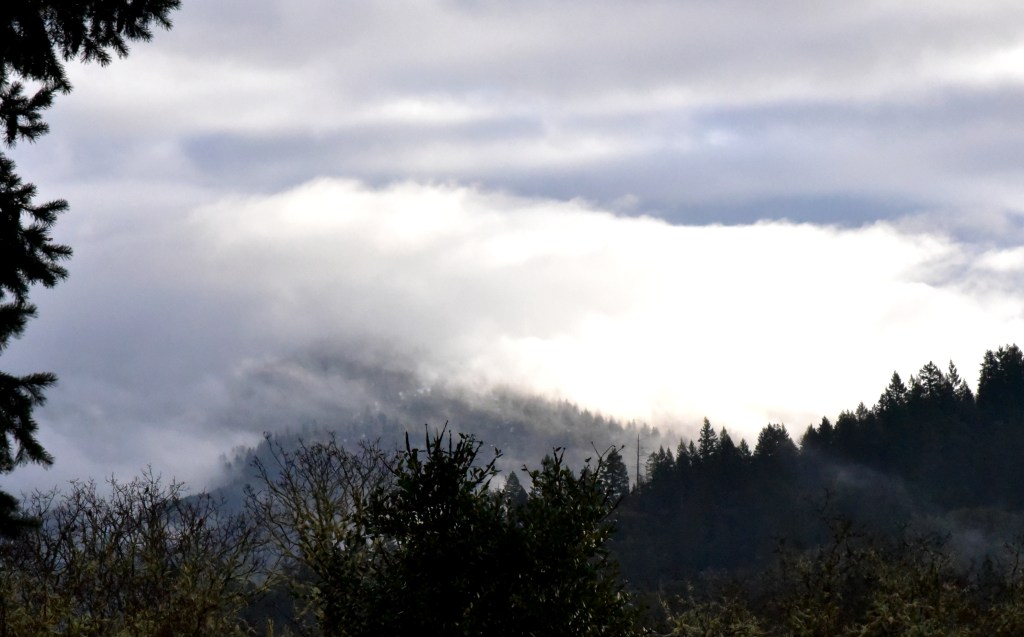
Mount Sexton just to the North-East of us. Take Feb. 24th.
oooo
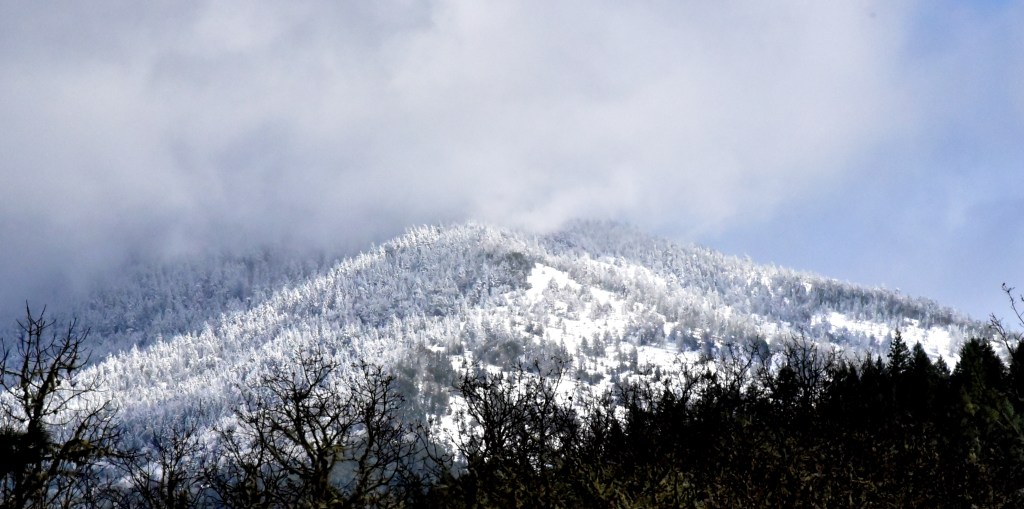
Another, more starker, Mt. Sexton taken two days later.
oooo
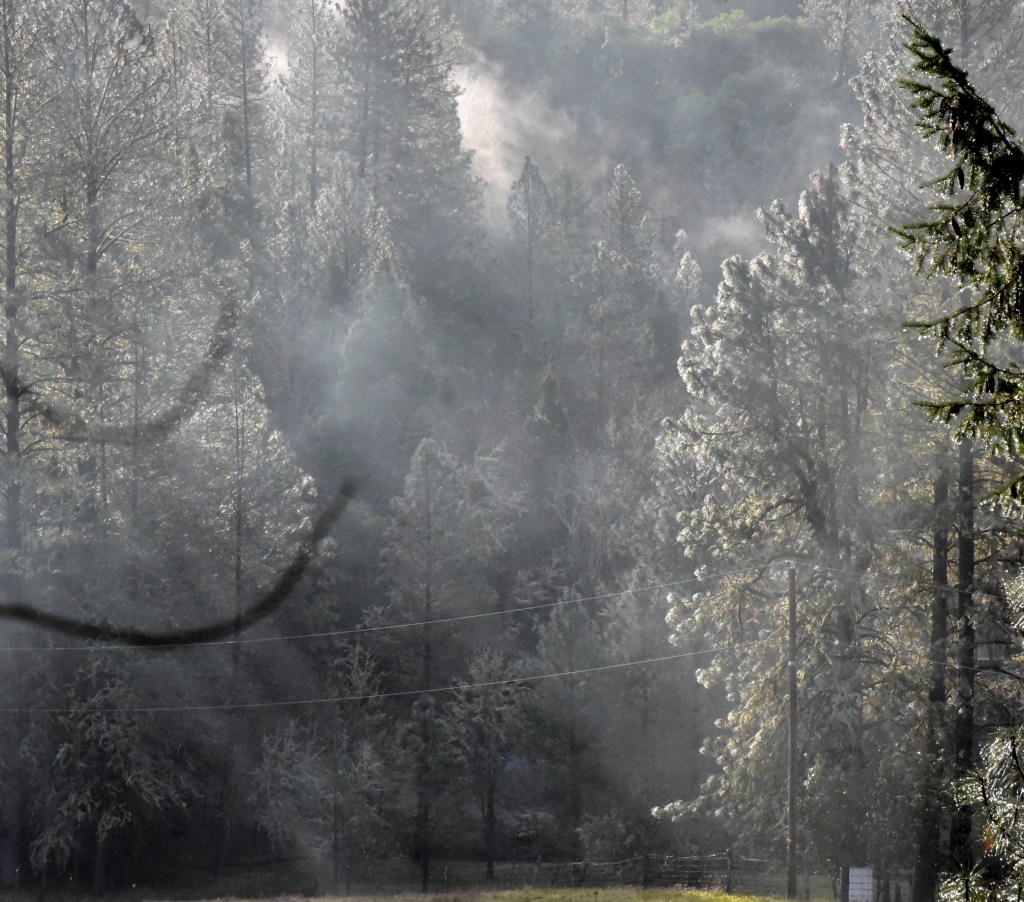
Smoke from our neighbour’s wood fire mingles in the damp air of the trees in the corner of our property. Taken March 1st.
oooo
Rain-laden clouds almost mask Mt. Sexton. Taken March 1st.
oooo
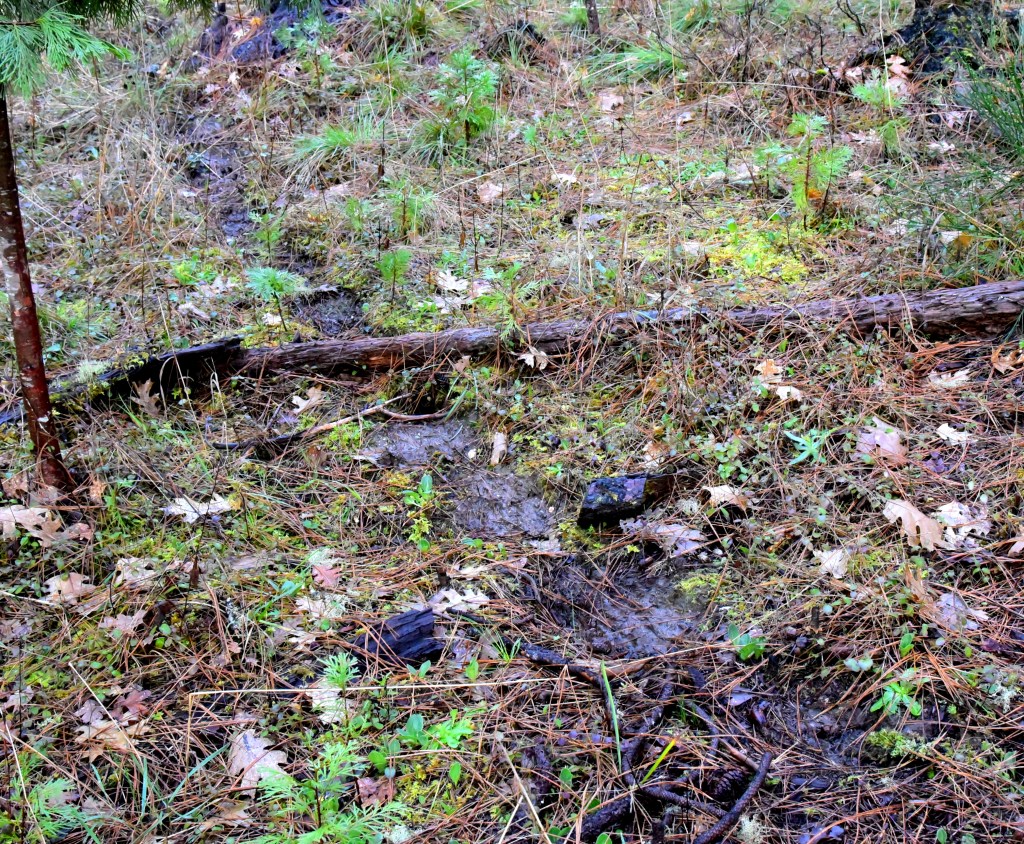
The deer that we feed each morning have made their own trail. March 1st.
oooo
The deer trail to the area by the stables where the food is put out each morning. March 1st.
oooo
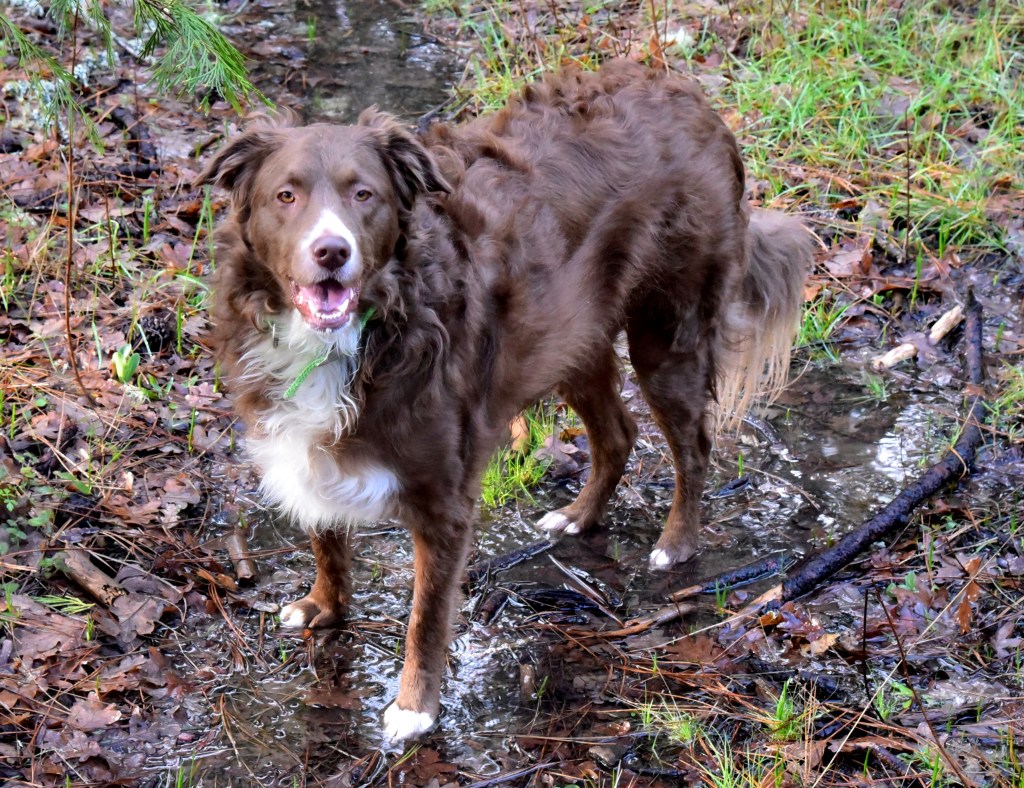
Young, dear Oliver playing in that deer trail. March 1st.
oooo
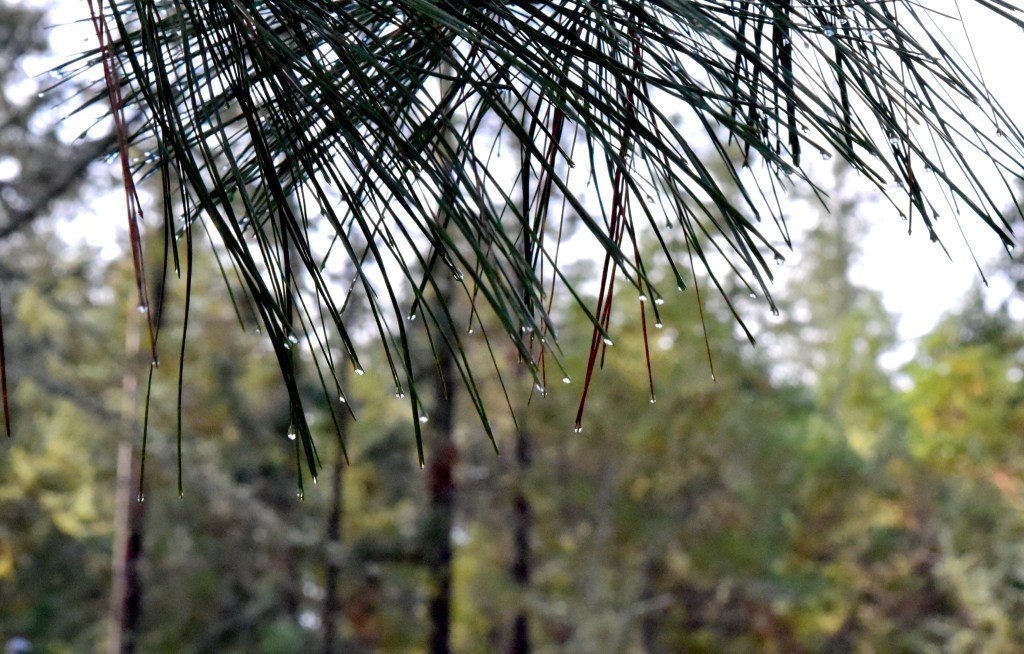
The rain drops on these pine needles caught my eye. March 1st.
oooo
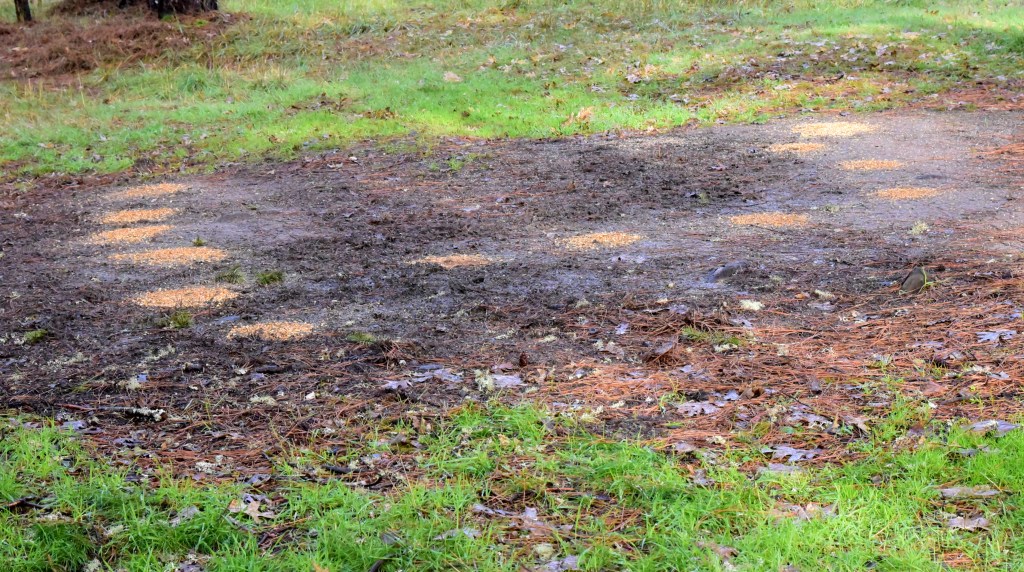
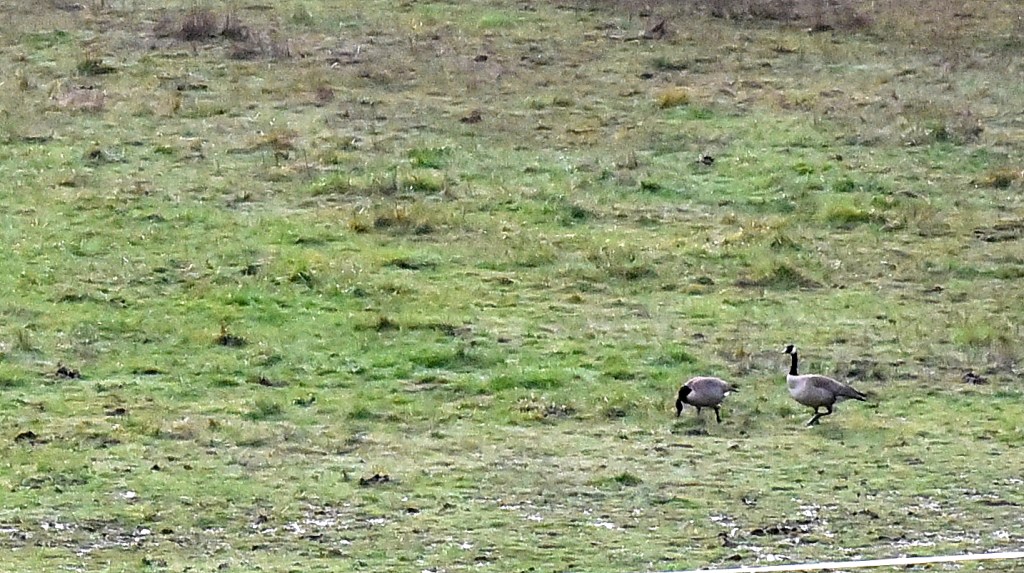
Not just deer that coming feeding on our property. March 1st.
oooo
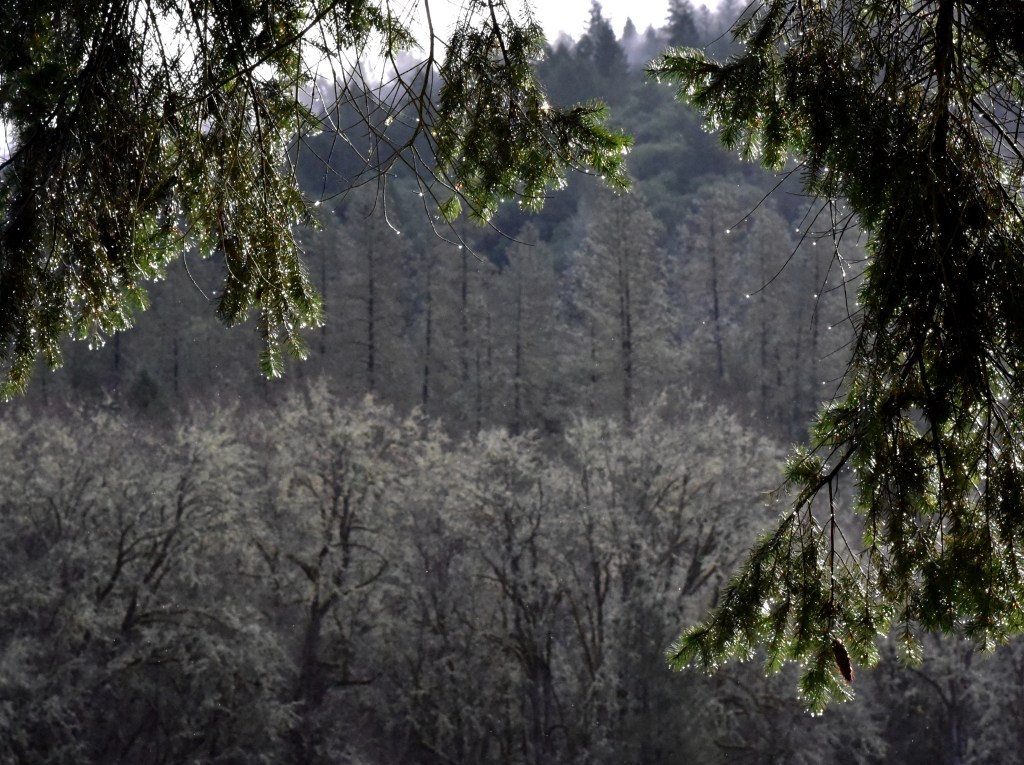
Another scene that caught my eye. March 1st.
oooo
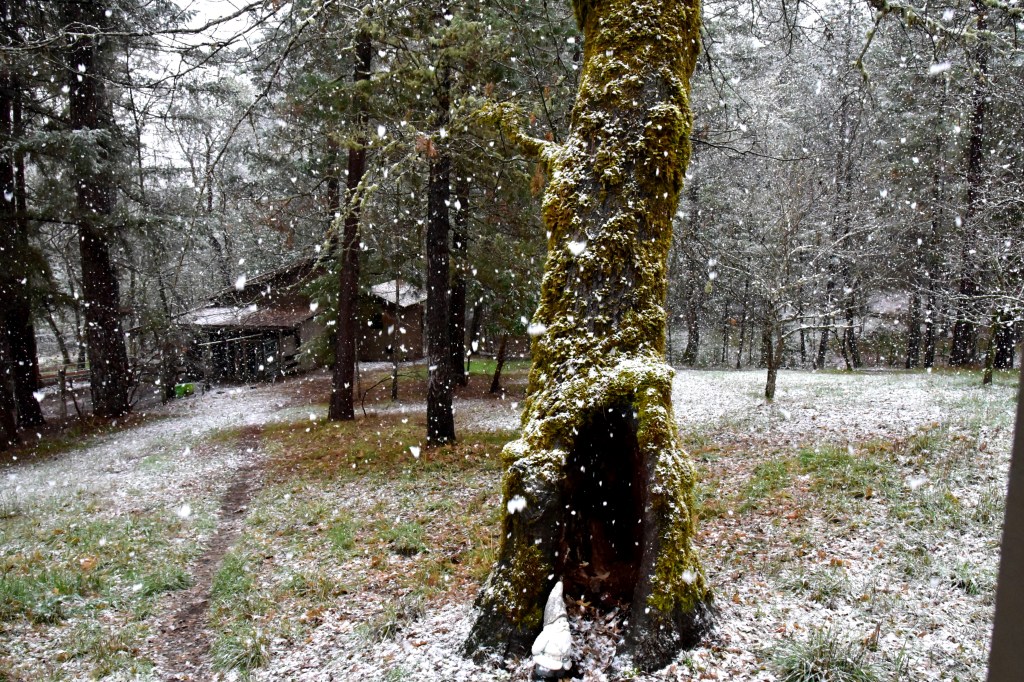
Final picture showed how the storm deteriorated during that first day of March. Taken at 2pm.
So this is why Jeannie and me and all our dogs, not to mention the horses, love living here.
ooOOoo
It was chosen purely at random but it is a real pearl of a post.
I wasn’t going to post anything today but then in response to Val Boyco’s comment: “Good stuff Paul. Thank you! Please do more research and share here 💛 My gut will thank you!” I did do some more research and quickly came upon another article that was published recently and is worth of a read!
ooOOoo
How to prepare and protect your gut health over Christmas and the silly season
Disclosure statement
Claus T. Christophersen receives funding from NHMRC and WA Department of Health. He is a co-author of The Gut Feeling Cookbook linked in this article – all proceeds from sales of this cookbook go directly back into supporting our research, no personal financial interest.It’s that time of year again, with Christmas parties, end-of-year get-togethers and holiday catch-ups on the horizon for many of us — all COVID-safe, of course. All that party food and takeaway, however, can have consequences for your gut health.
Gut health matters. Your gut is a crucial part your immune system. In fact, 70% of your entire immune system sits around your gut, and an important part of that is what’s known as the gut-associated lymphoid tissue (GALT), which houses a host of immune cells in your gut.
Good gut health means looking after your gut microbiome — the bacteria, fungi, viruses and tiny organisms that live inside you and help break down your food — but also the cells and function of your gastrointestinal system.
We know gut health can affect mood, thanks to what’s known as the gut-brain axis. But there’s also a gut-lung axis and a gut-liver axis, meaning what happens in your gut can affect your respiratory system or liver, too.
Here’s what you can do to bolster your gut microbiome in the coming weeks and months.
How do silly season indulgences affect our gut health?
You can change your gut microbiome within a couple of days by changing your diet. And over a longer period of time, such as the Christmas-New Year season, your diet pattern can change significantly, often without you really noticing.
That means we may be changing the organisms that make up our microbiome during this time. Whatever you put in will favour certain bacteria in your microbiome over others.
We know fatty, sugary foods promote bacteria that are not as beneficial for gut health. And if you indulge over days or weeks, you are pushing your microbiome towards an imbalance.
For many of us, Christmas is a time of indulgence. Shutterstock
Is there anything I can do to prepare my gut health for the coming onslaught?
Yes! If your gut is healthy to begin with, it will take more to knock it out of whack. Prepare yourself now by making choices that feed the beneficial organisms in your gut microbiome and enhance gut health.
That means:
eating prebiotic foods such as jerusalem artichokes, garlic, onions and a variety of grains and inulin-enhanced yoghurts (inulin is a prebiotic carbohydrate shown to have broad benefits to gut health)
eating resistant starches, which are starches that pass undigested through the small intestine and feed the bacteria in the large intestine. That includes grainy wholemeal bread, legumes such as beans and lentils, firm bananas, starchy vegetables like potatoes and some pasta and rice. The trick to increasing resistant starches in potato, pasta and rice is to cook them but eat them cold. So consider serving a cold potato or pasta salad over Christmas
choosing fresh, unprocessed fruits and vegetables
steering clear of added sugar where possible. Excessive amounts of added sugar (or fruit sugar from high consumption of fruit) flows quickly to the large intestine, where it gets gobbled up by bacteria. That can cause higher gas production, diarrhoea and potentially upset the balance of the microbiome
remembering that if you increase the amount of fibre in your diet (or via a supplement), you’ll need to drink more water — or you can get constipated.
For inspiration on how to increase resistant starch in your diet for improved gut health, you might consider checking out a cookbook I coauthored (all proceeds fund research and I have no personal interest).
Good gut health is hard won and easily lost. Shutterstock
What can I do to limit the damage?
If Christmas and New Year means a higher intake of red meat or processed meat for you, remember some studies have shown that diets higher in red meat can introduce DNA damage in the colon, which makes you more susceptible to colorectal cancer.
The good news is other research suggests if you include a certain amount of resistant starch in a higher red meat diet, you can reduce or even eliminate that damage. So consider a helping of cold potato salad along with a steak or sausage from the barbie.
Don’t forget to exercise over your Christmas break. Even going for a brisk walk can get things moving and keep your bowel movements regular, which helps improve your gut health.
Have a look at the Australian Guide to Healthy Eating and remember what foods are in the “sometimes” category. Try to keep track of whether you really are only having these foods “sometimes” or if you have slipped into a habit of having them much more frequently.
The best and easiest way to check your gut health is to use the Bristol stool chart. If you’re hitting around a 4, you should be good.
If you’re hitting around a 4, you should be good. Shutterstock
Remember, there are no quick fixes. Your gut health is like a garden or an ecosystem. If you want the good plants to grow, you need to tend to them — otherwise, the weeds can take over.
I know you’re probably sick of hearing the basics — eat fruits and vegetables, exercise and don’t make the treats too frequent — but the fact is good gut health is hard won and easily lost. It’s worth putting in the effort.
A preventative mindset helps. If you do the right thing most of the time and indulge just now and then, your gut health will be OK in the end.
ooOOoo
That book that Claus refers to, the one on the gut Gut feeling: Mindful menus for the microbiomeis here. It looks a very good book.
Well Val (and many others), did you find this interesting? It was a rhetorical question because I know that you did.
I will continue to republish these posts and, especially, the one on exercise. Because as I have often said: Diet and exercise are key!

















 Learning from Dogs