Well here we are in October! No reason why it is so but sensation wise when one gets into the senior years time seems to go faster. Wonder if it is the same for our four-legged friends.
A recent post courtesy of The Dodo spoke of this, in a roundabout way.
ooOOoo
Dog Walker Finds A Mysterious Box With A Heartwarming Message On It
“I thought it was an incredible gesture.”
By Lily Feinn, Published on the 16th September, 2021.
Last week, Kayley Drewitt was walking a dog in Ely Country Park when she stumbled across a cardboard box in the grass. Drewitt runs The Animal Ark Pet Services and spends a lot of time outside with her clients’ dogs — but she’d never seen anything like this in the park before.
“I was curious at first,” Drewitt told The Dodo. “Once we had approached it and I read the message written on the side of it, I couldn’t believe it. I had never seen anything like that before.”
“I thought it was an incredible gesture,” she added. “Something really heartwarming.”
INSTAGRAM/THE ANIMAL ARK
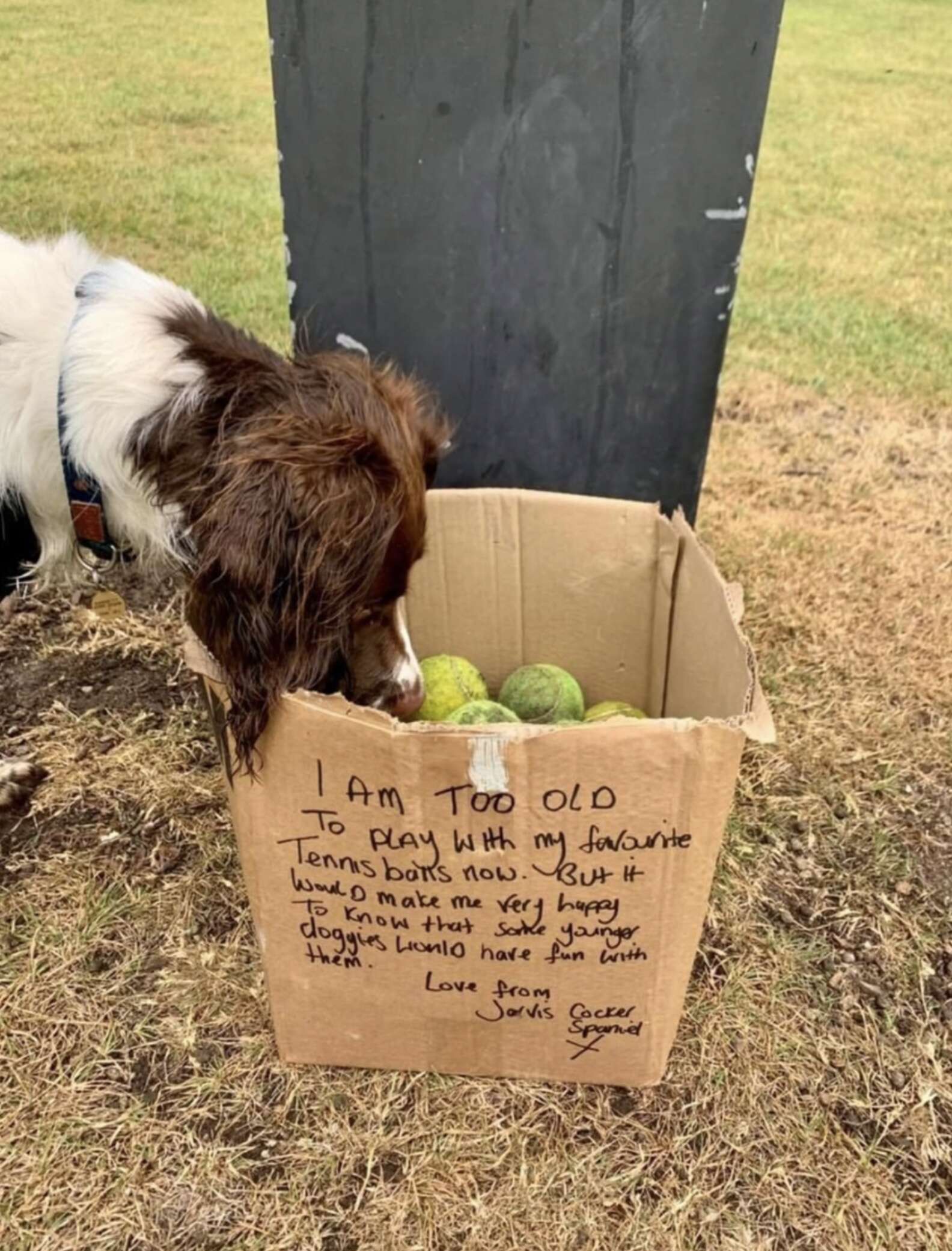
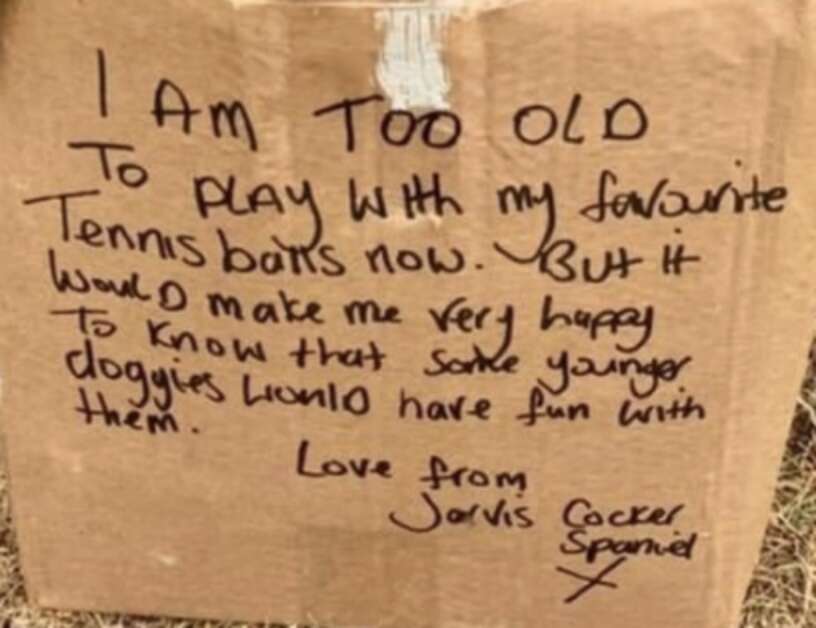
Written in Sharpie on the side of the box was a message reading: “I am too old to play with my favorite tennis balls now. But it would make me very happy to know that some younger doggies would have fun with them. Love from Jarvis.”
INSTAGRAM/THE ANIMAL ARK
The dog Drewitt was walking didn’t need to read the message to know exactly what to do. He stuck his nose in the box and pulled out a ball.
“We played fetch for quite a while [and] he tried out lots of different balls,” Drewitt said.
INSTAGRAM/THE ANIMAL ARK
Drewitt was so touched by the sweet gesture that she snapped a few pictures of the box of donated balls and posted them on social media. “I wanted to thank [Jarvis’ owner] and make other dog owners aware of this lovely idea,” Drewitt said.
Her social media post quickly gained attention, and Jarvis’ mom reached out to let Drewitt know how happy seeing other dogs playing with the balls made her feel.
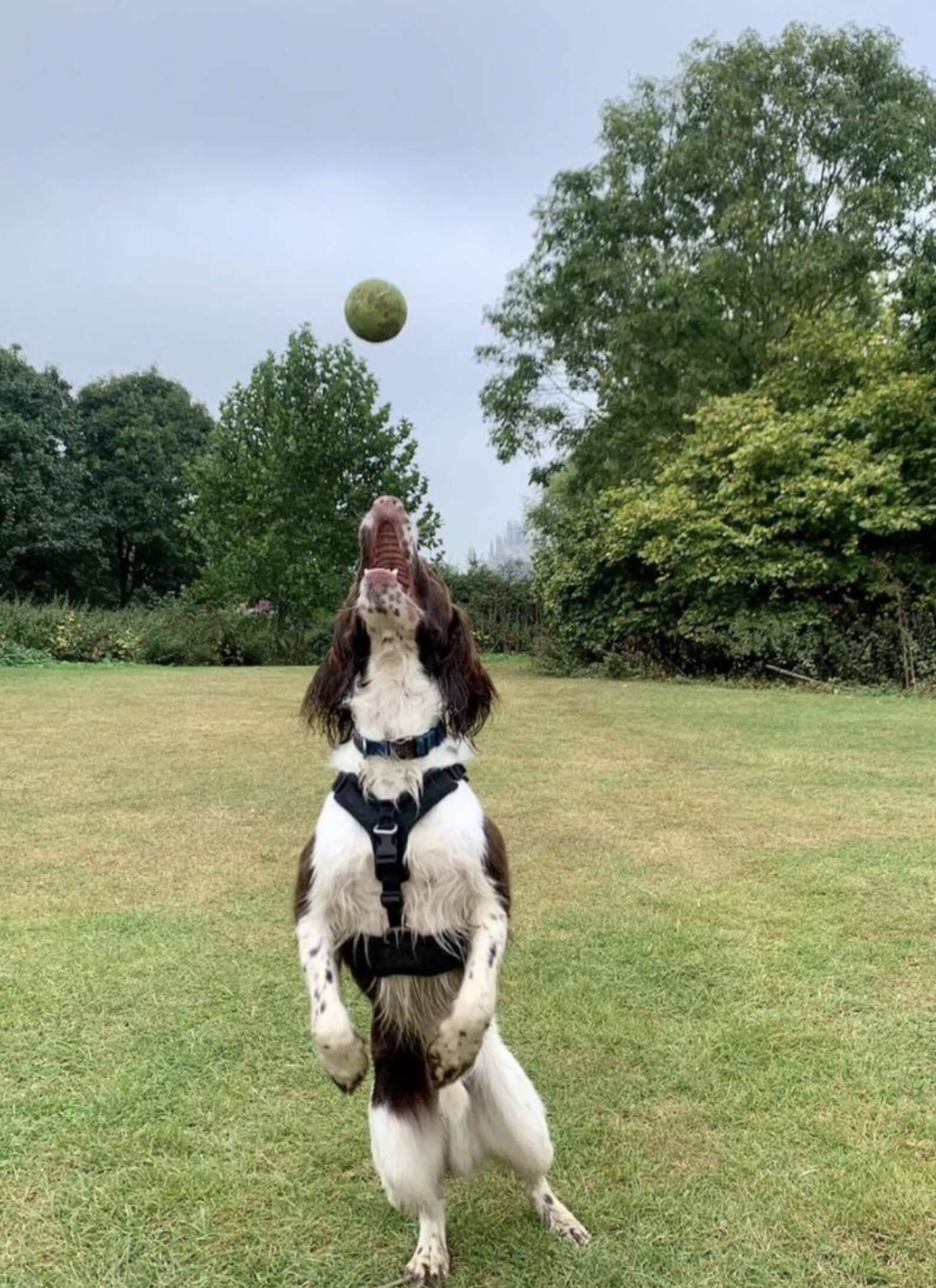
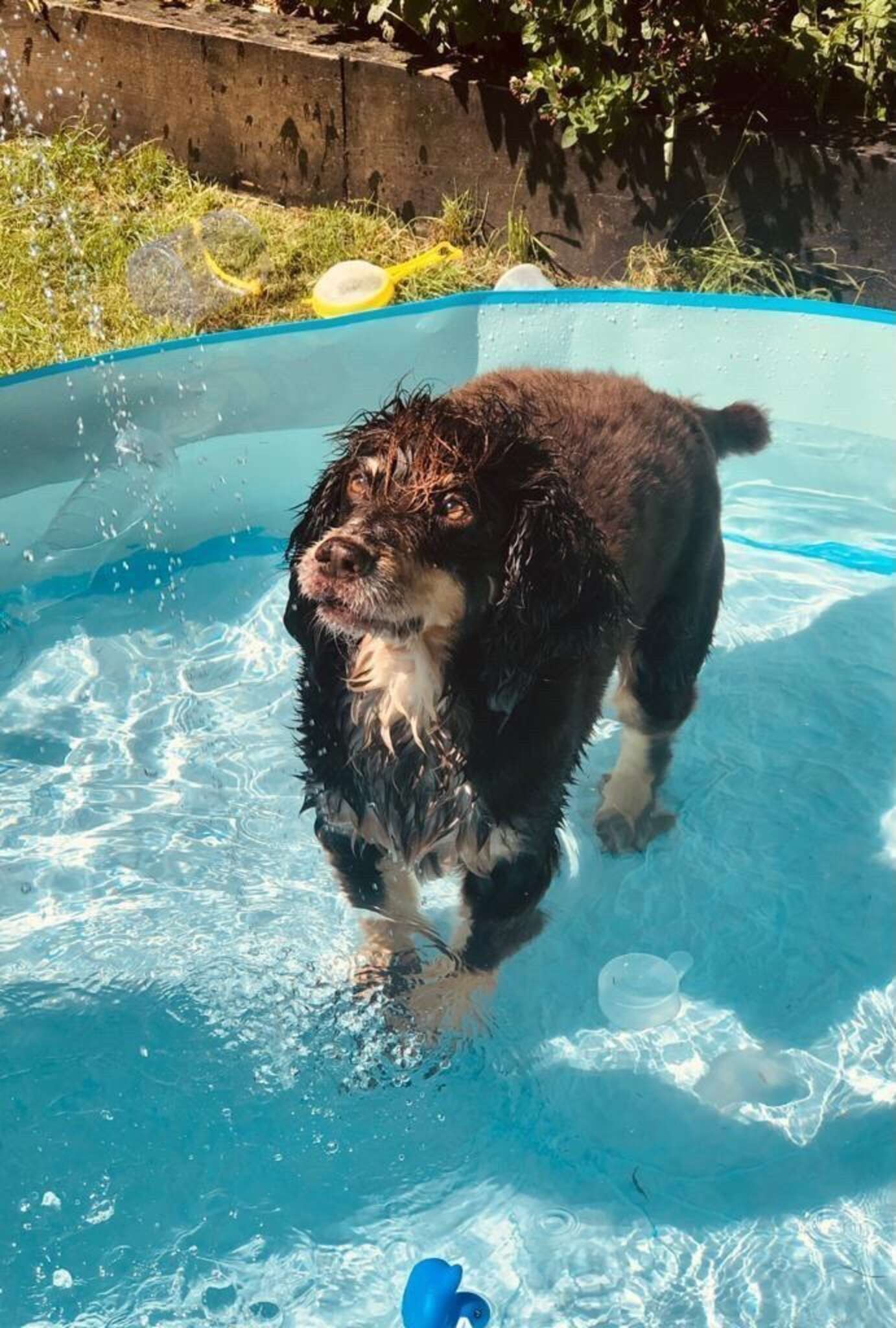
Jarvis, a cocker spaniel, is nearly 11 and has severe arthritis. He can’t play like he used to, but his mom knew he’d want someone to enjoy his beloved tennis balls.
KAYLEY DREWITT
Jarvis may no longer be able to chase balls, but the senior pup still loves to socialize and will get a special surprise on his next trip to the park.
“We have agreed to meet up for a dog walk sometime soon,” Drewitt said, “so Jarvis can meet some of the younger dogs now benefiting from all the balls he’s gifted.”
ooOOoo
Time after time people do wonderful things connected to dogs. Dogs are so perfect and the phrase unconditional love really does have meaning when it comes to our dogs.
Now that’s not to say that people who do not have dogs don’t do wonderful things. But it is my guess that dogs help bring out the best in humans.
Please, let me use the power of the internet to spread the word!
On the face of it this has nothing to do with dogs. Or does it? Because the stream and the forest will most certainly be favourite walks for people and their dogs. (Indeed a very quick search online brought up the following picture🙂
Why Your Dog Will Love A Trip To Klamath As Much As You Do.
So this post is to drum up support for this critically important area. Please also sign the petition. Thank you.
ooOOoo
Protect Pipe Fork
Pipe Fork is a compelling example of lush, mature riparian forest in the Klamath-Siskyou Bioregion of Southern Oregon. Pipe Fork Creek originates from pure-water springs nestled in ancient forest on the east flank of Grayback Mountain, and flows cold and clear and abundantly year-round through a narrow canyon wilderness into the Williams Valley. There it provides generously for farms and homes as well as for rich spawning and nursery grounds vital to chinook and coho salmon.
Designated a Research Natural Area (RNA) of Critical Environmental Concern by the Bureau of Land Management, the upper reaches of Pipe Fork have also been nominated for designation as a Federal Wild and Scenic River. Rare Pacific fishers and martens, spotted owls, elk, bear, and many other animals, as well as numerous species of rare plants, live in the undisturbed forests of the RNA.
Josephine County has had plans to sell a 320-acre parcel right next to the BLM RNA that encompasses both sides of Pipe Fork, and to clearcut 114 acres on the north side of the creek. The devastation that would result from clearcutting on the steep slopes above Pipe Fork would do lasting damage to the sensitive riparian forest and would greatly diminish the quality and quantity of water that flows into the Williams Valley.
But we will not let this happen! We are determined and optimistic that by all of us working together, this precious place will be saved for the benefit of present and future generations.
Williams Community Forest Project invites you to watch our brand new 7-minute film showcasing the wonders of Pipe Fork and our efforts to preserve it, and to sign the petition at the bottom of the page. Please share this page with like-minded friends and family, allies and colleagues!
In many ways this has been a strange month in a somewhat strange year! No, more than that! We are at last seeing climate change come to the fore in terms of topics. Yves Smith, who produces Naked Capitalism (and it’s a great blog) had an item on climate change recently. Here’s an extract:
Yves here. As many of you know, I am considerably frustrated with Green New Deal advocates, because I see them as selling hopium. They act as if we can preserve modern lifestyles as long as we throw money, some elbow grease, and a lot of new development (using current dirty infrastructure to build it) at it. We’re already nearing the point where very bad outcomes, like widespread famines and mass migrations due to flooding, are baked in. And even that take charitably assumes that a rump of what we consider to be civilization survives.
There were many replies from a variety of people; I loved this one from Tom Stone:
A rational response to this crisis is not politically or societally feasible.
And the crisis is here, now.
The changes are not linear, a concept many of the people I talk to about climate change have difficulty accepting.
Large parts of the SF Bay Area are going to be heavily impacted (It’s my stomping ground, so I’m familiar with it) by salt water intrusion, levee failure, lack of water to to changing precipitation patterns in the Sierra’s…
A lot of Bay Area Housing is built on fill or in low lying areas, those homes will start to be abandoned within a decade if current trends continue.
Add the devastation from the inevitable Earthquake on the Hayward Fault which our local and State Governments are totally incapable of dealing with and it is going to be a godawful mess.
I looked at the Disaster planning for a quake on the Hayward Fault some years ago and all of the assumptions are for a “Best Case” scenario.
The quake won’t come in October during a drought and a high wind event, it won’t come at the wrong time of day, it won’t come in the spring during a high water period when Levee’s are stressed…
The Bay areas disaster response center was built in the 1950’s to withstand a nuclear attack, it is underground and was built smack dab in the middle of the Hayward Fault.
Have I mentioned that 20 years after 9/11 the various emergency responders do not have a commonality in their communications gear?
The more people that read this and other article the better.
Plus I am going to include my reply:
Your piece, Yves, that you published from Rolf was excellent and so was Tom Stone’s comment above. The scale of the issue is immense but at least climate change has now become a mainstream topic, and rightly so. National Geographic magazine published a special edition in May, 2020 to commemorate the anniversary of the fiftieth Earth Day. I think it was 1962 when Rachel Carson published Silent Spring. So we can’t complain that this isn’t a new issue. But whether or not we make it to the one hundred anniversary of that first Earth Day depends on the myriad of actions that we, as in all of us, including especially our leaders and politicians, make NOW! Let me spell it out. NOW means within the next 5 years at the latest. I am 76 and a passionate advocate of a change in mass behaviors. For I have a single grandson, Morten, living with his parents back in England who is 10. I fear for his future and for the future of all of his age.
Anyway, to get back to the article about dogs that I wanted to share with you. It is from Treehugger.
ooOOoo
This 13-Year-Old Dog Has a Home Again
It’s heartbreaking when senior pets lose their families.
This weekend, my husband and I were the last step in a transport to get a dog to her new home.
Typically, when we have a new dog in the backseat, it’s a raucous foster puppy (or two) in a crate. There’s usually barking and tumbling and playing until the motion of the car lulls them to sleep.
But this passenger was a much different story.
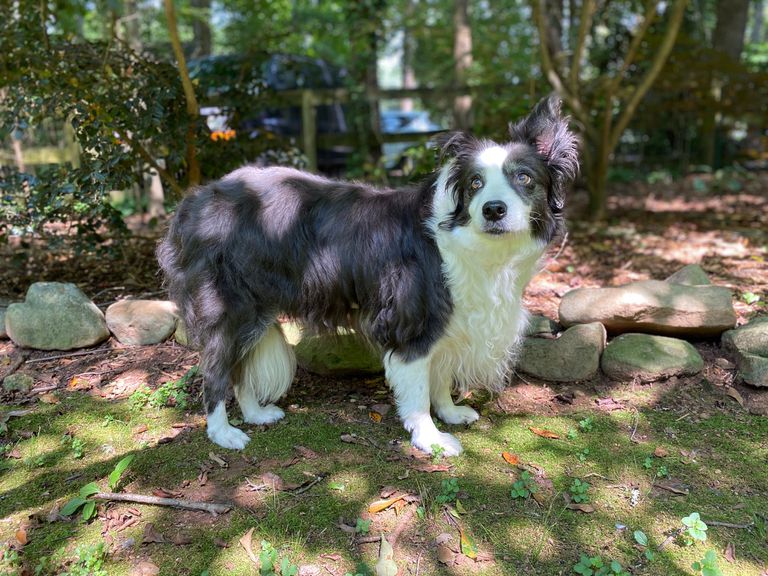
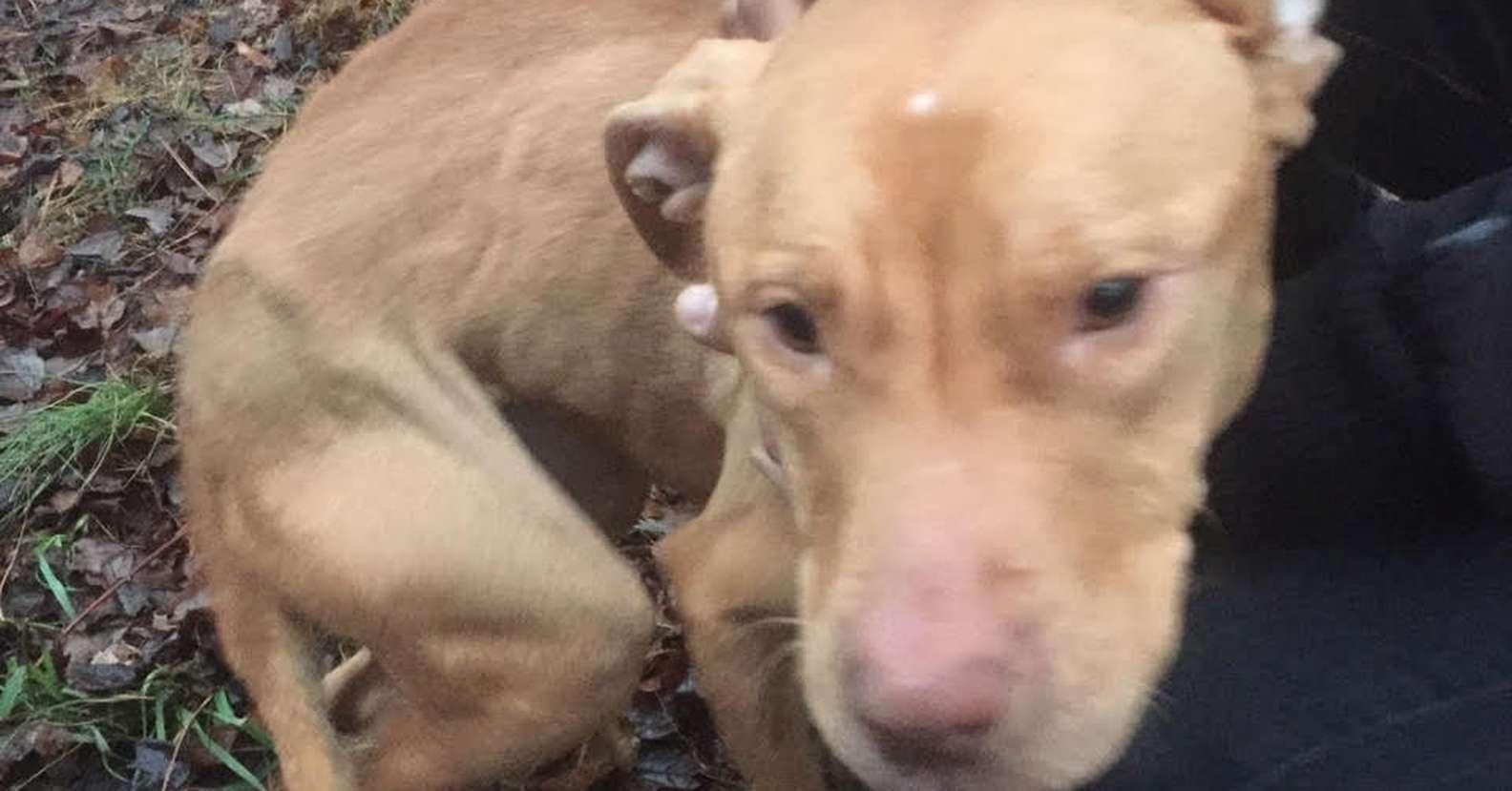
Magdalen is a 13-year-old border collie. Her owner gave her up temporarily when he was sick, but when he fully recuperated a few months later, he said he didn’t want her back. He had her since she was a puppy but now had no place for her.
The family who had given her a temporary home had children and other dogs and was unable to give her a permanent home. When Speak St. Louis, the rescue I work with, was contacted about the border collie, they offered to take her in.
She went to the groomer for her very matted coat and to the vet for a basic health check.
The spa visit made her look (and no doubt, feel) much better. But the vet didn’t have great news. She had to have surgery for mammary masses and her mouth was swollen with all sorts of dental issues. One surgery later and she had six masses removed. Two teeth fell out during cleaning and 11 more had to be extracted.
Fortunately, the growths were benign and she slowly began to recover.
Stressed and Resigned
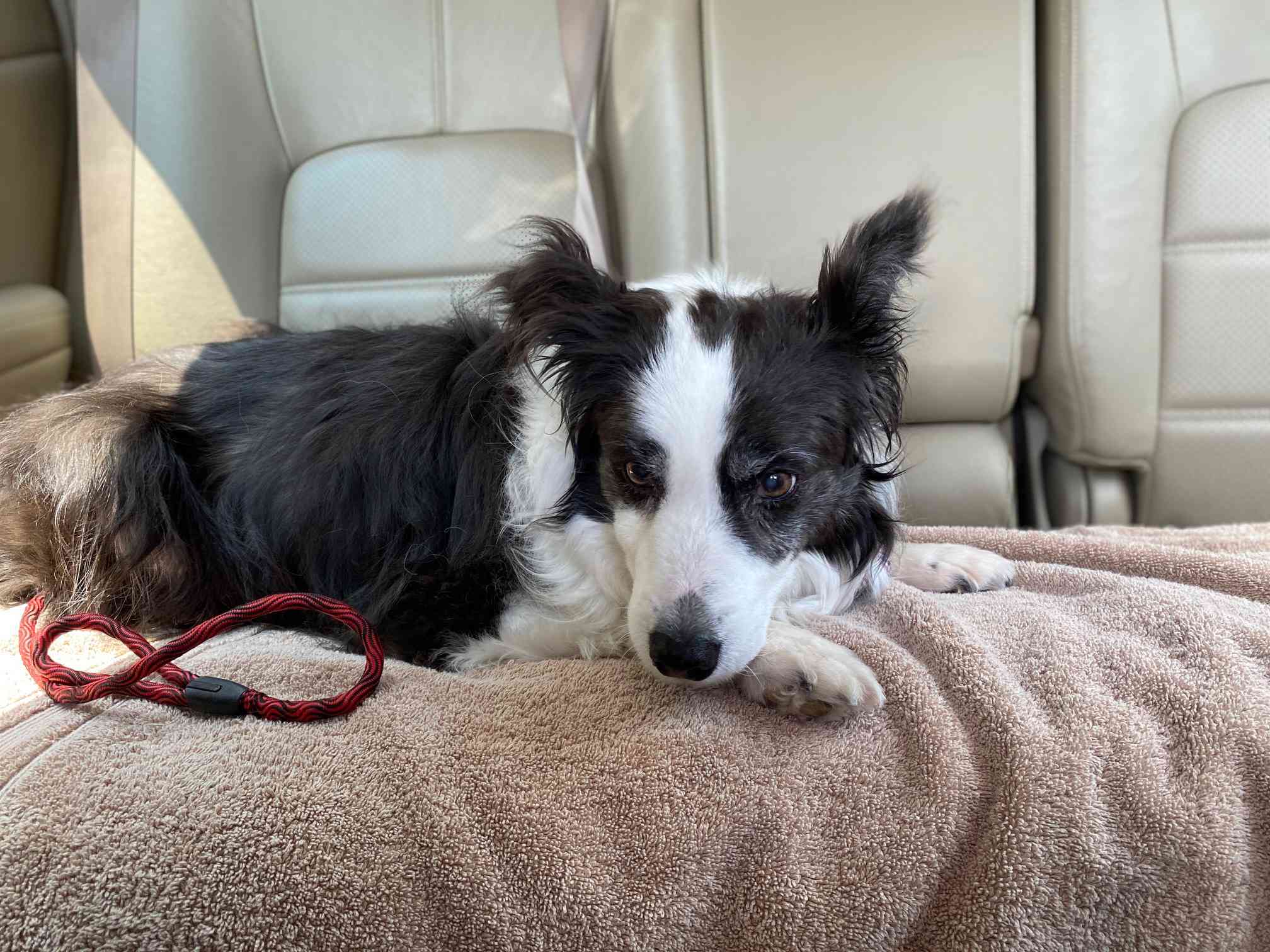
Magdalen barely moved on the ride to her new home. Mary Jo DiLonardo
On the trip home, the sweet senior looked so resigned in our backseat. The last kind transporter gently lifted her from her car and placed her in ours, where she barely moved as she re-settled herself.
She had just spent several weeks in the care of a wonderful foster parent where she recuperated from her surgery and from being left by her family.
I’m sure at this point she was just shut down and stressed and quietly rolling with whatever happened to her. She took the pieces of kibble we offered but her tail didn’t wag because it was tucked mostly between her legs.
It was heartbreaking to know that not so long ago she was someone’s pet and she was discarded.
It’s understandable that her owner needed some temporary help when he was sick and overwhelmed. But I can’t imagine why he wouldn’t have wanted her back now. I think of my own dog and dogs we’ve lost to old age in the past. They’re family and they stay that way forever.
Senior pets often end up in shelters and with rescues when their owners die and no one in the family is able to take them in.
Or some people give them up when they become harder to care for. Seniors can have more health problems and often people can’t afford the costs. They also aren’t as fun as their younger counterparts, and sometimes get cranky or snippy around children.
For rescues and shelters, it’s much easier to get a cute, bouncy puppy adopted than a less active senior that might come with health baggage and who might only be with the family for a few years.
A survey by PetFinder found that “less adoptable” pets like seniors or special needs animals spend nearly four times as long on the adoption site before they find a home.1
But older dogs have lots of benefits. Unlike puppies, they usually arrive housebroken. Sure, there are the occasional accidents as they figure things out, but they mostly know they are supposed to potty outside.
Senior dogs won’t chew your furniture or your fingers. They don’t bounce off the walls and wake you up in the middle of the night to go outside. They don’t need as much exercise as younger dogs but will revel in all the attention you want to give them.
Mary Jo DiLonardo
As for Magdalen, she is coming out of her shell in her new home. She was adopted by a good friend of mine who is a dog trainer. She has a soft heart for seniors and a passion for brainy border collies.
Because the pup is very driven by food, her new mom is going to try nosework with her. That’s an activity where she can sniff out treats in all sorts of hidden places. That will give her a job and a hobby—and lots of food!
Magdalen doesn’t have her tail between her legs anymore and the resident dogs are figuring out that she’s here to stay. But the key is for her to understand that this is now her forever home and no one will ever leave her again.
ooOOoo
Of the six dogs we have here at home three are old. But they still remain happy and carefree which is a little different to yours truly who, as much as he tries very hard not to do so, worries about the big things in life and, frankly, the biggest of them all is climate change.
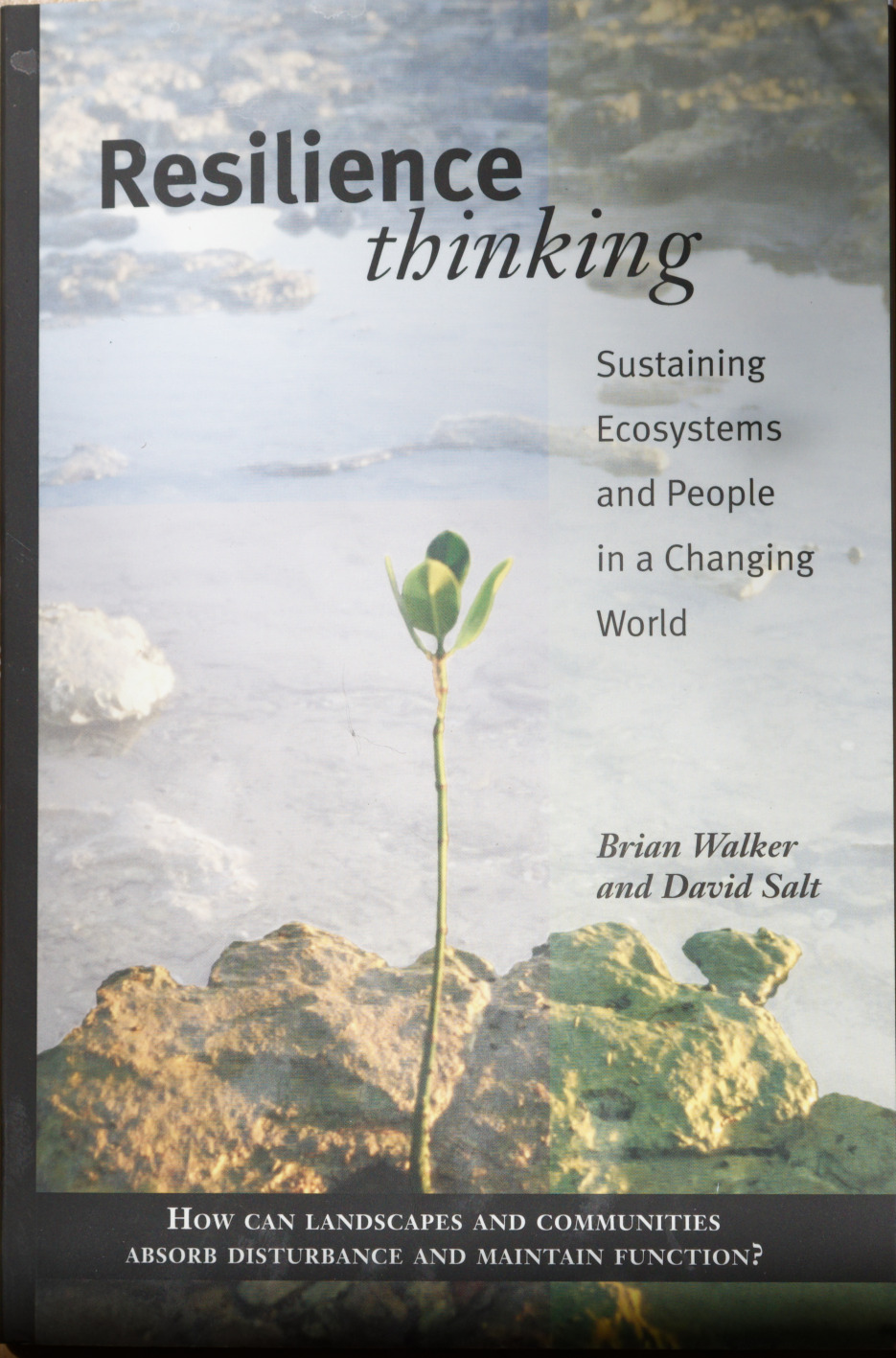
Let me make myself absolutely clear about this book, indeed I can do no better than to publish part of an email that I sent to the authors last Saturday:
To say that I was inspired by what you wrote is an understatement. More accurately it has changed my whole understanding of this planet, of the natural order of things, of the politics of the Western world, of vast numbers of us humans, and how precarious is our world just now. It has opened my eyes radically, and I thought before that I was fairly in touch with things.
Resilience is a simple idea but in its application has proved to be anything such. On page 2 the authors set out as they saw it The Drivers of Unsustainable Development. Here’s how that section develops:
Our world is facing a broad range of serious and growing resource issues. Human-induced soil degradation has been getting worse since the 1950s. About 85 percent of agriculture land contains areas degraded by erosion, rising salt, soil compaction, and various other factors. It has been estimated (Wood et al. 2000) that soil degradation has already reduced global agricultural productivity by around 15 percent in the last fifty years. In the last three hundred years, topsoil has been lost at a rate of 200 million tons per year; in the last fifty years it has more than doubled to 760 million tons per year.
As we move deeper into the twenty-first century we cannot afford to lose more of our resource base. The global population is now expanding by about 75 million people each year. Population growth rates are declining, but the world’s population will still be expanding by almost 60 million per year in 2030. The United Nations projections put the global population at nearly 8 billion in 2025. In addition, if current water consumption patterns continue unabated, half the world’s population will live in water-stressed river basins by 2025.
The Food and Agriculture Organization of the United Nations (FAO) 2004 Annual Hunger Report estimates that over 850 million people suffer from chronic hunger. Hunger kills 5 million children every year.
It goes on ….!
Now I want to quote from the end of the book, from their section on Resilience Thinking.
In our opening chapter we observed that there were many pathways into resilience thinking and suggested readers not worry too much if the finer details of a resilience framework are a bit obscure. We emphasized that what is of much more importance is an appreciation of the broader themes that underpin such a framework. Those broader themes revolve around humans existing within linked social and ecological systems. These are complex adaptive systems, and attempts to control or optimize parts of such systems without consideration of the responses that this creates in the broader system are fraught with risk. Much of this book has been spent on attempting to explore the consequences of such an approach.
In the broadest sense, optimizing and controlling components of a system in isolation of the broader system results in a decline in resilience, a reduction in options, and the shrinkage of the space in which we can safely operate. Resilience thinking moves us the other way.
It is our hope that readers who are persuaded of this basic premise will be encouraged to explore the inevitable consequences of such thinking. Even if you are not completely clear on the basins of attractions, thresholds, and adaptive cycles, if the concepts of ecological resilience and dynamic social-ecological systems have any resonance then you are in a better position to appreciate what is happening to the world around you.
The phrase complex adaptive system was new to me but intuitively I got what the authors meant. As they state on page 35: The three requirements for a complex adaptive system are:
That it has components that are independent and interacting,
There is some selection process at work on those components (and on the results of local interactions),
Variation and novelty are constantly being added to the system (through components changing over time or new ones coming in),
This was my eye-opener. It was now obvious that many processes, especially in nature, that I had hitherto regarded as constant were changing albeit usually on a timescale of many decades sometimes centuries.
And the other conclusion that was inescapable was that we humans were largely responsible for those changes because we couldn’t see the longterm consequences of what we were doing.
David writes that firstly carbon dioxide is not like other pollutants, for example like air particulants. Then later goes on to say:
The second difference is that climate change is irreversible.
As Joe Romm notes in a recent post, New York Times columnist Joe Nocera slipped up in his latest column and referred to technology that would “help reverse climate change.” I don’t know whether that reflects Nocera’s ignorance or just a slip of the pen, but I do think it captures the way many people subconsciously think about climate change. If we heat the planet up too much, we’ll just fix it! We’ll turn the temperature back down. We’ll get around to it once the market has delivered economically ideal solutions.
This paper shows that the climate change that takes place due to increases in carbon dioxide concentration is largely irreversible for 1,000 years after emissions stop. Following cessation of emissions, removal of atmospheric carbon dioxide decreases radiative forcing, but is largely compensated by slower loss of heat to the ocean, so that atmospheric temperatures do not drop significantly for at least 1,000 years. [my emphasis]
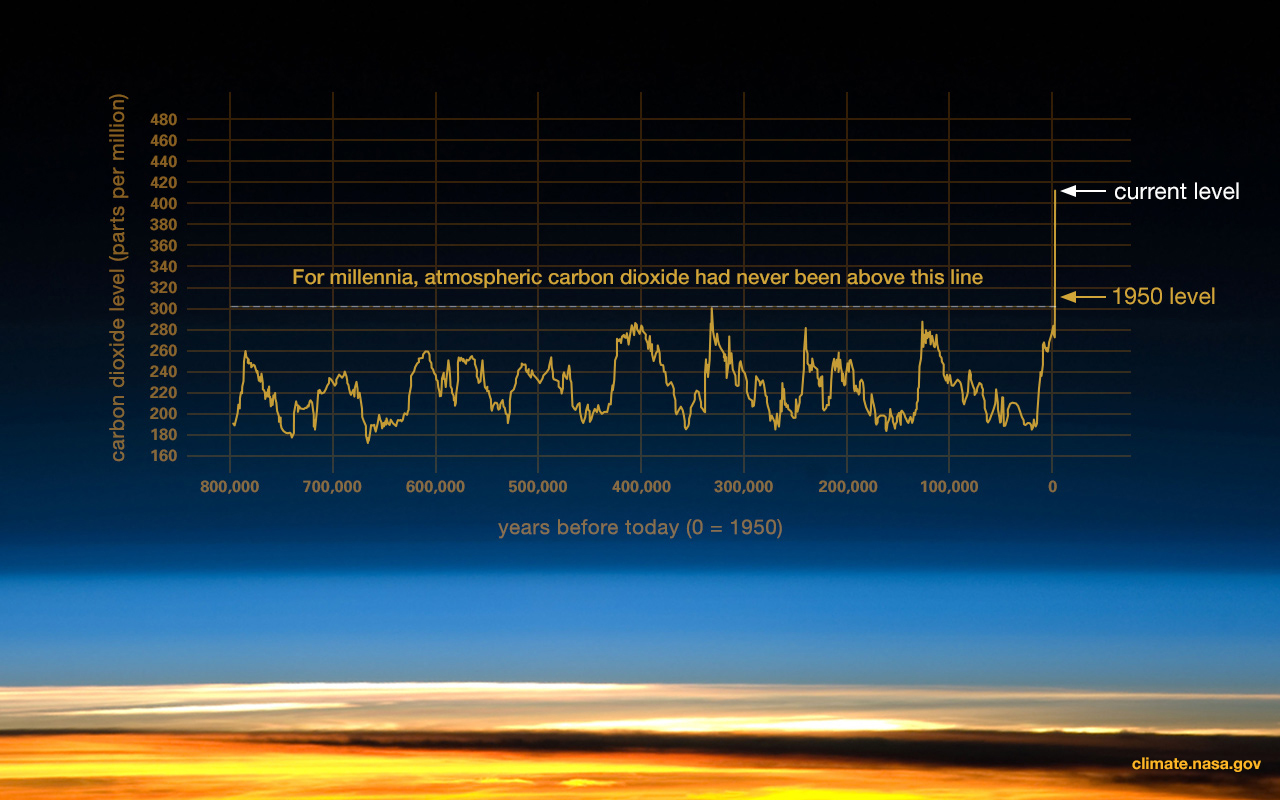
My last piece in this review is to republish a graph that is shown on the NASA Global Climate Changewebsite:
For all our sakes, dogs and humans and many other species, let us all please change our behaviours! Soon!
Back to the book: It is a remarkable book!
I will close with quoting one of the praises shown on the back cover. This one by Thomas Homer-Dixon, professor of political science, University of Toronto, and director of the Trudeau Centre for Peace and Conflict Studies.
Resilience Thinking is an essential guidebook to a powerful new way of understanding our world – and of living resiliently with it – developed in recent decades by an international team of ecologists. With five clear and compelling case studies drawn from regions as diverse as Florida, Sweden, and Australia, this book shows how all highly adaptive systems – from ecologies to economics – go through regular cycles of growth, reorganization, and renewal and how our failures to understand the basic principles of resilience have often led to disaster. Resilience Thinking gives us the conceptual tools to help us cope with the bewildering surprises and challenges of our new century.
Alok Sharma on why COP26 is our best chance for a greener future.
I wanted to share the eight-minute video that appeared on TED Talks. But it hasn’t appeared on YouTube as yet.
But the link is embedded above so if you don’t want to watch the slightly longer version (just 22 minutes) then that is fine.
I will share the words that came with the TED Talks video.
Something powerful is happening around the world. The issue of climate change has moved from the margins to the mainstream, says Alok Sharma, the President-Designate of COP26, the United Nations climate conference set to take place in November 2021 in Glasgow, Scotland. He unpacks what this shift means for the world economy and the accelerating “green industrial revolution” — and lays out the urgent actions that need to happen in order to limit global temperature rise.
Plus on the speaker, Alok Sharma.
Alok Sharma is a British politician, Cabinet Minister and President-Designate of COP26, the United Nations Climate Change Conference being held in Glasgow from 31 October until 12 November.
Sharma was previously UK Secretary of State for Business, Energy and Industrial Strategy. Before that, he was UK Secretary of State for International Development. He has also served in ministerial roles in the Department of Work and Pensions, Department for Communities and Local Government, and at the Foreign and Commonwealth Office. Prior to politics, he worked in finance.
Please watch the video for all our sakes.
For the sake of our dogs, and for the sake of everyone on this planet.
There are countless tales of dogs, for a variety of reasons, getting a leg up, it you pardon the pun!
The Pit Bull breed is a very intelligent dog and yet their reputation often gets in the way. From Pit Bulls being used in dog fights some time ago. B’rrr!
But when the Pit Bull is given a chance to better himself they don’t need a second chance at all!
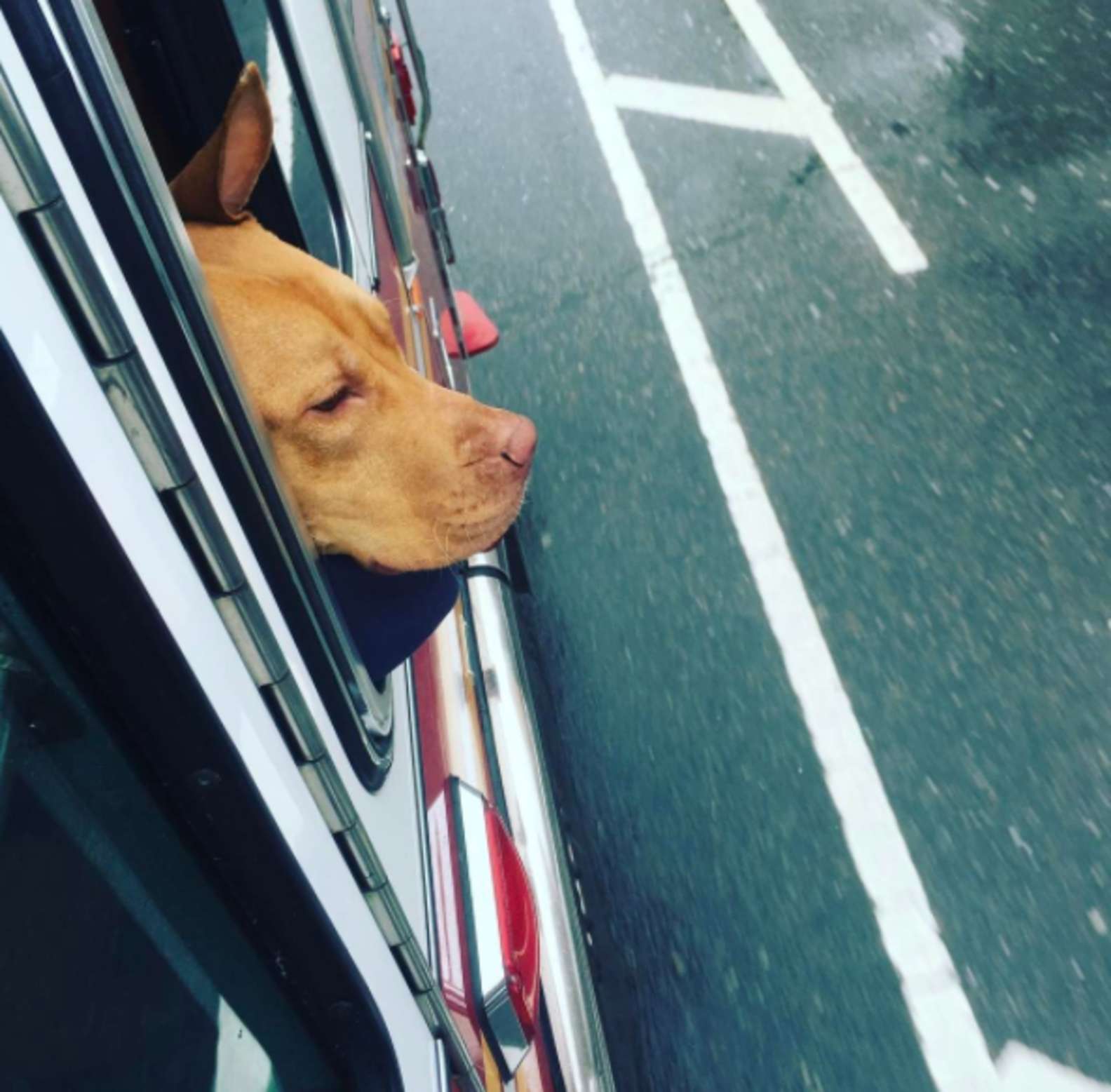
Take this story of a Pit Bull being adopted by some firemen.
ooOOoo
Dog Left Behind By Her Family Hangs Out With Firefighters All Day Now
“As soon as she walked into the firehouse, her tail was wagging, and she was licking and greeting everybody.”
The people who used to own Ashley hardly fed her, rarely took her outside and, in the end, they simply abandoned her.
Thankfully, Erica Mahnken, cofounder of No More Pain Rescue, and her fiance Michael Favor, rescued the 1-year-old pit bull in January of 2017.
Erica Mahnken, Ashley shortly after being rescued
“We got a phone call from somebody that there was a couple living in an abandoned house. They had no heat or electricity, and they had a dog there,” Mahnken told The Dodo shortly after the rescue.
When a snowstorm hit, the couple apparently left. “I guess they went to find somewhere warm to stay, and they had left the dog behind,” Mahnken said. “So as soon as we got the phone call, we ran and got her.”
Favor made Mahnken stay in the car while he ventured inside to find the dog. He’d later tell Mahnken how bad it was. “There was no electricity in the house — it was freezing,” Mahnken said. “No food, no water for her. The house was a disaster. The windows were broken, and there was feces all over the place.”
ERICA MAHNKEN
But Ashley was unharmed, and she looked like the most joyful dog when Favor walked her out.
“She came running down, super happy,” Mahnken said. “She jumped straight into my car.”
Ashley was thin and malnourished. “All you saw were her ribs — she was so skinny. And the vet later said she was 25 pounds underweight.”
Since No More Pain Rescue doesn’t have a physical shelter, Mahnken and Favor needed to get Ashley straight into a foster home. They had friends in the New York City Fire Department (FDNY), and knew there used to be a dog at the Fort Pitt station. So Mahnken and Favor asked if the firefighters would hold onto Ashley until they found her a proper home.
Ashley seemed just fine with this arrangement.
ERICA MAHNKEN
“As soon as she walked into the firehouse, her tail was wagging, and she was licking and greeting everybody,” Mahnken said. “She was super happy. From where she came from, you wouldn’t really expect that. You would think that she’d be a little skittish, but she wasn’t at all.”
@PROBYASH
Not all that surprisingly, the firefighting team called Mahnken a few days later, asking to keep Ashley.
ERICA MAHNKEN
“They said, ‘We’re going to adopt her. We just love her so much. She is at home here,'” Mahnken said. “So I was thrilled. And as soon as I walked her in there, I knew that that’s where she belonged.”
@PROBYASH
Ashley now lives at the firehouse full-time.
@PROBYASH
“She’s constantly on the go – she goes on smaller runs with them, she goes on the fire truck with them,” Mahnken said. “They walk her about 30 times a day. They bring her on the roof to play. She’s constantly in the kitchen watching them eat. She has endless supplies of treats. She has the life over there.”
@PROBYASH
Ashley even has her seat in the fire truck, according to Mahnken.
@PROBYASH
“I’m so glad we got her into a home that will show her nothing but love, and not make her into the pit bull that people love to hate so quickly,” Mahnken said. “It was an unbelievable feeling to know that that’s where she belonged.”
Four years later, Ashley is still loving her life at the firehouse — and the fire fighters love her.
ooOOoo
Just another example of what good loving people can do for a dog and the dog’s obvious pleasure at being loved.
This is one of the most important posts since I started blogging!
I was born in 1944 and that makes me 76. I am reasonably engaged in the issues facing us but, in a sense, protected from the realities of the modern world because I have a loving wife, two loving young people, as in my son Alex and my daughter Maija, and a special grandson, Morten.
We are also very lucky in that my wife, Jean, and I are both retired and we live on 13 rural acres in a beautiful part of Southern Oregon and enjoy immensely our six dogs, two horses, two parakeets and feeding the wild birds and deer.
But it can’t stay that way because of the encroaching elephant in the room.
I am speaking of climate change that if not dealt with in the near future, say in the next 10 years, will lead to an unimaginable state of affairs.
Now one could argue that you come to Learning from Dogs to get away from climate change and the like. But this is too important and, also, involves all of us including our gorgeous dogs.
First, I want to include an extract from a recent Scientists Warning newsletter (and please read this extract carefully).
Recently, one article on the climate emergency above all others has cut through – with over ONE MILLION views, “Climate scientists: concept of net zero is a dangerous trap” published in The Conversation is being talked about by many thousands, and led Greta Thunberg to tweet: “This is one of the most important and informative texts I have ever read on the climate- and ecological crises.”
So why is this article so very important?
In our latest interview, I talk with two of the authors – Dr. James Dyke, global systems scientist at the University of Exeter and Dr. Wolfgang Knorr, climate scientist at Lund University. And the conversation does not make for comfortable viewing. We discuss what led James, Wolfgang and Professor Bob Watson to write an article that they have described as being one of the hardest they have ever written. The article is *not* an attack on net zero, nor does it advocate a fatalistic position. Instead, as you will hear, the interview reveals the heartfelt concerns of two scientists who are profoundly worried about the failure of a climate policy system that suppresses the voice of science and is fundamentally flawed. A climate policy system that year after year has failed.
But it is not just the climate policy system that has failed. Academia has failed too, and continues to fail Greta and young people like her. And this *must* stop. Young people have become the adults in the room. We cannot place this burden on their shoulders. They have shown their courage and bravery. Now it’s time for academia to step up to the challenge and to critically examine why we are failing.
Secondly, I want to share that interview with you. This is a 36-minute interview. Please, please watch it. If it is not a convenient time just now then bookmark the post and watch it when you can sit down and be fully engaged. You will understand then and agree with me that this is one of the most important videos ever!
Lastly, I would like you to read the article published in The Conversation. I have included a link to it but I am also going to republish it on Friday.
Because we have to listen to the scientists without delay and press for change now.
Thank goodness for our younger generation. Because these young people are coming together to fight for change. May they have universal encouragement from those of us who will never see our younger days again!
There are so many kind people across the world and so many of those people are kind towards dogs.
Take this story for instance. It is about a Canadian woman who had placed dogs at the top of her care list and had been doing it for a number of years.
It was an article recently published in The Dodo and republished here.
ooOOoo
Woman Builds The Most Adorable Café For Her Neighborhood Dogs
“This is something they can do to bring a little joy to their day” ❤️️
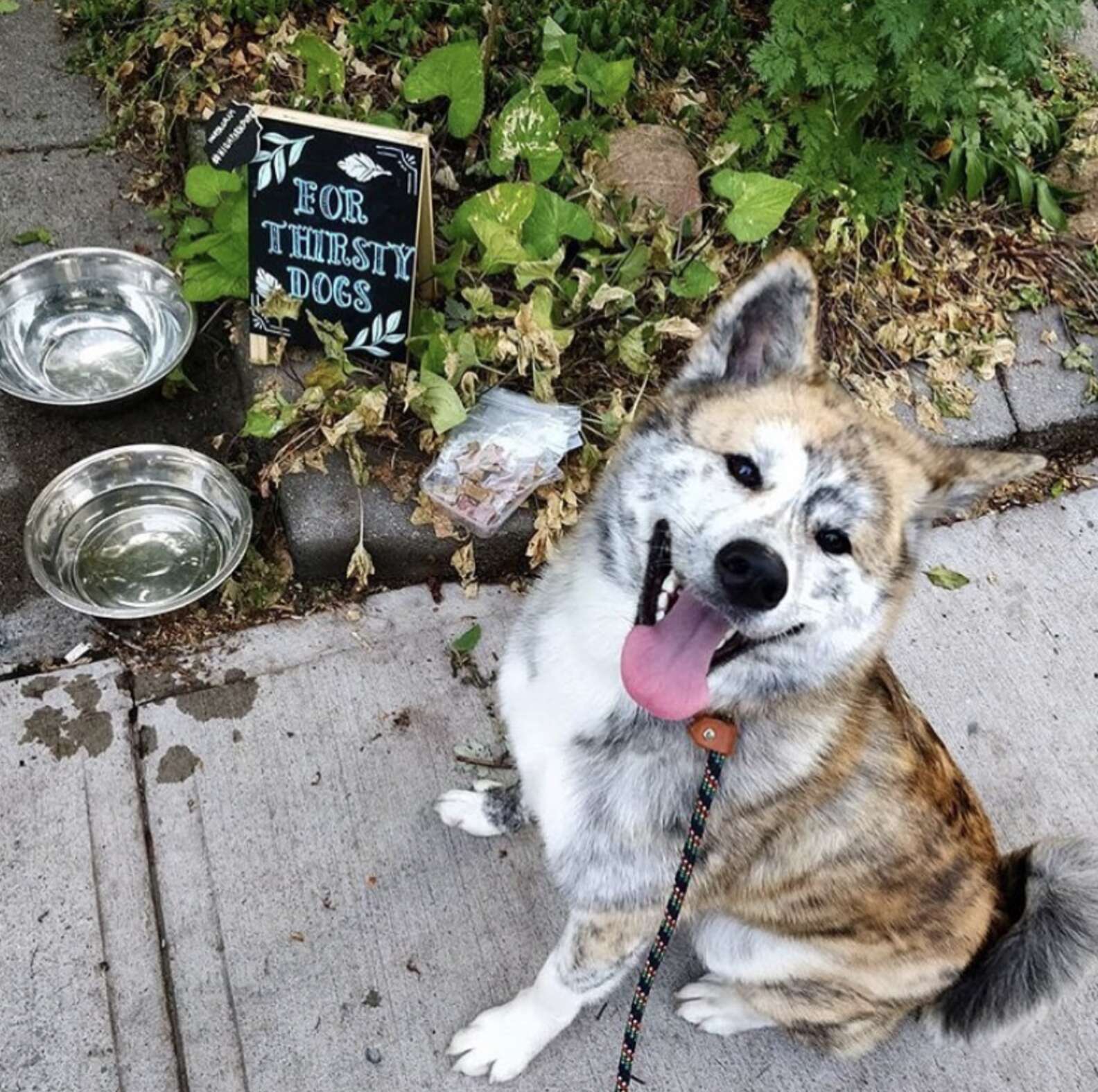
Kaya Kristina lives right next door to High Park, one of Toronto’s most popular public gardens. Six years ago, the animal lover noticed that many of the pups in her neighborhood looked like they could use a little pick-me-up after running around outside.
“On hot days, I noticed some of the dogs coming home from the park looked thirsty and tired,” Kristina told The Dodo. “I thought I should put out some water and a sign that said, ‘For thirsty dogs.’”
INSTAGRAM/HIGHPARKPUPS
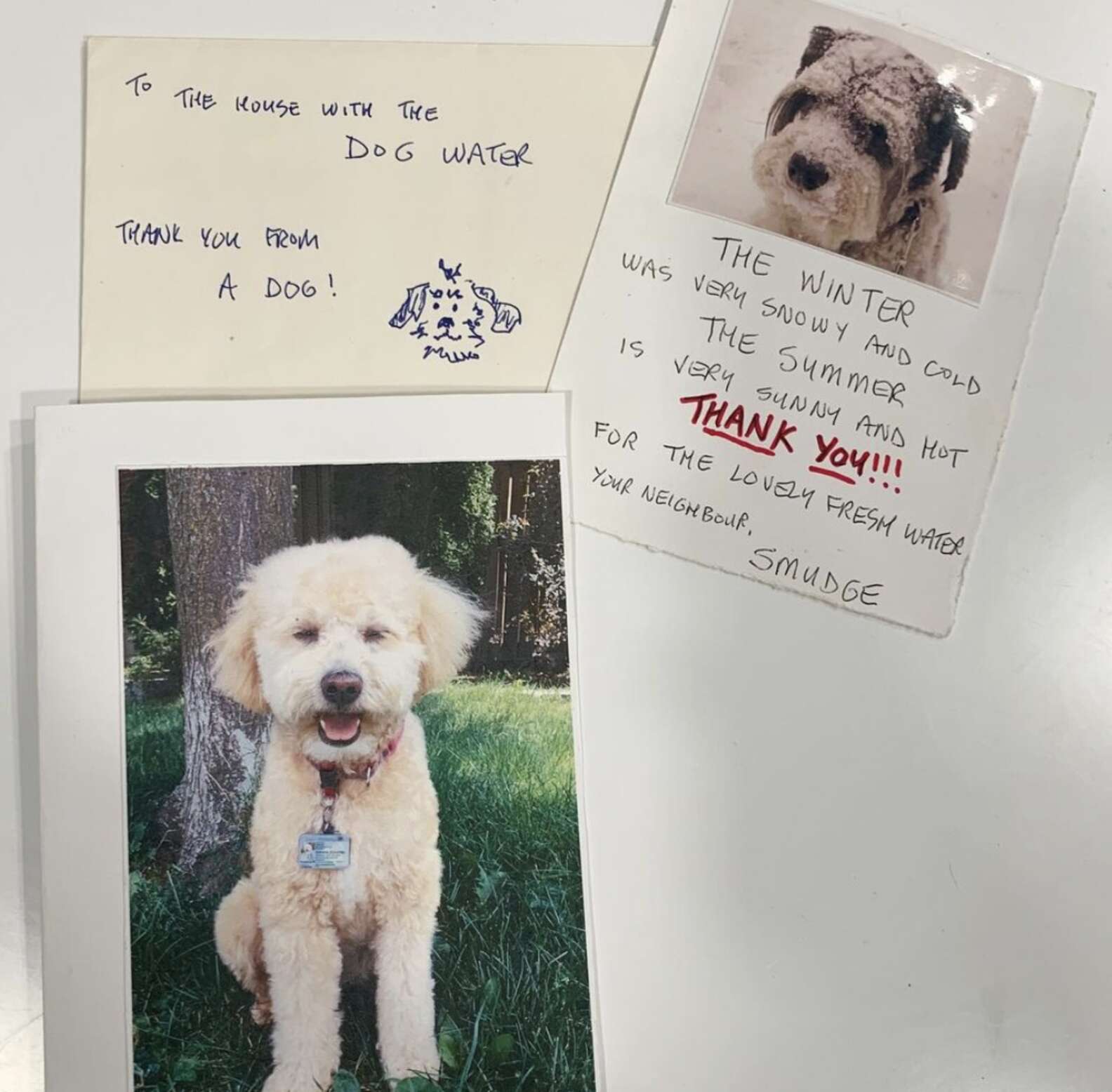
Her act of kindness didn’t go unnoticed for long. “One day, I got a card from someone in my mailbox,” Kristina said. “It had a pic of their dog on the front and it was written from the point of view of the dog saying thank you for the water. I put the pic up on my fridge and it made me really happy.”
INSTAGRAM/HIGHPARKPUPS
For years, Kristina continued to supply local dogs with water and she continued to receive little messages in return. Then, when the pandemic struck last year, Kristina decided to up her game. She decided to leave some treats on her front lawn for all her furry neighbors to safely enjoy during lockdown.
And StarPups Coffee was born.
INSTAGRAM/HIGHPARKPUPS
“I made a bunch of mini treat bags, made a little menu so people knew what they were giving their dog and put a little stand out with options,” Kristina said. “It was so cute seeing the dogs go by and pulling their owners to my house to go get a snack.”
Kristina provides water, Milk-Bones and specialty all-natural treats made in Canada. And the parade of dogs enjoying them has provided hours of entertainment for her while being cooped up inside.
INSTAGRAM/HIGHPARKPUPS
Regular visitors began swinging by the café every day, so Kristina started an Instagram account as a way to build a little community around the watering hole.
“I thought of all the people living alone during COVID and how their mental health was suffering,” Kristina said. “I thought, ‘Most people are complaining about their husbands and kids driving them nuts being home all together. But do they think about their single friends who only have pets?’ I wanted to give those people something to look forward to and make them feel special.”
INSTAGRAM/HIGHPARKPUPS
One day, Kristina went outside and found that her entire café setup was missing. Someone had stolen StarPups overnight, and Kristina was heartbroken. She posted about it on her Instagram — and, to her surprise, the community she had fostered over the months and years stepped up to help.
“That evening, when I got home, my mailbox was full of cards, notes, photos of people’s dogs, Pet Valu gift cards and even a sweet drawing of my dog,” Kristina said. “It turned out to be a good thing, because I had felt so isolated all year with COVID, and now I felt like I had an army of friends.”
INSTAGRAM/HIGHPARKPUPS
Encouraged by the show of support, Kristina built another StarPups Coffee for the neighborhood dogs to enjoy. And Kristina is currently working on building a more permanent setup on her lawn, which will be weatherproof so that no dogs will have to walk away disappointed when it rains or snows.
Now that Ontario has entered back into lockdown, the little front yard café is doing more business than ever before. “One of the few things that’s still allowed is walking your dog,” Kristina said. “So many people are struggling mentally and physically, so this is something they can do to bring a little joy to their day.”
ooOOoo
This is a very beautiful story and just goes to show that Kristina rose to the occasion with returns and rewards far beyond what she may have anticipated. I have said it many times before but nonetheless will say it again: Dogs are the most delightful of animals. They form bonds with us humans that is unmatched by any other animal. Let’s just let this story above sink into our deeper selves.
More than that, they bring out the very best in people!
:max_bytes(150000):strip_icc()/MaryJoDiLonardo-bw-treehugger-6d5044d7d4ae44298fb31df11a3d5a66.jpg)








 Learning from Dogs