Category: Water

Being healthy in your later years.

This is a key article!

Now this has nothing to do with dogs. Well not directly but the longer we humans live the longer we can have dogs as pets.

I was having an email ‘conversation’ with Jon over in England and he pointed me to Professor Tim Spector. Prof. Spector writes on his website that he:

Tim Spector is a Professor of Genetic Epidemiology and Director of the TwinsUK Registry at Kings College, London and has recently been elected to the prestigious Fellowship of the Academy of Medical Sciences. He trained originally in rheumatology and epidemiology.

In 1992 he moved into genetic epidemiology and founded the UK Twins Registry, of 13,000 twins, which is the richest collection of genotypic and phenotypic information worldwide. He is past President of the International Society of Twin Studies, directs the European Twin Registry Consortium (Discotwin) and collaborates with over 120 centres worldwide.

He has demonstrated the genetic basis of a wide range of common complex traits, many previously thought to be mainly due to ageing and environment. Through genetic association studies (GWAS), his group have found over 500 novel gene loci in over 50 disease areas. He has published over 800 research articles and is ranked as being in the top 1% of the world’s most cited scientists by Thomson-Reuters.

He held a prestigious European Research Council senior investigator award in epigenetics and is a NIHR Senior Investigator. His current work focuses on omics and the microbiome and directs the crowdfunded British Gut microbiome project.

Together with an international team of leading scientists including researchers from King’s College London, Massachusetts General Hospital, Tufts University, Stanford University and nutritional science company ZOE he  is conducting the largest scientific nutrition research project, showing that individual responses to the same foods are unique, even between identical twins.

You can find more on https://joinzoe.com/ He is a prolific writer with several popular science books and a regular blog, focusing on genetics, epigenetics and most recently microbiome and diet (The Diet Myth). He is in demand as a public speaker and features regularly in the media.

That is quite a CV!

Then I came across an essay on The Conversation website about being healthier in one’s old age.

Read it!

ooOOoo

Keen to be healthier in old age? Tend your inner garden

By

Clinical Senior Lecturer, King’s College London

Professor of Genetic Epidemiology, King’s College London

January 29, 2016

Grub’s up. Lunch by Shutterstock

The world’s oldest man, Yasutaro Koide recently died at the age of 112. Commentators as usual, focused on his reported “secret to longevity”: not smoking, drinking or overdoing it. No surprises there. But speculation on the basis of one individual is not necessarily the most helpful way of addressing this human quest for the Philosopher’s Stone.

The “very old” do spark our interest – but is our search for a secret to longevity actually misguided? Wouldn’t you rather live healthier than live longer in poor health? Surely, what we really want to know is how do we live well in old age.

Clearly as scientists we try to illuminate these questions using populations of people not just odd individuals. Many previous attempts have approached this question by looking for differences between young and old people, but this approach is often biased by the many social and cultural developments that happen between generations, including diet changes. Time itself should not be the focus – at least, in part, because time is one thing we are unlikely to be able to stop.

Yasutaro Koide made 112. Kyodo/Reuters

The real question behind our interest in people who survive into old age is how some manage to stay robust and fit while others become debilitated and dependent. To this end, recent scientific interest has turned to investigating the predictors of frailty within populations of roughly the same age. Frailty is a measure of how physically and mentally healthy an individual is. Studies show frailer older adults have an increased levels of low grade inflammation – so-called “inflammaging”.

New research published in Genome Medicine by Matt Jackson, from our group at King’s College London, investigated this question in an unlikely place – poo. Recent evidence indicates that our immune and inflammatory systems are trained and educated in our gut, through key interactions with gut bacteria. So we asked if changes in our gut bacteria could be part of the process of inflammation driving frailty.

Our recent work found that the frailer an individual, the lower the diversity of gut bacteria they have. We looked at stool samples from more than 700 healthy British twins and found that a group of bacteria belonging to the species with a tricky and slightly unpleasant name, Faecalibacterium prausnitzii, were found in higher amounts in the healthier twins. This is a particularly interesting microbe as it has been linked with good health in many other diseases such as inflammatory bowel disease and is believed to reduce inflammation of the gut. Could this bug help protect against frailty?

Putting in the research. Paper by Shutterstock

There were other microbes seen in increased amounts within the frailer twins. One was Eubacterium dolichum, which has been seen to increase in unhealthy Western diets. We found the same picture when comparing frailer, more elderly, individuals from the ELDERMET study, by the University of Cork. This suggests that dietary changes might be an easy way to encourage healthy ageing.

Our study does not yet clarify whether the changes to the gut bacteria are a cause of poor ageing itself or are just a consequence of frailty – longitudinal studies that follow people over several years will be needed to sort this out. But these results are exciting for researchers in the ageing field and suggest that if you want to age well you should perhaps do fewer crosswords and spend more time looking after your microbial garden, for example by eating plenty of plant fibre, for example in a Mediterranean-type diet.

ooOOoo

Well this essay was published nearly 5 years ago and one wonders if more information has come to light.

Certainly Jeannie and me are heavily into a plant-based diet with a small selection of fish from time to time.

I will do more research and see if there are any updates that may be published.

In the meantime stay as healthy and as happy as you can be!
 

The power of community

Despite the gloom and real stress for many people it’s not wall-to-wall pessimism.

The reason I was prompted to write about this was a couple of connections made in the last few days and the power they have to keep this elderly chap still bouncing along.

Recently on the forum Ugly Hedgehog there was a gentleman who posted some photographs of some dogs that he had seen at the dog park. It was in a post called Today at the dog park.

They were lovely and I thought what a good idea it would be if I was able to republish them for next week’s Picture Parade. So I asked!

Well I was not disappointed and indeed said gentleman emailed me with a short bio and a photograph of him and his dog by way of an introduction. This is what he wrote:

I was born on Long Island and spent the first 60 years of my life there except for my Naval service for four years during the Vietnam war. I was a Naval Aviator, and after my active duty was over I returned to Long Island and got into a career in law enforcement that lasted 31 years. I made thousands of arrests during my career and many of those who were incarcerated threatened to “get me” some day, so I would prefer that you don’t use my real name.

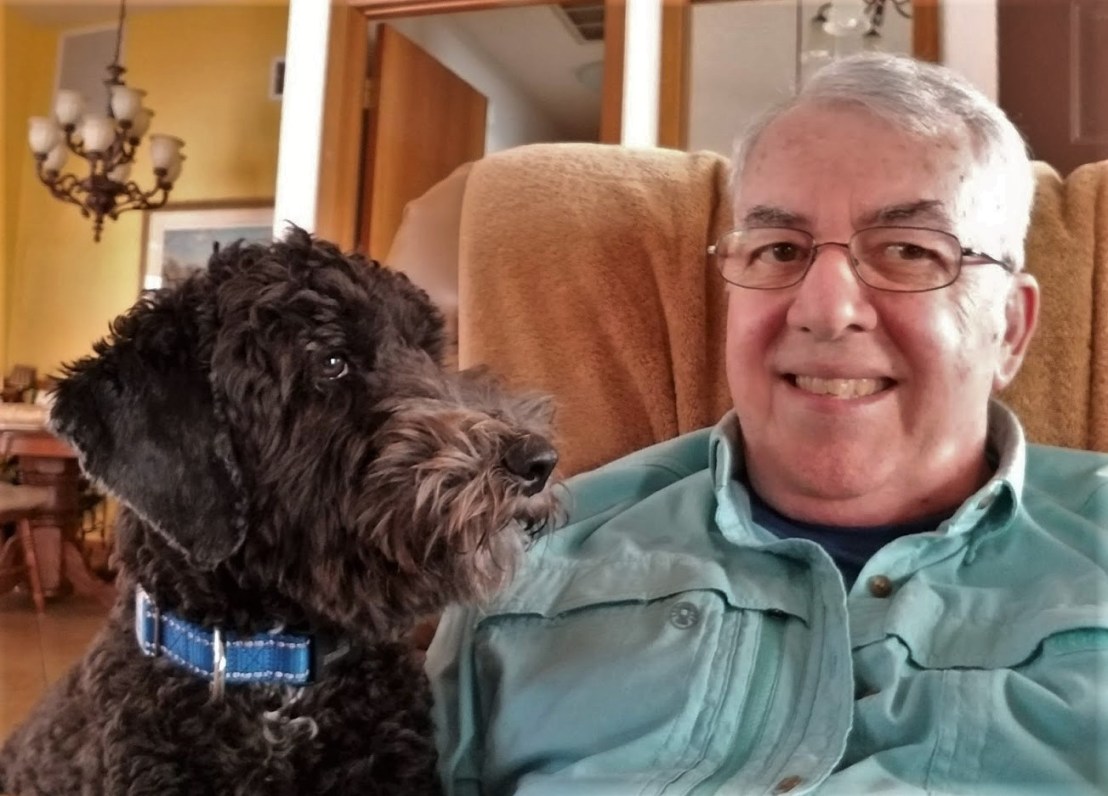
When I retired at age 60 I moved to Tampa, FL because my daughter lived there and I have two granddaughters and now my son lives here too. It’s great for photographing flora and fauna all year round. My love for dogs has worn off on my kids as my daughter has two of them and my son three! Photography has been a hobby of mine for over 60 years. Here is a casual photo of me and my buddy Ollie (a three year old golden doodle).

Ollie and Nimbushopper

You will have to wait until Sunday to view his photographs!

At the end of November Jean and I wanted to join the local camera club. It was clear that I had a camera, a Nikon D750, that was way more advanced than I thought and, frankly, I didn’t know my way around it.

So we joined the Caveman Camera Club in Grants Pass, Oregon. Although at the moment the pandemic puts a halt on physical meetings, twice a month ‘zoom’ meetings are held. Also mentors were available. I took advantage of the opportunity to work under a mentor and last week I went the short distance of nine miles to meet with Gene. Gene had so much knowledge and had regularly taught photography for a number of years. I came away very inspired and very motivated to become better in my photographic and composure skills. Gene’s area of interest is landscapes.

What was clear was that for my whole life, and I have been taking photographs for a very long time, I had been taking pictures and not composing photographs.

It’s going to be a long journey but one that fills me with delight

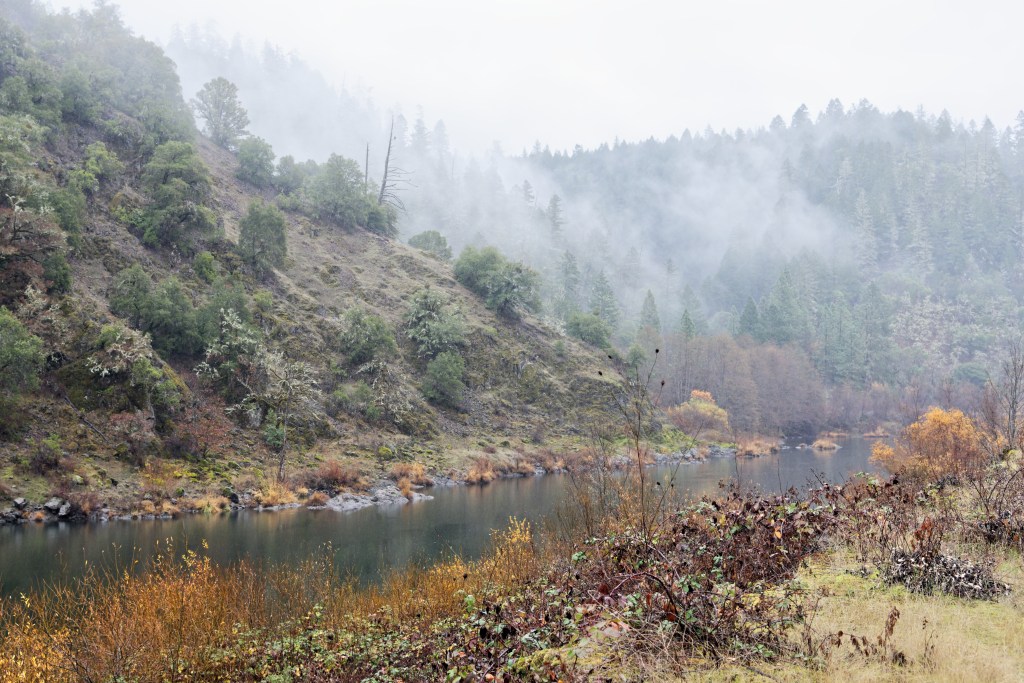
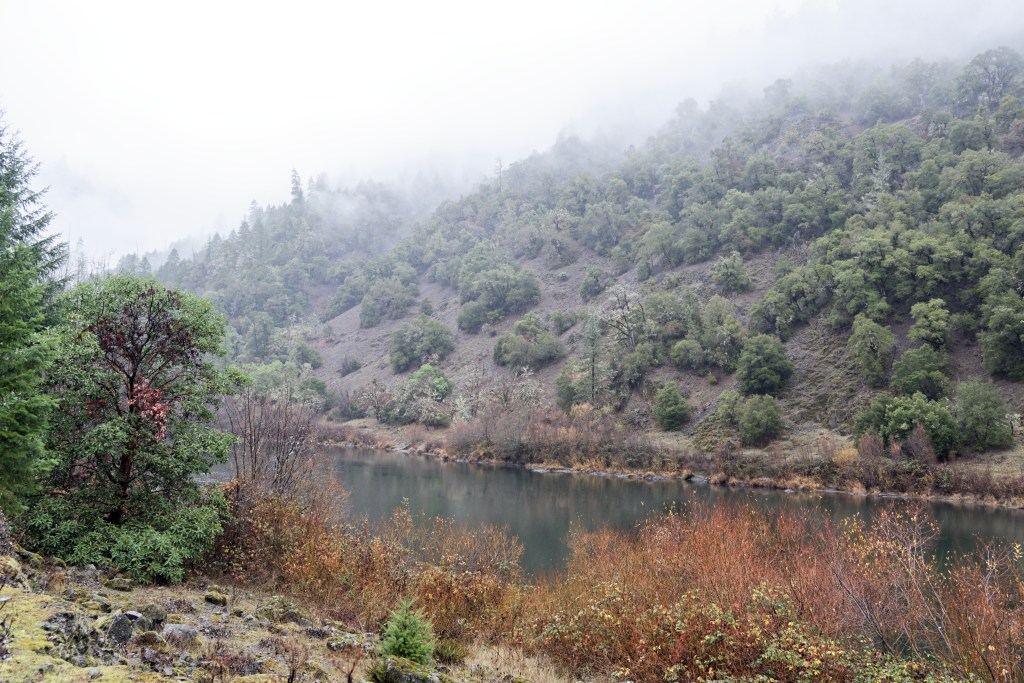
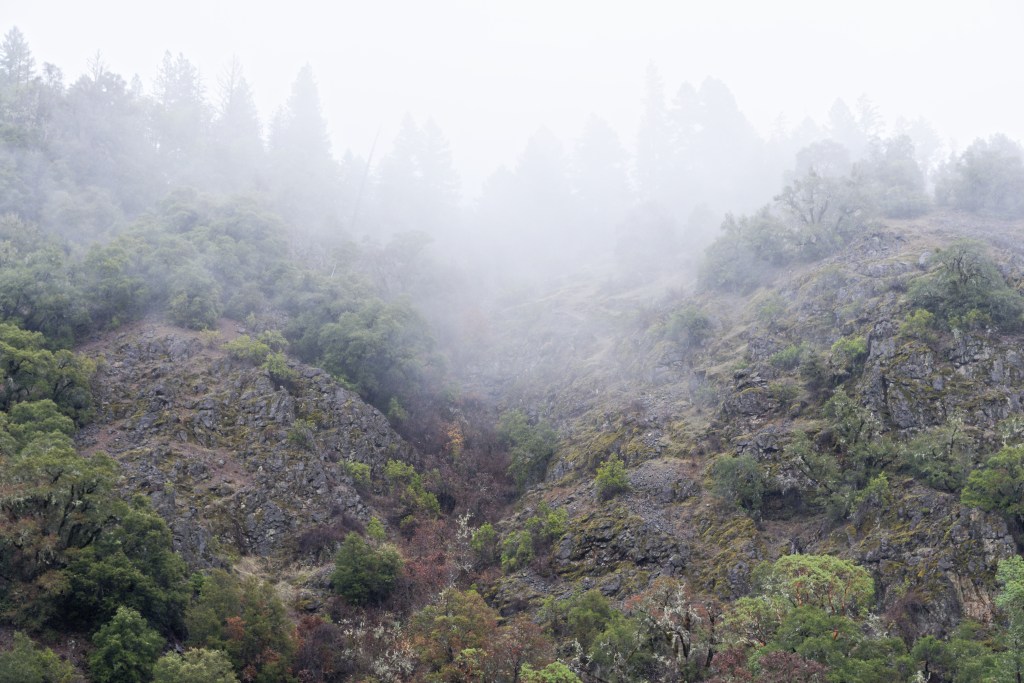
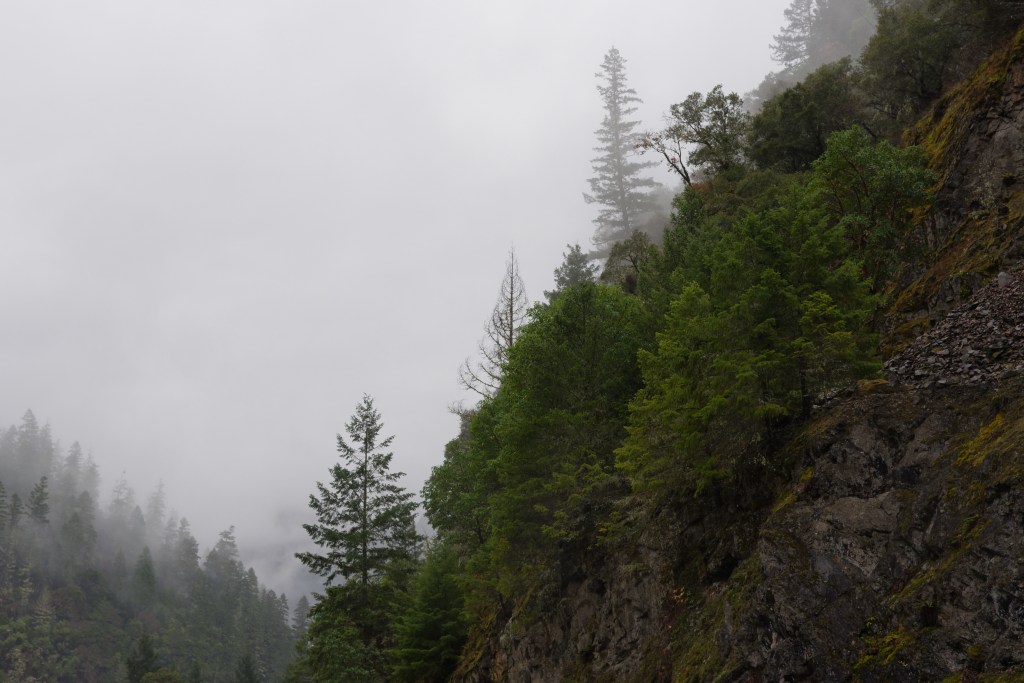
Here are some of my very first attempts, taken yesterday along the Rogue River in the rain and mist.

The Rogue River looking downstream.

oooo

The Rogue River looking upstream from the same point.

oooo

Looking towards the top of the opposite bank.

oooo

Trees in the mist.

Well it’s a start!

But I just wanted to reiterate that staying local both literally and virtually is very rewarding.

Happy Birthday Jeannie

It is Jean’s birthday today.

This photograph was taken on the 8th January, 2008. Jean and I had met for the first time late in 2007.

It was close by in San Carlos, Mexico. Jean then lived in San Carlos!

On your bike!

Some videos of Alex, my son, and others taking a bike tour.

Now I would be the first to admit that the following videos will not be to everyone’s taste.

But there is a strong link to my son and his bike riding, and to my own bike riding. For over 5 years ago Alex persuaded me to get a better cycle than I already had. I chose the Specialized Sirrus and have been delighted with it ever since. I purchased it from the local Don’s Bike Center. There is a photograph of the bike below.

To be honest, riding the bike more or less every other day has been crucial in me staying as fit and healthy as I am.

On to the videos.

I was speaking to Alex recently and he was talking about the tour of the Isle of Wight off the south coast of England that he and friends took. That was Alex and Darren and Claire and their 14-year-old son Tom.

He mentioned the YouTube videos that had been taken and I asked Alex to forward them to me.

I reckoned that a few of you would be interested!

They are a total of 26 minutes spread across the 4 videos

oooo

oooo

oooo

Enjoy!

Finally, Alex and I still stay connected with our riding courtesy of Strava.

This uses a small GPS, in my case a Garmin EDGE 20, to upload and show the route to the Strava dashboard. We each give each other what is known as Kudos for our respective rides.

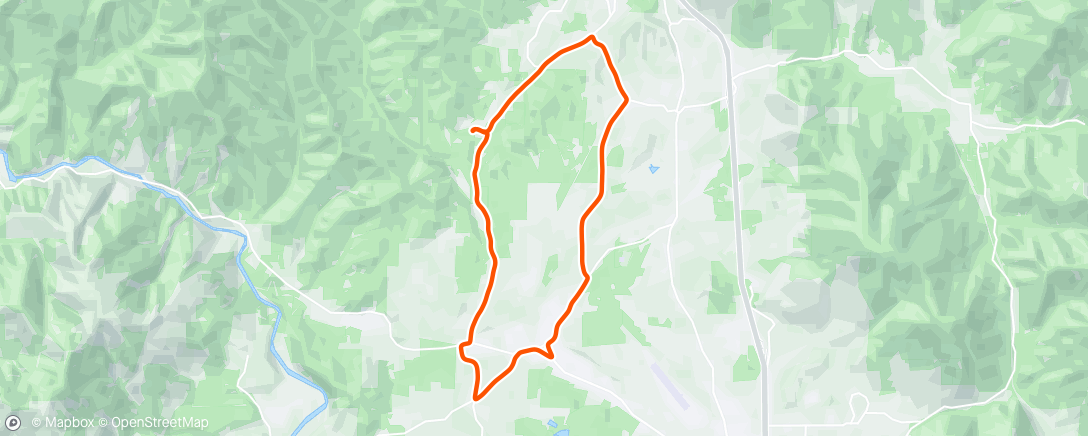
The following is my afternoon ride of a little under 13 miles around the local roads, grabbed when the rain ceased for a while. It shows me taking our driveway, a quarter-mile long, to Hugo Rd; about 10 o’clock in the diagram below. I then turned left and two miles later turned right into Three Pines Rd. then a further right into Russell Rd. and down to Pleasant Valley Rd. and back home with a small diversion along Robertson Bridge Rd. and Azalea Dr. and to the bottom of Hugo Rd. Precisely 3 miles up Hugo Rd. and back to our driveway.

That will be shared automatically with Alex when he wakes in the morning.

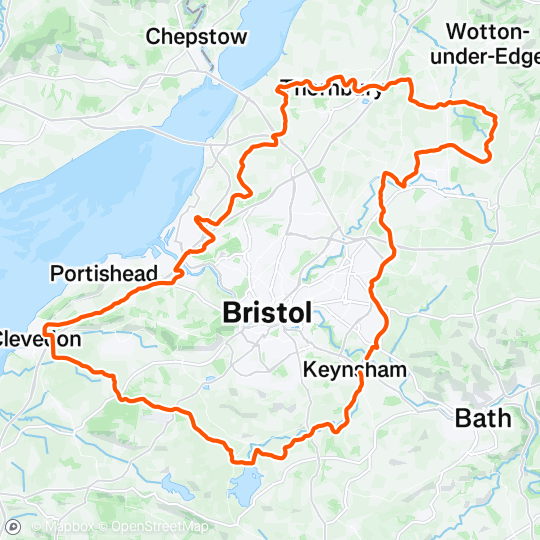
And this below was Alex’s recent ride; all 83.78 miles!

Technology, eh!

Dogs are not just cuddly companions.

They give us humans extra longevity.

I have long followed Tony and his blog One Regular Guy Writing About Food, Exercise and Living Past 100. Not only because he writes so well but also because he and I are in the same camp age wise (OK, Tony is just a tad older.)

So when this post came along I just had to share it with you because we know about dogs and the great things that they do for us.

ooOOoo

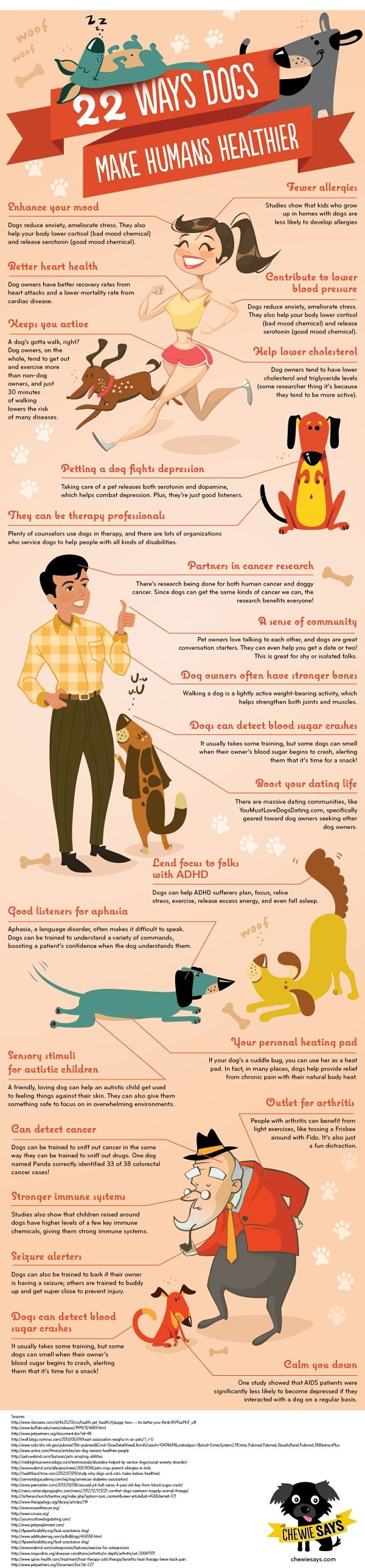
22 Ways Dogs Make Humans Better

By Tony,
As a dog lover and fitness enthusiast, I had to love this poster and share it with you.
Regular readers know that my dog Gabi has been my companion for 14 years. She is my first dog in over 50 years. You can read the peculiar story of how I came to own her in this post: Anatomy of an Act of Kindness.

In case some of these benefits seem nebulous, check out my post What is the Value of Hugging? and also 10 Reasons Why Oxytocin Is The Most Amazing Molecule In The World for some documentation.

ooOOoo

I hope you can read it.

If you have any problems let me know and I will try and find a clearer version.

Meantime, you all stay fit and healthy with your dogs!

Purple Mountains

This is a film that all should watch!

Now again this has nothing to do with dogs and I would be the first person to say that there are still some people out there who are not convinced that global warming is a major result of human activity.. But none other than the Union of Concerned Scientists are persuaded that humans are the major cause. See their website here. (From which the following is taken.)

Every single year since 1977 has been warmer than the 20th century average, with 16 of the 17 warmest years on record occurring since 2001, and 2016 being the warmest year on recorded history. A study from 2016 found that without the emissions from burning coal and oil, there is very little likelihood that 13 out of the 15 warmest years on record would all have happened.

And further on in the article, this:

Scientists agree that today’s warming is primarily caused by humans putting too much carbon in the atmosphere, like when we choose to extract and burn coal, oil, and gas, or cut down and burn forests.

Today’s carbon dioxide levels haven’t been seen in at least the last 800,000 years. Data assembled from Antarctic ice core samples and modern atmospheric observations.

So on to the film.

My son, Alex, sent me the following email on the 7th October.

Hi Dad

This is a really interesting film about climate change in the west coast mountains, USA.  A bit skiing related but a good watch !

Lots of love

Alex

Included in the email was a link to the film available on YouTube.

The film is just under one hour in length and a great film to watch as well as having a clear, fundamental message: All of us must act in whatever ways we can if our children and grandchildren are to have a future. Indeed, do you believe you have another twenty or more years to live? Then include yourself as well.

ooOOoo

About The Film
Professional snowboarder and mountaineer Jeremy Jones has an intimate relationship with the outdoors. It’s his escape, his identity, and his legacy. But over the course of his 45 years in the mountains, he’s seen many things change: more extreme weather, fewer snow days, and economic strain on mountain towns.
Motivated by an urge to protect the places he loves, Jeremy sets out on a physical and philosophical journey to find common ground with fellow outdoor people across diverse political backgrounds. He learns their hopes and fears while walking a mile in their shoes on the mountain and in the snow.
With intimacy and emotion set against breathtaking backdrops, Purple Mountains navigates America’s divide with a refreshing perspective: even though we may disagree about climate policy, our shared values can unite us.

Please, please watch the film!

Thank you!

Picture Parade Three Hundred and Fifty-Seven

More of those delightful photos from Capt. Bob.

A republication of an earlier Picture Parade.

Stay Happy Good People!

oooo

oooo

oooo

oooo

Many thanks, Bob!

The fate of the world!

Whichever way you look there are substantial challenges.

This post is largely a republication of a recent post from Patrice Ayme. Because when I read it I was profoundly affected. I thought that it needed to be shared with all you good people because if nothing is done then life as we know it is going to come to an end. Period! That includes our gorgeous dogs as well as us humans! So, please, please read it all the way through!

But before Patrice’s post is presented The Economist this last week came out with a special report entitled Business and climate change. I offer a small extract:


For most of the world, this year will be remembered mainly for covid-19. Starting in Asia, then spreading across Europe and America before taking hold in the emerging world, the pandemic has infected millions and killed hundreds of thousands. And it has devastated economies even more severely that did the global financial crisis which erupted in 2008.

But the impact of covid-19 has also given a sense of just how hard it will be to deal with climate change. As economic activity has stalled, energy-related CO2 emissions have fallen sharply. This year the drop will be between 4% and 7%. But to have a decent chance of keeping Earth’s mean temperature less than 2 deg C above pre-industrial levels, net emissions of CO2 and other greenhouse gases must fall to more or less zero by mid-century. And such a drop needs to be achieved not by halting the world economy in its tracks, but by rewiring it.

The next section in the special report was A grim outlook and it was, indeed, a very grim read.

So onto Patrice’s article.

ooOOoo

Back To The Jurassic In A Hurry: 500 Part Per Million Of Greenhouse Gases

Greenhouse gases (GHG) used to be 280 parts per million. Now they are around 500 ppm (including CH4, Nitrogen oxides, chlorofluorocarbons, etc.). This is more GHG than in at least thirty  million years, when the Earth was much warmer, and it is similar to CO2 densities during the Jurassic.

So we are presently transiting to a Jurassic climate. The transition to the Jurassic climate is happening at a rate many orders of magnitude faster than changes in the past. This implies that most forests of the Earth , desiccating and incapable to adapt fast enough, are going to burn… worldwide. This generalized combustion has a drastic potential consequence: generalized hypoxia.

So we should talk about climate catastrophe rather than climate change, and global heating rather than global warming: recent fires got helped by temperatures dozen of degrees higher than normal, in part from compression of the air due to record breaking winds. This is why parts of the Pacific Northwest which never burn are now burning. This will extend to Canada, Alaska, Siberia and already did in recent years. The catastrophic massive release of frozen methane hydrates could happen any time (it already does, but not as bad as it is going to get). It has up to one hundred times more warming power than CO2 (fires release it by billions of tons).

What is the way out? Well, hydrogen is the solution, in two ways, but has not been deployed as it could be. A decade ago, thermonuclear fusion, on the verge of becoming a solution, was starved for funding, and so was green hydrogen (the then energy secretary, Obama’s Steven Chu, prefered investing in batteries, it was more lucrative for his little greedy self).

Green hydrogen enables to store energy for renewables, avoiding blackouts which cut electricity to pumps to fight fires.

We, Spaceship Earth, went from 275 ppm of GreenHouse Gases (GHG) in 1750 CE to 500 ppm in 2020. That doesn’t mean we double the Greenhouse, because the main GHG gas is… water vapor (H2O). What we can guess the best at this point is the EXCESS radiative forcing since 1750 CE, and that’s already nearly 3 Watts per square meter… Equivalent to a million and a half nuclear reactors at full power…

Climate forcing is a fascinating subject, with vast areas without a high level of scientific understanding (LOSU). However we know enough to realize forceful mitigation has to be engaged in immediately.

Joan Katsareas from Philadelphia, PA wrote back: “Thank you @Patrice Ayme for sharing your knowledge of the causes and extent of the climate crisis. I will be seeking out more information on hydrogen as a solution.”

@Joan Katsareas Thank you for thanking me, that is much appreciated. Hydrogen is indeed the overall solution we need at this point. Actually Australia, in collaboration with Japan, is building a gigantic, 15 Gigawatts, project in north west Australia, AREH, the Asian Renewable Energy Hub, to convert renewables from sun and wind into hydrogen products which will then be shipped to Japan. The same needs to be done all over, it would collapse the price of “green hydrogen” (99% of the US hydrogen is from fossil fuels).

In the case of thermonuclear fusion, the  international thermonuclear experimental reactor (ITER) being built in France was slowed down by ten years, from reduced funding, and uses obsolete magnets (superconducting, but not High Temperature Superconductors, which can now be engineered with more compact and powerful fields). A massive effort would bring a positive energy thermonuclear reactor within 10 years… But that effort has not been made… except in China, the usual suspect, where a project, the China Fusion Engineering Test Reactor (CFETR), aims at an energy gain of 12 and a total power equivalent to a fission nuclear reactor. Its detailed engineering has been launched for a while (it’s supposedly symbiotic with the European DEMO project, which will produced as much as a large power station and will be connected to the grid. That too has been delayed, to the 2050s, although it’s feasible now).  The USA needs to launch a similar project, right away.

We face ecological constraints incomparably more severe than those of the Roman state. Rome did not solve its paltry problems, and let them fester: they had to do mostly with a dearth of metals, and the Franks solved them readily. This hindered the Roman economy. The situation we are facing, the threat of a runaway greenhouse is a terminal existential threat.

Look at Venus, we can look at our sparkling neighbor when the forests have finished burning, and the smoke dissipates (we were told it could be months). Once Venus probably had a vast ocean, and probably, life. But it died from a brutal greenhouse generated by Large Igneous Provinces (LIP). The same happened on Earth, on a smaller scale, more than once, in particular with the Permian Triassic mass extinction, which destroyed 95% of known species..

Now the rumor has it that indeed some life may have survived in the atmosphere.  This is not a joke. Consider: Life on Venus? Astronomers See a Signal in Its Clouds. The detection of a gas in the planet’s atmosphere could turn scientists’ gaze to a planet long overlooked in the search for extraterrestrial life.

Life on Venus? Ah, science, all those possibilities… We never imagined we would ever think possible.

Patrice Ayme

***

P/S: I argued in the past, before anybody else, that the dinosaur-pterosaurs-plesiosaurs extinction, and extinction of anything bigger than 20 kilograms was due to volcanism (I was at UC Berkeley when the two Alvarez were, and they seemed too full of themselves with the iridium layer, and I like to contradict certainties…)

How would LIP volcanism set forests on fire? Well, by the same exact mechanism as now: through a massive CO2 driven greenhouse, what may have terminated the Venusians…

In this perspective climate cooling, for millions of years, visible in the graph above, would have disrupted those species which were not equipped to generate enough heat, and then the LIP accelerated into a vast holocaust…

The end with general burning and acidic oceans is hard to duplicate with a bolide, so the impactophiles have argued that the bolide magically impacted the most CO2 generating rock imaginable… Maybe. But an enormous LIP does all that CO2 production/destruction of the oceans, effortlessly… A friend of mine who is the biggest of the big in this academic domain, he decides who publishes, replied to me that the 66 million year old Dekkan LIP is too small… To which I replied that we don’t know what lays below the ocean…

This is very beautiful.

I probably wanted to say “This is very beautiful in a profound and spiritual way.

One of the many things that make this funny world of blogging so delightful is the connections that are made.

Recently Learning from Dogs got a follow from a person who herself was a blogger. This is what she wrote on her About page.

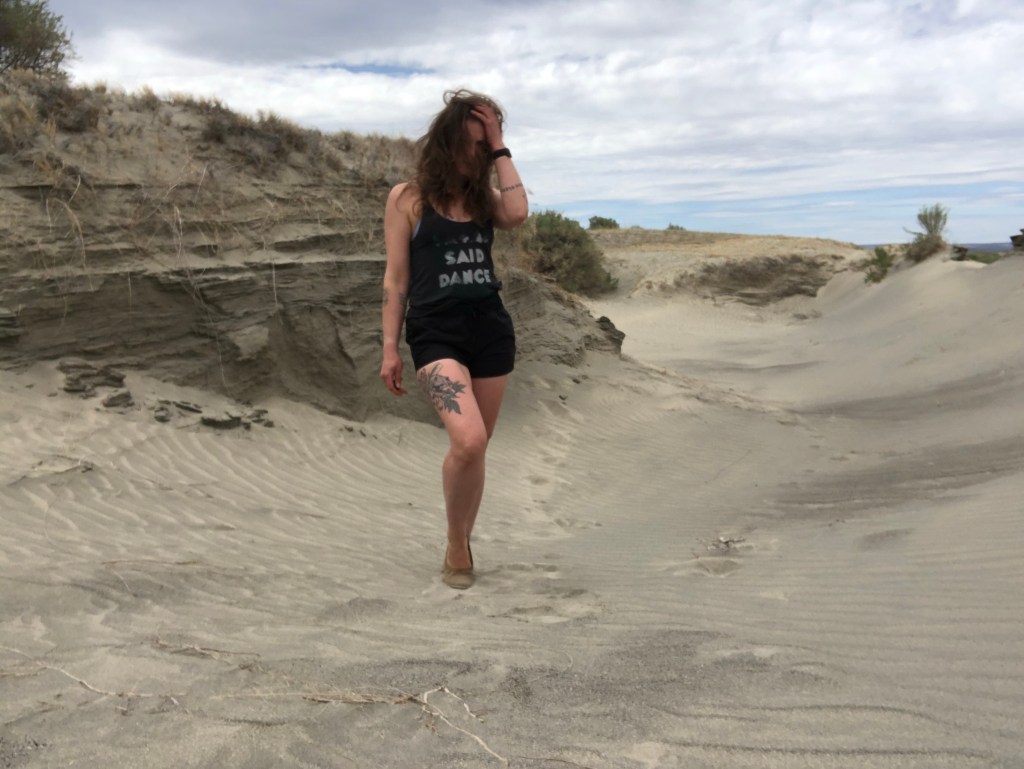
Endurance athlete, artist, and fourth generation Oregonian. I grew up on the central Oregon coast and lived in the Willamette Valley most of my adult life. My endurance work is an intersection of spiritual, personal and creative practices. I fall in love with places, like people, and dream of them often. I am not a travel writer, bucket lister, photographer, peak bagger or a competitive athlete. I seek only passage.

I was intrigued. No, more than that, I was curious about her. I wanted to know more.

When I left a message of thanks over on her blog this is what I said:

Oh my goodness. I came here ostensibly to leave a fairly standard thank you for your decision to follow Learning from Dogs. But then I saw what you had written and, also, the beautiful photographs you have taken. I was just bowled over!

Do you have a dog or two? Because if you do I would love you to write a guest post over at my place. Or give me permission to republish one of your posts? But I would prefer the former.

My dear wife, Jean, and me are both British. We met in Mexico in 2007 and I moved out permanently in late 2008 with my GSD Pharaoh. We came up to the USA in 2010 and were married and then came to Southern Oregon in 2012. We live close to Merlin, Josephine County and just love it to pieces. Originally we had 16 dogs but are now down to 6!

Regrettably she is allergic to dogs but she quickly gave me permission to republish a post of hers.

This is it. It is remarkable!

ooOOoo

Into the fold: Basin and Range

May 26th, 2020

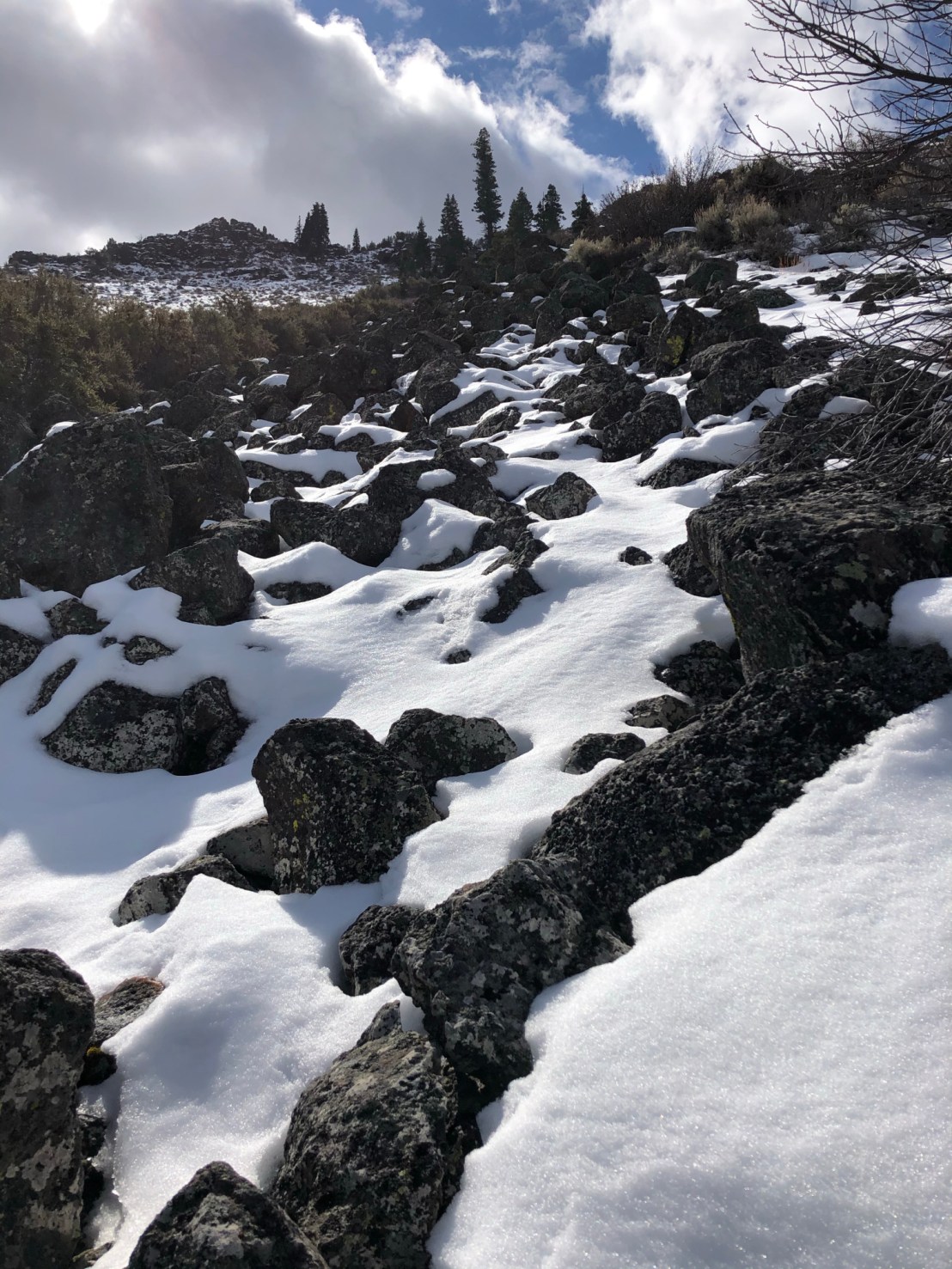
I guess I should have expected the snow, above 6000’ in the springtime. Flurries swirled around my car as I removed my leggings in the backseat and began cleaning my wounds. I was bleeding in four places, the largest of which was a grapefruit sized ooze of blood on my knee. What was supposed to be a quick, 3 mile warm up hike turned into an assorted practice of skills I’ve acquired over the last ten years in the woods.

How to navigate trailless canyons full of thorny brush.

How to step when gaining upon steep fields of melting snow.

How to traverses loose, snow covered boulder fields.

How to field dress a wound.

How to know when to turn around.

How to navigate by sight and evaluate terrain.

How to avoid getting your ankle crushed by a dislodged boulder.

How to stay calm when things get intense.

How to get your head back in the game.

How to self evacuate.

How to accept failure.

How to relish in it.

Just enough snow to mess things up.

Later, with my knee buzzing slightly from the pain, I make my way into a canyon on the western flank of the mountain. I know this canyon well. There is a safe place to hide from the rain, to collect drinking water, and I don’t have to worry about the roads turning to mud if the storms linger through the night. While my water filter drips, I follow the creek upstream. Wind swirls, aspens chatter, clouds are ripping across the sky. House sized, red violet boulders protrude from the hillside, they look like ships caught in the crest of a giant wave.

The sun is setting, the pain in my leg forgotten. I take my full water jugs and find a place to camp along the rocky beach of an alkaline lake. These lakes are the remnants of massive, Pleistocene era inland seas. Their waves are black. In the coldest parts of winter they freeze into a slurry of ice and the motion of the waves seems to slow. Like watching an inky black slurpee ocean crash against the rocky shore.

I eat instant noodles, drink tea, and think about the “real” ocean, where I was born.

To me, the desert and the ocean are like two sides of the same coin. I can watch the light change over the hills for hours, just like I can watch the waves break along the coast. Both are fascinating. The ocean always seems impassable, uncrossable, infinite, unforgiving. The desert is too, if you know the dangers well enough. I think about my close call on the mountain earlier. It’s like an old timer told me once, “…but only a fool tries to cross the desert”.

“Okay”, I said.

When the sun rises, I am already awake, shoving things around, getting ready to ride out to the canyons on the furthest side of the mountain. The dawn strikes a distant rim and is bright pink across the craggy face. I haven’t climbed that peak yet, either. I smile to myself as I toss my pack into the passenger seat, turn up the radio, and turn the ignition. I’m thankful for the warmth in my car this morning. Thankful for a shelter from the wind before my work in the canyon begins.

I found the place, but it took me a while.

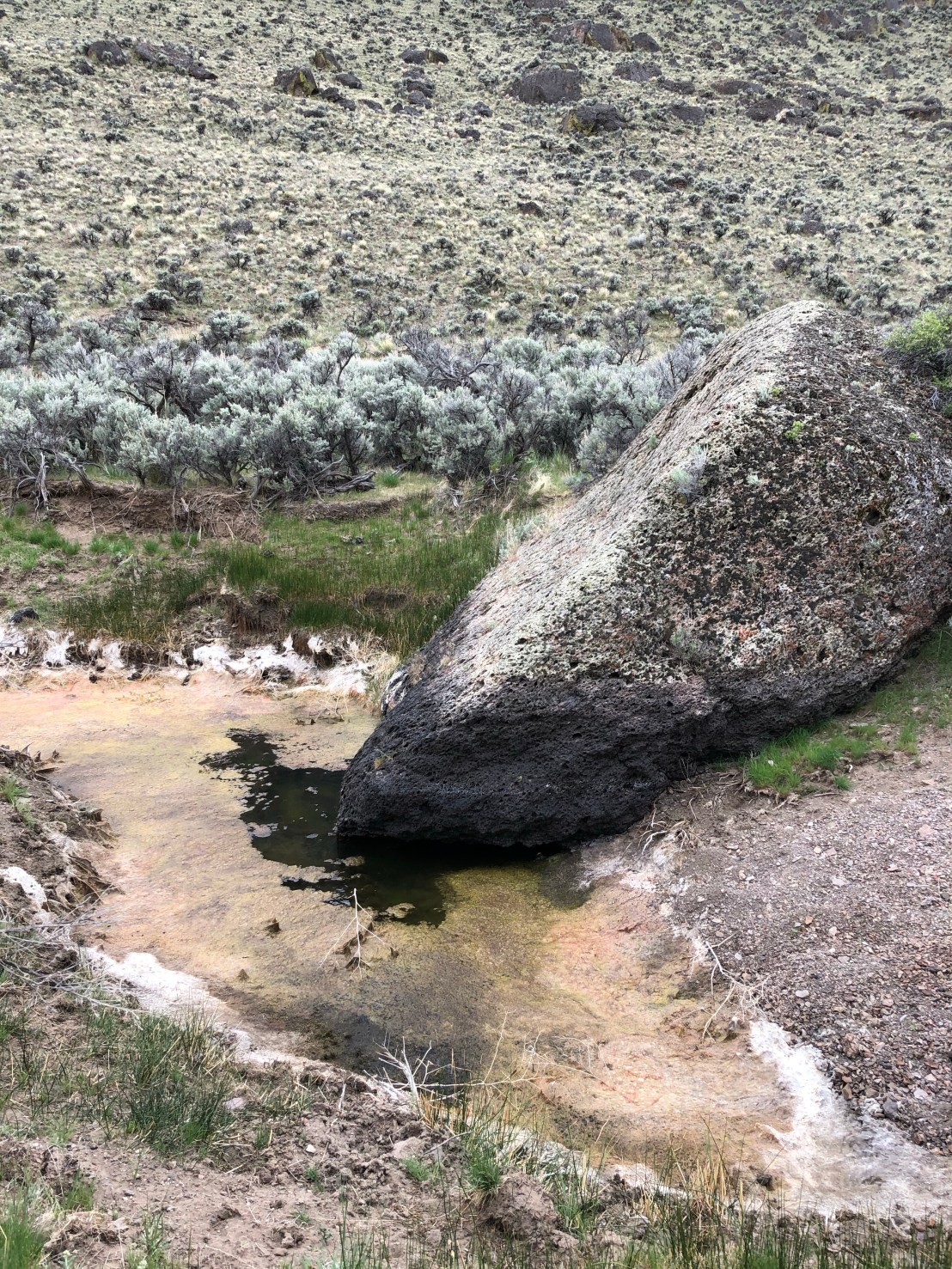
After nearly 50 miles on gravel and dirt, weaving around the backsides of sprawling, ethereal lakes, several wrong turns, and a quite sporting, rugged road granting passage across the valley floor, I had finally reached the gates of this remote, unsociable place. Rimrock lined the canyon walls, massive boulders littered the valley floor, scattered throughout the mostly dry river channel. Each possessed its own creepy, brackish pond at its base, resplendent with robust algae colonies.

Some terrain cannot be run, and this was one of those places. I settled in to a comfortable, brisk hiking pace and made my way up the canyon; sometimes following the riverbed channel, other times taking the game trails through winding thickets of sagebrush and thorns. I never saw the animals, but I could feel myself being watched a few times. I do not mind; I always remember that I am their guest.

The otherworldly feeling of the canyon persisted, even as the landscape changed, flattened, rounded itself out. I took the old farm road out of the depths and up onto the flats again. The road leveled out as it wound it’s way around the mouth of the canyon, now obscured by the sagebrush sea spread out before me. You can see everything that is far away and nothing up close. The terrain is flat and easy here. I break into a run.

I love running downhill.

It’s all gravy until the weather blows in. I watch it coming across the valley. The first raindrops are warm and fat. A rainbow spreads across the horizon, snow clouds form on the rim of the mountain, and the wind really starts to rip. I resist the urge to increase my pace. My body is already sore; I’ve been out here nearly a week now. As the rain turns to sleet and then hail, it’s time to practice the things you’ve learned once more.

How to layer for various types of rain.

How to guard your face from the wind.

How to bundle your hands in your sleeves so they don’t go numb.

How to take your backpack off, open it and retrieve a snack without stopping.

How to run.

How to run when your feet hurt and you want to quit.

How to run when the rain turns to hail and catches you out on the flats with not even a rock to hide behind.

How to run when you are crying and you don’t know why.

Where do you go inside yourself when fatigue and boredom set it?

How do you stay present in all of it?

Everything is practice.

When I finally return to my car, the storm has passed, for now. The mountains beyond the valley are fully obscured by clouds. If I stay here, the road maybe be impassable by morning. I want to stay, but I decide the best course of action is to return the way I came. Also, the hot springs are over there, and my tired legs say, YES PLEASE. I hang my wet clothes up to dry along the windows of my car, crank the heat to 85, and hope my puffy dries out by morning. I rally back across the bumpy valley, behind the lakes, across the basin, up the face of the mountain all over again.

The hot springs are mercifully empty. I take off my clothes and stand naked in the cold air for a while, staring at the mountain. When I slip into the water, I feel like home. I feel like I belong. I am right where I want to be. Everything is just right.

But I don’t stay long.

ooOOoo

I subsequently asked where she had gone:

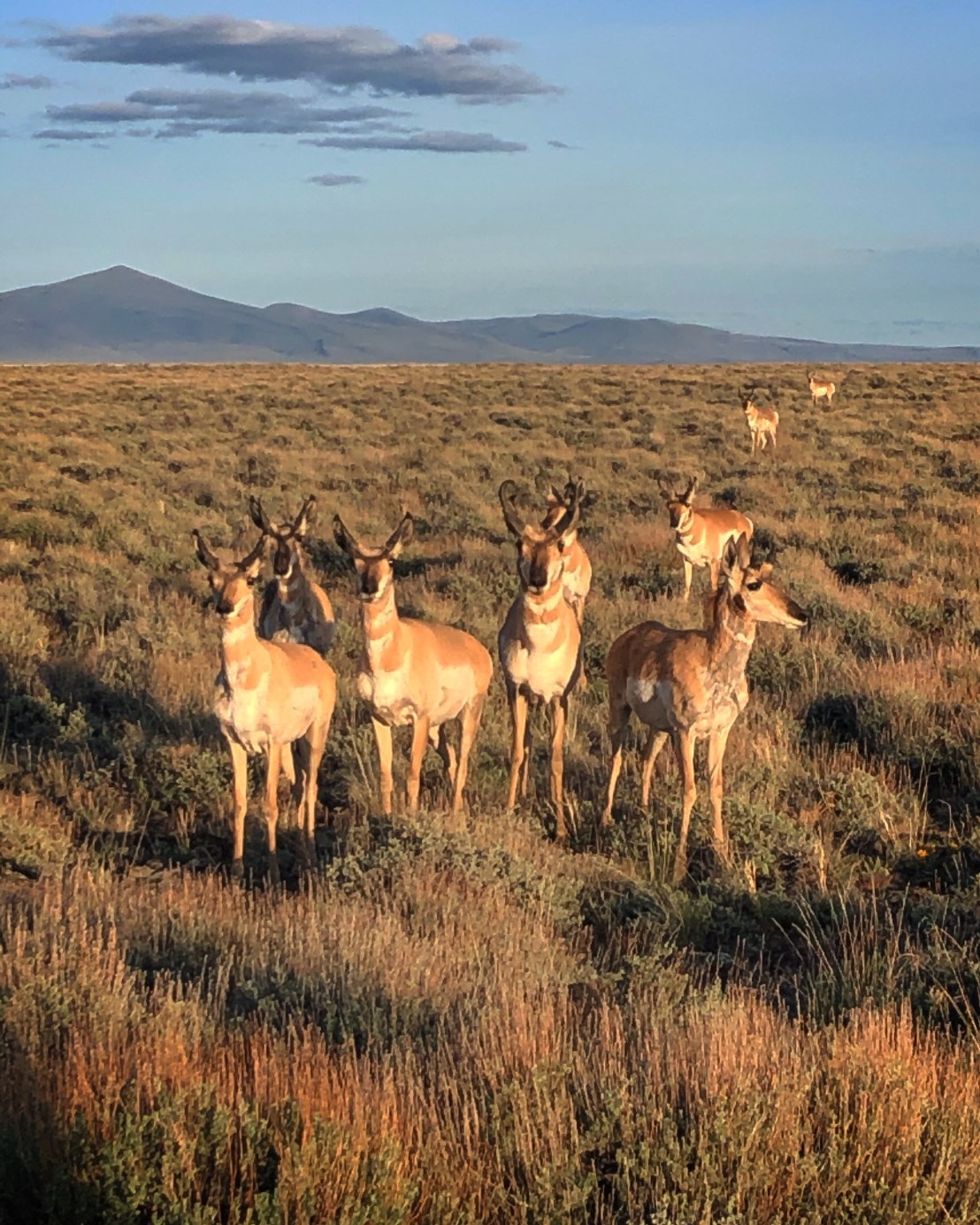
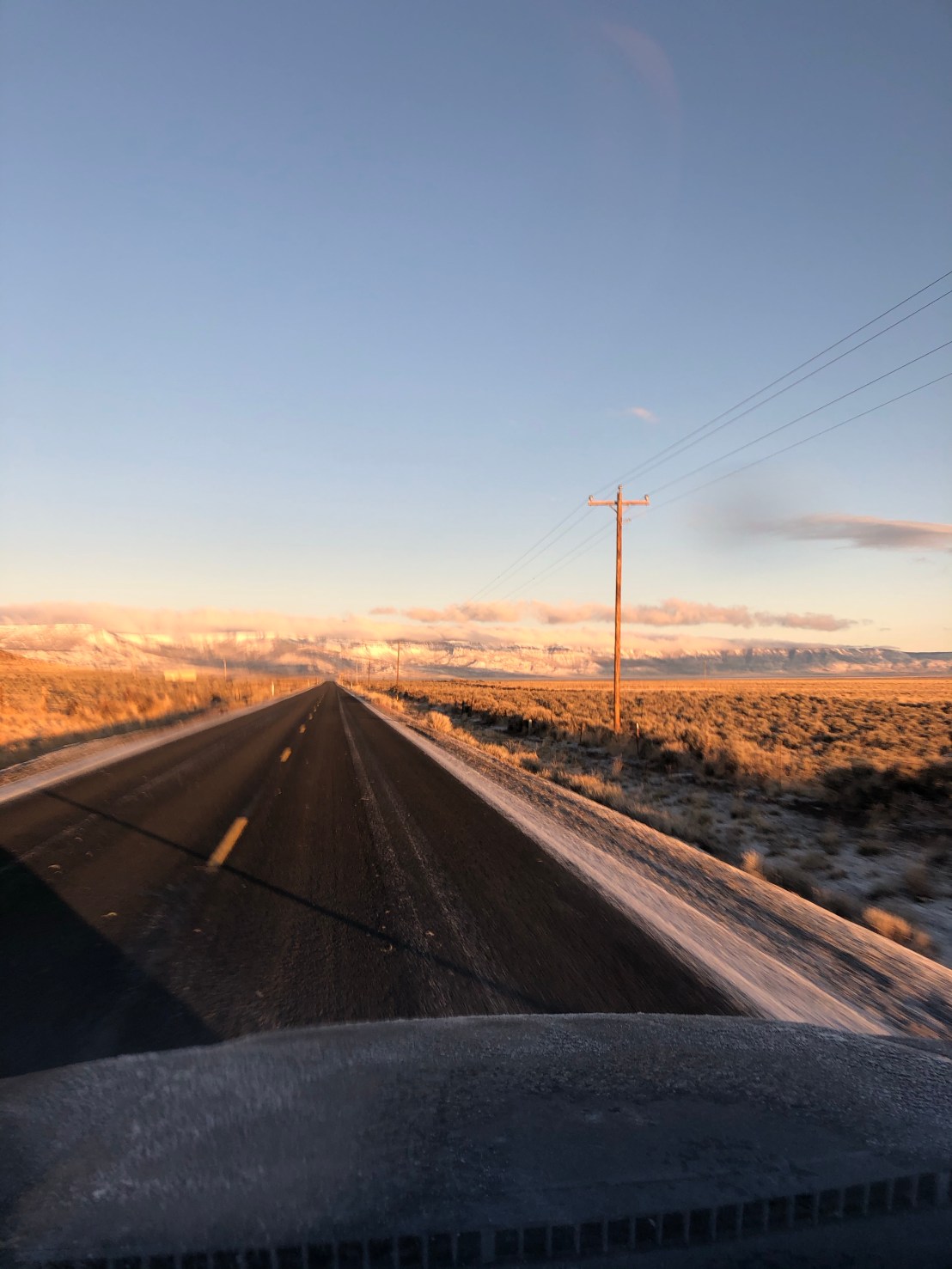
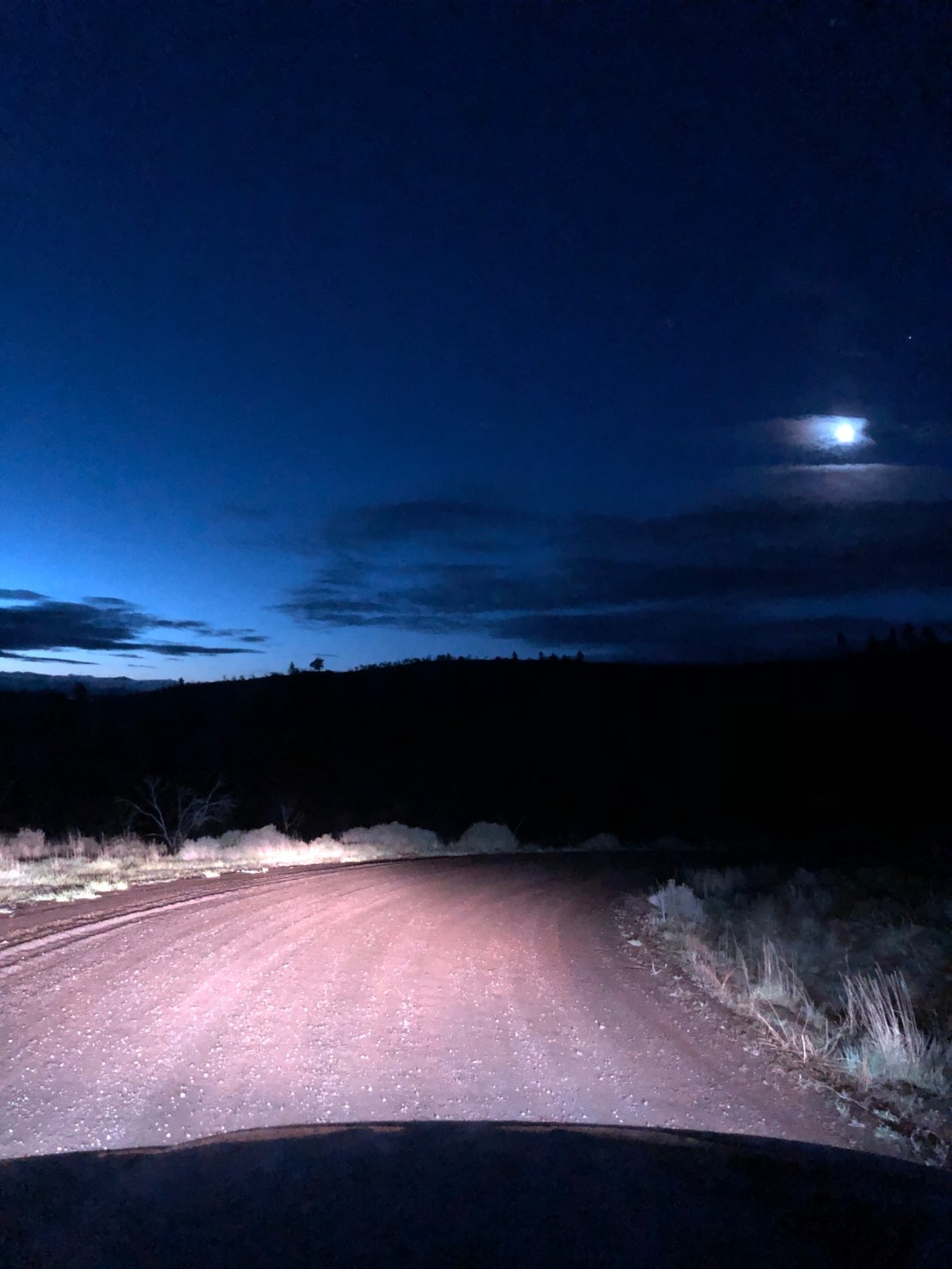
These photos are all from the SE corner of Oregon, reaching down into Northern Nevada. Hart Mountain, the Northern Warner Mountains, Abert Rim, Rabbit Hills, Summer Lake, and the formidable Catlow Valley.

Now you know!

But that doesn’t change my opinion that this is one unusual person who has the spirit of adventure truly in her bones!

Dogs can be very persuasive.

This is a lovely story courtesy of The Dodo.

It is about Mia, a dog who has ideas of her own when it comes to choosing a destination.

To be honest, I wasn’t going to post anything for today but then I saw this story on The Dodo and wondered if it could be put together fairly rapidly.

ooOOoo

Dog Tries To Pull Her Mom To The Beach Every Time They Go On A Walk

“She reacts this way EVERY DAY” 😂

By Caitlin Jill Anders
Published on 9/3/2020

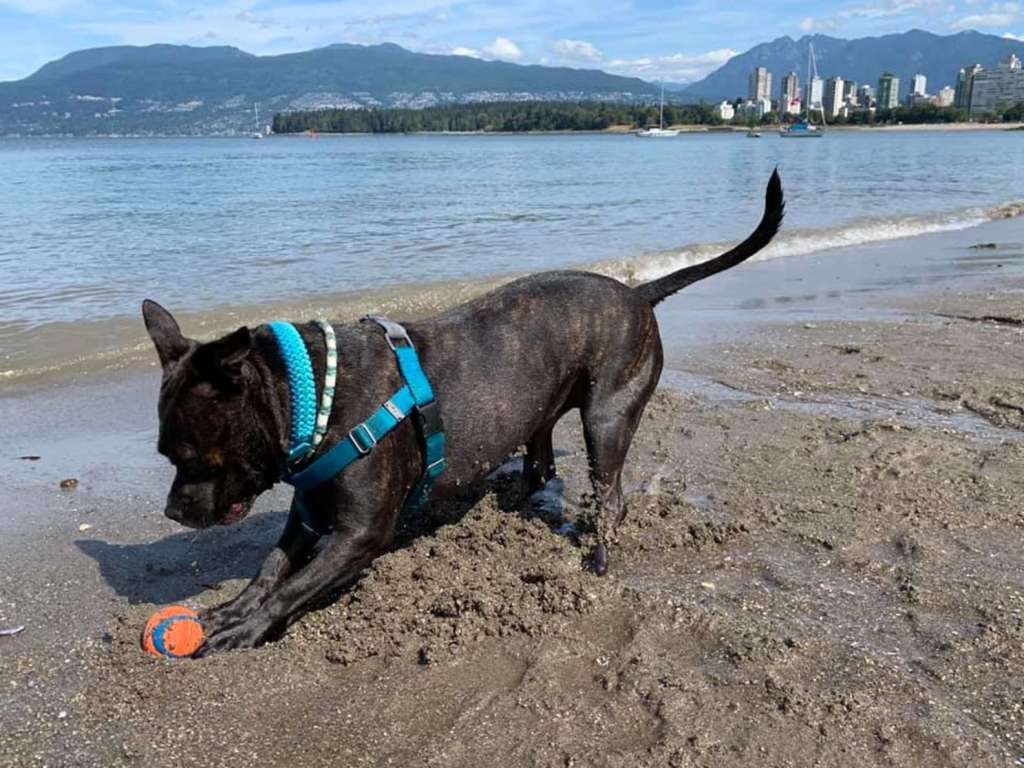
The first time Mia went to the beach when she was around 5 months old, she fell in love. She loves swimming, digging in the sand and chasing her ball around, and it quickly became one of her favorite outings.

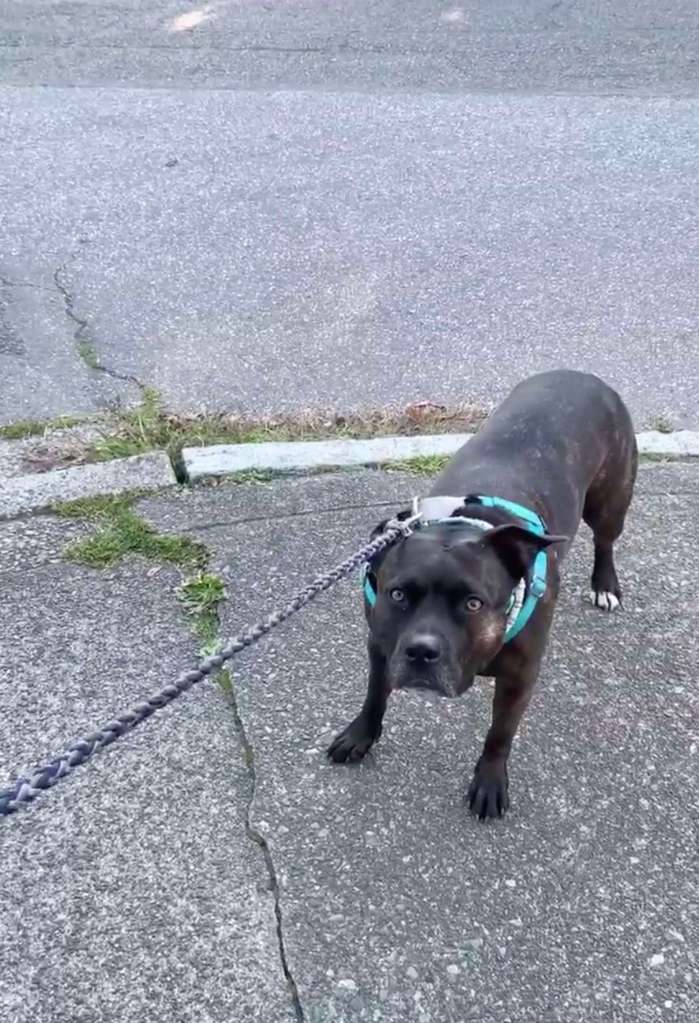
Mia and her mom go to the beach about once a week in the summertime — but for Mia, it’s never enough. Their house isn’t far from the beach, so whenever Mia is out on a walk and they pass the way that would take them to the beach, she immediately stops walking and stands her ground.

“She knows the way by heart,” Yoshi Lok, Mia’s mom, told The Dodo. “She also knows that if she keeps heading north, she will eventually get to the beach which is why she always stops in her tracks and pulls me when we are heading in the opposite direction of the beach!”

Mia can be incredibly stubborn and has no problem engaging in a standoff with her mom. Every time, her mom pleads with her to keep walking, trying to explain that they don’t have time to go to the beach that day, but Mia always tries to wait a little bit longer. She hopes that the longer she stands there, the more likely it is that her mom will cave in and take her to the beach after all.

“She isn’t very happy when we don’t go, she does try more than once on our walks to go to the beach,” Lok said. “Sometimes I have to bribe her with treats to keep walking.”

YOSHI LOK

Even though Mia gets to go to the beach more than most dogs do, she would definitely prefer to go every day, and has made her stance on that perfectly clear.

YOSHI LOK

“She reacts this way EVERY DAY,” Lok said. “Ever since we walked to the beach three years ago (when we moved to this area in Vancouver — Kitsilano), she remembered the way and never forgot.”

YOSHI LOK

On the days when Mia finally does get to go to the beach, she’s so happy. As soon as she and her mom start walking in the direction of the beach, she gets so excited and practically runs all the way there. She swims, digs and runs as much as she possibly can until it’s time to go home — and then starts her campaign to go back to the beach all over again the next day.

ooOOoo

I think that Yoshi wouldn’t have quite the problem with Mia, if indeed it is seen as a problem, if Mia had a doggie companion. While a single dog is very common having two dogs doesn’t really increase the workload that much and the rewards in terms of the two dogs playing together is immeasurable.

Just my thought!