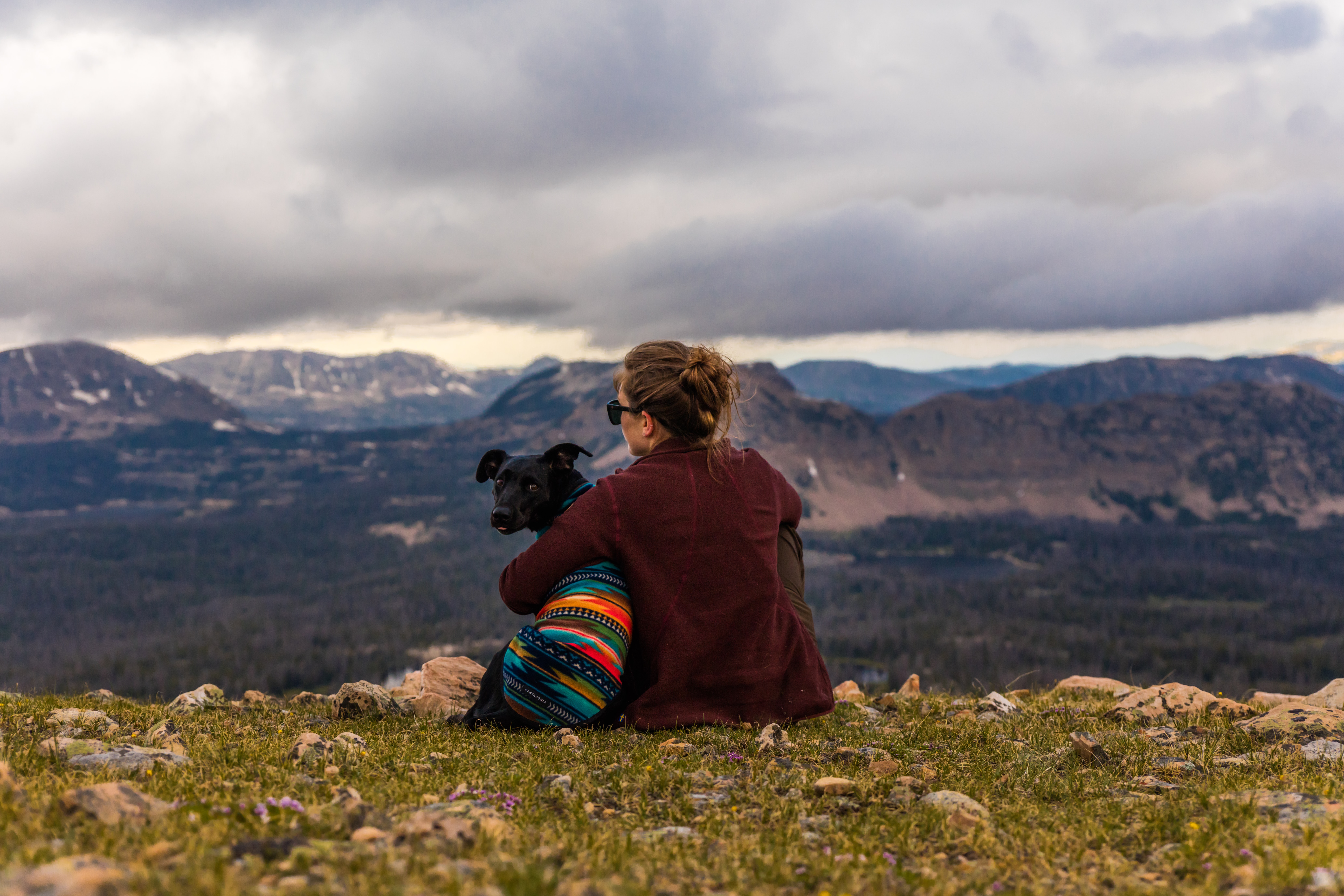
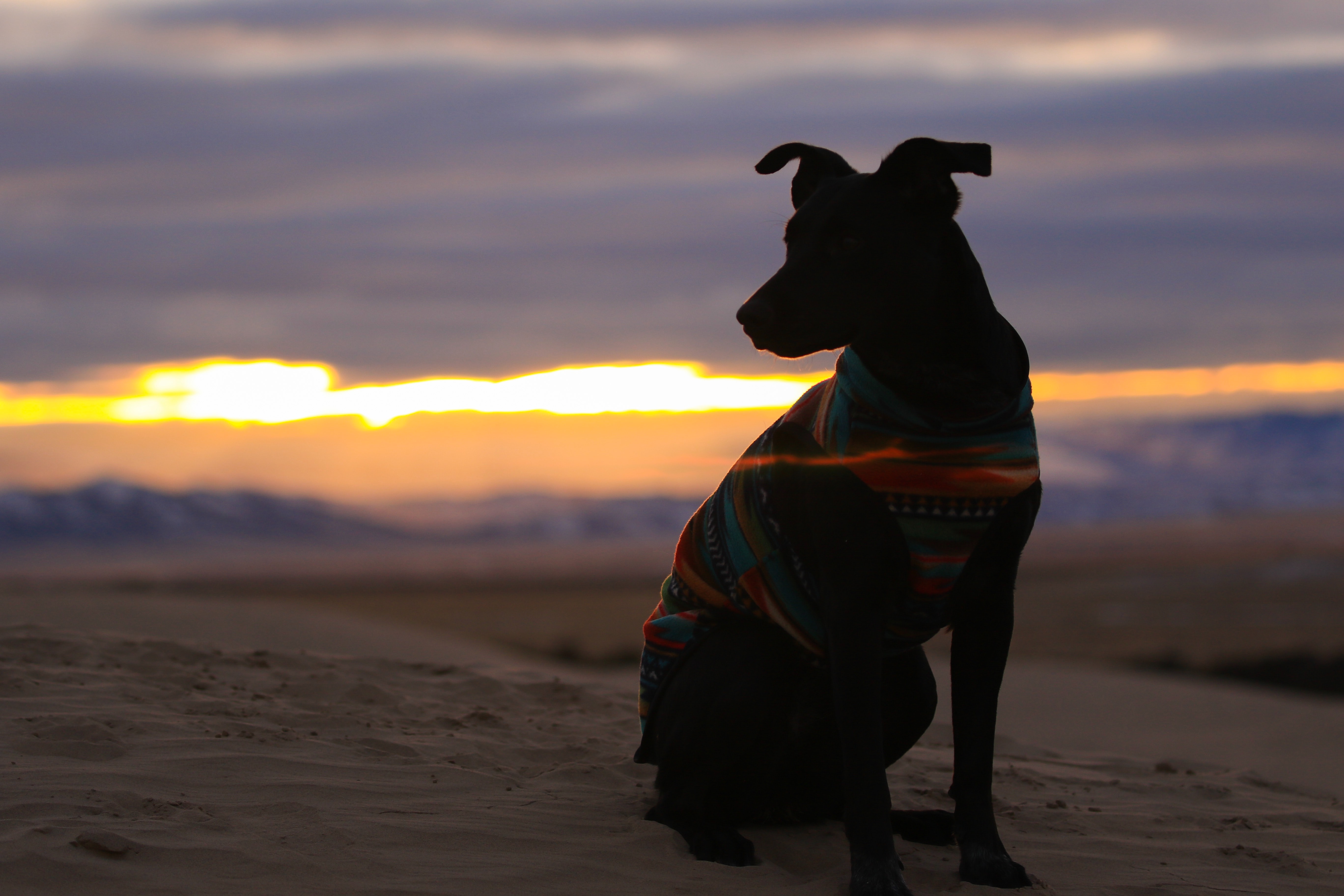
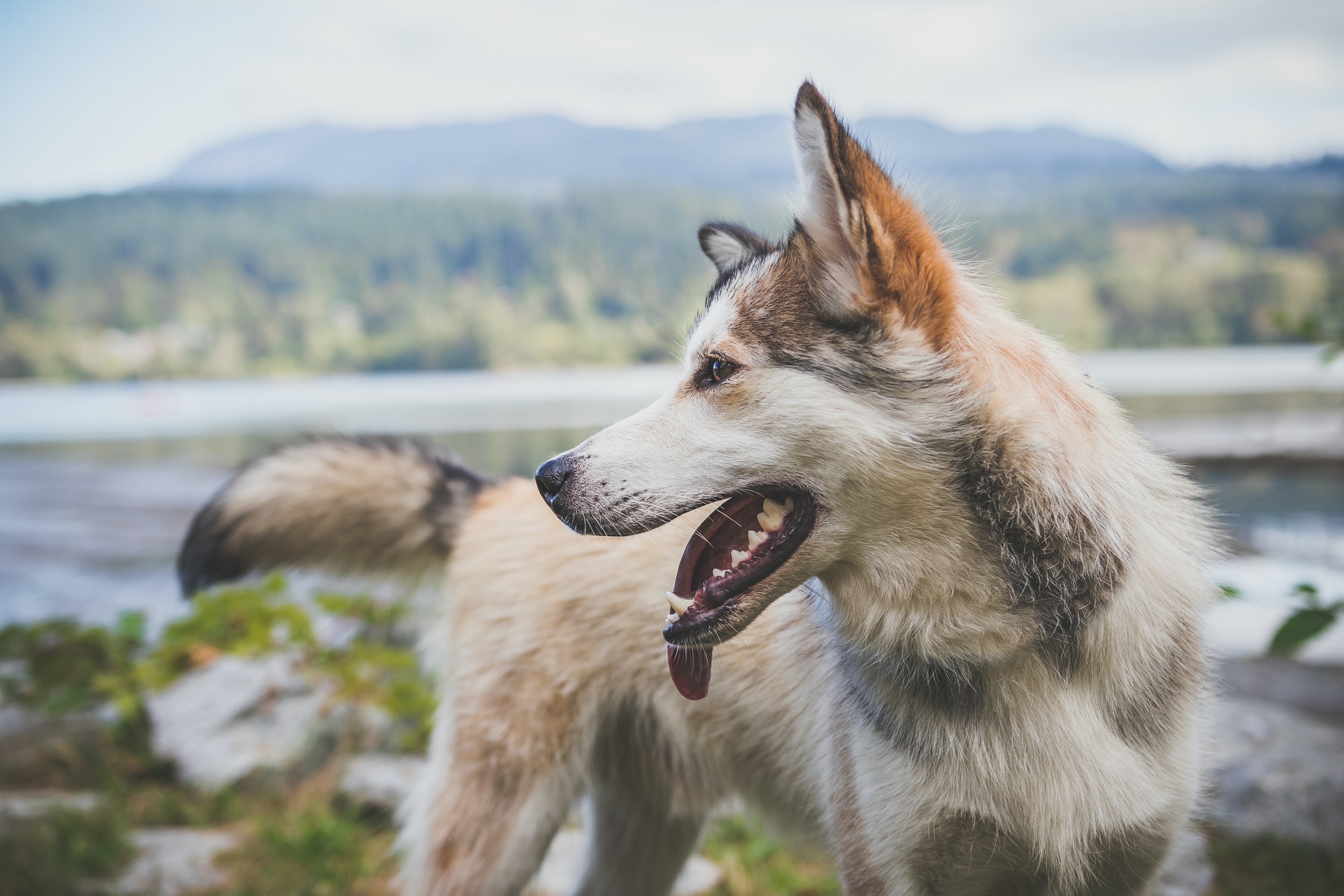
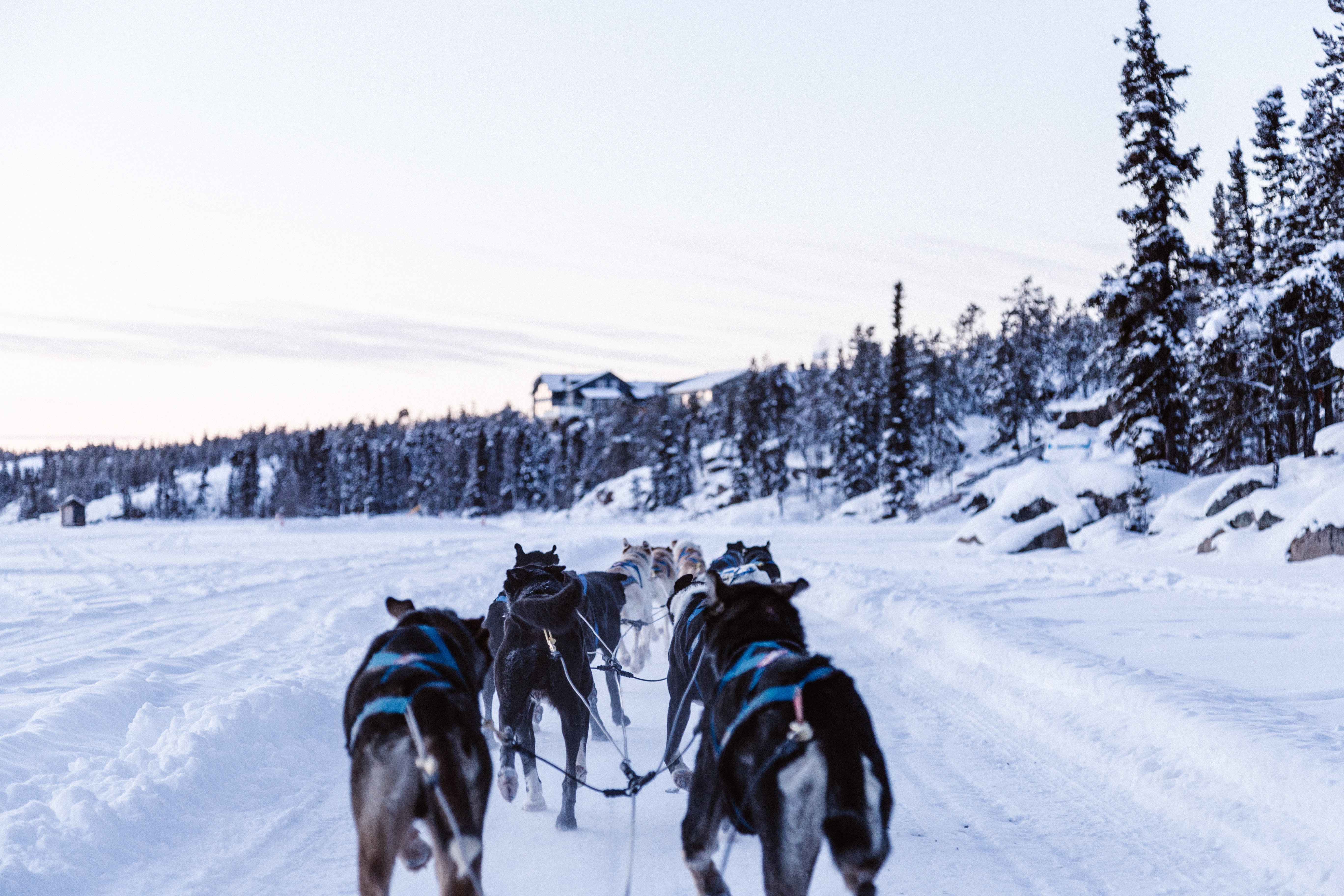
Again, a variety of photographs from Unsplash.
oooo

oooo
oooo

oooo
oooo
oooo

oooo
oooo

oooo
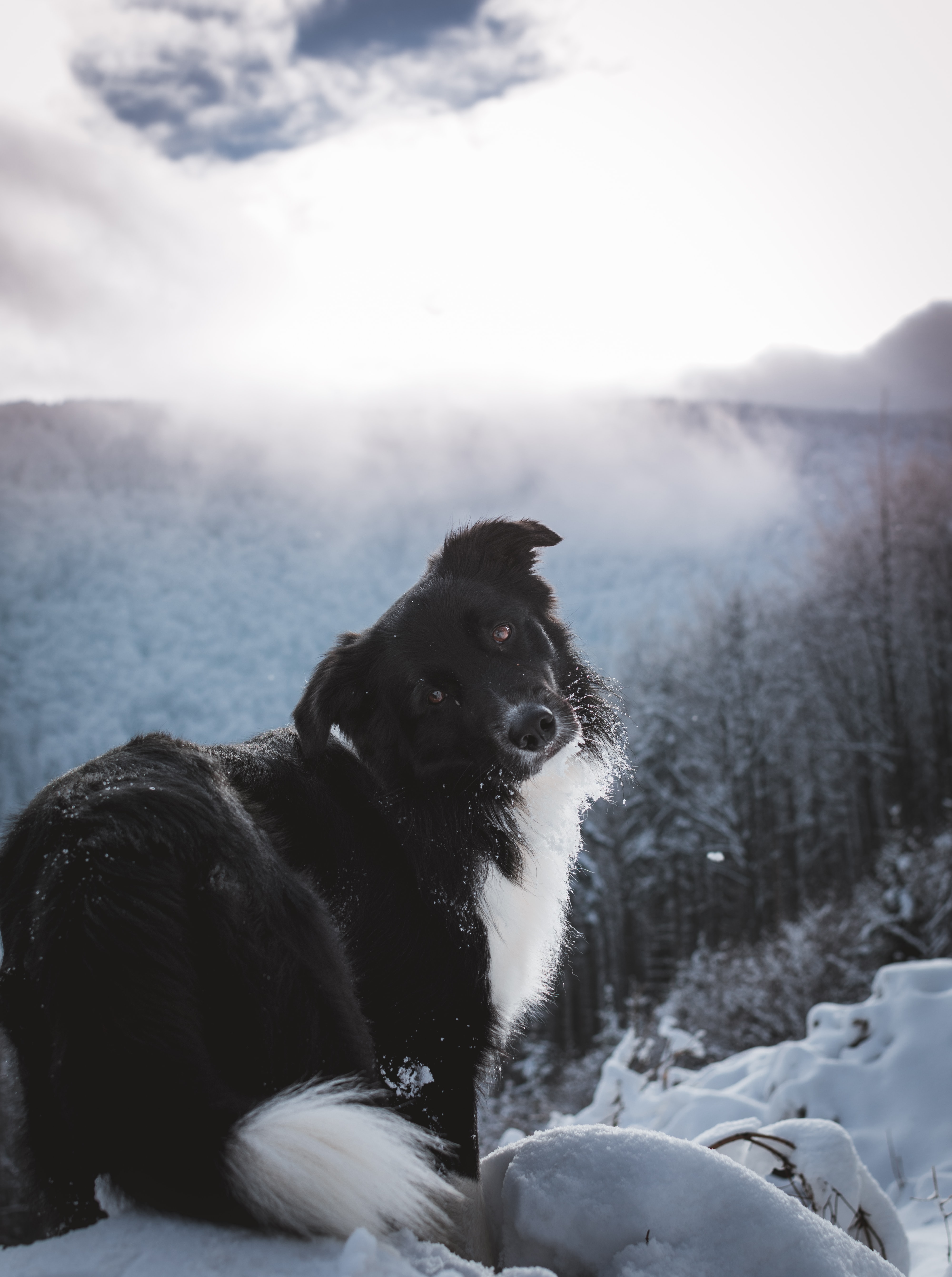
And the last one for today with no dogs but still a wonderful shot.

More in a week’s time.
Dogs are animals of integrity. We have much to learn from them.
Category: Water
Again, a variety of photographs from Unsplash.
oooo
oooo
oooo
oooo
oooo
oooo
oooo
oooo
oooo
And the last one for today with no dogs but still a wonderful shot.
More in a week’s time.
A story that was widely reported.
I was short on time yesterday so no pre-amble.
ooOOoo
The dog separated from its owner on Christmas Eve.
By Teddy Grant, December 27, 2022.
A dog that was stranded near a frozen waterfall in Utah on Christmas Eve was saved by search and rescue officials and reunited with her owner.
According to the Weber County Sheriff’s Office Search and Rescue, a local man was hiking near Waterfall Canyon on Saturday when he became separated from his dog Nala.
The unidentified hiker couldn’t find Nala by nightfall and resumed his search the morning of Christmas Day, the sheriff’s office wrote on its Facebook page.
The hiker’s family members contacted authorities around 1:00 p.m., local time, saying he wasn’t responding to their calls or text messages, officials said.
Nala’s owner answered one of the phone calls once he regained cellphone service and was able to let people know that Nala was around the waterfall, but couldn’t reach her because of the steepness and the icy condition of the terrain, according to Weber County Sheriff’s Office Search and Rescue.

A grab from video posted by Weber County Sheriff’s Office Search and Rescue shows the dog Nala at Waterfall Canyon in Ogden, Utah, Dec. 25, 2022.
Weber County Sheriff’s Office Search and Rescue
The search and rescue team responded to the call and were able to save a skittish Nala after a little coaxing, officials said.
“Nala was cold with a few minor injuries, but was able to hike down with the rescuers,” officials wrote. “She is one tough puppy! Once reaching the trailhead parking lot, both human and canine couldn’t have been happier to be reunited.”
According to Waterfall Canyon it is a “moderately challenging,” 2.4-mile trail near Ogden, Utah, according to AllTrails. Ogden is around 38 miles north of Salt Lake City.
ooOOoo
I’m sure you read that the human and the dog were very grateful to be reunited.
A rather gloomy analysis about the next few years!
One makes decisions all one’s life. But too few of us are making decisions that will prevent our planet from over-heating.
Patrice Ayme wrote a comment in a recent post that said (in part): “However we are tracking to a much higher temperature: + 7 (seven) Celsius in some now temperate parts… imminently. That is going to be catastrophic.”
There is a terrible change going on right now. From the deforestation in the Amazon rainforest to the unseasonable heat in Europe, as reported in the Guardian newspaper: “The result of this advection has been anomalously warm temperatures across large parts of Europe – in particular across France and Spain, where temperatures soared to over 10C above normal. Maximum temperatures widely exceeded 30C in parts of Spain on Thursday, with 35.2C measured at Morón de la Frontera, south-east of Seville.“
One would think that our governments would be pulling together in order to have a co-ordinated global plan. But there’s no sight of that yet. What we do have is a sort of craziness of Governments that causes me to lament over our, as in a global ‘our’, distractions. We are running out of time!
To this end I am republishing in full the latest George Monbiot essay. I hasten to add with Mr Monbiot’s permission.
ooOOoo
The Oligarch’s Oligarch
Published 30th October 2022.
Just as we need to get the money out of politics, we have been gifted a Prime Minister who represents the ultra-rich.
By George Monbiot, published in the Guardian 26th October 2022
Before we decide what needs to change, let’s take stock of what we have lost. I want to begin with what happened last week. I don’t mean the resignation of the prime minister. This is more important.
Almost all the media reported a scripted comment by the newly reinstated home secretary, Suella Braverman, about the “Guardian-reading, tofu-eating wokerati”. Astonishingly, scarcely any of them reported what she was doing at the time. She was pushing through the House of Commons the most repressive legislation of the modern era.
Under the public order bill, anyone who has protested in the previous five years, or has encouraged other people to protest, can be forced to “submit to … being fitted with, or the installation of, any necessary apparatus” to monitor their movements. In other words, if you attend or support any protest in which “serious disruption to two or more individuals or to an organisation” occurs, you can be forced to wear an electronic tag. “Serious disruption” was redefined by the 2022 Police Act to include noise.
This is just one of a series of astounding measures in the bill, which has been hardly remarked upon in public life as it passes through Britain’s legislature. What we see here is two losses in one moment: the final erasure of the right to protest, and political journalism’s mutation from reporting substance to reporting spectacle. These are just the latest of our losses.
So extreme has inequality become, and so dangerous is the combination of frozen wages, lagging benefits, rising rents and mortgage repayments, soaring bills and food inflation, that millions of people are being pushed towards destitution. Unless something changes, many will soon lose their homes. In the midst of this crisis, we have been gifted a prime minister who owns four luxury “homes”. One of them is an empty flat in Kensington that he reserves for visiting relatives.
While Rishi Sunak was chancellor, the government repeatedly delayed its manifesto promise to ban no-fault evictions. Landlords are ruthlessly exploiting this power to throw their tenants on to the street or use the threat to force them to accept outrageous rent rises and dismal conditions. Had Sunak’s “help to buy” mortgage scheme succeeded (it was a dismal flop), it would have raised house prices, increasing rents and making ownership less accessible: the opposite of its stated aim. But this, as with all such schemes, was surely its true purpose: to inflate the assets of existing owners, the Conservative party’s base.
Public services are collapsing at breathtaking speed. Headteachers warn that 90% of schools in England could run out of money next year. NHS dentistry is on the verge of extinction. Untold numbers are now living in constant pain and, in some cases, extracting their own teeth. The suspicion that the NHS is being deliberately dismembered, its core services allowed to fail so that we cease to defend it against privatisation, rises ever higher in the mind.
But Sunak appears determined only to hack ever further. Sitting on a family fortune of £730m, he seems unmoved by the plight of people so far removed from him in wealth that they must seem to exist on another planet. He is the oligarch’s oligarch, ever responsive to the demands of big capitaland the three offshore plutocrats who own the country’s biggest newspapers, oblivious of the needs of the 67 million people who live here.
After 12 years of Conservative austerity and chaos, the very rich have taken almost everything. They have even captured virtue. They now appropriate the outward signs of an ethical life while continuing – despite or because of their organic cotton jackets and second homes, their electric cars and pasture-fed meat, their carbon offsets and ayahuasca retreats, philanthropy and holidays in quiet resorts whose palm-thatched cabins mimic the vernacular of the people evicted to make way for them – to grasp the lion’s share of everything.
Corruption is embedded in public life. Fraud is scarcely prosecuted. Organised crime has been so widely facilitated, through the destruction of the state’s capacity to regulate everything from money laundering to waste dumping, that you could almost believe it was deliberate. Our rivers have been reduced to sewers, our soil is washing off the land, the planning system is being dismantled, and hundreds of environmental laws are now under threat. We hurtle towards Earth systems oblivion, while frenetically talking about anything but.
In other words, it’s not just a general election we need, it’s a complete rethink of who we are and where we stand. It’s not just proportional representation we need, but radical devolution to the lowest possible levels at which decisions can be made, accompanied by deliberative, participatory democracy. It’s not just new lobbying laws we require, but a comprehensive programme to get the money out of politics, ending all private political donations, breaking up the billionaire press and demanding full financial transparency for everyone in public life. We should seek not only the repeal of repressive legislation, but – as civil disobedience is the bedrock of democracy – positive rights to protest.
All this now feels far away. Jeremy Corbyn offered some (though by no means all) of these reforms. Keir Starmer offers none. Though Labour MPs voted against the public order bill, his only public comment so far has been to endorse its headline policy: longer sentences for people who glue themselves to roads. But if the Labour party or its future coalition partners can persuade him to agree to just one aspect of this programme, proportional representation, we can start work on the rest, building the political alliances that could transform the life of this nation. Without PR, we’re stuck with a dysfunctional duopoly, in hock to the billionaire press and the millionaires it appoints to govern us. We cannot carry on like this.
ooOOoo
So much is really telling but I just want to draw your attention to this sentence: In other words, it’s not just a general election we need, it’s a complete rethink of who we are and where we stand.
It is not just in England and Wales but also in the USA. Indeed, most of the countries in the world.
Here is an excerpt from the latest email from The Economist. It presages the COP27 to be held in Egypt next week.
By burning fossil fuels, humans have altered Earth’s atmosphere, which has consequences for almost everything on the planet. It is reshaping weather systems and coastlines, transforming where crops can be grown, which diseases thrive, and how armies fight . Rising temperatures affect geopolitics, migration, ecosystems and the economy. Over the next century and beyond, climate change—and the responses to it—will remake societies and the world.
And a paragraph later:
This week I wrote about the seven texts I recommend as an introduction to the climate crisis—and explained why each is worth turning to—as a part of our “Economist reads” series. They range from Bill Gates’s assessment of technological solutions to a discussion of international justice by the former UN High Commissioner on Human Rights. One book I find myself recommending over and over again is “What We Know About Climate Change” by Kerry Emanuel, an atmospheric scientist at MIT. At 88 pages, it is a blessedly short, readable primer on the science, history and economics of climate change. The climate crisis touches everything. Understanding it, even a little, is essential for anyone who is engaged with the world and its future. This is a good place to start.
Please follow this advice because it is an excellent place to start.
I wish with all my heart that I am wrong and maybe, just maybe, I am having a ‘down in the dumps’ day. Whatever, my judgement is that we have a few more years at most to find out.
Jane Zelikova gives a very powerful TED Talk.
The promotion for this TED Talk appeared in my ‘in box’ last week and I was curious as to its contents. So I watched the talk on Sunday afternoon and was amazed. This is so much more significant to all of us than the title suggests.
First watch the talk.
Then some background to Jane, who is a ecosystem scientist:
Dr. Tamara Jane Zelikova works at the intersection of climate science and policy. Her work focuses on advancing the science of carbon removal and she has published in scientific journals like Nature and Proceedings of the National Academy of Sciences, written and contributed to climate policy reports and published articles in popular media outlets like Scientific American. She is currently the executive director of the Soil Carbon Solutions Center at Colorado State University, where she works with leading scientists to build the tools and approaches needed to accelerate the deployment of credible soil-based climate solutions, measure their impacts and bring them to scale.
That then led me to the Soil Carbon Solutions Center website and this is a site you should visit. A little piece from their About section:
Soil is one of the largest natural carbon reservoirs and an important climate mitigation tool that is ready to deploy today. Accelerating the adoption of regenerative agricultural practices that build soil carbon on working lands offers the potential to substantially draw down atmospheric carbon while improving the environmental, economic and social sustainability of food, fiber and bioenergy production.
Please, please watch the TED Talk!
… for your dogs!
This is another guest post from Indiana Lee. She writes with a compassionate and loving style and I am so pleased to be able to offer this post to you.
ooOOoo
How To Create a Healthy, Eco-Friendly Environment for Your Dog
As a dog owner, it’s perfectly normal to want an environment for your canine companion that is fun, happy, and healthy. That includes making sure they have a clean and secure place that’s comfortable and safe, as well as free from hazardous materials and harmful pests.
Creating a healthy environment for your dog is easier than you might think. By dedicating a specific space to your pooch and making some simple swaps, you can be an eco-friendly pet parent, doing something good for the planet and your pup all at once.
Create a Safe Space
First and foremost, try to create a safe space in your home for your dog. You can always consider a pet room, but even just an area in your living room or a comfy crate can do the trick.
Having a designated area for your dog in your home can make a big difference. Dogs are den animals and like having their own safe space to go to. While you don’t necessarily need to dedicate a whole room to your four-legged friend, your space should be pet-proofed to keep them safe.
That includes keeping things organized and clearing up clutter, so your dog doesn’t get into or chew on things they shouldn’t. You can also use baby gates to keep your dog in their space or to prevent them from going into areas of your home that haven’t been pet-proofed.
Use Eco-friendly Cleaning Products
Once you have set up that space, it’s important to keep it clean for your dog. Between rest and play and dinner time, it’s all too easy for your home to get dirty quickly. This means you have to keep your home clean, regularly pick up after your dog, and sanitize their space.
However, you must keep them away from potentially toxic substances — including the supplies you use to clean their area. Make sure your dog can’t get to any of the following:
You’ll quickly learn to become a “label reader” when it comes to the cleaning products you choose. Not only are the above ingredients bad for your pet, but they can also damage the environment.
When shopping for cleaning supplies, choose all-natural products as often as possible. Alternatively, consider making your own so you know exactly which ingredients are used. Vinegar, baking soda, and lemon juice are all common household items that you can use in cleaners — and they’re better for your pet and the planet.
Keep Pests Away
Creating a safe environment for your pet also means protecting your pooch from pests. You might not be able to control what comes into your house — especially since many pests can sneak in through tiny cracks — but you can discourage them from bothering your dog. You can do so while still making your yard a fun place for your dog.
You can reduce the risk of certain bugs and rodents entering your home by keeping your yard clean and trimmed. Don’t give wild animals a space to “hang out” and enjoy. The more time they spend in your yard, the more likely it is that they’ll get inside.
Additionally, the more wildlife you have in your yard, the more likely it is that your dog will bring in fleas or ticks that have “jumped” from raccoons, possums, or mice. Pests like fleas and ticks can be especially harmful to dogs, and they’re quick to get into rugs, carpets, and furniture, which can end up putting everyone’s health at risk. You can vacuum frequently if you’ve seen your dog with a tick or fleas and utilize some of the cleaning supplies listed earlier to deter them from sticking around.
If you see a bug on your dog, give them a thorough brushing and use natural shampooing solutions to get rid of the fleas quickly. Keep their fur trimmed back neatly and make sure they’re as clean as possible. Regular baths and grooming can also help keep pests away from your pet and ensure your dog doesn’t bring any extra visitors into your home.
Are you sensing a pattern?
A clean, healthy home typically means a happier, safer space for dogs. Whether you’re trying to live more sustainably or just focus on more natural ways of doing things, these suggestions will get you on the right track. Not only will your dog have a secure and pet-friendly environment to enjoy, but you can feel good knowing you’re doing something to improve the health of your entire family, as well as the future of the planet.

ooOOoo
This really hits the spot. For we live in the country in Southern Oregon and have more than our fair share of flies and fruit flies, and who knows what else!
About the 2022 Artic Summer Sea Ice.
There’s no way to make this pleasant; the Arctic Summer Sea Ice tied for the tenth lowest on record.
ooOOoo
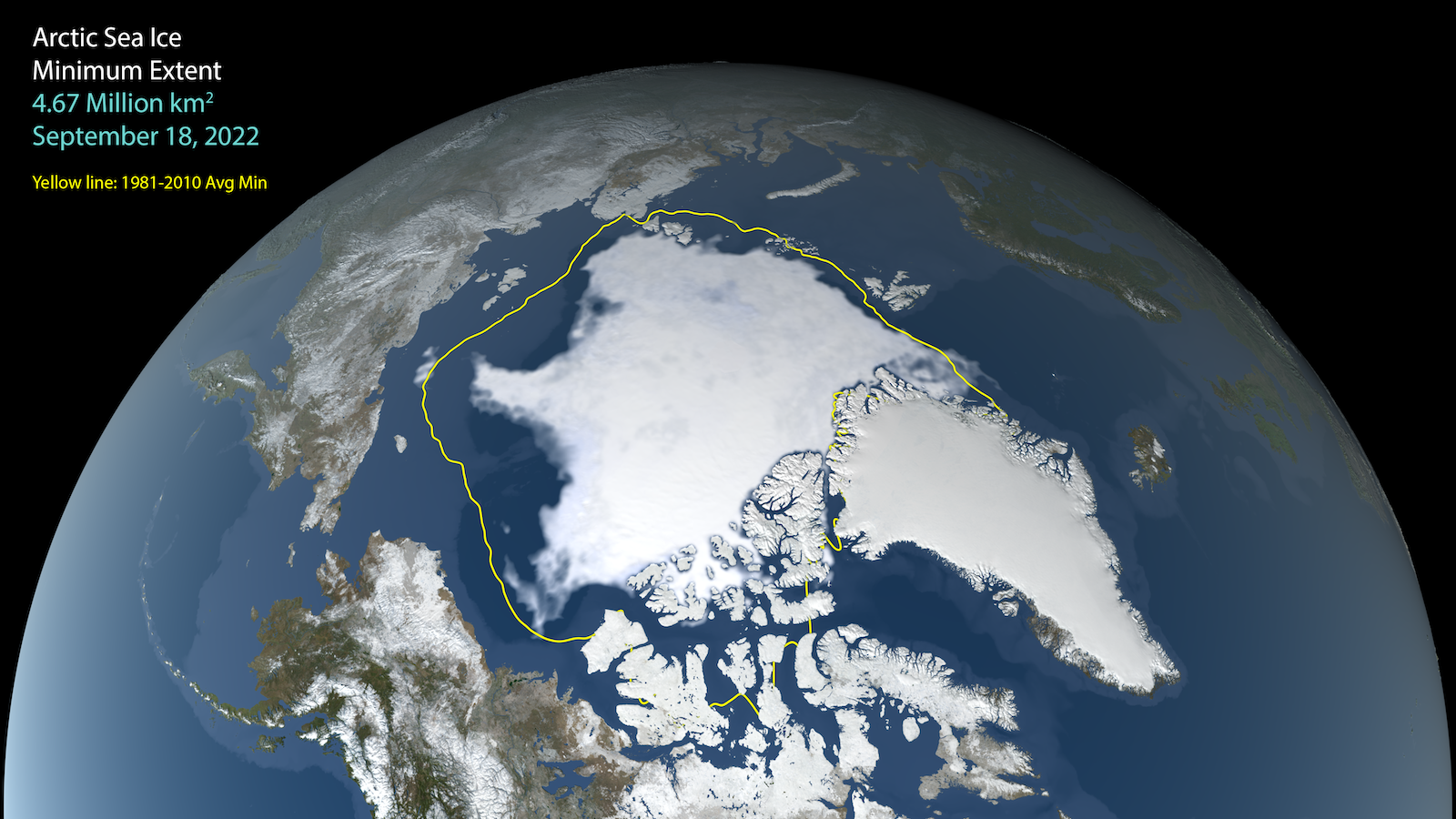
According to satellite observations, Arctic sea ice reached its annual minimum extent (lowest amount of ice for the year) on Sept. 18, 2022. The ice cover shrank to an area of 4.67 million square kilometers (1.80 million square miles) this year, roughly 1.55 million square kilometers (598,000 square miles) below the 1981-2010 average minimum of 6.22 million square kilometers (2.40 million square miles).
The average September minimum extent record shows significant declines since satellites began measuring consistently in 1978. The last 15 years (2007 to 2021) are the lowest 15 minimum extents in the 43-year satellite record.
This visualization, created at NASA’s Goddard Space Flight Center in Greenbelt, Maryland, shows data provided by the Japan Aerospace Exploration Agency (JAXA), acquired by the Advanced Microwave Scanning Radiometer 2 (AMSR2) instrument aboard JAXA’s Global Change Observation Mission 1st-Water “SHIZUKU” (GCOM-W1) satellite.
Music: “Celestial Vault” from Universal Production Music
Video credit: NASA’s Goddard Space Flight Center
Kathleen Gaeta (GSFC AIMMS): Lead Producer
Trent L. Schindler (USRA): Lead Animator
Roberto Molar (KBR): Lead Writer
ooOOoo
As I said, a sorry tale for which there is no good news. I wish there were!
Showing that droughts have been in evidence for 1,000 years or more!
It is very easy, well it is for me, to think that the changes we are seeing in the climate are purely recent. There is no question that we are experiencing changes in the global climate. But it would be too easy to think that these changes are only the result of recent times.
My way of an introduction to this post from The Conversation.
ooOOoo
1,000-year-old stalagmites from a cave in India show the monsoon isn’t so reliable – their rings reveal a history of long, deadly droughts.
Published on the 19th September, 2022 by:
In a remote cave in northeast India, rainwater has slowly dripped from the ceiling in the same spots for over 1,000 years. With each drop, minerals in the water accumulate on the floor below, slowly growing into calcium carbonate towers known as stalagmites.
These stalagmites are more than geological wonders – like tree rings, their layers record the region’s rainfall history. They also carry a warning about the potential for catastrophic multiyear droughts in the future.
By analyzing the geochemistry of these stalagmites in a new study published Sept. 19, 2022, in the Proceedings of the National Academy of Sciences, we were able to create the most precise chronology yet of the summer Indian monsoon over the past millennium. It documents how the Indian subcontinent frequently experienced long, severe droughts unlike any observed in the last 150 years of reliable monsoon rainfall measurements.
The drought periods we detected are in striking synchrony with historical accounts of droughts, famines, mass mortality events and geopolitical changes in the region.
They show how the decline of the Mughal Empire and India’s textile industries in the 1780s and 1790s coincided with the most severe 30-year period of drought over the millennium. The depth and duration of the drought would have caused widespread crop failures and the level of famine discussed in written documentsat the time.
Another long drought encompasses the 1630-1632 Deccan famine, one of the most devastating droughts in India’s history. Millions of people died as crops failed. Around the same time, the elaborate Mughal capital of Fatehpur Sikri was abandoned and the Guge Kingdom collapsed in western Tibet.

Our findings have important implications today for water planning in a warming world, particularly for India, which, with its vast monsoon-reliant agriculture industry, is on pace to soon be the most populous country on the planet.
Scientists began systematically measuring India’s monsoon rainfall with instruments around the 1870s. Since then, India has experienced about 27 regionally widespread droughts. Among them, only one – 1985 to 1987 – was a three-year consecutive drought or worse.
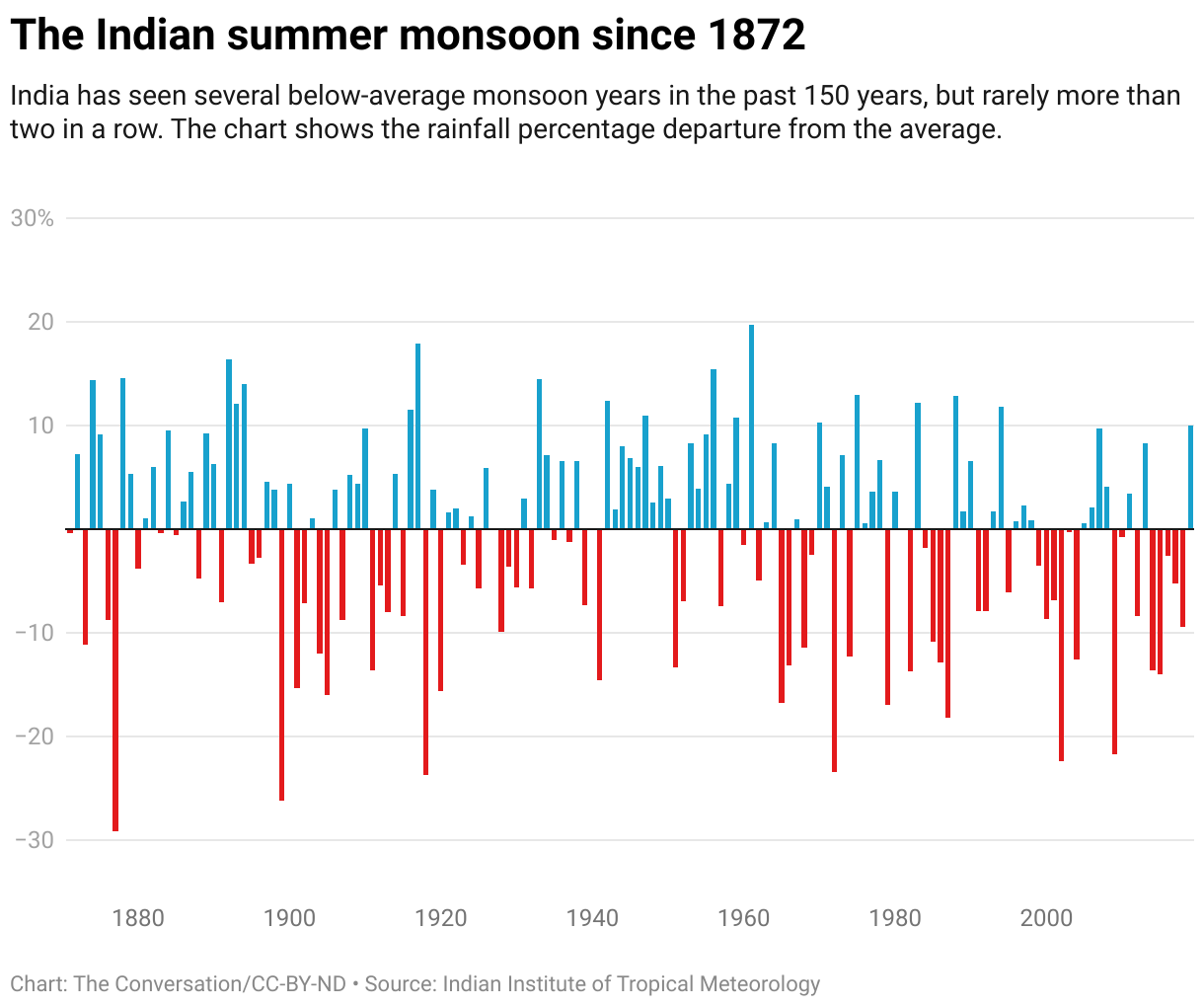
The apparent stability of the Indian monsoon in that data might lead one to surmise that neither protracted droughts lasting multiple years nor frequent droughts are intrinsic aspects of its variability. This seemingly reassuring view currently informs the region’s present-day water resource infrastructure.
However, the stalagmite evidence of prolonged, severe droughts over the past 1,000 years paints a different picture.
It indicates that the short instrumental period does not capture the full range of Indian monsoon variability. It also raises questions about the region’s current water resources, sustainability and mitigation policies that discount the possibility of protracted droughts in the future.

To reconstruct past variations in rainfall, we analyzed stalagmites from Mawmluh cave, near the town of Cherrapunji in the state of Meghalaya – one of the wettest locations in the world.
Stalagmites are conelike structures that grow slowly from the ground up, typically at a rate of about one millimeter every 10 years. Trapped within their growth layers are minute amounts of uranium and other elements that were acquired as rainwater infiltrated the rocks and soil above the cave. Over time, uranium trapped in stalagmites decays into thorium at a predictable pace, so we can figure out the age of each stalagmite growth layer by measuring the ratio of uranium to thorium.
The oxygen in rainwater molecules comes in two primary types of isotopes – heavy and light. As stalagmites grow, they lock into their structure the oxygen isotope ratios of the percolating rainwater that seeps into the cave. Subtle variations in this ratio can arise from a range of climatic conditions at the time the rainwater originally fell.


Our previous research in this area showed that variations in oxygen isotope ratios in rainwater, and consequently, in stalagmites, track changes in the relative abundance of different moisture sources that contribute to summer monsoon rainfall.
During years when monsoon circulation is weak, rainfall here is primarily derived from the moisture that evaporated from the nearby Arabian Sea. During strong monsoon years, however, atmospheric circulation brings copious amounts of moisture to this area all the way from the southern Indian Ocean.
The two moisture sources have quite different oxygen isotope signatures, and this ratio is faithfully preserved in the stalagmites. We can use this clue to learn about the overall strength of the monsoon intensity at the time the stalagmite formed. We pieced together the monsoon rainfall history by extracting minute amounts of calcium carbonate from its growth rings and then measuring the oxygen isotope ratios. To anchor our climate record to precise calendar years, we measured the uranium and thorium ratio.

The paleoclimate records can usually tell what, where and when something happened. But often, they alone cannot answer why or how something happened.
Our new study shows that protracted droughts frequently occurred during the past millennia, but we do not have a good understanding of why the monsoon failed in those years. Similar studies using Himalayan ice cores, tree rings and other caves have also detected protracted droughts but face the same challenge.
In the next phase of our study, we are teaming up with climate modelers to conduct coordinated proxy-modeling studies that we hope will offer more insight into the climate dynamics that triggered and sustained such extended periods of drought during the past millennium.
ooOOoo
So there we are. Droughts are a thing of the ancient past. But only a partial understanding for why the monsoons failed is known. Despite these modern times with so much general access to knowledge there are still things that we do not know!
Finally, one hopes that the next phase of their study will be along in reasonable time! I would love to report on it.
Paul Handover’s talk to the Grants Pass Humanists and Freethinkers group, Saturday, 17th September, 2022
oooo
Martin Lack, a good friend of Paul’s from England, wrote a book called The Denial of Science. The first words in the preface were from Sir Fred Hoyle, Fellow of the Royal Society (1915-2001).
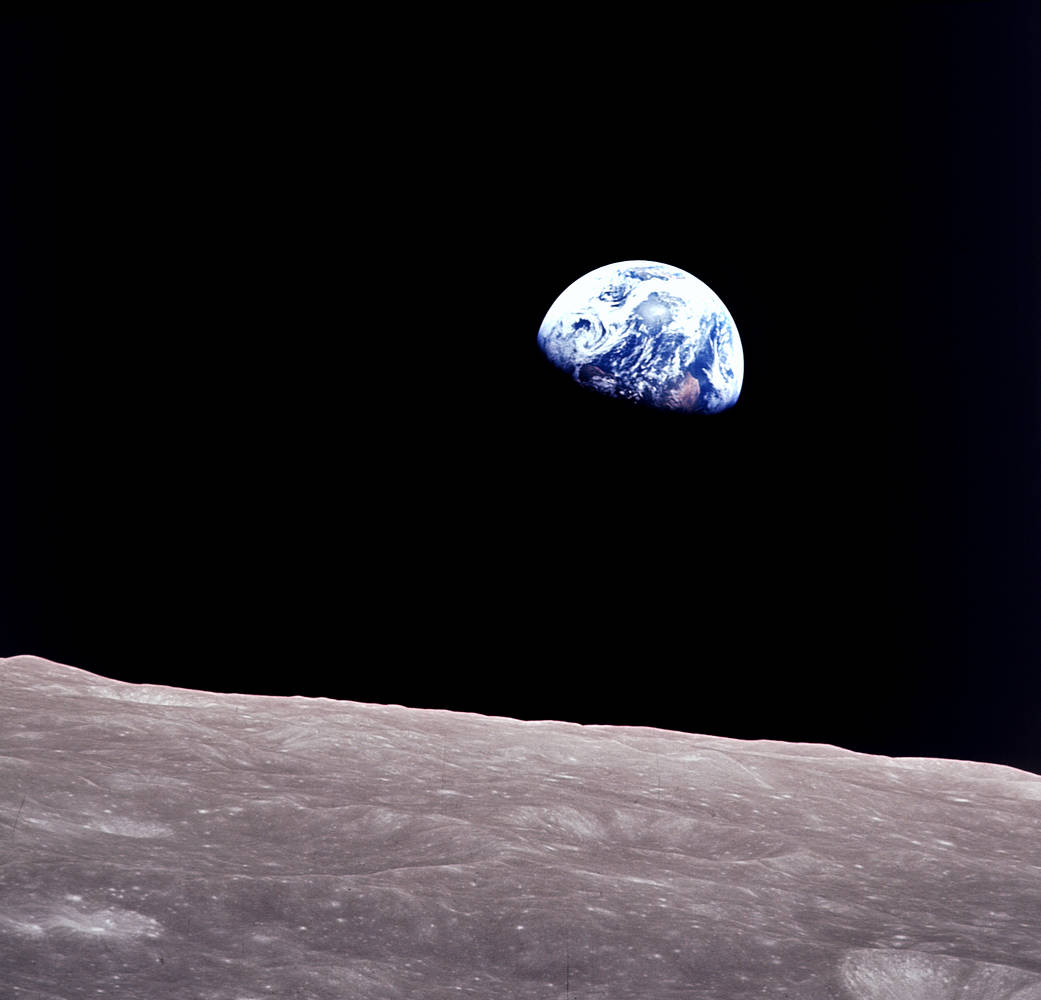
“Once a photograph of the Earth taken from the outside is available, once the sheer isolation of the Earth becomes plain, a new idea as powerful as any in history will be let loose.”
Here, in Paul’s opinion, is that photograph:
The 2021 United Nations Climate Change Conference was held in Glasgow, Scotland, UK, from 31st October to 13th November 2021. It was called COP26 because it was the 26th UN Climate Change Conference to be held. It was opened by the Prince of Wales, now King Charles III.
The Prince warned: “Time has quite literally run out.”
It is us!
The UN’s Intergovernmental Panel on Climate Change (IPCC) kicked off its 2021 report with the following statement: “It is unequivocal that human influence has warmed the atmosphere, ocean and land.”
The article also says: It took a while, but climate modelling is now refined enough to predict how things would go without human influence, within a margin of error. What we are observing today, however, is beyond that margin of error, therefore proving that we have driven the change.
It is getting hot
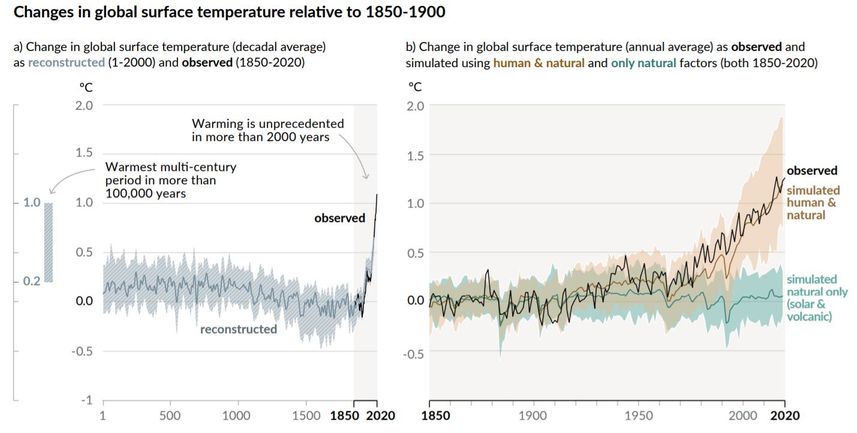
The last decade was the hottest in 125,000 years.
The oceans
We live on a water world. The facts are that 71% of the Earth’s surface is water-covered and the oceans hold about 96.5% of all Earth’s water. A 2019 study found that oceans had sucked up 90% of the heat gained by the planet between 1971 and 2010. Another found that it absorbed 20 sextillion joules of heat in 2020 – equivalent to two Hiroshima bombs per second. A (chiefly British) definition of a sextillion: It is the cardinal number equal to 1036. Sextillion is a number equal to a 1 followed by 21 zeros. 1,000,000,000,000,000,000,000 is an example of a sextillion.
Carbon-dioxide
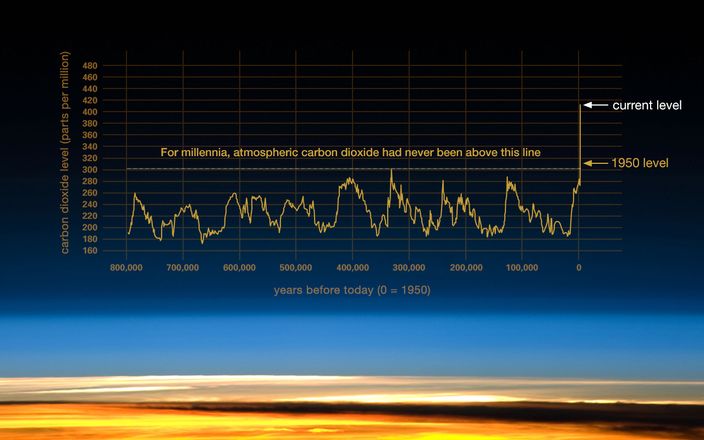
In fact CO2 levels are now the highest that they have been in 2 million years. Today, they stand at close to 420 parts per million (ppm). To put that into context pre-industrial levels, say before 1750, had CO2 levels around 280 parts per million.
We are losing ice big time
Paul can do no better than to quote from Earth.org: “Since the mid-1990s, we’ve lost around 28 trillion tons of ice, with today’s melt rate standing at 1.2 trillion tons a year. To help put that into perspective, the combined weight of all human-made things is 1.1 trillion tons. That’s about the same weight as all living things on earth.”
To repeat that: Every single year we are losing 1.2 trillion tons of ice! (1,200,000,000,000).
Extreme weather
We can now attribute natural disasters to human-driven climate change with certainty. We can now say with precision how much likelier we made things like the North American summer 2021 heatwave, which the World Weather Attribution says was “virtually impossible” without climate change. Then there is the Indian heatwave that experts believe was made 30 times more likely because of climate change.
Climate change mitigation
There is a long and comprehensive article on the above subject on WikiPedia. I will quote from the paragraph Needed emissions cuts.
If emissions remain on the current level of 42 GtCO2, the carbon budget for 1.5°C (2.7°F) will be exhausted in 2028. (That’s 42 gigatons, as in 1 gigaton is a unit of explosive force equal to one billion (109) tons of trinitrotoluene (TNT).
In 2022, the Intergovernmental Panel on Climate Change (IPCC) released its Sixth Assessment Report on climate change, warning that greenhouse gas emissions must peak before 2025 at the latest and decline 43% by 2030, in order to likely limit global warming to 1.5°C (2.7°F).
Secretary-general of the United Nations António Guterres clarified that for this to happen “Main emitters must drastically cut emissions starting this year”.
WikiPedia also reports that: The United Nations Framework Convention on Climate Change, the UNFCCC, aims to stabilise greenhouse gas (GHG) concentrations in the atmosphere at a level where ecosystems can adapt naturally to climate change, food production is not threatened, and economic development can proceed in a sustainable fashion. Currently human activities are adding CO2 to the atmosphere faster than natural processes can remove it.
We need to act now, otherwise…
… it will be too late for billions of us.
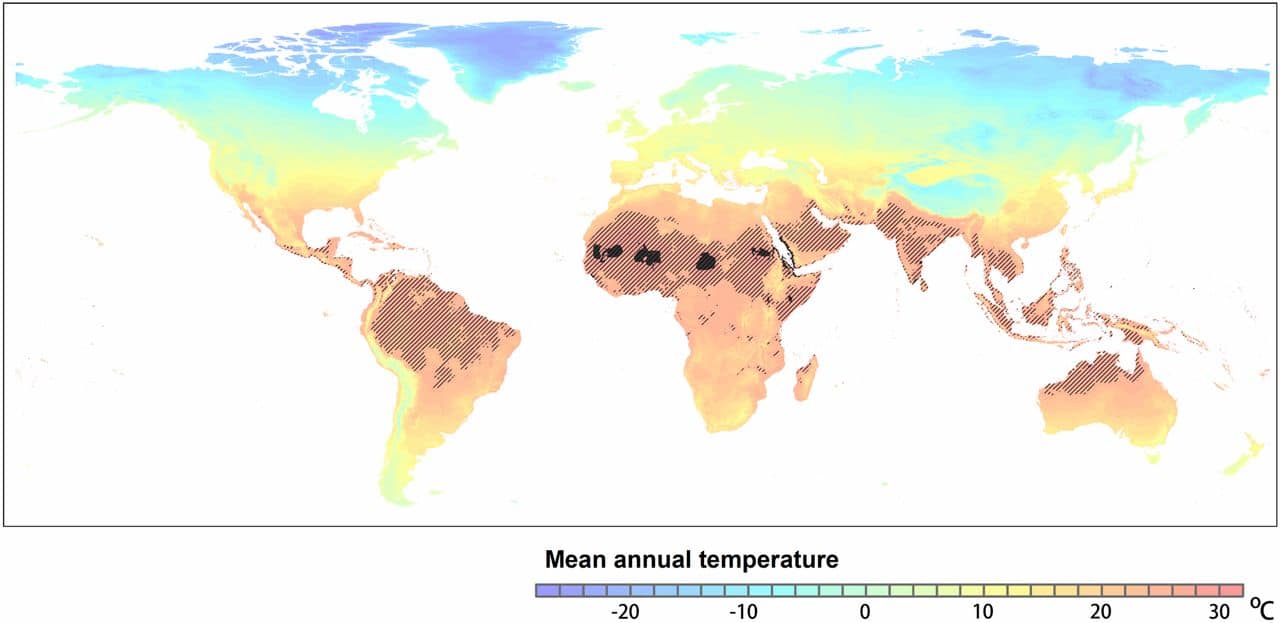
This may be the most catastrophic of our climate change facts. As of now, only 0.8% of the planet’s land surface has mean annual temperatures above 29°C (84.2°F) mostly in the Sahara desert and Saudi Arabia (solid black in the map).
A study by Xu et al. (2020) called “Future of the Human Niche” found that by 2070, under a high emissions scenario, these unbearable temperatures could expand to affect up to 3 billion people (dark brown areas in the map).
Doing nothing is much worse than doing something
On the current path, climate change could end up costing us 11 to 14% of the global GDP by mid-century. Regression into a high emissions scenario would mean an 18% loss, while staying below 2°C would reduce the damage to only 4%.
It has been proposed that ending climate change would take between $300 billion and $50 trillion over the next two decades. Even if $50 trillion is the price tag, that comes down to $2.5 trillion a year, or just over 3% of the global GDP.
These are the facts. There is no disputing them. Paul and Jean, Paul’s wife, are relatively immune from the effects, because of their ages, but not entirely so. The last few weeks of summer (2022) with the imminent risk of their property being damaged by wildfires is one example. The last three winters being below average rainfall is another (and the prediction that next year will continue with below average rainfall). But it is the youngsters Paul fears most for. On a personal note, his daughter and husband have a son, Morten, and he is presently 12. What sort of world is Morten growing up in?
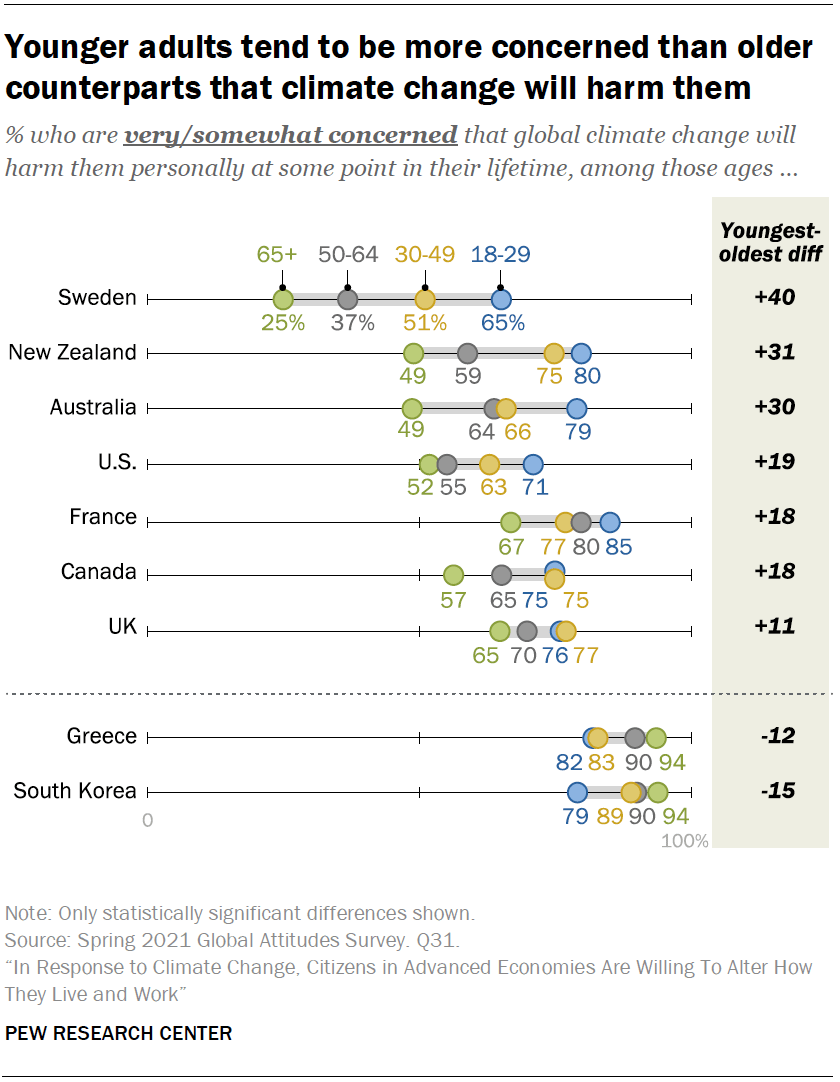
What about global attitudes to climate change?
Here is another chart setting out those concerns.
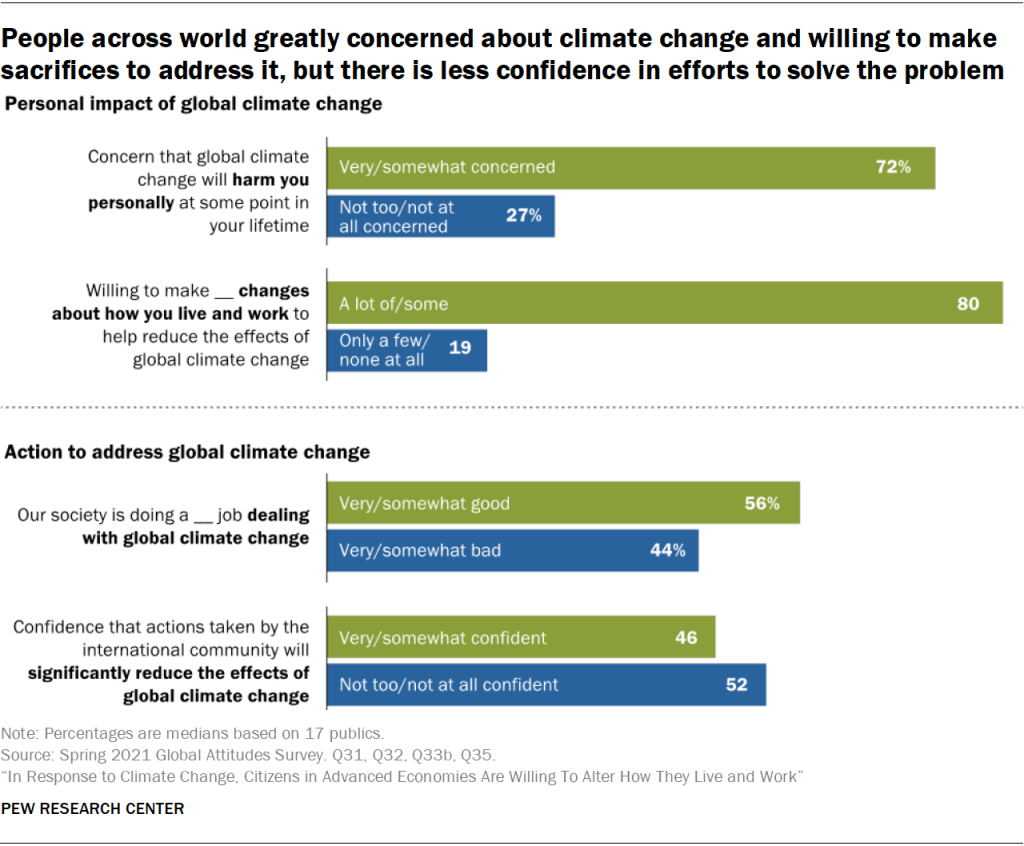
Paul is not a political animal. However he recognises that it is our leaders, globally, but especially in the top 10 countries in the world, who have to be leaders!
Here are the top 10 countries with areas of their country in square kilometres:
Russia. 17,098,242,
Canada. 9,984,670,
United States. 9,826,675,
China. 9,596,961,
Brazil. 8,514,877,
Australia. 7,741,220,
India. 3,287,263,
Argentina. 2,780,400,
Kazakhstan. 2,724,400, and
Algeria, 2,381,741.
But these are the top ten countries based on land size. That is not helpful. We have to examine the top countries in terms of CO2 emissions. Here are the top five countries, as in the top five worst, (readings from 2020):
This puts the USA as the top worst country, some 77% ahead of China.
So focussing on the USA, again in 2020, the split of greenhouse gas emissions, was:
So back again to all five countries we say, please, dear leader, make this the number one priority for your country, and for the world.
The end.
As in we humans living on this planet.
Next Saturday I am giving a talk to our local Freethinkers and Humanists group on climate change. As a result of this I was doing some research on the subject and I thought that I would share what I found with you.
But first may I say that the new King of the United Kingdom, King Charles III, may not have ages and ages on the throne but he is a committed environmentalist. In a recent VoA article the Prince of Wales, as he was then, reported that when Charles opened the COP26 climate summit, held in Scotland last year, and gave the opening speech, urging world leaders seated in front of him to redouble their efforts to confront global warming, he warned: “Time has quite literally run out.”
It is us!
The UN’s Intergovernmental Panel on Climate Change (IPCC) kicked off its 2021 report with the following statement: “It is unequivocal that human influence has warmed the atmosphere, ocean and land.”
A little later the article says: It took a while, but climate modelling is now refined enough to predict how things would go without human influence, within a margin of error. What we are observing today, however, is beyond that margin of error, therefore proving that we have driven the change.
It is getting hot
The last decade was the hottest in 125,000 years. There are a number of graphs to support this. Here is one:
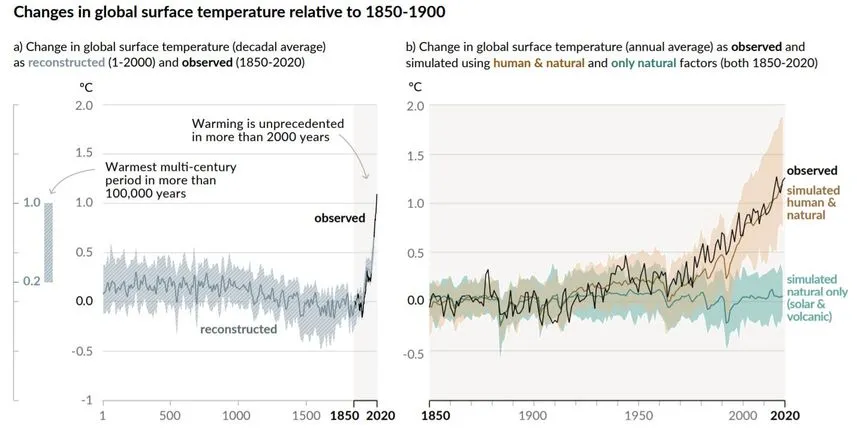
The oceans
One of the facts of having a water world, 71% of the Earth’s surface is water-covered, and the oceans hold about 96.5% of all Earth’s water, is that a 2019 study found that oceans had sucked up 90% of the heat gained by the planet between 1971 and 2010. Another found that it absorbed 20 sextillion joules of heat in 2020 – equivalent to two Hiroshima bombs per second.
Carbon-dioxide
In fact CO2 levels are now the highest that they have been in 2 million years. Today, they stand at close to 420 parts per million (ppm). To put that into context pre-industrial levels, before 1750, had CO2 levels around 280 parts per million.

We are losing ice big time
I can do no better than to quote from Earth.org: Since the mid-1990s, we’ve lost around 28 trillion tons of ice, with today’s melt rate standing at 1.2 trillion tons a year. To help put that into perspective, the combined weight of all human-made things is 1.1 trillion tons. That’s about the same weight as all living things on earth.
I repeat: Every single year we are losing 1,200,000,000,000 tons of ice!
Extreme weather
We can now attribute natural disasters to human-driven climate change with certainty. We can now say with precision how much likelier we made things like the North American summer 2021 heatwave, which the World Weather Attribution says was “virtually impossible” without climate change as well as the Indian heatwave, which experts believe it was made 30 times more likely because of climate change.
Climate change mitigation
There is a long and comprehensive article on the above subject on WikiPedia. I will quote from the paragraph Needed emissions cuts.
If emissions remain on the current level of 42 GtCO2, the carbon budget for 1.5 °C could be exhausted in 2028. (That’s 42 gigatones, as in 1 gigaton is a unit of explosive force equal to one billion (109) tons of trinitrotoluene (TNT).
In 2022, the Intergovernmental Panel on Climate Change (IPCC) released its Sixth Assessment Report on climate change, warning that greenhouse gas emissions must peak before 2025 at the latest and decline 43% by 2030, in order to likely limit global warming to 1.5°C (2.7°F). Secretary-general of the United Nations, António Guterres, clarified that for this “Main emitters must drastically cut emissions starting this year”.
Then just before that paragraph WikiPedia reports that: The UNFCCC aims to stabilize greenhouse gas (GHG) concentrations in the atmosphere at a level where ecosystems can adapt naturally to climate change, food production is not threatened, and economic development can proceed in a sustainable fashion. Currently human activities are adding CO2 to the atmosphere faster than natural processes can remove it.
We need to act now, otherwise…
… it will be too late for billions of us.
This may be the most catastrophic of our climate change facts. As of now, only 0.8% of the planet’s land surface has mean annual temperatures above 29°C, mostly in the Sahara desert and Saudi Arabia (solid black in the map below).
A study by Xu et al. (2020) called “Future of the Human Niche” found that by 2070, under a high emissions scenario, these unbearable temperatures could expand to affect up to 3 billion people (dark brown areas).

Doing nothing is much worse than doing something
On the current path, climate change could end up costing us 11 to 14% of the global GDP by mid-century. Regression into a high emissions scenario would mean an 18% loss, while staying below 2°C would reduce the damage to only 4%.
It has been proposed that ending climate change would take between $300 billion and $50 trillion over the next two decades. Even if $50 trillion is the price tag, that comes down to $2.5 trillion a year, or just over 3% of the global GDP.
Climate change is an incredibly complex phenomenon, and there are many other things happening that were not covered above.
These are the facts. There is no disputing them. Jean and I are relatively immune from the effects, because of our ages, but not entirely so. The last few weeks with the imminent risk of our property being damaged by wildfires is one example. The last three winters being below average rainfall is another. But it is the youngsters I fear most for. On a personal note, my daughter and husband have a son and he is now 12. What sort of world is he growing up in?
So here is a view of the global population of young people.
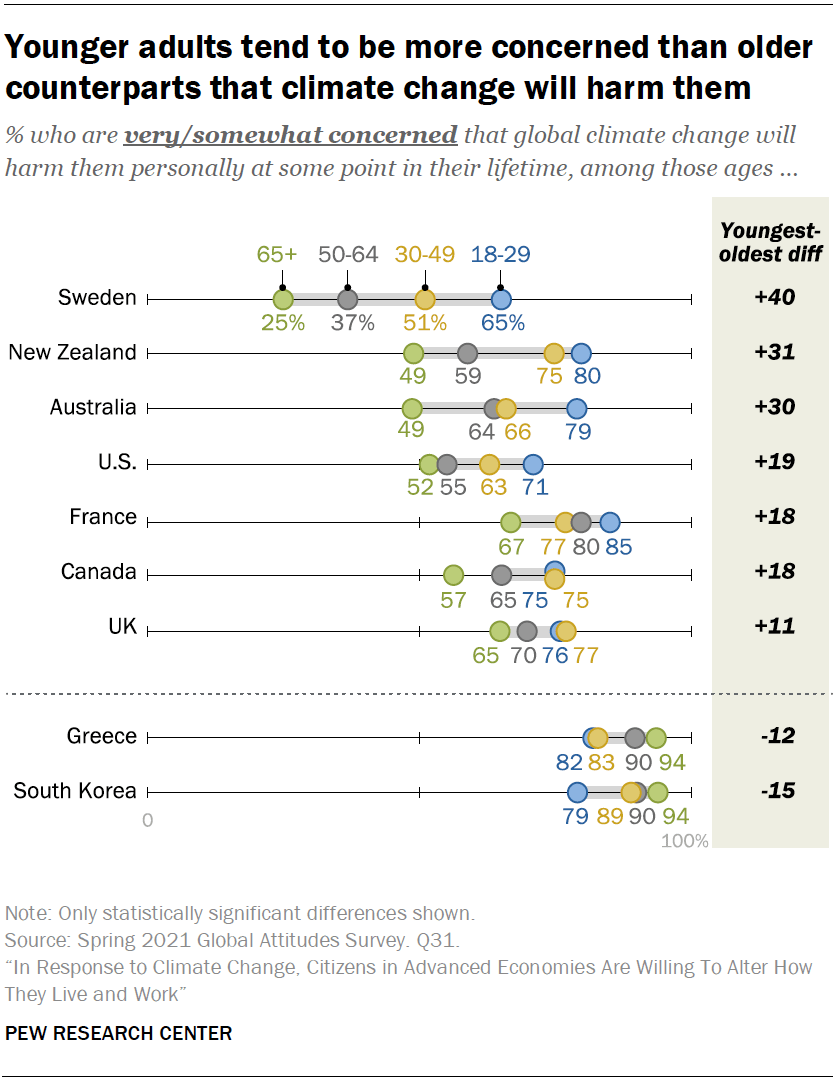
Just before I close let me show you my final chart. It goes to show our attitudes.

I am not a political animal. However I recognise that it is our leaders, globally, but especially in the top 10 countries in the world, who have to be leaders! Here are the top 10 countries.
So, please, dear leader, make this the number one priority for your country and for the world (areas of their country in square kilometres): Russia. 17,098,242, Canada. 9,984,670, United States. 9,826,675, China. 9,596,961, Brazil. 8,514,877, Australia. 7,741,220, India. 3,287,263 and Argentina. 2,780,400.
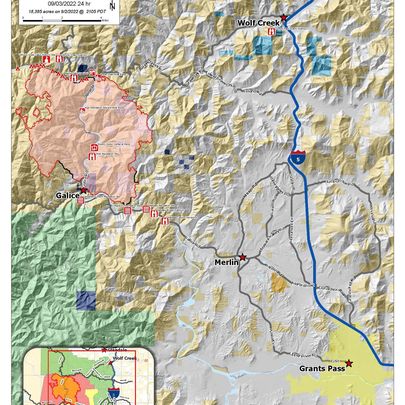
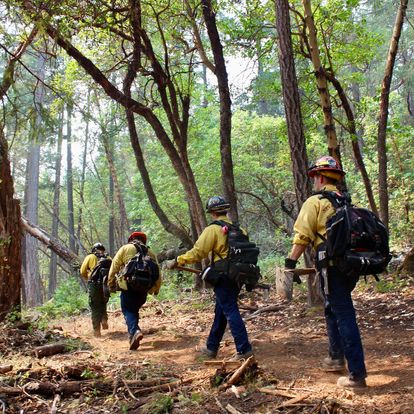
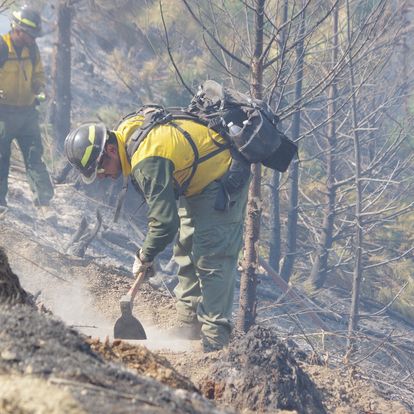
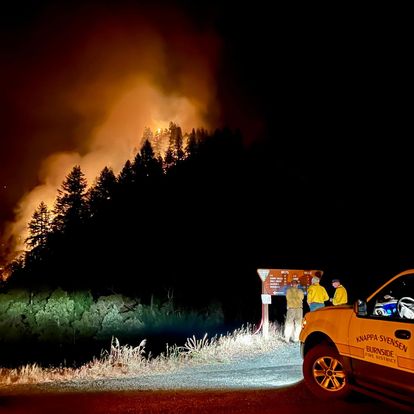
Photos of Rum Creek Fire!
Not all that are available by any means! These were copied from the Facebook page.
oooo
oooo

oooo

oooo

oooo
oooo
oooo

oooo
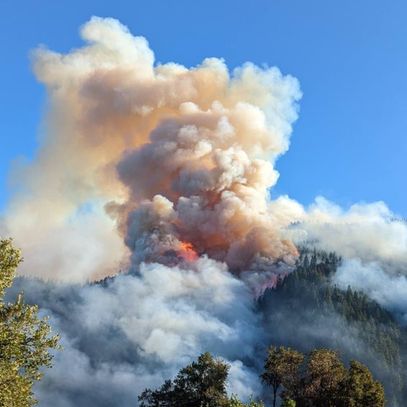
Well done all those actively involved. We will see what the next week brings.
 Learning from Dogs