This dog catching a fish while his owner is away.. Dogs are the best..
It was originally posted on ‘X’ by but then I found it on YouTube. However the text that was shown on X read:
Buitengebieden,
Welcome to the positive side of X. I’m Sander from the Netherlands. All copyrights belong to their respective owners! DM for credits/removal/submission!
We take it for granted! Of that I am sure. But the question of how oxygen first came to be built up in our atmosphere is fascinating. There was a recent article written by Elizabeth Swanner, who is Associate Professor of Geology, Iowa State University that was published in The Conversation. It makes for a very interesting read.
ooOOoo
A layered lake is a little like Earth’s early oceans − and lets researchers explore how oxygen built up in our atmosphere billions of years ago
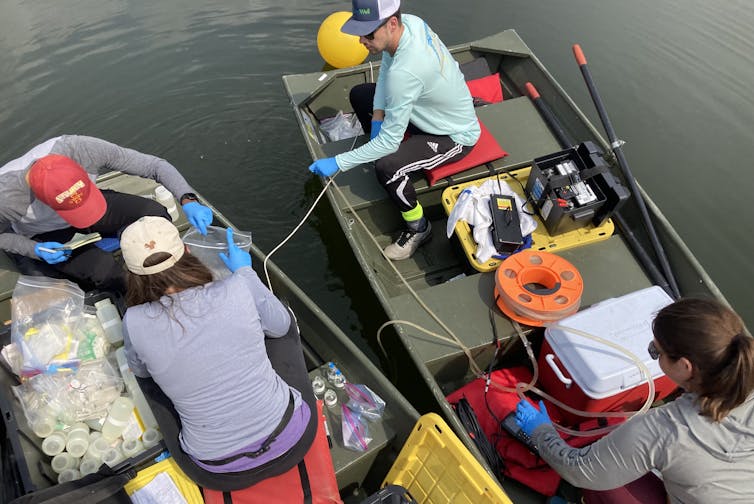
Researchers sample water from various layers to analyze back in the lab. Elizabeth Swanner, CC BY-ND
Little Deming Lake doesn’t get much notice from visitors to Itasca State Park in Minnesota. There’s better boating on nearby Lake Itasca, the headwaters of the Mississippi River. My colleagues and I need to maneuver hundreds of pounds of equipment down a hidden path made narrow by late-summer poison ivy to launch our rowboats.
But modest Deming Lake offers more than meets the eye for me, a geochemist interested in how oxygen built up in the atmosphere 2.4 billion years ago. The absence of oxygen in the deep layers of Deming Lake is something this small body of water has in common with early Earth’s oceans.
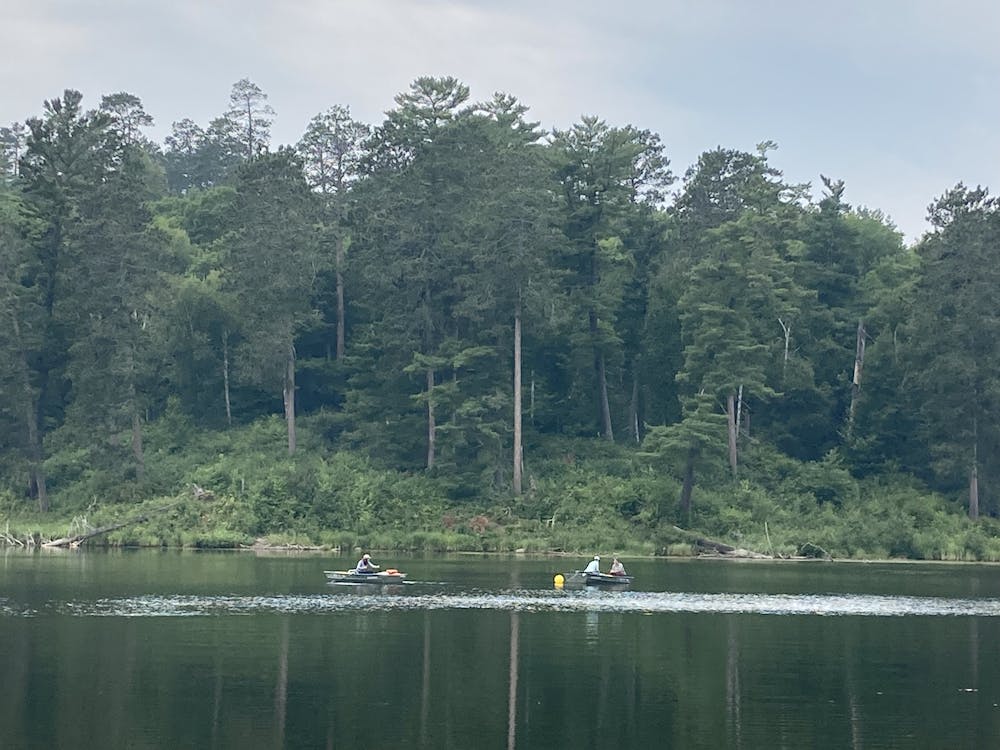
On each of our several expeditions here each year, we row our boats out into the deepest part of the lake – over 60 feet (18 meters), despite the lake’s surface area being only 13 acres. We drop an anchor and connect our boats in a flotilla, readying ourselves for the work ahead.
Researchers’ boats on Deming Lake. Elizabeth Swanner, CC BY-ND
Deming Lake is meromictic, a term from Greek that means only partially mixing. In most lakes, at least once a year, the water at the top sinks while the water at the bottom rises because of wind and seasonal temperature changes that affect water’s density. But the deepest waters of Deming Lake never reach the surface. This prevents oxygen in its top layer of water from ever mixing into its deep layer.
Less than 1% of lakes are meromictic, and most that are have dense, salty bottom waters. Deming Lake’s deep waters are not very salty, but of the salts in its bottom waters, iron is one of the most abundant. This makes Deming Lake one of the rarest types of meromictic lakes.
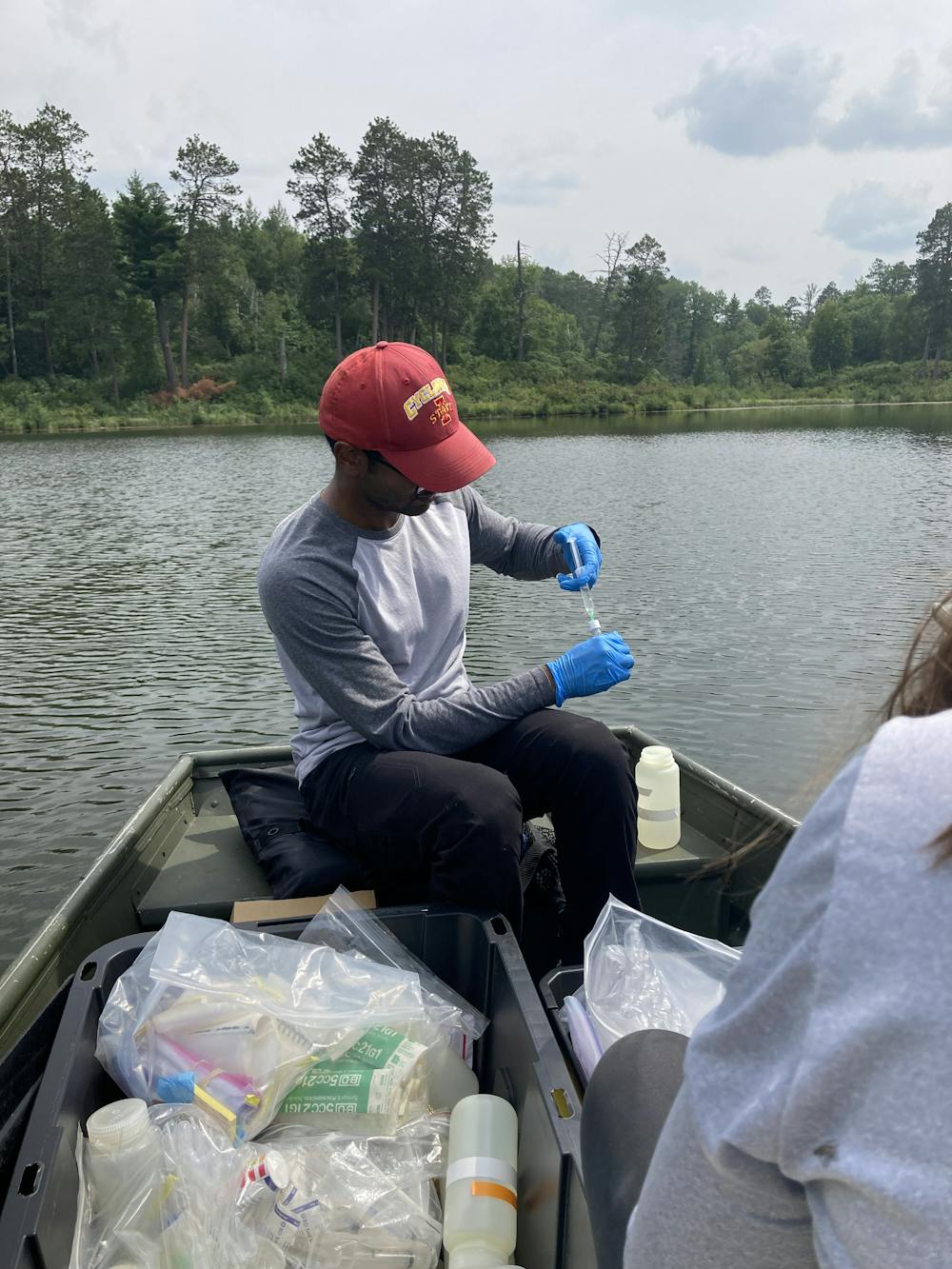
Postdoc researcher Sajjad Akam collects a water sample for chemical analysis back in the lab. Elizabeth Swanner, CC BY-ND
The lake surface is calm, and the still air is glorious on this cool, cloudless August morning. We lower a 2-foot-long water pump zip-tied to a cable attached to four sensors. The sensors measure the temperature, amount of oxygen, pH and amount of chlorophyll in the water at each layer we encounter. We pump water from the most intriguing layers up to the boat and fill a myriad of bottles and tubes, each destined for a different chemical or biological analysis.
My colleagues and I have homed in on Deming Lake to explore questions about how microbial life adapted to and changed the environmental conditions on early Earth. Our planet was inhabited only by microbes for most of its history. The atmosphere and the oceans’ depths didn’t have much oxygen, but they did have a lot of iron, just like Deming Lake does. By investigating what Deming Lake’s microbes are doing, we can better understand how billions of years ago they helped to transform the Earth’s atmosphere and oceans into what they’re like now.
Chlorophyll colors water from the lake slightly green. Elizabeth Swanner, CC BY-ND
At Deming Lake, my colleagues and I pay special attention to the water layer where the chlorophyll readings jump. Chlorophyll is the pigment that makes plants green. It harnesses sunlight energy to turn water and carbon dioxide into oxygen and sugars. Nearly 20 feet (6 meters) below Deming’s surface, the chlorophyll is in cyanobacteria and photosynthetic algae, not plants.
But the curious thing about this layer is that we don’t detect oxygen, despite the abundance of these oxygen-producing organisms. This is the depth where iron concentrations start to climb to the high levels present at the lake’s bottom.
This high-chlorophyll, high-iron and low-oxygen layer is of special interest to us because it might help us understand where cyanobacteria lived in the ancient ocean, how well they were growing and how much oxygen they produced.
We suspect the reason cyanobacteria gather at this depth in Deming Lake is that there is more iron there than at the top of the lake. Just like humans need iron for red blood cells, cyanobacteria need lots of iron to help catalyze the reactions of photosynthesis.
A likely reason we can’t measure any oxygen in this layer is that in addition to cyanobacteria, there are a lot of other bacteria here. After a good long life of a few days, the cyanobacteria die, and the other bacteria feed on their remains. These bacteria rapidly use up any oxygen produced by still photosynthesizing cyanobacteria the way a fire does as it burns through wood.
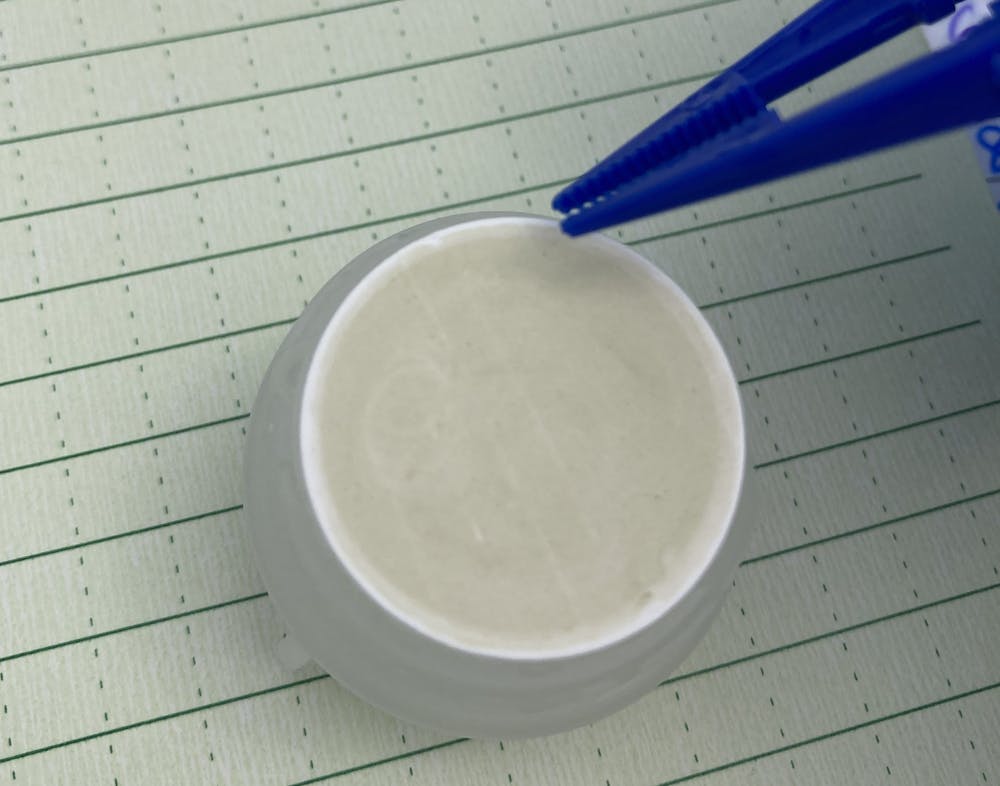
We know there are lots of bacteria here based on how cloudy the water is, and we see them when we inspect a drop of this water under a microscope. But we need another way to measure photosynthesis besides measuring oxygen levels.
Long-running lakeside laboratory
The other important function of photosynthesis is converting carbon dioxide into sugars, which eventually are used to make more cells. We need a way to track whether new sugars are being made, and if they are, whether it’s by photosynthetic cyanobacteria. So we fill glass bottles with samples of water from this lake layer and seal them tight with rubber stoppers.
We drive the 3 miles back to the Itasca Biological Station and Laboratories where we will set up our experiments. The station opened in 1909 and is home base for us this week, providing comfy cabins, warm meals and this laboratory space.
In the lab, we inject our glass bottle with carbon dioxide that carries an isotopic tracer. If cyanobacteria grow, their cells will incorporate this isotopic marker.
We had a little help to formulate our questions and experiments. University of Minnesota students attending summer field courses collected decades worth of data in Itasca State Park. A diligent university librarian digitized thousands of those students’ final papers.
My students and I pored over the papers concerning Deming Lake, many of which tried to determine whether the cyanobacteria in the chlorophyll-rich layer are doing photosynthesis. While most indicated yes, those students were measuring only oxygen and got ambiguous results. Our use of the isotopic tracer is trickier to implement but will give clearer results.
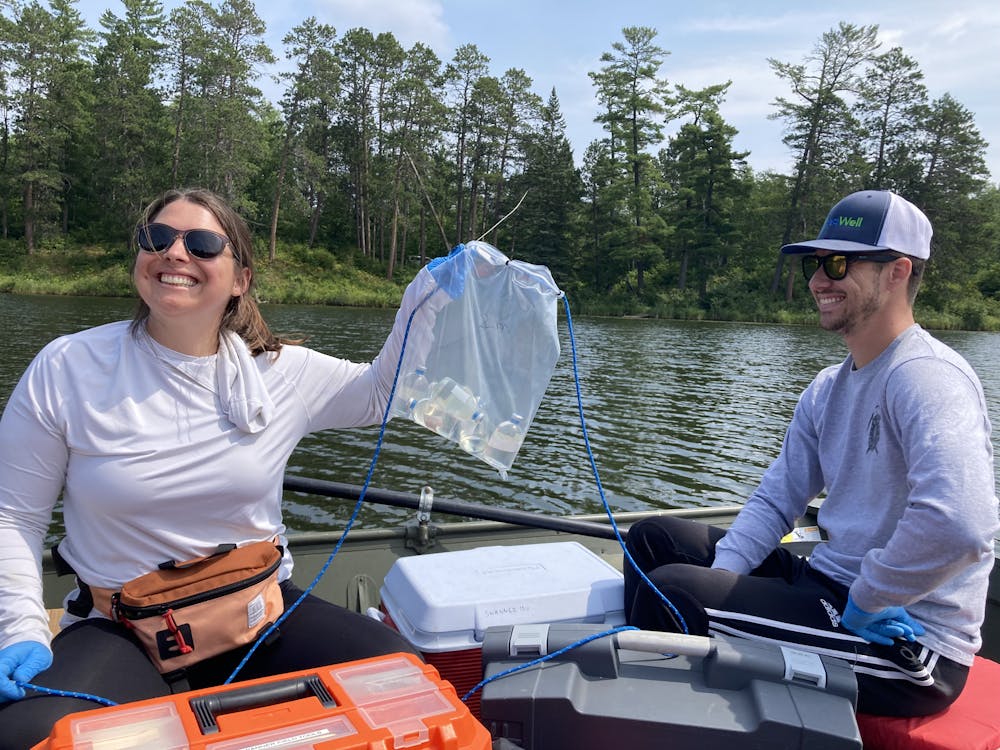
Graduate students Michelle Chamberlain and Zackry Stevenson about to sink the bottles for incubation in Deming Lake. Elizabeth Swanner, CC BY-ND
That afternoon, we’re back on the lake. We toss an anchor; attached to its rope is a clear plastic bag holding the sealed bottles of lake water now amended with the isotopic tracer. They’ll spend the night in the chlorophyll-rich layer, and we’ll retrieve them after 24 hours. Any longer than that and the isotopic label might end up in the bacteria that eat the dying cyanobacteria instead of the cyanobacteria themselves. We tie off the rope to a floating buoy and head back to the station’s dining hall for our evening meal.
Iron, chlorophyll, oxygen
The next morning, as we wait for the bottles to finish their incubation, we collect water from the different layers of the lake and add some chemicals that kill the cells but preserve their bodies. We’ll look at these samples under the microscope to figure out how many cyanobacteria are in the water, and we’ll measure how much iron is inside the cyanobacteria.
That’s easier said than done, because we have to first separate all the “needles” (cyanobacteria) from the “hay” (other cells) and then clean any iron off the outside of the cyanobacteria. Back at Iowa State University, we’ll shoot the individual cells one by one into a flame that incinerates them, which liberates all the iron they contain so we can measure it.
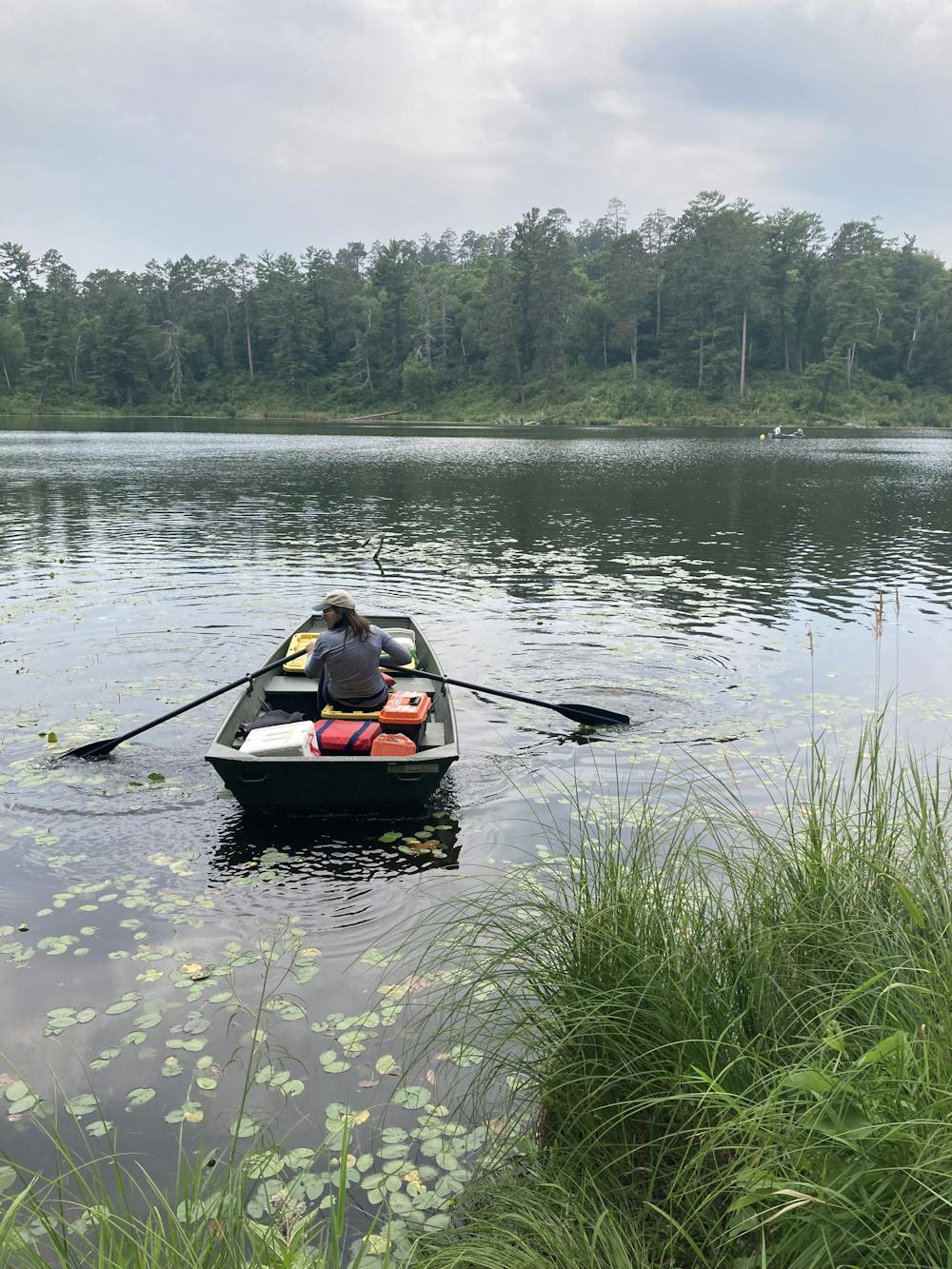
Biogeochemist Katy Sparrow rows a research vessel to shore. Elizabeth Swanner, CC BY-ND
Our scientific hunch, or hypothesis, is that the cyanobacteria that live in the chlorophyll- and iron-rich layer will contain more iron than cyanobacteria that live in the top lake layer. If they do, it will help us establish that greater access to iron is a motive for living in that deeper and dimmer layer.
These experiments won’t tell the whole story of why it took so long for Earth to build up oxygen, but they will help us to understand a piece of it – where oxygen might have been produced and why, and what happened to oxygen in that environment.
Deming Lake is quickly becoming its own attraction for those with a curiosity about what goes on beneath its tranquil surface – and what that might be able to tell us about how new forms of life took hold long ago on Earth.
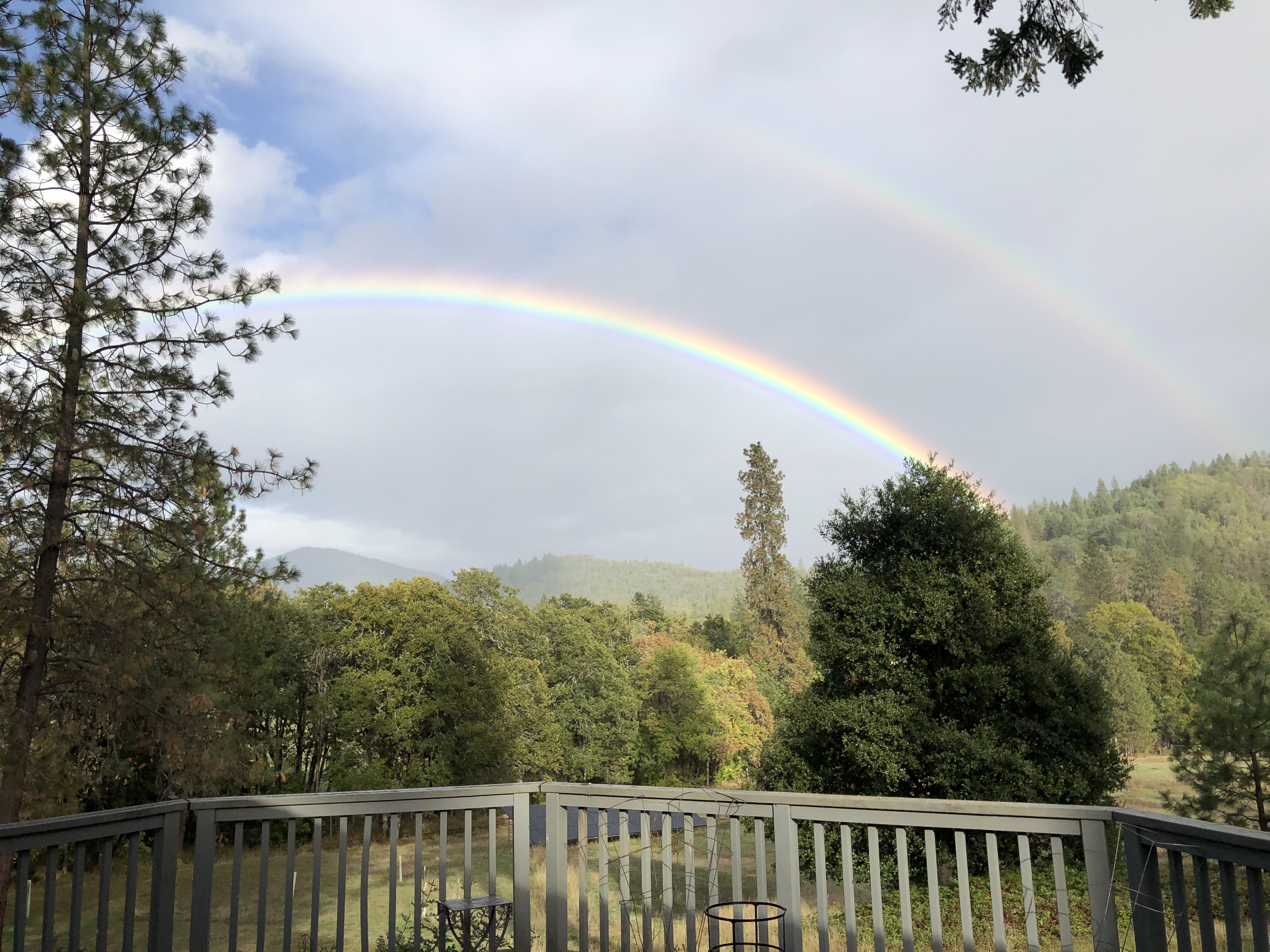
I just ran out of time yesterday to publish a proper blog post so I am sharing this photograph with you. It shows Mount Sexton in the distance, just to the right of the fir tree, and two rainbows, it being a rainy afternoon. The camera is facing North-East and the picture was taken at the north end of our rear deck.
Today, August 14th, here in Southern Oregon we are expecting 111 degrees Fahrenheit or 43.8 degrees C. That is really hot! (And at home it reached 108 deg. F. at 3pm.)
So it seems pertinent to republish a post from The Conversation that was published on July 21st, 2023.
ooOOoo
Is it really hotter now than any time in 100,000 years?
Professor of Earth and Environmental Sciences, Northern Arizona University
As scorching heat grips large swaths of the Earth, a lot of people are trying to put the extreme temperatures into context and asking: When was it ever this hot before?
Globally, 2023 has seen some of the hottest days in modern measurements, but what about farther back, before weather stations and satellites?
Some news outlets have reported that daily temperatures hit a 100,000-year high.
As a paleoclimate scientist who studies temperatures of the past, I see where this claim comes from, but I cringe at the inexact headlines. While this claim may well be correct, there are no detailed temperature records extending back 100,000 years, so we don’t know for sure.
Here’s what we can confidently say about when Earth was last this hot.
This is a new climate state
Scientists concluded a few years ago that Earth had entered a new climate state not seen in more than 100,000 years. As fellow climate scientist Nick McKay and I recently discussed in a scientific journal article, that conclusion was part of a climate assessment report published by the Intergovernmental Panel on Climate Change (IPCC) in 2021.
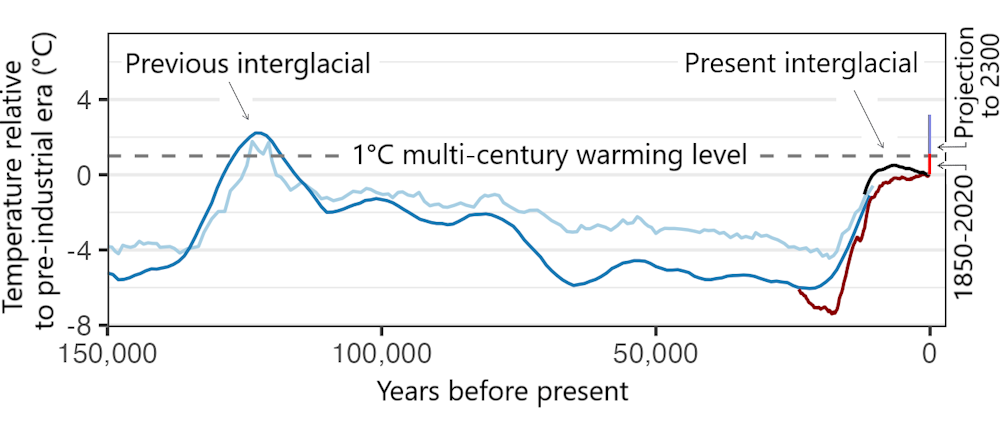
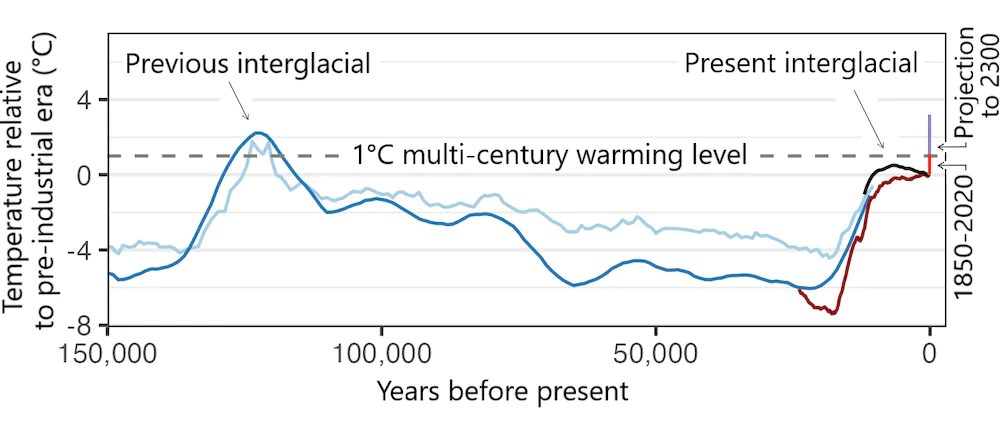
Earth was already more than 1 degree Celsius (1.8 Fahrenheit) warmer than preindustrial times, and the levels of greenhouse gases in the atmosphere were high enough to assure temperatures would stay elevated for a long time.
Earth’s average temperature has exceeded 1 degree Celsius (1.8 F) above the preindustrial baseline. This new climate state will very likely persist for centuries as the warmest period in more than 100,000 years. The chart shows different reconstructions of temperature over time, with measured temperatures since 1850 and a projection to 2300 based on an intermediate emissions scenario. D.S. Kaufman and N.P. McKay, 2022, and published datasets, Author provided
Even under the most optimistic scenarios of the future – in which humans stop burning fossil fuels and reduce other greenhouse gas emissions – average global temperature will very likely remain at least 1 C above preindustrial temperatures, and possibly much higher, for multiple centuries.
This new climate state, characterized by a multi-century global warming level of 1 C and higher, can be reliably compared with temperature reconstructions from the very distant past.
How we estimate past temperature
To reconstruct temperatures from times before thermometers, paleoclimate scientists rely on information stored in a variety of natural archives.
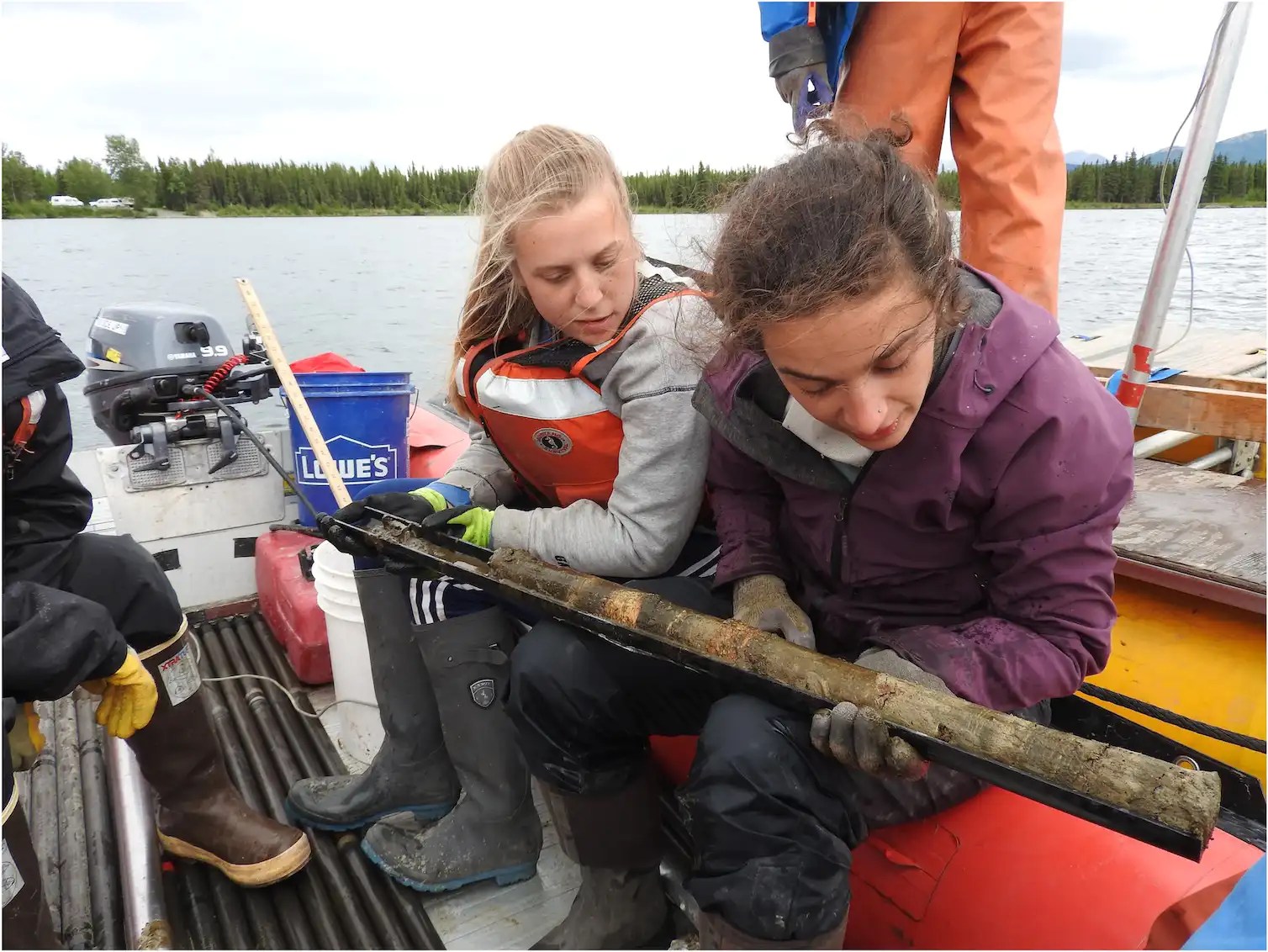
The most widespread archive going back many thousands of years is at the bottom of lakes and oceans, where an assortment of biological, chemical and physical evidence offers clues to the past. These materials build up continuously over time and can be analyzed by extracting a sediment core from the lake bed or ocean floor.
University of Arizona scientist Ellie Broadman holds a sediment core from the bottom of a lake on Alaska’s Kenai Peninsula. Emily Stone
These sediment-based records are rich sources of information that have enabled paleoclimate scientists to reconstruct past global temperatures, but they have important limitations.
For one, bottom currents and burrowing organisms can mix the sediment, blurring any short-term temperature spikes. For another, the timeline for each record is not known precisely, so when multiple records are averaged together to estimate past global temperature, fine-scale fluctuations can be canceled out.
Because of this, paleoclimate scientists are reluctant to compare the long-term record of past temperature with short-term extremes.
Looking back tens of thousands of years
Earth’s average global temperature has fluctuated between glacial and interglacial conditions in cycles lasting around 100,000 years, driven largely by slow and predictable changes in Earth’s orbit with attendant changes in greenhouse gas concentrations in the atmosphere. We are currently in an interglacial period that began around 12,000 years ago as ice sheets retreated and greenhouse gases rose.
Looking at that 12,000-year interglacial period, global temperature averaged over multiple centuries might have peaked roughly around 6,000 years ago, but probably did not exceed the 1 C global warming level at that point, according to the IPCC report. Another study found that global average temperatures continued to increase across the interglacial period. This is a topic of active research.
That means we have to look farther back to find a time that might have been as warm as today.
The last glacial episode lasted nearly 100,000 years. There is no evidence that long-term global temperatures reached the preindustrial baseline anytime during that period.
If we look even farther back, to the previous interglacial period, which peaked around 125,000 years ago, we do find evidence of warmer temperatures. The evidence suggests the long-term average temperature was probably no more than 1.5 C (2.7 F) above preindustrial levels – not much more than the current global warming level.
Now what?
Without rapid and sustained reductions in greenhouse gas emissions, the Earth is currently on course to reach temperatures of roughly 3 C (5.4 F) above preindustrial levels by the end of the century, and possibly quite a bit higher.
At that point, we would need to look back millions of years to find a climate state with temperatures as hot. That would take us back to the previous geologic epoch, the Pliocene, when the Earth’s climate was a distant relative of the one that sustained the rise of agriculture and civilization.
ooOOoo
It is difficult to know what to say other than one hopes that Governments and country leaders recognise the situation and DO SOMETHING!
As Dr. Michael Mann put it in the last issue of The Humanist: “The only obstacles aren’t the laws of physics, but the flaws in our politics.“
I have a son and a daughter in their early 50’s and a grandson who is 12. They, along with millions of other younger people, need action now.
July 20th was my last post. Here are some of my own photographs taken while Maija, my daughter, Marius, her husband, and Morten, their son were with us. That was after Alex, my son, had come to see us in June.
Here is Morten, who spent hours caressing and fondling Brandy, our largest dog.
oooo
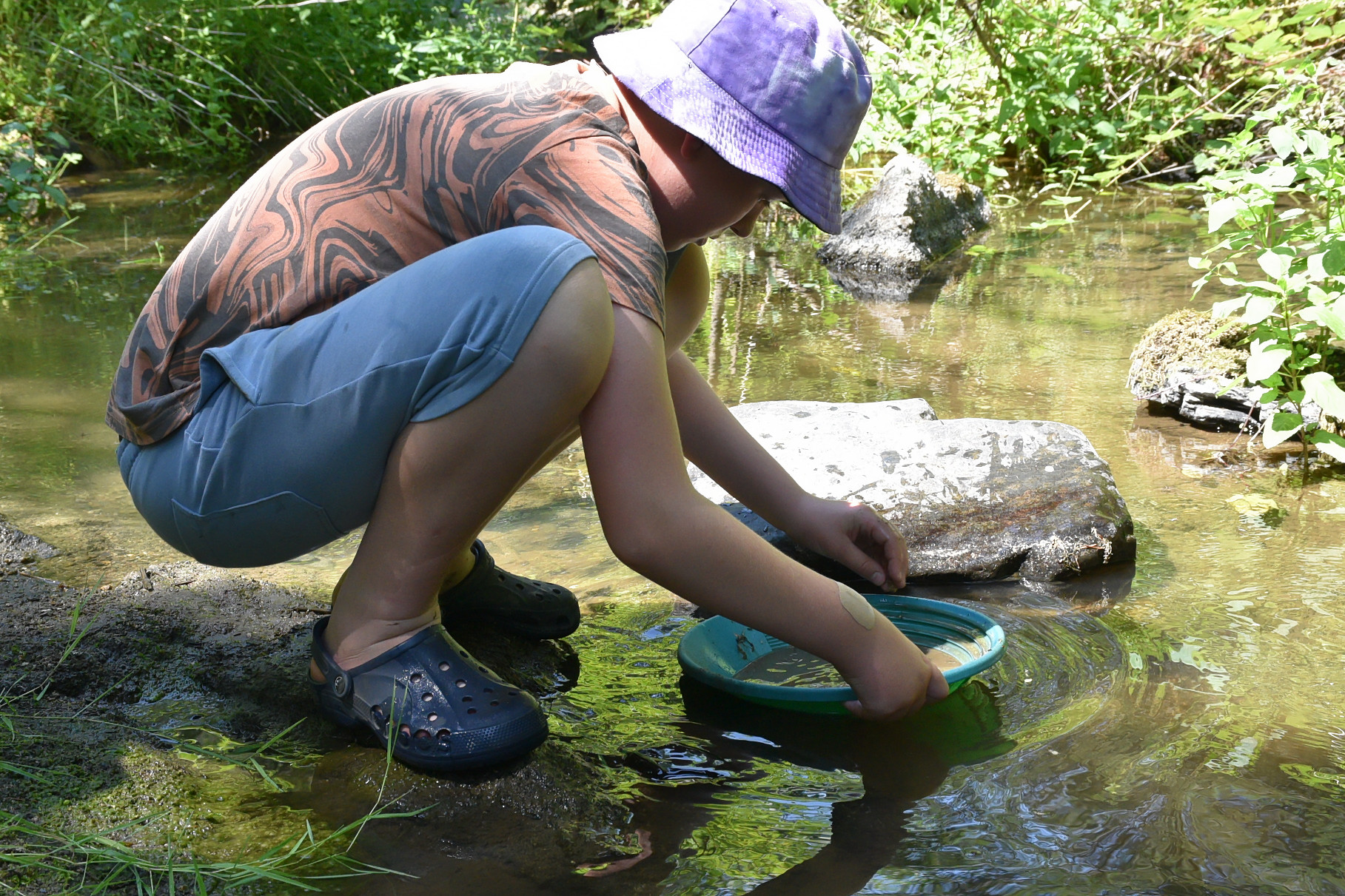
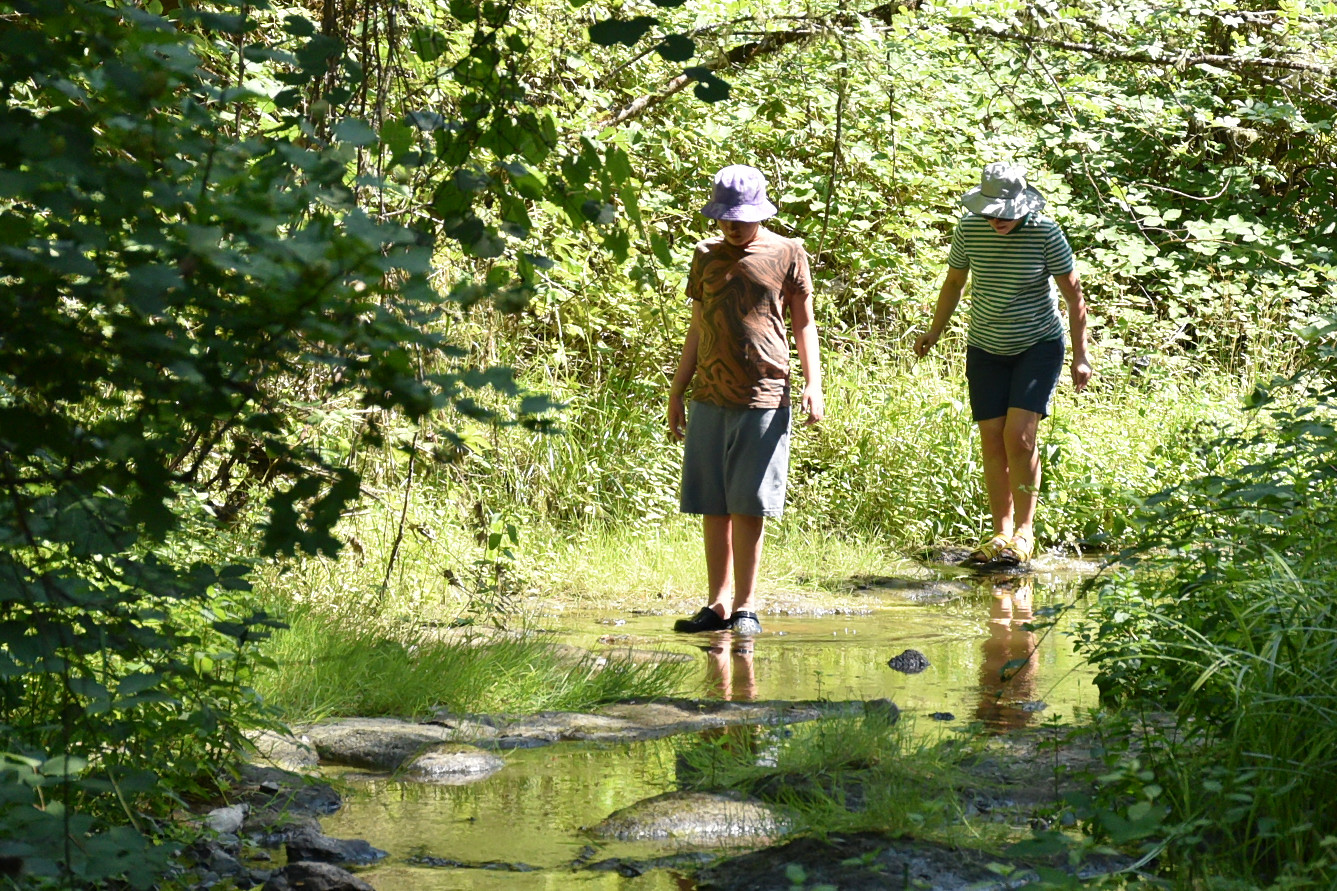
His other passion was exploring for gold. We have Bummer Creek flowing through the property. It is called ‘Bummer’ because as the locals would have it there is no gold to be found. But that didn’t stop Morten spending time looking for gold!
And this is Maija (photo slightly out of focus).
The next photo shows Maija and Morten strolling along the creek.
oooo
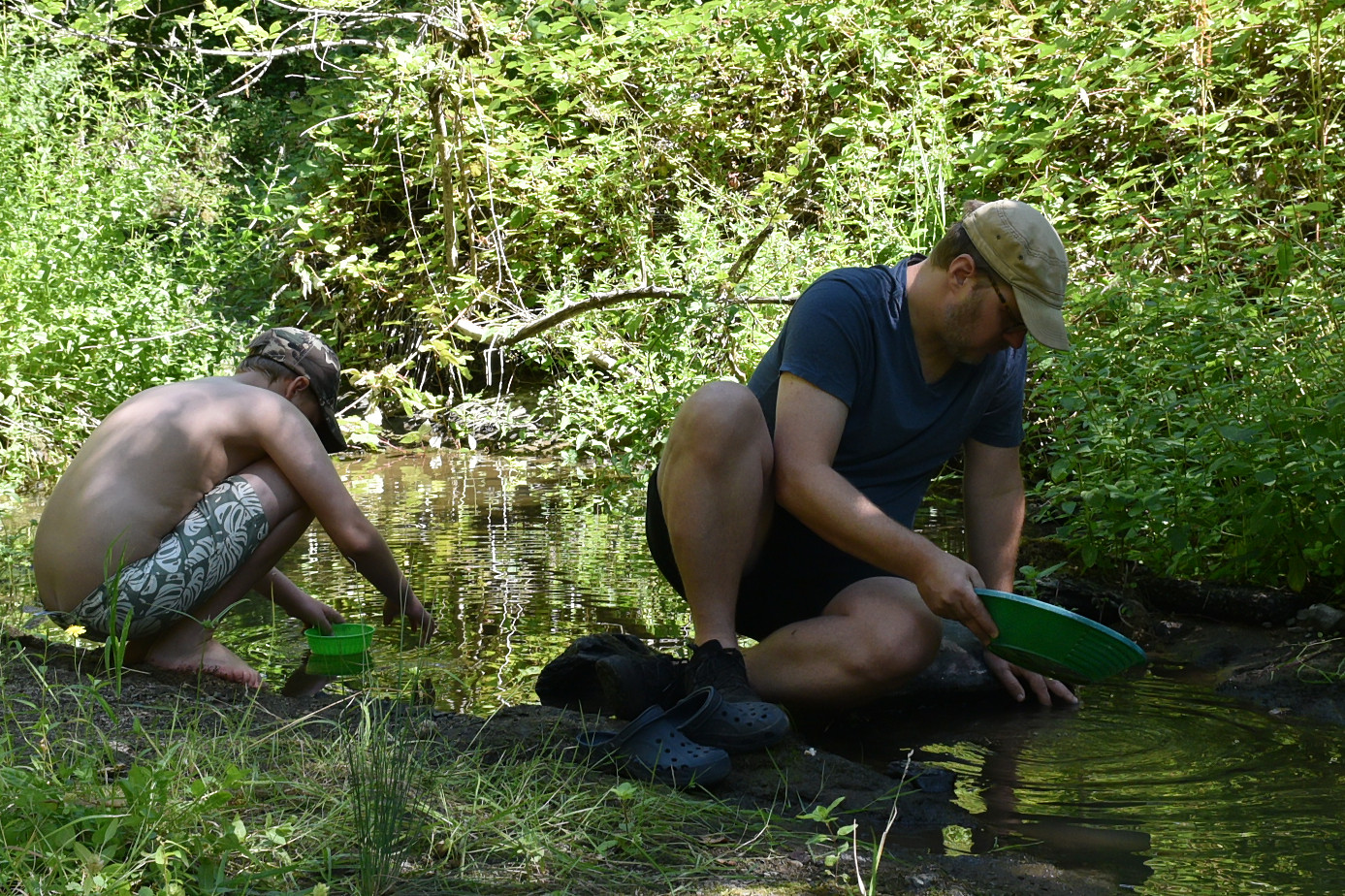
Above a shot showing Marius and Morten looking for the illusive metal!
I close with the Morten and Marius hoping to see a trace of gold in the gold-pan, and Maija looking on.
This post attracted me and I wanted to share it with you.
Here in Oregon we are lucky because the ground water is of a high quality and there is plenty of it. At home we drink our water straight from our well without any filtering or chlorination. Have been doing that ever since we moved in back in 2012.
But water is a much deeper subject than I tend to think of and this article is an in-depth review of the topic. It is an article from The Conversation.
ooOOoo
Water in space – a ‘Goldilocks’ star reveals previously hidden step in how water gets to planets like Earth
Without water, life on Earth could not exist as it does today. Understanding the history of water in the universe is critical to understanding how planets like Earth come to be.
Astronomers typically refer to the journey water takes from its formation as individual molecules in space to its resting place on the surfaces of planets as “the water trail.” The trail starts in the interstellar medium with hydrogen and oxygen gas and ends with oceans and ice caps on planets, with icy moons orbiting gas giants and icy comets and asteroids that orbit stars. The beginnings and ends of this trail are easy to see, but the middle has remained a mystery.
I am an astronomer who studies the formation of stars and planets using observations from radio and infrared telescopes. In a new paper, my colleagues and I describe the first measurements ever made of this previously hidden middle part of the water trail and what these findings mean for the water found on planets like Earth.
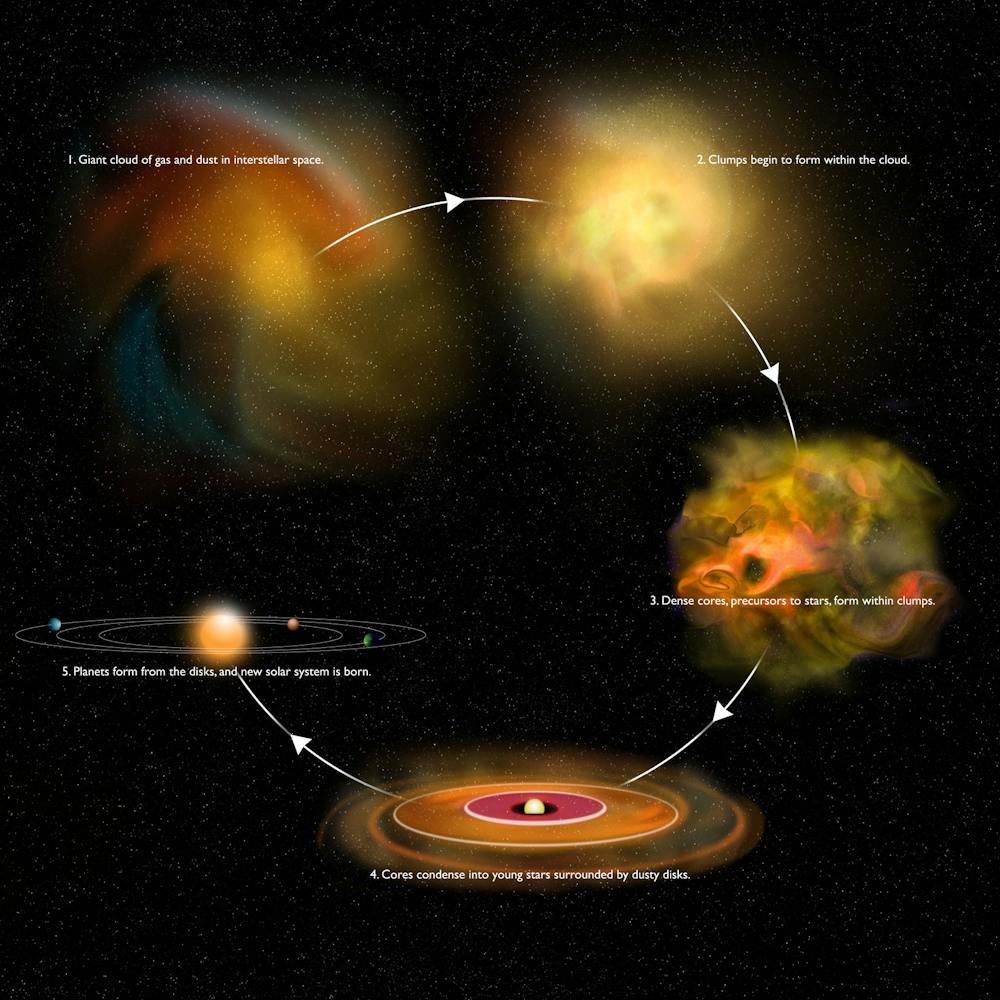
Star and planet formation is an intertwined process that starts with a cloud of molecules in space. Bill Saxton, NRAO/AUI/NSF, CC BY
Stars begin to form when parts of the collapsing cloud reach a certain density and heat up enough to start fusing hydrogen atoms together. Since only a small fraction of the gas initially collapses into the newborn protostar, the rest of the gas and dust forms a flattened disk of material circling around the spinning, newborn star. Astronomers call this a proto-planetary disk.
As icy dust particles collide with each other inside a proto-planetary disk, they begin to clump together. The process continues and eventually forms the familiar objects of space like asteroids, comets, rocky planets like Earth and gas giants like Jupiter or Saturn.
There are two potential pathways that water in our solar system could have taken. The first, called chemical inheritance, is when the water molecules originally formed in the interstellar medium are delivered to proto-planetary disks and all the bodies they create without going through any changes.
The second theory is called chemical reset. In this process, the heat from the formation of the proto-planetary disk and newborn star breaks apart water molecules, which then reform once the proto-planetary disk cools.
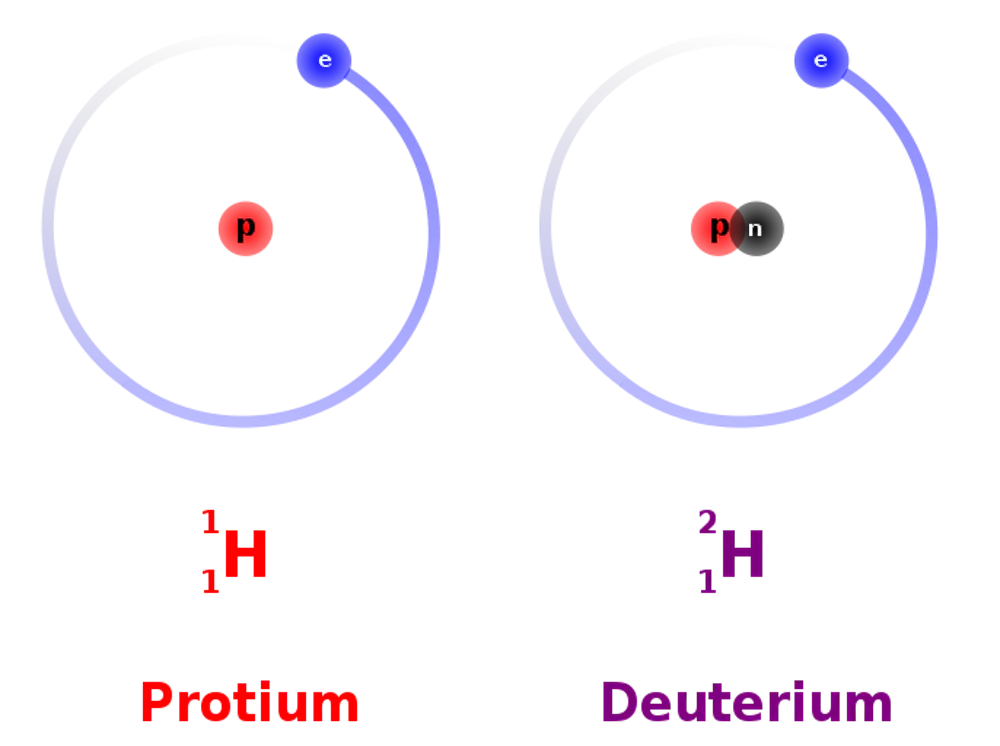
Normal hydrogen, or protium, does not contain a neutron in its nucleus, while deuterium contains one neutron, making it heavier. Dirk Hünniger/Wikimedia Commons, CC BY-SA
To test these theories, astronomers like me look at the ratio between normal water and a special kind of water called semi-heavy water. Water is normally made of two hydrogen atoms and one oxygen atom. Semi-heavy water is made of one oxygen atom, one hydrogen atom and one atom of deuterium – a heavier isotope of hydrogen with an extra neutron in its nucleus.
The ratio of semi-heavy to normal water is a guiding light on the water trail – measuring the ratio can tell astronomers a lot about the source of water. Chemical models and experiments have shown that about 1,000 times more semi-heavy water will be produced in the cold interstellar medium than in the conditions of a protoplanetary disk.
This difference means that by measuring the ratio of semi-heavy to normal water in a place, astronomers can tell whether that water went through the chemical inheritance or chemical reset pathway.
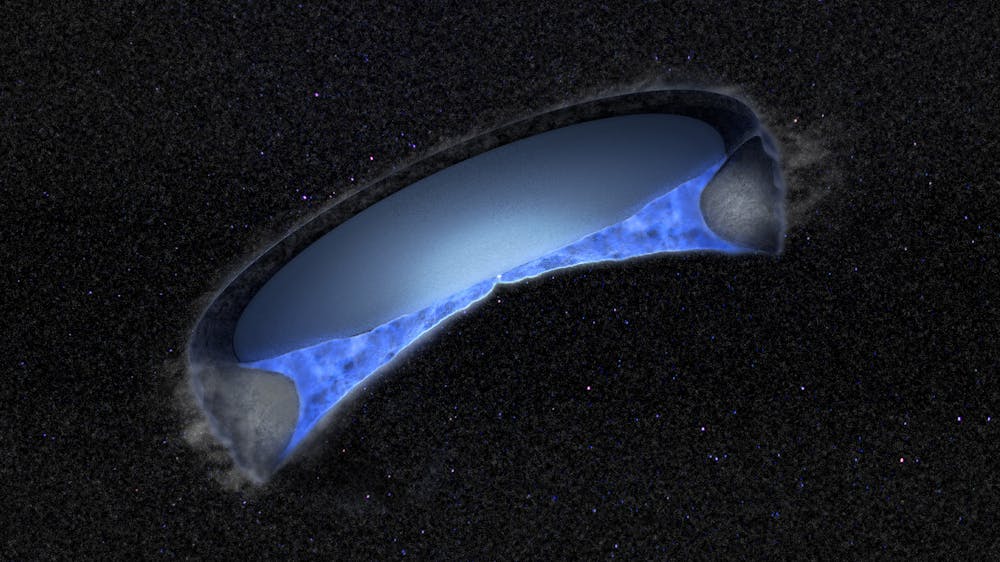
V883 Orionis is a young star system with a rare star at its center that makes measuring water in the proto-planetary cloud, shown in the cutaway, possible. ALMA (ESO/NAOJ/NRAO), B. Saxton (NRAO/AUI/NSF), CC BY
Measuring water during the formation of a planet
Comets have a ratio of semi-heavy to normal water almost perfectly in line with chemical inheritance, meaning the water hasn’t undergone a major chemical change since it was first created in space. Earth’s ratio sits somewhere in between the inheritance and reset ratio, making it unclear where the water came from.
To truly determine where the water on planets comes from, astronomers needed to find a goldilocks proto-planetary disk – one that is just the right temperature and size to allow observations of water. Doing so has proved to be incredibly difficult. It is possible to detect semi-heavy and normal water when water is a gas; unfortunately for astronomers, the vast majority of proto-plantary disks are very cold and contain mostly ice, and it is nearly impossible to measure water ratios from ice at interstellar distances.
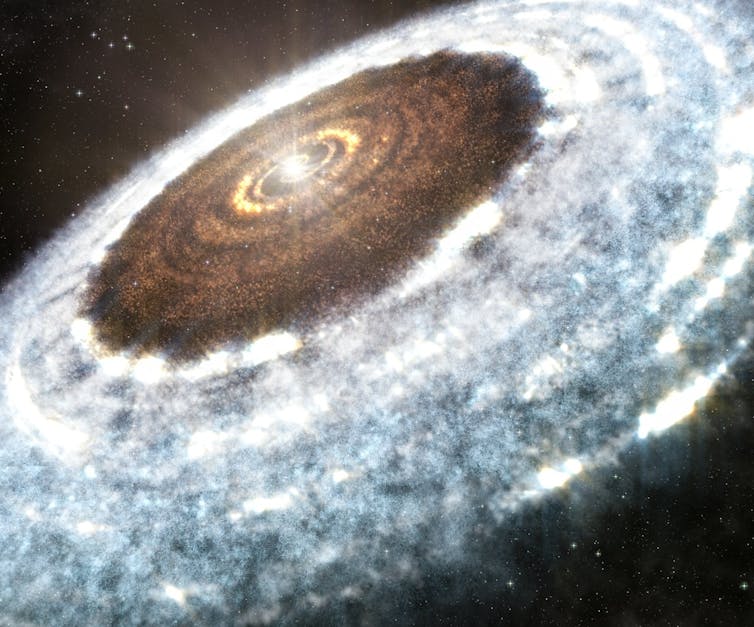
A breakthrough came in 2016, when my colleagues and I were studying proto-planetary disks around a rare type of young star called FU Orionis stars. Most young stars consume matter from the proto-planetary disks around them. FU Orionis stars are unique because they consume matter about 100 times faster than typical young stars and, as a result, emit hundreds of times more energy. Due to this higher energy output, the proto-planetary disks around FU Orionis stars are heated to much higher temperatures, turning ice into water vapor out to large distances from the star.
Using the Atacama Large Millimeter/submillimeter Array, a powerful radio telescope in northern Chile, we discovered a large, warm proto-planetary disk around the Sunlike young star V883 Ori, about 1,300 light years from Earth in the constellation Orion.
V883 Ori emits 200 times more energy than the Sun, and my colleagues and I recognized that it was an ideal candidate to observe the semi-heavy to normal water ratio.
These results fill in the gap of the water trail forging a direct link between water in the interstellar medium, protostars, proto-planetary disks and planets like Earth through the process of inheritance, not chemical reset.
The new results show definitively that a substantial portion of the water on Earth most likely formed billions of years ago, before the Sun had even ignited. Confirming this missing piece of water’s path through the universe offers clues to origins of water on Earth. Scientists have previously suggested that most water on Earth came from comets impacting the planet. The fact that Earth has less semi-heavy water than comets and V883 Ori, but more than chemical reset theory would produce, means that water on Earth likely came from more than one source.
You can easily picture yourself riding a bicycle across the sky even though that’s not something that can actually happen. You can envision yourself doing something you’ve never done before – like water skiing – and maybe even imagine a better way to do it than anyone else.
Imagination involves creating a mental image of something that is not present for your senses to detect, or even something that isn’t out there in reality somewhere. Imagination is one of the key abilities that make us human. But where did it come from?
I’m a neuroscientist who studies how children acquire imagination. I’m especially interested in the neurological mechanisms of imagination. Once we identify what brain structures and connections are necessary to mentally construct new objects and scenes, scientists like me can look back over the course of evolution to see when these brain areas emerged – and potentially gave birth to the first kinds of imagination.
Not much food, though, grows underground. To eat, mammals had to travel above the ground – but the safest time to forage was at night, when dinosaurs were less of a threat. Evolving to be warm-blooded meant mammals could move at night. That solution came with a trade-off, though: Mammals had to eat a lot more food than dinosaurs per unit of weight in order to maintain their high metabolism and to support their constant inner body temperature around 99 degrees Fahrenheit (37 degrees Celsius).
Our mammalian ancestors had to find 10 times more food during their short waking time, and they had to find it in the dark of night. How did they accomplish this task?
To optimize their foraging, mammals developed a new system to efficiently memorize places where they’d found food: linking the part of the brain that records sensory aspects of the landscape – how a place looks or smells – to the part of the brain that controls navigation. They encoded features of the landscape in the neocortex, the outermost layer of the brain. They encoded navigation in the entorhinal cortex. And the whole system was interconnected by the brain structure called the hippocampus. Humans still use this memory system for remembering objects and past events, such as your car and where you parked it.
Groups of neurons in the neocortex encode these memories of objects and past events. Remembering a thing or an episode reactivates the same neurons that initially encoded it. All mammals likely can recall and re-experience previously encoded objects and events by reactivating these groups of neurons. This neocortex-hippocampus-based memory system that evolved 200 million years ago became the first key step toward imagination.
The next building block is the capability to construct a “memory” that hasn’t really happened.
Involuntary made-up ‘memories’
The simplest form of imagining new objects and scenes happens in dreams. These vivid, bizarre involuntary fantasies are associated in people with the rapid eye movement (REM) stage of sleep.
Scientists hypothesize that species whose rest includes periods of REM sleep also experience dreams. Marsupial and placental mammals do have REM sleep, but the egg-laying mammal the echidna does not, suggesting that this stage of the sleep cycle evolved after these evolutionary lines diverged 140 million years ago. In fact, recording from specialized neurons in the brain called place cells demonstrated that animals can “dream” of going places they’ve never visited before.
In humans, solutions found during dreaming can help solve problems. There are numerous examples of scientific and engineering solutions spontaneously visualized during sleep.
The neuroscientist Otto Loewi dreamed of an experiment that proved nerve impulses are transmitted chemically. He immediately went to his lab to perform the experiment – later receiving the Nobel Prize for this discovery.
Elias Howe, the inventor of the first sewing machine, claimed that the main innovation, placing the thread hole near the tip of the needle, came to him in a dream.
The difference between voluntary imagination and involuntary imagination is analogous to the difference between voluntary muscle control and muscle spasm. Voluntary muscle control allows people to deliberately combine muscle movements. Spasm occurs spontaneously and cannot be controlled.
Similarly, voluntary imagination allows people to deliberately combine thoughts. When asked to mentally combine two identical right triangles along their long edges, or hypotenuses, you envision a square. When asked to mentally cut a round pizza by two perpendicular lines, you visualize four identical slices.
This deliberate, responsive and reliable capacity to combine and recombine mental objects is called prefrontal synthesis. It relies on the ability of the prefrontal cortex located at the very front of the brain to control the rest of the neocortex.
Multiple types of archaeological artifacts unambiguously associated with prefrontal synthesis appear simultaneously around 65,000 years ago in multiple geographical locations. This abrupt change in imagination has been characterized by historian Yuval Harari as the “cognitive revolution.” Notably, it approximately coincides with the largest Homo sapiens‘ migration out of Africa.
Genetic analyses suggest that a few individuals acquired this prefrontal synthesis ability and then spread their genes far and wide by eliminating other contemporaneous males with the use of an imagination-enabeled strategy and newly developed weapons.
So it’s been a journey of many millions of years of evolution for our species to become equipped with imagination. Most nonhuman mammals have potential for imagining what doesn’t exist or hasn’t happened involuntarily during REM sleep; only humans can voluntarily conjure new objects and events in our minds using prefrontal synthesis.
There we are! As the author of the article says: “Most nonhuman mammals have potential for imagining what doesn’t exist or hasn’t happened involuntarily during REM sleep; only humans can voluntarily conjure new objects and events in our minds using prefrontal synthesis.“
It has been a very long journey for us humans to be equipped with imagination. One wonders what the next ten or twenty years will bring? Any thoughts you want to leave as comments?
Like so many others we do our little bit regarding plastic but do not properly think about the issue. I have to admit that I am not even sure if all plastics are harmful or just some.
But I comprehend art!
That is why I am republishing, with permission, this article from The Conversation.
ooOOoo
My art uses plastic recovered from beaches around the world to understand how our consumer society is transforming the ocean
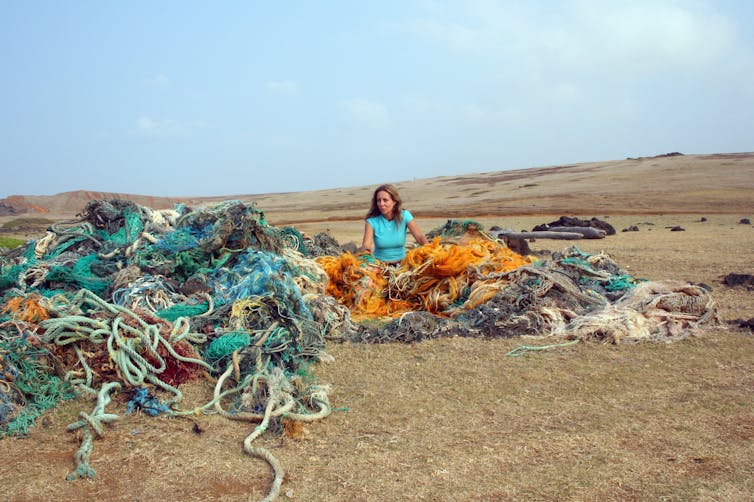
Pam Longobardi amid a giant heap of fishing gear that she and volunteers from the Hawaii Wildlife Fund collected in 2008. David Rothstein, CC BY-ND
I am obsessed with plastic objects. I harvest them from the ocean for the stories they hold and to mitigate their ability to harm. Each object has the potential to be a message from the sea – a poem, a cipher, a metaphor, a warning.
My work collecting and photographing ocean plastic and turning it into art began with an epiphany in 2005, on a far-flung beach at the southern tip of the Big Island of Hawaii. At the edge of a black lava beach pounded by surf, I encountered multitudes upon multitudes of plastic objects that the angry ocean was vomiting onto the rocky shore.
I could see that somehow, impossibly, humans had permeated the ocean with plastic waste. Its alien presence was so enormous that it had reached this most isolated point of land in the immense Pacific Ocean. I felt I was witness to an unspeakable crime against nature, and needed to document it and bring back evidence.
I began cleaning the beach, hauling away weathered and misshapen plastic debris – known and unknown objects, hidden parts of a world of things I had never seen before, and enormous whalelike colored entanglements of nets and ropes.
‘Bounty Pilfered’ (center), ‘Newer Laocoön’ (left) and ‘Threnody’ (right). All made of ocean plastic from the Atlantic, Pacific and Gulf of Mexico, installed at the Baker Museum in Naples, Fla., 2022. Pam Longobardi, CC BY-ND
I returned to that site again and again, gathering material evidence to study its volume and how it had been deposited, trying to understand the immensity it represented. In 2006, I formed the Drifters Project, a collaborative global entity to highlight these vagrant, translocational plastics and recruit others to investigate and mitigate ocean plastics’ impact.
My new book, “Ocean Gleaning,” tracks 17 years of my art and research around the world through the Drifters Project. It reveals specimens of striking artifacts harvested from the sea – objects that once were utilitarian, but have been changed by their oceanic voyages and come back as messages from the ocean.
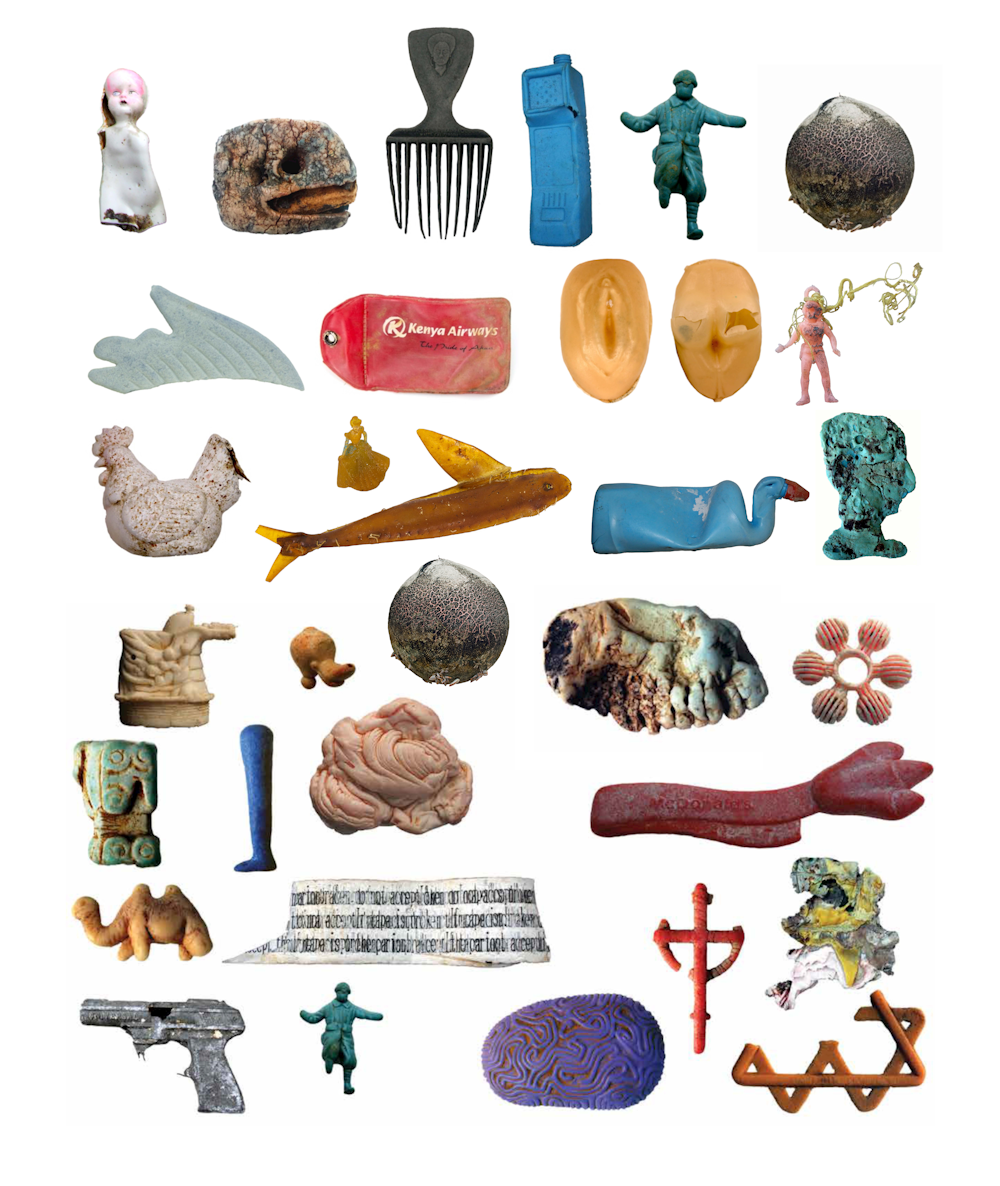
‘Drifters Objects,’ a tiny sample of the plastic artifacts Pam Longobardi has collected from beaches worldwide. Pam Longobardi, CC BY-ND
Living in a plastic age
I grew up in what some now deem the age of plastic. Though it’s not the only modern material invention, plastic has had the most unforeseen consequences.
My father was a biochemist at the chemical company Union Carbide when I was a child in New Jersey. He played golf with an actor who portrayed “The Man from Glad,” a Get Smart-styled agent who rescued flustered housewives in TV commercials from inferior brands of plastic wrap that snarled and tangled. My father brought home souvenir pins of Union Carbide’s hexagonal logo, based on the carbon molecule, and figurine pencil holders of “TERGIE,” the company’s blobby turquoise mascot.
On the 2013 Gyre Expedition, Pam Longobardi traveled with a team of scientists, artists and policymakers to investigate and remove tons of oceanic plastic washing out of great gyres, or currents, in the Pacific Ocean, and make art from it.
Today I see plastic as a zombie material that haunts the ocean. It is made from petroleum, the decayed and transformed life forms of the past. Drifting at sea, it “lives” again as it gathers a biological slime of algae and protozoans, which become attachment sites for larger organisms.
Plastic ‘nurdles,’ (left), tiny pellets that serve as raw materials for manufacturing plastic products, and herring roe, or eggs (right). These visually analogous forms exemplify how fish can mistake plastic for food. Pam Longobardi, CC BY-ND
The forensics of plastic
I see plastic objects as the cultural archaeology of our time – relics of global late-capitalist consumer society that mirror our desires, wishes, hubris and ingenuity. They become transformed as they leave the quotidian world and collide with nature. By regurgitating them ashore or jamming them into sea caves, the ocean is communicating with us through materials of our own making. Some seem eerily familiar; others are totally alien.
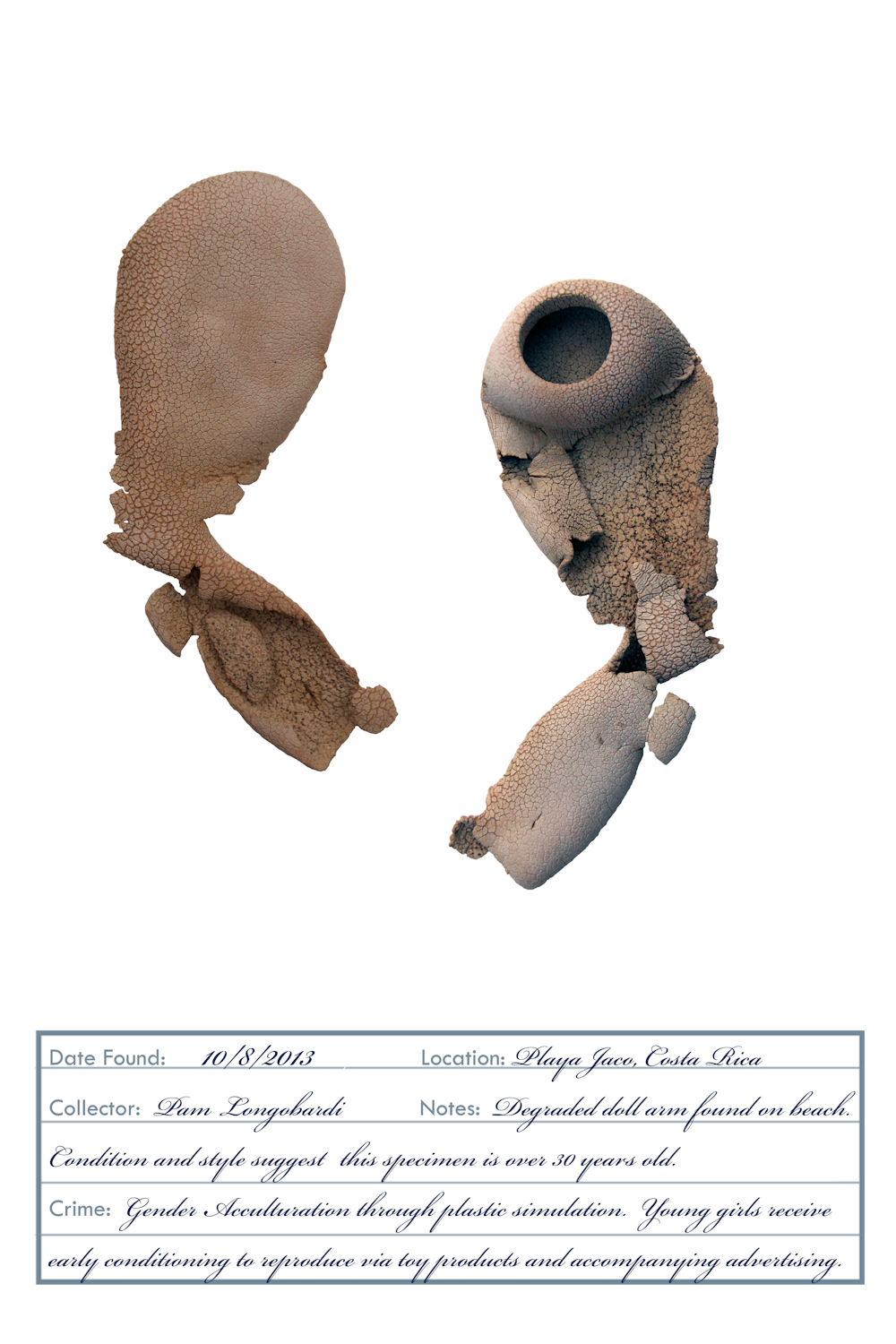
A degraded plastic doll arm, from the series ‘Evidence of Crimes.’ Pam Longobardi, CC BY-ND
A person engaging in ocean gleaning acts as a detective and a beacon, hunting for the forensics of this crime against the natural world and shining the light of interrogation on it. By searching for ocean plastic in a state of open receptiveness, a gleaner like me can find symbols of pop culture, religion, war, humor, irony and sorrow.
In keeping with the drifting journeys of these material artifacts, I prefer using them in a transitive form as installations. All of these works can be dismantled and reconfigured, although plastic materials are nearly impossible to recycle. I display some objects as specimens on steel pins, and wire others together to form large-scale sculptures.
From the series ‘Prophetic Objects,’ a plastic cap from a Greek manufacturer of cleaning products, found on the Greek island of Kefalonia. Pam Longobardi, CC BY-ND
I am interested in ocean plastic in particular because of what it reveals about us as humans in a global culture, and about the ocean as a cultural space and a giant dynamic engine of life and change. Because ocean plastic visibly shows nature’s attempts to reabsorb and regurgitate it, it has profound stories to tell.
‘Albatross’ and ‘Hope Floats,’ 2017. Recovered ocean plastic, survival rescue blankets, life vest straps and steel. Pam Longobardi, CC BY-ND
I believe humankind is at a crossroads with regards to the future. The ocean is asking us to pay attention. Paying attention is an act of giving, and in the case of plastic pollution, it is also an act of taking: Taking plastic out of your daily life. Taking plastic out of the environment. And taking, and spreading, the message that the ocean is laying out before our eyes.
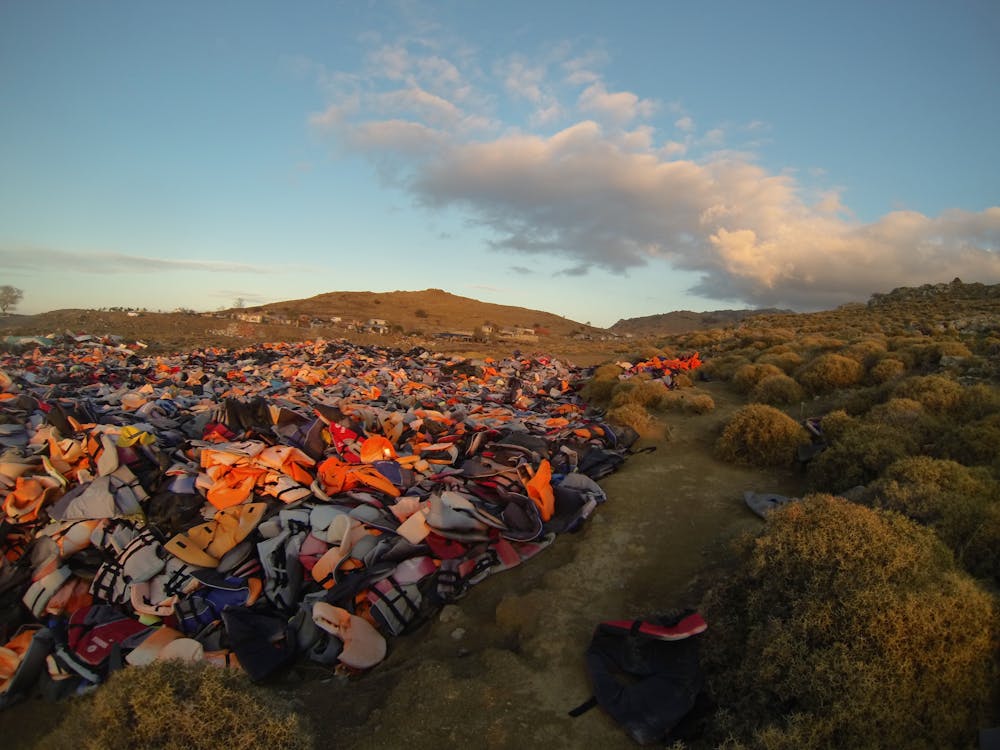
Pam at one point describes the ocean plastic”… because ofwhat it reveals about us as humans in a global culture, and about the ocean as a cultural space and a giant dynamic engine of life and change …”. It raises questions that I can only ponder the answer. Ultimately, are there too many inhabitants on this planet? What does the next generation think? Is there an answer?
























 Learning from Dogs