An essay from The Conversation aimed at our youngsters but highly relevant to us all!
I sense we are living in very strange times. As an extract from recent essay from George Monbiot said:
Above all, our ability to adapt to massive change depends on what practitioners call “metacognition” and “meta-skills”. Metacognition means thinking about thinking. In a brilliant essay for the Journal of Academic Perspectives, Natasha Robson argues that while metacognition is implicit in current teaching – “show your working”, “justify your arguments” – it should be explicit and sustained. Schoolchildren should be taught to understand how thinking works, from neuroscience to cultural conditioning; how to observe and interrogate their thought processes; and how and why they might become vulnerable to disinformation and exploitation. Self-awareness could turn out to be the most important topic of all.
Thinking about Thinking
That is why I want to share a recent post from The Conversation with you.
ooOOoo
If humans went extinct, what would the Earth look like one year later?
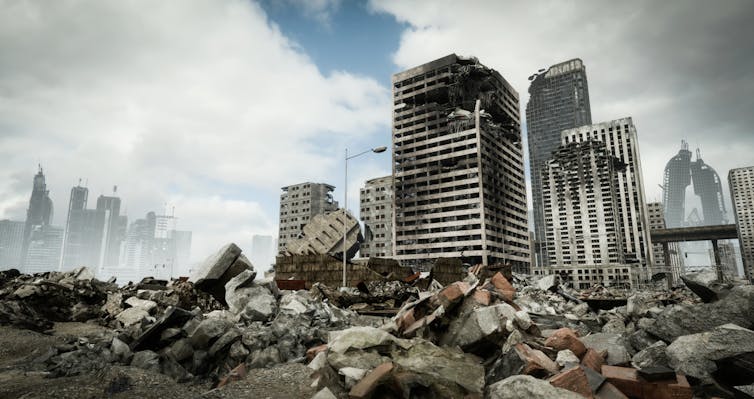
Carlton Basmajian, Iowa State University
If humans went extinct, what would the Earth look like one year later? – Essie, age 11, Michigan
Have you ever wondered what the world would be like if everyone suddenly disappeared?
What would happen to all our stuff? What would happen to our houses, our schools, our neighborhoods, our cities? Who would feed the dog? Who would cut the grass? Although it’s a common theme in movies, TV shows and books, the end of humanity is still a strange thing to think about.
But as an associate professor of urban design – that is, someone who helps towns and cities plan what their communities will look like – it’s sometimes my job to think about prospects like this.
So much silence
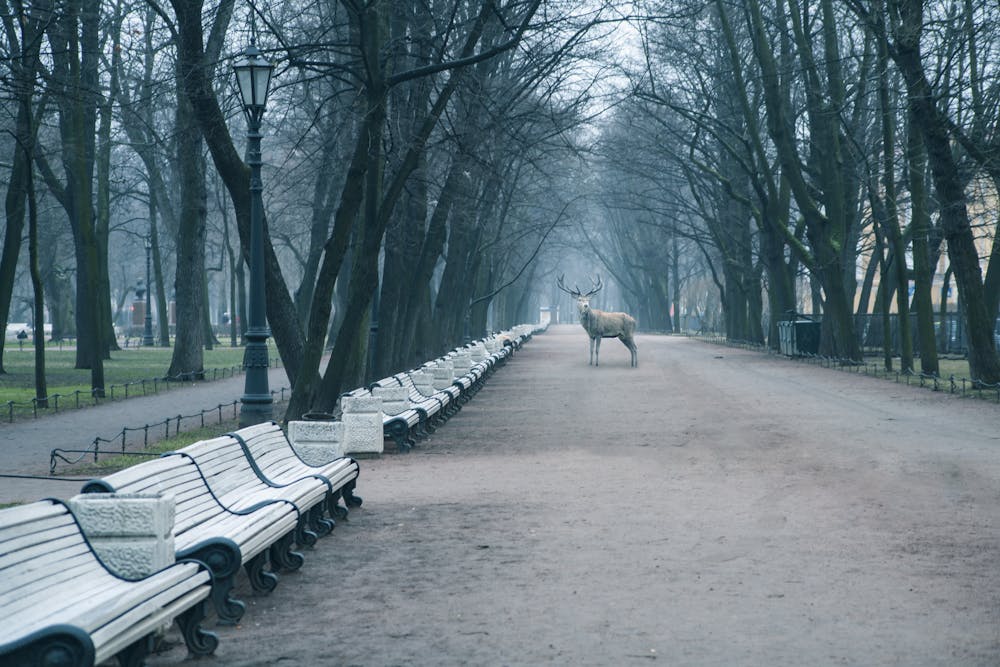
If humans just disappeared from the world, and you could come back to Earth to see what had happened one year later, the first thing you’d notice wouldn’t be with your eyes.
It would be with your ears.
The world would be quiet. And you would realize how much noise people make. Our buildings are noisy. Our cars are noisy. Our sky is noisy. All of that noise would stop.
You’d notice the weather. After a year without people, the sky would be bluer, the air clearer. The wind and the rain would scrub clean the surface of the Earth; all the smog and dust that humans make would be gone.
Home sweet home
Imagine that first year, when your house would sit unbothered by anyone.
Go inside your house – and hope you’re not thirsty, because no water would be in your faucets. Water systems require constant pumping. If no one’s at the public water supply to manage the machines that pump water, then there’s no water.
But the water that was in the pipes when everyone disappeared would still be there when the first winter came – so on the first cold snap, the frigid air would freeze the water in the pipes and burst them.
There would be no electricity. Power plants would stop working because no one would monitor them and maintain a supply of fuel. So your house would be dark, with no lights, TV, phones or computers.
Your house would be dusty. Actually, there’s dust in the air all the time, but we don’t notice it because our air conditioning systems and heaters blow air around. And as you move through the rooms in your house, you keep dust on the move too. But once all that stops, the air inside your house would be still and the dust would settle all over.
The grass in your yard would grow – and grow and grow until it got so long and floppy it would stop growing. New weeds would appear, and they would be everywhere.
Lots of plants that you’ve never seen before would take root in your yard. Every time a tree drops a seed, a little sapling might grow. No one would be there to pull it out or cut it down.
You’d notice a lot more bugs buzzing around. Remember, people tend to do everything they can to get rid of bugs. They spray the air and the ground with bug spray. They remove bug habitat. They put screens on the windows. And if that doesn’t work, they swat them.
Without people doing all these things, the bugs would come back. They would have free rein of the world again.
On the street where you live
In your neighborhood, critters would wander around, looking and wondering.
First the little ones: mice, groundhogs, raccoons, skunks, foxes and beavers. That last one might surprise you, but North America was once rich with beavers.
Bigger animals would come later – deer, coyotes and the occasional bear. Not in the first year, maybe, but eventually.
With no electric lights, the rhythm of the natural world would return. The only light would be from the Sun, the Moon and the stars. The night critters would feel good they got their dark sky back.
Fires would happen frequently. Lightning might strike a tree or a field and set brush on fire, or hit the houses and buildings. Without people to put them out, those fires would keeping going until they burned themselves out.
Around your city
After just one year, the concrete stuff – roads, highways, bridges and buildings – would look about the same.
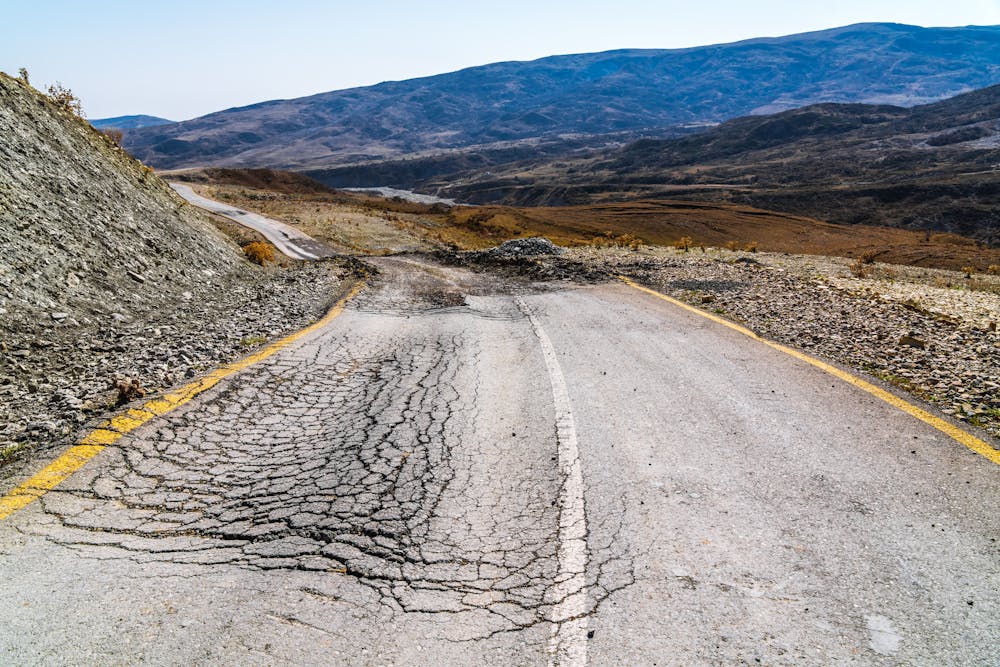
Come back, say, a decade later, and cracks in them would have appeared, with little plants wiggling up through them. This happens because the Earth is constantly moving. With this motion comes pressure, and with this pressure come cracks. Eventually, the roads would crack so much they would look like broken glass, and even trees would grow through them.
Bridges with metal legs would slowly rust. The beams and bolts that hold the bridges up would rust too. But the big concrete bridges, and the interstate highways, also concrete, would last for centuries.
The dams and levees that people have built on the rivers and streams of the world would erode. Farms would fall back to nature. The plants we eat would begin to disappear. Not much corn or potatoes or tomatoes anymore.
Farm animals would be easy prey for bears, coyotes, wolves and panthers. And pets? The cats would go feral – that is, they would become wild, though many would be preyed upon by larger animals. Most dogs wouldn’t survive, either.
An asteroid hit and a solar flare are two of the ways the world could end.
Like ancient Rome
In a thousand years, the world you remember would still be vaguely recognizable. Some things would remain; it would depend on the materials they were made of, the climate they’re in, and just plain luck. An apartment building here, a movie theater there, or a crumbling shopping mall would stand as monuments to a lost civilization. The Roman Empire collapsed more than 1,500 years ago, yet you can see some remnants even today.
If nothing else, humans’ suddenly vanishing from the world would reveal something about the way we treated the Earth. It would also show us that the world we have today can’t survive without us and that we can’t survive if we don’t care for it. To keep it working, civilization – like anything else – requires constant upkeep.
Hello, curious kids! Do you have a question you’d like an expert to answer? Ask an adult to send your question to CuriousKidsUS@theconversation.com. Please tell us your name, age and the city where you live.
And since curiosity has no age limit – adults, let us know what you’re wondering, too. We won’t be able to answer every question, but we will do our best.
Carlton Basmajian, Associate Professor of Community and Regional Planning, Urban Design, Iowa State University
This article is republished from The Conversation under a Creative Commons license. Read the original article.
ooOOoo
Returning to that George Monbiot essay and his closing paragraphs:
Meta-skills are the overarching aptitudes – such as self-development, social intelligence, openness, resilience and creativity – that help us acquire the new competencies that sudden change demands. Like metacognition, meta-skills can be taught. Unfortunately, some public bodies are trapped in the bleak and narrow instrumentalism we need to transcend. For example, after identifying empathy as a crucial meta-skill, a manual by Skills Development Scotland reports that: “Empathy has been identified as a key differentiator for business success, with companies such as Facebook, Google and Unilever being recognised as excelling in this area.” I’ve seldom read a more depressing sentence.
Schooling alone will not be enough to lead us out of the many crises and disasters we now face. Those who are adult today must take responsibility for confronting them. But it should at least lend us a torch.
Thinking about Thinking
We live in a very strange world now. One truly wonders how those who are younger will respond to the demands.
 Learning from Dogs
The younger folk could not do worse than we did when taking care of Nature.
LikeLike
I saw your reply, JW, and went into a reflective state of mind just wondering how the younger folk will deal with the imminent future. What they do require is for us older people to state very clearly the need for change, and the sooner the better. Thank you for your reply!
LikeLiked by 1 person
I agree..time for change.
LikeLike
It is time for a change, but those who cling on to power are very unwilling to let it go, or to listen to the younger generations coming along to inherit what we leave behind. The sense of greed and lack of any apparent foresight on the part of those who “lead” is deeply concerning.
LikeLike
In a way I agree with you. But then I think the problem is deeper than that. I hope the younger generation will soon kick up such a fuss, as they have every right so do, to sort it out urgently. And it requires new ways of behaving from 90% of the peoples of this world. There are small indicators but not enough and not worldwide.
LikeLiked by 1 person
I hate saying it, but I have a very strange feeling we’re about to tip into a near-permanent state of climate crisis expressed as near-continuous weather events.
LikeLike
Apologies John for taking so long to reply. There was a long discussion on this morning’s World At One on BBC Radio 4. I strongly recommend (and anyone else) you listening to it; the link is https://www.bbc.co.uk/sounds/play/m001nvqv
It has left me very subdued and the experts agreed that +1.5 deg C is going to be more like +2 or even +2.5 C and the whole world is going to be stressed beyond degree.
LikeLiked by 1 person