Something a little different for this week.
Mother Nature Network put out an email earlier in January that opened, thus:
Dear friend of Mother Nature,
We all see the beauty in a sunset or in a gorgeous painting, but can you appreciate the art in bacteria, climate images or preserved animal remains? These beautiful examples show how for centuries, art and science have danced a well-choreographed routine. The result has been some breathtaking creativity.
The pictures were so wonderful that I have offered the first six for today and the balance in a week’s time.
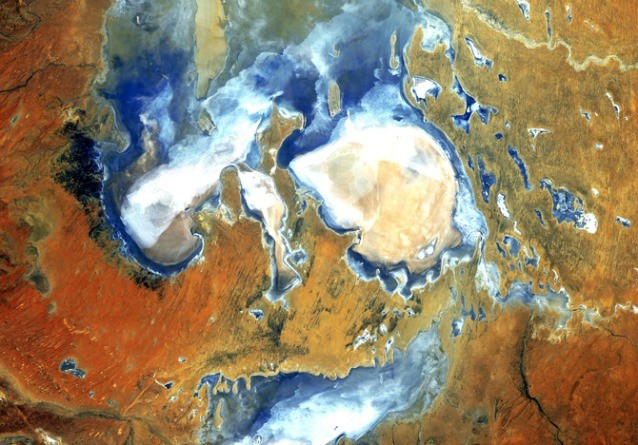
Who doesn’t find beauty in nature? But can you find the art in bacteria or global warming or in the interesting forms of dead animal remains? For centuries, art and science have danced a careful routine. As each has informed the other, the result has been some spectacular creativity. (Text: Mary Jo DiLonardo)
oooo
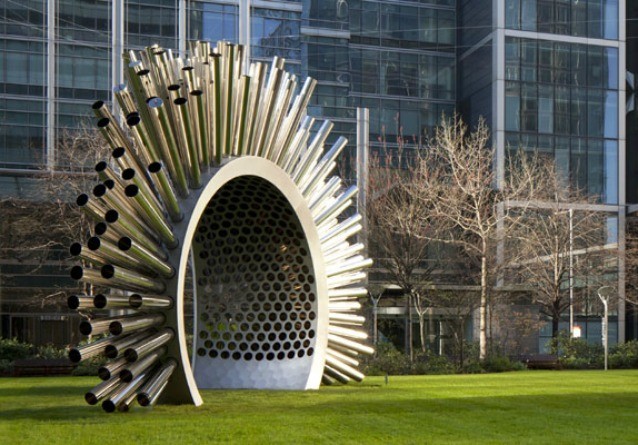
Already known for his blown-glass microbes and bacteria, U.K. artist Luke Jerram also makes creations motivated by the science of sound. In Jerram’s sonic sculptures, “invisible sound waves are visualized as silent, three-dimensional experiences,” says science writer Joe Hanson, host of PBS’s “It’s Okay To Be Smart.” One striking example is Aeolus, a giant stringed musical instrument with harp-like cables that vibrate and make music, responding to changes in the wind. The sculpture (also shown at left) was designed “to make audible the silent shifting patterns of the wind and to visually amplify the ever changing sky,” says Jerram.
oooo

Albrecht Dürer was a German painter, printmaker and theorist who many say was the greatest German artist of the Northern Renaissance. Although he was most well-known for his woodcuts and watercolors, Dürer was also revered for his anatomical and cartographic work, says Harvard art historian Susan Dackerman. She says his groundbreaking terrestrial map was “the first perspectival rendering of a terrestrial hemisphere.” His other science-inspired works include a map showing how the brain works and a woodcut of a rhinoceros so detailed that until the 18th century, it was the go-to scientific reference for the animal.
oooo
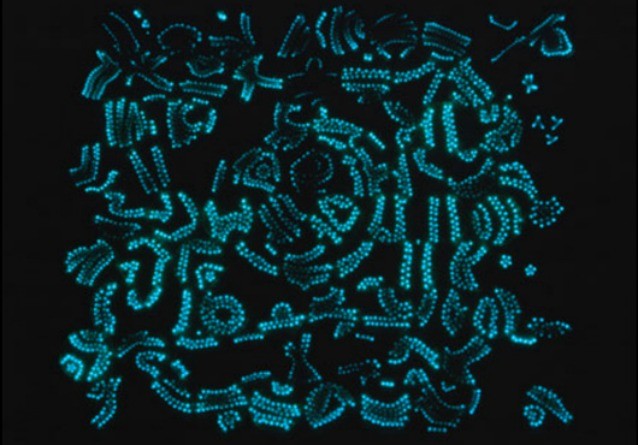
Who knew bacteria could be so beautiful? In a mash-up of nature and design, bioluminescent art uses naturally glowing bacteria to create intricate designs that you can see only in the dark. Showing off these creations, BIOGLYPHS is an art and science collaboration by members of the Center for Biofilm Engineering and the Montana State University School of Art. The group “painted” bioluminescent bacterium naturally present in marine environments onto petri dishes to come up with the spectacular glow-in-the-dark creations.
oooo
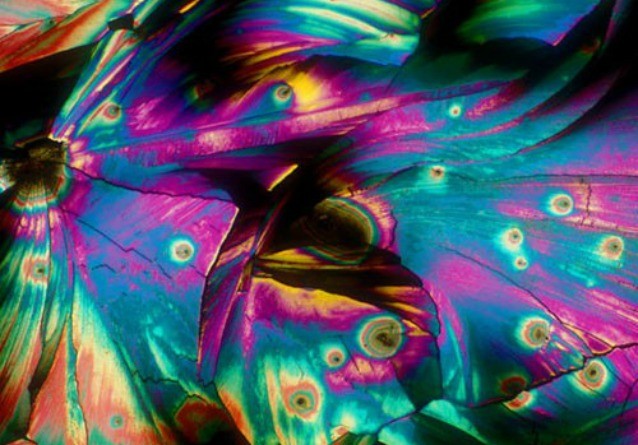
It’s amazing how incredible something can look when you magnify it. Florida State researcher Michael Davidson has a catalog of lovely microscopic images of beer, wine and cocktails. Davidson started his company, BevShots, as a way to raise funds for his lab. Scientific photographer Martin Oeggerli (known as Micronaut) uses scanning electron microscopy to produce images of pollen, microbes, insects and fungi with 500,000 magnification or more. An interesting combination, Oeggerli is a scientific photographer who holds a doctorate in molecular biology. His images often appear in National Geographic where he says, “I also want to broaden people’s awareness that even the smallest living organisms are perfectly ‘designed’ and well worth … our attention.”
oooo
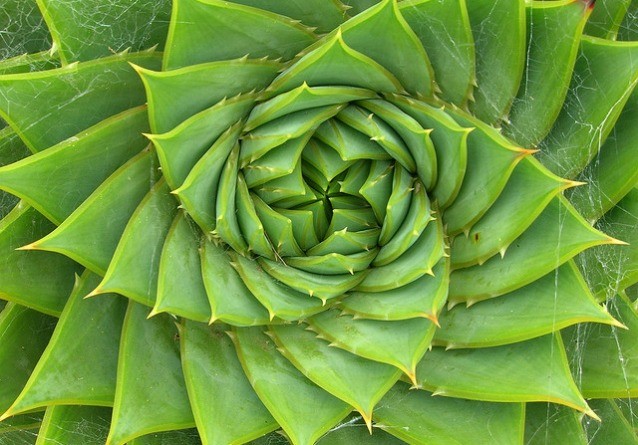
Math fans know the Fibonacci sequence as an important series of numbers used in all sorts of key mathematical scenarios. The first nine numbers in the Fibonacci sequence are: 0, 1, 1, 2, 3, 5, 8, 13, 21. The sequence — which ironically was explained by Fibonacci himself using the multiplication of rabbits — also appears in nature. MNN’s Shea Gunther writes that the Fibonacci sequence can be found in the formation of sunflowers, galaxies, cellular structure, hurricanes and honeybees. Artists have also been intrigued by the number series. It has inspired everything from sculpture to furniture.
The final set to be published in a week’s time.
 Learning from Dogs
If we look good in all your photos, that all are mathematic too 😀
LikeLike
Guess in one very real sense, mathematics is at the heart of everything. Lovely to have your reply.
LikeLiked by 1 person