Category: Health

Duh! Is it me!

Sometimes, one does have to wonder!

Years ago I recall hearing the retort, “What part of the word no are you having trouble with!

It made me laugh out loud.

It comes to mind again, and this is why.

The accumulation of evidence mounts almost on a daily basis that mankind is critically affecting the viability of Planet Earth. Not only threatening a sustainable home for tens of thousands of species but, most importantly, for homo sapiens.

Yesterday, I included a report that suggested we may be on the verge of one of the largest El Ninos in history.  The presumption being that the extra heat energy in the atmosphere is transferring to the Pacific waters.

Today, I want to stay with the theme that it is nature, not mankind, that is dictating our future; that our leaders, are way ‘behind the drag curve’ to use an aviation expression.

But let me offer yet another lesson from dogs.  Learnt from understanding the role of the ‘alpha’ dog; the leader.

When dogs lived in the wild the size of their pack, or community, was around fifty animals.  The most senior in status was the alpha dog.  The alpha dog was a female who had two important roles on behalf of the pack.  First, the alpha dog had the pick of the male dogs to ensure the optimum genetic health of the entire group.

Second, it was alpha dog that, in the rare circumstances of their pack’s territory becoming unsustainable, made the decision for her pack to find a new territory.

Humans are on the verge of understanding that our ‘territory’ is rapidly becoming unsustainable.  Just a great shame we don’t have any ‘alpha leaders’ to find ‘a new territory’.  Clearly in a metaphorical sense.  Because the last time I looked a ‘backup’ to Planet Earth wasn’t anywhere close!

No better illustrated than by a recent essay from George Monbiot that I am republishing in full within his blanket permission to so do.  The essay is called Loss Adjustment and was published in the Guardian newspaper on the 1st April 2014.

ooOOoo

Loss Adjustment

When people say we should adapt to climate change, do they have any idea what that means?
By George Monbiot

To understand what is happening to the living planet, the great conservationist Aldo Leopold remarked, is to live “in a world of wounds … An ecologist must either harden his shell and make believe that the consequences of science are none of his business, or he must be the doctor who sees the marks of death in a community that believes itself well and does not want to be told otherwise.” (1)

The metaphor suggests that he might have seen Henrik Ibsen’s play An Enemy of the People (2). Thomas Stockmann is a doctor in a small Norwegian town, and medical officer at the public baths whose construction has been overseen by his brother, the mayor. The baths, the mayor boasts, “will become the focus of our municipal life! … Houses and landed property are rising in value every day.”

But Dr Stockmann discovers that the pipes were built in the wrong place, and the water feeding the baths is contaminated. “The source is poisoned …We are making our living by retailing filth and corruption! The whole of our flourishing municipal life derives its sustenance from a lie!” People bathing in the water to improve their health are instead falling ill.

Dr Stockmann expects to be treated as a hero for exposing this deadly threat. After the mayor discovers that re-laying the pipes would cost a fortune and probably sink the whole project, he decides that his brother’s report “has not convinced me that the condition of the water at the baths is as bad as you represent it to be.” He proposes to ignore the problem, make some cosmetic adjustments and carry on as before. After all, “the matter in hand is not simply a scientific one. It is a complicated matter, and has its economic as well as its technical side.” The local paper, the baths committee and the business people side with the mayor against the doctor’s “unreliable and exaggerated accounts”.

Astonished and enraged, Dr Stockmann lashes out madly at everyone. He attacks the town as a nest of imbeciles, and finds himself, in turn, denounced as an enemy of the people. His windows are broken, his clothes are torn, he’s evicted and ruined.

Yesterday’s editorial in the Daily Telegraph, which was by no means the worst of the recent commentary on this issue, follows the first three acts of the play (3). Marking the new assessment by the Intergovernmental Panel on Climate Change, the paper sides with the mayor. First it suggests that the panel cannot be trusted, partly because its accounts are unreliable and exaggerated and partly because it uses “model-driven assumptions” to forecast future trends. (What would the Telegraph prefer? Tea leaves? Entrails?). Then it suggests that trying to stop manmade climate change would be too expensive. Then it proposes making some cosmetic adjustments and carrying on as before. (“Perhaps instead of continued doom-mongering, however, greater thought needs to be given to how mankind might adapt to the climatic realities.”)

But at least the Telegraph accepted that the issue deserved some prominence. On the Daily Mail’s website, climate breakdown was scarcely a footnote to the real issues of the day: “Kim Kardashian looks more confident than ever as she shows off her toned curves” and “Little George is the spitting image of Kate”.

Beneath these indispensable reports was a story celebrating the discovery of “vast deposits of coal lying under the North Sea, which could provide enough energy to power Britain for centuries.” (4) No connection with the release of the new climate report was made. Like royal babies, Kim’s curves and Ibsen’s municipal baths, coal is good for business. Global warming, like Dr Stockmann’s contaminants, is the spectre at the feast.

Everywhere we’re told that it’s easier to adapt to global warming than to stop causing it. This suggests that it’s not only the Stern review on the economics of climate change (showing that it’s much cheaper to avert climate breakdown than to try to live with it (5)) that has been forgotten, but also the floods which have so recently abated. If a small, rich, well-organised nation cannot protect its people from a winter of exceptional rainfall – which might have been caused by less than one degree of global warming – what hope do other nations have, when faced with four degrees or more?

When our environment secretary, Owen Paterson, assures us that climate change “is something we can adapt to over time” (6) or Simon Jenkins, in the Guardian yesterday, says that we should move towards “thinking intelligently about how the world should adapt to what is already happening” (7), what do they envisage? Cities relocated to higher ground? Roads and railways shifted inland? Rivers diverted? Arable land abandoned? Regions depopulated? Have they any clue about what this would cost? Of what the impacts would be for the people breezily being told to live with it?

My guess is that they don’t envisage anything: they have no idea what they mean when they say adaptation. If they’ve thought about it at all, they probably picture a steady rise in temperatures, followed by a steady rise in impacts, to which we steadily adjust. But that, as we should know from our own recent experience, is not how it happens. Climate breakdown proceeds in fits and starts, sudden changes of state against which, as we discovered on a small scale in January, preparations cannot easily be made.

Insurers working out their liability when a disaster has occurred use a process they call loss adjustment. It could describe what all of us who love this world are going through, as we begin to recognise that governments, the media and most businesses have no intention of seeking to avert the coming tragedies. We are being told to accept the world of wounds; to live with the disappearance, envisaged in the new climate report, of coral reefs and summer sea ice, of most glaciers and perhaps some rainforests, of rivers and wetlands and the species which, like many people, will be unable to adapt (8).

As the scale of the loss to which we must adjust becomes clearer, grief and anger are sometimes overwhelming. You find yourself, as I have done in this column, lashing out at the entire town.

http://www.monbiot.com

References:

1. Aldo Leopold, 1949. A Sand County Almanac. Oxford University Press.

2. Read at http://www.gutenberg.org/files/2446/2446-h/2446-h.htm

3. http://www.telegraph.co.uk/comment/telegraph-view/10733381/The-climate-debate-needs-more-than-alarmism.html

4. http://www.dailymail.co.uk/news/article-2593032/Coal-fuel-UK-centuries-Vast-deposits-totalling-23trillion-tonnes-North-Sea.html

5. http://webarchive.nationalarchives.gov.uk/+/http:/www.hm-treasury.gov.uk/sternreview_index.htm

6. http://www.theguardian.com/environment/2013/sep/30/owen-paterson-minister-climate-change-advantages

7. http://www.theguardian.com/commentisfree/2014/mar/31/ipcc-report-adaptation-climate-change

8. http://ipcc-wg2.gov/AR5/images/uploads/IPCC_WG2AR5_SPM_Approved.pdf

ooOOoo

Now watch this film!

Published on Apr 6, 2014
Hollywood celebrities and respected journalists span the globe to explore the issues of climate change and cover intimate stories of human triumph and tragedy. Watch new episodes Sundays at 10PM ET/PT, only on SHOWTIME.

It’s the biggest story of our time. Hollywood’s brightest stars and today’s most respected journalists explore the issues of climate change and bring you intimate accounts of triumph and tragedy. YEARS OF LIVING DANGEROUSLY takes you directly to the heart of the matter in this awe-inspiring and cinematic documentary series event from Executive Producers James Cameron, Jerry Weintraub and Arnold Schwarzenegger.

The natural world.

Hardly seems necessary to say this but natural forces are ‘top of the pyramid‘!

As is so often the case, a few outwardly disconnected events offered a deeper picture; well they did for me!

The first was a recently published post by Alex Jones over on his blog The Liberated Way.  Alex lives in Colchester, Essex, North-East of London, a place where I ran a business way back in the ’80’s’ and lived not far away in the village of Great Horkesley.  Many people, including many Brits are unaware that Colchester, or Camulodunon as the Celtics called it, meaning “the Fortress of Camulos” (Camulos was the Celtic god of war), was the Capitol city in Roman days and that evidence of man’s settlement goes back 3,000 years.

Anyway, back to the thread of today’s post.

That first post from Alex.  A post under the title of Catching a fox.  Alex has generously given me permission to republish it.

Catching a fox.

After two years of hunting I catch a fox with my camera.

fox_colchester
After two years of frustration I finally photograph a fox, which appeared out of nowhere in my garden.

Nature is a shifting tapestry of life, often catching me by surprise with magical manifestations of wildlife that abruptly vanish before I can catch a brief record of its passing through my life. It is a matter of chance that I get lucky with my camera, and I was in luck today.

This morning a fox manifested in my garden. The fox sat looking at me, it had a forlorn look about it, but the fox was content to sit and watch me as it sun bathed in the warmth of a tranquil garden. I had my camera with me, so I made up for two years of frustration by firing off dozens of photographs of my elusive wary model. The fox made my day.

The second event was a chance photograph of a vulture taken two days ago here at home.

Ah, that early morning sun feels good on my back feathers!

 oooo

Ah, that sun feels good on my back feathers!
Damn! Thought it was too good to last!

Now I’m sure that readers so far will find these three photographs, of the fox and the vulture, are producing feelings of pleasure; feelings of wonderment about the natural world around us.

That world of nature ‘speaks’ to us.  If we are prepared to listen.

It spoke to South-West England in February earlier this year:

rail-emergency-workers-inspect-damaged-track-along-the-seafront-at-dawlish-in-south-west-england-
Dawlish – Rail emergency workers inspect damaged track along the seafront.

There are signs that Mother Nature will be speaking to us again; fairly soon. From EarthSky:

Warm water in Pacific could spark a monster El Nino in 2014

Scientists are watching a giant mass of sub-surface water in the Pacific. When this water reaches the sea surface, it could set off a powerful El Nino.

The giant red blob in this image is a huge, unusual mass of warm water that currently spans the tropical Pacific Ocean. Eric Holthaus, a meteorologist who writes about weather and climate for Slate, says the volume of water is big enough to cover the United States 300 feet deep. And that’s a lot of warm water, he says. Holthaus also says that, as the sub-surface warm water in the Pacific moves eastward – propelled by anomalous trade winds – it’s getting closer to the ocean’s surface. Once the warm water hits the sea surface, it will begin to interact with the atmosphere. Why? Because Earth’s oceans and atmosphere are always interacting. In this case, the warm water will likely boost temperatures and change weather patterns … and possibly bring on a monster El Nino in 2014. There are signs this is already beginning to happen. Read more at Slate.

If one clicks on the link to that Slate article, one then reads:

By Eric Holthaus

The odds are increasing that an El Niño is in the works for 2014—and recent forecasts show it might be a big one.

As we learned from Chris Farley, El Niños can boost the odds of extreme weather (droughts, typhoons, heat waves) across much of the planet. But the most important thing about El Niño is that it is predictable, sometimes six months to a year in advance.

That’s an incredibly powerful tool, especially if you are one of the billions who live where El Niño tends to hit hardest—Asia and the Americas. If current forecasts stay on track, El Niño might end up being the biggest global weather story of 2014.

The most commonly accepted definition of an El Niño is a persistent warming of the so-called “Niño3.4” region of the tropical Pacific Ocean south of Hawaii, lasting for at least five consecutive three-month “seasons.” A recent reversal in the direction of the Pacific trade winds appears to have kicked off a warming trend during the last month or two. That was enough to prompt U.S. government forecasters to issue an El Niño watch last month.

Forecasters are increasingly confident in a particularly big El Niño this time around because, deep below the Pacific Ocean’s surface, off-the-charts warm water is lurking:

Now I’m not going to post the whole of that article so for that reason strongly recommend you read the rest here. However, I am going to offer a couple more extracts.

Like this:

The warm water just below the ocean’s surface is on par with that of the biggest El Niño ever recorded, in 1997-98. That event caused $35 billion in damages and was blamed for around 23,000 deaths worldwide, according to the University of New South Wales. The 1997-98 El Niño is also the only other time since records begin in 1980 that sub-surface Pacific Ocean water has been this warm in April.

Or like this:

One of the theories put forth by the mainstream scientific community to explain the slow-down since 1998 has been increased storage of warm water in the Pacific Ocean. If that theory is true, and if a major El Niño is indeed in the works, the previously rapid rate of global warming could resume, with dramatic consequences.

As I wrote last fall, the coming El Niño could be enough to make 2014 the hottest year in recorded history, and 2015 could be even warmer than that. The 1997-98 super El Niño was enough to boost global temperatures by nearly a quarter of a degree Celsius. If that scale of warming happens again, the world could approach a 1ºC departure from pre-industrial times as early as next year. As climate scientist James Hansen has warned, that’s around the highest that temperatures have ever been since human civilization began.

Now I’m not trying to be a ‘drama queen’ but there are times when one does wonder what it will take for those who govern us to wake up to the fact that Mother Nature is getting more and more restless.

I shall return to this theme tomorrow.

Trust, truth and community, Pt. 3.

How a very ancient concept has modern attributes.

One might be forgiven for thinking that community is an odd bed-fellow with trust and truth.  Many might think that faith would be a more logical third leg, so to speak.

However, I hope to show that in today’s world where trust and truth are beleaguered qualities a rethinking of community is critically vital for the long-term health of mankind.

Community

Can’t resist a third look-up in Roget’s Thesaurus.

community noun

Persons as an organised body: people, public, society.

For me two words jump out from that definition: persons; organised.

The challenge is that the word organised is easily interpreted as an organisation with leaders and followers.  But that’s not how community is regarded in the context of this third essay.

“No man is an island”, John Donne wrote in 1624.

This is a quotation from John Donne (1572-1631). It appears in Devotions upon emergent occasions and seuerall steps in my sicknes – Meditation XVII, 1624:

“All mankind is of one author, and is one volume; when one man dies, one chapter is not torn out of the book, but translated into a better language; and every chapter must be so translated…As therefore the bell that rings to a sermon, calls not upon the preacher only, but upon the congregation to come: so this bell calls us all: but how much more me, who am brought so near the door by this sickness….No man is an island, entire of itself…any man’s death diminishes me, because I am involved in mankind; and therefore never send to know for whom the bell tolls; it tolls for thee.”

Thus for the vast majority of people on the face of this planet, we are linked to others and how we live our lives is fundamentally influenced by those others about us.  In a past life, I lived in the village of Harberton in South Devon.  The population of Harberton was 300 persons.

An E. M. Morison (Totnes) postcard, bearing a 3p stamp, which gives a sending date between Feb 1971 and Sept 1973.

Now I was lucky when I moved into Harberton because my two sisters, Rhona and Corinne, had lived in the area for many years and it was easy for me to be positioned as ‘the brother’.  Nevertheless, the way that the village embraced all newcomers was wonderful and within a very short time one felt a settled member of the community.

Same for Jean and me as relative newcomers to our property just 4 miles from Merlin, Oregon. All of our neighbours have embraced us and helped us understand this new rural life that we have embarked on.  We feel part of the local community.

Yet it doesn’t stop there.

Obviously, I’m a WordPress user!  Learning from Dogs is a WordPress blog!  But were you aware of the size of the WordPress community? (As of now!)

How many posts are being published?

Users produce about 44.5 million new posts and 56.7 million new comments each month.

How many people are reading blogs?

Over 409 million people view more than 14.7 billion pages each month.

Even my funny little blog has 959 followers!

What that figure doesn’t reveal is how many of my followers have offered support, openness and real loving friendship. None better demonstrated than by the comments left by readers when I announced the recent death of Dhalia.

Think of the way that untold numbers of internet users rely on that ‘worldwide web’ for referrals, opinions or knowledge about anything ‘under the sun’.

So while there might be many aspects of our new technological world that create unease, the opportunities for having ‘virtual’ friends to complement our social friends make this era unprecedented.

I would go so far as to say this. That the way that knowledge and information can be shared around the world in no time at all may be our ultimate protection against those who would seek to harm us and this planet.

How to close these essays? Perhaps no better than as follows:

On Wednesday evening we were joined by neighbours, Dordie and Bill.  My post on truth came up in discussion. Bill mentioned that he had read about a person who had spent many years studying the texts of all the world’s major religions.  What had emerged was that across all those great religions there was a common view as to what the long-term health and survival of societies requires.

It is this: the telling of truth and the keeping of promises!


Trust, truth and community, Pt. Two.

Musings on truth and the corrosive nature of fear.

Yesterday, in Part One, I explored how easy it is to signal to the public that they are not to be trusted.  I used the case of PayPal’s changes to their ‘privacy’ policy which, as Wolf Richter wrote, only partially tongue-in-cheek perhaps, made “the NSA, which runs the most expansive spying dragnet in history, is by comparison a group of choirboys.

Truth

Again, back to Roget’s Thesaurus.

truth noun

1. Correspondence with fact or truth: accuracy, correctness, exactitude, exactness, fidelity, veraciousness, veracity

2. Freedom from deceit or falseness: truthfulness, veracity

So that’s all clear then!

If only it was that easy.  So many aspects of our modern lives are exposed to complex issues.  None more complex than, of course, the issue of humans having a damaging effect on the planet’s climate.  Or if one wants something more esoteric then try the origins of the universe. (So far as the former is concerned, then my personal belief is that mankind is damaging the global climate.  But do I have the scientific background to support that belief? No Sir!)

However, one thing that our complex society does offer is the opportunity to spread fear. Indeed, fear pervades popular culture and the media.  I picked up that theme from an essay published by David L. Altheide and R. Sam Michalowski of Arizona State University.

Just a random example of the spread of fear.

The link to that essay is here. It opens, thus:

Fear pervades popular culture and the news media. Whether used as a noun, verb, adverb, or adjective, an ongoing study finds that the word “fear” pervades news reports across all sections of newspapers, and is shown to move or “travel” from one topic to another. The use of fear and the thematic emphases spawned by entertainment formats are consistent with a “discourse of fear,” or the pervasive communication, symbolic awareness and expectation that danger and risk are a central feature of the effective environment. A qualitative content analysis of a decade of news coverage in The Arizona Republic and several other major American news media (e.g., the Los Angeles Times, and ABC News) reveals that the word “fear” appears more often than it did several years ago, particularly in headlines, where its use has more than doubled. Comparative materials obtained through the Lexis/Nexis information base also reveals that certain themes are associated with a shifting focus of fear over the years (e.g., violence, drugs, AIDS), with the most recent increases associated with reports about children. Analysis suggests that this use of fear is consistent with popular culture oriented to pursuing a “problem frame” and entertainment formats, which also have social implications for social policy and reliance on formal agents of social control.

No passion so effectually robs the mind of all its powers of acting and reasoning as fear. [my italics]

That last sentence offers the words of Edmund Burke, the Irish statesman and author from over 200 years ago. So, perhaps, nothing changes in this regard!

In my old country, the British press love to sell their newspapers on the back of fear.  Here are some examples of lurid front pages.

horse meat

oooo

meltdown

oooo

autism

However, it doesn’t end there. Fear of the unknown, of forces beyond our control, are behind the incredible number of conspiracy theories, many of them quite famous.  WikiPedia lists dozens of them. One that was voiced by friends of ours concerned HAARP, which is an acronym for High Frequency Active Auroral Research Program.  It was a perfectly legitimate research programme, one that was unclassified, albeit a program that was shut down in July, 2013.

But that didn’t stop it being regarded by many as deeply suspicious, “Many conspiracy theories surround HAARP. Some theorists believe that it is being used as a weather-controlling device that can trigger catastrophic events, such as floods, hurricanes, etc. Others believe that the government uses HAARP to send mind-controlling radio waves to humans.”  Taken from here.

As it happens, this was a programme that I was acquainted with back in my UK days.

OK, time to round this off.

This new, digital world allows the sharing and spreading of information in a manner unimaginable from, say, 25 years ago.  It has many positive attributes, as I will touch upon in tomorrow’s post.  But it also has the power to spread fear and misinformation.  In a world that is becoming more complex and more uncertain year by year, it takes effort by every one of us to stop, think and check on anything that has the potential to upset one.

It takes the power of community to keep us rooted in the stuff of our daily lives, to live calmly and stay in touch with the truth.  More on the power of community tomorrow.

Nostalgia isn’t what it used to be!

The sirens of past lives take some silencing.

Going to relate to you a true story.

In 1968 I emigrated to Australia; to the city of Sydney.  It was an easy move in many ways.  For before I left I was working in the sales office of British Visqueen Ltd in Stevenage in Hertfordshire. ‘BVL’ were part of Imperial Chemical Industries (ICI).

On Day Three of my new life in Sydney I noticed that ICIANZ (Australia & New Zealand) had their headquarters building on Macquarie Street near North Circular Quay.  On impulse I went in and two hours later had been offered a job in the sales office of ICI’s Inorganic Chemicals Division.

From the window of my office I had a stupendous view of the Sydney Harbour Bridge. This is a picture taken the other side of the Bridge looking back at the office complex to the right of the Sydney Opera House; the office block partially obscured by the top curve of the bridge.

Sydney_Harbour_Bridge

Anyway, back to the story.

I was dating a Finnish woman who with her sister and parents had emigrated from Finland some years previously.  That woman’s name was Britta and later we were married and then upon returning to England in 1970 we had two children; a son and a daughter. In Australia I didn’t miss England and when back in England I didn’t miss Australia.

I was 26 when we returned to England.

Fast forward forty-four years to now.

This is the view through our bedroom window in the morning when Jean and I awake.

Morning

This is another view of the same scene but taken from outside the windows.

Morning2

When the air is really moist and there are clouds hanging low over the ridge, it’s common to see mist swirling through the trees.

Morning mist

It is a beautiful place to live, for us and for all our animals …. yet …. we don’t feel perfectly settled.

Back to Britta’s parents.  After they had been living in Australia for quite a few years, in Brisbane in those days, and all settled with jobs and their own house, they still didn’t feel perfectly settled.  So they gave up their jobs, sold the house and transported themselves and their belongings all the way back to Helsinki, Finland.

Only to find that in less than three months that they had made a ghastly mistake and so, yes you know what’s coming, they transported themselves and all their belongings all the way back to Australia; this time settling in Sydney.

OK, to the point of this tale.

In many, many ways this life that Jean and I have here in Oregon is better than anything we have previously experienced.

Yet, there are times when I hear the sirens of Devon calling out to me and for Jean there are times when she hears the sirens of Mexico calling out to her; Jean lived in San Carlos, Mexico for twenty-five years, off and on, with her late American husband, Ben, who died in 2005.

I’m 70 in November this year.

What does it all mean?

When Jean and I were living in Payson, Arizona we were talking one day to a woman who in previous times had been a personal counsellor.  She asked how we were settling in.  We mentioned that we were not yet settled.  The woman went on to say that people over the age of 60 frequently had a much more difficult time adjusting to major moves and changes in their lives than younger persons.

Jean and I wouldn’t rewind our lives for all the tea in China but what, dear reader, do you think?

Anyone out there the ‘wrong’ side of 60 who can relate to this?


Welcome Ranger – and Ben!

Our new boys- the story of two horses!

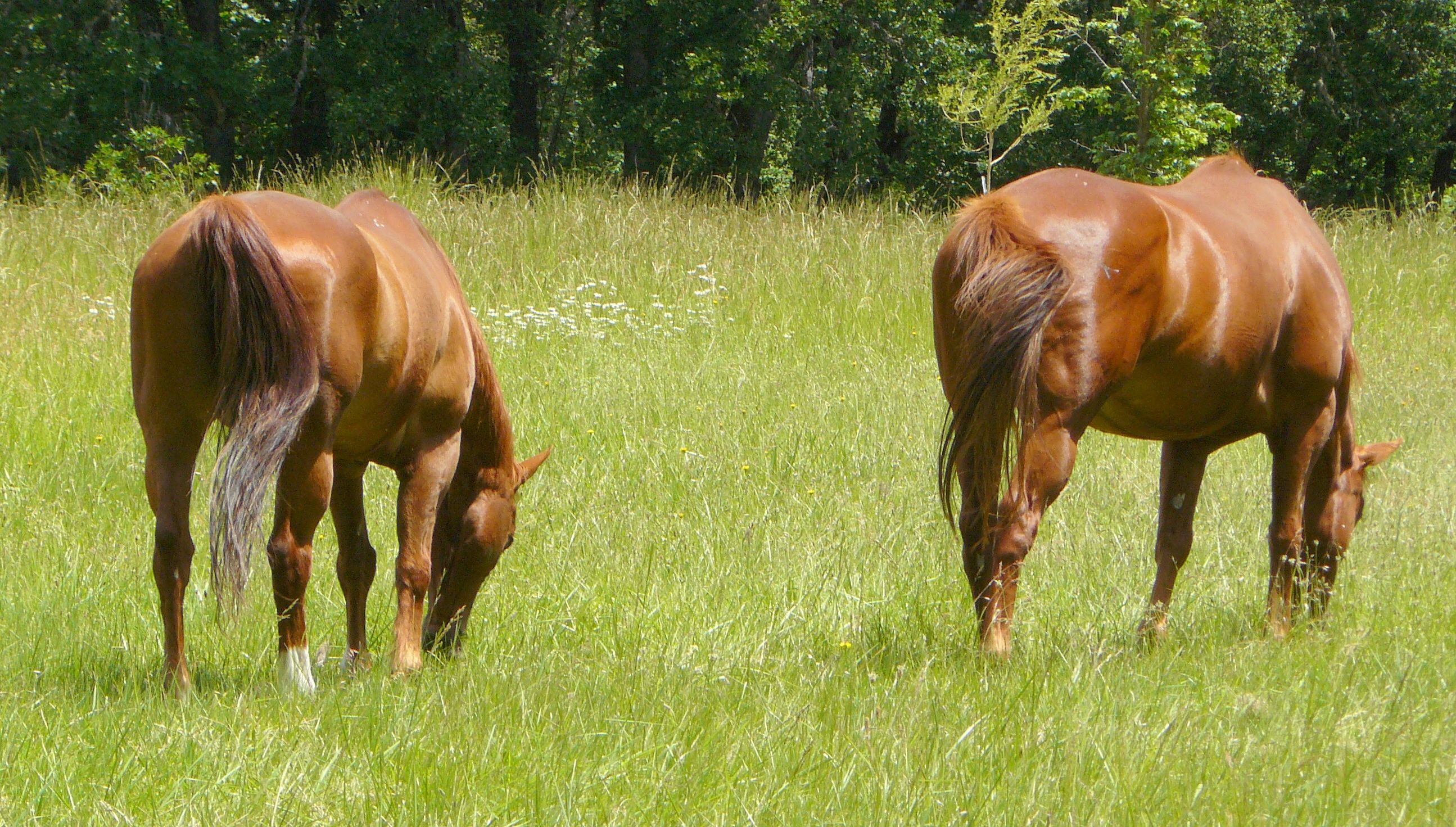
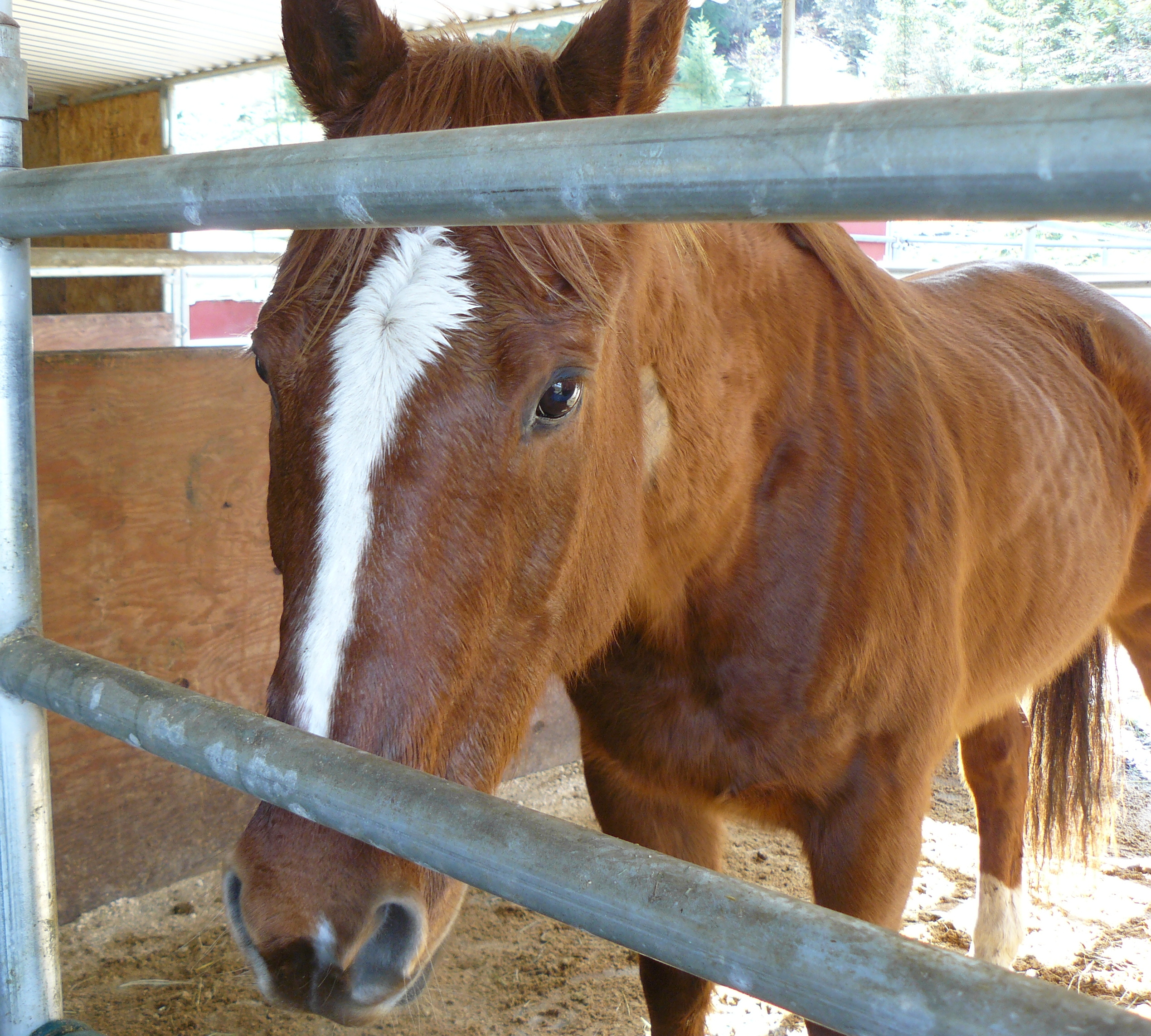
Regular readers of Learning from Dogs will remember a post just over a month ago The lone Ranger.  Essentially, that explained that we had visited Strawberry Mountain Mustangs in Roseburg, Oregon and, subject to their approval, had decided to adopt Ranger, a 15-year-old gelding.

Ranger, when first seen in February.

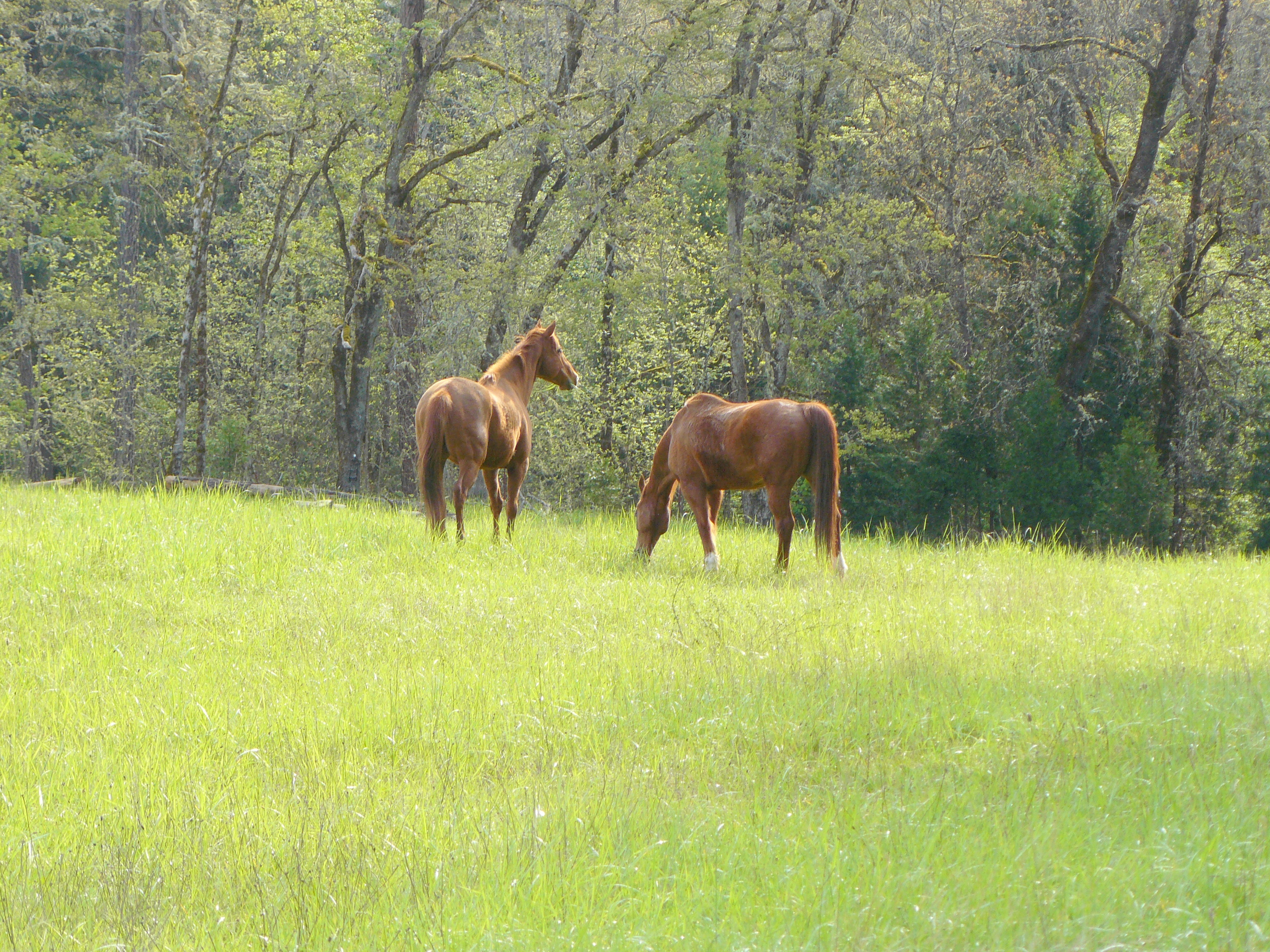
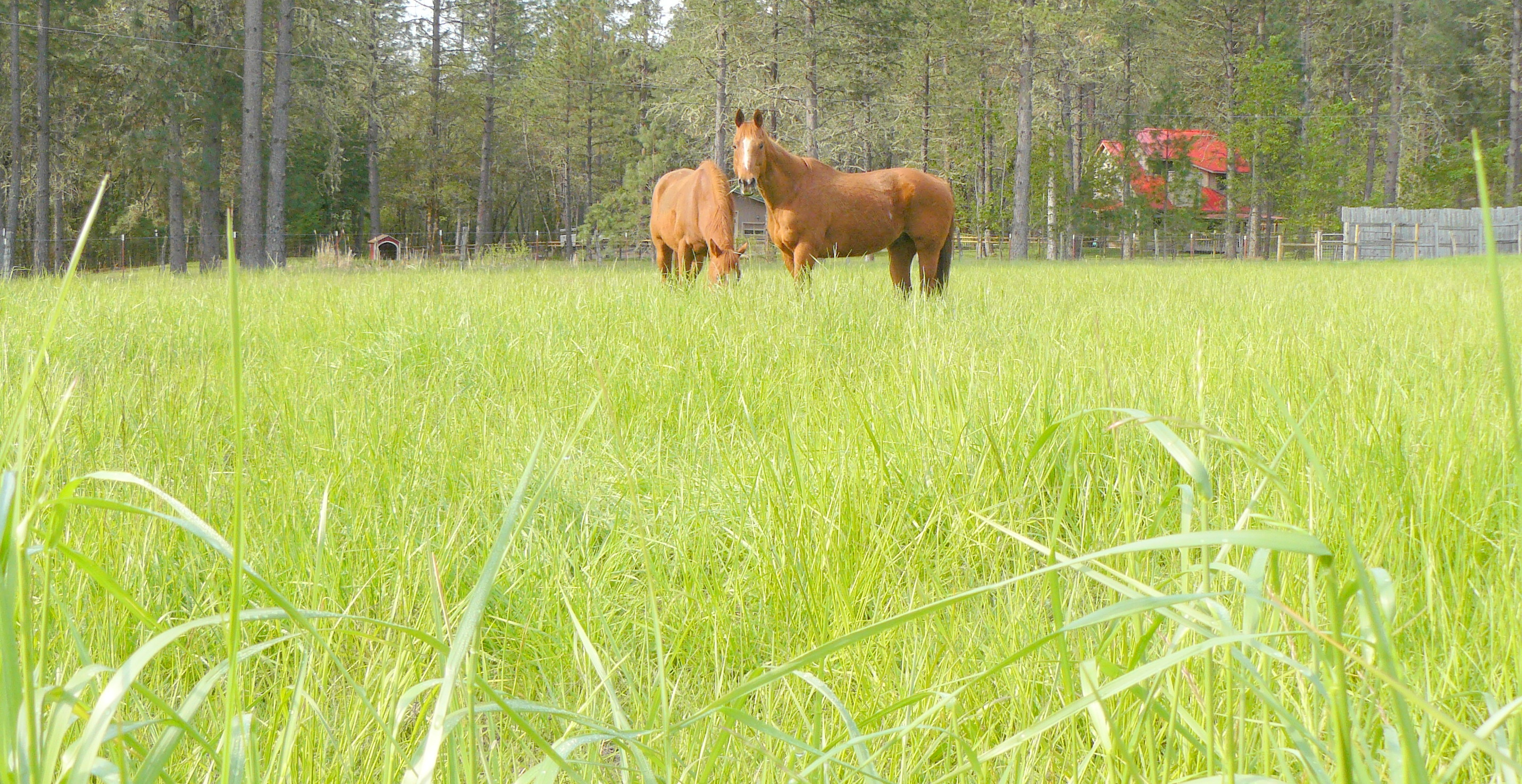
Thus it proceeded to the point where two-days ago Darla, of Strawberry Mountain, ably assisted by Cody, brought Ranger and Ben to us here in Merlin.  It’s been a wonderful twenty-four hours (at the time of writing this). Why Ben?  Please read on.

Destination!
Destination!

Darla and Cody making a safe and timely arrival a little before 10am last Tuesday.

Ben, our new foster.
Ben, our new foster, being coaxed out by Darla on the lead-line and Cody behind him.

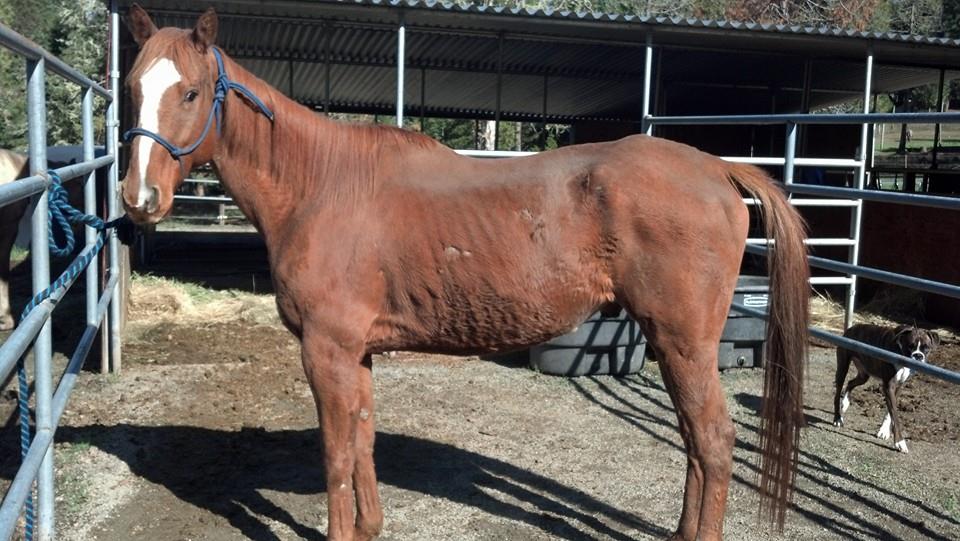
Why did we take the two?  Last October, Ben had been found starved and showing the signs of a great lack of confidence.   He was ‘rescued’ on orders of Darla’s local sheriff because of Ben’s condition despite being in private ownership.  Darla was certain that Ben had been physically beaten in recent times, hence him being very wary of strangers.  Thus his relationship with Ranger was part of his journey of returning to a healthy, confident horse. Darla offered us the opportunity of fostering Ben because Ranger had become a good companion for him. Darla explained that Ben was a very wary horse, especially of sudden movements from men.

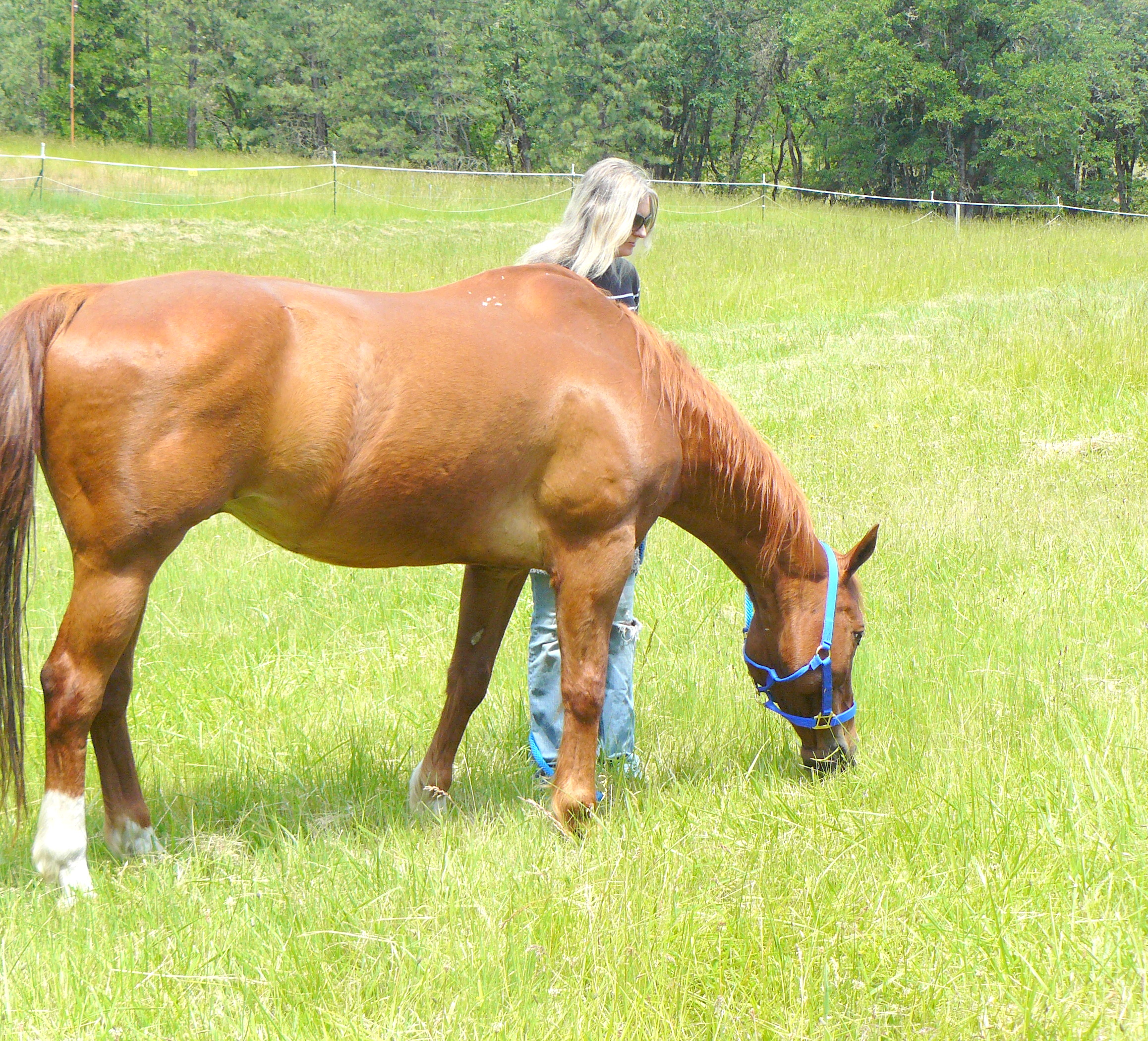
Jean leading Ranger; Darla leading Ben.

Another 100 yards and the start of a new life for these two gorgeous animals.

Hey Ranger, is this for real!!

In the those first few minutes after Jean and Darla led the horses to the grass paddock, Ben seemed to have an expression on his face that suggested it was all too difficult to believe!  Ranger just got stuck into munching!  But not to the extent of not enjoying a back-rub!

"I think I'm going to like this, Ben!"
“I think I’m going to like this, Ben!”

In the afternoon, it was time to bring Ben and Ranger for an overnight in the top area where the stables, food and water were.  Ben was very nervous at coming through the open gate and for a while there seemed to be a complication in that Ranger kept thrusting at Ben as if to keep him away from the fence line separating the horses from Allegra and Dancer, our miniature horses.

But in the morning, yesterday, things seemed much more relaxed. To the point that when Ben and Ranger went back out to the grass, Ben was much more relaxed towards Jean and me, as the following pictures reveal.

Jean offering Ben some treats.

oooo

Yours truly doing likewise.

OK, want to turn back to Darla.

To give an insight into the awe-inspiring work of Darla and her team (and many others across the Nation) and to recognise the need of the authorities to have such outlets as Strawberry Mountain, here are two photographs of Ben shortly after he was removed from the people who had stopped loving and caring for him.

Ben2 when found
Ben as seen last October.

oooo

Ben as seen last October.
Ben close to starving.

Strikes me as only one way to end this post is with the following as seen on Darla’s Facebook page.

asasa
Author unknown.

Thus this post is offered in dedication to the good people all over the world who know the value of the unconditional love we receive from animals and do not hesitate to return the same.

Darla, Cleo and Cody setting a wonderful example of unconditional love.

How about giving the nearest animal, or human, a big hug telling them at the same time how much you love them!

The scent of danger.

A reflection on our reptilian brains.

Now of all the things I am not, I am neither a biologist nor a scientist of any description.  However, general knowledge told me years ago that the human brain is composed of three areas, as the following diagram shows.

The constituents of the human brain.

A quick web search brings up THE EVOLUTIONARY LAYERS OF THE HUMAN BRAIN, from which I quote:

The first time you observe the anatomy of the human brain, its many folds and overlapping structures can seem very confusing, and you may wonder what they all mean. But just like the anatomy of any other organ or organism, the anatomy of the brain becomes much clearer and more meaningful when you examine it in light of the evolutionary processes that created it.

The most efficient model for understanding the brain in terms of its evolutionary history is the famous triune brain theory developed by Paul MacLean. According to this theory, the following three distinct brains emerged successively in the course of evolution and now co-inhabit the human skull:

The reptilian brain, the oldest of the three, controls the body’s vital functions such as heart rate, breathing, body temperature and balance. Our reptilian brain includes the main structures found in a reptile’s brain: the brainstem and the cerebellum. The reptilian brain is reliable but tends to be somewhat rigid and compulsive.

The limbic brain emerged in the first mammals. It can record memories of behaviours that produced agreeable and disagreeable experiences, so it is responsible for what are called emotions in human beings. The main structures of the limbic brain are the hippocampus, the amygdala, and the hypothalamus. The limbic brain is the seat of the value judgments that we make, often unconsciously, that exert such a strong influence on our behaviour.

The neocortex first assumed importance in primates and culminated in the human brain with its two large cerebral hemispheres that play such a dominant role. These hemispheres have been responsible for the development of human language, abstract thought, imagination, and consciousness. The neocortex is flexible and has almost infinite learning abilities. The neocortex is also what has enabled human cultures to develop.

These three parts of the brain do not operate independently of one another. They have established numerous interconnections through which they influence one another. The neural pathways from the limbic system to the cortex, for example, are especially well developed.

I’m well into reading the book Waking The Tiger: Healing Trauma authored by Peter A. Levine.  As early as Chapter One, Peter Levine explains [my emphasis]:

The involuntary and instinctual portions of the human brain and nervous system are virtually identical to those of mammals and even reptiles. Our brain, often called the ‘triune brain,’ consists of three integral systems. The three parts are commonly known as the ‘reptilian brain’ (instinctual), the ‘mammalian or limbic brain (emotional), and the ‘human brain or neo-cortex’ (rational). Since the parts of the brain that are activated by a perceived life threatening situation are the parts we share with animals, much can be learned by studying how certain animals, like the impala, avoid traumatization. To take this one step further, I believe that the key to healing traumatic symptoms in humans lies in our being able to mirror the fluid adaptation of wild animals as they ‘shake out’ and pass through the immobility response and become fully mobile and functional.

Unlike wild animals, when threatened, we humans have never found it easy to resolve the dilemma of whether to fight or flee. This dilemma stems, at least in part, from the fact that our species has played the role of both predator and prey. Prehistoric peoples, though many were hunters, spent long hours each day huddled together in cold caves with the certain knowledge that they could be snatched up at any moment and torn to shreds.

Anyway, to get back to what triggered today’s post.

If you read yesterday’s post you will recall me chatting with Jon Lavin and Jon reminding me that humans are drawn to positive messages.  But in stark contrast, the news media industry excels in promoting ‘doom and gloom’.  Why is this?  Why are we so fascinated by danger?

Well here’s my theory.

That is our evolution would not have succeeded if early man didn’t become pretty smart at identifying animal behaviours and plants and fruits that had the capacity to harm or even kill.  For example, what parent hasn’t made it a priority to teach their children the difference between harmful fungi and edible mushrooms.  Indeed to the extent that most of us would think long and hard before eating any fungi found in the wild unless we were 150% certain it was edible.  Look at the following picture.  Your instinct tells you if it’s safe to eat or not – it’s not!

Amanita muscaria photo © Michael Wood

So early man became over-sensitised to dangers to his health for his own good and continued existence. While modern man functions in ways almost unrecognisable from early man, that good old reptilian brain still is doing it’s best to protect us (flight, fight or freeze).  Think how we all respond to a sudden alarming sound, such as a gun shot or a scream, to know that the old reptilian brain is still alive and well.

Thus while all of us hate negativity we all seem to have this fascination with doom and gloom – just in case it helps us and our loved ones survive.

Back to Jon Lavin.  He makes it very clear that anything more than a small amount of ‘doom and gloom’ speaking to our consciousness increases the odds of depression and introversion.

Thus the message is that we humans should allow our Neocortex to tell our Reptilian ‘neighbour’ to go easy on the bad news, go and open a beer and watch the world go by! Whoops! Watch the world go by with a smile!

Oh, and Happy Valentine’s Day to you all.

The spirit in all life.

There are things that are beyond rational explanation.

Warning – this post is rather more ‘touchy-feely’ than you are used to seeing on Learning from Dogs.  So if it wanders about in ways that you struggle to follow then just stifle your yawn and come back tomorrow!

It goes back to an earlier plan that I had in terms for a couple of posts.  Both focussing on the myriad of examples of the appalling decline in our world.  I had been collecting a number of essays to support the proposition that if we don’t learn from dogs the qualities of integrity and unconditional love then our world was doomed.  I had collected the essay from Ellen Cantaro over on TomDispatch about the incredible stupidity of fracking. Or the one from Tom’s own pen in an essay about climate change being the new ‘Anti-News’.  I had saved the recent essay from George Monbiot discussing the madness of the so-called dredging practices in the UK’s Somerset Levels.  I had fumed at another George Monbiot essay Bring It On that included this incredible statement:

It is hard to think of a more serious allegation. For six months an undercover officer working for the Metropolitan Police was instrumental in planning a major demonstration, which ended up causing injuries and serious damage to property. Yet the police appear to have failed to pass this intelligence to the City of London force, leaving the target of the protest unprotected.

I had many more examples but you get the message!

So what stopped me?

I was chatting to Jon Lavin on Monday about a variety of things.  Jon asked how the book was coming along.  I replied by saying that a recent NaNoWriMo webinar had persuaded me that the book wasn’t a novel and should be re-written as a non-fiction story.  Going on to add that I might include some of the appalling examples of what was going wrong in our society to strengthen the argument that we truly have much to learn from dogs.

Jon, who had read the first, very rough draft of the book that appeared on this blog, cautioned me against doing that.  He went on to say that in the world of solutions focussed therapy, the area that Jon practices in professionally, the way forward was always to focus “on what’s working“.  Jon continued by saying that while one would initially allow the problems to be voiced, this negativity would always be a tiny piece of the overall process, say less than 5% of the session.  That even if a client’s whole world seemed to be failing, there would always be something that was alright, always a 1% that was working, and that would be the place to start.  A quick web search endorsed that as the website of Good Therapy revealed, from where I read:

Solution focused brief therapy (SFBT) targets the desired outcome of therapy as a solution rather than focusing on the symptoms or issues that brought someone to therapy. This technique only gives attention to the present and the future desires of the client, rather than focusing on the past experiences. The therapist encourages the client to imagine their future as they want it to be and then the therapist and client collaborate on a series of steps to achieve that goal. This form of therapy involves reviewing and dissecting the client’s vision, and determining what skills, resources, and abilities the client will develop and use to attain his desired outcome. Solution focused therapy was developed by Steve De Shazer, Insoo Kim Berg, and their team at the Brief Family Therapy Family Center in Milwaukee, USA.

Thus coming back to the book rewrite, Jon said that people wanted to read ‘good news’ not negativity.  It was a key reminder for me and an incredibly inspiring call that in these challenging times, whether on this blog or in a potential book, I need to write about all the powerfully, positive lessons that dogs, and all warm-blooded creatures, offer mankind.  The lessons of integrity, love, trust, balance, loyalty, faithfulness, affection, forgiveness and more.

OK, moving on.

On the evening of February 7th Jean and I settled down to watch a YouTube video.  It had been featured in a post from LadyBlueRose that had been published on the 6th.  The post was called His Name is Spirit and it was the story of a woman, Anna Breytenbach, who has dedicated her life to what she calls interspecies communication.

We had reached the six-minute point in the film, already captivated by it, when the telephone rang.  I paused the film and answered the phone.  It was neighbour Dordie from next door ringing to say that when she had seen us earlier in the day she had forgotten to mention that there was this incredible film that we really had to watch …… yes, you guessed it!  The film that Jean and I were watching at that moment.

Here is that film.

Now here is Anna’s website Animal Spirit where one learns:

ENHANCING THE RELATIONSHIP BETWEEN HUMANS, OTHER ANIMALS AND THE NATURAL WORLD

Welcome to an exploration of interspecies communication – a journey of discovering ways to restore a deep relationship with all of life.

Human and animal communication creates a valuable bridge between human and non-human animals. By connecting with our intuition, we can engage in meaningful dialogue and remember how to hear the subtle messages from those whose space we share in our lives and our natural environment. Coming from a place of respect and reverence for all life, we can learn to understand our wilder relatives, honour their truths and live in greater harmony.

and where one also can watch the short introductory film that is on her home page; as below.

A web search then came across a fascinating interview with Anna.

So where does this all end up?

Simply, that in a world dominated by media of all types that favour ‘doom and gloom’ it can be incredibly difficult to hang on to the message offered by Jon and by Anna, and by many others no doubt, the message that our individual health, and by implication the health of this planet, is afforded through staying positive.

Or put more basically, if you are feeling low go and hug a dog!  So I can do no better than to close with the same picture that closed Tuesday’s post Meet the dogs – Dhalia.

Love and Trust - Grandson Morten hugging Dhalia.
Love and Trust – Grandson Morten hugging Dhalia

Love over fear.

Do we chose love over fear?

On the 24th January this year, I published a post called 20:20 self-awareness.  To save you clicking the link and returning to that post, the essence was speaking clearly; not only to others but to ourselves.  I quoted George Bernard Shaw, “The single biggest problem in communication is the illusion that it has taken place.

Then went on to write:

Yet, what we hear and what we say are both modified, frequently unconsciously, by past events, experiences and trauma.  That being the case, then it is key, critically so, that we achieve the best possible self-awareness.  Because it is only through an understanding of our past that we come to learn of our sensitivities and our associated ‘tender spots’ and their potential for ‘pulling our strings’.

Closing the post by including a twenty-minute, documentary film about fear.  (Here it is again for those that missed it.)

One of the comments to that post was from Sue who writes the blog Dreamwalker’s Sanctuary. (It’s a beautiful blog, by the way.)

This was the comment left by Sue.

Fear is inherent in us all for that Flight or Fight mode.. But the F word has now been used and abused as it has been used as a useful tool .. Self awareness comes when we wake up to what our world is generating and we have a choice. We can allow ourselves to get embroiled within the Fear.. Or we can see it for what it is and who and what is creating that fear and why?…. Once that awareness kicks in we can see there is nothing to Fear but Fear itself… Living in the Now of a moment prevents us also from fearing the future, and fearing what has passed..

Easier said than done, I guarantee you .. But once you can get your head around it all… We breathe deeper and evenly and let all fear go… ( I am still working on this, I am not perfect by any means ) for as your video states its been ingrained within us for so long we know no other way, and we are a creature of habit!..

Thought provoking post, Paul thank you

Sue then pointed me to one of her essays, that I have the great pleasure of republishing today.

ooOOoo

Do You Chose Love Over Fear?

One Love Heart.
One Love Heart.

Remember those Prophesies of “2012”? I posted many of my thoughts upon this timeline which I thought was to mark the end of one era and the beginning of the Next – Maybe those ancients teachers didn’t know whether we would rise or fall as they marked the end of their calendar.

Maybe that fate awaits us still depending upon our choices we make in the Now dependant upon our Next actions!  But as we read through those  teachings of ancient prophecy  you will see also they speak  of transformation. Transformation requires Change, and we are being urged now to Think! Think outside our boxes as our comfort zones are now being tweaked as we become ever more sensitive to the Energy Shifts within our World.

Whether we realise it or not we are incarnated with a ‘Soul Mission’ even though we caught amnesia after we were born.  But more and more of us are thankfully waking up as we begin to remember who we are. It may have taken many life times and lessons to align with our present purpose as we pass through various stages on our journey, often not understanding the reasons for painful events and experiences.  It isn’t until later that we look back and see the gifts and healing which were given to us and that through them we learn to grow, letting go of the past as we step into the Now.

Giving Birth is not without pain, and our new earth is only now going through her own birthing pains.  We see it in the spasms of conflict, the wars, hunger, poverty, displacement of refugees and the destruction through pollution of Mother nature.  Pains which are now being experienced which we humans have carried with us over many life times. Pains that emerge as a build-up of our Fear and Prejudices.

The choices are simple: we either choose Fear or Love.

Even while writing this a sense of peace has swept over me as I smile to myself. I recently read an article which said “…we incarnate with these wounds and at a soul-level choose to encounter those whose actions catalyse us to resolve and heal our soul wounding“. That made me smile even wider as I have long held the belief that our enemies are our greatest teachers helping serve our soul’s growth as we learn the various lessons such as patience, kindness, love, forgiveness, and compassion.

We are each of us now experiencing shifts in our emotions and lives, as we feel the ‘Shift’ in energy within our Mother Earth who is calling us to wake up and remember who we are; as our vibrations alter.

When I first started my blog back in 2007 I stumbled almost by accident to the opening post. But it was no accident! In fact my very first post was an experiment called Smile. I wanted to make a difference even if it was only through the words of a poem.

As we ‘Lighten Up’, letting go of what we no longer need, we lift our vibration higher; as we leave behind the wounds of the past. We are Energy Beings – and it’s time now to realise we each are a part of the Whole, that Oneness that permeates all things with the same Energy.

We are now ‘Shifting’ from duality to Unity Consciousness. This was brought home again to me on how many of us are thinking similar thoughts even here on WordPress. We see similar themes as we link into the Mass Consciousness, as we join together our thoughts, as we link subconsciously to the Cosmic web of thoughts.

We need to be aware of the Power of our thoughts and how we can assist in raising our planet’s vibration and our own collective Consciousness.

Much has been spoken upon The Ascension. First we need to ascend through our own layers as we climb ever higher, leaving behind the things that no longer serve us.

We do that by not getting swept up in conflict, by being more loving and tolerant, by being compassionate rather than being judgmental holding hate and anger.

We need to put the Care back in the world. If we embrace and choose Love over fear and stop looking who to blame but start to set examples of living in harmony and unity, then the true magnificence of who we really are can begin to manifest that ‘Golden Age’ that was once prophesied to bring about Peace.

It is up to each one of us to pledge to change our own lives, because only that way will those prophesies come to fruition.

The Choice is Ours

Choose Well..

Love and Gratitude

Sue Dreamwalker..

ooOOoo

Unconditional Love.
Unconditional Love.

The most important thing we must learn from dogs.

Please help a pig’s feet! Seriously!

A genuine cry for help for a pig that needs its toenails cut!

Regulars will be tempted to conclude that this old Brit has really lost the plot!  After all, in this fifth year of writing Learning from Dogs, representing a total approaching 2,000 posts, there has been not one mention of the pig; the animal that is!  Until now!

Let me explain.

One of the consequences of the NaNoWriMo experience is that I have become aware of a number of other writers, all of them far more competent than yours truly, I’m bound to say.  I was also encouraged to join the writers social media website, WattPad.  (for those interested, my WattPad user name is LearningFromDogs – yes, I know, it wasn’t very original!)

One of those authors is Melinda Roth and I have been reading her Blog: Anyone Seen My Horse. A recent blog post concerned one of Melinda’s pigs that, as a result of being unable to use its rear legs, can’t naturally wear down its ‘toe nails’.

While the post contains a strong humorous thread, nonetheless the issue is far from funny for the pig.

So, please, if you know what to do for this poor pig, or you know someone who does know, please make the connection, or leave a comment to this post. So with Melinda’s kind permission here is the republication of her recent post.

ooOOoo

My Pig’s Toenails

POSTED ON JANUARY 26, 2014

The publicists says I should be plugging the book, but I have a more immediate concern: the fact that I received no good advice from my last post about how to cut my pig’s toenails.

One person did suggest that I use my pigs for “sustenance.”  Which crossed my mind. But I can’t eat anything that I’ve had to clean up after. Which means I am now a vegetarian and still have a partially paralyzed pig who needs her toenails cut.

Besides, this is what they looked like when they first arrived:

Rothpig1

And who could eat that?

Unlike the other animals on the farm (back story >), the pigs were a gift . My kids gave them to me for my birthday, and how do you tell your children – who think they’ve just given you the best present ever – that you have too many (bleep)ing animals already? They bought them from  a breeder who called them “teacup” pigs and promised they’d never weigh more than 30 pounds.

Right. And I’m Lady Godiva riding gloriously naked across the horizon on my well-behaved steed.

Are there any attorneys out there who can, in the name of civil justice, do anything about this…

Rothpig2

(See that fake smile on my son-in-law’s face? He was part of the best-birthday-present-ever conspiracy, and whenever he comes to the farm, he pets the pigs and smiles and tries to pretend like they’re still cute in an effort to cover up his culpability. He thinks I’m stupid).

At first, when the pigs were still under 30 pounds, I let them live in the house. I dressed them in pink sweaters and painted their toenails. I gave them cute names, which I’ve long forgotten, because once they started expanding (75 pounds in six months) and ramming the kitchen table whenever they got hungry and pooping things that looked like meatloaves out of their butts, I started calling them “those things” which is the only name they go by now. More specifically: Thing 1 and Thing 2.

As soon as the weather warmed up, I decided they should be free-roaming things and relocated them outside. I put them in a small barn with the chickens where they had their own separate apartment with a dog house big enough for both of them and all of their blankets and toys. They roamed the property at will and thrived: 125 pound by age one; 150 pounds by age two; 200 pounds currently and still counting.

They got so fat that after a while, you couldn’t see their legs anymore. Then they got fatter and their eyes disappeared under rolls of eyebrow blubber. They got so fat that when one of them meandered out to the road, she blocked traffic (two pick-ups and the mail delivery car) for 20 minutes until I finally coaxed her back into the yard with crescent roll dough.

The last straw was when one of them got stuck in the dog house door. She panicked and squeal/screamed so loudly, the neighbors half a mile down the road called 911, because they thought someone was being murdered (they later told me they didn’t know what the horrible sound was but seemed like something to call 911 about). By the time the sheriff arrived, the pig had dragged herself out of the barn and into the yard, still screaming, dog house still attached to her body.

The sheriff’s first reaction was to reach for his gun (and I must admit, I didn’t do much to stop him). But then his SWAT training must have kicked in: He whipped off his jacket; ran down the dog house; and, then leaped onto its roof, which weighed it down just enough for the screaming pig to pull her body the rest of the way out.

After that, the pigs went on a diet. Nothing but water and lettuce for a week. That, however, didn’t go over well, and they decided to run away from home, which meant the sheriff’s next visit happened after another neighbor called 911 to report “big, black things” attacking her garbage cans.

By the time the pigs were two-and-a-half years old, they were no longer pigs: They were humongous, hairy, black cows with no legs or eyes. Because they couldn’t see so well, they ran into things a lot, and when one of them ran into a small hole in the ground, she threw out her back, which paralyzed her hind legs.

The veterinarian’s suggested that she be “put down.”

Had the sheriff shot her or the mail delivery truck run her over, I wouldn’t have lost too much sleep. But to actually cause the death of something… well, I figure almost anything is better than being dead. Even if you have to drag yourself around by your front legs like a beached walrus it’s probably better than not being. So I let her live.

And now… her toenails have grown to be about seven inches long, because she can’t move around enough to wear them down. I tried to cut them back when they started a life of their own, but she weighs 250 pounds now and does not want anyone messing with her toes.

Thus, this post. Is there ANYONE out there who knows about this stuff?

First plausible response gets a free pig.

ooOOoo

So please help Melinda’s pig!