Tag: El Nino

A possible weather crisis

The latest report on this year’s super El Niño.

We love living in Southern Oregon. This rural part of the countryside is a delight, and feeding the wild deer is a bonus.

However, we also have to take note of the changing climate and the potential risks that extremes of weather can bring.

ooOOoo

As cities prepare for 2026’s super El Niño, some crucial blind spots can’t be ignored
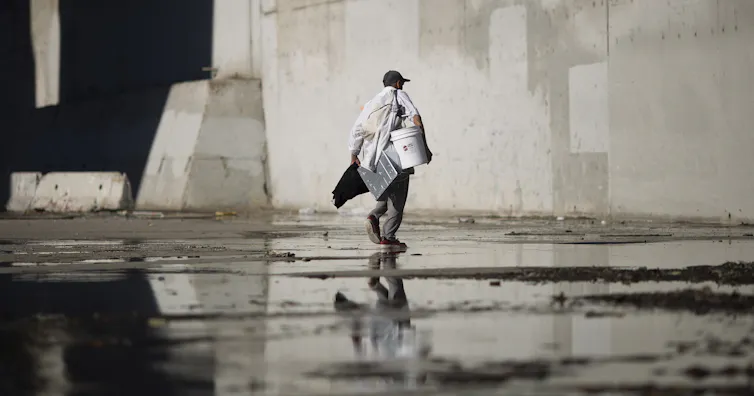
A man carrying several items walks through cement passage with water in it under a bridge
An affordable-housing crisis and a growing homeless population led Los Angeles to declared a shelter crisis during the 2015-16 El Niño. David McNew/Getty Images

Bethany Tietjen, Tufts University

This year’s El Niño has the potential to be one of the strongest in living memory, and the evidence is showing up around the world.

The U.S. just saw its hottest summer on record in the Lower 48 states. Drought is slowing shipping in the Panama Canal. The Pacific is experiencing an exceptionally busy hurricane season, while the Atlantic is unusually quiet. Those are just a few early signs. Forecasters warn that this El Niño could bring extreme heat, destructive storms and flooding to many parts of the planet through early 2027.

Huge waves crash up against a coastline. Their spray goes as high as the homes that are right next to the water.
Storm waves crash onto seaside houses at Mondos Beach, Calif., on Jan. 12, 2016, during a strong El Niño. Mark Ralston/AFP via Getty Images

I am a researcher who works on climate and disaster resilience, and I study how governments prepare for climate disasters and help to identify what they are missing.

Community planning for El Niño often starts by identifying infrastructure that’s vulnerable to extreme weather. What can be harder to address are the needs of the populations most at risk, including low-income communities and older adults who may need help preparing their homes and themselves for extreme conditions.

As communities prepare for the rising risk of extreme weather, they need to be aware of the blind spots.

What is El Niño and what’s at risk?

El Niño is part of a natural climate pattern that appears every few years when temperatures in the eastern Pacific Ocean rise.

Its effects can shift weather patterns away from what is considered normal. Typically wet regions can get unusually dry, while dry areas can experience extreme rainfall that causes flooding. Global average temperatures also tend to rise during El Niño conditions, leaving people facing dangerous heat, both indoors and outdoors.

https://www.youtube.com/embed/WPA-KpldDVc?wmode=transparent&start=0 What is El Niño?

On the U.S. West Coast, for example, the combination of El Niño conditions with king tides and rising sea levels could lead to more coastal flooding, erosion and damage to homes and infrastructure. In the past, flood damage and landslides from heavy rain during El Niño have shut down highways and affected public services long after a storm has passed.

A map of the US shows rainier conditions in the South, warmth in Canada and the northern U.S., and dryness in the Midwest.
In winter, El Niño typically shifts weather patterns across the U.S. However, every El Nino is different – conditions during one El Niño may be very different from the next. NOAA

Preparing for the strong El Niño expected in late 2026 and early 2027 means ensuring that critical infrastructure is able to withstand flooding, temperature extremes and other severe weather conditions.

That means inspecting flood control and drainage systems, trimming trees that could knock down power lines during high winds, and reinforcing or maintaining infrastructure such as dams, stormwater channels, roads and bridges.

Aging infrastructure, in particular, can be a problem.

Old levees and dams, for example, can leave a community vulnerable to catastrophic flooding, as the Seattle area saw in December 2025 when flooding from heavy rainfall broke levees in multiple communities. Repairing and replacing large-scale infrastructure like this is expensive and time-consuming. Too often, by the time it fails, repairs had been discussed for years but not completed.

Where we’re finding gaps in disaster planning

Infrastructure is only part of the challenge. Preparing a community for El Niño also means preparing people for what could be unprecedented conditions.

A study I worked on with researchers at Tufts University reviewed climate adaptation and disaster preparedness in several high-risk communities in the United States. We identified gaps in the policies, resources and institutional capacity available to help communities adapt to rising risks.

A paved bicycling path atop a levee is broken and slabs of asphalt pavement are tilted into a breach where water poured through.
Crews inspect damage to a Green River levee in the Seattle suburbs on Dec. 15, 2025. Thousands of people were urged to evacuate during a series of atmospheric river storms, and the National Guard was sent to monitor and reinforce several levees considered at risk. AP Photo/Manuel Valdes

In particular, we found that governments often focus heavily on physical risks while giving too little attention to social vulnerability.

Vulnerable populations, including people experiencing homelessness, older adults and people with disabilities, often face higher risks and greater challenges in preparing for disasters.

People with limited mobility, for example, may have difficulty evacuating quickly or getting into shelters. Individuals with limited financial resources might have fewer options for relocating or for making home improvements in preparation for extreme weather. Someone experiencing homelessness may not have safe shelter.

A man walks carefully through water as two mattress float away in a rush of water under a bridge.
In the Los Angeles area, homeless people often set up camp in normally dry riverbeds. But those areas are at high risk of flooding during El Niño. Heavy rains during the 2015-16 El Niño swept away this camp’s mattresses. Genaro Molina/Los Angeles Times via Getty Images

It is often easier for governments to identify and invest in physical infrastructure than to invest in policies that address complex social vulnerabilities like these. For example, building a seawall can be tied to a specific project or funding stream. Reducing social vulnerability, on the other hand, may require coordination across housing, healthcare, emergency management and social services. And it typically requires sustained investments over time.

Yet, preparing successfully for extreme weather often requires considering housing and shelter needs, healthcare access and support services.

After a wildfire or major flooding, people may need temporary rental assistance or affordable housing to avoid displacement. Older adults or people with disabilities may need transportation to shelters or assistance getting medications and healthcare.

Many of these needs can be difficult to address because the underlying vulnerabilities are deeply entrenched. Issues such as affordable housing shortages, poverty or difficulty accessing healthcare cannot be solved by a single disaster-preparedness policy. But they do shape how communities are able to recover from extreme weather.

Identifying gaps before extreme weather strikes

A community’s preparedness often improves after an event, when the gaps become obvious. The challenge is identifying those gaps before a disaster occurs.

In Los Angeles, emergency managers are using a good method to meet that challenge in 2026: They are carrying out scenario exercises that bring together county departments and community disaster management coordinators to practice how they would respond to an El-Niño-driven extreme weather event.

These exercises are designed to identify gaps in existing plans and figure out what might be needed if severe storms, flooding or mudslides occur. Scenario exercises allow people involved in disaster response to work through a hypothetical event before it happens.

Several vehicles are tipped and trapped in mud up their windows along a highway.
Heavy downpours in October 2015 caused mudslides that trapped vehicles on Interstate 5 north of Los Angeles. The storm was early in the season for El Niño damage and served as a warning of the risks to come. Mark Ralston/AFP via Getty Images

In both the San Francisco Bay Area and in Durham County, North Carolina, officials are talking publicly about the risks to encourage residents to prepare. Bay Area officials are stressing the importance of following emergency management notifications and weather forecasts, particularly for individuals living close to the water or on hillsides that could face flash flooding and landslides.

In Oceanside, California, city officials convened an El Niño working group that included representatives from their public works, engineering, fire and police departments to coordinate planning, communications strategies and the monitoring of the San Luis Rey River.

Broader lessons

The challenge of preparing for El Niño in the face of uncertainty reflects some of the broader issues humanity faces when preparing for future climate changes.

Keeping up with infrastructure maintenance, scenario planning ahead of heat or storm seasons, understanding the needs of vulnerable populations and having plans in place to meet them can help prevent a severe storm from becoming a major disaster for the community.

Bethany Tietjen, Research Fellow in Climate Policy, The Fletcher School, Tufts University

This article is republished from The Conversation under a Creative Commons license. Read the original article.

ooOOoo

Some of the trees that we have are, potentially, too close to the house. I hate cutting down trees but then even worse than that would be that the house is badly damaged and we have to move out.

It is nicely summarised in that last chapter of the article, and I quote: “The challenge of preparing for El Niño in the face of uncertainty reflects some of the broader issues humanity faces when preparing for future climate changes.”

The face of uncertainty!

Duh! Is it me!

Sometimes, one does have to wonder!

Years ago I recall hearing the retort, “What part of the word no are you having trouble with!”

It made me laugh out loud.

It comes to mind again, and this is why.

The accumulation of evidence mounts almost on a daily basis that mankind is critically affecting the viability of Planet Earth. Not only threatening a sustainable home for tens of thousands of species but, most importantly, for homo sapiens.

Yesterday, I included a report that suggested we may be on the verge of one of the largest El Ninos in history.  The presumption being that the extra heat energy in the atmosphere is transferring to the Pacific waters.

Today, I want to stay with the theme that it is nature, not mankind, that is dictating our future; that our leaders, are way ‘behind the drag curve’ to use an aviation expression.

But let me offer yet another lesson from dogs.  Learnt from understanding the role of the ‘alpha’ dog; the leader.

When dogs lived in the wild the size of their pack, or community, was around fifty animals.  The most senior in status was the alpha dog.  The alpha dog was a female who had two important roles on behalf of the pack.  First, the alpha dog had the pick of the male dogs to ensure the optimum genetic health of the entire group.

Second, it was alpha dog that, in the rare circumstances of their pack’s territory becoming unsustainable, made the decision for her pack to find a new territory.

Humans are on the verge of understanding that our ‘territory’ is rapidly becoming unsustainable.  Just a great shame we don’t have any ‘alpha leaders’ to find ‘a new territory’.  Clearly in a metaphorical sense.  Because the last time I looked a ‘backup’ to Planet Earth wasn’t anywhere close!

No better illustrated than by a recent essay from George Monbiot that I am republishing in full within his blanket permission to so do.  The essay is called Loss Adjustment and was published in the Guardian newspaper on the 1st April 2014.

ooOOoo

Loss Adjustment

When people say we should adapt to climate change, do they have any idea what that means?
By George Monbiot

To understand what is happening to the living planet, the great conservationist Aldo Leopold remarked, is to live “in a world of wounds … An ecologist must either harden his shell and make believe that the consequences of science are none of his business, or he must be the doctor who sees the marks of death in a community that believes itself well and does not want to be told otherwise.” (1)

The metaphor suggests that he might have seen Henrik Ibsen’s play An Enemy of the People (2). Thomas Stockmann is a doctor in a small Norwegian town, and medical officer at the public baths whose construction has been overseen by his brother, the mayor. The baths, the mayor boasts, “will become the focus of our municipal life! … Houses and landed property are rising in value every day.”

But Dr Stockmann discovers that the pipes were built in the wrong place, and the water feeding the baths is contaminated. “The source is poisoned …We are making our living by retailing filth and corruption! The whole of our flourishing municipal life derives its sustenance from a lie!” People bathing in the water to improve their health are instead falling ill.

Dr Stockmann expects to be treated as a hero for exposing this deadly threat. After the mayor discovers that re-laying the pipes would cost a fortune and probably sink the whole project, he decides that his brother’s report “has not convinced me that the condition of the water at the baths is as bad as you represent it to be.” He proposes to ignore the problem, make some cosmetic adjustments and carry on as before. After all, “the matter in hand is not simply a scientific one. It is a complicated matter, and has its economic as well as its technical side.” The local paper, the baths committee and the business people side with the mayor against the doctor’s “unreliable and exaggerated accounts”.

Astonished and enraged, Dr Stockmann lashes out madly at everyone. He attacks the town as a nest of imbeciles, and finds himself, in turn, denounced as an enemy of the people. His windows are broken, his clothes are torn, he’s evicted and ruined.

Yesterday’s editorial in the Daily Telegraph, which was by no means the worst of the recent commentary on this issue, follows the first three acts of the play (3). Marking the new assessment by the Intergovernmental Panel on Climate Change, the paper sides with the mayor. First it suggests that the panel cannot be trusted, partly because its accounts are unreliable and exaggerated and partly because it uses “model-driven assumptions” to forecast future trends. (What would the Telegraph prefer? Tea leaves? Entrails?). Then it suggests that trying to stop manmade climate change would be too expensive. Then it proposes making some cosmetic adjustments and carrying on as before. (“Perhaps instead of continued doom-mongering, however, greater thought needs to be given to how mankind might adapt to the climatic realities.”)

But at least the Telegraph accepted that the issue deserved some prominence. On the Daily Mail’s website, climate breakdown was scarcely a footnote to the real issues of the day: “Kim Kardashian looks more confident than ever as she shows off her toned curves” and “Little George is the spitting image of Kate”.

Beneath these indispensable reports was a story celebrating the discovery of “vast deposits of coal lying under the North Sea, which could provide enough energy to power Britain for centuries.” (4) No connection with the release of the new climate report was made. Like royal babies, Kim’s curves and Ibsen’s municipal baths, coal is good for business. Global warming, like Dr Stockmann’s contaminants, is the spectre at the feast.

Everywhere we’re told that it’s easier to adapt to global warming than to stop causing it. This suggests that it’s not only the Stern review on the economics of climate change (showing that it’s much cheaper to avert climate breakdown than to try to live with it (5)) that has been forgotten, but also the floods which have so recently abated. If a small, rich, well-organised nation cannot protect its people from a winter of exceptional rainfall – which might have been caused by less than one degree of global warming – what hope do other nations have, when faced with four degrees or more?

When our environment secretary, Owen Paterson, assures us that climate change “is something we can adapt to over time” (6) or Simon Jenkins, in the Guardian yesterday, says that we should move towards “thinking intelligently about how the world should adapt to what is already happening” (7), what do they envisage? Cities relocated to higher ground? Roads and railways shifted inland? Rivers diverted? Arable land abandoned? Regions depopulated? Have they any clue about what this would cost? Of what the impacts would be for the people breezily being told to live with it?

My guess is that they don’t envisage anything: they have no idea what they mean when they say adaptation. If they’ve thought about it at all, they probably picture a steady rise in temperatures, followed by a steady rise in impacts, to which we steadily adjust. But that, as we should know from our own recent experience, is not how it happens. Climate breakdown proceeds in fits and starts, sudden changes of state against which, as we discovered on a small scale in January, preparations cannot easily be made.

Insurers working out their liability when a disaster has occurred use a process they call loss adjustment. It could describe what all of us who love this world are going through, as we begin to recognise that governments, the media and most businesses have no intention of seeking to avert the coming tragedies. We are being told to accept the world of wounds; to live with the disappearance, envisaged in the new climate report, of coral reefs and summer sea ice, of most glaciers and perhaps some rainforests, of rivers and wetlands and the species which, like many people, will be unable to adapt (8).

As the scale of the loss to which we must adjust becomes clearer, grief and anger are sometimes overwhelming. You find yourself, as I have done in this column, lashing out at the entire town.

http://www.monbiot.com

References:

1. Aldo Leopold, 1949. A Sand County Almanac. Oxford University Press.

2. Read at http://www.gutenberg.org/files/2446/2446-h/2446-h.htm

3. http://www.telegraph.co.uk/comment/telegraph-view/10733381/The-climate-debate-needs-more-than-alarmism.html

4. http://www.dailymail.co.uk/news/article-2593032/Coal-fuel-UK-centuries-Vast-deposits-totalling-23trillion-tonnes-North-Sea.html

5. http://webarchive.nationalarchives.gov.uk/+/http:/www.hm-treasury.gov.uk/sternreview_index.htm

6. http://www.theguardian.com/environment/2013/sep/30/owen-paterson-minister-climate-change-advantages

7. http://www.theguardian.com/commentisfree/2014/mar/31/ipcc-report-adaptation-climate-change

8. http://ipcc-wg2.gov/AR5/images/uploads/IPCC_WG2AR5_SPM_Approved.pdf

ooOOoo

Now watch this film!

Published on Apr 6, 2014
Hollywood celebrities and respected journalists span the globe to explore the issues of climate change and cover intimate stories of human triumph and tragedy. Watch new episodes Sundays at 10PM ET/PT, only on SHOWTIME.

It’s the biggest story of our time. Hollywood’s brightest stars and today’s most respected journalists explore the issues of climate change and bring you intimate accounts of triumph and tragedy. YEARS OF LIVING DANGEROUSLY takes you directly to the heart of the matter in this awe-inspiring and cinematic documentary series event from Executive Producers James Cameron, Jerry Weintraub and Arnold Schwarzenegger.

The natural world.

Hardly seems necessary to say this but natural forces are ‘top of the pyramid‘!

As is so often the case, a few outwardly disconnected events offered a deeper picture; well they did for me!

The first was a recently published post by Alex Jones over on his blog The Liberated Way.  Alex lives in Colchester, Essex, North-East of London, a place where I ran a business way back in the ’80’s’ and lived not far away in the village of Great Horkesley.  Many people, including many Brits are unaware that Colchester, or Camulodunon as the Celtics called it, meaning “the Fortress of Camulos” (Camulos was the Celtic god of war), was the Capitol city in Roman days and that evidence of man’s settlement goes back 3,000 years.

Anyway, back to the thread of today’s post.

That first post from Alex.  A post under the title of Catching a fox.  Alex has generously given me permission to republish it.

Catching a fox.

After two years of hunting I catch a fox with my camera.

fox_colchester
After two years of frustration I finally photograph a fox, which appeared out of nowhere in my garden.

Nature is a shifting tapestry of life, often catching me by surprise with magical manifestations of wildlife that abruptly vanish before I can catch a brief record of its passing through my life. It is a matter of chance that I get lucky with my camera, and I was in luck today.

This morning a fox manifested in my garden. The fox sat looking at me, it had a forlorn look about it, but the fox was content to sit and watch me as it sun bathed in the warmth of a tranquil garden. I had my camera with me, so I made up for two years of frustration by firing off dozens of photographs of my elusive wary model. The fox made my day.

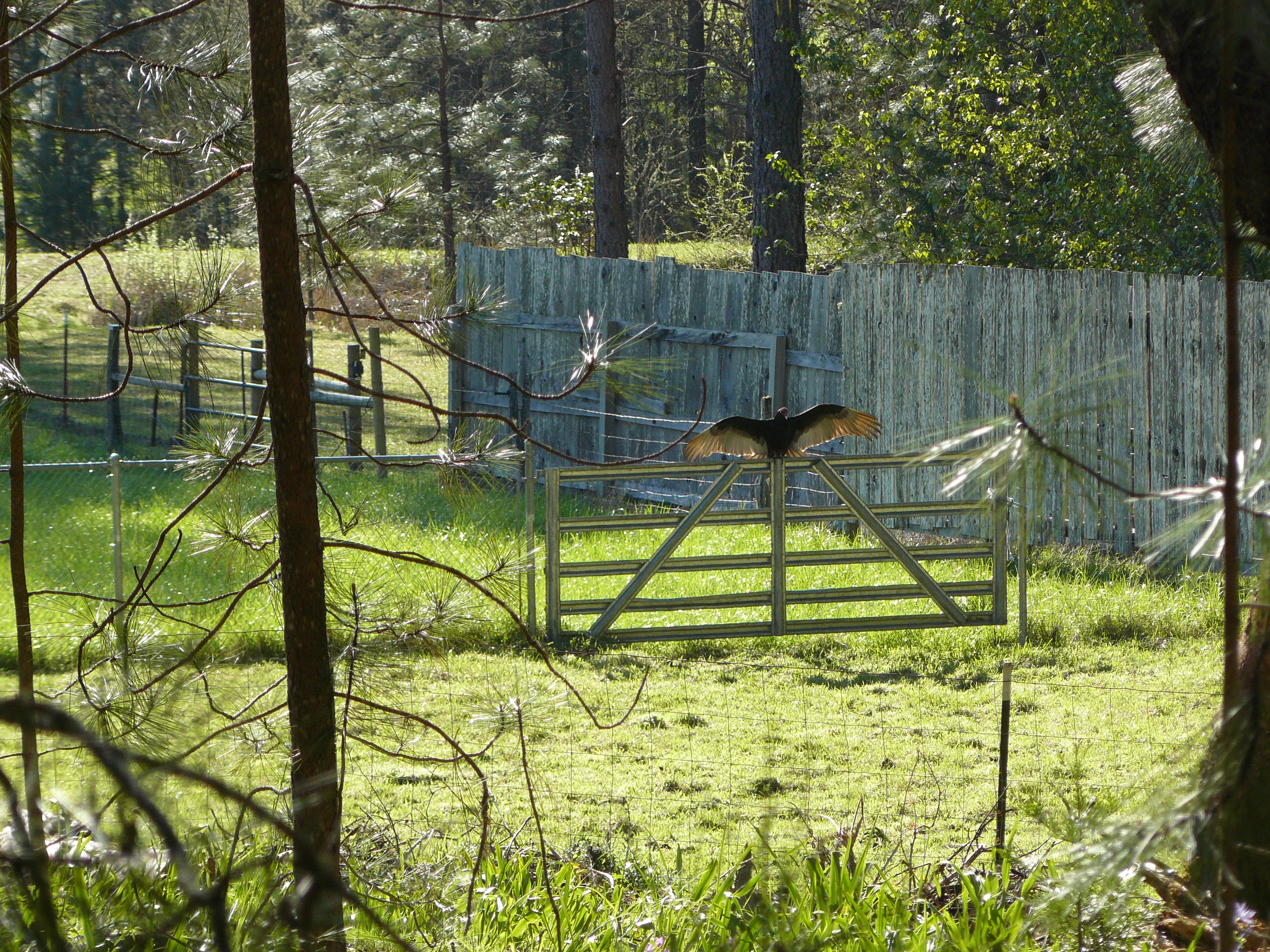
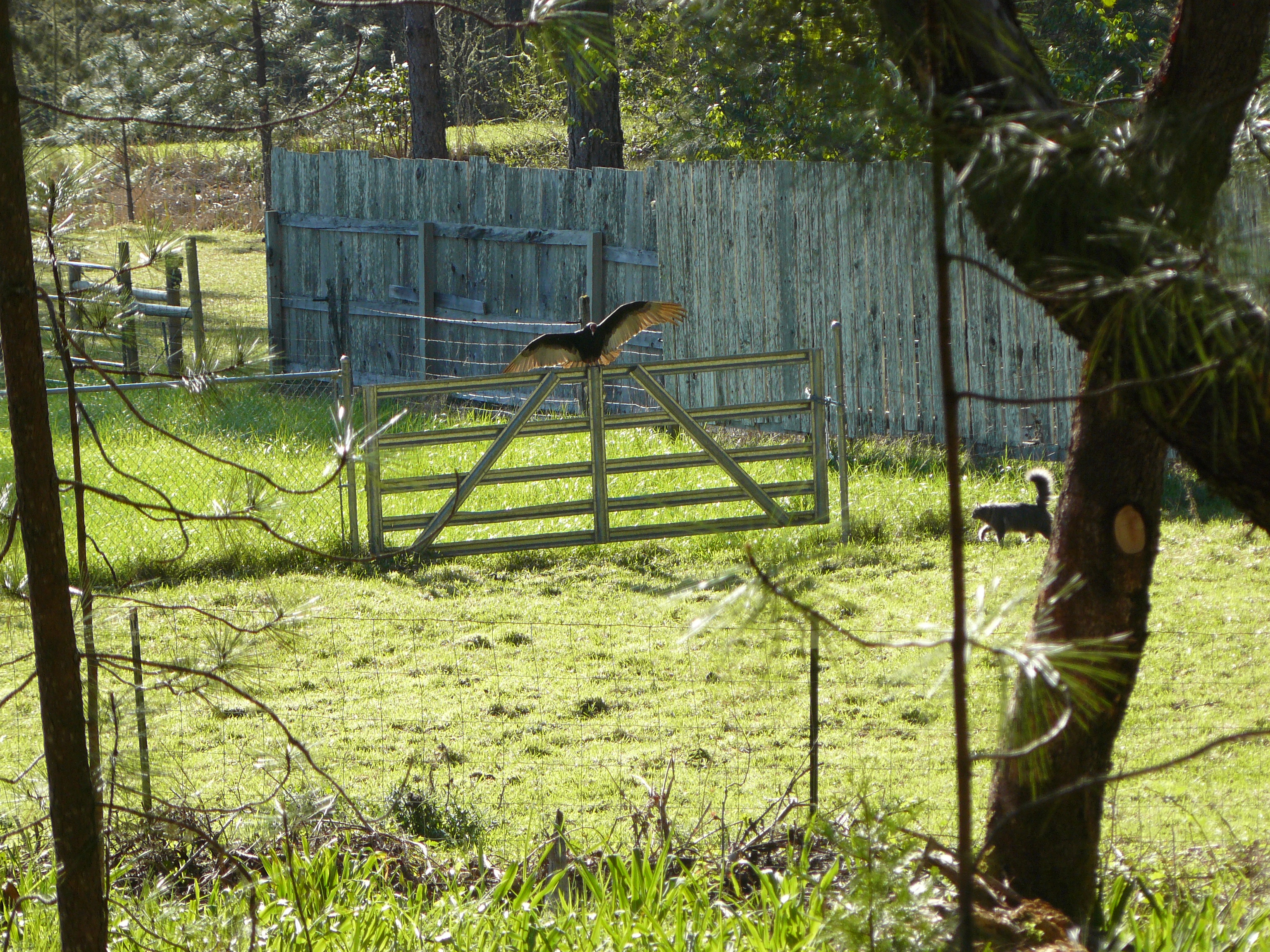
The second event was a chance photograph of a vulture taken two days ago here at home.

Ah, that early morning sun feels good on my back feathers!

 oooo

Ah, that sun feels good on my back feathers!
Damn! Thought it was too good to last!

Now I’m sure that readers so far will find these three photographs, of the fox and the vulture, are producing feelings of pleasure; feelings of wonderment about the natural world around us.

That world of nature ‘speaks’ to us.  If we are prepared to listen.

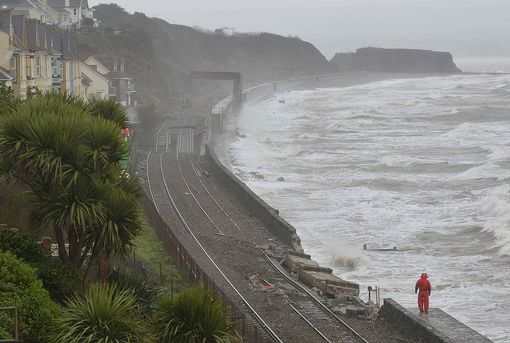
It spoke to South-West England in February earlier this year:

rail-emergency-workers-inspect-damaged-track-along-the-seafront-at-dawlish-in-south-west-england-
Dawlish – Rail emergency workers inspect damaged track along the seafront.

There are signs that Mother Nature will be speaking to us again; fairly soon. From EarthSky:

Warm water in Pacific could spark a monster El Nino in 2014

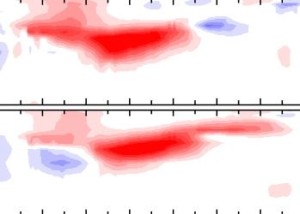
Scientists are watching a giant mass of sub-surface water in the Pacific. When this water reaches the sea surface, it could set off a powerful El Nino.

The giant red blob in this image is a huge, unusual mass of warm water that currently spans the tropical Pacific Ocean. Eric Holthaus, a meteorologist who writes about weather and climate for Slate, says the volume of water is big enough to cover the United States 300 feet deep. And that’s a lot of warm water, he says. Holthaus also says that, as the sub-surface warm water in the Pacific moves eastward – propelled by anomalous trade winds – it’s getting closer to the ocean’s surface. Once the warm water hits the sea surface, it will begin to interact with the atmosphere. Why? Because Earth’s oceans and atmosphere are always interacting. In this case, the warm water will likely boost temperatures and change weather patterns … and possibly bring on a monster El Nino in 2014. There are signs this is already beginning to happen. Read more at Slate.

If one clicks on the link to that Slate article, one then reads:

By Eric Holthaus

The odds are increasing that an El Niño is in the works for 2014—and recent forecasts show it might be a big one.

As we learned from Chris Farley, El Niños can boost the odds of extreme weather (droughts, typhoons, heat waves) across much of the planet. But the most important thing about El Niño is that it is predictable, sometimes six months to a year in advance.

That’s an incredibly powerful tool, especially if you are one of the billions who live where El Niño tends to hit hardest—Asia and the Americas. If current forecasts stay on track, El Niño might end up being the biggest global weather story of 2014.

The most commonly accepted definition of an El Niño is a persistent warming of the so-called “Niño3.4” region of the tropical Pacific Ocean south of Hawaii, lasting for at least five consecutive three-month “seasons.” A recent reversal in the direction of the Pacific trade winds appears to have kicked off a warming trend during the last month or two. That was enough to prompt U.S. government forecasters to issue an El Niño watch last month.

Forecasters are increasingly confident in a particularly big El Niño this time around because, deep below the Pacific Ocean’s surface, off-the-charts warm water is lurking:

Now I’m not going to post the whole of that article so for that reason strongly recommend you read the rest here. However, I am going to offer a couple more extracts.

Like this:

The warm water just below the ocean’s surface is on par with that of the biggest El Niño ever recorded, in 1997-98. That event caused $35 billion in damages and was blamed for around 23,000 deaths worldwide, according to the University of New South Wales. The 1997-98 El Niño is also the only other time since records begin in 1980 that sub-surface Pacific Ocean water has been this warm in April.

Or like this:

One of the theories put forth by the mainstream scientific community to explain the slow-down since 1998 has been increased storage of warm water in the Pacific Ocean. If that theory is true, and if a major El Niño is indeed in the works, the previously rapid rate of global warming could resume, with dramatic consequences.

As I wrote last fall, the coming El Niño could be enough to make 2014 the hottest year in recorded history, and 2015 could be even warmer than that. The 1997-98 super El Niño was enough to boost global temperatures by nearly a quarter of a degree Celsius. If that scale of warming happens again, the world could approach a 1ºC departure from pre-industrial times as early as next year. As climate scientist James Hansen has warned, that’s around the highest that temperatures have ever been since human civilization began.

Now I’m not trying to be a ‘drama queen’ but there are times when one does wonder what it will take for those who govern us to wake up to the fact that Mother Nature is getting more and more restless.

I shall return to this theme tomorrow.