We have family guests with us for the next seven days.
Jean’s brother, Reg, and his lady are arriving today so for a while blogging will be less of a priority than usual.
Although I have spoken to Reg over the telephone on numerous occasions, this will be the first time we have met and I am looking forward to better knowing him.
Thus, as in previous times when we have had friends and family staying with us, I will be reposting popular items from previous times on Learning from Dogs, or republishing things that have caught my eye in recent days.
As with today’s post.
Reg, shares the same birth year as me: 1944!
Thus we are staring over the edge of our eightieth decade!
So this short talk by Isabel Allende seems like a worthwhile topic for today!
Published on Sep 3, 2014
Author Isabel Allende is 71. Yes, she has a few wrinkles—but she has incredible perspective too. In this candid talk, meant for viewers of all ages, she talks about her fears as she gets older and shares how she plans to keep on living passionately.
Want to know more about Isabel Allende? Her website is here.
Yet another thing we can learn from dogs! Living passionately right up to the last days.
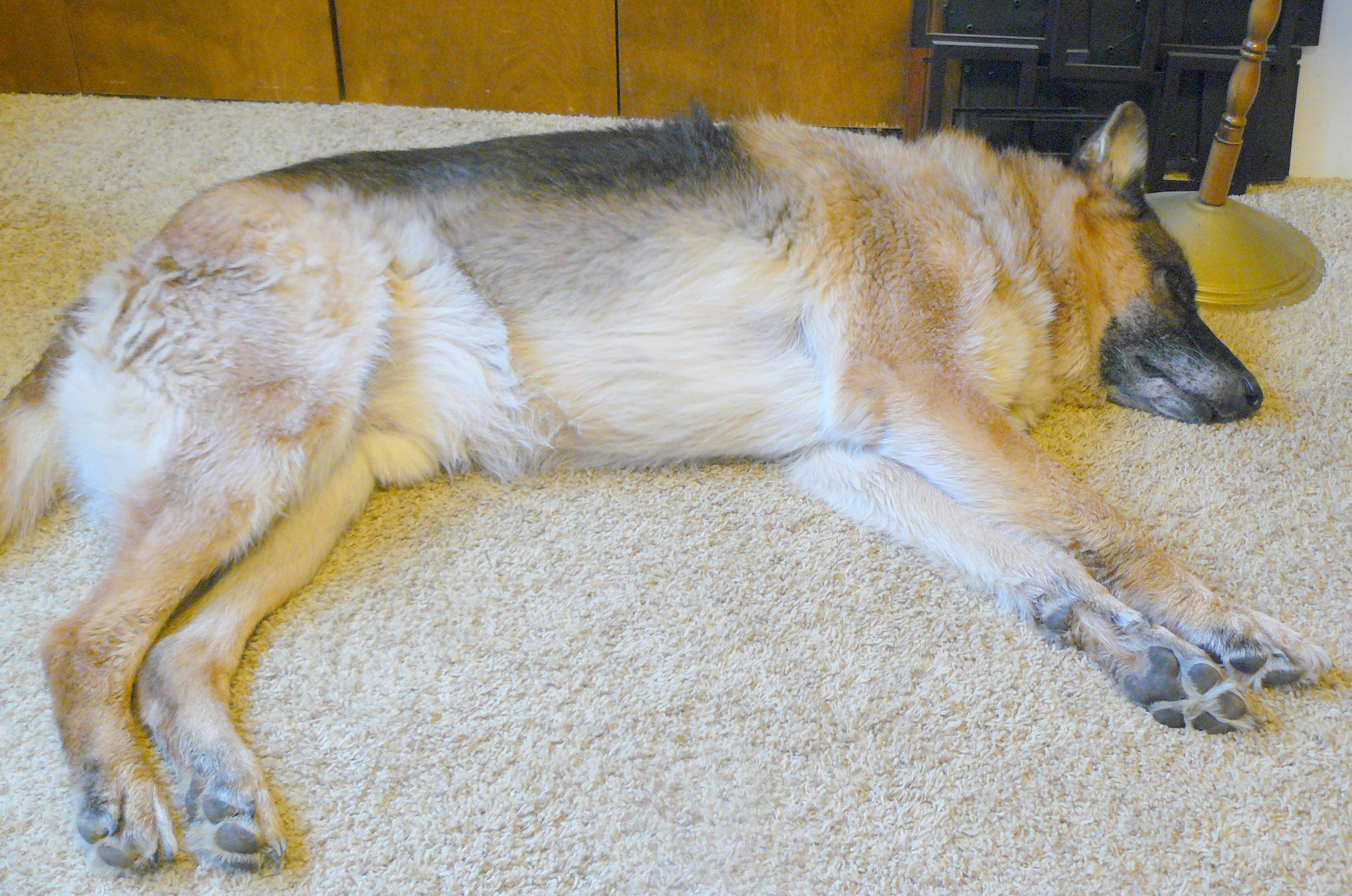
Pharaoh, age 88 in human equivalent years, passing on his wisdom to Oliver, age 3 in human terms. Makes being 70 look a doddle!
A thank you to all those that work so hard to stop fires from getting out of control.
I am drafting this post at a little after noon on the 4th., i.e. early afternoon yesterday.
It is yet another dry, hot day in a long run of hot, dry days. Our local online weather service, GrantsPassWeather.com, informs me that the temperature this afternoon (i.e. yesterday) is forecast to be a high of 93 deg F. or 34 deg C. We last had monthly rain totals of more than an inch back in March. At the top of the home page of Grants Pass Weather is a bold red banner proclaiming a Red Flag Warning for three counties: Jackson, Josephine and Eastern Curry. We live in Josephine County and clicking that banner reveals:
Details:
…RED FLAG WARNING REMAINS IN EFFECT UNTIL 10 PM PDT THIS EVENING FOR COMBINATION OF STRONG WINDS AND LOW RELATIVE HUMIDITIES FOR FIRE WEATHER ZONES 280…281…617…619…620…621…622 AND 623…
* AFFECTED AREA: FIRE WEATHER ZONES 80…281…617…619…620…621…622 AND 623.
* HUMIDITY…MINIMUM RELATIVE HUMIDITY AT 10 TO 20 PERCENT FOLLOWED BY RECOVERIES TONIGHT AT 20 TO 40 PERCENT.
* WIND…NORTHEAST TO EAST WINDS 10 TO 20 MPH THROUGH THIS EVENING THEN 5 TO 15 MPH OVERNIGHT.
* IMPACTS…POSSIBLE PLUME DOMINATED BEHAVIOR ON ACTIVE FIRES AS STRONG WINDS AND LOW RELATIVE HUMIDITIES THROUGH THIS EVENING WILL CAUSE FIRES TO SPREAD VERY RAPIDLY.
STRONG WINDS AND LOW RELATIVE HUMIDITIES WILL CAUSE FIRES TO SPREAD VERY RAPIDLY.
Little after 7am a few weeks ago – looking out to North-East. Picture taken from the rear deck of our house near Merlin, Oregon.
Does this focus the mind? You bet! The trees in the foreground of the above photograph are within our property. Our house is surrounded by tall oaks, pines and fir trees.
Now stay with me through what, at first, may seem like a disconnected change of topic.
Long, long time ago Jean met Ira Weisenfeld, a young vet making his way in the world. Jean’s passion for rescuing feral street dogs meant that she was a more active user of a vet’s services than the average pet owner. Jean and Ira became very good friends.
Earlier on this year, we had the pleasure of the company of Ira’s daughter, Amber, who came to see us with the man in her life, Ben Elkind.
Fast forward to the 1st September and Amber sent us the following email:
Hello Paul and Jean!
Hope you guys are doing well. Here is a BBC story about smokejumpers in Redding, CA where Ben works, he is interviewed too. Thought you might like it! Hope you had a wonderful summer. I just finished the boundary water canoe trip with Dad, it was very good.
Take care,
Amber
Forest fires kept at bay in US by elite ‘smokejumpers’
26 August 2014 Last updated at 00:48 BST
The drought that has gripped much of the American West shows no sign of abating – yet despite the tinder-box conditions, so far less land in the region has been lost to wildfires in 2014 than in recent years.
That is partly due to an aggressive strategy to stop smaller forest fires before they become too big to handle.
At the frontline of this effort are the smokejumpers, airborne firefighters who parachute into the wilderness to get the blazes under control.
It’s a dangerous job for an elite group of highly-trained men and women. The BBC spoke to three smokejumpers – Ben Elkind, Gretchen Stumhofer and Luis Gomez – at their base in Redding, California.
Produced by the BBC’s Jack Garland.
Additional footage courtesy of Ben Elkind and Tye Erwin
I am delighted to present the following guest post from Ruth Nina Welsh.
We seem to be on a bit of a roll in terms of seeking a better self-understanding.
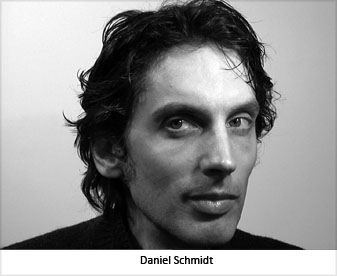
Last Thursday I offered up some thoughts and reflections on meditation Quietening one’s self down and then the following day presented the film Inner worlds, Outer worlds, the wonderful film by Canadian film maker, musician and meditation teacher Daniel Schmidt. Daniel described his film “as the external reflection of his own adventures in meditation.” (And did you read the fascinating comments by ‘R’?)
Anyway, to today.
I forget how Ruth and I made contact with each other but that’s immaterial to today’s guest post. What is material is that we did make contact and through Ruth’s website I became aware of her talents. In her own words:
BE YOUR OWN COUNSELLOR & COACH shares psychology, memoirs and creativity to help and inspire you to live a happier, more fulfilling and purposeful life.
****
WHO AM I? – I’m a freelance writer, specialising in lifestyle, wellbeing and self-help; a former counsellor & coach and an erstwhile musician. I have a diverse educational background – with degrees in arts and law – but psychology is my passion. You can find out more about me on my personal site.
As a singer-songwriter, I released my debut acoustic album – As I Breathe – in 2000.
As a counsellor and coach, I was in private practice from 2008-2011.
As a freelancer in the publishing field, I’ve been involved as an editor, formatter, copy-editor, proofreader and I’ve also managed book projects and manuscript submissions.
Now, as a freelance writer, I write articles and guest posts, and continue to build this free online self-help resource.
So back to the connection between Ruth and me.
A couple of weeks ago, Ruth asked me if I would like to publish an essay from her.
I read it and replied without hesitation that I would be honoured to publish said essay.
Thus with no further ado here it is. (And do read to the end to be informed about a very generous free offer from Ruth.)
ooOOoo
The Struggle To Be Authentic
Introduction
Of all the challenges we face in life, the struggle to be authentic is a vital one. It’s not always recognised that being authentic – being true to ourselves – is essential for our own wellbeing and happiness. We struggle with authenticity because it’s often hard to reveal the truth about how we feel. And, as strange as it may seem, sometimes we don’t even know how we truly feel. It can be painful and difficult to begin to speak from a place of truth and to unmask hidden feelings which may be covered over by years of denial, trauma and people pleasing.
How we learn to be authentic in childhood
Being authentic and true to ourselves is not innate; it’s something we learn how to do. We learn from those close to us as we grow up. As children we observe our parents, or others who care for us. We notice how truthful and genuine they are. We also learn that there is power in the gap between how we feel and what we actually reveal to others. During our childhood we sometimes find that it can be unwise to say what we honestly feel or think, it can get us into trouble. Bruising judgements from our parents can mean we stay quiet rather than speak up. If a parent constantly criticises and mocks us it’s likely that we’ll modify our behaviour around them. We’ll try to please them and avoid unnecessary pain by saying what they want to hear – even if this is not our own truth. Not being true to ourselves can also follow a traumatic event where we may feel the need to hide our feelings or bury painful grief. All of these things and more mean that, piece by piece, we can lose connection with ourselves and how we truly feel.
The struggle to be authentic in adulthood
As we leave childhood behind us we take the lessons we learn from it into our adult lives. If we felt unable to speak up truthfully when younger then this usually doesn’t change when we become an adult. We can find ourselves unable to speak up within an intimate relationship, downtrodden in our work life and unable to fully connect in our friendships. Over time, if we keep speaking the words only others want to hear – words that are not our own truth – we can lose touch with what we actually feel. We can lose touch with our true selves, our true desires and our true needs and wants. Having been a spokesperson for others for so long we can find ourselves lost and adrift, not knowing how we truly feel about anything, not knowing who we really are. And this can lead us to a treacherous place – living behind a mask, fearing disapproval, and not connecting at a genuine level with anyone. This damaging cycle will continue unless, or until, we see the need for change and realise that being authentic is vital for our own happiness and wellbeing.
Learning to be authentic
It’s difficult to be authentic when this has not been our normal way of being. We may have been used to white lies, outright untruths, or just unconsciously denying our own thoughts and feelings. We may have lived in a family where half-truths and masks were the norm. We may have had to hide our own feelings to survive. This is then our problem: without a template of truth-telling and speaking out in a genuine way, we often struggle to be authentic. We may even have to learn how to be honest and authentic from the bottom up.
Two steps to authenticity
As a starting point, our task is two-fold and can be seen in two distinct steps. Firstly, to find out how we actually feel about things and, secondly, to begin to reveal how we feel to others. This sounds straightforward but doing these two things can be intensely challenging. We are often beaten down by life, our words may have been ridiculed, our self-esteem may be low. We can feel worthless and feel that what we have to say doesn’t matter. If you are in this place, then the most important thing to understand, as a given, is that what you have to say does matter and you have a right to say it. Whatever you have learned in the past and whatever you have been told, know these vital, universal truths:
Each of us has value, has a voice, and we are entitled to speak out and have our own precious, individual opinions heard.
First Step: How do you feel?
With that as your starting point – that your true, individual voice matters – you can begin the first step: to find out how you actually feel. This can be easier said than done. You’ve spoken the words others wanted to hear for so long now that you may not actually know how you genuinely feel. To begin to make inroads into this takes time, an effort of will, and an increase in your own self-awareness. One of the easiest ways to begin this process is to record your thoughts, feelings and opinions down on paper. In a private way, in your own journal, you can start to look and search inside yourself for how you actually feel about things – what you believe, what your opinions are, what you want from life. You can uncover what your own personal likes and dislikes are – not to please others, but to please yourself. With time and patience your awareness will increase and you’ll begin to hear your own inner voice speak out. It may be a whisper at first, but, if nurtured, this will develop. Gradually you will begin to connect with your true self and start to know how you truly feel.
Second Step: Share how you feel
As you begin to know how you feel you can start to embark on the second step on the road to being authentic and true to yourself – revealing and sharing how you feel. You can begin to speak up for yourself and share your own beliefs and opinions. Your voice does not need to be loud or demanding, but with calm authority you can learn to speak out. This can be a difficult process at the beginning but try starting this process by speaking out in safe emotional surroundings. Find friends who are supportive and then begin to honestly and truthfully share your thoughts and feelings with them. As you begin to know how you feel, and start to voice your own opinions, you can create more meaningful relationships. You can connect at a deeper emotional level – from a place of truth and honesty.
Conclusion
It sounds simple, being true to ourselves, but it is a continual struggle and it is fraught with difficulty. Fraught with judgement, disapproval and fear. But the courageous speak out from a place of truth and in doing this they make deep, meaningful and honest connections. This impacts on all parts of a person’s life: from choices made to the quality of relationships enjoyed. Being authentic becomes a way of being, a way of life. With the voice of authenticity comes true connection and it is well worth the struggle it costs us. For if we are just a spokesperson for others, or a mouthpiece for others – fake, in other words – then what value and meaning can we attach to our own lives and to our relationships? And if we are not being true to ourselves and genuinely authentic in our words and deeds then who are we in this world and what is the point of our life?
Ruth asked me to include this invitation for all readers of Learning from Dogs.
Simply if you go across to Ruth’s website Be Your Own Counsellor & Coach and sign up as an email subscriber, you will get the free ebook when it becomes available in the autumn!! The sign-up box is to the top right-hand corner of the home page, just above the following:
Free Ebook For Subscribers – Coming Autumn 2014
FREE to Subscribers. The first book in my series will be free to subscribers of this site and also available on Amazon as an ebook.
Subscribe above to receive this free book when it becomes available.
To awaken one’s true self, one must awaken the entire world.
As you may gather from the sub-heading above, this is not a typical post today! (If there is a typical post in this place!) In fact, I think this is the first time in over five years of publishing Learning from Dogs that I have devoted a post solely to a full-length film.
But the film so perfectly picks up the theme of yesterday’s post, Quietening one’s self down, that it was too good an opportunity to miss.
Inner Worlds was created by Canadian film maker, musician and meditation teacher Daniel Schmidt. The film could be described as the external reflection of his own adventures in meditation. As Daniel came to meditative insights, he realized that these same insights were discovered over and over in spiritual traditions around the world and that all traditions share a common mystical underpinning.
He realized that it is this core experience that connects us not only to the mysterious source of all creation, but to each other as well. Along with his wife Eva, Daniel currently lives in a log home tucked away in a forest of tall pine trees located in Ontario, Canada. It is in this beautiful setting where they run a meditation and yoga center called Breathe True Yoga www.breathetrue.com.
Daniel has studied meditation from the traditions of Buddhism, Taoism, the Yogic traditions of India, as well as the mystical traditions of various cultures, and has come to his own teaching method helping point people towards their own inner wisdom and knowledge. “Meditation is not so much a technique to master as it is a re-orientation of the heart; a selfless act of love and surrender into the mystery and stillness at the core of our being“.
Daniel has always had a strong life connection with sound and music. He has been a composer for over 20 years with an extensive library of music venturing into many genres and styles, and he is the President and CEO of REM Publishing Ltd. Music is not something to be comprehended merely with the hearing faculty. The vibratory nature of the universe is understood when we recognize that everything is music.
Eva has studied and teaches chakra yoga, hatha yoga, meditation and healing through expressive arts. She has integrated yogic traditions from around the world and attended the Pyramid Yoga Center in Thailand for extensive yoga training. Eva is a sound healer, artist and was a strong creative force in the editing room as “Inner Worlds” was being created. Together Dan and Eva were the Shiva and Shakti forces that birthed the film into the world.
It became clear during the making of the film that Inner Worlds Outer Worlds had to be released for free for the benefit of all beings. In the ancient traditions the dharma or “the truth” was always taught freely and never for personal gain or profit in order to preserve the purity of the teachings. It is Daniel and Eva’s belief that to awaken one’s true self, one must awaken the entire world. Daniel and Eva have started the Awaken the World initiative www.awakentheworld.com to bring the ancient knowledge back to the earth in order to restore balance and harmony on the planet.
If you want to dip into the film then here’s the trailer.
But many, including Jean and me, will want to watch the full film.
The website Top Documentary Filmsoffers this summary (the links below will take you to other films on meditation):
Inner Worlds could be described as the external reflection of Daniel Schmidt’s own adventures in meditation.
Akasha is the unmanifested, the “nothing” or emptiness which fills the vacuum of space. As Einstein realized, empty space is not really empty. Saints, sages and yogis who have looked within themselves have also realized that within the emptiness is unfathomable power, a web of information or energy which connects all things.
The Spiral. The Pythagorean philosopher Plato hinted enigmatically that there was a golden key that unified all of the mysteries of the universe. The golden key is the intelligence of the logos, the source of the primordial om. One could say that it is the mind of God. The source of this divine symmetry is the greatest mystery of our existence.
The Serpent and the Lotus. The spiral has often been represented by the snake, the downward current, while the bird or blooming lotus flower has represented the upward current or transcendence.The ancient traditions taught that a human being can become a bridge extending from the outer to the inner, from gross to subtle, from the lower chakras to the higher chakras.
Beyond Thinking. Life, liberty and the pursuit of happiness. We live our lives pursuing happiness “out there” as if it is a commodity. We have become slaves to our own desires and craving. Happiness isn’t something that can be pursued or purchased like a cheap suit.
That is all I seem to do when I approach the subject: speak and think about it but never do it!
However, I think I may be approaching a turning point. All thanks to a follower of Patrice Ayme’s blog. It was a comment from ‘R.’ in response to my question on this PA post. Here’s how the comments flowed (hope this isn’t too long-winded but I wanted to select all that seemed appropriate to the post):
R:
I run 5d/wk, and I notice my thinking/contemplation is “heightened” during cardio. I believe this is no different than the “high” you get when taking some drugs (mushroom, weed, etc).
Physical exercise also helps keep my rest of the day sharp. But this is just keeping the engine (physical body) fit, thus helps thinking straight. Nothing more.
Meditation/awareness is the main key. And you need some way to be in it 24/7, not just during (or little while after) exercise . And “calm and collected” is the way for it. You can sustain this through out the day, and even during sleep/dream states (according to advanced meditators). “Calm” not as in “looking at navel”; calm as in “focused, in control, zen-like”. This involves moral conditioning too, as it’s hard to be calm if you have any shred of fear. And the way to lose fear, is through ideal morals (aka dharma, natural law).
There are higher meditative states (permanent, sustained), humans can get into. Temporary highs are just that.
—-
Patrice:
R: To be answered mostly in a separate comment. Meditative states are numerous. They are even necessary to some physical activities. It can be called concentration in some cases. Deep diving in apnea is an example. There is a case when meditation is life saving. Miss the meditation, miss the resuscitation.paul, like any new habit, meditation takes time to cultivate. It is after all a life long endeavor of “understanding one’s self”. It is easier if we dont view it as some new task (or half-hour daily exercise in navel-gazing).
—-
Me:
Having re-read the essay and others’ comments, causes me to speak a little about my own short-term memory failings. I’m 70 later this year and in the last, oh I don’t know ( can’t remember 😉 ), 2 or 3 years, my ‘event’ memory has declined dreadfully. But it’s not uniform. Even after 2 years, I still struggle to find certain shops in nearby Grants Pass but do recall clearly when our bridge washed out after we moved into the house in October, 2012.
There is no discernible pattern, and other men of my general age frequently suffer the same way.
If there were mental exercises that helped stem this problem, I would love to know more; assuming I could remember the details!
—-
R:
If i may, try meditation. A simple meditation exercise is just to be aware of yourself in all activities you do (initially we find ourselves lost often, but if you keep at it, soon % of being with yourself greatly exceeds losing self. calm, control and clarity is developed.). A good barometer/progress is to see if the daily activities drive you, or you drive the daily activities.
Of course physical exercises/fitness are absolute minimum. For old-age i would recommend yoga (fancy word for stretching and proper breathing)
Meditation while doing yoga with proper breathing (pranayama) gives out of this world results (this whole process is collectively called “yoga”).
And you can “be in it” 24/7 (as yoga includes sitting, sleeping poses too; It just an art of proper physical + mental positioning through out the day).
If eastern keywords are disturbing, ignore those. Just like everything else, the more you do something, the more you become that. This is particularly (exponentially) true for mind stuff.
—-
Patrice:
R: Paul is obviously a very reflective person. I do not exactly know what would be the distinctive definition(s?) between reflective and meditative states. I do know, though, that some sports (solo climbing and apnea) require total neurological control.
R:
Reflection/contemplation/meditation all of these help in mind (habits, inertia, anything thats limiting/holds-back) transformation.
Meditation is reflection on self. Reflection on daily activities takes time away from reflection on self. Increasing self awareness makes apparent all blind spots (wisdom).
If you are a physically able, healthy human, almost all your problems (aka “suffering”) are mind related. Physical body (including physical brain) just needs basic (of course healthy) sustenance.
Me:
R, yes I concur entirely about the majority of ‘problems’ being mind related. I have on my bookshelf next to me Roy Masters’ book ‘How Your Mind Can Keep You Well – An Introduction to Stress Management.
But if there’s one thing I would like to crack is starting and maintaining a programme of meditation. So many have recommended this approach and, rationally and emotionally, I know it will offer benefits. However, for some reason I can’t translate that ambition into actually starting.
Would love to listen to your advice about how to get started. You don’t have a blog do you? If not, fancy writing a guest post for Learning from Dogs! 😉 Contact details on the home page.
(Sorry Patrice – didn’t mean to hog the channel!)
Patrice:
Hog all you want, Paul. Even when I disagree with you, I find you interesting. Meditation and memory are vast questions. I pointed out that too much memory could be bad, basically. The first thing to get good memory, is to stop stressing about it, and thinking about what we really care about, without getting drawn to, and drowned, in formalism. PA
R:
Paul, If you are just looking for basic stress relieving meditation, this one looks good.
‘R’ then very kindly sent me the following:
To permanently establish this habit, first our mind needs to be convinced of the benefits.
Like any hobby, we need to develop an interest in the topic. And this means reading up on theory, on what is mediation, why do we need it, what happens if we pretend it doesn’t exist.
There are different styles of meditation, and different end goals, different schools of thought.
Self-inquiry is my preferred approach, as it’s the only thing you can rely on (your own self). There is a lot of literature on this. But all of this is just food for thought, nothing more.
There is also vast Buddhist literature: you can ignore all the theology and just focus on basics. Theory becomes a burden , so all conceptual knowledge has to be discarded. So I don’t advocate any philosophy or sect or schools of thought: Only believe in your realisations.
The end-goal of all this is full wisdom; reality as-is; liberation (end of suffering); control of one’s self; “the world is truly yours”; you are capable of handling anything; you can exercise “real free-will”; you are at ease being you; your knowledge will be flaw-less; and, finally, you will naturally empathise with others (as you will be aware what others are going through).
This is not some mumbo-jumbo, you will realize and experience it for your self.
This is about wisdom as in practical common-sense.
I am totally convinced by those heartfelt words. I’m sure there are others who, like me, have talked about meditation but done no more, hence me sharing this with you.
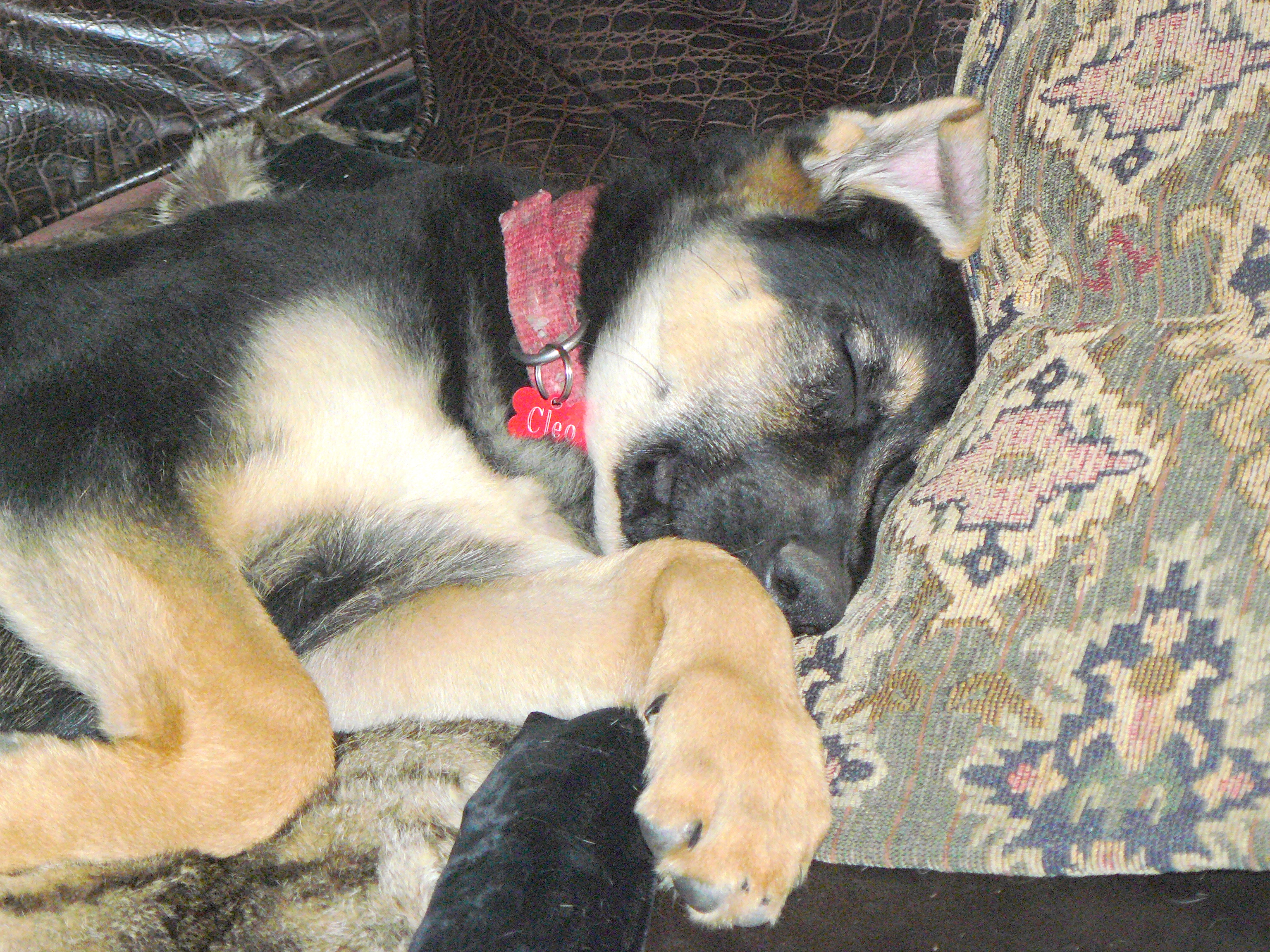
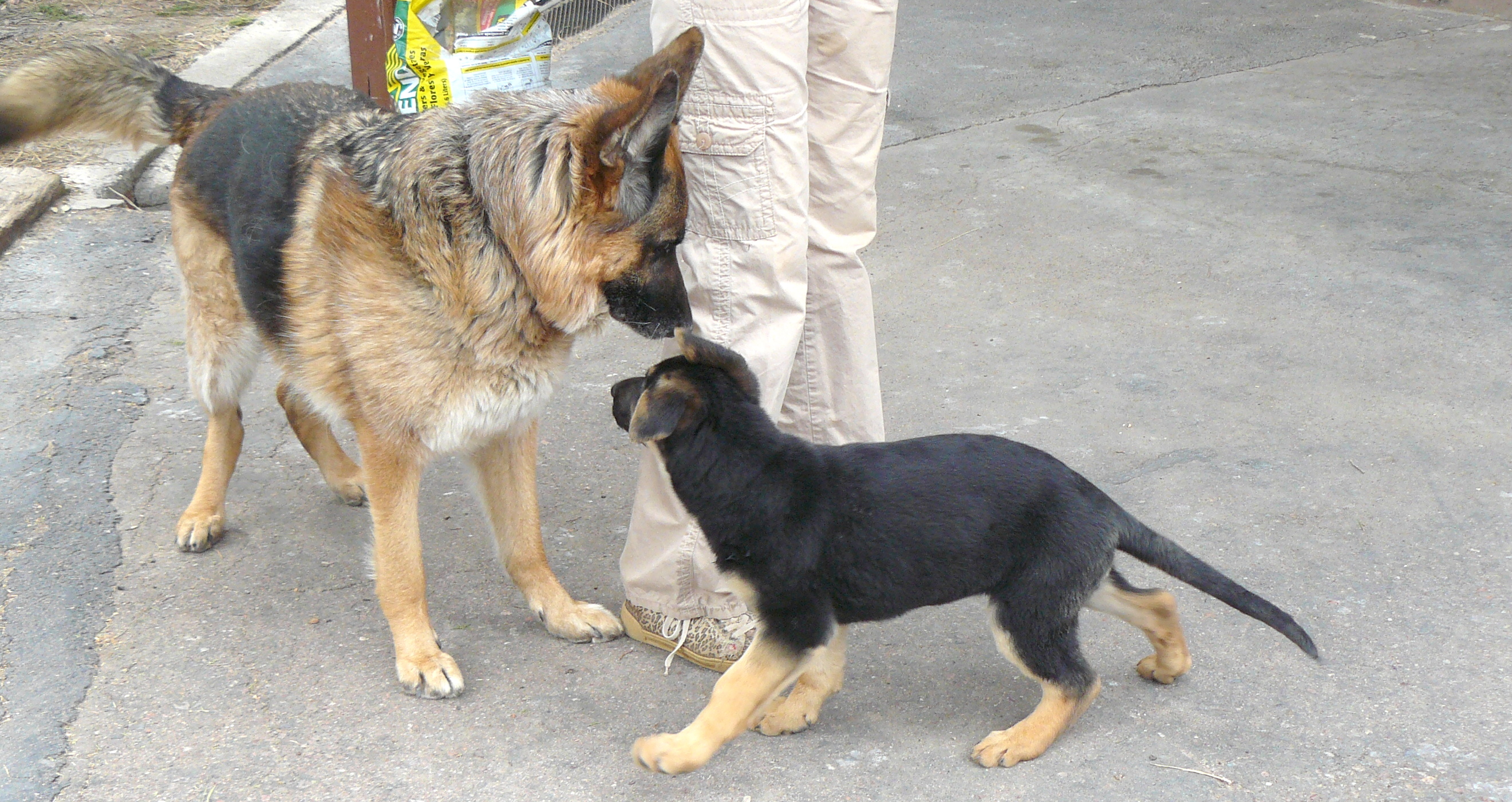
Among our group of nine dogs we have two German Shepherds. Dear old fellow Pharaoh and his much younger female playmate Cleo.
First meeting between Pharaoh and Cleo; April 7th, 2012.
Cleo was born in January, 2012 and came to us in early April that same year. From the start, Cleo has been a warm, loving and friendly dog.
For a long time, Jean has treated our dogs by giving them sawn sections, about 3/4 in thick, of beef leg bones. They love gnawing on the bone and the marrow at the centre is very good for dogs.
Thus it was on Saturday that all the dogs were enjoying their treat.
I was working outside the house and Jean and the dogs were inside.
All of a sudden Jean was calling to me, clearly stressed out, to come into the house straightaway.
I went in and found that Cleo had jammed her lower jaw through her piece of bone and that it was stuck hard behind her lower canines. Jean and I led Cleo outside so she was clear of all the other dogs.
We quickly discovered that once Cleo’s jaw was trapped in the bone, it had started rubbing against her gums, quickly creating a painful area. This made it very difficult to hold Cleo still, prise her jaw apart to try and gently remove the offending bone. The more we tried, the more agitated became Cleo.
In the end, I went inside the house to telephone a close neighbour who is also a veterinary doctor at the clinic in town where we take our dogs. Jim G. dropped everything and promised to be over in a few minutes.
As it happened, when I returned outside Jean had managed, somehow, to remove the trapped bone. I called Jim back immediately but he was already at our front gate and suggested he just take a quick look at Cleo
Here is the piece of bone after it was removed from Cleo’s jaw.
Smaller hole is about 1 & 5/8 in (4 cms) diameter.
Innocent mistake but, nevertheless, seemed like one that should be promulgated in this place just to make other dog owners aware of this tiny risk.
Cleo cautiously eying both me and the bone.
So you all take care out there!
And thank you Jim for being so responsive on what was your week-end afternoon at home.
There was a wonderful reader reaction to yesterday’s post and it seemed so utterly appropriate to repost something back from November, 2012. Simply because it underscores the reasons why if anyone is looking for a dog, to please consider a rescue dog first.
oooo
More on the beautiful and inspiring ways of the dog.
(First posted on the 20th November, 2012.)
Back at the beginning of July, I wrote a post about Jasmine. Jasmine was a rescue dog that turned out to be a natural ‘Mother hen’. That post was called Letting go; a dog lesson and, as the post explains, “Jasmine was truly one of a kind. She mothered many of the sanctuary’s residents back to health including Bramble the roe deer, Humbug the badger and two of the other sanctuary dogs, just to mention a few.”
But, guess what? More evidence of the benefits of having a dog in your life (or in our case make that 10 dogs!). [Ed. Now 9 dogs.]
Babies who spend time around pet dogs have fewer ear infections and respiratory ailments than those whose homes are animal-free, reported a study.
The study, published in the US journal Pediatrics, did not say why but suggested that being around a dog that spends at least part of its day outdoors may boost a child’s immune system in the first year of life.
Cats, too, seemed to convey some protection to babies, though the effect observed was weaker than with dogs.
The article goes on to say,
The research was based on 397 children in Finland whose parents made diary entries each week recording the state of their child’s health during the infant’s first year, from nine weeks to 52 weeks of age.
Overall, babies in homes with cats or dogs were about 30 percent less likely to have respiratory infectious symptoms — which included cough, wheezing, rhinitis (stuffy or runny nose) and fever — and about half as likely to get ear infections.
And concludes,
The most protective association was seen in children who had a dog inside at home for up to six hours a day, compared to children who did not have any dogs or who had dogs that were always outside.
“We offer preliminary evidence that dog ownership may be protective against respiratory tract infections during the first year of life,” said the study.
“We speculate that animal contacts could help to mature the immunologic system, leading to more composed immunologic response and shorter duration of infections.”
The improvement was significant, even after researchers ruled out other factors that could boost infection risk, such as not having been breastfed, attending daycare, being raised by smokers or parents with asthma, or having older siblings in the household.
In addition to having less frequent ear infections and respiratory infections, babies near dogs tended to need fewer courses of antibiotics compared to those who were reared in pet-free households, it said.
Previous research has shown conflicting results, with some studies finding no benefit for young children being around furry pets and others finding that animal contact appears to offer some protection against colds and stomach ailments.
The study authors said their research differs from previous analyses because it focuses solely on the first postnatal year and does not include older children.
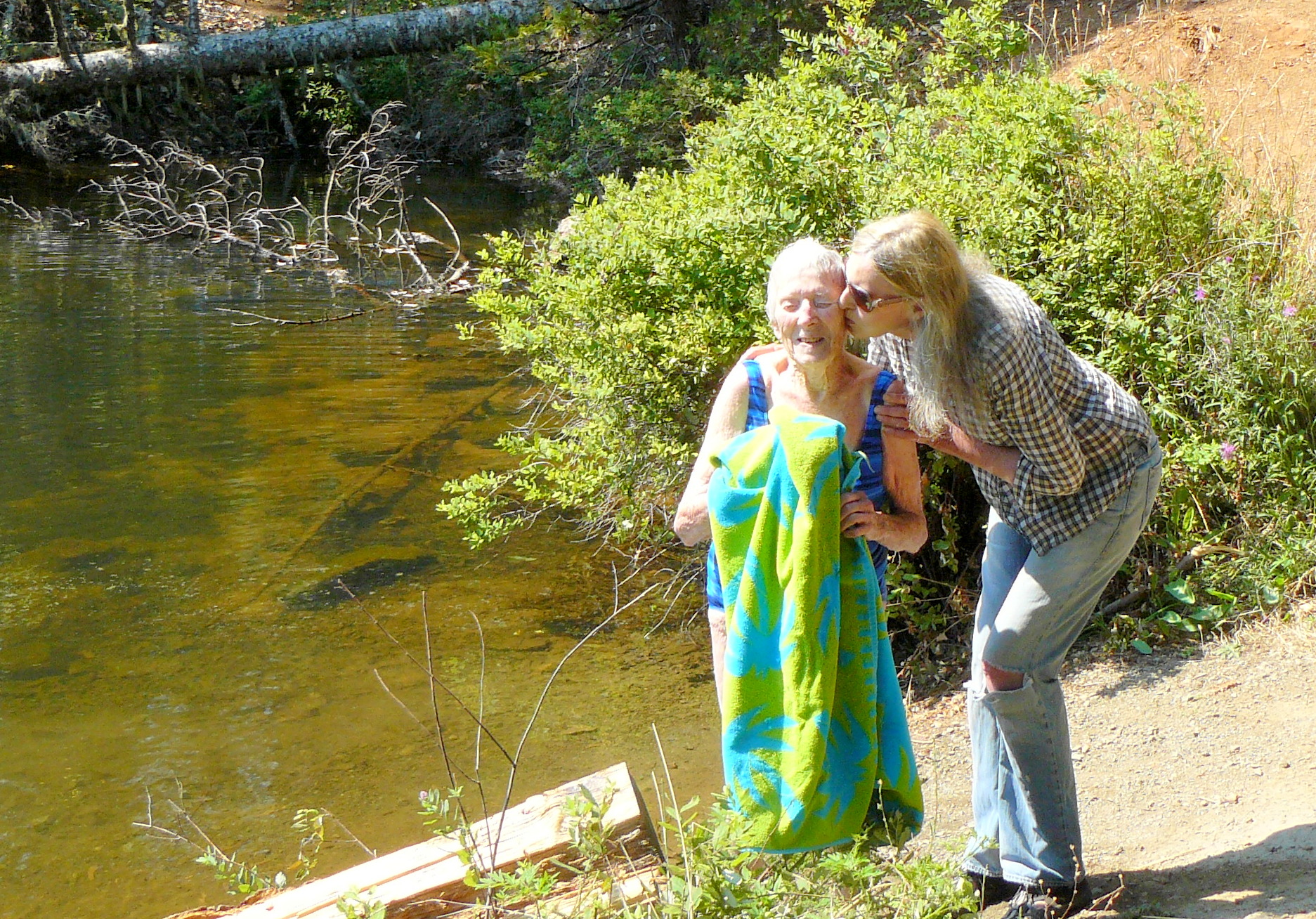
In last week’s picture parade, I featured my mother swimming up at Secesh Reservoir near Wolf Creek. There were many lovely comments and it made my mother’s day to read all your kind words. I also mentioned that my mother was determined to take a swim in our nearby Rogue River and that it would be featured in today’s picture parade.
So here are those pictures.
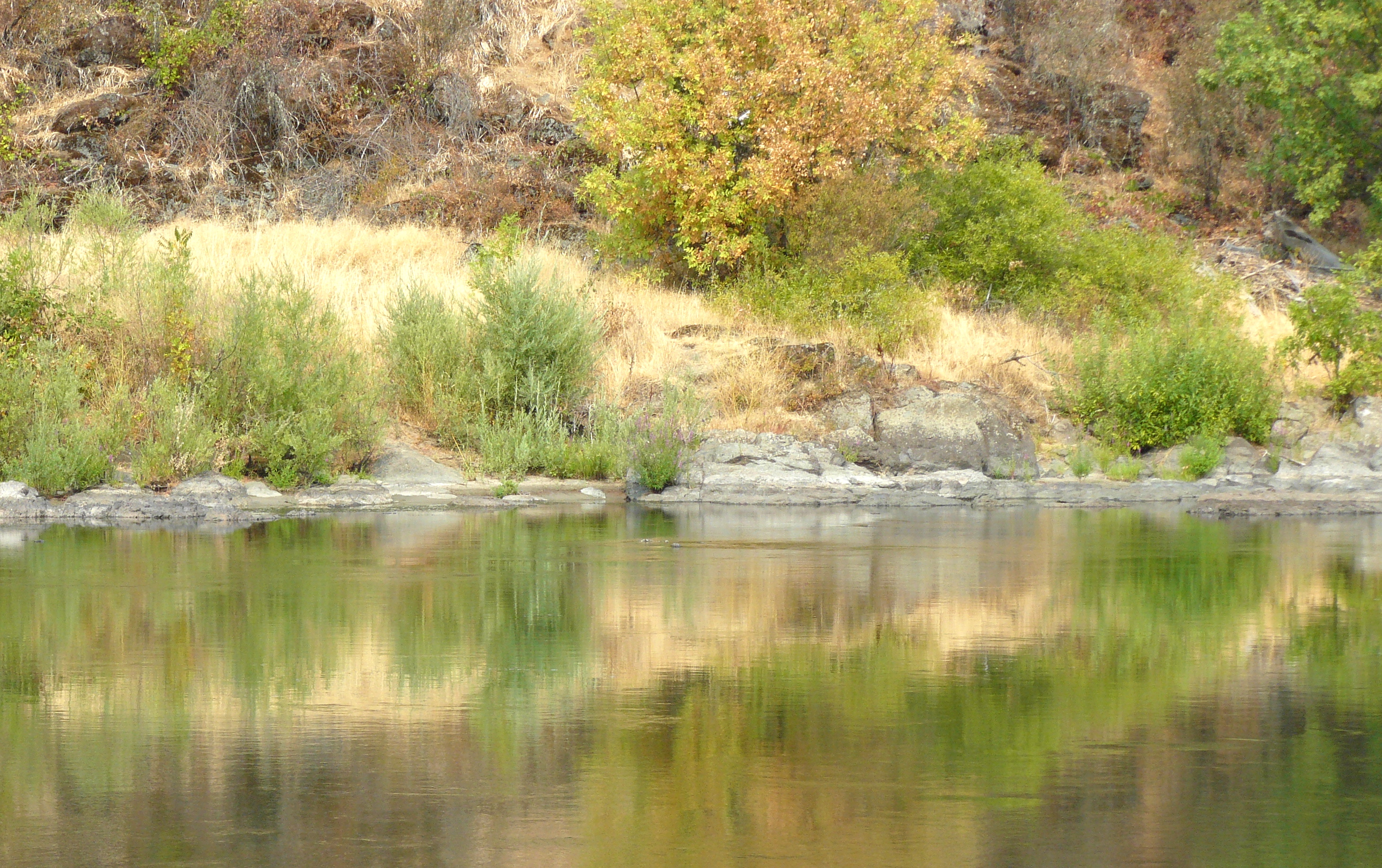
The Rogue River at Matson County Park.
Matson Park is not far from Grants Pass here in Oregon and has the great advantage of offering a beach, albeit a stony beach, that makes entry into the water easier.
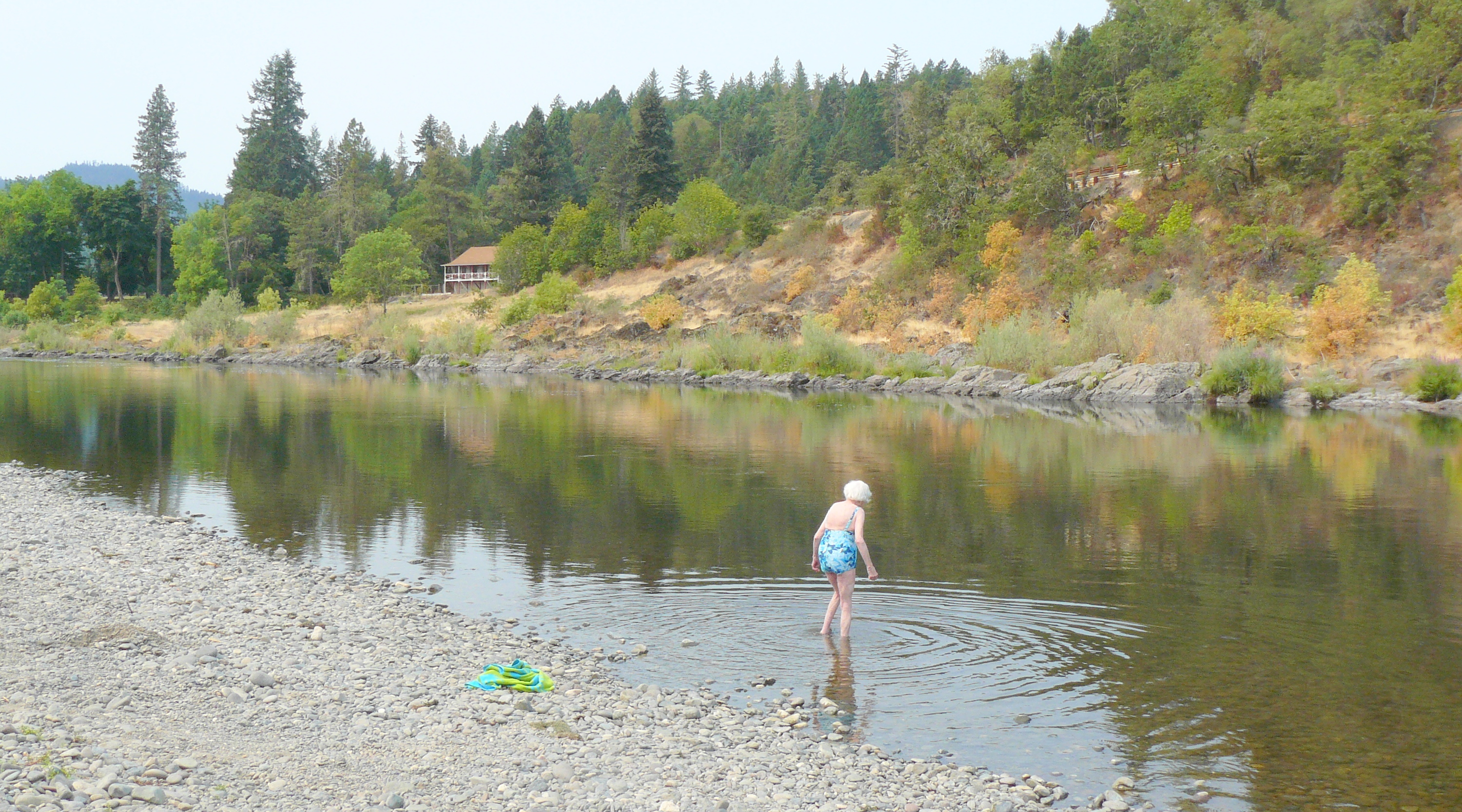
Gingerly wading in.
Jean had to lend my mother her shoes as the river bed was pretty stony.
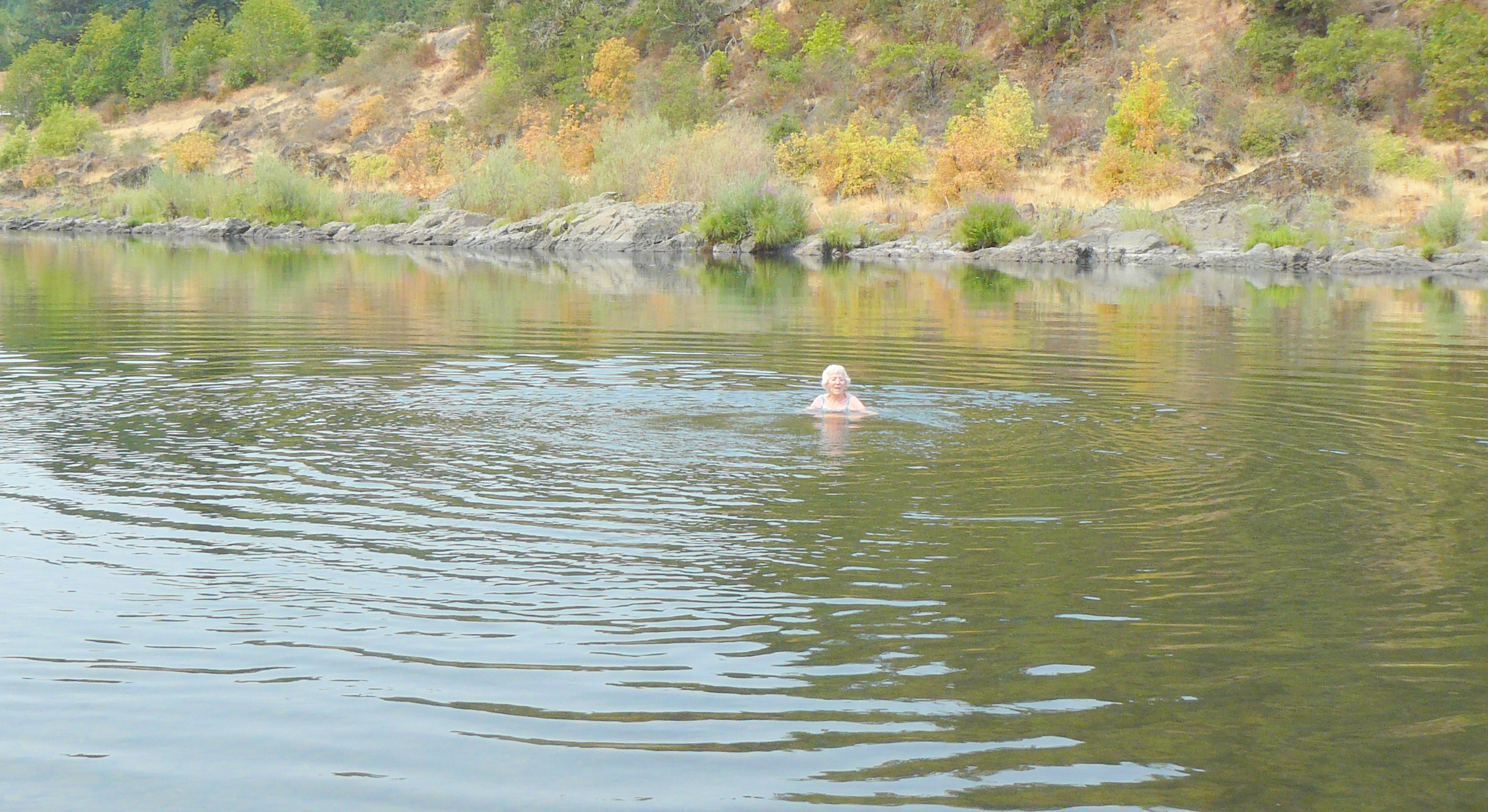
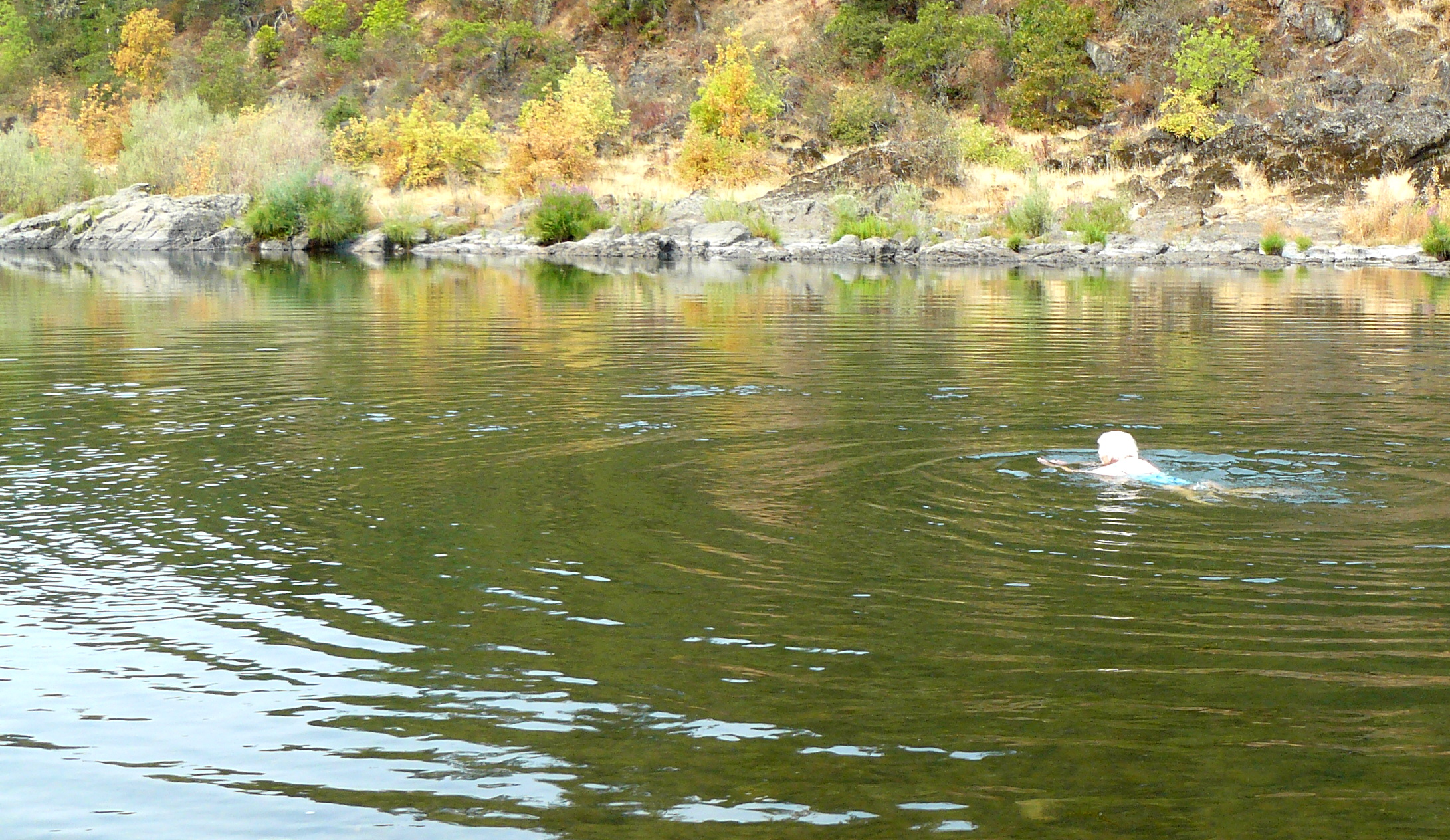
Right out in mid-river!
Luckily the lack of recent rains meant that the river was flowing much more gently than would be usual.
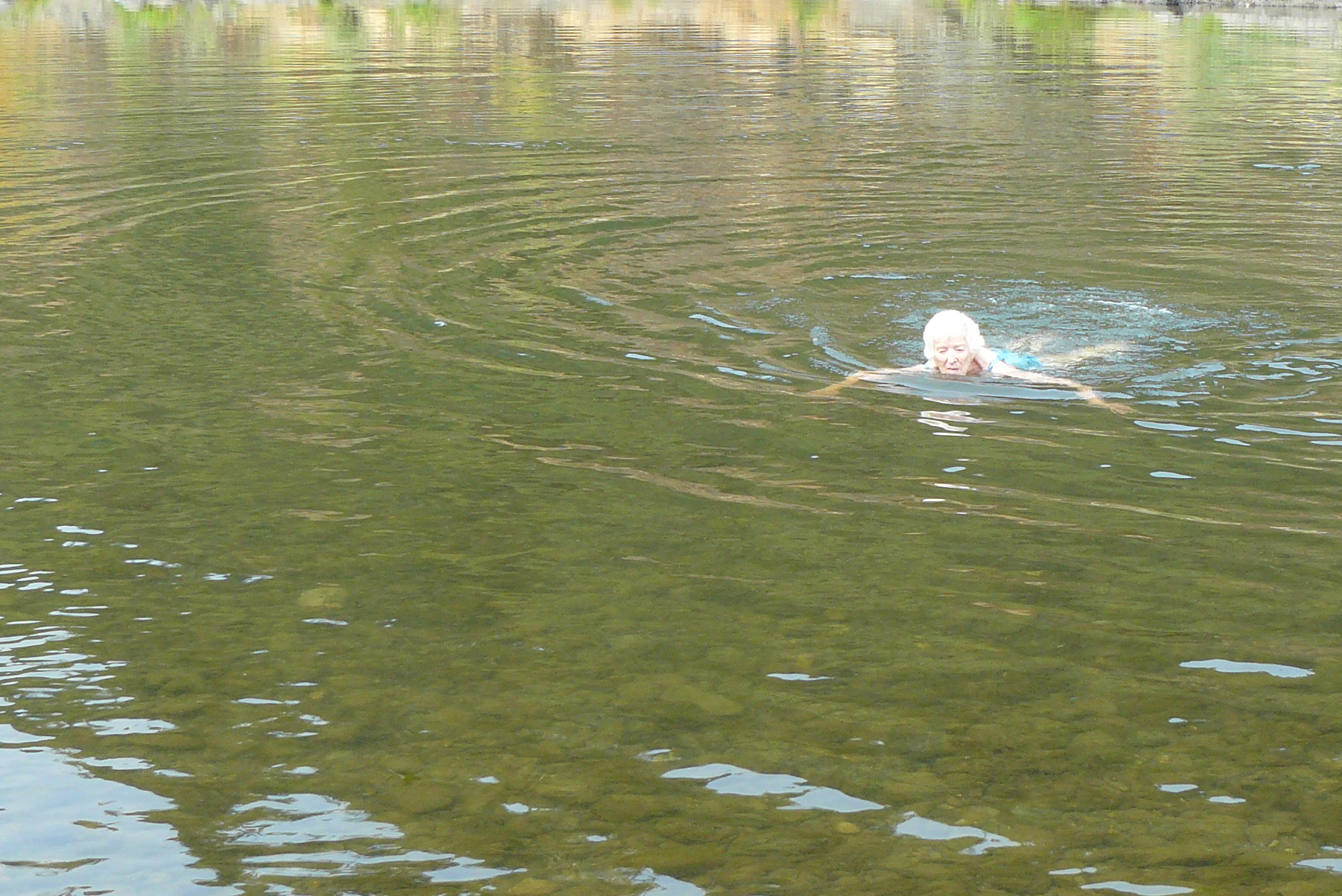
Just keeping abreast of the current.
Yet even with the low volume of water flowing by, the current was a good three to four miles-per-hour and Mum was only able to stay local to us by vigorously swimming upstream.
Another swimming ‘tick in the box’.
Very soon it made sense to return to the beach. What a remarkable lady she is!
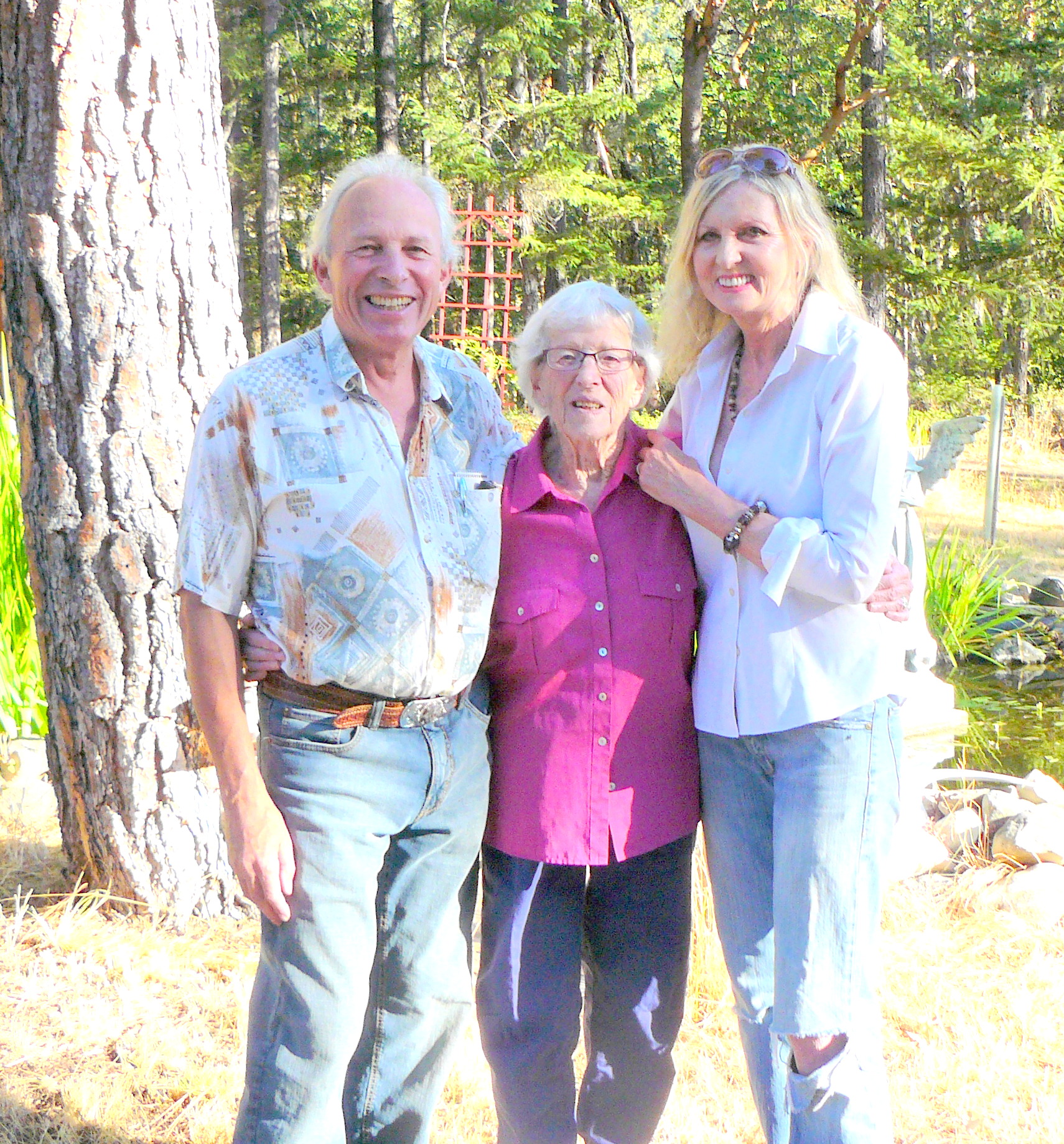
Last morning together.
Soon the day came round for Mum to return to London. This picture was taken just before we left for Medford Airport.
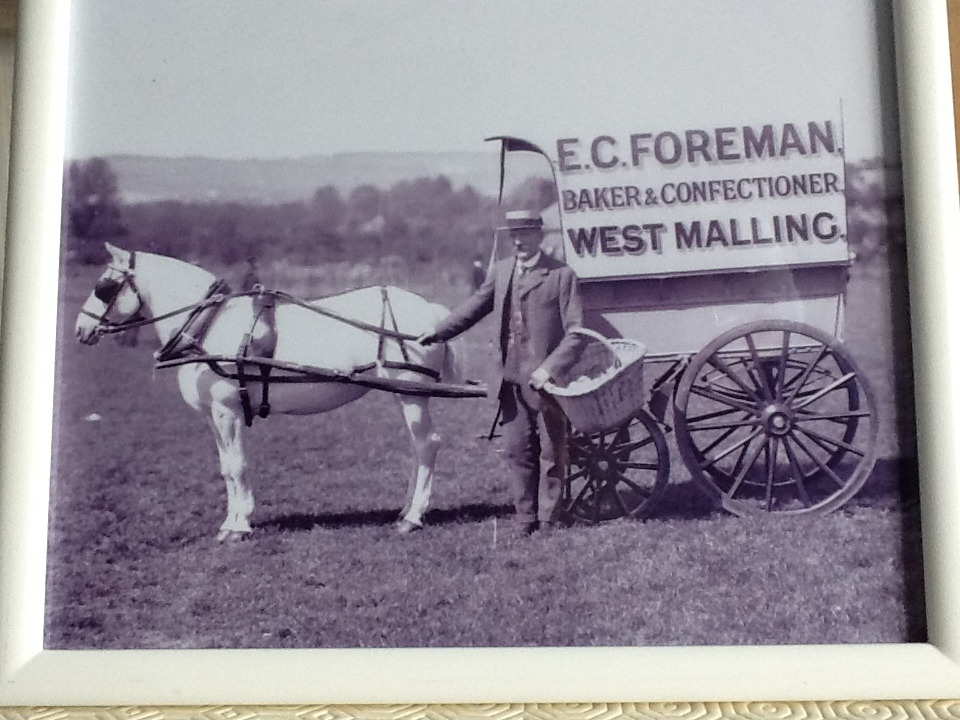
Little piece of nostalgia.
Finally, to close today’s post, here’s a photograph of Mum’s Great Uncle. Believed to have been taken around 1930, Uncle Foreman was the baker in the small village of West Malling in Kent, South-East England.
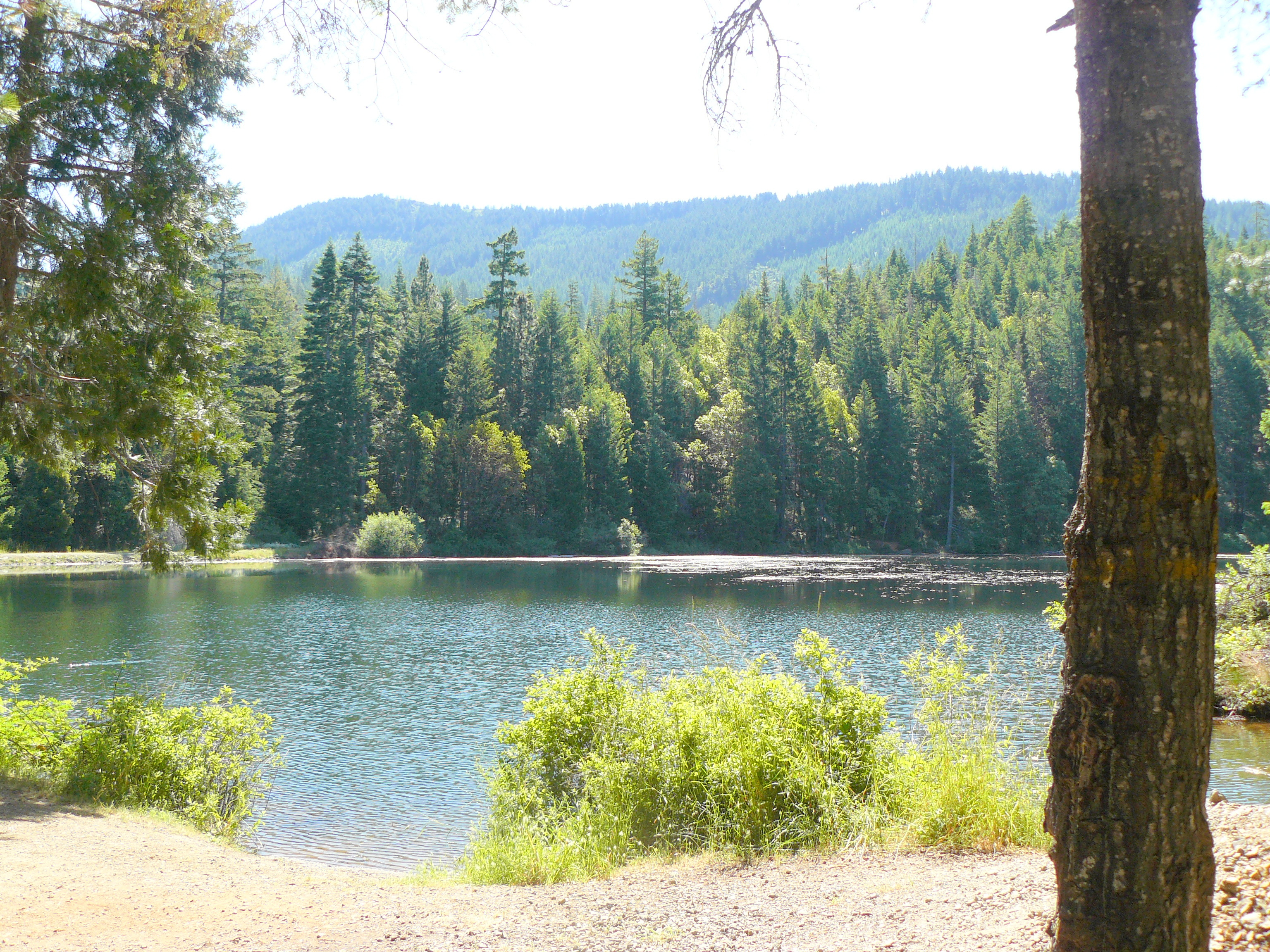
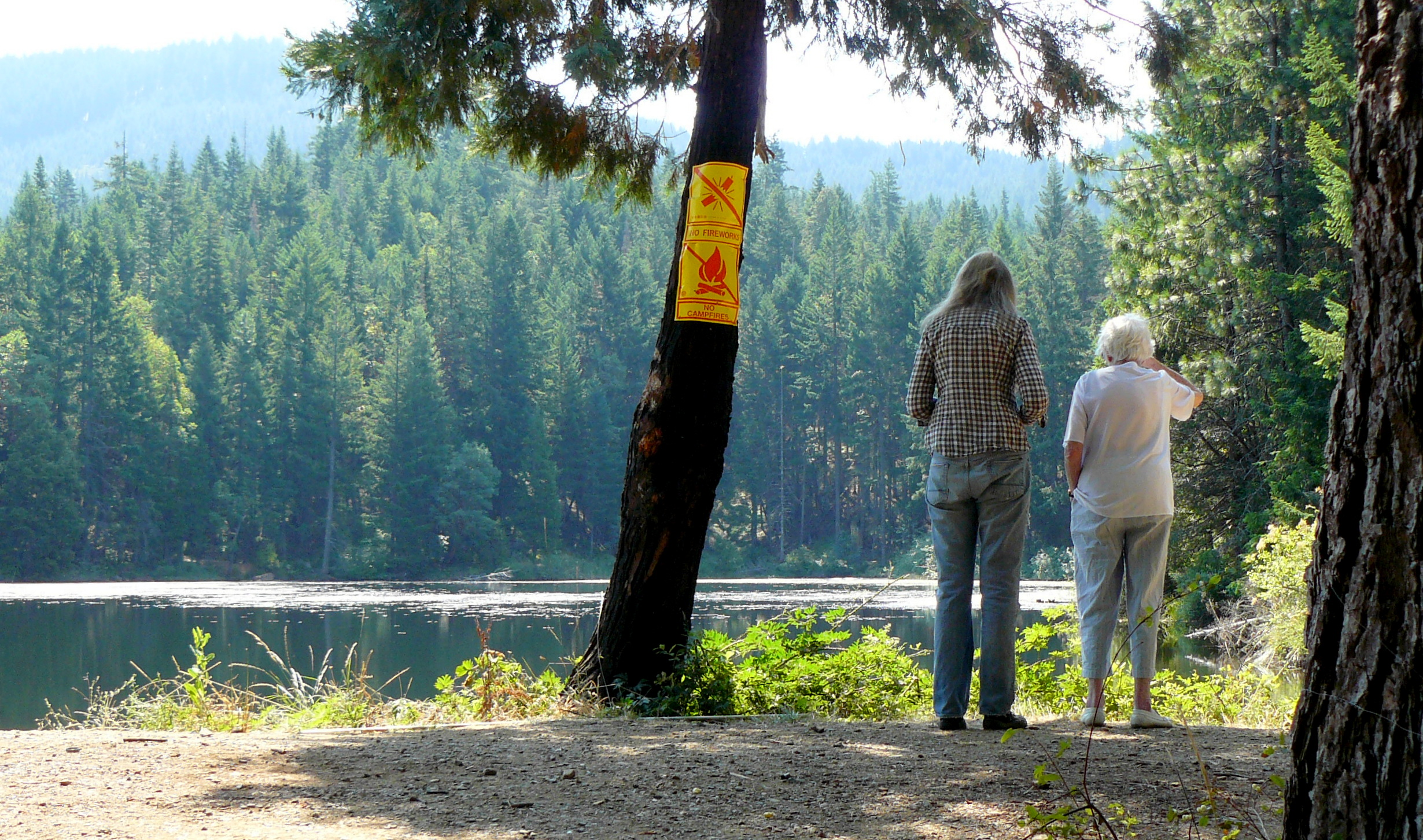
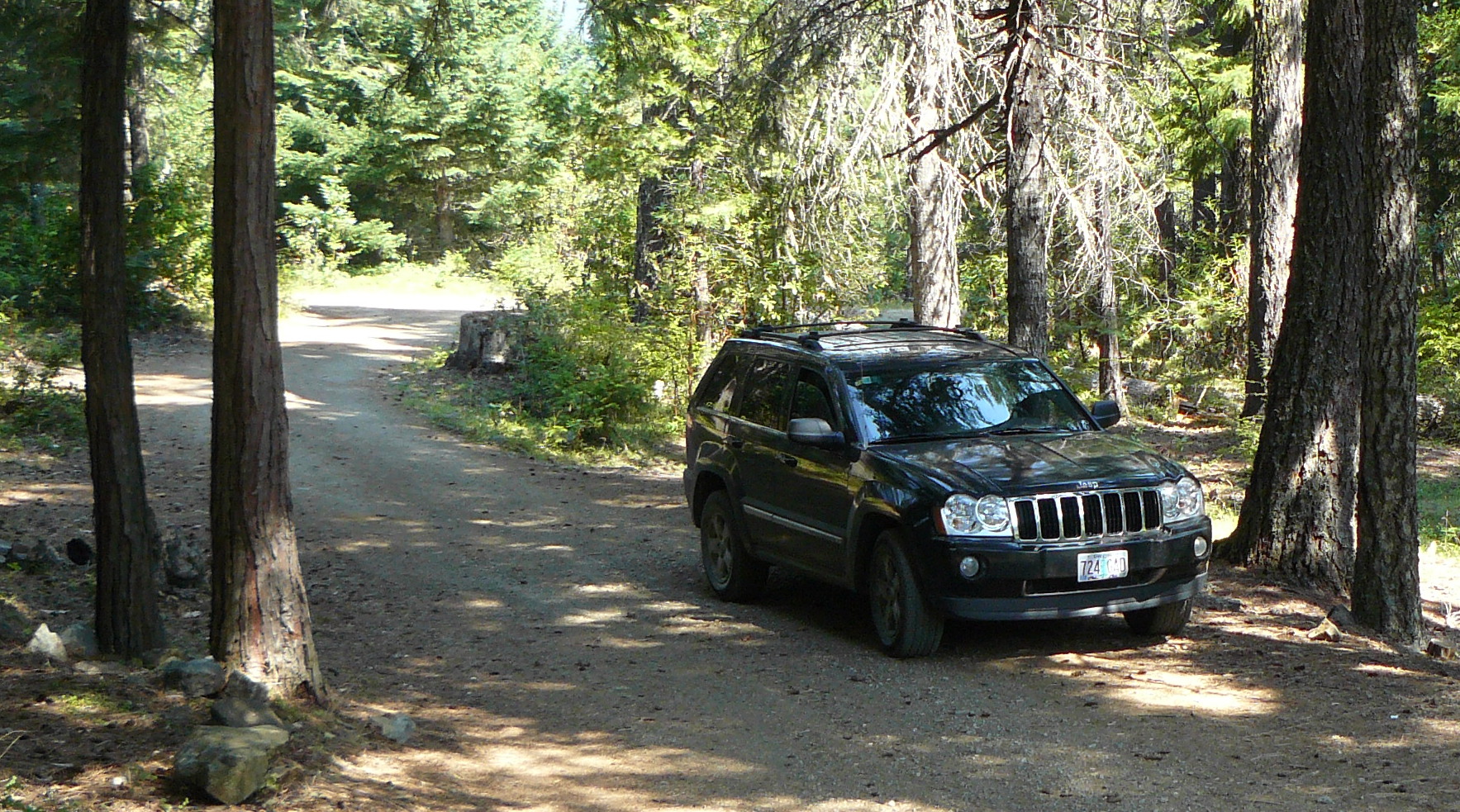
Many of you will know that Elizabeth, my mother from North-West London, is staying with us for a short while. Last Friday, it was decided to drive the 20 miles to the North and along Speaker Road into BLM land and thence up to Secesh Reservoir. This beautiful spot was previously written about in June when we first went to find Secesh. It seemed a perfect spot to take my mother.
Secesh Reservoir.
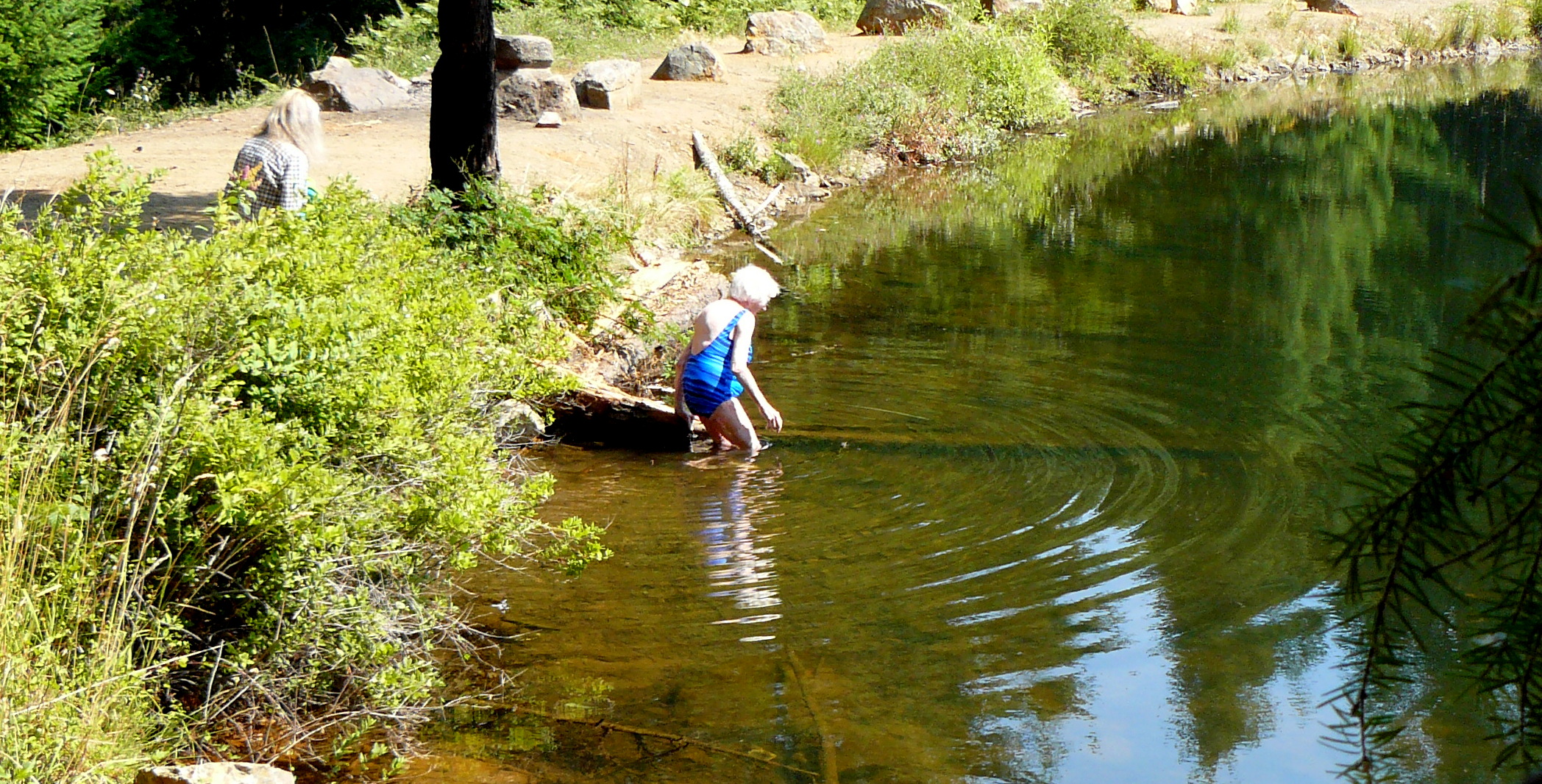
What neither Jean nor I had anticipated was that my mother was determined to swim in Secesh; the remote reservoir is at an altitude of 2,870 feet.
Checking out the best way in!
oooo
Gently does it!
oooo
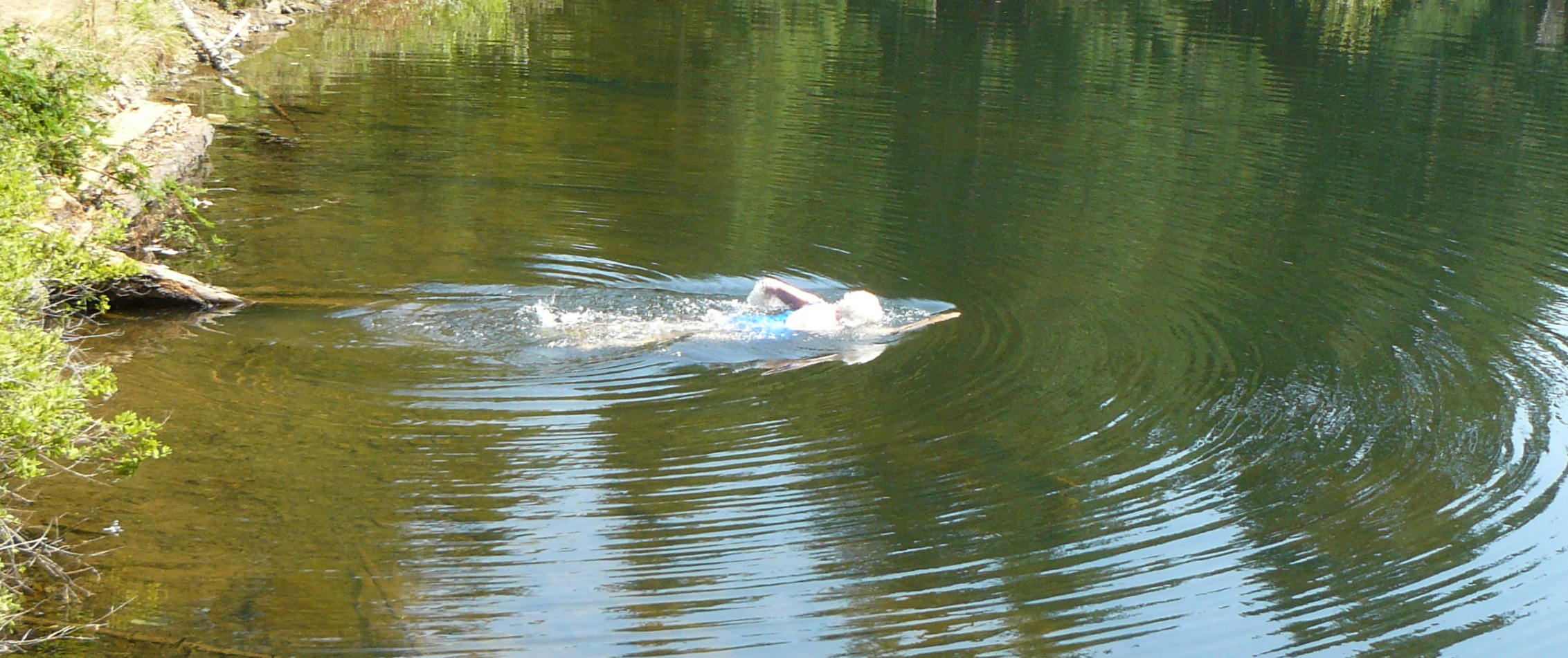
And away we go!
oooo
Fearless!
oooo
And safely back to the shore.
oooo
Jean expressing her love and admiration.
oooo
All good things come to a close.
oooo
Pity about the traffic noise! 😉
Oh, nearly forgot to mention that Elizabeth was born in 1919! That’s 94, by the way!
As I said in the sub-title, this takes some beating!
The more that man tries to interfere the more that man screws up.
Jeannie and I subscribe to Time Magazine. This week’s edition had a pretty eye-catching cover that required a second look.
Illustration by Justin Metz for Time. Photo reference for emerald ash borer courtesy of PDCNR—Forestry Archive, Bugwood.org
That cover referred to the lead article concerning invasive species, “From giant snails to Asian carp, alien wildlife is on the move.“, written by Bryan Walsh. The essence of the article is that man’s global activities are responsible, albeit often unwittingly, for the movement of a wide range of species across national borders. My own reaction to the article was that it was typical of the many ‘scare’ stories the media present but that at the end of the day, nothing will change. However the last two paragraphs of the article did resonate with me.
Human beings have become the dominant force on the planet, so much so that many scientists believe we’ve entered an entirely new geological epoch: the Anthropocene. We have already been shaping the planet unintentionally, through greenhouse-gas emissions and global trade and every other facet of modern existence. The challenge now is to take responsibility for that power over the planet and use it for the right ends – all the while knowing that there is no single correct answer, no lost state of grace we can beat back toward.
How we respond to the thickening invasions that we ourselves loosed will be part of that answer – which is only just. There is one species that can claim to be the most dominant invasive of all time. From its origins in Africa, this species has spread to every corner of the world and every kind of climate. Everywhere it goes, it displaces natives, leaving extinction in its wake, altering habitat to suit its needs, with little regard for the ecological impact. Its numbers have grown nearly a millionfold, and its spread shows no sign of stopping. If that invasive species sounds familiar, it should. It’s us.
Thus with that article from Time in mind, it was very pertinent to see the latest essay from George Monbiot. It reinforces, in spades, the sentiment expressed by Bryan Walsh in those paragraphs above and is republished here on Learning from Dogs with the generous permission of George Monbiot.
ooOOoo
A One Way Street to Oblivion
As soon as an animal becomes extinct, a new bill proposes, it will be classified as “non-native”.
By George Monbiot, published on the Guardian’s website, 21st July 2014
Can any more destructive and regressive measures be crammed into one bill?
Already, the Infrastructure Bill, which, as time goes by, has ever less to do with infrastructure, looks like one of those US monstrosities into which a random collection of demands by corporate lobbyists are shoved, in the hope that no one notices.
So far it contains (or is due to contain) the following assaults on civilisation and the natural world:
– It exempts fracking companies from the trespass laws
– Brings in a legal requirement for the government to maximise the economic recovery of petroleum from the UK’s continental shelf. This is directly at odds with another legal requirement: to minimise the UK’s greenhouse gas emissions
– Introduces the possibility (through Clauses 21 and 22) of a backdoor route to selling off the public forest estate. When this was attempted before, it was thwarted by massive public protest.
– further deregulates the town and country planning system, making life even harder for those who wish to protect natural beauty and public amenities
Enough vandalism? Not at all. There’s yet another clause aimed at suppressing the natural world, which has, so far, scarcely been discussed outside parliament. If the Infrastructure Bill is passed in its current state, any animal species that “is not ordinarily resident in, or a regular visitor to, Great Britain in a wild state” will be classified as non-native and subject to potential “eradication or control”. What this is doing in an infrastructure bill is anyone’s guess.
At first wildlife groups believed it was just poor drafting, accidentally creating the impression that attempts to re-establish species which have become extinct here – such as short-haired bumblebees or red kites – would in future be stamped out. But the most recent Lords debate scotched that hope: it became clear that this a deliberate attempt to pre-empt democratic choice, in the face of rising public enthusiasm for the return of our lost and enchanting wildlife.
As Baroness Parminter, who argued unsuccessfully for changes to the bill, pointed out, it currently creates
“a one-way system for biodiversity loss, as once an animal ceases to appear in the wild, it ceases to be native.”
She also made the point that it’s not just extinct species which from now on will be treated as non-native, but, as the bill now stands, any species listed in Schedule 9 of the Wildlife and Countryside Act 1981.
Among those in Schedule 9 are six native species that have already been re-established in Britain (the capercaillie, the common crane, the red kite, the goshawk, the white-tailed eagle and the wild boar); two that are tentatively beginning to return (the night heron and the eagle owl); and four that have been here all along (the barn owl, the corncrake, the chough and the barnacle goose). All these, it seems, are now to be classified as non-native, and potentially subject to eradication or control.
After the usual orotund time-wasting by aristocratic layabouts (“my ancestor Sir Ewen Cameron of Lochiel, who was known as the great Sir Ewen … killed the last wolf in Scotland” etc), the minister promoting the bill, Baroness Kramer, made it clear that the drafting was no accident. All extinct species, it appears, are to be treated as non-native and potentially invasive. At no point did she mention any of the benefits their re-establishment might bring, such as restoring ecological function and bringing wonder and delight and enchantment back to this depleted land.
Here is a list, taken from Feral, of a few of the animals which have become extinct recently (in ecological terms) and which probably meet the bill’s new definition of non-native: “not ordinarily resident in, or a regular visitor to, Great Britain in a wild state”. Some would be widely welcomed; others not at all, but it’s clear that a debate about which species we might welcome back is one that many people in this country want to have, but that the government wants to terminate. There’s a longer list, with fuller explanations and a consideration of their suitability for re-establishment, in the book.
European Beaver: became extinct in Britain in the mid-18th Century, at the latest. Officially re-established in the Knapdale Forest, Argyll. Unofficially in the catchment of the River Tay and on the River Otter, in Devon.
Wolf: The last clear record is 1621 (not 1743 as commonly supposed). It was killed in Sutherland. As far as I can determine, neither Sir Ewen Cameron nor any of the other blood-soaked lairds and congenital twits from whom Lord Cameron of Dillington is descended were involved.
Lynx: The last known fossil remains date from the 6th Century AD, but possible cultural records extend into the 9th Century.
Wild Boar: The last truly wild boar on record were killed on the orders of Henry III in the Forest of Dean, in 1260. Four small populations in southern England, established after escapes and releases from farms and collections.
Elk or Moose (Alces alces): The youngest bones found in Britain are 3,900 years old. Temporarily released in 2008 into a 450-acre enclosure on the Alladale Estate, Sutherland.
Reindeer: The most recent fossil evidence is 8,300 years old. A free-ranging herd grazes on and around Cairn Gorm in the Scottish Highlands.
Wild horse: The most recent clearly-established fossil is 9,300 years old. Animals belonging to the last surviving subspecies of wild horse, Przewalski’s (Equus ferus przewalskii), graze Eelmoor Marsh in Hampshire.
Forest bison, or wisent: Likely to have become extinct here soon before the peak of glaciation, between 15,000 and 25,000 years ago. A herd was temporarily established at Alladale in 2011.
Brown bear: probably exterminated around 2000 years ago.
Wolverine: survived here until roughly 8,000 years ago.
Lion: the last record of a lion in the region is a bone from an animal that lived in the Netherlands – then still connected to Britain – 10,700 years ago.
Spotted hyaena: around 11,000 years ago.
Hippopotamus: it was driven out of Britain by the last glaciation, around 115,000 years ago, and hunted to extinction elsewhere in Europe about 30,000 years ago.
Grey whale: the most recent palaentological remains, from Devon, belonged to a whale that died around 1610 AD.
Walrus: late Bronze Age, in the Shetland Islands.
European Sturgeon: possibly as recently as the 19th Century.
Blue stag beetle: probably 19th Century.
Eagle owl: the last certain record is from the Mesolithic, 9,000-10,000 years old . But a possible Iron Age bone has been found at Meare in Somerset. Now breeding in some places, after escaping from collections.
Goshawk: wiped out in the 19th Century. Unofficially re-established in the 20th Century, through a combination of deliberate releases and escapes from falconers.
Common crane: last evidence of breeding in Britain was in 1542. Cranes re-established themselves through migration in the Norfolk Broads in 1979, and have bred there since then. Now breeding in two other places in eastern England. Re-introduced in 2010 to the Somerset Levels.
White Stork: last recorded nesting in Edinburgh in 1416. In 2004 a pair tried to breed on an electricity pole in Yorkshire. In 2012 a lone bird built a nest on top of a restaurant in Nottinghamshire.
Spoonbill: the last breeding records are 1602 in Pembrokeshire and 1650 in East Anglia. In 2010 a breeding colony established itself at Holkham in Norfolk.
Night Heron: last bred here in either the 16th or 17th Century, at Greenwich. Today it is a scarce visitor.
Dalmatian Pelican: remains have been found from the Bronze Age in the Cambridgeshire Fens and from the Iron Age in the Somerset levels, close to Glastonbury. A single mediaeval bone has been found in the same place.
These and many others are now to be classified as officially non-native, unless this nonsense can be stopped.
Incidentally, determining what is and isn’t a native species, let alone what “should” or “should not” be living here, is a much more complicated business than you might imagine, as Ken Thompson’s interesting book, Where Do Camels Belong?, makes clear. He also points out that some species which are initially greeted with horror and considered an ecological menace soon settle down as local wildlife learns to prey on them or to avoid them. Sometimes they perform a useful ecological role by filling the gaps created by extinction. He overstates his case, and glosses over some real horror stories, but his book is an important counterweight to attempts to create a rigid distinction between native and non-native wildlife.
Many species introduced to this country by human beings are now cherished as honorary members of our native wildlife. Here are just a few I’ve come across. How many of you knew that they were all brought here by people?:
Brown hare
Little owl
Field poppy
Corncockle
Crack willow
Greater burdock
Pheasant’s eye
Cornflower
Wormwood
Mayweed
White campion
Isn’t this an interesting subject? Unfortunately government ministers seem to know to know nothing about it and to care even less. They are crashing through the middle of delicate interactions between people and the natural world like bulldozers in a rainforest.
I will close today’s post with another, very recent, story in The Guardian, that opens, thus:
Wild beaver kits born in Devon
Thursday 17 July 2014
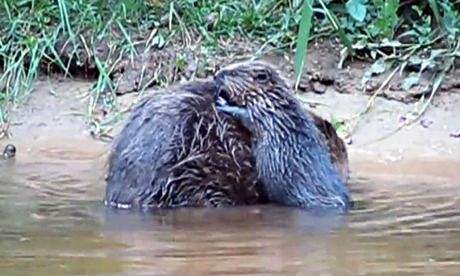
One of the first wild beavers to be seen in England in centuries and due to be taken into captivity has given birth to three young.
Local retired environmentalist Tom Buckley captured the three young beavers climbing all over their mother. Photograph: Tom Buckley/Apex
A wild beaver due to be taken into captivity has given birth to at least three young.
The young, known as kits, were born to the family of two adult and one juvenile European beavers (Castor fiber) that were spotted living on the river Otter in Devon earlier this year, in what was believed to be the first sighting of the species in the wild in England in 500 years.
All that is left for me to do is to quote a little from a recent letter from John Hurlburt.
Our future depends on the air we breathe. Our lives depend upon rivers of living water. Our health requires the blessings of organic agriculture. Our energy streams through us from the cosmos.
We are warrior animals. Peace must come from within. Non-violence is our best choice. We have the magnificent opportunity to wake up as an animal that is grateful and sings in harmony with the Earth.
The present is surrounded by the past and the future. We float on the wings of compassion and wisdom with a sacred responsibility for the Nature of all Creation.


 background