Despite the gloom and real stress for many people it’s not wall-to-wall pessimism.
The reason I was prompted to write about this was a couple of connections made in the last few days and the power they have to keep this elderly chap still bouncing along.
Recently on the forum Ugly Hedgehog there was a gentleman who posted some photographs of some dogs that he had seen at the dog park. It was in a post called Today at the dog park.
They were lovely and I thought what a good idea it would be if I was able to republish them for next week’s Picture Parade. So I asked!
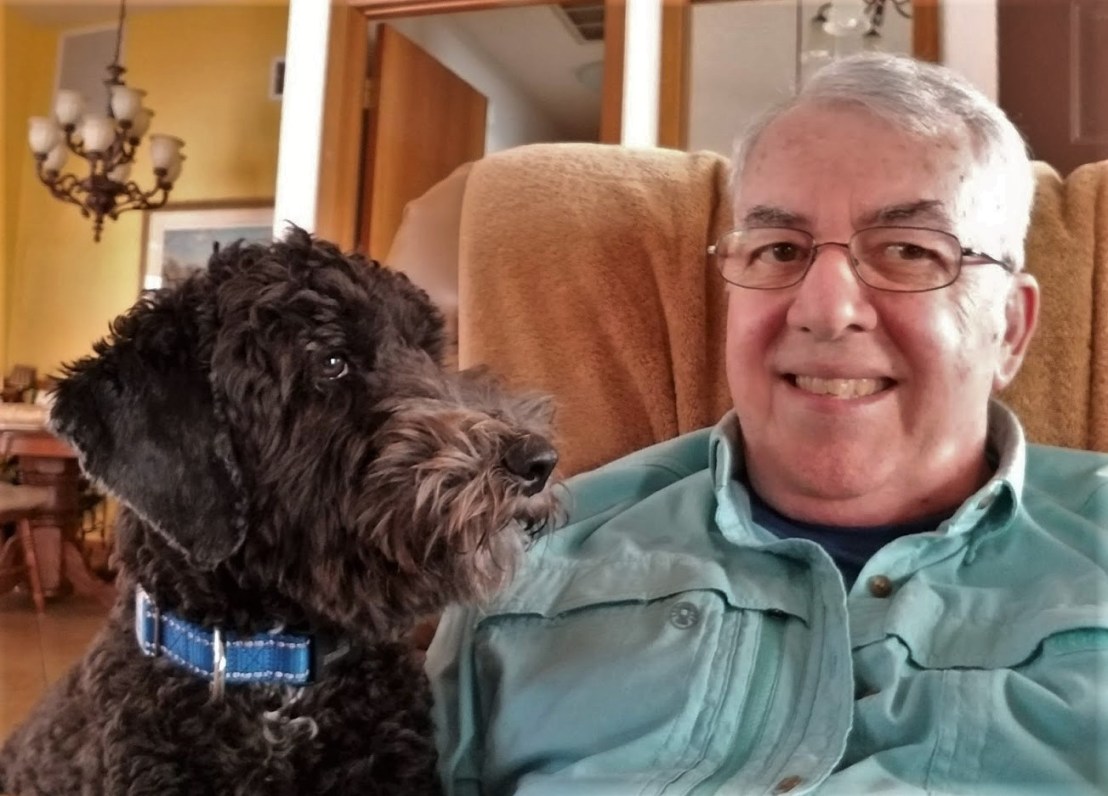
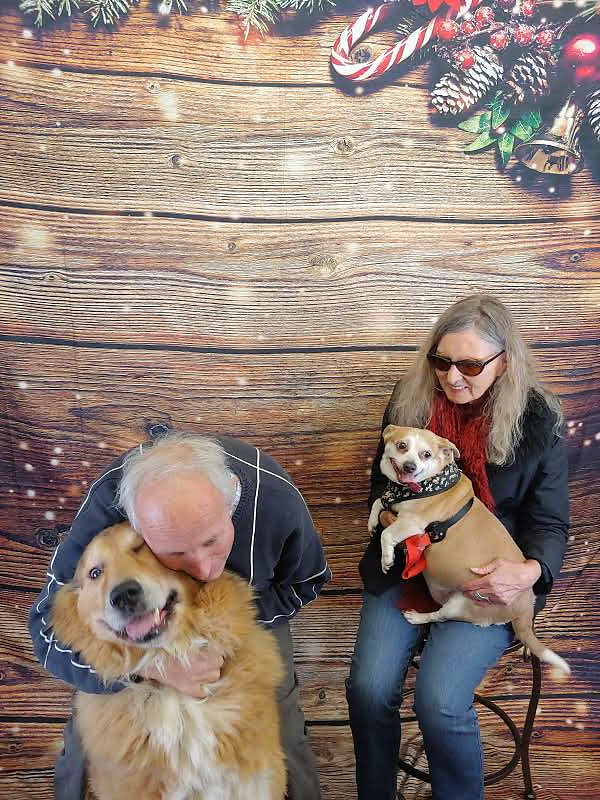
Well I was not disappointed and indeed said gentleman emailed me with a short bio and a photograph of him and his dog by way of an introduction. This is what he wrote:
I was born on Long Island and spent the first 60 years of my life there except for my Naval service for four years during the Vietnam war. I was a Naval Aviator, and after my active duty was over I returned to Long Island and got into a career in law enforcement that lasted 31 years. I made thousands of arrests during my career and many of those who were incarcerated threatened to “get me” some day, so I would prefer that you don’t use my real name.
When I retired at age 60 I moved to Tampa, FL because my daughter lived there and I have two granddaughters and now my son lives here too. It’s great for photographing flora and fauna all year round. My love for dogs has worn off on my kids as my daughter has two of them and my son three! Photography has been a hobby of mine for over 60 years. Here is a casual photo of me and my buddy Ollie (a three year old golden doodle).
Ollie and Nimbushopper
You will have to wait until Sunday to view his photographs!
At the end of November Jean and I wanted to join the local camera club. It was clear that I had a camera, a Nikon D750, that was way more advanced than I thought and, frankly, I didn’t know my way around it.
So we joined the Caveman Camera Club in Grants Pass, Oregon. Although at the moment the pandemic puts a halt on physical meetings, twice a month ‘zoom’ meetings are held. Also mentors were available. I took advantage of the opportunity to work under a mentor and last week I went the short distance of nine miles to meet with Gene. Gene had so much knowledge and had regularly taught photography for a number of years. I came away very inspired and very motivated to become better in my photographic and composure skills. Gene’s area of interest is landscapes.
What was clear was that for my whole life, and I have been taking photographs for a very long time, I had been taking pictures and not composing photographs.
It’s going to be a long journey but one that fills me with delight
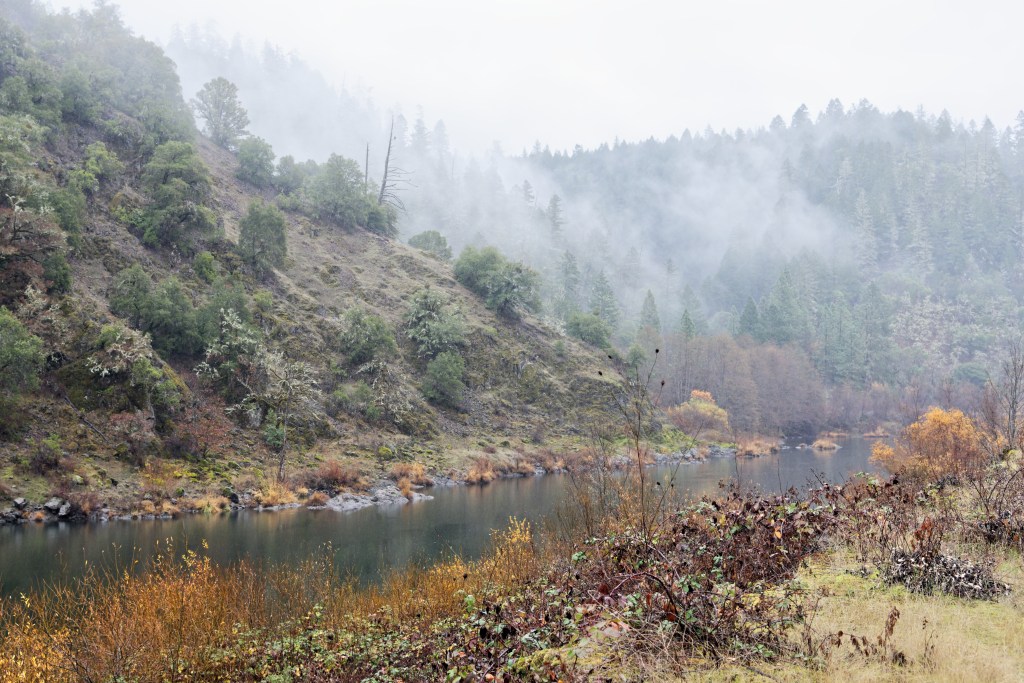
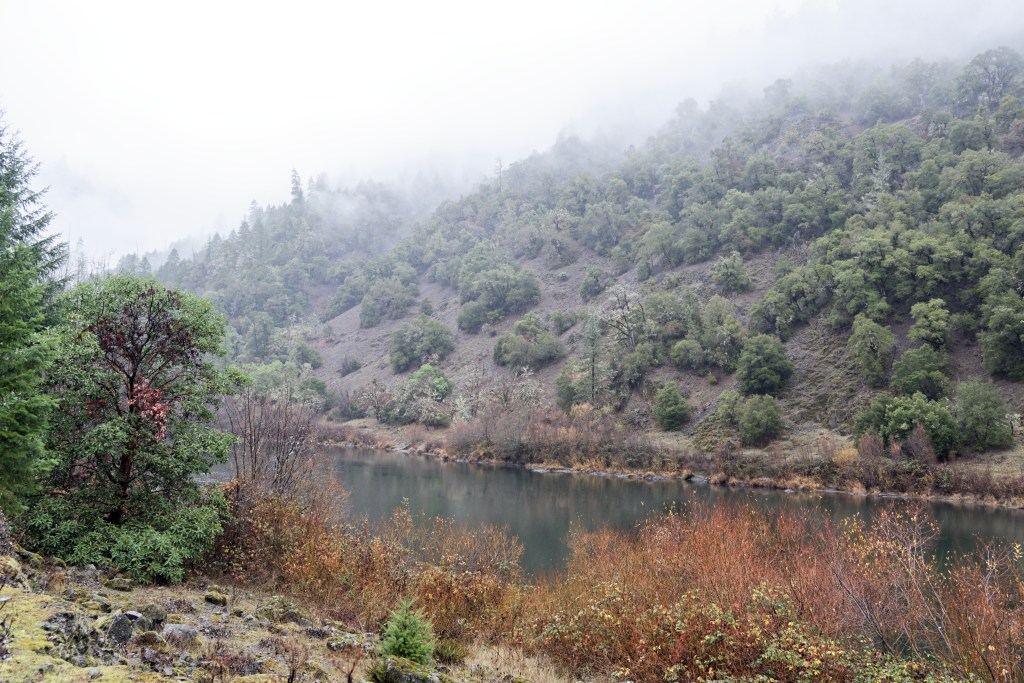
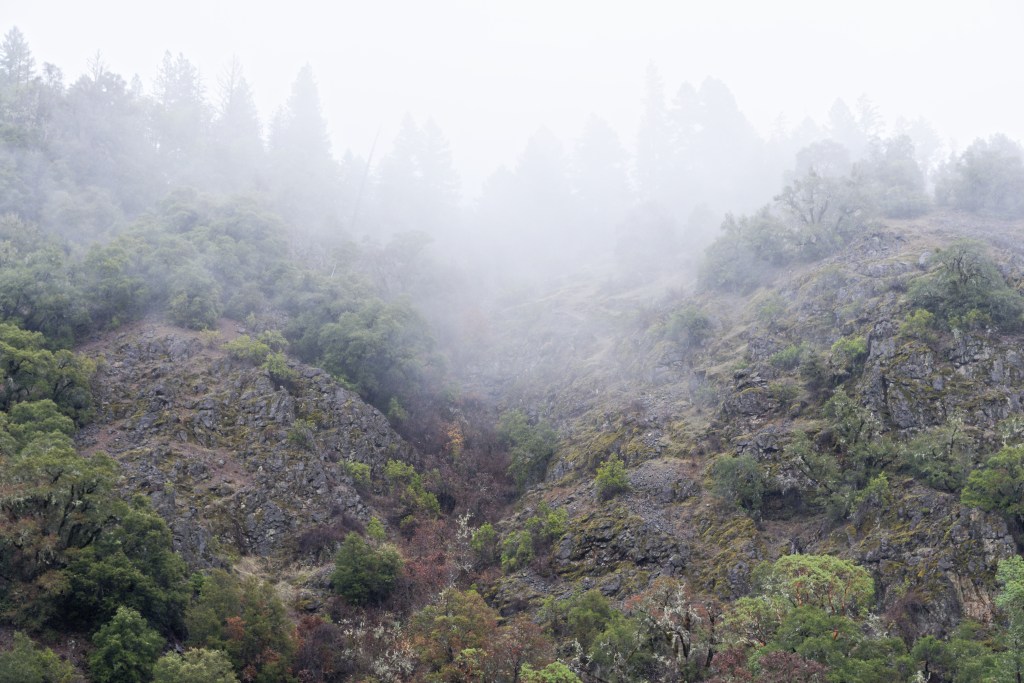
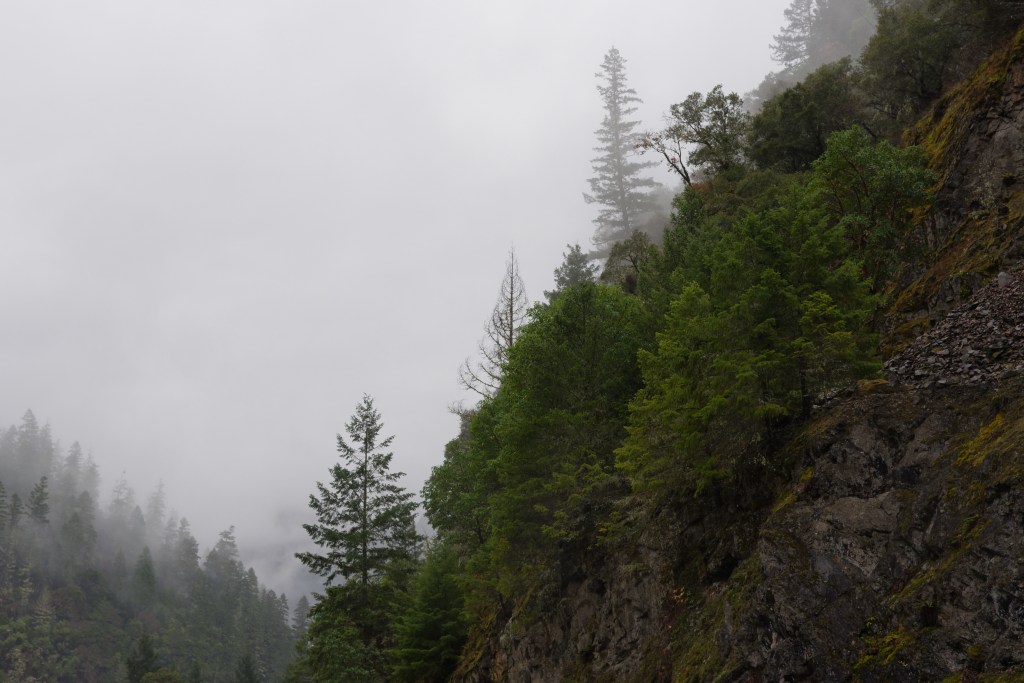
Here are some of my very first attempts, taken yesterday along the Rogue River in the rain and mist.
The Rogue River looking downstream.
oooo
The Rogue River looking upstream from the same point.
oooo
Looking towards the top of the opposite bank.
oooo
Trees in the mist.
Well it’s a start!
But I just wanted to reiterate that staying local both literally and virtually is very rewarding.
It really is delightful when someone comes along and reliably offers to submit a guest post or two, or three, or more. That person is John Brooks and he has submitted many posts; the last one being Ageing Gracefully Applies To Our Dogs As Well. It may be found here.
But before going on I would just like to say thank you to the very helpful comments about Pedi and his diabetes.
So without any further ado here is John’s latest:
ooOOoo
Pigs, Dogs, and Other Pets: Do They Get Along?
By John Brooks, December 3rd, 2020
Pigs are extremely intelligent animals, and this intelligence makes them great, loving and attentive pets. Most people opt for American miniature pigs as pets. This breed is a descendant of potbelly pigs and other small feral pig breeds. Breeders have specifically created miniature pigs to be smaller and lighter than full-sized pigs, so they can trot around the house like a dog or cat would. Most American miniature pigs will weigh between 50-75 pounds and stand 12-15-inches tall.
Ultimately however, it does not matter whether you have a full-sized or miniature pig, their ability to interact with other animals remains the same. Bringing a pig into a situation with other pets or bringing home a new pet when you already have a pet pig can be a stressful time. Pigs are prey animals. They typically react to new situations with fear.
But, you can cut down on your pet pig stress by choosing the right companion animal for them. Pigs can get along with other pets, you just need to make the introduction and relationship as safe and healthy as possible. Here we explain how to do just that.
Pigs and Dogs
Pigs and dogs living together in harmony is a big concern for most pet owners. There are plenty of photos online of pigs and dogs as best friends. But, do not count on your pig and dog getting along. Pigs are prey animals and dogs are predators. It is very easy for instinct to take over for both animals, especially if you are not there to supervise the interaction.
In addition to their instinctual behaviors, pigs and dogs have different social cues. Both are playful and intelligent animals, but their body language will be completely different. Your pig may annoy your dog and vice versa because they are unable to understand that the other animal needs a break.
These complications do not mean a pig and dog can get along. You just have to take precautions. If you do have a dog and pig together in the same household, it is essential that you supervise all of their interactions. Ultimately, if you are going to let your piggy roam free, your dog will need to be in a crate while you do so, or in another room or outside.
Pigs and Other Pets
As far as other pets are concerned, pigs will do well with almost any other prey animal. If you are searching for a friend for your piggy, here are the most common pig and pet relationships, and tips for making these relationships work:
Cats
In general, pigs and cats do well together. Despite cats being predators, the website All About Cats state that pigs have similar personality traits to cats. Additionally, cats are much less likely to hurt a pig than a dog. Even miniature pigs weigh from 50-100 pounds. It will be very hard for a common housecat to injure this size animal.
As with all animals, you will need to ensure the personalities of your cat and pig work well together. A lazy cat and playful pig will not be a good combination. However, a cat and pig with complementary personalities will likely get along just fine.
Farm Animals
Personality will come into play when introducing pigs to other farm animals. Animals that tend to buck or head-butt can hurt a pig. Similarly, pigs can bite if they feel threatened. Always test out a farm animal with a pig under supervision before putting them in a pasture together.
Farm animals that work well with pigs include sheep, goats, cows, donkeys, horses, and llamas. Obviously, you will need a lot of property to house any of these animals. Pigs work well in the same pasture as other farm animals, but it is better to give them their own living quarters in a barn or lean-to.
Conclusion
Pigs can be an amazing pet. They are trainable and affectionate. You can even teach them to walk on a harness. But, you will need to take some care in finding them a friend. Pigs can become close to many different species of animals. Some just work better than others.
Keep the personality of your pig in mind when looking for a companion. You will also want to keep early interactions short. Finally, supervision is key when it comes to successful relationships between your pig, dog, and other pets.
ooOOoo
Another brilliant essay.
Thank you to John and I write on my own behalf and, I am certain, on behalf of many, many other people.
Fences have big effects on land and wildlife around the world that are rarely measured
November 30, 2020
By Alex McInturff, Postdoctoral Researcher, University of California Santa Barbara,
and
Christine Wilkinson, Ph.D. Candidate in Environmental Science, Policy and Management, University of California, Berkeley,
and
Wenjing Xu, PhD Candidate in Environmental Science, Policy and Management, University of California, Berkeley.
What is the most common form of human infrastructure in the world? It may well be the fence. Recent estimates suggest that the total length of all fencing around the globe is 10 times greater than the total length of roads. If our planet’s fences were stretched end to end, they would likely bridge the distance from Earth to the Sun multiple times.
On every continent, from cities to rural areas and from ancient to modern times, humans have built fences. But we know almost nothing about their ecological effects. Border fences are often in the news, but other fences are so ubiquitous that they disappear into the landscape, becoming scenery rather than subject.
In a recently published study, our team sought to change this situation by offering a set of findings, frameworks and questions that can form the basis of a new discipline: fence ecology. By compiling studies from ecosystems around the world, our research shows that fences produce a complex range of ecological effects.
If fences seem like an odd thing for ecologists to study, consider that until recently no one thought much about how roads affected the places around them. Then, in a burst of research in the 1990s, scientists showed that roads – which also have been part of human civilization for millennia – had narrow footprints but produced enormous environmental effects.
Our research team became interested in fences by watching animals. In California, Kenya, China and Mongolia, we had all observed animals behaving oddly around fences – gazelles taking long detours around them, for example, or predators following “highways” along fence lines.
We reviewed a large body of academic literature looking for explanations. There were many studies of individual species, but each of them told us only a little on its own. Research had not yet connected the dots between many disparate findings. By linking all these studies together, we uncovered important new discoveries about our fenced world.
Early advertisement for barbed wire fencing, 1880-1889. The advent of barbed wire dramatically changed ranching and land use in the American West by ending the open range system. Kansas Historical Society, CC BY-ND
Remaking ecosystems
Perhaps the most striking pattern we found was that fences rarely are unambiguously good or bad for an ecosystem. Instead, they have myriad ecological effects that produce winners and losers, helping to dictate the rules of the ecosystems where they occur.
Even “good” fences that are designed to protect threatened species or restore sensitive habitats can still fragment and isolate ecosystems. For example, fences constructed in Botswana to prevent disease transmission between wildlife and livestock have stopped migrating wildebeests in their tracks, producing haunting images of injured and dead animals strewn along fencelines.
One finding that we believe is critical is that for every winner, fences typically produce multiple losers. As a result, they can create ecological “no man’s lands” where only species and ecosystems with a narrow range of traits can survive and thrive.
Altering regions and continents
Examples from around the world demonstrate fences’ powerful and often unintended consequences. The U.S.-Mexico border wall – most of which fits our definition of a fence – has genetically isolated populations of large mammals such as bighorn sheep, leading to population declines and genetic isolation. It has even had surprising effects on birds, like ferruginous pygmy owls, that fly low to the ground.
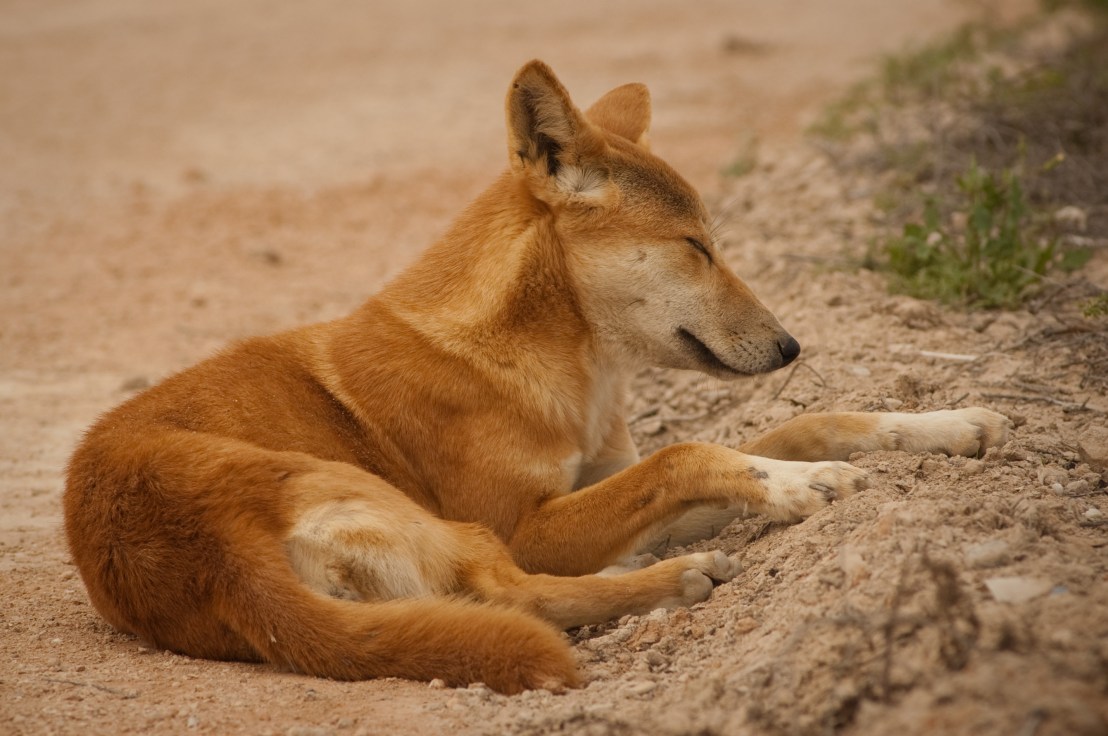
Australia’s dingo fences, built to protect livestock from the nation’s iconic canines, are among the world’s longest man-made structures, stretching thousands of kilometers each. These fences have started ecological chain reactions called trophic cascades that have affected an entire continent’s ecology.
The absence of dingoes, a top predator, from one side of the fence means that populations of prey species like kangaroos can explode, causing categorical shifts in plant composition and even depleting the soil of nutrients. On either side of the fence there now are two distinct “ecological universes.”
Our review shows that fences affect ecosystems at every scale, leading to cascades of change that may, in the worst cases, culminate in what some conservation biologists have described as total “ecological meltdown.” But this peril often is overlooked.
The authors assembled a conservative data set of potential fence lines across the U.S. West. They calculated the nearest distance to any given fence to be less than 31 miles (50 kilometers), with a mean of about 2 miles (3.1 kilometers). McInturff et al,. 2020, CC BY-ND
To demonstrate this point, we looked more closely at the western U.S., which is known for huge open spaces but also is the homeland of barbed wire fencing. Our analysis shows that vast areas viewed by researchers as relatively untrodden by the human footprint are silently entangled in dense networks of fences.
Do less harm
Fences clearly are here to stay. As fence ecology develops into a discipline, its practitioners should consider the complex roles fences play in human social, economic and political systems. Even now, however, there is enough evidence to identify actions that could reduce their harmful impacts.
There are many ways to change fence design and construction without affecting their functionality. For example, in Wyoming and Montana, federal land managers have experimented with wildlife-friendly designs that allow species like pronghorn antelope to pass through fences with fewer obstacles and injuries. This kind of modification shows great promise for wildlife and may produce broader ecological benefits.
Another option is aligning fences along natural ecological boundaries, like watercourses or topographical features. This approach can help minimize their effects on ecosystems at low cost. And land agencies or nonprofit organizations could offer incentives for land owners to remove fences that are derelict and no longer serve a purpose.
Knowing this, we believe that policymakers and landowners should be more cautious about installing fences in the first place. Instead of considering only a fence’s short-term purpose and the landscape nearby, we would like to see people view a new fence as yet another permanent link in a chain encircling the planet many times over.
ooOOoo
This is something that I hadn’t hitherto thought about. I suspect that I am not alone.
There are many aspects of the fence that warrant more careful thought. I will close by repeating what was said just a few paragraphs above:
There are many ways to change fence design and construction without affecting their functionality. For example, in Wyoming and Montana, federal land managers have experimented with wildlife-friendly designs that allow species like pronghorn antelope to pass through fences with fewer obstacles and injuries. This kind of modification shows great promise for wildlife and may produce broader ecological benefits.
Another option is aligning fences along natural ecological boundaries, like watercourses or topographical features. This approach can help minimize their effects on ecosystems at low cost. And land agencies or nonprofit organizations could offer incentives for land owners to remove fences that are derelict and no longer serve a purpose.
I am not saying anything new but just reiterating what has been said before: 2020 is going to go down as the year from hell! And I don’t think that is too strong a word!
Part of it are the news stories that sweep the world: Covid-19; Brexit; Climate change; up until yesterday what was President Trump going to do in his last few weeks; etc; etc.
Also part of it is the way that news and more news and, yes, more news is flashed around the globe. Most of it bad news as we all know that bad news sells!
Finally, part of it is the new world of social media especially messaging on a smartphone. President Trump isn’t the only one to communicate greatly via Twitter.
Now, speaking personally, I couldn’t have got through this year without Jeannie and our dogs.
Pure bliss!
But, nevertheless, something has changed and Mark Satta has written an article that tries to explain things.
ooOOoo
Three reasons for information exhaustion – and what to do about it
By Mark Satta, Assistant Professor of Philosophy, Wayne State University.
November 18th, 2020
An endless flow of information is coming at us constantly: It might be an article a friend shared on Facebook with a sensational headline or wrong information about the spread of the coronavirus. It could even be a call from a relative wanting to talk about a political issue.
All this information may leave many of us feeling as though we have no energy to engage.
As a philosopher who studies knowledge-sharing practices, I call this experience “epistemic exhaustion.” The term “epistemic” comes from the Greek word episteme, often translated as “knowledge.” So epistemic exhaustion is more of a knowledge-related exhaustion.
It is not knowledge itself that tires out many of us. Rather, it is the process of trying to gain or share knowledge under challenging circumstances.
Currently, there are at least three common sources that, from my perspective, are leading to such exhaustion. But there are also ways to deal with them.
1. Uncertainty
For many, this year has been full of uncertainty. In particular, the coronavirus pandemic has generated uncertainty about health, about best practices and about the future.
Experiencing uncertainty can stress most of us out. People tend to prefer the planned and the predictable. Figures from 17th-century French philosopher René Descartes to 20th-century Austrian philosopher Ludwig Wittgenstein have recognized the significance of having certainty in our lives.
With information so readily available, people may be checking news sites or social media in hopes of finding answers. But often, people are instead greeted with more reminders of uncertainty.
As Trump supporters denounce the 2020 election results, feelings of uncertainty can come up for others. Karla Ann Cote/NurPhoto via Getty Images
Many writers have discussed the negative effects of polarization, such as how it can damage democracy. But discussions about the harms of polarization often overlook the toll polarization takes on our ability to gain and share knowledge.
Second, polarization can lead to competing narratives because in a deeply polarized society, as studies show, we can lose common ground and tend to have less agreement.
For those inclined to take the views of others seriously, this can create additional cognitive work. And when the issues are heated or sensitive, this can create additional stress and emotional burdens, such as sadness over damaged friendships or anger over partisan rhetoric.
As chess grandmaster Garry Kasparov put it: “The point of modern propaganda isn’t only to misinform or push an agenda. It is to exhaust your critical thinking, to annihilate truth.”
Misinformation is often exhausting by design. For example, a video that went viral, “Plandemic,” featured a large number of false claims about COVID-19 in rapid succession. This flooding of misinformation in rapid succession, a tactic known as a Gish gallop, makes it challenging and time-consuming for fact checkers to refute the many falsehoods following one after another.
What to do?
With all this uncertainty, polarization and misinformation, feeling tired is understandable. But there are things one can do.
The American Psychological Association suggests coping with uncertainty through activities like limiting news consumption and focusing on things in one’s control. Another option is to work on becoming more comfortable with uncertainty through practices such as meditation and the cultivation of mindfulness.
To deal with polarization, consider communicating with the goal of creating empathetic understanding rather than “winning.” Philosopher Michael Hannon describes empathetic understanding as “the ability to take up another person’s perspective.”
As for limiting the spread of misinformation: Share only those news stories that you’ve read and verified. And you can prioritize outlets that meet high ethical journalistic or fact-checking standards.
These solutions are limited and imperfect, but that’s all right. Part of resisting epistemic exhaustion is learning to live with the limited and imperfect. No one has time to vet all the headlines, correct all the misinformation or gain all the relevant knowledge. To deny this is to set oneself up for exhaustion.
ooOOoo
That last section, What to do?, is full of really sensible advice. In fact, the American Psychological Association has an article at the moment that appears to be freely available called Healing the political divide.
I intend to read it.
It finishes up saying:
Scientists must strive to share their research as broadly as possible. And they don’t have to do it alone. Organizations like More in Common work to conduct research and communicate findings to audiences where it can have the greatest impact.
Advocacy is essential as well. Other countries that have made strides in addressing the political divide relied heavily on government-led reconciliation efforts. The Truth and Reconciliation Commission, for example, in South Africa, has been fundamental in addressing disparities and conflict around Apartheid.
Were the United States to consider similar, government-backed efforts, psychologists must be part of the call to do so. And the behavioral expertise of the field would be central to success.
“The collective mental health of the nation is at risk,” says Moghaddam. “Just as we should rely on epidemiological science to tell us when there is a vaccine ready for mass use, we have to rely on psychological science to guide us through these mental health issues.”
And following an election that, for many, has felt like the most polarized of a lifetime, this piece seems critical. “ This is what our profession is all about,” says Moghaddam.
Good advice especially if you can take time off just losing oneself in nature.
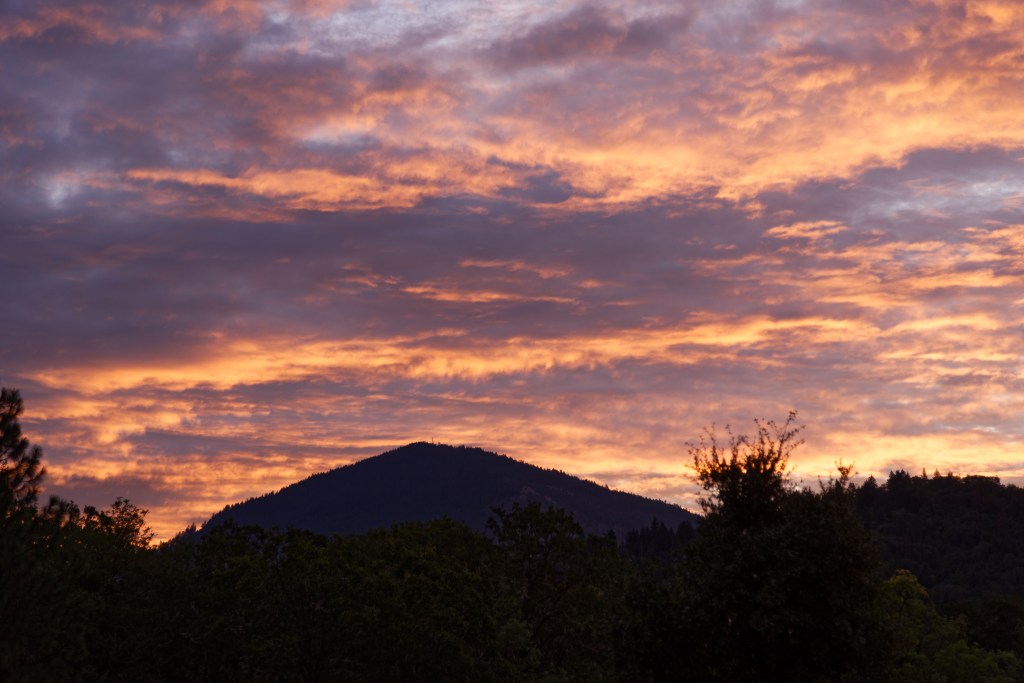
Dawn behind nearby Mt. Sexton. Taken from our deck on the 21st August, 2019.
Some videos of Alex, my son, and others taking a bike tour.
Now I would be the first to admit that the following videos will not be to everyone’s taste.
But there is a strong link to my son and his bike riding, and to my own bike riding. For over 5 years ago Alex persuaded me to get a better cycle than I already had. I chose the Specialized Sirrus and have been delighted with it ever since. I purchased it from the local Don’s Bike Center. There is a photograph of the bike below.
To be honest, riding the bike more or less every other day has been crucial in me staying as fit and healthy as I am.
On to the videos.
I was speaking to Alex recently and he was talking about the tour of the Isle of Wight off the south coast of England that he and friends took. That was Alex and Darren and Claire and their 14-year-old son Tom.
He mentioned the YouTube videos that had been taken and I asked Alex to forward them to me.
I reckoned that a few of you would be interested!
They are a total of 26 minutes spread across the 4 videos
oooo
oooo
oooo
Enjoy!
Finally, Alex and I still stay connected with our riding courtesy of Strava.
This uses a small GPS, in my case a Garmin EDGE 20, to upload and show the route to the Strava dashboard. We each give each other what is known as Kudos for our respective rides.
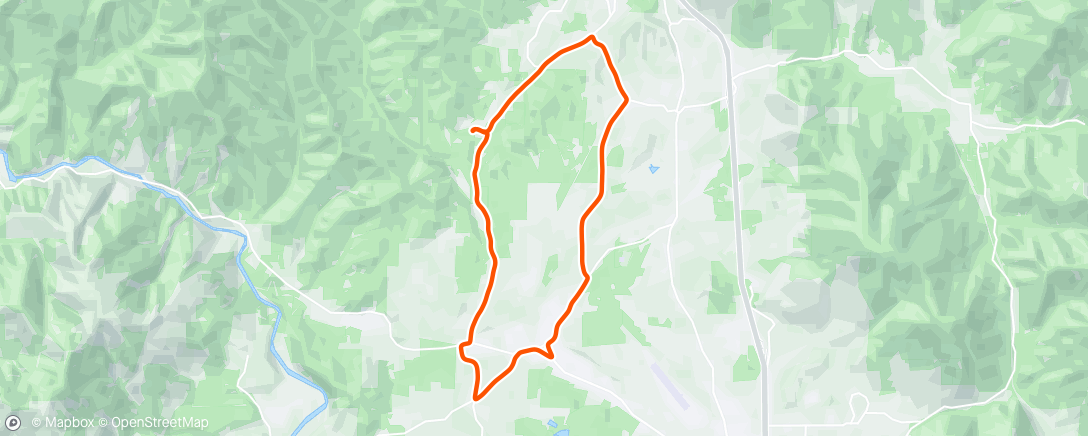
The following is my afternoon ride of a little under 13 miles around the local roads, grabbed when the rain ceased for a while. It shows me taking our driveway, a quarter-mile long, to Hugo Rd; about 10 o’clock in the diagram below. I then turned left and two miles later turned right into Three Pines Rd. then a further right into Russell Rd. and down to Pleasant Valley Rd. and back home with a small diversion along Robertson Bridge Rd. and Azalea Dr. and to the bottom of Hugo Rd. Precisely 3 miles up Hugo Rd. and back to our driveway.
That will be shared automatically with Alex when he wakes in the morning.
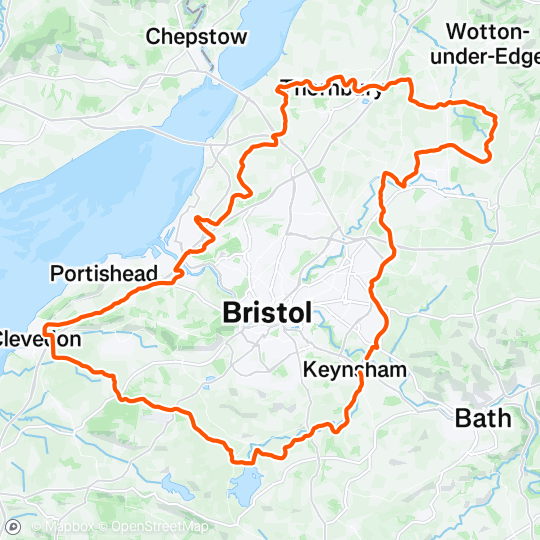
And this below was Alex’s recent ride; all 83.78 miles!
This recent post from EarthSky is a fascinating read!
By some amazing luck when we came to Merlin, Oregon some eight years ago we found these acres distant from any form of light pollution. Frankly, light pollution at night never crossed our mind at the time.
But almost every evening, when it is dark, I go outside to call in the dogs and look up at the night sky. At this time of the year the Big Dipper is high in the sky. Also the Milky Way can be seen as a faint ‘smudge’ of light. It is a glorious sight and one that I will never, ever tire of seeing.
Posted by Kelly Whitt in ASTRONOMY ESSENTIALS, October 29, 2020
Light at night may be a sign of life on Earth, but the darkness will proclaim our true intelligence. Check out this video on why we need darkness, from Paul Bogard. In his captivating talk Paul describes what we call “light pollution,” the overuse and misuse of artificial light at night. In cities and towns, in suburbs and villages all over the world, we are using more light than we need, and we are using it ways that waste money and energy, harm our physical health, harm the environment, and yes — rob us of the stars. What are the solutions for this problem? A native Minnesotan, Paul Bogard loves night’s natural darkness. So much so that he wrote two successful books about it. He is author of The End of Night: Searching for Natural Darkness in an Age of Artificial Light and editor of Let There Be Night: Testimony on Behalf of the Dark. He also likes to walk through the woods, surrounded by the trees and birds and hidden animals. For 15 years he had a dog who would come with him on these walks. Her name was Luna, like the moon. He misses her a lot. He loves coffee in the morning and red wine at night. Paul is now an assistant professor at James Madison University in Harrisonburg, Virginia, where he teaches creative writing and environmental literature.
The dark is good for our sleep, our biology, and the health of our ecosystems. It’s good for our creativity and our spirits, and, yes, it’s even good for our safety and security. That’s the message of Paul Bogard, who has written extensively on the importance of darkness. His book is titled “The End of Night.” His TEDx Talk – above – focuses on why we need darkness. I’ve spent time mulling over both the book and this video and recommend them highly. In this pandemic year – as many wondered whether lockdowns gave us darker skies – you might enjoy thinking about it, too.
Bogard researched night-shift workers, those who are exposed to light during the hours that most bodies crave darkness and sleep. Humans have a circadian trough from approximately midnight to 6 am. The absence of darkness and sleep during this trough contributes to night-shift work being labeled a probable carcinogen, with workers more likely to suffer from obesity, diabetes, cardiovascular issues, depression, substance abuse, and especially breast and prostate cancer. Light at night disrupts the body’s production of melatonin, which is thought to be needed to keep these types of cancers at bay.
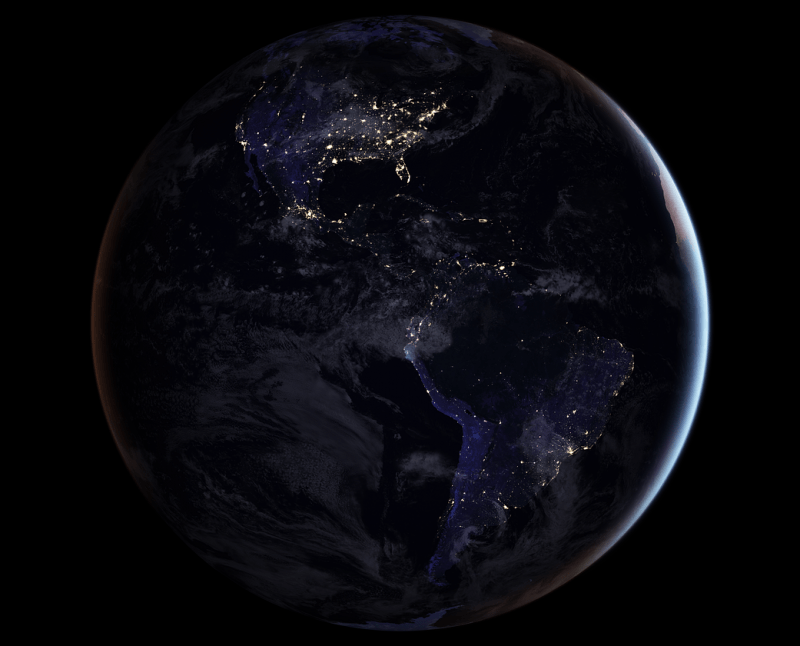
But it’s not just night-shift workers who suffer from exposure to lights at night. Any quick look at a photo of the Earth at night shows the great glows of cities and suburbs spilling across the land and down highways into the edges of the countryside. Even when we keep the lights dark outside our own home, the light from our neighbors’ homes seeps around the cracks in our blinds and splashes across our back patio.
Earth at night, via NASA.
The light we see on maps of Earth at night isn’t just interrupting our sleep or blinding us on a late-night walk with our dog. It’s also wasting money. Bogard claims that billions of dollars are wasted each year throughout the world on light that illuminates nothing on the ground, but instead points straight up.
He points out that proper lighting directs illumination toward the ground, away from the sky and out of the eyes of those nearby. Bright lights near someone’s front door create an illusion of safety, but not true safety, according to Bogard. That’s because the glare shining into our eyes makes it difficult to impossible to see what is hiding in the deep shadows cast by the light.
Policing in some communities has been made much easier with the replacement of constant lighting by motion lights. For example, Bogard recounts how Loveland, Colorado, changed their schoolyard lighting to motion detectors, which made it simple for patrols to see if someone was present or not determined by whether or not the area was dark or light.
The issue with safety and lighting isn’t black or white, or darkness or light. It’s choosing proper lighting for each situation, which helps to make an area safer, saves money, preserves sleep, and protects the dark night sky.
When we protect the night sky, Bogard says, we’re also protecting not just ourselves and our biology but those of the ecosystem around us. In his book “The End of Night,” Bogard writes:
I remember Pierre Brunet arguing in Paris that the presence of an astronomer was the sign of a healthy ecosystem; that when the sky grows too bright for astronomy and the astronomers go away, you know you have a light-polluted sky, and whatever has polluted that sky will eventually pollute other resources, given time.
Countless animals are dependent on darkness, Bogard points out. More than 60% of invertebrates and 30% of vertebrates are nocturnal, having evolved to find food and mates in uninterrupted darkness.
Sea turtles are a well-known example of animal life that needs darkness to survive. Anyone who has been to the oceanfront has seen the lighting adapted to help the sea turtles find their way back to the sea. At my parents’ condo in Florida, the ocean-facing side of lamps have been blacked out so that the newly-hatched sea turtles, upon leaving their nests, are not lured onshore by false light but find their right paths into the water.
When you examine the night sky map of the United States and consider where most of the population lies, it’s not hard to believe, as Bogard tells us, that more than 80% of Americans can no longer see the Milky Way from their home. I live in the suburbs of a large city, for example, and my location on a map of light pollution is nearly bright white.
Recently, I spent some time about three hours west of Chicago in a quiet patch of countryside that is a rare blue shade of darkness on light pollution maps. When I stepped out onto the deck on a crystal-clear evening, I looked up at the stars and was immediately lost.
I’ve been observing and writing about the night sky for two decades, but my familiarity with the sky is linked to recognizing what I see nightly above me, which is usually a dim cousin to the depth and wonder of a truly dark sky. None of the conventional patterns were popping out at me like I was used to: the Big Dipper, the Summer Triangle, the V-shape of Taurus’s head. Instead, a brilliant orange Mars was bright enough to wash out the stars around it, yet the lush Milky Way held her own and a thousand normally unseen stars twinkled in a chorus.
For the first time ever, I witnessed the fuzzy oval glow of the Andromeda Galaxy with nothing more than my eyes. I saw star clusters dig out patches of sky and anchor their surroundings instead of having to hunt them down with binoculars. Cassiopeia and Perseus were nearly swallowed up by the sea of stars flowing from the Milky Way behind them.
We need darkness for moments like that. We need darkness to feed our spirit, protect our health and protect the health of our planet. Light at night may be a sign of life on Earth, but the darkness will proclaim our true intelligence.
Bottom line: A video on why we need darkness from Paul Bogard, author of the book “The End of Night.” The video explains why light pollution is detrimental and why darkness is good for our bodies, our world and our spirits.
So, please, take a moment to view the night sky. If you are somewhere where there is excessive light pollution then plan at some point to get away to the darkness. Also make sure you sleep in a dark room. It’s too easy to let a light or two get in the way of a properly darkened room.
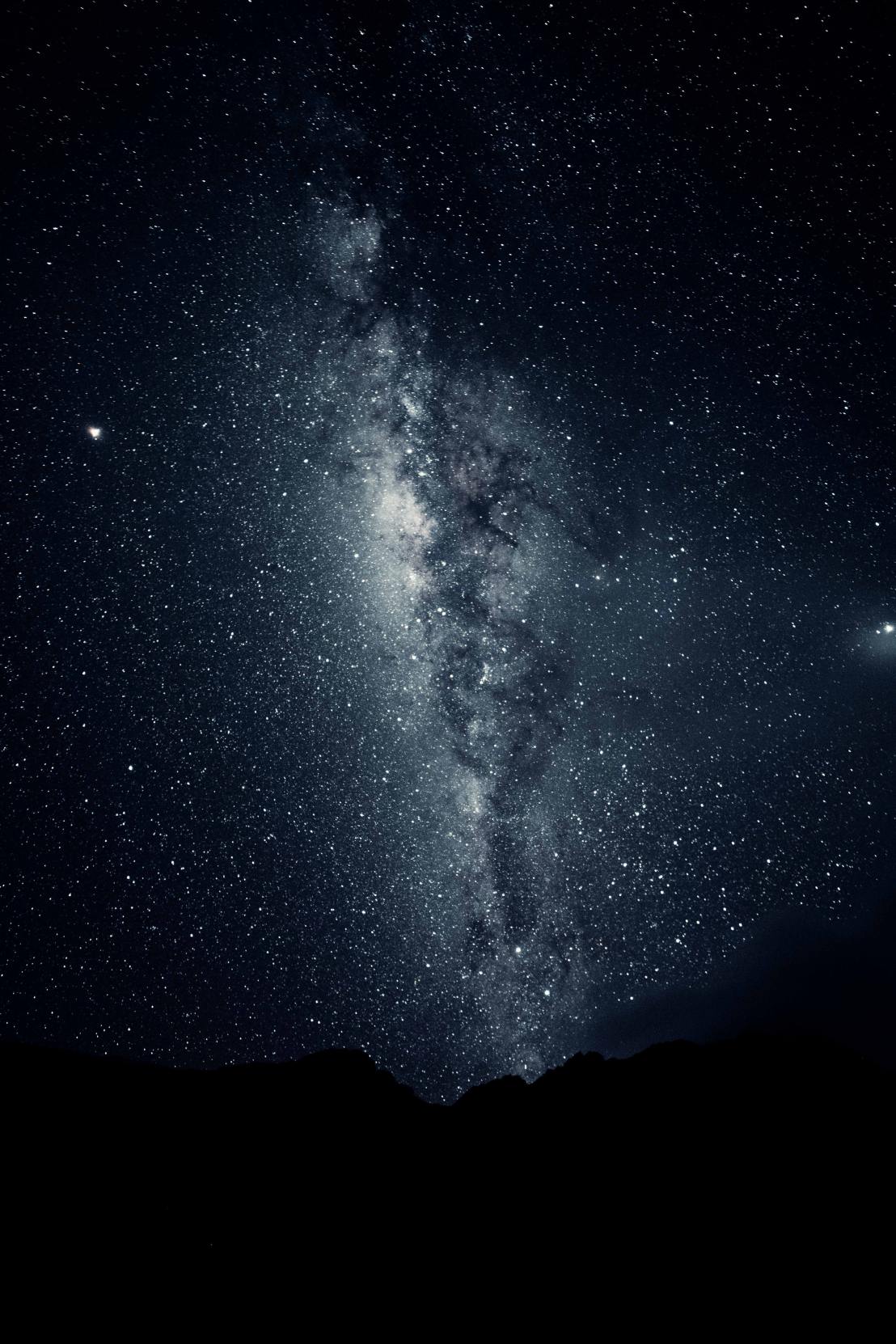
Finally, amongst my many photographs I do not have is one of the night sky. And, frankly, if I did it wouldn’t be as fantastic as the one below. So let me close with a Pexels photograph of the Milky Way by Sam Kolder.
The one thing that goes on forever and, incidentally, has been going on for a long, long time, is the human devotion to dogs. Whether it is one or two dogs being walked every day without fail or, in this case, a Mexican who opened his heart and his house to a tad more than a couple of dogs.
In early October, Hurricane Delta roared toward the shores of Cancun, Mexico, leaving Ricardo Pimentel with few options.
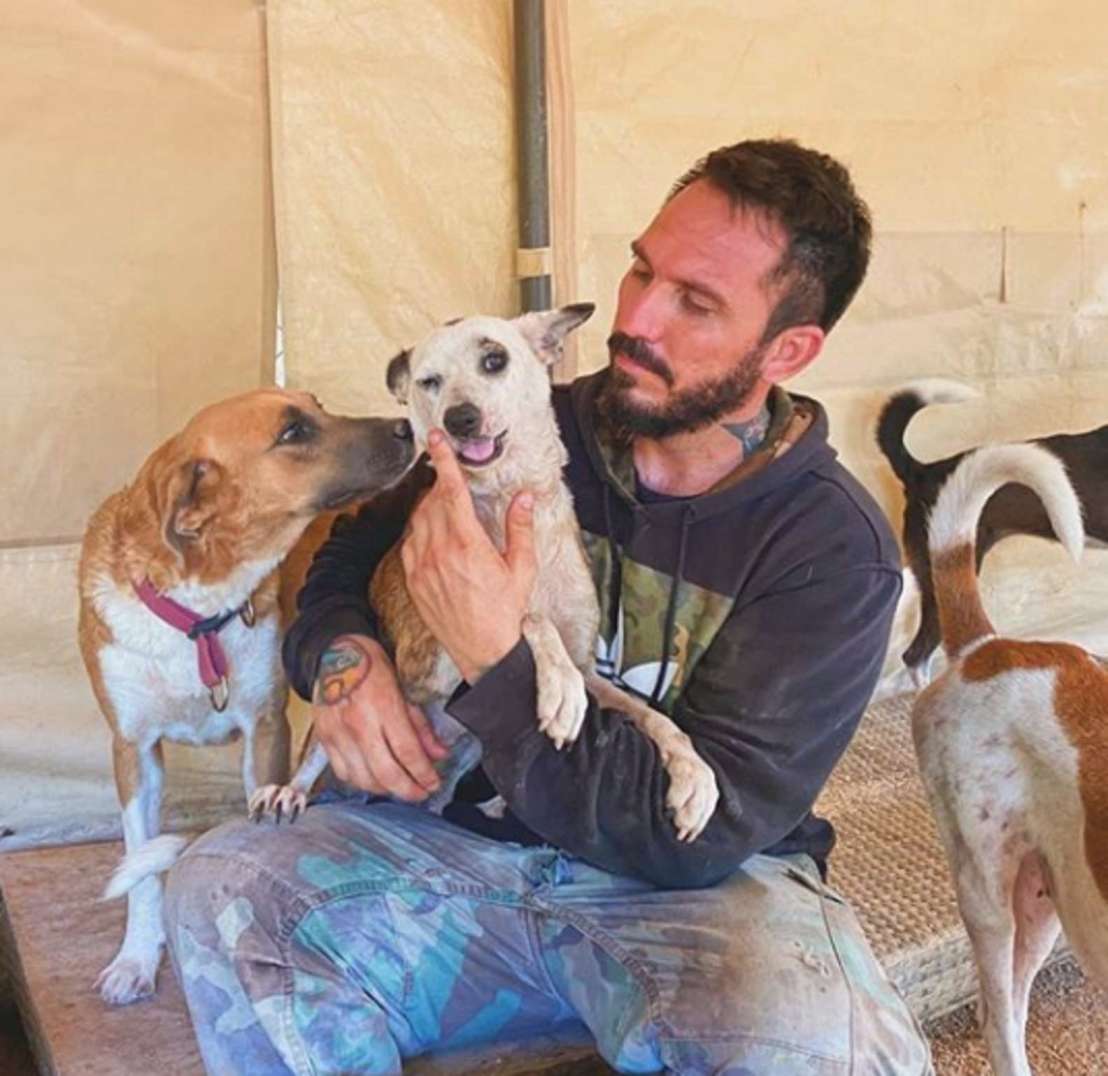
Pimentel runs Tierra de Animales, an animal sanctuary on the outskirts of Cancun, surrounded by jungle. For nine years, he has cared for over 500 animals — including stray cats, dogs, chickens, turkeys, horses, sheep, pigs, cows and donkeys.
INSTAGRAM/TIERRADEANIMALES
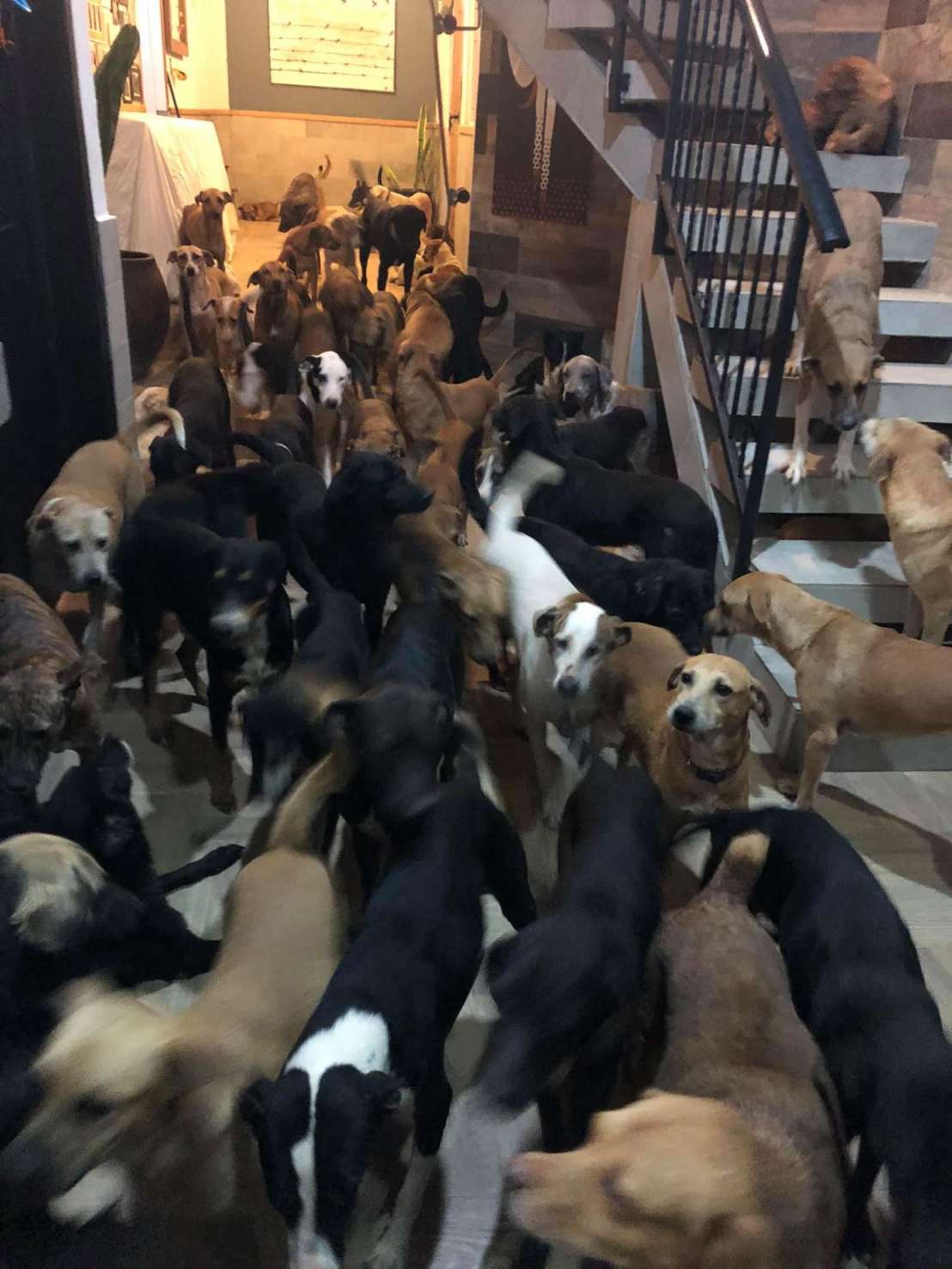
He knew the dog shelters weren’t strong enough to stand up to a Category 4 storm, so he did what any animal lover would do — he invited the pups into his home for a sleepover.
“We have two bedrooms, one kitchen and one bathroom available for volunteers who want to come and stay here to help us with all the things that we have to do,” Pimentel told The Dodo. “We decided to put almost all the dogs inside the house, simply because we don’t fully trust in the shelters that we currently have because they aren’t hurricane-proof.”
FACEBOOK/TIERRA DE ANIMALES
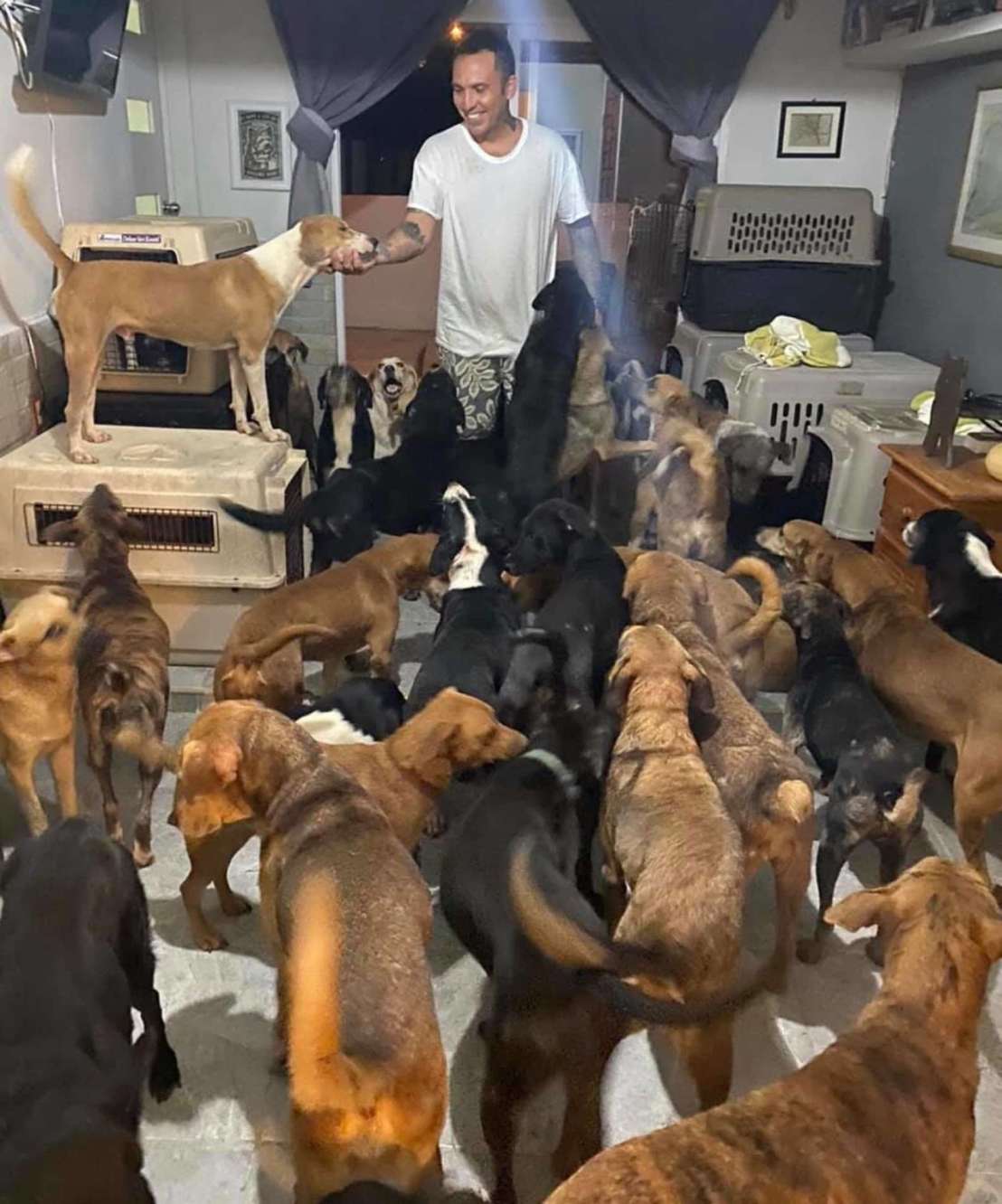
But bringing 300 dogs inside was no easy feat. For five hours, Pimentel and his volunteers rounded up the pups and helped them inside before the hurricane made landfall.
“We had to bring them in on leash two by two,” Pimentel said. “Some of them are afraid or don’t know how to walk on a leash, so we had to carry them to the house, but in the end, it was worth it because they are all safe.”
FACEBOOK/TIERRA DE ANIMALES
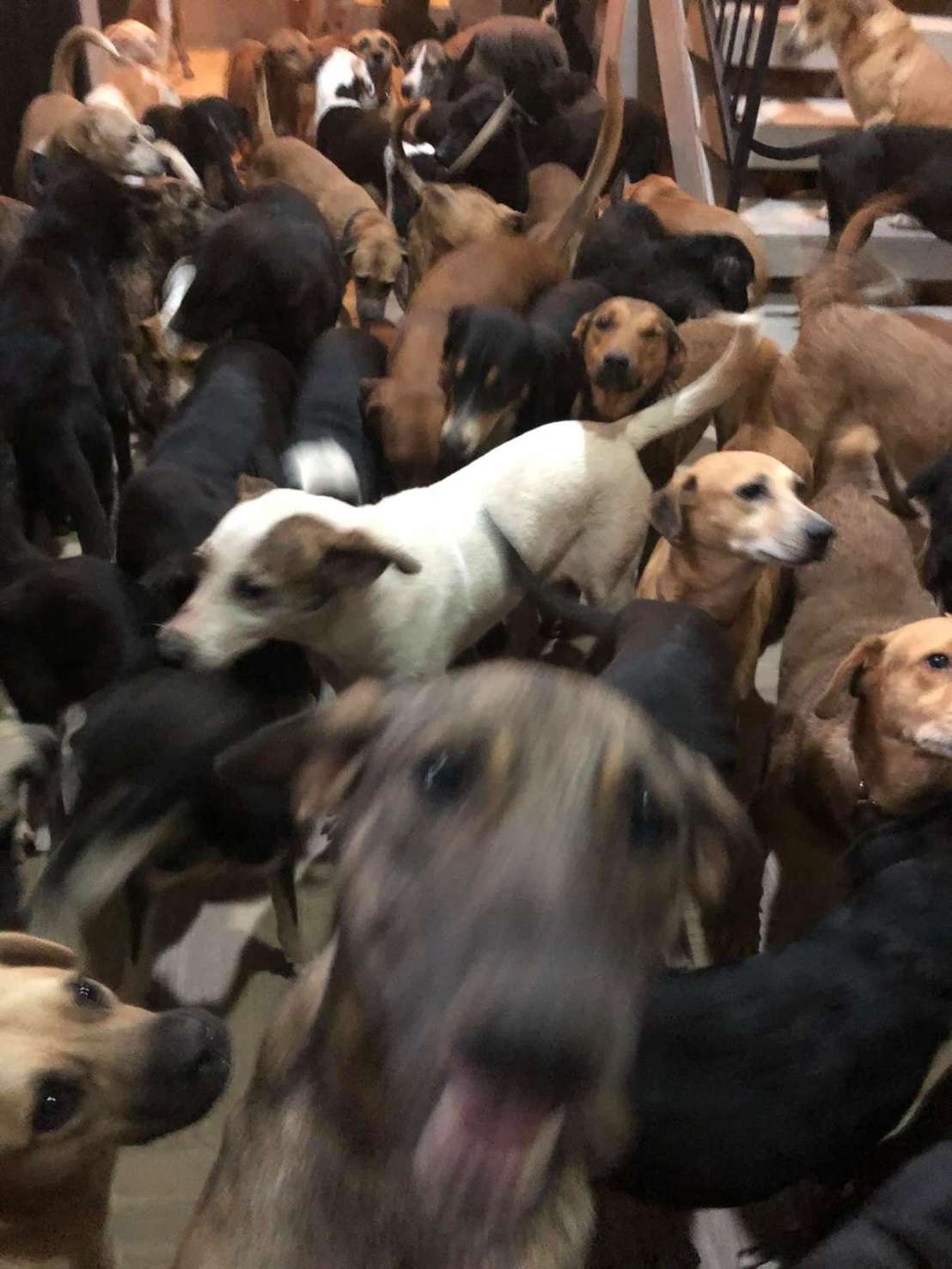
With so many animals in such a small house, Pimentel expected that they’d make a bit of a mess. But he was pleased when everyone seemed to get along.
“They were actually very well-behaved all night,” he said.
Luckily, by the time the hurricane reached the sanctuary, it was only a Category 2 storm — though the strong winds still damaged the property.
“The next morning when the hurricane finished, we had to do a lot of repairs and clean all [the animals’] areas from trees and branches,” Pimentel said. “So they stayed in the house the next day until 5 or 6 p.m.”
“Of course, there was a horrible smell in the house and they broke a few things, but there’s nothing to regret,” he added. “I would do it again one million more times if necessary.”
FACEBOOK/TIERRA DE ANIMALES
Pimentel is now working to build hurricane-proof shelters on his 10-acre property so all the animals can have adequate protection. And he hopes to take in even more animals so that no one has to spend another night on the streets.
To help Tierra De Animales build their hurricane-proof shelters, you can make a donation here.
ooOOoo
Here’s a YouTube video. Even if you don’t understand the vocabulary the pictures are inspiring!
I find this story both amazing and wonderful. For Ricardo to offer such protection from the weather and to do it in his home is staggering. Hats off to Ricardo and if a few of you can make a donation that would be perfect.
Now again this has nothing to do with dogs and I would be the first person to say that there are still some people out there who are not convinced that global warming is a major result of human activity.. But none other than the Union of Concerned Scientists are persuaded that humans are the major cause. See their website here. (From which the following is taken.)
Every single year since 1977 has been warmer than the 20th century average, with 16 of the 17 warmest years on record occurring since 2001, and 2016 being the warmest year on recorded history. A study from 2016 found that without the emissions from burning coal and oil, there is very little likelihood that 13 out of the 15 warmest years on record would all have happened.
And further on in the article, this:
Scientists agree that today’s warming is primarily caused by humans putting too much carbon in the atmosphere, like when we choose to extract and burn coal, oil, and gas, or cut down and burn forests.
Today’s carbon dioxide levels haven’t been seen in at least the last 800,000 years. Data assembled from Antarctic ice core samples and modern atmospheric observations.
So on to the film.
My son, Alex, sent me the following email on the 7th October.
Hi Dad
This is a really interesting film about climate change in the west coast mountains, USA. A bit skiing related but a good watch !
Lots of love
Alex
Included in the email was a link to the film available on YouTube.
The film is just under one hour in length and a great film to watch as well as having a clear, fundamental message: All of us must act in whatever ways we can if our children and grandchildren are to have a future. Indeed, do you believe you have another twenty or more years to live? Then include yourself as well.
ooOOoo
About The Film
Professional snowboarder and mountaineer Jeremy Jones has an intimate relationship with the outdoors. It’s his escape, his identity, and his legacy. But over the course of his 45 years in the mountains, he’s seen many things change: more extreme weather, fewer snow days, and economic strain on mountain towns.
Motivated by an urge to protect the places he loves, Jeremy sets out on a physical and philosophical journey to find common ground with fellow outdoor people across diverse political backgrounds. He learns their hopes and fears while walking a mile in their shoes on the mountain and in the snow.
With intimacy and emotion set against breathtaking backdrops, Purple Mountains navigates America’s divide with a refreshing perspective: even though we may disagree about climate policy, our shared values can unite us.
A look, courtesy of my daughter, at Sarah Nicolls’s 12 Years project.
Again, this is not about dogs, well not in a direct way. But, indirectly, it affects all of us, young and old, and, inevitably, it affects our dear dogs.
I’m writing this in response to something that came my way as an email sent from my daughter’s company, SOUND UK. The company holds to the view that: Sound UK produces extraordinary musical encounters for all.
Sarah Nicolls has her own website and on her About page this is what she presents.
My name is Sarah Nicolls. I am a visual artist who makes pictures with language, books with pictures, prints with type, and animations with words. I combine image, visual narrative, and time in prints, books, and ephemera that are often research-based. I am interested in urbanization, local history, climate change, the history of science and technology, alternative economies, found language, and the history of publishing. I have written a collection of self-help aphorisms, I publish a series of informational pamphlets, and I organize a range of participatory walks and programs around the series.
My recent books include an examination of the history of greenhouses, and a study of the stories we tell ourselves about disappearing islands, both real and imagined. My limited edition artist books are in the collections of the Brooklyn Museum, Stanford, UCLA, and the University of Pennsylvania, among others.
For twelve years, I ran the studio programs at the Center for Book Arts in NYC, organizing classes, public programs, readings, and talks, coordinating publications, running residency programs, and teaching interns. I learned everything I know about letterpress and bookmaking while I was there. Now I teach at Pratt Institute and Parsons School of Design, and work on a variety of projects.
I also do illustration and design work for individuals and institutions. Do you have an interesting project in mind? Contact me here, I welcome commissions and collaborations.
Well back to Sound UK. This is Sarah.
ooOOoo
“What she does should be happening every week of the year” The Guardian
Acclaimed pianist and composer Sarah Nicolls’ new Inside-Out Piano project 12 Years was inspired by the 2018 IPCC Special Report saying we had just 12 years to radically change our behaviour to save the planet. Starting on the second anniversary of the report, 8 October, Sarah launches 12 nights of online performances.
With her striking vertical grand piano, Nicolls combines original music and recorded speech in an absorbing performance. Piano melodies and textures interweave with phone calls between three fictional characters challenging each other to either worry less or do more. We hear from environmental experts, survivors escaping from a wildfire and a glacier melting, eloquent speeches from Greta Thunberg and finally the sound of hope emerging. There is humour and humanity as well as time for reflection.
On selected nights leading climate scientists will also join Sarah for exclusive post-show discussions online, specifically to talk about what we can all do.
See list of speakers below.
“This should be prescribed viewing/watching/listening for anyone even remotely concerned with the welfare of our planet.” Ciaran Ryan, Galway Jazz Festival
ooOOoo
Plus, if you would care to listen to a track on Sarah playing her piano, then feel free:
I’m bound to say that I am reasonably hopeful of living another twelve years but, at the same time, reasonably expectant that life could become very interesting indeed!








 About The Film
 Learning from Dogs