The one thing that goes on forever and, incidentally, has been going on for a long, long time, is the human devotion to dogs. Whether it is one or two dogs being walked every day without fail or, in this case, a Mexican who opened his heart and his house to a tad more than a couple of dogs.
In early October, Hurricane Delta roared toward the shores of Cancun, Mexico, leaving Ricardo Pimentel with few options.
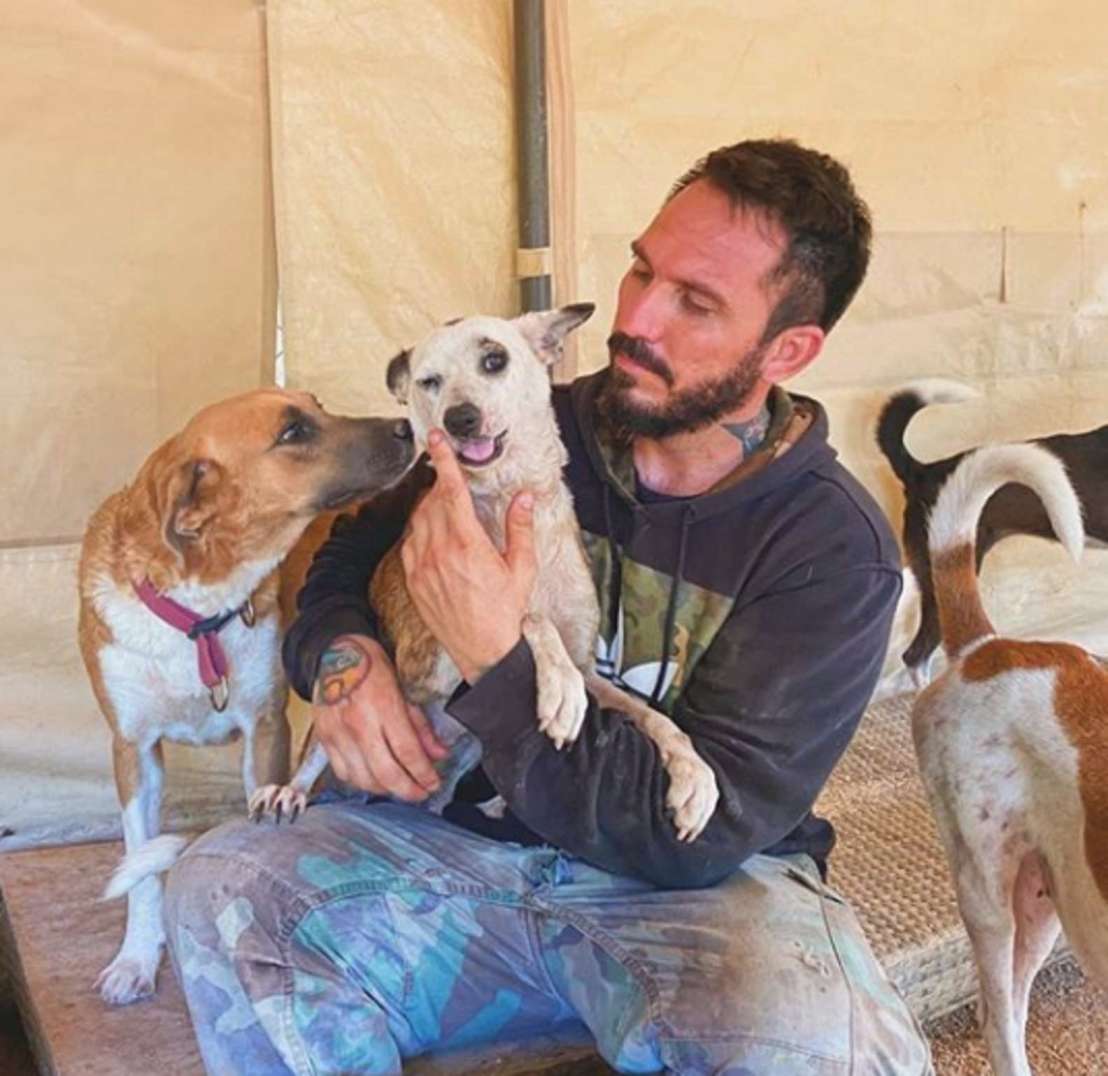
Pimentel runs Tierra de Animales, an animal sanctuary on the outskirts of Cancun, surrounded by jungle. For nine years, he has cared for over 500 animals — including stray cats, dogs, chickens, turkeys, horses, sheep, pigs, cows and donkeys.
INSTAGRAM/TIERRADEANIMALES
He knew the dog shelters weren’t strong enough to stand up to a Category 4 storm, so he did what any animal lover would do — he invited the pups into his home for a sleepover.
“We have two bedrooms, one kitchen and one bathroom available for volunteers who want to come and stay here to help us with all the things that we have to do,” Pimentel told The Dodo. “We decided to put almost all the dogs inside the house, simply because we don’t fully trust in the shelters that we currently have because they aren’t hurricane-proof.”
FACEBOOK/TIERRA DE ANIMALES
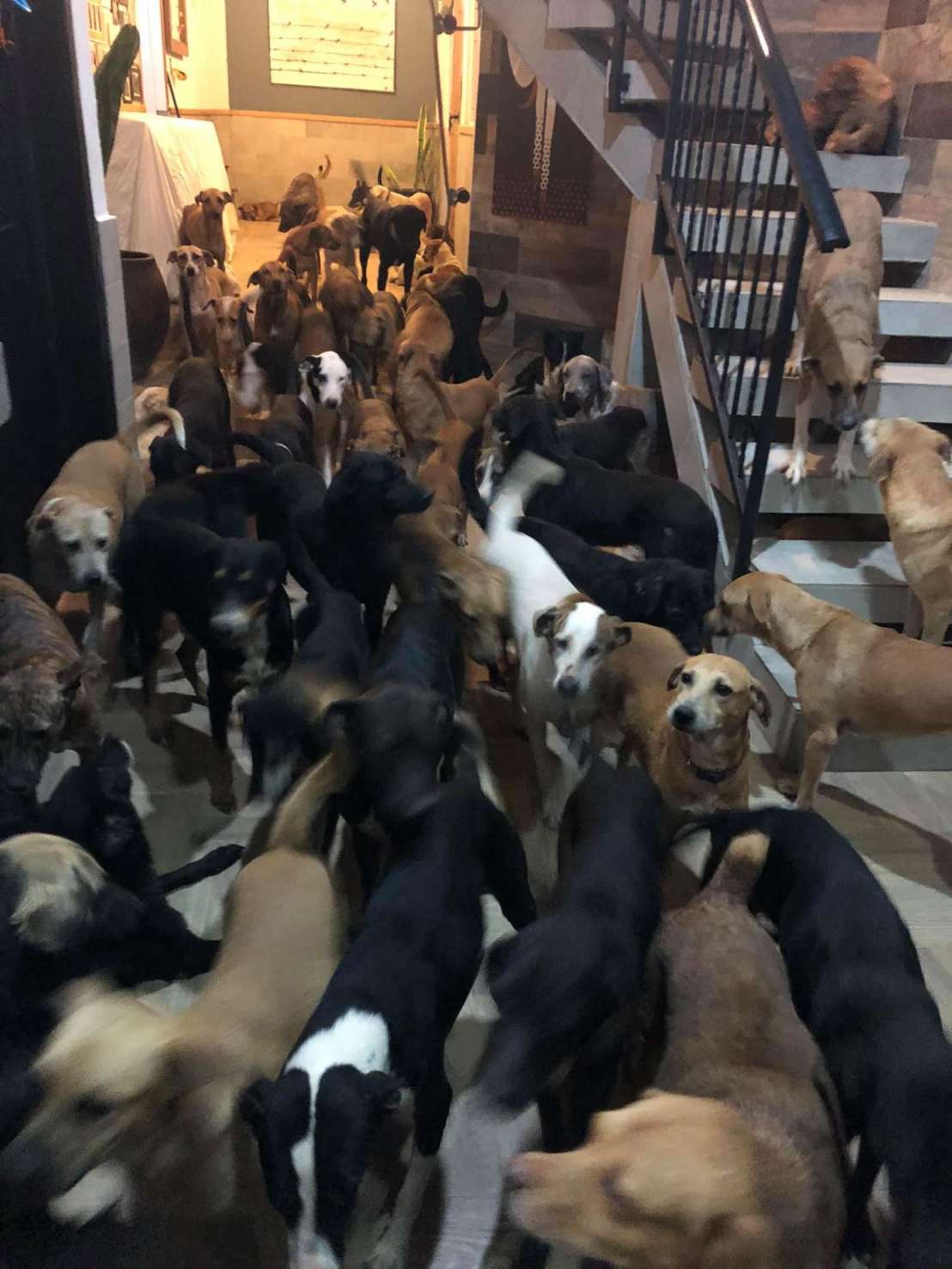
But bringing 300 dogs inside was no easy feat. For five hours, Pimentel and his volunteers rounded up the pups and helped them inside before the hurricane made landfall.
“We had to bring them in on leash two by two,” Pimentel said. “Some of them are afraid or don’t know how to walk on a leash, so we had to carry them to the house, but in the end, it was worth it because they are all safe.”
FACEBOOK/TIERRA DE ANIMALES
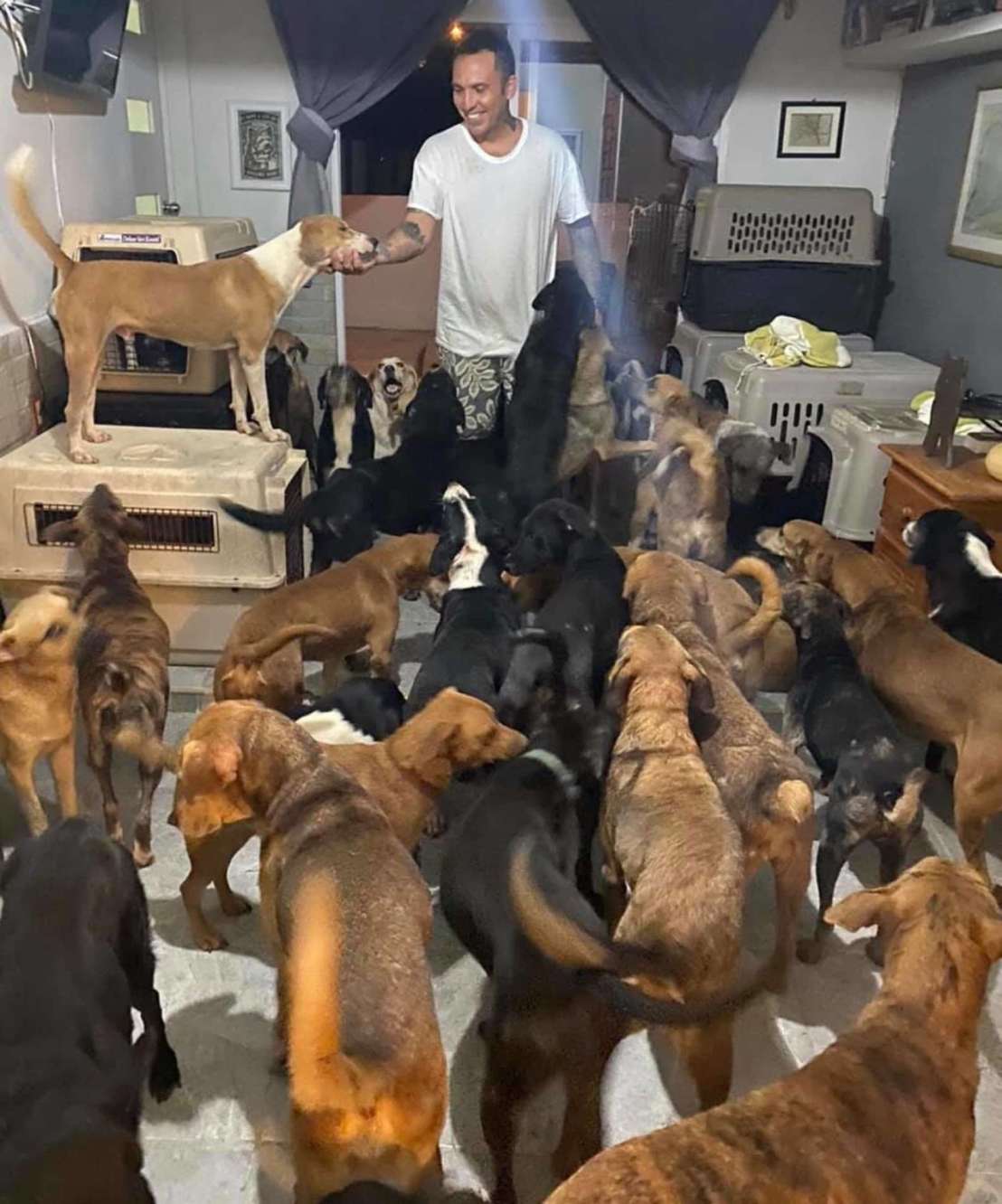
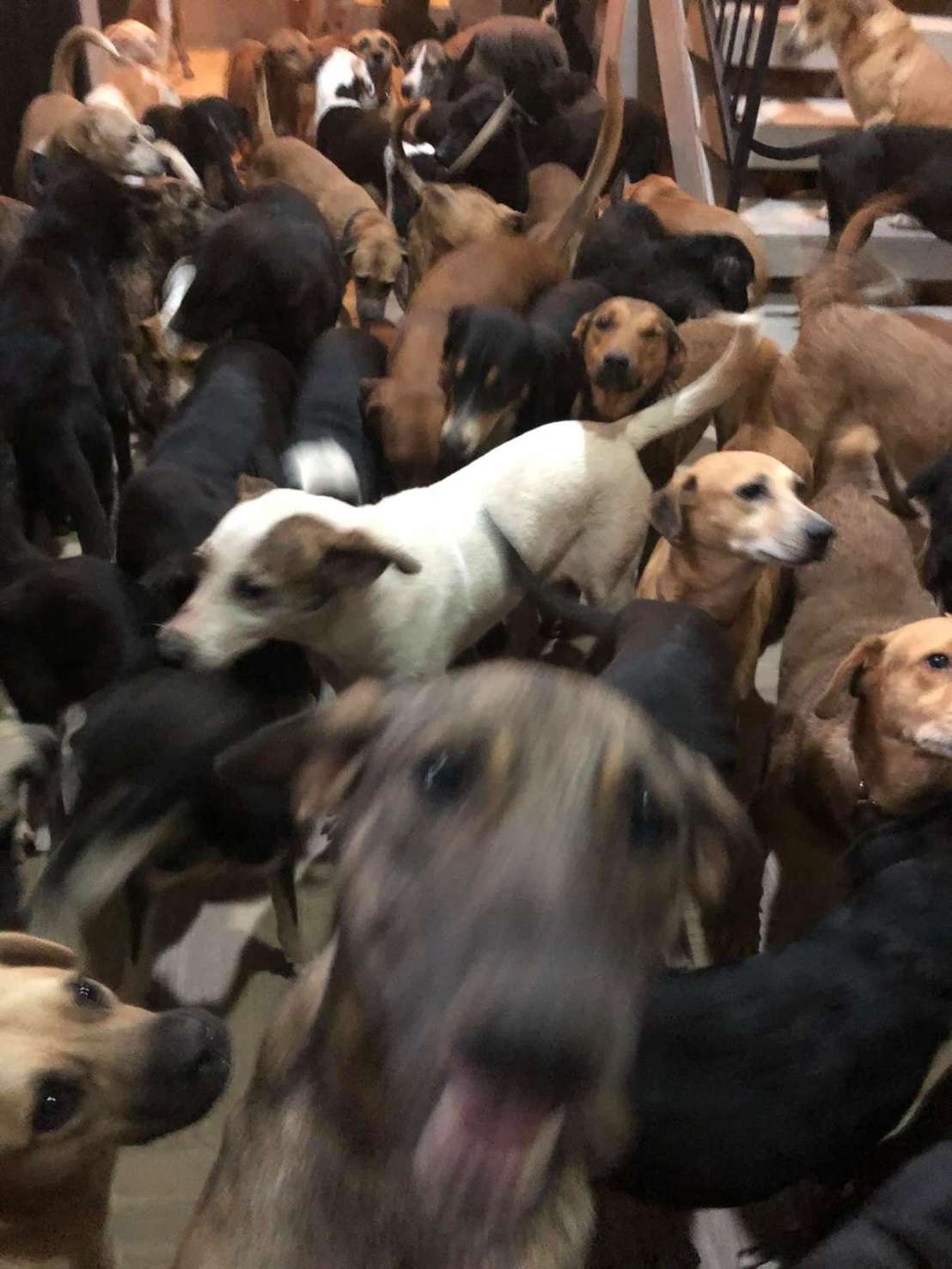
With so many animals in such a small house, Pimentel expected that they’d make a bit of a mess. But he was pleased when everyone seemed to get along.
“They were actually very well-behaved all night,” he said.
Luckily, by the time the hurricane reached the sanctuary, it was only a Category 2 storm — though the strong winds still damaged the property.
“The next morning when the hurricane finished, we had to do a lot of repairs and clean all [the animals’] areas from trees and branches,” Pimentel said. “So they stayed in the house the next day until 5 or 6 p.m.”
“Of course, there was a horrible smell in the house and they broke a few things, but there’s nothing to regret,” he added. “I would do it again one million more times if necessary.”
FACEBOOK/TIERRA DE ANIMALES
Pimentel is now working to build hurricane-proof shelters on his 10-acre property so all the animals can have adequate protection. And he hopes to take in even more animals so that no one has to spend another night on the streets.
To help Tierra De Animales build their hurricane-proof shelters, you can make a donation here.
ooOOoo
Here’s a YouTube video. Even if you don’t understand the vocabulary the pictures are inspiring!
I find this story both amazing and wonderful. For Ricardo to offer such protection from the weather and to do it in his home is staggering. Hats off to Ricardo and if a few of you can make a donation that would be perfect.
Now again this has nothing to do with dogs and I would be the first person to say that there are still some people out there who are not convinced that global warming is a major result of human activity.. But none other than the Union of Concerned Scientists are persuaded that humans are the major cause. See their website here. (From which the following is taken.)
Every single year since 1977 has been warmer than the 20th century average, with 16 of the 17 warmest years on record occurring since 2001, and 2016 being the warmest year on recorded history. A study from 2016 found that without the emissions from burning coal and oil, there is very little likelihood that 13 out of the 15 warmest years on record would all have happened.
And further on in the article, this:
Scientists agree that today’s warming is primarily caused by humans putting too much carbon in the atmosphere, like when we choose to extract and burn coal, oil, and gas, or cut down and burn forests.
Today’s carbon dioxide levels haven’t been seen in at least the last 800,000 years. Data assembled from Antarctic ice core samples and modern atmospheric observations.
So on to the film.
My son, Alex, sent me the following email on the 7th October.
Hi Dad
This is a really interesting film about climate change in the west coast mountains, USA. A bit skiing related but a good watch !
Lots of love
Alex
Included in the email was a link to the film available on YouTube.
The film is just under one hour in length and a great film to watch as well as having a clear, fundamental message: All of us must act in whatever ways we can if our children and grandchildren are to have a future. Indeed, do you believe you have another twenty or more years to live? Then include yourself as well.
ooOOoo
About The Film
Professional snowboarder and mountaineer Jeremy Jones has an intimate relationship with the outdoors. It’s his escape, his identity, and his legacy. But over the course of his 45 years in the mountains, he’s seen many things change: more extreme weather, fewer snow days, and economic strain on mountain towns.
Motivated by an urge to protect the places he loves, Jeremy sets out on a physical and philosophical journey to find common ground with fellow outdoor people across diverse political backgrounds. He learns their hopes and fears while walking a mile in their shoes on the mountain and in the snow.
With intimacy and emotion set against breathtaking backdrops, Purple Mountains navigates America’s divide with a refreshing perspective: even though we may disagree about climate policy, our shared values can unite us.
A look, courtesy of my daughter, at Sarah Nicolls’s 12 Years project.
Again, this is not about dogs, well not in a direct way. But, indirectly, it affects all of us, young and old, and, inevitably, it affects our dear dogs.
I’m writing this in response to something that came my way as an email sent from my daughter’s company, SOUND UK. The company holds to the view that: Sound UK produces extraordinary musical encounters for all.
Sarah Nicolls has her own website and on her About page this is what she presents.
My name is Sarah Nicolls. I am a visual artist who makes pictures with language, books with pictures, prints with type, and animations with words. I combine image, visual narrative, and time in prints, books, and ephemera that are often research-based. I am interested in urbanization, local history, climate change, the history of science and technology, alternative economies, found language, and the history of publishing. I have written a collection of self-help aphorisms, I publish a series of informational pamphlets, and I organize a range of participatory walks and programs around the series.
My recent books include an examination of the history of greenhouses, and a study of the stories we tell ourselves about disappearing islands, both real and imagined. My limited edition artist books are in the collections of the Brooklyn Museum, Stanford, UCLA, and the University of Pennsylvania, among others.
For twelve years, I ran the studio programs at the Center for Book Arts in NYC, organizing classes, public programs, readings, and talks, coordinating publications, running residency programs, and teaching interns. I learned everything I know about letterpress and bookmaking while I was there. Now I teach at Pratt Institute and Parsons School of Design, and work on a variety of projects.
I also do illustration and design work for individuals and institutions. Do you have an interesting project in mind? Contact me here, I welcome commissions and collaborations.
Well back to Sound UK. This is Sarah.
ooOOoo
“What she does should be happening every week of the year” The Guardian
Acclaimed pianist and composer Sarah Nicolls’ new Inside-Out Piano project 12 Years was inspired by the 2018 IPCC Special Report saying we had just 12 years to radically change our behaviour to save the planet. Starting on the second anniversary of the report, 8 October, Sarah launches 12 nights of online performances.
With her striking vertical grand piano, Nicolls combines original music and recorded speech in an absorbing performance. Piano melodies and textures interweave with phone calls between three fictional characters challenging each other to either worry less or do more. We hear from environmental experts, survivors escaping from a wildfire and a glacier melting, eloquent speeches from Greta Thunberg and finally the sound of hope emerging. There is humour and humanity as well as time for reflection.
On selected nights leading climate scientists will also join Sarah for exclusive post-show discussions online, specifically to talk about what we can all do.
See list of speakers below.
“This should be prescribed viewing/watching/listening for anyone even remotely concerned with the welfare of our planet.” Ciaran Ryan, Galway Jazz Festival
ooOOoo
Plus, if you would care to listen to a track on Sarah playing her piano, then feel free:
I’m bound to say that I am reasonably hopeful of living another twelve years but, at the same time, reasonably expectant that life could become very interesting indeed!
An article in The Dodo describes good dogs perfectly.
When we came up from Mexico to Arizona back in 2010 we had 16 dogs. They were all pretty well behaved. When we came to Oregon in 2012 we were down to 12 dogs and, again, pretty well behaved.
But having said that getting all 12 dogs to sit still and look at the camera would have been impossible! I’m not sure I could manage it now and we have only 6 dogs.
Which makes the following article recently published in The Dodo most remarkable.
Have a read!
ooOOoo
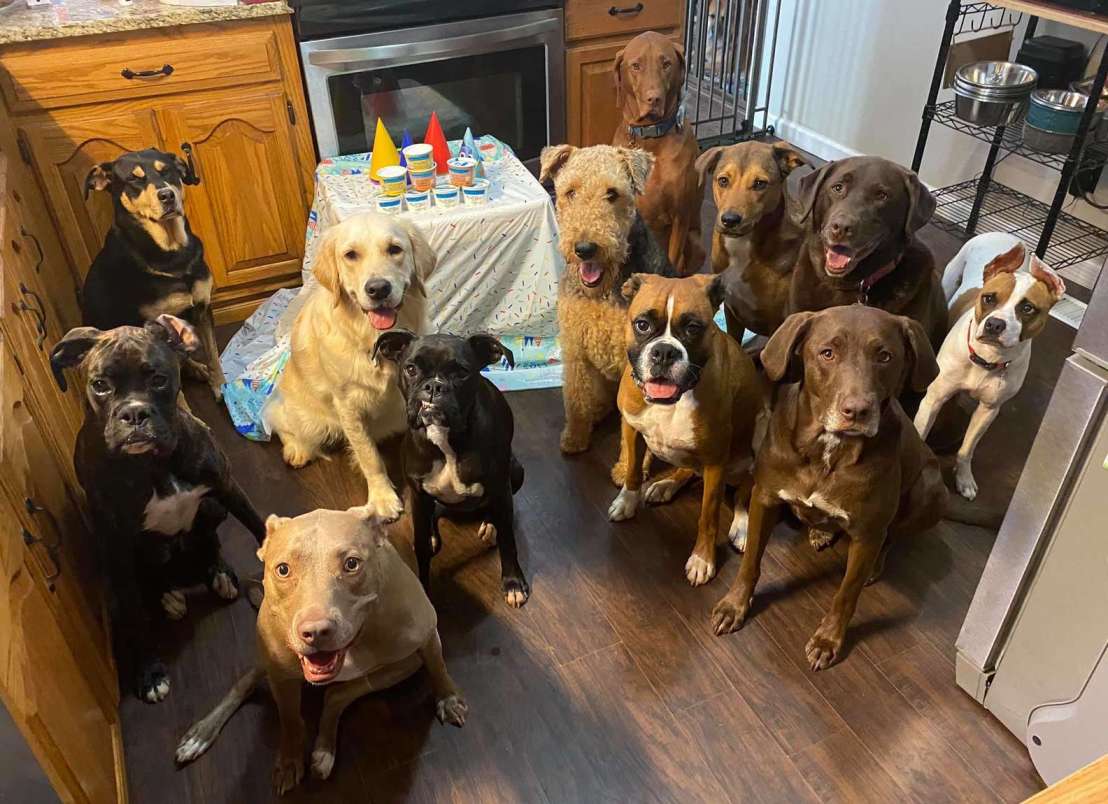
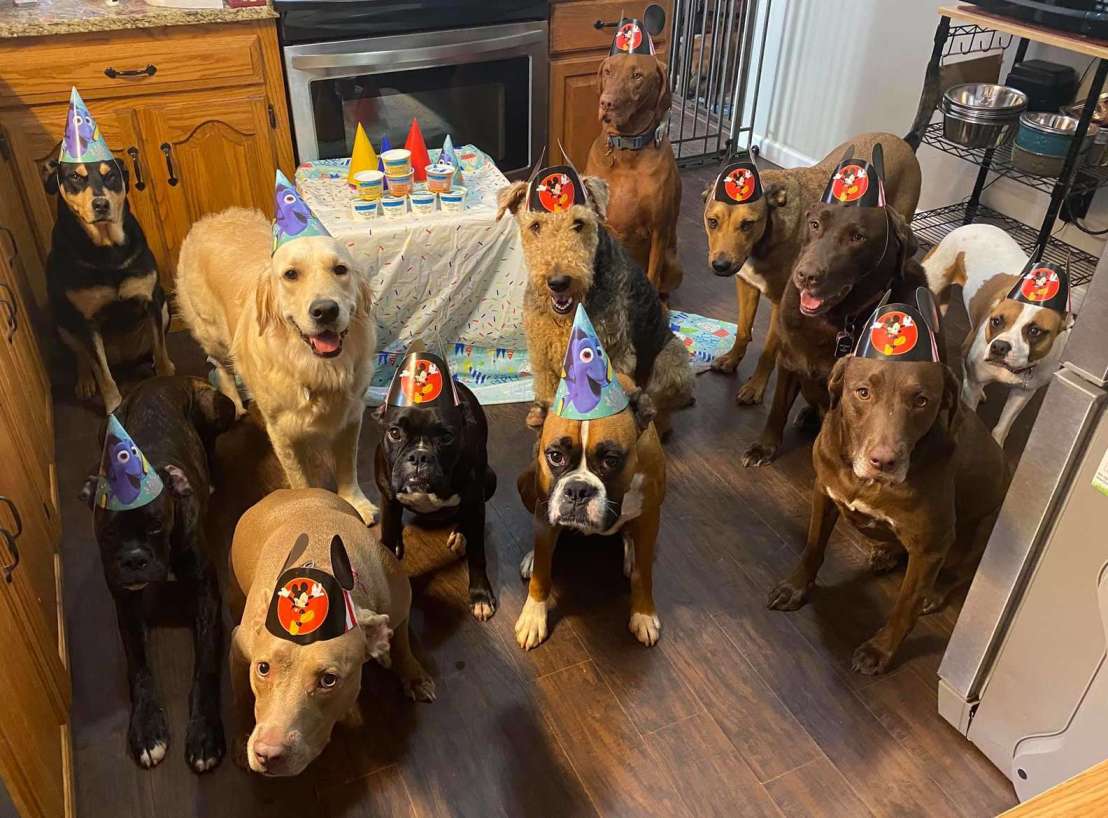
Dogs Have The Most Well-Behaved Birthday Party Ever
Throwing a party for 12 dogs can get pretty wild, but the pups at Lending Paws Pet Care are the goodest boys and girls you’ll ever meet.
Whenever a dog at the doggy day care has a birthday, Aubrey Thweatt makes sure they get a special party with all their best friends. The celebration includes goodies, party hats and cute photos to commemorate the day.
FACEBOOK/LENDING PAWS PET CARE
“I started doing birthday pics and goodies with my own dogs and so when one of my client’s pups would have a birthday … they would send goodies for the group,” Thweatt, owner of Lending Paws Pet Care, told The Dodo. “It just sort of evolved from there.”
And when it comes to posing for the birthday party photo, these dogs are pros. They don’t even mind wearing a party hat.
FACEBOOK/LENDING PAWS PET CARE
When a gray pittie named Rosemary celebrated her 4th birthday, Thweatt snapped a photo, never expecting it to go viral. But after one of the dog owners posted it on Twitter, people couldn’t get over the dogs’ unique expressions and expert sitting skills.
“They have been coming for years. We do group pictures daily so they are used to it,” Thweatt said. “We do ‘sit and stay’ for everything.”
“We have lots of fun and they literally know the phrase ‘picture time!’” Thweatt added. “They will all run in the direction I’m walking to get to a spot to sit.”
FACEBOOK/LENDING PAWS PET CARE
While at doggy day care, the pups have the run of the house. They can play in the backyard, or relax and recharge during naptime, and always get plenty of praise and treats. After spending so many years together, the pups are all best friends and look forward to spending the day with Thweatt.
“Everything I do is for them,” Thweatt said. “They have the entire house and I am just here to constantly clean up after them and make sure they have lots of playtime and socializing!”
ooOOoo
Aubrey Thweatt knows perfectly how her dogs are to be treated. That is they are loved for being the animals that they are. Dogs are smart. They know their own names. They have a sense of smell that is literally millions of times better than ours. They are very observant of our behaviours.
And this is the result. Dogs that may be photographed in a group perfectly.
Whichever way you look there are substantial challenges.
This post is largely a republication of a recent post from Patrice Ayme. Because when I read it I was profoundly affected. I thought that it needed to be shared with all you good people because if nothing is done then life as we know it is going to come to an end. Period! That includes our gorgeous dogs as well as us humans! So, please, please read it all the way through!
But before Patrice’s post is presented The Economist this last week came out with a special report entitled Business and climate change. I offer a small extract:
For most of the world, this year will be remembered mainly for covid-19. Starting in Asia, then spreading across Europe and America before taking hold in the emerging world, the pandemic has infected millions and killed hundreds of thousands. And it has devastated economies even more severely that did the global financial crisis which erupted in 2008.
But the impact of covid-19 has also given a sense of just how hard it will be to deal with climate change. As economic activity has stalled, energy-related CO2 emissions have fallen sharply. This year the drop will be between 4% and 7%. But to have a decent chance of keeping Earth’s mean temperature less than 2 deg C above pre-industrial levels, net emissions of CO2 and other greenhouse gases must fall to more or less zero by mid-century. And such a drop needs to be achieved not by halting the world economy in its tracks, but by rewiring it.
The next section in the special report was A grim outlook and it was, indeed, a very grim read.
Back To The Jurassic In A Hurry: 500 Part Per Million Of Greenhouse Gases
Greenhouse gases (GHG) used to be 280 parts per million. Now they are around 500 ppm (including CH4, Nitrogen oxides, chlorofluorocarbons, etc.). This is more GHG than in at least thirty million years, when the Earth was much warmer, and it is similar to CO2 densities during the Jurassic.
So we are presently transiting to a Jurassic climate. The transition to the Jurassic climate is happening at a rate many orders of magnitude faster than changes in the past. This implies that most forests of the Earth , desiccating and incapable to adapt fast enough, are going to burn… worldwide. This generalized combustion has a drastic potential consequence: generalized hypoxia.
So we should talk about climate catastrophe rather than climate change, and global heating rather than global warming: recent fires got helped by temperatures dozen of degrees higher than normal, in part from compression of the air due to record breaking winds. This is why parts of the Pacific Northwest which never burn are now burning. This will extend to Canada, Alaska, Siberia and already did in recent years. The catastrophic massive release of frozen methane hydrates could happen any time (it already does, but not as bad as it is going to get). It has up to one hundred times more warming power than CO2 (fires release it by billions of tons).
What is the way out? Well, hydrogen is the solution, in two ways, but has not been deployed as it could be. A decade ago, thermonuclear fusion, on the verge of becoming a solution, was starved for funding, and so was green hydrogen (the then energy secretary, Obama’s Steven Chu, prefered investing in batteries, it was more lucrative for his little greedy self).
Green hydrogen enables to store energy for renewables, avoiding blackouts which cut electricity to pumps to fight fires.
We, Spaceship Earth, went from 275 ppm of GreenHouse Gases (GHG) in 1750 CE to 500 ppm in 2020. That doesn’t mean we double the Greenhouse, because the main GHG gas is… water vapor (H2O). What we can guess the best at this point is the EXCESS radiative forcing since 1750 CE, and that’s already nearly 3 Watts per square meter… Equivalent to a million and a half nuclear reactors at full power…
Joan Katsareas from Philadelphia, PA wrote back: “Thank you @Patrice Ayme for sharing your knowledge of the causes and extent of the climate crisis. I will be seeking out more information on hydrogen as a solution.”
@Joan Katsareas Thank you for thanking me, that is much appreciated. Hydrogen is indeed the overall solution we need at this point. Actually Australia, in collaboration with Japan, is building a gigantic, 15 Gigawatts, project in north west Australia, AREH, the Asian Renewable Energy Hub, to convert renewables from sun and wind into hydrogen products which will then be shipped to Japan. The same needs to be done all over, it would collapse the price of “green hydrogen” (99% of the US hydrogen is from fossil fuels).
In the case of thermonuclear fusion, the international thermonuclear experimental reactor (ITER) being built in France was slowed down by ten years, from reduced funding, and uses obsolete magnets (superconducting, but not High Temperature Superconductors, which can now be engineered with more compact and powerful fields). A massive effort would bring a positive energy thermonuclear reactor within 10 years… But that effort has not been made… except in China, the usual suspect, where a project, the China Fusion Engineering Test Reactor (CFETR), aims at an energy gain of 12 and a total power equivalent to a fission nuclear reactor. Its detailed engineering has been launched for a while (it’s supposedly symbiotic with the European DEMO project, which will produced as much as a large power station and will be connected to the grid. That too has been delayed, to the 2050s, although it’s feasible now). The USA needs to launch a similar project, right away.
We face ecological constraints incomparably more severe than those of the Roman state. Rome did not solve its paltry problems, and let them fester: they had to do mostly with a dearth of metals, and the Franks solved them readily. This hindered the Roman economy. The situation we are facing, the threat of a runaway greenhouse is a terminal existential threat.
Look at Venus, we can look at our sparkling neighbor when the forests have finished burning, and the smoke dissipates (we were told it could be months). Once Venus probably had a vast ocean, and probably, life. But it died from a brutal greenhouse generated by Large Igneous Provinces (LIP). The same happened on Earth, on a smaller scale, more than once, in particular with the Permian Triassic mass extinction, which destroyed 95% of known species..
Now the rumor has it that indeed some life may have survived in the atmosphere. This is not a joke. Consider:Life on Venus? Astronomers See a Signal in Its Clouds. The detection of a gas in the planet’s atmosphere could turn scientists’ gaze to a planet long overlooked in the search for extraterrestrial life.
Life on Venus? Ah, science, all those possibilities… We never imagined we would ever think possible.
Patrice Ayme
***
P/S: I argued in the past, before anybody else, that the dinosaur-pterosaurs-plesiosaurs extinction, and extinction of anything bigger than 20 kilograms was due to volcanism (I was at UC Berkeley when the two Alvarez were, and they seemed too full of themselves with the iridium layer, and I like to contradict certainties…)
How would LIP volcanism set forests on fire? Well, by the same exact mechanism as now: through a massive CO2 driven greenhouse, what may have terminated the Venusians…
In this perspective climate cooling, for millions of years, visible in the graph above, would have disrupted those species which were not equipped to generate enough heat, and then the LIP accelerated into a vast holocaust…
The end with general burning and acidic oceans is hard to duplicate with a bolide, so the impactophiles have argued that the bolide magically impacted the most CO2 generating rock imaginable… Maybe. But an enormous LIP does all that CO2 production/destruction of the oceans, effortlessly… A friend of mine who is the biggest of the big in this academic domain, he decides who publishes, replied to me that the 66 million year old Dekkan LIP is too small… To which I replied that we don’t know what lays below the ocean…
ooOOoo
Now it is up to all of us to make whatever changes we can to lessen our use of CO2.
Returning to that Economist special report. Green machines is an analysis of what has to change, what already has changed, and the time left for these changes to take effect. But as the article states it is far, far below what is necessary:
Last year 20m households purchased heat pumps. To stop the planet from overheating, the IEA reckons that number has to triple by 2030.
In the 4th September issue of Science magazine, there is an article about The Carbon Vault.
Industrial waste can combat climate change by turning carbon dioxide into stone.
The article closes with these words:
To avert the worst damage from climate change, Lackner says, “we need to throw everything we can at it.” Including, perhaps, a lot of rocks.
Klaus Lackner is a physicist at the Arizona State University, Tempe.
So there is a great deal going on and the general awareness of what we are facing is growing. That is good! But the speed of change is not fast enough by a long shot.
Last word from Patrice:
However we know enough to realize forceful mitigation has to be engaged in immediately.
I probably wanted to say “This is very beautiful in a profound and spiritual way.“
One of the many things that make this funny world of blogging so delightful is the connections that are made.
Recently Learning from Dogs got a follow from a person who herself was a blogger. This is what she wrote on her About page.
Endurance athlete, artist, and fourth generation Oregonian. I grew up on the central Oregon coast and lived in the Willamette Valley most of my adult life. My endurance work is an intersection of spiritual, personal and creative practices. I fall in love with places, like people, and dream of them often. I am not a travel writer, bucket lister, photographer, peak bagger or a competitive athlete. I seek only passage.
I was intrigued. No, more than that, I was curious about her. I wanted to know more.
When I left a message of thanks over on her blog this is what I said:
Oh my goodness. I came here ostensibly to leave a fairly standard thank you for your decision to follow Learning from Dogs. But then I saw what you had written and, also, the beautiful photographs you have taken. I was just bowled over!
Do you have a dog or two? Because if you do I would love you to write a guest post over at my place. Or give me permission to republish one of your posts? But I would prefer the former.
My dear wife, Jean, and me are both British. We met in Mexico in 2007 and I moved out permanently in late 2008 with my GSD Pharaoh. We came up to the USA in 2010 and were married and then came to Southern Oregon in 2012. We live close to Merlin, Josephine County and just love it to pieces. Originally we had 16 dogs but are now down to 6!
Regrettably she is allergic to dogs but she quickly gave me permission to republish a post of hers.
This is it. It is remarkable!
ooOOoo
Into the fold: Basin and Range
May 26th, 2020
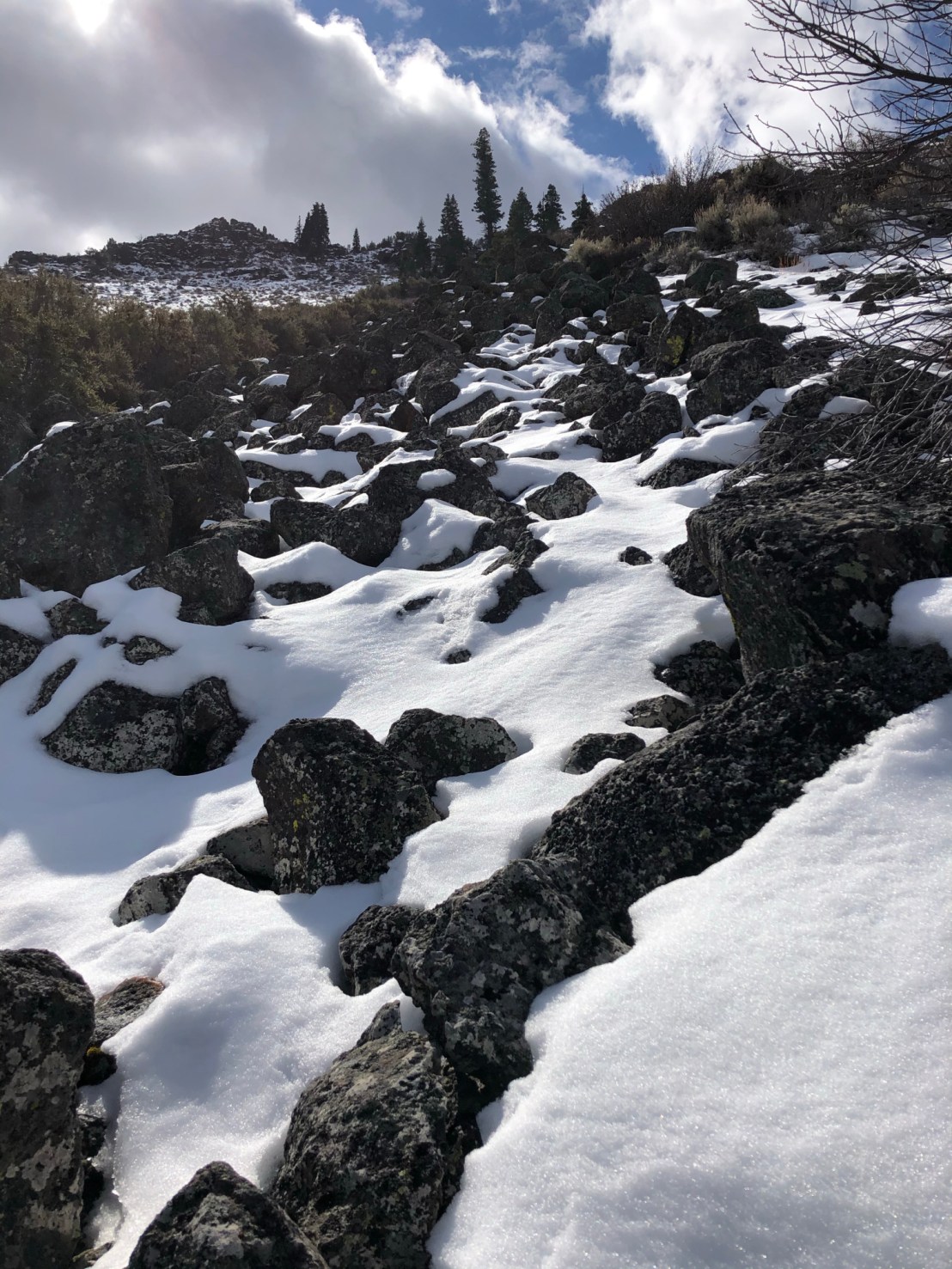
I guess I should have expected the snow, above 6000’ in the springtime. Flurries swirled around my car as I removed my leggings in the backseat and began cleaning my wounds. I was bleeding in four places, the largest of which was a grapefruit sized ooze of blood on my knee. What was supposed to be a quick, 3 mile warm up hike turned into an assorted practice of skills I’ve acquired over the last ten years in the woods.
How to navigate trailless canyons full of thorny brush.
How to step when gaining upon steep fields of melting snow.
How to traverses loose, snow covered boulder fields.
How to field dress a wound.
How to know when to turn around.
How to navigate by sight and evaluate terrain.
How to avoid getting your ankle crushed by a dislodged boulder.
How to stay calm when things get intense.
How to get your head back in the game.
How to self evacuate.
How to accept failure.
How to relish in it.
Just enough snow to mess things up.
Later, with my knee buzzing slightly from the pain, I make my way into a canyon on the western flank of the mountain. I know this canyon well. There is a safe place to hide from the rain, to collect drinking water, and I don’t have to worry about the roads turning to mud if the storms linger through the night. While my water filter drips, I follow the creek upstream. Wind swirls, aspens chatter, clouds are ripping across the sky. House sized, red violet boulders protrude from the hillside, they look like ships caught in the crest of a giant wave.
The sun is setting, the pain in my leg forgotten. I take my full water jugs and find a place to camp along the rocky beach of an alkaline lake. These lakes are the remnants of massive, Pleistocene era inland seas. Their waves are black. In the coldest parts of winter they freeze into a slurry of ice and the motion of the waves seems to slow. Like watching an inky black slurpee ocean crash against the rocky shore.
I eat instant noodles, drink tea, and think about the “real” ocean, where I was born.
To me, the desert and the ocean are like two sides of the same coin. I can watch the light change over the hills for hours, just like I can watch the waves break along the coast. Both are fascinating. The ocean always seems impassable, uncrossable, infinite, unforgiving. The desert is too, if you know the dangers well enough. I think about my close call on the mountain earlier. It’s like an old timer told me once, “…but only a fool tries to cross the desert”.
“Okay”, I said.
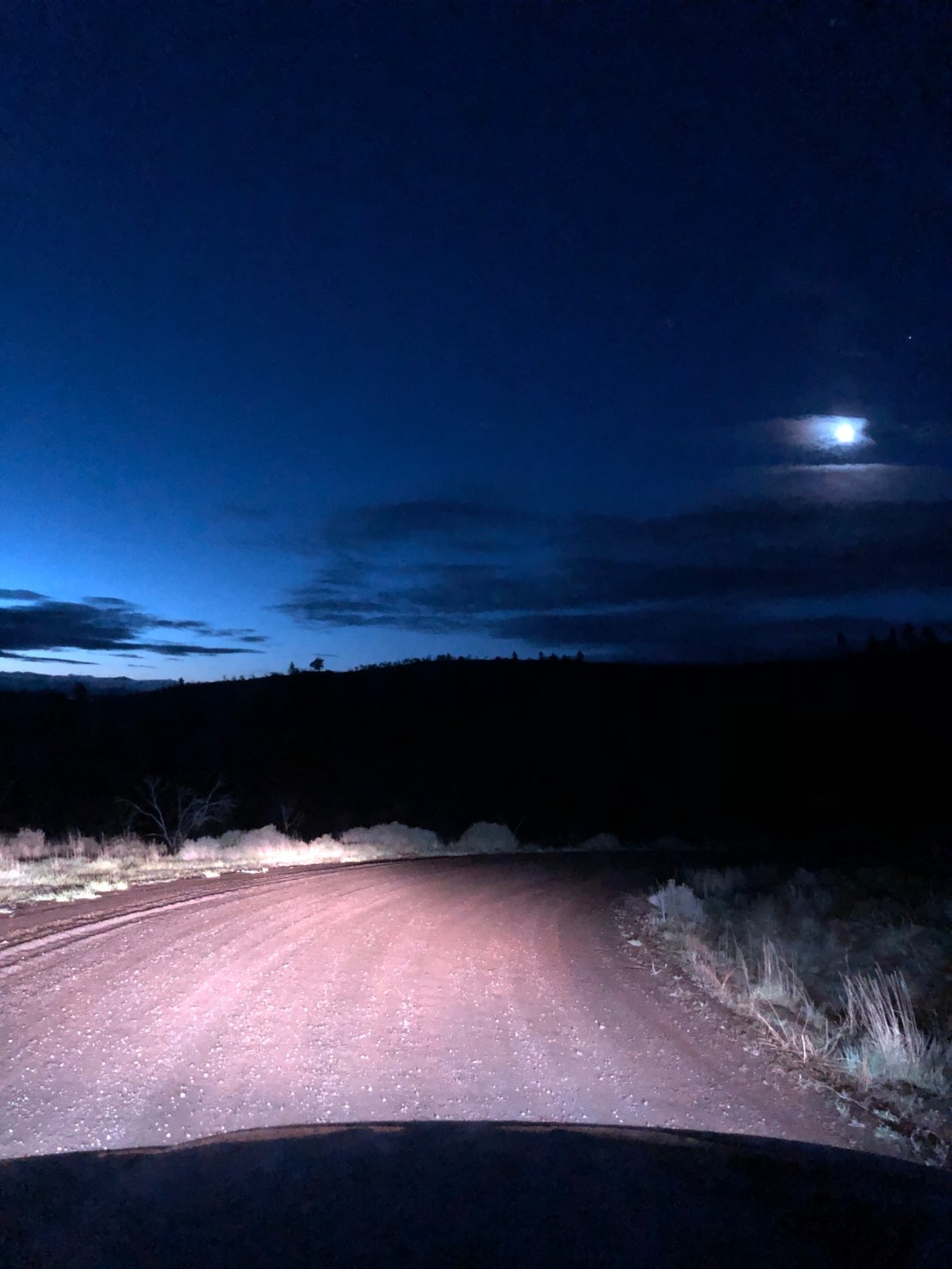
When the sun rises, I am already awake, shoving things around, getting ready to ride out to the canyons on the furthest side of the mountain. The dawn strikes a distant rim and is bright pink across the craggy face. I haven’t climbed that peak yet, either. I smile to myself as I toss my pack into the passenger seat, turn up the radio, and turn the ignition. I’m thankful for the warmth in my car this morning. Thankful for a shelter from the wind before my work in the canyon begins.
I found the place, but it took me a while.
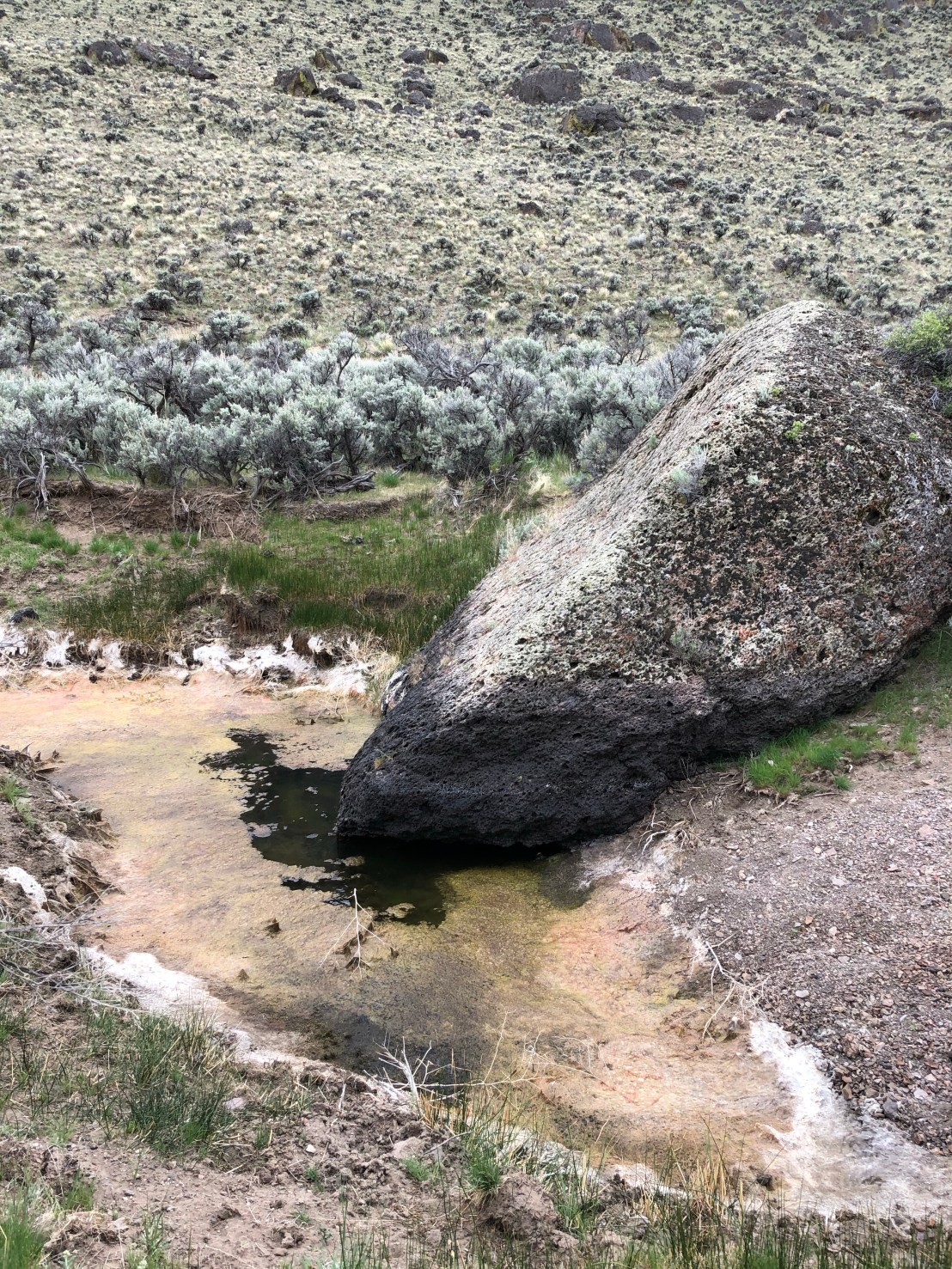
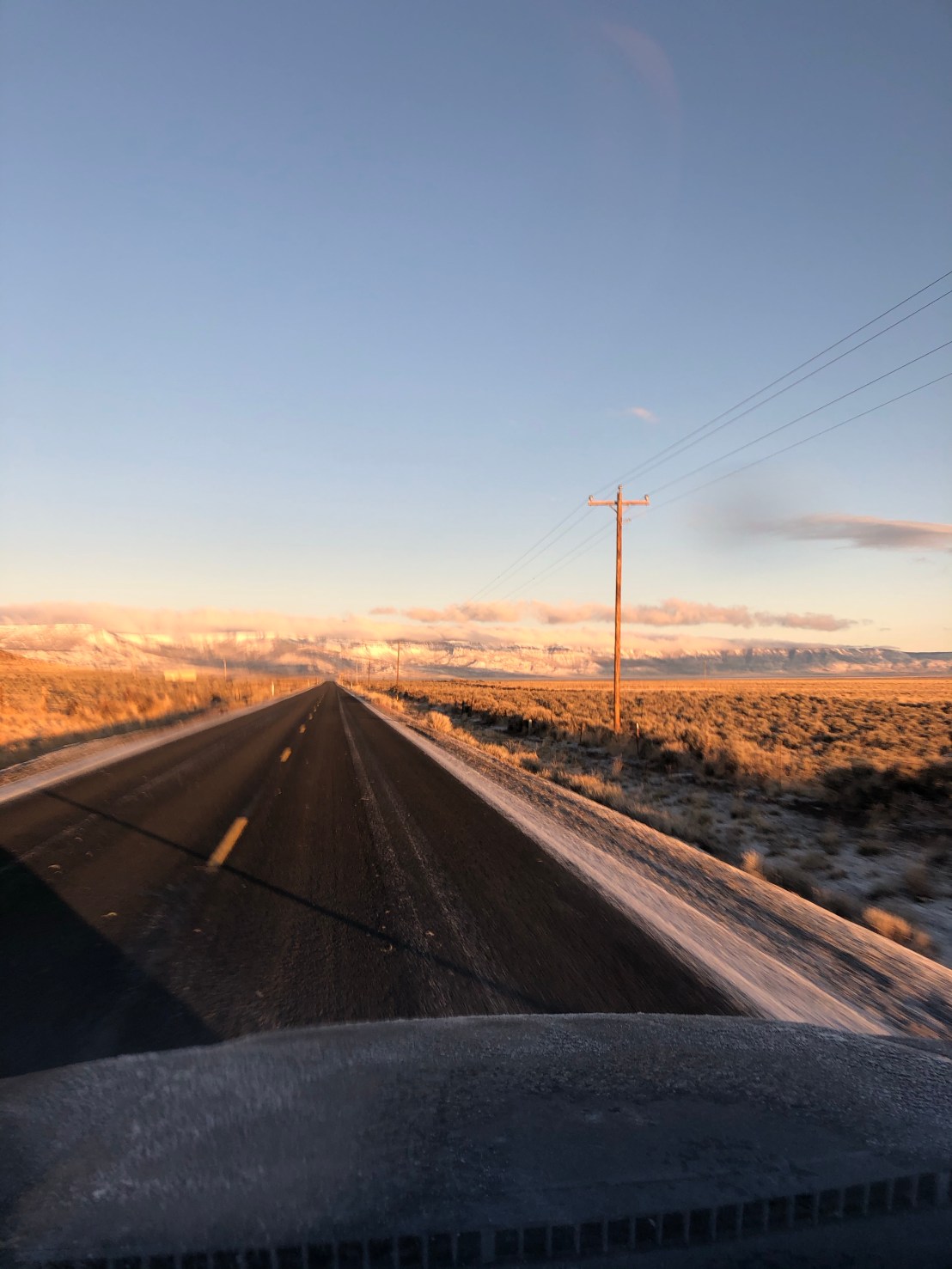
After nearly 50 miles on gravel and dirt, weaving around the backsides of sprawling, ethereal lakes, several wrong turns, and a quite sporting, rugged road granting passage across the valley floor, I had finally reached the gates of this remote, unsociable place. Rimrock lined the canyon walls, massive boulders littered the valley floor, scattered throughout the mostly dry river channel. Each possessed its own creepy, brackish pond at its base, resplendent with robust algae colonies.
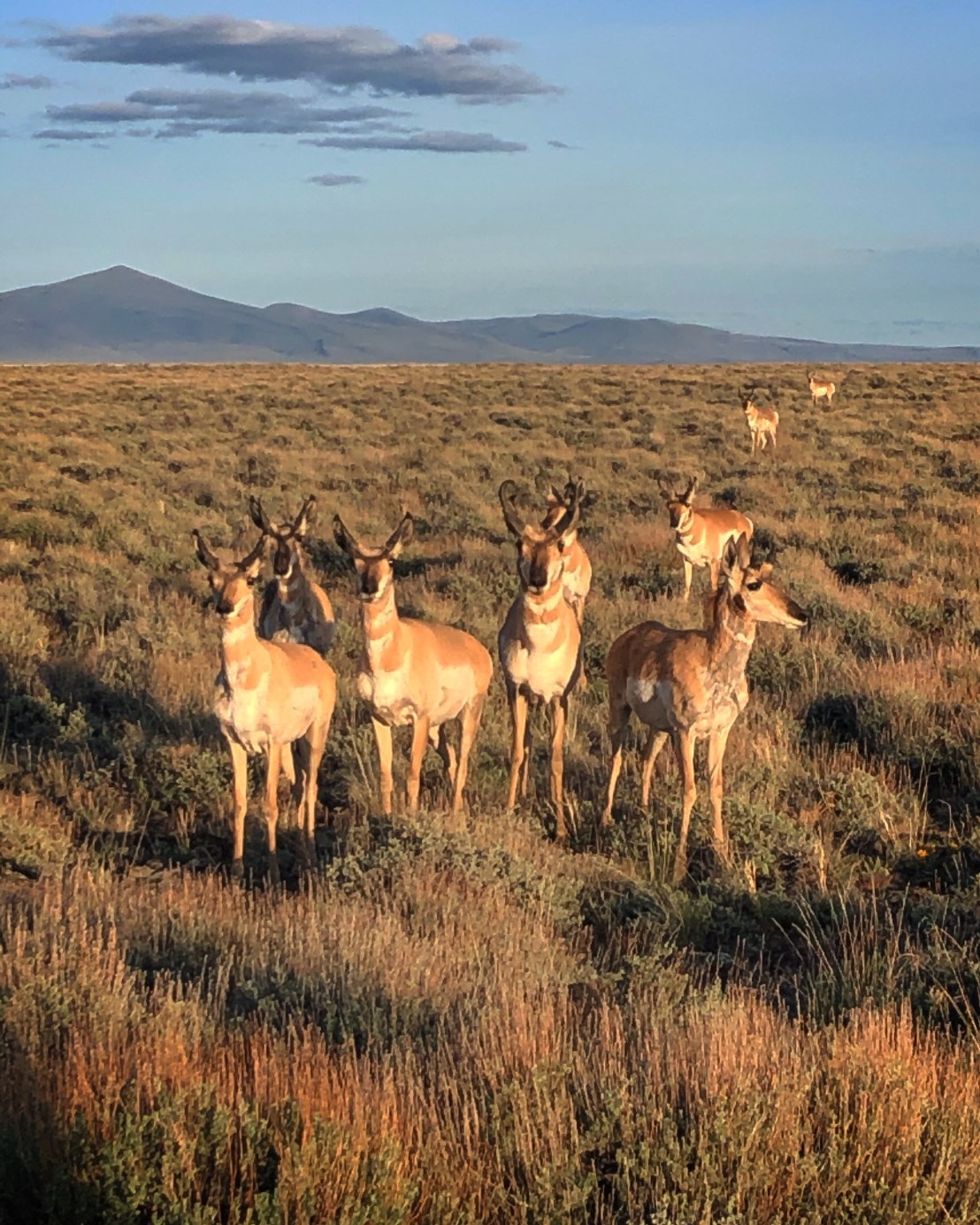
Some terrain cannot be run, and this was one of those places. I settled in to a comfortable, brisk hiking pace and made my way up the canyon; sometimes following the riverbed channel, other times taking the game trails through winding thickets of sagebrush and thorns. I never saw the animals, but I could feel myself being watched a few times. I do not mind; I always remember that I am their guest.
The otherworldly feeling of the canyon persisted, even as the landscape changed, flattened, rounded itself out. I took the old farm road out of the depths and up onto the flats again. The road leveled out as it wound it’s way around the mouth of the canyon, now obscured by the sagebrush sea spread out before me. You can see everything that is far away and nothing up close. The terrain is flat and easy here. I break into a run.
I love running downhill.
It’s all gravy until the weather blows in. I watch it coming across the valley. The first raindrops are warm and fat. A rainbow spreads across the horizon, snow clouds form on the rim of the mountain, and the wind really starts to rip. I resist the urge to increase my pace. My body is already sore; I’ve been out here nearly a week now. As the rain turns to sleet and then hail, it’s time to practice the things you’ve learned once more.
How to layer for various types of rain.
How to guard your face from the wind.
How to bundle your hands in your sleeves so they don’t go numb.
How to take your backpack off, open it and retrieve a snack without stopping.
How to run.
How to run when your feet hurt and you want to quit.
How to run when the rain turns to hail and catches you out on the flats with not even a rock to hide behind.
How to run when you are crying and you don’t know why.
Where do you go inside yourself when fatigue and boredom set it?
How do you stay present in all of it?
Everything is practice.
When I finally return to my car, the storm has passed, for now. The mountains beyond the valley are fully obscured by clouds. If I stay here, the road maybe be impassable by morning. I want to stay, but I decide the best course of action is to return the way I came. Also, the hot springs are over there, and my tired legs say, YES PLEASE. I hang my wet clothes up to dry along the windows of my car, crank the heat to 85, and hope my puffy dries out by morning. I rally back across the bumpy valley, behind the lakes, across the basin, up the face of the mountain all over again.
The hot springs are mercifully empty. I take off my clothes and stand naked in the cold air for a while, staring at the mountain. When I slip into the water, I feel like home. I feel like I belong. I am right where I want to be. Everything is just right.
But I don’t stay long.
ooOOoo
I subsequently asked where she had gone:
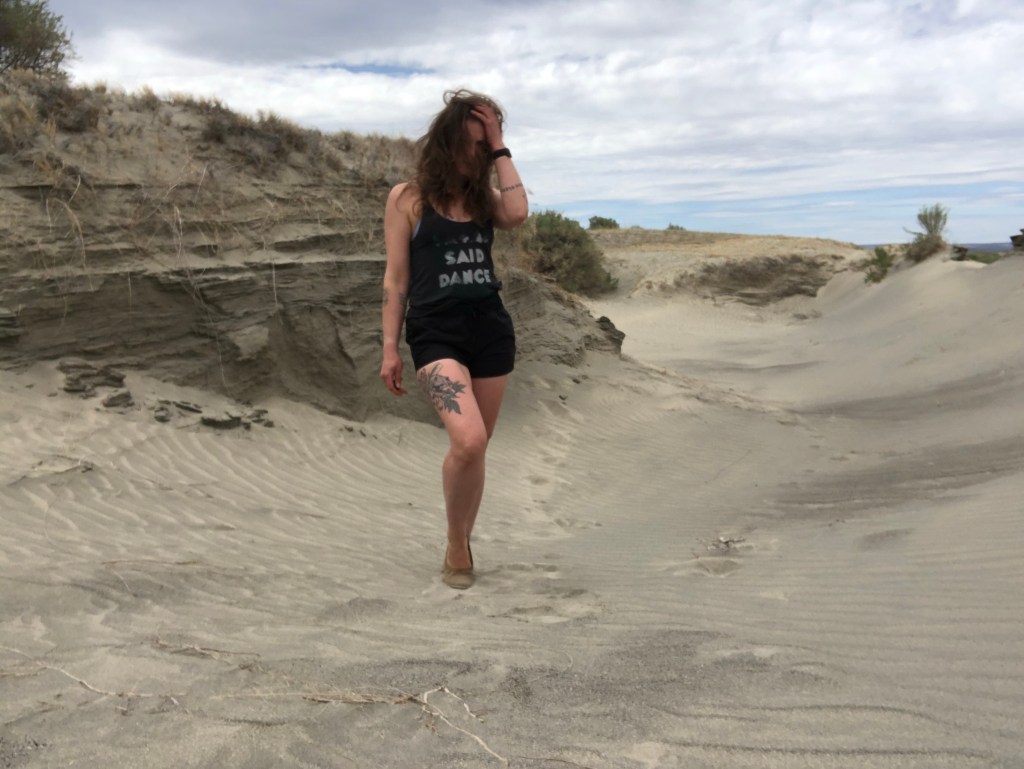
These photos are all from the SE corner of Oregon, reaching down into Northern Nevada. Hart Mountain, the Northern Warner Mountains, Abert Rim, Rabbit Hills, Summer Lake, and the formidable Catlow Valley.
Now you know!
But that doesn’t change my opinion that this is one unusual person who has the spirit of adventure truly in her bones!
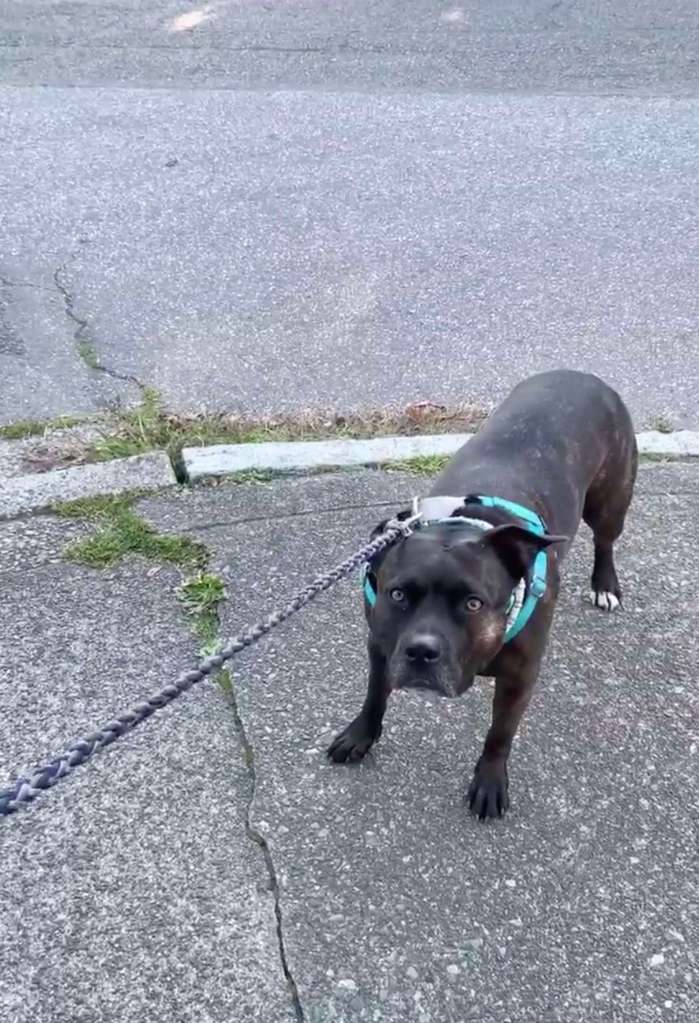
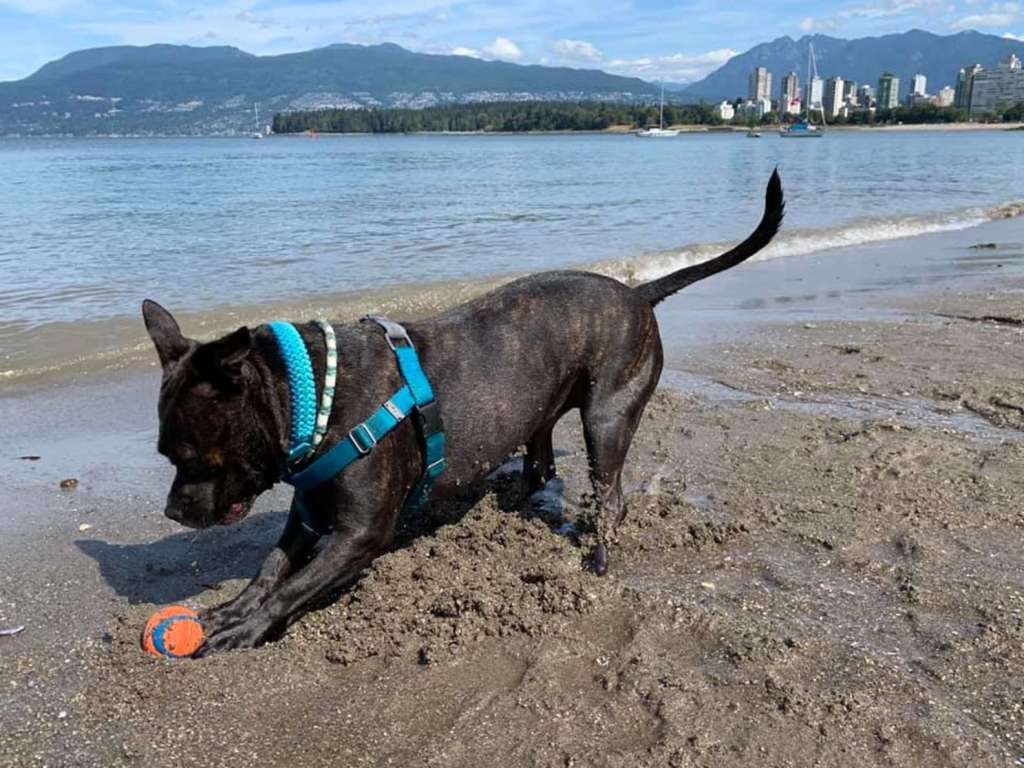
The first time Mia went to the beach when she was around 5 months old, she fell in love. She loves swimming, digging in the sand and chasing her ball around, and it quickly became one of her favorite outings.
Mia and her mom go to the beach about once a week in the summertime — but for Mia, it’s never enough. Their house isn’t far from the beach, so whenever Mia is out on a walk and they pass the way that would take them to the beach, she immediately stops walking and stands her ground.
“She knows the way by heart,” Yoshi Lok, Mia’s mom, told The Dodo. “She also knows that if she keeps heading north, she will eventually get to the beach which is why she always stops in her tracks and pulls me when we are heading in the opposite direction of the beach!”
Mia can be incredibly stubborn and has no problem engaging in a standoff with her mom. Every time, her mom pleads with her to keep walking, trying to explain that they don’t have time to go to the beach that day, but Mia always tries to wait a little bit longer. She hopes that the longer she stands there, the more likely it is that her mom will cave in and take her to the beach after all.
“She isn’t very happy when we don’t go, she does try more than once on our walks to go to the beach,” Lok said. “Sometimes I have to bribe her with treats to keep walking.”
YOSHI LOK
Even though Mia gets to go to the beach more than most dogs do, she would definitely prefer to go every day, and has made her stance on that perfectly clear.
YOSHI LOK
“She reacts this way EVERY DAY,” Lok said. “Ever since we walked to the beach three years ago (when we moved to this area in Vancouver — Kitsilano), she remembered the way and never forgot.”
YOSHI LOK
On the days when Mia finally does get to go to the beach, she’s so happy. As soon as she and her mom start walking in the direction of the beach, she gets so excited and practically runs all the way there. She swims, digs and runs as much as she possibly can until it’s time to go home — and then starts her campaign to go back to the beach all over again the next day.
ooOOoo
I think that Yoshi wouldn’t have quite the problem with Mia, if indeed it is seen as a problem, if Mia had a doggie companion. While a single dog is very common having two dogs doesn’t really increase the workload that much and the rewards in terms of the two dogs playing together is immeasurable.
But when I read the latest article from The Dodo about a corgi that freaked out when she saw a bush made to look like a dog I did wonder. But whatever it makes a nice story.
ooOOoo
Corgi Freaks Out When She Sees A Bush That Looks Just Like Her
“She looked confused and concerned” 😂
Lily Feinn
Published on 8/28/2020.
Luna isn’t usually scared of other dogs — in fact, she’s kinda bossy.
“Luna, like a lot of other corgis, has a big dog attitude in a smaller package,” Matt, Luna’s dad who asked that his last name not be included, told The Dodo. “She loves policing other dogs at the dog park.”
INSTAGRAM/LELUNABERRY
So it came as a surprise when the little dog freaked out when she met a larger, greener version of herself.
Luna and Matt were visiting a friend earlier this year when they spotted an adorable topiary in the neighbor’s yard. “I just thought it was hilarious ’cause I instantly thought it was a corgi-shaped hedge,” Matt said. “Maybe that’s just what my brain defaults to ’cause my dog is a corgi.”
INSTAGRAM/LELUNABERRY
Matt placed Luna in front of the hedge for a photo and it became clear she was not interested in making friends.
“I think she was afraid cause it was so large and maybe the way I reacted to it,” Matt said. “She looked confused and concerned.”
Matt was surprised to learn that his tough dog is actually a bit of a scaredy cat — when it comes to large plants, at least. “She has a pretty expressive face so it feels like I know what she’s thinking,” Matt said.
INSTAGRAM/LELUNABERRY
Matt snapped the photo of Luna and posted it to Twitter, with the caption: “Neighbors are a big fan of Luna apparently.”
People were so impressed by the likeness that the post quickly went viral. However, all the attention didn’t change Luna’s mind when it came to topiaries.
After eight years of living with Luna, Matt appreciates her now more than ever.
“She’s been great to have around,” Matt said. “The neighbors love her as well and I’m glad I can appreciate her more right now, having to stay home more often.”
But, to keep Luna happy, they haven’t walked by the bush since.
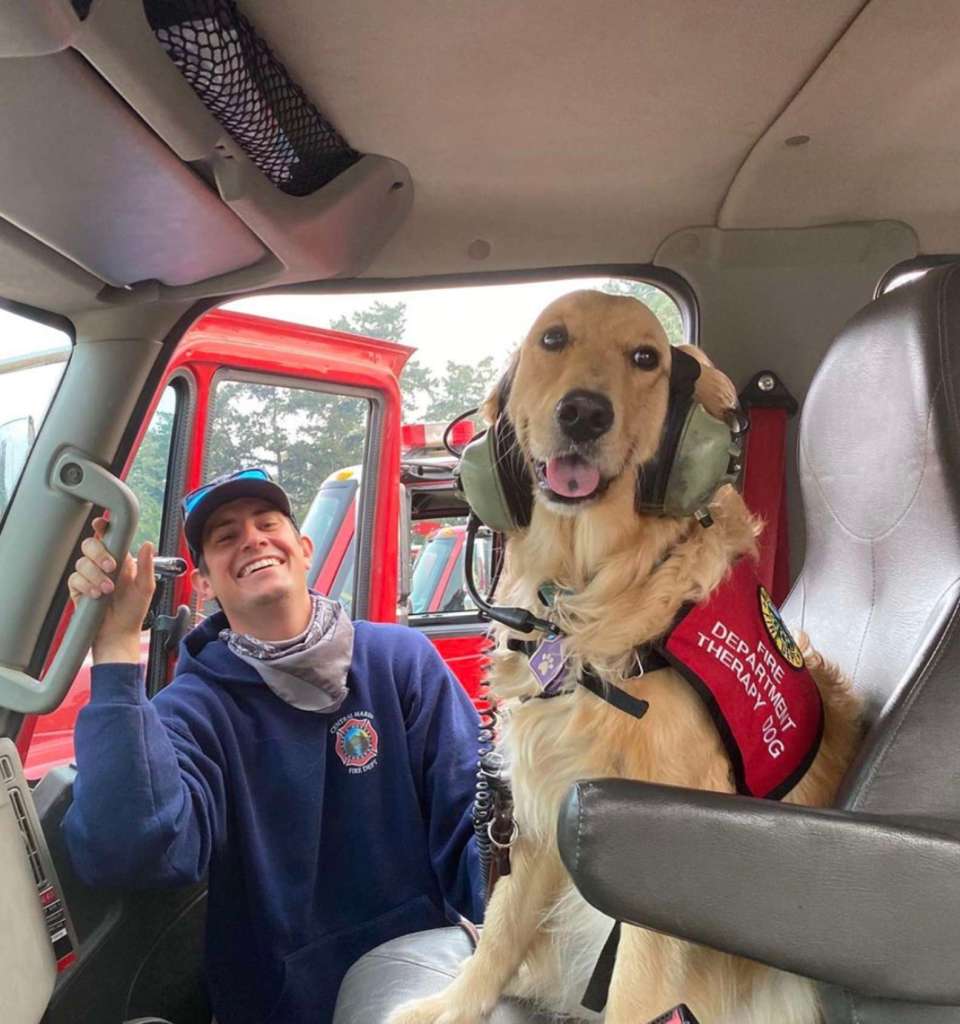
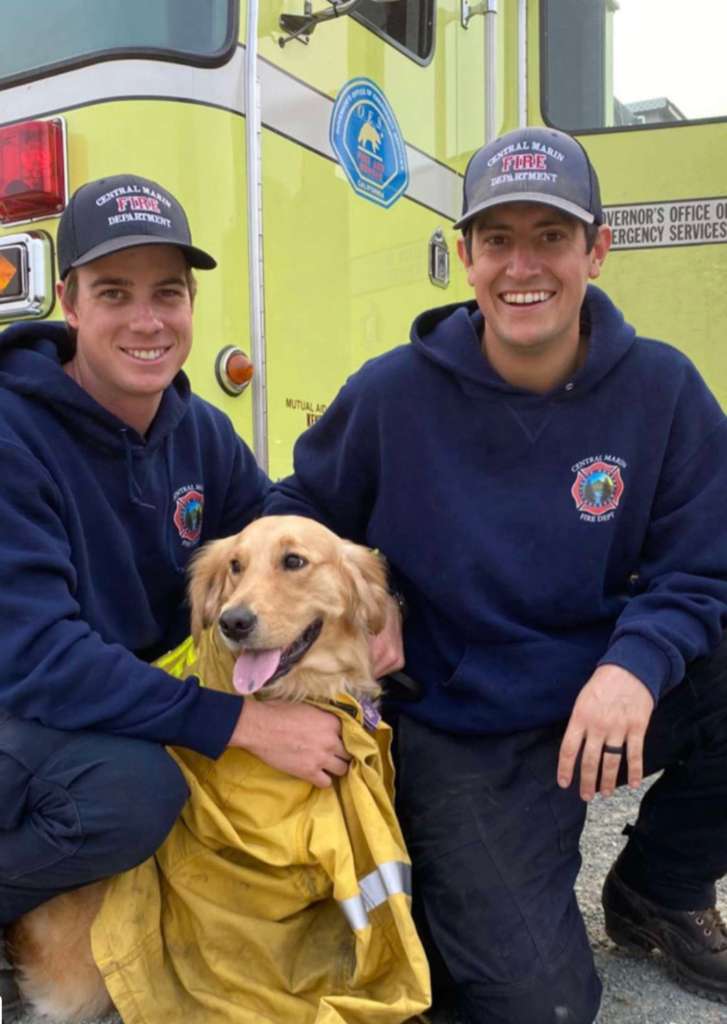
This is a post about dogs being of comfort to the Californian firefighters. A post presented on The Dodo that I am republishing.
But yesterday afternoon came news that here in Oregon we have a blaze. As the Washington Post reported it, in part:
An unusually expansive outbreak of large and fast-moving wildfires threatens communities in three states Wednesday, with the greatest risks focused on Medford, Ore., and Oroville, Calif., as large fires advance in those areas.
In Oregon on Wednesday afternoon, Gov. Kate Brown (D) announced that four towns have experienced significant damage, and she warned residents to expect news of fatalities.
“Oregon has experienced unprecedented fire with significant damage and devastating consequences for the entire state,” she said. Brown said the communities of Detroit, Blue River, Vida, Phoenix and Talent are “substantially destroyed.”
But back to those Californian firefighters.
ooOOoo
Dog Helps Comfort Firefighters Fighting The California Wildfires
Ever since she was a puppy, Kerith has been the bubbliest, most joyful dog, and her mom always knew that she was born to help people.
HEIDI CARMAN
Kerith was originally being trained to be a guide dog for individuals who are blind, but ended up changing career paths to become a therapy dog instead. For the past year she’s been working with local firefighters, providing them comfort in times of need — and with the recent wildfires spreading across California, they need her now more than ever.
HEIDI CARMAN
“Kerith has been going to base camps where the crews start their day before they roll out to fight one of the many wildfires in CA,” Carman said. “She lightens the mood first thing in the morning. We walk around to visit all the crews while they are getting ready for their day of fighting fires. Everyone wants to see her to get some love.”
HEIDI CARMAN
As the fires rage across California, the firefighters’ jobs become more and more stressful as they work hard every moment of the day to save homes and lives. Kerith provides them a moment of relief and joy from the realities of their job — and when many of them see her, they can’t help but envelop her in a huge hug.
HEIDI CARMAN
Kerith loves all her firefighter friends so much, and is more than happy to let them hug her close. She seems to know that what she’s doing is important, and that the hugs she’s getting are more than just hugs. She’s helping to bring comfort when the firefighters need it most.
“Kerith clearly loves what she is doing,” Carman said. “When she sees a fire engine she gets so excited because she knows she is going to see her firefighter friends.”
HEIDI CARMAN
Hopefully the wildfires will be under control soon, but until then, Kerith will continue to give her firefighter friends as many hugs as they need.
ooOOoo
I find it amazing that there are dogs such as Kerith who love to be loved. Now plenty of dogs fall into that category but Kerith is part of a team; the rest of the team are human and working their backsides off fighting fires.
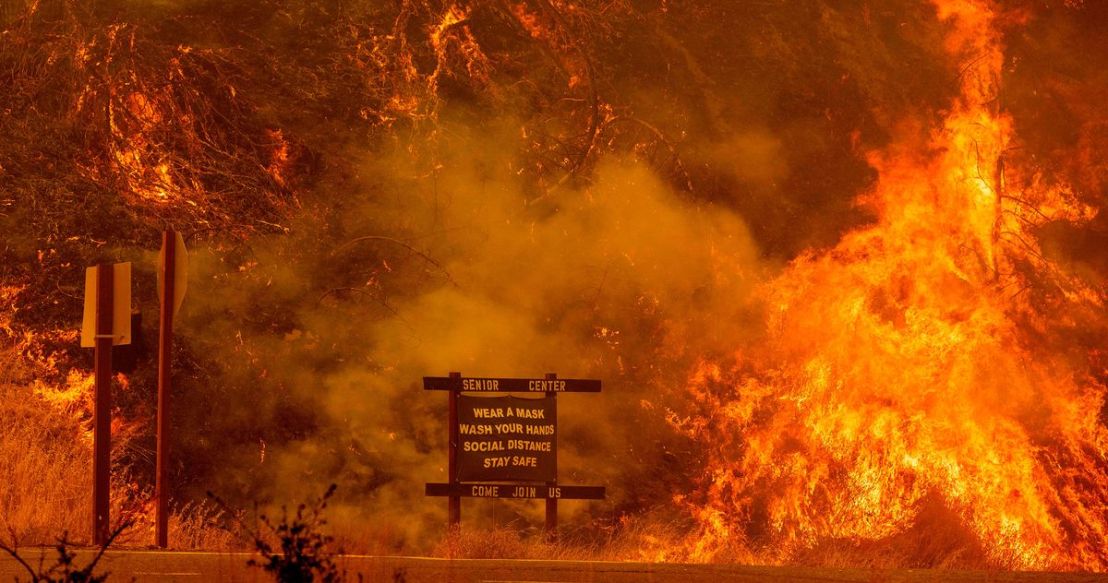
I will leave you for today with a random photograph I found from the ABC News website of one of those fires in California.
Roll on the rain!
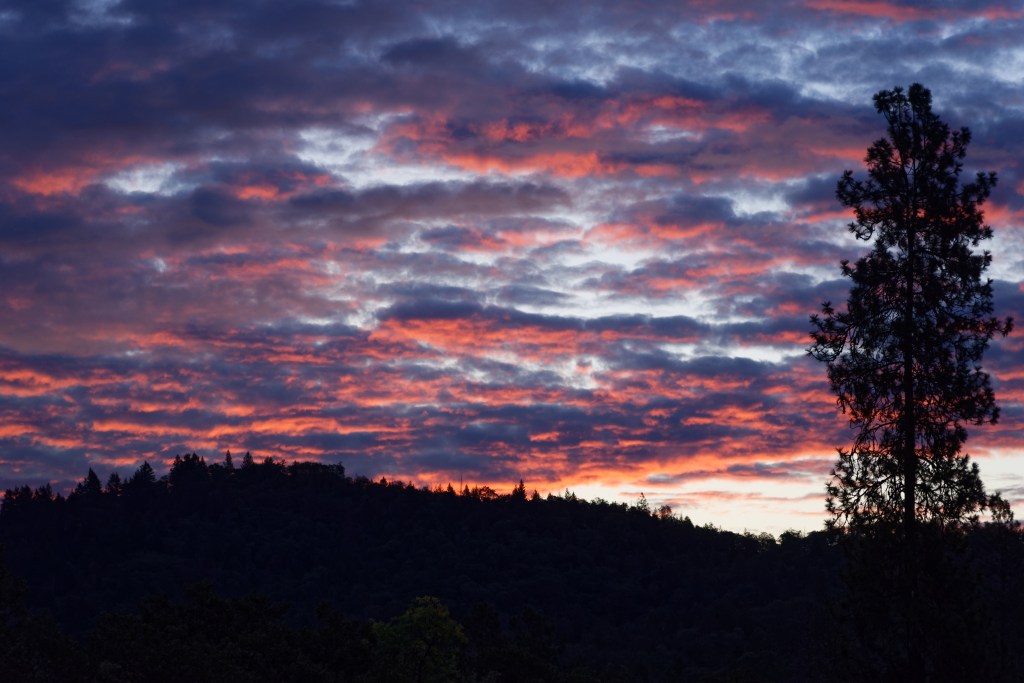
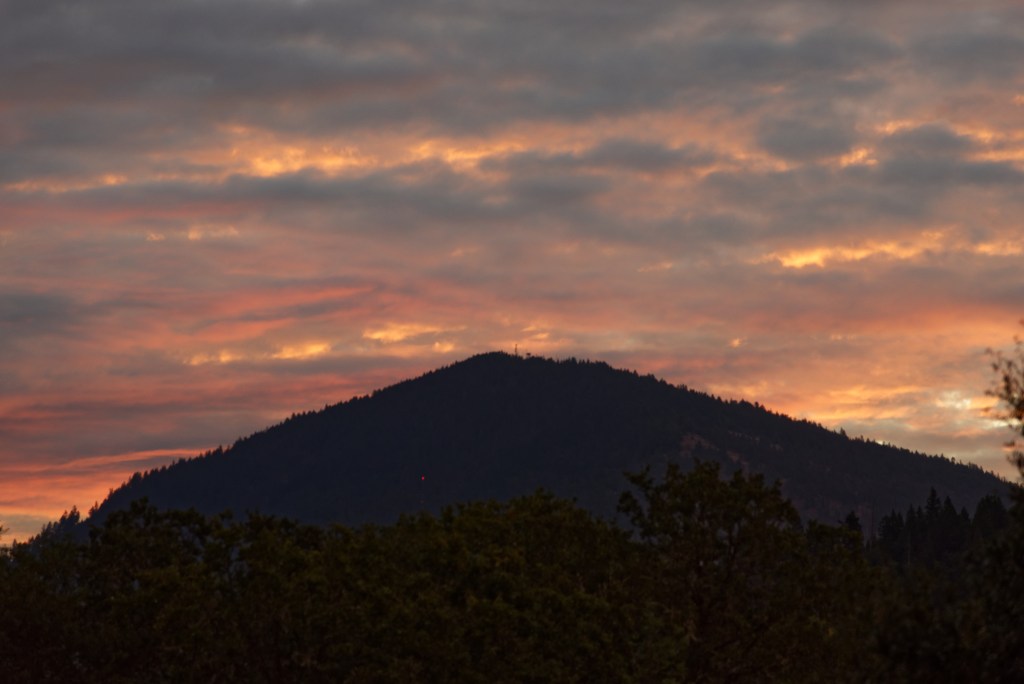
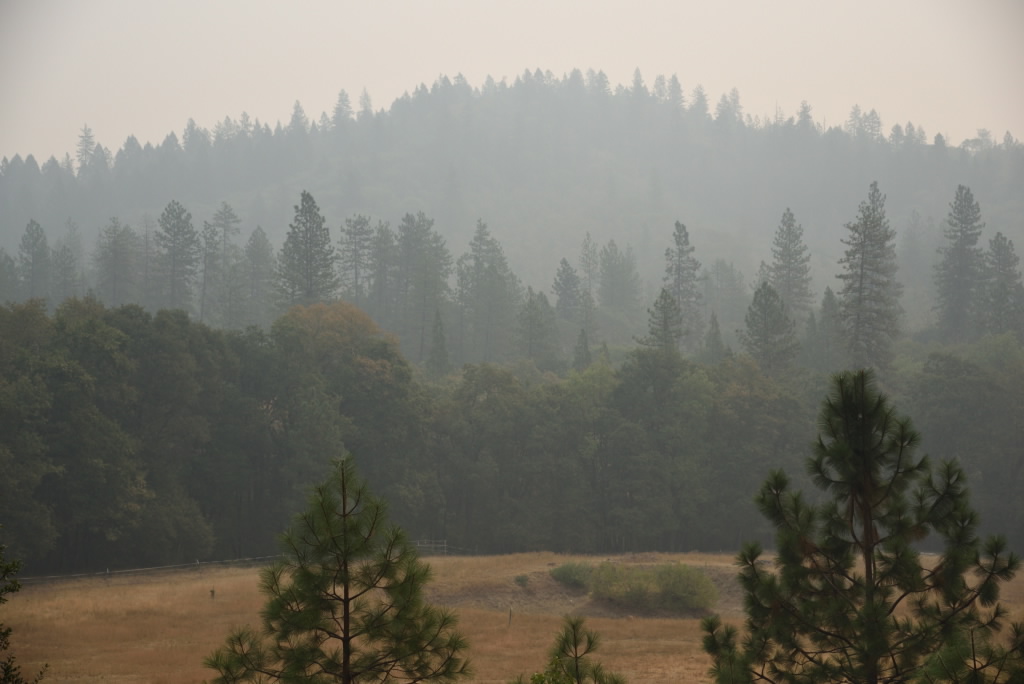
And a photograph taken at 11am PDT today of the hills to the East. It includes our own property.
It shows the extent of the smoke; the nearest run of trees across the photograph are on our property.


 About The Film