An interesting post for all of us, albeit, those on the right side of 70? will find this less important.
It is very difficult for me to add anything useful to this article so I will not try.
Except to say that the author, Aditi Gurkar, is Assistant Professor of Geriatric Medicine at the University of Pittsburgh so she should know what she is talking about!
ooOOoo
Are you a rapid ager? Biological age is a better health indicator than the number of years you’ve lived, but it’s tricky to measure

Aditi Gurkar, University of Pittsburgh
Do you ever wake up some days and think, “When I was younger, I could survive on just four hours of sleep, but now it seems like I need 10”? Or have you ever walked out of the gym and “felt” your knees?
Almost everyone experiences these kinds of signs of aging. But there are some people who seem to defy their age. The late U.S. Supreme Court Justice Ruth Bader Ginsberg stayed on the bench until her death at age 87. The “Great British Bake Off” judge Mary Berry, now in her 80s, continues to inspire people all over the world to bake and enjoy life. And actor Paul Rudd was named People magazine’s “Sexiest Man Alive” in 2021 at age 52 while still looking like he’s in his 30s. Is age just a number then?
Researchers have focused a lot of attention on understanding the causes and risk factors of age-related diseases like Alzheimer’s, dementia, osteoporosis and cancer. But many ignore the major risk factor for all of these diseases: aging itself. More than any individual risk factor such as smoking or lack of exercise, the number of years you’ve lived predicts onset of disease. Indeed, aging increases the risk of multiple chronic diseases by up to a thousandfold.
However, no two people age the same. Although age is the principal risk factor for several chronic diseases, it is an unreliable indicator of how quickly your body will decline or how susceptible you are to age-related disease. This is because there is a difference between your chronological age, or the number of years you’ve been alive, and your biological age – your physical and functional ability.
As the author notes in her TED Talk, aging is not just a number.
I am a scientist interested in redefining “age.” Instead of benchmarking chronological age, my lab is invested in measuring biological age. Biological age is a more accurate measure of healthspan, or years lived in good health, than chronological age, and doesn’t directly correlate with wrinkles and gray hairs. Rapid agers experience a faster rate of functional deterioration relative to their chronological age.
My grandmother, who lived to be 83 but was bedridden and could not remember who I was for the last few years of her life, was a rapid ager. My grandfather, on the other hand, also lived until he was 83, but he was active, functional and even did my homework with me until he passed away – he was a healthy ager.
With the unprecedented growth of the world’s aging population, I believe that figuring out ways to measure biological age and how to maintain or delay its advance is critical not only for individual health, but also for the social, political and economic health of our society. Detecting rapid agers early on presents an opportunity to delay, change or even reverse the trajectory of biological aging.
Genetics and biological age
Biological aging is multifaceted. It arises from a complex mix of genetic traits and is influenced by factors like microbiome composition, environment, lifestyle, stress, diet and exercise.
Genetics were once thought to have no influence on aging or longevity. However, in the early 1990s, researchers reported the first studies identifying genes that were able to extend the lifespan of a small roundworm. Since then, multiple observations support the influence of genetics on aging.
For example, children of long-lived parents and even those with long-lived siblings tend to live longer. Researchers have also identified multiple genes that influence longevity and play a role in resilience and protection from stress. These include genes that repair DNA, protect cells from free radicals and regulate fat levels.
However, it is clear from studies in identical twins – who share the same genes but not the same exact lifespans – that genes are not the only factor that influences aging. In fact, genes probably account for only 20% to 30% of biological age. This suggests that other parameters can strongly influence biological aging.
Environmental and lifestyle effects
Researchers have found that environmental and lifestyle factors heavily influence biological age, including social connectedness, sleeping habits, water consumption, exercise and diet.
Social connectedness is essential for well-being throughout life. But social connections can be challenging to maintain over time due to loss of family and friends, depression, chronic illness or other factors. Several studies have reported a strong link between social isolation and increased stress, morbidity and mortality.
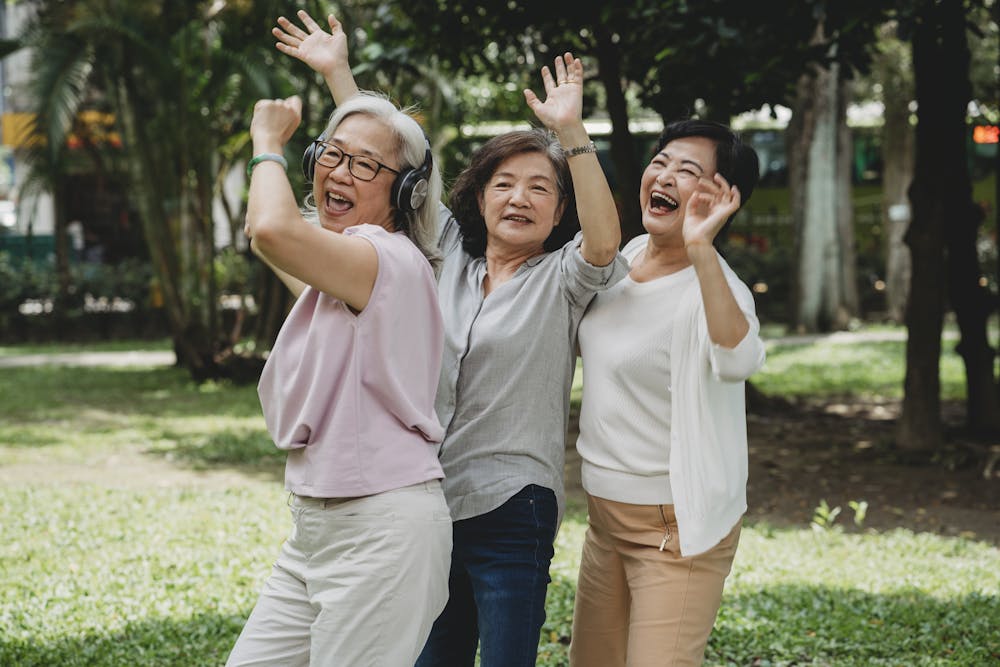
Similarly, diet and exercise are strong influencers of biological age. Blue zones, which are areas around the world where people live long lives, attribute their successful aging to diet, exercise and social connectedness. Mostly plant-based meals and spurts of activity throughout the day are well-known “secrets” of healthspan and longevity. Although newer studies on the effects of diet interventions such as intermittent fasting and time-restricted feeding on longevity have not been rigorously tested, they do show multiple health benefits, including better glucose and insulin regulation
While genetics is difficult to control, diet and exercise can be modified to delay biological aging.
How to measure biological age
Currently, there is no effective test to predict an individual’s health trajectory early enough in life in order to intervene and improve quality of life with age. Scientists are interested in identifying a molecule that is sensitive and specific enough to serve as a unique fingerprint for biological age.
Considering the health and resilience of the individual instead of focusing solely on disease state is important in discussions on biological age. Resilience is the state of adapting and bouncing back from a health challenge and is often more predictive of functional health. A molecular aging fingerprint may provide a tool to help identify people who are less resilient and require more aggressive monitoring and early intervention to preserve their health and help reduce gender, racial and ethnic health disparities.
There are several promising molecular markers that may serve as biological age fingerprints.
One of these markers are epigenetic clocks. Epigenetics are chemical modifications of DNA that control gene function. Several scientists have found that DNA can get “marked” by methyl groups in a pattern that changes with age and could potentially act as a readout for aging.
It is important to note, however, that while epigenetic clocks have been valuable in predicting chronological age, they do not equate to biological age. In addition, it is unclear how these epigenetic marks work or how they contribute to aging.

Another well-regarded marker of biological age is the build-up of dysfunctional cells called senescent or zombie cells. Cells become senescent when they experience multiple types of stress and become so damaged that they cannot divide anymore, releasing molecules that cause chronic low-grade inflammation and disease.
Animal studies have shown that getting rid of these cells can improve healthspan. However, what clearly defines senescent cells in humans is still unknown, making them challenging to track as a measure of biological age.
Lastly, the body releases unique metabolites, or chemical fingerprints, as byproducts of normal metabolism. These metabolites play a dynamic and direct role in physiological regulation and can inform functional health. My lab and others are figuring out the exact makeup of these chemicals in order to figure out which can best measure biological age. A lot of work still remains on not only identifying these metabolites, but also understanding how they affect biological age.
People have long sought a fountain of youth. Whether such an elixir exists is still unknown. But research is starting to show that delaying biological age may be one way to live healthier, fuller lives.
This article is republished from The Conversation under a Creative Commons license. Read the original article.
ooOOoo
There is no arguing the fact that more and more great articles are appearing online. Indeed, the whole world is changing radically in many areas.
Onwards and upwards! 😉
Footnote: This appeared online on the Inspiring Quotes website. The link is here, from which I reproduce the following:
Growing older is one of the most pervasive preoccupations of humankind. The passing of time is, after all, an inescapable part of the human condition. And aging, like love, is one of the most common themes in literature, be it the calm of poet Robert Brownings’ “Grow old along with me! The best is yet to be,” or poet Dylan Thomas’ raging against the dying of the light.
 Learning from Dogs
A fascinating read. Thank you.
LikeLike
That’s what we thought, Jackie. Mind you , trying not to react personally to the post but failing so far!
LikeLiked by 1 person
As a ‘member’ of both kinds of aging camps, this resonated with me. Thanks for the interesting perspective.
LikeLike
The challenge is, to my mind, Monika, is reading this without it affecting one. Coupled with something I heard just a short time ago on BBC Radio 4 and that was a programme about Alzheimer’s, and I am afraid to admit that quite a few of the symptoms I shared. It really is a pig this getting older lark but, I guess, it is better than the alternative!
LikeLiked by 1 person
You got that right! 🙂
LikeLike
Thank you!
LikeLiked by 1 person
Paul, an interesting read. As you know, I’m on the right side of 80, and know what medical problems to face. It’s healthy daily rituals that fight against the unknown. Keeping stress and inflammation in the body is a goal. And we have more help from the medical profession than our parents did. Live every day to the fullest. 📚🎶 Christine
LikeLike
Christine, I had forgotten exactly what age you were but I’m 78, have been since last November, and physically fit although the brain is slowing down; if that’s the correct expression. My darling Jeannie has Parkinson’s, diagnosed in December 2015, and is doing fairly well. We eat pescatarian and try to keep active. Yes, living each day to the fullest is a splendid objective. 😎 Paul.
LikeLike
Paul, we do have physical and mental problems to deal with at our age. Depending on genetics what they are. Like Jeannie, my cousin has Parkinson’s and doing fairly well on medication. Most people have problems with memory recall. But, long term memory is strong. I agree, a vegetarian diet is best, one that I follow. But, mine is gluten free with added poultry, eggs and lactose-free milk. And no processed food, caffeine, alcohol or sugary sweets. A very boring, limited diet, but it works! Keep up your writing a good attitude toward life. And love your doggies! 📚 Christine
LikeLike
Christine, a very big thank you for your reply. One needs, at our age, to keep our horizons close to us and just take it one day, more or less, at a time. Thank you! And the dogs are perfect!
LikeLiked by 1 person