Please forgive the shortness of the introduction. It’s just that Jean and I were out all day and I didn’t sit down to present today’s post for all you good people until 4pm.
Frankly, this is such a wonderful account of caring for dogs that any intro from me would be superfluous!
ooOOoo
From Rags to Kisses: Abused Dogs Find Happy Homes in Colorado
In December 2014, Animal House Rescue and Grooming in Fort Collins, Colorado, found a very special delivery on its doorstep. Three dogs arrived from the Pine Ridge Reservation in South Dakota, an Oglala Lakota Native American reservation.
One of the poorest communities in the country, the reservation has an overabundance of unwanted pets facing the risk of disease, starvation, exposure to the elements and, unfortunately, violence.
After a five-hour drive, DeeDee, Prince and Maizy made the first step to finding new and happy lives.
DeeDee was originally discovered living in the trash dump on the Pine Ridge Reservation, where she made her home upon an old discarded sofa atop a pile of tires. A local rescuer, aware of her plight, spent a week slowly gaining DeeDee’s trust with food.
Once the understandably nervous dog allowed the rescuer to get close enough to her, she found herself on a leash and then in a car. Little did DeeDee know she was on her long way home.
DeeDee spent some time in foster care in South Dakota, recovering from mange and learning to trust again before she was transferred to Animal House to give her a better chance of finding her future family. It didn’t take long for them to find each other, with DeeDee’s charming and playful nature quickly winning over their hearts.
Prince, a 2-year-old shepherd mix, had been found covered in matted fur and burrs. He showed up at Animal House having been shaved, but full of affection.
When Prince arrived, they noticed that there was a problem with his back leg and quickly got him in for x-rays. The cause became quickly apparent, and horrible: Prince had been shot on the reservation. The bullet had travelled through his rear hip and shattered his femoral head.
Not knowing how long he had been suffering through the pain of his injury, the staff at Animal House was anxious for Prince to find relief as quickly as possible. He was sent to CSU Veterinary Teaching Hospital for a femoral head osteotomy, a surgery that alleviated his pain and allowed him to keep his rear leg.
Thankfully, his lovable nature showed through. Prince was able to recover in comfort and bask in newfound love, as he went to his new home shortly after surgery.
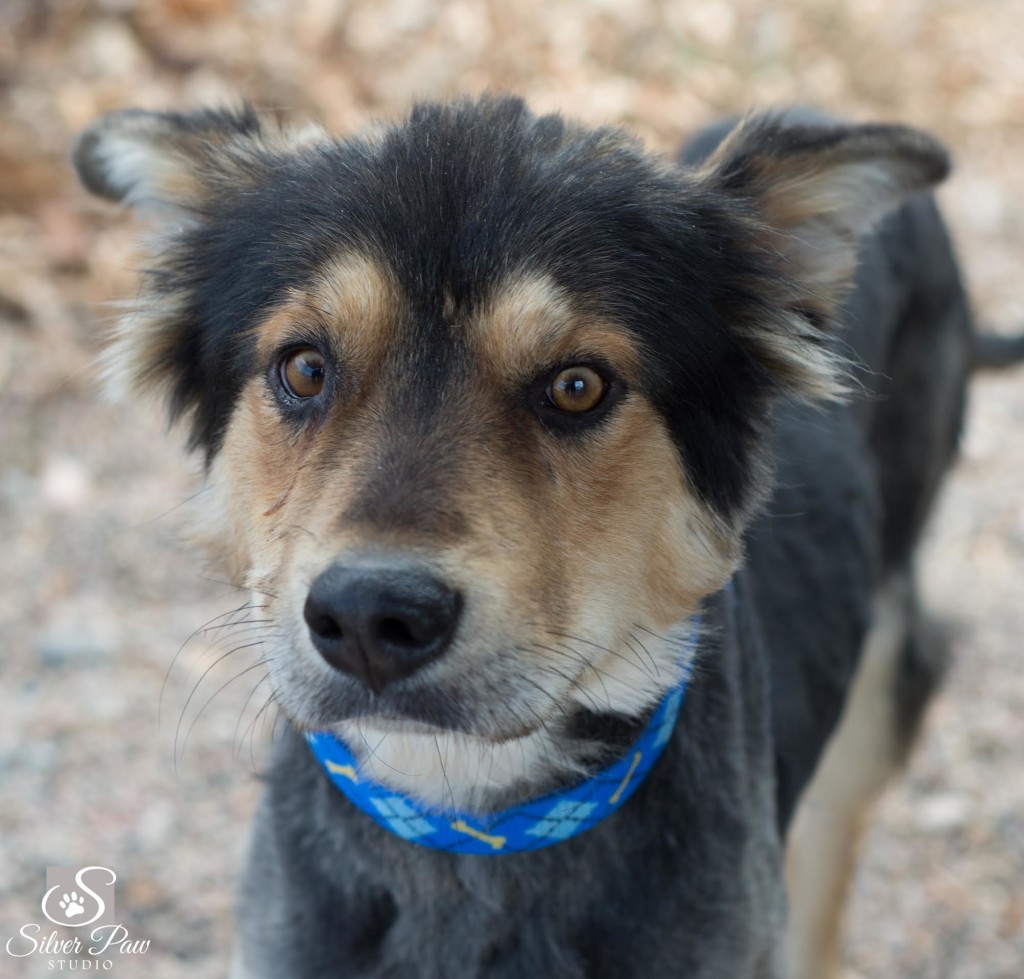
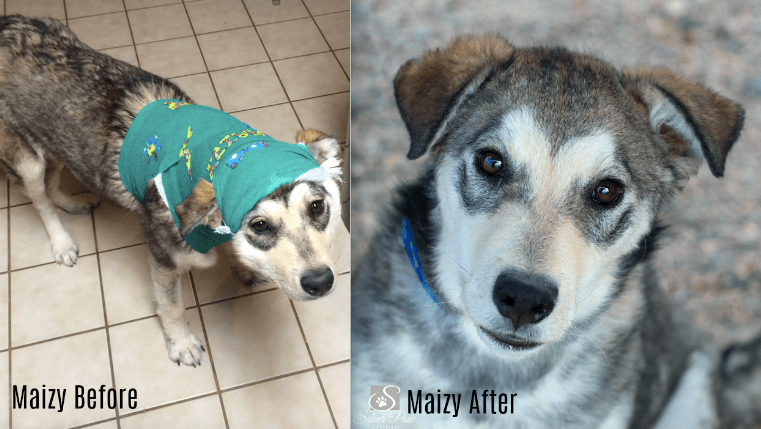
Maizy was a beautiful 8-month-old Husky mix puppy with eyes that melted hearts. Whatever happened to Maizy on the reservation, something that will remain a mystery, she came to Animal House in a lot of pain.
Maizy had several neurological symptoms and pain in her neck. After x-rays, the shelter soon found that the puppy had a fractured cervical vertebra, which was causing compression on her spinal cord. This could have been catastrophic for Maizy, but she’s a fighter.
Maizy’s foster family dedicated their time to bringing her to CSU Veterinary Teaching Hospital for regular bandaging and casting to keep her spine in place. Her beautiful face and wonderful personality through all of this ended up winning the heart of an Animal House volunteer. Having made a full recovery and a lifelong connection, Maizy now lives happily in her loving forever home.
Adoption Highlight: Special Needs Dogs
These adorable special needs dogs are still waiting to find their way to new homes.
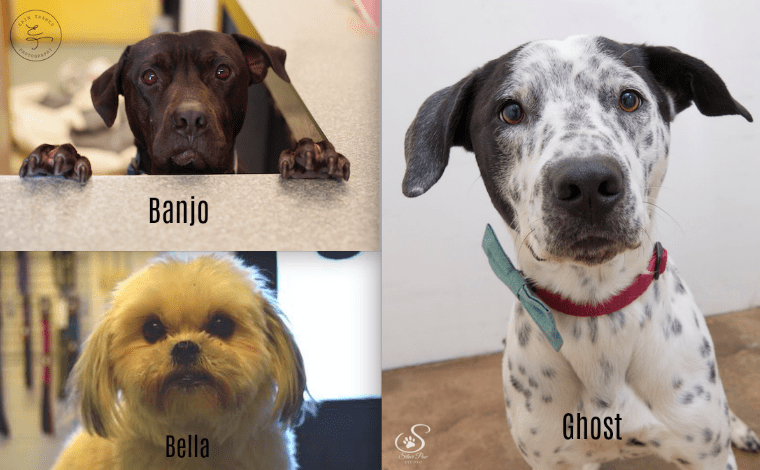
Banjo is a 6-year-old pit bull terrier mix who had a rough start to life, facing his many challenges with a great attitude. He arrived at Animal House with skin issues related to allergies, worn down teeth and scarring on his body, as well as kidney disease. Banjo gives the best hugs and thinks he is a lap dog, so he would make an excellent snuggle buddy.
Bella is a 2-year-old shih tzu mix who arrived at Animal House after her former sanctuary had to close its doors. Bella has a love for life and gets along well with other dogs and cats. She does struggle in some areas, though, specifically with constipation and some house-training. Bella is looking for a patient and kind forever home willing to help her live comfortably with her condition.
Ghost is a 2-year-old Australian Cattle Dog mix who is sensitive, intelligent, and inquisitive. He is nervous about new people and environments and needs a home that can build his confidence so that he can be happy and comfortable in a variety of situations. Ghost just wants some good old-fashioned love and patience!
You can find out more about these adoptable dogs here.
Photo credits: Animal House Rescue and Grooming, Colorado
ooOOoo
Whatever the state of the world, as long as there are organisations and people who will love and care for animals in need then I will be at peace.
It is a function of the news media to highlight alarming events; many of them with some justification.
But it’s all too easy to be drawn into a world that seems almost to be uniformly dark and foreboding.
Thus the following item seen over on the Care2 site really does deserve the widest sharing because it reminds us that there are countless good people who work so hard for our wonderful animals.
ooOOoo
Christmas Rescuers Save 1,300 Dogs and Cats From Winter Without Electricity
DONETSK — In the days before Christmas, a Ukrainian animal shelter drifting toward a winter of complete darkness has experienced an unexpected tidal wave of support from international animal lovers determined to keep the power on.
Last week, the shelter – located on the Russian border- sent out a distress call about the imminent threat of blackout for their 1,300 dogs and cats, many of whom were left behind by refugees during violent attacks over the last two years. After losing their local business sponsor during the military conflict, the shelter team have been enduring an intense struggle to feed the animals and to simply stay afloat.
“I can’t even remember the last time something good happened to us,” shelter manager Vita Bryzgalova explained in an email to the Harmony Fund international rescue charity. “We are now facing a power shut-down since the debt for electricity accumulated over the past year. It is almost $7,000 since the beginning of 2016.”
“If the electricity in the shelter would be cut, the veterinary appliances will not work and the shelter will be under sub-zero temperatures with no way to provide treatment or carry out operations,” Vita continued. “There will be no place to keep medications and vaccines and food for all animals living in the shelter as everything will freeze. The building is heated by a boiler but it doesn’t not work without the electric pump. There are three hospital wards with animals here and there are about 80 animals that are being treated and they especially need warmth and care. Also we have 35 employees who give daily care of the animals and they will be sick more often without heat in the rooms. Without electricity, we will also have no external communications by telephone or internet.”
Having provided donations of food and staff wages during this difficult time, the Harmony Fund turned to Facebook to see if people might be willing to help keep the electricity on. Within 48 hours, half the funds were raised ($3,500) and this sum was enough to keep the power on for the next few months while the charity attempts to raise funds for the rest of the debt to the electricity supplier.
The Great Animal Rescue Chase celebrates the art of animal rescue with a worldwide race to rescue one million. It’s a free event, open to all, and is perhaps the only global animal rescue event aimed at helping any animal in distress, anywhere in the world. Our ambition is to create a culture of enthusiasm and pride in animal activism. We believe in teaching, by example, that there is a hero in each of us just waiting to be unleashed. Empowered animal lovers can not only save lives, but build the momentum for powerful animal welfare reform.
The Harmony Fund
The Harmony Fund offers a lifeline to so called “underdog” animal rescue squads across the planet. Our partners are the small but incredibly courageous and effective animal rescue teams who operate in parts of the world where funding is very hard to come by. Our supporters are helping us to dramatically impact the capacity of these rescue teams to touch thousands upon thousands of animals who might otherwise be unreachable.
Gratitude and respect are at the cornerstone of our relationship with our supporters. We do not expose our supporters to graphic photos of animal suffering or distribute dire forecasts about animal suffering. Instead we focus on a spirit of joy and determination as we pursue essential operations to provide food, veterinary medicine, shelter and protection from cruelty for animals worldwide.
Contact Us
To contact The Great Animal Rescue Chase or the Harmony Fund, view our Contact Us page.
In the space of time it takes a raindrop to roll down your cheek, a life changing decision is made. You either turn sorrowfully away from an animal in distress or summon the courage to run forward and help. For all you runners out there, welcome home.
Come on in and rest your feet a while. Then join us in a planet-wide race to save 1 million suffering animals who are about to learn the spectacular meaning of second chances.
I know that all of you dear readers of this place will, without hesitation, summon the courage to run forward and help.
The incredible story of one stray dog and a desert racer.
This has been widely reported in many other places but, nonetheless, seemed a perfect fit for a blog called Learning from Dogs!
This is the story of a stray dog that took a liking to a runner participating in the 2016 Gobi March 4 Deserts race in China. I first saw the story when it was carried on the Care2 Causes site.
How hard are you willing to work to improve your position in life? For one stray dog, the answer is: pretty darn hard.
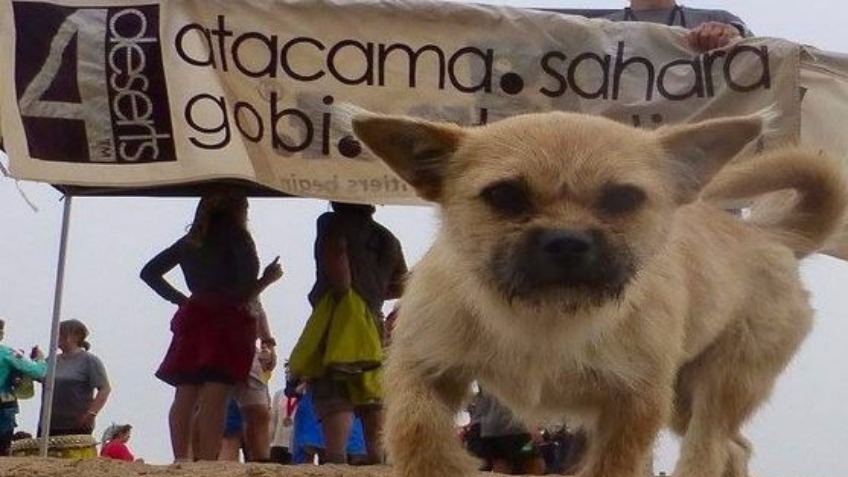
During the 2016 Gobi March 4 Deserts race in China, extreme runner Dion Leonard from Scotland was racing through the rugged terrain of the Tian Shan mountain range. That’s when a stray female pooch (eventually and aptly named) Gobi started following him.
The runner figured that she’d tire out eventually. She was a small dog, so keeping up with a life-sized human (who is an extreme jogger) probably didn’t seem likely. But amazingly, the little dog kept up.
Man who befriended stray dog during extreme desert marathon launches reunion appeal
The dog ran alongside Dion Leonard for 124 kilometres
May Bulman Tuesday 2 August 2016
Mr Leonard hopes to be reunited with the dog who ran with him during the 250 kilometre race in the Gobi desert 4Deserts.com / Omni Cai
An extreme marathon runner has launched an appeal to be reunited with a stray dog with whom he formed an “unbreakable bond” during a 250-kilometre (155 mile) race in the Gobi desert in China.
Dion Leonard, 41, hopes to raise the funds that will allow him to be reunited with the dog, named Gobi, who joined him during the annual 4 Deserts Race Series in March.
Gobi began running alongside the 101 competitors as they ran through the Tian Shan mountain range. Despite her small size the dog managed to run half of the race.
Later on in that Independent article it is reported:
Mr Leonard set up the crowdfunding page to raise funds towards organising for Gobi to be transported from China to live with him in Scotland.
The process will take up to four months and cost £5,000, with the dog having to be medically checked and quarantined before she can be cleared for entry.
A simple mouse click then takes the reader to that Crowdfunding page where the headline then shows that already over £19,000 has been raised.
That page explains:
Gobi, a friendly stray dog joined 101 other competitors running 250km over the Tian Shan Mountains down to the Black Gobi Desert during a 6 stage 7 day self sufficiency foot race. Gobi ran 4 stages including the final 10km stage to the finish line, showing unique strength and stamina for a little dog to keep up with the runners in such grueling conditions.
Everyone from the competitors, volunteers and race crew fell in love with this little dog that captured all our hearts. Gobi took a shine to me and over the week we developed an unbreakable bond as I shared my sleeping space, food/water and ultimately our companionship.
Now let’s hear from Dion.
Time and time again our wonderful dogs inspire us to reach out; to never say never!
The great relationship that can exist between dogs and cheetahs.
Before you read on let me raise my hand in connection with this blog. Or to be clearer, next Monday Jean and I have the very great pleasure in welcoming my daughter, Maija (she of Sonic Journeys from SOUND UK), her husband, Marius, and my grandson Morten. They are staying with us until the 24th July.
Inevitably, and for all the right reasons, I will not be putting in anything like the normal time I usually spend on Learning from Dogs. It did cross my mind to stop blogging for those seven days but that seemed like a step too far.
However, what is certain is that the period from now right through to the last week in July is going to see me lowering the priority of this blog and being more random in nature in terms of if or how I respond to your comments and replies. You will also read a succession of repeats of posts from previous years. I’m hoping that because so many of you will not have been reading this place during my early years that the number of times you see something that you have previously read is kept to a minimum.
So why this note to you all today? Because the rest of this week is going to be pretty busy as we get the house all tidied up and fully prepared for our visitors.
Having got that off my chest do read the following that appeared recently over on Care2.com.
Cheetahs, the fastest land animals on Earth, have been disappearing almost as fast as they can run.
But in the African country of Namibia, the cheetah population has grown from 2,500 to 4,000 since 1994. And dogs are helping to keep those numbers rising.
Instead of trapping or shooting cheetahs that wander onto their property and kill livestock, some farmers are relying on Anatolian Shepherds and their fierce barking to scare away the predators.
“You may see in history that this dog can be responsible for saving the cheetah from extinction,” Jack Hanna, director emeritus of the Columbus Zoo, told CBS News. “That is one heck of a story right there.”
The dogs are provided to farmers and ranchers by the Cheetah Conservation Fund (CCF), the world’s leading organization dedicated to saving the lives of cheetahs in the wild.
The majority of cheetahs in the wild – over 90 percent of them, according to the CCF — live outside protected areas, surrounded by farming communities. And many of those farmers, especially poor ones, are more concerned about protecting their livelihood than an endangered species. About 10,000 cheetahs were killed during the 1980s, before CCF launched the Livestock Guarding Dog program in 1994.
Since then, the program has placed more than 500 dogs, helping to reduce the loss of livestock from 80 to almost 100 percent. The program is extremely popular — there’s a two-year wait to get in. It not only provides free Anatolian Shepherd puppies, but also training advice and free veterinary care.
“CCF research shows that the people’s attitudes towards predators are changing as a result of this and other CCF programs,” the organization said on its website.
Dogs and Cheetahs Aren’t Enemies in U.S. Zoos
As a way to promote “the life-saving role dogs play for cheetahs in the wild,” according to CBS News, some zoos in the United States are raising puppies with cheetah cubs.
“The number one question up here, this $40 million exhibit: ‘Are the dogs coming out?’” Suzi Rapp, director of the Columbus Zoo’s animal programs, told CBS News. “And I say the Columbus Zoo built the world’s most expensive Labrador retriever exhibit in the world… the biggest dog run.”
Dogs and cheetahs can also be found together at the Cincinnati Zoo. It was there, as you probably remember, where Harambe the gorilla was shot to death when a boy fell into his exhibit. His killing sparked international outrage and concern over keeping wild animals captive in zoos.
What are domesticated animals doing in these zoos? Like the Anatolian Shepherds in Africa, the zoos say, the dogs are helping to prevent cheetahs from becoming extinct. But instead of scaring cheetahs away from livestock, the zoo dogs are best buddies with the cheetahs. Their friendship, which begins when they’re about 3 months old, helps put the skittish cheetahs at ease so they can more easily be bred.
The San Diego Zoo, which has been raising dogs with cheetahs for over 30 years, gets many of its puppies from animal shelters. So in a way, the rescued dogs are paying it forward by helping save the lives of another species.
ooOOoo
That Care2 article by Laura Goldman included a short video from CBS News. However, despite me having a link to that video I couldn’t get it to play.
No problem because YouTube came up with a very good alternative.
Published on Apr 29, 2013
CCF Operations Manager Brian Badger explains how our Livestock Guarding Dog program works as part of the whole of CCF’s operations to help save the cheetah in the wild.
In fact, there was more than one interesting video and I couldn’t make up my mind which was best.
So you got two!
Published on Sep 25, 2013
In Gobabis, Namibia, these Kangal dogs guard the goats against predators, including the worlds largest population of wild cheetahs. This stops the farmers from targeting the cheetahs. Since the big dogs were introduced to Namibia, the cheetah population has reached a 30-year high ! Hurray!
Just to demonstrate that Learning from Dogs isn’t wall-to-wall about dogs!
Over the years that I have been writing in this place it has been mentioned before that as well as us having our dogs we also have cats. When Jeannie and I moved up from Mexico to the USA in 2010 we came with six cats, all of them cats that Jean had rescued off local streets down in San Carlos, Mexico.
Four years ago, when we moved up from Arizona to this present home here in Merlin, Southern Oregon, we built a cat run that was attached to the garage. Then about a year ago we brought what was now four cats into the house. The cats are in their own rooms during the day but mingle with the ‘living room’ group of dogs in the evening. The cats are not let outside for we fear that they would be grabbed by a passing coyote or similar before they learnt to return home in the evening.
All of which is my preamble to an article that was published a month ago over on the Care2 Causes site, and is republished here within Care2’s terms.
Once every eight seconds, an unwanted cat or dog is euthanized somewhere in the United States thanks to pet overpopulation and limited shelter capacity. No one likes to think about that reality, but you can do your small part to help. In addition to supporting organizations that promote an aggressive national spay and neuter policy, facilitate no-kill shelter transitions and work with communities to address specific issues like feral cat colonies, you can adopt a shelter cat (or dog!).
If you’re thinking of adding a cat to your life (and really, why stop with one?), here are ten compelling reasons to consider a shelter cat over one from a breeder or a pet store.
10. Shelter cats come in all shapes, sizes and colors.
If you want a kitten, shelters are usually overflowing with them, especially during spring kitten season. If you’re interested in an adolescent feline or even a more mature companion, shelters have those too. In fact, many are really excited by potential adopters who want to take on an older kitty, because mature cats tend to linger in shelters longer because many people prefer kittens. If you’re looking for a cat to accompany an older adult or someone who’s not as mobile, a mellow older cat might be a great fit.
9. Shelter cats are ready to go!
They’re spayed or neutered, immunized, dewormed, microchipped and assessed for behavioral issues by the skilled staff at the shelter. They’ve also been trained to use the litterbox in most cases, so you don’t have to worry about an awkward and potentially smelly transition to living at your house. Many also come with a certificate for a free first visit to the vet, and some shelters have a take-home package with food, toys and other goodies. You’re all set up for your first year of pet ownership, and your pet will be healthy, because the shelter has a vested interest in keeping its animals happy and healthy, while pet stores and unscrupulous breeders do not.
8. Shelter staff can help you pick the perfect companion.
Adopting an animal is a big commitment, and not all cats are the same. If you come in with your family, the shelter staff can get to know you, introduce you to some prospects, and help with the matchmaking process. They’re motivated to make sure cats find their forever homes, and they won’t lead you astray when it comes to, well, rescuing a stray. Shelter staff can also provide you with information about the adjustment period if you’ve never had a cat before.
7. Turns out you can teach an old cat new tricks.
(Note that when she’s tired of it, she’s not afraid to make her opinion known!)
6. Set an example!
There are a lot of myths about cats living in animal shelters, like claims that they’re damaged, feral or broken in some way. In fact, the vast majority of unwanted animals are happy, healthy and well-adjusted, they just need loving homes to get comfortable and let their personalities come up. By adopting a shelter cat, you can encourage other people to do the same; talking about your positive experiences and introducing people to your cat will help reduce the stigma about adopting from a rescue group.
If you want to adopt a special-needs animal, you’re certainly welcome to. Shelters are particularly choosy when it comes to homing out cats with medical problems, but they are always happy to hear people are interested, committed and ready to give a cat with some extra needs a home to share.
5. Adult cats are low maintenance.
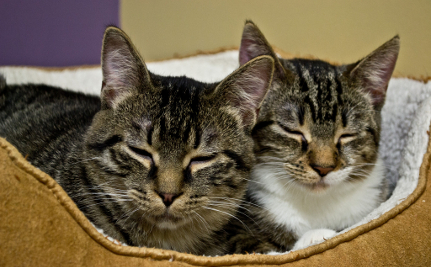
If you want a cat in your life but you don’t have a lot of time for teaching a kitten how to use the litterbox, stay away from the toilet paper roll, and stop wreaking havoc on your shoes, an adult cat is definitely for you. Adult cats already know the lay of the land and they tend to settle into routines quickly, making them great housemates. And if you travel a lot, consider adopting cats as a pair so they can keep each other company. A shelter often has a pair of cats whom they’d love to see go out together because they’re relatives or they’ve developed a close bond.
4. You’ll feel better.
Companion animals offer a number of mental health benefits. Having a pet of any species around can make people feel happier and more balanced, and the routine of caring for and interacting with a pet like a cat can improve mood and reduce the sense of isolation. Cats are especially great companion animals for people who don’t have the energy or ability to care for a dog, but still want someone around the house to keep them company.
3. Shelter cats have varied personalities.
Cats are incredibly diverse, personality-wise. They can be shy and outgoing, playful or more reserved, fascinated by sinks or horrified by water. If you haven’t had the pleasure of having a cat in your life yet, a shelter cat might totally change the way you view these delightful animals.
Check out some of the personalities on display at the Los Alamos Animal Shelter:
2. Don’t support animal cruelty.
Pet stores source their animals from a variety of places, and those cute kittens in the window might come from an abusive kitten mill where cats endure horrible conditions to produce animals for the pet trade. The sale of companion animals in general promotes the continued existence of exploitative breeders that view cats as cash drawers, not living beings. By turning away from companion animals offered for sale and choosing to adopt, you’ll be voting with your wallet. And that adoption fee? Will be a lot lower than buying an animal from a petstore or breeder.
1. You’ll save a life.
Even if your local shelter is no-kill (which is great! consider an extra donation to help them with operational costs), adopting shelter cats to get them out of the shelter system and into living homes reduces the strain on shelters and frees up space for more homeless animals. No-kill shelters often rescue from facilities that euthanize, so by adopting from them, you’re opening up another slot for a kitty who’d otherwise be on death row. If you live in an area where there is a kill shelter or where animal care and control adopts out animals, please consider looking there first for a new cat. Some organizations maintain “kill lists” published by shelters, listing animals slated for euthanasia within the next few days, and you might find your new companion on just such a list.
ooOOoo
Even if just one person who reads this makes a commitment to take on a shelter cat it will be one less cat on a ‘kill list’.
Woman Rescues Burned Puppy and He Grows Up to Save Her Life
This wonderful story was recently published on the Care2 site and is republished here to share with you all and to underline the importance of always trying to find your next pet from a rescue shelter.
ooOOoo
Woman Rescues Burned Puppy and He Grows Up to Save Her Life
Editor’s note: This post was originally published on January 7, 2013. We are republishing it for your reading pleasure. Enjoy!
Anyone who has ever saved an animal will tell you that its the kind of experience that shakes up your DNA. You won’t regrow hair on a balding head or suddenly run a four-minute-mile, but there is a pulse of positive energy that churns through the human body much like a twister. In some cases, fragments of that emotional explosion are powerful enough to be credited with modern medical miracles. And for one Texas woman, the experience was profound enough to help wake her from a coma.
My Name is Danielle…
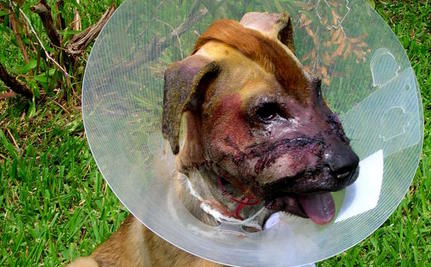
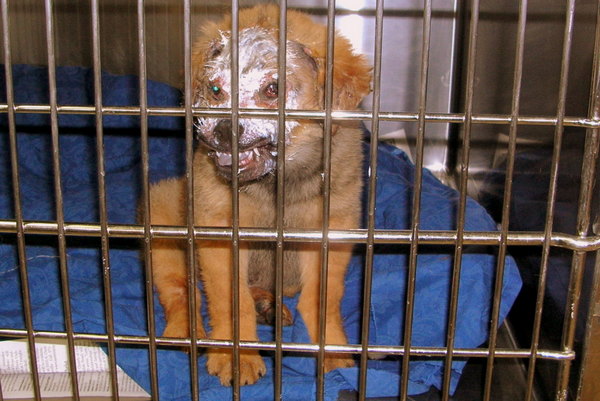
“My name is Danielle and it’s been over a year since something terrible happened to me. I am ready now to share my story,” explained the letter we received recently from veterinary technician Danielle Torgerson of Killeen, Texas. ”Four years ago somebody brought a puppy to the clinic. I was not assigned to that room but I was in the second room when I felt something pull me into the hallway. It was strange, but I glanced into the other exam room and saw a puppy on the table. He looked at me with so much pain and despair. A man had brought him in for a ‘sting’ but I knew instantly that was not the case. The puppy was horribly burned on the head like somebody had poured gasoline over him and set him on fire. He was there to be euthanized.”
But Danielle’s conscience began to wrestle down the injustice of extinguishing this young life before it had known the simple joys that every dog should know. She wondered if he might be able to have a bed of his own. Could there be walks through the park in the cool evening air? Was it possible that this puppy might wake up each morning beside a person whose first words were his name?
“I asked the vet if something could be done,” Danielle recalls. “He said that treatment could be carried out, but only with lots of money.”
The Rescue Begins
And that was all Danielle needed to hear. She wasn’t wealthy, but she was determined and if there was a chance at recovery, she’d already made up her mind to take it. So Danielle had the man who brought in the puppy sign over custody to her. She then contacted Dr. Elaine Caplin in Austin and the puppy was brought in for a surgical consulation to see what could be done.
“He was not able to eat or drink because part of his mouth was melted,” Danielle recalls.
Skingraft surgery was undertaken to reconstruct the mouth and soon the puppy’s condition improved dramatically and he began to function on his own.
Danielle named the puppy D’Artagnan (who served Louis XIV as captain of the Musketeers of the Guard) or Mister D for short and introduced him to other dogs and cats who welcomed him.
Mister D began to grow into a large dog and earned a reputation for his generous nature. “He allows all the cats to sleep with him and we have actually seen him share food with other dogs. He picks out pieces of food and gives it to them.”
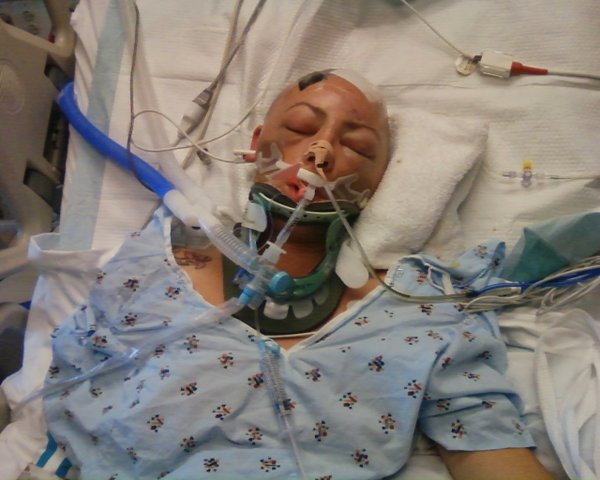
All grown up.But in the street, Mister D is sometimes regarded as a beast.“He looks like a werewolf with his skin grafts and people are kind of scared,” Danielle explains. “But he truly is my loving angel and I know that saving him is what helped save me.”You see, last year, Danielle was in a terrible motorcycle accident when she tried to avoid a collision with a car. Within seconds, she was on the ground bleeding with a broken skull and awaiting a lifelight helicopter to a trauma center where doctors would find no brain function.For 12 days, Danielle lay motionless in her pale blue hospital gown while her mother, who flew in from Germany, went back and forth between the hospital and Danielle’s home to take care of not only her dying daughter, but of the animals who meant the world to her.
At night, Danielle’s ex-husband would help look after the pets so that her mother could spend more time with Danielle, and try to get some rest, but everyone feared the worst.
But in the silence of the mind, a louder voice came from Danielle’s soul.
“I had to get back to Mister D and my other ‘kids’ because they needed me and I needed them,” Danielle says of her sense that she carried that desperate need to be reunited with her pets, despite the lack of medical evidence that she was processing those emotions during her coma.
I Had to Wake Up for My Animals
“After 12 days, a miracle happened,” Danielle says tearfully. “I woke up. The doctors and nurses have told me that the first words that I uttered were ‘Mister D.’”
For several weeks, Danielle remained in rehabilitation while she learned to walk and to fully speak again. It seemed so painfully long for her to be away from the ones she loved and that motivated her to work harder each day.
“When I finally got home, Mister D was so happy,” Danielle said. “He checked on me all the time. When he felt that I was hurting, he would put his paw very carefully on my head and sigh. I truly know that if it was not for Mister D, I would not be here. He has become my musketeer, my protector and has given me the security and protection that I never had from people.”
Now fully recovered, Danielle’s greatest hope is that her story will inspire others to rescue animals. She asks people to consider rescuing, rather than buying pets and explains that “the bond between you is one that can never be broken.”
ooOOoo
Please help share this message of the bond and love that is possible between us and our pets and to always consider taking on rescues.
“What’s in a name? That which we call a rose by any other name would smell as sweet”.
That very well-known quotation from Wm. Shakespeare was the obvious sub-title to today’s post.
You will be aware that I have written several times previously about Pit Bull dogs. But I would like to draw your attention to a post that was published here back in 2013. It was called In praise of Pit Bull dogs and featured a guest post from Noella Schink, in Portland, Maine, where she then lived and played with her 3-year-old pit bull mix, Addie, 8-year old shih-tzu, Brutus, and 2-year old hound, Lula. Apart from all of them being a little older I trust nothing else has changed.
That post in 2013 also included a picture of our gorgeous Casey, as follows.
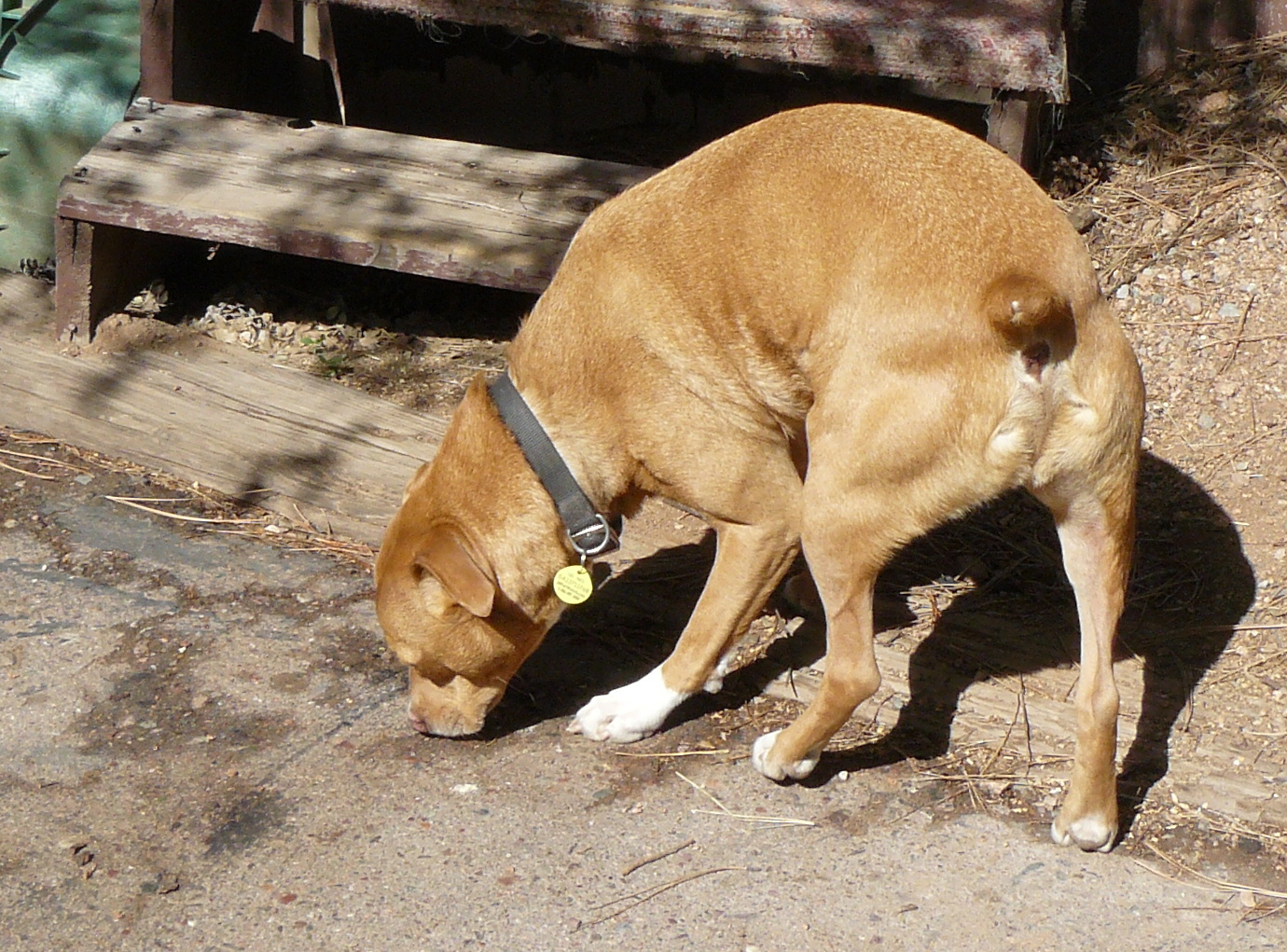
Casey doing what dogs do so well – picking up scents around his home.
Over on the Care2 petition site there was a compelling case being made for Pit Bulls to be given a different name. Read it and see if you are convinced of the need.
ooOOoo
How We Could Save More Dogs From Death Row by Changing One Thing
Whether we like it or not, labels matter — even for dogs. New research from Arizona State University published in PLOS ONE, suggests labels could even lead to a potential death sentence, if you’re a pit bull.
Pit Bulls Wait 3 Times as Long to be Adopted
The pit bull went from America’s darling dog to one of the most feared (and misunderstood) dogs today. Their fall from grace is evident in stories like Olive’s. Olive the Pit Bull was brought in as a stray and stayed in the shelter for approximately 11 years. Olive was lucky enough to find her forever home, but so many dogs like her aren’t — and our arbitrary labels aren’t helping their cause.
According to Science Daily, researchers from Arizona State University wanted to know if breed identification influences adoption. The researchers found that dogs labeled as “pit bulls” could wait three times as long to be adopted from shelters into their forever homes compared to their lookalikes without the label or labelled as another breed.
Compared to other breeds, like Labradors, pits were perceived as less friendly and more aggressive. They also were considered less “attractive” than their lookalikes. Weird, right?
Even the researchers were surprised by how much the pit bull label influences perception and, ultimately, adoption. As researcher Lisa Gunter from Arizona State University explains, “We were surprised how very similar looking dogs sometimes get labelled ‘pit bull’ and other times as something completely different. These dogs may look and act the same, but the pit bull label damns them to a much longer wait to adoption,” reports Science Daily.
Ultimately, the researchers recommend losing the pit bull label to stop inadvertently penalizing these dogs in the shelter setting.
Heartbreaking Pit Bull Statistics
If you thought that Olive’s story was sad, she’s actually one of the lucky ones — not only for getting adopted, but for staying in the shelter system for the 11 years that she did.
According to Pit Bull Rescue Central (PBCR) 200 pit bulls are euthanized in Los Angeles County animal shelters every single day.
PBCR emphasizes that “for homeless pit bulls the death sentence is almost always automatic.”
Villalobos Rescue Center (made popular by the TV show Pit Bulls and Parolees) had this to say about the pit bull plight in Los Angeles: “The pit bull population has now risen to 40% of all the dogs in 12 shelters in Los Angeles. That means that almost half of the entire Los Angeles dog population is pits or pit mixes! Most are strays, tossed out like dirty laundry. It’s heartbreaking.”
Sadly, the plight of pit bulls is not limited to Los Angeles County. A 2013 Nat Geo Wild infographic reveals that:
60 percent of the total dogs euthanized in U.S. shelters are pit bulls
30 percent of the total dogs admitted to shelters are labeled pit bulls
86.7 percent of pit bulls admitted to open admission shelters are euthanized
Do you know what the worst part of this sad situation is? There’s no such thing as a pit bull.
As Bark Post explains, the pit bull label is just “an umbrella term that most people use to refer to different types of dogs – the American Pit Bull Terrier, the American Staffordshire Terrier, the Staffordshire Bull Terrier, any mixes thereof, and any dog that vaguely resembles these dogs.”
The breed isn’t real, but the stigma has real consequences. And time and again pit bulls prove that they can be great dogs with the correct guidance and training when they get a second chance. Remember how Jericho the Pit Bull went from death row to being an amazing service dog?
Take Action!
Sign and share this petition urging animal rescuers to lose the stigmatizing pit bull label that unnecessarily penalizes innocent dogs. It’s a matter of life and death.
Only idiots believe that pit bulls are bad! When are some morons going to finally wake up and realize bad owners are responsible for bad dogs! BSL should be banned everywhere. We must never stop fighting to end the senseless killing of this breed.
Happy Birthday to grandson Morten who is five today!
Indirectly there is a connection between my sub-title, above, and today’s post about squeezing cute creatures. For Morten will already have enjoyed many hugs and, hopefully, will grow up feeling very comfortable at giving and receiving hugs.
Thankfully, Jean is a great hugger and has opened my eyes to the power of giving in to a hug. Not suprising when one thinks of Jean’s years of hugging dogs way before she and I met back in 2007.
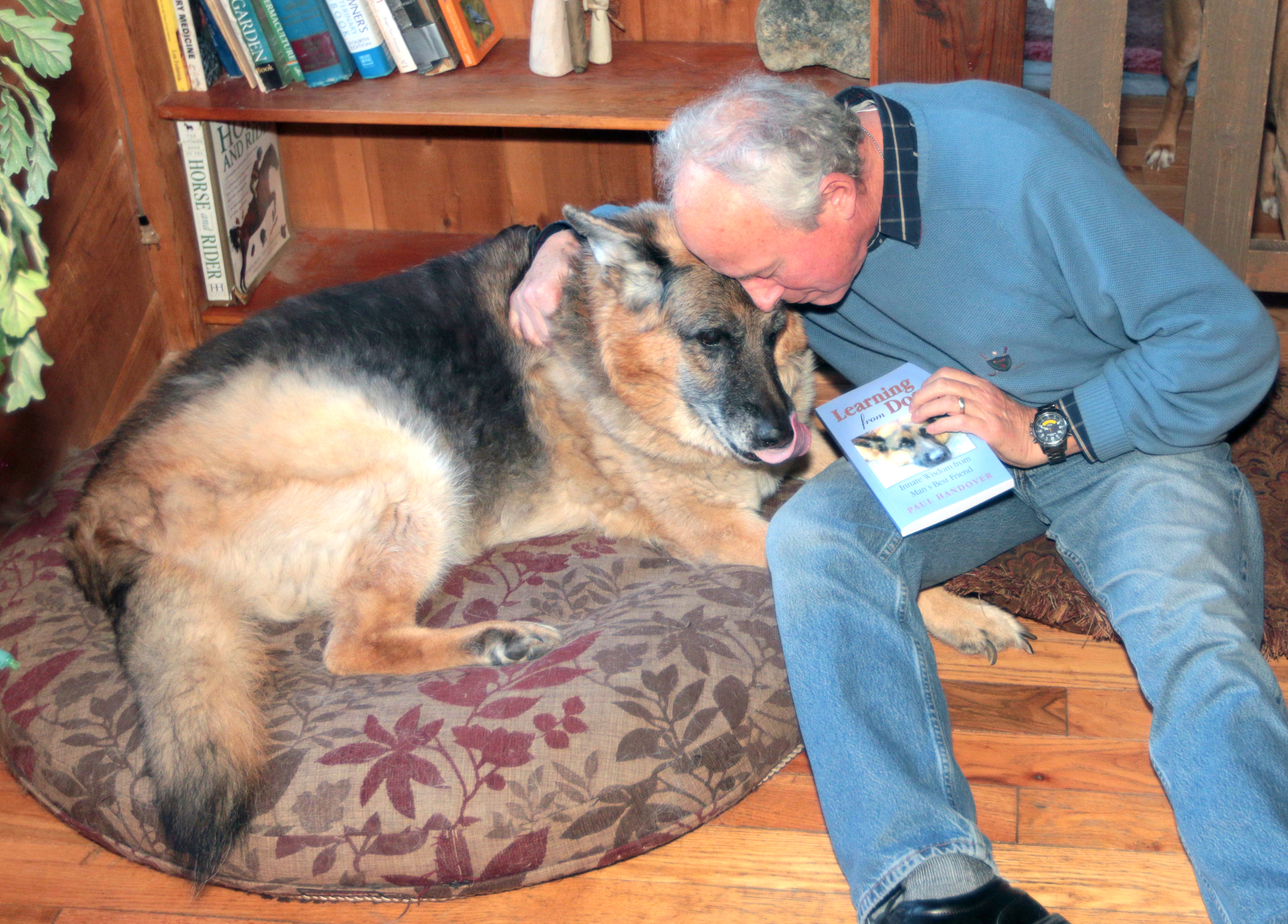
Dear old Pharaoh, as he has aged, (he will be 13 this coming June) clearly enjoys more hugs than when he was a more active, fitter German Shepherd and always on the go.
When The Daily Courier, our local newspaper, came to the house last December Timothy Bullard, the paper’s photographer, took the following photograph of Pharaoh and me having a ‘love in’.
TIMOTHY BULLARD/Daily Courier – Paul Handover with Pharaoh, a 12year-old German Shepard that he uses on the cover of his new book about man’s best friend.
So this recent article from the Care2 website seems an appropriate follow-on to my introductory remarks.
If any of the collected photographs you see here cause you to emit high-pitched noises or ache to cradle the pictured animal tight in your arms, you might be experiencing a bout of “cute aggression.”
The phrase refers to a phenomenon during which we catch sight of a living thing deemed “cute,” usually a baby or an animal or — double-whammy — a baby animal, and feel an overwhelming desire to play with the subject’s features; a compulsion to tickle its feet; the need to tease its rumples or bulges of fat; the want to bury our faces into its belly.
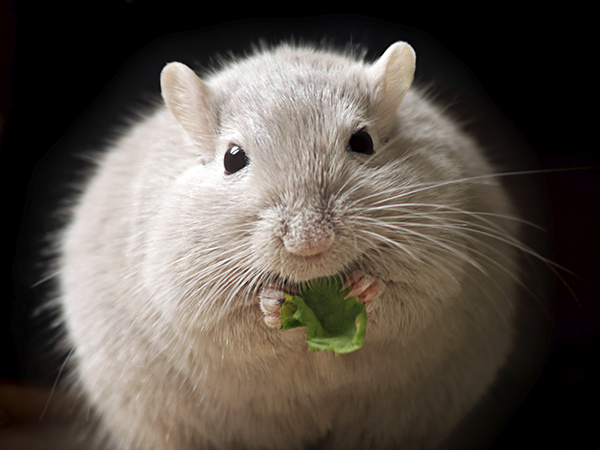
fluffy mouse ball
Granted, not all voiceless lifeforms enjoy being tugged at or played with in an intrusive manner, which is why this behavior is referred to, in part, as “aggressive.” While we might mean absolutely no harm to the creature we long to hold and hug, our near-hyperactive responses to its presence often seem beyond our control, what some have called the “squee” effect.
Yale researchers studied this “dimorphous expression” — the need to manhandle living creatures for which we feel only positive emotions — in 2014. Part of the experimental regimen involved asking some participants to pop bubble wrap while viewing images of “cute baby animals;” others did the same while looking at images of adult species. The results: Those who viewed the infants popped more bubbles by far.
baby maine coon cat feeling
One of the researchers, psychologist Oriana Aragón, said that participants would have likely squeezed whatever they had in their hands or arms while viewing images of the “cute” animals, be it a purse or a pillow. Had something alive, however, actually been in those arms, the strength with which the participants freed their fuzzy feelings might have been worrisome to the researchers.
But Aragón says that strong human emotions are often balanced by “an expression of what one would think is an opposing feeling.” This is similar to what happens when we cry while angry or laugh while nervous. Our actual expressions “scramble and temper” whatever feeling got us into such a tizzy in the first place, helping to restore our emotional equilibrium, “tamping down or venting” feelings that cause us to become too excited.
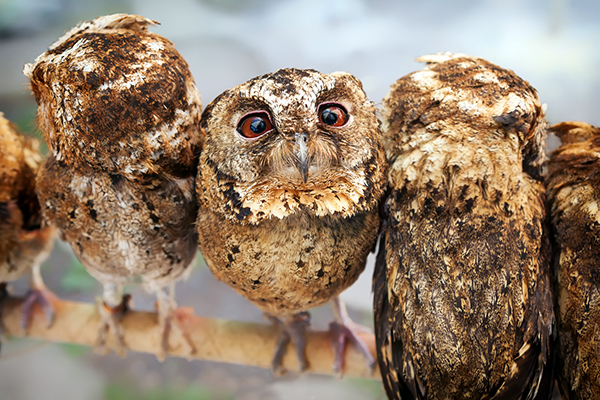
Funny portrait of curious baby owl
While wanting to squish what could be one’s own offspring might seem an evolutionary misfire, a 2012 study in the journal PLOS ONE indicates that cuteness creates a powerful “approach motivation,” the very thing that drives us to scoop up puppies and kittens in adoption kennels and squeeze them close to our chests and nuzzle them against our faces. It seems the need to be touchy-feely toward cuteness provokes precisely the kind of nurturing that keeps helpless creatures alive.
As for animals, those worthy of this treatment, appealing to us as “cute,” mimic physical characteristics of human babies — “a large head; rounded, soft, and elastic features; big eyes relative to the face; protruding cheeks and forehead; and fuzziness.” The same, in fact, seems to be true for Great Apes, as has been documented with Koko the gorilla and an Internet celebrity orangutan shown interacting with tiger cubs, though the scene remains controversial.
And so it seems the power of cuteness is made all the more apparent when humans (or elevated primates) respond to a rabbit or a duckling the way they might respond to their own kin. Our desire to squeeze is so powerful, in fact, that it “spills over” into interactions with other species. Thus, we have Web sites like Cute Overload that exist only for the compelling pull to exercise that need to feed our “cute aggression,” be the temptation a pleasure or a pain.
ooOOoo
Demonstrating that cuteness can come in all sizes, let me close today’s post with this photograph.
Ben and Jeannie having a quiet one-to-one moment.
Don’t go too long without giving or receiving a hug!
Whether you’re on board with celebrating a “traditional” Valentine’s Day this year—chocolates, cards, romance—or not, this year should be the year we also show some extra love to the animals in our lives. Whether we focus on our own companion animals or forgotten creatures out there in the world who also need compassion, this Valentine’s Day could be the start of a new tradition. Here are a few ideas to really bring the love to our furry and feathered friends this year:
1. Plan a trip to an animal sanctuary
Animal sanctuaries are wonderful places to visit solo, with your partner or with the kids. Most, if not all, states have at least one farmed animal sanctuary where pigs, cows, goats, chickens, geese, horses and many others have found a permanent home after being rescued on the way to slaughter or from their terrifying lives in the animal industries. There are few ways to connect with an animal and appreciate all they have been through in their lives that shine brighter than spending time petting a goat or cuddling a pig.
There are also other types of sanctuaries open to the public with different types of animals to behold, such as bats, tortoises, exotic birds, wolves and wild cats. The difference between reputable and respectable animal sanctuaries and zoos is, in many cases, the dedication to the animals’ needs. Some zoos may have great conservation programs, yet any profit-driven establishment who puts animals on display in unnatural living environments and social groupings does not have the animals’ true interests at heart. Sanctuaries strive toward giving the animals the best lives they can have—public observation is not at the heart of the matter. By supporting reputable animal sanctuaries, you are showing immense love and compassion to animals.
2. Dine on a meatless meal
To have a truly animal-friendly Valentine’s Day, don’t serve any of them on your plate! By choosing to dine on a plant-based meal full of fresh vegetables, hearty legumes, sweet fruits, wholesome grains and satisfying nuts and seeds, you are showing the animals the utmost respect. Try these Valentine’s recipe ideas, ethical wine suggestions and delicious vegan chocolate truffles for the big day! And, if you are interested in reducing the amount of animal products you consume beyond V-Day, visit the Meatless Monday website to learn how to tip the scales gradually toward regular vegan meals.
3. Reach out to an animal in need
Do you have a friend who could use a dogsitter for an upcoming trip? Does your local animal shelter or adoption agency need an extra hand with walking the dogs, cleaning cages and spending time with furry friends? Have you spoiled your own companion critter lately with a new toy, extra play time or some homemade treats? Valentine’s Day is the perfect time to extend our love to our own companion animals and to those around us who also need a little extra love. The rewards from reaching out to a pet in need are tenfold what we expend putting forth the effort. Use this February as an excuse to spend more time with some critters!
This dog is serious about keeping the title of ‘man’s best friend.’ (Photo: Best Friends Animal Society)
Dogs have lived alongside us for thousands of years, earning the reputation as “man’s best friend” for good reason. But while some people may be quick to dismiss a dog’s devotion as simply a relationship based on need, experts say that’s just not true.
“Dogs have developed the strongest ability of all animals on Earth to form affectionate bonds with humans,” says Dr. Frank McMillan D.V.M., director of well-being studies at Best Friends Animal Society, an organization helping adopters find loving companions. “Dogs don’t just love us — they need us, but not just for food and physical care. They need us emotionally. This is why the attachment bond a dog feels for his human is one of deep devotion and is, as has been often stated, unconditional.”
But how exactly does a dog say, “I love you”? Read on to find out.
Your dog wants to be close to you.
If your dog is always in your lap, leaning against you or following you room to room, it’s clear your pooch is attached to you.
“A dog’s affection is most evident in their desire to be physically close to you. This can sometimes appear to be a clinginess, and it isn’t always easy to distinguish healthy positive clinginess from insecurity, but in both cases your dog is deeply attached to you,” McMillan says.
Your dog gazes into your eyes.
When you and your pup share a long look, your dog is “hugging you with his eyes,” according to Brian Hare, a professor at Duke University who studies canine cognition, and research shows that this “hug” has a profound effect on both man and animal.
When scientists at Japan’s Azabu University took urine samples from dogs and their owners before and after 30 minutes of interacting, they found that the pairs that spent the most time gazing into each others’ eyes showed significantly higher levels of the hormone oxytocin, the same hormonal response that bonds us to human infants. “It’s an incredible finding that suggests that dogs have hijacked the human bonding system,” Hare told Science.
Loving glances like this can say a lot. (Photo: Best Friends Animal Society)
Your dog excitedly greets you.
Does your pup jump up, wag his tail and barely seem able to contain his excitement when you arrive home? If so, that’s a sure sign of affection.
“This becomes even more obvious when your dog learns, like Pavlov’s dogs, that some sound signals your upcoming arrival, like the garage opener or sound of your car, and they show excitement upon hearing that sound,” McMillan says.
Your dog sleeps with you.
Dogs are pack animals that often huddle together at night for warmth and protection, so when your dog snuggles up with you, it means he considers you to be part of the family. And these canine cuddles may even help you get a better night’s sleep.
You are your dog’s safe haven.
“Much affection in animals and humans is based on how much you can be relied on as a source of comfort and support in scary situations,” McMillan says. “If your dog seeks your comfort during thunderstorms, car rides, vet visits or other frightening occurrences, then you are seeing another aspect of her attachment bond to you.”
Your dog ‘reads’ you and reacts accordingly.
A close bond with your dog may enable him to sense your mood and respond with affection. “Many dogs who sense that you are upset or not feeling well will demonstrate their affection by spending even more time by your side. They might give you licks or rest their head or paws on some part of your body,” McMillan says.
A cuddly canine can make the day a little better. (Photo: Brian Goodman/Shutterstock)
Your dog yawns when you yawn.
If you’ve ever yawned after witnessing another person’s yawn, you’re aware how contagious the act can be. This contagious yawning is unique to only a few species, and man’s best friend is one of them.
Researchers have even found that not only are dogs more likely to yawn after watching familiar people yawn, but also that dogs will yawn when hearing only the sound of a loved one’s yawn. So if your canine companion yawns in response to your yawns, odds are good that his affection for you enables him to empathize with you.
Your dog focuses on you.
It’s not unusual for dogs to delight in positive attention from virtually anyone, but just because your pooch loves on everyone, doesn’t mean he doesn’t love you most. Pay attention to how your dog acts when in a room full of people. If he stays focused on you or ignores others while awaiting your return, you know you hold a special place in your dog’s heart.
Your dog forgives you.
“Part of the affectionate feelings your dog has for you shows up in their willingness to forgive you for things you do that make them feel bad, such as raising your voice, or misplacing your frustration on your dog by ignoring them,” McMillan says. “Forgiveness is your dog’s attempt to maintain the loving bond they share with you.”
However, even if your canine best friend doesn’t show affection in these ways, it certainly doesn’t mean your pooch doesn’t love you. Just as some people can care deeply without expressing their feelings, so can your pup.
“Be sure not to go through the list above and think that because your dog shows very few or even none of these things, he or she doesn’t love you. Odds are, love is very much there. After all, we’re talking about a dog here,” McMillan says.
And how can you show your dog some love? Engage in playtime, take a long walk, bake some yummy dog treats, or give your pup a homemade toy. Above all, McMillan says the best thing you can do is simply give your dog more of you because that’s what man’s best friend wants most of all.
ooOOoo
Finally, enjoy this fabulous video. (Thanks Sue Dreamwalker)
Published on Oct 20, 2014
As humans animals can be also friends. If animals live together they became often friends. Friendship between different species can be cold as unlikely animals friendship. In this you can see friendship between dogs and cats, Lion tiger and bear friends, Baby Chick and Chihuahua best friends, cat and own friendship etc.
So many loving relationships! So many lessons for us to learn from our dogs!











 Learning from Dogs