Yesterday, I published a post and called it Dogs and wolves – fascinating research. Then blow me down in yesterday’s online BBC News, there was an article headlined: Dogs’ brain scans reveal vocal responses This is how it opened.
Dogs’ brain scans reveal vocal responses
By Rebecca Morelle, Science reporter, BBC World Service
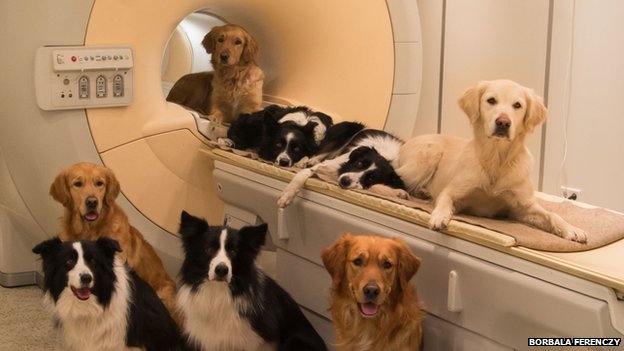
Pet dogs took part in the MRI scanning study.
Devoted dog owners often claim that their pets understand them. A new study suggests they could be right.
By placing dogs in an MRI scanner, researchers from Hungary found that the canine brain reacts to voices in the same way that the human brain does.
Emotionally charged sounds, such as crying or laughter, also prompted similar responses, perhaps explaining why dogs are attuned to human emotions.
Lead author Attila Andics, from the Hungarian Academy of Science’s Eotvos Lorand University in Budapest, said: “We think dogs and humans have a very similar mechanism to process emotional information.”
Eleven pet dogs took part in the study; training them took some time.
During the approximately 18–32 thousand years of domestication [1], dogs and humans have shared a similar social environment [2]. Dog and human vocalizations are thus familiar and relevant to both species [3], although they belong to evolutionarily distant taxa, as their lineages split approximately 90–100 million years ago [4]. In this first comparative neuroimaging study of a nonprimate and a primate species, we made use of this special combination of shared environment and evolutionary distance. We presented dogs and humans with the same set of vocal and nonvocal stimuli to search for functionally analogous voice-sensitive cortical regions. We demonstrate that voice areas exist in dogs and that they show a similar pattern to anterior temporal voice areas in humans. Our findings also reveal that sensitivity to vocal emotional valence cues engages similarly located nonprimary auditory regions in dogs and humans. Although parallel evolution cannot be excluded, our findings suggest that voice areas may have a more ancient evolutionary origin than previously known.
The canine brain reacted to voices in the same way that the human brain does.
“There were 12 sessions of preparatory training, then seven sessions in the scanner room, then these dogs were able to lie motionless for as long as eight minutes. Once they were trained, they were so happy, I wouldn’t have believed it if I didn’t see it.”
For comparison, the team looked at the brains of 22 human volunteers in the same MRI scanners.
The scientists played the people and pooches 200 different sounds, ranging from environmental noises, such as car sounds and whistles, to human sounds (but not words) and dog vocalisations.
The researchers found that a similar region – the temporal pole, which is the most anterior part of the temporal lobe – was activated when both the animals and people heard human voices.
“We do know there are voice areas in humans, areas that respond more strongly to human sounds that any other types of sounds,” Dr Andics explained.
“The location (of the activity) in the dog brain is very similar to where we found it in the human brain. The fact that we found these areas exist at all in the dog brain at all is a surprise – it is the first time we have seen this in a non-primate.”
Emotional sounds, such as crying and laughter also had a similar pattern of activity, with an area near the primary auditory cortex lighting up in dogs and humans.
Likewise, emotionally charged dog vocalisations – such as whimpering or angry barking – also caused a similar reaction in all volunteers,
Dr Andics said: “We know very well that dogs are very good at tuning into the feelings of their owners, and we know a good dog owner can detect emotional changes in his dog – but we now begin to understand why this can be.”
However, while the dogs responded to the human voice, their reactions were far stronger when it came to canine sounds.
They also seemed less able to distinguish between environmental sounds and vocal noises compared with humans.
About half of the whole auditory cortex lit up in dogs when listening to these noises, compared with 3% of the same area in humans.
Commenting on the research, Prof Sophie Scott, from the Institute of Cognitive Neuroscience at University College London, said: “Finding something like this in a primate brain isn’t too surprising – but it is quite something to demonstrate it in dogs.
“Dogs are a very interesting animal to look at – we have selected for a lot of traits in dogs that have made them very amenable to humans. Some studies have show they understand a lot of words and they understand intentionality – pointing.”
But she added: “It would be interesting to see the animal’s response to words rather than just sounds. When we cry and laugh, they are much more like animal calls and this might be causing this response.
For the full report, as it was posted on the BBC website, click here.
Plus, do watch this five-minute video abstract.
Published on Feb 20, 2014
The video presents the first study to compare brain function between humans and any non-primate animal. Scientists at MTA-ELTE Comparative Ethology Research Group in Hungary found that dogs and humans use similar neural mechanisms to process social information in voices. The fact that dogs can be trained to lie motionless during fMRI tests opens up the space for a new branch of comparative neuroscience.
The first study to compare brain function between humans and any non-primate animal shows that dogs have dedicated voice areas in their brains just as people do. Dog brains, like those of people, are also sensitive to acoustic cues of emotion, according to a study in the Cell Press journal Current Biology.
The findings suggest that voice areas evolved at least 100 million years ago, the age of the last common ancestor of humans and dogs, the researchers say. It also offers new insight into humans’ unique connection with our best friends in the animal kingdom, perhaps explaining how our two species have lived and worked together so effectively for tens of thousands of years.
“Our findings suggest that dogs and humans not only share a similar social environment, but they also use similar brain mechanisms to process social information,” said Atilla Andics of MTA-ELTE Comparative Ethology Research Group in Hungary. “This may help the successfulness of vocal communication between the two species.”
Andics and his colleagues trained eleven dogs to lay motionless in an fMRI brain scanner. That made it possible to run the very same neuroimaging experiment on dog and human participants — something that had never been done before. They captured both dogs’ and humans’ brain activities while they listened to dog and human sounds, ranging from whining or crying to playful barking or laughing.
The images show that dog and human brains include voice areas in similar locations. Not surprisingly, the voice area of dogs responds more strongly to other dogs, while that of humans responds more strongly to other humans. The researchers also noted striking similarities in the ways the dog and human brain processes emotionally loaded sounds. In both species, an area near the primary auditory cortex lit up more with happy sounds than unhappy ones. Andics said they were most struck by the common response to emotion across species.
There were some differences too: in dogs, 48 percent of all sound-sensitive brain regions respond more strongly to sounds other than voices. That’s in contrast to humans, in which only three percent of sound-sensitive brain regions show greater response to non-vocal versus vocal sounds.
The study is the first step to understanding how it is that dogs can be so remarkably good at tuning into the feelings of their human owners. “This method offers a totally new way of looking at neural processing in dogs,” Andics said. “At last we begin to understand how our best friend is looking at us and navigating in our social environment.”
I have been saving this report for a few weeks. Following yesterday’s great news about the latest concerning wolves in Oregon, today seemed a perfect follow-on with a report first published in online journal PLOS ONE. However, what follows is a full republication of the report as I read it on the Science Daily website.
ooOOoo
Teaching young wolves new tricks: Wolves are considerably better imitators than dogs
Date: January 31, 2014
Source: Veterinärmedizinische Universität Wien
Summary: Although wolves and dogs are closely related, they show some striking differences. Scientists have undertaken experiments that suggest that wolves observe one another more closely than dogs and so are better at learning from one another. The scientists believe that cooperation among wolves is the basis of the understanding between dogs and humans.
Wolves are considerably better imitators than dogs. Credit: Walter Vorbeck
Although wolves and dogs are closely related, they show some striking differences. Scientists from the Messerli Research Institute at the University of Veterinary Medicine, Vienna have undertaken experiments that suggest that wolves observe one another more closely than dogs and so are better at learning from one another. The scientists believe that cooperation among wolves is the basis of the understanding between dogs and humans.
Their findings have been published in the online journal PLOS ONE.
Wolves were domesticated more than 15,000 years ago and it is widely assumed that the ability of domestic dogs to form close relationships with humans stems from changes during the domestication process. But the effects of domestication on the interactions between the animals have not received much attention. The point has been addressed by Friederike Range and Zsófia Virányi, two members of the University of Veterinary Medicine, Vienna (Vetmeduni Vienna) who work at the Wolf Science Center (WSC) in Ernstbrunn, Niederösterreich.
Wolves copy other wolves solving problems
The scientists found that wolves are considerably better than dogs at opening a container, providing they have previously watched another animal do so. Their study involved 14 wolves and 15 mongrel dogs, all about six months old, hand-reared and kept in packs. Each animal was allowed to observe one of two situations in which a trained dog opened a wooden box, either with its mouth or with its paw, to gain access to a food reward. Surprisingly, all of the wolves managed to open the box after watching a dog solve the puzzle, while only four of the dogs managed to do so. Wolves more frequently opened the box using the method they had observed, whereas the dogs appeared to choose randomly whether to use their mouth or their paw.
Watch closely …
To exclude the possibility that six-month old dogs fail the experiment because of a delayed physical or cognitive development, the researchers repeated the test after nine months. The dogs proved no more adept at opening the box than they were at a younger age. Another possible explanation for the wolves’ apparent superiority at learning is that wolves might simply be better than dogs at solving such problems. To test this idea, the researchers examined the animals’ ability to open a box without prior demonstration by a dog. They found that the wolves were rarely successful. “Their problem-solving capability really seems to be based on the observation of a dog performing the task,” says Range. “The wolves watched the dog very closely and were able to apply their new knowledge to solve the problem. Their skill at copying probably relates to the fact that wolves are more dependent on cooperation with conspecifics than dogs are and therefore pay more attention to the actions of their partners.”
The researchers think that it is likely that the dog-human cooperation originated from cooperation between wolves. During the process of domestication, dogs have become able to accept humans as social partners and thus have adapted their social skills to include interactions with them, concomitantly losing the ability to learn by watching other dogs.
Just wanted to share some good news with you. Well, regarding Oregon’s wolves!
My so-called book has rather ground to a halt. Sturdy followers of this blog will recall that in November last year, I sat down and wrote the first draft of a book, under the umbrella of NaNoWriMo = write a minimum of a 50,000-word novel in the month of November. That I did write in excess of 50,000 words (53,704) in under thirty days felt a wonderful achievement.
But then reality set in!
I subscribed to a NaNoWriMo webinar on editing hosted by David Henry Sterry and Arielle Eckstut of The Book Doctors. To my horror, half-way through the webinar came the realisation that what I had written wasn’t even a fictional novel: It was a personal story on the theme of what dogs have taught me over a life of approaching 70 years.
So those 53,000 words had to be rewritten as non-fiction book!
The next boulder to cause me to fall was the issue of tense. The book had been written in the 3rd-person, as you can see from the draft of Chapter Twenty-Three. But the more that I thought about the story the more that it felt that it should be in the 1st-person; namely this first person! Reinforced by feedback from Jeannie and from reading Melinda Roth’s latest book Mestengo clearly written in the first-person.
Mestengo book cover.
Chapter One
I first smelled the smoke as I stood in the driveway of the farmhouse on the top of a hill in McHenry County in Northern Illinois that was, according to the man who leased it to me one month before, the highest point in all of Northern Illinois.
Damn, damn, damn! Now the rewrite not only has to go from fiction to non-fiction, it also has to change the tense from ‘Philip’ to ‘Paul’; from him to me! The words from The Book Doctors seminar rang louder and louder, “You write the first draft for yourself; you edit it for your readers!” (Smart arses!)
Then along came hope in the form of Kami Garcia, the author. It was a NaNoWriMo pep talk.
So you made it through NaNoWriMo, and you have 50,000 words… Now what? It’s the same question a lot of writers face when they finish a first draft. The good news is you finished the hard part: you have a draft.
I can hear some of you cursing me now: “But Kami, my first draft is totally crappy and worthless. It’s terrible. I wasted an entire month of my life, and all I have 50,000 terrible words to show for it.”
My answer: It doesn’t matter if you wrote the crappiest first draft in the history of all first drafts. You have something to work with, which means you can fix it, mold it, and bang it into whatever shape you want. Here are a few tips to get started:
Read Your First Draft (and Possibly Cry a Little)
After you put away the pint of ice cream and the tissues, take an objective look at your draft. What are the strongest points? The parts that kept you reading? Whether you print out your draft to make notes or use software (I love Scrivener), mark the best bits—circle, highlight, whatever works for you. These are the parts you’ll re-read whenever you start to lose hope (which will be often).
All of which is a long-winded way of me saying that I shouldn’t be spending time writing blog posts but have my head down in the big edit.
But, hey, already come this far so going to leave you with this wonderful news.
ooOOoo
Hello Paul,
Good news: For the first time since 2009, the Oregon Department of Fish & Wildlife has confirmed wolves south of the Eagle Cap Wilderness!
Based on recent evidence, it’s clear that at least five wolves are frequenting an area in Northern Baker County. It may not be a story as epic as Journey’s, but it’s another good sign wolves are continuing to retake their rightful place on the Oregon landscape.
Those of you who have been tracking wolf issues for a long time, may remember the iconic photo of a scraggly Oregon wolf in sagebrush. The young wolf and his partner frequented an area near the Keating Valley in Baker County.
Sadly, the “Keating Wolves”, as they came to be known, were killed in 2009. Despite some tantalizing reports, since that time, only one Oregon wolf is known south of the Wallowas.
Later today, we’ll revisit the story of the Keating Wolves on the Oregon Wild Blog and post it on the Oregon Wolves Facebook page. Wolf recovery still has a long ways to go. But today’s news is significant.
Since 2009 – with your help – we’ve stopped round after round of wolf kill bills in Salem. We’ve stood up for wolves in court. We’ve worked with responsible ranchers. We’ve educated the public, highlighted the positive impacts of having wolves back on the landscape, and shared news – good and bad – of wolf recovery.
Things are far from perfect. Old prejudices die hard and wolves continue to be at the center of a campaign of misinformation and fear. The Obama administration is stubbornly pushing a scheme to strip wolves of important protections, and the state can still kill wolves on behalf of the livestock industry.
But today’s news is a sign that we’re headed in the right direction here in Oregon. And there should be more on the horizon. Wolves are mating, pups should be on their way, and Oregon will announce an updated wolf population estimate soon. That’s more news we look forward to sharing.
For wolves and wildlife, Rob Klavins Wildlife Advocate, Oregon Wild
Firstly, there was Paloma and then Lilly. Last week, it was Jean’s story about how she found Dhalia. Today, Jean recounts how Ruby came in to the family.
ooOOoo
Ruby
Ruby – picture taken at the end of January, this year.
My house in Mexico was on the beach. There was a door in the wall of the rear courtyard that lead almost directly on to the sand. Most mornings I would rise before dawn to run two or three dogs together along the shore. It was a good arrangement for all of us!
Next door to my house was a duplex that had been rented out to a family that lived in Hermosillo; the capital of the State of Sonora. Every month or so this family would visit for a long weekend. This family, unfortunately, had an autistic daughter who, when not supervised, would open my front gate that led on to the dusty road so she could come in to play with my cats that lived in the front area of my house. That was fine by me when the daughter was in a calm mood but frequently she had screaming fits that would send both my cats and dogs into a state of frenzy. In addition, the family owned a Chihuahua dog that the daughter often carried as if it were a doll.
One month, the family arrived ‘sans Chihuahua‘ with the news that it had died; adding that their daughter was bereft at the loss.
The following day the mother knocked on my door. She explained that they had acquired a new puppy but that it was not eating. What could they do? Would I help?
Of course I went with them to have a look. Sure enough, they had a small puppy, probably no more that three weeks old. “It’s a Chihuahua”, they said. I replied, “Firstly, it’s not a Chihuahua and secondly, it’s far too young to be without it’s mother – you must take the puppy back to the mother”.
Despite much pleading, I could not convince the family to do this. So I did the next best thing and went back home to get replacement milk formula and a tiny feeding bottle. I showed the family how to feed the little puppy and also how to massage its tummy to help it go to the toilet. I was more than a little concerned, to say the least. I just couldn’t see the family going to the effort of feeding the puppy every couple of hours or so; essential to ensuring the tiny dog survived.
I planned to check up how things were going the following day. But didn’t need to. For when opening my front door I found the puppy left on my doorstep. Not even left in a box. The family had returned to Hermosillo.
That little three-week-old puppy is now Ruby; an eight-year-old 80 lbs Shar-Pei mix. After a few weeks of investigation I tracked down Ruby’s mother. She had had 13 pups and was unable to feed them all.
Ruby suffers from skin problems as do many Shar-Peis. Ruby clearly missed out on the mother-puppy relationship; so important for the development of social skills. Accordingly, she is a bit scatty when playing with the other dogs, frequently bowling them over in her enthusiasm. Luckily the other dogs seem to realise that she is missed out as a young puppy and are very forgiving.
After such a shaky start I didn’t even try to find her a home. With countless puppy feeds in the middle of too many nights, I had bonded too deeply.
The family returned to the duplex a couple of months later with a new Chihuahua in tow. I confronted them about Ruby. Their answer was that they had given the puppy to a couple on the beach and it was they who had left the puppy on my front door-step.
Yeah! And the moon is made of green cheese!
Ruby in our kitchen area – picture taken yesterday.
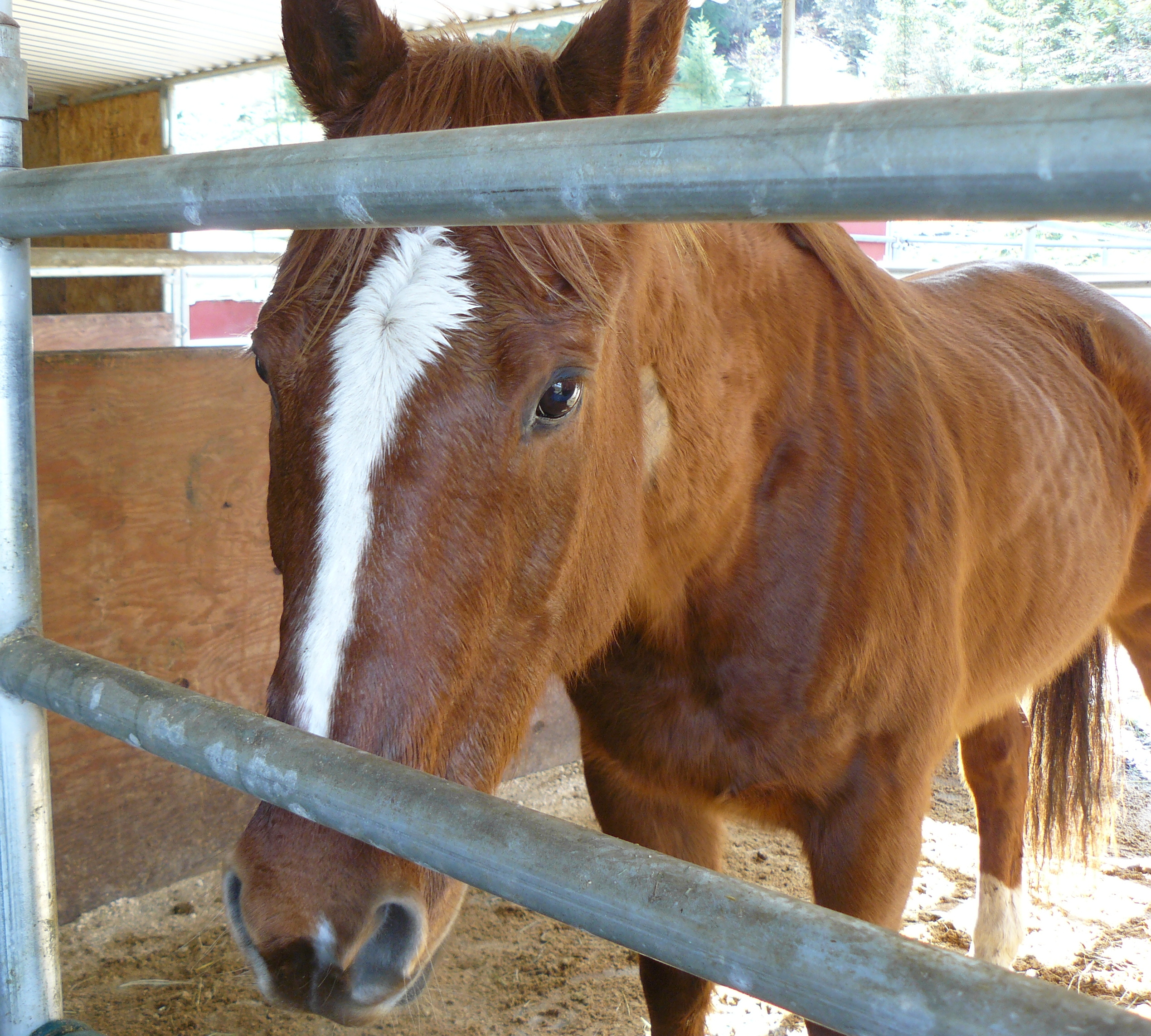
You will recall that yesterday I very briefly mentioned our trip to visit Strawberry Mountain Mustangs, our meeting with Darla and the outcome. Namely, that subject to an adoption agreement being signed and approved we hope to be able to adopt Ranger.
Here is Ranger’s story.
Ranger
Ranger is believed to be a quarter-horse (a quarter thoroughbred, as I now have learnt) that earlier on in his life was a roping and barrel-racing horse. Ranger is a little over 15 hands.
He has been abused in the past. Evidenced by the scars of previous ill-fitting saddles and from being wary of having his ears touched.
Originally Ranger came to Strawberry Mountain because he was found abandoned and starving in an Oregon forest. After he became a settled horse at Strawberry, he was adopted out to a family. But after some months of being ridden he threw his riders by spinning so quickly they came off.
He came back to Darla and eventually was adopted out to a different home. But after some months with his next owners, the habit of spinning riders off his back resurfaced.
Back he came to Darla but his age, he is about 15 years-old, and not being a secure riding horse were against him. Darla was unhopeful that he would ever be found a home.
Hallo, my name’s Jean. Will you come and live with us, Ranger?
But in our case, I don’t know how to ride and Jean is not interested in riding Ranger. His age is a bonus because it reduces the odds of Ranger outliving Jean and me. So Ranger seemed like a perfect match.
Jean and Ranger getting to know each other.
So that’s where we are just now. As we progress in getting our fencing done and our adoption approved (fingers crossed) then there will be more to report. We have come a long way from wild mustangs but this truly feels like the most sensible way to help given that our experience and facilities are not sufficient for us to handle a rescued Mustang.
P.S. the comments and the ‘Likes’ to yesterday’s post were wonderful. Both Jean and I are touched beyond measure.
Yesterday, Sunday, Jean and I went North in Oregon to visit Strawberry Mountain Mustangs to explore the pros and cons of adopting a horse previously rescued by Darla, of Strawberry Mountain. It was a long day and by the time I sat down in front of the PC it was already past 5pm.
So for today going to offer you two pictures from our inspiring time with Darla and all her magnificent horses, most of whom have backgrounds that would make one weep.
Tomorrow, I will write more fully about what we are discovering when it comes to adopting a horse.
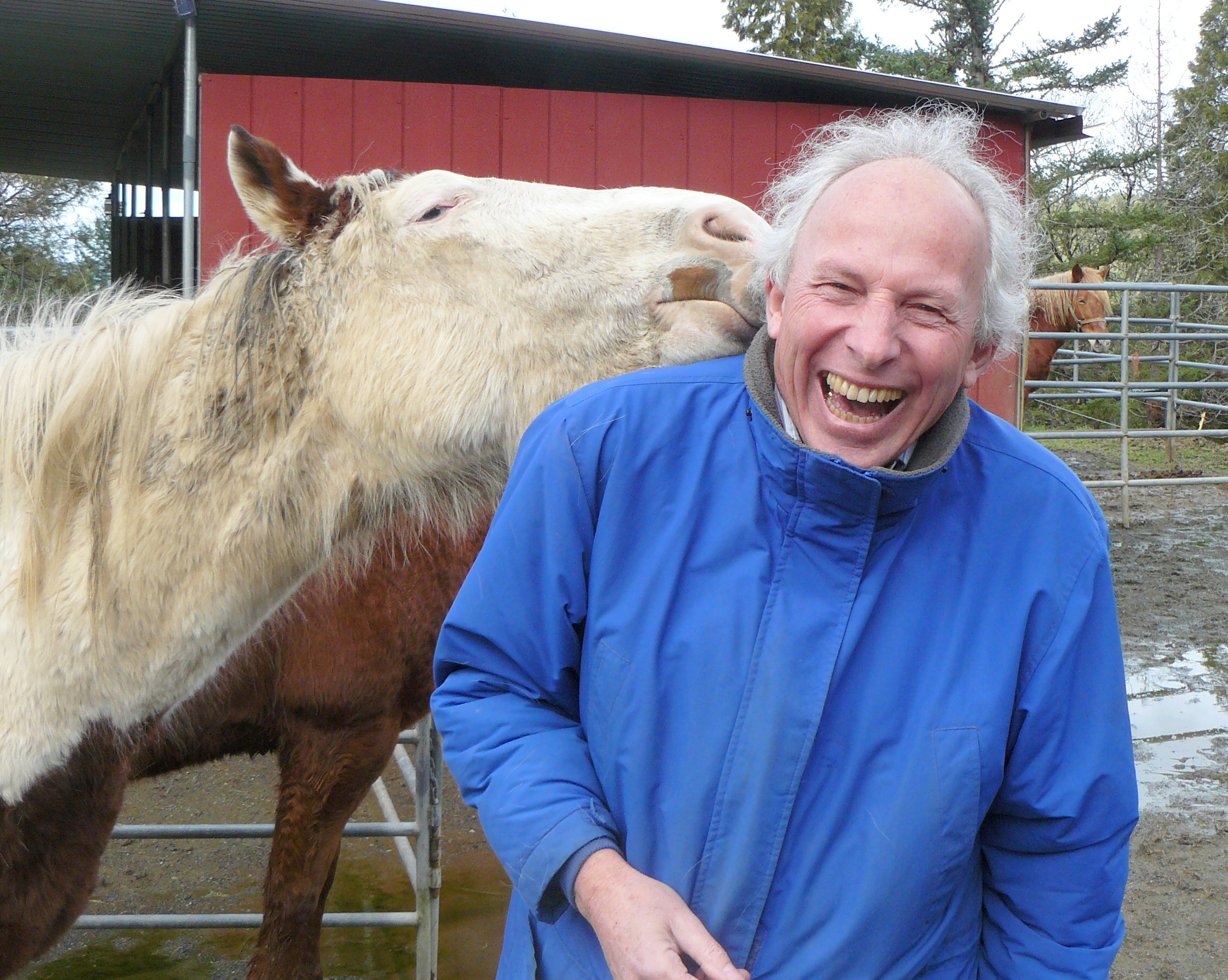
Trust me, a horse with its tongue in your ear is very ticklish!
Friend and follower, Amanda Smith from Australia, recently emailed me a set of twenty-five fabulous pictures. I propose to offer eight of them today, and eight more next Sunday and, possibly, the final nine in two weeks time; that is if the response from you, dear reader, suggests you would like that.
oooo
oooo
oooo
oooo
oooo
oooo
oooo
oooo
Thanks Amanda, and if anyone knows any of the names of the photographers who took these delightful photographs, do please say so in a comment. Would be nice to acknowledge them.
The second set next Sunday – you all have a peaceful and untroubled week.
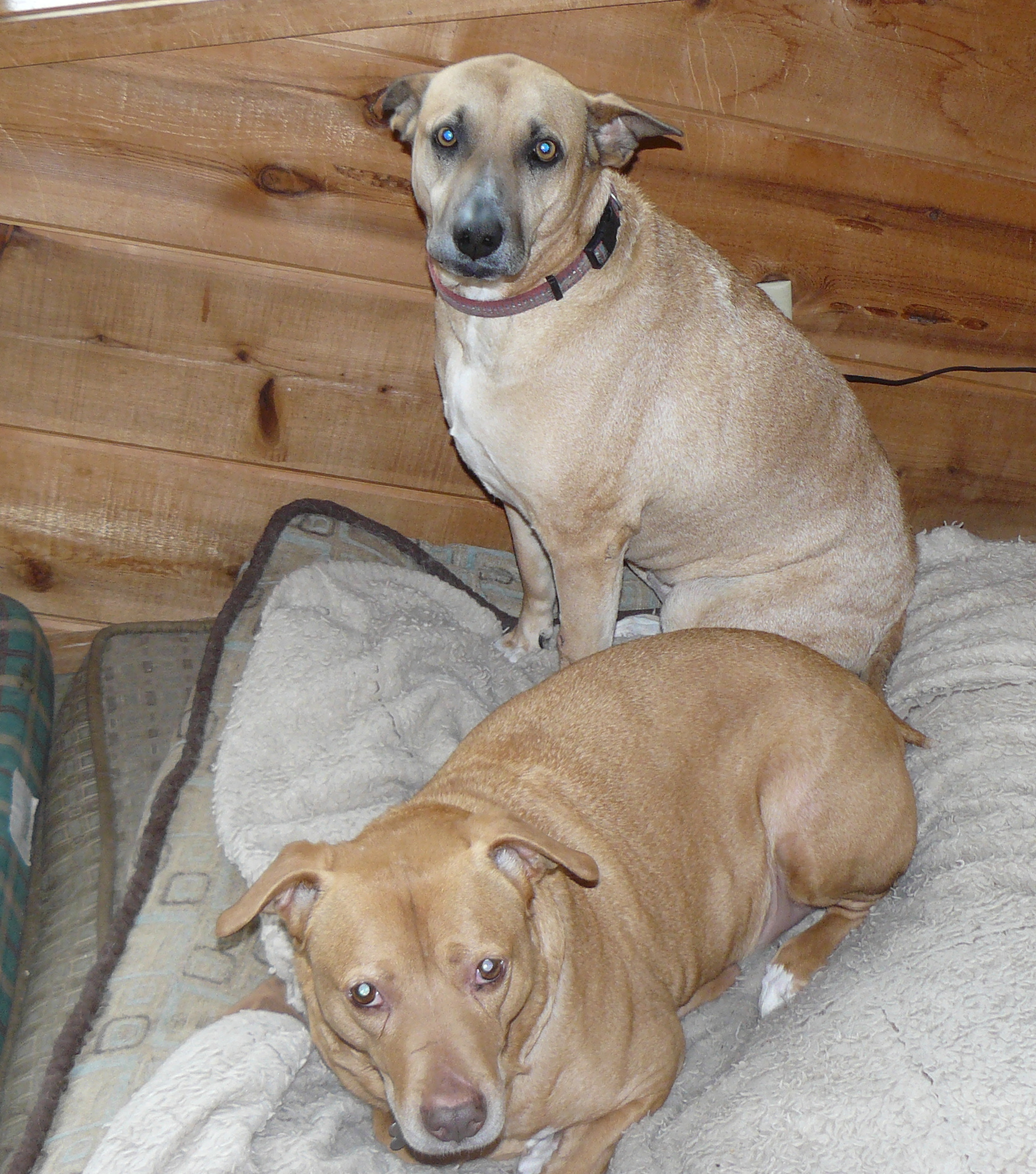
Everyday, at the same time, this dog waits outside the cat’s house. When the cat comes out, they go for their daily walk together.
Their respective owners are neither neighbours nor friends. But somehow, in a manner unknown to us humans, these two creatures connected with each other and now enjoy their shared walk everyday.
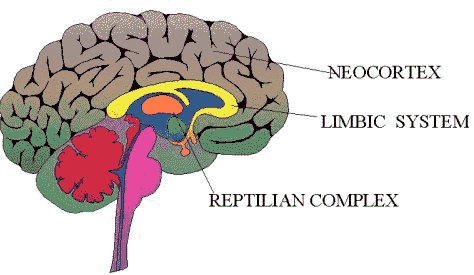
Now of all the things I am not, I am neither a biologist nor a scientist of any description. However, general knowledge told me years ago that the human brain is composed of three areas, as the following diagram shows.
The first time you observe the anatomy of the human brain, its many folds and overlapping structures can seem very confusing, and you may wonder what they all mean. But just like the anatomy of any other organ or organism, the anatomy of the brain becomes much clearer and more meaningful when you examine it in light of the evolutionary processes that created it.
The most efficient model for understanding the brain in terms of its evolutionary history is the famous triune brain theory developed by Paul MacLean. According to this theory, the following three distinct brains emerged successively in the course of evolution and now co-inhabit the human skull:
The reptilian brain, the oldest of the three, controls the body’s vital functions such as heart rate, breathing, body temperature and balance. Our reptilian brain includes the main structures found in a reptile’s brain: the brainstem and the cerebellum. The reptilian brain is reliable but tends to be somewhat rigid and compulsive.
The limbic brain emerged in the first mammals. It can record memories of behaviours that produced agreeable and disagreeable experiences, so it is responsible for what are called emotions in human beings. The main structures of the limbic brain are the hippocampus, the amygdala, and the hypothalamus. The limbic brain is the seat of the value judgments that we make, often unconsciously, that exert such a strong influence on our behaviour.
The neocortex first assumed importance in primates and culminated in the human brain with its two large cerebral hemispheres that play such a dominant role. These hemispheres have been responsible for the development of human language, abstract thought, imagination, and consciousness. The neocortex is flexible and has almost infinite learning abilities. The neocortex is also what has enabled human cultures to develop.
These three parts of the brain do not operate independently of one another. They have established numerous interconnections through which they influence one another. The neural pathways from the limbic system to the cortex, for example, are especially well developed.
I’m well into reading the book Waking The Tiger: Healing Trauma authored by Peter A. Levine. As early as Chapter One, Peter Levine explains [my emphasis]:
The involuntary and instinctual portions of the human brain and nervous system are virtually identical to those of mammals and even reptiles. Our brain, often called the ‘triune brain,’ consists of three integral systems. The three parts are commonly known as the ‘reptilian brain’ (instinctual), the ‘mammalian or limbic brain (emotional), and the ‘human brain or neo-cortex’ (rational). Since the parts of the brain that are activated by a perceived life threatening situation are the parts we share with animals, much can be learned by studying how certain animals, like the impala, avoid traumatization. To take this one step further, I believe that the key to healing traumatic symptoms in humans lies in our being able to mirror the fluid adaptation of wild animals as they ‘shake out’ and pass through the immobility response and become fully mobile and functional.
Unlike wild animals, when threatened, we humans have never found it easy to resolve the dilemma of whether to fight or flee. This dilemma stems, at least in part, from the fact that our species has played the role of both predator and prey. Prehistoric peoples, though many were hunters, spent long hours each day huddled together in cold caves with the certain knowledge that they could be snatched up at any moment and torn to shreds.
Anyway, to get back to what triggered today’s post.
If you read yesterday’s post you will recall me chatting with Jon Lavin and Jon reminding me that humans are drawn to positive messages. But in stark contrast, the news media industry excels in promoting ‘doom and gloom’. Why is this? Why are we so fascinated by danger?
Well here’s my theory.
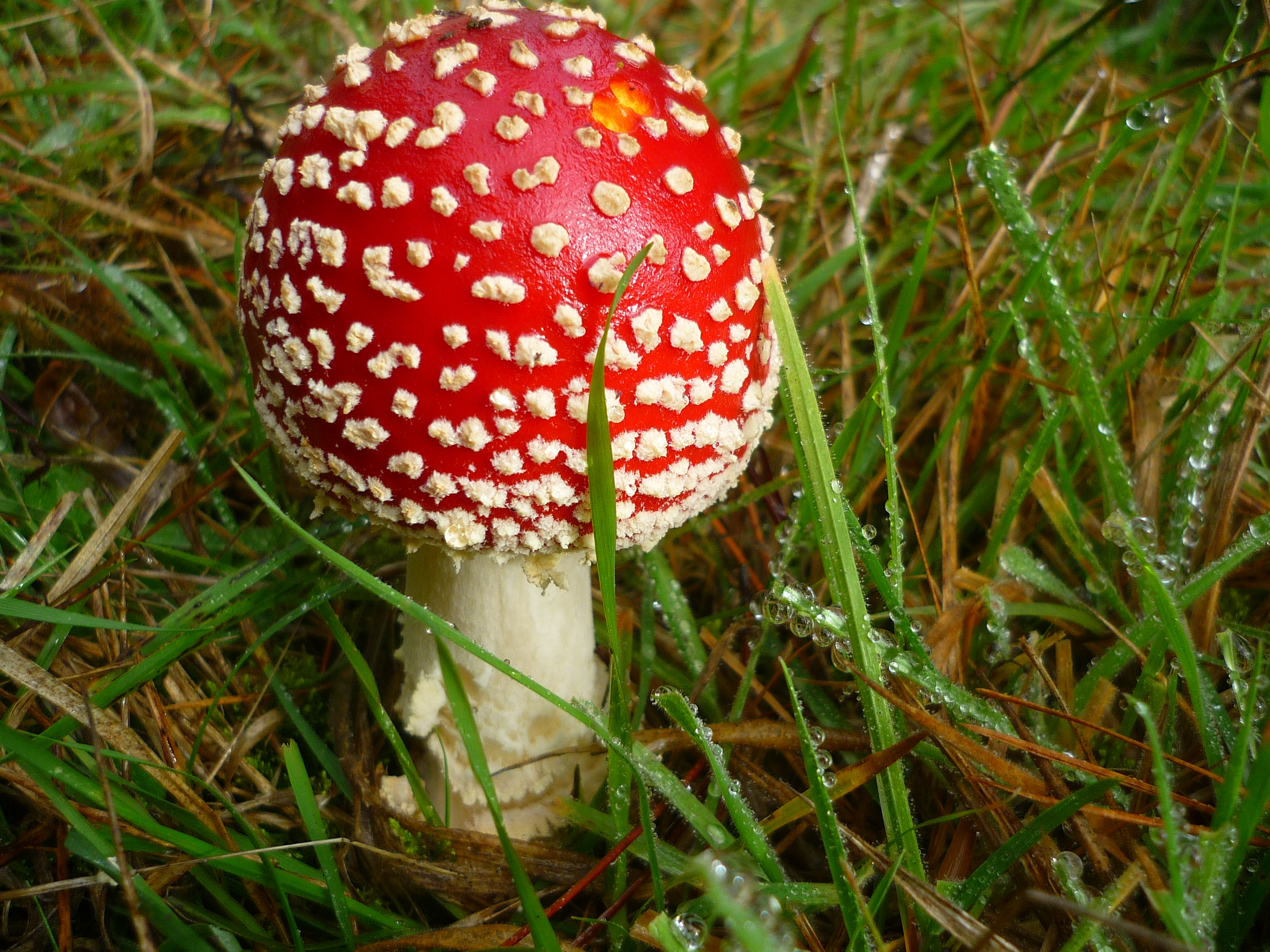
That is our evolution would not have succeeded if early man didn’t become pretty smart at identifying animal behaviours and plants and fruits that had the capacity to harm or even kill. For example, what parent hasn’t made it a priority to teach their children the difference between harmful fungi and edible mushrooms. Indeed to the extent that most of us would think long and hard before eating any fungi found in the wild unless we were 150% certain it was edible. Look at the following picture. Your instinct tells you if it’s safe to eat or not – it’s not!
So early man became over-sensitised to dangers to his health for his own good and continued existence. While modern man functions in ways almost unrecognisable from early man, that good old reptilian brain still is doing it’s best to protect us (flight, fight or freeze). Think how we all respond to a sudden alarming sound, such as a gun shot or a scream, to know that the old reptilian brain is still alive and well.
Thus while all of us hate negativity we all seem to have this fascination with doom and gloom – just in case it helps us and our loved ones survive.
Back to Jon Lavin. He makes it very clear that anything more than a small amount of ‘doom and gloom’ speaking to our consciousness increases the odds of depression and introversion.
Thus the message is that we humans should allow our Neocortex to tell our Reptilian ‘neighbour’ to go easy on the bad news, go and open a beer and watch the world go by! Whoops! Watch the world go by with a smile!
There are things that are beyond rational explanation.
Warning – this post is rather more ‘touchy-feely’ than you are used to seeing on Learning from Dogs. So if it wanders about in ways that you struggle to follow then just stifle your yawn and come back tomorrow!
It goes back to an earlier plan that I had in terms for a couple of posts. Both focussing on the myriad of examples of the appalling decline in our world. I had been collecting a number of essays to support the proposition that if we don’t learn from dogs the qualities of integrity and unconditional love then our world was doomed. I had collected the essay from Ellen Cantaro over on TomDispatch about the incredible stupidity of fracking. Or the one from Tom’s own pen in an essay about climate change being the new ‘Anti-News’. I had saved the recent essay from George Monbiot discussing the madness of the so-called dredging practices in the UK’s Somerset Levels. I had fumed at another George Monbiot essay Bring It On that included this incredible statement:
It is hard to think of a more serious allegation. For six months an undercover officer working for the Metropolitan Police was instrumental in planning a major demonstration, which ended up causing injuries and serious damage to property. Yet the police appear to have failed to pass this intelligence to the City of London force, leaving the target of the protest unprotected.
I had many more examples but you get the message!
So what stopped me?
I was chatting to Jon Lavin on Monday about a variety of things. Jon asked how the book was coming along. I replied by saying that a recent NaNoWriMo webinar had persuaded me that the book wasn’t a novel and should be re-written as a non-fiction story. Going on to add that I might include some of the appalling examples of what was going wrong in our society to strengthen the argument that we truly have much to learn from dogs.
Jon, who had read the first, very rough draft of the book that appeared on this blog, cautioned me against doing that. He went on to say that in the world of solutions focussed therapy, the area that Jon practices in professionally, the way forward was always to focus “on what’s working“. Jon continued by saying that while one would initially allow the problems to be voiced, this negativity would always be a tiny piece of the overall process, say less than 5% of the session. That even if a client’s whole world seemed to be failing, there would always be something that was alright, always a 1% that was working, and that would be the place to start. A quick web search endorsed that as the website of Good Therapy revealed, from where I read:
Solution focused brief therapy (SFBT) targets the desired outcome of therapy as a solution rather than focusing on the symptoms or issues that brought someone to therapy. This technique only gives attention to the present and the future desires of the client, rather than focusing on the past experiences. The therapist encourages the client to imagine their future as they want it to be and then the therapist and client collaborate on a series of steps to achieve that goal. This form of therapy involves reviewing and dissecting the client’s vision, and determining what skills, resources, and abilities the client will develop and use to attain his desired outcome. Solution focused therapy was developed by Steve De Shazer, Insoo Kim Berg, and their team at the Brief Family Therapy Family Center in Milwaukee, USA.
Thus coming back to the book rewrite, Jon said that people wanted to read ‘good news’ not negativity. It was a key reminder for me and an incredibly inspiring call that in these challenging times, whether on this blog or in a potential book, I need to write about all the powerfully, positive lessons that dogs, and all warm-blooded creatures, offer mankind. The lessons of integrity, love, trust, balance, loyalty, faithfulness, affection, forgiveness and more.
OK, moving on.
On the evening of February 7th Jean and I settled down to watch a YouTube video. It had been featured in a post from LadyBlueRose that had been published on the 6th. The post was called His Name is Spirit and it was the story of a woman, Anna Breytenbach, who has dedicated her life to what she calls interspecies communication.
We had reached the six-minute point in the film, already captivated by it, when the telephone rang. I paused the film and answered the phone. It was neighbour Dordie from next door ringing to say that when she had seen us earlier in the day she had forgotten to mention that there was this incredible film that we really had to watch …… yes, you guessed it! The film that Jean and I were watching at that moment.
Here is that film.
Now here is Anna’s website Animal Spirit where one learns:
ENHANCING THE RELATIONSHIP BETWEEN HUMANS, OTHER ANIMALS AND THE NATURAL WORLD
Welcome to an exploration of interspecies communication – a journey of discovering ways to restore a deep relationship with all of life.
Human and animal communication creates a valuable bridge between human and non-human animals. By connecting with our intuition, we can engage in meaningful dialogue and remember how to hear the subtle messages from those whose space we share in our lives and our natural environment. Coming from a place of respect and reverence for all life, we can learn to understand our wilder relatives, honour their truths and live in greater harmony.
and where one also can watch the short introductory film that is on her home page; as below.
A web search then came across a fascinating interview with Anna.
So where does this all end up?
Simply, that in a world dominated by media of all types that favour ‘doom and gloom’ it can be incredibly difficult to hang on to the message offered by Jon and by Anna, and by many others no doubt, the message that our individual health, and by implication the health of this planet, is afforded through staying positive.
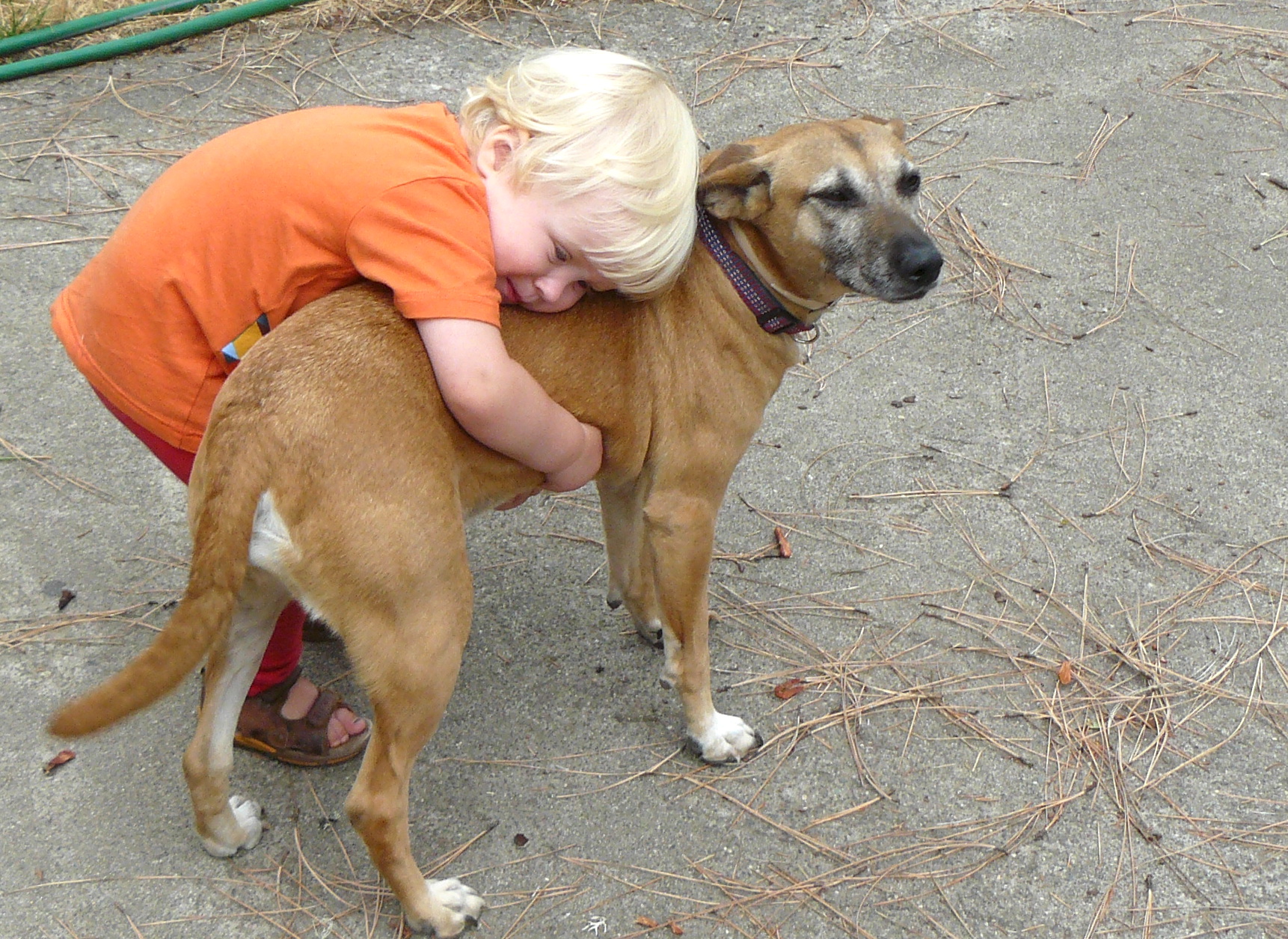
Or put more basically, if you are feeling low go and hug a dog! So I can do no better than to close with the same picture that closed Tuesday’s post Meet the dogs – Dhalia.


.jpg) Those of you who have been tracking wolf issues for a long time, may remember the iconic photo of a scraggly Oregon wolf in sagebrush. The young wolf and his partner frequented an area near the Keating Valley in Baker County.
Those of you who have been tracking wolf issues for a long time, may remember the iconic photo of a scraggly Oregon wolf in sagebrush. The young wolf and his partner frequented an area near the Keating Valley in Baker County.
 For wolves and wildlife,




 Learning from Dogs