Hot on the heels of yesterday’s post The power of hope comes this wonderful story about the increasing population of wolves in Europe. I can’t recall what led me to the item in the UK’s Guardian newspaper but this is what I read:
Incredible journey: one wolf’s migration across Europe
Slavc is a wolf. In 2011, he began an epic 2,000 kilometre migration across Europe from Slovenia to Italy via the Austrian Alps. Several months earlier, he had been fitted with a collar that allowed his movements to be tracked in incredible detail. I talked to Hubert Potočnik, the biologist whose work made this possible.
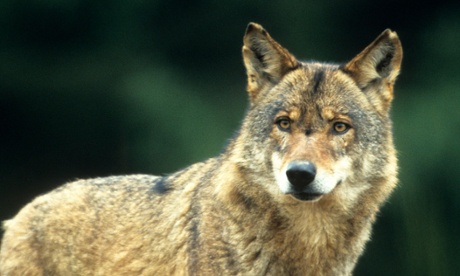
It has been estimated that there are now around 10,000 wolves in Europe. Photograph: tbkmedia.de/Alamy
Every year, Hubert Potočnik and his colleagues at the University of Ljubljana in Slovenia capture and collar a number of wolves in order to get a handle on the movements of these much-misunderstood creatures. In July 2011, he collared a young male that became known as Slavc. In June, I spoke to Potočnik for a feature that appears in New Scientist this week and he told me about Slavc’s extraordinary journey across Europe. What follows is an edited transcript of the interview …
HN: After you captured and collared Slavc in July 2011, he stayed with his pack for several months. Then, on 19 December 2011, he began to move. How did you know?
HP: We knew something was different because the GPS points showed that he had crossed two large motorways far outside of his natural territory.
Tell me about these collars. How do they work?
The collar is equipped with three types of different technology. It has a GPS receiver, a GSM modem to send SMS and also with a VHF radio transmitter as a back-up. We programme all our wolves to send a GPS signal every three hours, so we get about seven locations a day to give us continuous location sampling data.
Hubert Potočnik fits Slavc with the collar in July 2011, a device that will reveal the wolf’s incredible 2000-km migration from Slovenia to Italy. Photograph: Nina Ražen
To read the rest of this fascinating article then you will need to go here. Please do so as the article is breathtakingly interesting. It closes, thus:
HN: How would you sum up this experience?
There are lots of data about long-distance dispersal of wolves but there are very few cases where we have had the opportunity to follow an animal in such detail. Following Slavc across Europe offered a rare insight into the secret life of the wolf. It was one of the most amazing events in my life.
A quick web search came across this short but wonderful video; albeit without sound.
Published on Aug 26, 2013
Two wolf cubs were documented in Lessinia Regional Nature Park on August 7, 2013. At the end of the video it is possible to partially see an adult wolf, the mother of the cubs, that was recognized as Giulietta. Giulietta and Slavc became famous because they brought together two wolf populations that were separated for over 150 years. Wolf Slavc originates from the Dinaric-Balkan wolf population and was collared in Slovenia. He travelled over 1500km over Austria to Italy, where he met Giulietta, originating from the wolf population from the western Alps (Piemonte region).
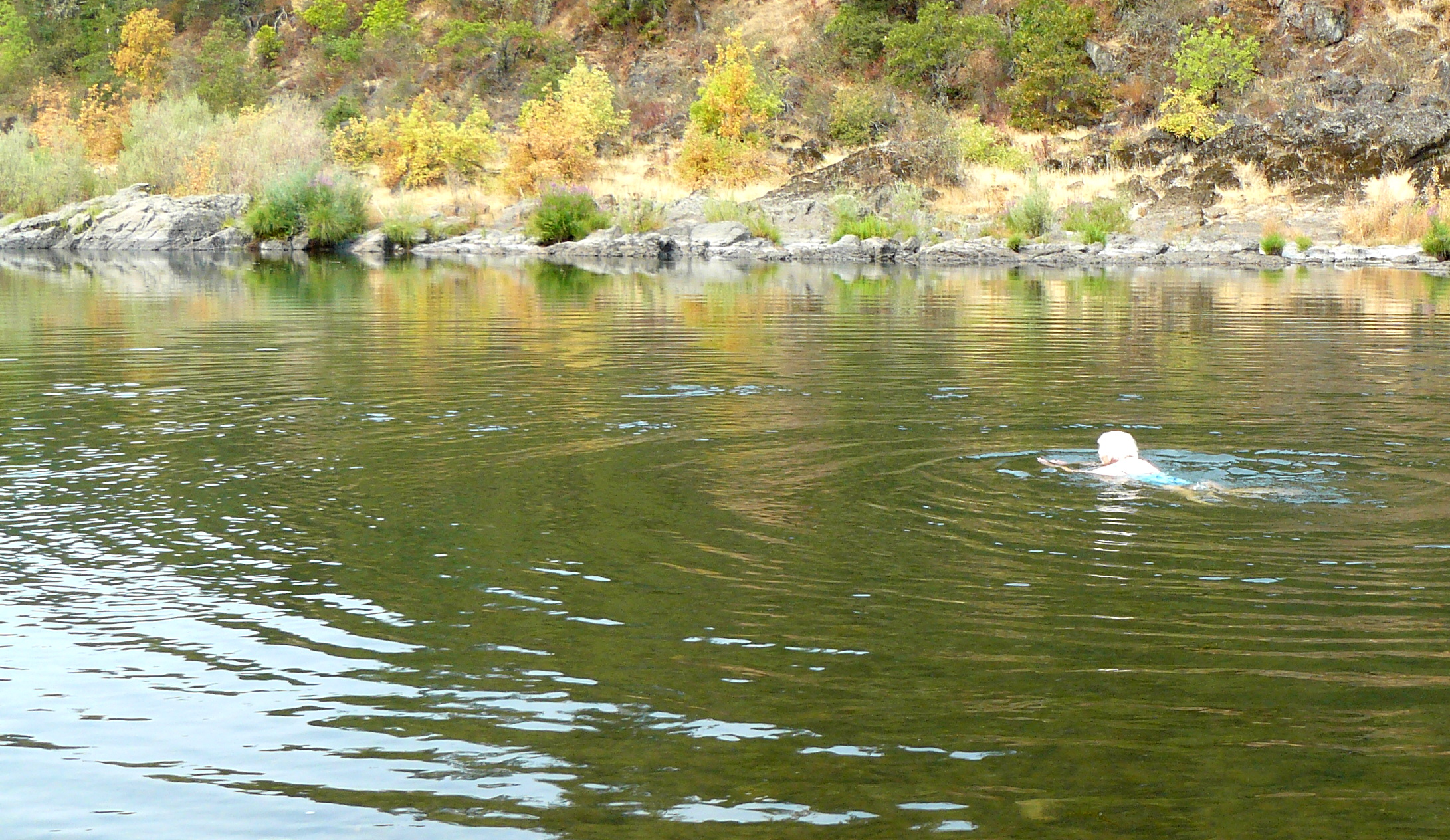
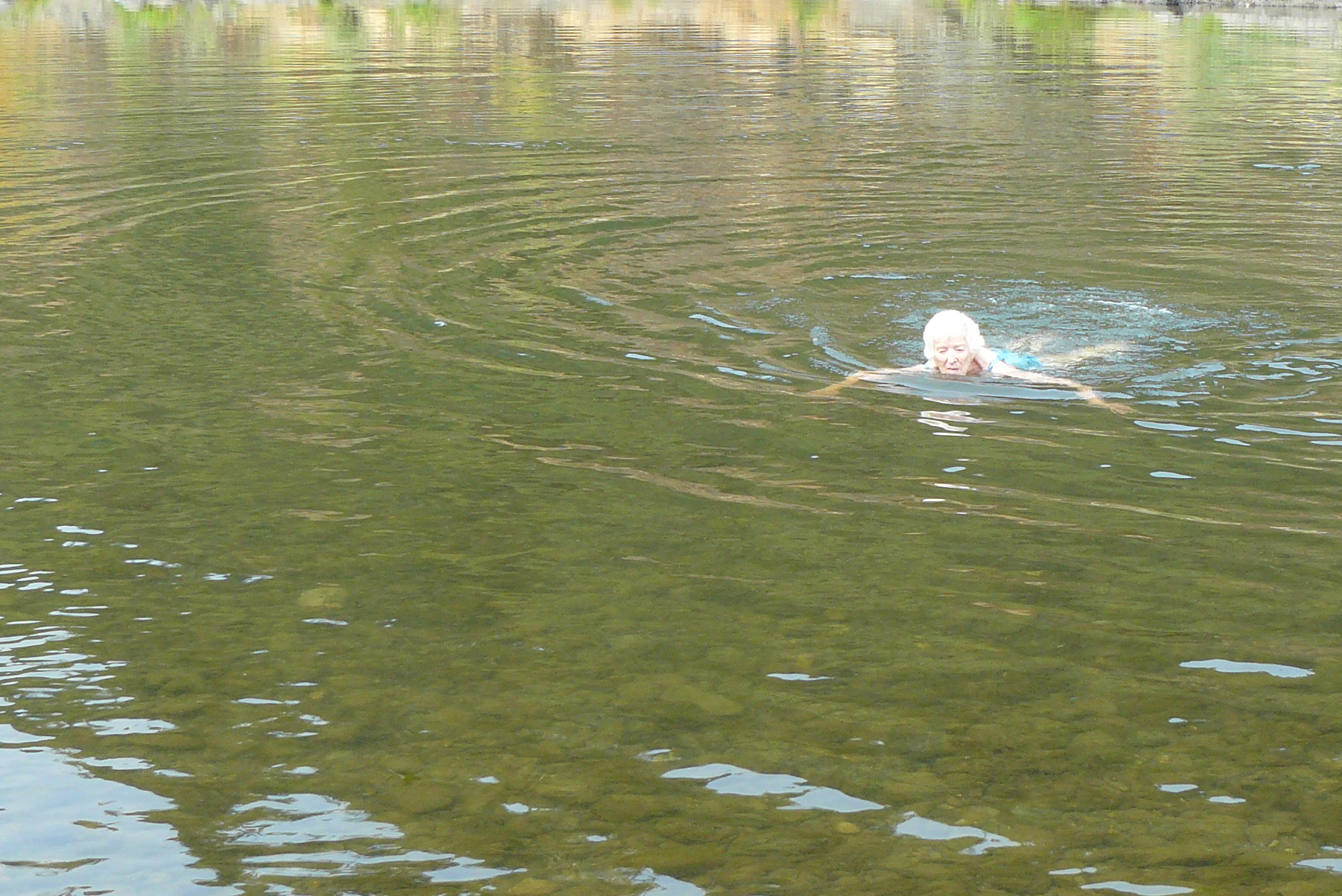
In last week’s picture parade, I featured my mother swimming up at Secesh Reservoir near Wolf Creek. There were many lovely comments and it made my mother’s day to read all your kind words. I also mentioned that my mother was determined to take a swim in our nearby Rogue River and that it would be featured in today’s picture parade.
So here are those pictures.
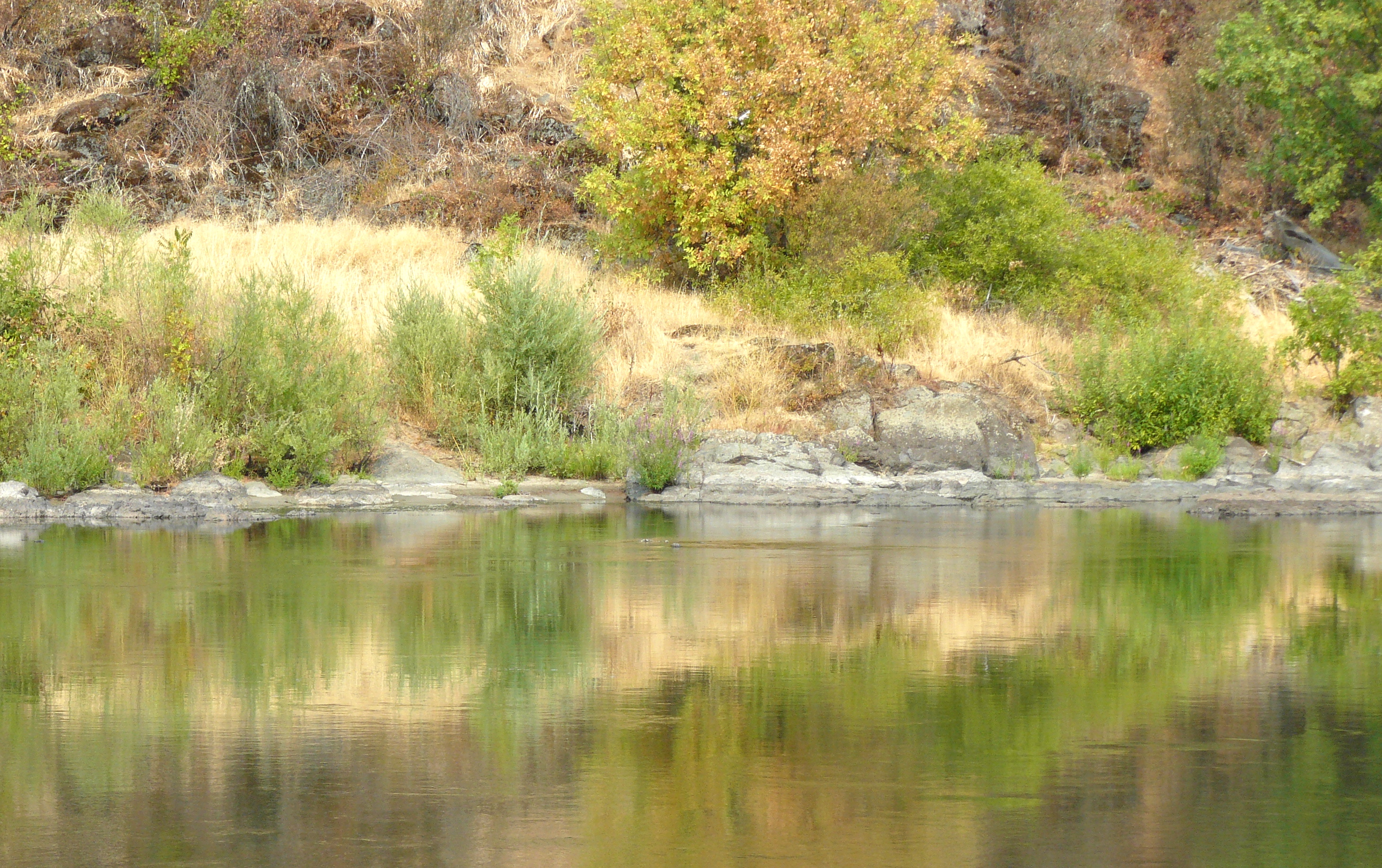
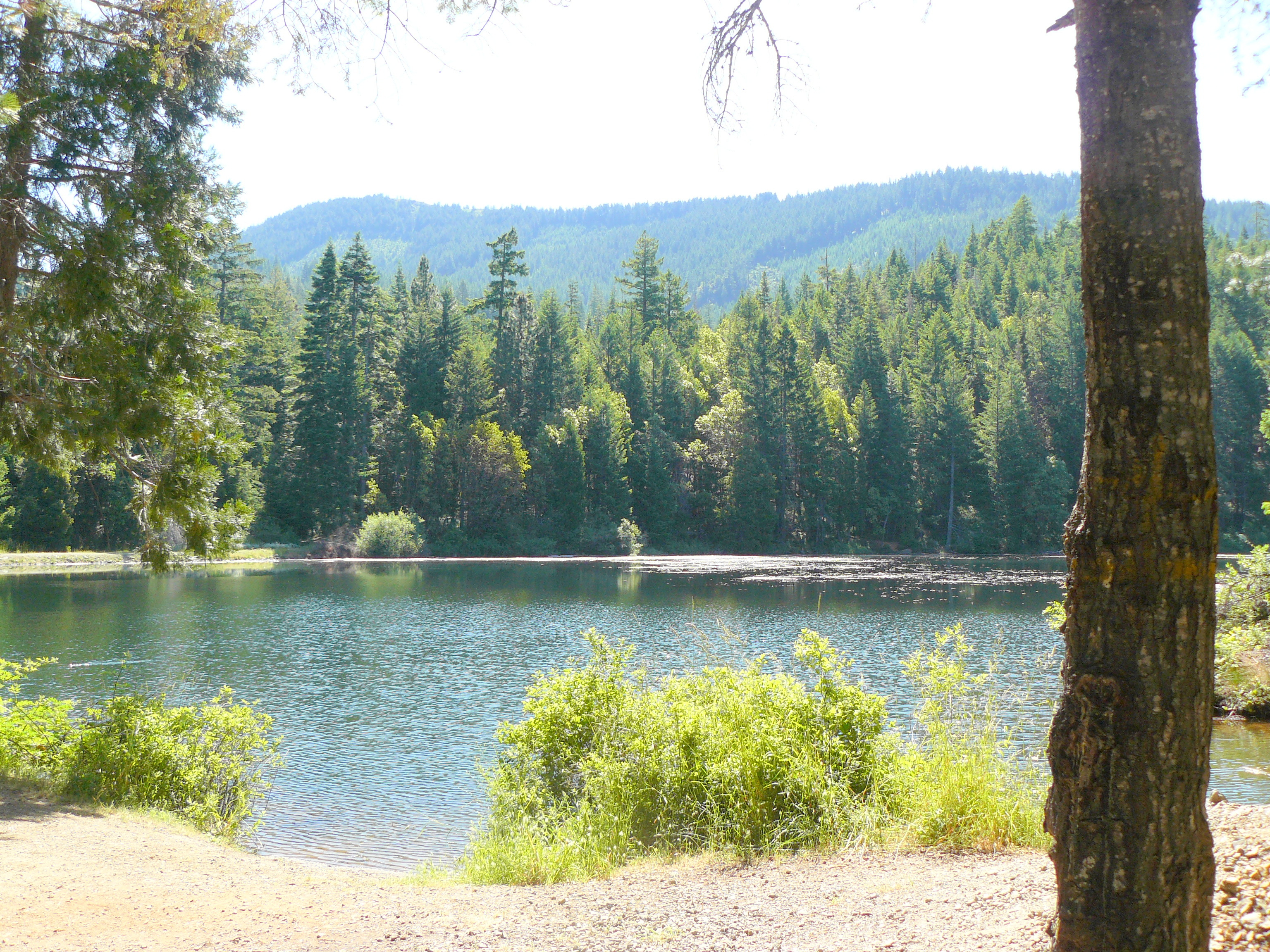
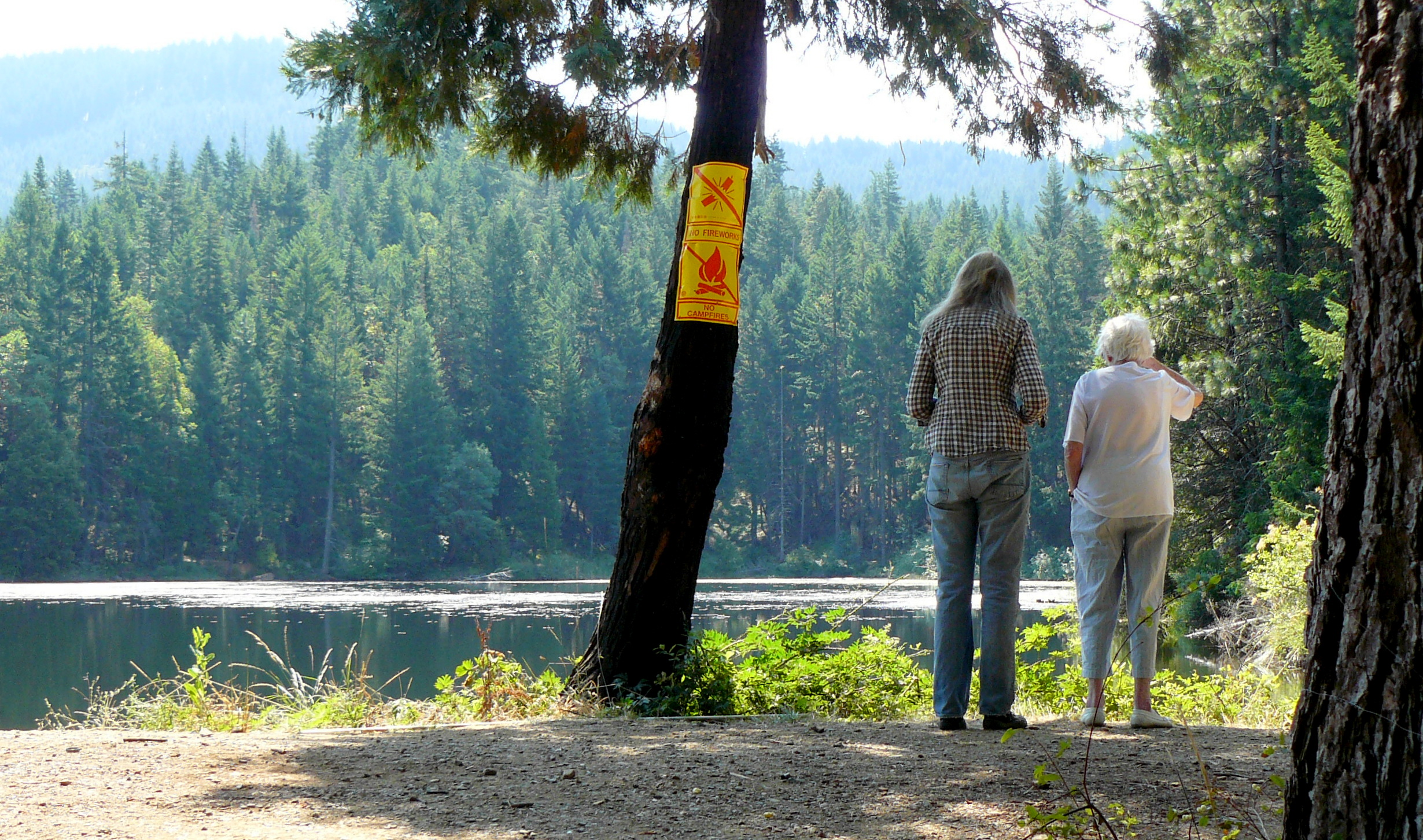
The Rogue River at Matson County Park.
Matson Park is not far from Grants Pass here in Oregon and has the great advantage of offering a beach, albeit a stony beach, that makes entry into the water easier.
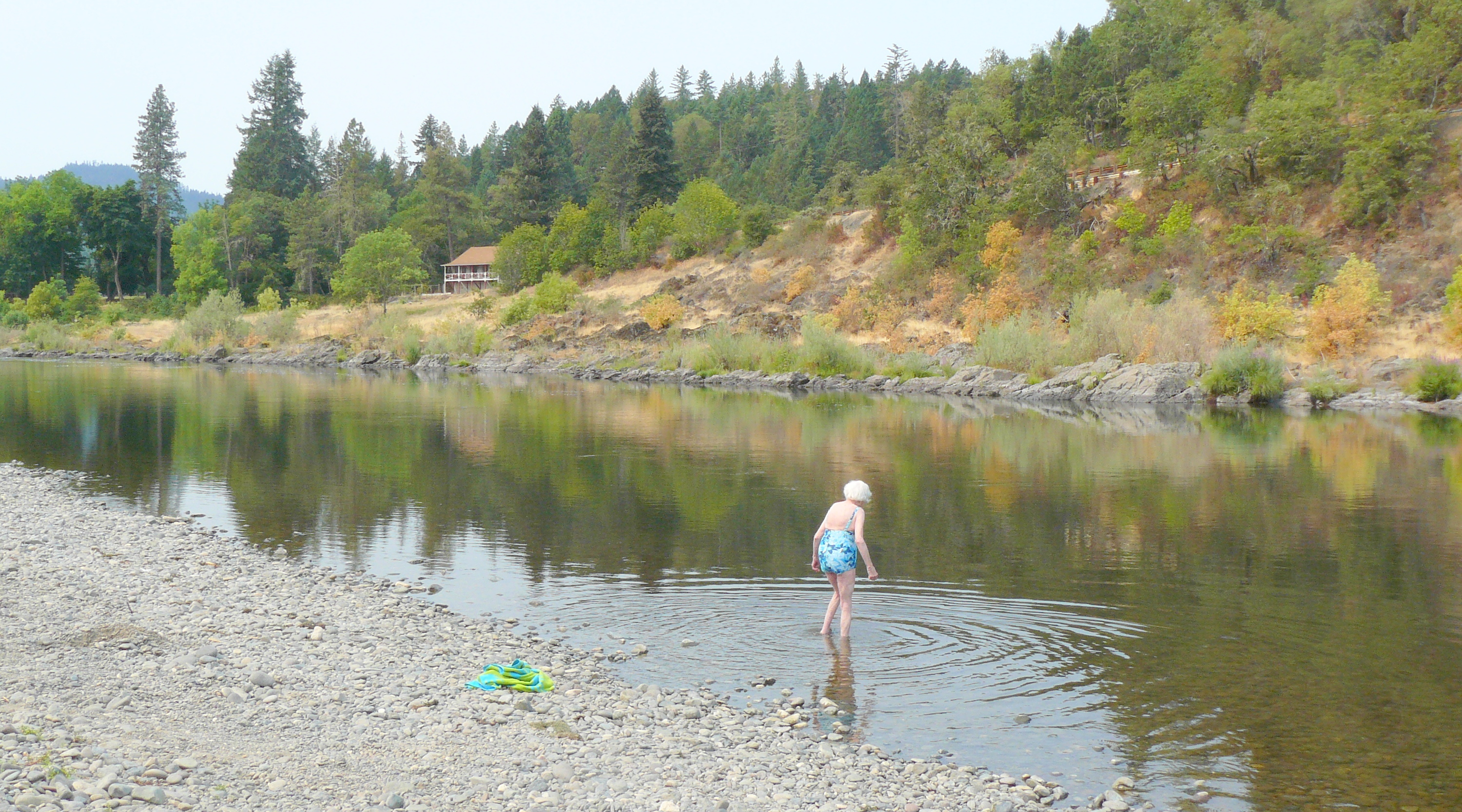
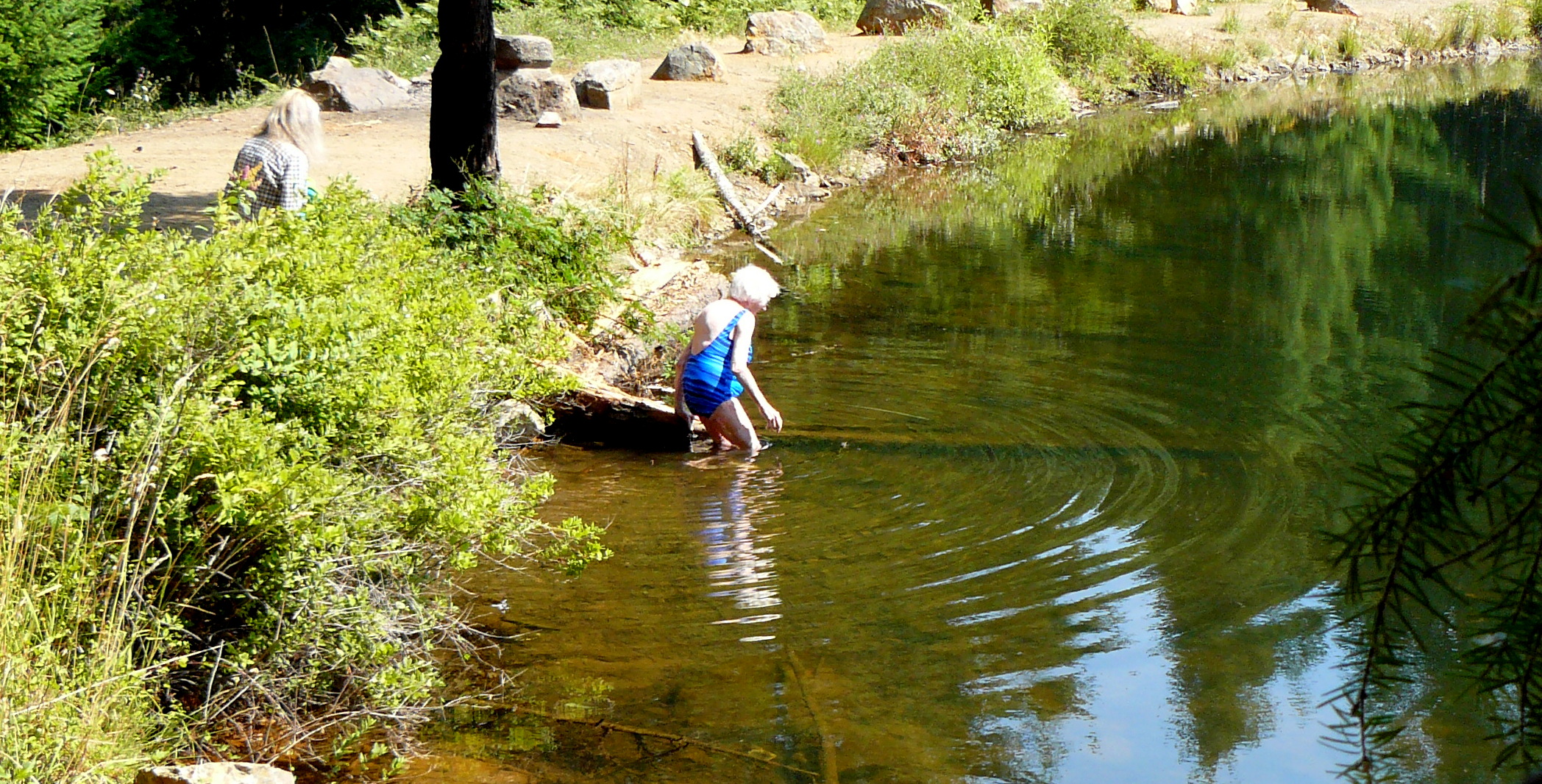
Gingerly wading in.
Jean had to lend my mother her shoes as the river bed was pretty stony.
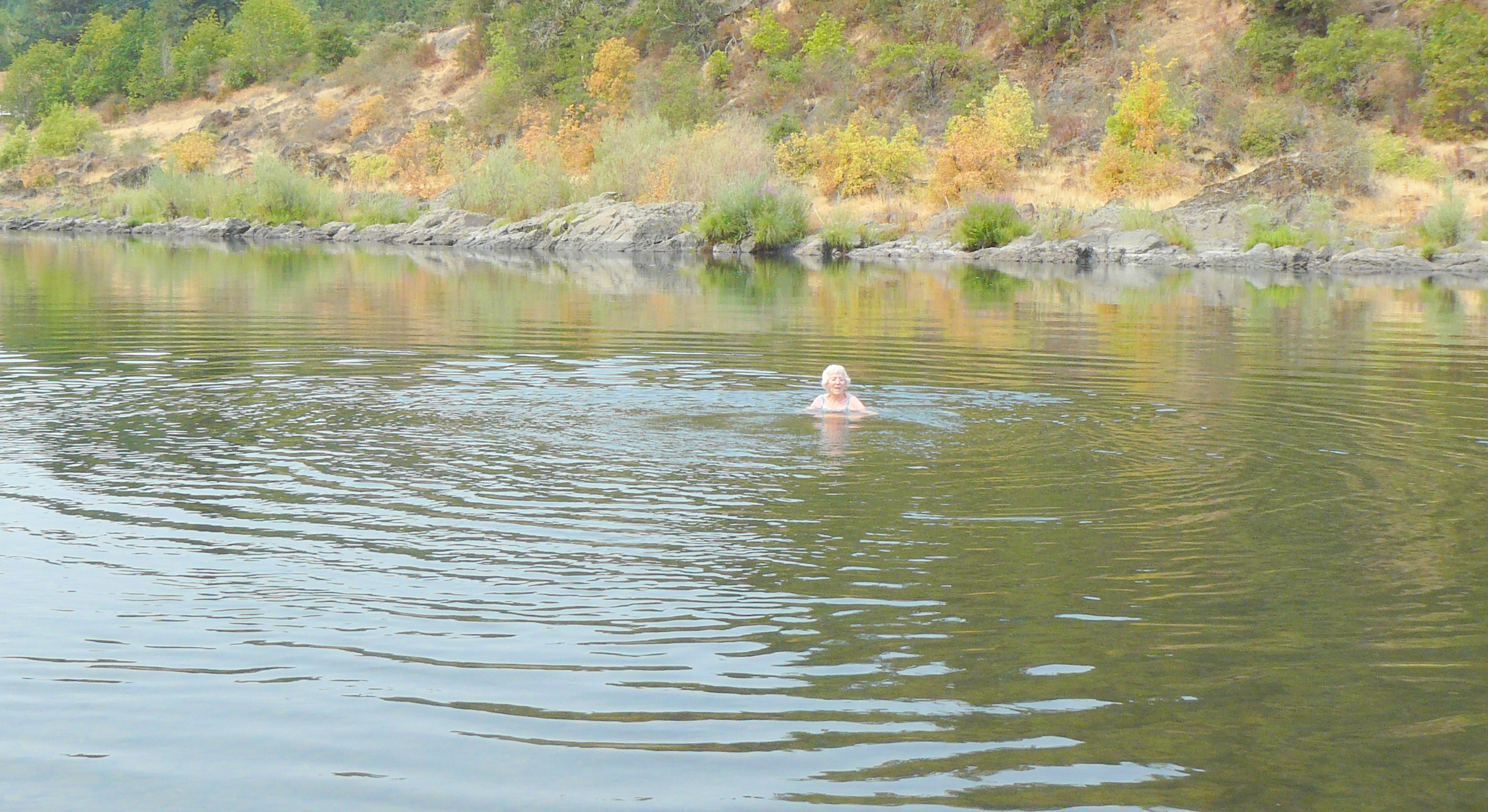
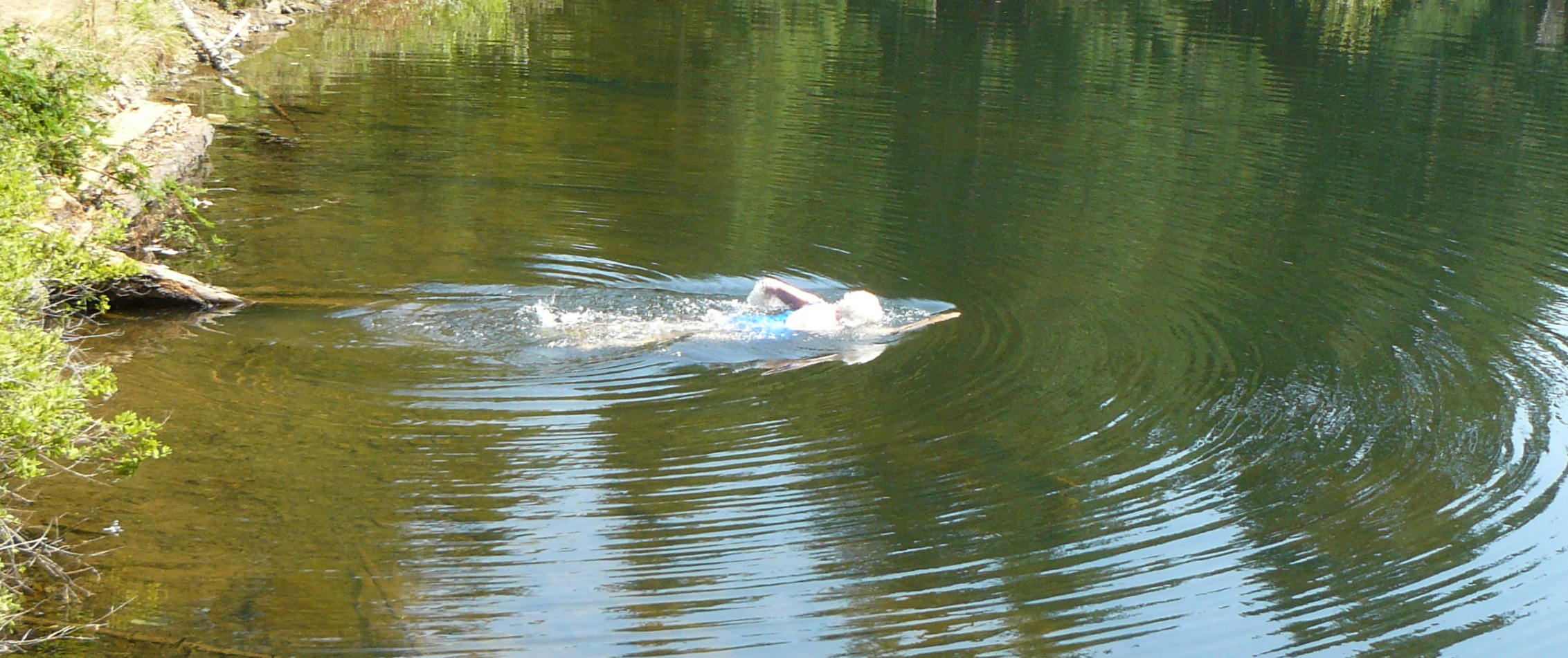
Right out in mid-river!
Luckily the lack of recent rains meant that the river was flowing much more gently than would be usual.
Just keeping abreast of the current.
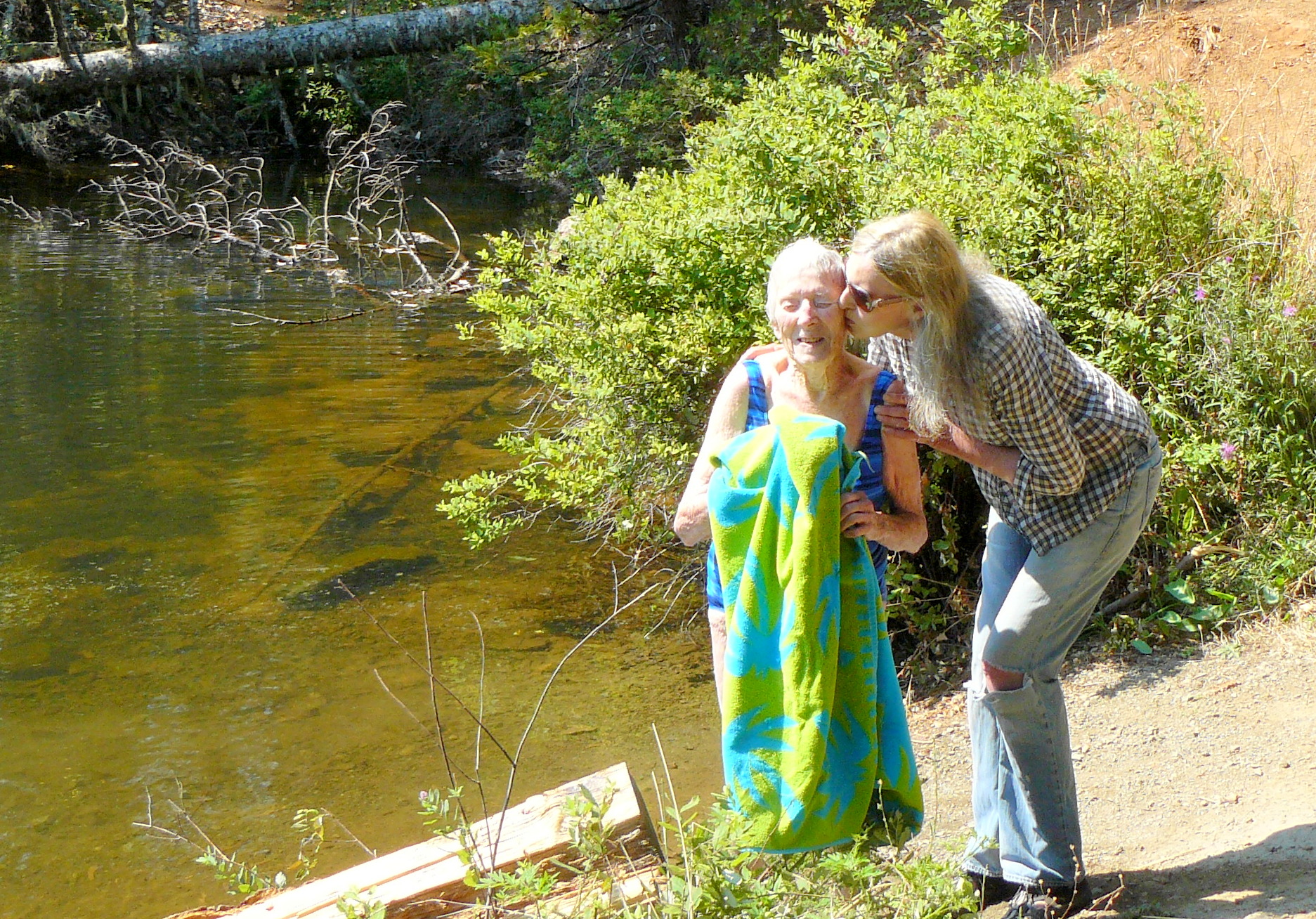
Yet even with the low volume of water flowing by, the current was a good three to four miles-per-hour and Mum was only able to stay local to us by vigorously swimming upstream.
Another swimming ‘tick in the box’.
Very soon it made sense to return to the beach. What a remarkable lady she is!
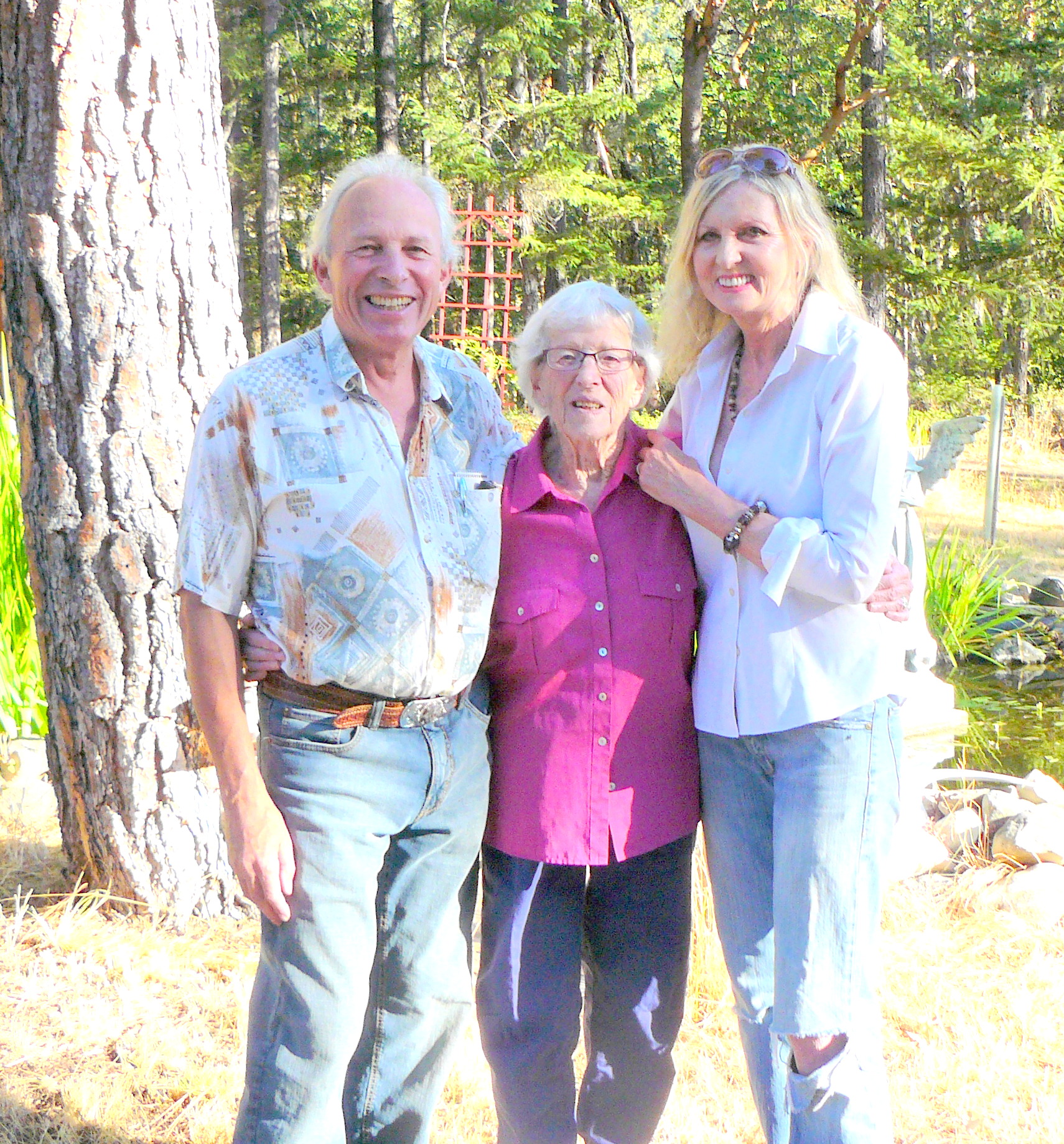
Last morning together.
Soon the day came round for Mum to return to London. This picture was taken just before we left for Medford Airport.
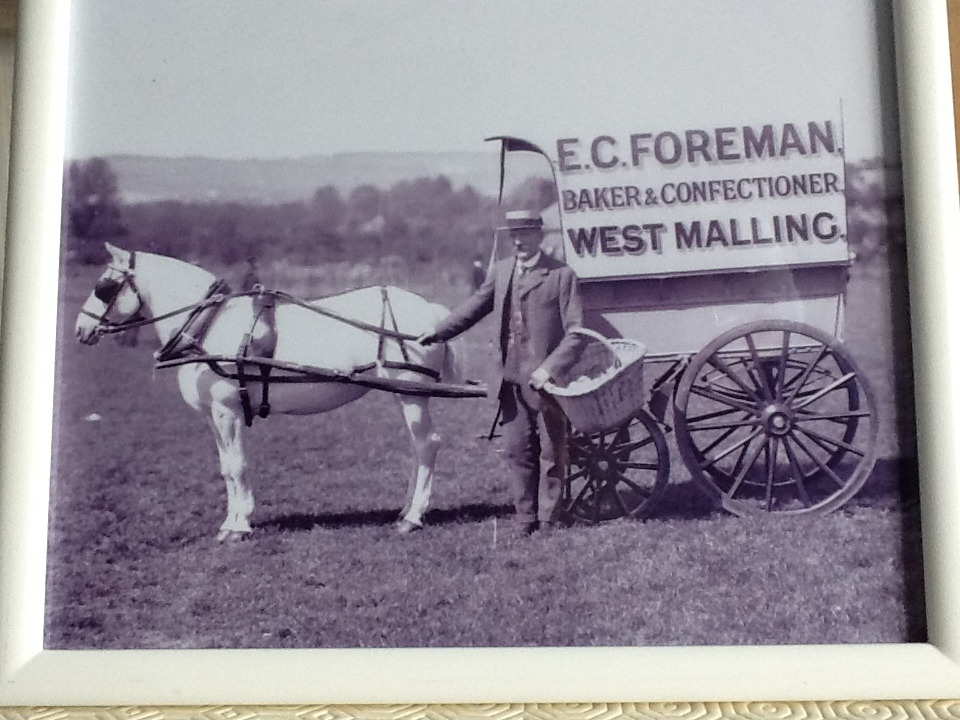
Little piece of nostalgia.
Finally, to close today’s post, here’s a photograph of Mum’s Great Uncle. Believed to have been taken around 1930, Uncle Foreman was the baker in the small village of West Malling in Kent, South-East England.
“This is a once in a lifetime photo”, says Arron McNally. “There will never be one like it again”. A few evenings ago, the Cornish father of five was watching a spectacular electrical storm with his wife Krista Oflynn from their daughter Kelly’s bedroom window.
No doubt to allay the four-year-old’s fear of the storm, mum and dad started a competition to see who could snap the most spectacular fork of lightning on camera. “When I caught this one I knew I was the winner”, Arron (26) says. Scrolling back to see the picture he had taken of a particularly bright strike nearby, he immediately recognised the outline: “It was exactly the same shape as Cornwall – it was as if someone drew a map of the county in the sky”.
The incident is related in the Plymouth Herald, which covers parts of Cornwall and Devon, in the southwest of England. The paper quotes unnamed ‘experts’ who claim this is “the first time on record that a place has been struck by lightning which looks like the area itself”. While that sounds suspiciously like that old trick in the journalist’s book – faking an ‘anonymous source’ to use an unverifiable quote you came up with yourself – it is true that the resemblance is uncanny.
Cornwall is England’s southwesternmost county, a wedge-shaped peninsula dividing the Celtic Sea to its west from the English Channel to its east. The peninsula’s tip is known as Land’s End. On the other side of the county, the River Tamar separates Cornwall from Devon, and the rest of England. Some would even say: from England proper – Cornwall, although officially English, has its own Celtic history, culture and language. Some locals promote the separate Cornish identity (reviving the virtually extinct Kernowek language – see also #13) and even strive for larger political autonomy. In April 2014, the Cornish were granted minority status under the European Framework Convention for the Protection of National Minorities.
The bolt of lightning photographed by Arron McNally mirrors the geography of Cornwall in a few crucial areas. The main streak at the bottom and the secondary one on top together suggest the wedge shape of the county. Two protrusions at bottom left of the fiery constellation resemble Land’s End, the neighbouring Lizard peninsula (Britain’s southernmost) and Mount’s Bay between them. In fact, the Lizard is suggested twice, by a second downward stab of lightning to the right; next, a hint of the gentler curve of Falmouth Bay. The fainter, northerly streak of lightning also shows a passing resemblance to the northern Cornish coastline, from St. Ives Bay to where the line fades.
The ‘meteorologists’ quoted by the Herald may or may not be right in claiming that the Cornwall-shaped lightning is a ‘world first’ – how could you be sure of either? – this certainly isn’t the first time this blog has reported on weird territorial echoes.
Some time ago, this blog reported on a mysterious Nebraska-shaped field in Nebraska (see #426). And recently, we demonstrated how Belgium possesses a body double in one of its own provinces (see #659). But, most strangely of all: this is not the first time that Cornwall’s shapely contour has been shown to possess a curious double (see #555). And they say lightning never strikes twice…
Many of you will know that Elizabeth, my mother from North-West London, is staying with us for a short while. Last Friday, it was decided to drive the 20 miles to the North and along Speaker Road into BLM land and thence up to Secesh Reservoir. This beautiful spot was previously written about in June when we first went to find Secesh. It seemed a perfect spot to take my mother.
Secesh Reservoir.
What neither Jean nor I had anticipated was that my mother was determined to swim in Secesh; the remote reservoir is at an altitude of 2,870 feet.
Checking out the best way in!
oooo
Gently does it!
oooo
And away we go!
oooo
Fearless!
oooo
And safely back to the shore.
oooo
Jean expressing her love and admiration.
oooo
All good things come to a close.
oooo
Pity about the traffic noise! 😉
Oh, nearly forgot to mention that Elizabeth was born in 1919! That’s 94, by the way!
As I said in the sub-title, this takes some beating!
As I have been intimating previously, today is the start of my mother from London visiting us here in Oregon. Thus, as one would expect, time for blogging is going to be restricted. Then in a week’s time, we are also joined by my sister, Elizabeth, who lives in Tokyo. So, dear reader, you will understand if there is a deficit of creative writing, assuming you find some of it creative, why that is.
Thus today, I’m leaning heavily on a recent item I read on the EarthSky blogsite. It’s all about pronking! Yes, I hadn’t come across the word before.
ooOOoo
Does your dog pronk?
Among wild animals, pronking may be a way of avoiding predators. But when you see an animal pronk, you can’t but think it’s leaping for joy.
Alpacas, gazelles, some deer and baby lambs are all known to pronk. That is, they leap into the air as if leaping for joy, lifting all four feet off the ground at once. The fact that – in some species like sheep – young animals do it more than older ones does suggest playfulness. But, among wild animals, pronking may be a way of avoiding predators. It means something like, “Hey, I’m very fit so don’t bother chasing me.”
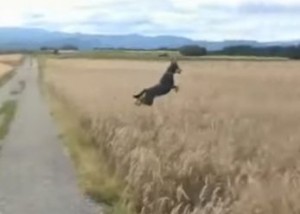
But how about dogs? I didn’t find much online discussion about true dog-pronking, although many of us, at one time or another, may have seen our dog leaping for joy. I recall my own dog Snoop (rest his soul) released from the car in a South Dakota meadow, leaping and running like crazy through the long grass for maybe 20 minutes, until we called him back. It was one of the most joyful things I’ve ever seen, and definitely one of my best memories of Snoop.
So enjoy the videos below. And, by the way, although it is a survival strategy for some, the very word pronk comes from an Afrikaans verb pronk-, which means show off or strut. It has the same linguistic derivation as our English verb prance.
“Pronking” seems to occur when an animal gets excited and jumps around his field, leaving the ground with all four feet simultaneousl, almost as though he had springs attached to his feet..Often these jumps can be high in the air.No-one really knows why llamas pronk. Certainly it is the response to some sort of excitement or disturbance. It is often infectious; sometimes my entire herd will take off. I am told that it isn’t only llamas but sheep and goats. Those of you old enough to remember BBC’s Magic Roundabout may well recall that Zebedee was a “pronker”. We never had a telly as kids, but I believe Zebedee was a dog (??).
Okay, well, maybe some sheep and wild animals like this young springbok – in Etosha National Park, Namibia – are the only true pronkers. Maybe true pronking has to have the downward-pointing head and stiff-leggedness. But if you ever see your dog do what the dogs in these videos do … you’ll feel happy. Image via Wikipedia.
Bottom line: Among wild animals, pronking seems to be a way of avoiding predators. But when you see an animal pronk, you can’t but think it’s leaping for joy.
ooOOoo
So there you go. Don’t say that Learning from Dogs doesn’t teach you some new words from time to time!
Delighted to introduce a guest picture parade for this week.
As you are aware, a great aspect of this world of blogging are the connections we make. Thus it was that as a result of Kristin signing up to follow Learning from Dogs I was made aware that she is the author of an Australian blog Fluidicthought and describes herself:
I became interested in Photography whilst creating a business site blog for Point Plaza Apartments.
I simply enjoy capturing a scene that moves me.
Photographs capture that moment in time. Here we have pieces of time that I have captured and can share with others.
Her photographs were delightful and Kristin readily agreed for me to use them for today’s picture parade. A picture parade with a story.
ooOOoo
My PLACE
WOODY POINT is a suburb on the western side of the Redcliffe Peninsula.
The first recorded English explorer to set foot on the Peninsula was Lt. Matthew Flinders, who landed near Woody Point on the 17th July 1799 while exploring Moreton Bay.
On 14th September 1824 the brig ‘Amity‘ brought a party of officials, soldiers, their wives and children, and 29 convicts. They landed on the beach near the mouth of Humpybong Creek to form a convict settlement.
Much of the peninsula was subdivided into farm lots in the early 1870s. The construction of the peninsula’s first significant jetty at Woody Point (1882) brought about some development. Visitors and holiday-makers came via a weekly ferry.
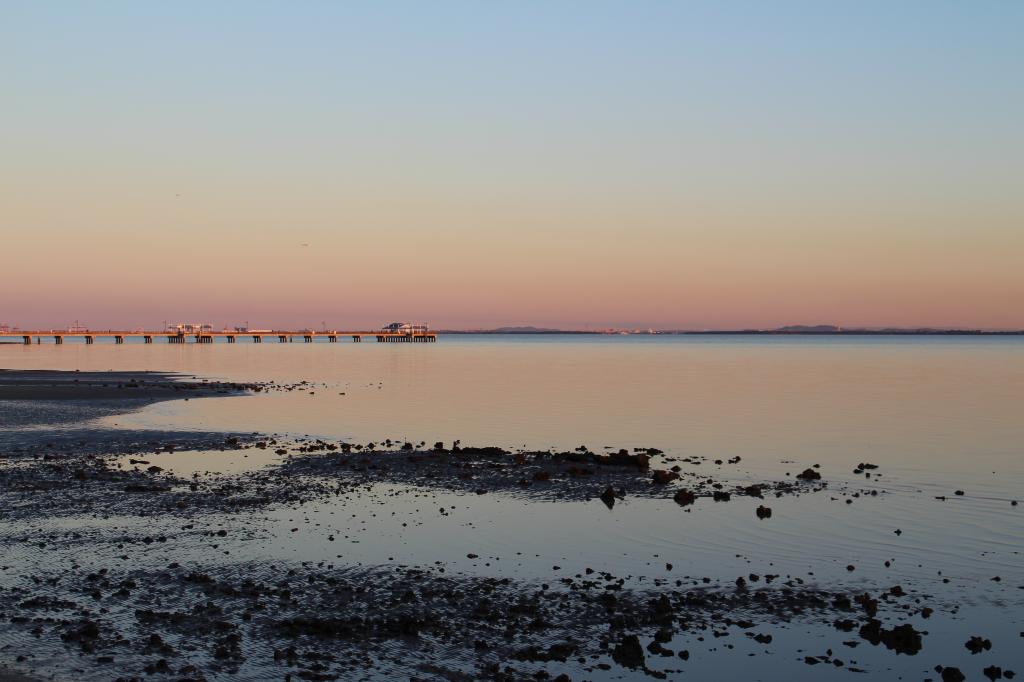
Woody Point Jetty.
The post office directory of 1901 recorded the Great Western Hotel (1883), three boarding houses, a school, a butcher and a store at Woody Point. In 1925 there were also the Belvedere and Woody Point Hotels.
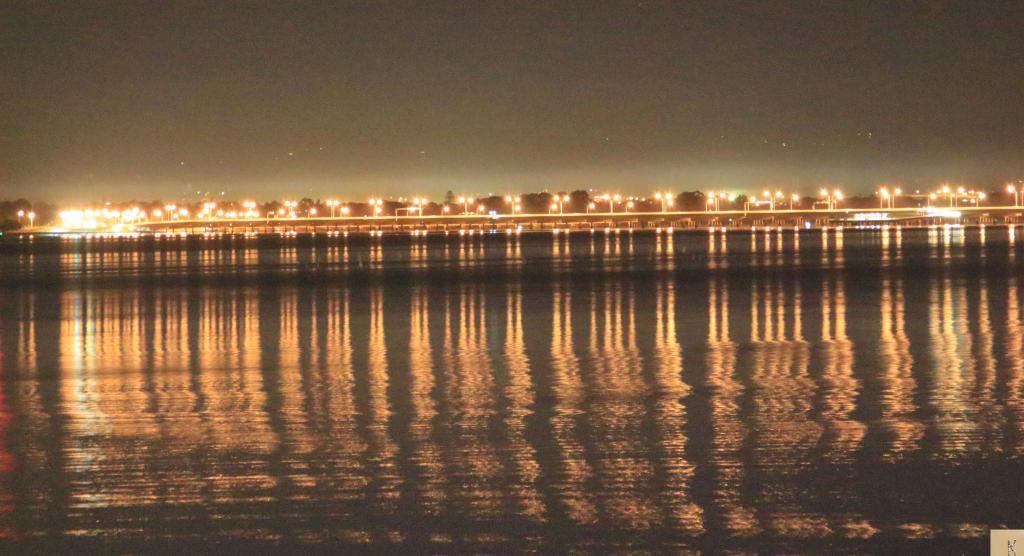
The Hornibrook Bridge was opened by Queensland Premier Arthur Edward Moore on 14 October 1935, connecting the Redcliffe district at Clontarf and Brisbane City at Brighton. The bridge had a length of 2.684 kilometres. The toll for cars was one shilling per vehicle.
The Hornibrook Bridge was one of three bridges that crossed Bramble Bay. The second is the Houghton Highway, which was built to accommodate rising traffic levels in the 1970s. The third is the Ted Smout Memorial Bridge, which opened to traffic in July 2010.
The Ted Smout Memorial Bridge and its twin, the Houghton Highway, were Australia’s longest bridges, (as of 27 March 2013.) It is the first bridge in Australia designed to withstand Hurricane Katrina-type storm events. Ted Smout was born in 1898, joining the Royal Australian Army Medical Corps aged 17 (lied about his age to get in). He was awarded France’s highest honour, being made a Chevalier (Knight) of the Legion d’Honneur in 1998 and also received the Medal of the Order of Australia for service to the community. He died 106 years old.
The Ted Smout Memorial Bridge.
Woody Point’s Apex Park & Bicentennial Park were constructed by reclaiming land along the foreshore in the 1970s. A $9.5 million Woody Point Jetty and foreshore upgrade was completed in January 2009.
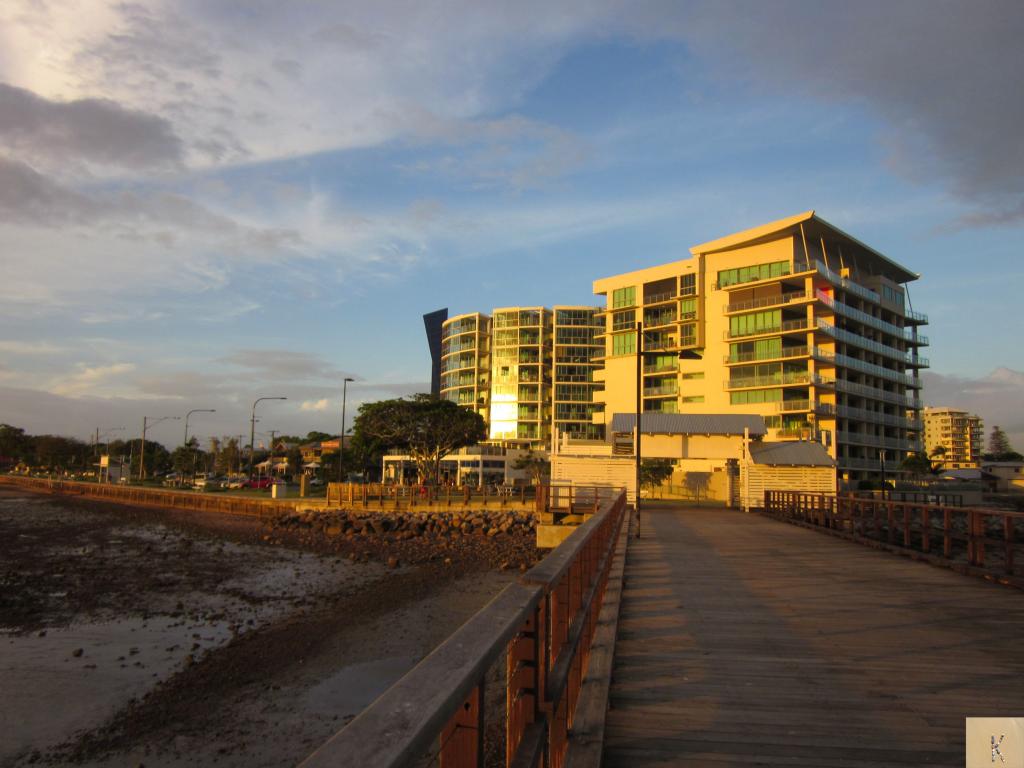
View of Woody Point Jetty from Point Plaza.
Woody Point’s current renovations include the construction of high-rise apartment buildings overlooking Bramble Bay, Moreton Bay, The Port of Brisbane and the Ted Smout Highway.
Point Plaza Apartments.Bramble Bay.Brisbane City from Woody Point.
A team of scientists take to the skies in one of the world’s largest airships, for a unique exploration of Earth’s most precious and mysterious environment – the atmosphere.
In an example of what might be called a massive change of topic from yesterday’s post on Integrity and democracy, today’s offering to you, dear reader, is about the magnificent atmosphere upon which we all depend.
Here’s a clue.
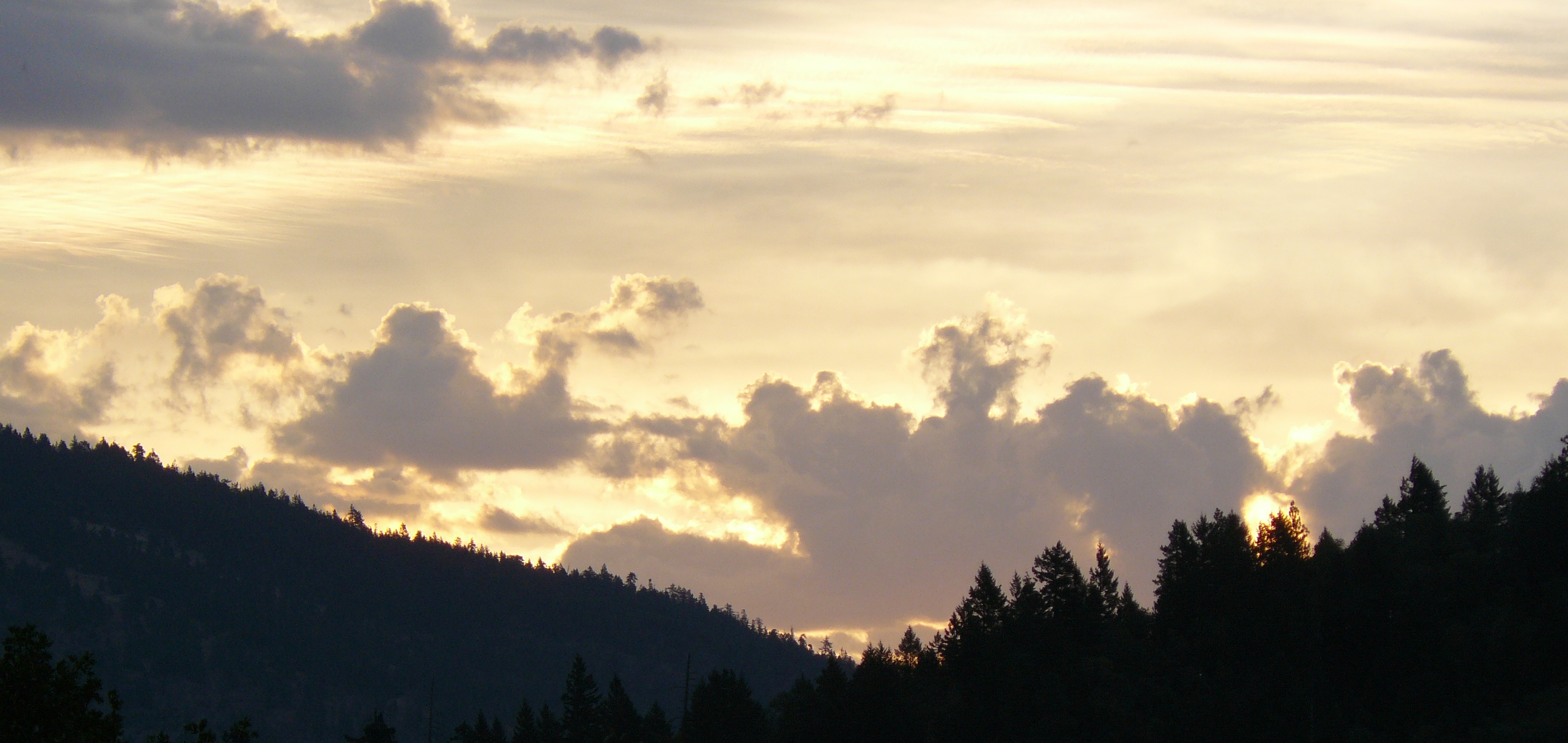
Sunrise to our North-East at a little after 7am on Sunday, 13th July, 2014.
Every Breath We Take: Understanding Our Atmosphere
The air around us is not just empty space; it is an integral part of the chemistry of life. Plants are made from carbon dioxide, nitrogen nourishes the soil and oxygen gives us the energy we need to keep our hearts pumping and our brains alive. But how did we come to understand what air is made of? How did we come to know that this invisible stuff around us contains anything at all?
Gabrielle Walker tells the remarkable story of the quest to understand the air. It’s a tale of heroes and underdogs, chance encounters and sheer blind luck that spans the entire history of science. It began as a simple desire to further our knowledge of the natural world, but it ended up uncovering raw materials that have shaped our modern world, unravelling the secrets of our own physiology and revealing why we are here at all.
There is much more to explore on the website, including this trailer to the programme.
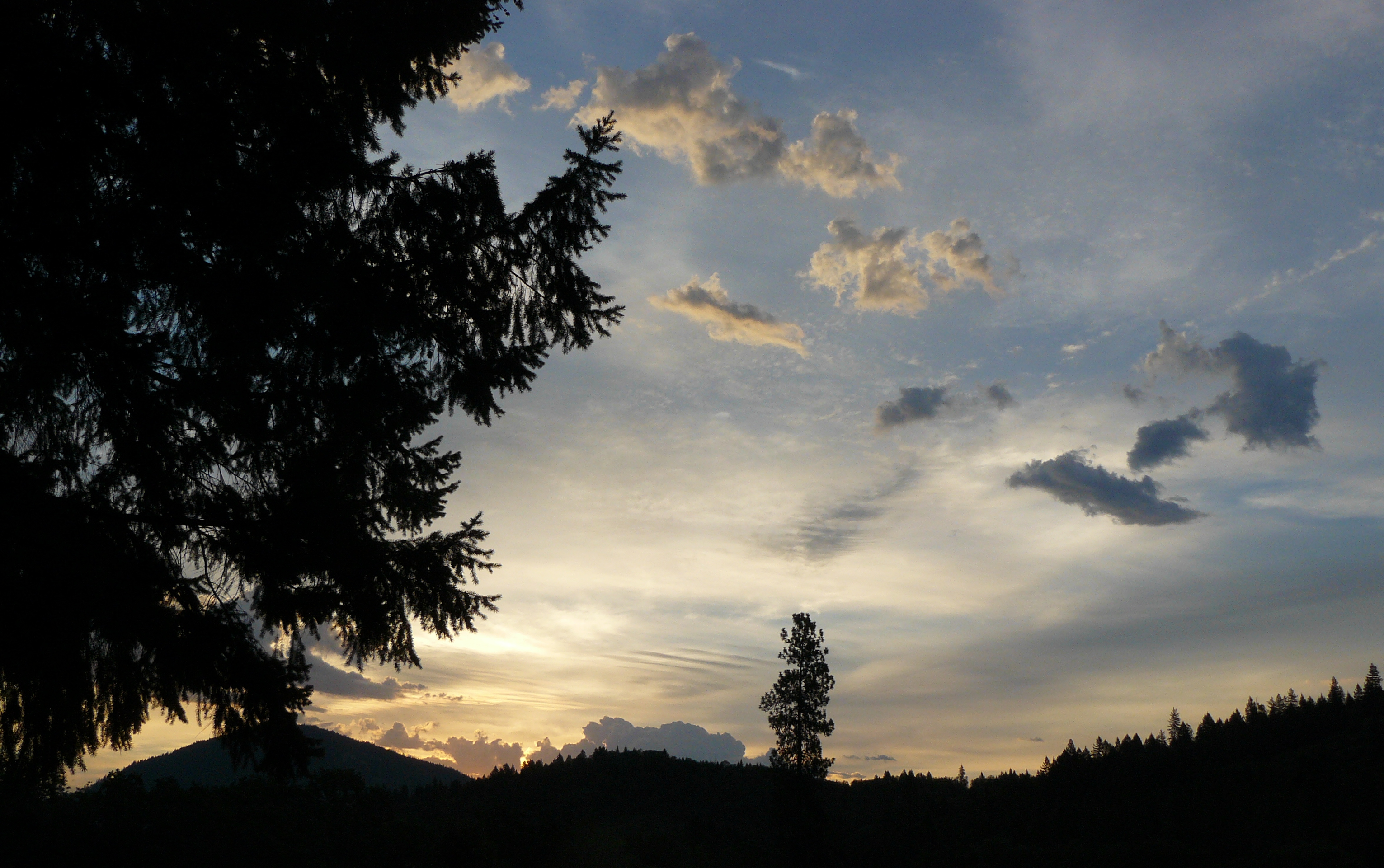
Oh, here’s another ‘clue’ from Oregon.
Same morning, same sunrise.
The presenter of the BBC series is Felicity Aston who writes on her BBC Blog:
I joined Operation Cloud Lab: Secrets Of The Skies as the expedition leader and also as a meteorologist.
The plan was to fly from Florida to California, looking at the science of the skies.
But as well as scientists, there were plenty of other people on the team including three pilots, a ground crew of 14 that followed the airship by road and a full production team including two camera crews. Not everyone could be on board at once – the airship would never have got off the ground!
But I was really fortunate to spend a lot of time on board and flew most of the way across the continent.
Exploring in three dimensions rather than being limited to making observations from the ground was a revelation to me.
The clouds in the tropics around the Gulf of Mexico are huge, and being in the sky with them really brought home the vast scale of the forces at work.
Towering cumulus cloud in Florida.
We were able to travel over, under and through these monsters, revealing that clouds are about as far from the popular image of light and fluffy floating puffs of cotton wool as you can get! They are dense and heavy and full of destructive energy.
I remember looking down at the cloud layer from a plane as a child, and daydreaming about exploring this new world of unknown places, so I was very excited the first time we flew straight through a cloud.
I leaned out of the airship as far as I dared into the heart of a cloud and found that it was a dark, damp mass of floating fog (of course!) – no mysterious worlds – my childhood fantasies were crushed!
There’s more to read on her blog as well as some stupendous photographs of clouds.
So if this gives you a thrill then don’t delay in watching the full-length Episode One on YouTube before it gets taken down. (Warning: if you watch the opening first few minutes you will be hooked for the full hour!)
Now to close with, yes you guessed it, my final ‘clue’ from Oregon.
As I said in last week’s picture parade, “A friend from Payson, Arizona, Lew Levenson, recently sent across a set of 38 astounding photographs, all on the theme of perfectly timed shots.” Despite the fact that they had previously appeared in this place, your responses were do delightful that I have no problem in staying with these pictures over the next few Sundays.
oooo
oooo
oooo
oooo
oooo
oooo
oooo
oooo
Each picture gives one such a warm and cuddly feeling!
Just a quick reminder that, as heralded in my post of the 10th – Time waits for no man – arriving family in fewer than two weeks is cutting into my blogging time.
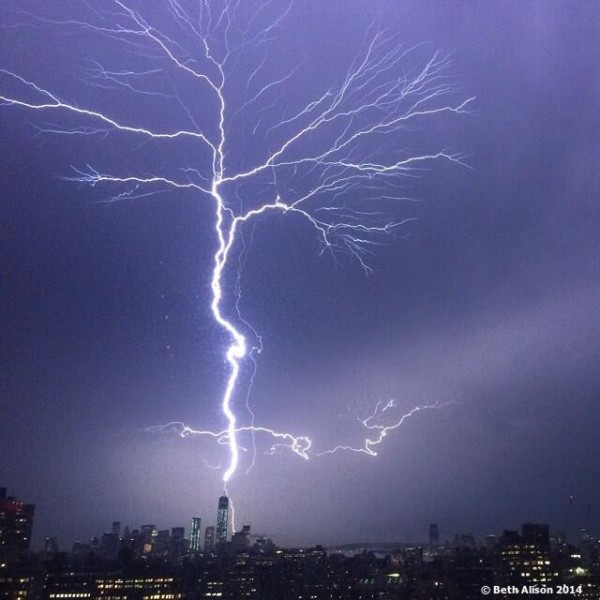
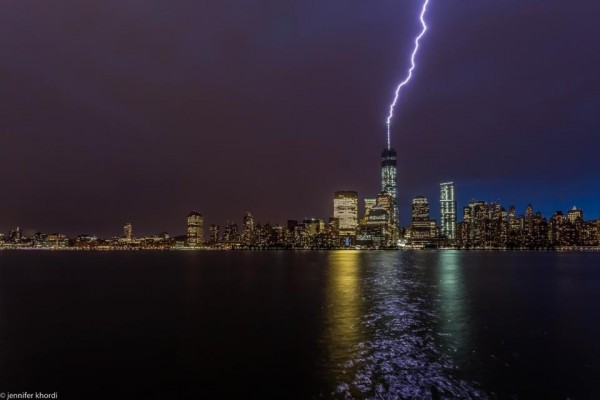
So going to make today’s offering three stunning photographs of lightning strikes on the World Trade Center. As seen on EarthSky News.
ooOOoo
Boom! Three perspectives on July 2 lightning strike at One World Trade Center
Beth Alison (@bethalison) got this shot of the July 2, 2014 lightning strike of One World Trade Center from her Manhattan apartment … with her phone!
oooo
Jennifer Khordi caught the lightning hitting One World Trade Center from New Jersey.
oooo
Lightning strikes One World Trade Center July 2, 2014. Gary Hershorn (@garyhershorn), who took this photo, said it turned the sky red.
Yes, fifty-two Sundays ago, I had the idea of posting a set of photographs. That first set was published on the 30th June, 2013 and just for fun I’m going to repost them.
Plus, I can’t resist adding a photograph that Chris Snuggs sent me.
oooo
Sit back and be amazed!
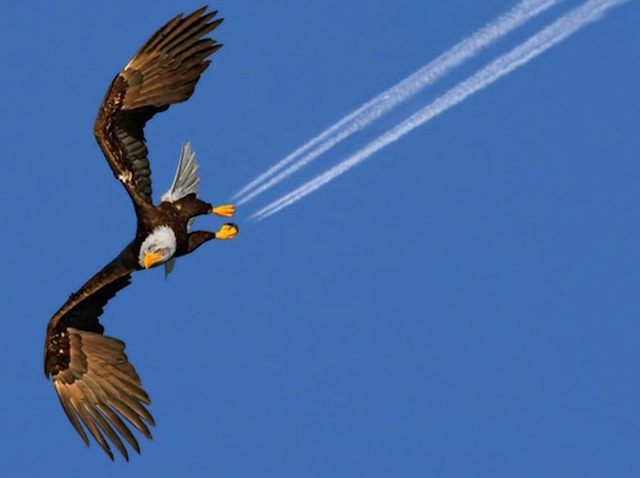
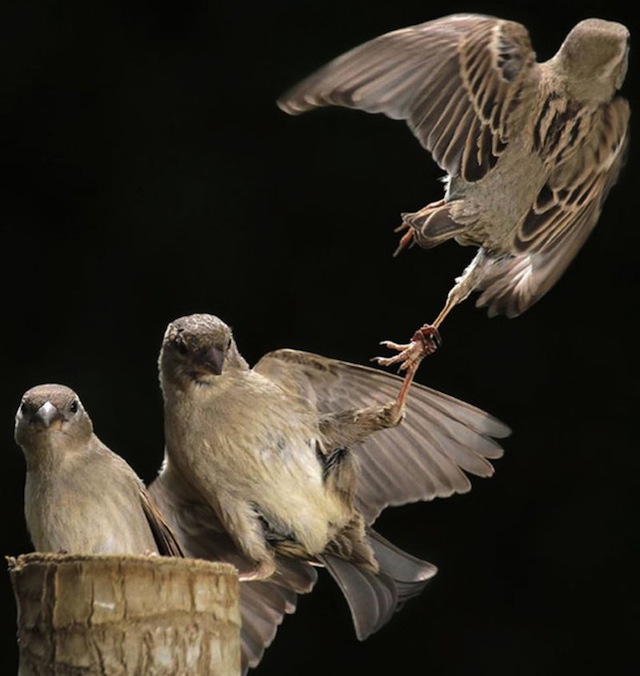
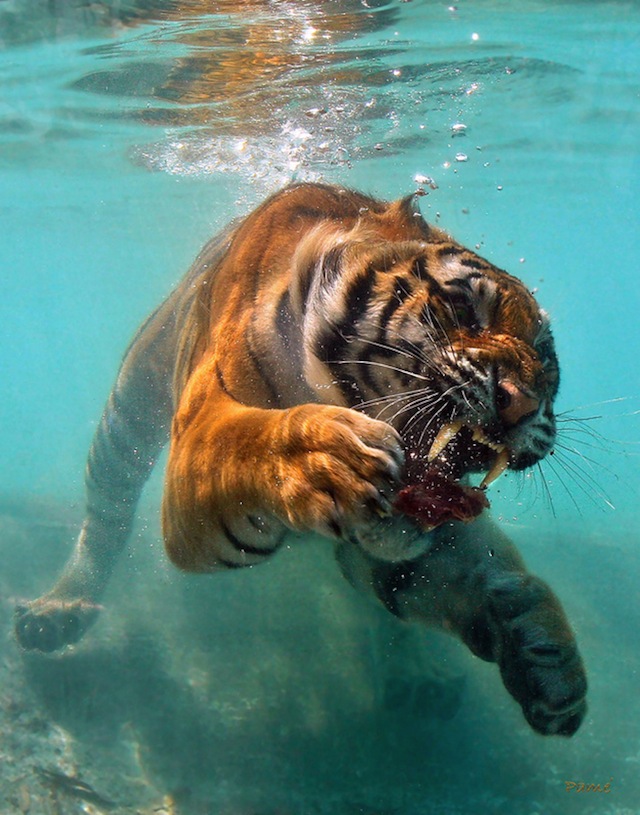
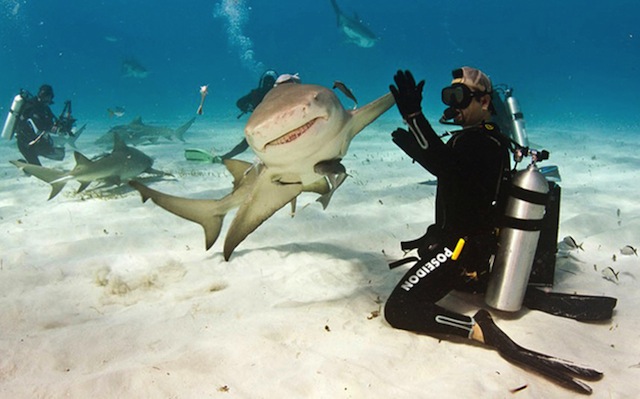
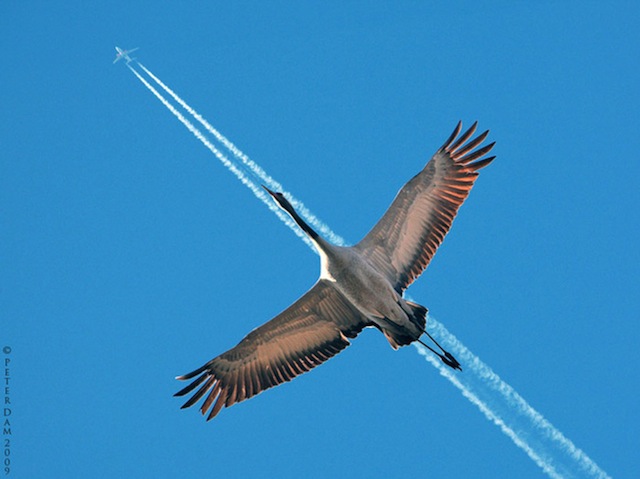
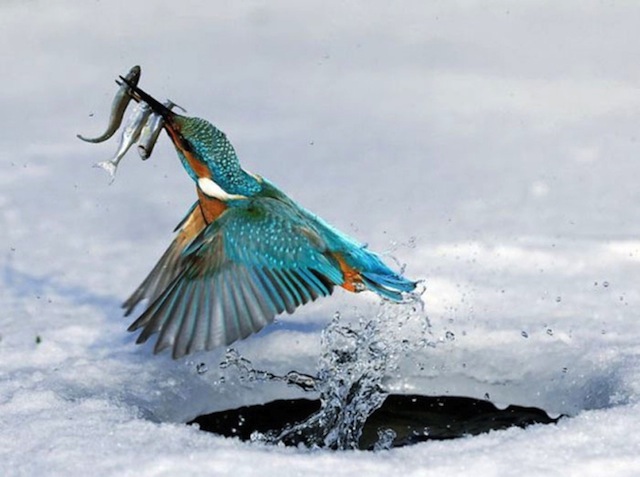
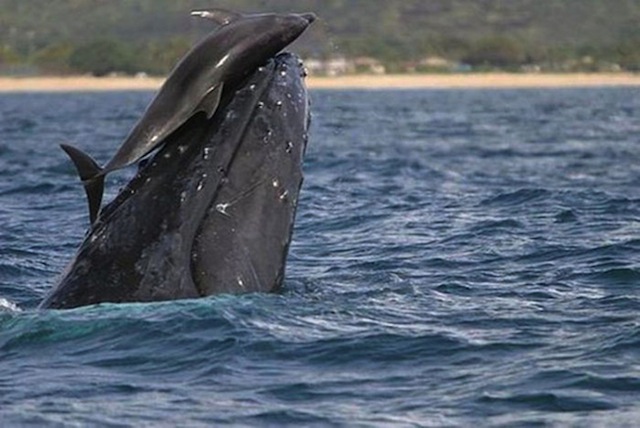
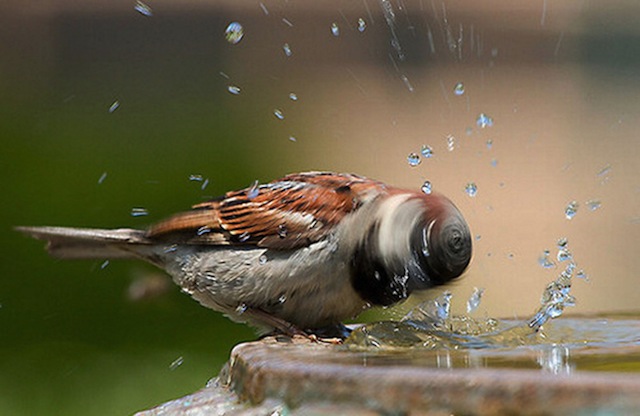
A friend from Payson, Arizona, Lew Levenson, recently sent across a set of 38 astounding photographs, all on the theme of perfectly timed shots.
They are so fabulous that I have decided that for today and the following four Sundays I will post a selection.
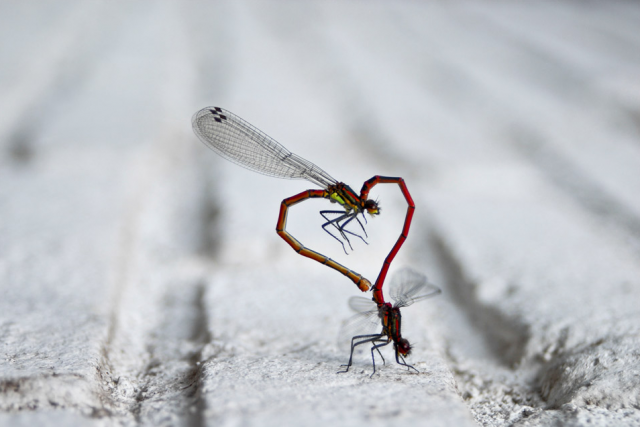
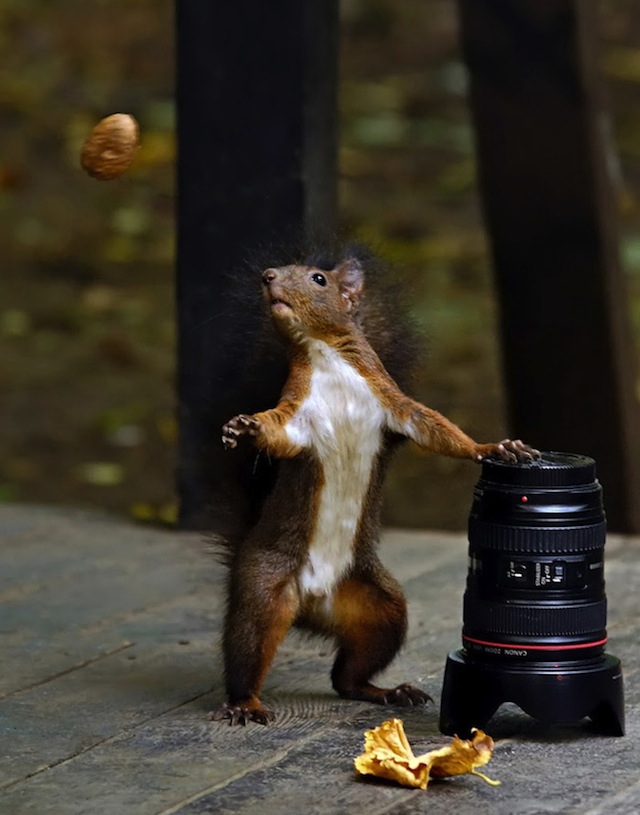
So today, the first set of 8 photographs. Trust me you will love them, so a big thank you to Lew. Do say which are your best ones!
oooo
oooo
oooo
oooo
oooo
oooo
oooo
oooo
To close here is that picture courtesy of Chris Snuggs.
By the way, if you would like see again the rest of Lew’s photographs just leave a comment to that effect.


















 Learning from Dogs