Category: History

Kate Humble and Teg

Following on from yesterday.

In yesterday’s post I included the full documentary that was recently broadcast by the BBC. It was really interesting and a great insight into the uniqueness of the Welsh Sheepdog. More of that in a moment but first some details about Kate. As WikiPedia puts it:

Katherine “Kate” Humble (born 12 December 1968) is an English television presenter, mainly for the BBC, specialising in wildlife and science programmes. She was also the President of the RSPB until 2013.

Inevitably, Kate has her own website where one reads on the ‘home’ page:

kate&tegKate Humble and her sheepdog Teg set off to learn about the threats to British herding dogs. Filmed over a year, and with an exclusive insight into Kate’s shepherding life,  ‘Kate Humble: My Sheepdog and Me’, unveils the story of the Welsh Sheepdog, explores the challenges of breed recognition and celebrates the simple joy of a handful of puppies.

‘Kate Humble: My Sheepdog and Me’ will be on BBC 2 on the 15th August 2016 at 9pm.

As changing farming practices, cross breeding and dog shows came about, so too did the decline of Britain’s working dogs.  Of 22 British herding dog breeds, 12 are now extinct and the 10 remaining are mostly show dogs or pets. Kate sets out to discover if Teg belongs to one of these rare breeds, criss-crossing Wales as she uncovers the story of the Welsh Sheepdog and tries to find a mate for Teg.

From sheepdog trials to droving, from DNA profiling to a nationwide search for a mate, Kate and Teg’s journey is a celebration of the Welsh landscape and rural traditions. It also delves into the hi-tech, hi-value world of breeding rare dogs, and explores the timeless bond between humans and their dogs.

Join Kate and Teg as they play their part in the continuing survival of Britain’s herding dogs.

Now we hear a great deal about this endangered animal and that endangered animal but British herding dog breeds wouldn’t for me come to mind as one such endangered breed.

Clearly the effort to save the future of the Welsh sheepdog is significant underpinned by the fact that there is a society devoted exclusively to the breed: The Welsh Sheepdog Society. The website of the Welsh Sheepdog Society also has a page where registered sheepdogs are for sale. I’m going to republish the details on that page not only to show readers what the dogs look like but also to promote them to a wider audience.

ooOOoo

FOR SALE

Registered Welsh Sheepdogs of Sale from Society Members

Red and white welsh sheepdog pups for sale, pictured below. 6 bitches and 2 dogs by Fferm Mynydd Morgan out of Safn y Coed Erin. Both parents good workers. Ready to go now. Contact Edward Hopkins phone 07867 474 866.

hopkins pups
Welsh sheepdog pups for sale. Black and white and red and white. By Wilden Gel out of Fron Felen Fflei. Good working stock. Contact Bob Williams 01745 550 304.

Welsh sheepdog pups for sale. By Hendrerhys Gelert out of Fron Felen Nel. Both parents good workers. Contact John Williams 01745 5870 657.

Welsh sheepdog pups for sale, picture below, ready December. Sire Ty Llwyd Bonnie trophy winner Penlanlwyd Tango. Dam Glyngwilym Rose. Contact Simon and Emma Mogford, 07846 017 669
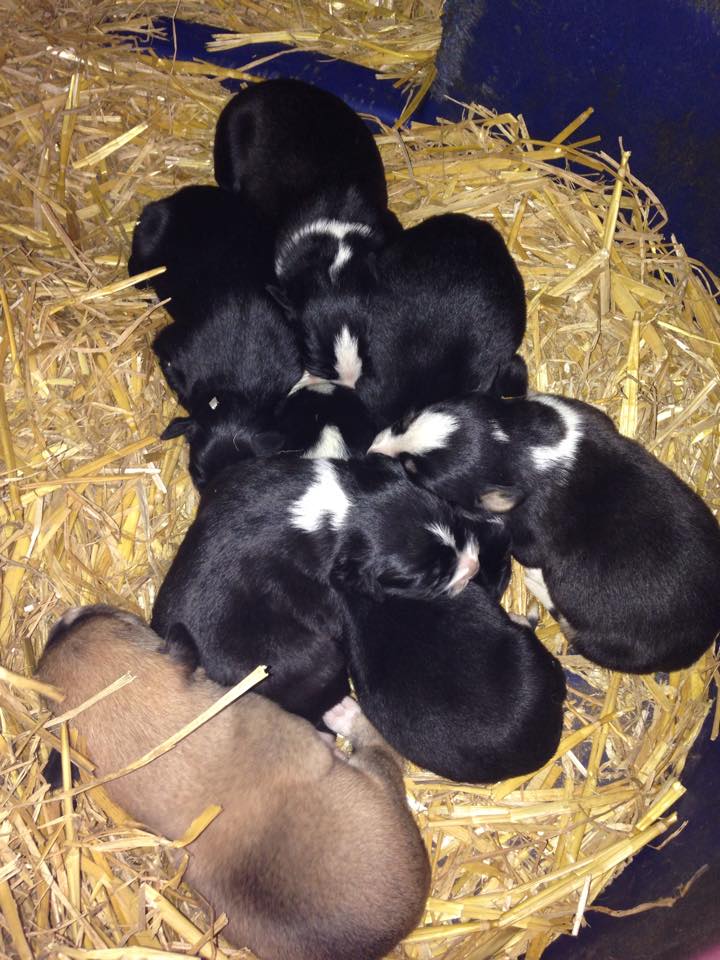
mogs pupsooOOoo

Here’s hoping they all find wonderful loving homes.

Let me finish off today’s post by extensively quoting from the WikiPedia page about the Welsh Sheepdog.

The Welsh sheepdog (Welsh: ci defaid Cymreig, pronounced [kiː dɛˈvaɪd kəmˈrɛɨɡ]) is a landrace of herding dog from Wales.

Like other types of working dog, Welsh sheepdogs are normally bred for their herding abilities rather than appearance, and so they are generally somewhat variable in build, colour and size. Welsh sheepdogs are of collietype, usually black-and-white, red-and-white or tricolour, and merle markings may occur over any of these combinations. The coat may be short or fairly long, and the ears are pricked, but usually folded at the tip. They are longer in leg, broader in chest and wider in muzzle than the Border Collie. They are extremely active and intelligent, and therefore need much exercise and mental stimulation, if they are to be kept as pets. Welsh sheepdogs are more commonly known as Welsh collies, however these are the same breed.

Over many decades the Welsh sheepdog has largely been replaced for working sheep in Wales by the Border Collie, a standardised breed. However, in more recent years, efforts have been made to maintain the indigenous Welsh sheepdog as a distinct variety.

Welsh sheepdogs are usually of loose-eyed action, not fixing the stock with their gaze like the strong-eyed (de)Border Collie. They are able to work independently without necessarily being under direct human control. Welsh sheepdogs are most often used for herding sheep, but also readily work cattle, goats, and even horses and pigs. Traditionally they were often used as droving dogs to take cattle and sheep to markets locally or elsewhere in Britain.

The Welsh sheepdog’s life span is 12–15 years.

History

At one time there existed many sheep-herding dogs peculiar to Wales; during the 18th century Welsh drovers taking sheep for sale took with them five or six Welsh sheepdogs as “herders on the narrow roads, guards against highwaymen, and providers of game on the route”. These were an early type of Welsh sheepdog, higher on the leg and more racily built than the modern day breed.

However, by the 1940s the group had decreased to two or three breeds only. The ancient pure breeds of black-and-tan sheepdog and Welsh hillman were almost extinct, and were scarcely ever seen working. The type best known in Wales at that time was mostly descended from the old black-and-tan with an infusion of working Border Collie blood.

In the 1940s the Welsh sheepdog was still common throughout the north and central Welsh counties. In herding activities, it did not normally work low to the ground in “the showy manner sometimes seen in the work of the working [Border] Collies”, as British dog fancier C. L. B. Hubbard put it in 1948. It was variable in type; approximately 18 in (46 cm) in height, but the weight ranged from the lighter built, leggier dog of North Wales at 35 lb (16 kg) to the more solid 40 to 45 lb (18 to 20 kg) dogs of Glamorganshire and Monmouthshire. There were no dog show classes for the Welsh sheepdog as it was purely a working breed.

Finally another picture of Kate and Teg.

JS50109203Fabulous animals!
Welsh Sheepdogs

Congratulations to the BBC for a fascinating documentary.

Recently the BBC aired a documentary about Kate Humble and her journey to have her dog, Teg, registered as a Welsh sheepdog by the Welsh Sheepdog Society. It was fascinating and a ‘must see’ for all dog lovers irrespective of their residency in Wales or not! The programme, that is no longer available (still on BBC iPlayer at the time of writing), was described on the BBC website, thus:

When Kate Humble decides she wants to breed from her dog Teg, she finds out that her beloved pet is a Welsh sheepdog. She sets out to learn more about this little-known and endangered breed, and discovers that a true Welsh sheepdog is a working dog. Kate wants Teg and her future puppies to be certifiably Welsh, and sets out to train Teg to work in the traditional Welsh way. Teg shows willing, and Kate works on her own shepherding skills, but will the demanding experts from the Welsh Sheepdog Society be impressed by the pair’s performance?

However, some smart soul has uploaded the episode to YouTube so if you want to watch it do so quickly before it is removed.

Published on Aug 15, 2016

Kate Humble sets out to breed Welsh sheepdog puppies from her beloved pet Teg, and learns about the threat facing British herding dogs. A true Welsh sheepdog is a working dog, and so Kate sets out to train Teg to work in the traditional Welsh way. Along the way, she meets a team of researchers at the University of Aberystwyth, whose groundbreaking DNA research reveals some remarkable facts about the Welsh sheepdog. If Teg can produce a litter of healthy Welsh sheepdog puppies, she can play a big part in helping one of Britain’s unique herding dogs survive for generations to come.

I’m going to continue this item tomorrow for there’s more information that I think you will find interesting.

But for now, watch the documentary – you’ll love it!

A wonderful step forward.

Setting a fabulous example of what an animal shelter should be like!

The chances are that the great majority of domestic animal lovers have an impression of the standard animal shelter. The chances are that this impression is not one of wall-to-wall approval. It is tragic that animal shelters are required but it is a fact of life that they are needed. Many of them depend heavily on volunteers and donated money.

But that’s not to say that there can’t be a shelter setting a very high example of how a shelter should be.

My prelude to the following article seen recently over on the Care2 site. Read and enjoy!

ooOOoo

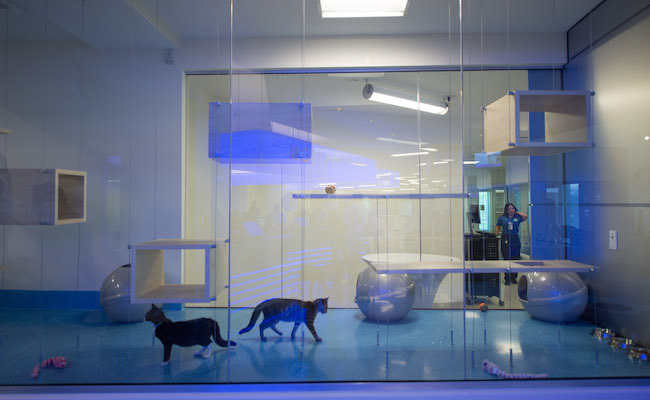
All Shelters Should Look Like This

3185924.large

Celebrating old connections.

A great catch-up from many years ago.

A few weeks ago I had a comment left on a blogpost, “Hello Paul.. all the very best ex, 1234 lol“. The comment had been left by a Martin Lowe. That won’t mean anything to anyone until I explain that I have a pilot’s log book and the very first entry reads:

March 3rd, 1984/Cessna FA152/G-BGAF/Capt. M. Lowe/P u/t/IPSWICH – LOCAL/1325 Departure/1355 Arrival/ 0:30 mins dual/ Ex 4,5.

That was my very first flight in a powered aircraft and my instructor was Martin Lowe of the Suffolk Aero Club based at Ipswich Airport in Suffolk, England.

Yesterday, Martin and I had a great catch-up over the phone and I’m republishing an earlier post of mine as a way of saying how fabulous it was to remake contact with Martin once again.

ooOOoo

Keeping a balance on one’s state of mind.

Don’t know about you but I find that it is all too easy to get wound up by so much that is going on in this crazy world. That’s not to marginalise the threats to society that are all around us and there are some powerful writers out there who work so hard to inform the world as to the truth of those threats. (As an aside, one of my favourite authors is this context is Patrice Ayme, just see this recent Post of his as an example of his depth of analysis.)

But my dear friend of over 40 years, Dan Gomez, recently sent me a link to a video of the 10 most extreme airports in the world. That stirred some memories from my own flying days.

First settle back and enjoy 7 minutes of reasons why you don’t want to think about flying! 😉

The YouTube video has this information, which I republish below,

Pictures and videos of the top 10 most extreme airports in the world!

San Diego: Busy airspace lots of buildings on approach
Madeira: Difficult approach and did have a short runway
Eagle Vail: High altitude, short runway & mountainous approach & departure
Courchevel: Short runway, bumpy runway, high altitude
Kai Tak: Difficult approch, fly through tall buildings, short runway
Gibraltar: Short runway, building on approach, winds from the Gibraltar rock
St Maarten: Short runway, has to fly over the beach with alot of people on there, steep takeoff because of mountains
St Barts: Short runway, has to dive.
St Barts: To land, the low approach on that hill thingy
Toncontin: Difficult approach, short runway
Lukla, short runway, only was cemented a few years ago, no go around, if land too low you land into a cliff

First song: La Perla by Kobojsarna

Second song: Feel It – Explicit Album Version by Three 6 Mafia vs Tiesto with Sean Kingston and Flo Rida

Now to a personal recollection.

I was a private pilot for many years, first learning to fly at the Suffolk Aero Club at Ipswich Airport in Suffolk, England. My first lesson was on the 3rd March, 1984!

Some twenty years later, on the 13th August 2004 to be exact, I was checked out to land at Courchevel Airport in an aircraft type known as a TB20, a French-built aircraft. Here’s the page from my log book with the necessary authorisation stamp affixed.

Cleared to land at Courchevel, LFLJ!

The following year, 19th July, 2005, I added my wonderful Piper Super Cub to that authorisation. (See here for a part picture of the aircraft.)

So thanks to YouTube as someone has uploaded a film of a light aircraft operating into Courchevel. It really is rather thrilling!

Finally, back to Dan. Here’s his recollections included in the email that he sent with that first film.

Just found this. I’ve landed at two of these. Eagle Vail was a piece of cake compared to Toncontin as Marty and Bruce know. BAE146 and small Boeing jets. I flew in and out of Toncontin 5 times in the 90’s and had no idea it was as scary as it was. That is to say, I knew it was scary because my palms sweated and heartbeat was about 140 but when I look at it now I go “what was I thinking?”

Take offs were like Orange County, Full brake power straight up. The big difference was you were shuttling along the runway and then down the runway and finally, up the runway to get the wheels up.

One time, on a connecting flight from Medellin, we taxied in, were boarded by military police with drug dogs who sniffed their way through the aisle. Bags were searched while everyone waited in intense heat. It took about 2 hours, three time longer than necessary. Then the interior was fumigated with everyone aboard. All the big machine guns too. Nobody said a word!

There’s one thing about flying a light aircraft, especially into ‘interesting’ airfields, you don’t have a moment to worry about the state of the world!

ooOOoo

March 3rd, 1984 to August 2nd, 2016 – more than thirty-two years – just like that!

P.S. I had a 15-minute solo flight on April 25th, 1984.

A political diversion.

This essay from George Monbiot just has to be read as widely as possible.

Dear followers of this blog know that from time to time I dip into politics. I do so because something I read strikes me with such force that I want others to read the article or essay. Not infrequently, my ‘dip’ is in the form of republishing an essay from George Monbiot who, long ago, gave me blanket permission to republish his essays. That is the case today.

learningfromdogs_3dbook_500x
Buy The Book

I was inspired to write my book, subsequently self-published last December, because I truly believe that the values that we see in our longest animal companions are values that we, as in our societies, from top to bottom, have to embrace if we are to stand any chance of surviving as a species.

Reflect on the fact that dogs do not lie, they do not set out to deceive or influence others for their own personal gain and they are utterly creatures of integrity.

OK, I can hear some of you thinking that dogs are dogs and humans are humans and it’s just plain daft to link the two in this fashion. My only answer to that is to read the book or, at the very least, download and read the first twenty-five pages (for free). Better still purchase the book and have 50% of my net income donated to the Rogue Valley Humane Society.

On the 28th July, George Monbiot published an essay entitled So Much For Sovereignty. I read the essay and, frankly, was apalled at what George was describing: the background of the UK’s new international trade secretary, Liam Fox, recently appointed by Theresa May.

Read it for yourself and see if you react the same way that I did!

ooOOoo

So Much For Sovereignty

Freedom with a capital ‘F’.

Sometimes the most obvious solutions take the longest to find.

I feel a little embarrassed that this introduction may come across as rather self-indulgent; I don’t intend that.

My purpose is to offer an introduction to a recent blogpost from Sue Dreamwalker that explains why her post really ‘spoke’ to me and why it felt important to share Sue’s post with all you good people.

Yesterday morning I left a comment to a Transition Times article, penned by Jennifer Browdy. The article was headed: Hillary Clinton: Holding the Center in These Complex Transition Times, So We Can Do the Essential Work of Creating a Better World.

Subsequently, I left a follow-up to my first comment, replying to a comment from Diane Husic. This is what Diane wrote:

Many of us realize what a critical junction the country faces in this election cycle. As an academic, I am trying to figure out the appropriate role I should play. We need to teach students to be respectful of difference, to be tolerant, to be problem solvers, and to be civically engaged, but we aren’t supposed to use our positions to “force” our political views on them. But given the magnitude of issues confronting the planet and humanity and the importance of having leadership that “gets it” (and displays compassion and empathy), this is a tough balance to try to find.

and this was my reply to Diane:

Diane, as someone who previously has run his own business and then, after selling it in 1986, spent a number of years as a mentor with the Prince’s Youth Business Trust in the UK, I have come to the conclusion that the best role model we adults can offer our ‘students’ is this: “Be the best you can be!” That flows from being fully aware of the person that one is. For self-awareness is the key to understanding oneself and, consequently, of understanding others. Understanding why people think and behave the way they do, for good and bad, is the only effective way of engaging with others and seeking that ‘civic engagement’ so critically important.

Apologies, that paragraph sounds like a damn speech! I didn’t intend it to be so. Plus, my own journey of self-awareness has been a long and tortuous one – but that doesn’t change my view just expressed.

Coincidentally, I have been having some informal chats with Jan Schmuckle: http://www.janconsults.com/home

Her recently released book on the effectiveness of Role Montage in building leadership skills is highly relevant to today’s students. In Jan’s words (and I have no commercial or financial link with Jan):

Role Montage: A Creative New Way to Discover the
Leader Within You is written from Jan’s experience
with her client work and her research. It helps
leaders explore self-awareness and leadership using
the role montage process.

I’ll creep back into my hole!😉

You can see why I offered a warning about coming across as self-indulgent!

But if you have stayed with me so far (and thank you) you will now understand why Sue’s post spoke so clearly to me. Republished here with Sue’s very kind permission.

ooOOoo

Set Yourself Free..

by Sue Dreamwalker. July 28th, 2016.

This morning I switched on the radio and the first record I heard was this one.. It was the very first time I had listened to this recording, never hearing it before.. It made me smile.. Especially when it mentioned taking Calcium and taking care of our knees..  So I decided to YouTube it to listen to again and to my delight found several versions..

Life has been busy within the Dreamwalker’s Domain this last week.. Last night I was so tired I went to bed at 7pm and slept for 12 hours.

Today the Universe thought to allow me to cool  down in the showers of rain,  so I thought I would share about my Busy time in the Sun on my Gardening Blog. And to share what brought such a smile to my face first thing this morning..

I particularly enjoyed the lyrics in the middle of this narrative of the inclusion of Rozalla’s Song Everybody’s Free to Feel Good, which is an old favourite of mine..

 So Go On FEEL GOOD and DANCE.. LAUGH and SING..

And SHARE THE FEEL GOOD FACTOR 

Sending Love and Blessings

Next time I will share with you the village I grew up in as we went  back to see the Well Dressings.. Along with some of my thoughts..

Sue

ooOOoo

Feeling good about ourselves is the result of knowing and liking who we are. The foundation stone of knowing and liking all the many good people we interact with throughout our lives.

And now go and hug a dog!

Underground magic

A trip to the Oregon Caves National Monument & Preserve.

A week ago when our family guests were staying with us we decided it would be a treat for all of us to visit the very famous Oregon Caves – it was not a disappointment.

P1160302
Morten and Marius gathering information.

The history of the caves does involve a dog.

Apparently Elijah Davidson discovered the caves in 1874 when he was out with Bruno, his dog, and it disappeared. The dog had fallen down a fissure that Elijah managed to squeeze into and, bingo!, there was the most incredible deep cave ahead of him. (Watch the video below for a fuller description of how the cave was discovered.)

Joaquin Millers Chapel This is a room seen on the cave tour. It is called Joaquin Miller's Chapel and it is named after the author, Joaquin Miller because he wrote about Oregon Caves in Sunset magazine.
Joaquin Millers Chapel
This is a room seen on the cave tour. It is called Joaquin Miller’s Chapel and it is named after the author, Joaquin Miller because he wrote about Oregon Caves in Sunset magazine.

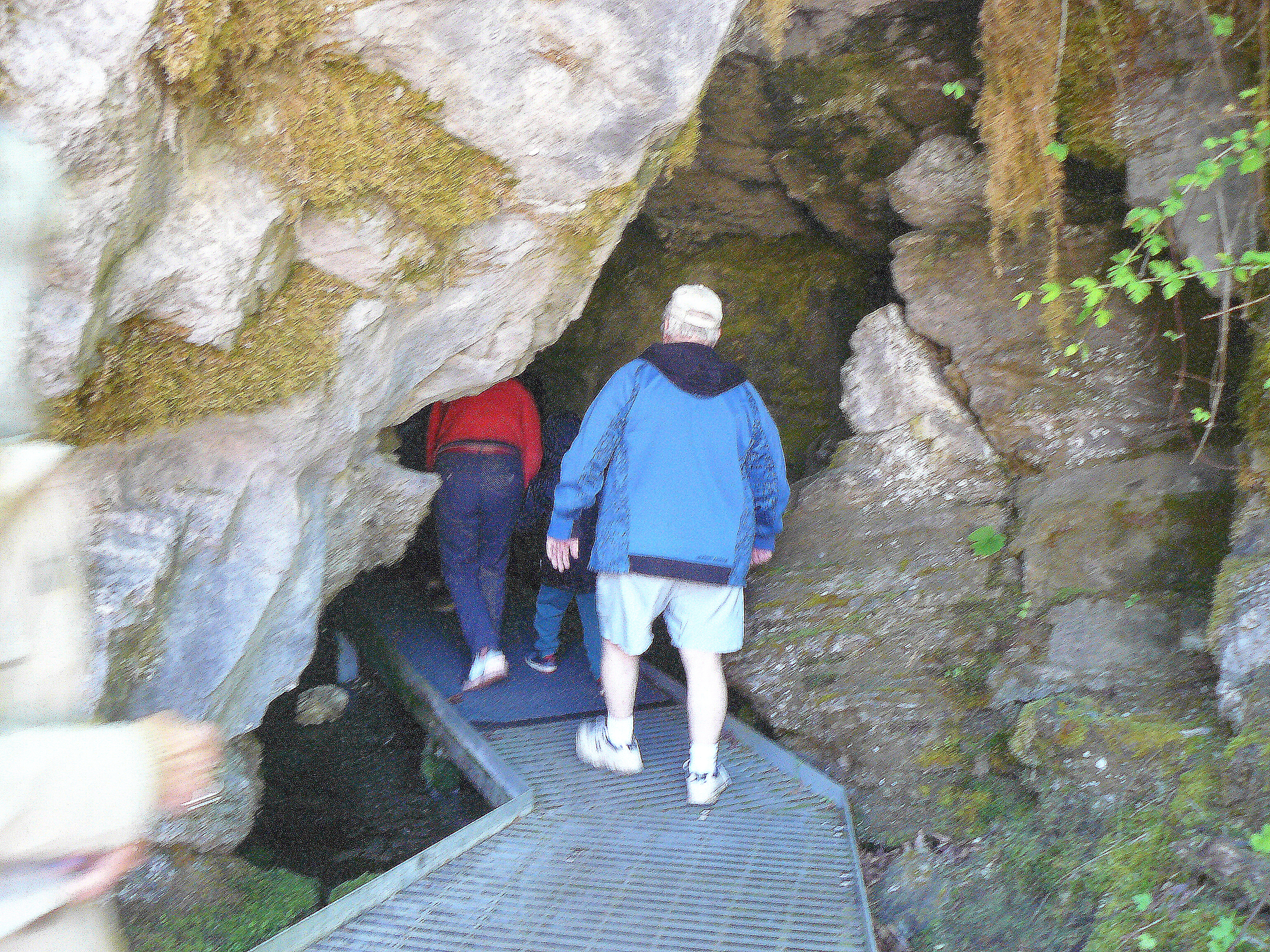
Clearly today’s visitors to the cave enter in a more gentle fashion!

P1160309WikiPedia has a very good description of the caves, from which I quote:

Oregon Caves National Monument and Preserve is a National Monument and Preserve in the northern Siskiyou Mountains of southwestern Oregon in the United States. The main part of the 4,558-acre (1,845 ha) park, including the marble cave and a visitor center, is located 20 miles (32 km) east of Cave Junction, on Oregon Route 46. A separate visitor center in Cave Junction occupies 4 acres (1.6 ha) of the total. Both parts of the monument, managed by the National Park Service, are in southwestern Josephine County, near the Oregon–California border. The climate is generally mild even at the cave’s elevation of about 4,000 feet (1,200 m) above sea level, but icicles can form at the cave entrance, and winter snow sometimes blocks the park highway.

Elijah Davidson, a resident of nearby Williams, discovered the cave in 1874. Over the next two decades, private investors failed in efforts to run successful tourist ventures at the publicly owned site. After passage of the Antiquities Act by the United States Congress, President William Howard Taft established Oregon Caves National Monument, to be managed by the United States Forest Service, in 1909. The popularity of the automobile, construction of paved highways, and promotion of tourism by boosters from Grants Pass led to large increases in cave visitation during the late 1920s and thereafter. Among the attractions at the remote monument is the Oregon Caves Chateau, a six-story hotel built in a rustic style in 1934. It is a National Historic Landmark and is part of the Oregon Caves Historic District within the monument. The Park Service, which assumed control of the monument in 1933, offers tours of the cave from mid-April through early November. In 2014, the monument was expanded by about 4,000 acres (1,600 ha) and re-designated a National Monument and Preserve. In addition, the River Styx, which flows through the cave and emerges as Cave Creek, was named to the National Wild and Scenic Rivers System.

Oregon Caves is a solutional cave, with passages totaling about 15,000 feet (4,600 m), that formed in marble. The parent rock was originally limestone that metamorphosed to marble during the geologic processes that created the Klamath Mountains, including the Siskiyous. Although the limestone formed about 190 million years ago, the cave itself is no older than a few million years. Valued as a tourist cave, the cavern also has scientific value; sections of the cave that are not on tour routes contain fossils of national importance.

Daughter Maija, grandson Morten and your truly just having exited the cave.
Daughter Maija, grandson Morten and yours truly just having exited the cave.

Between Marius and myself we took a great number of photographs but many of them can’t compare to the quality of photos found on the web.

For example here’s one of my pictures:

P1160322and here’s one taken from the National Parks Service website:

These are formations known as soda straws and like soda straws they are hollow tubes. They are made up of the mineral calcite.

Won’t go on! (But I will post a collection of photographs, both from me and Marius and found online in a future Picture Parade.)

What I will do is to close with this YouTube video. It is 17 minutes long but very interesting and, hopefully, an inspiration to others to come and visit this incredible geological site.

Happy Holidays to all!

Continuing the puppy theme.

A republication of an earlier post.

Puppies Are Demanding

Our new young puppy is consuming a great deal of attention and time!

As regular readers will know (and your readership is so much appreciated) last Tuesday I published the news that we had taken on a new puppy. He is settling in incredibly well but consuming heaps of attention; as well he should.

So rather than struggle to be creative with today’s post, I’m cheating by going back to the last time I wrote about a new arrival to our flock; namely puppy Cleo. If you will forgive me, I’m going to republish the post I wrote for puppy Cleo back on April 8th, 2012.

But before so doing, let me explain that our latest arrival has gone through a name change. The previous owners had named the young pup Smokey but we were not comfortable with that name; Jean especially so. So Smokey is now Ollie!

ooOOoo

The arrival of Cleo brings us back to eleven dogs.

Way back in 2003 when I became the proud ‘Dad’ of Pharaoh, my German Shepherd dog that you see on the home page of Learning from Dogs, Sandra Tucker who ran the GSD Breeders Jutone, where Pharaoh was born, gave me some advice. Sandra said that when Pharaoh was getting on in life, then bring in a German Shepherd puppy. Apparently, there were two solid reasons why this made sense. The first was that Pharaoh would teach the new puppy many of the skills and disciplines that Pharaoh had learnt as a young dog and, secondly, the puppy would keep Pharaoh active.

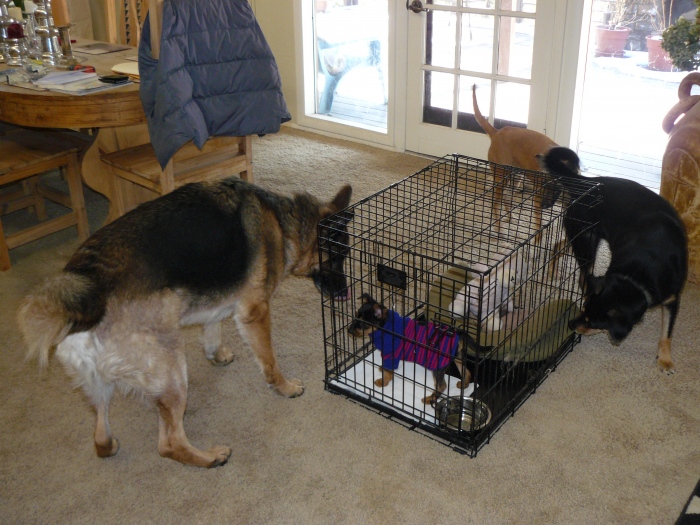
Now we know this to be true because years later when Pharaoh had his own mini pack here in Payson, we introduced a new ‘rescue’ puppy called Sweeny. Pharaoh took an instant like to him and became very tolerant to Sweeny’s ‘games’.

Hi! I’m Pharaoh, going to be my buddy? (February, 2011)

But as adorable as Sweeny is, Jean understood the deep reasons why I always wanted a German Shepherd in our lives. So when a chance encounter in Payson Feed Store between Jean and Brendon S. revealed that Brendon had a litter of German Shepherd puppies for sale, just a couple of miles outside Payson, the temptation was irresistible!

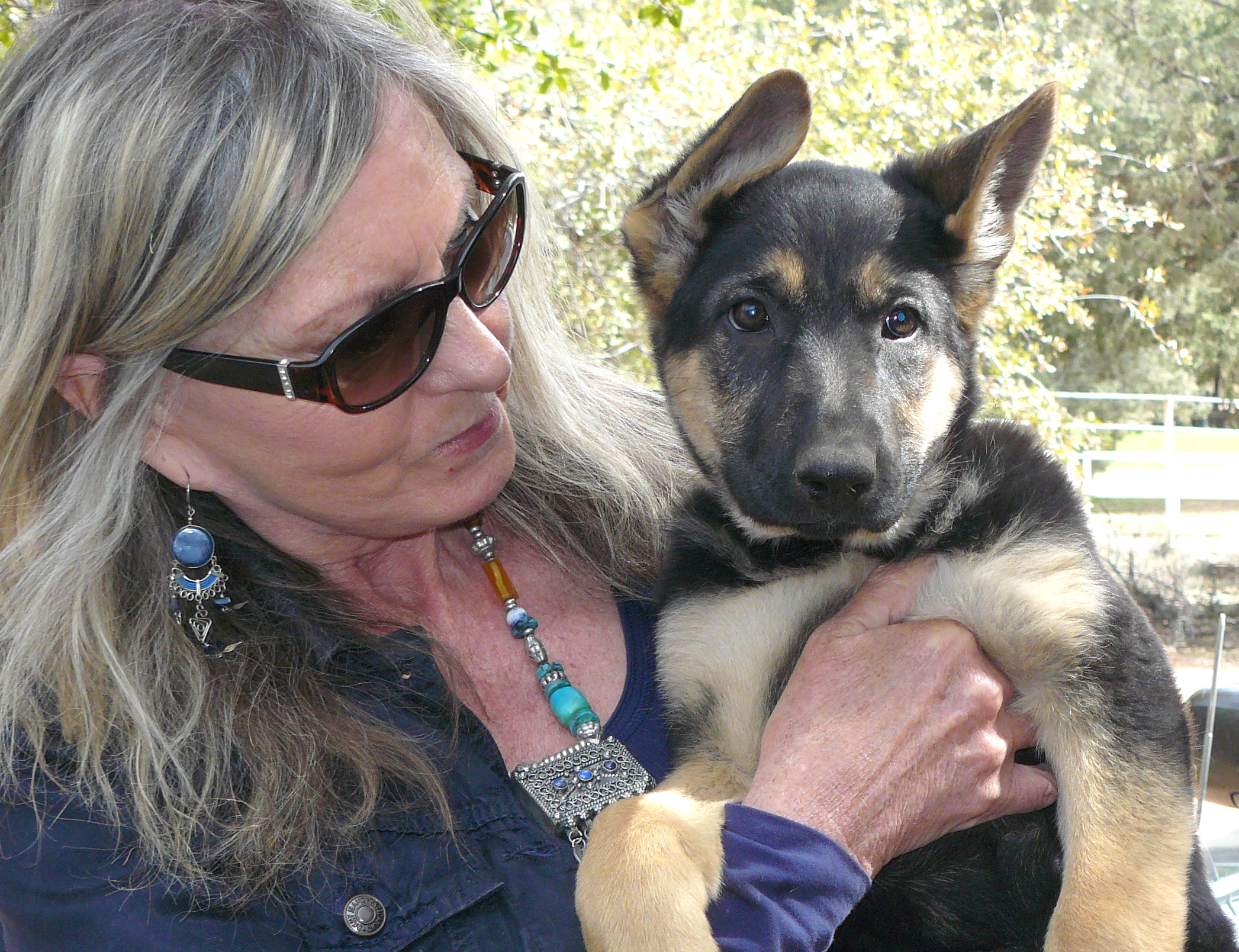
Thus a few days ago, Jean and I went round to Brendon’s home and spent a couple of hours mingling with the puppies and their GSD mother. They all looked excellent dogs and a review of their blood lines showed that their genetic background included German stock not too far back. It was difficult to select any one pup as they were all wonderful animals. But one youngster seemed to catch Jean’s eye.

Little bit of bonding going on!

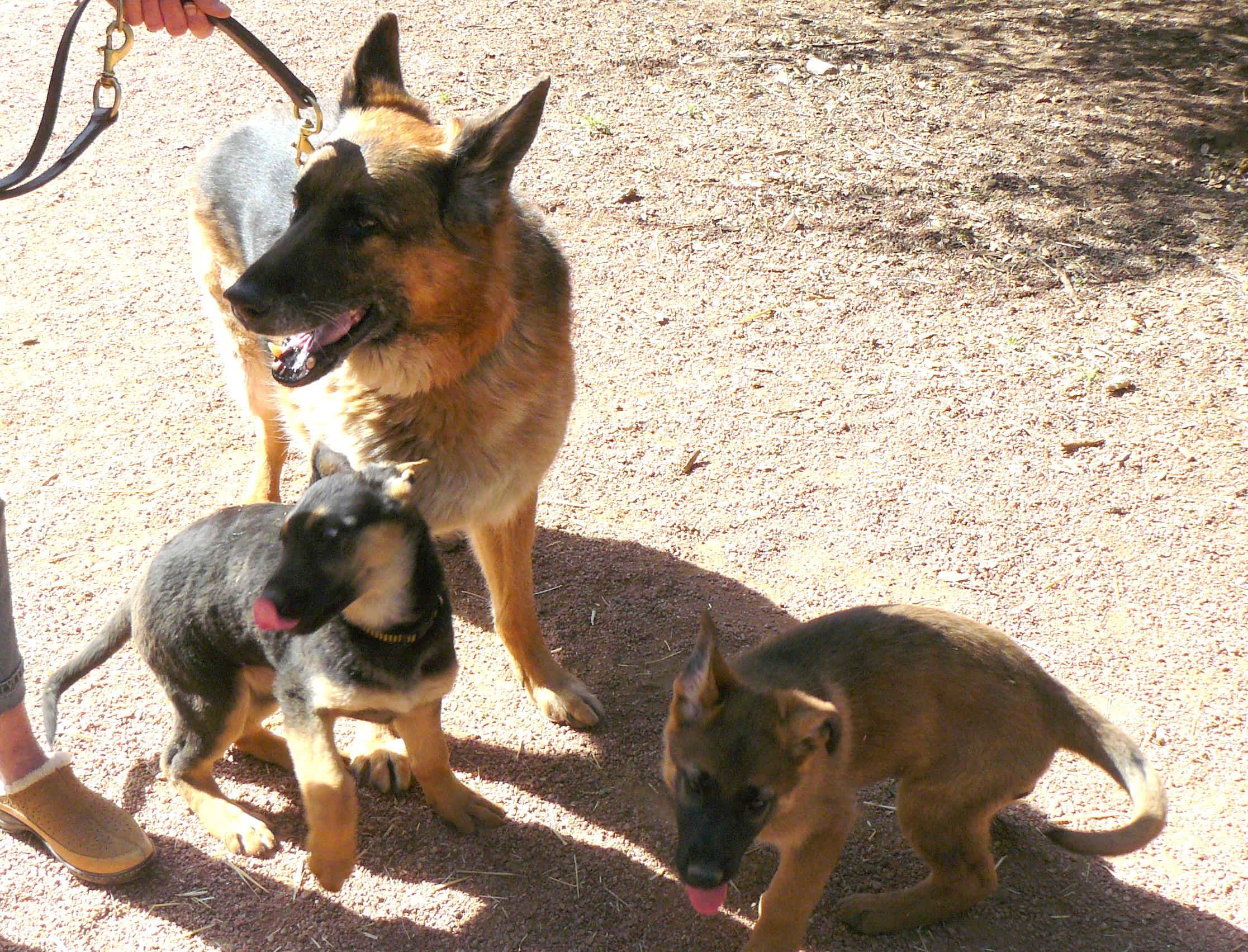
Then the next test was to introduce Pharaoh to the puppies. That took place last Friday and it was wonderful to see how well he coped with the onslaught of puppies!

More puppies that one could shake a stick at!

In the end, we ran out of reasons not to follow Sandra’s advice from all those years ago and we agreed terms on a young female GSD that, inevitably, was christened Cleopatra (Cleo) by Jean!

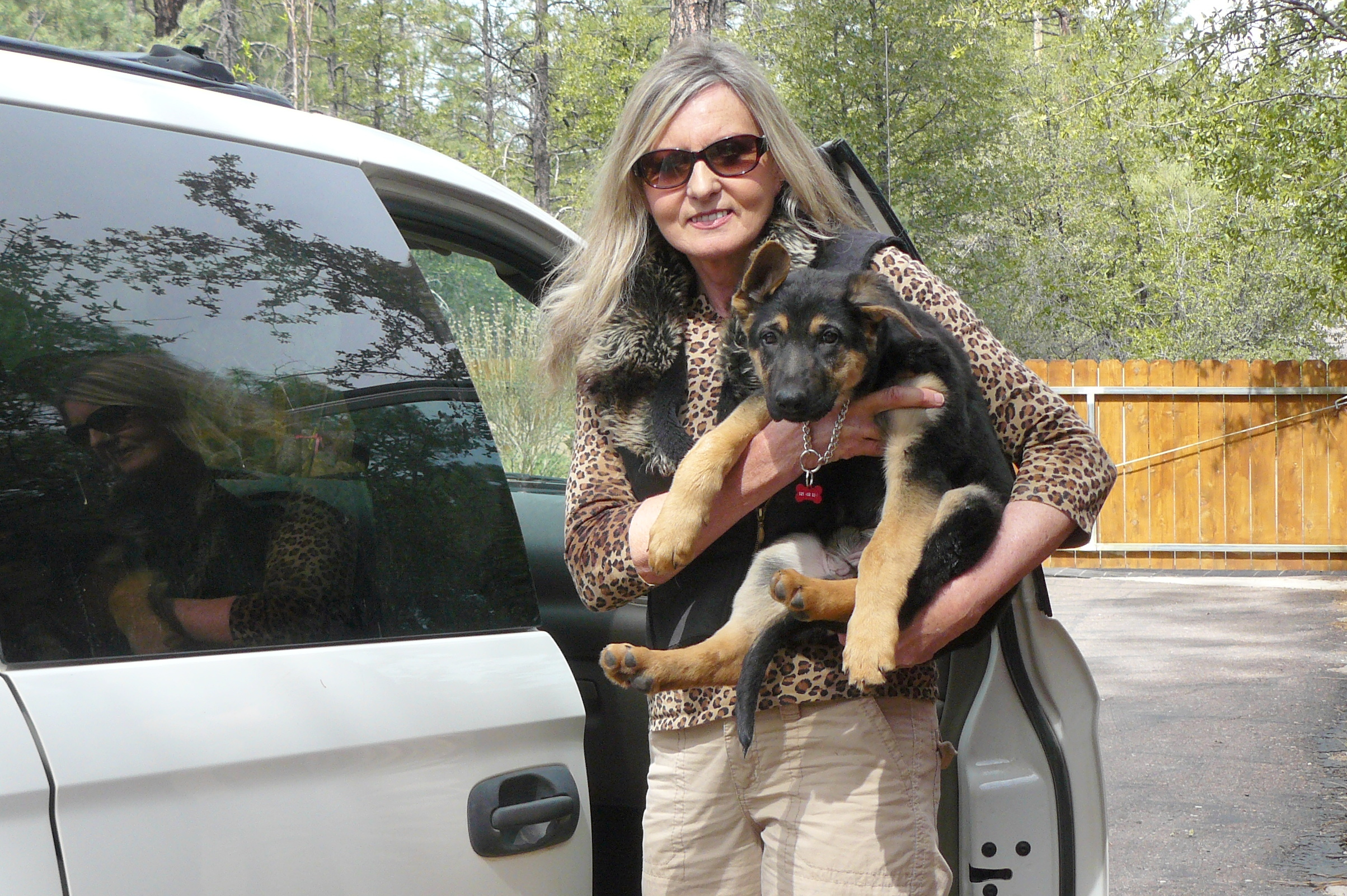
Cleo meet your new Mum!

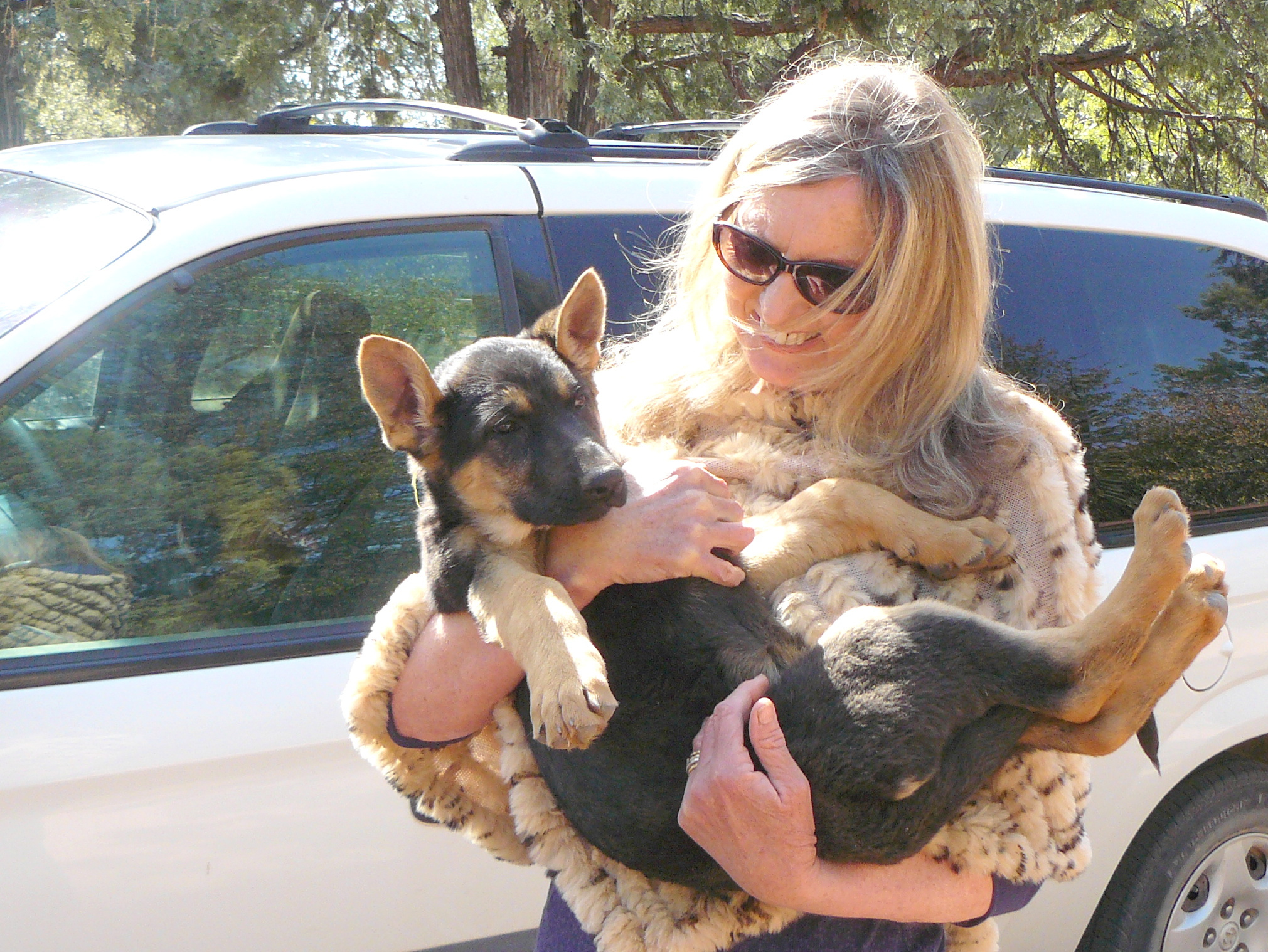
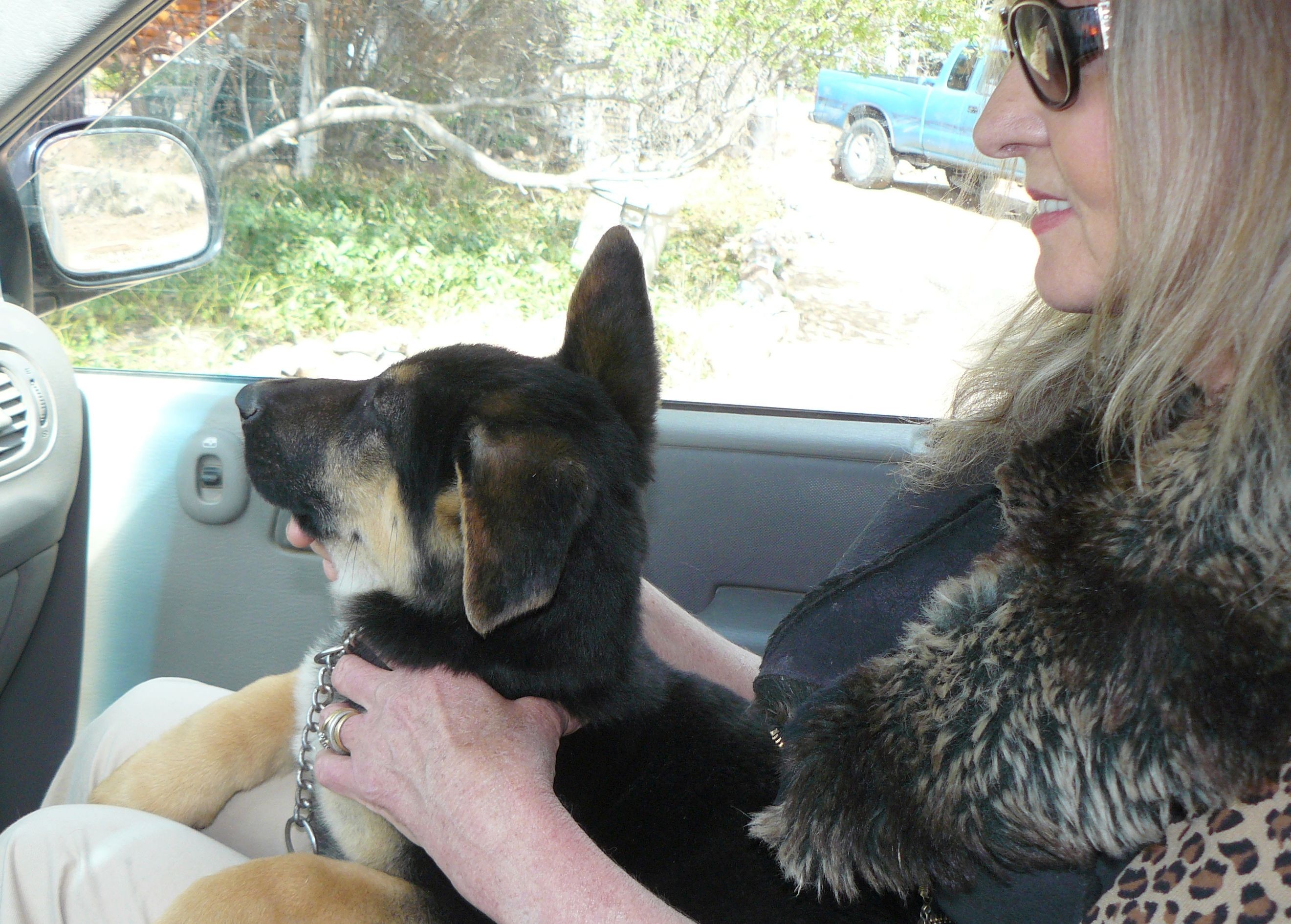
Then yesterday, Saturday, we went back round to collect young Cleo, meeting Brendan’s wife Ebony in the process. The following photographs record some of the key moments.

Homeward bound to a new life!
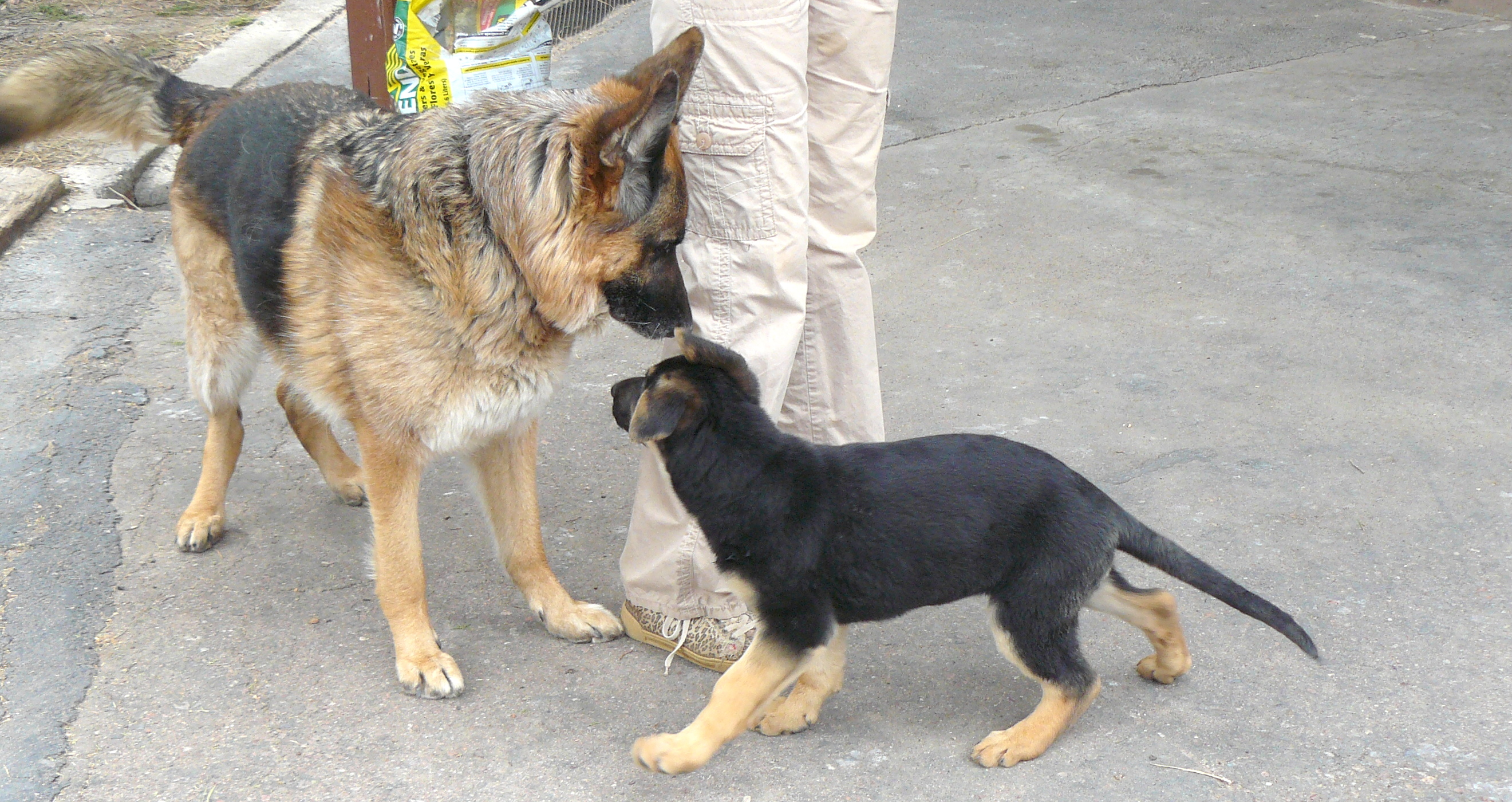
Next step is to meet the gang!
Welcome, young lady. I’m the boss around here!
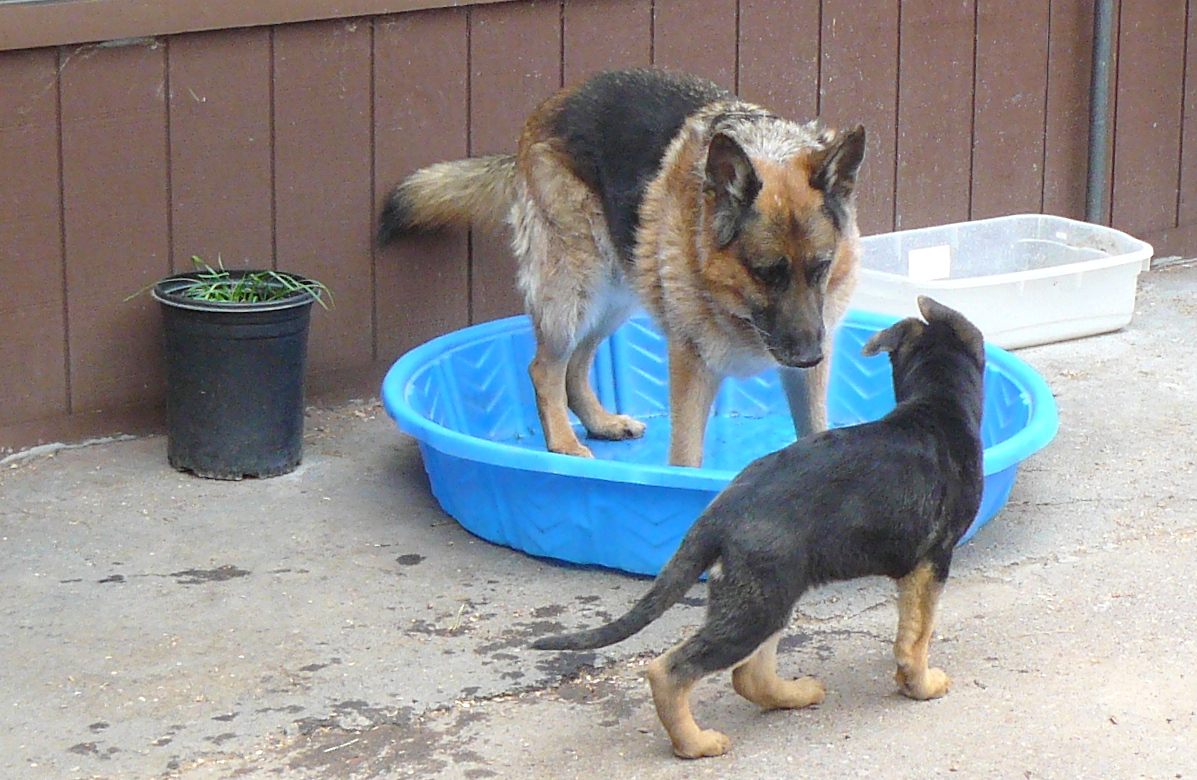
It’s my pool but you can use it!
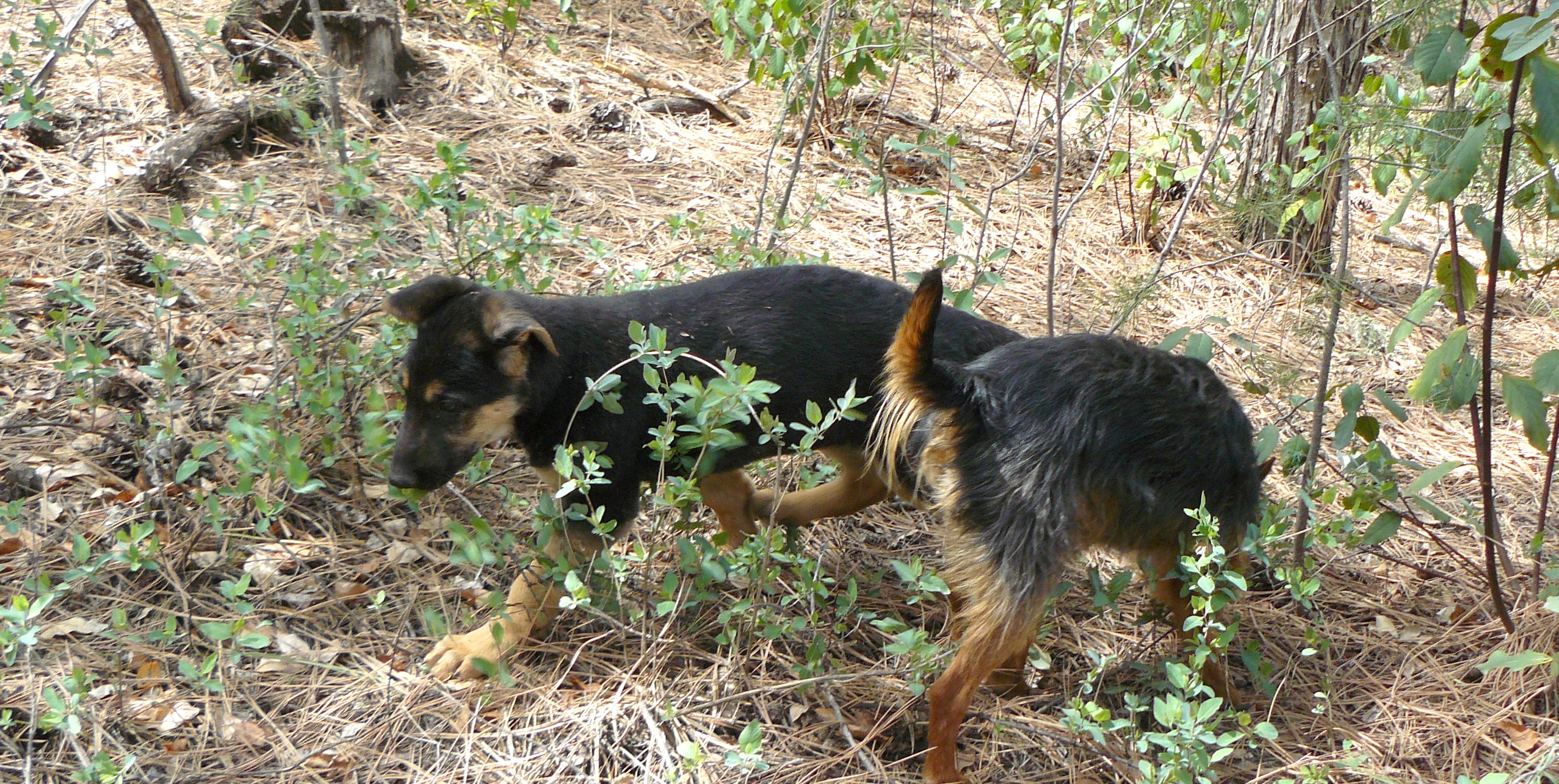
Hey Sweeny, fancy having one’s own woods to play in!
She’ll do! Nice addition to my family!

So there we are. Back up to eleven dogs, five chickens, six cats, and a fish!

Finally, a big thanks to Sandra of Jutone for her guidance in the last few days.

ooOOoo

Back to the present to leave you with a picture of puppy Ollie happily playing with Cleo and Hazel. More pictures of Ollie on Sunday.

L-R Ollie, Cleo and Hazel.

ooOOoo

How the years slip by.

The ancient roots of the relationship.

The recent news of finding a dog graveyard that is 2,000 years old.

Before going on to today’s post, can I just remind you kind folks that as of today, and for the rest of this week, we have family guests staying with us here in Oregon.

IMG_1368
Grandson Morten responding to his mother, Maija, taking a picture of him and Marius, as they wait to board the aircraft for San Francisco yesterday morning.

Thus from tomorrow until the end of the coming weekend my posts will be a preponderance of republications of previous posts. Plus my attention to you dear readers will be less than you are accustomed to.

Now on to today’s post that was kindly sent to me by Chris Gomez. Thanks Chris.

ooOOoo

2,000-Year-Old Dog Graveyard Discovered in Siberia

Feeding one’s inner wolves.

The wisdom of ancient minds.

The following was published by Val Boyco recently over on her blog Find Your Middle Ground.

It is republished here with Val’s very kind permission.

ooOOoo

* How to Feed your White Wolf