Category: Health

Is it really the age of loneliness?

Much as I respect Mr. Monbiot’s views, I hope he is wrong in this respect.

I have long admired the writings of George Monbiot and, as often as not, have republished his essays in this place.

But an essay by George that was published in the UK Guardian newspaper yesterday portrays a frightening picture of modern-day Britain.  It was called Falling Apart and is republished, with George’s permission, today.

I want to offer a personal response to the essay, that immediately follows George’s piece.

ooOOoo

Falling Apart

October 14, 2014

Competition and individualism are forcing us into a devastating Age of Loneliness

By George Monbiot, published in the Guardian 15th October 2014

What do we call this time? It’s not the information age: the collapse of popular education movements left a void now filled by marketing and conspiracy theories(1). Like the stone age, iron age and space age, the digital age says plenty about our artefacts but little about society. The anthropocene, in which humans exert a major impact on the biosphere, fails to distinguish this century from the previous twenty. What clear social change marks out our time from those that precede it? To me it’s obvious. This is the Age of Loneliness.

When Thomas Hobbes claimed that in the state of nature, before authority arose to keep us in check, we were engaged in a war “of every man against every man”(2), he could not have been more wrong. We were social creatures from the start, mammalian bees, who depended entirely on each other. The hominims of East Africa could not have survived one night alone. We are shaped, to a greater extent than almost any other species, by contact with others. The age we are entering, in which we exist apart, is unlike any that has gone before.

Three months ago we read that loneliness has become an epidemic among young adults(3). Now we learn that it is just as great an affliction of older people. A study by Independent Age shows that severe loneliness in England blights the lives of 700,000 men and 1.1m women over 50(4), and is rising with astonishing speed.

Ebola is unlikely ever to kill as many people as this disease strikes down. Social isolation is as potent a cause of early death as smoking 15 cigarettes a day(5); loneliness, research suggests, is twice as deadly as obesity(6). Dementia, high blood pressure, alcoholism and accidents – all these, like depression, paranoia, anxiety and suicide, become more prevalent when connections are cut(7,8). We cannot cope alone.

Yes, factories have closed, people travel by car instead of buses, use YouTube rather than the cinema. But these shifts alone fail to explain the speed of our social collapse. These structural changes have been accompanied by a life-denying ideology, which enforces and celebrates our social isolation. The war of every man against every man – competition and individualism in other words – is the religion of our time, justified by a mythology of lone rangers, sole traders, self-starters, self-made men and women, going it alone. For the most social of creatures, who cannot prosper without love, there is now no such thing as society, only heroic individualism. What counts is to win. The rest is collateral damage.

British children no longer aspire to be train drivers or nurses, more than a fifth now say they “just want to be rich”: wealth and fame are the sole ambitions of 40% of those surveyed(9). A government study in June revealed that Britain is the loneliness capital of Europe(10). We are less likely than other Europeans to have close friends or to know our neighbours. Who can be surprised, when everywhere we are urged to fight like stray dogs over a dustbin?

We have changed our language to reflect this shift. Our most cutting insult is loser. We no longer talk about people. Now we call them individuals. So pervasive has this alienating, atomising term become that even the charities fighting loneliness use it to describe the bipedal entities formerly known as human beings(11). We can scarcely complete a sentence without getting personal. Personally speaking (to distinguish myself from a ventriloquist’s dummy), I prefer personal friends to the impersonal variety and personal belongings to the kind that don’t belong to me. Though that’s just my personal preference, otherwise known as my preference.

One of the tragic outcomes of loneliness is that people turn to their televisions for consolation: two-fifths of older people now report that the one-eyed god is their principal company(12). This self-medication enhances the disease. Research by economists at the University of Milan suggests that television helps to drive competitive aspiration(13). It strongly reinforces the income-happiness paradox: the fact that, as national incomes rise, happiness does not rise with them.

Aspiration, which increases with income, ensures that the point of arrival, of sustained satisfaction, retreats before us. The researchers found that those who watch a lot of television derive less satisfaction from a given level of income than those who watch only a little. Television speeds up the hedonic treadmill, forcing us to strive even harder to sustain the same level of satisfaction. You have only to think of the wall-to-wall auctions on daytime TV, Dragon’s Den, the Apprentice and the myriad forms of career-making competition the medium celebrates, the generalised obsession with fame and wealth, the pervasive sense, in watching it, that life is somewhere other than where you are, to see why this might be.

So what’s the point? What do we gain from this war of all against all? Competition drives growth, but growth no longer makes us wealthier. Figures published this week show that while the income of company directors has risen by more than a fifth, wages for the workforce as a whole have fallen in real terms over the past year (14). The bosses now earn – sorry, I mean take – 120 times more than the average full-time worker. (In 2000, it was 47 times). And even if competition did make us richer, it would make us no happier, as the satisfaction derived from a rise in income would be undermined by the aspirational impacts of competition.

The top 1% now own 48% of global wealth(15), but even they aren’t happy. A survey by Boston College of people with an average net worth of $78m found that they too are assailed by anxiety, dissatisfaction and loneliness(16). Many of them reported feeling financially insecure: to reach safe ground, they believed, they would need, on average, about 25% more money. (And if they got it? They’d doubtless need another 25%). One respondent said he wouldn’t get there until he had $1 billion in the bank.

For this we have ripped the natural world apart, degraded our conditions of life, surrendered our freedoms and prospects of contentment to a compulsive, atomising, joyless hedonism, in which, having consumed all else, we start to prey upon ourselves. For this we have destroyed the essence of humanity: our connectedness.

Yes, there are palliatives, clever and delightful schemes like Men in Sheds and Walking Football developed by charities for isolated older people(17). But if we are to break this cycle and come together once more, we must confront the world-eating, flesh-eating system into which we have been forced.

Hobbes’s pre-social condition was a myth. But we are now entering a post-social condition our ancestors would have believed impossible. Our lives are becoming nasty, brutish and long.

http://www.monbiot.com

References:

1. http://www.autodidactproject.org/other/hj1.html

2. http://oregonstate.edu/instruct/phl302/texts/hobbes/leviathan-contents.html

3. http://www.theguardian.com/lifeandstyle/2014/jul/20/loneliness-britains-silent-plague-hurts-young-people-most

4. http://www.independentage.org/isolation-a-growing-issue-among-older-men/

5. http://www.campaigntoendloneliness.org/threat-to-health/

6. http://www.theguardian.com/science/2014/feb/16/loneliness-twice-as-unhealthy-as-obesity-older-people

7. http://www.theguardian.com/lifeandstyle/2014/jul/20/loneliness-britains-silent-plague-hurts-young-people-most

8. http://www.campaigntoendloneliness.org/threat-to-health/

9. http://www.telegraph.co.uk/news/newstopics/howaboutthat/11014591/One-in-five-children-just-want-to-be-rich-when-they-grow-up.html

10. http://www.telegraph.co.uk/news/politics/10909524/Britain-the-loneliness-capital-of-Europe.html

11. http://www.campaigntoendloneliness.org/wp-content/uploads/downloads/2014/05/FINAL-Age-UK-PR-response-02.05.14.pdf

12. http://www.campaigntoendloneliness.org/loneliness-research/

13. http://boa.unimib.it/bitstream/10281/23044/2/Income_Aspirations_Television_and_Happiness.pdf

14. http://www.thetimes.co.uk/tto/news/uk/article4234843.ece

15. http://www.theguardian.com/business/2014/oct/14/richest-1percent-half-global-wealth-credit-suisse-report

16. http://www.theatlantic.com/magazine/archive/2011/04/secret-fears-of-the-super-rich/308419/

17. http://www.independentage.org/isolation-a-growing-issue-among-older-men/

ooOOoo

Our lives are becoming nasty, brutish and long.

As closing sentences go, that’s about as tough as it gets.

Nevertheless, I’m going to offer a perspective, something that George doesn’t mention.  That is the importance of community.

Back in 2008 BBC Timewatch screened a programme about the revelations that came from the latest archaeological dig at Stonehenge, near Amesbury in Wiltshire in England.  I wrote about the programme over four years ago: Stonehenge – a place of healing.

Stonehenge is one of Britain’s most famous historical sites, deservedly so because Stonehenge was one of the most important places in ancient Europe.

Stonehenge

But evidence from a dig that was authorised in 2008 has shown that not only is Stonehenge a much older site of human habitation but that it’s purpose is altogether different to what has been assumed.  It was, indeed, a healing place, possibly the most important in Europe.

Professors Tim Darvill and Geoff Wainwright are the world-renowned archaeologists who believe they have cracked the conundrum of Stonehenge’s original purpose.

If you would like to watch that Timewatch episode, and it is highly recommended, then someone has neatly uploaded it to YouTube.

http://www.youtube.com/watch?v=U8DqKArmdyo

The programme clearly offers evidence from the carbon-dating of seeds buried under the famous blue stones that dates this settlement to some 9,000 years BP. The detailed examination of ancient humans buried nearby indicates they came to Stonehenge with a range of diseases, many terminal in nature.

So back to George Monbiot’s essay and the element that screams out at me.

We have lost sight of the huge healing benefits that come from old-fashioned, shoulder-to-shoulder communities.

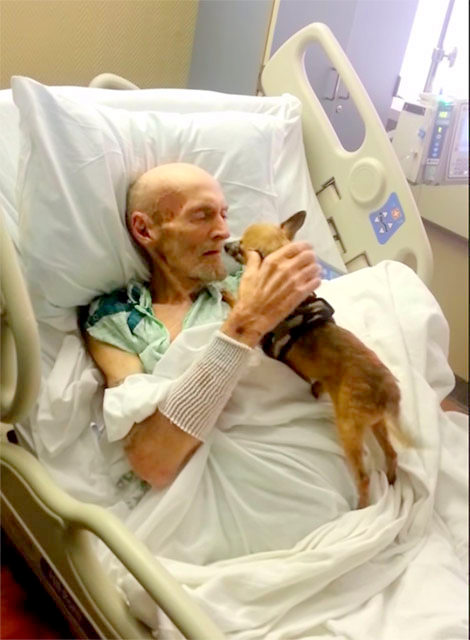
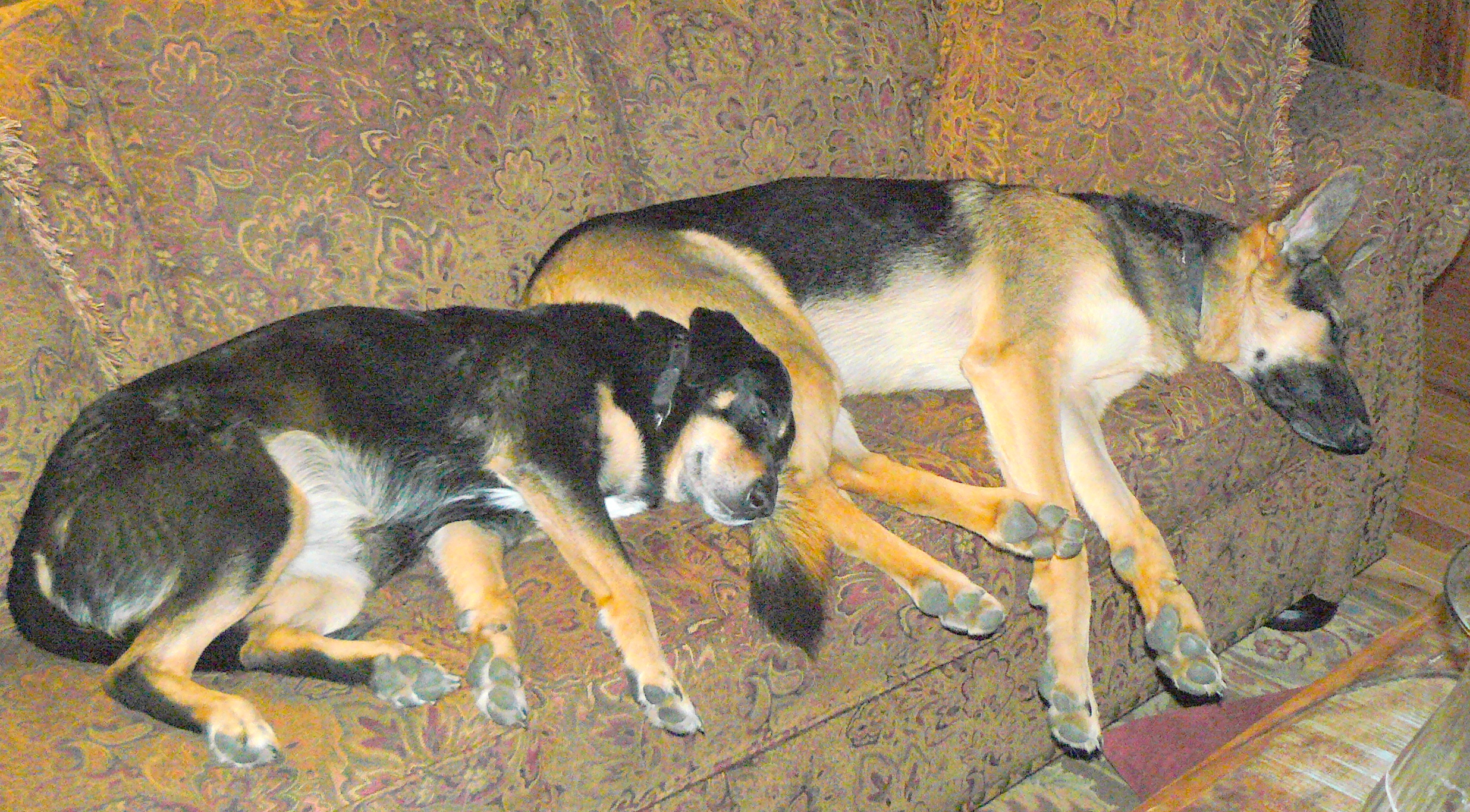
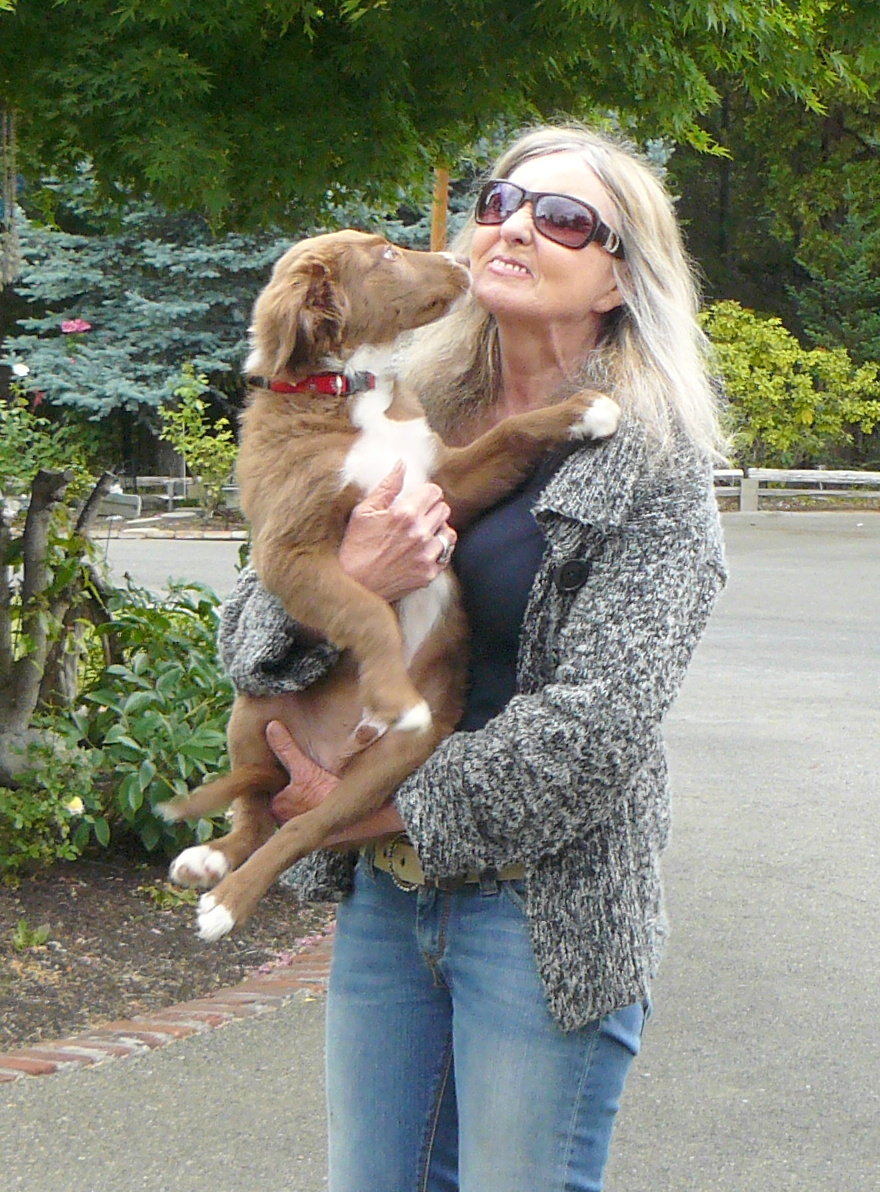
Not to mention the healing properties of a loving dog or two in one’s life!

Loving each other: woman and dog!

And we’re back!

My internet connection was restored late yesterday afternoon.

Thus, inevitably, the weight of my ‘in-box’ prevented quiet writing times.

So for today’s post I’m going to do no more than republish an extract from a recent Terry Hershey mailing.  I have included items from Terry before but for those new to him, do pop across to his website and catch up on what he writes.  To give you a flavour of what you may find, this is from his home page.

TERRY HERSHEY is an inspirational speaker, humorist, author, organizational consultant and designer of sanctuary gardens who has been featured on The Hallmark Channel, CNN, PBS, and NPR. Terry holds a mirror up to our fast-forward, disconnected lives, and offers us the power of pause—the wisdom of slowing down and the permission to take an intentional Sabbath moment to regain emotional and spiritual balance… to find the sacred in every single day.

I’m sure that touches many people in these interesting times.

So on to Terry’s item.  Written in Terry’s voice.

ooOOoo

Tell me the weight of a snowflake,” a coal-mouse (a small bird) asked a wild dove.

Nothing more than nothing,” was the answer.

In that case, I must tell you a marvelous story,” the coal-mouse said.

I sat on a fir branch, close to its trunk, when it began to snow–not heavily, not in a raging blizzard–no, just like in a dream, without a wind, without any violence. Since I did not have anything better to do, I counted the snowflakes settling on the twigs and needles of my branch. Their number was exactly 3,741,952. When the 3,741,953rd dropped onto the branch, nothing more than nothing, as you say, the branch broke off.

Having said that, the coal-mouse flew away.

You see, it takes just one snowflake to make a difference.

Just one.

Every once in a while we are all pestered by the question, “Does what I do, or give, or offer, make any difference? Does it mean anything?” Sometimes it doesn’t take much to make me wonder.

It’s been an odd week for me, six states in ten days (close to two thousand miles, not one on an airplane). Translation: I spent a boatload of time in a rental car, with a boatload of time to cogitate.

My week began in Northern Indiana (Victory Noll Retreat Center, Huntington), the landscape an endless horizon of cornfields, still unharvested, the stalks acorn brown. I pointed my rental car north, toward Michigan’s Upper Peninsula, drinking in the progression of autumn color along the way toward Lake Superior. I had time with my Father. We began each day with breakfast at deer camp (his home-away-from-home, heated with an antique wood-stove/oven), an ATV ride from his house into the woodland, and only a stone’s throw from the Ottawa National Forest. (I will concede that this menu is neither found nor endorsed by any diet book.) After a few days, like the flocks of Canadian geese who escorted me on the way, my rental car headed back south, down through Wisconsin (passing on the temptation to buy cheese trinkets) and to a reunion dinner with a friend in Chicago. Again through Indiana, this time in a driving rainstorm–a heavenly show and tell — with thunder and lightning, and the night sky erupting with a rippling light spectacle. On to my weekend in Cincinnati (Transfiguration Retreat Center) where we talked about living our days from sufficiency instead of scarcity.

In case I wasn’t clear, I’m not an enthusiast for road trips, so I confess that my attitude is dictated by an agenda — an impatience to cross another state line, and cross another milestone off the list.

No, it’s not easy to savor the scenery when you have an agenda.

And yes, I don’t always practice what I preach.

Which means that surprises are nice. Like the view from Brockway Mountain Drive, above Copper Harbor Michigan; below a sea of autumn color framed to the north by Lake Superior’s cobalt blue.

I discover that driving long distances creates an ideal container for musing, which, somehow, in a rainstorm deluge, morphs into existential angst, questioning everything about life and the pursuit of happiness; an opportunity to weigh and measure, and find some reason why I’ve come up short on this road toward success. Lord help us and down the rabbit hole we go … So, just before the precipice of self-pity, I crank up my friend Bruce, and sing along; This Little Light of Mine, and smile, and laugh out loud.

Have you ever asked yourself the same question: Do I make a difference?

I have found that this question messes with me only when I assume that something is missing from my life. Or that I need to prove something to someone. And it doesn’t help that we live in a culture that assumes “enough is never enough.” (Only insuring that we will respond to the question with an even more frenzied lifestyle.)

In the airport before returning home to Seattle today, this question about making a difference still dogs me, so I peruse an airport bookshop. One book offers inner peace, another balance, another wealth, another a renewed sense of urgency, and yet another some comprehension about life’s most pressing questions. The variety made it awfully difficult to choose, so I settled for a bag of Ghirardelli’s dark chocolate. That seemed to help.

In the Gospel of Luke, a 12 or 13-year-old girl is given an extraordinary assignment. Her response, “I am the Lord’s servant. May it be to me as you have said.”

In essence, Mary said to the angel, “I am willing to be one snowflake.

I am willing to do what I can, with what I have been given, with a full, grateful and willing heart.
I am willing to not worry about the outcome.
I am willing not to worry about what people think or say, or how it will be measured in the court of public opinion.
I am willing to literally, let it be.

So, why am I afraid to let this be enough?

To know that, even as a single snowflake, there is enough. In fact, there is abundance. The retreat group this weekend reminded me of this truth, and I gladly sent them forth, to know that one touch means the world.

You may doubt it if you wish. But know this, you still make a difference.

On the ferry ride home tonight, the sun is setting beyond the Olympic Mountain range. Back-lit, the entire range is art done in charcoal. And to the south, the moon–a day or two shy of full–shines down on Tacoma harbor. I breathe in the night air.

The scene is exquisite.

It is perfection.

Which takes me back to snowflakes.

The moon, after all, is just being the moon.

Here’s the deal: the journey to wholeness it not about me becoming something I am not. The journey toward wholeness is about reflecting what is already there. Inside.

It is about snowflakes, and making a difference by just being you.

ooOOoo

Do you recall Terry writing of singing aloud the Bruce Springsteen song This little light of mine? Here it is.

Wherever you are in the world, have a wonderful weekend, and if you have a dog or two in your life reflect on the example of wholeness that dogs offer us.

Men, Women and Memory!

Are men’s brains the same as women’s?

The wonderful BBC science programme, BBC Horizon, recently showed a fascinating programme entitled: Is your Brain Male or Female?  The programme is introduced on the Horizon website:

Dr
Dr. Mosley and Prof. Roberts.

Dr Michael Mosley and Professor Alice Roberts investigate if male and female brains really are wired differently.

New research suggests that the connections in men and women’s brains follow different patterns, patterns which may explain typical forms of male and female behaviour. But are these patterns innate, or are they shaped by the world around us?

Using a team of human lab rats and a troop of barbary monkeys, Michael and Alice test the science and challenge old stereotypes. They ask whether this new scientific research will benefit both men and women – or whether it could drive the sexes even further apart.

Now I haven’t a clue as to how long this fascinating programme will remain on YouTube, but if you aren’t in the UK or don’t have access to the BBC iPlayer then don’t hesitate to watch it now.

http://www.youtube.com/watch?v=s9iFOInsEdc

Essentially, science shows that the ‘hard-wired’ differences are minute and the vast bulk of the preferences between the genders, trucks versus dolls, for example, is subtle conditioning from parents and the wider world; for instance, advertisements.

One thing that did jump ‘off the page’ at me was the evidence supporting how malleable or plastic is the brain.  In other words, we are never too old to learn.

As if to reinforce that aspect of the flexibility of our brain, just yesterday morning I read an item on the BBC News website about memory.

As someone whose memory is a long way from where it used to be, this item really caught my attention:

How to save your memory

By David Robson from Headsqueeze.

Are there ways to stop yourself losing your memory? The latest brain research suggests there’s hope for the forgetful…

Memory loss has to be one of our biggest fears. Names, words, facts and faces – nothing is spared.

As the latest video from the Head Squeeze team describes above, mental deterioration was once thought to be an inevitable consequence of ageing, thanks to the steady erosion of our brain matter: we lose about 0.5% of our brain volume every year. The hippocampus – the region responsible for memory and learning – was thought to weather particularly badly; by the time we are 90, many of us have lost around a third of its grey matter.

Fortunately, recent research has shown that the brain is not concrete, but certain regions can adapt and grow. In 2000, a study of London taxi drivers, for instance, showed that the 4-year training of London’s 25,000 streets showed a remarkable growth in the hippocampus compared to bus drivers who early learnt a fixed number of routes. The scientists think that, by memorising the maps of London, the brain had built many more of the “synaptic connections” that allow the brain cells to communicate with each other. In other words, it may be possible to train the brain to compensate for some of the neural decline that accompanies our expanding waistlines and receding hairlines.

Challenging your brain could be one way of preserving your recollections – though the value of commercial brain training apps is debatable; some experiments seem to show that while people may become a whizz at the games on their screen, the improvements fail to transfer to daily life. But other, more traditional activities – like learning a musical instrument or a second language – do seem to have some protective benefits, at least on short-term recall. Ideally, it is probably best to keep your brain active throughout your life, well before you begin to approach your dotage.

Exercise and a healthy diet are also thought to offer some protection against dementia. As can an active social life – since regular contact with other people is also thought to excite our neurons and preserve our synapses. Ensuring that you regularly get a good night’s sleep helps too.

Of course, nothing can guarantee health and vitality in old age. But these few simple measures might give you the best possible chances of preserving your wits against the ravages of time.

For more videos subscribe to the Head Squeeze channel on YouTube. This video is part of a series produced in partnership with the European Union’s Hello Brain project, which aims to provide easy-to-understand information about the brain and brain health.

If you would like to comment on this video or anything else you have seen on Future, head over to our Facebook page or message us on Twitter.

So it’s clear now.

All I need to do is to learn a new language while in between my training to be the oldest trainee cabbie in London and applying for second violin position at the Royal Philharmonic Orchestra and I’ll never forget anything else in my life.

Oh, anyone seen where I left my car keys?

Or perhaps, harking back to the opening question of the differences between our sexes, I should be closing, thus:

Anyone seen where I left my dolls?

Good news is never far away

We all need a reminder of the many good things happening in our world!

It’s common knowledge that homo sapiens is wired to react to the threat of danger in a rapid manner.  But while the danger of a bear or a lion jumping on us from out of the trees is much diminished in the 21st century, our fear-response circuits are still alive and active.  One of the fundamental reasons why so much of the media ‘sells’ stories via alarmist headlines.

Thus it was a real delight to come across a magazine with the simple, yet powerful, brand name of YES!

Cover of the current issue of YES!

Even better than coming across YES! was receiving a complimentary subscription for Jean and me!  (Thanks John H!)  Jean and I took to the magazine immediately.  Not only because of an active blog but also because of their support for sharing their content.  I quote:

Reprints & Reposts

We want you to pass along the work of YES! Magazine. All we ask is that you follow these easy steps:

Text

For all material designated Creative Commons (cc):

(as used herein, material means the text of the articles, and does not mean titles, images, or illustrations)

  • Use the same byline information that we have placed at the end of the article. For reposts, keep links intact.
  • Material is free except for commercial use.
  • Do not alter, change, or add to the material.
  • Please notify us that you are reprinting by sending an email to reprints [at] yesmagazine.org.

For full details, see the Creative Commons license.

Copyrighted © text:

We have adopted Creative Commons licensing beginning with our issue #44. We readily grant reprint permission for earlier copyrighted material, upon request. Just ask us at reprints [at] yesmagazine.org. We occasionally reprint or excerpt material that is copyrighted by others, and this material is NOT included in the Creative Commons license.

Moving on to the next good news item.

I forget how but recently came across the Buy Nothing Project.  As the ‘About’ page explains:

Buy Nothing. Give Freely. Share Creatively.

The Buy Nothing Project began as an experimental hyper-local gift economy on Bainbridge Island, WA; in just 8 months, it has become a social movement, growing to over 25,000 members in 150 groups, in 4 countries. Our local groups form gift economies that are complementary and parallel to local cash economies; whether people join because they’d like to quickly get rid of things that are cluttering their lives, or simply to save money by getting things for free, they quickly discover that our groups are not just another free recycling platform. A gift economy’s real wealth is the people involved and the web of connections that forms to support them. Time and again, members of our groups find themselves spending more and more time interacting in our groups, finding new ways to give back to the community that has brought humor, entertainment, and yes, free stuff into their lives. The Buy Nothing Project is about setting the scarcity model of our cash economy aside in favor of creatively and collaboratively sharing the abundance around us.


flowers
The gift of flowers. © Liesl Clark

How does the Buy Nothing Project work? Using the free platform provided by Facebook Groups, Buy Nothing Project members can easily participate with their local group. Our rules are simple: “Post anything you’d like to give away, lend, or share amongst neighbors. Ask for anything you’d like to receive for free or borrow. Keep it legal. Keep it civil. No buying or selling, no trades or bartering, we’re strictly a gift economy.” The transparency of Facebook groups’ design allows our members to see mutual friends they share with relative strangers, and to build trust based on real-life connections visible through personal profile information. This trust allows groups to grow quickly and encourages people to both give freely and ask for what they need; everything from toilet paper roll springs to rides home from the doctor; burial sites for beloved pets to freshly-baked bread and casseroles have been given freely; our members share things mundane and meaningful in equal measure, and throughout it all connect with each other by means of the shared personal stories and chatting encouraged by the platform. We rely on our co-founders’ daily guidance and direction for the development of our nascent culture, assisted by a team of volunteer local administrators who have on-the-ground knowledge of their communities.

The Buy Nothing Project Connects Us With Our Neighbors. © Liesl Clark

Why the Buy Nothing Project? The Buy Nothing Project is brought to you by the creators of Trash Backwards (www.trashbackwards.com,) an app that helps you with the last of the 3 Rs, “Reusing” and “Recycling” the everyday things in your life. The Buy Nothing Project addresses the first of the 3 R’s, “Reduce” as well as the lesser-known Rs “Refuse” and “Rethink.” Participating in a local Buy Nothing Project group allows individuals and communities to reduce their own dependence on single-use and virgin materials by extending the life of existing items through gifting and sharing between group members. Rethinking consumption and refusing to buy new in favor of asking for an item from a neighbor may make an impact on the amount of goods manufactured in the first place, which in turn may put a dent in the overproduction of unnecessary goods that end up in our landfills, watersheds, and our seas. It most certainly creates connections between people who see each other in real life, not just online, leading to more robust communities that are better prepared to tackle both hard times and good by giving freely. The Trash Backwards app, blog articles, and Buy Nothing Project groups are diverting more materials from our landfills and oceans than we can possibly quantify as hundreds of items are rehomed each day.

The Buy Nothing Project Strengthens Communities.

Our Statistics:

With over 25,000 members and growing every day, we have a captive audience in each of our groups. Most members visit the group pages several times a day and many literally spend hours there, commenting, reading posts, while posting their own gifts and wants.

Our Trash Backwards blog, app, and the Buy Nothing Project website garner over 50,000 unique visitors per month. With 7,000 followers on Pinterest and 3,775 “likes” on our Facebook Pages, we have enough sway to bring significant traffic to our sites whenever we upload news or new blog posts.

Funding:

With funding to staff our core project, PR, legal help, design, and developers, the Buy Nothing movement will grow quickly, spreading the joys of gift economy giving and receiving. The world is ready for this experimental model of sharing our possessions and talents to help others, but the endeavor needs its basic operational costs covered to foster the movement even further.

Isn’t that a fabulous idea!

I’m determined to start a local group here in Merlin, Oregon.

My final item of good news, that I’m sure many others read about, was:

A declaration announced as part of a UN summit on climate change being held in New York also pledges to halve the rate of deforestation by the end of this decade and to restore hundreds of millions of acres of degraded land.

The Guardian newspaper released the news, as follows:

UN climate summit pledges to halt the loss of natural forests by 2030

New York declaration on forests could cut carbon emissions equivalent of taking all the world’s cars off the road

PEKANBARU, SUMATRA, INDONESIA - JULY 11:  A forest activist inspects land clearing and drainage of peat natural forest located on the concession of PT RAPP (Riau Andalan Pulp and Paper), a subsidiary of APRIL group which is being developed for a pulp and paper plantation at Pulau Padang, Kepulauan Meranti district on July 11, 2014 in Riau province, Sumatra, Indonesia. The Nature Climate Change journal has reported that Indonesia lost 840,000 hectares of natural forest in 2012 compared to 460,000 hectares in Brazil despite their forest being a quarter of the size of the Amazon rainforest. According to Greenpeace, the destruction of forests is driven by the expansion of palm oil and pulp & paper has increased the greenhouse gas emissions, pushing animals such as sumatran tigers to the brink of extinction, and local communities to lose their source of life. (Photo by Ulet Ifansasti/Getty Images)
PEKANBARU, SUMATRA, INDONESIA – JULY 11: A forest activist inspects land clearing and drainage of peat natural forest located on the concession of PT RAPP (Riau Andalan Pulp and Paper), a subsidiary of APRIL group which is being developed for a pulp and paper plantation at Pulau Padang, Kepulauan Meranti district on July 11, 2014 in Riau province, Sumatra, Indonesia. The Nature Climate Change journal has reported that Indonesia lost 840,000 hectares of natural forest in 2012 compared to 460,000 hectares in Brazil despite their forest being a quarter of the size of the Amazon rainforest. According to Greenpeace, the destruction of forests is driven by the expansion of palm oil and pulp & paper has increased the greenhouse gas emissions, pushing animals such as sumatran tigers to the brink of extinction, and local communities to lose their source of life. (Photo by Ulet Ifansasti/Getty Images)

Governments, multinational companies and campaigners are pledging to halt the loss of the world’s natural forests by 2030.

A declaration announced as part of a UN summit on climate change being held in New York also pledges to halve the rate of deforestation by the end of this decade and to restore hundreds of millions of acres of degraded land.

Backers of the New York declaration on forests claim their efforts could save between 4.5bn and 8.8bn tonnes of carbon emissions per year by 2030 – the equivalent of taking all the world’s cars off the road.

The UK, Germany and Norway have pledged to enter into up to 20 programmes over the next couple of years to pay countries for reducing their deforestation, which could be worth more than £700m.

Companies such as Kellogg’s, Marks & Spencer, Barclays, Nestle, the palm oil giant Cargill, Asia Pulp and Paper and charities including the RSPB, WWF and the International Union for Conservation of Nature (IUCN) have signed the declaration.

The declaration’s supporters say ending the loss of the world’s natural forests will be an important part of limiting global temperature rises to 2C, beyond which the worst impacts of climate change are expected to be felt.

It comes after analysis suggests that land use change such as deforestation accounts for around 8% of the world’s carbon emissions, with carbon dioxide released when trees are felled and burned to free up land for agriculture or development.

“Forests represent one of the largest, most cost-effective climate solutions available today,” the declaration says.

“Action to conserve, sustainably manage and restore forests can contribute to economic growth, poverty alleviation, rule of law, food security, climate resilience and biodiversity conservation.”

Signatories to the declaration are committing to a number of steps to halt forest loss, including backing a private sector goal of eliminating deforestation from producing agricultural products such as palm oil, soy, paper and beef by no later than 2020.

They are also seeking to support alternatives to deforestation which is caused by subsistence farming and the need for wood fuel for energy and reward countries that reduce forest emissions.

Read the full article here.

I first picked up on this news courtesy of the Grist blog:

rainforest-e1411587105860

Cargill promises to stop chopping down rainforests. This is huge.

By Nathanael Johnson

Everything I’ve been reading about the U.N. Climate Summit had been making me pretty gloomy, until I read about the New York Declaration on Forests.

The first notice was a press release from the Rainforest Action Network informing me that Cargill, the agribusiness giant, had pledged “to protect forests in all of Cargill’s agricultural supply chains and to endorse the New York Declaration on Forests.” Cargill has a big handprint — they have soy silos in Brazil and palm oil plants in Malaysia. So as of now, if you want to carve a farm out of the jungle, you’re going to get the cold shoulder from a company that is a prime connector to world markets.

And this isn’t limited to hot-button crops like soy and oil palm. Here’s what Cargill’s CEO Dave MacLennan said at the U.N.: “We understand that this sort of commitment cannot be limited to just select commodities or supply chains,” said MacLennan. “That’s why Cargill will take practical measures to protect forests across our agricultural supply chains around the world.”

It’s not just Cargill. Kellogg’s, Unilever, Nestle, Asia Pulp and Paper, General Mills, Danone, Walmart, McDonalds, and many other corporations have committed to the New York Declaration on Forests. But, here’s why Cargill is interesting: It’s making a concrete pledge, while the actual declaration is pretty mushy at this point. The declaration calls for ending forest loss by 2030. And, to quote a U.N. brief: “It also calls for restoring forests and croplands of an area larger than India. Meeting these goals would cut between 4.5 and 8.8 billion tons of carbon pollution every year — about as much as the current emissions of the United States.” Or about as much as taking all the cars in the world off the roads — that’s another comparison I’ve seen. The details are supposed to be hammered out in time for the 2015 convention in Paris.

Again, read the rest of the article here.

So as much as you, I and hundreds of thousands of others get battered with ‘gloom and doom’ stories every single day, we do need to balance that out from time-to-time with the good things around us. Also every single day.

Now where’s a dog to hug!

AS18

Happy lives!

Happiness.

I guess that it would be difficult to find a greater change in topic than going from America’s relationship with war to the secret of happiness!  But that’s what’s on offer today!

All as a result of reading a recent article on the Grist blogsite written by one of the Grist staff writers, David Roberts.

ooOOoo

The secret to a happy life: revealed!

By David Roberts
10 Sep 2014

I don’t want to brag, but while I was on sabbatical I discovered the secret to happiness.

The crazy thing is, it was lying right there in the open. It’s been revealed dozens, hundreds of times over the course of human history. It’s revealed every day in ordinary human affairs, if you’re paying attention.

What is it? Let’s ask George Vaillant.

Vaillant is a Harvard psychologist who has been working for over 40 years on the Grant Study, one of the longest-running longitudinal studies in scientific history. It began tracking a set of 268 (white, physically and mentally healthy) men when they were sophomores at Harvard in 1939 and has been tracking them ever since, for 75 years, with exhaustive regular physical and psychological tests. It has followed them as they’ve grown, gone to war, married, divorced, worked, been fired, gotten sick, found God, and so on. (The ups and downs of the study’s history are recounted in this classic Atlantic piece, one of my favorite magazine stories ever.)

Vaillant has spent most of his adult life analyzing the data from the study, attempting to determine which factors most reliably correlate with well-being. He’s probably studied happiness longer, and in greater depth, than any other single human being. So what is it, George Vaillant? What’s the secret to a happy life?

“That the only thing that really matters in life are your relationships to other people.”

Wow. That’s pretty straightforward. But can you boil it down just a little more?

“Happiness is love. Full stop.”

All right then! There you have it. The secret to happiness, revealed. It’s love.

If you want to break it down a little more, there’s plenty of social science research on it. We live longer, healthier, happier lives when we are at the center of overlapping social networks, when we have a devoted life partner, close family and friends (and pets), extensive “weak ties” with acquaintances and colleagues, peer and professional networks that value our skills, and a sense of autonomy balanced with a sense of involvement in something larger than ourselves. We are happiest when we have a place in the world, when we love and are loved, when we make the most of our gifts.

This is all obvious, of course, and has been said a million times. But that’s the point. People want there to be a what of happiness, a secret, an epiphany that once you learn it changes you forever. But the what of happiness is banal. It’s been confirmed by research. It’s in a kajillion self-help books. It’s cliché.

The what of happiness is not the hard part. The how is the hard part. As a million deathbed testimonials have taught us, when we look back on our lives, we won’t wish we’d worked harder, maintained Inbox Zero, finished those reports on deadline, gotten more promotions, owned a nicer car. We’ll wish we’d spent more time appreciating the ones we love and who love us, that we’d done more meaningful work, that we’d traveled more and had more memorable experiences.

We all know this. But it is no easy matter to translate that knowledge into action. Why? Vaillant is insightful about that, too, as The Atlantic explains:

Vaillant [says] positive emotions make us more vulnerable than negative ones. One reason is that they’re future-oriented. Fear and sadness have immediate payoffs—protecting us from attack or attracting resources at times of distress. Gratitude and joy, over time, will yield better health and deeper connections—but in the short term actually put us at risk. That’s because, while negative emotions tend to be insulating, positive emotions expose us to the common elements of rejection and heartbreak.

Gratitude and joy are emotions we can muster when we don’t feel threatened, when our lizard brain calms and our prefrontal cortex takes over. But it’s very difficult when our egos feel under siege. Relationships are more meaningful the more we open and extend ourselves (and are reciprocated), but our degree of openness is also our degree of vulnerability. Often we close off, deciding, consciously or not, that it’s not worth the risk of getting hurt; our lizard-brain fear overpowers us.

We cannot control this dynamic entirely. As the Atlantic piece explains, researchers believe that about 50 percent of our happiness is determined by our internal “set point,” which is shaped by genetics and early childhood and mostly fixed in place. About 10 percent is determined by circumstances. But that other 40 percent comes from how we react to circumstances, and over that we do have some control.

We can learn to detach from fear and anger, to let them go, to take deep breaths, return our focus to the present, and choose positive emotions. That, as I wrote yesterday, is what mindfulness is all about. It’s what the entire discipline of positive psychology (which counts Vaillant as a founding father) is about: strengthening the prefrontal cortex so that it’s more able to override instinctual fear and anger. The more inclement the circumstances we face, the more we need it. That’s why mindfulness training is catching on in low-income communities, the military, and elderly care.

So when people ask, as they have many times in the last week, “What did you learn over your break?” … the honest answer is, nothing. I already knew the what of happiness, just as you already know it. The break was about more consciously practicing the how, and on that score I’m afraid I have no grand epiphanies, only a few baby steps down a road I’ll be walking all my life.

ooOOoo

The original Grist article was headed with a picture of a group of happy dogs and it seemed almost an automatic response from me to close today’s post with a picture of happy dogs here in Oregon. But rather obvious, don’t you think!

Instead, I’m going to use a photograph of me being ‘loved’ by Ben so soon after he came to us in April; Ben being one of the two horses (Ben and Ranger) to come here that were rescued by Darla Clark, as explained here.

P1140593

Now going to offer my own reflection on happiness.

Animals that are comfortable being around us readily display unconditional affection to humans.  All that these dogs, cats, horses, and others, require is trust in us.  The knowledge that we are there to care for them, to comfort them, to cuddle them, to love them for the majority of the interactions between the person and the creature.  That doesn’t rule out chastisement, far from it, just that it comes from a heartfelt desire to care for the animal.

I now have a life surrounded by loving animals.  It has been that way since I started living with Jean back in 2008. Yes, I had had Pharaoh in my life since 2003.  Still have him; the precious animal. But the one-on-one bond that existed between Pharaoh and me hadn’t previously opened my heart in the way that all 14 dogs and 5 cats did that were living with Jean when I joined her.

The unconditional love shown by those animals in my life for the last six years has profoundly affected me.  We are now ‘down’ to 9 dogs and 4 cats plus we have the 4 horses (2 rescue quarter-horses and 2 miniature horses). Still there are very few moments in the whole of my day, either day or night, where I am not in the company of, or in contact with, an animal that offers me unconditional love.

Recall earlier in the David Roberts article: “We are happiest when we have a place in the world, when we love and are loved, when we make the most of our gifts.

Of course, I have ‘off’ days!

But down to my core, I know that being loved by Jean and all the animals and returning that love provides me with a deep happiness unimaginable prior to 2008.

It is better to have a heart that makes love than a mind that makes sense.” Robert Keck

Seeds of thought.

Two very different perspectives.

solstice

I’m writing this post a short while after midnight (UTC) on the morning of Tuesday, 23rd September.  In other words, 00:00 UTC 23/9/2014. (I hasten to add that the local time in Oregon is late afternoon Monday!)

In approximately three hours time it will be the moment of the September Equinox, or 02:29 UTC on the 23rd to be precise. The planet Earth has been in orbit around the sun for a very long time!  It’s almost beyond comprehension how long the Solar System has been the way it is.

All of which constitutes my introduction to a recent beautiful post over at Sue Dreamwalker.  Kindly republished with her gracious permission.

ooOOoo

Planting a Seed … A Thought!

William Blake, said:

that everything that now exists was once imagined,

Wayne Dyer said:

So, if you want something to exist, you must first be able to imagine it.

Each of us have a chance of planting new seeds.. Yet we so often never have the courage to pick them out of our minds to plant them with intention into our reality… Those alexander-graham-bell_thumbwho do have the courage may see how from their tentative thoughts ideas grew beyond their wildest dreams… I bet Alexander Graham Bell never in his wildest dreams would have thought how his invention would now be in everyone’s pocket!.

But we need to have the courage to take those first steps and plant them..

Like all seeds they take time to germinate, so too with our ideas we often wonder why our wishes are not fulfilled.. All too often we sabotage them before they even begin to grow roots. How?, because we doubt our own capabilities and we say we are far from worthy of success. Telling ourselves we are never lucky.. and its bound to fail.. So we poison the very idea, so the seed withers even before it gets a chance to grow..

Our subconscious mind is an incredible tool, it possess the power to manifest from our thoughts to bring them into our physical reality. You only have to take a look around the room you are now in, and see that every thing in it was once someone’s thought, even the paint upon the walls… An idea born, brought into reality from that first seed of an idea..

I have just finished a book the second time in reading it, I think this time its message really hit home. As I see how I have sabotaged many such seeds in the past. The Book is called Wishes Fulfilled By Wayne Dyer, listen to his talk HERE upon the subject of Wishes Fulfilled.

‘Thoughts become things when you Feel them’ says Wayne Dyer, In the past I have often experienced frustration, Anger, worry, stress. These I have amplified with my ‘Feelings’ as the frustration of helplessness, or horror at how brutal we can be to one another have overshadowed my thoughts..

We need to reprogrammed ourselves to think differently about ourselves and the World..

dr-wayne-dyer-quote_thumb

Seeds are sown, every day within our minds.. What sort of seeds are you sowing within your own mind? Which type of thoughts are you cultivating?

wayne-dyer-quote_thumb2

My last simple post World Peace! Just Imagine got reblogged 6 times!. I got more traffic today than for a long while.. People Do want Peace, and yet how many of us are being manipulated into getting caught up in Conflict? We are part of it every time we read a Newspaper, every time we watch the Media News, Every time we join in Gossip, every time we Judge another. Every time we argue, even with ourselves, We are creating yet more Conflict , more Negative Energy in the World.

Our very thoughts Create…

32108-Positive+thoughts+quotes+every

Let us Create the Future we each wish to Live in..

Have a Brilliant Thought Provoking and Harmonious Week!

Blessings

~Sue~

ooOOoo

So wherever you are in the world, take a moment to look up into the sky and marvel at it all.  As one of Sue’s followers remarked, “ ….. Equinox is an excellent time to focus on the seed ideas for the future.

Finally, the link that Sue included in the sentence, “The Book is called Wishes Fulfilled By Wayne Dyer, listen to his talk HERE upon the subject of Wishes Fulfilled.” took you to a YouTube video.  It is below because I know many will want to listen to Wayne Dyer’s important words.

3D-Autumn-1680x1050

From seeds grow great futures.

A welcome and understandable distraction.

We have family guests with us for the next seven days.

Jean’s brother, Reg, and his lady are arriving today so for a while blogging will be less of a priority than usual.

Although I have spoken to Reg over the telephone on numerous occasions, this will be the first time we have met and I am looking forward to better knowing him.

Thus, as in previous times when we have had friends and family staying with us, I will be reposting popular items from previous times on Learning from Dogs, or republishing things that have caught my eye in recent days.

As with today’s post.

Reg, shares the same birth year as me: 1944!

Thus we are staring over the edge of our eightieth decade!

So this short talk by Isabel Allende seems like a worthwhile topic for today!

Published on Sep 3, 2014
Author Isabel Allende is 71. Yes, she has a few wrinkles—but she has incredible perspective too. In this candid talk, meant for viewers of all ages, she talks about her fears as she gets older and shares how she plans to keep on living passionately.

Want to know more about Isabel Allende?  Her website is here.

Yet another thing we can learn from dogs! Living passionately right up to the last days.

Pharaoh, age 88 years in human equivalent, passing on his wisdom to Oliver, age 3 in human terms.
Pharaoh, age 88 in human equivalent years, passing on his wisdom to Oliver, age 3 in human terms. Makes being 70 look a doddle!

Thank you, Ben!

A thank you to all those that work so hard to stop fires from getting out of control.

I am drafting this post at a little after noon on the 4th., i.e. early afternoon yesterday.

It is yet another dry, hot day in a long run of hot, dry days. Our local online weather service, GrantsPassWeather.com, informs me that the temperature this afternoon (i.e. yesterday) is forecast to be a high of 93 deg F. or 34 deg C.  We last had monthly rain totals of more than an inch back in March.  At the top of the home page of Grants Pass Weather is a bold red banner proclaiming a Red Flag Warning for three counties: Jackson, Josephine and Eastern Curry.  We live in Josephine County and clicking that banner reveals:

Details:

…RED FLAG WARNING REMAINS IN EFFECT UNTIL 10 PM PDT THIS EVENING FOR COMBINATION OF STRONG WINDS AND LOW RELATIVE HUMIDITIES FOR FIRE WEATHER ZONES 280…281…617…619…620…621…622 AND 623…

* AFFECTED AREA: FIRE WEATHER ZONES 80…281…617…619…620…621…622 AND 623.

* HUMIDITY…MINIMUM RELATIVE HUMIDITY AT 10 TO 20 PERCENT FOLLOWED BY RECOVERIES TONIGHT AT 20 TO 40 PERCENT.

* WIND…NORTHEAST TO EAST WINDS 10 TO 20 MPH THROUGH THIS EVENING THEN 5 TO 15 MPH OVERNIGHT.

* IMPACTS…POSSIBLE PLUME DOMINATED BEHAVIOR ON ACTIVE FIRES AS STRONG WINDS AND LOW RELATIVE HUMIDITIES THROUGH THIS EVENING WILL CAUSE FIRES TO SPREAD VERY RAPIDLY.

* VIEW THE HAZARD AREA IN DETAIL AT HTTP://GO.USA.GOV/ZYV5

Information:

STRONG WINDS AND LOW RELATIVE HUMIDITIES WILL CAUSE FIRES TO SPREAD VERY RAPIDLY.

Little after 7am a few weeks ago - looking out to North-East.
Little after 7am a few weeks ago – looking out to North-East. Picture taken from the rear deck of our house near Merlin, Oregon.

Does this focus the mind?  You bet! The trees in the foreground of the above photograph are within our property. Our house is surrounded by tall oaks, pines and fir trees.

Now stay with me through what, at first, may seem like a disconnected change of topic.

Long, long time ago Jean met Ira Weisenfeld, a young vet making his way in the world.  Jean’s passion for rescuing feral street dogs meant that she was a more active user of a vet’s services than the average pet owner.  Jean and Ira became very good friends.

Earlier on this year, we had the pleasure of the company of Ira’s daughter, Amber, who came to see us with the man in her life, Ben Elkind.

Fast forward to the 1st September and Amber sent us the following email:

Hello Paul and Jean!

Hope you guys are doing well. Here is a BBC story about smokejumpers in Redding, CA where Ben works, he is interviewed too. Thought you might like it! Hope you had a wonderful summer. I just finished the boundary water canoe trip with Dad, it was very good.
Take care,
Amber

That BBC story explains:

Forest fires kept at bay in US by elite ‘smokejumpers’

26 August 2014 Last updated at 00:48 BST

The drought that has gripped much of the American West shows no sign of abating – yet despite the tinder-box conditions, so far less land in the region has been lost to wildfires in 2014 than in recent years.

That is partly due to an aggressive strategy to stop smaller forest fires before they become too big to handle.

At the frontline of this effort are the smokejumpers, airborne firefighters who parachute into the wilderness to get the blazes under control.

It’s a dangerous job for an elite group of highly-trained men and women. The BBC spoke to three smokejumpers – Ben Elkind, Gretchen Stumhofer and Luis Gomez – at their base in Redding, California.

Produced by the BBC’s Jack Garland.

Additional footage courtesy of Ben Elkind and Tye Erwin

Here is that film report.

The real you!

I am delighted to present the following guest post from Ruth Nina Welsh.

We seem to be on a bit of a roll in terms of seeking a better self-understanding.

Last Thursday I offered up some thoughts and reflections on meditation Quietening one’s self down and then the following day presented the film Inner worlds, Outer worlds, the wonderful film by Canadian film maker, musician and meditation teacher Daniel Schmidt. Daniel described his film “as the external reflection of his own adventures in meditation.” (And did you read the fascinating comments by ‘R’?)

Anyway, to today.

I forget how Ruth and I made contact with each other but that’s immaterial to today’s guest post. What is material is that we did make contact and through Ruth’s website I became aware of her talents. In her own words:

BE YOUR OWN COUNSELLOR & COACH shares psychology, memoirs and creativity to help and inspire you to live a happier, more fulfilling and purposeful life.

****

WHO AM I? – I’m a freelance writer, specialising in lifestyle, wellbeing and self-help; a former counsellor & coach and an erstwhile musician. I have a diverse educational Ruth-Profile-Photobackground – with degrees in arts and law – but psychology is my passion. You can find out more about me on my personal site.

  • As a singer-songwriter, I released my debut acoustic album – As I Breathe – in 2000.
  • As a counsellor and coach, I was in private practice from 2008-2011.
  • As a freelancer in the publishing field, I’ve been involved as an editor, formatter, copy-editor, proofreader and I’ve also managed book projects and manuscript submissions.
  • Now, as a freelance writer, I write articles and guest posts, and continue to build this free online self-help resource.

So back to the connection between Ruth and me.

A couple of weeks ago, Ruth asked me if I would like to publish an essay from her.

I read it and replied without hesitation that I would be honoured to publish said essay.

Thus with no further ado here it is. (And do read to the end to be informed about a very generous free offer from Ruth.)

ooOOoo

The Struggle To Be Authentic

Introduction

Of all the challenges we face in life, the struggle to be authentic is a vital one. It’s not always recognised that being authentic – being true to ourselves – is essential for our own wellbeing and happiness. We struggle with authenticity because it’s often hard to reveal the truth about how we feel. And, as strange as it may seem, sometimes we don’t even know how we truly feel. It can be painful and difficult to begin to speak from a place of truth and to unmask hidden feelings which may be covered over by years of denial, trauma and people pleasing.

How we learn to be authentic in childhood

Being authentic and true to ourselves is not innate; it’s something we learn how to do. We learn from those close to us as we grow up. As children we observe our parents, or others who care for us. We notice how truthful and genuine they are. We also learn that there is power in the gap between how we feel and what we actually reveal to others. During our childhood we sometimes find that it can be unwise to say what we honestly feel or think, it can get us into trouble. Bruising judgements from our parents can mean we stay quiet rather than speak up. If a parent constantly criticises and mocks us it’s likely that we’ll modify our behaviour around them. We’ll try to please them and avoid unnecessary pain by saying what they want to hear – even if this is not our own truth. Not being true to ourselves can also follow a traumatic event where we may feel the need to hide our feelings or bury painful grief. All of these things and more mean that, piece by piece, we can lose connection with ourselves and how we truly feel.

The struggle to be authentic in adulthood

As we leave childhood behind us we take the lessons we learn from it into our adult lives. If we felt unable to speak up truthfully when younger then this usually doesn’t change when we become an adult. We can find ourselves unable to speak up within an intimate relationship, downtrodden in our work life and unable to fully connect in our friendships. Over time, if we keep speaking the words only others want to hear – words that are not our own truth – we can lose touch with what we actually feel. We can lose touch with our true selves, our true desires and our true needs and wants. Having been a spokesperson for others for so long we can find ourselves lost and adrift, not knowing how we truly feel about anything, not knowing who we really are. And this can lead us to a treacherous place – living behind a mask, fearing disapproval, and not connecting at a genuine level with anyone. This damaging cycle will continue unless, or until, we see the need for change and realise that being authentic is vital for our own happiness and wellbeing.

Learning to be authentic

It’s difficult to be authentic when this has not been our normal way of being. We may have been used to white lies, outright untruths, or just unconsciously denying our own thoughts and feelings. We may have lived in a family where half-truths and masks were the norm. We may have had to hide our own feelings to survive. This is then our problem: without a template of truth-telling and speaking out in a genuine way, we often struggle to be authentic. We may even have to learn how to be honest and authentic from the bottom up.

Two steps to authenticity

As a starting point, our task is two-fold and can be seen in two distinct steps. Firstly, to find out how we actually feel about things and, secondly, to begin to reveal how we feel to others. This sounds straightforward but doing these two things can be intensely challenging. We are often beaten down by life, our words may have been ridiculed, our self-esteem may be low. We can feel worthless and feel that what we have to say doesn’t matter. If you are in this place, then the most important thing to understand, as a given, is that what you have to say does matter and you have a right to say it. Whatever you have learned in the past and whatever you have been told, know these vital, universal truths:

Each of us has value, has a voice, and we are entitled to speak out and have our own precious, individual opinions heard.

First Step: How do you feel?

With that as your starting point – that your true, individual voice matters – you can begin the first step: to find out how you actually feel. This can be easier said than done. You’ve spoken the words others wanted to hear for so long now that you may not actually know how you genuinely feel. To begin to make inroads into this takes time, an effort of will, and an increase in your own self-awareness. One of the easiest ways to begin this process is to record your thoughts, feelings and opinions down on paper. In a private way, in your own journal, you can start to look and search inside yourself for how you actually feel about things – what you believe, what your opinions are, what you want from life. You can uncover what your own personal likes and dislikes are – not to please others, but to please yourself. With time and patience your awareness will increase and you’ll begin to hear your own inner voice speak out. It may be a whisper at first, but, if nurtured, this will develop. Gradually you will begin to connect with your true self and start to know how you truly feel.

Second Step: Share how you feel

As you begin to know how you feel you can start to embark on the second step on the road to being authentic and true to yourself – revealing and sharing how you feel. You can begin to speak up for yourself and share your own beliefs and opinions. Your voice does not need to be loud or demanding, but with calm authority you can learn to speak out. This can be a difficult process at the beginning but try starting this process by speaking out in safe emotional surroundings. Find friends who are supportive and then begin to honestly and truthfully share your thoughts and feelings with them. As you begin to know how you feel, and start to voice your own opinions, you can create more meaningful relationships. You can connect at a deeper emotional level – from a place of truth and honesty.

Conclusion

It sounds simple, being true to ourselves, but it is a continual struggle and it is fraught with difficulty. Fraught with judgement, disapproval and fear. But the courageous speak out from a place of truth and in doing this they make deep, meaningful and honest connections. This impacts on all parts of a person’s life: from choices made to the quality of relationships enjoyed. Being authentic becomes a way of being, a way of life. With the voice of authenticity comes true connection and it is well worth the struggle it costs us. For if we are just a spokesperson for others, or a mouthpiece for others – fake, in other words – then what value and meaning can we attach to our own lives and to our relationships? And if we are not being true to ourselves and genuinely authentic in our words and deeds then who are we in this world and what is the point of our life?

© 2014 Ruth Nina Welsh

ooOOoo

So to that special offer.

Ruth asked me to include this invitation for all readers of Learning from Dogs.

Simply if you go across to Ruth’s website Be Your Own Counsellor & Coach and sign up as an email subscriber, you will get the free ebook when it becomes available in the autumn!!  The sign-up box is to the top right-hand corner of the home page, just above the following:

Free Ebook For Subscribers – Coming Autumn 2014

RNW ebook

FREE to Subscribers. The first book in my series will be free to subscribers of this site and also available on Amazon as an ebook.

Subscribe above to receive this free book when it becomes available.

oooo

Being authentic?

Do you share your life with a dog?  Learn!

Our inner and outer worlds.

To awaken one’s true self, one must awaken the entire world.

As you may gather from the sub-heading above, this is not a typical post today! (If there is a typical post in this place!) In fact, I think this is the first time in over five years of publishing Learning from Dogs that I have devoted a post solely to a full-length film.

But the film so perfectly picks up the theme of yesterday’s post, Quietening one’s self down, that it was too good an opportunity to miss.

The film is called Inner Worlds, Outer Worlds and that website explains:


Inner Worlds was created by Canadian film maker, musician and meditation teacher Daniel Schmidt. The film could be described as the external reflection of his own adventures in meditation. As Daniel came to meditative insights, he realized that these same insights were discovered over and over in spiritual traditions around the world and that all traditions share a common mystical underpinning.

He realized that it is this core experience that connects us not only to the mysterious source of all creation, but to each other as well. Along with his wife Eva, Daniel currently lives in a log home tucked away in a forest of tall pine trees located in Ontario, Canada. It is in this beautiful setting where they run a meditation and yoga center called Breathe True Yoga www.breathetrue.com.

Daniel has studied meditation from the traditions of Buddhism, Taoism, the Yogic traditions of India, as well as the mystical traditions of various cultures, and has come to his own teaching method helping point people towards their own inner wisdom and knowledge. “Meditation eva-smallis not so much a technique to master as it is a re-orientation of the heart; a selfless act of love and surrender into the mystery and stillness at the core of our being“.

Daniel has always had a strong life connection with sound and music. He has been a composer for over 20 years with an extensive library of music venturing into many genres and styles, and he is the President and CEO of REM Publishing Ltd. Music is not something to be comprehended merely with the hearing faculty. The vibratory nature of the universe is understood when we recognize that everything is music.

Eva has studied and teaches chakra yoga, hatha yoga, meditation and healing through expressive arts. She has integrated yogic traditions from around the world and attended the Pyramid Yoga Center in Thailand for extensive yoga training. Eva is a sound healer, artist and was a strong creative force in the editing room as “Inner Worlds” was being created. Together Dan and Eva were the Shiva and Shakti forces that birthed the film into the world.

It became clear during the making of the film that Inner Worlds Outer Worlds had to be released for free for the benefit of all beings. In the ancient traditions the dharma or “the truth” was always taught freely and never for personal gain or profit in order to preserve the purity of the teachings. It is Daniel and Eva’s belief that to awaken one’s true self, one must awaken the entire world. Daniel and Eva have started the Awaken the World initiative www.awakentheworld.com to bring the ancient knowledge back to the earth in order to restore balance and harmony on the planet.


If you want to dip into the film then here’s the trailer.

But many, including Jean and me, will want to watch the full film.

The website Top Documentary Films offers this summary (the links below will take you to other films on meditation):

Inner Worlds could be described as the external reflection of Daniel Schmidt’s own adventures in meditation.

Akasha is the unmanifested, the “nothing” or emptiness which fills the vacuum of space. As Einstein realized, empty space is not really empty. Saints, sages and yogis who have looked within themselves have also realized that within the emptiness is unfathomable power, a web of information or energy which connects all things.

The Spiral. The Pythagorean philosopher Plato hinted enigmatically that there was a golden key that unified all of the mysteries of the universe. The golden key is the intelligence of the logos, the source of the primordial om. One could say that it is the mind of God. The source of this divine symmetry is the greatest mystery of our existence.

The Serpent and the Lotus. The spiral has often been represented by the snake, the downward current, while the bird or blooming lotus flower has represented the upward current or transcendence.The ancient traditions taught that a human being can become a bridge extending from the outer to the inner, from gross to subtle, from the lower chakras to the higher chakras.

Beyond Thinking. Life, liberty and the pursuit of happiness. We live our lives pursuing happiness “out there” as if it is a commodity. We have become slaves to our own desires and craving. Happiness isn’t something that can be pursued or purchased like a cheap suit.

So here is the film:

Part 1 – Akasha

Part 2 – The Spiral

Part 3 – The Serpent and the Lotus

Part 4 – Beyond Thinking

To close, let me offer these links.

The Inner Worlds Movie website is here.

As each film link on YouTube notes:

All 4 parts of the film can be found at www.innerworldsmovie.com.

Music from the film can be found at www.spiritlegend.com.

Sacred geometry posters and products can be found at: http://www.zazzle.com/awakentheworld

My closing thought? I can’t do better than to repeat this from the film’s website:

It is Daniel and Eva’s belief that to awaken one’s true self, one must awaken the entire world.

This strikes me as very pertinent, for I see a world sorely in need of a new awakening.