A delightful story from Lynda Demsher.
I have referred previously to AIM, the authors’ group based in nearby Grants Pass, OR. Lynda is a published author who is one of the AIM members. The other day, Lynda sent me the following:
Paul, I know you’ve been busy so I sent you this if you need something for your blog if it’s the kind of thing you use. Might be timely as well given the latest talk about guns. It is somewhat about my dog and how I ended up at one of the biggest gun shows in the west while looking for dog training equipment. This was published in “Invisible Memoirs,” a Bay Area journal.
So with no further ado, here is Lynda’s story. It is about dogs!
ooOOoo
The Gun Show
If not for my youngest hunting dog, the one my husband calls “the idiot,” I might have missed it. Instead, I put on my best leather vest and dressiest black jeans (known as “wedding jeans” where I lived in Modoc County) and joined the hundreds of people streaming into the Reno Gun Show set up in the basement of the Grand Sierra Resort and Casino. The entrance yawned like a dim and secretive man-cave, beckoning lines of mostly men to enter, after forking over a $10 fee of course. I wondered if I needed a password or a special handshake as well. The furtive restlessness of the crowd suggested this was a place with protocols. I was in line with my husband and two of his hunting buddies so I asked what they were. I got the look men give when they think a woman asks a stupid question. Women are allowed of course, when the show opens for its three-day run in November, but few attend. Women whisper that gun shows are the equivalent of hanging out at your brother’s scout meeting. No one tells you to leave but they wish you would.
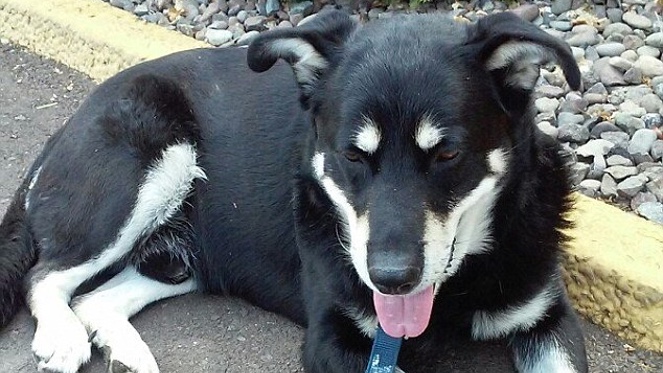
The Idiot happens to be an odd little bird dog I rescued from the pound who needed some work for this year’s hunting season, so I decided to tag along with my husband and his friends, even though the trip was their annual guy-getaway. They made the mistake of telling me the show had “all kinds of hunting stuff” so I decided to see for myself. My young German wirehaired pointer was the laughing stock of my husband’s hunting group last season when he insisted on carrying his favorite toy into the field. He’s a bit gun-sensitive and feels more secure with something in his mouth. He does hunt when the excitement kicks in, but a dog pointing a bird with a big red Frisbee in his mouth isn’t taken all that seriously where I lived until recently. In that rural high-desert county, way out in the northeast corner of California, bordering both Nevada and Oregon, you don’t escape a good razzing if your hunting dog is a clown.
I was certain a place featuring guns would have the latest in gun dog supplies too, since guns and dogs go together like soda and pop. I have to admit though, curiosity was also a motivation. My husband has attended these shows for years even though the guns in his safe far outnumber his annual critter kill. He rarely purchases anything, but he always brings back entertaining observations about the characters floating around in the gun galaxy.
I had a camera in my vest and was anxious to record some of these characters, or possibly the appearance of a film star or political figure also known to attend. But when the guys and I inched forward toward the ticket booth I noticed a large sign with bold black letters saying photographs were prohibited. A stern-looking armed guard wearing combat fatigues stood nearby. Darn. I really did want to sneak a picture of the woman just ahead of us. Her general appearance suggested biology had advanced to the point where it was possible to mix warthog and human DNA. Dressed in baggy camouflage sweats, she rolled toward the entrance like an Abrams tank. Completing her ensemble was a large red button with black letters pinned to her chest. As I got a closer to her, I realized it said “Obama Scares Me.” Now I knew what to do in case she decided to have me for lunch. I could just wave my arms over my head and yell “Obama!”
My husband, tall and thin, with wire-rimmed glasses, was wearing a v-neck sweater over a button-down shirt and tan khakis. He looked more like a college professor emeritus than a gun enthusiast in this crowd. I could tell where he was in the room while his stockier friends, wearing the more standard uniform of white t-shirt, forest-green down vest and sagging blue jeans, quickly melted into the browsing crowd.
Left alone, I felt like a migrant in an alien universe, even though guns are not alien to me. I lived within walking distance of a duck blind and my house was full of shabby hunting lodge décor, including 30 or 40 antique duck decoys, old shotguns, ammunition boxes, and deer horns, while back issues of Gun Dog and other hunting magazines littered my end tables. Outdoor supply catalogues were required bathroom reading. Hunting season in the fall is my favorite time of year, but I don’t shoot much anymore. Shooting is a precise sport, requiring hours of ear-blowing, shoulder-banging practice. Without a lot of practice, you could end up killing your brother-in-law. Since hunters are morally obligated to eat what they kill, I do most of my shooting with a camera now. I have yet to come across a good brother-in-law marinade.
My role in hunting is mainly working the dogs and I’ve trained a couple of generations of them. From my point of view, hunting isn’t really about the guns, or even the game, it’s primarily about the dogs. Guns are tools to get the game, which requires a gourmet cooking degree to render edible. And unless you hunt on a club, or hunt ducks down on the river, finding wild upland game birds usually requires a before-dawn trip out into nowhere land and then a bone-rattling drive over 30 miles of volcanic rock followed by a shin-bruising hike up a steep brushy hill. The dogs, however, make it all worthwhile. Upland game birds, such as mountain grouse, quail and chucker seldom welcome a hunting party so it’s the dogs’ job to find their hiding places. The pointers put on a field ballet in their pursuit, leap-flying over rocks and brush, dancing across icy streams and twirling to follow a backtracked scent that says “bird this way.” The dog locating the flock stretches into a steady point with foreleg curled and tail straight out. Others in the hunting pack quietly honor his point by staying slightly behind and perfectly still. The dogs stay motionless because the birds, having bird brains, think no one can see them in the bushes if they stay perfectly still. On command the dog leans in slightly, setting off a whirring explosion of blurred brown wings. Guns go off and the dogs track falling birds with their internal geometry, then race to find them in the brush. Some bird dogs are trained to bring the game back to hand, some drop it in front of their hunter, but all prance back with their birds, undeniably proud.
My little wirehair was on the verge being left out of the next hunt because of his eccentricities, but I had hope of finding him some help, possibly in the form of new training technology, realistic training birds and game scent for saturating them, or even a field rope that wouldn’t tangle up on itself. Something, anything, that would get him past the silly juvenile stage in the field.
After browsing the floor for a while and getting blank stares when inquiring if anyone in the room had dog gear, I realized this was not a hunters’ expo but a raw display of powerful arms, some just happening to be for wild game. Rows and rows of gunmetal under florescent light made everything look eerily green and iridescent. Gun hammers clicked empty threats throughout the chamber as vendors demonstrated the bolt action, trigger sensitivity, and firing pin mechanisms of their wares. From the hum of the hype, I’d swear testosterone was being dispersed through the air conditioning to mingle with the ambient odor of sweaty socks.
The room I was in could have housed the first floor of a department store in the mall nearby where the wives of my husband’s friends were enjoying a shopping spree. I counted at least 50 gun sellers with their wares spread neatly on folding metal tables. “Cowboys” in western dress had a row of tables along one wall, where they leaned their folding chairs back as far as they could, trying their best to look like they’d just come in from ropin’ and wranglin’ on the range These vendors also displayed saddles and horse tack along with some rusty cast iron cookware for effect. Other tables had a few duck decoys, old metal signs, antique weaponry and Native American artifacts made in China mixed in for color. One vendor had a nice selection of silver and turquoise jewelry, indicating some purchases here would require softening up the wife back home.
Toward the rear of the area was a cordoned off space stacked with cases of ammunition. Men with hand-trucks stood patiently in line, waiting their turn to purchase as much as they could pile onto their rolling devices. I stood near the line for a while, admiring the craftsmanship of some wooden boxes housing the more expensive ammo. The men around me weren’t there for the boxes though. They were convinced the government was trying to make ammunition scarce as a form of gun control. That’s why they were stocking up. The ammo sellers loudly agreed, while their cash registers sang a money song.
After wandering around and getting bored by the monotony of gun metal and noise, I almost ditched the place for the mall. But then I remembered the woman I saw at the entrance and decided I couldn’t leave without at least one story about a gun-show character. I didn’t see her anywhere, but I did notice a stream of people heading toward a big double-door at the back of the room. I decided to explore.
Turns out, there was a second room of vendors, nearly as large as the first. That room was accessible only through the Refreshment Station where three men in black from their hats to their boots, resembling worn out old villains from a 1948 John Wayne movie, leaned against a bar drinking beer with whisky shooters. Each of them had a scruffy beard and a long-barreled pistol in a holster strapped to a leg. While I have a strong appreciation for the peculiar, I’m very wary of guns in the vicinity of alcohol, so I hoped these guys were just for show. When they caught me looking at them though, none cracked a smile. I felt like a Martian at a rodeo. I quickly ducked between a passing group of men in big hats and entered an arsenal that would put a Syrian rebel in a jealous rage.
It wasn’t just an arsenal though. It was an education. If I hadn’t stumbled in here I never would have learned about Apocalyptic Zombies.
Only one vendor in the room had guns actually meant for shooting animals, probably a last-minute booking, and there was no sign of anything related to hunting dogs. The rest of the 30 or 40 vendors seemed to display an unsettling urgency to scare up business, literally. The place looked like a war zone Wal-Mart. There were a few women in this room but they hardly fit the description of the one I saw at the entrance. One was a tall blond in a low-cut blouse with a holstered gun strapped to a bare leg. Not to be outdone, another vendor had his own buxom blond parading around in a Daisy Mae outfit, showing off AK-47s. The third woman was a tired-looking grandmother playing a game on a tablet computer. She seemed to be in charge of a cash box.
Even though Christmas decorated the outside world this time of year, in here it was Fourth of July. American flags along with red, white and blue streamers were everywhere. It all seemed very patriotic until a closer look revealed the joyful colors swirling into stacks of T-shirts, bumper-stickers, posters and even baby bibs featuring clownish pictures and boorish sayings about the President of the United States. Although I usually keep myself in observation mode in jarring places, my curiosity gnawed. Finally, I asked one vendor why he had so much Obama stuff for sale, since the President had won a second term and election season was over.
“I just like the humor, it’s just humorous,” he said with a hiss. I looked for the lemon he must have been sucking on just before I got there. Of course, his tone made it irresistible for me to ask my next question:
“Aren’t you afraid of losing business by offending someone who might actually like the President?”
He shot me a definite NO! and said he didn’t have anything more to say.
Two booths past the gun-show humorist I came across a display of Nazi paraphernalia for sale under a large poster warning “What worked for Hitler will work for Obama!!” I wondered what would work for both Hitler and Obama. Obviously not a twitter account. The table under the sign had a full-length glass case displaying a collection of what appeared to be old Nazi war souvenirs. Almost everything had a swastika on it. There were tattered leather wallets, worn pistol holsters, moth-eaten wool gloves, yellowed ID cards, heavy gold watches, pistols, money clips, buttons, key chains, belt buckles, helmets, worn but well-polished boots, , ammunition holders, cups, silverware and unidentifiables with wires sticking out. The black velvet lining of the cases made the rather creepy items look important. Some did not look like original Nazi war items though, especially the cell phone cases. I walked over to the vendor, hoping to ask him where this stuff came from. He was bent over something in his lap, looking like the kind of old, green-aproned shoemaker you see in foreign films. He did not look up at me. Was he trying to sell this stuff, or just make a statement? I didn’t find out what would work for both Hitler and Obama until I browsed the next display down.
Six long tables, three on each side, were shoved together and piled with books. I picked up one with a swastika on it. Skimming through it I quickly learned the perils of a “gun-less society” and how disarming citizens would allow government to “go wild” and start hauling off defenseless people to be enslaved in work camps or tortured in some hideous way before being thrown in a ditch and shot. Hitler had taken everyone’s guns away before the Holocaust, the book noted, and signs that the U.S. government was headed in that direction were becoming evident. Gun control was part of a bigger plan by our sneaky president and his socialist supporters to abolish the Constitution and end Democracy. The book was published in 2011. I hid that book under the pile it came from.
Then, from other books in the selection, I learned the world is on the verge of destruction, society is about to break down, and we’ll all have to defend ourselves against those who did not have the foresight to prepare for the Apocalypse. So much for the return of Hitler. These books indicated I had bigger things to worry about. The word “Apocalypse,” always capitalized, peppered these publications, but few foretold much of a cause beyond some vague hint of world-wide economic collapse caused by Obamacare. One book mentioned we might be hit by a giant meteorite and had the distinction of being the only one I skimmed that didn’t blame the impending disaster on the President, although I didn’t read the whole thing.
Selecting another book, I discovered that preparing for “The Apocalypse” not only involves stockpiling long-lasting packs of food and water, conveniently for sale at the gun show, but learning to kill, gut and skin your pets for food, and how to harvest and cook weeds and certain kinds of dirt (the kind with animal poop in it) in case the Apocalypse lasts longer than your supplies. I imagined how someone reading that book might just double or triple his order of archival food buckets being sold at the booth down the aisle to avoid eating his beagle or the equivalent of cat litter during dire circumstances.
For city dwellers there were books on how to fix up your car so you could escape to the wilderness and live in it when you run out of gas. In the back of these books were web sites where you could order overpriced canning jars, all kinds of knives, and archery equipment, as you don’t really want to run into people you know while stockpiling at a local shopping center. The books tell you not to let on you’re prepared for survival, or you might be overrun by your starving friends and neighbors, referred to as the Apocalyptic Zombies, who will be desperate and not above killing you for your stash. And, of course, to complete your survival package, readers were advised to get at least one high-powered assault weapon and teach every member of the family to shoot after accumulating enough ammunition to hold off three battalions of U.S. Marines.
Moving on from the dire warnings, I noticed more signs, posters and even targets picturing the dreaded Apocalyptic Zombies tacked up behind the assault weapons vendors. These warned that I would be at the mercy of monsters unless I owned a big black gun. Who knew the awful Zombies coming to get me would look exactly like the walking dead from old horror movies, complete with purple skin and bloody faces. I thought they’d look more like the lady I saw at the entrance, the one with the Obama button.
Emerging from the book table I wondered if they had a psychiatrist’s booth around where I could pay a dollar to have my paranoia removed. Looking up at the whole of the room, my world was suddenly full of glistening gun barrels jutting in the air like millennial symbols of manhood. I expected a worship dance to begin anytime. The air felt thick and smelled of gun oil and the ever-present dirty socks. I looked for something to hide behind until someone I knew came along. I picked the biggest gun in the show. This gun was a cannon-like affair on a shooting stand, set up on a sturdy table with an ammunition clip flowing to the floor. It was outfitted with a computerized night-vision contraption advertised as something the military uses to find terrorists in Afghanistan. The whole package cost more than $6,000. I hadn’t seen anything like it anywhere else at the show. I thought about sneaking a picture of it.
“What do you use it for?” I asked, after actually admiring the technology on the thing.
A very serious dark-haired man in his early 30s who was seated at the table directed his icy blue eyes toward me, squinted, and said flatly “chicken-stealing coyotes.” I started to laugh but held back when the man continued to stare at me like a vampire who senses his favorite blood type. The guy even had a widow’s peak. Had he seen my camera? I slowly took my hand off it in my pocket and pulled away, saying “nice gun, nice gun.”
To catch my breath and get a better sense of perspective, I continued exploring from there, stopping to have a chat with a grandfatherly-type who made ink pens out of spent bullet casings, and a wiry old codger who tried to sell me a leather purse featuring an opening along the back seam for my handgun, so it would be within easy reach if I suddenly needed to shoot a mugger. I don’t think he realized the featured convenience on the shoulder bag would also put the gun within easy reach of a nosy little kid who’s exploring hands might find Grandma’s toy while standing in line with her at the bank. After politely refusing the purse offer, I stopped at a booth where a vendor assured me his “miracle” canvas bag, which resembled a diaper for a three-legged toddler, would keep food frozen for two weeks. Then, at a booth selling pistols, I watched with growing anxiety as a salesman pitched a pocket-sized weapon to a short, baggy-eyed man with bed-hair who seemed to be contributing most of the dirty-sock smell. The guy looked like he could really use a psychiatric booth, but that didn’t seem to concern the enthusiastic salesman telling him he was running a special that day – free membership in the National Rifle Association (NRA) for a year with every purchase. That was odd because the NRA table out front was hawking free memberships to anyone who’d fill out a form.
Finally, I ran into a pair of vendors violating an apparent rule against having fun at a gun show. They were the only non-Caucasian sellers, young men of Asian descent, who were happily booking “Full Auto Shoots” for “that special occasion.” They had a couple of M-16s on display, but they weren’t selling them. They were “renting” them at a gun club so people could shoot their hearts out at steel targets. Why steel? “People like to hear the pling,” one of the men told me with a wink. These two guys beamed with their clever idea. For $50 a clip you could unleash your inner killer without harming anyone, they explained. I asked him who the typical customer might be. He showed me a video on his smart phone of a bachelor party and said he gets a lot of requests for these.
“You can film these kinds of bachelor parties,” he said, “and the brides-to-be love it because the men can have fun without getting drunk with naked women!”
He also said they did birthday parties. “Eleven-year-olds love to shoot, and we have special padding on the guns for them,” he said. “Moms love it because it’s something different!”
About that time my husband caught up with me, and became very interested in the rent-a-machine-gun idea. Might bring tourists out to our economically challenged community, he remarked. I told him I was ready to ditch this place as the only thing I found here having any connection to dogs was a book that gave instructions on how to skin and eat them. He said he was ready for lunch but I couldn’t think of eating until I got the image of dog snout stew out of my head. We left, but not before I finally spotted the woman with the Obama button on our way out. She was examining a nice little AR-15. When she looked up at us with that gun in her hands I knew we were all doomed. The Apocalyptic Zombies were buying guns here as well.
ooOOoo
Will leave it there as have a host of things to do before leaving to go to Medford Airport and welcome Jean back from her trip to Mexico. (As of yesterday afternoon!)







 Learning from Dogs