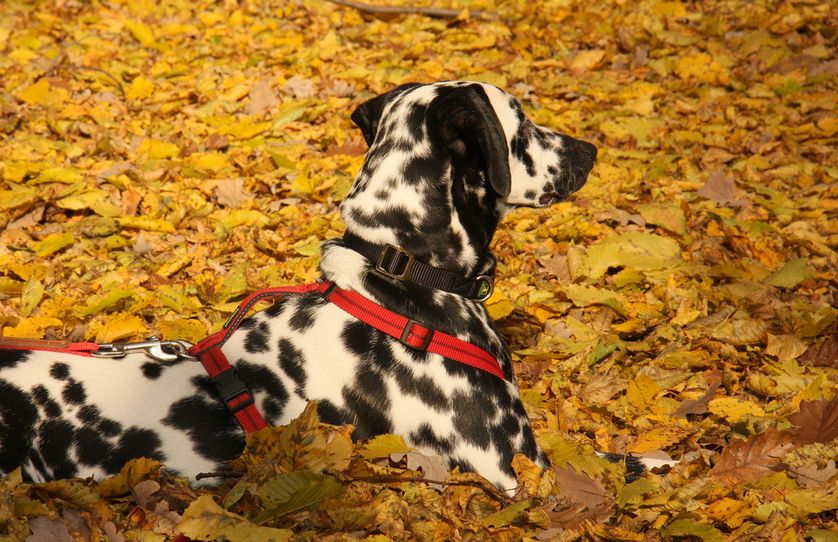
Staying with the theme of our lives being “rebooted” by our dogs.
Again, as so often occurs, a thought or reply left by someone to a previous post kicked off a new post for me.
So it was yesterday when Hariod commented: “This is the organisation that brought dogs into the care home my father lived in: http://www.petsastherapy.org/”
That website is full of great information and any readers living in the UK who have not come across them before are highly recommended to have a good browse. One item that caught my eye was the Precious Memories link.
The loss of a pet is always a devastating and traumatic experience but even more so for the owner of a PAT dog or cat who has brought much love and companionship to many people, as well as to their owners.
This page contains lasting memorials to some PAT dogs and PAT cats who have given much to society by regularly visiting in Hospitals, Hospices, Residential homes or Day Care Centres.
Baggy was a Finnish Lapphund and a wonderful and loving companion. She enjoyed taking part in many canine events including passing the KCGC Bronze, Silver & Gold awards, agility, showing and heel work to music, Baggy loved to go on a camping trip in the caravan or a trip down the river in our boat.
Baggy had two litters of puppies and two sons one from each litter are PAT dogs and her grand daughter is also a PAT dog. Baggy was my first PAT dog and she loved to go visiting in our local Residential home bringing joy and love to many people.
We love and miss Baggy so much our special sweet little friend.
Sheila Hall
The last aspect of the Pets As Therapy site that I want to refer to is their blog: Dog Dog Dog. Do drop in there and read some of the wonderful stories of those caring dogs.
That very nicely leads on to two videos that I quickly came across.
The first is described, thus:
Published on Dec 19, 2013
Follow Fraser, a black lab-golden mix, who has been a part of HCA Virginia’s unique Pet Therapy program since 2007. For several years, Fraser has spread comfort, compassionate care and joy to the faces of countless patients and staff at Chippenham and Johnston-Willis Hospitals from Tucker Pavilion and the Thomas Johns Cancer Hospital to many other areas. Catch a glimpse of how pet therapy is a source of alternative care for those in need.
While the second is about the therapy dog test.
Published on Dec 16, 2012
Achilles, my German Shepherd Dog, taking the Therapy Dog International test for certification.
Having this certification will allow Achilles and I to visit people in the hospital and other health care facilities.
Achilles is an AKC Obedience trained competitor and was able to pass the TDI test using that training and experience rather than special training for the test.
If you are interested in making your dog a TDI Therapy Dog go to their web site for information on how to accomplish that.
This is no conundrum: a direct contrast to yesterday.
The benefits of having a dog or two (or nine) are boundless and have been documented for thousands of years. Indeed, a quick web search revealed that Alexander Pope, the 18th-century English poet, is the attributed author of the quote, “Histories are more full of examples of the fidelity of dogs than of friends.”
Nevertheless, it was still a joy to come across the documentary film Dogs On The Inside.
Filmed in a Massachusetts prison, DOGS ON THE INSIDE follows the birth of a relationship between abandoned rescue dogs and prison inmates as they work together toward a second chance at a better life. Giving a voice to a forgotten dog and a forgotten man, the film is a life-affirming testament to the power of second chances.
The film was released in February 2014, and here is the trailer.
In general, it seems to have gathered good reviews with this one from Amazon being typical of what I have seen.
I had tears in my eyes during several segments of this film. Such a lovely connection between the rescue workers and the dogs. Then, the inmates and the dogs. And, finally, the photos of their forever homes and families. Bravo to all at Don’t Throw Us Away. People like you, who work to save and rehab these animals, are amazing.
You are also recommended to read the review that is on the Ecorazzi website. Here’s a flavour of that review:
Two parties neglected and forgotten become the powerful emotional center of an uplifting new documentary, Dogs on the Inside.
We’re taken to Massachusetts, where there exists a unique, mutually-beneficial rehabilitation program that finds rescue dogs paired with prison inmates.
This documentary, from directors Brean Cunningham and Douglas Seirup, follows a handful of inmates at a correctional facility involved in Don’t Throw Us Away, a program that partners them with neglected dogs. For the animal, benefits include exercise, attention, and care while shelters remain crowded. For the prisoners, they have a chance to form connections and work towards parole.
It’s fascinating throughout watching both sides – scared dogs and (emotionally) guarded inmates – warm to one another, seemingly leaving their past behind.
That’s at the heart of this illuminating, heartwarming film: second chances. Early on, it’s easy to see the parallels between these two groups – with the comparisons handled tactfully throughout a film that never strays from its simple, honest goal. Dogs never preaches or calls for political or social change; it more so asks the viewer to be willing to forgive and welcome in those which have been cast aside. When an inmate says, ‘they come from a bad life, they haven’t seen love in while,’ he isn’t necessarily talking just about the dog.
Let me close with this heart-stirring photograph that was included in the above review.
So much to learn from our precious, gorgeous dogs!
Consequently, writing a blog post for today wasn’t high on my list of things to do.
So this is to offer my thanks to everyone who sent me greetings; it was wonderful to hear from so many friends, old and new.
Thus my post today is to share three items that came from family back in England.
First, my mother, who is still teaching piano and oboe at the age of 95, sent me this:
Secondly, my son, Alex, and his long-term partner, Lisa, sent me this in an card chosen from the Friends of the Earth selection:
(All dog owners know, I’m sure, that dogs must never eat chocolate.)
Lastly, my grandson, Morten, who despite being just five-years-old, is already a dab hand with an iPhone and sent me the following picture of himself with Dad in the background:
Finally, my love and gratitude to Jeannie for making me feel special yesterday, as she has done every day since we first met.
There have been some pretty serious posts in recent days and I wanted to close off the week with something completely different!
The following was sent to me from Dan earlier on this week. It is socially incorrect and, for the sake of clarity, I don’t subscribe to this form of gender bias in any way.
But it sure is funny!
Why Some Men Have Dogs And Not Wives:
1. The later you are, the more excited your dogs are to see you.
2. Dogs don’t notice if you call them by another dog’s name.
3. Dogs like it if you leave a lot of things on the floor.
4. A dog’s parents never visit.
5. Dogs agree that you have to raise your voice to get your point across.
6. You never have to wait for a dog; they’re ready to go 24 hours a day.
7. Dogs find you amusing when you’re drunk..
8. Dogs like to go hunting and fishing.
9. A dog will not wake you up at night to ask, “If I died, would you get another dog?”
10. If a dog has babies, you can put an ad in the paper and give them away.
11. A dog will let you put a studded collar on it without calling you a pervert.
12. If a dog smells another dog on you, they don’t get mad. They just think it’s interesting.
13. Dogs like to ride in the back of a pickup truck.
And last, but not least:
14. If a dog leaves, it won’t take half of your stuff.
An antidote of happiness between the stories of despair.
Yesterday’s post about Indonesia was a dark reflection of humanity. So, I regret, will be Thursday’s post.
So it seemed really nice to offer you this video.
Published on Jun 1, 2015
Please SHARE Zuzi’s story and help us find a loving forever home.
Estimated age 4 yrs, vaccinated, microchipped.
For more info or adoption requests please contact us on: contact@howlofadog.org; visit our Facebook page: https://www.facebook.com/HowlOfADog or our website: http://www.howlofadog.org
Thank you!
——————– UPDATE: We have some very happy news: Zuzi was adopted and will be living from now on in Canada. Her adoptive family came to Romania and they returned to Canada with one extra passenger: Zuzi 🙂
Zuzi’s adoptive family knew the situation dogs from Romania have to deal with everyday and the suffering they have to endure, so they decided to adopt a dog and save a life.
——————–
If we can’t save the planet, at least we can carry on saving the animals!
I feel a little guilty at just dropping this full article in your path, and running away, so to speak, but yesterday was one of those days where Jean and I were “full on” for most of the day, and then out from the house from 4pm onwards.
It doesn’t lessen the interest, in my humble opinion, of this essay, that was recently published by The Conversation, and is republished within their terms.
ooOOoo
New DNA analysis says your pooch’s ancestors were Central Asian wolves
October 20, 2015
Author: Laura Shannon, Postdoctoral Research Associate in Biological Sciences, Cornell University
Dogs’ origin story goes something like this: sometime between 16,000 and 30,000 years ago, there were some stressed-out hungry wolves whose hunting territory had been encroached upon by humans. Luckily, these wolves were resourceful and they noticed human beings have a tendency to leave delicious things lying around. Scavenging leftovers seemed significantly easier than going out and hunting, so they hung around the people.
Wolves make unnerving neighbors. However, some are less unnerving than others. The humans were a lot more inclined to tolerate the proximity of less aggressive, more people-oriented wolves. As an added bonus, other predators are less likely to harass you when you are surrounded by wolves. So the people and the nicest wolves came to an agreement – the people tolerated and fed the tamest and most helpful wolves.
Smart, tame wolves have smarter, tamer wolf cubs, and so over time the wolves became more and more pleasant to have around. Obviously, friendly, helpful wolves hanging around people and eating leftovers aren’t really wolves; we have a word for those things – they’re dogs.
That’s biologists’ reasonable guess for how dogs came about. We have some idea when it all happened, but it’s been harder to figure out where. Who first took in scavenging gray wolves and turned them into dogs?
Dogs still know a good thing when they see it – warmth and food with people ‘round the campfire. Camping image via http://www.shutterstock.com.
However, the oldest dog bones anyone has found are from the other end of Eurasia, all the way in Northern Europe. Furthermore, the mitochondria of modern dogs are closely related to the mitochondria of ancient European wolves.
Finally, Middle Eastern wolves share the most genetic sequences with today’s dogs, which makes it seem like maybe Middle Eastern wolves are the ancestral wolf population.
All these threads of evidence broadly agree that dogs are from somewhere in Eurasia. But my colleagues and I wanted to narrow that down a bit – and to do that, we decided we needed DNA from as many dogs as possible for our new study.
Team members sampling a village dog in the Pacific Islands. Adam Boyko, CC BY-ND
Modern dogs cover the globe
Dogs are found almost everywhere people are, and over time we have bred them to do everything from guarding livestock to going fishing. The breeds we’ve created come in many shapes and sizes, ranging from tiny Chihuahuas to giant Great Danes. The vast majority of these breeds are less than 200 years old and come from Europe. But these purebred dogs or even mixes of these breed dogs are the minority of dogs on the planet.
Most dogs are free-ranging village dogs, which live around and among people but aren’t necessarily what you’d think of as pets. You can learn more about ancient dogs by studying these village dogs (as compared to studying breed dogs) because village dogs have more genetic diversity; the number of different versions of the same genes in village dogs is higher than it is in breed dogs.
All dogs were formed from a select group of wolves, and therefore have a subset of the genetic diversity found in wolves. But breeds were formed from a subset of dogs so they have only a further subset of the diversity found in dogs.
In the cradle of dogkind? Coss and Johanna, CC BY-NC
Tracing the trail through DNA sequences
Members of our lab traveled to collect blood or spit from dogs in a variety of locales, and collaborators sent us fluids from places to which we didn’t manage to travel. Village dogs are fairly easy to find for researchers carrying food. In total, we extracted DNA from the fluids of 549 dogs from 38 countries spanning the majority of the globe as well as 4,676 purebred dogs. Our lab at Cornell is conveniently located in the same building as a veterinary hospital, so most of our purebred dogs were patients.
Once we had our samples, we then determined each dog’s genotype at about 180,000 distinct points in the genome. This is the largest data set anyone has used to address the question of dog origins so far.
We were looking for a very specific pattern of historical genetic diversity. When a select group of wolves became dogs, those dogs contained only the genetic diversity present in that subset of wolves. When people took some of the dogs and moved on to new regions of the globe, or traded dogs with people in other regions, they took only a subset of the total dogs, and by extension a subset of the total diversity.
Therefore, we expect the original population of dogs to be the most diverse. There would be a gradient of decreasing diversity in all populations as they move away from the center of origin.
And this is the pattern we observed when we compared the genetics of dogs from different populations. Dogs from Central Asia, Mongolia and Nepal are the most diverse, with genomes that correspond to the early, original variation in the population right after domestication happened. When we look at the same DNA markers in dogs from neighboring regions, diversity decreases. It decreases further corresponding to the location’s increasing distance from Central Asia. This is the pattern we would expect if the people who first took in scavenging gray wolves and turned them into dogs were located in Central Asia.
Even dogs we sampled in the Pacific Islands traced their forebears back to Central Asia. Adam Boyko, CC BY-ND
Looking at the largest data set of dogs amassed so far, we observe a very clear signal that most dogs alive today descended from dogs in Central Asia. However, we only looked at dogs alive right now. We have no information about historical populations of dogs that have no living descendants. Furthermore, the patterns of diversity we observe are reflective of the origins of dogs but also of everything that has happened to dog populations since domestication.
Other research groups are extracting DNA from bones of ancient dogs, and these sequences will provide exciting new insights from time points closer to domestication. However, ancient DNA studies are limited by the availability of ancient dog bones – which is affected by many factors other than the distribution of historic populations; for instance, some environments are more conducive to the preservation of bone and DNA than others, some regions have been more extensively investigated by archaeologists than others, and so on. If we see similar patterns in ancient and modern dogs, that will add clarity to the history of dogs and the people who love them.
ooOOoo
Ultimately, it doesn’t matter one hoot, in a non-scientific sense, from where our dogs are descended. Just that they did evolve.
For human life without our dogs would be unthinkable.