Category: Business

The book! Part Three: Materialism

Money has never made man happy, nor will it, there is nothing in its nature to produce happiness. The more of it one has the more one wants.” Thus, it is reputed, spoke Benjamin Franklin, one of the Founding Fathers of the United States and who in many ways could be regarded as “the First American”.

In my previous chapter on short-termism, I quoted from an article by Larry Elliot, Economics Editor of The Guardian newspaper. The closing paragraphs of that article read:

“The premise of the Global Commission on the Economy and Climate is that nothing will be done unless finance ministers are convinced of the need for action, especially given the damage caused by a deep recession and sluggish recovery.

Instead of preaching to the choir the plan is to show how to achieve key economic objectives – growth, investment, secure public finances, fairer distribution of income – while at the same time protecting the planet. The pitch to finance ministers will be that tackling climate change will require plenty of upfront investment that will boost growth rather than harm it.”

“ …. the plan is to show how to achieve key economic objectives ……. while at the same time protecting the planet.” [My italics]

That those two paragraphs and the phrase “key economic objectives” seem perfectly reasonable statements to me and, I don’t doubt, many, many others, illustrates how deeply we are entrenched in the money, or materialistic, world.

I have spent my whole life hearing the term ‘Gross Domestic Product’, or GDP as it is commonly described, and never ever stopped to wonder about the history of this well-known measure. Thus I was genuinely surprised to learn that the term is not yet one hundred years old, by some years. On the website Foreign Policy one finds a brief history of GDP: “One stat to rule them all.” It offers the following:

Out of the carnage of the Great Depression and World War II rose the idea of gross domestic product, or GDP: the ultimate measure of a country’s overall welfare, a window into an economy’s soul, the statistic to end all statistics. Its use spread rapidly, becoming the defining indicator of the last century. But in today’s globalized world, it’s increasingly apparent that this Nobel-winning metric is too narrow for these troubled economic times.

1937: Simon Kuznets, an economist at the National Bureau of Economic Research, presents the original formulation of gross domestic product in his report to the U.S. Congress, “National Income, 1929-35.” His idea is to capture all economic production by individuals, companies, and the government in a single measure, which should rise in good times and fall in bad. GDP is born.

1944: Following the Bretton Woods conference that established international financial institutions such as the World Bank and the International Monetary Fund, GDP becomes the standard tool for sizing up a country’s economy.

1959: Economist Moses Abramovitz becomes one of the first to question whether GDP accurately measures a society’s overall well-being. He cautions that “we must be highly skeptical of the view that long-term changes in the rate of growth of welfare can be gauged even roughly from changes in the rate of growth of output.”

1962: But GDP evangelists reign. Arthur Okun, staff economist for U.S. President John F. Kennedy’s Council of Economic Advisers, coins Okun’s Law, which holds that for every 3-point rise in GDP, unemployment will fall 1 percentage point. The theory informs monetary policy: Keep growing the economy, and everything will be just fine. [My italics]

Keep growing the economy and everything will be fine! Thank goodness we have unlimited resources on this planet! Please forgive my irony!

Management thinker Peter Drucker is often quoted as saying that “you can’t manage what you can’t measure” but my understanding was that the saying came from William Edwards Deming; October 1900- December 1993. Deming was fundamentally an American statistician although his bio reveals many other talents: engineer; professor; author; lecturer; and management consultant.

Irrespective of the origins of the saying, it misses one fundamental point! That is of being certain that what you wish to manage is being measured appropriately. Not measuring pears if you wish to manage apples!

Stay with this idea for a while longer.

There is an organisation known as the Social Progress Imperative. The organisation is described on their website, as follows:

THE IMPERATIVE
Numerous studies have found a high correlation between economic growth and a wide variety of social indicators, yet there is growing awareness that economic measures alone do not fully capture social progress.

The Social Progress Imperative’s mission is to improve the quality of lives of people around the world, particularly the least well off, by advancing global social progress. The Social Progress Index provides a robust, holistic and innovative measurement tool to guide countries’ choices to enable greater social progress and foster research and knowledge-sharing on the policies and investments that will best achieve that goal. Social progress is defined as the capacity of a society to meet the basic human needs of its citizens, establish the building blocks that allow citizens and communities to enhance and sustain the quality of their lives, and create the conditions for all individuals to reach their full potential.

The Social Progress Index is a tool that we hope will be widely used to inform and influence policies and institutions around the world. The Index is founded on the principle that what we measure guides the choices we make. By measuring the things that really matter to people — their basic needs, their food, shelter and security; their access to healthcare, education, and a healthy environment; their opportunity to improve their lives — the Social Progress Index is an attempt to reshape the debate about development.

…. what we measure guides the choices we make.” Pretty flippin’ obvious when you think about it! As is understanding the “things that really matter to people”!

Michael Green is the Chief Executive Office (CEO) of the Social Progress Imperative. He gave a TED Talk in November, 2014 that is introduced:

The term Gross Domestic Product is often talked about as if it were “handed down from god on tablets of stone.” But this concept was invented by an economist in the 1920s. We need a more effective measurement tool to match 21st century needs, says Michael Green: the Social Progress Index. With charm and wit, he shows how this tool measures societies across the three dimensions that actually matter. And reveals the dramatic reordering of nations that occurs when you use it.
As Michael Green said at the October, 2014 TED Global conference: “GDP is imperfect and incomplete: The world urgently needs a measurement revolution.”

If now writing about the BBC radio show, The Goon Show, suggests I have lost the plot, just hang in with me for a few more moments.

The Goon Show ran from 1951 to 1960 and was broadcast by what was then known as the BBC Home Service. It was hilariously funny and became a comedy legend. It starred Spike Milligan, Peter Sellers and Harry Secombe, not forgetting the wonderful narratives from Wallace Greenslade. The Goon Show was an integral part of my ‘education’ during my formative years; I was seven in November of 1951 and the radio was the source of news, current affairs, education, and humour. Spike Milligan was an outstanding actor in The Goon Show and became a comedy legend in his own right.

A quotation from dear, dear Spike seems a very fitting way to round off this chapter on materialism. Namely: “All I ask is the chance to prove that money can’t make me happy.

1,272 words. Copyright © 2014 Paul Handover

oooo

Now although it is not part of the book, I was so impressed by Michael Green’s TED Talk, that it now follows. You will love it!

Published on Nov 11, 2014
The term Gross Domestic Product is often talked about as if it were “handed down from god on tablets of stone.” But this concept was invented by an economist in the 1920s. We need a more effective measurement tool to match 21st century needs, says Michael Green: the Social Progress Index. With charm and wit, he shows how this tool measures societies across the three dimensions that actually matter. And reveals the dramatic reordering of nations that occurs when you use it.
The book! Part Three: Power and Corruption

I am using the software Scrivener to write this book. I fail to recall how I came across Scrivener but, boy of boy, am I glad I did. It is fabulous. One can set out the raw structure of the book, section by section, chapter by chapter, much helping keep one’s mind on the construction of the book as the writing progresses.

All of which is a preamble for me telling you that when I clicked on the chapter ‘folder’ that was named Power and corruption, a folder empty of any words, my heart sank. Power and corruption! Where, oh where, does one start!

Then almost immediately kicked myself; metaphorically speaking! Simply for the reason that one of the most famous sayings is surely that of Lord Acton, the 19th-century British historian: “Power tends to corrupt; Absolute power corrupts absolutely.That is the place to start this essay on power and corruption.

History has plenty of examples of the tendency of power to corrupt. Of course, when the word ‘power’ is used on its own it misses its natural companion words; the words ‘other people’. Ergo: Power over other people tends to corrupt; Absolute power over other people corrupts absolutely. Napoleon Bonaparte declaring himself as emperor comes to mind, as does further back in time, the Roman emperors, who declared themselves gods, demonstrated absolute corruption from the absolute power, over other people, that they wielded.

Anyway, returning to Lord Acton, or to give him his full name, John Emerich Edward Dalberg Acton. He was the 19th century historian and moralist who was otherwise known more simply as Lord Acton, as in the first Baron Acton (Lord Acton lived from 1834 until 1902). His expression, “Absolute power corrupts absolutely; ……” arose expressed in a letter to Bishop Mandell Creighton in 1887:

Power tends to corrupt, and absolute power corrupts absolutely. Great men are almost always bad men.

Great men are almost always bad men: Now there’s a statement to play with!

Despite the text written in Lord Acton’s letter to the Bishop having become a favourite of the many collectors of quotations, it is probable that Lord Acton didn’t invent the idea; quotations very similar had been uttered by several authors well before 1887.

Let us explore the central question as to why it is that power has a corrupting characteristic; a largely corrupting characteristic might be more accurate. For in the Smithsonian magazine of October, 2012, there was an article that examined the social science behind why power brings out both the worst in some people, but also, at times, the best in people.

Why Power Corrupts

His [Lord Acton’s] maxim has been vividly illustrated in psychological studies, notably the 1971 Stanford Prison Experiment, which was halted when one group of students arbitrarily assigned to serve as “prison guards” over another group began to abuse their wards.

But new scholarship is bringing fresh subtlety to psychologists’ understanding of when power leads people to take ethical shortcuts — and when it doesn’t. Indeed, for some people, power seems to bring out their best. After all, good people do win elective office, says Katherine A. DeCelles, a professor of management at the University of Toronto, and no few business executives want to do good while doing well. “When you give good people power,” DeCelles says she wondered, are they more able than others “to enact that moral identity, to do what’s right?”

In a study recently published in the Journal of Applied Psychology, DeCelles and her co-authors found that the answer is yes. People’s sense of “moral identity”—the degree to which they thought it was important to their sense of self to be “caring,” “compassionate,” “fair,” “generous” and so on—shaped their responses to feelings of power.

Christopher Shea, the author of the Smithsonian article, went on to explain that:

DeCelles and her colleagues developed moral identity scores for two groups, 173 working adults and 102 undergraduates, by asking the participants to rate how important those ethically related attributes were to them. The researchers had some participants write an essay recalling an incident in which they felt powerful, while others wrote about an ordinary day. Then the participants took part in lab experiments to probe how they balanced self-interest against the common good.

Christopher Shea then concluded:

The experiment involving the adults found a similar relationship between moral identity, ethical behavior and innate aggressiveness. Assertive people who scored low on the moral-identity scale were more likely to say they’d cheated their employer in the past week than more passive types with similar moral-identity scores. But among those with high moral-identity scores, the assertive people were less likely to have cheated.

In sum, the study found, power doesn’t corrupt; it heightens pre-existing ethical tendencies. Which brings to mind another maxim, from Abraham Lincoln: “Nearly all men can stand adversity, but if you want to test a man’s character, give him power.

Yet despite the evidence presented that power does not automatically corrupt, the news is so often full of stories of powerful men, well predominantly men, behaving badly in all manner of ways: sex with their staff, assaulting others, such as hotel maids, cheating and lying. So if there is no direct wiring between power and corruption, that power does not automatically corrupt, it still leaves open the question of why power so often does corrupt. What motivates people in power to behave so badly?

In my research, I came across an article in WIRED magazine, How Power Corrupts, that revealed:

Psychologists refer to this [Why does power corrupt] as the paradox of power. The very traits that helped leaders accumulate control in the first place all but disappear once they rise to power. Instead of being polite, honest and outgoing, they become impulsive, reckless and rude. According to psychologists, one of the main problems with authority is that it makes us less sympathetic to the concerns and emotions of others. For instance, several studies have found that people in positions of authority are more likely to rely on stereotypes and generalizations when judging other people. They also spend much less time making eye contact, at least when a person without power is talking.

Then later on Jonah Lehrer, the author of the article, explained:

Although people almost always know the right thing to do — cheating is wrong — their sense of power makes it easier to rationalize away the ethical lapse. For instance, when the psychologists asked the subjects (in both low- and high-power conditions) how they would judge an individual who drove too fast when late for an appointment, people in the high-power group consistently said it was worse when others committed those crimes than when they did themselves. In other words, the feeling of eminence led people to conclude that they had a good reason for speeding — they’re important people, with important things to do — but that everyone else should follow the posted signs.

Concluding:

The larger lesson is that Foucault had a point: The dynamics of power can profoundly influence how we think. When we climb the ladder of status, our inner arguments get warped and our natural sympathy for others is vanquished. Instead of fretting about the effects of our actions, we just go ahead and act. We deserve what we want. And how dare they resist. Don’t they know who we are?

At this point, I sat staring at the screen for some time, wondering what to make of my research findings. Just ‘hearing’ my mind coming up with questions, questions that were rhetorical in nature, not hearing hard, clear questions that could command hard, clear answers. Questions such as:

• Is this characteristic of power warping our judgment, profoundly influencing how we think, as Foucault is recorded as saying, ‘hard-wired’ in humans?
• If so, has it always been this way?
• If not having always been this way with man, then what brought it on?
• Irrespective of the scale of an emergency affecting mankind, either on a regional or global scale, would power always have a tendency to corrupt?
• What cultural changes would need to take place to break the link between power and corruption?
• Indeed, could there be any changes that would achieve this?

Readers will have realised that I have not offered a single example, over and above the fleeting mentions of Napoleon Bonaparte and the Roman emperors, of power and corruption in recent times. For the straightforward reason that there are too many examples of the abuses of power around and picking, almost randomly, one from here and one from there, in no way adds anything to this chapter. That’s my view and I’m sticking to it!
1,443 words. Copyright © 2014 Paul Handover

Wherein lays the truth?

It is said that the first casualty in war is truth!

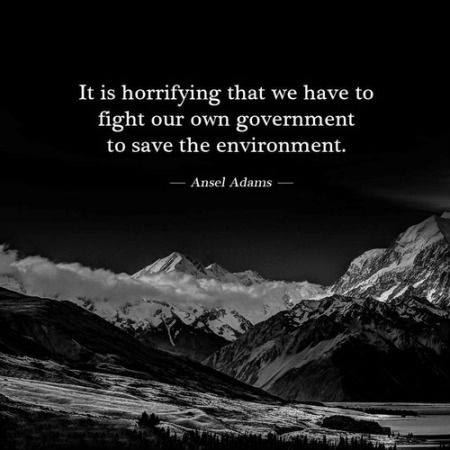
Ansel Adams

In yesterday’s post Vested interests, perhaps, I featured an article brought to my attention by dear friend, Dan Gomez. Namely an article featured in the UK’s Daily Mail newspaper that was headlined: ‘There is NO climate crisis’: Man-made global warming is a lie and not backed up by science, claims leading meteorologist.

Dan’s strong belief is that labelling the natural change in the world’s climate as anthropogenic global warming (AGW) serves governments and many large institutions incredibly well because it offers greater leverage to raise taxes.  In other words, Dan has no doubt that the climate is changing, but as a result of natural forces that go back long before the days of man.  In other words, it is being ‘sold’ as the direct result of man’s activities because it makes it easier to apply taxes and levies for purposes not related to climate matters.

As John Coleman was reported as saying:

John Coleman, who co-founded the Weather Channel, claims that the belief humans are causing climate change is not backed up by science.

In an open letter attacking the UN, the 80-year-old from San Diego, said that what ‘little evidence’ there is for global warming points to natural cycles in temperature.

‘There is no climate crisis,’ he wrote. ‘The ocean is not rising significantly. The polar ice is increasing, not melting away. Polar bears are increasing in number. ‘Heat waves have actually diminished, not increased. There is not an uptick in the number or strength of storms.

‘I have studied this topic seriously for years. It has become a political and environment agenda item, but the science is not valid.’

Now I am as sceptical about the workings of governments as the next man. But I find it incredibly difficult to believe that AGW is a myth, hoax or conspiracy.  There is a wall of science to say that we, as in man, are dangerously close to going over the edge, going beyond ‘tipping points’ from which there is no returning.

A quick dip into Wikipedia tells us [my emphasis]:

Scientific understanding of the cause of global warming has been increasing. In its fourth assessment (AR4 2007) of the relevant scientific literature, the Intergovernmental Panel on Climate Change (IPCC) reported that scientists were more than 90% certain that most of global warming was being caused by increasing concentrations of greenhouse gases produced by human activities. In 2010 that finding was recognized by the national science academies of all major industrialized nations.

Affirming these findings in 2013, the IPCC stated that the largest driver of global warming is carbon dioxide (CO2) emissions from fossil fuel combustion, cement production, and land use changes such as deforestation.

Only last Wednesday there was an item on Naked Capitalism that opened [again, my emphasis]:

J.D. Alt: Have We Passed the Tipping Point of Biological Collapse?

alt1The squiggle illustrated here may look like the Ebola virus, but it isn’t. The resemblance is just an eerie coincidence. It’s actually a graphical snapshot of the classic “Predator-Prey Model.” This mathematical exercise, first developed in the 1920s, serves as the introductory basis for a more recent NASA funded effort which produced—amidst a brief flurry of news and commentary last spring—the startling conclusion that a complete collapse of modern civilization may now be “irreversible.”

The NASA study involved the creation and running of a more elaborate model—HANDY (Human and Nature Dynamics)—which simulates the human consumption of naturally replenishing systems, as well as (intriguingly, given today’s news cycle) wealth and income inequality between two classes of citizens: “Elites” and “Commoners.” Now a new study, just released by the World Wildlife Fund, reports a grim statistic suggesting the abstract mathematics of the HANDY Model may be more than just a theoretical exercise. According to the WWF, in the last forty years—from 1970 to 2010—the Earth has lost over HALF (52%) of its wildlife population.

There are yards and yards of solid information all over the internet about our changing climate. The loss of wildlife, the destruction of forests and wild lands is beyond argument, and those aspects of this ‘modern’ world are most certainly the direct result of man’s activities!  Our inability to stop growing as a global population is insane.  Our inability to stop seeing continual economic and material growth as a ‘good thing’ is insane. We need massive change  – now!

Therein lays the problem.  Because, whether or not there is an approaching climate catastrophe as a result of man’s activities is, in a very real sense, irrelevant. If that seems a bizarre thing to write, I mean it is irrelevant in terms of what you and I, ordinary people trying to lead civilised lives, can do to make a difference.

Patrice Ayme recently published a post under the title of Total Plutocracy covering the death of Christophe de Margerie when his jet hit a snow plough on a Moscow runway at midnight, flipped on its back, caught fire, and skidded across. All four on board died.

Now the accidental death of any person is a tragedy, make no mistake, but as Patrice revealed in his post, this particular accident did raise some interesting aspects.  Here’s a little of what Patrice wrote:

With 200 billion Euros in revenue, TOTAL SA is not far behind the French government budget. TOTAL’s profits are 14 billion Euros (“Soyons serieux!” laughed Margerie). It pays nearly no tax in France, having concentrated there its money losing refineries.

Other countries get nearly all their fuel from French refineries; TOTAL has also a green light to frack in Britain. So this is not just a French situation. TOTAL is one of the five great oil companies concentrating the fossil fuel firepower. Those companies have the best technology. Some of TOTAL’s specialties are very deep water drilling, and using steam to extract tar oil in Canada.

What was de Margerie doing at midnight? Flying back to France, after meeting with Putin and Medvedev, late at night.

That’s how these guys are: great fun. Putin was recently invited to Milan for a big time European meeting. He arrived several hours late to visit with Merkel, who was not amused. After keeping her up past midnight, he motored to Berlusconi’s mansion, and the two plutocrats reveled together until 4 am. (We don’t know how many female teenagers were in attendance to further their studies.)

The next European meeting was at 8am, and Putin showed up.

Supposedly Margerie had just told Medvedev and Putin to cool it with Ukraine. At least that’s the massaging message Margerie’s minions floated after his death.

Why was Margerie so important to the Russian dictators? Because the six “supermajor” oil companies have the advanced technology. After all, they recruit from the best universities in the world (that’s paid by taxpayers). TOTAL SA was the spearhead of high tech development for hydrocarbon production in Russia. Among other things, it’s helping to build a gas liquefaction plant in the far north, to load special ships with methane (something TOTAL does with Qatar, in the world’s largest such installation).

Once a ship is fully loaded, it has several times the explosive power deployed at Hiroshima (such a catastrophic accident has not happened yet, but it’s just a matter of time).

When citizen Lambda dies, Mr. Anybody, nobody official cares. When a major plutocrat dies, our leaders, even our socialist leaders, weep, and present the accident as a national, even international tragedy.

Is the death of a plutocrat worth that much more, that all this public weeping has to occur?

And, by the way, who and what has authorized Mr. Margerie to lead his own foreign policy? Who authorized him to make nice with thermonuclear dictators? To the point of allowing their survival?

I recommend that you read it in full for it says so much about what is wrong with these present times: so much inequality and so many abuses of power.

Just the other day the Guardian newspaper published an article under the title of: Richest 1% of people own nearly half of global wealth, says report.

The richest 1% of the world’s population are getting wealthier, owning more than 48% of global wealth, according to a report published on Tuesday which warned growing inequality could be a trigger for recession.

According to the Credit Suisse global wealth report (pdf), a person needs just $3,650 – including the value of equity in their home – to be among the wealthiest half of world citizens. However, more than $77,000 is required to be a member of the top 10% of global wealth holders, and $798,000 to belong to the top 1%.

“Taken together, the bottom half of the global population own less than 1% of total wealth. In sharp contrast, the richest decile hold 87% of the world’s wealth, and the top percentile alone account for 48.2% of global assets,” said the annual report, now in its fifth year.

On October 8th, George Monbiot published an essay in The Guardian newspaper under the title of The Toll-Booth Economy.  The opening lines set the theme.

Corporate power is the real enemy within, but none of the major parties will confront it.

The more power you possess, the more insecure you feel. The paranoia of power drives people towards absolutism. But far from curing them of the conviction that they are threatened and beleaguered, it becomes only stronger.

On Friday, the Chancellor of the Exchequer, George Osborne, claimed that business is under political attack on a scale it has not faced since the fall of the Berlin wall. He was speaking at the Institute of Directors, where he was introduced with the claim that “we are in a generational struggle to defend the principles of the free market against people who want to undermine it or strip it away.” A few days before, while introducing Osborne at the Conservative party conference, Digby Jones, formerly the head of the Confederation of British Industry, warned that companies are at risk of being killed by “regulation from Big Government” and of drowning “in the mire of anti-business mood music encouraged by vote-seekers.” Where is that government and who are these vote-seekers? They are a figment of his imagination.

Read the full essay here.

Yes, one could go on and on.

Indeed, I will. Go on with just one more reference.  From the Smithsonian. An article that started, as follows:

Five Conflicts and Collapses That May Have Been Spurred by Climate Change

Earth’s changing climate has been a spectre in centuries of civil conflict and, at times, the collapse of whole civilizations

By Natasha Geiling
smithsonian.com
October 20, 2014

Is climate change a matter of national security? In a warming world, sea-level rise, drought and soil degradation are putting basic human needs such as food and shelter at risk. In March, the U.S. Department of Defense called climate change a “threat multiplier,” saying that competition for resources “will aggravate stressors abroad such as poverty, environmental degradation, political instability and social tensions—conditions that can enable terrorist activity and other forms of violence.”

Connecting climate change to a global increase in violence is tricky, and attempts to make such a link receive a fair amount of criticism. A hotter planet doesn’t automatically become a more conflict-ridden one. The 2000s, for instance, saw some of the highest global temperatures in recorded history—and some of the lowest rates of civil conflict since the 1970s.

But there are historical examples of civilizations that did not fare well when faced with drastic environmental change, and those examples may offer a window into the future—and even help prevent catastrophe. “We can never know with 100-percent certainty that the climate was the decisive factor [in a conflict],” says Solomon Hsiang, assistant professor of public policy at the University of California, Berkeley. “But there’s a lot of cases where things look pretty conspicuous.”

Read the five historical examples and realise that we are not immune.

Earlier on I ventured the idea that whether or not an approaching climate catastrophe was a result of man’s activities was, in a very real sense, irrelevant.  Because of the lack of individual power to make a real difference, especially a political difference.

What is relevant is improving the way we govern ourselves. The abuses of money and power are too widespread to be ignored.  We need to start with strong local democracies and thence building a system of global governance that really is of the people by the people for the people.

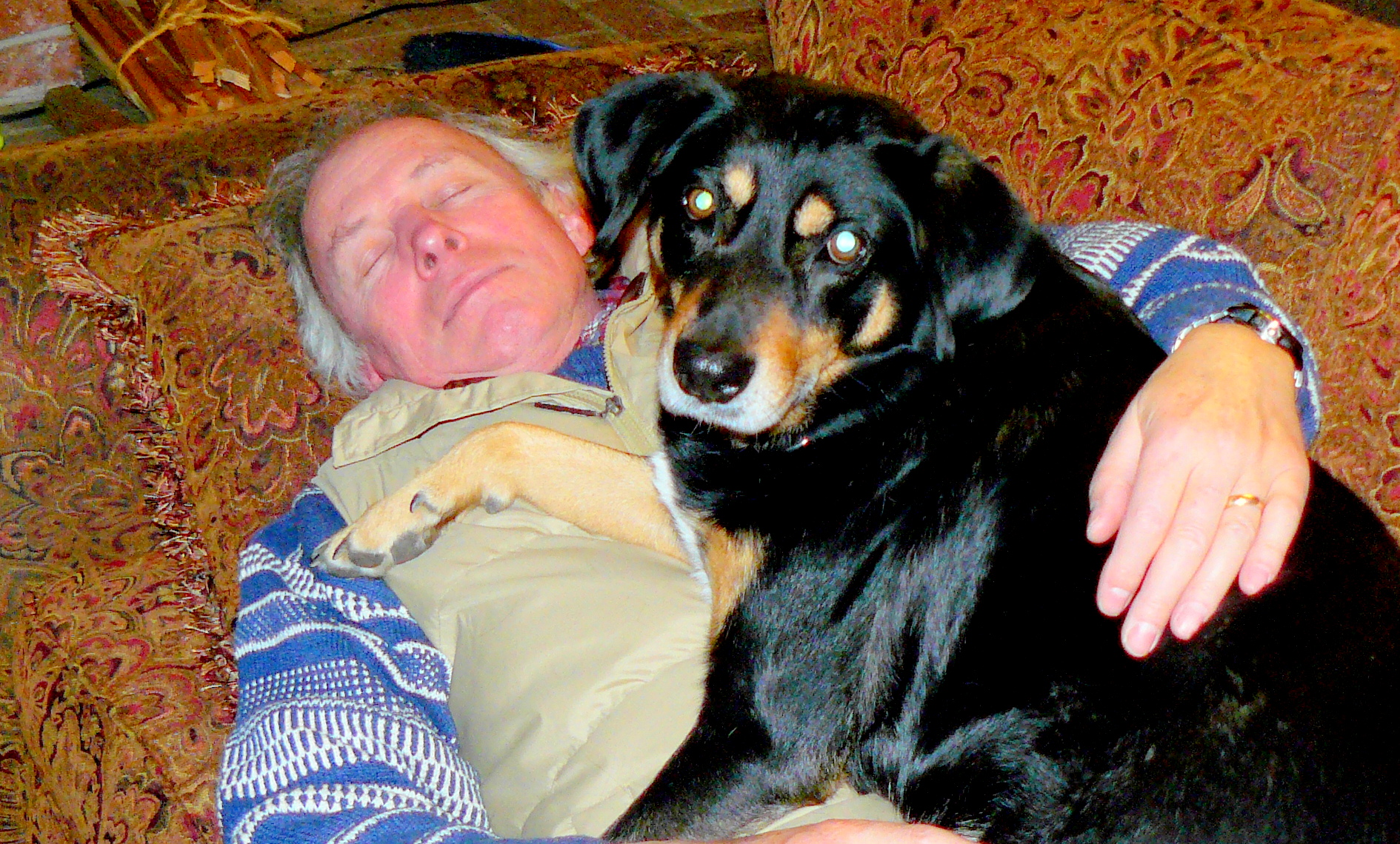
Phew – I need a dog to hug!

The truest of love between a man and a dog!
Hazel providing the ‘love-in’.

Returning to the land – a guest essay.

A question of a possible catastrophe

Note: As tomorrow’s post will explain, the next few weeks will be encroaching seriously on my blogging time. So it was very timely to receive this guest essay from John in the last couple of days and even more generous of him to give me permission to republish it.

It will make an interesting comparison to an item from Dan Gomez being published on Thursday.

ooOOoo

Notes on Dealing With Imminent Catastrophe

We know that our world economy is leveraged at least twenty-five times beyond any earthly material foundation. Regardless of this reality, we have made an artificial global economy more real than our physical world. This situation only makes sense when we recognize that we’re being encouraged to re-establish our awareness of reality. It’s a final exam time for a leading edge species of clever monkeys.

Nature has tolerated human activities for millions of years. Now that our demographics ravenously swarm the globe, belch poisons into the five mile band of air that sustains surface life on earth, dumps wastes and toxins into streams, rivers, lakes and oceans, and arrogantly refuses to understand obvious warnings; Nature is reacting.

For those who are inclined to either or choices, in accordance with the physical Law of Entropy, the decision is between pursuing constructive or destructive actions. For those who are more spiritually oriented, there is no question. In either case, we know what needs to be done.

Our first order of business is to stabilize our inclusive global economy through green initiatives that are operated for profit without damage to the eco-system. Yes, this sounds impossible the first time we think about it. Can we come up with a better plan? Not really, when we stop and honestly consider our situation. We’re poised on the brink of a material, economic and cultural collapse created by human beings.

Wars continue to be waged world wide over territory and rapidly diminishing fossil fuel resources. We have essentially lost trust in each other as equal members of a common community we call Earth. And, we are rapidly losing faith in the unsustainably inflated symbol of trust we call Money.

A green economy is our best solution for the multiple problems that plague us. Here’s why and a few suggestions about how we go about the process. Essentially, our critical need for renaissance is a process of education, formation and transformation.

When we return to the land as a global priority, the use of solar energy can replace massive industrial electrical generators running on fossil fuel derivatives. Most industrial generators may be easily converted to bio-diesel fuel. Industrial diesel generators worldwide can be converted to bio-fuel overnight. No mechanical adaptation is required.

Electric cars already set speed records at Europe’s classic racetracks. Solar electric cars are on the horizon. A bio-diesel engine to power a golf cart costs about $500 today and is available from Amazon.

There’s a natural need for co-operation when we return to the land and collectively re-establish our financial roots. First, we recognize that each of our actions affects the well being of the earth and its inhabitants. Second we realize that we are responsible for the well being of the Earth which sustains our being.

Third, we re-establish our natural connection with the unity of a living universe. We begin with the community gardens and farmer’s markets that are already operational, and rebuild accordingly.

When we are foolish, we act independently for our personal well being. When we are wise, we act together for the well being of the earth and each other. Growing our own food not only assures that what we eat will be free of chemical by-products; it also makes us aware of how fragile our consumer supply lines have become. Recycling our food waste as fertilizer completes a natural growth cycle.

By the way, a back yard greenhouse can produce enough bio-fuel to operate a diesel vehicle and a solar panel array can generate enough energy to charge your electric car. How much money does this save each year?

We don’t need nuclear reactors that sometimes melt down and sicken us with a continual stream of radiation carried by the tides and the winds of an integrated planet. We don’t need the wastes of nuclear reactors that poison the earth for millennium.

We don’t need nuclear weapons capable of destroying most, if not all, of the life on earth in an all out suicidal war. The only creatures to survive the holocaust of nuclear war would need to be radiation resistant; shielded deep underground or deep under the sea.

Harnessing wind, water and geothermal energy are wiser ways to keep our world energized in a green economy. A combination of habitats and communities powered by solar and geothermal energy will produce a new building boom as we shed the skin of our former infrastructure and a green architectural industry emerges.

Recycling the components of our technological world not only reduces our industrial waste, it decreases the cost of manufacture. Similarly, adapting and reusing what we already have decreases our personal expenses and reduces our demands on the earth.

These are only a few of the ideas which are already possible. Many more are already in the process of becoming our greater reality.

Still think such a massive transformation is impossible? If so, please know that you remain in our prayers.

There is hope for tomorrow. Science consistently opens new doors. Faith in the Nature of God of which we are each an infinitesimal part makes us unified and strong as a consciously aware biological species.

John Hurlburt

an old lamplighter

ooOOoo

Crumbling edge technology!

Dear readers and followers,

It is after 5pm yesterday and our home internet service is still down after most of the afternoon.

So rather than leave you with a blank page, I have borrowed a neighbour’s internet service, they use a different provider, to post this message.

Apologies but hopefully normal service resumed very soon.

Thank you WordPress!

Recognising the incredible contribution made to the world of modern communications.

This blog runs using software called WordPress. The WordPress community is vast. “Over 409 million people view more than 15.8 billion pages each month. Users produce about 43.7 million new posts and 58.8 million new comments each month.”  Millions and millions of websites run under WordPress.

No mistake it is a community in every sense of the word.  I feel fortunate and humbled to have made so many friends across the ‘bloggersphere’ despite not having met a single person face-to-face.  I just can’t imagine a life without my circle of followers and without me, in turn, following so many other bloggers.

Thus it seems entirely appropriate to publish in full a news item sent to all WordPress bloggers in the last twenty-four hours.

ooOOoo

Engaged, Inspired, and Ready to Build a Better Web

One week every year, the entire Automattic staff gets together to connect, work, and laugh. And then, of course, we blog about it! Could you be blogging about your experience with us in 2015?

Automattic is a distributed company — we all work from wherever we are. Right now, “where we are” is 197 cities around the world: New Orleans, USA. Montevideo, Uruguay. Tokyo, Japan. Vilnius, Lithuania.

Once a year, we get together somewhere in the world to meet, work alongside, learn from, and laugh with one another in an exhilarating, exhausting week called the Grand Meetup. This year, 277 Automatticians descended on Park City, Utah, for seven days in mid-September.

Chris Hardie @ChrisHardie
I flew across the country to spend time in a mountain lodge with a bunch of strangers I met on the Internet. And they are wonderful.

We introduced ourselves to new colleagues, reconnected with coworkers we haven’t seen since last year, and worked on ways to make WordPress.com even better. And of course, lots of us blogged about the experience, in words and images.

We were blown away by the brilliance and generosity of our colleagues…

I’m grateful to have met so many Automatticians from around the world who brought such kindness, curiosity, patience, fierce intelligence, creativity and humor to the time we had together. I’m grateful to have learned about their hobbies, families, personal journeys, quirks, pet peeves, amazing skills, unmitigated geekiness, and brilliant senses of humor.

– VIP Wrangler Chris Hardie

We marveled at the range of conversations we had, from the sublime to the absurd…

Here are some of the things I talked about this week:

  • Scottish independence
  • Taylor Swift
  • Goats
  • Sexism
  • My children
  • Other people’s children
  • Infertility
  • Tattoos
  • Swing dancing
  • Whiskey
  • Javascript
  • Waffles (lack thereof)
  • VideoPress
  • Houston
  • Leadership
  • Fake morning talkshows
  • Mario Kart

Happiness Engineer Zandy Ring

We soaked in the natural beauty of Utah…

Early morning takeoff, by yours truly.

And some of us got up close and personal with the wide Utah sky…

Happiness Engineer Jeremey DuVall realizes he’s just jumped out of an airplane.

We learned from one another, and had fun doing it…

I learned how to analyze data in Python with Carly, and went skydiving with Prasath. After discussing common security vulnerabilities with Anne, Cami and I plotted a podcast about absolutely nothing, and recorded part of our first episode…

If you asked me four years ago if I thought it were possible to enjoy working, I’d be dubious. If you asked me whether one could ever genuinely love and respect all their coworkers, I’d hesitate.

Over the past four years, the people of Automattic have demonstrated to me that it’s possible to do work you love with people you love. It’s not common — not yet — but it’s possible.

– VaultPress Eclectic Happiffier Chris Rudzki

We burned the midnight oil…

We worked, we played, we ate, we drank, we slept very little. We tried to make the world a better place, and if you think that’s me being dramatic you don’t know the people I have the honor of working with.

– Dot Organizer Cami Kaos

We took a lot of photos

On the final day, Automattic founder Matt Mullenweg led us in a toast that summed up the reason we’re all here…

I’m really grateful that I get to work with the people I do, and on the problems that we work on together. It’s far from easy, in fact each year brings new challenges and I make mistakes as often as not, but it is worthwhile and incredibly fulfilling. A few hours ago I gave a closing toast and teared up looking around the room. So many folks that give their passion and dedicate themselves to jobs both large and small, visible and unseen, to help make the web a better place.

– WordPress co-founder and Automattic CEO Matt Mullenweg

And when the week was over, heading home was bittersweet…

This morning was filled with so many hugs (and maybe a tear or two). I told myself that I was looking forward to returning home. To my own bed (although the sleep I got in the silence of the Park City night was the best I may have ever experienced). To regular exercise and home cooking. To the routine of my everyday life. And I was looking forward to that. And even though I knew I would miss my colleagues (it’s happened every time I return from a trip), the weight of the fog of sadness still surprises me when it descends.

I read their blogs. I like their Facebook posts. I retweet their Tweets. And I miss them.

– Happiness (w)Rangler Lori McLeese

If you think you might want to work with this motley crew and join us in 2015’s mayhem…

2014-company-animated

we’re hiring. (And yes, you’ll get to make up your own job title, too.)

ooOOoo

Seriously, if you think there is any way you can contribute to the success of WordPress, then do go across to this page – from where I note the following employee benefits:

BENEFITS

  • Open vacation policy (no set number of days per year). We encourage our employees to take the time they need to take vacation, develop interests, and spend time with friends and family.
  • Health, dental, & vision insurance for US and Canadian employees, their spouses or domestic partners, and children.
  • 401(k) plan and match for US employees and RRSP matching plan for Canadian employees.
  • We cover all costs of company travel.
  • We happily provide or reimburse hardware and software you’ll need, as well as books or conferences that promote continued learning.
  • Home office setup stipend, and co-working office allowance.

Well done the team!

Facebook: You can do better than this!

I’m voting with my feet and cancelling my Facebook account; here’s why.

Like tens of thousands of other people, I use social media: Facebook, Linked-In and Twitter.  In my own case primarily for promoting my blog writings.

It was another blogger who drew my attention to something so terrible, so despicable, that it pains me to even think about it, let alone write about it.

Let me explain.

I subscribe to The Liberated Way published by Alex Jones.

Last Sunday, Alex published a post called Caring about animal welfare. Here’s a short extract:

For six months I have been experimenting with a Facebook account in order to stay in contact with the creative industry in my town of Colchester. This experiment came to an end today when I closed my Facebook account due to Facebook allowing content associated with the torture of animals.

The word torture, highlighted by me, included a link to an article in the UK Daily Mail newspaper.  The link to that Daily Mail article is here. BUT PLEASE do not click on that link if you are not prepared to be hurt, shocked and made to feel VERY ANGRY!  To reinforce my warning, the headline of that article reads thus:

Facebook refuses to remove video of kitten being doused in petrol and set on fire ‘because it doesn’t breach any rules’

I can’t even bring myself to include the two photographs of the poor, tortured kitten who was killed by the bastards concerned.  However, I will reproduce one image carried by the Daily Mail:

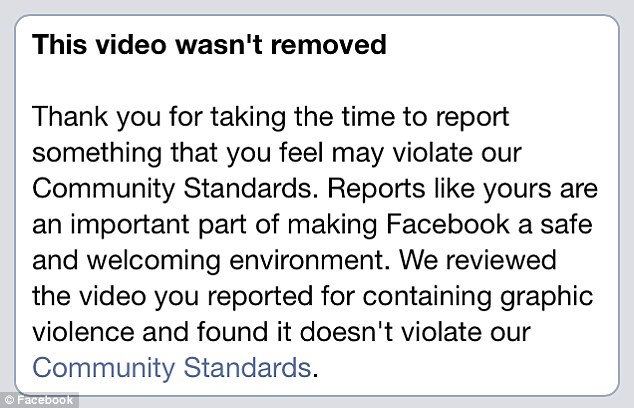
FB standards
Response: After reporting the video, which was not thought to have uploaded by either of the men in the video, and carries a warning message, Mr Dunwel was told the video would not be removed.

Facebook’s Community Standards may be read here.

But frankly any standards that regard the burning to death of a kitten as not being ‘graphic violence’ are incorrect standards.

So this coming Friday, I shall be cancelling my Facebook account.  Why not immediately?  Because my blog posts are themselves promoted on Facebook and I hope other Facebook subscribers who read today’s post  are motivated to do the same over the intervening three days.

If you are still uncertain of the merits of my action, and you have a very tough stomach, then the link to the video in question is here.

I have not watched the video for the simple reason that the details of the video were more than enough for me. These are those details:

Published on Sep 9, 2014
Cruel man douses kitten in full

Facebook has refused to take down a video of a kitten being covered in petrol and set on fire.

The web giant reportedly said the shocking footage does not breach any of its rules.

The footage shows two men pushing the animal into a bucket and pouring liquid on it.

The kitten is then set alight.

It can then be seen escaping from the bucket and running away still on fire.

The kitten rolls around in obvious distress but one of the men pours on more fuel as it burns.

When the flames are extinguished a plastic bag can be seen being placed over the animal.

The clip has caused disgust online, with thousands of Facebook commenting on it – but the social networking site has refused to take it down.


PLEASE, PLEASE if you are a Facebook user consider cancelling your account.

Our animals deserve our support.

I will close by asking Facebook to reconsider: Facebook you truly can do better than this.

And thank you Alex.

Support Net Neutrality

Please be aware of the threat to the original concept of the Internet.

As received from WordPress at 14:30 PDT today; September 9th, 2014.

(Even if you are not a ‘blogger’, please read the following and sign by using the link right at the end of the post.)

ooOOoo

Join Us in the Fight For Net Neutrality

by Paul Sieminski

“Net Neutrality” is the simple but powerful principle that cable and broadband providers must treat all internet traffic equally. Whether you’re loading a blog post on WordPress.com, streaming House of Cards on Netflix, or browsing handcrafted tea cozies on Etsy, your internet provider can’t degrade your connection speed, block sites, or charge a toll based on the content that you’re viewing.

Net neutrality has defined the internet since its inception, and it’s hard to argue with the results: the internet is the most powerful engine of economic growth and free expression in history. Most importantly, the open internet is characterized by companies, products, and ideas that survive or fail depending on their own merit — not on whether they have preferred deals in place with a broadband service provider. Unfortunately, the principle of net neutrality, and the open internet that we know and love, is under attack.

Net Neutrality under attack

The Federal Communications Commission has proposed rules that would, for the first time, expressly allow internet providers — like Comcast, Verizon and AT&T — to charge internet companies like Automattic, Netflix or Etsy for access to their subscribers. This means there could be “fast lanes” for companies who are able to pay providers for preferred internet access, while everyone else gets stuck in the “slow lane”…which means applications won’t perform as quickly, webpages will load slowly, and of course, buffering. A slow “still loading” spinner will be an unfortunate, but common sight on the new, closed internet that the big providers want.

Unsurprisingly, the large telecom companies who stand to benefit from the FCC’s proposed rules fully support their passage. They have nearly unlimited funds and hundreds of lobbyists in Washington to promote these harmful new rules.

But what they don’t have is you.

What can we do to fight back?

Automattic strongly supports a free and open internet. After all, WordPress.com, and the WordPress open source project are living examples of what is possible on an unthrottled internet, open for creation, collaboration, and expression. Over the last few months, we’ve joined 150 major tech companies in sending a letter to Washington in support of net neutrality, and met with FCC Chairman Tom Wheeler to urge him to preserve the internet we’ve always known.

Now it’s your turn.

Automattic, along with many other companies and digital rights organizations, is proud to participate in the Internet Slowdown on September 10. For this day of action, we’ve built a “Fight for Net Neutrality” plugin that you can enable now on your WordPress.com blog to show support for this important cause.

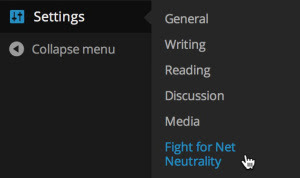
You can turn the plugin on by going to your Dashboard, Settings → Fight for Net Neutrality.

Net1

When you enable the plugin, we’ll replace a few of the posts on your site with a “Still Loading” spinner…to show what life will be like on an internet that features dreaded slow lanes.

Net2

The plugin will also display a banner that shows your support for Net Neutrality, and links to battleforthenet.com, where visitors to your site can sign a letter to the FCC about this important issue.

Please take a few minutes to enable the Fight for Net Neutrality on your site today, and visit battleforthenet.com to send a message to Washington that net neutrality must be preserved. Together we can make a difference, and we hope you’ll join us in this important battle for the open internet!

ooOOoo

Note: When I turned on the plugin and ran the preview for this new post, it made it very confusing in my opinion.  Thus as much as I support the campaign, and have signed accordingly, I have turned off the plugin for the time being.

So please all readers and followers of Learning from Dogs go to the BattleForTheNet website and sign to indicate your support for this important campaign.

Oh, and please click Like if you support the campaign.  Thank you very much.

Wisdom, nature and philosophy.

The hidden gifts of nature.

I have been a follower of Alex Jones’ blog The Liberated Way for many months; possibly much longer. Frequently, I republish one of Alex’s posts here.

Nearly six months ago, I read a lovely essay of his and made a mental note to republish that in the next few days.  Then the world overtook me and now April 30th, when Alex published this piece, has become September 8th!

Yet it hasn’t lost a heartbeat of meaning.

Read on and you will agree.

ooOOoo

The hidden gifts of nature.

The western education system ignores nature.

Nature is all around us with its gifts of philosophy, wisdom and creativity; qualities the West devalues at its loss.

The holidays are over in the UK, the students return to school, some to their exams. I reflect upon the sad treatment of creativity, wisdom, nature and natural philosophy in education, and in Western society as a whole, treated as worthless and unworthy of consideration.

On most days I walk past the former home of William Gilbert, some consider the father of electricity and magnetism. Born to a wealthy merchant family in my town of Colchester, Gilbert invested his personal wealth in an extensive study of magnetism with view to assisting the explorers of the Elizabethan age when Britain was building an empire in a period of great prosperity and confidence. Gilbert invented the term electricity. Gilbert wrote De Magnete, considered possibly the first work using the scientific method. In addition to being a scientist, a doctor to Elizabeth I, Gilbert was also a natural philosopher who used the empirical method of observation, demonstration and experience of nature to form his theories.

Each day I watch and interact with nature, like Gilbert I am a natural philosopher, and this forms the basis of my business ideas, my scientific understanding and my personal philosophies. Rather than a worthless study nature opens the door to the philosophy of the understanding of self, the world, and the relationship of self to the world. Wisdom is born of action and experience, the interactions with nature gives birth to wisdom. Nature encourages people to do new things in new ways, so rerouting electric signals in the brain causing new connections to form of creativity. The philosophy emerges from nature by causing the mind to question, observe and experiment, the basis of science and success in any discipline.

ooOOoo

Colchester, in the English county of Essex, goes way back to Roman times when the town was called Camulodunon (which was latinised as Camulodunum). That name is believed to date back to the Celtic fortress of “Camulodunon”, meaning Stronghold of Camulos. It served as the first capital of Roman Britain making a claim to be the oldest town in Britain.

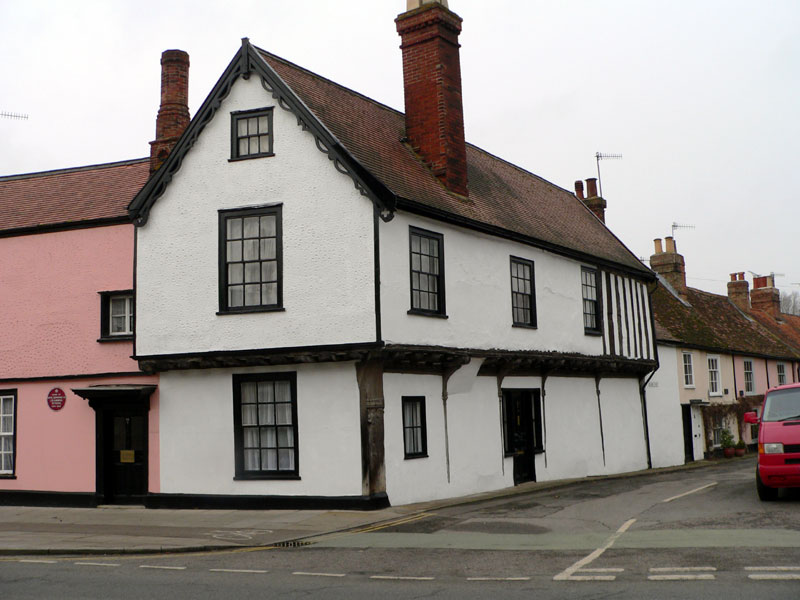
It is where Alex Jones lives, the author of The Liberated Way, and where during the 1980’s I ran a business under the name of Dataview Ltd.  In fact, the business was located in a very old, listed building known as The Portreeve’s House.  It was at the bottom of town near Hythe Quay on the River Colne and the name “Portreeve” is old English for harbour master, i.e. it was originally the harbour master’s house.

The timber-framed building at 1–2 East Bay, Colchester, known as the Portreeve’s House (TM00552525), is situated on the main eastern approach to the town centre. The building is on the junction of Brook Street and East Bay (FIG. 1) and is 375 metres east of the former position of East Gate and 150 metres west of East Bridge, the river Colne and East Mill.
The timber-framed building at 1–2 East Bay, Colchester, known as the Portreeve’s House is situated on the main eastern approach to the town centre. The building is on the junction of Brook Street and East Bay and is 375 metres east of the former position of East Gate and 150 metres west of East Bridge, the river Colne and East Mill.  The building is believed to date back to the 16th Century.

All seems a long way from Southern Oregon!

The passing of time.

The world-wide-web is now twenty-five years old.

I was doing a quick search through previous posts and, to my horror, found that I had published a post when the ‘web’ was twenty-years old.  It was a post called Even more Tim Berners-Lee and was published on the 25th March, 2010; some four-and-a-half years ago. Ouch!

Now Tim’s at it again speaking about the ‘web’ being twenty-five years old.

ooOOoo

From the web at 25 website:

Tim Berners-Lee calls for a Magna Carta for the Web (TED talk)

2014-8-19 // BY CORALIE MERCIER

2014 is the year the Web turns 25. Today, 19 August, marks the anniversary of Tim Berners-Lee, inventor of the World Wide Web, releasing the code of the WWW to the public by making the files available on the net via FTP (refer to the History of the World Wide Web for more details).

Last March we launched this site, kicking off a year-long celebration of the Web’s 25th birthday, which will culminate in an Anniversary Symposium and gala dinner on 29 October in Santa Clara (USA), to focus on potential and challenges of the future Web.

Last March in Vancouver, Tim Berners-Lee gave a TED Talk: A Magna Carta for the web, that was just released by the TED conference. Enjoy!

Sir Tim Berners-Lee invented the World Wide Web 25 years ago. So it’s worth a listen when he warns us: There’s a battle ahead. Eroding net neutrality, filter bubbles and centralizing corporate control all threaten the web’s wide-open spaces. It’s up to users to fight for the right to access and openness. The question is, What kind of Internet do we want?

This talk was presented at an official TED conference, and was featured by our editors on the home page.

I will leave you with the conclusion of Tim’s talk (the emphasis is mine (Coralie’s) ):

What sort of web do you want? I want one which is not fragmented into lots of pieces, as some countries have been suggesting they should do in reaction to recent surveillance. I want a web which is, for example, a really good basis for democracy. I want a web where I can use healthcare with privacy and where there’s a lot of health data, clinical data is available to scientists to do research. I want a web where the other 60 percent get on board as fast as possible. I want a web which is such a powerful basis for innovation that when something nasty happens, some disaster strikes, that we can respond by building stuff to respond to it very quickly.

So this is just some of the things that I want, from a big list, obviously it’s longer. You have your list. I want us to use this 25th anniversary to think about what sort of a web we want. You can go to webat25.org and find some links. There are lots of sites where people have started to put together a Magna Carta, a bill of rights for the web. How about we do that? How about we decide, these are, in a way, becoming fundamental rights, the right to communicate with whom I want. What would be on your list for that Magna Carta? Let’s crowdsource a Magna Carta for the web. Let’s do that this year. Let’s use the energy from the 25th anniversary to crowdsource a Magna Carta to the web. (Applause)

Thank you. And do me a favor, will you? Fight for it for me. Okay? Thanks.

Get’s my vote. Just wish the last twenty-five years hadn’t gone by just so quickly 😦