Very grateful to Deborah over at Dog Leader Mysteries for today’s post.
The following appeared over on Dog Leader Mysteries last Monday and is republished with Deborah’s permission. Please share this as far and wide as you can.
ooOOoo
1 minute for Irish Greyhounds
Featured by dogleadermysteries
Please help Irish Greyhounds by signing this Care2 petition
Save greyhound dogs’ lives in less than 1 minute
Bring Irish Greyhound Racing Regulations in line with the United Kingdom
I will not submit my readers to the horrors racing greyhounds endure or lose their lives from. I never thought any thing could be worse than dogs bred in puppy mills. After reading the Care2 petition’s explanation of the conditions and animal cruelty in Ireland’s dog racing world, now I feel sadder but an informed and wiser person.
My friend, Rosee Riggs, sent me this petition. The situation and welfare for dogs on Irish racetracks distresses all animal lovers everywhere. Without boring you with research and background, the essence of this petition effort targets raising Irish greyhound racing rules to match those in Great Britain.
4 great things about greyhound dogs
When living in a home with a family
Greyhounds love to snuggle
Greyhounds enjoy being couch potatoes
Rescued track greyhounds often hate to run
Greyhounds cannot swim. They sink due to extremely low body fat
Myth buster: Not true that former track greyhounds become runaway dogs!
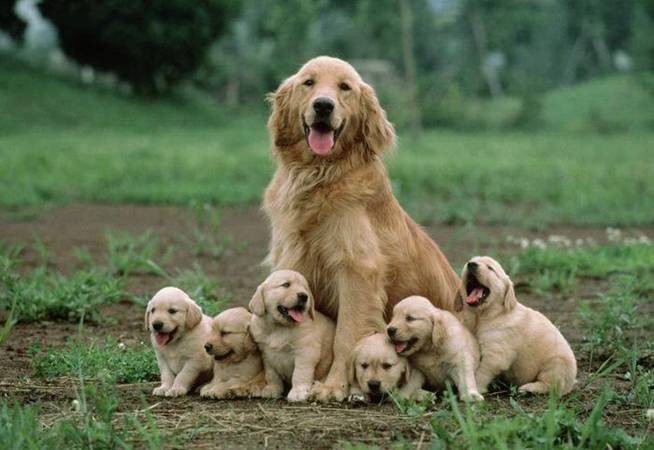
This is Rosee’s dog, Speedy. Read more about him on her site Good Dog Practice.
Former Irish greyhound, now safe and happy. Photo credit: Judith Utner
From Care2: legal changes needed to better protect Irish track greyhounds
Have a veterinarian present at all race meetings, trials and sales trials who must inspect every greyhound before it runs;
Provide the veterinarian with appropriate facilities;
Provide suitable kennels, diet, hygiene standards, for all greyhounds that are going to run in a race or trial and for the dogs NOT to be muzzled for 23-24 hours a day; Ensure that the greyhounds have access to an outside area for exercise and be supplied with food and water.
Only allow greyhounds that are healthy, micro-chipped, registered and, were required, tattooed, to run in a race or trial.
Keep up to date records of owners, trainers, greyhounds and any injuries/deaths to greyhounds.
Monitor all licensed and private Breeders to reduce excess Dogs thereby reducing the need to euthanize/kill unwanted puppies.
To regulate Ireland’s greyhound breeders, not governed by the same regulations & welfare stipulations as the UK. All aspects of greyhound dog breeding, training and kennelling.
To provide adequate travel facilities, breaks (on long journeys) and water/food as required.
Speedy came as a racetrack rescue from Ireland. Photo credit: Katrin Bargheer
Delighted to say that at 15:30 PST yesterday, the Care2 Petition site read:
we’ve got 169,061 signatures, help us get to 170,000
and went on to explain the background to the petition:
There are major concerns about animal welfare issues relating to the racing greyhound industry in Ireland. Many puppies and older dogs which don’t perform to racing owner expectations are killed simply because they won’t make money for the owner. They are discovered in mass graves with their tattooed ears hacked off so they can’t be identified – so that their owners can’t be held accountable.
Dogs are generally kennelled, constantly muzzled, for 23-24 hours a day for their entire racing life. There are usually at least two dogs per small kennel, sharing one bed (with straw if they are lucky). The kennels are overcrowded, not properly maintained and badly cramped.
In the UK there are regulations which provide some protection for racing greyhounds. These regulations do not exist in Ireland where most racing greyhounds come from. Changes need to be made to bring the laws in Ireland in line with those in the UK. These rules aren’t perfect but they do offer a lot of improvements to the lives of these beautiful dogs.
Please sign the petition to show the Irish Greyhound Racing Board that the public cares about these dogs, to encourage them to support laws to protect these dogs.
At least 20 greyhounds a day, either puppies, which do not make the track because of lack of “prey drive”, or ‘retired’ dogs, aged between 18 months to 3-4 years, simply ‘disappear’ according to “records”. All dogs should be identifiable by the tattoos & registry records. When they are tattooed the dogs are roughly handled & dragged around by their ears with pincers.
(This is a two-part post, with the concluding part tomorrow.)
My father was born on June 15th, 1901.
Here is a photograph taken of him on his twenty-first birthday.
Frederick William Handover – June 15th, 1922
He was an architect for Barclay Perkins & Co., a London firm of brewers. Here are the opening words of the Wikipedia entry.
The Anchor Brewery was an English brewery located in Southwark, London. Established in 1616, by the early nineteenth century it was the largest brewery in the world. From 1781 it was operated by Barclay Perkins & Co, who merged with Courage in 1955. The brewery was demolished in 1981.
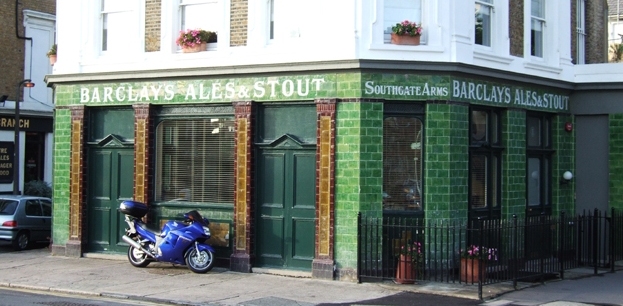
A Barclays Public House in Southgate, London N1. Picture from The Brewery History Society.
I was born in November, 1944 and at the start of the school year in September 1956, me aged eleven, I started in the first term of Preston Manor County Grammar School near Preston Road, Wembley, just a few miles from where we all lived. (Mother, father, me and Elizabeth, my younger sister by four years.) Frankly, I had been regarded as a bit of a dreamer at my primary school and more than a few were surprised that I passed the ’11+’ exams, a prerequisite for attending a grammar school in those days.
I became twelve-years-old in November, 1956. Just six weeks after my twelfth birthday, on the evening of December 19th, 1956, my mother, as normal, came into my bedroom to kiss me goodnight. However, what transpired was very far from normal.
For she sat down on the edge of the bed and told me that my father was not well and may not live for much longer. To this day, I can still see her sitting on the edge of the bed, adjacent to my knees covered by the sheet and bedcover, a very drawn look on her face.
I had been aware of my father being at home in bed for a while but had no notion whatsoever, prior to this moment, that he was seriously unwell. In hindsight, it was more than I could emotionally embrace for not only did I not go back into my parent’s bedroom and again say goodnight to my father, I went off to sleep without any problem.
During that night, in the early hours of December 20th, my father died, the family doctor attended and my father’s body was removed; I slept through it all and awoke in the morning to find my father gone.
Now fast forward just a few years.
It’s too long ago now for me to recall who it was who gave me my father’s fountain pen that he used on a daily basis when he was alive. It is a Sheaffer Crest Snorkel with a 14K gold Triumph nib with a platinum plated tip.
I have had the pen for nearly sixty years and treasure it, as you can imagine. But in recent times it was not functioning properly and I put it down to old age, and transferred to a modern pen.
By a wonderful stroke of luck I recently came across an American company, Pendemonium, who restore and service a wide range of pens, including Sheaffer pens of the age of my father’s pen; that particular model first was produced in 1952.
On Saturday, the restored Sheaffer pen was sent back to me. It is a real joy to find that it writes so well and remains a living memory of my father from so long ago.
My father’s Sheaffer fountain pen.
Now all you dear readers must be wondering just what on earth I’m rambling on about!
My answer will be offered in Part Two that will be posted tomorrow.
Tomorrow, I want to offer the example of someone who has been sufficiently strong to take one small step back to sanity.
What I am offering is the reposting of an item in 2013 on Transition Network over in the UK. As you read it, do bear in mind that the references to Amazon are, in the main, to Amazon in the United Kingdom.
I’ve done it. I’ve closed my Amazon account. I now stand before you as an ex-Amazon account-holder. I feel curiously shaky, but at the same time empowered, excited even. While opening a new Amazon account is easy as pie, closing one is another matter altogether. I’d like to share with you how, and why, I did it.
Was it the recent Panorama programme about working conditions in those vast Amazon ‘fulfilment centres’ that tipped me across into doing something? Was it the stories about the appallingly low levels of tax Amazon pay in the UK? Was it the recent video showing Amazon’s plans to be delivering across the UK within 30 minutes through the use of drones? Was it hearing the level of taxpayers’ money that goes in sweeteners to attracting Amazon to open up in different communities, while the profits generated pour out of those same places? What actually tipped me across was a conversation I had with a book seller in my town. It was that that led me, finally, to build the steely resolve needed to close down my Amazon account.
Yes, I confess, I had an Amazon account. I buy music from my local record shop, I support my local book shops, but there are times when I need a book quickly, or feel I do, and it’s just easier and more convenient. And, if I’m honest, I love getting exciting parcels in the post. And isn’t it cheap? But as Carole Cadwalladr, who went undercover in Amazon’s Swansea ‘fulfilment centre’ for The Guardian puts it:
Our lust for cheap, discounted goods delivered to our doors promptly and efficiently has a price. We just haven’t worked out what it is yet.
I’ve always had that nagging conscience that it’s not OK really, but I have just had it ticking away in the background and carried on using it on occasion. The conversation that tipped it for me, with my local bookseller, was around “what would it take for you to stop supporting Amazon?” His example was Primark, recently implicated in child labour in the manufacturing of some its clothes. We know that’s the case, but we still shop there. If we knew that 8 year olds work there, would we stop shopping there? Or 5 year olds? If we knew that every day they arrive for work they get hit with a stick, would we still pop in there for a cheap new shirt? And if they got hit 3 times, and then again in the middle of the day? Where do we draw the line?
Our tendency is to draw a line, but then for that line to slip. What swung it for me was thinking that actually, what I already know should be enough to make me withdraw my support. Also, it was thinking about where the world will be in 5 years time if we continue to give Amazon our support. More and more low paid jobs, with little Union protection, in conditions described in the BBC documentary as “… all the bad stuff at once. The characteristics of this type of job, the evidence shows increased risk of mental illness and physical illness.”
We’ll see Amazon ‘fulfilment centres’ that look like a wasp’s nest, with drones flying in and out. High streets swept clean of bookshops, indeed of most shops, as Amazon spread into selling virtually everything that local economies sell, but far cheaper. It made me think about what kind of a world I’m creating for my sons as they enter the work place. What kind of opportunities will Amazon offer them, as they gut local economies and focus economic activity into vast warehouses along the side of motorways?
I give so much of my time every day to trying to create a different, more just, more resilient world, yet my shopping decisions undermine that. There is also an extraordinary arrogance to thinking that it is OK for you to fill peoples’ airspace, the sky above their heads, with your drones, delivering your products to people for your profit. What happens for a company to get so huge that that is considered acceptable? It is about getting too big. Amazon is too big. Far too big. But it clearly sees that it has only just started. That’s not good.
So, decision made, and with a commitment to source those things in other ways, I went to the website to close my account. Closing an account with Amazon is like breaking up with a girlfriend whose level of obsessive denial is such that the possibility you might want to split up with her doesn’t even enter her consciousness. It’s a fascinating process. Opening an account with Amazon is so easy. Closing an account is, as my 15 year-old son might put it, a right mission.
Click on ‘Your account’ and there is no option anywhere of “Close my account”. Nothing. Like it’s not even a possibility that it might entertain. I had to Google (and don’t get me started on them) “closing your Amazon account”. If you search the Amazon site for “close my account” it yields no results. See below:
The Google link took me to their Help section, on pages that bear the slogan “we’re the people with the smile on the box”, prompting the thought that the inside of their box-like warehouses are probably somewhat bereft of smiles. If offers you a drop-down menu under the helpful title “what can we help you with?”. Surely that’s where I’ll find “Close my Account”? No. You get a range of choices, “An order I placed”, “Kindle”, “Digital services” and, er, “Something else”. Guess I’m “something else” then. So I click that.
I’m then given another 4 options, none of which are “Close my account”. I’m asked to “tell us more about your issue”, and given another list where my option is “other non-order question”. Given that still, the idea that I might have got this far could mean I want to close my account is clearly unimaginable, I am then given an option to email, to phone, or to “chat”. So I click on “chat”, and am told “a customer service associate will be here in a moment”.
A charming man then begins to chat with me. Here’s how our conversation went:
Me: I want to close my account please. How do I do that?
Tom (not his real name): Thank you for contacting Amazon.co.uk. My name is Tom. May I know your name, please?
Me: Rob
Tom: Thank you. I’m sorry to hear that you want to close the account. May I know the reason for closing the account please?
Me: Certainly. I am appalled by the way Amazon operate as highlighted in the recent BBC Panorama programme. I am appalled at the recent story on Amazon considering deliveries in future by drone. I am appalled by the low level of tax Amazon pay in the UK. I have been a customer for years, but I feel Amazon has become too big, and eats everything in its path. It is no longer something I wish to support.
Tom: I’m sorry for the situation. For confidentiality reasons, I’m not able to close your account for you in chat, so I’m going to send you an e-mail with the information to close the account. When you receive it, please respond to that e-mail so that we will close your account.
Me: Thank you Tom. I would really like my reasons for leaving to be registered somehow, as I think a lot more people will be closing their accounts for similar reasons, and it would be good for that to be noted by those in charge. Will that be possible?
Tom: Unfortunately we will not be able to comment on this issue. However, I will send you an email regarding the closing of the account. Is there any thing else I can help you with?
Me: I am not asking you to comment on the issue. I am asking you to make sure that the reasons for my closing my account are passed on to management. If I ran a business I would want to know why my customers were closing their accounts. Is that not the case at Amazon?
Tom: Sure, all the information’s will be recorded and forwarded to the appropriate department.
Me: Thank you Tom. I appreciate your help.
Tom: Thanks for your understanding. We hope to see you again soon! Have a Nice Day!
I later received an email from Customer Support to say:
“We appreciate your feedback and have forwarded it to the appropriate team internally. We are proud to provide a safe and positive working environment for all of our associates. Information about working at our fulfilment centres can be found at the following link: www.amazon.co.uk/fcpractices“
Amazon may be cheap, but cheap comes at a cost for someone else. And, after all, much of what is bought on there is throwaway rubbish. As Carole Cadwalladr puts it:
The warehouse is 800,000 square feet, or, in what is Amazon’s standard unit of measurement, the size of 11 football pitches (its Dunfermline warehouse, the UK’s largest, is 14 football pitches). It is a quarter of a mile from end to end. There is space, it turns out, for an awful lot of crap.
Me, I resolve to buy less, but better. Less, but longer-lasting. Less, but local. The thought of where we will end up in 5 years time, 10 years time, 20 years time, if companies like Amazon continue as they are, really frightens me. It’s not good, it’s not right. It’s not about our needs, it’s about the needs of huge investors. I want a different world for my boys.
I can’t, on my own, do that much about it. I can’t insist that the UK government legislate so that, as in Holland, the Recommended Retail Price (RRP) is the legal minimum at which any book can be sold, although I think that is grounds for a really timely campaign. Because of that, Amazon don’t really operate in Holland. Bring back the RRP for books here, and let’s have a level playing field. As I say, I can’t do much, but I can withdraw my support. I just have withdrawn my support. It feels surprisingly unsettling, as one does after ending a relationship, but it was the right thing to do. It may be a drop in the ocean, but if enough people do it….
ooOOoo
As you might expect, I do have an Amazon account but will look closely into alternatives. In that regard, I just want to expand on the link underneath the earlier phrase, “commitment to source those things in other ways“. The link takes you to an article in the Guardian newspaper, online version, dated the 16th May, 2013. Here are the opening paragraphs:
Amazon’s tax bill is in the news again, after a Guardian investigation put the spotlight on its financial arrangements. There’s a growing swell of people who want to use an alternative place to buy – including my colleague Patrick Collinson who wrote about his attempts to kick the Amazon habit in November.
But it is not always easy to find good alternatives online: if you want to buy either the latest Dan Brown novel (and clearly some people do), Mad Men series five on DVD, or even a packet of Pampers nappies, Amazon seems to come top of the search pages.
To close today’s post, just spend four minutes watching the following video.
Why growth and the environment can’t coexist
Published on Feb 9, 2015
Featuring: Sam Bliss
Production: Daniel Penner
Animation + Illustration: Amelia Bates
Music: “Nincompoop (No Vocals)” by Josh Woodward (http://www.joshwoodward.com/)
“Favorite Secrets” by Waylon Thornton (http://waylonthornton.tumblr.com)
Footage: Prelinger Archives
The background to the video, first seen referred to on the Grist blogsite, is republished here:
Watch our juicy explainer about the environment’s growing economics problem.
Consume less, share more. Those are some basic principles behind degrowth, an idea and movement that rejects economic growth as a goal for society. This video explains degrowth with oranges, juice, and peels.
But wait, you ask, isn’t growth a good thing? In an age when we’re conditioned to equate growth with progress, degrowth sounds insane. In reality, pursuing endless exponential expansion of the economy is insane — and impossible. Humans already use resources faster than Earth can replenish them and produce wastes, like carbon emissions, faster than Earth can assimilate them. Hence, degrowth.
Degrowth isn’t about making everyone poorer; it’s about redefining wealth to acknowledge that real well-being can’t be measured in dollars. It’s about breaking down the artificial barrier between life and work; it’s about valuing cooperation over competition; it’s about democracy, autonomy, solidarity, and climate justice. Most importantly, degrowth means sharing society’s surplus for awesome art projects and epic, week-long gatherings.
I freely admit that I have been putting off today’s post, and I’m not sure why.
Maybe it’s the continuing escalation of words between the West and Russia over the Ukraine? (But for some clarity do read this analysis written by Anatol Lieven, Professor, Georgetown University’s School of Foreign Service in Qatar.)
Maybe it’s because my last republication of a George Monbiot essay was so hopeful. Indeed, the blog post was called Voting for hope.Whereas today’s Monbiot essay is very sad.
Maybe it’s because I am not immune to the temptations that are described.
But whatever the reasons, there can be no denying that there is a real sense of finding the modern world increasingly strange and frequently upsetting.
That theme continues today with the republication of a George Monbiot essay that he released on his blog a week ago.
ooOOoo
Lost in the 21st Century
3rd February 2015
Consumerism has broken its promise. Perhaps now we can begin to reconnect.
By George Monbiot, published in the Guardian 4th February 2015
A woman walks into a department store. She takes in the racks and stacks of stuff, the sugared music, the sale signs, the listless customers shuffling through the aisles, and is moved – suddenly and to her own astonishment – to shout. “Is this all there is?!”. An assistant comes round from behind his till. “No madam. There’s more in our catalogue.”
This is the answer we have been given to everything, the only answer. We might have lost our attachments, our communities, our sense of meaning and purpose, but there will be more money and more stuff with which to replace them. Now that the promise has evaporated, the size of the void becomes intelligible.
It’s not that the old dispensation was necessarily better: it was bad in different ways. Hierarchies of class and gender crush the human spirit as effectively as atomisation. The point is that the void that was filled with junk is a void that could have been occupied by a better society, built on mutual support and connectedness, without the stifling stratification of the old order. But the movements that helped to smash the old world were facilitated and co-opted by consumerism.
Individuation, a necessary response to oppressive conformity, is exploitable. New social hierarchies, built around positional goods and conspicuous consumption, took the place of the old. The conflict between individualism and egalitarianism, too readily ignored by those who helped to break the oppressive norms and strictures, does not resolve itself.
So we are lost in the 21st Century, living in a state of social disaggregation that hardly anyone desired, but that is an emergent property of a world reliant on rising consumption to avert economic collapse, saturated with advertising and framed by market fundamentalism. We inhabit a planet our ancestors would have found impossible to imagine: 7 billion people, suffering an epidemic of loneliness. It is a world of our making but not of our choice.
Now it appears that the feast to which we were invited is only for the few. Figures released last week show that wages in the United Kingdom are lower than they were 13 years ago(1). A fortnight ago, Oxfam revealed that the top 1% now possesses 48% of the world’s wealth(2); by next year it will own as much as everybody else put together. On the same day, an Austrian company unveiled its design for a new superyacht. It will be built on the hull of an oil tanker, 918 feet long(3). There will be 11 decks, three helipads, theatres, concert halls and restaurants, electric cars to take the owner and his guests from one end of the ship to the other, and a four-storey ski slope.
In 1949, Aldous Huxley wrote to George Orwell, to argue that his dystopian vision was the more convincing(4). “The lust for power can be just as completely satisfied by suggesting people into loving their servitude as by flogging and kicking them into obedience. … The change will be brought about as a result of a felt need for increased efficiency.” I don’t believe he was wrong.
Consumerism is at odds with common purpose: you could pay your taxes or you could spend the money on a new car(5). It stifles feeling, dulling our concern for other people. Freedom to spend displaces other freedoms, as lotus eating allows us to forget our losses. Most forms of peaceful protest are now banned, but no one stops us from devouring the resources upon which future generations will depend. All this helps the global oligarchs to rip holes in the social safety net, find relief from the constraints of both democracy and taxation, and enclose and privatise our common weal.
Just as human society has been pulled apart by consumerism and materialism, pushing us into an unprecedented Age of Loneliness(6), so ecosystems have been shattered by the same forces. It is the consumerist mindset, raised to the global scale, that now threatens us with climate breakdown, catalyses a sixth great extinction, imperils global water supplies and strips the soil upon which all human life depends(7).
But nor do I believe that the acceptance of servitude Huxley envisaged is a permanent state. Wage stagnation, the brutality of the new conditions of employment, the breaking of the link between educational attainment and social advancement, the impossibility, for many young people, of finding good housing, all these confront us with the question that could be deferred only during conditions of rising general prosperity: is this all there is?
As the growth of Syriza and Podemos suggests, we cannot build political movements to challenge these issues unless we also build society. It is not enough to urge people to change their politics: we must create not only communities of interest but also communities of mutual support, offering the security, survival and respect that the state will no longer provide.
In a remarkable series of contemplations, extending beyond its familiar brief, Friends of the Earth has begun to explore how we might reconnect(8), with each other and with the natural world. It is looking, for example, at new models for urban living(9), based on sharing rather than competitive consumption: the sharing not just of cars and appliances and tools, but also of money (through credit unions and micro-finance) and power. This means community-led decision-making, over transport, planning and, perhaps, rent levels, minimum and maximum wages, municipal budgets and taxation. Such initiatives are not a substitute for government action – like David Cameron’s Big Society they are meaningless without facilitation from the state – but they can bring people together with a sense of shared purpose, ownership and mutual support that centralised decision-making can never provide.
Friends of the Earth also supports the empathy revolution championed by the author Roman Krznaric(10), and lifelong education that might counter the ever narrower schooling now inflicted on our children, whose purpose is to prepare people for jobs they will never have, in the service of an economy ordered for the benefit of others.
In these ideas and movements we find the glimmerings of an answer to the question: no, this is not all there is. There is attachment. Despite the best efforts of those who believe there is no such thing as society, we have not lost our ability to connect.
5. See also the discussion of Rami Gabriel’s work (2013. Why I buy: Self, taste, and consumer society in America. University of Chicago Press) in Friends of the Earth, December 2013. Consumption and identity: A review of literature which is relevant to the question: ‘what is a better foundation for people’s identity than consumption?’ http://bit.ly/1ECZopQ
Last Thursday, I published a post under the title of Oil, money, banks, guns and blood.It was such a departure from my normal style of blog post that I anticipated that it would slide by without any comment. Wrong! It had the highest readership of the week and attracted some powerful and insightful replies. So much so that I expressed the desire to reflect on those replies before responding. Thus, today’s post is my response to your comments and feelings.
First, Hariod Brawn of the blogsite Contentedness responded, in part:
Now, where are we? Val’s words are a good place to begin: “Nothing is what is seems, or will ever be the same again.” Nobody knows for sure, but piecing together fragments of world events, my instinct (fwiw) tells me that we are in the incipient stages of the collapse of the 20th.c. paradigm. Neoliberalism has failed; further than that, Capitalism has failed – we have no free markets where it counts; they’re all rigged. Politics has failed too, having been bought out by the corporates. [There are over 30,000 lobbyists in Washington alone] All that Western Governments have to offer is a doomed re-run of failed practices (same with Japan actually). Worse still, they have gone down on their knees and begged the financial sector to create a fix. The private banks have been given access to vast sums of QE cash at virtually zero interest in order to continue rigging markets (via their agents) all to their benefit whilst also creating huge market distortions in asset bubbles. Has the wealth they created trickled down? Has it hell. Whilst all this is going on, and as the film so clearly demonstrates, the Middle East looks like fulfilling its promise of the last century as being the flashpoint for warfare on a vast scale. And of course, if by some miracle we escape financial collapse, and world peace is not threatened by warfare, then the environment is going down the pan because – guess what? – our politicians have failed us once again. I have said enough on this.
Hariod then went on to recommend the films of Chris Hedges that will be featured on Learning from Dogs at a future date.
Then Val Boyco, her blogsite being Find Your Middle Ground, wrote a response before viewing the film:
Without being informed yet … my thinking is that the world we live in is so complex, stressful and fast that we can’t absorb everything that happens. We simplify and label, in order to make sense. We chop and segment in order to understand, but we miss the full story and many have lost the ability to grasp the bigger picture…. or are too fearful of going against the expectations of others and becoming one of “them” instead of one of “us”.
Then reinforced by her comment after watching the film:
I just watched the movie Paul. It is powerful and very disturbing. As you say, it undermines what we believe is real. It also reveals the complexity – misunderstanding – manipulation – corruption – opium, oil and the struggle for power – naivety – chaos.
In the dualistic fairy tale world of good vs evil it has created a nightmare of errors.
Nothing is what is seems.
Or will ever be the same again.
Giant American global corporations, the 200 largest ones, do 100 billion dollars of tax evasion through Luxembourg alone. Each year. Many are media companies. Wonder why stories make no sense?
Juncker directed that. Now he is head of the European Commission, and insist Greece shall pay every single penny.
As it happened, my dad was among a European group of geologists working for the Afghan government, who discovered Afghanistan’s riches… In the 1970s. All hell broke loose shortly thereafter.
I write about these sorts of things, day in, day out. But most people prefer the opium of feel-good…
Patrice then went further in offering a post over on his own blog that carried the specific title of Great Bitter Lake. Let me quote a little from that:
“Bitter Lake” is about the conspiracy between American plutocracy and Saudi plutocracy. Plutocrat Roosevelt was freshly flown from Yalta, to the Great Bitter Lake, on the Suez Canal. The idea was to steal the Maghreb, and the Middle East from the French and the British, by making a theocratic alliance.
At Yalta, Roosevelt had given half of Europe to his Comrade Stalin. (Plutocrats of the world naturally unite!)
Never mind that Poland had fought the Nazis courageously the Nazis, at a time when the USA was militarily and diplomatically collaborating… with the Nazis (or maybe, precisely, the Poles had to be punished!) Roosevelt had to be strict: the French had successfully escaped from the military occupation (AMGOT) he had set-up for them.
The movie “Bitter Lake” exposes (some) of the American plutocracy led conspiracies which led to the devastation, among other things, of Afghanistan, and other constituencies, thanks to the Wahhabist Islam it unleashed on the world.
Readers of this site will be familiar with the general ambiance.
One caveat: all what is in the documentary and makes American plutocrats (Roosevelt) and their servants (Reagan) look bad, is correct. However the real situation, the real badness is way worse. (For example the secret, official USA intervention in Afghanistan was under Carter, on July 3, 1979. However the real even more secret intervention, through the Pakistani ISI was even earlier and even more vicious.
So what is my response?
It is this:
In 1887, Oscar Wilde said, referring to the differences between the British and the Americans: “We have really everything in common with America nowadays, except, of course, language.”
By way of example there is a saying back in my old country that when something is “… going to the dogs”, it means an irreversible decline in standards; the phrase usually aimed at an organisation or even a country.
Many, especially those of my age, might nod sagely and reflect that something ‘is going to the dogs‘ in terms of the wider Western world.
Let me be specific. There are destructive and dysfunctional issues in modern societies that I would list as: Selfishness; Power & Corruption; Short-termism; Materialism; Population growth; Greed, inequality and poverty. It’s not an exhaustive list!
Now many would argue the ‘whys’ and ‘wherefores’ about what precisely is wrong with Western societies in this 21st century but far fewer would argue with the underlying premise; that something is fundamentally wrong with today’s world.
Indeed, one of the things that is impossible to miss is the body language, the look on a face, the shrug of a shoulder, when one casually remarks that these are interesting times! From strangers and friends alike.
There is no question that what mankind has ‘enjoyed’ these last fifty years or so cannot be continued for very much longer. That the era since the 1960s of growth, materialism and consumption is running one very basic and fundamental resource dry. You know the one I am referring to: Planet Earth.
My hope is that the widely-felt feelings that something is fundamentally wrong with today, are the feelings man has always experienced, since time immemorial, when mankind has passed through the threshold between two eras.
My hope is that the new era, one that we quite possibly may now just be entering, a new era of sustainable living on this planet, of social and political changes to replace extreme levels of inequality, of stronger communities of like-minded persons, will be obvious to all, but especially obvious to our next generation, within the next ten years; possibly fewer than ten years.
One thing is for sure. The sharing of ideas and feelings as is the style of modern blogging is critical to the forming of the opinions that precede the changes that so many now see as unstoppable.
Adding to the chorus of voices criticising Budweiser.
I’m going to republish in full what arrived in my ‘in-box’ yesterday from Howling For Justice.
But before I do that, let’s consider the ancient history of the wolf and the connection with our dogs of today. I shall do that by offering a small extract from something that I will be presenting at a meeting in Grants Pass on February, 10th.
Dogs are part of the Canidae species, a family including wolves, coyotes and foxes, thought to have evolved some sixty million years ago. There is no hard evidence as to when dogs and man came together but dogs were certainly around when man developed speech and set out from Africa; about fifty thousand years ago.
What is clear is that the dog represents man’s longest domesticated animal companion; by far. Some scientists believe that we have had the benefits of dogs in our lives for thirty thousand years. Indeed, some have proposed that the benefits of having tame wolves around us humans helped man be so successful a hunter and gatherer that it was instrumental, a mere ten thousand years ago, in humans first discovering how to cultivate crops and domesticate animals. Becoming the most significant single development in human history.
Because reflect that for a previous three million years Stone Age man, the hunter-gatherer, had engaged in activities as natural as the swoop of a hawk or the grazing of a horse.
ooOOoo
OK, on to that Budweiser advertisement.
Budweiser Takes Low Road – Demonizes Wolves To Sell Suds
February 1, 2015
We all know about the Budweiser ad, a little lost puppy being threatened by a wolf. I won’t show the ad because it’s BS and I don’t want to give it any publicity but Budweiser should be ashamed. Are they that desperate to sell beer?
Get a grip Budweiser, very poorly played. Beer drinkers around the country should boycott Bud if the ad is not pulled. It’s a low blow to wolves, one of the most persecuted animals on the planet.
Please click the link below and sign the petition to tell Budweiser what you think of their blatant demonizing of wolves.
===
Tell Budweiser: Don’t Demonize Wolves to Sell Beer
author: Center for Biological Diversity
target: Anheuser-Busch CEO, Thomas W. Sante
Purposefully demonizing an animal that is part of America’s natural heritage is no way to sell beer.
But that hasn’t stopped Budweiser from crafting a commercial for this year’s Superbowl that intentionally drums up anti-wolf sentiment to try and capitalize on our culture’s outsized fear of wolf attacks.
The ad pits a cute puppy against a snarling, evil-looking wolf. In the ad the puppy is saved from the vicious wolf by the arrival of a team of Clydesdale horses.
Here’s a reality check: 1.2 million dogs are euthanized in shelters in the United States each year while another 1.2 million dogs are hit and killed by cars on America’s roads.
By comparison, wolves are a virtually non-existent threat to our furry canine friends, only in very rare instances attacking dogs if they feel threatened or perceive them as competitors. The real threat to both dogs and wolves, as these numbers show and as Budweiser’s cynical attempt to boost sales indicates, is people.
Take action — tell Budweiser to pull its wolf-hating ad, demonizing an endangered species is no way to sell beer.
A reposting of a blog from Dog Leader Mysteries about a dog food recall.
Quickly stepping over the observation that today’s post is about as far removed, topic wise, from yesterday’s post as one could possibly imagine, nonetheless this is important and needs to be widely shared.
ooOOoo
Raw food recall: J J Fuds Frozen Pet Food
J. J. Fuds Raw dog food recall expands
Dear Fellow Dog Lover,
Because you signed up on my website and asked to be notified, I’m sending you this special recall alert.
On January 27, 2015, J. J. Fuds of Valparaiso, Indiana, announced it is expanding its recall of select lots of J. J. Fuds Raw Frozen Pet Food to include 2 other products due to unspecified contamination.
I copied this email notice from The Dog Food Advisor. I highly recommend you sign up for this list.
Please share to save dogs’ lives
We don’t feed Sydney raw meat. We do feed organic raw vegetables in limited quantities. We care about pets and want our readers to share this important news. Also we want you to know that we receive the Dog Food Advisor’s updates. Mike Sagman never stuffs our email box, but sends out notices as fast as he receives them. We asked our local pet stores if they receive notices before opening each day. You can do that. Ask when and how pet foods get pulled from their shelves, your pet’s life depends on this.
Turn aside if you are looking for a bright, optimistic start to the week.
Two separate experiences have come together to offer, well anyway for me, a sense of now not recognising the world I grew up in. The first was Episode One of a programme on BBC Television, broadcast last Thursday, and the second was an essay from Ann Jones on the TomDispatch site, published yesterday.
First, that BBC programme. Despite not being able to view it directly here in Oregon, both the programme details and a first-hand account from a British viewer confirm the essence of this two-part series. Here’s what is on the BBC iPlayer website:
The Super Rich and Us
First shown: 8 Jan 2015
Britain has more billionaires per head than any other country on earth, yet we’re also the most unequal nation in Europe. We were told the super-rich would make us richer too, so why hasn’t that happened, and what does the arrival of their astronomical wealth really mean for the rest of us? In programme one of this two-part series, Jacques Peretti looks at how the super-rich first exploited an obscure legal loophole to make Britain one of the most attractive tax havens on earth. He argues this was no accident. Wooing the super-rich was a deliberate strategy by government to reconfigure the British economy, under the belief their wealth would trickle down to the rest of us. But it didn’t. The OECD now say the British economy would have been 20 per cent bigger had we not pursued the super-rich. So who sold us the fallacy and why?
Jacques meets the super-rich themselves – from those buying premiership football clubs to the billionaires who are breaking ranks to criticise the decisions that made them richer and society more unequal.
Jacques challenges the architects of these policies, as well as tracking down the foreign multimillionaires who are buying up Britain and turning us from a nation of property owners to a nation of renters. He uncovers new research that shows growing inequality has been driven by this key factor of unaffordable property, and the far-reaching effect this will have on every aspect of our lives. Inequality is reshaping Britain into two simple classes: the 99 per cent and the one per cent. This is the story of how it happened and what it means for all of us.
While, for obvious reasons, the programme can’t be included in this post, one can get a flavour of the degree of inequality in Britain from this BBC News item from last May.
The second experience was reading the latest post published over on the TomDispatch site; an essay from Ann Jones (see bio at end). Some while ago, Tom Engelhardt, he of TomDispatch, was sufficiently generous to give a blanket permission for his essays to be republished on Learning from Dogs. Here is that essay from Ann. (NB: In the original there are numerous hyperlinks to other materials, too many for me to transfer across: Apologies.)
ooOOoo
Tomgram: Ann Jones, Answering for America
Posted by Ann Jones at 8:00am, January 11, 2015.
One of the grimmer small events of recent American life occurred just as 2014 was ending. A mother had her two-year old toddler perched in a shopping cart at an Idaho Wal-Mart. He reached into her purse, specially made for carrying a concealed firearm (and a Christmas gift from her husband), found his mother’s pistol in it, pulled it out, and shot and killed her. And she wasn’t the only victim of a child who came upon a loaded weapon. Between 2007 and 2011, at least 62 children 14 or younger died in similarly nightmarish accidents with loaded weapons.
Nor was this specific incident an anomaly. In fact, if you are an American, you are statistically in less danger of dying from a terrorist attack in this country than from a toddler shooting you. And by the way, you’re 2,059 times more likely to die by your own hand with a weapon of your choosing than in a terrorist attack anywhere on Earth. You’re also more than nine times as likely to be killed by a police officer as by a terrorist.
And remind me, how many American taxpayer dollars have gone into “security” from terrorism and how many into security from weaponry? You know the answer to that. In fact, guns of just about every variety seem to circulate ever more freely in this country as the populace up-armors itself in yet more ways. Think of it as a kind of arms race. Emboldened by the National Rifle Association (NRA), Americans are ever more weaponized. There were an estimated 300-310 million guns in the U.S. in 2009 (a figure that has undoubtedly risen), and up to four million Americans now own assault rifles — one popular weapon of choice, by the way, for mass killers. In the meantime, the percentage of Americans who favor a ban on handguns (25%) has fallen to an all-time low.
As for “carrying,” it’s now legal in every state in America and allowed in ever more situations as well. In the last year, for instance, Idaho, where that mother died, became the seventh state to green-light the carrying of concealed guns on college campuses. To put all this in perspective, less than two decades ago, fewer than a million concealed weapons were being legally carried in the U.S.; now, more than one million people are permitted to carry such weapons in Florida alone. In twenty-first-century America, the “right to bear arms” has been extended in every direction, while there has also been a “sharp rise” in mass killings.
Meanwhile — since what’s an arms race without a second party? — the police, mainlining into the Pentagon, have been up-armoring at a staggering pace. It’s no longer an oddity for American police officers to be armed with assault rifles and grenade launchers as if in a foreign war zone or to arrive on the scene with a mine-resistant ambush-protected vehicle previously used in our distant wars. And by the way, while much anger has been displayed, by the police in particular, over the recent murders of two patrolmen in Brooklyn by a disturbed man carrying a Taurus semiautomatic handgun, that anger seems not to extend to his ability to arm himself or to the pawnshop filled with weaponry that originally sold the gun (but not to him).
One mistake you shouldn’t make, however, is to imagine that Americans consider the right to bear arms universal. Just consider, for example, the CIA’s “signature drone strikes” in Pakistan and elsewhere. Over the last two presidencies, the Agency has gained the “right” to drone-kill young men of military age bearing arms — in societies where arms-bearing, as here, is the norm — about whom nothing specific is known except that they seem to be in the wrong place at the right time. The NRA, curiously enough, has chosen not to defend them.
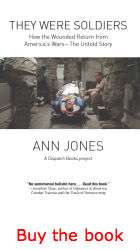
If, to a visitor from Mars or even (as TomDispatch regular Ann Jones points out) Europe, all this might seem like the definition of madness, it’s also increasingly the definition of a way of life in this country. What was once the “tool” of law enforcement types, the military, and hunters is now the equivalent of an iPhone, a talisman of connection and social order. It’s something that just about anyone can put in a pocket, a purse, or simply strap on in the full light of day in a land where all of us, even toddlers, seem to be heading for the O.K. Corral. Jones, author of They Were Soldiers: How the Wounded Return From America’s Wars — The Untold Story, has seen her share of carnage and experienced her share of stress. Today, however, she considers another kind of stress, the pressure to explain to others a country whose citizens don’t even notice how inexplicable they are becoming. Tom
Americans who live abroad — more than six million of us worldwide (not counting those who work for the U.S. government) — often face hard questions about our country from people we live among. Europeans, Asians, and Africans ask us to explain everything that baffles them about the increasingly odd and troubling conduct of the United States. Polite people, normally reluctant to risk offending a guest, complain that America’s trigger-happiness, cutthroat free-marketeering, and “exceptionality” have gone on for too long to be considered just an adolescent phase. Which means that we Americans abroad are regularly asked to account for the behavior of our rebranded “homeland,” now conspicuously in decline and increasingly out of step with the rest of the world.
In my long nomadic life, I’ve had the good fortune to live, work, or travel in all but a handful of countries on this planet. I’ve been to both poles and a great many places in between, and nosy as I am, I’ve talked with people all along the way. I still remember a time when to be an American was to be envied. The country where I grew up after World War II seemed to be respected and admired around the world for way too many reasons to go into here.
That’s changed, of course. Even after the invasion of Iraq in 2003, I still met people — in the Middle East, no less — willing to withhold judgment on the U.S. Many thought that the Supreme Court’s installation of George W. Bush as president was a blunder American voters would correct in the election of 2004. His return to office truly spelled the end of America as the world had known it. Bush had started a war, opposed by the entire world, because he wanted to and he could. A majority of Americans supported him. And that was when all the uncomfortable questions really began.
In the early fall of 2014, I traveled from my home in Oslo, Norway, through much of Eastern and Central Europe. Everywhere I went in those two months, moments after locals realized I was an American the questions started and, polite as they usually were, most of them had a single underlying theme: Have Americans gone over the edge? Are you crazy? Please explain.
Then recently, I traveled back to the “homeland.” It struck me there that most Americans have no idea just how strange we now seem to much of the world. In my experience, foreign observers are far better informed about us than the average American is about them. This is partly because the “news” in the American media is so parochial and so limited in its views both of how we act and how other countries think — even countries with which we were recently, are currently, or threaten soon to be at war. America’s belligerence alone, not to mention its financial acrobatics, compels the rest of the world to keep close track of us. Who knows, after all, what conflict the Americans may drag you into next, as target or reluctant ally?
So wherever we expatriates settle on the planet, we find someone who wants to talk about the latest American events, large and small: another country bombed in the name of our “national security,” another peaceful protest march attacked by our increasingly militarized police, another diatribe against “big government” by yet another wannabe candidate who hopes to head that very government in Washington. Such news leaves foreign audiences puzzled and full of trepidation.
Question Time
Take the questions stumping Europeans in the Obama years (which 1.6 million Americans residing in Europe regularly find thrown our way). At the absolute top of the list: “Why would anyone oppose national health care?” European and other industrialized countries have had some form of national health care since the 1930s or 1940s, Germany since 1880. Some versions, as in France and Great Britain, have devolved into two-tier public and private systems. Yet even the privileged who pay for a faster track would not begrudge their fellow citizens government-funded comprehensive health care. That so many Americans do strikes Europeans as baffling, if not frankly brutal.
In the Scandinavian countries, long considered to be the most socially advanced in the world, a national (physical and mental) health program, funded by the state, is a big part — but only a part — of a more general social welfare system. In Norway, where I live, all citizens also have an equal right to education (state subsidized preschool from age one, and free schools from age six through specialty training or university education and beyond), unemployment benefits, job-placement and paid retraining services, paid parental leave, old age pensions, and more. These benefits are not merely an emergency “safety net”; that is, charitable payments grudgingly bestowed upon the needy. They are universal: equally available to all citizens as human rights encouraging social harmony — or as our own U.S. constitution would put it, “domestic tranquility.” It’s no wonder that, for many years, international evaluators have ranked Norway as the best place to grow old, to be a woman, and to raise a child. The title of “best” or “happiest” place to live on Earth comes down to a neighborly contest among Norway and the other Nordic social democracies, Sweden, Denmark, Finland, and Iceland.
In Norway, all benefits are paid for mainly by high taxation. Compared to the mind-numbing enigma of the U.S. tax code, Norway’s is remarkably straightforward, taxing income from labor and pensions progressively, so that those with higher incomes pay more. The tax department does the calculations, sends an annual bill, and taxpayers, though free to dispute the sum, willingly pay up, knowing what they and their children get in return. And because government policies effectively redistribute wealth and tend to narrow the country’s slim income gap, most Norwegians sail pretty comfortably in the same boat. (Think about that!)
Life and Liberty
This system didn’t just happen. It was planned. Sweden led the way in the 1930s, and all five Nordic countries pitched in during the postwar period to develop their own variations of what came to be called the Nordic Model: a balance of regulated capitalism, universal social welfare, political democracy, and the highest levels of gender and economic equality on the planet. It’s their system. They invented it. They like it. Despite the efforts of an occasional conservative government to muck it up, they maintain it. Why?
In all the Nordic countries, there is broad general agreement across the political spectrum that only when people’s basic needs are met — when they can cease to worry about their jobs, their incomes, their housing, their transportation, their health care, their kids’ education, and their aging parents — only then can they be free to do as they like. While the U.S. settles for the fantasy that, from birth, every kid has an equal shot at the American dream, Nordic social welfare systems lay the foundations for a more authentic equality and individualism.
These ideas are not novel. They are implied in the preamble to our own Constitution. You know, the part about “we the People” forming “a more perfect Union” to “promote the general Welfare, and secure the Blessings of Liberty to ourselves and our Posterity.” Even as he prepared the nation for war, President Franklin D. Roosevelt memorably specified components of what that general welfare should be in his State of the Union address in 1941. Among the “simple basic things that must never be lost sight of,” he listed “equality of opportunity for youth and others, jobs for those who can work, security for those who need it, the ending of special privileges for the few, the preservation of civil liberties for all,” and oh yes, higher taxes to pay for those things and for the cost of defensive armaments.
Knowing that Americans used to support such ideas, a Norwegian today is appalled to learn that a CEO of a major American corporation makes between 300 and 400 times as much as its average employee. Or that governors Sam Brownback of Kansas and Chris Christie of New Jersey, having run up their state’s debts by cutting taxes for the rich, now plan to cover the loss with money snatched from the pension funds of workers in the public sector. To a Norwegian, the job of government is to distribute the country’s good fortune reasonably equally, not send it zooming upward, as in America today, to a sticky-fingered one percent.
In their planning, Norwegians tend to do things slowly, always thinking of the long term, envisioning what a better life might be for their children, their posterity. That’s why a Norwegian, or any northern European, is aghast to learn that two-thirds of American college students finish their education in the red, some owing $100,000 or more. Or that in the U.S., still the world’s richest country, one in three children lives in poverty, along with one in five young people between the ages of 18 and 34. Or that America’s recent multi-trillion-dollar wars were fought on a credit card to be paid off by our kids. Which brings us back to that word: brutal.
Implications of brutality, or of a kind of uncivilized inhumanity, seem to lurk in so many other questions foreign observers ask about America like: How could you set up that concentration camp in Cuba, and why can’t you shut it down? Or: How can you pretend to be a Christian country and still carry out the death penalty? The follow-up to which often is: How could you pick as president a man proud of executing his fellow citizens at the fastest rate recorded in Texas history? (Europeans will not soon forget George W. Bush.)
Other things I’ve had to answer for include:
* Why can’t you Americans stop interfering with women’s health care?
* Why can’t you understand science?
* How can you still be so blind to the reality of climate change?
* How can you speak of the rule of law when your presidents break international laws to make war whenever they want?
* How can you hand over the power to blow up the planet to one lone, ordinary man?
* How can you throw away the Geneva Conventions and your principles to advocate torture?
* Why do you Americans like guns so much? Why do you kill each other at such a rate?
To many, the most baffling and important question of all is: Why do you send your military all over the world to stir up more and more trouble for all of us?
That last question is particularly pressing because countries historically friendly to the United States, from Australia to Finland, are struggling to keep up with an influx of refugees from America’s wars and interventions. Throughout Western Europe and Scandinavia, right-wing parties that have scarcely or never played a role in government are now rising rapidly on a wave of opposition to long-established immigration policies. Only last month, such a party almost toppled the sitting social democratic government of Sweden, a generous country that has absorbed more than its fair share of asylum seekers fleeing the shock waves of “the finest fighting force that the world has ever known.”
The Way We Are
Europeans understand, as it seems Americans do not, the intimate connection between a country’s domestic and foreign policies. They often trace America’s reckless conduct abroad to its refusal to put its own house in order. They’ve watched the United States unravel its flimsy safety net, fail to replace its decaying infrastructure, disempower most of its organized labor, diminish its schools, bring its national legislature to a standstill, and create the greatest degree of economic and social inequality in almost a century. They understand why Americans, who have ever less personal security and next to no social welfare system, are becoming more anxious and fearful. They understand as well why so many Americans have lost trust in a government that has done so little new for them over the past three decades or more, except for Obama’s endlessly embattled health care effort, which seems to most Europeans a pathetically modest proposal.
What baffles so many of them, though, is how ordinary Americans in startling numbers have been persuaded to dislike “big government” and yet support its new representatives, bought and paid for by the rich. How to explain that? In Norway’s capital, where a statue of a contemplative President Roosevelt overlooks the harbor, many America-watchers think he may have been the last U.S. president who understood and could explain to the citizenry what government might do for all of them. Struggling Americans, having forgotten all that, take aim at unknown enemies far away — or on the far side of their own towns.
It’s hard to know why we are the way we are, and — believe me — even harder to explain it to others. Crazy may be too strong a word, too broad and vague to pin down the problem. Some people who question me say that the U.S. is “paranoid,” “backward,” “behind the times,” “vain,” “greedy,” “self-absorbed,” or simply “dumb.” Others, more charitably, imply that Americans are merely “ill-informed,” “misguided,” “misled,” or “asleep,” and could still recover sanity. But wherever I travel, the questions follow, suggesting that the United States, if not exactly crazy, is decidedly a danger to itself and others. It’s past time to wake up, America, and look around. There’s another world out here, an old and friendly one across the ocean, and it’s full of good ideas, tried and true.
Ann Jones, a TomDispatch regular, is the author of Kabul in Winter: Life Without Peace in Afghanistan, among other books, and most recently They Were Soldiers: How the Wounded Return From America’s Wars — The Untold Story, a Dispatch Books project.
Follow TomDispatch on Twitter and join us on Facebook. Check out the newest Dispatch Book, Rebecca Solnit’s Men Explain Things to Me, and Tom Engelhardt’s latest book, Shadow Government: Surveillance, Secret Wars, and a Global Security State in a Single-Superpower World.
ANN JONES is a journalist, photographer, and the author of ten books of nonfiction. She has written extensively about violence against women. Since 2001, she has worked intermittently as a humanitarian volunteer in conflict and post-conflict countries in the Middle East, sub-Saharan Africa, and central and south Asia. From Afghanistan and the Middle East, she has reported on the impact of war upon civilians; and she has embedded with American forces in Afghanistan to report on war’s impact on soldiers. Her articles on these and other matters appear most often in The Nation and online at www.TomDispatch.com. Her work has received generous support from the Radcliffe Institute for Advanced Study at Harvard University, where she held the Mildred Londa Weisman Fellowship in 2010-11, the John Simon Guggenheim Memorial Foundation (2011-12), and the Fulbright Foundation (2012). She lives in Oslo, Norway, with two conversational cats.
oooo
My apologies if you, too, have been disheartened by today’s post. However, these fundamental issues about how nations serve their peoples really do need to be very widely broadcast.
Not only to the aircraft but to all the many individuals who made it happen!
As I mentioned in yesterday’s post Nostalgia with wings, today I was going to write about a particular aircraft: The Avro Vulcan.
I chose the image above because it resonated so strongly with the comment left by Hariod Brawn that I included in yesterday’s post. Namely:
I took my father [who test-piloted the Vulcan and Victor. PH] to see Vulcan XH558 fly what was then thought to be its final flight (it subsequently was overhauled and took to the skies again). It flew along the length of the runway at a 45 degree angle with its bomb bay doors open. On the inside of the doors in huge letters was the single word ‘farewell’. It was really quite an emotional experience both for my father and myself.
There’s a lengthy item on WikiPedia about this aircraft. I will repost a couple of parts of that article.
Avro Vulcan XH558 (civil aircraft registration G-VLCN) The Spirit Of Great Britain is the only airworthy example of the 134 Avro Vulcan V bombers that were operated by the Royal Air Force from 1953 until 1985. Vulcan XH558 served with the RAF between 1960 and 1985 in the bomber, maritime reconnaissance and air-to-air refuelling roles. The RAF operated XH558 as a display aircraft from 1986 until 1992, when budget cuts forced its retirement.
It is operated by the Vulcan to the Sky Trust as a display aircraft, funded entirely by charitable donations and the UK Heritage Lottery Fund. It is registered with the United Kingdom Civil Aviation Authority as G-VLCN but has an exemption to fly in Royal Air Force markings as XH558.
Restoration to flight
The engineering staff of the Vulcan Operating Company (the engineering arm of Vulcan to the Sky Trust, owners of XH558) worked to return Vulcan XH558 to flight, with the first test flight taking place on 18 October 2007. They were supported by the “Vulcan to the Sky” club, a supporters and fundraising organisation. Though the website carried an announcement on 1 August 2006 that the project was in danger of being abandoned due to lack of finance, the target of raising the remaining £1.2m was achieved on 31 August 2006, thanks to a high-profile publicity campaign orchestrated by the supporters club, Vulcan to the Sky Club (formerly Vulcan 558 Club).
Time had almost run out for XH558 when Sir Jack Hayward, a British philanthropist, donated £500,000, which topped off the £860,000 already raised by Vulcan to the Sky Club and Friends. Although the aircraft restoration was nearly complete, the aircraft was not ready for the flypast down The Mall in London for the 25th Anniversary of the Falklands conflict on 17 June 2007 or the RAF Waddington Airshow and the Royal International Air Tattoo (RIAT).
It was intended that the Vulcan would fly during at least one UK airshow during the 2007 season, but due to delays in returning the aircraft to flight, mainly down to delays in the return of refurbished flight-critical components, the aircraft was not ready for the display season.
On 16 August 2007, the aircraft started engine testing on the airfield at Bruntingthorpe. On the next day, XH558’s No.3 Rolls-Royce Olympus 202 jet engine was run for the first time in over 20 years. This is a different engine from that used by XH558 during its final season with the RAF’s Vulcan Display Flight in 1992, with all four of the Vulcan’s original Olympus 202 engines having been replaced by zero-hour units which had been stored since 1982. The VTS Team also has another four fully inhibited engines in stock. The removed engines were either scrapped, sectioned for display or passed on to VRT’s XL426 at Southend. Another milestone in the restoration project was achieved on 22 August 2007, when all four of XH558’s Olympus engines were run at nearly full power settings, for short intervals.
The first post-restoration flight, which lasted 34 minutes, took place on 18 October 2007.
What a great project!
Now to a couple of videos. (There are many to chose from on YouTube, by the way.)
The first is a 45-minute documentary that I have only watched for the first few minutes, but it looks a good one.
and the second is much shorter but reveals to great effect the wonderful sound of the Vulcan’s engines.
Published on Oct 28, 2012
When the engines exceed 92% power, the Vulcan makes this cool howl sound.
(and trust me, it’s highly watchable even for non-aviation bods!)
Dan Gomez recently sent me a link to a news item and video of a quite extraordinary formation flight. It concerns the fleet of five development A350 XWB development aircraft.
The Airbus A350 XWB
This picture was taken from a Press Release in 2013 on the Airbus website announcing the first flight:
14 June 2013
A new chapter has opened in Airbus’ 43-year history as the first A350 XWB, the world’s most efficient large twin-engined commercial aircraft, powered aloft this morning for its maiden flight at Blagnac in Toulouse, France at 10.00 hours local time. Equipped with Rolls-Royce Trent XWB turbofans, the A350 XWB first flight is taking place over south-western France.
An international crew of six is on board, comprising two Flight Test Pilots, one Test Flight Engineer and three Flight Test Engineers. At the controls of the A350 XWB’s first flight are Peter Chandler, Airbus’ Chief Test Pilot, and Guy Magrin, Project Pilot for the A350 XWB. Accompanying them in the cockpit is Pascal Verneau, the A350 XWB Project Test Flight Engineer. At their flight test stations in the main aircraft cabin and monitoring the progress of the flight via an extensive array of flight test instrumentation are the three flight test engineers: Fernando Alonso, Head of Airbus Flight & Integration Test Centre; Patrick du Ché, Head of Development Flight Tests; and Emanuele Costanzo, lead Flight Test Engineer for the Trent XWB engine.
This first flight marks the beginning of a test campaign totaling around 2,500 flight hours with a fleet of five development aircraft. The rigorous flight testing will lead to the certification of the A350-900 variant by the European EASA and US FAA airworthiness authorities, prior to entry into service in the second half of 2014 with first operator Qatar Airways.
Anyway, moving on to the video. Here it is:
Published on Dec 2, 2014
The five test and development A350-900s took to the skies for a formation flight in September 2014, bringing together all of the aircraft used for Airbus’ successful campaign leading to certification of this latest Airbus wide-body jetliner.
(Interesting to note that the video has already been watched approaching 1.7 million times!)







 In the early fall of 2014, I traveled from my home in Oslo, Norway, through much of Eastern and Central Europe. Everywhere I went in those two months, moments after locals realized I was an American the questions started and, polite as they usually were, most of them had a single underlying theme: Have Americans gone over the edge? Are you crazy? Please explain.


 Learning from Dogs