Category: Business

The male of the species, Part One

Dogs, women and men.

I did warn you, my dear reader, at the end of yesterday’s post that my introspective mood continues!

Over today and tomorrow, I want to explore why we humans can be so incredibly clever, especially in a group sense, yet the males of our species find it so difficult to express themselves, and what that means for the future of humanity (at the risk of sounding a tad pompous).

More or less at random, a dip into yesterday’s selection of blogs brought to light some deeply disturbing items.

Professor William Even, Professor of Economics at the Farmer School of Business at Miami University was reported in The Conversation saying that:

As of 2014, there were approximately 39 million people aged 16-24 in the US, and 5.4 million of them were neither employed nor in school. That’s almost 14% of the age cohort, or more than two-and-a-half times the national rate of unemployment.

In that same bulletin from The Conversation, John Shepherd, a Professorial Research Fellow in Earth System Science at the University of Southampton in England, in writing about the challenges of directly removing CO2 from the atmosphere, stated (my emphasis):

A new paper in Nature Communications shows just how big the required rates of removal actually are. Even under the IPCC’s most optimistic scenario of future CO2 emission levels (RCP2.6), in order to keep temperature rises below 2℃ we would have to remove from the atmosphere at least a few billion tons of carbon per year and maybe ten billion or more – depending on how well conventional mitigation goes.

We currently emit around eight billion tonnes of carbon per year, so the scale of the enterprise is massive: it’s comparable to the present global scale of mining and burning fossil fuels.

Then Raúl Ilargi Meijer authored an item on The Automatic Earth blog, a blog that usually writes almost exclusively about money matters. His article was called: Power and Compassion. He opens his essay:

Time to tackle a topic that’s very hard to get right, and that will get me quite a few pairs of rolling eyes. I want to argue that societies need a social fabric, a social contract, and that without those they must and will fail, descend into chaos.

Then after referring to the European Union, he goes on to write (my emphasis):

Though it may look out of far left field for those of us -and there are many- who think in economic and political terms only, we cannot do without a conscious definition of a social contract. We need to address the role of compassion, morals, even love, in our societies. If Jesus meant anything, it was that.

There have been times through history when this subject would have been much easier to breach, but we today almost seem to think they are irrelevant, that we can do without them. We can’t. But in the US, people get killed at traffic stops every day, and in Europe, they die of sheer negligence. Developments like these will lead to ‘centers that cannot hold’.

In that part of the media whirlwind that we at the Automatic Earth expose ourselves to, virtually all discussions about our modern world, and what goes wrong with it, which is obviously a whole lot, are conducted in rational terms, in financial and political terminology.

But that’s exactly what we should not be doing. Because it’s never going to get us anywhere. In the end, let alone in the beginning too, we are not rational creatures. And if and when we resort to only rational terms to define ourselves, as well as our world and the societies we create in that world, we can only fail.

For a society to succeed, before and beyond any economic and political features are defined, it must be based solidly on moral values, a moral compass, compassion, humanity and simple decency among its members. And those should never be defined by economists or lawyers or politicians, but by the people themselves. A social contract needs to be set up by everyone involved, and with everyone’s consent. Or it won’t last.

How and why that most basic principle got lost should tell us a lot about where we are today, and about how we got here. Morals seem to have become optional. The 40-hour death struggle of Cecil the lion exemplifies that pretty well. And no, his is not some rare case. The lack of morals involved in killing Cecil is our new normal.

Let me now set the stage for what I want to write about tomorrow. And I’m going to do that by referring to a TED Talk that was recorded by historian and author Yuval Noah Harari. Here’s how that TED Talk was introduced:

Seventy thousand years ago, our human ancestors were insignificant animals, just minding their own business in a corner of Africa with all the other animals. But now, few would disagree that humans dominate planet Earth; we’ve spread to every continent, and our actions determine the fate of other animals (and possibly Earth itself). How did we get from there to here? Historian Yuval Noah Harari suggests a surprising reason for the rise of humanity.

Yuval Harari’s talk is based firmly on his thesis presented in his book: Sapiens: A Brief History of Humankind. (There’s a review of his book in The Guardian newspaper.) Namely:

The book surveys the history of humankind from the evolution of archaic human species in the Stone Age up to the twenty-first century. Its main argument is that Homo sapiens dominates the world because it is the only animal that can cooperate flexibly in large numbers. The book further argues that Homo sapiens can cooperate flexibly in large numbers, because it has a unique ability to believe in things existing purely in its own imagination, such as gods, nations, money and human rights. The author claims that all large scale human cooperation systems – including religions, political structures, trade networks and legal institutions – are ultimately based on fiction.

Other salient arguments of the book are that money is a system of mutual trust; that capitalism is a religion rather than only an economic theory; that empire has been the most successful political system of the last 2000 years; that the treatment of domesticated animals is among the worst crimes in history; that people today are not significantly happier than in past eras; and that humans are currently in the process of upgrading themselves into gods.

It is my contention that humankind’s evolution, our ability to “cooperate flexibly in large numbers”, is rooted in the gender differences between man and woman. A contention that I expand upon tomorrow.

Introducing the Shih Tzu

A guest post from Dr. Coleman.

From time to time I receive unsolicited emails asking if I would be interested in publishing posts from this or that particular person. They always strike me as suspicious and receive, in turn, a polite ‘no thank you’.

However, a few weeks ago, the following came in:

My name is Intan and I am a community team member at ShihTzu Web, a website dedicated to providing breed-specific information just for shih tzu owners. We share articles regularly about shih tzu grooming, training, and health.

We would love to help provide some free high-quality content for the shih tzu owners in your audience with a guest blog post. We have two specialist writers for our blog: veterinarian Jill Coleman, who writes about shih tzu health topics, and Sally Gutteridge, who writes about shih tzu grooming and training.

That website ShihTzu Web clearly sets out a part commercial proposition but after thinking about the offer, I decided to accept the guest post.

So here is that guest post, authored by Dr. Jill Coleman*:

Jill Coleman
Jill Coleman

ooOOoo

What to Do If Your Dog Is Pregnant

First things first: were you planning on your dog getting pregnant? There are many convincing arguments that until the pet overpopulation problem is under control, there should be no planned canine pregnancies. This article is not going get into that debate (although the last sentence pretty much wraps up my opinion).

Let’s first assume you did NOT mean for your dog to get pregnant. Oops! You will hear about “morning after” shots and pills. None of these are recommended because they all seem to have side effects that are far worse than having a litter of puppies. We’re talking life threatening uterine infections and bone marrow suppression– nasty stuff, so this definitely does not keep your dog healthy. An option if you are planning on spaying your dog anyway, is to have her spayed. Waiting until she is out of heat is a good idea because the surgery is considered safer when they aren’t in heat because they lose less blood.

Now we’ll assume that you either did plan on your dog getting pregnant and/or you just need advice for a pregnant dog: what should you do? Not a lot, really. Dogs have been successfully reproducing with no human intervention for many years. A good quality diet is important. For the first half of their pregnancy a normal adult, high quality diet is fine. Switch to puppy food (sometimes referred to as “growth”) for the second half of the pregnancy and the entire time she is nursing the puppies. Do NOT supplement with any vitamins. Studies have shown that not only is this unnecessary, it is detrimental. Supplementing with calcium for example can make the bitch produce less of her own and thus interfere with her normal milk production.

Dogs are pregnant for approximately 63 days. At about day 55, it’s a good idea to start taking their temperature twice a day. Rectal thermometers are more accurate, but I have never met a dog that enjoys this process. There are many non-rectal thermometers available now that work perfectly for this because even if they read a little low, what you look for is a drop from their normal temperature. So go ahead and get one and establish what “normal” is for your dog well before she is due to whelp. Dog’s temperatures drop about 2 full degrees approximately 24 hours before they give birth. This is a fantastic way to tell when they are about to give birth. A dog’s normal resting rectal temperature is 101.5*F +/- about 1*.

Go ahead and prepare a whelping box that is comfortable and tucked away in a safe, preferably familiar area to the bitch. It is important for it to be quiet to allow her to relax. The less people running around and stressing out the better. You can actually cause your bitch to go out of labor by freaking her out.

As far as exercise, she doesn’t have to be a couch potato but avoid strenuous exercise especially late in her pregnancy. Walks are fine, but be sure she doesn’t overheat. Be careful approaching other dogs, even if she has been fine with them in the past. Most dog’s personalities don’t really change significantly but some will become more aggressive during their pregnancy. (Almost all will become protective of the puppies once they are born.)

Check your flea and tick medications to be sure they are safe. You will probably have to check with your veterinarian because most flea and tick medications are not labeled for use on pregnant or lactating females because they simply didn’t conduct studies on pregnant bitches. Your veterinarian should know which ones are safe if you are having flea and tick issues.

Last but not least and possibly most important is to go ahead and put emergency numbers where you can easily find them. You don’t want to be trying to find the emergency clinics number in the middle of the night if your furry child is having problems.

ooOOoo


*Dr. Jill Coleman, DVM, is a small animal veterinarian with 20 years of clinical experience. She graduated from Furman University with a BA in English in 1991. She graduated with honors from The University of Georgia College of Veterinary Medicine in 1995. She loves small dogs like Shih Tzu and loves writing about them. She shares her experience about Shih Tzu at ShihTzu Web.

I will leave you with this delightful photograph …

ShihTzu-3

… and the following few words from me.

Namely, that I have had no dealings with Shih Tzu Web or the organisation and people behind the website. Please don’t assume that the posting of this guest post offers any endorsement, or otherwise, of Shih Tzu Web. Any relevant feedback would be most welcome.

The ongoing saga!

Internet connectivity still an issue.

By the time you read this, one of two things will have happened. Either our existing provider will have given us a firm date for their service to be back to normal, or Jean and I will have placed an order for service from an alternative supplier.

If the latter, as I expect it will be, there will a delay before I can return to posting on a daily basis.

I will update this post accordingly.

Update

Our provider have said that tomorrow (Friday) morning the new equipment will be installed on the wireless mast we link to and a new antenna put in place here at home. Fingers crossed that brings an end to what has been a frustrating few days.

Factory farming.

 We truly reap what we sow!

Yesterday, I wrote about what I saw as a prelude to today’s post. It was a post about the madness of the way we ingest antibiotics, frequently without us being aware that we are so doing.

The reason I regarded it as a very appropriate prelude to today is fully spelt out by George Monbiot’s second essay on the utter insanity about how our food is grown. His first essay was called Fowl Deeds and you may read it here.

So with no further ado, here is George Monbiot’s second essay republished with his kind permission.

ooOOoo

The Abuses of Enchantment

29th May 2015

The cruelties of factory farming shelter behind a fairytale image, promoted by advertisers and children’s authors.

By George Monbiot, published on the Guardian’s website 29th May 2015

The way that meat, eggs and milk are produced is surrounded by one of our great silences, in which most people collaborate. We don’t want to know, because knowing would force anyone with a capacity for empathy to change their diet.

You break this silence at your peril. After I published an article on chicken farming last week, I had to re-read it to check that I hadn’t actually proposed the slaughter of the firstborn by terrorist devil worshippers – so outraged and vicious were some of the responses. And that was just the consumers.

The producers didn’t like it much either, though their trade associations responded in more measured tones. In letters to the Guardian on Saturday, the National Farmers’ Union and the British Poultry Council angrily defended the industry. The NFU wrote:

“In the UK 90% of all chicken is produced to Red Tractor standards and this demonstrates that the chicken has met production standards developed by experts on animal welfare, safety, hygiene and the environment. Farmers take the welfare of their birds extremely seriously, and therefore to accuse the sector of cruelty is absolutely unfounded.”

The BPC maintained that chicken “provides a wholesome, nutritious, sustainable and affordable source of protein, produced by an industry unsubsidised by government.”

Let’s spend a moment examining these claims, before raising the issue of how they get away with it.

In my view, the Red Tractor standard is a classic example of an almost meaningless label, whose purpose is to reassure customers in a vague and fuzzy way while holding producers to standards that scarcely rise above the legal minimum. That’s a long-winded way of saying bullshit.

Take the key welfare issue, stocking density. Here’s what the government recommendations say:

The maximum stocking density for chickens kept to produce meat for the table should be 34 kg/m2, which should not be exceeded at any time during the growing period.

But the standard for broiler chickens set by the Red Tractor scheme is actually worse than this:

“Planned stocking densities must not exceed 38kg/m2 for broilers”

Incidentally, this stocking density – 38kg/m2 – gives each bird an area the size of a piece of A4 paper. [Ed. 8.27 in X 11.69 in]

This meets the legal requirement only because the UK uses a cruel derogation from European law, permitting a maximum stocking density of 39kg/m2. [Ed. American units convert that to 74.8 lbs of chicken mass per square yard.] So much for the NFU’s statement about taking the welfare of chickens extremely seriously.

On almost every welfare indicator, and across all the main farm animals, including chickens, Red Tractor scored worse than any other certification scheme evaluated by Compassion in World Farming. Amazingly, the Red Tractor label imposes no restrictions on the growth rates of chickens: it allows the most overbred varieties to be stuffed with high-protein feed, with the result that the birds often suffer from painful and crippling health problems, as their hearts, lungs and legs are overloaded.

As for the British Poultry Council’s claims, if chickens fed on soya – as the great majority in this country are – are sustainable, what does unsustainable look like? Soya production is one of the major agents of the destruction of rainforests, cerrado and other threatened habitats in South America. The environmental impacts of chickenfeed are, well, anything but chickenfeed. The mass production of chickens has major consequences at the other end of the bird too: the mountains of excrement cause both water and air pollution.

Nor is the claim that this industry is unsubsidised correct. Many chicken growers barely break even on the sale of birds, and survive only as a result of the government’s renewable heat incentive. This is a remarkably generous scheme whose ostensible purpose is to reduce carbon emissions, but which really functions as another subsidy for businesses, especially farms. Most new chicken units use biomass boilers subsidised by the RHI, and it is immensely profitable.

So now to the real question: how do they get away with it? How is it that we, who regard ourselves as a nation of animal lovers, accept such terrible standards of meat production? If dogs and cats were treated as pigs and chickens are, there would be a deafening outcry: in fact there are plenty of people in Britain who campaign against the raising of dogs and cats for food in Asia. But what’s the difference? Why is it acceptable to treat some animals – even creatures as intelligent and capable of suffering as pigs – so brutally, but not others?

In part, this reflects the deep disavowal in which we tend to engage when we eat meat. But I also believe that a major part of the problem is the fairytale view of farming implanted in our minds from the very onset of consciousness.

Many of the books produced for very young children are about farms; and most tell broadly the same story. The animals – generally just one or two of each species – live in perfect harmony with the rosy-cheeked farmer, roaming around freely and talking to each other, almost as if they were members of the farmer’s family. Understandably enough, none of the uncomfortable issues – slaughter, butchery, castration, tusking, separation, battery production, farrowing crates – ever feature.

So deeply embedded is this image that I believe many people go through life unable to dismiss it from their minds. It is not easy to unlearn what we are taught when we’re very young, and even the grim realities of industrial farming cannot displace the storybook images from our minds. At a deep, subconscious level, the farm remains a place of harmony and kindness – and this suits us very well if we want to keep eating meat.

Perhaps the starkest example of this myth-making I’ve come across is a children’s book distributed with Saturday’s Guardian called The Tale of City Sue. It tells the story of a herd of cows on an Irish farm.

“This friendly, Friesian family

were free to roam and browse

and eat the freshest, greenest grass

which made them happy cows.

“They belonged to farmer Finn

Who called them by their names

And when it was their birthday

He brought party hats and games.

“He played his violin for them

inside the milking shed,

and sung them soothing lullabies

when it was time for bed.”

Only after I had unthinkingly read it to my three-year-old then turned the back cover, did I discover that it wasn’t a book at all, but an extended advertisement for Kerrygold butter.

It wasn’t billed as such. The Guardian’s website marketed this publication as “A tale from the meadow of imagination: children’s author Jeanne Willis’s latest book captures the idyllic atmosphere of rural Ireland.” Following my questions to the Guardian, this has now been changed to make its provenance clearer.

I find disguised marketing of any kind objectionable, and disguised marketing to children (aimed in this case at reaching their parents) even worse. I feel that this book misleads children about the nature of farming and milk production and sanitises the relationship between farmers and their animals, on behalf of a large corporation (Kerrygold’s parent company, Adams Foods). It exploits children’s credulity and natural sympathy with animals for corporate profits.

When I challenged the Guardian about this, its spokesperson told me:

“All branded content should be clearly labelled for the benefit of our readers in line with our guidelines. On this occasion the insert was not correctly labelled and we apologise for this error.”

I also wrote to the author, Jeanne Willis, who replied as follows: “I was commissioned by Kerrygold so it’s best they answer your questions. Xxxx Xxxx from Brazen PR will be in touch soon.”

Brazen PR. Hmmm.

I wrote back, asking her, “Do children’s authors not have a responsibility towards those they write for? Is there not an issue of conscience here for you? After all, if a children’s author is misleading children on behalf of a corporation, that’s a serious matter, surely? It has been done in your name, and promoted as your “latest book”, so simply shrugging off responsibility like this feels wrong to me. You must have a view about whether or not accepting this commission was the right thing to do, and whether you were justified in discharging it as you did.”

She responded as follows:

“… to the best of my knowledge, Kerrygold seem to be particularly strong on animal welfare so there wasn’t a question that what I created was going to be misleading. The brief was very simple: Kerrygold cows spend a lot of time outside feeding on grassy meadows so let’s tell some fun stories about our cows. I don’t feel it’s exploiting kids because the only take out is that it’s better to feed cows on grass and ensure they spend as much time outside as possible.”

“I’m very careful which brands I work with to avoid this exact situation – I wouldn’t have done this if I thought it was morally wrong. It’s a storybook for families to enjoy. There is no overt message to buy butter. It’s just about the cows. That said, it clearly says Kerrygold on the inside cover and on the back.”

It seems to me that subliminal persuasion of this kind (“the cows are happy”) can be more insidious than overt marketing (“buy our butter”). To my mind, Kerrygold is seeking to persuade people of the inherent goodness of its products at a deeper level than merely flashing up the products.

As for the issue of animal welfare, Kerrygold’s website states “We work with small co-operative farms where small herds are free to graze on lush Irish meadows.” But it does not say “We work only with small co-operative farms …”.

The parent website run by Adams puts it slightly differently: “Kerrygold is … is owned by Irish dairy farmers, many of their farms are small and family run”. Which could also mean that many of them are not. So I asked the company, “What is your milk buying policy? In other words, what specifications – on scale, feed, the treatment of animals, process etc – do you put in place that your suppliers have to adhere to?” I have not had a response.

From what I can glean, Kerrygold’s marketing seems to rely on the public perception that Irish dairy farms are small and mostly grass-fed. But they are changing fast.

Last summer, 3,000 dairy farmers visited the biggest dairy operation in the country (which has 820 milking animals) to discover how to increase the scale of their operations. This farm has made a major investment in indoor facilities, and supplements the grass they are fed with maize, barley and soya.

According to the former chair of the Irish Farmers’ Association, “scale must go up. … The dairy farm of the future is going to have to be bigger.”

Could the current Kerrygold marketing blitz be an attempt to embed in our minds a bucolic, superannuated image of an industry that is now changing beyond recognition? If so, it might be an effective way of pre-empting criticism about the changing nature of its suppliers.

Dairy cows, like chickens and pigs, get a rough deal, while the effluent from dairy farms creates major environmental problems. Imagine the response if children were exposed to such blatant sanitisation of a harsh and polluting industry in any other sector. But so prevalent is this mythologised view of farming, and so wilfully unaware do we remain of the realities of industrial agriculture, that it passes almost without challenge. My guess is that the Guardian made this error – a serious one in my view – partly because the themes Jeanne Willis and Kerrygold exploited are so familiar that they are almost background noise.

Isn’t it time that children’s authors showed a little more imagination and stopped repeatedly churning out the same basic story, even when they are not doing it on behalf of a large corporation?

Is it not time that adults weaned themselves off the fairytale version of farming and began to judge it by the same standards as we would judge other industries?

And is it not time for all of us to become a little more curious about where meat, milk and eggs come from, and how they are produced?

www.monbiot.com

ooOOoo

 Now I haven’t been a resident of the United Kingdom since 2008 so I have no personal views to add to those expressed by Mr. Monbiot. However, I do not have the slightest hesitation in saying that not only do I trust George Monbiot’s integrity in this matter but I fear that the situation here in the USA is just as terrible, if not worse.

I thought I would close today’s post by offering some pictures of broiler chicken units.  There are many images on the ‘net’.

But they were so ghastly to view that I didn’t have the heart to include a picture.

So I included this one:
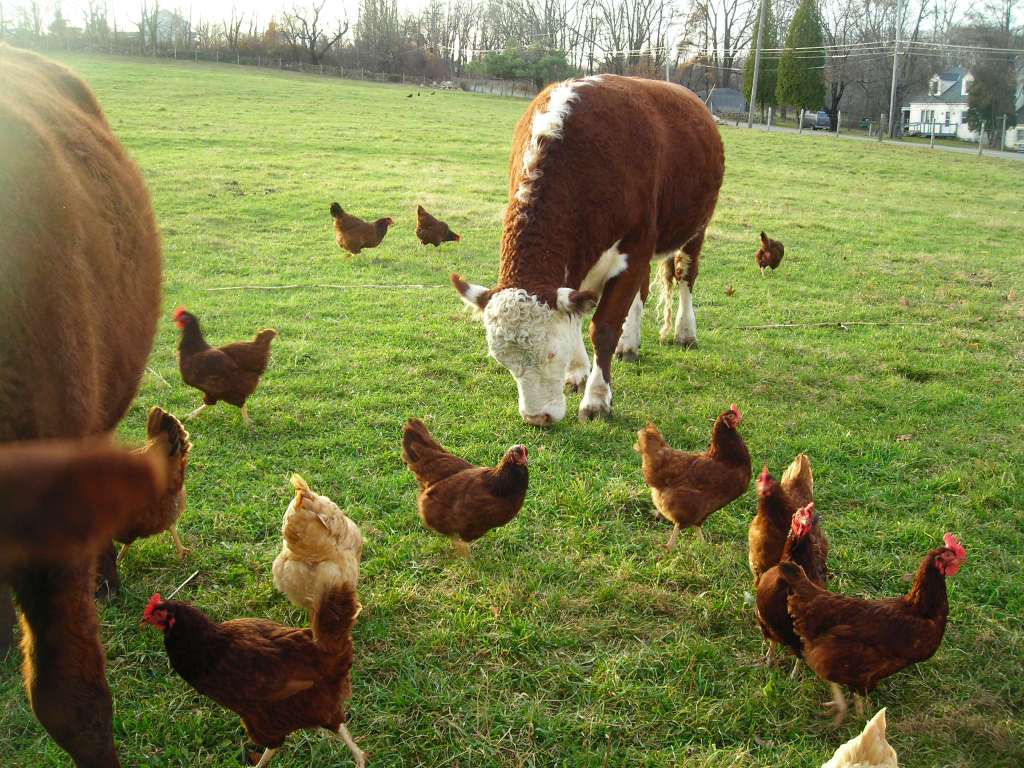
free-range-chicken1

The picture was on the website of Mini Mac Farm in Long Valley, NJ.

A future apocalypse?

How many of us really, truly care about the future?

If you sense a heartfelt plea in my sub-heading then you will not be wrong.

What has happened to our instincts for our survival?

What strikes me as so tragic is that if I asked you to guess the topic of today’s post before you read on, the odds are that you would chose from any number of subjects that reveal a society hell-bent on self-extinction!

OK, let me get to the point.

A little over 10 days ago I republished a George Monbiot essay that spoke about the madness of chicken production in the UK. Mr. Monbiot’s essay was called Fowl Deeds and was within my post called We are what we eat!

Well George Monbiot has just published a sequel to Fowl Deeds that I am going to republish in this place tomorrow.

But what I am going to offer for today, as a prelude to tomorrow’s post, is a YouTube video of a BBC Panorama program that was screened earlier on in May. The program was called Antibiotic Apocalypse and was about the threat of increasing resistance to modern Antibiotics.

Why does this make such an important prelude?

Because as you will see when you watch the Panorama program much of our ‘factory’ food comes from animals that are fed antibiotics!

How to close?

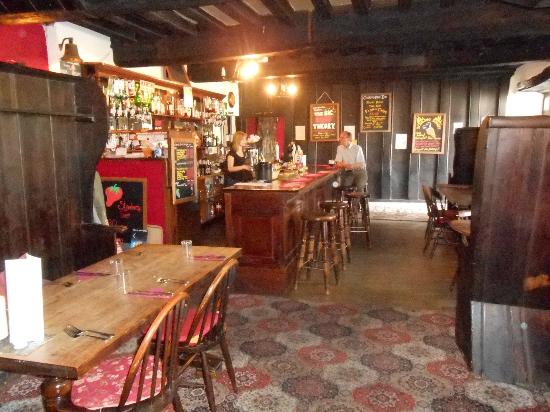
All that comes to mind is a wonderful throwaway remark from a old boy, village resident, when supping a pint of bitter in The Church House Inn; what used to be my local pub in my home village of Harberton, Devon.  This is what he said:

All the world’s a little queer except thee and me, and I ha’ me doubts about thee!

church-house-inn
Interior of The Church House Inn, Harberton, Devon.

Indeed, all the world is more than a ‘little queer’!

We are what we eat!

Some aspects of our food that many of us would rather not know about!

Many readers will be used to me republishing the essays from George Monbiot. Admittedly, not every single one of them but especially those that seem to have a message that deserves a wider promulgation. Having Mr. Monbiot’s permission to so do is generous of him.

Yesterday, there was an essay written by him that was published both on his blog and in the UK’s Guardian Newspaper. At first reading, it seemed to apply predominantly to the United Kingdom. Then, upon a second reading, I was convinced that this was yet another ‘message’ that quite happily fits in here, on Learning from Dogs. Because it is another reminder that integrity is missing from so many aspects of our societies.

You be the judge!

ooOOoo

Fowl Deeds

19th May 2015

The astonishing, multiple crises caused by chicken farming.

By George Monbiot, published in the Guardian 20th May 2015

It’s the insouciance that baffles me. To participate in the killing of an animal: this is a significant decision. It spreads like a fungal mycelium into the heartwood of our lives. Yet many people eat meat sometimes two or three times a day, casually and hurriedly, often without even marking the fact.

I don’t mean to blame. Billions are spent, through advertising and marketing, to distract and mollify, to trivialise the weighty decisions we make, to ensure we don’t connect. Even as we search for meaning and purpose, we want to be told that our actions are inconsequential. We seek reassurance that we are significant, but that what we do is not.

It’s not blind spots we suffer from. We have vision spots, tiny illuminated patches of perception, around which everything else is blanked out. How often have I seen environmentalists gather to bemoan the state of the world, then repair to a restaurant in which they gorge on beef or salmon? The Guardian and Observer urge us to go green, then publish recipes for fish whose capture rips apart the life of the sea.

The television chefs who bravely sought to break this spell might have been talking to the furniture. Giant chicken factories are springing up throughout the west of England, the Welsh Marches and the lowlands of the east. I say factories for this is what they are: you would picture something quite different if I said farm; they are hellish places. You might retch if you entered one, yet you eat what they produce without thinking.

Two huge broiler units are now being planned to sit close to where the River Dore rises, at the head of the Golden Valley in Herefordshire, one of the most gorgeous landscapes in Britain. Each shed at Bage Court Farm – warehouses 90 metres long – is likely to house about 40,000 birds, that will be cleared out, killed and replaced every 40 days or so. It remains to be seen how high the standards of welfare, employment and environment will be.

The UK now has some 2,000 of these factories, to meet a demand for chicken that has doubled in 40 years [1]. Because everything is automated, they employ few people, and those in hideous jobs: picking up and binning the birds that drop dead every day, catching chickens for slaughter in a flurry of shit and feathers, then scraping out the warehouses before the next batch arrives.

The dust such operations raise is an exquisite compound of aerialised faeces, chicken dander, mites, bacteria, fungal spores, mycotoxins, endotoxins, veterinary medicines, pesticides, ammonia and hydrogen sulphide. It is listed as a substance hazardous to health, and helps explain why 15% of poultry workers suffer from chronic bronchitis. Yet, uniquely in Europe, the British government classifies unfiltered roof vents on poultry sheds as the “best available technology”. If this were any other industry, it would be obliged to build a factory chimney to disperse the dust and the stink. But farming, as ever, is protected by deference and vested interest, excused from the regulations, planning conditions and taxes other business must observe. Already, Herefordshire County Council has approved chicken factories close to schools, without surveying the likely extent of the dust plumes either before or after the business opens. Bage Court Farm is just upwind of the village of Dorstone.

Inside chicken factories are scenes of cruelty practised on such a scale that they almost lose their ability to shock. Bred to grow at phenomenal speeds, many birds collapse under their own weight, and lie in the ammoniacal litter, acquiring burns on their feet and legs and lesions on their breasts. After slaughter they are graded. Those classified as grade A can be sold whole. The others must have parts of the body removed, as they are disfigured by bruising, burning and necrosis. The remaining sections are cut up and sold as portions. Hungry yet?

Plagues spread fast through such factories, so broiler businesses often dose their birds with antibiotics. These require prescriptions but – amazingly – the government keeps no record of how many are issued. The profligate use of antibiotics on farms endangers human health, as it makes bacterial resistance more likely.

But Herefordshire, like other county councils in the region, scarcely seems to care. How many broiler units has it approved? Who knows? Searches by local people suggest 42 in the past 12 months. But in December the council claimed it has authorised 21 developments since 2000. [2] This week it told me it has granted permission to 31 since 2010. It admits that it “has not produced any specific strategy for managing broiler unit development” [3]. Nor has it assessed the cumulative impact of these factories. At Bage Court Farm, as elsewhere, it has decided that no environmental impact assessment is needed [4].

So how should chicken be produced? The obvious answer is free range, but this exchanges one set of problems for another. Chicken dung is rich in soluble reactive phosphate. Large outdoor flocks lay down a scorching carpet of droppings, from which phosphate can leach or flash into the nearest stream. Rivers like the Ithon, in Powys, are said to run white with chicken faeces after rainstorms. The River Wye, a special area of conservation, is blighted by algal blooms: manure stimulates the growth of green murks and green slimes that kill fish and insects when they rot. Nor does free range solve the feed problem: the birds are usually fed on soya, for which rainforests and cerrado on the other side of the world are wrecked.

There is no sensible way of producing the amount of chicken we eat. Reducing the impact means eating less meat – much less. I know that most people are not prepared to stop altogether, but is it too much to ask that we should eat meat as our grandparents did, as something rare and special, rather than as something we happen to be stuffing into our faces while reading our emails? To recognise that an animal has been sacrificed to serve our appetites, to observe the fact of its death, is this not the least we owe it?

Knowing what we do and what we induce others to do is a prerequisite for a life that is honest and meaningful. We owe something to ourselves as well: to overcome our disavowal, and connect.

http://www.monbiot.com

[1] Total purchases for household consumption (uncooked, pre-cooked and take-aways combined) rose from 126 grammes per person per week in 1974 to 259 grammes in 2013 (see the database marked UK – household purchases).

[2] BBC Hereford and Worcester, 15th December 2014

[3] Response to FoI request IAT 7856, 13th August 2014

[4] Herefordshire County Council, 22nd December 2014. Screening Determination of Bage Court Farm development, P143343/F

ooOOoo

Jean and I found a way to watch the BBC Panorama programme that was broadcast recently. It was screened under the title of Antibiotic Apocalypse. This is how the programme was introduced on the BBC website:

Panorama investigates the global advance of antibiotic-resistant superbugs and the threat they pose to modern medicine and millions of patients worldwide. Reporter Fergus Walsh travels to India and finds restricted, life-saving antibiotics on sale without prescription and talks to NHS patients whose recovery depends on them.

There is much in George Monbiot’s essay that resonates with the findings of that Panorama programme. Indeed, the Panorama programme showed the extent of the use of antibiotics in many animals over and beyond chickens.

It hardly needs to be said by me that the reason this is republished in a blog based in Southern Oregon, USA is because this is a problem that is not unique to the United Kingdom; far from it!

What a strange species we humans are!

On your bike, Mrs. H.!

My dear wife takes to cycling.

Like most young boys I was on a bicycle at a very young age. Then once sufficiently old to drive a motor car that was the end of bike riding for almost forever. Except that a few months ago the argument for anaerobic exercise as a means of delaying the worst of all the ailments that come with an ageing body (and mind!) convinced me to get back on a bike.  That was made a lot easier because a small group of close neighbours ride three times a week and that seemed an opportunity not to be missed.

Those same neighbours supported, and recommended, a local bike shop in Grants Pass and I have ‘borrowed’ this picture of the store from their website.

Views of the interior of Don's Bike Center, Grants Pass, Oregon.
Views of the interior of Don’s Bike Center, Grants Pass, Oregon.

Having now been riding an average of 35 miles a week for the last ten or twelve weeks, I can vouch for the benefits it is providing.

Logically, therefore, it was going to be much better if Jean could come with me, and the rest of the riding group, each week. But there was a small challenge: Jean had never ridden a bike in her life. Horses, yes! Bicycles, no!

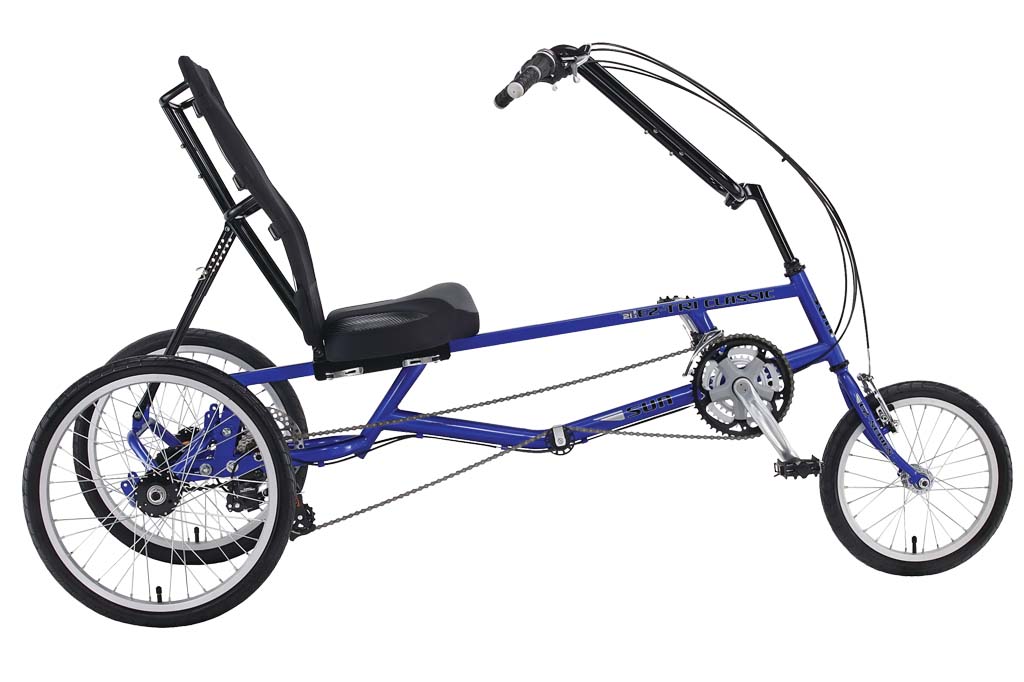
Eric over at the bike centre lent Jean a two-wheeler to try but very quickly it was clear that Jean would not easily develop the confidence to ride on our local roads. The next suggestion from Erik was a tricycle! Not one that was designed in the days of Noah and his Arc but a modern model of the ‘recumbent’ design. In particular, one manufactured by Sun Bicycles. Here’s an image of the trike from the Sun’s website.

Sun EZ Tri Classic SX

Thus it came about that last Friday Jean and I went over to Don’s Bike Center to collect her new bike.

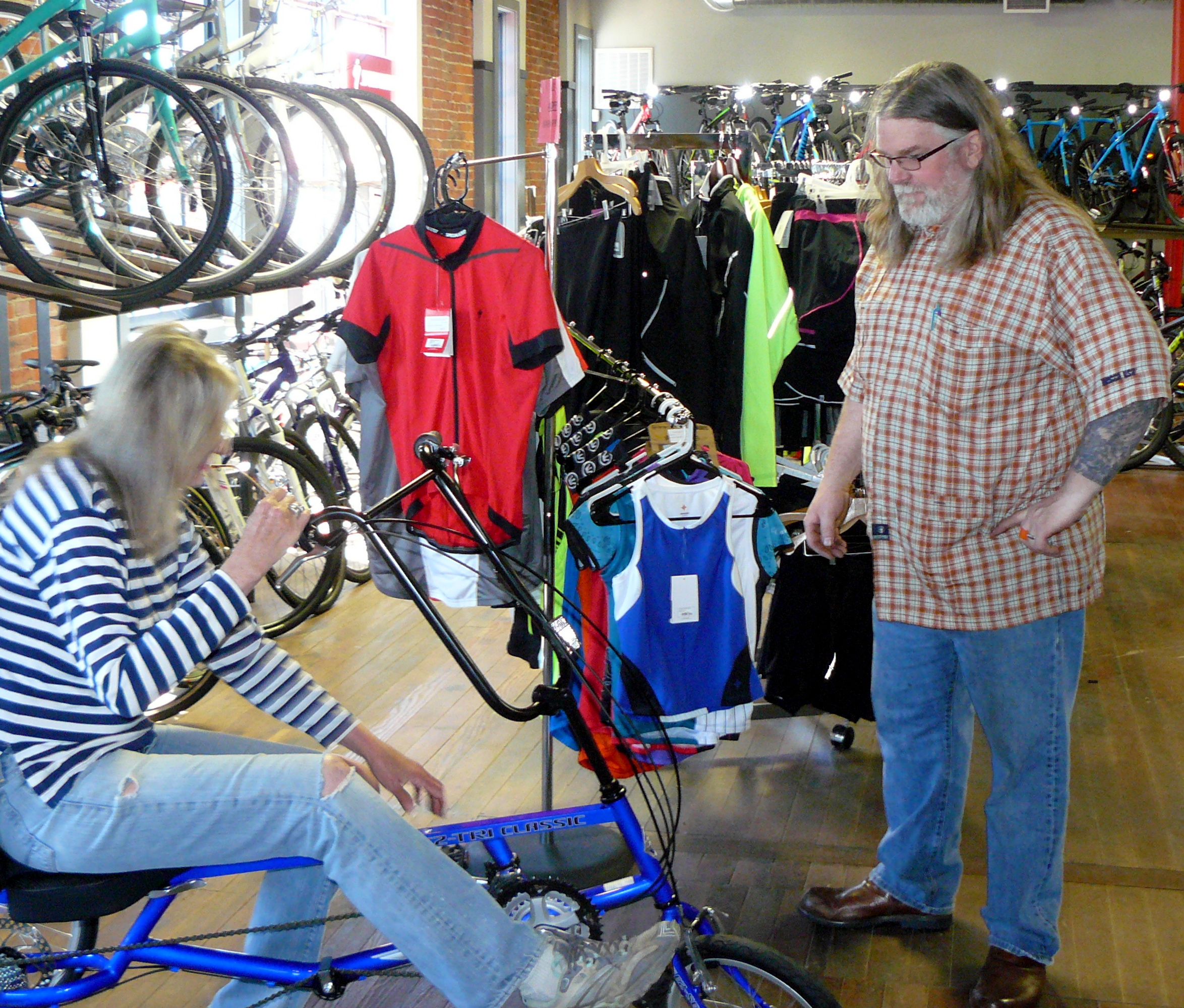
Eric at the store checking that the bike was properly set up for Jean.

Then once home it was time for Jean to learn a number of very new skills. At first just by riding around our turning circle in front of the house.

P1150655

Then trying out our quarter-mile driveway that includes a couple of steep gradients; well steep for a cycle rider!

P1150660

Another view of Jean getting to know her new bike here at home.

P1150656

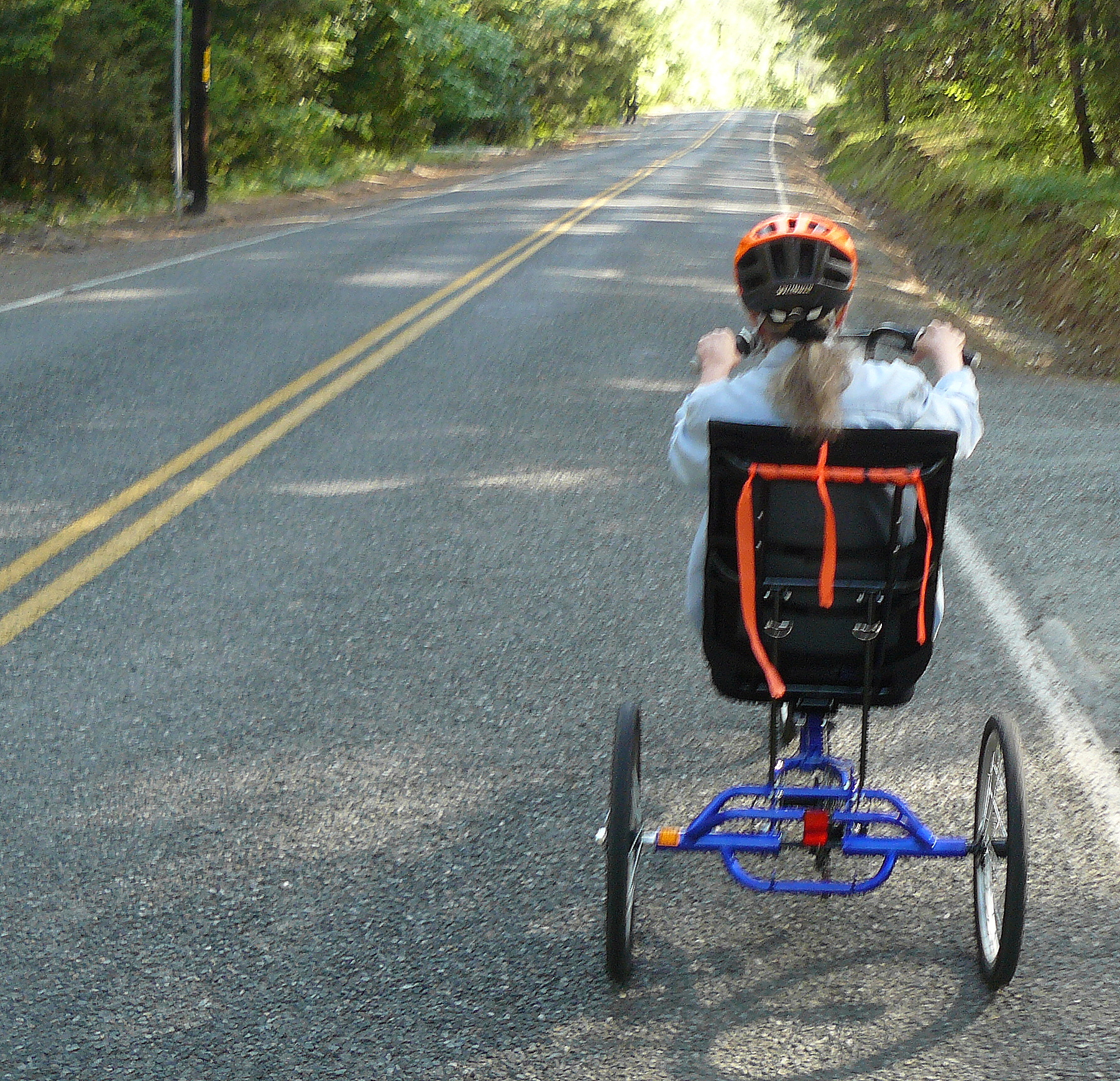
Then, deep breath, time to put on the safety helmet and go for a short ride on Hugo Road, our local road that runs past our property.

Slightly blurred image as I had the camera in my hand as I was riding behind Jean.

So all’s well that ends well!

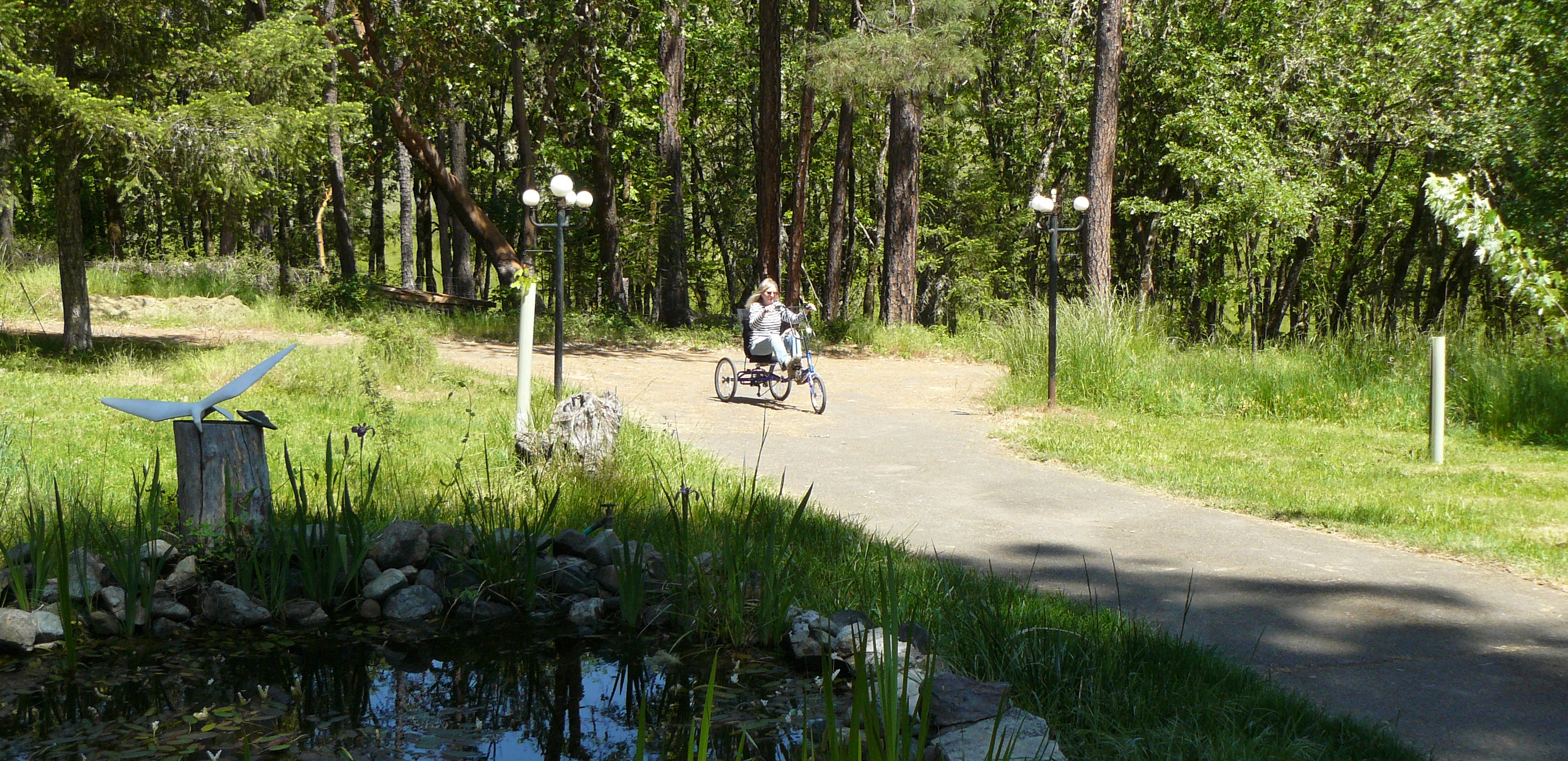
Jean coming up the road towards the driveway entrance!

I will embarrass Jean by saying to my dear readers that Jean is already getting familiar with riding her trike and it won’t be too long before our riding group will be increased by one Mrs. Handover on her bike!

The things we do to stay healthy in our increasing years!

The power of a single word!

Happy Birthday Dan! (And that word is ‘fortnight’!)

Back in September, 2013 I wrote a post called Closing my windows. It explained how I first met Dan Gomez; now some thirty-six years ago. Let me republish the relevant section:

Earlier on I wrote about launching Wordcraft, the word-processing software for personal computers. That was in early 1979 and later that year I was invited to present Wordcraft at an international gathering of Commodore dealers held in Boston, Mass.

During my presentation, I used the word ‘fortnight’ unaware that Americans don’t use this common English word.  Immediately, someone about 10 rows back in the audience called out, “Hey, Handover! What’s a fortnight?

It released the presenter’s tension in me and I really hammed up my response in saying, “Don’t be so silly, everybody knows the word fortnight!” Seem to remember asking the audience at large who else didn’t know the word.  Of course, most raised their arms!

Now on a bit of a roll, I deliberately started using as many bizarre and archaic English words that came to me.  Afterwards, the owner of the voice came up to me and introduced himself.  He was Dan Gomez, a Californian based in Costa Mesa near Los Angeles and also involved in developing software for the Commodore.

Dan became my US West Coast distributor for Wordcraft and was very successful. When Dataview was sold, Dan and I continued to see each other regularly and I count him now as one of my dear friends.  Through knowing Dan I got to know Dan’s sister Suzann and her husband Don.  It was Su that invited me to spend Christmas 2007 with her and Don at their home in San Carlos, Mexico.  Jean also lived in San Carlos and was close friends with Su. Together they had spent many years rescuing feral dogs from the streets of San Carlos and finding new homes for them.

Thus it was that I met Jean.  Discovering that Jean and I were born 23 miles apart in London!

So from ‘Hey, what’s a fortnight’ to living as happily as I have ever been in the rural countryside of Oregon.  Funny old world!

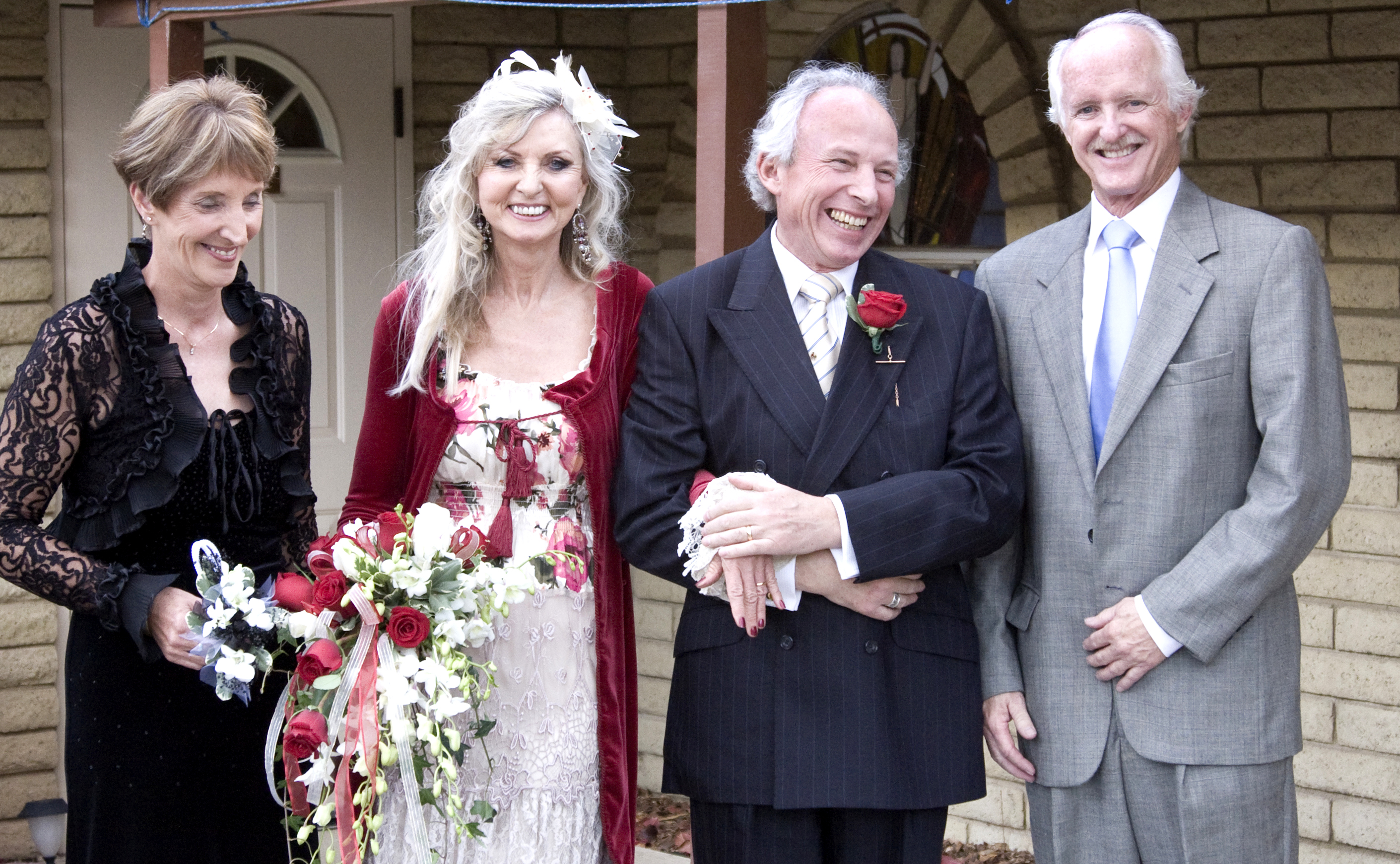
The marriage of Jean and Paul wonderfully supported by Diane, maid of honour, and best man, Dan Gomez.
Dan Gomez – Best Man, and Diane Jackson – Bridesmaid when Jean and I were married;  November 20th 2010.

It is Dan’s birthday today. One of those big birthday milestones in life. (And it would be wrong for me to openly state his age today but just let me say that Dan would be seeing a sixties birthday again!)

So to my very dear and special friend …..

Happy Birthday!

Standing for our trees

Can we stop this madness?

The name Richard Williams is not an uncommon one. But that doesn’t devalue what one Richard Williams has put his name to. I am referring to the Mr. Richard Williams who will be better known to many by his stage name Prince Ea; an American rapper and activist.

Mr. Richard Williams aka Prince Ea.

Here’s a little from Wikipedia:

Early life

Prince Ea was born as Richard Williams on September 16, 1988 in St. Louis, Missouri, the youngest of three children, and has resided there his whole life. The alias Prince Ea is derived from Sumerian mythology (“The prince of the Earth”). He has also graduated from the University of Missouri-St. Louis with an Anthropology degree and Latin honors.

So this particular Richard Williams is no slouch when it comes to what’s between his ears. Plus, he is of an age (27 this coming September) where the effects of what my generation has done, and is still doing, to Mother Earth will be unmissable.

Now watch this video.

Published on Apr 20, 2015
Activist and Artist Prince Ea Releases New Video on Earth Day supporting Stand for Trees campaign

Celebrity activist and spoken word artist Prince Ea launched his newest online video entitled “Dear Future Generations: Sorry” to motivate individuals to take immediate action to stop climate change by Standing for Trees.

Prince Ea was inspired to produce the video by the Stand for Trees campaign, an innovative new way for individuals to take real and effective action to protect threatened forests and help mitigate global climate change, all with the press of a button on their smart phones.

I sense so much angst inside me that it’s difficult to calm myself down and think rationally and calmly about what me and hundreds of thousands of others of my era must do.

But one thing is very clear: doing nothing is not an option!

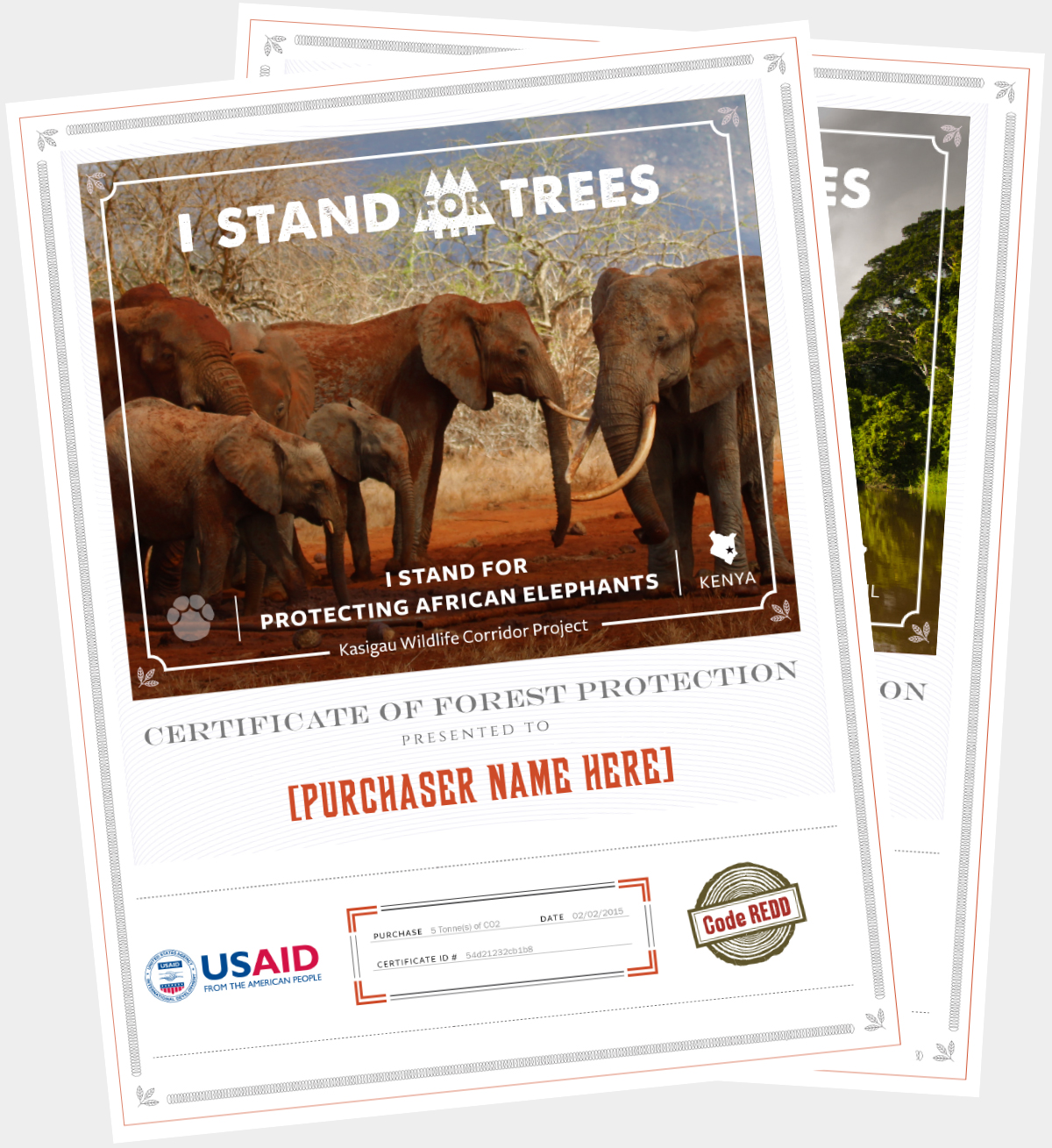
Those who have watched the video will be aware that it serves as a promotion for an organisation Stand for Trees and for making donations in the form of Trees Certificates. The website’s How it works section explains:

Purchasing Stand For Trees Certificates is one of the most effective actions an individual can take to halt deforestation and combat climate change. Here’s how it works:

How-It-Works-Step-1-v03

You buy a Stand For Trees Certificate — a unique, high-quality, verified carbon credit that protects a specific endangered forest and offsets a tonne of CO2 from entering the earth’s atmosphere. Because of your purchase, forests are left standing to do what they do best — store carbon, produce oxygen, provide habitat, and support local communities.

I strongly recommend you read everything that is available on that website including a helpful FAQs section.

It also needs to be said that neither Jean nor I have any connection with the organisation and, like many others, are considering how effective this is.  But we are minded to purchase a number of Trees Certificates in addition to a number of things that we are already doing here at home.  I was also comforted by coming across support for Stand For Trees Certificates from Richard Branson’s Virgin Group. Their web page includes this:

How does this work?

The second largest source of climate-changing CO2 emissions is the destructive clearing of the worlds’ forests. When you purchase a Stand For Trees Certificate, you prevent one tonne of CO2 from entering the atmosphere by supporting local and indigenous communities who are protecting that forest in a developing country. This creates new opportunities for communities that do not wish to choose between alleviating poverty or protecting their forests.

Each of these Certificates is verified to rigorous third-party standards for their climate, community, and biodiversity benefits. Independent auditors verify with satellite and ground data that each Certificate has indeed prevented one tonne of CO2 from reaching our atmosphere and that your money is reaching communities on the ground.

That second paragraph offers key information to my way of thinking.

Because if we don’t halt this destruction of our forests in the foreseeable future then it’s not just humans that will pay the price.

11134461_dog20pee

Back to trees

This week is starting to develop into a theme!

On Monday I published a post Hope Has A Place. It was based upon the hauntingly beautiful track of the same name from Enya. Then yesterday, serendipitously, came The watering hole. Both of those posts, although miles apart in terms of content, nonetheless seemed to subscribe to a common theme. That being that the more that everyday people, good common folk from all around the world, share their feelings, the more likely that those self-same people will make a difference. A positive difference!

Now don’t get me wrong! By presenting these recent posts I am not setting myself up to be anything other than just another everyday person and dog lover who just happens to enjoy sharing stuff via this blog.

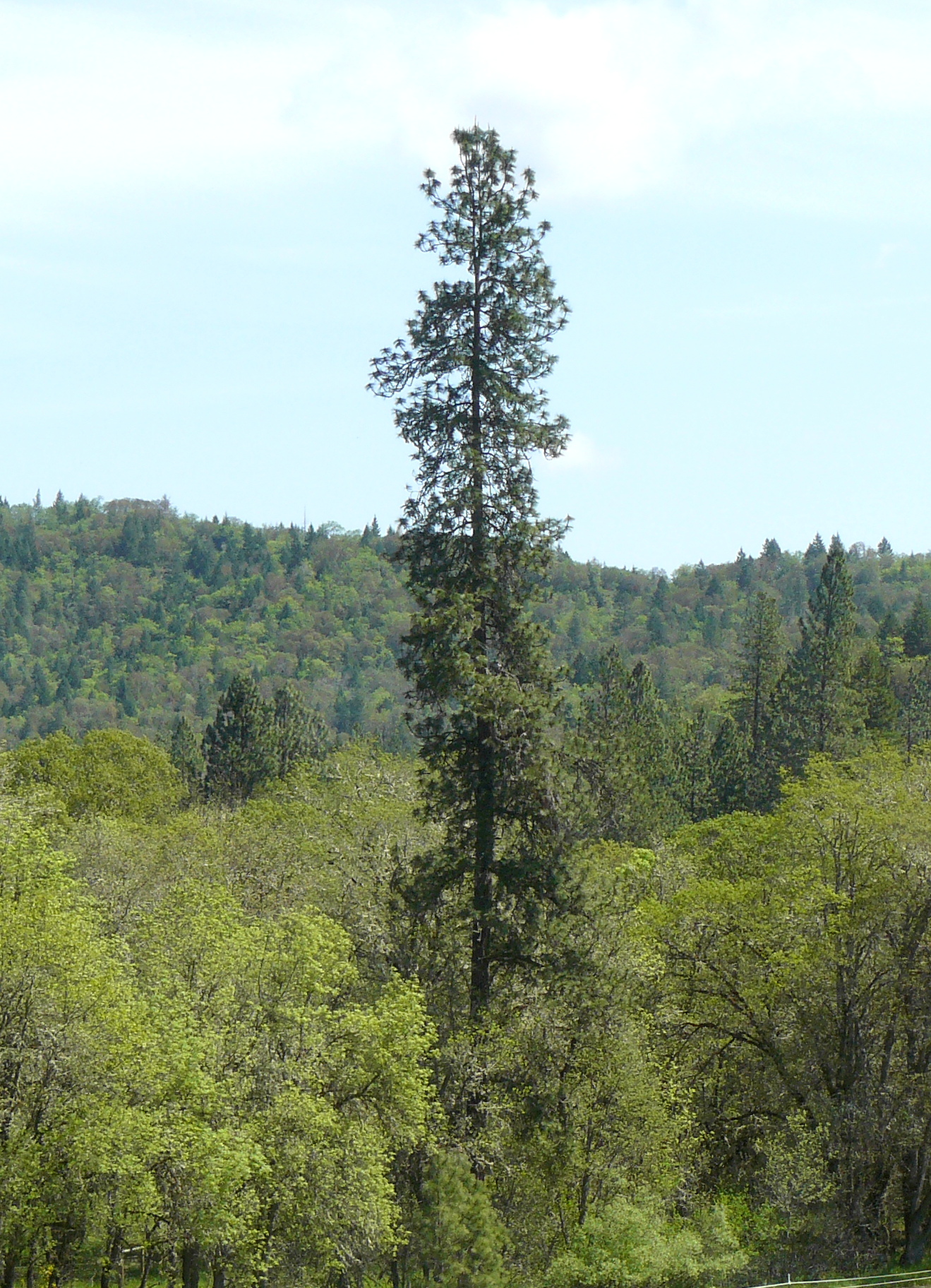
Regular readers of this place will recall that a week ago I celebrated Earth Day with a post called Our beautiful, life-giving trees. It included this picture:

We must sing for our trees.

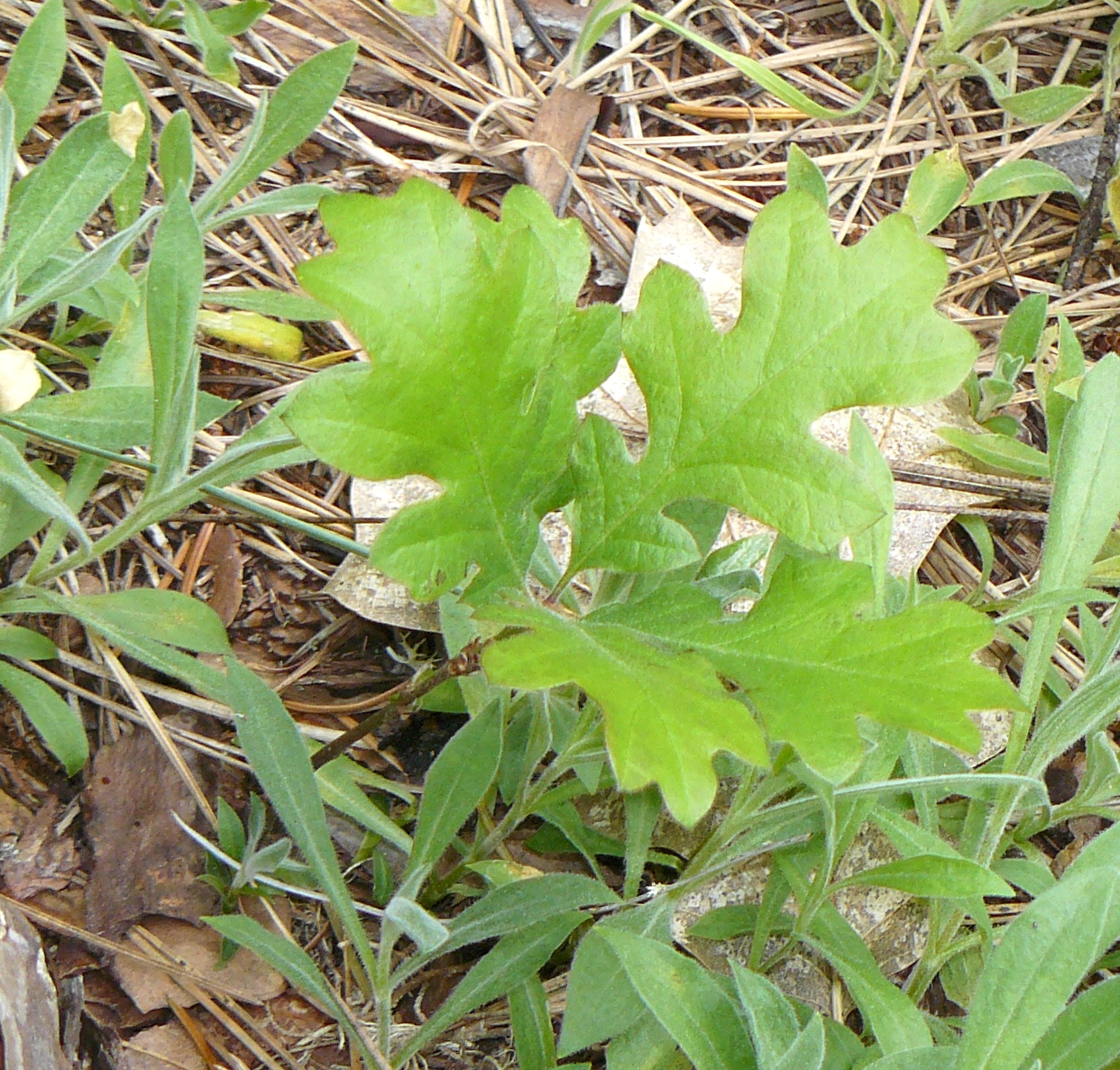
Then on the following day in a post called Now life-giving geese (by the way, the five baby goslings are doing really well!) I included this photograph:

A baby oak.
And sing for them at all ages!

Yesterday morning I received the latest post from Sue Dreamwalker. It was an impassioned plea to do something and to stop the madness. Sue, in turn, had republished the post that had appeared on Endless Light and Love.

The theme that seems to be developing this week, unplanned I should hasten to add, is that it is all too easy to be overwhelmed by the scale of change that has to take place, must take place, if this generation (I’m a 1944 baby) can die knowing that it will be alright in the end. Because it is my generation that has been responsible, has created the circumstances, for the end of life as we have all known it if nothing is done, and done in the next decade or two.

So to trees.

Our trees are both a symbol for and an indicator of the overall health of our planet.

To close off this part of my two-day post, please watch this short video.

Uploaded on Apr 1, 2015
Trees give us beauty, shade, food, clean water, oxegen, medicine, housing, fresh air, habitat and happiness. For the cost of a craft beer, or a couple of cups of coffee you can protect a specific threatened forest. Each Stand for Trees certificate offsets 1 ton of carbon from the atmosphere while providing income to local forest communities. Income that supports education, healthcare, clean water and sustainable livelihoods. Trees stand for us, isn’t it time we stand for trees?

Tomorrow, I will return to hope. Perhaps better written, return with hope.