The colonisation of space.
Patrice Ayme is a writer who lives in France and is a person of extreme breadth of knowledge, and very clever to boot.
He writes blog posts on a variety of topics. His latest post is breathtakingly powerful and could be the way we all go over the future years. Read it for yourself online or as follows:
ooOOoo
How Solar System Colonization Will Save Earth
By Patrice Ayme
Saving Earth and colonizing the Solar System are basically the same problem and have the same solution: much more advanced technology [1]. There is no contradiction, far from it. There is complementarity, as technology that will have to be developed for space will be found to be useful for Earth. For psycho-political reasons those technologies won’t be developed directly for Earth. So those who complain about space, while claiming we should focus on Earth, get it only half right.
Colonizing Mars with present technology is not going to happen anymore than the technology of the 1960s enabled to colonize the Moon. A visit from a human crew on Mars with the technology SpaceX wants to develop is imaginable… Barely. And those will just be visits, multi-year commitments full of lethal radiation and worse living accommodations than the highest maximum security prison: basically what was done on the Moon in the 1960s, but much more daunting.
It’s much more feasible to establish bases on the Moon. First, there is plenty of oxygen and hydrogen (so water) on the Moon, imprisoned in rocks: one only needs energy to extract them, and the Moon has plenty of that (solar panels!) Second, the gravity well of the Moon is also half that of Mars. Third, the Moon is close by and one can go there all the time (whereas Mars can be visited with present fossil fuel tech only every two years, when the planets align; serious commuting of goods and people between Earth and Mars will require nuclear propulsion).Monitoring robots on the Moon is possible, whereas on Mars, with up to twenty minutes delay, one will have to use advanced, autonomous AI. Fixing problems caused by dust in robots on the Moon with roaming human crews… A solution that won’t exist on Mars, for decades.
Thus AI is the first order solution: AI just needs energy, not shelter, air, water and food. AI colonies on the Moon, and then, later, Mars could build environments that humans could then inhabit. Say pressurized lava tubes…
Skeptics could object that I didn’t roll out specific techs. But space colonization, especially if robot and AI driven, will require much higher tech. For example solar energy, which works wonderfully, was led by its usage in space… where it has long worked splendidly. The solar cells used in space have an efficiency more than twice that of the ones used on the ground… from using more advanced (but expensive) materials, like Gallium… That has invited researchers and companies to boost the efficiency of the silicon and now perovskites cells used on the ground. SpaceX uses Reliable Reusable Rockets (RRR), lowering the cost of space access… That is revolutionary, but actually follows the tech used to land on the Moon in the first place. But the first landing rockets, the LEMS, were Lunar Exploration Modules… They showed the way…
Technology is impossible without wisdom, and wisdom impossible without technology. One can’t grow without the other. The quest for tech is a quest for wisdom.
We don’t need AI on Earth, at least so many “leaders” will think (and they would be very wrong)… However, for space colonization, clearly, we need AI. Space AI will then bring in the Earth AI we need to solve countless problems, including the ones we didn’t think we had.
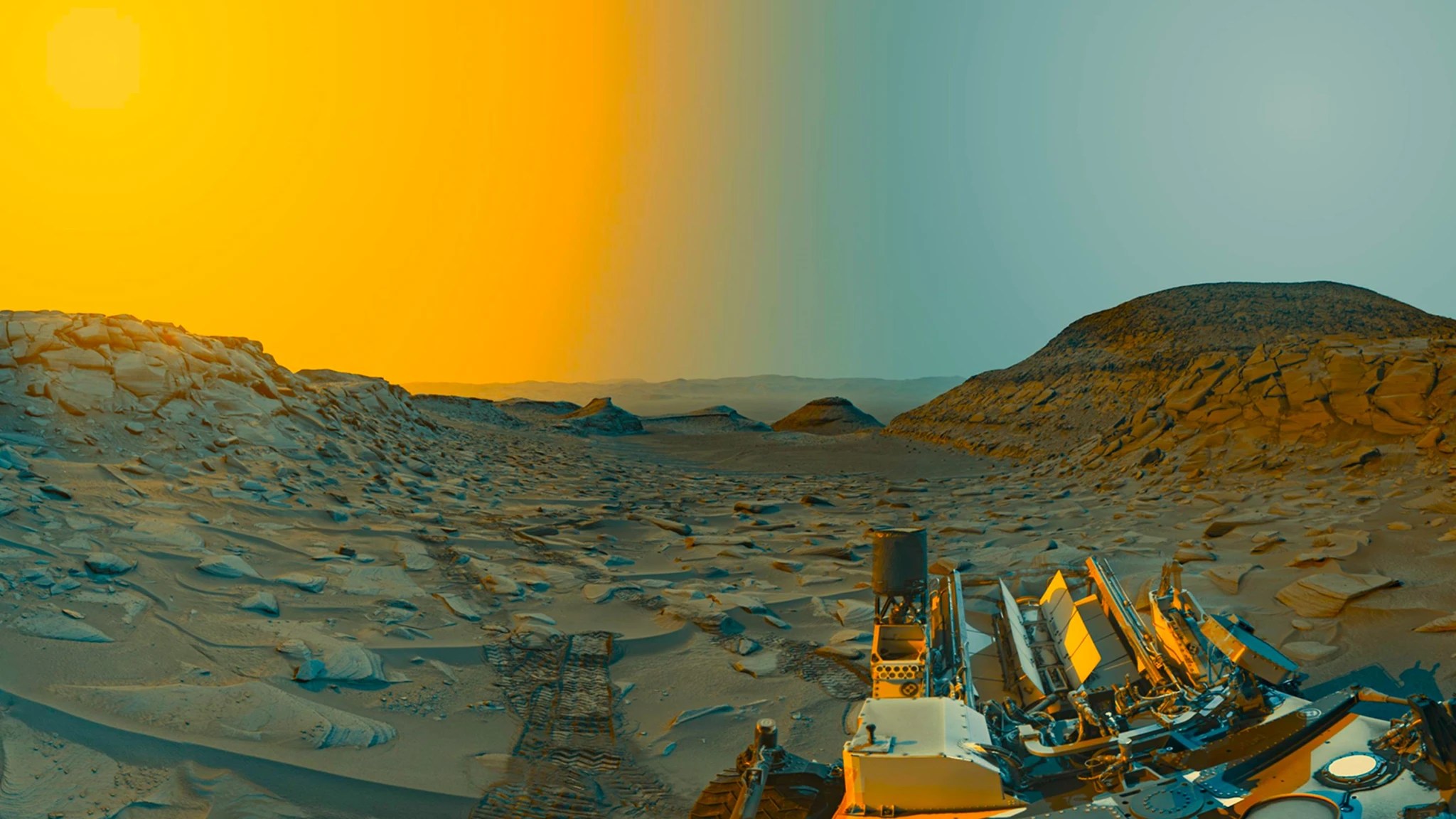
P/S: Scifi novels are an old genre: The Birds of Aristophanes, making fun of the colonies Athens established everywhere, by establishing one in the sky, preceded the space colonization of Lucian by seven centuries…
***
[1] The European solution to the Earth Crisis has been Mathusianism: use less energy. This weakens Europe and encourages its dictatorial enemies. Actually the best solution is rather the opposite: to use more ABSOLUTE WORTH ENERGY. Use, much more EFFICIENT energy. In particular, we have to leverage fossil fuels to get out of them… using the energy they provide to invent new science and tech….
ooOOoo
Yet another masterpiece from Mr. Ayme. I cannot add anything to this post except to applaud it.
 Learning from Dogs
Thank you for your kind and generous compliments, Paul, and thank you for presenting my essay to your readership. Since I got to read Learning From Dogs, many years ago, I was encouraged to find myself, through a rescue, the delighted companion of a very clever and bilingual beagle-terrier mix. The diminutive omnivore thoroughly psychoanalyzed me. Since then I can only purchase the most delightfull delicacies for his enjoyment!
By the way I have a more drastic follow-up I am going to publish, arguing that our technology has already modified us GENETICALLY! There is very surprising recent genetic science backing-up that opinion… experiments on drosophila, demonstrating that genetics can change at the same rate as… ecology…. I will put the links…
LikeLike
Dogs are the most beautiful companions ever, and a very warm welcome to your beagle-terrier mix. What are you calling him and will you write a post about him on your blog? Would love to read that, perhaps, with a photo.
LikeLike
Taz is a rescue dog, we didn’t choose his name. His rather young owner, a California government employee in social services, had to move from LA for advanced cancer treatment in San Francisco. She had three dogs (!) but in the apartment where she lived, dogs were not autorized.
We succeeded to promote one of the dogs to official help animal, and the owner could keep him (California law). That was after we had been selected as the new owners of “Taz”.
Taz is significantly smarter than I thought dogs could be (I have had two dogs part-time in the past… in Bolivia and Colorado…). I have learned dog-talk, which involves lots of body language… That could be worth writing an essay on, indeed!
Taz, a natural leader, long stayed in touch with his old owners and dog peers. Taz understands very well complicated sentences, in French or English, and is indeed very affectionate. Now I have to bring him to the vet as he lost one of his claws…
LikeLike
I’m sorry for the delay in replying. Don’t know what happened?
Yes, dog talk is full of gestures. Our dogs also read one’s face and eyes very closely plus other actions such as getting up and going to the front door. Yes, please, regarding your essay about communicating with Taz and your previous dogs.
LikeLike