The last two posts have offered two aspects of our bountiful Nature. First we had Earth Day and the celebration of our trees. Then yesterday we had the celebration of the birth of five Canada Geese goslings.
So it seemed appropriate to continue the theme for another day.
Earlier this month there was an article over on MNN that I saved for later use simply because the message it offered was counter-intuitive. Here’s how that article opened:
Deforestation vs. nature: The winner might surprise you
Large-scale tree-planting projects, abandoned farmland help balance out rain forest destruction.
By: Michael Graham Richard
Wed, Apr 08, 2015 at 10:11 AM
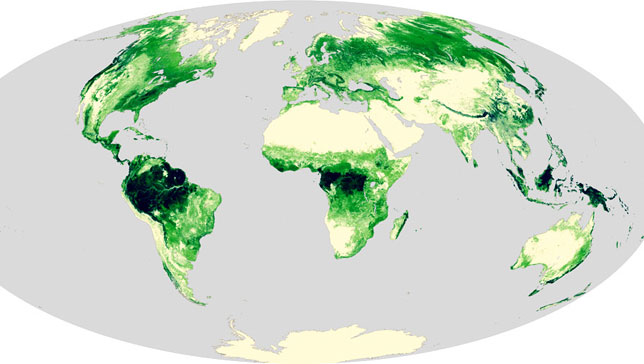
Forest canopy heights are highest near the equator and generally decrease the closer forests are to the poles. (Photo: NASA)
For decades, we’ve been hearing about how the world’s forests are under attack, how the equivalent of “36 football fields of the world’s forests are being cut every minute.” With all this pressure on nature, could the Earth possibly be getting greener? Not a chance, right? Surprisingly, that’s what a team of scientists discovered when they looked at two decades’ worth of data from satellites that use a technique called “passive microwave remote sensing,” which allows researchers to measure how much biomass, or living matter, is present on the surface of the planet.
The researchers found that despite ongoing deforestation in the rain forests of South America and Southeast Asia — a huge problem, regardless of what happens elsewhere — other regions outside the tropics, such as Africa and Australia, have been improving enough to offset the losses. Some of the more unexpected sources of this extra biomass are farmland abandoned after the fall of communism where forests have spontaneously regrown in the former Soviet republics, as well as in areas of China where large-scale tree planting projects took place.
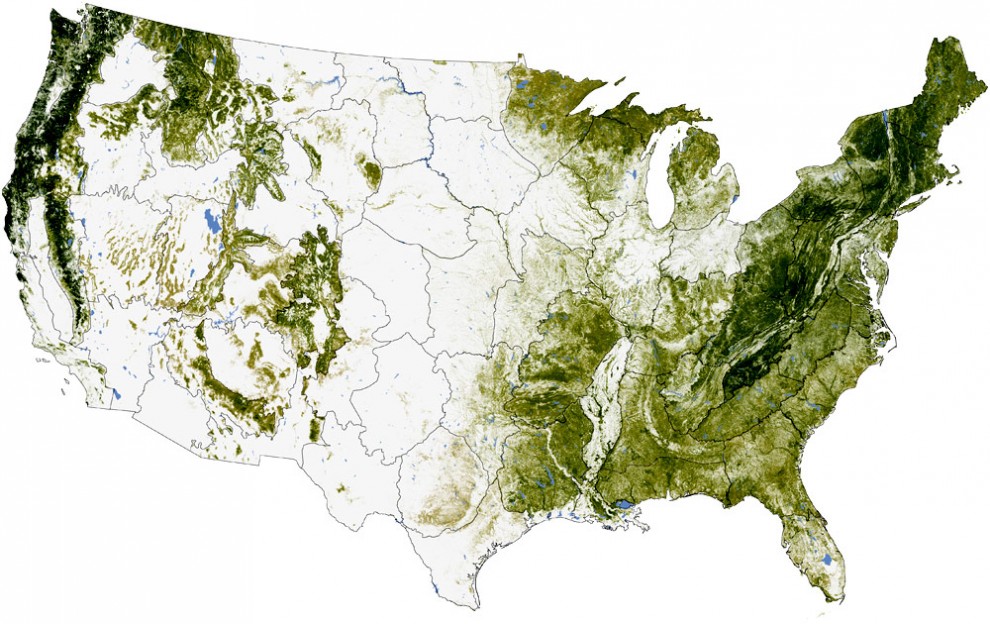
What really caught my eye was another photo from NASA that showed the biomass stored in trees in the USA.
The concentration of biomass stored in trees in the U.S. The darkest greens reveal the areas with the densest, tallest, and most robust forest growth. (Photo: NASA)
But as the article reminded readers:
We’re only talking about biomass quantities being offset, though; the loss of rain forests also mean the loss of many species of animals and plants, as well as unique habitats that can’t be replaced by other regions elsewhere, such as the savannah of Africa or the Australian Outback. So while this is good news, we can’t declare victory over deforestation just yet!
Nonetheless, I am sure that I am not the only one to welcome this reminder of the power of Nature. Or in the closing words of that MNN article:
In the period between 2003-2012, the total amount of vegetation above the ground has increased by about 4 billion tonnes of carbon. Any way you slice in, 4 billion tonnes is significant!
This is particularly important because around 25 percent of the CO2 that we release into the atmosphere by burning formerly buried hydrocarbons is absorbed by plants, so having more of them can help slow down (but not stop) climate change, and there’s a limit to plants’ rate of absorption. Still, it’s nice to get good news for a change …
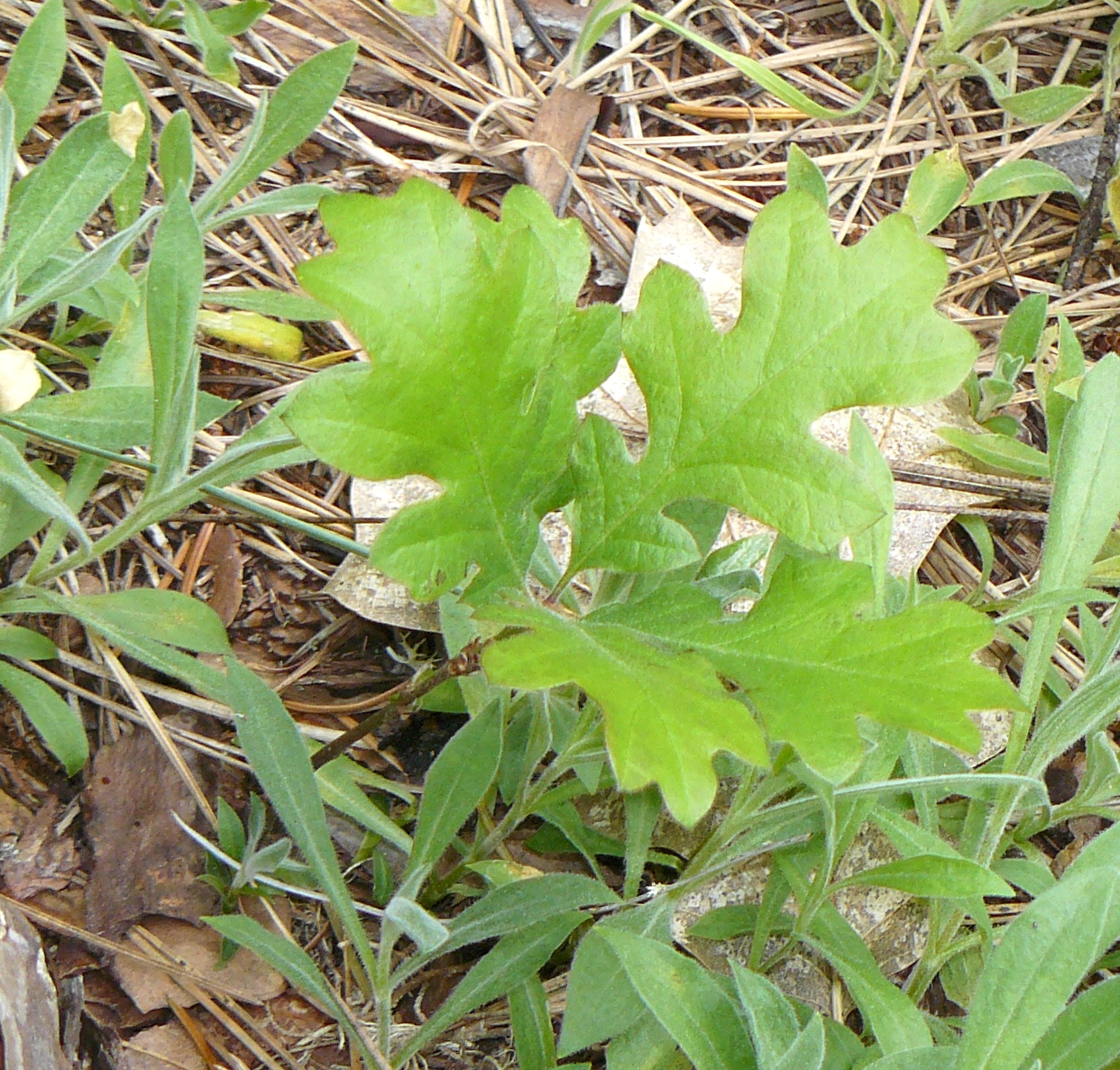
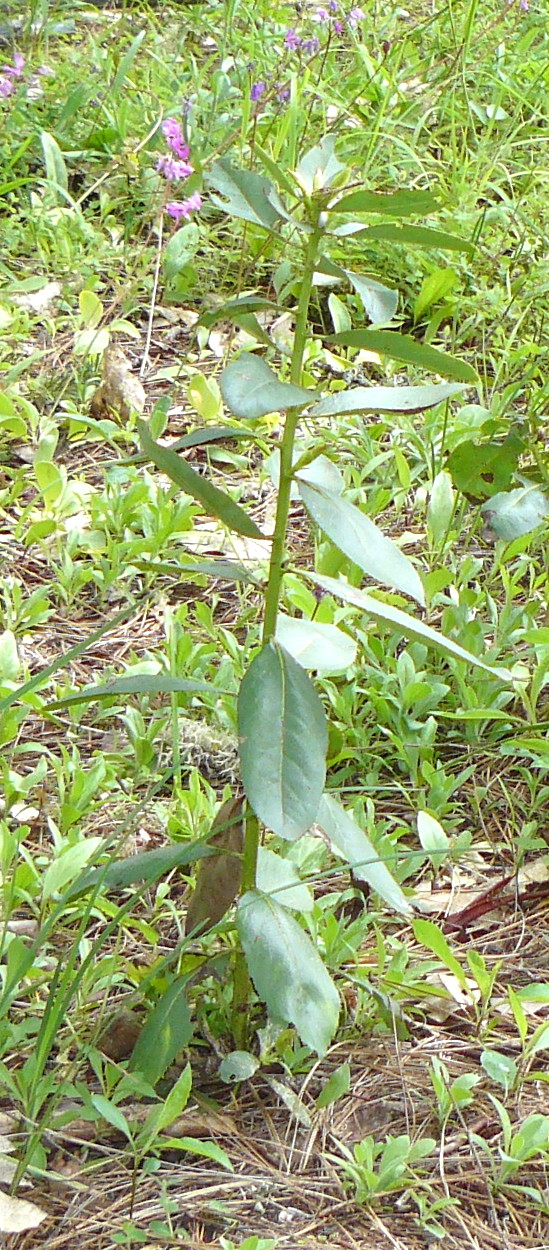
While it may be a long way yet from them being tonnes of carbon, let me close with three pictures of ‘increasing tree biomass‘ right here on Hugo Road in Merlin, Oregon.
The oak.
oooo
The madrone.
oooo
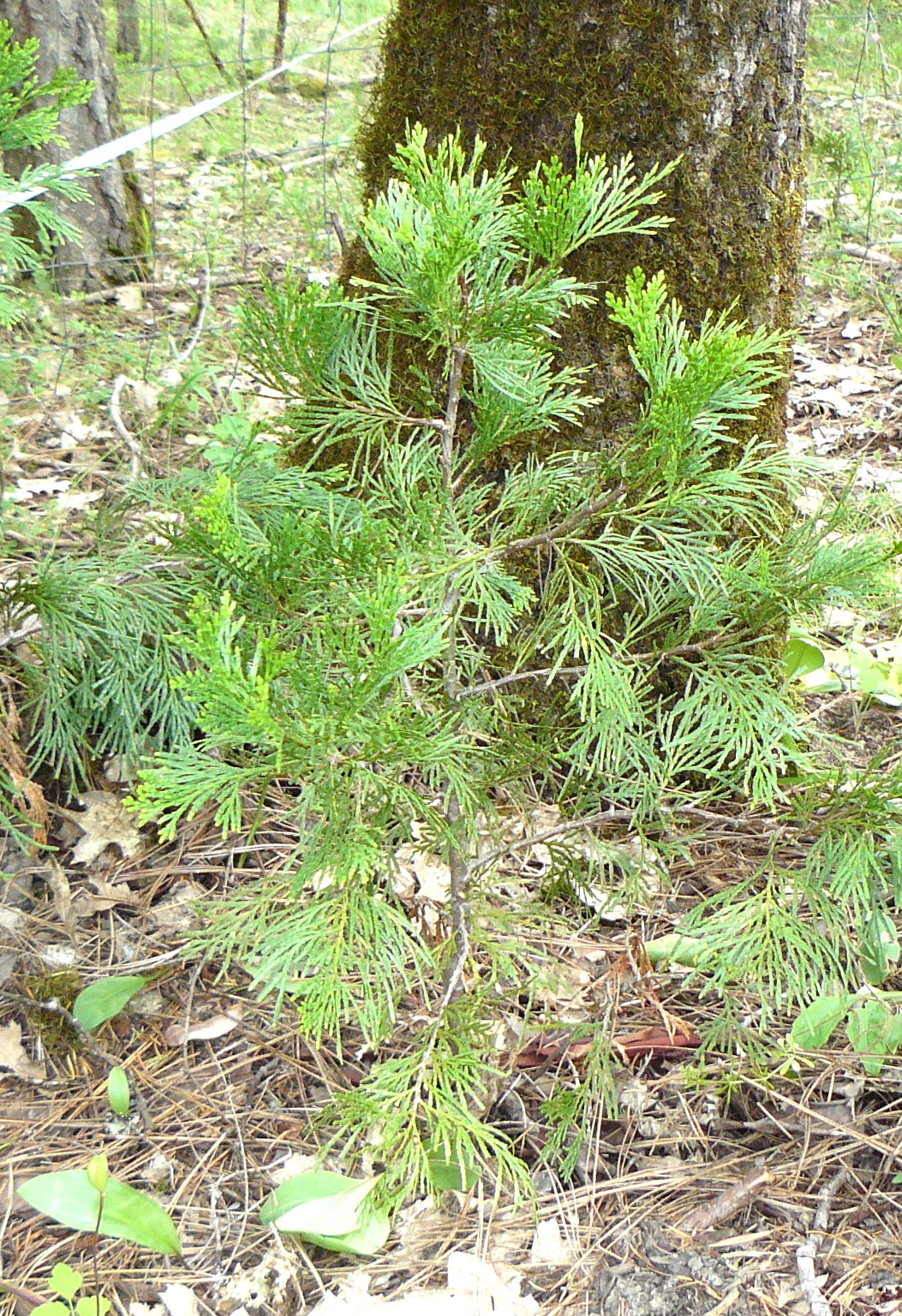
The cedar.
Nature really does have all the answers to man’s long-term survival.
Even without that “The concrete industry is one of two largest producers of carbon dioxide (CO2), creating up to 5% of worldwide man-made emissions of this gas, of which 50% is from the chemical process and 40% from burning fuel”… but of course we want “newly planted seedlings” too.
I had no idea that concrete was such a huge producer of CO2 emissions. It is a timely observation as this morning I see that Yale Climate Connections have a piece on Cleaner Concrete.
Such an interesting Post Paul and facts I was not aware of, like the concrete from Per Kurowski’s comment..
I just hope Nature can keep balancing out the damage we do… Many thanks Paul.. Sue
 Learning from Dogs
Imagine how much more carbon could be stored if only we could get the Chinese to build their houses with wood and not with cement 🙂
http://ourpiedaterre.blogspot.com/2015/04/my-proposal-for-this-earth-day-2015.html
LikeLike
Per, lovely to hear from you. What an interesting thought! Especially if for every tree used in building was replaced by a newly planted seedling.
LikeLike
Even without that “The concrete industry is one of two largest producers of carbon dioxide (CO2), creating up to 5% of worldwide man-made emissions of this gas, of which 50% is from the chemical process and 40% from burning fuel”… but of course we want “newly planted seedlings” too.
LikeLike
I had no idea that concrete was such a huge producer of CO2 emissions. It is a timely observation as this morning I see that Yale Climate Connections have a piece on Cleaner Concrete.
LikeLike
Such an interesting Post Paul and facts I was not aware of, like the concrete from Per Kurowski’s comment..
I just hope Nature can keep balancing out the damage we do… Many thanks Paul.. Sue
LikeLike
PS.. Love the new tree photos.. 🙂
LikeLike
Thank you, as always. Have a wonderful weekend.
LikeLiked by 1 person