Is this present era really coming to an end?
Somewhere in my aged brain cells is the memory of having heard that humans are great lovers of patterns. In other words, patterns are deemed to be very important for the progress and evolution of homo sapiens. Of course, it is not just humans who learn from patterns; I’m sure most of the animals who live around us are great pattern matchers. To support that proposition, anyone who has owned a dog or cat will have spotted how quickly they learn patterns. (As an aside, some months ago our puppy German Shepherd, Cleo, work me at around 4am because she needed to go outside for a ‘call of nature’. I now get woken every single night variously between 2am and 5am for Cleo’s benefit!)
The British mathematician G. H. Hardy who lived from the last quarter of the 19th Century well into the 20th Century, reputedly said (and I cheated and looked it up!):
A mathematician, like a painter or poet, is a maker of patterns. If his patterns are more permanent than theirs, it is because they are made with ideas.
So why has this post opened with the theme of patterns? Because, call it coincidence or what, within the last couple of weeks there have been three articles, each from very a different source, predicting that the present levels of inequality in society are both unsustainable and the beginning of the end.
First, on Michael Robert’s blog there was a post eleven days ago about global wealth inequality. From which I quote:
Global wealth inequality: top 1% own 41%; top 10% own 86%; bottom half own just 1%
—–
Just 8.4% of all the 5bn adults in the world own 83.4% of all household wealth (that’s property and financial assets, like stocks, shares and cash in the bank). About 393 million people have net worth (that’s wealth after all debt is accounted for) of over $100,000, that’s 10% own 86% of all household wealth! But $100,000 may not seem that much, if you own a house in any G7 country without any mortgage. So many millions in the UK or the US are in the top 10% of global wealth holders. This shows just how little two-thirds of adults in the world have – under $10,000 of net wealth each and billions have nothing at all.
This is not annual income but just wealth – in other words, 3.2bn adults own virtually nothing at all. At the other end of the spectrum, just 32m people own $98trn in wealth or 41% of all household wealth or more than $1m each. And just 98,700 people with ‘ultra-high net worth’ have more than $50 million each and of these 33,900 are worth over $100 million each. Half of these super-rich live in the US.
Michael Robert’s essay closes:
All class societies have generated extremes of inequality in wealth and income. That is the point of a rich elite (whether feudal landlords, Asiatic warlords, Incan and Egyptian religious castes, Roman slave owners, etc) usurping control of the surplus produced by labour. But past class societies considered that normal and ‘god-given’. Capitalism on the other hand talks about free markets, equal exchange and equality of opportunity. But the reality is no different from previous class societies.
Secondly, just last Friday I was drawn to an essay on, of all places, The Permaculture Research Institute blog. The essay, by Chris Hedges (**), was called On Inequality and the Collapse of Globalization. Chris Hedges opened his essay, thus:
The uprisings in the Middle East, the unrest that is tearing apart nations such as the Ivory Coast, the bubbling discontent in Greece, Ireland and Britain and the labor disputes in states such as Wisconsin and Ohio presage the collapse of globalization. They presage a world where vital resources, including food and water, jobs and security, are becoming scarcer and harder to obtain. They presage growing misery for hundreds of millions of people who find themselves trapped in failed states, suffering escalating violence and crippling poverty. They presage increasingly draconian controls and force—take a look at what is being done to Pfc. Bradley Manning—used to protect the corporate elite who are orchestrating our demise.
We must embrace, and embrace rapidly, a radical new ethic of simplicity and rigorous protection of our ecosystem—especially the climate—or we will all be holding on to life by our fingertips. We must rebuild radical socialist movements that demand that the resources of the state and the nation provide for the welfare of all citizens and the heavy hand of state power be employed to prohibit the plunder by the corporate power elite. We must view the corporate capitalists who have seized control of our money, our food, our energy, our education, our press, our health care system and our governance as mortal enemies to be vanquished.
The PRI editor’s preamble to the Chris Hedges essay included a couple of videos that he recommended watching. One was a talk by Robert Reich: How Unequal Can America Get Before We Snap?
The other one was a recent TED Talk by Richard Wilkinson (his profile is here).
Mr. Wilkinson explains that for the majority of people there is an instinctive feeling that societies with huge income gaps and corresponding high levels of social inequality are somehow going wrong. He charts the hard data on such economic inequality and shows what gets worse when rich and poor are too far apart: ergo, the very real effects on health, lifespan, and even such basic values as trust.
Just 16 minutes long, it’s a very revealing talk. Do watch it.
oooo
The final, third piece of the pattern was me coming across an essay on the blog DeflationLand, not a blog I had come across before, on the same day that I saw the PRI article. This essay, published just two days before the PRI article, was about patterns; the patterns of the centuries. More specifically, how the characteristics of a century generally evolve to a new culture within the first 10 to 15 years of the following century. It was a most interesting proposition and, to my delight, I was given permission to republish that essay here on Learning from Dogs. So here it is.
oooOOOooo
Why I stopped worrying and learned to love the currency collapse
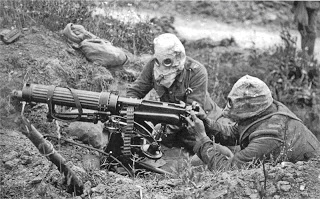
For the past 300 years, the historical pattern has been for the era marked by a century to continue into the following century by fourteen or fifteen years. Let me explain. Everyone knows that the 19th Century, its uprightness, its optimism and sense of purpose, the halcyon days of British Empire, came to an end with World War I, starting in 1914 and building to a nasty crescendo by 1916. The 20th Century had arrived, and it had some real horrors in store for us.
But if we return back another hundred years, we notice that the 18th Century ends in 1815 with the final defeat of Napoleon, that final project of the Enlightenment and of the French Revolution. With the Congress of Vienna in 1814-1815, we have a new Europe along the lines of Metternich’s plan, and the 19th Century at last is here.

In 1713 and 1714, we have the Treaties of Utrecht, Baden, and Rastatt, bringing an end to the era of Spain as a major power, and the rise of the Habsburgs. Louis XIV dies in 1715, after reigning for 72 years. The Baroque period is over, and we are now firmly in the 18th Century.

We still live in the 20th Century. Nothing much significant has changed in our lives in the past twenty years. Symptoms of a deeper rot are appearing here and there, foreshadowing a larger crisis, but the crisis itself has not arrived yet. We still live in an era of Pax Americana, the old republic very much a strained and tired Empire now, with the U.S. Dollar as the world’s reserve currency.
That is going to change.
The next task for History is to dismantle the untenable structures and institutions put in place by late Modernity, which have been extended now as far as they can go. Our debt-based monetary system will collapse, our unbacked fiats will be worthless. The debts and unmeetable obligations will all default.
There are ironies and great contradictions as the former home and hope of Liberty becomes viciously unfree and increasingly despotic. Our leaders no longer govern, but try instead to rule us — they are less legitimate with each passing day, their laws corrupt or worse. They are nearly finished, and will be swept away with the tide.
Just as in 1914, the internationalist system will break down, dashing the hopes of the would-be first-world nations. We will probably have a pretty good war as well, or many local ones worldwide. These transitions tend to involve war.
Deflation first — it clears the way for the complete loss of faith and hyperinflation that will follow. The next big wave down in the financial markets is the battering ram. The U.S. national debt is about faith, so is quantitative easing, and so is the very idea of magical coins that could ever be “worth” a trillion dollars. When this faith breaks, in concert with loss of faith in perpetual growth and unlimited cheap energy, then things will move very, very quickly.
There is nothing any of us can do at this point, except navigate the rapids as well as possible, and to stay out of the way of a dying empire, which is still very dangerous in its death throes. We are actually very privileged to be alive and witnessing this next transition, to what we do not know just yet. But what an honor to live at this time, not in ignorance but with an existential resolve to come out of it alive and much the wiser.

oooOOOooo
** Chris Hedges is a Pulitzer Prize–winning author and former international correspondent for the New York Times. His latest book is The World As It Is: Dispatches on the Myth of Human Progress.
I am neither a scientist nor a historian; just someone who has lived in and observed the world for coming on for 60 years.
So you have to understand that my prediction is hardly worth the ‘paper I write upon’ (which certainly dates me!). But, undaunted, here are my predictions for the 21st Century:
- That the power of internet communications will allow more people, more quickly, to find their soul-mates wherever they are on this planet.
- That the realisation of how dysfunctional many Governments are, of how truly poorly they serve the majorities of their citizens, will lead to mass rejections of these so-called Governments’ policies. Such rejections predominantly peaceful, as in taking the horse to water but being unable to make it drink.
- That there will be a new form of localism. At two levels. Literally, people geographically close to each other creating 21st C. versions of local communities. Virtually, those local communities linking to other like-minded communities right across the world resulting in highly effective and innovative learning, accelerated common-sense, (call it wisdom if you wish), and extraordinarily efficient and sustainable ways of living on this planet.
What do you think?
 Learning from Dogs
Hi Paul. It has been a long time since I commented here (or anywhere much). For that, I offer my apologies. The piece from ‘DeflationLand’, however, caught my attention:
Humans have a remarkable ability to perceive significant patterns where none actually exist (e.g. seeing face of Jesus on a burnt piece of toast, etc). I agree that, with the benefit of hindsight, it is possible to think that the significant events of 1714, 1814 and 1914 were something more than coincidental. However, in reality, such an assertion has no more validity than believing in Numerology or Astrology.
The latter is a mish-mash of Roman and Greek pagan beliefs and presupposes that the movement of the Earth and planets around our Sun has some kind of influence upon the daily lives of humans – depending solely upon their date of birth. This is not only highly improbable; it is completely irrational. In fact, it is just another form of conspiracy theory that allows individuals to blame someone or something else for their life not being quite how they would like it to be. It is, in essence, a belief in universal ‘victimhood’.
Unless or until humans stop seeing inconsequential patterns in history where there are none, many shall fail to prevent very serious consequences flowing from the patterns in nature that they seem determined to ignore.
LikeLike
Martin, good to have your thoughts and ideas after, as you say, a bit of a break.
Even if the proposition is rejected, that each century has its own characteristics that are overtaken by a new era within the first, say, 20 years of the next century, do you not agree these are times of great transition?
LikeLike
Yes I do. Hence my second comment (below). I would also be willing to admit there may be an element of ‘fin-de-siecle’ psychology making this kind of social upheaval almost inevitable 15 to 20 years later. In which case, I was essentially wrong to say what I did..!
LikeLike
🙂
LikeLike
I tend to agree with Martin.
One has to think by systems of thought, not systems of numbers.
… Who also did not visit my site like forever… More in separate comment below.
LikeLike
Apart from the above, I think the next few years will indeed be very turbulent. So, history may very well repeat itself!
LikeLike
It’s been a while, but I’m still around.
Fascinating!
LikeLike
Merci, how wonderful to see you in this place again. Trust all is well with you. Drop me an email with your phone number; Jean and I will call you. lol P.
LikeLike
Think by systems of thought, not systems of numbers. 1814, for example, is not important. 1814 ended an erroneous mentality engaged before.
In the 1790s, Sade, who basically started the Revolution, pointed out that it was a mistake to push it by the way of armies. Instead, the generals were allowed to take over, and it all ended with the dreadful Napoleon… who was the son of his powerful dad (incipient plutocracy!)
Chris Hedges talks well above. But I don’t trust him. I have been in the business of pointing out what he now points out for much longer, and he does not really get the plutocratic principle. For example he thinks Assad is a saint. I suspect he, and a whole bunch of others like him, are paid by bloody plutocrat Assad.
Yet, although he is the object of my cordial contempt, that does not mean that the ideas that I have advocated for decades, when parroted by Pullitzer worthies, have stopped being worthy! Far from it!
LikeLike
Hedges and company are saying many things that are true. Yet, the pictures they mostly focus on are obsolete, and the biggest stuff, finance supreme, Obama wealth care, presently unfolding, they miss. And, as I said about Syria, there, they are clearly paid.
LikeLike
I was rather hoping you would be along! Wonderful, learned thoughts if you don’t mind me saying.
What thoughts, Sir, on my humble predictions for this century?
LikeLike
Dear Paul: I like your predictions. They will play some role. But maybe somewhere in the bushes only. I think predictions of the future beyond the next 12 months are obsolete.
Proof: today came out the revelation that the NSA, nine months ago, intercepted and copied up to seven MILLION French private communications, a DAY. Yes, the USA copies 7,000,000 French private communications, a day.
This is obviously spying of a social and economic nature. In grand old USA tradition, I would propose that the NSA get the Nobel in Economics.
The USA ambassador, a plutocrat, was immediately convoked, and looked as happy as a very bad dog. All this spying made him rich, and now he has to hear a condamnation thereof? Who do these French think they are?
BTW, in my very latest essay, I boosted, since you read it, the attack against Australian scorch and burn policies. Martin may want to read it too.
LikeLike
Thanks Patrice. Think I will fall back on that silly old adage, “The only thing I know is that I don’t know!”
LikeLike
I am hoping for a new localism. I see signs of this in the local food movement and a growing concern about factory farming, for one thing. I think people are really scrutinizing where their food comes from, where their medicines are made, and I think there also is a dawning awareness of how we are living on the backs of exploited third world workers (and poorly paid service workers here at home). I do see signs of these things permeating the consciousness of many people and leading them to want to become more “local.”
I also see a pattern in folks my age (30-40) wanting to drive less and live close to work or to work from home. I think the way we are rethinking work, or the fact that we are being pressured to make work for ourselves is changing things. But I should add that here in Canada there is a regional bias in all of this. In high-tech Southern Ontario (where I live) working from home and being part of the so-called “knowledge economy” is more feasible than for folks in more outlying regions, like Newfoundland for example. I know that many people from all over Canada seek work in the anything-but-local Alberta oil patch. So, class and region is definitely a factor in all of this, as is education (which I think is driven by class).
Thanks for a thoughtful post (as always), Paul.
LikeLike
The Internet helps to localize oneself physically, as mentally travelling is just one smart phone away…
LikeLike
Differently from Socrates, you can’t escape me: “The only thing I know is that I don’t know!”
I don’t even think that’s true! ;-)!
PA
LikeLike
Your predictions are good, and I liked the one of communities from different parts of the world working with each other… that was creatively brilliant.
LikeLike
Thanks Alex. Must add that I have just read an essay by Ian Welsh that is unbelievably pessimistic about the future. Will link to it when I’m in front of my PC later on.
On reflection may refer to it in a new post.
LikeLike