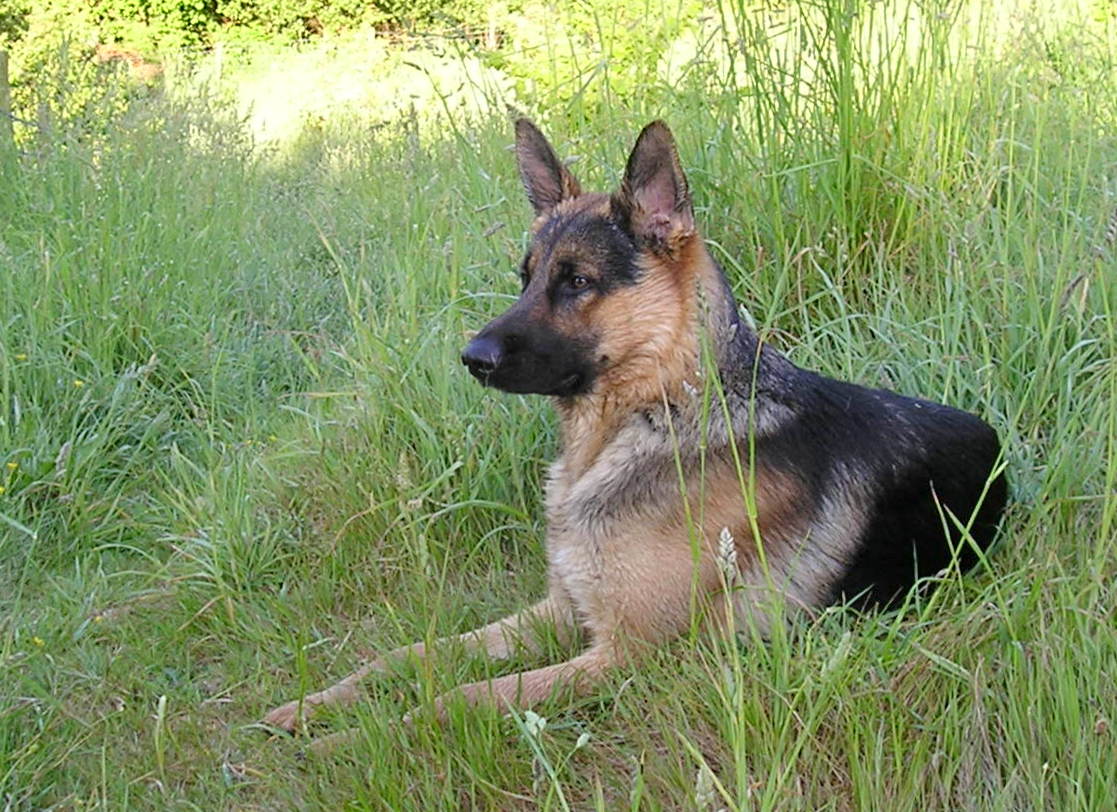
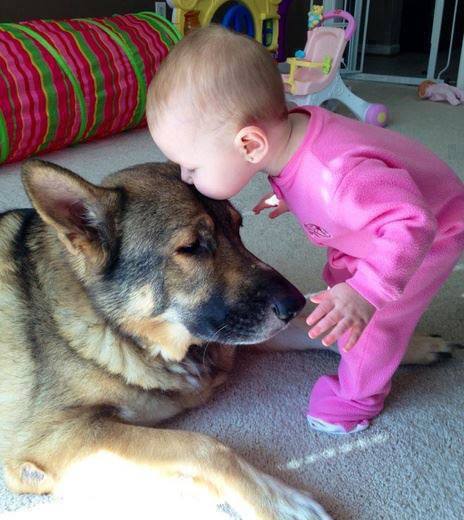
Tag: Dogs

The loss of democracy, Concluding Part.

Part Two of what is probably just now the most important lesson to be learnt from dogs!

(Part One was published last Friday.)

Last Friday I part-used a recent chilling essay on TomDispatch by Peter Van Buren to illustrate the madness and the associated dangers of how we humans are behaving at present.  Here’s the balance of that essay.

ooOOoo

This Land Isn’t Your Land, This Land Is Their Land

An Empire in Decline (City by City, Town by Town)
By Peter Van Buren

The Most Exclusive Gated Community: U.S. Marine Corps Base, Camp Lejeune, North Carolina

I grew up in a fairly small Ohio town that, in the 1970s, was just crossing the sociological divide between a traditional kind of place and a proper bedroom suburb. Not everyone knew each other, but certain principles were agreed upon. A steak should be one inch thick or more. A good potluck solved most problems. Vegetables were boiled, faith rewarded. Things looked better in the morning. Kids drank chocolate milk instead of Coke. We had parades every Memorial Day and every Fourth of July, but Labor Day was just for barbecues because school began the next day and dad had to get up for work. In fact, that line — “I’ve got to get up for work” — was the way most social events broke up. This isn’t nostalgia, it’s history.

In 2014, you could travel significant parts of the decaying Midwest and not imagine that such a place had ever existed. But turn south on Interstate 95 and look for the signs that say “Welcome to U.S. Marine Corps Base Camp Lejeune,” in Jacksonville, North Carolina. Actually, welcome to almost any U.S. military base outside of actual war zones, where a homogeneous military population and generous government spending (re)creates the America of the glory days as accurately as a Hollywood movie. For a first-time visitor, a military base can feel like its own living museum, the modern equivalent of Colonial Williamsburg.

Streets are well maintained, shaded by tall trees planted there (and regularly pruned) for just that purpose. Road, water, and sewer crews are always working. There are no potholes. There is a single school with a prominent football field, and a single shopping area. The restaurants are long-time Department of Defense franchise partners and there’s always a pizza place with a fake-sounding Italian name. Those creature comforts on such bases in the U.S. and around the world come at a cost to taxpayers of billions of dollars a year.

Some of the places employ locals, some military spouses, some high school kids earning pocket money after school. The kids bag groceries. Everybody tips them; they’re neighbors.

The centerpieces of any base like Camp Lejeune are the Base Exchange and the Commissary. The former is a mini-Walmart; the latter, a large grocery store. Both are required by law not to make a profit and so sell products at near wholesale prices. Because everyone operates on federal property, no sales tax is charged. When a member of a Pentagon advisory board proposed shutting down some of the commissaries across the U.S., a step that would have saved taxpayers about $1.4 billion a year, World War III erupted in Congress and halted the idea.

Over in officers’ housing areas, everyone cuts their lawns, has a garage full of sports equipment and a backyard with a grill. Don’t keep up your assigned housing unit and you’ll hear from a senior officer. People get along — they’re ordered to do so.

The base is the whole point of Jacksonville, the town that surrounds it. The usual bars and strip clubs service the Marines, and Camp Lejeune is close to being the town’s sole employer like that old steel mill in Weirton or the gambling palaces in Atlantic City. The base shares another connection to places like Weirton: as men lost their health in the mills thanks to asbestos and other poisons, so Camp Lejeune’s drinking water was contaminated with trichloroethylene, a known carcinogen, between 1953 and 1987.

There, however, the similarities end.

Unlike the archipelago of American towns and cities abandoned to shrivel and die, the “city” inside Camp Lejeune continues to thrive, since its good times are fully covered by taxpayer money. The 23% of the national budget spent on defense assures places like Camp Lejeune of their prosperity.

The Department of Defense, with 3.2 million employees (albeit not all in uniform) is the world’s largest employer. It makes up more than two percent of the American labor force.

And the military pays well; no scrambling for a minimum wage at Camp LeJeune. With combat pay more or less standard since 9/11 (the whole world being a battlefield, of course), the Congressional Budget Office estimates that the average active duty service member receives a benefits and pay compensation package worth $99,000. This includes a livable pension after 20 years of service, free medical and dental care, free housing, a clothing allowance, and more. In most cases, dependents of service members continue to live on a base in the United States while their husbands or wives, fathers or mothers serve abroad. Unlike in the minimum-wage jobs many other Americans now depend on, service members can expect regular training and skills enhancement and a clear path to promotion. Nearly every year, Congress votes for pay increases. The arguments for military benefits may be clear — many service members lead difficult and dangerous lives. The point is, however, that the benefits exist, unlike in so many corporate workplaces today. The government pays for all of them, while Atlantic City and Weirton struggle to stay above water.

Small Town America in the Big Apple: Spanish Harlem

The number of Americans who have visited Harlem, even for a quick stop at a now-trendy restaurant or music club, is unknown but has to be relatively small. Even many lifetime New Yorkers riding the uptown subway under the wealthy upper east side are careful to hop off before reaching the 116th Street stop. Still, get off there, walk a few blocks, and you find yourself in a micro-economy that, in its own way, has more in common with America of the 1950s than 2014.

There are, of course, no shaded areas along the block I was visiting in what has traditionally been known as Spanish Harlem, no boyish Little League games. But what you do find are locally owned stores with hardly a franchised or corporately owned place in sight. The stores are stocked with a wondrous hodge-podge of what people in the area need, including South American root vegetables, pay-as-you-go cell phones, and cheap school supplies.

These stores could not exist in many other places. They are perfectly adapted to the neighborhood they are in. While the quality of goods varies, prices are wondrously below what similar things cost a half-dozen subway stops away in midtown Manhattan. In the stores, the employees of these family businesses speak the same languages as their mostly Dominican immigrant customers, and those who work there are eager to make suggestions and help you find things.

People actually chat with each other. Customer loyalty is important, so prices are often negotiable. When he discovered that his customer was also his neighbor, one shop owner helped carry purchases upstairs. Another store informally accepted and held package deliveries for neighbors.

The guy selling frozen ices on the sidewalk nearby did not work for a conglomerate and doled out healthy-sized servings to his regulars. He told me that he bought his raw materials in the very grocery store we were camped in front of.

Even at night, the sidewalks here are full of people. I never felt unsafe, even though I obviously wasn’t from the neighborhood. People seemed eternally ready to give me directions or suggest a local eatery I shouldn’t miss. The one established mega-corporate store in the area, a Rent-a-Center charging usurious prices for junk, had no customers inside on the day I visited. The shop next to it, with an impressive array of used TVs and small appliances from unknown Chinese manufacturers, seemed to be doing gangbuster business. The owner shifted among English, Spanish, and some sort of Dominican creole based on the needs of his customers.

Few things here are shiny or new. There are vacant lots, an uncomfortable sight at night. Homeless people, some near naked despite the weather and muttering to themselves, are more prevalent than in Midtown. The streets have more trash. I saw drug deals going on against graffiti-scarred walls. There is a busy methadone clinic on a busy street. Not everyone is the salt of the earth, but local businesses do cater to the community and keep prices in line with what people could pay. Money spent in the neighborhood mostly seems to stay there and, if not, is likely sent home to the Dominican Republic to pay for the next family member’s arrival in town — what economist John Maynard Keynes called the “local multiplier effect.” One study found that each $100 spent at local independents generated $45 of secondary local spending, compared to $14 at a big-box chain. Business decisions — whether to open or close, staff up or lay off — were made by people in the area face-to-face with those they affected. The businesses were accountable, the owners at the cash registers.

The stretch of Spanish Harlem I passed through is a galaxy away from perfect, but unlike Weirton, which had long ago given up, Atlantic City, which was in the process of doing so, or Camp Lejeune, which had opted out of the system entirely, people are still trying. It shows that an accountable micro-economy with ties to the community can still work in this country — at least in the short run. But don’t hold your breath. Target recently opened its first superstore not far away and may ultimately do to this neighborhood what cheap foreign steel imports did to Weirton.

Looking Ahead

I grew up in the Midwest at a time when the country still prided itself on having something of a conscience, when it was a place still built on hope and a widespread belief that a better future was anybody’s potential birthright. Inequity was always there, and there were always rich people and poor people, but not in the ratios we see now in America. What I found in my travels was place after place being hollowed out as wealth went elsewhere and people came to realize that, odds on, life was likely to get worse, not better. For most people, what passed for hope for the future meant clinging to the same flat-lined life they now had.

What’s happening is both easy enough for a traveler to see and for an economist to measure. Median household income in 2012 was no higher than it had been a quarter-century earlier. Meanwhile, expenses had outpaced inflation. U.S. Census Bureau figures show that the income gap between rich and poor had widened to a more than four-decade record since the 1970s. The 46.2 million people in poverty remained the highest number since the Census Bureau began collecting that data 53 years ago. The gap between how much total wealth America’s 1% of earners control and what the rest of us have is even wider than even in the years preceding the Great Depression of 1929. Argue over numbers, debate which statistics are most accurate, or just drive around America: the trend lines and broad patterns, the shadows of our world of regime change, are sharply, sadly clear.

After John Steinbeck wrote The Grapes of Wrath, he said he was filled with “certain angers at people who were doing injustices to other people.” I, too, felt anger, though it’s an emotion that I’m unsure how to turn against the problems we face.

As I drove away from Atlantic City, I passed Lucy the Elephant still at her post, unblinking and silent. She looks out over the Boardwalk, maybe America itself, and if she could, she undoubtedly would wonder where the road ahead will take us.

Peter Van Buren blew the whistle on State Department waste and mismanagement during Iraqi reconstruction in his first book, We Meant Well: How I Helped Lose the Battle for the Hearts and Minds of the Iraqi People. A TomDispatch regular, he writes about current events at his blog, We Meant Well. His book Ghosts of Tom Joad: A Story of the #99Percent has just been published.

Follow TomDispatch on Twitter and join us on Facebook and Tumblr. Check out the newest Dispatch Book, Ann Jones’s They Were Soldiers: How the Wounded Return From America’s Wars — The Untold Story.

Copyright 2014 Peter Van Buren

ooOOoo

Let me pick up a sentence that Peter wrote in his penultimate paragraph.  This one; “I, too, felt anger, though it’s an emotion that I’m unsure how to turn against the problems we face.

Those feelings of anger are easy to feel and, of course, anger is a legitimate response to the terrible levels of inequity in many societies.   But the answer is clear.  We need to promote the role of integrity, honesty, love and trust in our affairs, from the top to the bottom of the peoples who make up a nation.  As is explained in my sidebar Dogs and integrity,

Dogs:

  • are integrous ( a score of 210) according to Dr David Hawkins
  • don’t cheat or lie
  • don’t have hidden agendas
  • are loyal and faithful
  • forgive
  • love unconditionally
  • value and cherish the ‘present’ in a way that humans can only dream of achieving
  • are, by eons of time, a more successful species than man.

Not a bad model for the future!
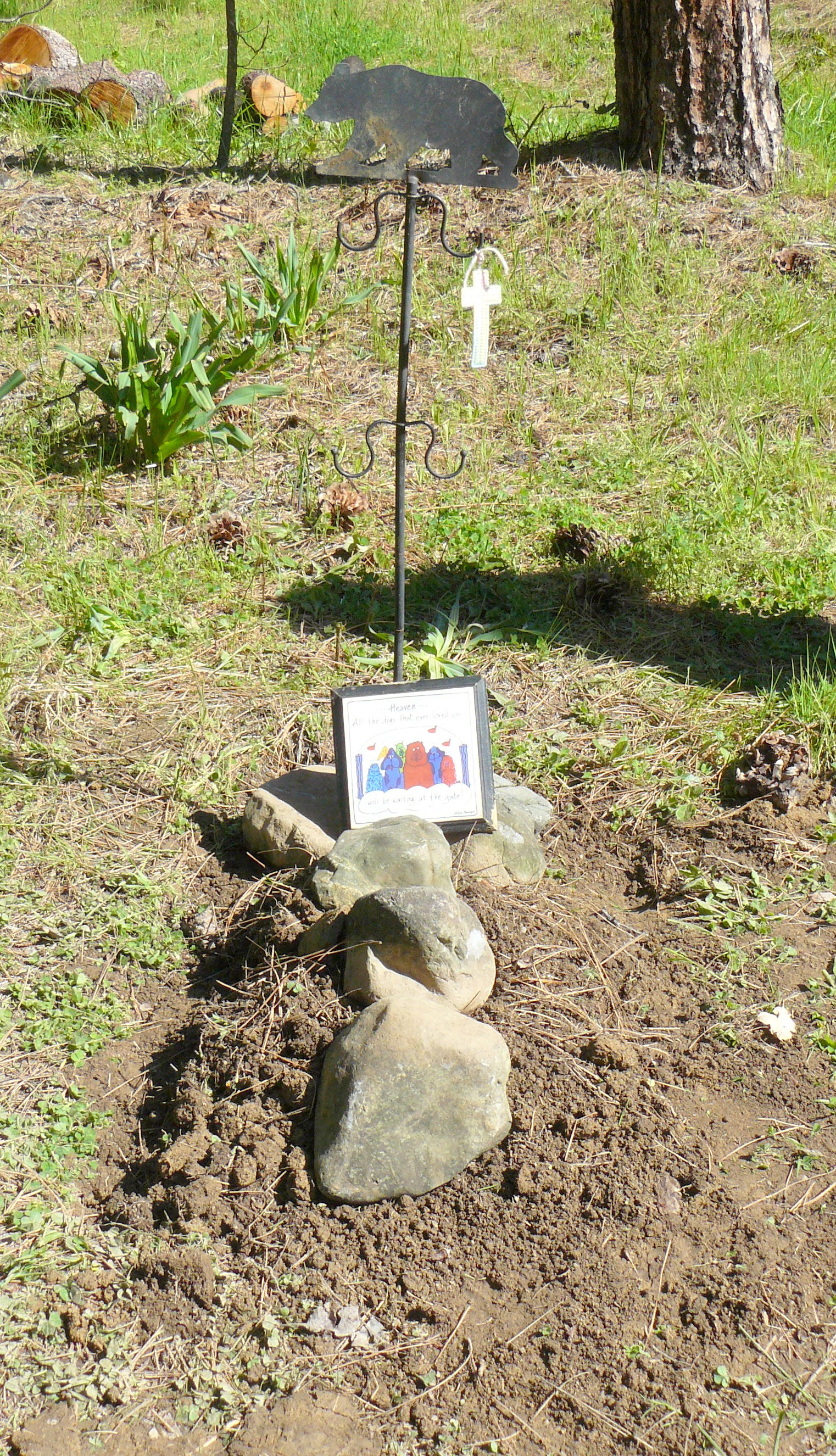
Dear Dhalia

Now we are eight!

Dhalia was clearly close to death when Jean and I took her to our vet, Dr. Codd, earlier this morning.

Indeed, she was probably dead when Dr. Codd administered the euthanasia injection. It was 8:45 am.

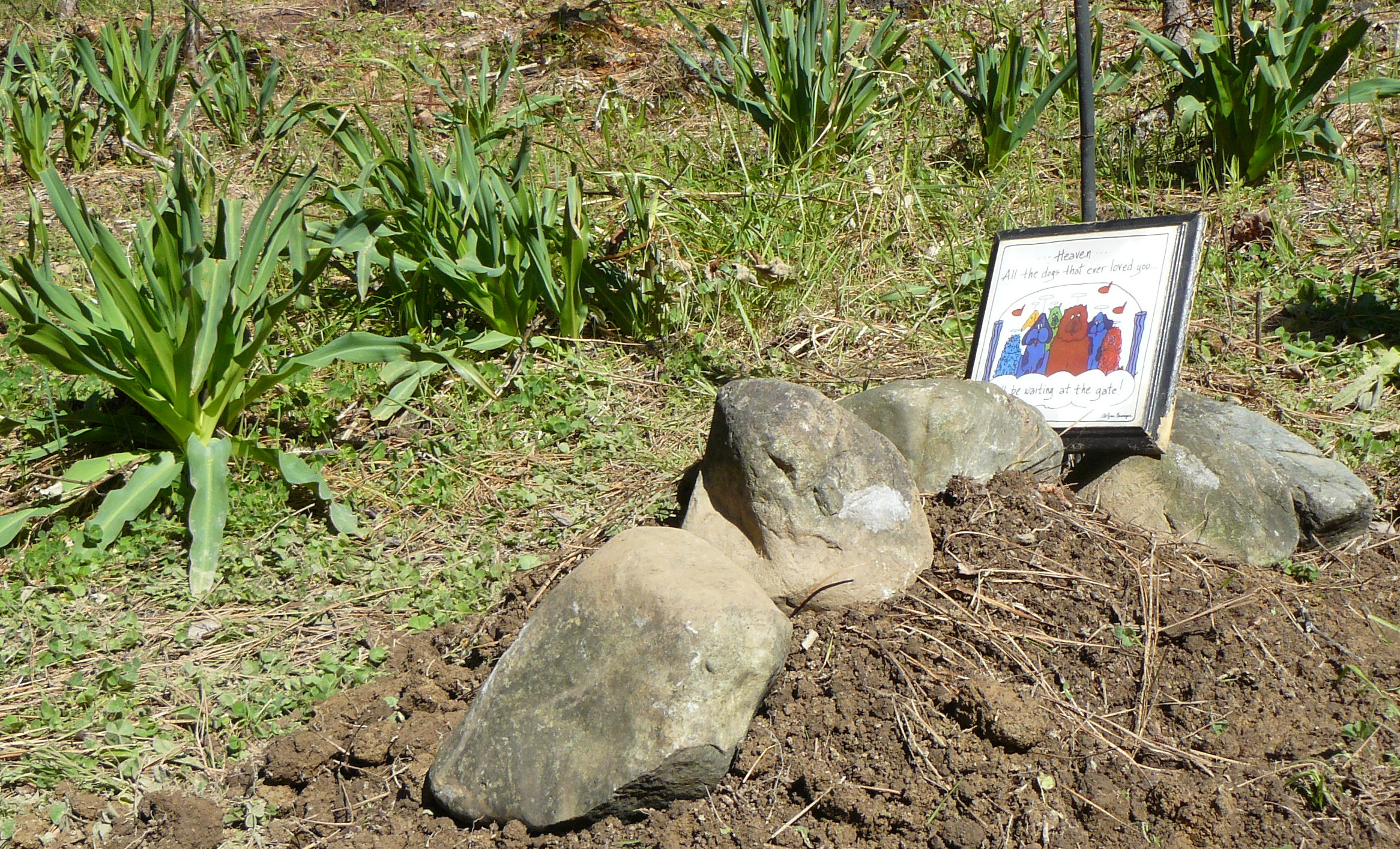
While there is more I want to write about Dhalia, you’ll appreciate it if that is left for tomorrow’s post and I close this with a couple of photographs.

Dhaliagrave1


oooo

Dhalia grave2

oooo

For those that can’t read the plaque it says, “Heaven. All the dogs that ever loved you will be waiting at the gate.

Dhalia has taken her last walk!

So little time.

The pain of knowing Dhalia is close to death.

It’s almost incomprehensible to realise that less than two weeks ago, the 27th March to be exact, I wrote a post under the title of Life, and mortality.  These few paragraphs will give you a feel for that post:

Possibly the most important lesson we can learn from dogs!

I was aware when writing the concluding part of Meet the dogs – Pharaoh that the next day I would be faced with writing about a subject that is a whole degree more difficult. Death!

It must have been in my mind when I wrote “of the need to smell the flowers in this short life of ours.“

What has prompted today’s post?

Simply that Dhalia developed a limp in her front, right-hand, leg. That was a few weeks ago. Naturally, we took her to our local vet, Dr. Codd, who diagnosed a strained elbow joint probably as a result of arthritis; Dhalia is believed to be ten-years-old. With the recommended medication, the limp came to an end.

Then about two weeks ago, the elbow weakness appeared in her left-hand, front leg.

On Monday, we returned to Dr. Codd who took further X-rays and sought a second opinion. That second opinion came back with the probability that it was a “osteoproliferative neoplastic lesion” or bone cancer to you and me! It’s not one-hundred-per-cent certain but likely.

The reason it feels so painful is that today (Sunday) it’s very clear to Jean and me that Dhalia’s life forces are ebbing away and that tomorrow morning (i.e. your today, dear reader) we will be taking Dhalia back to Dr. Codd, undoubtedly for him to put her to sleep.

I had in mind writing this week a series of posts on Truth, Trust and Community.  For obvious reasons those posts are on hold for a couple of days.

Please keep Dhalia in your thoughts.

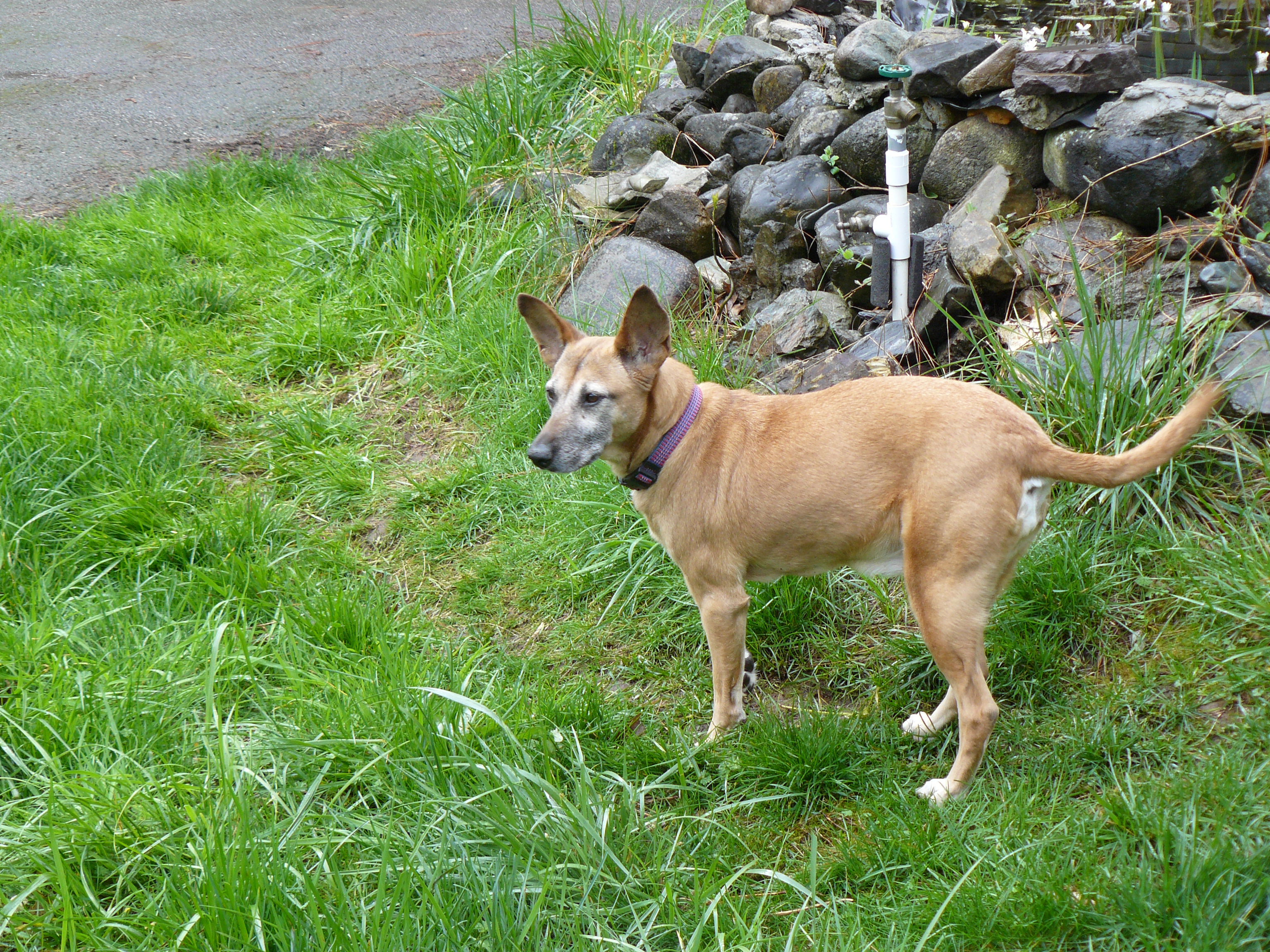
Dhalia, just two weeks ago. She was already barely using her right front-leg.

We are what we eat!

But being careful about what our dogs eat is another story!

This is not the first time that I have used this title for a blog post.  The previous time was almost eighteen months ago when I highlighted a fascinating talk about the green revolution by Raj Patel, the award-winning writer, activist, and academic.

However, today is a first in that it looks at what our dogs eat.  It was inspired by a recent article by Brady Dennis in the Washington Post.  Here’s how that article opened:

Mystery of pet deaths related to jerky treats made in China continues to stump FDA

By Brady Dennis, Published: March 28

Andy lost his appetite. Then came the vomiting, the unquenchable thirst, the constant need to urinate. Over several days last year, the spunky 4-year-old West Highland white terrier grew lethargic and lost more than 10 percent of his weight.

“It got bad,” said Andy’s owner, Alfredo Gude, a retiree in Cape Coral, Fla. “I knew that he was in trouble.”

Gude and his wife rushed Andy to their veterinarian, who referred him to a clinic 15 miles away. Doctors there sent a urine sample to a specialized metabolic lab at the University of Pennsylvania. Days later, test results confirmed the diagnosis: Fanconi syndrome, a rare, often fatal illness that affects the kidneys. The suspected cause: chicken jerky pet treats manufactured in China.

The incident is part of a troubling mystery lasting more than seven years, with reports of at least 600 dogs dying and thousands of others sickened. It has outraged unsuspecting pet owners, confounded the Food and Drug Administration and put the pet food industry’s manufacturing practices under a microscope.

A little later on in the article, Brady Dennis writes:

Bernadette Dunham, director of the FDA’s Center for Veterinary Medicine, has called it “one of the most elusive and mysterious outbreaks we’ve encountered,” a sentiment echoed by others at the agency.

“We are frustrated,” said Martine Hartogensis, who oversees the FDA’s ongoing investigation. “It’s been a long, winding, twisting road . . . [But] we haven’t given up.”

The FDA says it has tested more than 1,200 jerky treats in recent years, looking for salmonella, mold, pesticides, toxic metals, outlawed antibiotics, nephrotoxins and other contaminants. Federal officials have inspected factories in China that manufacture chicken jerky products for U.S. companies and sought input from academics, state and university research labs, foreign governments and the pet food industry. The agency even made its own jerky treats to try to duplicate the commercial process.

This is not some minor issue reinforced by the huge increase in dog food imports into the USA from China.  Back to Brady:

The long-running investigation has paralleled a striking increase in the amount of pet food China exports to the United States. That volume increased from barely 1 million pounds in 2003 to an estimated 86 million pounds by 2011, according to the FDA.

Pet treats, including the jerky treats at the heart of the current investigation, have made up a fast-growing sliver of the pet food market. Part of the reason many U.S. companies have looked to China to produce chicken jerky treats, industry officials say, is that unlike in America, people in China overwhelmingly prefer dark meat. That leaves a larger supply of the white meat used in pet treats available for exporting.

Then a few paragraphs later, he adds:

“It’s maddening that it has gone on this long,” said Susan Thixton, who runs the Web site TruthAboutPetFood.com, which has repeatedly demanded that the agency do more. “If this were humans dying, and they couldn’t figure out a cause for seven years, members of Congress would be screaming at them.”

The home page of her site displays a clock tracking how long jerky treats from China have been killing and sickening pets. It asks: “When will FDA make this clock stop?” As of Friday, the count stood at 2,643 days.

“My job is to point out that they aren’t doing their job,” Thixton said. “I have a lot of respect for what they have to accomplish. They have huge responsibilities, but this is one of them.”

When I read out the article to Jean what then jumped ‘off the page’ was this paragraph [my emphasis]:

Angry pet owners also have heaped criticism on U.S. companies that continue to manufacture jerky treats with ingredients from China. The backlash includes everything from skepticism over the industry’s assurances that the treats have never posed health risks to lawsuits alleging harm.

As Susan Thixton was reported earlier: “If this were humans dying, and they couldn’t figure out a cause for seven years, members of Congress would be screaming at them.”  Quite so!

Luckily, owners are responding as Brady highlights in these paragraphs:

Nina Leigh Krueger, head of the Waggin’ Train brand, said most retailers and customers have welcomed the treats back. “Thousands of consumers have been calling and asking us for Waggin’ Train treats to be back on the market,” she said.

Terry Safranek is not one of them.

“It’s a kick in the gut to see them back on the shelf,” said Safranek, whose 9-year-old fox terrier, Sampson, who had eaten jerky treats, died of kidney failure in 2012. Since then, Safranek has become a plaintiff in a class-action lawsuit against Nestlé Purina and retailers including Target and Wal-Mart. She helped create Animal Parents Against Pet Treats and Food Made in China, a group that has petitioned the FDA to do better in alerting people about the potential dangers of jerky treats produced in Chinese factories.

The link in the last paragraph takes the reader to the Facebook page for that group.  Do go there and ‘Like’ the page.

I will close by recommending you read the Washington Post article in full and then spend some time perusing the website Truth about Pet Food. This is not just about ‘Made in America’ but fighting to ensure that animal treats made in the USA are also using ingredients from the USA!

Remember how Brady opened his article?  With Alfredo Gude learning that their dog, Andy, had been diagnosed with Fanconi syndrome, a rare and often fatal illness that affects the kidneys of dogs.

Well last words left with Brady Dennis:

For now, on Florida’s west coast, Andy the terrier has returned to normal after months of treatments — about $3,500 worth — to restore his kidney function. “We feel very lucky,” said Gude, who has taken the advice of many vets around the country to steer clear of pet jerky treats altogether. “It could have gone another way.”

Our dogs (and cats) have a right to be fed to the same standards as us humans!

Life, and mortality.

Possibly the most important lesson we can learn from dogs!

I was aware when writing the concluding part of Meet the dogs – Pharaoh that the next day I would be faced with writing about a subject that is a whole degree more difficult.  Death!

It must have been in my mind when I wrote “of the need to smell the flowers in this short life of ours.

What has prompted today’s post?

Simply that Dhalia developed a limp in her front, right-hand, leg.  That was a few weeks ago.  Naturally, we took her to our local vet, Dr. Codd, who diagnosed a strained elbow joint probably as a result of arthritis; Dhalia is believed to be ten-years-old.  With the recommended medication, the limp came to an end.

Then about two weeks ago, the elbow weakness appeared in her left-hand, front leg.

On Monday, we returned to Dr. Codd who took further X-rays and sought a second opinion.  That second opinion came back with the probability that it was a “osteoproliferative neoplastic lesion” or bone cancer to you and me!  It’s not one-hundred-per-cent certain but likely.

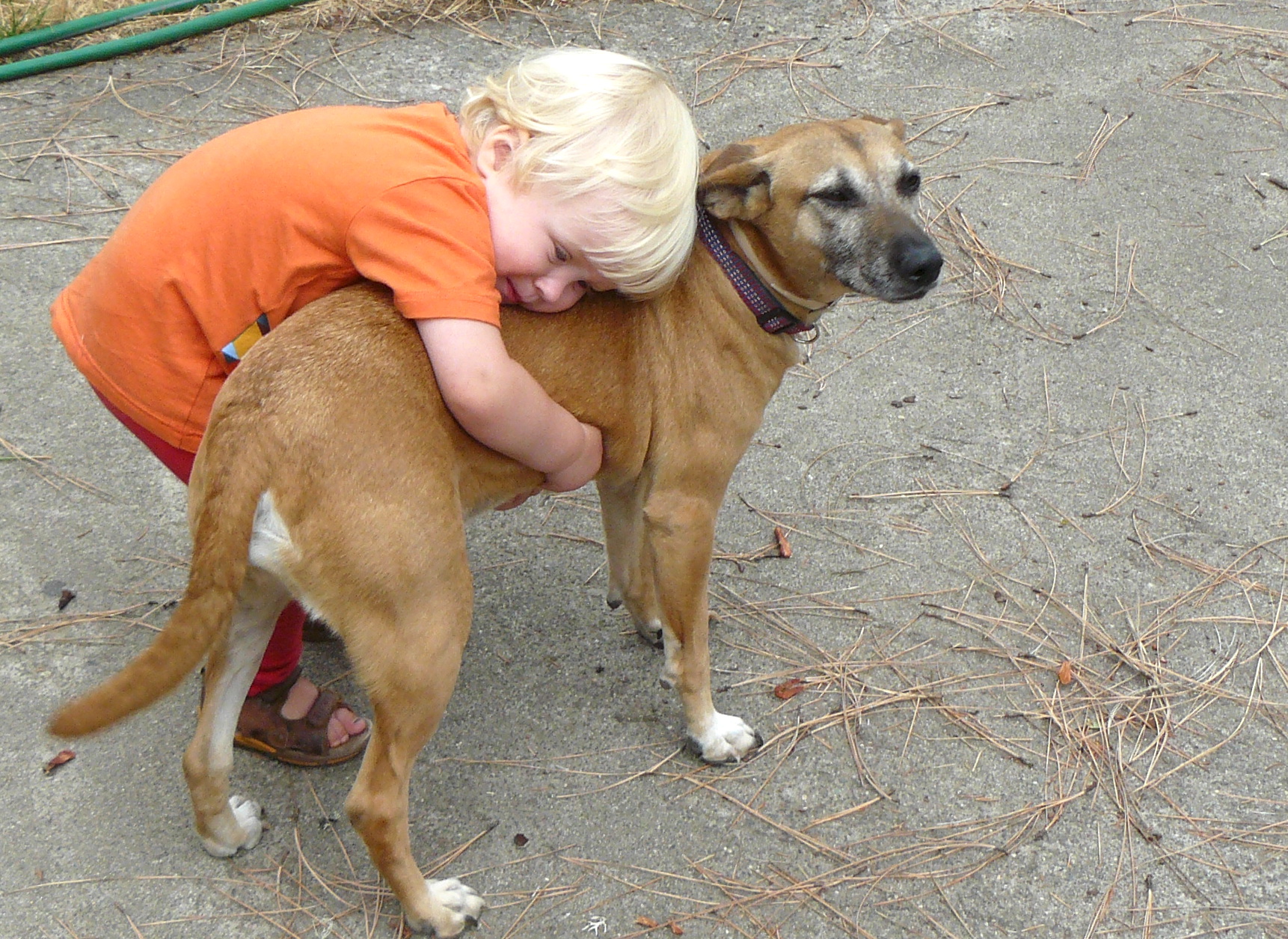
It only seemed like yesterday that Jean wrote about Dhalia in our ‘Meet the dogs’ series. That post included this photograph.

Love and Trust - Grandson Morten hugging Dhalia.
Love and Trust – Grandson Morten hugging Dhalia, September 2013.

Jean is very sad, as one would expect, nay we both are.  Dhalia, like Hazel and some of the other dogs here at home, has a loving openness towards humans that is truly remarkable when one learns of how these dogs came to be rescued: Dhalia being found by Jean living rough in a desolate part of a Mexican desert.  This is what Jean wrote in that ‘Meet the dogs‘ account:

I named her Dhalia and after treatments for mange she became quite beautiful. She was the pivotal part of a short story, Messages from the Night, Paul wrote back in 2011. Under her sweet exterior remains that same will to survive so evident when I rescued her all those years ago. There has been more than one occasion that she has brought me a recently killed squirrel or an ancient bone. We love our Dhalia: she still reaches out with her front paw when she seeks attention. Dhalia will be ten-years-old this year.

Somehow, Dhalia’s possible last few weeks of life resonated with much else going on.  Close to us, the recent death of a chicken, and one of our cats that does not have much longer to live.  In the wider world, the Washington State mud-slide, flight MH370, and the Ukraine.  The news media treat death as almost a trivial, incidental part of the scheme of things.

It takes others to offer words that elevate death to its deserved meaning.  Take, for example, author Brian Beker, who writes the blog The Dog in the Clouds.  Brian recently wrote the following post:

Prayer for an eagle

Please say a prayer for beautiful bald eagle who just died a death he did not deserve.

He was stuck on the ground near a concrete barrier on a stretch of interstate under construction in Arkansas. I spotted him with his head down, facing into the traffic that was passing a foot away from him.

He was an adult bald eagle-big and brave, facing down the oncoming 18 wheelers.

There was no place to pull off, concrete barriers on both sides, so I went to the next exit and backtracked. My adrenaline was rushing in horror and fear. My plan was just to stop and block traffic, and pick him up. But he had been killed by the time I got back to him three or four minutes later.

I failed that bird.

I hope he is circling over the lakes and trees he loves.

Back to learning about death from our dogs.

Dhalia’s possible terminal condition; my Pharaoh being the age he is; somewhere in there has come the recognition that we should embrace life yet also embrace our mortality; our death.  As Leonardo da Vinci was reputed to have said, “While I thought that I was learning how to live, I have been learning how to die.

What does death mean; truly mean?  I don’t know.  All I know is that death is the end of a life.  That our immortality is only an echo, a reverberation of who we were and what we stood for.  Or no better put than by American lawyer, Albert Pike, who left these words before he died on April 2nd, 1891 (Yes, I looked it up!)

What we have done for ourselves alone dies with us;

what we have done for others and the world remains and is immortal.

Last thought from our dogs. Recall that yesterday, I wrote, “Pharaoh has been my greatest inspiration of the power of unconditional love; of the need to smell the flowers in this short life of ours.

Day in, day out, anyone with dogs in their lives know how often they offer us simple acts of love.

A life of simple acts of love – now that does give death a meaning!

Dhalia - picture taken two days ago.
Dhalia – picture taken two days ago.

Meet the dogs – Pharaoh (pt 2)

The concluding part-two of meeting Pharaoh 

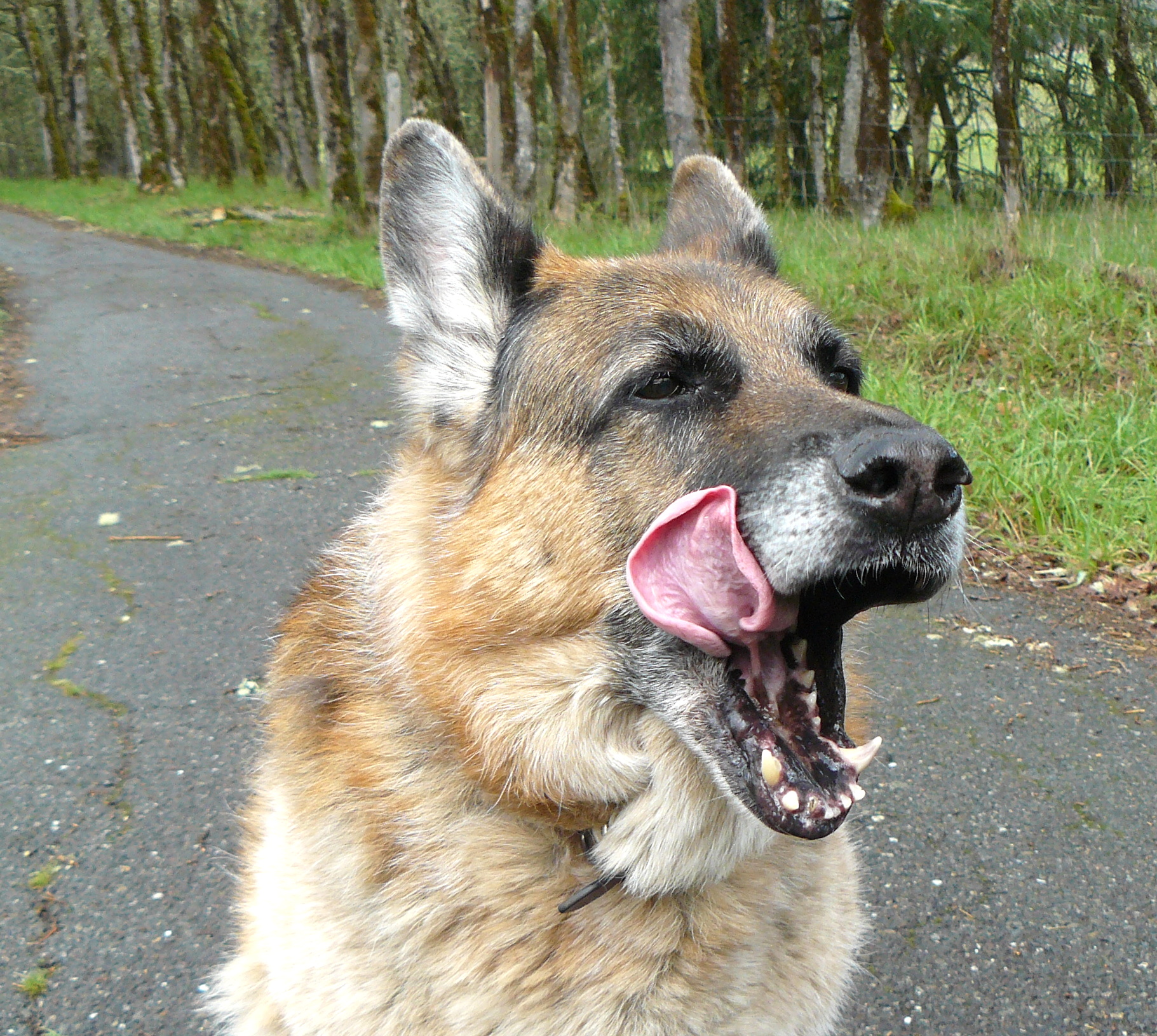
Pharaoh, as of yesterday afternoon!

In yesterday’s first part of my recollection of having Pharaoh in my life for over ten years, I focussed on the early days.  Today, I want to take a more philosophical view of the relationship, right up to the present day.

The biggest, single reward of having Pharaoh as my friend goes back a few years.  Back to my Devon days and the time when Jon Lavin and I used to spend hours talking together.  Pharaoh always contentedly asleep in the same room as the two of us. It was Jon who introduced me to Dr. David Hawkins and his Map of Consciousness. It was Jon one day who looking down at the sleeping Pharaoh pointed out that Dr. Hawkins offered evidence that dogs are integrous creatures with a ‘score’ on that Map of between 205 and 210. (Background story is here.)

So this blog, Learning from Dogs, and my attempt to write a book of the same name flow from that awareness of what dogs mean to human consciousness and what Pharaoh means to me.  No, more than that!  From that mix of Jon, Dr. David Hawkins, experiencing the power of unconditional love from an animal living with me day-in, day-out, came a journey into my self.  Came the self-awareness that allowed me to like who I was, be openly loved by this dog of mine, and be able to love in return.  As is said: “You cannot love another until you love yourself.

Moving on.

Trying to pick out a single example of the bond that he and I have is practically impossible.  I have to rely on photographs to remind me of the thousands of times that a simple look or touch between Pharaoh and me ‘speaks’ to me in ways that words fail. Here’s an extract from my celebration of Pharaoh’s tenth birthday  last June 3rd; written the following day. It comes pretty close to illustrating the friendship bond.

oooo

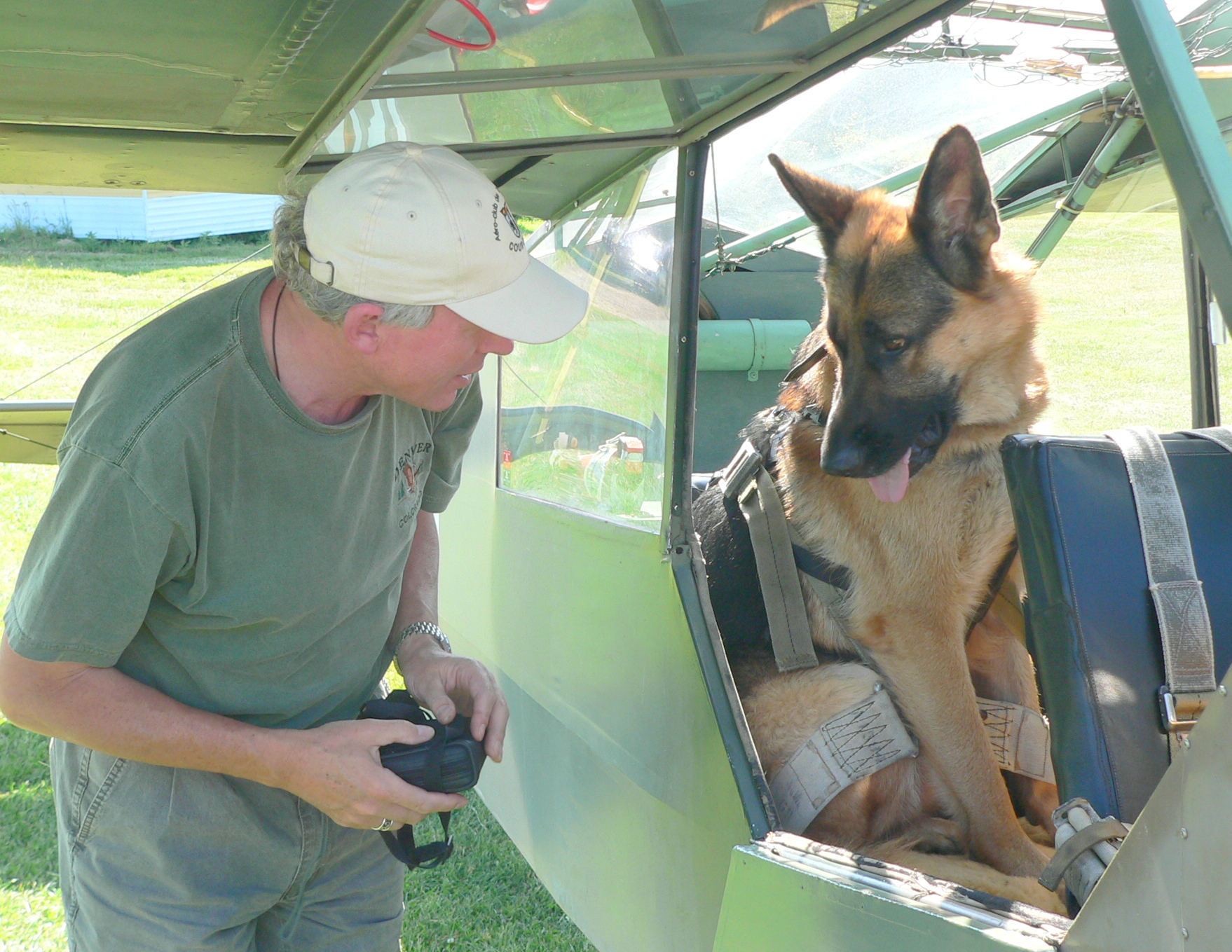
For many years I was a private pilot and in later days had the pleasure, the huge pleasure, of flying a Piper Super Cub, a group-owned aircraft based at Watchford Farm in South Devon.  The aircraft, a Piper PA-18-135 Super Cub, was originally supplied to the Dutch Air Force in 1954 and was permitted by the British CAA to carry her original military markings including her Dutch military registration, R-151, although there was a British registration, G-BIYR, ‘underneath’ the Dutch R-151.  (I wrote more fully about the history of the aircraft on Learning from Dogs back in August 2009.)

Piper Cub R151
Piper Cub R151

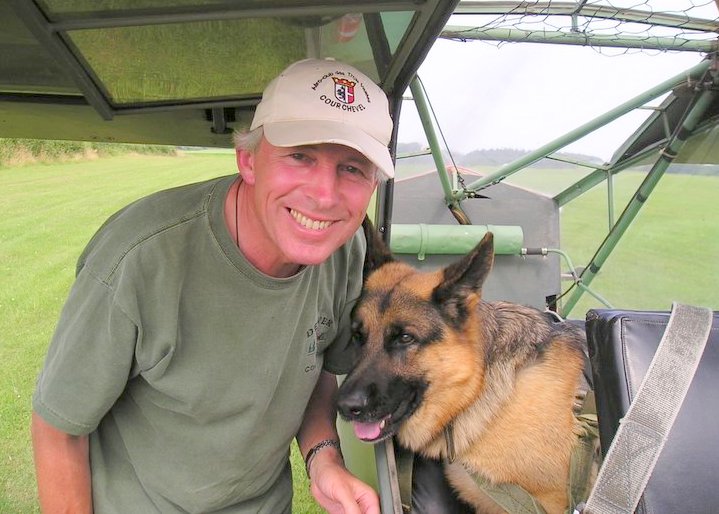
Anyway, every time I went to the airfield with Pharaoh he always tried to climb into the cockpit.  So one day, I decided to see if he would sit in the rear seat and be strapped in.  Absolutely no problem with that!

Come on Dad, let's get this thing off the ground!
Come on Dad, let’s get this thing off the ground!

My idea had been to fly a gentle circuit in the aircraft.  First I did some taxying around the large grass airfield that is Watchford to see how Pharaoh reacted.  He was perfectly behaved.

Then I thought long and hard about taking Pharaoh for a flight.  In the Cub there is no autopilot so if Pharaoh struggled or worse it would have been almost impossible to fly the aircraft and cope with Pharaoh.  So, in the end, I abandoned taking him for a flight.  The chances are that it would have been fine.  But if something had gone wrong, the outcome just didn’t bear thinking about.

So we ended up motoring for 30 minutes all around the airfield which, as the next picture shows, met with doggie approval.  The date was July 2006.

That was fun!
That was fun!

oooo

Moving on again.  This time to another flying experience.  To the day when Pharaoh and I flew out of London bound for Los Angeles and a new life with Jeannie and all her dogs (16 at that time) down in San Carlos, Sonora County, Mexico.  The date: September 15th, 2008.  Just ten months after I had met Jean in Mexico and realised that this was the woman that I was destined to love! (Now you will understand why I described earlier the Jon Lavin, Dr. Hawkins, Pharaoh mix as the biggest, single reward of having Pharaoh as my friend!)

There followed wonderful happy days for me and Pharaoh.  Gorgeous to see how Pharaoh became so much more a dog, if that makes sense, from having his own mini-pack around him.  Those happy days taking us all forwards to Payson, AZ, where Jean and I were married, and then on to Merlin, Oregon arriving here in October, 2012.

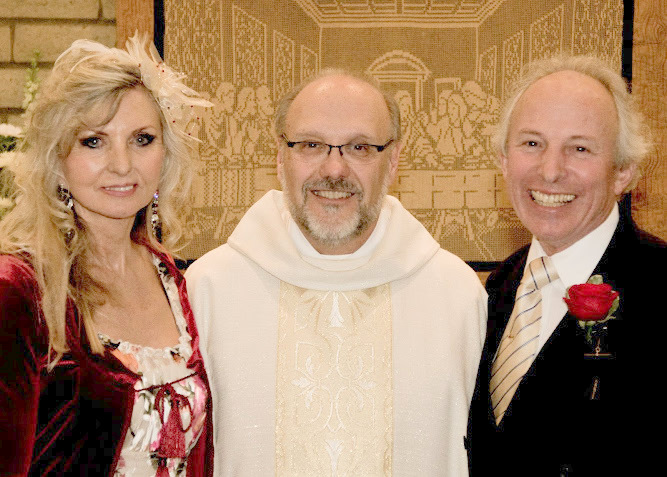
Fr. Dan Tantimonaco with the newly weds!

oooo

Pharaoh 'married' to his dearest friends. December, 2013.
Pharaoh ‘married’ to his dearest friends. December, 2013.

oooo

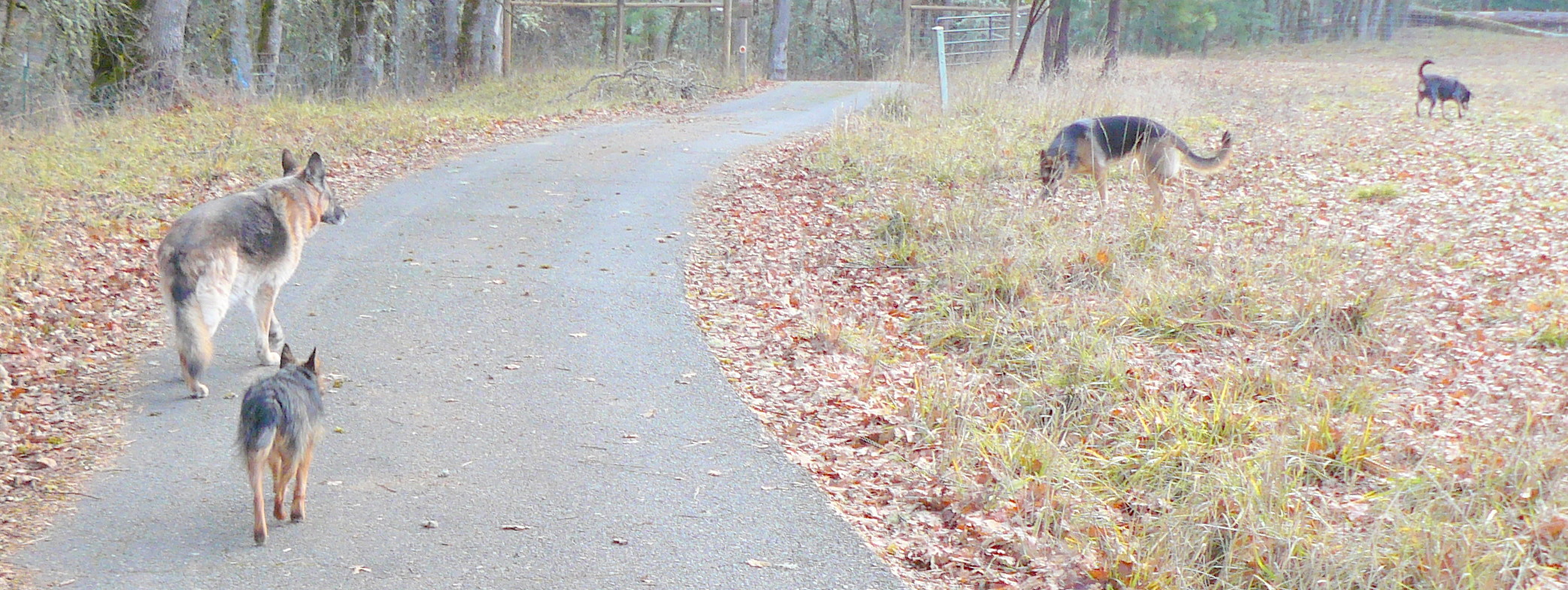
Perfect closeness. Pharaoh and Cleo with Hazel in the middle.  Taken yesterday.
Smelling the flowers! Pharaoh and Cleo with Hazel in the middle. Taken yesterday.

I could go on!  Hopefully, you get a sense, a very strong sense, of the magical journey that both Pharaoh and I have experienced since I first clasped him in my arms back in September, 2003.

Both Pharaoh and I are in the Autumn of our lives, he is 11 in June; I am 70 in November, and we both creak a little. But so what! Pharaoh has been my greatest inspiration of the power of unconditional love; of the need to smell the flowers in this short life of ours.

One very great animal! (March 25th, 2014)

Thank you, my dear, dear friend!

Meet the dogs – Pharaoh (pt 1)

‘Meeting’ this dog deserves two posts!

Almost two months ago, January 30th to be exact, the first of this ‘Meet the dogs‘ series was published.  It came out of an idea from Jean and that January 30th post introduced Paloma to you, dear reader.  Since then we have told you about Lilly, Dhalia, Ruby, Casey, Hazel, Sweeny, and Cleo.

So today’s post is the last of the Meet the dogs stories; it is about Pharaoh.  I’m going to indulge myself and tell you the story of this most wonderful of dogs over today and tomorrow.

ooOOoo

Pharaoh

OLYMPUS DIGITAL CAMERA
Photograph taken on the 12th August, 2003, the first day I saw Pharaoh.

This is Sandra Tucker, owner of Jutone Kennels in Devon, England, where Pharaoh was born on June 3rd, 2003.  Here’s something written elsewhere that conveys my feelings that first day that I met this puppy.

oooo

In no time at all I was turning into the farm driveway, noticing the painted sign for Jutone & Felsental German Shepherds alongside the open, wooden gate.

I turned off the engine and was about to swing my legs out of the open driver’s door when I saw a woman coming towards me.

“Hi, you must be Paul, I’m Sandra. Did you have any trouble finding us?”

I shook hands with her.

“Not at all. I did as you recommended when we spoke on the phone and went in to the local store and got final directions.”

Sandra smiled, her glasses almost slipping off the end of her nose.

“Dear Beth. She’s been running that local store since God was a boy.”

She continued with a chortle in her voice, “Some say that Beth was at the store before our local pub, The Palk Arms, opened for business. And the pub’s been in the village for well over four-hundred years.” Sandra’s laugh was infectious and I caught myself already taking a liking to her. The sense of a strong, confident person struck me immediately. Indeed, a working woman evidenced by her brown slacks, revealing plenty of dog hairs, topped off with a blue T-shirt under an unbuttoned cotton blouse.

“Anyway, enough of me, Paul, you’ve come to get yourself a German Shepherd puppy.”

She turned towards a collection of grey, galvanised-sheeted barns and continued chatting as I fell into step alongside her.

“After we discussed your circumstances over the phone; where you live down there in Harberton, why you specifically wanted a German Shepherd dog, I thought about the last set of puppies that were born, just a few weeks ago.”

Sandra paused and turned towards me.

“While, of course, you can select whatever puppy you feel drawn to, my advice is to go for a male. Listening to your experiences of befriending a male German Shepherd when you were a young boy, I have no doubt that a male dog would result in you and the dog building a very strong bond. Indeed, I have a young male puppy that I want to bring out to you. Is that OK?”

Sandra turned and walked out of sight around the corner of the first barn leaving me standing there, my response presumably being taken for granted.

Something in her words struck me in a manner that I hadn’t anticipated; not in the slightest. That was her use of the word bond. I was suddenly aware of the tiniest emotional wobble inside me from Sandra’s use of that word. Somewhere deep inside me was the hint that my decision to have a dog in my life was being driven by deeper and more ancient feelings.

My introspection came to an immediate halt as Sandra re-appeared. She came up to me, a beige-black puppy cradled under her left arm, her left hand holding the pup across its mid-riff behind his front legs, her right arm across her waist supporting the rear of the tiny animal.

I stood very still, just aware of feelings that I couldn’t voice, could hardly even sense, as I looked down at this tiny black, furry face, outsized beige ears flopping down either side of his small head.

It was unusually warm this August day and I had previously unbuttoned my cuffs and folded the shirt sleeves of my blue-white, checked cotton shirt back above both elbows leaving my forearms bare.

Sandra offered me the young, fragile creature. As tenderly as I could, I took the pup into my arms and cradled the gorgeous animal against my chest. The pup’s warm body seemed to glow through its soft fur and as my bare arms embraced the flanks of this quiet, little dog I realised the magic, the pure magic, of the moment. Something was registering in me in ways utterly beyond words but, nonetheless, as real as a rainbow might be across the green, Devon hills.

“How old is he, Sandra?”

“This little lad was born on June 3rd. So what are we today? August 12th. So he is ten weeks old as of today.”

June 3rd, 2003. I knew that this date had now entered my life in just the same way as had the birth-dates of my son and daughter; Alex and Maija.

The power of this first meeting was beyond anything I had expected, or even imagined. I thought that it was going to be a fairly pleasant but, nonetheless, unsurprising process of choosing a puppy. How wrong could I have been! What was captivating me was the pure and simple bodily contact between this young dog and me. No more than that. I was sensing in some unspoken manner that this was equally as captivating for this precious puppy-dog. For even at the tender age of ten weeks, the tiny dog appeared to understand that me holding him so longingly was bridging a divide of many, many years.

Sandra motioned with her arm, pointing out a bench-seat a few yards away alongside a green, well-manicured, lawn.

I very carefully sat down on the wooden-slatted bench and rested the beautiful animal in my lap. The puppy was adorable. Those large, over-sized ears flopping across the top of his golden black-brown furry head. His golden-brown fur morphing into black fur across his shoulders and then on down to the predominantly beige-cream colour of his soft, gangling, front legs. That creamy fur continuing along the little creature’s underbelly.

The puppy seemed almost to purr with contentment, its deep brown eyes gazing so very intently into mine. I was entranced. I was spellbound.

Never before had I felt so close to an animal. In a life-time of nearly sixty years including having cats at home when I was a young boy growing up in North-West London, and much later the family owning a pet cat when Alex and Maija were youngsters, I had never, ever sensed the stirrings of such a loving bond as I was sensing now. As this young puppy was clearly sensing as well. This was to be my dog. Of that I was in no doubt.

oooo

OLYMPUS DIGITAL CAMERA
Early days at home in South Devon.


Let me leave you with a couple of other photographs taken from his early days.

Pharaoh, nine months old.
Pharaoh, nine months old, taken in my Devon home in 2004.

oooo

One year old: June 3rd 2004.
First birthday: June 3rd 2004.  Again, picture taken in Devon.


Never in my wildest dreams did I imagine that in the year 2014 I would be writing about Pharaoh from a home-office desk in Southern Oregon sharing a happy life with a wonderful London lady, Jean, and more gorgeous animals than one could throw a stick at.

More on that shared journey with Pharaoh tomorrow!

No limit to friendship!

The friendship of a Magpie and a dog.

Kindly sent to me by Chris Snuggs.

Tried to find more background information but the best I could do was from here:

This is Sqwark the Australian Magpie, and Whiskey and the dog and they are the best of friends! Sqwark is Whiskey’s friend, not a chew toy. It may look rough, but they are just playing like they do all the time and having fun.

In addition, there was a comment on the YouTube page:

The “grey back” is an indication that it’s a juvenile. When it’s an adult, the grey bit will be snowy white.

Wherever you are in the world, have a peaceful and fun-loving day!

What we really have to learn from dogs!

And many more of Nature’s creatures besides.

The answer? Unconditional love. (11 words.)

OK, that’s it for today’s post! 😉

oooo

Those that know this blog know that posts of just eleven words coming from yours truly are as rare as hen’s teeth.  So stay with me!

The number of LfD followers has just passed 900.  To say that I am amazed, grateful and humbled still feels like an inadequate response.  Thank you: to everyone of you.

One of those new followers left a recent comment that said, ” I love this blog, dedicated to dogs ..”  It struck me that as the number of new followers has increased significantly in recent times that it wouldn’t do any harm to return to the principles behind Learning from Dogs.

For it’s not a blog about dogs per se but about the qualities that we, as in mankind, have to learn from dogs.

The starting point is truth; as in what is truth?  Such a straightforward question of just three words requires many more words, indeed a book, to answer. A little over two years ago, I published a post called The evolution of the domestic dog, that included the following:

Way back in 2007 I was working with a good friend of mine, Jon, who lives in SW England. Anyway, Jon spoke of the philosophies of Dr. David Hawkins.  David Hawkins has written a number of books including Truth vs Falsehood: How to Tell the Difference which I read a few years ago and found very convincing.

Dr David Hawkins of Veritas Publishing, Sedona, Arizona.

Here’s how Amazon describes the book,

The exploration into the truth of man’s activities is unique, intriguing, and provocative. From a new perspective, one quickly grasps the levels of truth expressed by the media, the arts, writers, painters, architecture, movies, TV, politics, and war, as well as academia and the greatest thinkers and philosophies through the ages and up to present-day science and advanced theories of the nature of the universe. Most importantly, the ego and its structure are revealed to facilitate the understanding of religious and spiritual truths expressed by the mystics and enlightened sages over the centuries. It becomes apparent why the human mind, unaided, has been intrinsically incapable of discerning truth from falsehood. A simple test is described that, in seconds, can solve riddles that have been irresolvable by mankind for centuries. This book delivers far more than it promises.

Here’s the description of the book on David Hawkin’s website,

Reveals a breakthrough in documenting a new era of human knowledge. Only in the last decade has a science of Truth emerged that, for the first time in human history, enables the discernment of truth from falsehood. Presented are discoveries of an enormous amount of crucial and significant information of great importance to mankind, along with calibrations of historical events, cultures, spiritual leaders, media, and more.

A science of consciousness developed which revealed that degrees of truth reflect concordant calibratable levels of consciousness on a scale of 1 to 1,000. When this verifiable test of truth was applied to multiple aspects of society (movies, art, politics, music, sociology, religion, scientific theories, spirituality, philosophy, everyday Americana, and all the countries of the world), the results were startling.

Trust me, I am (slowly) getting to the point!

Dr. Hawkins created a ‘map’ of those calibrated levels of consciousness, see details of that map here.  Also, it wasn’t too difficult to find a plain B&W version on the Web, reproduced below.

Map of Consciousness, copyright Dr. David Hawkins

As you can see when you study the map, the boundary between ‘truth’ and ‘falsehood’ is the calibrated level of 200, the blue line in the above described as ‘The beginning of integrity’.

Anyway, back to Jon.  When I used to visit him, I always had Pharaoh with me and he would settle down behind my chair and let the human talk just flow over him, happy at some dog level to be included.

One day Jon was talking about the different levels of consciousness and looked over at Pharaoh asleep on the floor and said, “Do you that dogs are integrous!”  I responded that I didn’t know that, please tell me more.

Jon continued, “Yes, dogs have been calibrated as having a level of consciousness in the zone of 205 to 210.”

So dogs, horses, cats and many other warm-blooded species of animals are fundamentally integrous creatures.  Creatures that display the qualities of unconditional love, trust, courage, integrity and forgiveness.  Just see where those emotions appear on David Hawkin’s ‘map’ above.  However of all those animals, dogs have been man’s longest companion by far, perhaps all the way back to neolithic times.

So what gets written about Learning from Dogs is what we, as in society, have to learn from dogs. Because the time for mankind to place integrity, as in integrity of thought, word and deed, at the highest pinnacle of our domain is fast running out.

Going to close with a photograph taken yesterday afternoon here at home in Oregon, showing a pair of geese that are giving every indication of using our ‘island’ in our so-called pond as their base for having their goslings!

The integrity of Nature!

Some content on this page was disabled on August 23, 2017 as a result of a DMCA takedown notice from Susan Hawkins. You can learn more about the DMCA here:

https://wordpress.com/support/copyright-and-the-dmca/

Picture parade thirty-three.

The concluding photographs on the theme of why we have pets.

The first set may be seen here; the second set are here.

AS17

oooo

AS18

oooo

AS19

oooo

AS20

oooo

AS21

oooo

AS22

oooo

AS23

oooo

AS24

oooo

AS25

oooo

As I mentioned in Picture parade thirty-one, all twenty-five photographs were sent to me by friend and follower in Australia, Amanda Smith.

Amanda will be delighted that her photographs have caused so much pleasure to so many, including Jean and me, of course.