Category: Science

The expansion of the Universe

I am reproducing a recent article published by The Conversation.

It is a reflection of the latest research undertaken by NASA, it is beyond fascinating!

ooOOoo

The universe is expanding faster than theory predicts – physicists are searching for new ideas that might explain the mismatch

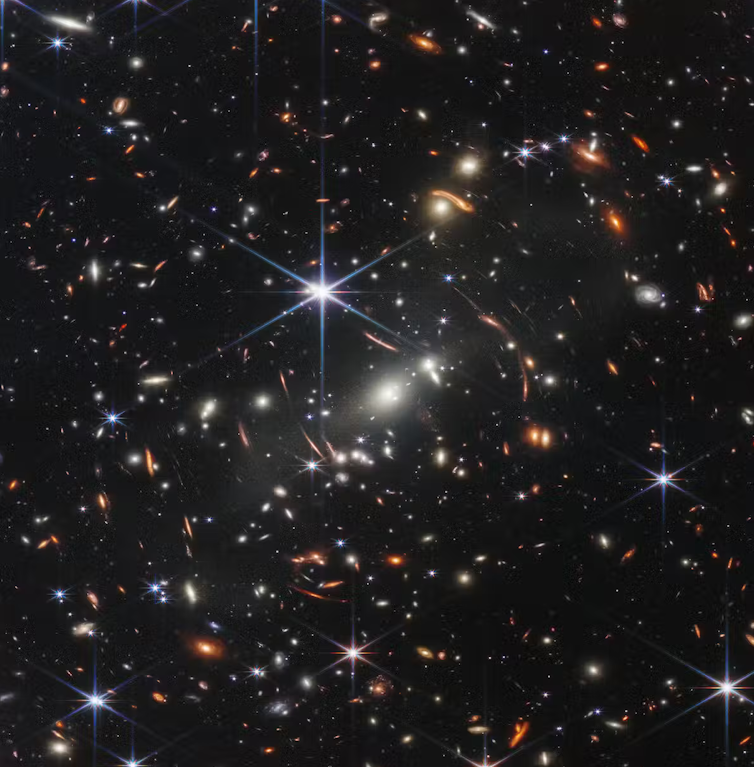
The James Webb Space Telescope’s deep field image shows a universe full of sparkling galaxies. NASA/STScI

Ryan Keeley, University of California, Merced

Astronomers have known for decades that the universe is expanding. When they use telescopes to observe faraway galaxies, they see that these galaxies are moving away from Earth.

To astronomers, the wavelength of light a galaxy emits is longer the faster the galaxy is moving away from us. The farther away the galaxy is, the more its light has shifted toward the longer wavelengths on the red side of the spectrum – so the higher the “redshift.”

Because the speed of light is finite, fast, but not infinitely fast, seeing something far away means we’re looking at the thing how it looked in the past. With distant, high-redshift galaxies, we’re seeing the galaxy when the universe was in a younger state. So “high redshift” corresponds to the early times in the universe, and “low redshift” corresponds to the late times in the universe.

But as astronomers have studied these distances, they’ve learned that the universe is not just expanding – its rate of expansion is accelerating. And that expansion rate is even faster than the leading theory predicts it should be, leaving cosmologists like me puzzled and looking for new explanations.

Dark energy and a cosmological constant

Scientists call the source of this acceleration dark energy. We’re not quite sure what drives dark energy or how it works, but we think its behavior could be explained by a cosmological constant, which is a property of spacetime that contributes to the expansion of the universe.

Albert Einstein originally came up with this constant – he marked it with a lambda in his theory of general relativity. With a cosmological constant, as the universe expands, the energy density of the cosmological constant stays the same.

Imagine a box full of particles. If the volume of the box increases, the density of particles would decrease as they spread out to take up all the space in the box. Now imagine the same box, but as the volume increases, the density of the particles stays the same.

It doesn’t seem intuitive, right? That the energy density of the cosmological constant does not decrease as the universe expands is, of course, very weird, but this property helps explain the accelerating universe.

A standard model of cosmology

Right now, the leading theory, or standard model, of cosmology is called “Lambda CDM.” Lambda denotes the cosmological constant describing dark energy, and CDM stands for cold dark matter. This model describes both the acceleration of the universe in its late stages as well as the expansion rate in its early days.

Specifically, the Lambda CDM explains observations of the cosmic microwave background, which is the afterglow of microwave radiation from when the universe was in a “hot, dense state” about 300,000 years after the Big Bang. Observations using the Planck satellite, which measures the cosmic microwave background, led scientists to create the Lambda CDM model.

Fitting the Lambda CDM model to the cosmic microwave background allows physicists to predict the value of the Hubble constant, which isn’t actually a constant but a measurement describing the universe’s current expansion rate.

But the Lambda CDM model isn’t perfect. The expansion rate scientists have calculated by measuring distances to galaxies, and the expansion rate as described in Lambda CDM using observations of the cosmic microwave background, don’t line up. Astrophysicists call that disagreement the Hubble tension.

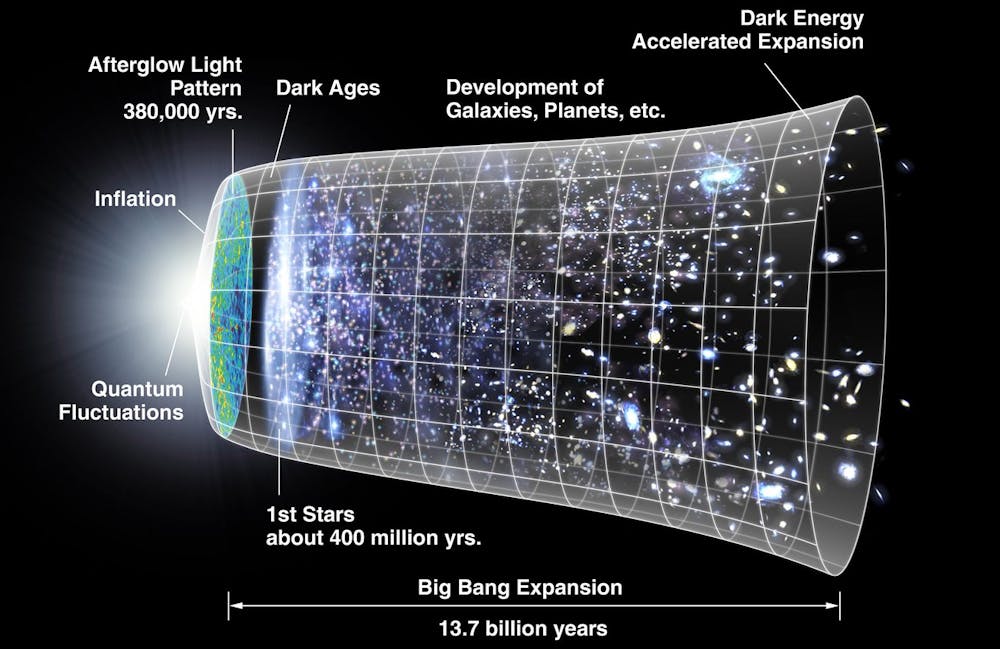
An illustration showing the progression of the Universe's expansion after the Big Bang. The Universe is depicted as a cylindrical funnel with labels along the bottom showing the first stars, the development of planets, and now the dark energy acceleration
The universe is expanding faster than predicted by popular models in cosmology. NASA

The Hubble tension

Over the past few years, I’ve been researching ways to explain this Hubble tension. The tension may be indicating that the Lambda CDM model is incomplete and physicists should modify their model, or it could indicate that it’s time for researchers to come up with new ideas about how the universe works. And new ideas are always the most exciting things for a physicist.

One way to explain the Hubble tension is to modify the Lambda CDM model by changing the expansion rate at low redshift, at late times in the universe. Modifying the model like this can help physicists predict what sort of physical phenomena might be causing the Hubble tension.

For instance, maybe dark energy is not a cosmological constant but instead the result of gravity working in new ways. If this is the case, dark energy would evolve as the universe expands – and the cosmic microwave background, which shows what the universe looked like only a few years after its creation, would have a different prediction for the Hubble constant.

But, my team’s latest research has found that physicists can’t explain the Hubble tension just by changing the expansion rate in the late universe – this whole class of solutions falls short.

Developing new models

To study what types of solutions could explain the Hubble tension, we developed statistical tools that enabled us to test the viability of the entire class of models that change the expansion rate in the late universe. These statistical tools are very flexible, and we used them to match or mimic different models that could potentially fit observations of the universe’s expansion rate and might offer a solution to the Hubble tension.

The models we tested include evolving dark energy models, where dark energy acts differently at different times in the universe. We also tested interacting dark energy-dark matter models, where dark energy interacts with dark matter, and modified gravity models, where gravity acts differently at different times in the universe.

But none of these could fully explain the Hubble tension. These results suggest that physicists should study the early universe to understand the source of the tension.

Ryan Keeley, Postdoctoral Scholar in Physics, University of California, Merced

This article is republished from The Conversation under a Creative Commons license. Read the original article.

ooOOoo

Ryan Keeley explains it above. Hopefully most of you who read this understand the physics involved. Ryan has a website here.

As I said at the start it is beyond fascinating! In the truest sense, out of this world!

The history of Oxygen!

A fascinating subject.

We take it for granted! Of that I am sure. But the question of how oxygen first came to be built up in our atmosphere is fascinating. There was a recent article written by Elizabeth Swanner, who is Associate Professor of Geology, Iowa State University that was published in The Conversation. It makes for a very interesting read.

ooOOoo

A layered lake is a little like Earth’s early oceans − and lets researchers explore how oxygen built up in our atmosphere billions of years ago

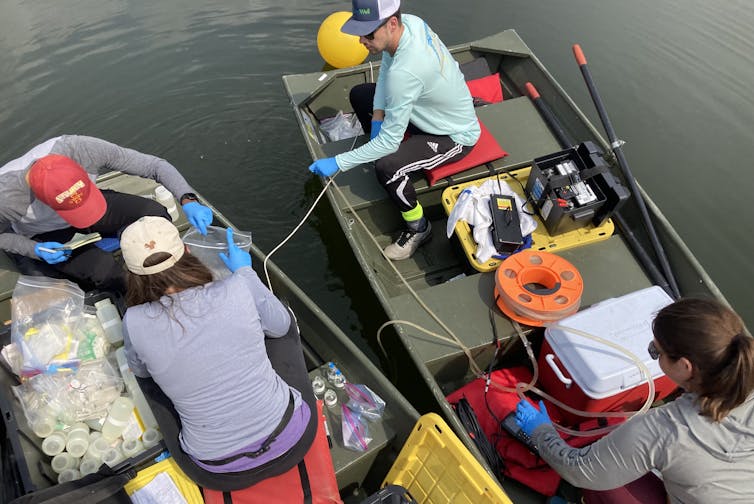
Researchers sample water from various layers to analyze back in the lab. Elizabeth Swanner, CC BY-ND

Elizabeth Swanner, Iowa State University

Little Deming Lake doesn’t get much notice from visitors to Itasca State Park in Minnesota. There’s better boating on nearby Lake Itasca, the headwaters of the Mississippi River. My colleagues and I need to maneuver hundreds of pounds of equipment down a hidden path made narrow by late-summer poison ivy to launch our rowboats.

But modest Deming Lake offers more than meets the eye for me, a geochemist interested in how oxygen built up in the atmosphere 2.4 billion years ago. The absence of oxygen in the deep layers of Deming Lake is something this small body of water has in common with early Earth’s oceans.

On each of our several expeditions here each year, we row our boats out into the deepest part of the lake – over 60 feet (18 meters), despite the lake’s surface area being only 13 acres. We drop an anchor and connect our boats in a flotilla, readying ourselves for the work ahead.

Smooth lake with boats in the distance against woodsy shoreline
Researchers’ boats on Deming Lake. Elizabeth Swanner, CC BY-ND

Deming Lake is meromictic, a term from Greek that means only partially mixing. In most lakes, at least once a year, the water at the top sinks while the water at the bottom rises because of wind and seasonal temperature changes that affect water’s density. But the deepest waters of Deming Lake never reach the surface. This prevents oxygen in its top layer of water from ever mixing into its deep layer.

Less than 1% of lakes are meromictic, and most that are have dense, salty bottom waters. Deming Lake’s deep waters are not very salty, but of the salts in its bottom waters, iron is one of the most abundant. This makes Deming Lake one of the rarest types of meromictic lakes.

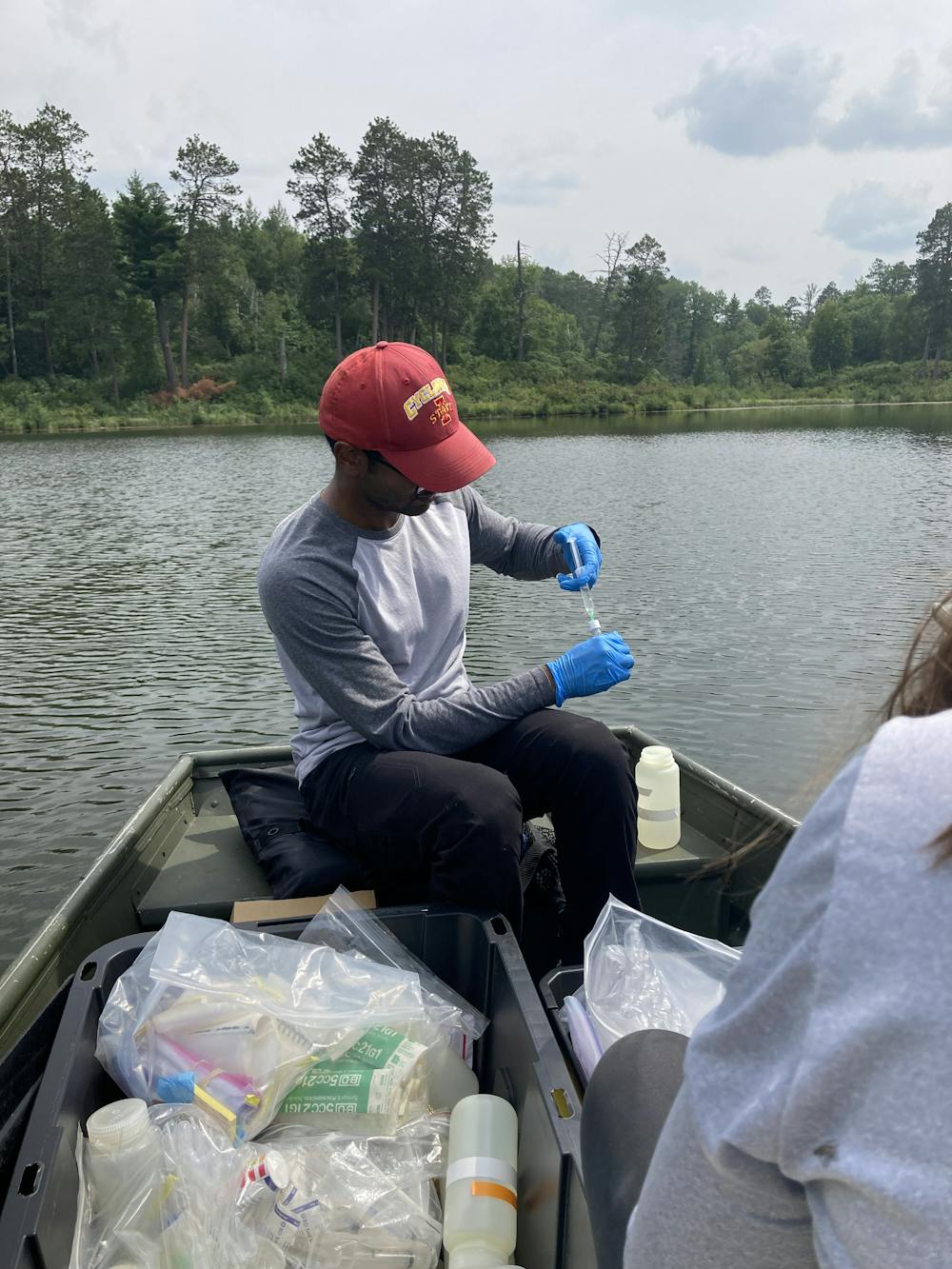
man seated in small boat wearing gloves injecting water into a collection tube
Postdoc researcher Sajjad Akam collects a water sample for chemical analysis back in the lab. Elizabeth Swanner, CC BY-ND

The lake surface is calm, and the still air is glorious on this cool, cloudless August morning. We lower a 2-foot-long water pump zip-tied to a cable attached to four sensors. The sensors measure the temperature, amount of oxygen, pH and amount of chlorophyll in the water at each layer we encounter. We pump water from the most intriguing layers up to the boat and fill a myriad of bottles and tubes, each destined for a different chemical or biological analysis.

My colleagues and I have homed in on Deming Lake to explore questions about how microbial life adapted to and changed the environmental conditions on early Earth. Our planet was inhabited only by microbes for most of its history. The atmosphere and the oceans’ depths didn’t have much oxygen, but they did have a lot of iron, just like Deming Lake does. By investigating what Deming Lake’s microbes are doing, we can better understand how billions of years ago they helped to transform the Earth’s atmosphere and oceans into what they’re like now.

Layer by layer, into the lake

Two and a half billion years ago, ocean waters had enough iron to form today’s globally distributed rusty iron deposits called banded iron formations that supply iron for the modern global steel industry. Nowadays, oceans have only trace amounts of iron but abundant oxygen. In most waters, iron and oxygen are antithetical. Rapid chemical and biological reactions between iron and oxygen mean you can’t have much of one while the other is present.

The rise of oxygen in the early atmosphere and ocean was due to cyanobacteria. These single-celled organisms emerged at least 2.5 billion years ago. But it took roughly 2 billion years for the oxygen they produce via photosynthesis to build up to levels that allowed for the first animals to appear on Earth.

water concentrated on a filter looks pale green
Chlorophyll colors water from the lake slightly green. Elizabeth Swanner, CC BY-ND

At Deming Lake, my colleagues and I pay special attention to the water layer where the chlorophyll readings jump. Chlorophyll is the pigment that makes plants green. It harnesses sunlight energy to turn water and carbon dioxide into oxygen and sugars. Nearly 20 feet (6 meters) below Deming’s surface, the chlorophyll is in cyanobacteria and photosynthetic algae, not plants.

But the curious thing about this layer is that we don’t detect oxygen, despite the abundance of these oxygen-producing organisms. This is the depth where iron concentrations start to climb to the high levels present at the lake’s bottom.

This high-chlorophyll, high-iron and low-oxygen layer is of special interest to us because it might help us understand where cyanobacteria lived in the ancient ocean, how well they were growing and how much oxygen they produced.

We suspect the reason cyanobacteria gather at this depth in Deming Lake is that there is more iron there than at the top of the lake. Just like humans need iron for red blood cells, cyanobacteria need lots of iron to help catalyze the reactions of photosynthesis.

A likely reason we can’t measure any oxygen in this layer is that in addition to cyanobacteria, there are a lot of other bacteria here. After a good long life of a few days, the cyanobacteria die, and the other bacteria feed on their remains. These bacteria rapidly use up any oxygen produced by still photosynthesizing cyanobacteria the way a fire does as it burns through wood.

We know there are lots of bacteria here based on how cloudy the water is, and we see them when we inspect a drop of this water under a microscope. But we need another way to measure photosynthesis besides measuring oxygen levels.

Long-running lakeside laboratory

The other important function of photosynthesis is converting carbon dioxide into sugars, which eventually are used to make more cells. We need a way to track whether new sugars are being made, and if they are, whether it’s by photosynthetic cyanobacteria. So we fill glass bottles with samples of water from this lake layer and seal them tight with rubber stoppers.

We drive the 3 miles back to the Itasca Biological Station and Laboratories where we will set up our experiments. The station opened in 1909 and is home base for us this week, providing comfy cabins, warm meals and this laboratory space.

In the lab, we inject our glass bottle with carbon dioxide that carries an isotopic tracer. If cyanobacteria grow, their cells will incorporate this isotopic marker.

We had a little help to formulate our questions and experiments. University of Minnesota students attending summer field courses collected decades worth of data in Itasca State Park. A diligent university librarian digitized thousands of those students’ final papers.

My students and I pored over the papers concerning Deming Lake, many of which tried to determine whether the cyanobacteria in the chlorophyll-rich layer are doing photosynthesis. While most indicated yes, those students were measuring only oxygen and got ambiguous results. Our use of the isotopic tracer is trickier to implement but will give clearer results.

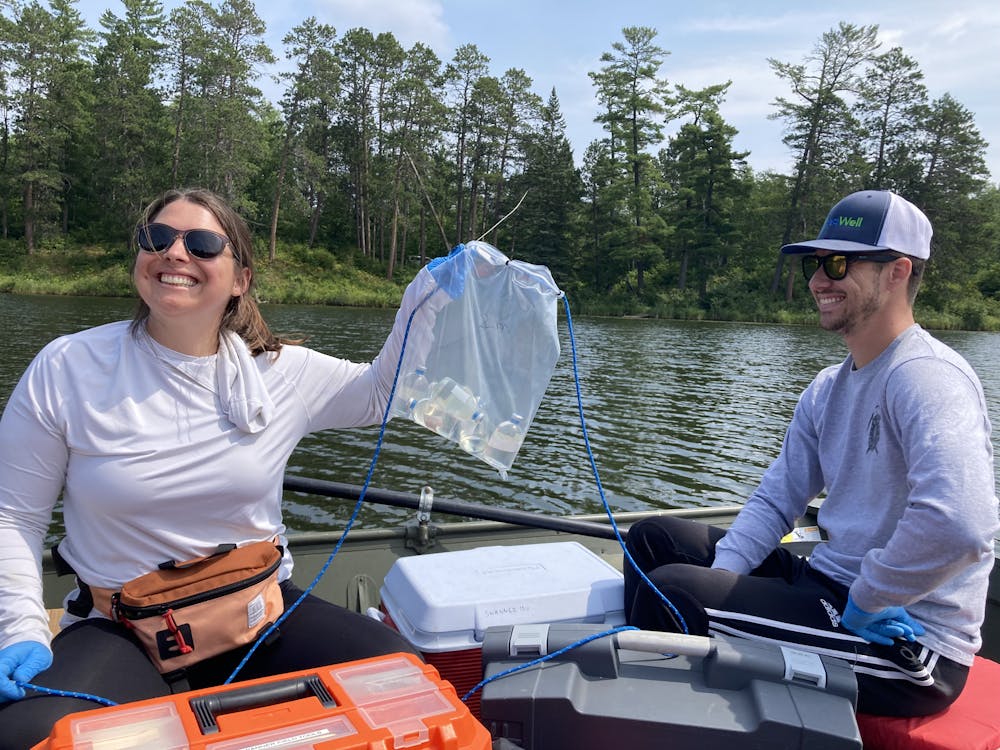
woman holds a clear plastic bag aloft, she and man are seated in boat
Graduate students Michelle Chamberlain and Zackry Stevenson about to sink the bottles for incubation in Deming Lake. Elizabeth Swanner, CC BY-ND

That afternoon, we’re back on the lake. We toss an anchor; attached to its rope is a clear plastic bag holding the sealed bottles of lake water now amended with the isotopic tracer. They’ll spend the night in the chlorophyll-rich layer, and we’ll retrieve them after 24 hours. Any longer than that and the isotopic label might end up in the bacteria that eat the dying cyanobacteria instead of the cyanobacteria themselves. We tie off the rope to a floating buoy and head back to the station’s dining hall for our evening meal.

Iron, chlorophyll, oxygen

The next morning, as we wait for the bottles to finish their incubation, we collect water from the different layers of the lake and add some chemicals that kill the cells but preserve their bodies. We’ll look at these samples under the microscope to figure out how many cyanobacteria are in the water, and we’ll measure how much iron is inside the cyanobacteria.

That’s easier said than done, because we have to first separate all the “needles” (cyanobacteria) from the “hay” (other cells) and then clean any iron off the outside of the cyanobacteria. Back at Iowa State University, we’ll shoot the individual cells one by one into a flame that incinerates them, which liberates all the iron they contain so we can measure it.

rowboat with one woman in it on a lake with woodsy shoreline
Biogeochemist Katy Sparrow rows a research vessel to shore. Elizabeth Swanner, CC BY-ND

Our scientific hunch, or hypothesis, is that the cyanobacteria that live in the chlorophyll- and iron-rich layer will contain more iron than cyanobacteria that live in the top lake layer. If they do, it will help us establish that greater access to iron is a motive for living in that deeper and dimmer layer.

These experiments won’t tell the whole story of why it took so long for Earth to build up oxygen, but they will help us to understand a piece of it – where oxygen might have been produced and why, and what happened to oxygen in that environment.

Deming Lake is quickly becoming its own attraction for those with a curiosity about what goes on beneath its tranquil surface – and what that might be able to tell us about how new forms of life took hold long ago on Earth.

Elizabeth Swanner, Associate Professor of Geology, Iowa State University

This article is republished from The Conversation under a Creative Commons license. Read the original article.

ooOOoo

Nothing I can add to this very erudite article. Please read it and be fascinated by the findings.

Just a rainbow!

Well, just two rainbows!

I just ran out of time yesterday to publish a proper blog post so I am sharing this photograph with you. It shows Mount Sexton in the distance, just to the right of the fir tree, and two rainbows, it being a rainy afternoon. The camera is facing North-East and the picture was taken at the north end of our rear deck.

Keeping healthy in old age.

One has to work at it!

For most of us these days old age is part of the scene (and I am classifying old age as being over 70 years). Here are a few facts from the website of the World Health Organization.

Key facts

  • Worldwide obesity has nearly tripled since 1975.
  • In 2016, more than 1.9 billion adults, 18 years and older, were overweight. Of these over 650 million were obese.
  • 39% of adults aged 18 years and over were overweight in 2016, and 13% were obese.
  • Most of the world’s population live in countries where overweight and obesity kills more people than underweight.
  • 39 million children under the age of 5 were overweight or obese in 2020.
  • Over 340 million children and adolescents aged 5-19 were overweight or obese in 2016.
  • Obesity is preventable.

What are obesity and overweight Overweight and obesity are defined as abnormal or excessive fat accumulation that may impair health.

Body mass index (BMI) is a simple index of weight-for-height that is commonly used to classify overweight and obesity in adults. It is defined as a person’s weight in kilograms divided by the square of his height in meters (kg/m2).

Adults

For adults, WHO defines overweight and obesity as follows:

  • overweight is a BMI greater than or equal to 25; and
  • obesity is a BMI greater than or equal to 30.

BMI provides the most useful population-level measure of overweight and obesity as it is the same for both sexes and for all ages of adults. However, it should be considered a rough guide because it may not correspond to the same degree of fatness in different individuals.

World Health Organisation

This is the link for anyone who wants to use the BMI Calculator.

Now this is not a post about obesity or being overweight. It is a post taken from The Conversation about staying as healthy as one can in one’s older years.

ooOOoo

Steep physical decline with age is not inevitable – here’s how strength training can change the trajectory

Resistance training can take many forms and can be individualized to suit a person’s needs as they age. Jamie Grill/Tetra Images via Getty Images

Zachary Gillen, Mississippi State University

Raise your hand if you regularly find yourself walking up a flight of stairs. What about carrying heavy bags of groceries? How about picking up your child or grandchild? Most of us would raise our hands to doing at least one of those weekly, or even daily.

As people age, it can become more and more difficult to perform some physical tasks, even those that are normal activities of daily living. However, prioritizing physical fitness and health as you get older can help you go through your normal day-to-day routine without feeling physically exhausted at the end of the day.

It can also help you continue to have special memories with your family and loved ones that you might not have been able to have if you weren’t physically active. For example, I ran two half-marathons with my dad when he was in his 60s!

I am an exercise physiologist who studies how people can use resistance training to improve human performance, whether it be in sports and other recreational settings, in everyday life, or both. I am also a certified strength and conditioning specialist. My career has given me the opportunity to design exercise programs for kids, college athletes and elderly adults.

Staying physically active as you get older doesn’t need to include running a half-marathon or trying to be a bodybuilder; it could be as simple as trying to get through the day without feeling winded after you go up a flight of stairs. Although our muscles naturally get weaker as we age, there are ways we can combat that to help improve quality of life as we get older.

Man in his 60s, a middle-aged woman and a middle-aged man, all wearing race medals and running gear.
From left are the author’s father, who was age 61 at the time, the author’s wife and the author after completing the Lincoln Half Marathon. Zachary Gillen, CC BY-NC-ND

Muscle loss and chronic disease

One of the most important parts of exercise programming, no matter who I am working with, is proper resistance training to build muscle strength. Some amount of age-related loss of muscle function is normal and inevitable. But by incorporating resistance training that is appropriate and safe at any ability level, you can slow down the rate of decline and even prevent some loss of muscle function.

The medical term for a condition that involves age-related loss of muscle function and mass is sarcopenia. Sarcopenia can begin as early as age 40, but it tends to be more common in adults age 60 and older. Sarcopenia is associated with a number of health issues such as increased risk of falling, cardiovascular disease and metabolic disease, among others.

In one of our team’s previous studies, we saw that otherwise healthy individuals with sarcopenia had issues delivering vital nutrients to muscle. This could lead to greater likelihood of various diseases, such as Type 2 diabetes, and slow down recovery from exercise.

Recent estimates suggest that sarcopenia affects 10% to 16% of the elderly population worldwide. But even if a person doesn’t have clinically diagnosed sarcopenia, they may still have some of the underlying symptoms that, if not dealt with, could lead to sarcopenia.

Strength training is key

So the question is, what can be done to reverse this decline?

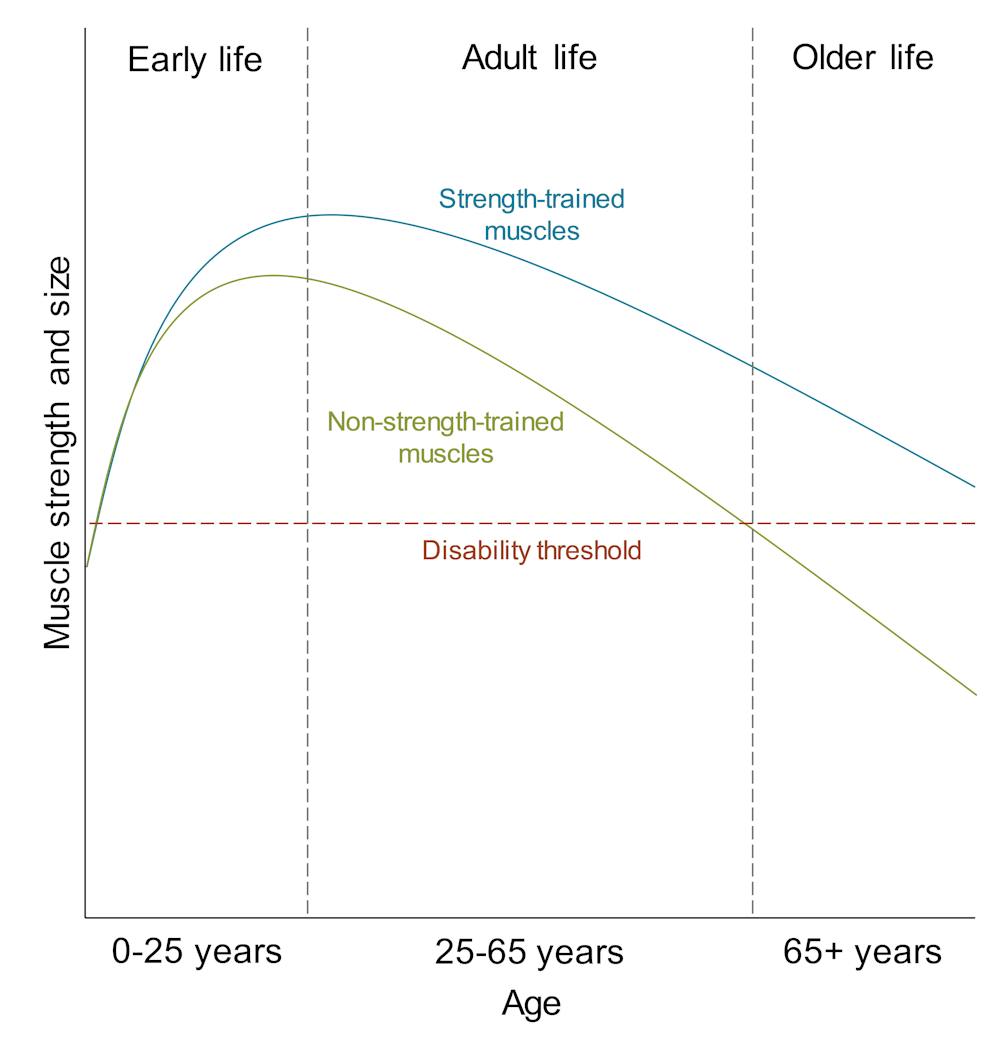
Recent evidence suggests that one of the key factors leading to sarcopenia is low muscle strength. In other words, combating or reversing sarcopenia, or both, may be best done with a proper resistance-training program that prioritizes improving strength. In fact, the decline in muscle strength seems to occur at a much faster rate than the decline in muscle size, underscoring the importance of proper strength training as people age.

Chart showing the general pattern for changes in muscle strength and size across stage of life.
Typical age-related changes in muscle strength and size with and without strength training. Zachary Gillen

Continuing to regularly strength train with moderate to heavy weights has been shown to be not only effective at combating the symptoms of sarcopenia but also very safe when done properly. The best way to make sure you are strength training properly is to seek out guidance from a qualified individual such as a personal trainer or strength and conditioning specialist.

Despite the clear benefits of strength training, it’s been shown that only about 13% of Americans age 50 and older do some form of strength training at least twice a week.

Finding what works for you

So how does a person properly strength train as they age?

The National Strength and Conditioning Association, a leading organization in advancing strength and conditioning around the world, states that for older adults, two to three days per week of strength training can be incredibly helpful for maintaining healthy muscle and bone and combating a number of chronic conditions.

The organization recommends that these workouts involve one to two exercises involving multiple joints per major muscle group, with six to 12 repetitions per set. These are done at an intensity of 50% to 85% of what’s known as one-repetition maximum – the most weight you could handle for a single repetition – with the exception of body weight exercises that use one’s own body weight as the resistance, such as pushups.

I would also recommend resting for about two to three minutes between sets, or even up to five minutes if the set was challenging. For older adults, particularly those age 60 and older, the National Strength and Conditioning Association guidelines suggest that a program like this be performed two to three days per week, with 24 to 48 hours between sessions.

An example of a strength training routine for older adults based on the National Strength and Conditioning Association guidelines

There are a great variety of exercises that could be done interchangeably in a strength training program like this.

ExerciseNumber of setsRepetitions per setIntensity
Barbell squat3670-85%
Barbell bench press3670-85%
Dumbbell lunges38 per leg50-70%
Dumbbell bent over row31050-70%
Double-leg hops212Body weight
Pushups212Body weight

Table: The Conversation Source: Zachary Gillen Get the data Created with Datawrapper

Making life’s tasks lighter

The guidelines above are only one example out of many options, but they provide a framework that you can use to build your own program. However, I would highly recommend seeking out a professional in the field to give specific exercise programming advice that can be tailored to your own needs and goals as you age.

Following such a program would give your muscles an excellent stimulus to enhance strength, while also allowing enough recovery, a very important consideration as people age. You might think it looks like a huge time commitment, but an exercise routine like this can be done in less than an hour. This means that in less than three hours of strength training per week you can help improve your muscle health and reduce the risk of getting sarcopenia and associated health issues.

It’s also important to note that there is no one right way to do resistance training, and it needn’t involve traditional weight equipment. Group classes like Pilates and yoga or those that involve circuit training and work with resistance bands can all produce similar results. The key is to get out and exercise regularly, whatever that entails.

Zachary Gillen, Assistant Professor of Exercise Physiology, Mississippi State University

This article is republished from The Conversation under a Creative Commons license. Read the original article.

ooOOoo

My wife, Jean, was diagnosed with Parkinson’s Disease (PD) in December, 2015. Many of you know that.

Fortunately at our local Club Northwest there was a group of PD sufferers who twice a week held a ‘Rock Steady Class’ under the instruction of a professional coach; Jean joined the group. It was a brilliant move for Jean and she gets a huge amount of care from being with them.

Luckily for me having to drive Jean into Club Northwest it made sense for me to sign up to a fitness class at the same time so I am put through a regular fitness routine under the coaching of Bruce. Plus I try and go bike riding three times a week.

In other words, we both try and stay as fit as we can.

The brain

A fascinating account

I was struggling with the post for tomorrow and then saw this article on The Conversation. It may not be everyone’s cup of tea but nevertheless I find it sufficiently interesting to publish it.

ooOOoo

Psychedelics plus psychotherapy can trigger rapid changes in the brain − new research at the level of neurons is untangling how

New research hints at how psychedelics can trigger rapid, lasting change. wildpixel/iStock via Getty Images Plus

Edmund S. Higgins, Medical University of South Carolina

The human brain can change – but usually only slowly and with great effort, such as when learning a new sport or foreign language, or recovering from a stroke. Learning new skills correlates with changes in the brain, as evidenced by neuroscience research with animals and functional brain scans in people. Presumably, if you master Calculus 1, something is now different in your brain. Furthermore, motor neurons in the brain expand and contract depending on how often they are exercised – a neuronal reflection of “use it or lose it.”

People may wish their brains could change faster – not just when learning new skills, but also when overcoming problems like anxiety, depression and addictions.

Clinicians and scientists know there are times the brain can make rapid, enduring changes. Most often, these occur in the context of traumatic experiences, leaving an indelible imprint on the brain.

But positive experiences, which alter one’s life for the better, can occur equally as fast. Think of a spiritual awakening, a near-death experience or a feeling of awe in nature.

a road splits in the woods, sun shines through green leafy trees
A transformative experience can be like a fork in the road, changing the path you are on. Westend61 via Getty Images

Social scientists call events like these psychologically transformative experiences or pivotal mental states. For the rest of us, they’re forks in the road. Presumably, these positive experiences quickly change some “wiring” in the brain.

How do these rapid, positive transformations happen? It seems the brain has a way to facilitate accelerated change. And here’s where it gets really interesting: Psychedelic-assisted psychotherapy appears to tap into this natural neural mechanism.

Psychedelic-assisted psychotherapy

Those who’ve had a psychedelic experience usually describe it as a mental journey that’s impossible to put into words. However, it can be conceptualized as an altered state of consciousness with distortions of perception, modified sense of self and rapidly changing emotions. Presumably there is a relaxation of the higher brain control, which allows deeper brain thoughts and feelings to emerge into conscious awareness.

Psychedelic-assisted psychotherapy combines the psychology of talk therapy with the power of a psychedelic experience. Researchers have described cases in which subjects report profound, personally transformative experiences after one six-hour session with the psychedelic substance psilocybin, taken in conjunction with psychotherapy. For example, patients distressed about advancing cancer have quickly experienced relief and an unexpected acceptance of the approaching end. How does this happen?

glowing green tendrils of a neuron against a black background
Neuronal spines are the little bumps along the spreading branches of a neuron. Patrick Pla via Wikimedia Commons, CC BY-SA

Research suggests that new skills, memories and attitudes are encoded in the brain by new connections between neurons – sort of like branches of trees growing toward each other. Neuroscientists even call the pattern of growth arborization.

Researchers using a technique called two-photon microscopy can observe this process in living cells by following the formation and regression of spines on the neurons. The spines are one half of the synapses that allow for communication between one neuron and another.

Scientists have thought that enduring spine formation could be established only with focused, repetitive mental energy. However, a lab at Yale recently documented rapid spine formation in the frontal cortex of mice after one dose of psilocybin. Researchers found that mice given the mushroom-derived drug had about a 10% increase in spine formation. These changes had occurred when examined one day after treatment and endured for over a month.

diagram of little bumps along a neuron, enlarged at different scales
Tiny spines along a neuron’s branches are a crucial part of how one neuron receives a message from another. Edmund S. Higgins

A mechanism for psychedelic-induced change

Psychoactive molecules primarily change brain function through the receptors on the neural cells. The serotonin receptor 5HT, the one famously tweaked by antidepressants, comes in a variety of subtypes. Psychedelics such as DMT, the active chemical in the plant-based psychedelic ayahuasca, stimulate a receptor cell type, called 5-HT2A. This receptor also appears to mediate the hyperplastic states when a brain is changing quickly.

These 5-HT2A receptors that DMT activates are not only on the neuron cell surface but also inside the neuron. It’s only the 5-HT2A receptor inside the cell that facilitates rapid change in neuronal structure. Serotonin can’t get through the cell membrane, which is why people don’t hallucinate when taking antidepressants like Prozac or Zoloft. The psychedelics, on the other hand, slip through the cell’s exterior and tweak the 5-HT2A receptor, stimulating dendritic growth and increased spine formation.

Here’s where this story all comes together. In addition to being the active ingredient in ayahuasca, DMT is an endogenous molecule synthesized naturally in mammalian brains. As such, human neurons are capable of producing their own “psychedelic” molecule, although likely in tiny quantities. It’s possible the brain uses its own endogenous DMT as a tool for change – as when forming dendritic spines on neurons – to encode pivotal mental states. And it’s possible psychedelic-assisted psychotherapy uses this naturally occurring neural mechanism to facilitate healing.

A word of caution

In her essay collection “These Precious Days,” author Ann Patchett describes taking mushrooms with a friend who was struggling with pancreatic cancer. The friend had a mystical experience and came away feeling deeper connections to her family and friends. Patchett, on the other hand, said she spent eight hours “hacking up snakes in some pitch-black cauldron of lava at the center of the Earth.” It felt like death to her.

Psychedelics are powerful, and none of the classic psychedelic drugs, such as LSD, are approved yet for treatment. The U.S. Food and Drug Administration in 2019 did approve ketamine, in conjunction with an antidepressant, to treat depression in adults. Psychedelic-assisted psychotherapy with MDMA (often called ecstasy or molly) for PTSD and psilocybin for depression are in Phase 3 trials.

Edmund S. Higgins, Affiliate Associate Professor of Psychiatry & Family Medicine, Medical University of South Carolina

This article is republished from The Conversation under a Creative Commons license. Read the original article.

ooOOoo

This is not for the innocents and it requires someone of the ilk of Professor Higgins to advise.

Plus one needs to stay close to the U.S. Food and Drug Administration. To close, I will repeat the phrase above, psychedelics are powerful.

Common dog diseases

A very valuable guest post.

Back on September 19th I received an email offering me a guest post. It was from Luna Angeni. At first I was highly suspicious thinking of scams and the like and replied: “Before responding further please explain what your niche is?”

Luna replied: “Thank you for your response. I’m working on Animal Health care. It’s the perfect fit for your site.”

I agreed and this is her article.

ooOOoo

How to Control and Prevent Common Dog Diseases Effectively

By Luna Angeni

Man’s best friend” is a phrase that perfectly defines the deep bond between humans and their canine companions.

It’s our duty to ensure the health and well-being of our furry friends. One of the most critical aspects of canine care is disease prevention and control. This is what we are going to focus on here.

In this blog, we will learn about some effective ways we can control and prevent common dog diseases to keep our canine fellows happy and healthy.

Let’s get started!

Understanding Common Dog Diseases

Dogs, like humans, are susceptible to a range of diseases and health issues.

To effectively control and prevent these complications, we need to understand them first.

Let’s review some common canine diseases:

Canine Parvovirus (Parvo)

Canine parvovirus is a highly contagious and potentially fatal disease that affects puppies and unvaccinated dogs.

It spreads through direct contact with an infected dog or contaminated environment.

Symptoms include:

1. Severe diarrhea

2. Vomiting
3. Lethargy
4. Loss of appetite

To prevent parvo, ensure your dog is up-to-date on vaccinations and avoid areas where the virus may be present.

Canine Distemper

Canine distemper is another contagious viral disease that can be fatal, particularly in puppies.

It affects various body systems and presents symptoms such as:

1. Fever
2. Nasal discharge

3. Coughing
4. Neurological signs

Vaccination is the most effective way to prevent distemper.

Heartworm Disease

Heartworm disease is transmitted through mosquito bites and can be life-threatening if left untreated.

It affects the heart and lungs, leading to symptoms like:

1. Coughing
2. Exercise intolerance

3. Weight loss

Prevention through vaccination is key for this common dog disease.

Preventive Measures for Common Canine Diseases

Preventing common dog diseases is often more manageable than treating them.

Here are some essential preventive measures every dog owner should follow:

Vaccination

Regular vaccination is the cornerstone of disease prevention in dogs.

As your veterinarian recommends, ensure your dog receives all necessary vaccinations against parvovirus, distemper, rabies, and others.

Regular Exercise

Exercise not only keeps your dog physically fit but also mentally stimulated.

Engaging in regular exercise helps boost dogs’ overall health and keeps obesity-related diseases at bay.

Proper Nutrition

A balanced diet is crucial for maintaining a healthy immune system.

Consult your veterinarian to determine the best diet for your dog’s specific needs.

Avoid feeding your canine human food, as some ingredients can be toxic to them.

Hygiene and Cleanliness

Maintaining proper hygiene for your dog and their living environment is essential.

In this regard, you must ensure:

1. Regular grooming
2. Cleaning your dog’s bedding
3. Keeping their living area free from parasites and bacteria

Regular Vet Check-ups

Routine visits to the veterinarian are crucial for early disease detection and prevention.

Your vet can identify potential health issues before they become severe and provide guidance on maintaining your dog’s health.

Recognizing the Signs of Illness

Despite your best efforts, your dog may still fall ill occasionally.

Recognizing the early signs of common dog diseases is essential for prompt treatment.

Here are some common signs of complications in dogs:

Changes in Appetite

A sudden loss of appetite or excessive hunger can indicate a health issue.

So, you must monitor your dog’s eating habits closely.

Changes in Behavior

Drastic changes in behavior, such as increased aggression, withdrawal, or excessive vocalization, can be indicative of pain or discomfort.

Vomiting and Diarrhea

Frequent vomiting or diarrhea can be symptomatic of various diseases, including gastrointestinal complications.

Lethargy

If your dog is unusually lethargic or lacks energy, it could be a sign of an underlying problem.

In such cases, seek a veterinarian’s help immediately.

Breathing Problems

Labored breathing, coughing, or wheezing may suggest respiratory or cardiac problems.

Immediate Action and Veterinary Care

Taking immediate action is essential if you notice any signs of illness or discomfort in your dog.

Contact your veterinarian and follow their guidance.

Early intervention can often make a significant difference in the outcome of the disease.

Conclusion

Your dog’s health is in your hands.

Effective disease control and prevention are crucial for ensuring your furry friend’s long and happy life.

Understanding common dog diseases and treatment and following preventive measures can significantly reduce the risk of complications and provide them with the best possible care.

For more guides on animal health solutions and tips for healthy dogs, you must visit Vet and Tech – a source for online veterinary education.

FAQs

What Vaccinations Does My Dog Need?

Consult your vet for a personalized vaccination schedule. Common dog vaccinations include rabies, distemper, parvovirus, and kennel cough.

What’s the Best Diet for My Dog?

High-quality commercial dog food is a good option. Still, you need to consult your vet for a diet tailored to your dog’s age, breed, and health.

How Often Should I Take My Dog to the Vet?

Generally, annual check-ups are recommended, but older dogs can benefit more from biannual visits. And–puppies may need more frequent check-ups.

ooOOoo

That is a wonderful set of recommendations and advice. Really of no surprise when one considers Luna’s biography:

I am a clinical veterinarian, researcher, and professional content writer. Being a medical professional and a content writer, I hold key writing skills such as Blog writing. I shall provide beautifully crafted, interesting to read, easily understood, highly informative, 100% original, error, and plagiarism-free content. 

Luna Angeni

I sincerely hope this will be far from the one and only post!

P.S. I also openly admit that I have featured her blog site Vet and Tech but will also explain that I have no special association with her blog or with Luna Angeni.

OSIRIS-REx report

I just find this incredible!

Firstly, I am simply going to post three YouTube videos of this amazing feat by NASA.

The first by Associated Press at less than two minutes:

And the next two from NASA with the second at just over an hour long:

and the third at over three hours long:

Then I am going to republish, hopefully with permission, an article from Nature that further explains what has just happened:

ooOOoo

Special delivery! Biggest-ever haul of asteroid dust and rock returns to Earth

Samples collected by NASA’s OSIRIS-REx mission excite scientists with their potential to reveal secrets of the Solar System.

The OSIRIS-REx sample capsule, which contains pieces of the asteroid Bennu, landed safely in the Utah desert on 24 September. Credit: Keegan Barber/NASA via Getty

Dugway Proving Ground, Utah

A saucer-shaped capsule parachuted down gently in the Utah desert today, after a years-long journey through space. Its cargo is a precious collection of rocks and dust from the asteroid Bennu — the first time NASA has ever brought pieces of this type of celestial object back to Earth.

Over the coming days, NASA will fly the bits of Bennu to the Johnson Space Center in Houston, Texas. There, curators will carefully disassemble the container and begin analysing the chemistry and mineralogy of the pristine samples — which might hold clues to the origins of the Solar System.

“I feel like a kid on Christmas Eve who is just too excited to go to sleep,” says Michelle Thompson, a planetary scientist at Purdue University in West Lafayette, Indiana, and a member of the ‘quick look’ team who will have the first chance to study the rocks.

Space hoover

The material comes from the US$1.2-billion OSIRIS-REx (Origins, Spectral Interpretation, Resource Identification, Security-Regolith Explorer) mission, which launched in 2016 and arrived at Bennu in 2018. It spent nearly two years studying the dark-coloured, diamond-shaped asteroid before extending its robotic arm to the rocky surface, blasting it with a puff of gas and collecting the dust and rocks it kicked up. That ‘fist bump’ hoovered up so much material that pieces of rock got jammed in the collection mechanism, allowing some of the smaller pebbles to escape. Watching some of those samples get away was “heart breaking”, says Dante Lauretta, a planetary scientist at the University of Arizona in Tucson who was the first principal investigator of the OSIRIS-REx mission.

Still, the spacecraft managed to collect around 250 grams of rocks and dirt — a large cupful — including several chunks that are at least one centimetre long. It is by far the largest amount of material ever brought back from an asteroid. The Japan Aerospace Exploration Agency (JAXA) had previously collected less than one milligram from the asteroid Itokawa in 2005, and 5.4 grams from the asteroid Ryugu in 2019.

Bringing planetary samples back to Earth allows researchers to use cutting-edge laboratory techniques to study what the rocks are made of. The NASA curation team planned to put the Bennu samples into an atmosphere of pure nitrogen soon after the capsule touched down, to reduce the potential for contamination. That will enable scientists to study the asteroid’s geology and chemistry, preserved all the way back to the formation of the Solar System, more than 4.5 billion years ago. The pristine material hasn’t been altered by passing through Earth’s atmosphere, as happens with meteorites. “The thing that will really be different about this sample is we’ll have that chain of custody of keeping it protected from Earth’s atmosphere,” says Nicole Lunning, the mission’s lead sample curator at the Johnson Space Center.

Precious cargo

Bennu is a carbon-rich asteroid, so the samples might resemble carbon-rich meteorites that have fallen to Earth, Thompson says. The bits collected by OSIRIS-REx probably contain organic compounds — carbon-based molecules found in many meteorites that are the building blocks of many exciting types of chemistry, including those conducive to life. “What I find most fascinating are the nucleobases, the components of the genetic code that make up all life from DNA and RNA,” says Daniel Glavin, the senior scientist for sample return at NASA’s Goddard Space Flight Center in Greenbelt, Maryland. These compounds have been found in meteorites before, but those rocks have not been as pristine as the Bennu samples are expected to be. “We can trust the results, because this stuff is clean,” he says.

NASA curators will work their way through unpacking and studying the dust and pebbles inside OSIRIS-REx’s storage container in the coming weeks. Using nitrogen-filled gloveboxes, technicians will analyse the samples with scanners and other instruments to discern how many rock types were collected, and they will record the samples’ colour, volume and porosity.

Mission specialists prepare the OSIRIS-REx sample capsule for transport to a clean room after its landing in the Utah desert on 24 September.Credit: Keegan Barber/NASA via Getty

The curators will collect up to 100 milligrams for the quick-look team to analyse over the first 72 hours. That initial sample will probably be made up of fine-grained material obtained from the outermost parts of the sample capsule, Thompson says. After that, the team will get a chance to study grains that were picked up by 24 stainless-steel contact pads on the outside of the sample container — which were the first things to actually come into contact with Bennu. It will probably be several weeks before the curators open the heart of the sample container and begin extracting the bulk of the material inside.

Early experiments could include looking at how material that was on the surface of Bennu compares with what came from deeper inside the asteroid, Thompson says. OSIRIS-REx’s robotic arm might have plunged as deep as 40 centimetres under Bennu’s rubbly surface when executing its fist bump.

Work interrupted?

NASA has scheduled a press conference on 11 October to unveil the first scientific results. But its work on the mission could be interrupted if the US government shuts down on 1 October. Republicans and Democrats in Congress have been battling over priorities for funding the federal government in 2024.

After OSIRIS-REx fist-bumped the asteroid Bennu in 2020, it pulled the collected samples into the spacecraft (left) and stowed them inside its sample-return capsule (right).Credit: NASA/Goddard/Univ. Arizona/Lockheed Martin

If the situation remains in a stalemate by the time the US fiscal year ends on 30 September, then federal agencies, including NASA, might close until an agreement can be reached. If that were to happen while the Bennu sample is at NASA, then “certain steps leading to its highly anticipated analysis will possibly be delayed, but the sample will remain protected and safe”, says Lori Glaze, head of NASA’s planetary sciences division. “The sample waited for more than 4 billion years for humans to study it, and if it takes us a little longer, I think we’ll be okay.”

At least 70% of the Bennu material will be saved for scientists outside NASA and for future generations to study. Furthermore, 4% of the sample will go to the Canadian Space Agency, which helped to build a laser instrument aboard OSIRIS-REx, and 0.5% will go to JAXA in exchange for samples of Ryugu, so that researchers can compare the two asteroids.

Meanwhile, the rest of the OSIRIS spacecraft continues to fly through space after dropping off its sample-return capsule. It is headed to study Apophis, an asteroid with a different, ‘stony’, chemical composition that will whizz dramatically close past Earth in 2029.

Copyright © 2023, Springer Nature Limited

ooOOoo

There we go, my credit to an incredible feat of exploration that, hopefully, will lead to some interesting results over the next few weeks.

Dogs and scents

A fascinating article about our unique body odour.

I was researching stories that I could republish and was concentrating at first on The Conversation. Then I saw the post for today and went no further. It is primarily about the odour that each of us has.

ooOOoo

Your unique body odor could identify who you are and provide insights into your health – all from the touch of a hand

The scent emitted from your hands could offer clues about who you are. Siro Rodenas Cortes/Moment via Getty Images

Chantrell Frazier, Framingham State University; Kenneth G. Furton, Florida International University, and Vidia A. Gokool, Lawrence Livermore National Laboratory

From the aroma of fresh-cut grass to the smell of a loved one, you encounter scents in every part of your life. Not only are you constantly surrounded by odor, you’re also producing it. And it is so distinctive that it can be used to tell you apart from everyone around you.

Your scent is a complex product influenced by many factors, including your genetics. Researchers believe that a particular group of genes, the major histocompatibility complex, play a large role in scent production. These genes are involved in the body’s immune response and are believed to influence body odor by encoding the production of specific proteins and chemicals.

But your scent isn’t fixed once your body produces it. As sweat, oils and other secretions make it to the surface of your skin, microbes break down and transform these compounds, changing and adding to the odors that make up your scent. This scent medley emanates from your body and settles into the environments around you. And it can be used to track, locate or identify a particular person, as well as distinguish between healthy and unhealthy people.

We are researchers who specialize in studying human scent through the detection and characterization of gaseous chemicals called volatile organic compounds. These gases can relay an abundance of information for both forensic researchers and health care providers.

Science of body odor

When you are near another person, you can feel their body heat without touching them. You may even be able to smell them without getting very close. The natural warmth of the human body creates a temperature differential with the air around it. You warm up the air nearest to you, while air that’s farther away remains cool, creating warm currents of air that surround your body.

Researchers believe that this plume of air helps disperse your scent by pushing the millions of skin cells you shed over the course of a day off your body and into the environment. These skin cells act as boats or rafts carrying glandular secretions and your resident microbes – a combination of ingredients that emit your scent – and depositing them in your surroundings.

Your scent is composed of the volatile organic compounds present in the gases emitted from your skin. These gases are the combination of sweat, oils and trace elements exuded from the glands in your skin. The primary components of your odor depend on internal factors such as your race, ethnicity, biological sex and other traits. Secondary components waver based on factors like stress, diet and illness. And tertiary components from external sources like perfumes and soaps build on top of your distinguishable odor profile.

Identity of scent

With so many factors influencing the scent of any given person, your body odor can be used as an identifying feature. Scent detection canines searching for a suspect can look past all the other odors they encounter to follow a scent trail left behind by the person they are pursuing. This practice relies on the assumption that each person’s scent is distinct enough that it can be distinguished from other people’s.

Researchers have been studying the discriminating potential of human scent for over three decades. A 1988 experiment demonstrated that a dog could distinguish identical twins living apart and exposed to different environmental conditions by their scent alone. This is a feat that could not be accomplished using DNA evidence, as identical twins share the same genetic code.

The field of human scent analysis has expanded over the years to further study the composition of human scent and how it can be used as a form of forensic evidence. Researchers have seen differences in human odor composition that can be classified based on sex, gender, race and ethnicity. Our research team’s 2017 study of 105 participants found that specific combinations of 15 volatile organic compounds collected from people’s hands could distinguish between race and ethnicity with an accuracy of 72% for whites, 82% for East Asians and 67% for Hispanics. Based on a combination of 13 compounds, participants could be distinguished as male or female with an overall 80% accuracy.

Researchers have trained dogs to sniff out COVID-19 infections.

Researchers are also producing models to predict the characteristics of a person based on their scent. From a sample pool of 30 women and 30 men, our team built a machine learning model that could predict a person’s biological sex with 96% accuracy based on hand odor.

Scent of health

Odor research continues to provide insights into illnesses. Well-known examples of using scent in medical assessments include seizure and diabetic alert canines. These dogs can give their handlers time to prepare for an impending seizure or notify them when they need to adjust their blood glucose levels.

While these canines often work with a single patient known to have a condition that requires close monitoring, medical detection dogs can also indicate whether someone is ill. For example, researchers have shown that dogs can be trained to detect cancer in people. Canines have also been trained to detect COVID-19 infections at a 90% accuracy rate.

Similarly, our research team found that a laboratory analysis of hand odor samples could discriminate between people who are COVID-19 positive or negative with 75% accuracy.

Forensics of scent

Human scent offers a noninvasive method to collect samples. While direct contact with a surface like touching a doorknob or wearing a sweater provides a clear route for your scent to transfer to that surface, simply standing still will also transfer your odor into the surrounding area.

Although human scent has the potential to be a critical form of forensic evidence, it is still a developing field. Imagine a law enforcement officer collecting a scent sample from a crime scene in hopes that it may match with a suspect.

Further research into human scent analysis can help fill the gaps in our understanding of the individuality of human scent and how to apply this information in forensic and biomedical labs.

Chantrell Frazier, Assistant Professor of Chemistry and Food Science, Framingham State University; Kenneth G. Furton, Professor of Chemistry and Biochemistry, Florida International University, and Vidia A. Gokool, Postdoctoral Researcher, Lawrence Livermore National Laboratory

This article is republished from The Conversation under a Creative Commons license. Read the original article.

ooOOoo

This is so interesting and I, for one, learnt a great deal more about the human body and in particular the scent glands.

Plus, it was a joy to read about the role of canines in all of this.

Managing eco-anxiety.

Republishing a recent article published by The Conversation.

Before I go to this article I want to talk briefly about the book the Myth of Normal or as the subtitle explains TRAUMA, ILLNESS & HEALING IN A TOXIC CULTURE.

Let me pick this closing paragraph of Chapter 20, on page 296:

Disconnection in all its guises – alienation, loneliness, loss of meaning and dislocation – is becoming our culture’s most plentiful product. No wonder we are more addicted, chronically ill, and mentally disordered than ever before, enfeebled as we are by such malnourishment of mind, body, and soul.

the Myth of Normal, Dr Gabor Maté with Daniel Maté

It is a very powerful book albeit not the easiest read in the world but still highly recommended.

Plus there is a YouTube video of Dr. Maté being interviewed in July, 2023 by Tara Westover (also a long video!).

Now to the main purpose of today’s post.

ooOOoo

Keeping your cool in a warming world: 8 steps to help manage eco-anxiety

Karen Magruder, University of Texas at Arlington

In a world facing environmental challenges unprecedented in human history, it’s no surprise that eco-anxiety – a pervasive worry about the current and future state of our planet – has become an increasingly prevalent mental health issue.

As people witness the devastating impacts of climate change, deforestation and loss of biodiversity, it’s only natural to feel overwhelmed and disheartened. I happen to live in Phoenix, Arizona, a “heat apocalypse” city with dwindling water supplies, so I have some skin in the game.

But amid doom-and-gloom predictions, there is hope. As a therapist and clinical social work professor, I have seen firsthand how paralyzing eco-anxiety can be, and I’m dedicated to finding solutions. Here are a few evidence-based tips to tackle your climate woes.

What is eco-anxiety?

Eco-anxiety is a broad term that encompasses dread about environmental issues like pollution and disposal of toxic waste, as well as climate-specific fears, such as increasing rates of extreme weather events and sea-level rise.

Common symptoms of eco-anxiety include worry about future generations, trouble sleeping or concentrating, feelings of frustration and a sense of helplessness. These feelings can range from mild and fleeting concerns to deep despair, panic attacks and obsessive-compulsive behaviors.

Sound like you or someone you know? There are a number of tools that can help people cope with these feelings, summed up with the acronym UPSTREAM.

Understanding and self-compassion

Be kind to yourself and know that you are not alone in these feelings.

Caring about the world you live in does not make you a “crazy” alarmist. In fact, growing numbers of people across the globe feel the same way, with two-thirds of Americans reporting being at least somewhat worried about climate change in recent polls.

It makes sense that people would feel nervous when basic needs like safety and shelter are threatened. Give yourself grace, because beating yourself up for these very valid feelings will only make you feel worse.

Participate in the solution

It can be hard to feel empowered when environmental harms are taking a toll on your mental health, but the escalating global crisis still demands urgent attention. Instead of burying your head in the sand, use that mental discomfort as a catalyst for action.

Individual efforts to reduce your carbon footprint matter. Joining larger movements has the potential for even move significant impacts, as well as the potential to buffer anxiety, research shows. Volunteer your own unique passions, talents and skills to advocate for systemic changes that will benefit the planet and humanity.

When you feel anxious, use that energy as fuel for the fight. Harnessing eco-anxiety in this way can reduce your sense of powerlessness.

A group of young people plant trees along a street in Los Angeles. One is wearing an LA Conservation Corps T-shirt.
Local groups can take action in many ways, including helping to plant trees, educating residents or pressuring lawmakers to take action. Citizen of the Planet/Education Images/Universal Images Group via Getty Images

Self-talk

The weight of the climate crisis is heavy enough as it is – don’t let your brain make you feel even worse.

When it comes to thinking about climate change, a realistic mindset puts us in a “just right” psychological Goldilocks zone. Don’t numb your psychic wounds, but also don’t over-catastrophize.

As a therapist, I often help clients identify and reframe unhelpful thinking patterns. For example, while it is true that there are many environmental problems to grapple with, there is also positive news, so don’t discount it. Recognize and celebrate victories big and small.

Trauma: Process it so you can heal

The climate crisis has been conceptualized as a collective trauma, and many individuals are struggling with eco-grief from climate impacts that have already happened. Processing past trauma from events like weather disasters is a crucial step in enhancing your ability to cope with new experiences.

Even people who have not yet experienced significant climate impacts directly may have signs of pre-traumatic stress, a clinical term for the distress experienced in anticipation of a high-stress situation. A licensed mental health professional can help you process these emotions.

Reduce isolation

It’s no secret that having a strong social support network is a key ingredient for happiness. Surrounding yourself with compassionate, like-minded friends is also key to sustained efforts in doing your part to make a difference.

Consider joining or starting a Climate Cafe or similar group to talk about climate concerns. Visit a 10-step climate grief meeting. Join a local environmental organization. Or simply call up a friend when you need a listening ear.

A woman holds a trash bag and directs others in a lakeshore clean up effort.
Community cleanup days can help reduce isolation and help you feel involved in making the world a better place. Luis Alvarez/DigitalVision via Getty Images

Ecotherapy

Get outdoors and enjoy nature.

Go for a quiet walk in the woods and observe nature all around you – it’s a Japanese practice for relaxation known as forest bathing. Spend time gardening. Exercise outdoors or otherwise spend time outdoors in a place that is relaxing and restorative for you.

Gardening can relax the mind and put you in touch with nature. If you don’t have a yard, find a community garden. Compassionate Eye Foundation/Natasha Alipour Faridani via Getty Images

Acts of self-care

Self-care is paramount when it comes to managing the emotional toll of eco-anxiety.

Engaging in self-care practices, such as getting adequate sleep, eating healthy and having fun, helps us maintain a sense of balance in the face of overwhelming environmental concerns.

Remember what they teach you on airplanes – you should always put on your own oxygen mask before helping other passengers. Likewise, when we come from a place of wellness, we are better equipped to handle the stresses of eco-anxiety and make a difference in this area.

Mindfulness

Because eco-grief is focused on the past and eco-anxiety is future-oriented, reconnecting to the present moment is a powerful way to combat both.

By cultivating mindfulness – a nonjudgmental awareness of the present moment – people can become more attuned to their thoughts, feelings and bodily sensations in response to eco-anxiety triggers. This heightened self-awareness helps people to acknowledge worries without becoming consumed by them.

Mindfulness practices, such as meditation and deep breathing, provide a calming and grounding effect, helping to reduce stress and alleviate feelings of helplessness. Moreover, mindfulness fosters a deeper connection to nature and an appreciation for the present moment, which can counteract the sense of despair associated with future environmental uncertainties.

In the face of eco-anxiety, these strategies can build resilience, reminding everyone that they have the power to shape a more sustainable and hopeful future.

Karen Magruder, Assistant Professor of Practice in Social Work, University of Texas at Arlington

This article is republished from The Conversation under a Creative Commons license. Read the original article.

ooOOoo

There’s a powerful reminder that we have the power to stay in the present, or to put it another way by cultivating mindfulness. There are quite a few websites on Mindfulness including this description of what Mindfulness is on the Mayo Clinic website.

Mindfulness is a type of meditation in which you focus on being intensely aware of what you’re sensing and feeling in the moment, without interpretation or judgment. Practicing mindfulness involves breathing methods, guided imagery, and other practices to relax the body and mind and help reduce stress.

Mayo Clinic

Now that is something I should really focus on as I am terrible at being in the moment and nowhere else.

The Southern Ring Nebula

Just had to share this incredible vista with you!

The James Webb Space Telescope is amazing. Wikipedia have a long article on the telescope from which one reads (in part):

The James Webb Space Telescope (JWST) is a space telescope specifically designed to conduct infrared astronomy. Its high-resolution and high-sensitivity instruments allow it to view objects too old, distant, or faint for the Hubble Space Telescope. This enables investigations across many fields of astronomy and cosmology, such as observation of the first stars and the formation of the first galaxies, and detailed atmospheric characterization of potentially habitable exoplanets.

But I want to share with you this video, please watch it now it is just a minute long:

Time to forget about our earthly challenges for just a short time.

And for those that want more here is the home page of the Webb Telescope.