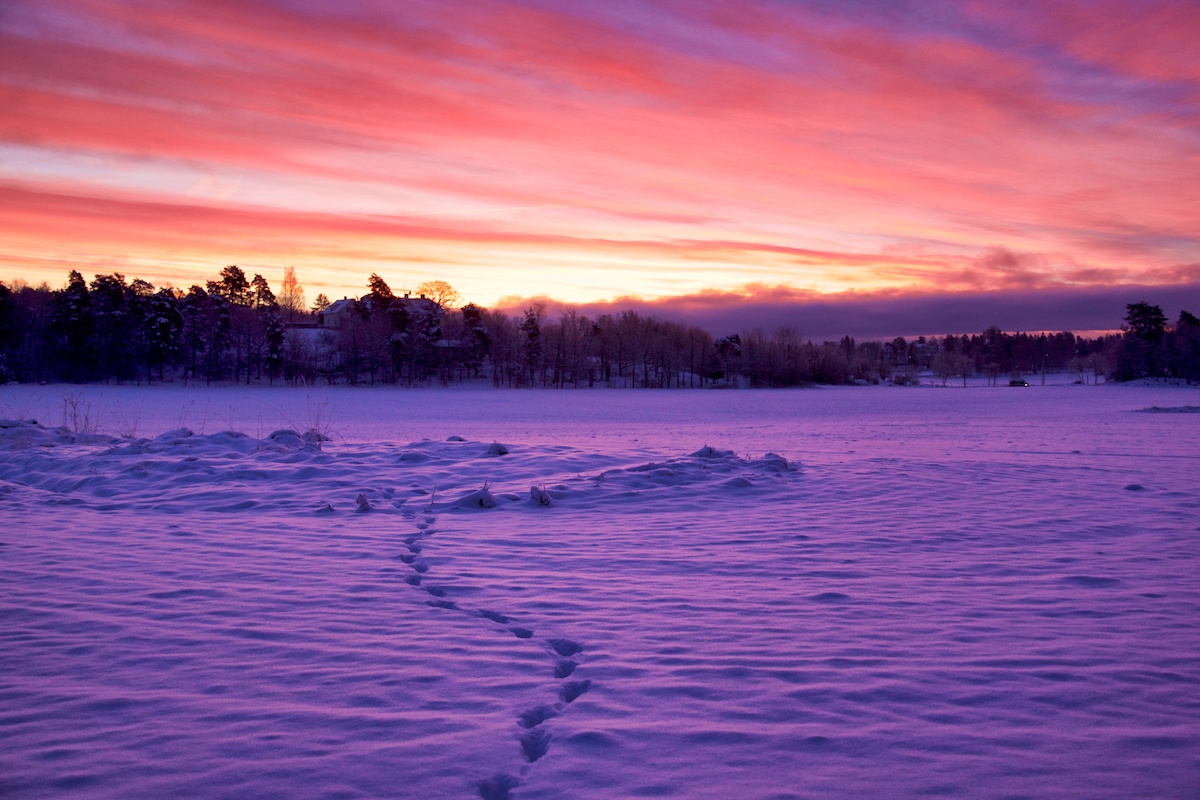
We woke yesterday on the first day of the New Year to a classic Winter’s scene: Snow!
Ben and Ranger enjoying a winter’s breakfast.
Not long after we were washed and dressed I let the dogs out. Typically, while all of them were quick to return to the warmth of the house, Brandy went off on one of his ‘walkabouts’. It was probably the first time he had seen snow.
Twenty minutes later, I started walking down our driveway (just visible in the photograph above running alongside the far tree line) because I knew that Brandy had walked down to the (closed) front gate to check everything out.
I saw Brandy coming back up the driveway and called to him. He looked up, wagged his tail, and I then crouched down holding my arms apart. Brandy started a wonderful, bouncy run that continued until he came right up to me and he then buried his wonderful, furry head between my thighs.
We walked together back to the house and went inside. As we walked together I was aware of a feeling of joyous happiness, a magic that was flowing from the way that Brandy chose to relate to me.
It really did make my heart sing and as I write these words some three hours later I hope you can pick up the gift of goodness that dogs, and so many other animals, offer us humans.
On his way to a call Dec. 17, Deputy Brian Bowling came across a dog stumbling down the middle of an Arizona road.
The pit bull mix named Ginger had been shot in the head by a neighbor who said he felt threatened after the dog dug a hole under her backyard’s fence and wandered into his yard.
Ginger was alive, but not for long.
“She was bleeding profusely from her head and neck,” Bowling told ABC15. In addition to being a deputy with the Maricopa County Sheriff’s Office, Bowling also happens to be a trained paramedic and a veteran who served in Afghanistan. He knew he had to act quickly.
“I had a little flashback, because we had seen military working dogs over there who were blown up by IEDs and shot, and that’s what went through my head,” he told ABC15. “I thought I had to do anything to save its life.”
When he approached Ginger to move her out of traffic, Bowling wasn’t sure how the injured dog would react. “But instead of running away from me or trying to bite me, she ran right up to me and started wagging her tail,” he told FOX 10. She then tried to climb up into the driver’s seat of his patrol car.
Bowling applied combat gauze to her wound, helping to stop the bleeding, and rushed her to a local emergency animal hospital.
His quick actions saved Ginger’s life. She was also fortunate that the bullet bounced off her skull instead of penetrating it.
Ginger and her hero, Deputy Brian Bowling. Photo credit: YouTube
Foster Mom Couldn’t Afford the Surgery
But Ginger’s luck seemed to be running out. When her foster mom, Hailey Miller, was told Ginger still needed surgery that would cost thousands of dollars, she made the difficult decision to have the dog euthanized. “If I had [the money], I wouldn’t even hesitate,” she told ABC 15.
Just as Bowling had saved Ginger from dying in the middle of the road, he decided he would save her from being put down.
“It just didn’t seem right for a dog that survived so much to die because the owner didn’t have the money to pay for it,” he told ABC15. He paid for her surgery himself, putting it on his credit card.
“If this man has this kind of empathy and love for a dog, imagine what he has for people and the rest of the world,” she told ABC 15. “There is such a lesson that can be learned from him.”
Ginger is recovering, Miller wrote on Facebook. She’s now able to walk and eat, and is “so sweet as usual.”
To reimburse Bowling, Miller has launched a GoFundMe campaign that has raised over $6,000.
“It is my Christmas wish that with the help of all animal lovers around the world, I can pay this deputy back,” Miller wrote. “Any remaining funds will go toward law enforcement charities, animal rescues and future rescue dogs that are always coming through my rotating door. Of course the officer will be involved in choosing these charities!”
We’re about to turn over a new leaf on a new year — something I think we’re all pretty excited about — and it’s a good time to sit back, take stock, and think about what we want to do for ourselves, and the world, in 2017.
New year’s resolutions don’t have to be big and fancy, and sometimes they work best when they’re small and manageable, so I rounded up seven totally free ways you can help animals next year, from something you can do weekly (like writing letters) to bigger projects (like fostering animals).
1) Keep an eagle eye on upcoming animal-related legislation.
Photo credit: Anthony
Chances are that there’s some animal-related regulation coming your way in 2017 on the local, state and even federal level. This includes laws and ordinances as well as rules, regulations and executive orders. You can make a big difference by weighing in on these issues — sometimes, surprisingly few members of the public comment!
You can take advantage of resources for animal welfare groups and sites like Care2 to keep track of big upcoming government actions. You may want to call or write to support legislation, to ask that it be more robust, or to oppose it, depending on the contents. For legislation, you need to contact your elected official to explain how you feel and provide a concrete action to take, like “Please cosponsor this bill” or “please vote against this bill.” Rules and regulations are opened to public comment by the agencies making them, allowing you to speak at public meetings or submit written comments.
The Federal Register is a great place to search for upcoming regulations — it’s a little bit intimidating at first, but don’t let that put you off!
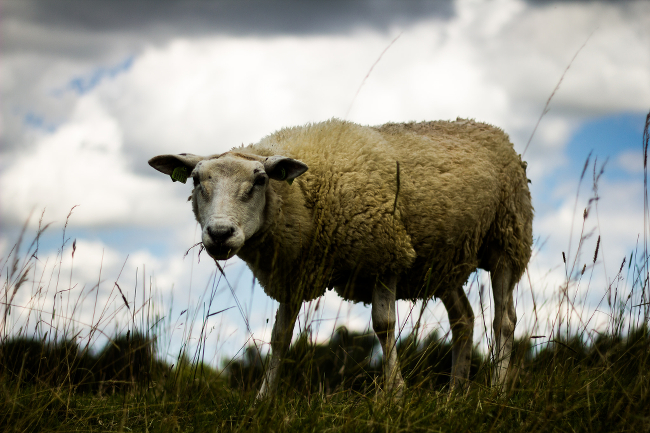
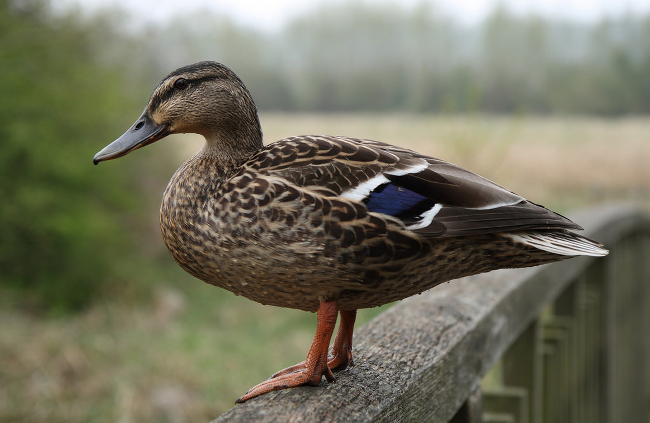
2) Don’t be sheepish — speak up about nonlethal solutions to predators and pests.
Photo credit: Lennart Tange
No matter where you live, there’s probably a battle brewing over feral cats, mountain lions, raccoons, coyotes, skunks, alligators, or someone else from the non-human world who’s getting squeezed by human incursion into its habitat. Historically, many areas have favored a lethal response to animals deemed “pests.” You can change that — and you already are, across the country. When you see animals on the agenda, speak up to request investigation into a nonlethal solution to a problem.
For example, maybe a feral cat colony is causing controversy in the community. You can talk about how responsible colony management should control numbers and limit annoying smells. You could also discuss how research shows that TNR can be more effective at long-term colony management than just trapping and removing cats — in Florida, they found that doing this just allowed other predators to move in, creating an even bigger headache!
Come backed with research and evidence, rather than emotion. You can look to advocacy groups for their data, but also explore scientific papers, and see how other municipalities are dealing with the same problem, because they may have tips to share.
3) Lend a paw at a local animal welfare organizations.
Photo credit: Chris Perriman
Animal welfare groups can always use volunteer help. At the shelter, they don’t just need a hand with cuddling cats, walking dogs, and handling other species. They need all kinds of help, from more boring stuff like cleaning and filing to web design, social media management, legal counseling, accounting, event planning, and much more. Even something as simple as taking your camera (or your photography class) to the shelter once a week to photograph everyone who’s looking for a home can make a huge difference. It turns out that great shelter photos save lives!
Advocacy groups that don’t run shelters or don’t have one in your area also need help. Lots of mundane office stuff is time consuming, and volunteers can make it go more smoothly, whether you’re stuffing envelopes or answering phones. If you have special training or skills, offer those too, especially if you’re willing to get into a long-term relationship with the group. Pro-bono legal services, for example, are incredibly valuable. Your graphic design skills could help them relaunch an impressive, gorgeous website. You get the idea!
4) Don’t duck the issues — teach youth about animal welfare issues.
Photo credit: Danny Chapman
Many kids love animals, and the best time to hit people with humane messages is when they’re young. Some organizations actually offer humane educator training to help people learn about how to communicate with children about animal welfare issues. Humane educators can lead classes and mentor kids in the community, whether they’re taking people on bird walks and teaching them about ecology or working with kids who are learning to ride horses to teach them how to handle their mounts respectfully and kindly.
If you already are an educator, consider working humane topics into your curriculum. If you’re not, look into what might be required to teach classes at a community center, mentor students in programs like 4-H and FFA, lead educational sessions at a local museum (another great volunteer opportunity!), or come into classrooms with presentations. You may need some training and a background check to work with youth, but once you’re squared away, you can establish lasting relationships with teachers and schools to introduce humane coursework to the classroom and beyond.
5) You’ve goat mail — or at least, someone will after you write a letter on behalf of animals!
Photo credit: Holly Occhipinti
Once a week — or every two weeks, or once a month — resolve to sit down and write a letter. It doesn’t have to be an epic, and you can establish a template, but pick a specific person to target, and go to town. Maybe you want to write a letter-to-the-editor once a month about an animal issue in your community that you’re concerned about. Perhaps you want to write a letter to a corporation to ask them to stop, or start, a practice related to animals — like dropping animal testing, or introducing tougher humane standards to the supply chain.
Keep your letter concise, polite and actionable. Explain why you’re writing, the basis for your concern, the solution you’re recommending and why. You can appeal to issues like cost efficiency, making your town more attractive for visitors, compassion for animals (that’s why we’re here, after all!), falling in line with industry-wide practices, setting an example for others, or any number of other things. Present a clear case for what you’re arguing so that the person reading your letter is moved to act, and has something to bring to other people while trying to convince them to get involved.
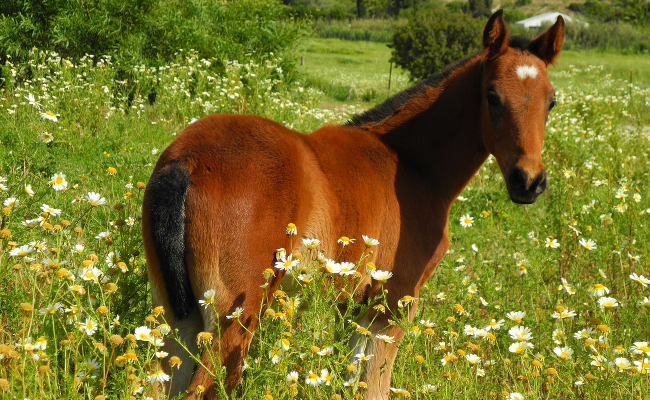
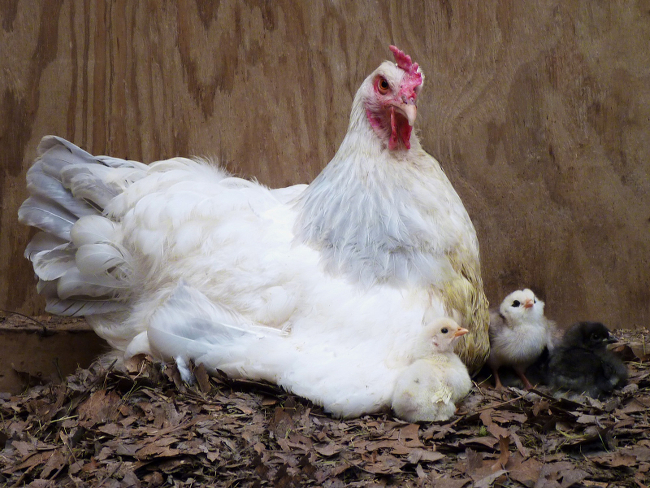
6) Be a mother hen — foster somebody in need.
Photo credit: normanack
If you can’t adopt more animals or don’t have room for a full-time friend in your life, consider fostering. Fostering saves lives, getting animals who can’t handle shelter stress or who need a little extra care to a safe place where they can unwind and grow into themselves. Some shelters have foster programs, and many animal welfare groups do — some run almost entirely on fosters, in fact!
Generally, participants in a foster program are provided with food, medication and veterinary expenses to keep things low-key for you. If you have a spare room, fostering can be a great fit for your life, although watch out for foster fail! (When that kitten you swore you were just fostering is still lying on the living room rug ten years later, you are definitely a victim of foster fail.)
When fostering, be honest about what you can and cannot take on: For example, if you have a barn, you might be able to handle horses and sheep, but not notoriously mischievous and curious goats. You might not be able to take a kitten who needs constant feeding, or a dog that has aggression issues.
That said, if you can stretch your comfort zone, do. Some animals need a little extra care because they’ve had a hard life. That makes them vulnerable to euthanasia, and a foster can make all the difference. Things like giving animals fluids or medications, managing diapers, or handling other vet stuff might sound scary, but it’s pretty easy to get the hang of it.
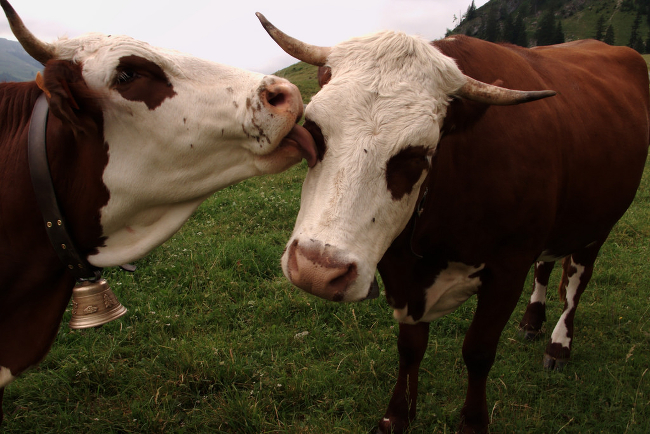
7) Don’t have a cow — on your plate or anywhere else.
Photo credit: Nicolas Vigier
We saved the easiest for last, because chances are that you’re already well on your way with this one. When it comes to what you eat, consider cutting animal products — or at least meat — out of your life. You’ll save a ton of suffering, and also, a ton of money, if you’re trying to cut back in 2017.
If you can’t cut animal products out entirely, consider moderating: Meatless Mondays are popular, for example! Something else that really works for me is a soup exchange — a group of us make huge batches of vegan soup and share them out once a month, so there’s always a go-to vegan meal hanging out in my fridge or freezer when I need it!
While you’re at it, think about what you wear and use, too. Leather is an obvious source of animal suffering, but some people also like to avoid fibers like wool and cashmere (cashmere also comes with a big environmental price tag). You’d also be surprised by where animal products sneak in, from bodycare products to that goop you waterproof your shoes with. (No really. Go look.)
And, of course, cutting animal testing out of your life is valuable too. Growing numbers of cosmetics are produced without the use of animal testing, though it’s always a good idea to independently verify to see if a company is skirting labeling conventions. For example, some companies say “made without animal testing” because they don’t test ingredients on animals, but third party contractors do. Ugh!
If you take medication, you’re caught in the animal testing trap — but it’s worth writing the manufacturer, as well as the FDA, which governs drug testing, to push for alternatives to animal testing so that you have cruelty free options for your health care needs.
You can also make your preference for cruelty free medical supplies clear to your health care providers as well, as they may be able to recommend alternatives if they’re aware that this is a concern for you. (For example, some sutures are made from animal products, which is weird and creepy, and pig valves are used in some valve replacement surgeries. Gross, right?)
My title and sub-title comes from commercial aviation. It’s one aspect of the safety culture that safely the millions of passengers who embark on a commercial flight each year. (IATA estimate that it will be 3.6 billion in 2016.) In other words, if the flight crew have even an inkling of an issue with the aircraft while in flight they will make an immediate decision to land.
Why I chose this title will become clearer as you read on.
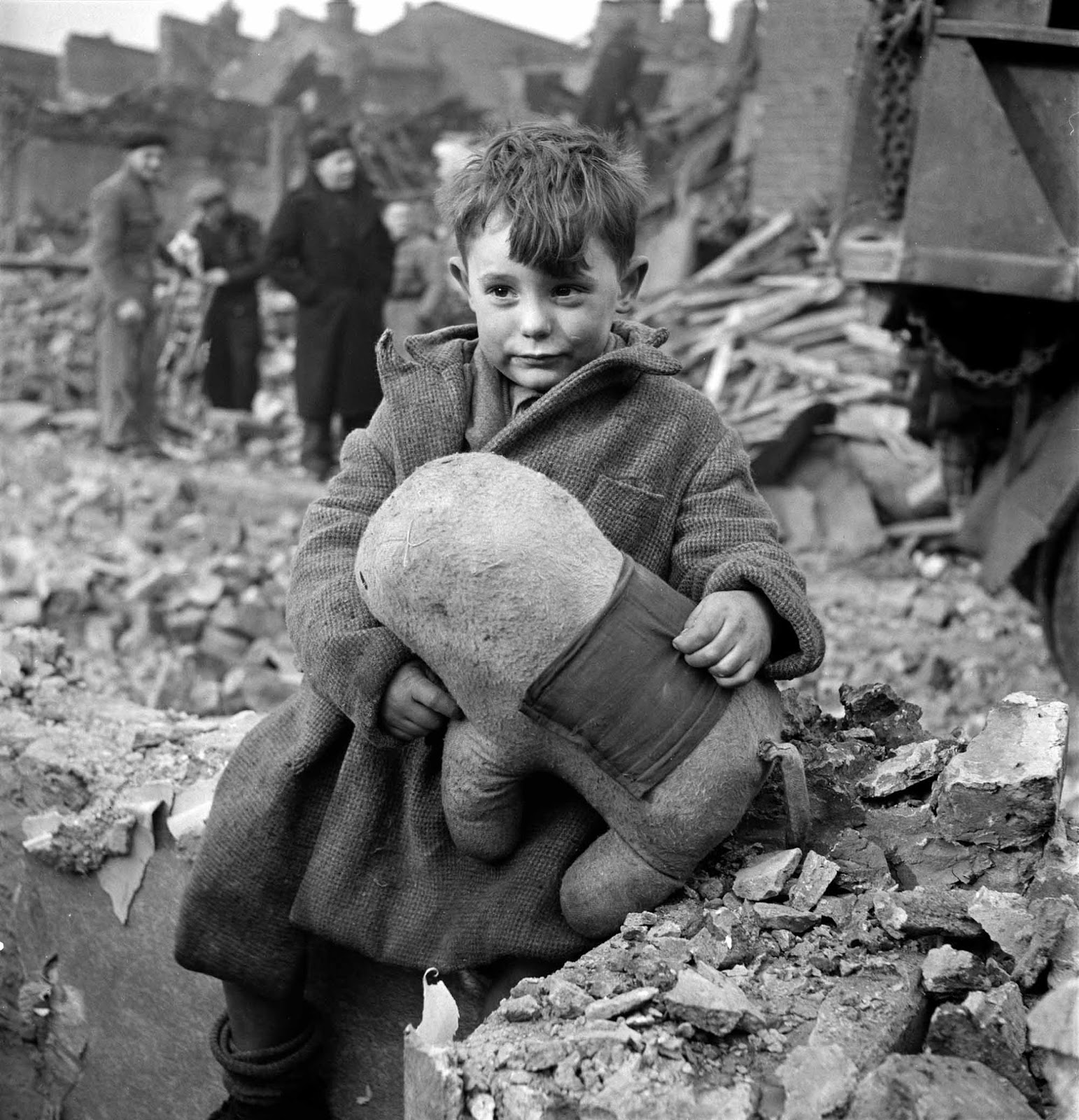
The end of the Second World War so far as Europe was concerned came on May 8th, 1945. In other words: VE Day. London was not a pretty sight in 1945.
Toni Frissell’s famous image of an abandoned boy clutching a stuffed animal in the rubble of 1945 London. (Image taken from this website page.)
What’s the relevance of May 8th, 1945 to me? Well exactly six months, to the day, before VE Day yours truly was born in Acton which was just six miles West of Marble Arch in the centre of London.
It has been a family legend that when VE Day was announced my mother looked at her six-month-old baby son and announced that he was going to live! For those first six months of my life in London were very dangerous. From that same website page where that photograph above came from one can read (my emphasis):
Nazi Germany continued to bomb London up until 1945 using a variety of delivery methods including V-1 and V-2 rockets. In total 1,115 V-2s were fired at the United Kingdom. The vast majority of them were aimed at London, though about 40 targeted (and missed) Norwich. They killed an estimated 2,754 people in London with another 6,523 injured.
I have very clear mental images of playing in and around bomb sites near our home right up to 1953 when there was a real push to clear the sites away ahead of the Queen’s Coronation on June 2nd, 1953.
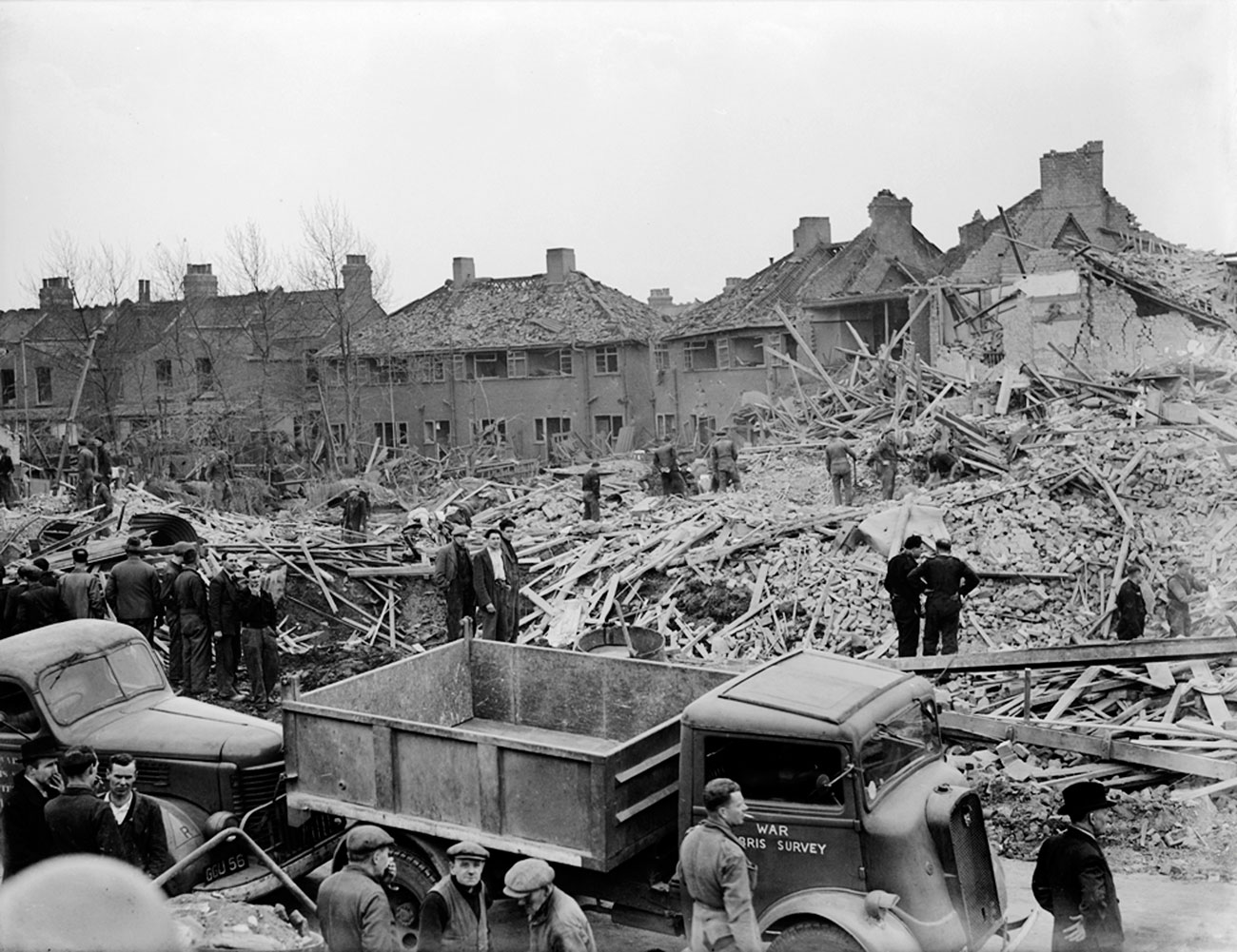
German V-2 bomb damage on houses in Uppingham Avenue, Stanmore, just a few miles from home. The bomb exploded on March 16th, 1945.
So what’s this all about and why do I see it as relevant to today’s world? Stay with me for a little longer.
With all due respect, and abundant apologies for the daring image, we can’t write exclusively about dogs, lest we want to finish as dog food. As Paul is suggesting. Indeed I view seriousness in global inquiry as a basic moral duty.
Imagine Jews worrying just about dogs, while Auschwitz was being built; it’s arguably what happened, said Hannah Arendt (I’m paraphrasing; she was hated for it, though…) Some will scoff, but Kim in Korea is building one new H bomb every 5 weeks… One single H bomb, in the ‘right’ place, can kill more than Auschwitz.
In the Real World, Foundations Saved Civilization Before:
The combination of imperial collapse followed by re-birth from Foundations within happened several times already, for real.
Civilizations collapsing into Dark Ages from the actions of dozens of millions of people occurred more than once. And then very small groups arose, often within the collapsing empire, and imposed new ways of thinking which enabled civilization to restart.
After I read his post I left a question as a comment: “Are you saying that our present civilization is on the point of collapse?”
I then went across to that article carried by The New Yorker. It was an article written by Eric Schlosser, author of the book Command and Control: Nuclear Weapons, the Damascus Accident, and the Illusion of Safety and a producer of the documentary Command and Control from 2016.
Harsh political rhetoric, combined with the vulnerability of the nuclear command-and-control system, has made the risk of global catastrophe greater than ever.
A dilemma has haunted nuclear strategy since the first detonation of an atomic bomb: How do you prevent a nuclear attack while preserving the ability to launch one? PHOTOGRAPH BY ANDY CROSS / THE DENVER POST VIA GETTY
On June 3, 1980, at about two-thirty in the morning, computers at the National Military Command Center, beneath the Pentagon, at the headquarters of the North American Air Defense Command (NORAD), deep within Cheyenne Mountain, Colorado, and at Site R, the Pentagon’s alternate command post center hidden inside Raven Rock Mountain, Pennsylvania, issued an urgent warning: the Soviet Union had just launched a nuclear attack on the United States. The Soviets had recently invaded Afghanistan, and the animosity between the two superpowers was greater than at any other time since the Cuban Missile Crisis.
U.S. Air Force ballistic-missile crews removed their launch keys from the safes, bomber crews ran to their planes, fighter planes took off to search the skies, and the Federal Aviation Administration prepared to order every airborne commercial airliner to land.
President Jimmy Carter’s national-security adviser, Zbigniew Brzezinski, was asleep in Washington, D.C., when the phone rang. His military aide, General William Odom, was calling to inform him that two hundred and twenty missiles launched from Soviet submarines were heading toward the United States. Brzezinski told Odom to get confirmation of the attack. A retaliatory strike would have to be ordered quickly; Washington might be destroyed within minutes. Odom called back and offered a correction: twenty-two hundred Soviet missiles had been launched.
Brzezinski decided not to wake up his wife, preferring that she die in her sleep. As he prepared to call Carter and recommend an American counterattack, the phone rang for a third time. Odom apologized—it was a false alarm. An investigation later found that a defective computer chip in a communications device at NORAD headquarters had generated the erroneous warning. The chip cost forty-six cents.
[Two paragraphs later]
My book “Command and Control” explores how the systems devised to govern the use of nuclear weapons, like all complex technological systems, are inherently flawed. They are designed, built, installed, maintained, and operated by human beings. But the failure of a nuclear command-and-control system can have consequences far more serious than the crash of an online dating site from too much traffic or flight delays caused by a software glitch. Millions of people, perhaps hundreds of millions, could be annihilated inadvertently. “Command and Control” focusses on near-catastrophic errors and accidents in the arms race between the United States and the Soviet Union that ended in 1991. The danger never went away. Today, the odds of a nuclear war being started by mistake are low—and yet the risk is growing, as the United States and Russia drift toward a new cold war. The other day, Senator John McCain called Vladimir Putin, the President of the Russian Federation, “a thug, a bully, and a murderer,” adding that anyone who “describes him as anything else is lying.” Other members of Congress have attacked Putin for trying to influence the Presidential election. On Thursday, Putin warned that Russia would “strengthen the military potential of strategic nuclear forces,” and President-elect Donald Trump has responded with a vow to expand America’s nuclear arsenal. “Let it be an arms race,” Trump told one of the co-hosts of MSNBC’s “Morning Joe.” “We will outmatch them at every pass and outlast them all.”
The harsh rhetoric on both sides increases the danger of miscalculations and mistakes, as do other factors. Close encounters between the military aircraft of the United States and Russia have become routine, creating the potential for an unintended conflict. Many of the nuclear-weapon systems on both sides are aging and obsolete. The personnel who operate those systems often suffer from poor morale and poor training. None of their senior officers has firsthand experience making decisions during an actual nuclear crisis. And today’s command-and-control systems must contend with threats that barely existed during the Cold War: malware, spyware, worms, bugs, viruses, corrupted firmware, logic bombs, Trojan horses, and all the other modern tools of cyber warfare. The greatest danger is posed not by any technological innovation but by a dilemma that has haunted nuclear strategy since the first detonation of an atomic bomb: How do you prevent a nuclear attack while preserving the ability to launch one?
[Going to the closing paragraph]
Every technology embodies the values of the age in which it was created. When the atomic bomb was being developed in the mid-nineteen-forties, the destruction of cities and the deliberate targeting of civilians was just another military tactic. It was championed as a means to victory. The Geneva Conventions later classified those practices as war crimes—and yet nuclear weapons have no other real use. They threaten and endanger noncombatants for the sake of deterrence. Conventional weapons can now be employed to destroy every kind of military target, and twenty-first-century warfare puts an emphasis on precision strikes, cyberweapons, and minimizing civilian casualties. As a technology, nuclear weapons have become obsolete. What worries me most isn’t the possibility of a cyberattack, a technical glitch, or a misunderstanding starting a nuclear war sometime next week. My greatest concern is the lack of public awareness about this existential threat, the absence of a vigorous public debate about the nuclear-war plans of Russia and the United States, the silent consent to the roughly fifteen thousand nuclear weapons in the world. These machines have been carefully and ingeniously designed to kill us. Complacency increases the odds that, some day, they will. The “Titanic Effect” is a term used by software designers to explain how things can quietly go wrong in a complex technological system: the safer you assume the system to be, the more dangerous it is becoming.
ooOOoo
My greatest concern is the lack of public awareness about this existential threat, the absence of a vigorous public debate about the nuclear-war plans of Russia and the United States, the silent consent to the roughly fifteen thousand nuclear weapons in the world.
Is there a dog angle to all of this? You bet! For dogs as well as people are all innocents caught up in the madness of war.
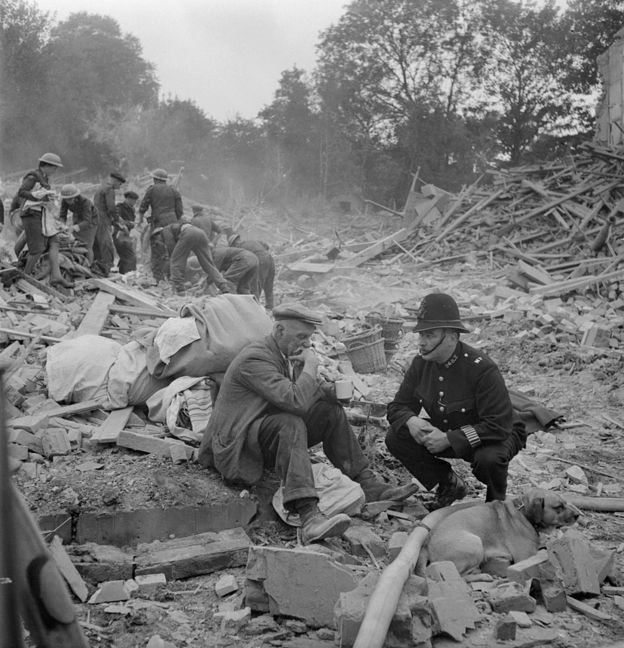
A policeman offering sympathy to a now homeless man, who returned home from walking his dog to find his house destroyed and wife killed by a V1 flying bomb. London 1944. (The dog is just below the Policeman’s left shin.)
Now do you see why I entitled today’s post If there’s any doubt. there’s no doubt.
For if we were the flightcrew of the good ship Earth we would be urgently looking for a diversion airfield upon which to land; and land now!
Wherever you are in the world, whatever you are doing, if you share the concern expressed so clearly by Patrice don’t do nothing. Even if all you do is to send a message on one of the social media apps that’s far better than doing nothing. All that evil requires to succeed is for good people to do nothing!
For I haven’t a clue as to when and how my life will come to an end but, as sure as hell, I would prefer that it isn’t six months to the day after the start of World War III.
The power of corporations must never be permitted to override democratic choice.
The main thrust in yesterday’s post was a plea by Chip Colwell , Lecturer on Anthropology, University of Colorado, Denver for our natural lands to be given the legal status of a person. Here’s how Prof. Colwell concluded his essay (my emphasis):
In New Zealand, the Te Urewera Act offers a higher level of protection, empowering a board to be the land’s guardian. The Te Urewera Act, though, does not remove its connection to humans. With a permit, people can hunt, fish, farm and more. The public still has access to the forest. One section of the law even allows Te Urewera to be mined.
Te Urewera teaches us that acknowledging cultural views of places as living does not mean ending the relationship between humans and nature, but reordering it – recognizing nature’s intrinsic worth and respecting indigenous philosophies.
In the U.S. and elsewhere, I believe we can do better to align our legal system with the cultural expressions of the people it serves. For instance, the U.S. Congress could amend the NHPA or the American Indian Religious Freedom Act to acknowledge the deep cultural connection between tribes and natural places, and afford better protections for sacred landscapes like New Mexico’s Mount Taylor.
Until then, it says much about us when companies are considered people before nature is.
Chip Colwell was alerting us, as in humanity, that our natural resources are way, way too important for them to be considered corporate assets.
The days between a Christmas Day and a New Year’s Day are frequently a time for introspection; well they are for me! A few days to reflect on what did or did not work in the year just coming to an end and to find some clarity about the important issues for the new year.
That mood of introspection, of reflection, seems to be creeping into my blog posts this last week of 2016. For following Chip Colwell comes George Monbiot and an essay he published on the 6th December, 2016, that is republished here with Mr. Monbiot’s very kind permission.
Regarding the power of corporations there are strong echoes between Prof. Colwell and Mr. Monbiot.
ooOOoo
The Golden Arches Theory of Decline
10th December 2016
Why is there a worldwide revolt against politics as usual? Because corporate globalisation has crushed democratic choice.
By George Monbiot, published in the Guardian, 6th December 2016
A wave of revulsion rolls around the world. Approval ratings for incumbent leaders are everywhere collapsing. Symbols, slogans and sensation trump facts and nuanced argument. One in six Americans now believes that military rule would be a good idea. From all this I draw the following, peculiar conclusion: no country with a McDonald’s can remain a democracy.
Twenty years ago, the New York Times columnist Thomas Friedman proposed his “golden arches theory of conflict prevention”. This holds that “no two countries that both have McDonald’s have ever fought a war against each other since they each got their McDonald’s”.
Friedman’s was one of several end-of-history narratives suggesting that global capitalism would lead to permanent peace. He claimed that it might create “a tip-over point at which a country, by integrating with the global economy, opening itself up to foreign investment and empowering its consumers, permanently restricts its capacity for troublemaking and promotes gradual democratization and widening peace.” He didn’t mean that McDonald’s ends war, but that its arrival in a nation symbolised the transition.
In using McDonalds as shorthand for the forces tearing democracy apart, I am, like him, writing figuratively. I do not mean that the presence of the burger chain itself is the cause of the decline of open, democratic societies (though it has played its part in Britain, using our defamation laws against its critics). Nor do I mean that countries hosting McDonald’s will necessarily mutate into dictatorships.
What I mean is that, under the onslaught of the placeless, transnational capital McDonald’s exemplifies, democracy as a living system withers and dies. The old forms and forums still exist – parliaments and congresses remain standing – but the power they once contained seeps away, re-emerging where we can no longer reach it.
The political power that should belong to us has flitted into confidential meetings with the lobbyists and donors who establish the limits of debate and action. It has slipped into the dictats of the IMF and the European Central Bank, which respond not to the people but to the financial sector. It has been transported, under armed guard, into the icy fastness of Davos, where Mr Friedman finds himself so warmly welcomed (even when he’s talking cobblers).
Above all, the power that should belong to the people is being crushed by international treaty. Contracts such as NAFTA, CETA, the proposed TransPacific Partnership and Trade in Services Agreement and the failed Transatlantic Trade and Investment Partnership are crafted behind closed doors in discussions dominated by corporate lobbyists. They are able to slip in clauses that no informed electorate would ever approve, such as the establishment of opaque offshore tribunals, through which corporations can bypass national courts, challenge national laws and demand compensation for the results of democratic decisions.
These treaties limit the scope of politics, prevent states from changing social outcomes and drive down labour rights, consumer protection, financial regulation and the quality of neighbourhoods. They make a mockery of sovereignty. Anyone who forgets that striking them down was one of Donald Trump’s main promises will fail to understand why people were prepared to risk so much in electing him.
At the national level too, the McDonalds model destroys meaningful democracy. Democracy depends on a reciprocal sense of belief, trust and belonging: the conviction that you belong to the nation and the nation belongs to you. The McDonalds model, by rooting out attachment, could not have been better designed to erase that perception.
As Tom Wolfe observes in his novel A Man in Full, “the only way you could tell you were leaving one community and entering another was when the franchise chains started repeating and you spotted another 7-Eleven, another Wendy’s, another Costco, another Home Depot.” The alienation and anomie this destruction of place promotes are enhanced by the casualisation of labour and a spirit-crushing regime of monitoring, quantification and assessment (at which McDonald’s happens to excel). Public health disasters contribute to the sense of rupture. After falling for decades, for example, death rates among middle-aged white Americans are now rising. Among the likely causes are obesity and diabetes, opioid addiction and liver failure, diseases whose vectors are corporations.
Corporations, released from democratic constraints, drive us towards climate breakdown, an urgent threat to global peace. McDonald’s has done more than its fair share: beef production is among the most powerful causes of climate change.
In his book The Globalisation Paradox, the Harvard economist Dani Rodrik describes a political trilemma. Democracy, national sovereignty and hyperglobalisation, he argues, are mutually incompatible. You cannot have all three at once. McDonalisation crowds out domestic politics. Incoherent and dangerous as it often is, the global backlash against mainstream politicians is, at heart, an attempt to reassert national sovereignty against the forces of undemocratic globalisation.
An article about the history of the Democratic party by Matt Stoller in The Atlantic reminds us that a similar choice was articulated by the great American jurist Louis Brandeis. “We may have democracy, or we may have wealth concentrated in the hands of a few, but we can’t have both.” In 1936, the congressman Wright Patman managed to pass a bill against the concentration of corporate power. Among his targets was A&P, the giant chainstore of his day, that was hollowing out towns, destroying local retailers and turning “independent tradesmen into clerks”.
In 1938, President Roosevelt warned that “the liberty of a democracy is not safe if the people tolerate the growth of private power to a point where it becomes stronger than their democratic state itself. That, in its essence, is fascism.” The Democrats saw concentrated corporate power as a form of dictatorship. They broke up giant banks and businesses and chained the chainstores. What Roosevelt, Brandeis and Patman knew has been forgotten by those in power, including powerful journalists. But not by the victims of this system.
One of the answers to Trump, Putin, Orban, Erdogan, Salvini, Duterte, Le Pen, Farage and the politics they represent is to rescue democracy from transnational corporations. It is to defend the crucial political unit that’s under assault by banks, monopolies and chainstores: community. It is to recognise that there is no greater hazard to peace between nations than a corporate model which crushes democratic choice.
It’s very easy to pick out from Mr. Monbiot’s essay what the theme should be for 2017, and beyond. What each and every one of us who cares about the future and understands the huge changes that have to take place if our grandchildren are to have a viable future.
It was that compelling quotation by Louis Brandeis:
We may have democracy, or we may have wealth concentrated in the hands of a few, but we can’t have both.
One of the many things that we adore about living here in Merlin, Southern Oregon is the closeness of nature. Not just the nature of the slopes and mountains but the nature of the trees, creeks, grasses and wild plants.
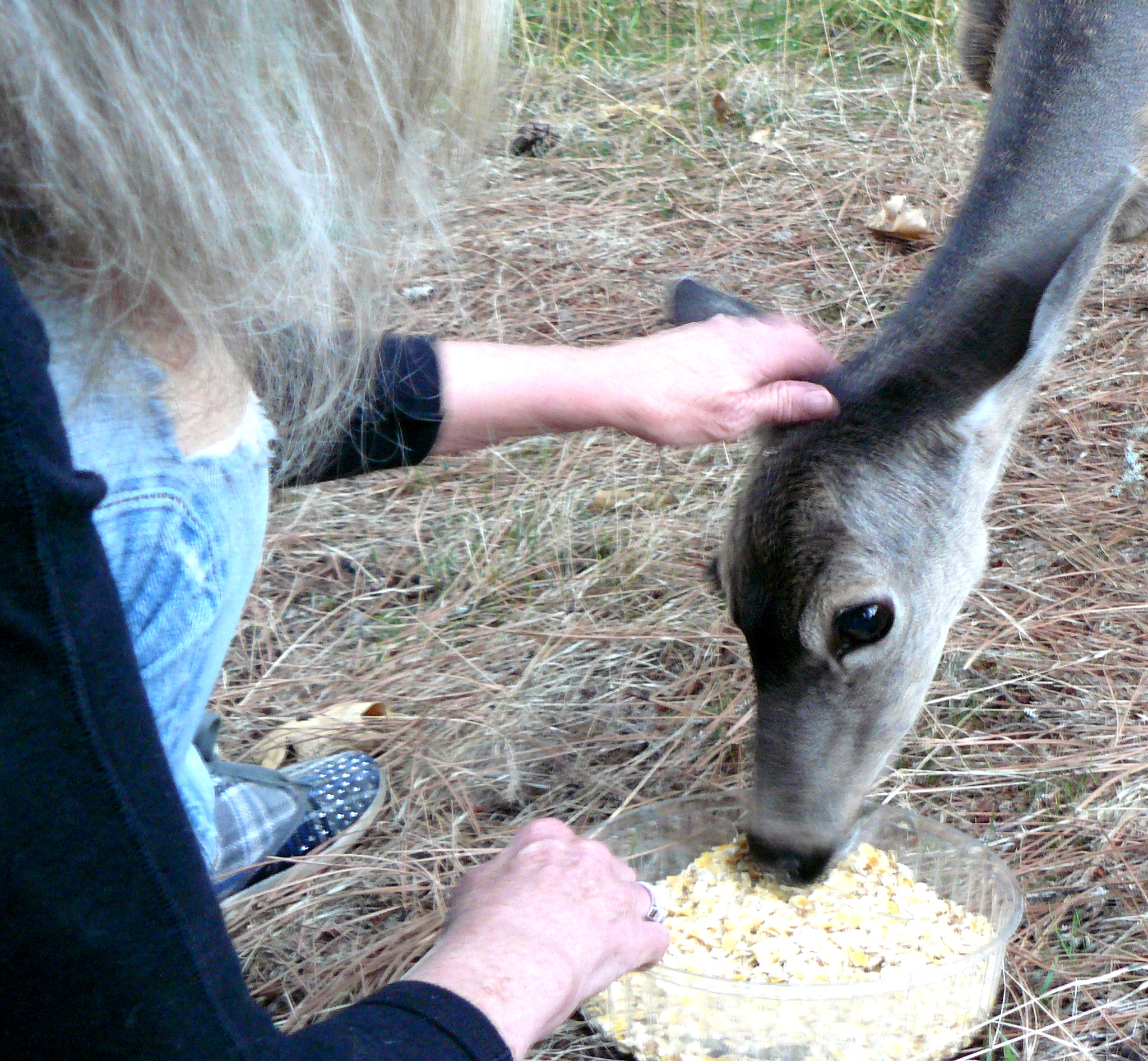
Plus the awareness over the 4+ years that we have been here of how easy it is to gain the trust of wild animals. I will go to my grave holding on to the sweet sensation of a wild deer trusting me and Jean to the point where we could stroke the deer’s neck when we were feeding her.
The trust between the deer and Jean then enabled the deer to feed from Jean’s hand.Then, unbelievably, the wild deer continues feeding as Jean fondles the deer’s ear.
(Both photographs taken in October, 2014 in the area of grassland near to our stables.)
The measure of how we, as in humanity, really feel about the only home we have, as in Planet Earth, is how we regard our planet.
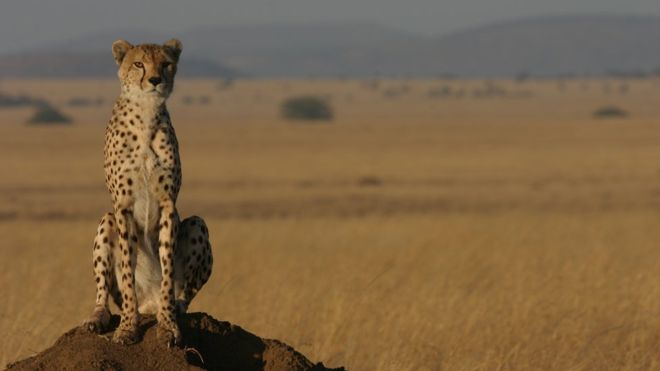
The pain that we feel when we read, as I did yesterday, about another animal species possibly heading towards extinction. In this case, an item on the BBC News website about Cheetahs.
Cheetahs heading towards extinction as population crashes
By Matt McGrath Environment correspondent
Protected parks and reserves for cheetahs are not sufficient as the animal ranges far beyond these areas.
The sleek, speedy cheetah is rapidly heading towards extinction according to a new study into declining numbers.
The report estimates that there are just 7,100 of the world’s fastest mammals now left in the wild.
Cheetahs are in trouble because they range far beyond protected areas and are coming increasingly into conflict with humans.
The authors are calling for an urgent re-categorisation of the species from vulnerable to endangered.
It’s no good tut-tutting; something different has to be done. For otherwise nature will have the last word to say about the future of vast numbers of species especially homo sapiens!
All of which leads me to the main theme of today’s post: holding nature in higher esteem as in higher legal esteem.
Read the following that was published on The Conversation blogsite on October 10th, 2016 and is republished here within their terms. The author is Chip Colwell , Lecturer on Anthropology, University of Colorado, Denver.
ooOOoo
What if nature, like corporations, had the rights and protections of a person?
October 10, 2016 8.16am EDT
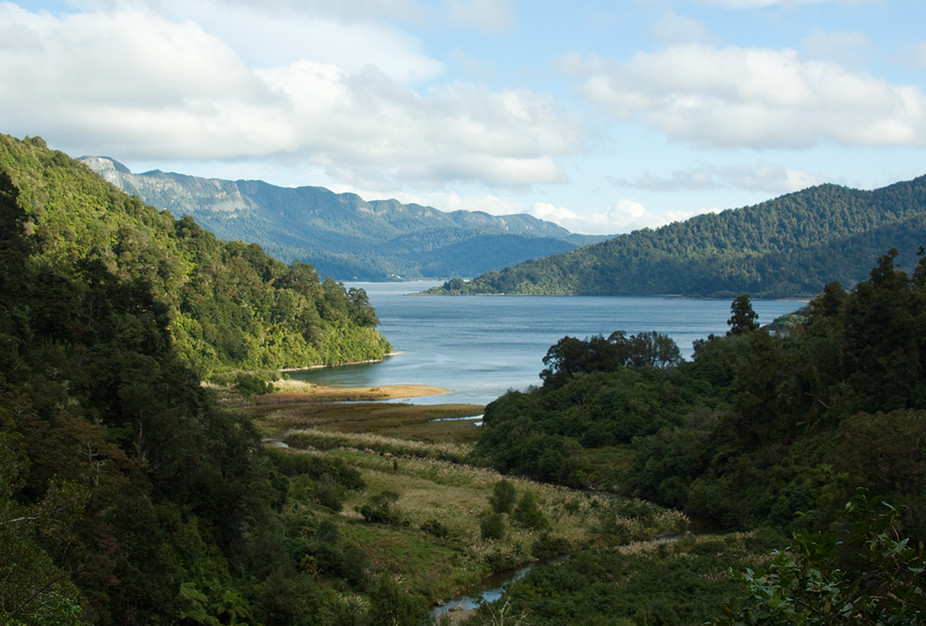
The forest around Lake Waikaremoana in New Zealand has been given legal status of a person because of its cultural significance. Paul Nelhams/flickr, CC BY-SA
In recent years, the U.S. Supreme Court has solidified the concept of corporate personhood. Following rulings in such cases as Hobby Lobby and Citizens United, U.S. law has established that companies are, like people, entitled to certain rights and protections.
But that’s not the only instance of extending legal rights to nonhuman entities. New Zealand took a radically different approach in 2014 with the Te Urewera Act which granted an 821-square-mile forest the legal status of a person. The forest is sacred to the Tūhoe people, an indigenous group of the Maori. For them Te Urewera is an ancient and ancestral homeland that breathes life into their culture. The forest is also a living ancestor. The Te Urewera Act concludes that “Te Urewera has an identity in and of itself,” and thus must be its own entity with “all the rights, powers, duties, and liabilities of a legal person.” Te Urewera holds title to itself.
Although this legal approach is unique to New Zealand, the underlying reason for it is not. Over the last 15 years I have documented similar cultural expressions by Native Americans about their traditional, sacred places. As an anthropologist, this research has often pushed me to search for an answer to the profound question: What does it mean for nature to be a person?
The snow-capped mountain
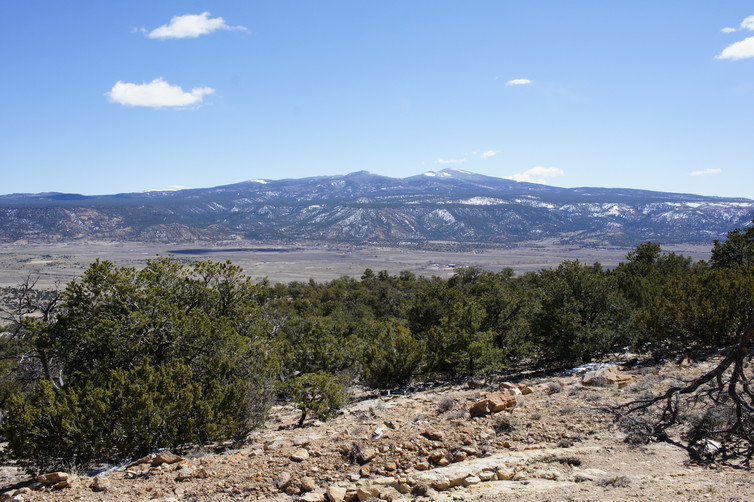
A majestic mountain sits not far northwest of Albuquerque, New Mexico. Like a low triangle, with long gentle slopes, Mount Taylor is clothed in rich forests that appear a velvety charcoal-blue from the distance. Its bald summit, more than 11,000 feet high, is often blanketed in snow – a reminder of the blessing of water, when seen from the blazing desert below.
The Zuni tribe lives about 40 miles west of Mount Taylor. In 2012, I worked with a team to interview 24 tribal members about the values they hold for Dewankwin K’yaba:chu Yalanne (“In the East Snow-capped Mountain”), as Mount Taylor is called in the Zuni language. We were told that their most ancient ancestors began an epic migration in the Grand Canyon.
Mount Taylor in New Mexico, a sacred site to the Zuni who believe it is a living being. Chip Colwell, Author provided.
Over millennia they migrated across the Southwest, with important medicine societies and clans living around Mount Taylor. After settling in their current pueblo homes, Zunis returned to this sacred mountain to hunt animals like deer and bear, harvest wild plants like acorns and cattails, and gather minerals used in sacrosanct rituals that keep the universe in order. Across the generations Dewankwin Kyaba:chu Yalanne has come to shape Zuni history, life, and identity no less than the Vatican has for Catholics.
But unlike holy places in the Western world, Zunis believe Mount Taylor is a living being. Zuni elders told me that the mountain was created within the Earth’s womb. As a mountain formed by volcanic activity, it has always grown and aged. The mountain can give life as people do. The mountain’s snow melts in spring and nourishes plants and wildlife for miles. Water is the mountain’s blood; buried minerals are the mountain’s meat. Because it lives, deep below is its beating heart. Zunis consider Mount Taylor to be their kin.
There is a stereotype that Native American peoples have a singular connection to nature. And yet in my experience, they do see the world in a fundamentally different way from most people I know. Whether it is mountains, rivers, rocks, animals, plants, stars or weather, they see the natural world as living and breathing, deeply relational, even at times all-knowing and transcendent.
In my work with Arizona’s Hopi tribe, I have traveled with cultural leaders to study sacred places. They often stop to listen to the wind, or search the sky for an eagle, or smile when it begins to rain, which they believe is a blessing the ancestors bestow upon them.
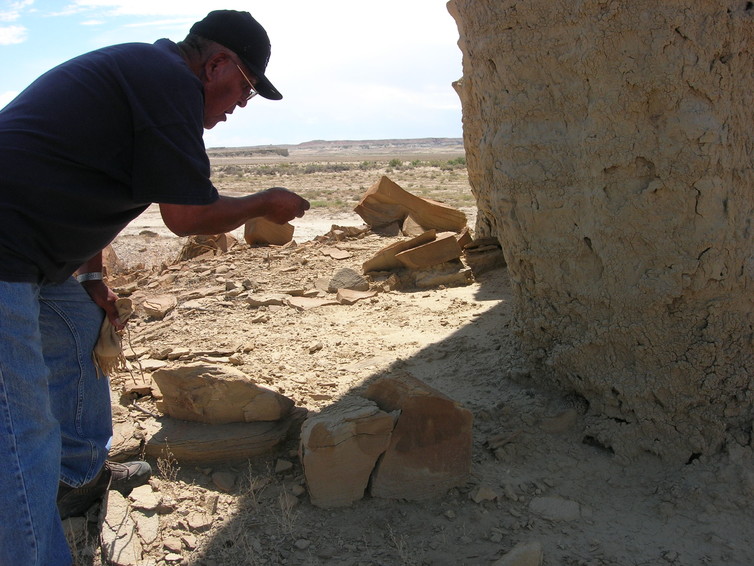
During one project with the Hopi tribe, we came across a rattlesnake coiled near an ancient fallen pueblo. “Long ago, one of them ancestors lived here and turned into a rattlesnake,” the elder Raleigh H. Puhuyaoma Sr. shared with me, pointing to the nearby archaeological site. “It’s now protecting the place.” The elders left an offering of corn meal to the snake. An elder later told me that it soon rained on his cornfield, a result from this spiritual exchange.
Violent disputes
Understanding these cultural worldviews matters greatly in discussions over protecting places in nature. The American West has a long history of battles over the control of land. We’ve seen this recently from the Bundy family’s takeover of the federal wildlife refuge in Oregon to the current fight over turning Bears Ears – 1.9 million acres of wilderness – into a national monument in Utah.
Yet often these battles are less about the struggle between private and public interests, and more about basic questions of nature’s purpose. Do wild places have intrinsic worth? Or is the land a mere tool for human uses?
A Hopi elder making an offering to a snake to protect a sacred space. Chip Colwell, Author provided.
Much of my research has involved documenting sacred places because they are being threatened by development projects on public land. The Zuni’s sacred Mount Taylor, much of it managed by the U.S. National Forest Service, has been extensively mined for uranium, and is the cause of violent disputes over whether it should be developed or protected.
Even though the U.S. does not legally recognize natural places as people, some legal protections exist for sacred places. Under the National Historic Preservation Act, for example, the U.S. government must take into consideration the potential impacts of certain development projects on “traditional cultural properties.”
This and other federal heritage laws, however, provide tribes a small voice in the process, little power, and rarely lead to preservation. More to the point, these laws reduce what tribes see as living places to “properties,” obscuring their inherent spiritual value.
In New Zealand, the Te Urewera Act offers a higher level of protection, empowering a board to be the land’s guardian. The Te Urewera Act, though, does not remove its connection to humans. With a permit, people can hunt, fish, farm and more. The public still has access to the forest. One section of the law even allows Te Urewera to be mined.
Te Urewera teaches us that acknowledging cultural views of places as living does not mean ending the relationship between humans and nature, but reordering it – recognizing nature’s intrinsic worth and respecting indigenous philosophies.
In the U.S. and elsewhere, I believe we can do better to align our legal system with the cultural expressions of the people it serves. For instance, the U.S. Congress could amend the NHPA or the American Indian Religious Freedom Act to acknowledge the deep cultural connection between tribes and natural places, and afford better protections for sacred landscapes like New Mexico’s Mount Taylor.
Until then, it says much about us when companies are considered people before nature is.
It is a function of the news media to highlight alarming events; many of them with some justification.
But it’s all too easy to be drawn into a world that seems almost to be uniformly dark and foreboding.
Thus the following item seen over on the Care2 site really does deserve the widest sharing because it reminds us that there are countless good people who work so hard for our wonderful animals.
ooOOoo
Christmas Rescuers Save 1,300 Dogs and Cats From Winter Without Electricity
DONETSK — In the days before Christmas, a Ukrainian animal shelter drifting toward a winter of complete darkness has experienced an unexpected tidal wave of support from international animal lovers determined to keep the power on.
Last week, the shelter – located on the Russian border- sent out a distress call about the imminent threat of blackout for their 1,300 dogs and cats, many of whom were left behind by refugees during violent attacks over the last two years. After losing their local business sponsor during the military conflict, the shelter team have been enduring an intense struggle to feed the animals and to simply stay afloat.
“I can’t even remember the last time something good happened to us,” shelter manager Vita Bryzgalova explained in an email to the Harmony Fund international rescue charity. “We are now facing a power shut-down since the debt for electricity accumulated over the past year. It is almost $7,000 since the beginning of 2016.”
“If the electricity in the shelter would be cut, the veterinary appliances will not work and the shelter will be under sub-zero temperatures with no way to provide treatment or carry out operations,” Vita continued. “There will be no place to keep medications and vaccines and food for all animals living in the shelter as everything will freeze. The building is heated by a boiler but it doesn’t not work without the electric pump. There are three hospital wards with animals here and there are about 80 animals that are being treated and they especially need warmth and care. Also we have 35 employees who give daily care of the animals and they will be sick more often without heat in the rooms. Without electricity, we will also have no external communications by telephone or internet.”
Having provided donations of food and staff wages during this difficult time, the Harmony Fund turned to Facebook to see if people might be willing to help keep the electricity on. Within 48 hours, half the funds were raised ($3,500) and this sum was enough to keep the power on for the next few months while the charity attempts to raise funds for the rest of the debt to the electricity supplier.
The Great Animal Rescue Chase celebrates the art of animal rescue with a worldwide race to rescue one million. It’s a free event, open to all, and is perhaps the only global animal rescue event aimed at helping any animal in distress, anywhere in the world. Our ambition is to create a culture of enthusiasm and pride in animal activism. We believe in teaching, by example, that there is a hero in each of us just waiting to be unleashed. Empowered animal lovers can not only save lives, but build the momentum for powerful animal welfare reform.
The Harmony Fund
The Harmony Fund offers a lifeline to so called “underdog” animal rescue squads across the planet. Our partners are the small but incredibly courageous and effective animal rescue teams who operate in parts of the world where funding is very hard to come by. Our supporters are helping us to dramatically impact the capacity of these rescue teams to touch thousands upon thousands of animals who might otherwise be unreachable.
Gratitude and respect are at the cornerstone of our relationship with our supporters. We do not expose our supporters to graphic photos of animal suffering or distribute dire forecasts about animal suffering. Instead we focus on a spirit of joy and determination as we pursue essential operations to provide food, veterinary medicine, shelter and protection from cruelty for animals worldwide.
Contact Us
To contact The Great Animal Rescue Chase or the Harmony Fund, view our Contact Us page.
In the space of time it takes a raindrop to roll down your cheek, a life changing decision is made. You either turn sorrowfully away from an animal in distress or summon the courage to run forward and help. For all you runners out there, welcome home.
Come on in and rest your feet a while. Then join us in a planet-wide race to save 1 million suffering animals who are about to learn the spectacular meaning of second chances.
I know that all of you dear readers of this place will, without hesitation, summon the courage to run forward and help.
I saw this post below on a blog site that was new to me. It was just called Lady Fi. It simply reached out to me in the most beautiful and peaceful manner and seemed like the perfect re-posting (with LadyFi’s permission) for today: December 25th.
Can’t add anything more to who LadyFi is other than what she writes on her About page.
So, you want to know who I am? Well, you’ll get a pretty good idea from reading my blog. But, in brief:
A Brit living in Sweden since 1996. Came here as a so-called love immigrant.
Have got two small kids and good supply of ear plugs.
Husband is like a third child and the dog is like the fourth.
Blessed with an ironic sense of humour.
Scriptwriter, textbook writer and translator (Swedish into English).
Here’s that post.
ooOOoo
Paws for thought
13 December is Lucia – one of my favourite times of year.
Lucia is all about children dressed in white and carrying candles
Rakesh runs a charity called The Voice of Stray Dogs (VoSD).The WikiPedia entry is a bit light on details but the UK arm of The Huffington Post makes up for that. Here’s an extract from the news item:
VoSD was founded by Mr Rakesh Shukla, affectionately known as the “Dog Father”. It was set up single-handedly after he felt obliged to do something about the plight of stray dogs in India. Well known for keeping dogs in his home [ the VoSD Sanctuary] and in his office, Rakesh has worked tirelessly to raise funds for the care of stray dogs [ with greater than 90% contributed by himself]. One visitor said ““Rakesh’s growing family of rescued dogs is a sight to behold. It is amazing how so many dogs together get on so well“.
He operates a system that has rescued more than 3000 dogs in 2 years with 400+ permanent dogs under his care. VoSD offers the highest standard of service and is equipped with the latest technology so that stray dogs get the best possible care.
Back to the BBC item that I am taking the liberty of republishing in full.
ooOOoo
The man who looks after 735 dogs
19 December 2016, India
Rakesh Shukla is a software engineer who’s found his life’s calling in looking after dogs that no-one wants, writes the BBC’s Geeta Pandey in Bangalore.
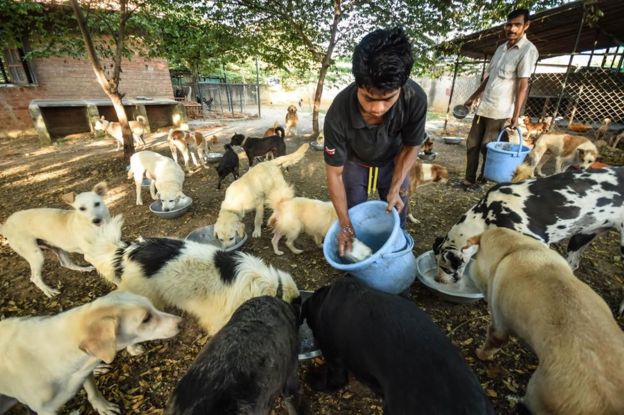
The car pulled up outside a dusty farmhouse near the capital of the southern Indian state of Karnataka and suddenly dogs were everywhere, yelping and barking, jumping with joy.
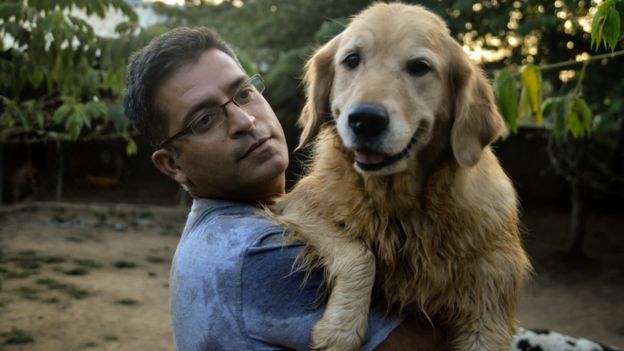
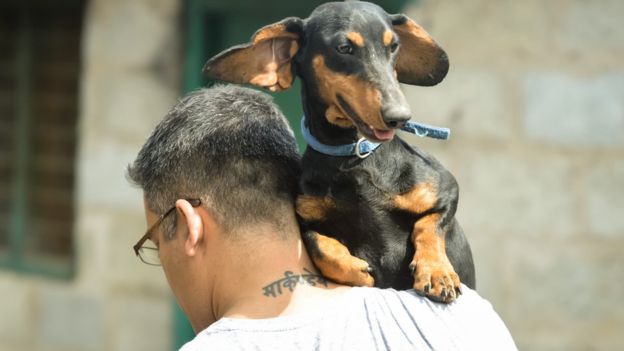
Within seconds, they were all over Rakesh Shukla, nuzzling him and licking him, and Mr Shukla was as delighted to see them. He spoke to them, patted some, scratched one behind the ears, and lofted another onto his shoulder.
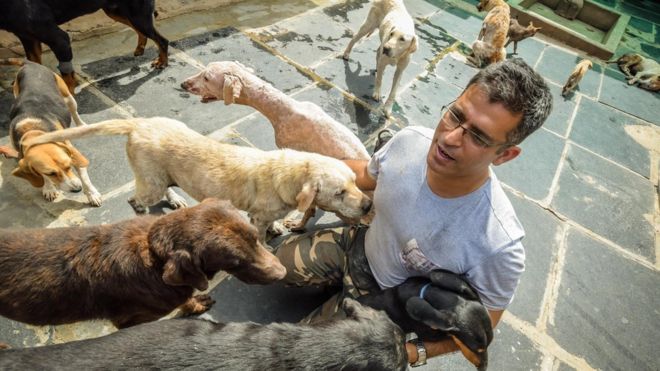
Then he gave me a tour of his three and a half acre farm. At last count, Mr Shukla had 735 dogs.
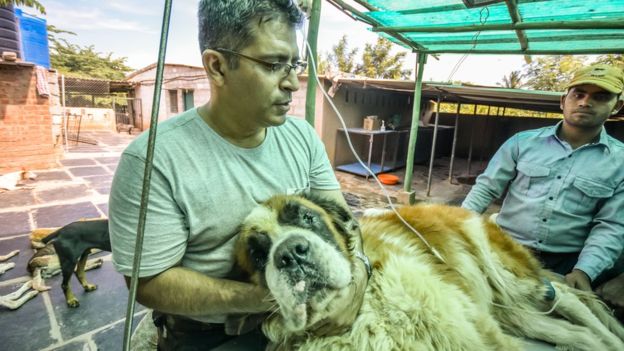
There are Labradors on the farm, there are Golden Retrievers, Great Danes, Beagles, Dachshunds, Rottweilers, Saint Bernards and even a pug. There are hundreds of mongrels too.
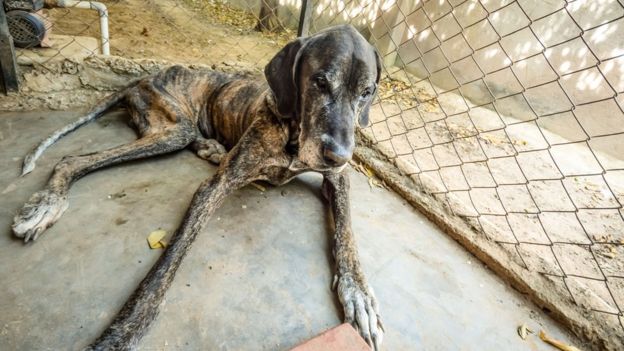
Most of the dogs are strays, the others have been abandoned by their owners. The latest arrivals was a group of 22 pedigreed dogs whose owner, a city businessman, was shot dead recently by criminals.
“I’m the last stop for these dogs. They are no longer cute and cuddly. Many are sick and no longer wanted,” said Mr Shukla, 45.
Affectionately known as the “Dog Father”, he calls the dogs his babies and him their “papa”.
Mr Shukla, who founded a software company along with his wife 10 years ago, spends three to four days every week on the farm, taking care of his canines.
“I had worked in Delhi, in the United States and then set up my own company in Bangalore,” he said. “Life was all about buying big cars and expensive watches and living a fancy life. I had travelled and seen the world many times over, but then I was not happy.”
Then Kavya came into his life: a beautiful 45-day-old Golden Retriever that he fell hopelessly in love with. It was in June 2009, and Mr Shukla remembers clearly the day he brought her home.
“When we got home, she went and hid in a corner. I got down to her level on the floor and I was calling out to her. She was looking at me, she was scared, but I could see she wanted to trust me,” he said.
“And that’s when the moment happened – it was a physical feeling, my hair was tingling, I could feel a warm glow. And I’ve never needed to ask myself that question – ‘why am I here?’ – again after that.”
Mr Shukla’s second dog, Lucky, came to him three months later when he rescued her from the streets. “It had been raining for 12-13 days, she was wet and miserable, so I brought her home too,” he said.
Over the coming days and weeks, whenever he met a stray or abandoned dog, he brought it home. Initially he kept them there but when his wife protested, he moved some of them to the office, where the top floor was turned into a home for dogs.
In 2012, as the pack grew, Mr Shukla bought land in Doddballapur town and set up the farm – a haven for dogs that are old, ailing or simply unwanted.
The farm is designed for its canine residents, with lots of open spaces for them to run around and ponds to swim in, and there’s double fencing to keep them safe.
Every time we entered an enclosure, a cacophony of barks greeted us.
The farm employs about 10 people, including trained veterinary assistants, to look after the dogs, cook for them and feed them. The dogs are fed 200kg of chicken and another 200kg of rice daily and many of the sick ones need regular medicines and attention.
The daily cost of running the centre is 45,000 to 50,000 rupees ($663; £532 to $737; £592), according to Mr Shukla, who said he provided 93% of the funds.
In the past year though, he has run into problems with some animal activists, who have demanded that they be allowed onto the farm. He has also faced complaints that he is creating public unrest by keeping so many dogs. There have also been demands that he shut down the farm.
He has refused to concede.
“I’ve made a pact with my dogs,” he said. “We will part only when one of us kicks the bucket.”
ooOOoo
You know that there are many who are desperately worried about 2017 and beyond. The next few years, ten at most, will see the results of this great experiment that humanity is conducting.
Now, I’m happy to put my hand up as someone who does worry at what my generation is leaving for our grandchildren.
Then one comes across people like Rakesh and, somehow, the future doesn’t seem quite so grim.
What a wonderful man.
Published on Oct 8, 2014
Rakesh Shukla is the go-to guy for dog rescue in Bangalore. His privately-funded venture, ‘The Voice of Stray Dogs’ champions the cause of India’s stray/ street dogs with research, publication, litigation, veterinary and healthcare services for stray dogs.
See you all on the other side of Christmas!
But promise me one thing: Never turn your back on a dog in need.
Just a few days ago I wrote of the time when I was living in the small village of Harberton in South Devon, England. Harberton was a wonderful reminder that these modern times don’t reach to everyone all of the time. There were still plenty of folk who recalled the past times in very beautiful ways. (I wish I could remember the name of the old Devonian who used to come into the village pub on a regular basis and demonstrate that by listening to a local’s accent he could tell which Devon village they were from!)
It’s all too easy to lose sight of the fact that many things change very slowly, and local and regional accents are examples of that.
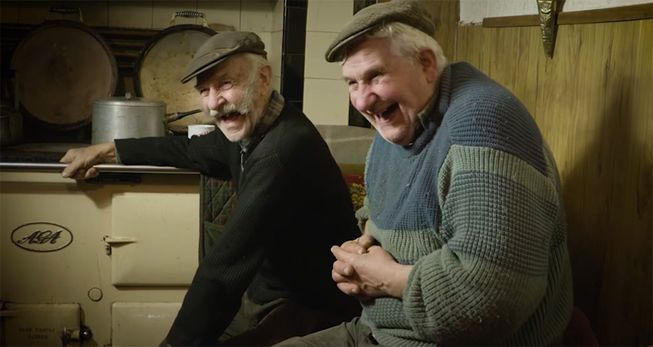
Welsh farmers Howell and Gerwyn George’s secret to a rich life is plain to see: just enjoy a good laugh! (Photo: Riverlea/YouTube)
If we told you that listening to two old Welsh farmers recount the good ol’ days might just become the highlight of your day, would you believe us?
For whatever reason, whether it’s their charm, genuine brotherly love, or endearing/confounding Welsh dialect, Howell and Gerwyn George have mesmerized nearly everyone who has given up a few moments to watch them reminisce.
“They don’t make boys like that any more, more is the pity!!!,” said one commenter on Facebook. “Quality, pleasure to watch.”
“I could listen to this pair all day long…,” said another.
In the 18-minute video, the George brothers discuss everything from livestock to family and changing agricultural practices. Everything is interjected with anecdotes that invariably lead to one or both of the men to erupt into laughter. Several times, I found myself laughing without even knowing what in the world they were saying.
But enough gab from us; we’ll gladly let Howell and Gerwyn take over the conversation. Someone throw these two a reality television contract.
Yes, December 20th., 1956. Just five days before Christmas Day.
I had turned 12 on November 8th that year and my dear sister, Elizabeth, was then 7-years-old.
Ten years ago this very day, in other words on the fiftieth anniversary of my father’s death, something happened to me when I was living in the small South Devon village of Harberton; just three miles from Totnes. That ‘something’ started a chain of events that led to me meeting Jeannie in Mexico and us becoming married in Arizona on November 20th, 2010.
Upper Barn, Harberton: My home until early 2007.
I accept that this is of little interest to you, dear reader, but I wanted to put the following ‘out there’.
December 20th will always be a poignant day, until I take my last breath.
But it will also be the most precious day in the year for, again, until I take my last breath December 20th. will always mark the start of my journey to meeting Jean.
Loving Jean and being loved so much in return is as much an immovable marker in my life as was my father’s death.

 By: Laura Goldman December 31, 2016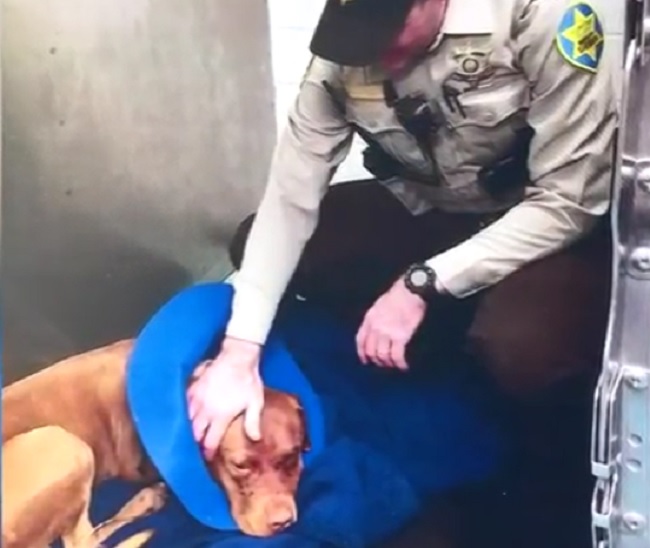
















 Learning from Dogs