Dogs offer so much unconditional love: For their human pals; for their doggie pals; and so much more.
I was minded to write in this manner after just coming from the main bedroom next door and finding Brandy resting on the bed. It was a ‘grab the camera’ moment and take a few shots. Moments later Brandy had come down from the bed and was back in the main living room.
So here’s a recent article on The Dodo for you to enjoy.
ooOOoo
Dog Shows Up At Front Door To Invite His Girlfriend On A Date
This is Holly, a cuddly black Lab who lives in New York with her parents.
She’s downright adorable — and we’re not the only ones who think so.
Holly, of course, gleefully accepted dear Harry’s offer — but she wasn’t the only one smitten by the gentlepup’s thoughtful gesture.
“My heart is so full!” Casi Cook, Holly’s owner, wrote online. “If you listen when my brother opens the door, I’m in complete shock and I didn’t believe it.”
Back on Monday I spoke of Rik and his company Ahead4Heights.
Rik then sent me another piece of news about a film that he produced at short notice for Brixham Council.
Recent projects being a the Front page of the local rag, a roof inspection in Teignmouth for one of the largest local roofing contractors who is now on board and promising more work.
More interesting was a commission from Brixham Council for a short film showing the natural beauty of an area near Brixham in order to oppose a planning application for 400 houses. I received a call on that Friday telling me they needed the film for the public inquiry the following Tuesday! With only that Sunday looking good for flying I managed to fly, edit and upload the film later that evening so they had it for Monday morning, it was played at the hearing and has become a pivotal part of the evidence and was watched over 600 times over the following few days.
The land in question is dog walkers heaven and used by all the local residents.
Here is that front page of the Herald Express.
I regret that it is probably far too small a file to show the details. Never mind!
Today, Tuesday, we went across to The Red Barn to get some hay, a regular occurrence.
Tyler, the manager, was not there but his brother, Zach, was. But just as important were Jean & I seeing Tully again. He is such a sweet dog and so full of life. A Labrador cross. But we learnt that recently he had been hit by a car, suffered severe injuries, and had to be put down. Even Duke, another dog of the same breed, seemed sad.
Apparently Tully was hit by a car and the driver didn’t even stop!
So on to today’s post.
ooOOoo
Dog Pretends To Go Outside To Go Potty So She Can Get A Treat
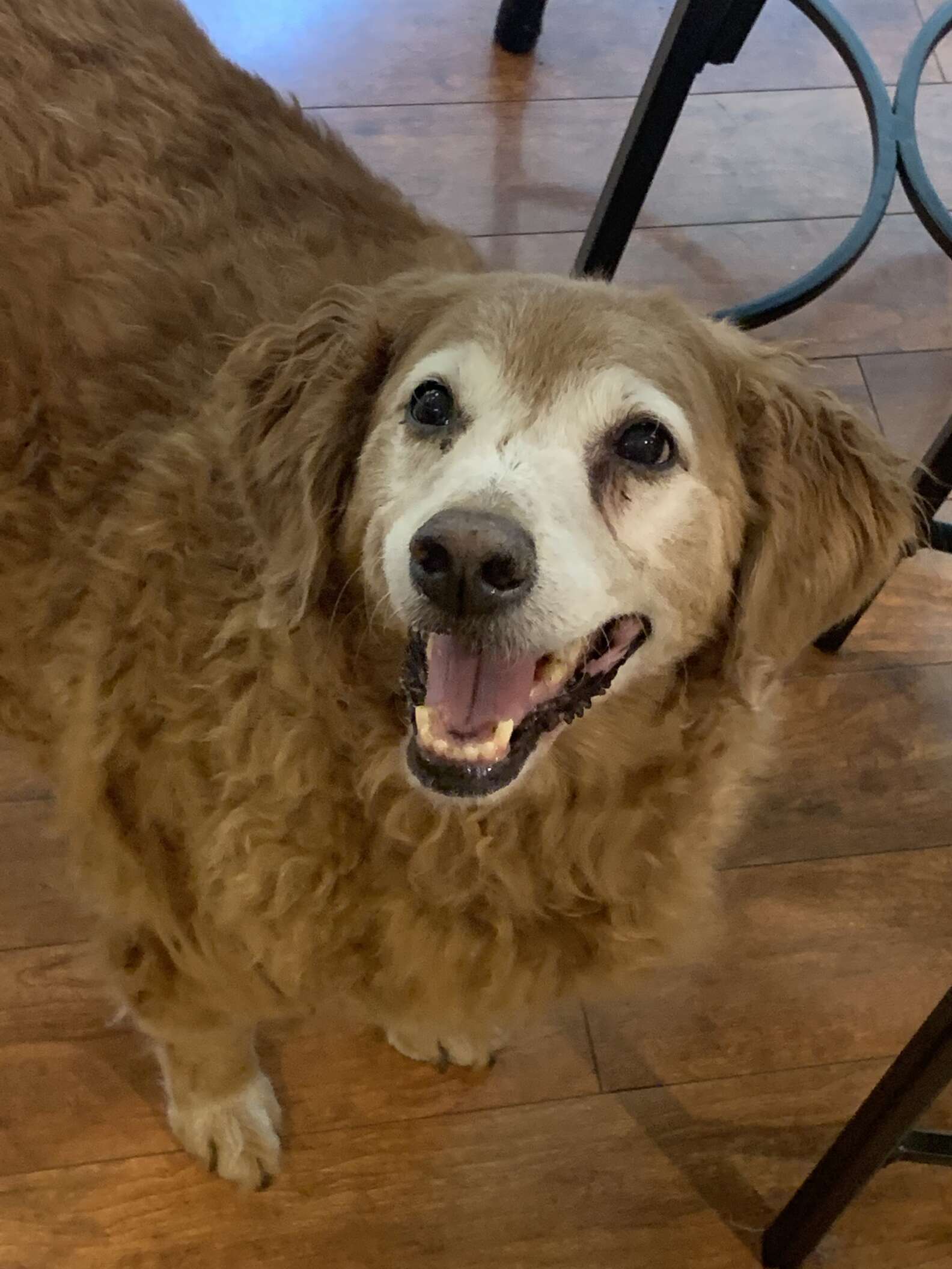
Even though Dakota is almost 12 years old, she still acts like a puppy most of the time. She loves meeting new people and taking naps, and is happy pretty much all the time. Her absolute favorite thing in the whole world, though, is food.
“She acts like she is innocent but … is an evil genius inside when it comes to food of any kind,” Cheryl Dorchinsky, Dakota’s mom, told The Dodo.
CHERYL FEINGOLD
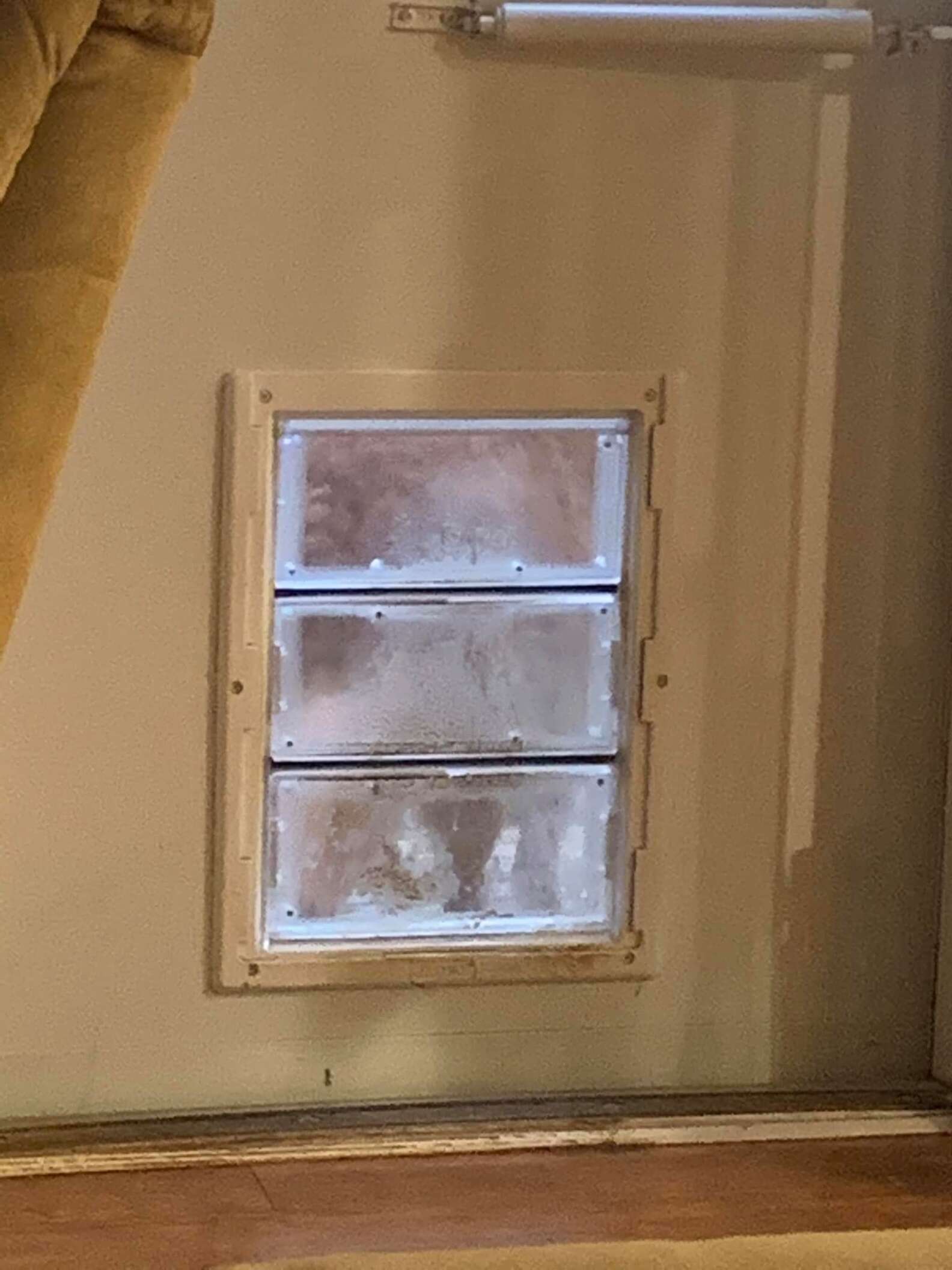
When the family got a new dog door and wanted to teach Dakota how to use it, they of course turned to treats to help encourage her. She was scared of it at first, but once treats were involved, she quickly turned into a dog door pro and never looked back.
Once she knew how to use the dog door, though, she also quickly figured out how to use it to her advantage to trick her family into giving her extra treats.
CHERYL FEINGOLD
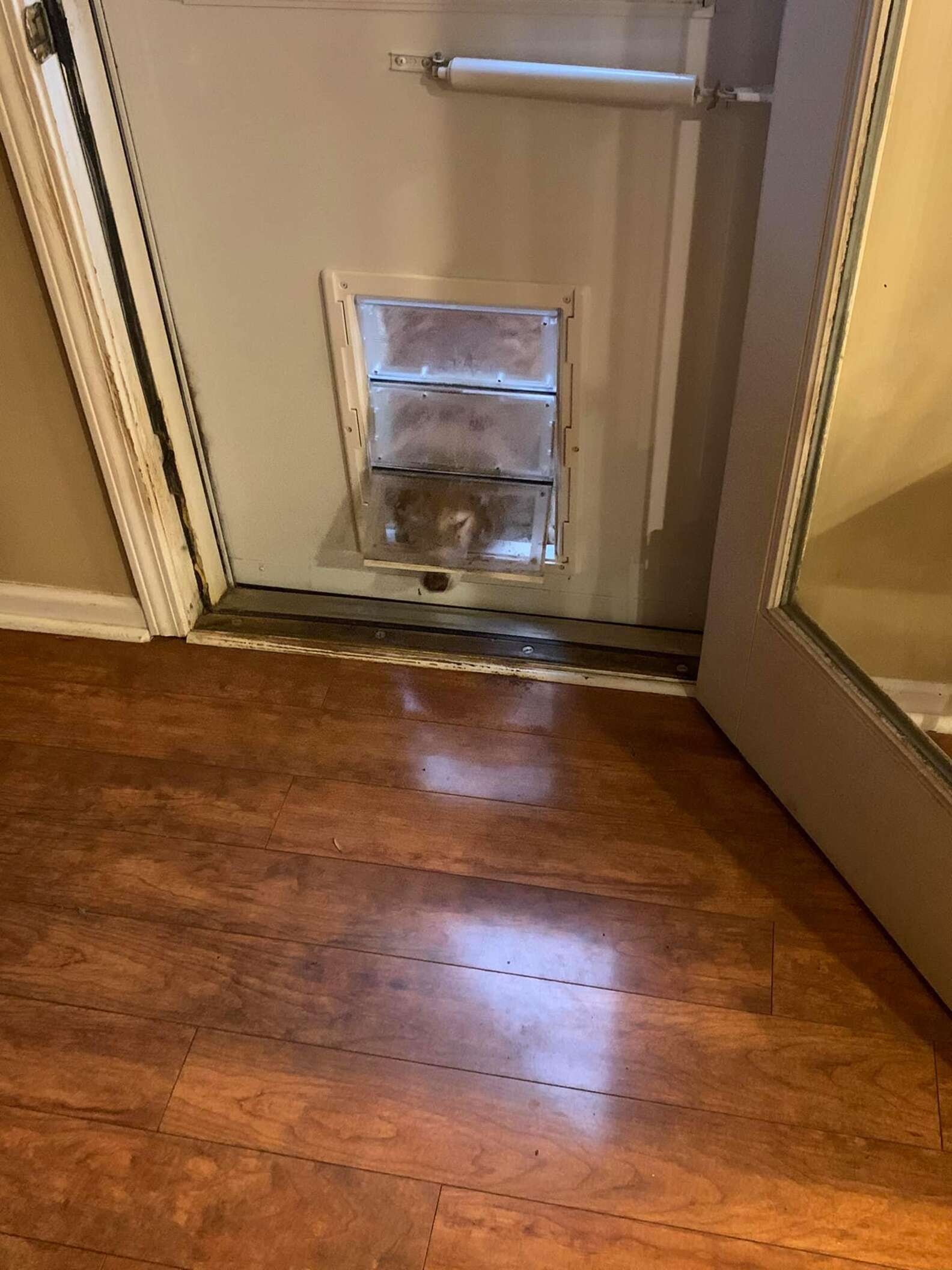
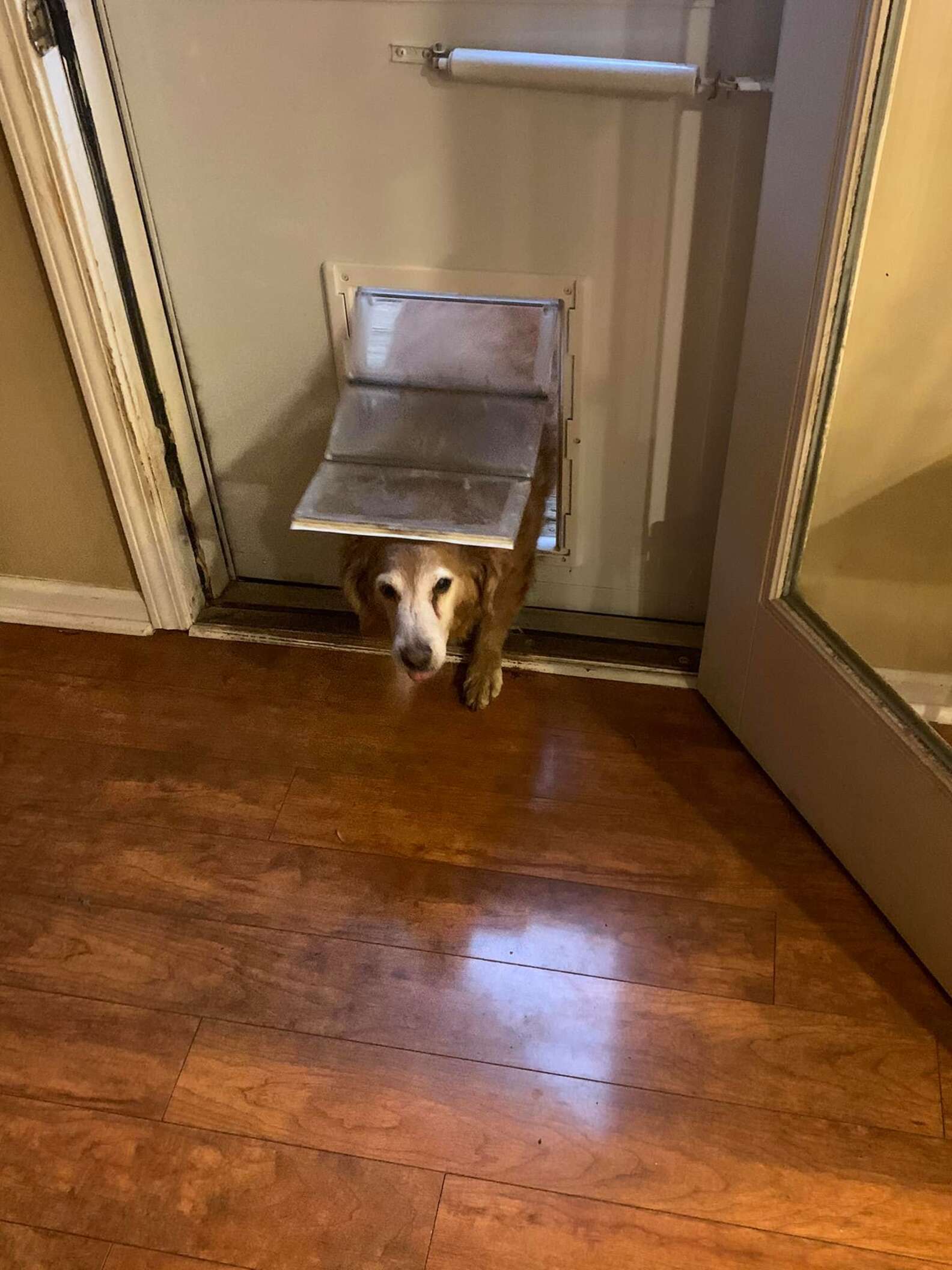
Whenever Dakota goes outside and goes to the bathroom, she gets a treat, so one day, she came up with a genius plan. She decided to start going outside through the dog door, sitting right outside it for a little while, then coming back in as if she’d gone to the bathroom and asking for a treat.
What Dakota failed to consider is that the dog door is clear — so her mom can see her sitting right outside it, very blatantly not going to the bathroom.
CHERYL FEINGOLD
“At first I believed her but then questioned how she came back in so fast,” Dorchinsky said. “I would watch and noticed that she was doing that. It’s almost like a child who thinks you can’t see them if they can’t see you. She always looks away. It’s funny!”
Even though Dorchinsky has totally caught on to the sneaky scheme, Dakota doesn’t care. She still does it every single day, because the potential treats are absolutely worth it.
CHERYL FEINGOLD
“She seems very proud of her scam,” Dorchinsky said. “There is no shame in Dakota’s game.”
Despite knowing that Dakota isn’t actually going to the bathroom most of the time, Dorchinsky still gives her treats anyway. It’s hard to say no to that face.
CHERYL FEINGOLD
“If I don’t react she will bark at me to let me know she went potty (fuzzy liar),” Dorchinsky said. “She is adorable and I totally give in. Maybe she deserves the treat for not going potty on the porch?”
My son, Alex, recently shared on Facebook a video posted by Rik Christiansen who is the son of my elder sister, Rhona, now dead unfortunately.
This is what Alex said:
Anybody who needs Drone survey’s, my cousin has a business in Devon
Please go across to Rik’s website, Ahead4Heights, and also watch his promotional video; luckily on YouTube so it may be shared.
This is a short promotional film that showcases Ahead4Heights abilities within the drone industry as well as our production and editing skills. All footage, music, sound design, editing and production was created in-house. We are a complete solution.
Who knows!
It is not the first time I have written about Rik! Here is a previous post.
I subscribe to Ugly Hedgehog, a forum about all things photographic.
It is a mine of information, people share incredible photographs, and much more.
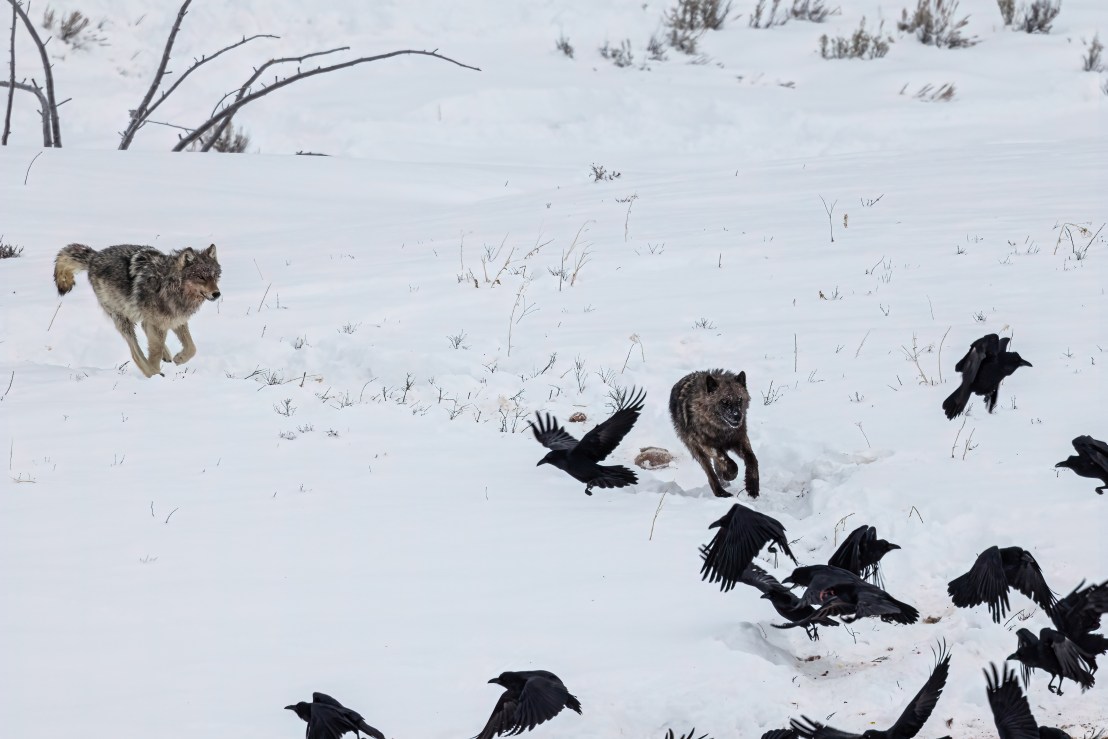
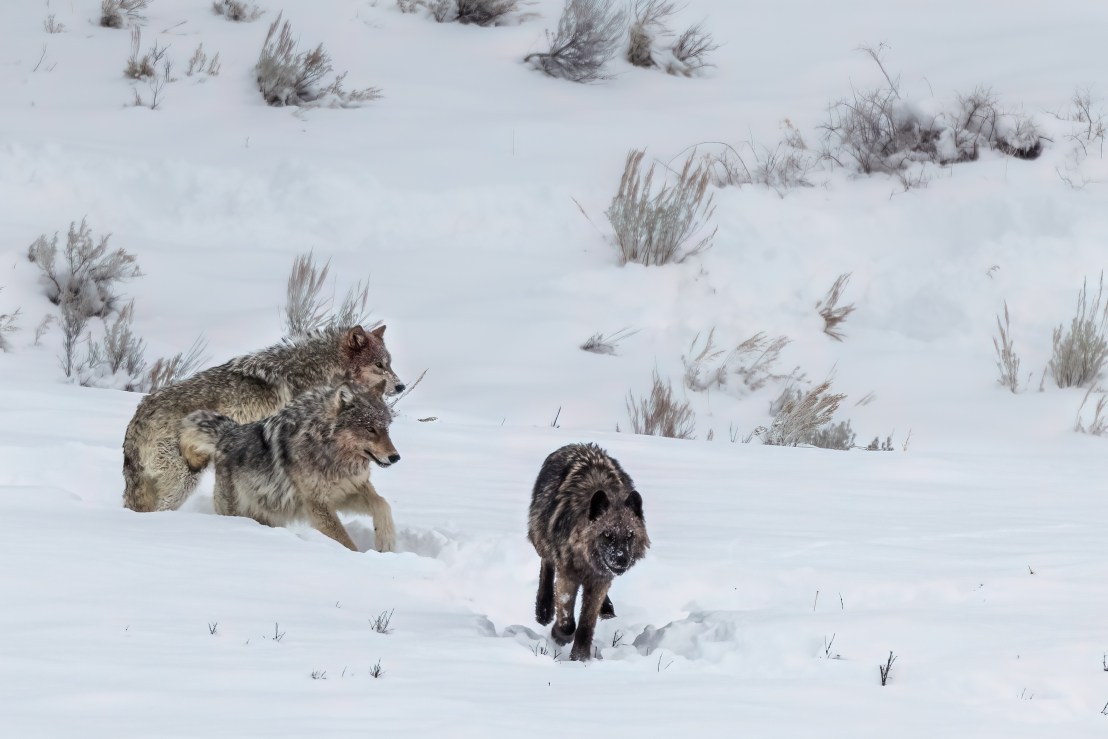
On February 17th this year Photolady2014 published a set of photographs of wolves that were just gorgeous.
This is how she introduced the pictures:
So I am still on cloud 9 seeing wolfs rather close. They were about 150 feet away. Not the quality that the pros were getting who were there. I have seen their photos and well I still have a lot to learn. But, for someone who just started wildlife a couple of years ago, I will take these! If you do the download you will see they are not all bad. I have had to do some sharpening and noise reduction. The pros were all using the 600mm F4 with 2x extenders.
Me: Canon R5, 100-500 & 1.4 extender. All are at 700mm.
I asked if I could share them on Learning from Dogs and said Photolady2014 of South West Colorado said ‘Yes’.
Here they are:
oooo
oooo
oooo
oooo
oooo
oooo
Photolady went on to report:
This is the Wapiti pack in Yellowstone.
We sat in below 0 weather for about 4 hours watching them and the coyotes who were patiently waiting their turn to eat!
Fabulous pictures and one can’t help thinking that some 23,000 years ago there started the long journey of domestication, and the bonding between humans and wolves brought about the dog.
Lulu the border collie was left $5 million (£3.6 million) after her owner died last year.
Bill Dorris left the dog in the care of his friend, Martha Burton. The will states that Burton is to be reimbursed for Lulu’s reasonable monthly expenses.
This time via Facebook from Sally McCarthy in England.
ooOOoo
Greenland Chocolate Labradors
February 7th, 2021
We wanted to share this sad and scary experience one of our puppy owners had after collecting their puppy. Picture for reference, not puppy in question. Sharing to hopefully help others.
I had quite an unsettling experience yesterday on my way home with our puppy yesterday. I stopped at a service station to give her a cuddle and a break out of her crate and while I was standing at the back of my car with the boot open with the puppy in my arms a van with Polish numberplates pulled up really close behind me. The man leaned out of his window and said in a tone of voice that came across as really threatening “what a nice little doggy” then “can I ask some advice?”
At that point I thought I heard the passenger door of the van open (I couldn’t see the passenger side because of how he had parked). I put puppy back in her travelling crate, slammed my boot and locked my car as fast as I could, and walked to the driver’s side. At that point I realised I couldn’t get into the car, where my phone was, without unlocking the car so had a standoff with the man obviously waiting for me to unlock the car, which I was not willing to do in case he opened my boot.
After what felt like forever, especially as I was parked at the back of the car park away from any other cars, he gave up and sped off through the car park towards the exit with his phone in his hand. I didn’t want to wait around to see if he had called anyone to come so got in my car to drive off only to find him waiting for me at the exit and he started following me.
Fortunately within about 10 minutes the weather was awful so with the reduced visibility on my side I managed to lose him although my heartbeat and breathing didn’t return to normal for quite a while afterwards! As he hadn’t actually managed to take the puppy I wasn’t sure whether to report it to the police however I did submit an online report this morning as I am in no doubt that was his intention and that had I allowed him to distract me it would have given his accomplice enough time to corner me.
I just wanted to share as I have heard the stories of dog nappings and a friend of mine had a dog stolen 2 years ago during a walk but I am really shocked that anyone would consider attempting it in a public place that was hopefully covered with CCTV.
I have had dogs all of my life and have never worried about dog nappers before but now I have come face to face with them I just wanted to let you know that it does appear to be as bad as the media are saying so please keep your little ones close when they are allowed out for walks. I am going to buy a rape alarm to carry with me on dog walks from now on and my sons, who quite often walk our older dog alone, have been told the dog walks have to be done in pairs now and will be carrying an alarm too.x
ooOOoo
What a frightening experience for Sally.
But at least she had the sense in writing this up and I am republishing the event so as to inform the maximum of people.
I was thinking yesterday morning that it was about time for me to publish a post.
Tuesday was a busy day with us in the morning going to collect the tractor from Runaway Tractors where it had been in for a service. Then in the afternoon I decided to go for a bike ride, something I try and do every other day. It was grand and I clocked up 18 miles.
The forecast for Wednesday was grim. And we awoke to a morning with much land covered in snow.
Looking to the North-East.
So my item that I wanted to republish from The Smithsonian Magazine seemed apt. It is about the history of dogs.
ooOOoo
How Dogs Migrated to America From Ice Age Siberia 15,000 Years Ago
Northern Siberians and ancestral native Americans may have traded pups at the time
All dogs with the genetic signature A2b descended from the same Siberian canines roughly 23,000 years ago (Jim Peaco; Photo has been cropped for article purposes by ZeWrestler, Public domain, via Wikimedia Commons)
Dogs have been companions to humans for many millennia, but exactly when this relationship started is highly debated among scientists.
A study published this week in the Proceedings of the National Academy of Sciences reveals that canine domestication may have first occurred in Siberia 23,000 years ago when humans and wolves were isolated together during the Last Glacial Maximum. After this initial domestication event, dogs most likely followed humans when they migrated across the Bering Land Bridge from East Asia to the Americas 15,000 years ago, reports Megan Marples for CNN.
“Wolves likely learned that scavenging from humans regularly was an easy free meal, while humans allowed this to happen so long as wolves were not aggressive or threatening,” Angela Perri, an archaeologist at Durham University and lead author of the study tells CNN.
The study was brought to fruition after Perri and her co-authors—David Meltzer, an archeologist at Southern Methodist University, and Gregor Larson, a scientist from Oxford University—were brainstorming how DNA evidence tells the story of migrating humans and dogs, reports James Gorman for the New York Times. After the authors scribbled down ideas on a whiteboard, they saw that both humans and canines had similar migration patterns and divergence that could explain how dogs and humans began their bond, reports the New York Times.
To see if the similarities between the timelines linked up with archeological evidence, Perri and her team analyzed the genome of 200 ancient dogs from around the world. They found that the canines had one genetic signature, A2b, in common. Once they reached the New World 15,000 years ago, they dispersed into four groups, reports David Grimm for Science.
The researchers found this dispersal matched a similar migration pattern of ancestral Native Americans that descended from Northern Siberia about 21,000 years ago. Connecting these timeline events between humans and dogs, the researchers concluded that humans must have brought dogs into the Americas somewhere around 15,000 years ago.
“Dogs are not going to go to the new world without people,” Meltzer tells the New York Times.
Further exploring the dogs’ genetic evidence, the team found all dogs with the genetic signature A2b descended from the same Siberian canines roughly 23,000 years ago, Science reports.
Looking back at human’s ancestral timeline and genetic evidence, the researchers found that ancient Northern Siberians intermingled with ancestral Native Americans before crossing the land bridge into the Americas. These meetings could have resulted in the two groups of people trading pups.
“People are exchanging information, they’re exchanging mates, they’re maybe exchanging their wolf pups,” Meltzer tells the New York Times.
While there is strong evidence that the initial domestication event occurred 23,000 years ago, the study relied only on mitochondrial DNA and could be missing the complete picture of domestication events, explains Pontus Skoglund, an ancient canine DNA expert from Crick Institute in London who was not involved in the study, to the New York Times. Likewise, Peter Savolainen, a geneticist at the Royal Institute of Technology, tells Science that the A2b signature has been found in other places in the world and is not unique to dogs in the Americas as the researchers suggested.
Still, the study reveals how the relationship between humans and dogs may have begun and how it may have dispersed across the globe. Perri and her team plan on looking at older dog fossils to gather more evidence.
“We have long known that the first Americans must have possessed well-honed hunting skills, the geological know-how to find stone and other necessary materials and been ready for new challenges,” Meltzer tells Peter Dockrill for Science Alert. “The dogs that accompanied them as they entered this completely new world may have been as much a part of their cultural repertoire as the stone tools they carried.”
ooOOoo
There is a huge number of dogs throughout the world. The exact figure is impossible to determine. Here’s an extract from WoofDog’s piece on the global population:
Determining the exact number of pups that inhabit our planet is a bit of a challenge. The fact that many of them live on their own, rather than side by side with people, presents the main obstacle to providing accurate figures.
According to 2012 data, there were around 525 million canines in the world. This figure has grown considerably until the present day, so today, it is estimated to be about 900 million pooches.
And from the same website, here is an estimate of the global population of owned dogs:
Statistics related to canine ownership vary across different countries. Nevertheless, the task of calculating the number of canines owned by people around the globe is far less complicated than it is the case with free-range ones.
The reason for this lies in the fact that many countries have introduced legal regulations on mandatory registration of household animals.
My analysis is that the USA is second in the league of owned dogs.
But wherever there are dogs they are a rich and bountiful addition to the ambitions of humans.
It will be of no surprise that dogs have been regular pets of Presidents over the years. Apart from the fact that they provide companionship and love the dogs are also never left alone unlike many adults in normal life who often have difficult decisions to make.
So here’s an article in The Conversation that I am republishing.
ooOOoo
How Biden’s dogs could make the Oval Office a workplace with less stress and better decision-making
Presidential pup Major Biden stretches his legs on the White House lawn. The Official White House photo/Adam Schultz via Twitter, CC BY
On Jan. 24 the White House welcomed two new residents: Champ and Major, the newly minted first dogs of the United States. The first dogs are poised to offer special benefits to workers in the White House.
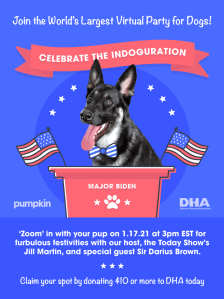
The first ‘Indoguration’ hosted by the Delaware Humane Association. Delaware Humane Association
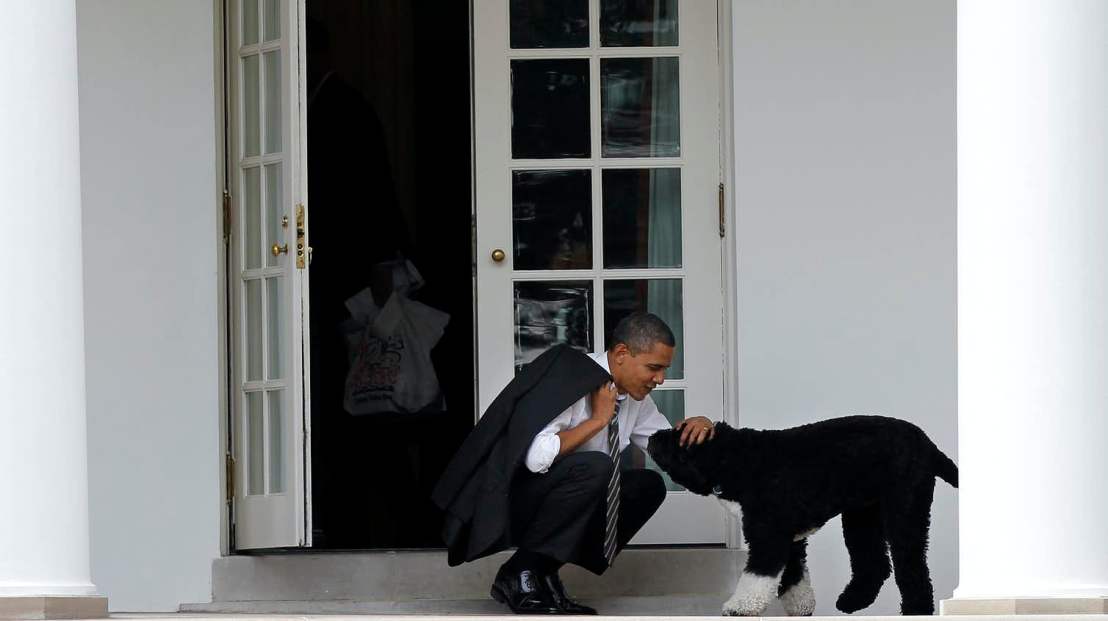
President Barack Obama takes a break outside the Oval Office with Bo in 2012. AP Photo/Pablo Martinez Monsivais
The Oval Office, the site of momentous decisions, enormous stress and complex social dynamics, may benefit from dogs even more than typical workplaces. After all, stress can compromise decision-making and problem-solving abilities. Pets can alleviate stress, however, dampening these effects and leading to improved performance on difficult tasks.
Given dogs’ skill at providing these supports and boosting mood, it may not surprise you to learn they work their magic not only one on one, but also in group settings. In the presence of a dog, people in groups have better social interactions, engage in more conversations and are more likely to form long-term friendships with one another.
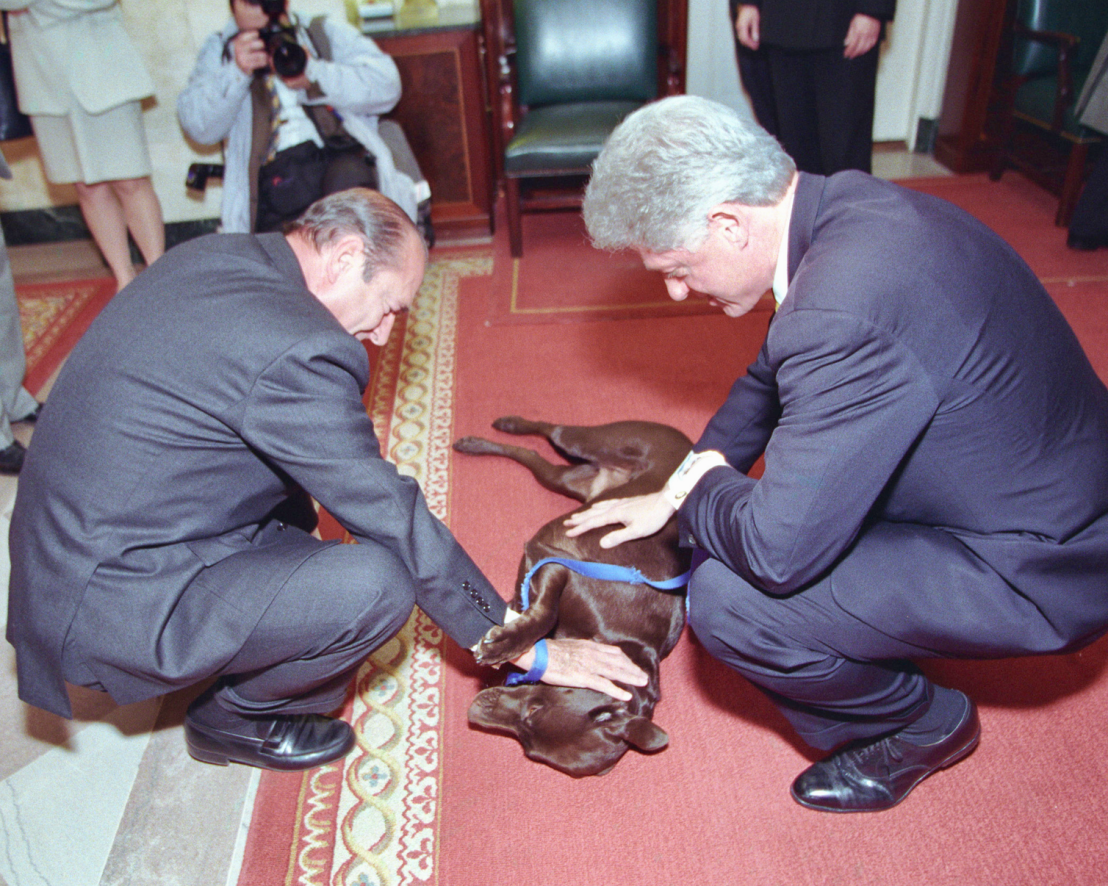
President Clinton and President Chirac of France showing Buddy some love in 1999. National Archives and Records Administration
The effects of dogs as social lubricants can go further: Dogs even foster development of social support networks among their humans, leading to a sense of community, and more social interactions between people in their vicinity. These engagements offer opportunities for even more social support in high-stress environments. And perhaps most importantly, people are more likely to offer help when a dog is present.
Having Champ and Major in the White House may help President Biden and his staff navigate the stresses and tensions of the current political landscape. Beyond “indogurations,” tweets and cute photo ops, Champ and Major will offer physical, psychological and social benefits in the Oval Office.
In short, pets (yes, cats too!) improve the quality of life in almost every context – including presidential ones. Perhaps they can, even in a small way, play a role in uniting a divided country. After all, personal politics aside, isn’t it comforting to know there will be paws pattering around the White House again?
ooOOoo
As was said in the article: “In the presence of a dog, people in groups have better social interactions, engage in more conversations and are more likely to form long-term friendships with one another.”
Dogs are miracle creatures and if you think of the benefits that dogs provide in crucial groupings and discussions that go on the White House then, frankly, they should be a non-negotiable addition to any White House incumbent!
I make no apologies for republishing this further article about the health of one’s gut. Apart from the relevance at this time in terms of defeating Covid-19 the health of one’s digestive system is key and, essentially, the digestive system is the gut.
Read it and if you need to adjust your diet, DO IT!
ooOOoo
A healthy microbiome builds a strong immune system that could help defeat COVID-19
By Ana Maldonado-Contreras
Assistant Professor of Microbiology and Physiological Systems, University of Massachusetts Medical School
The microbes living in the gut are key to good health. Dr_Microbe/iStock/Getty Images Plus Ana Maldonado-Contreras, University of Massachusetts Medical School
Takeaways
Your gut is home to trillions of bacteria that are vital for keeping you healthy.
Some of these microbes help to regulate the immune system.
New research, which has not yet been peer-reviewed, shows the presence of certain bacteria in the gut may reveal which people are more vulnerable to a more severe case of COVID-19.
You may not know it, but you have an army of microbes living inside of you that are essential for fighting off threats, including the virus that causes COVID-19.
In the past two decades scientists have learned our bodies are home to more bacterial cells than human ones. This community of bacteria that lives in and on us – called the microbiome – resembles a company, with each microbe species performing specialized jobs but all working to keep us healthy. In the gut, the bacteria balance the immune response against pathogens. These bacteria ensure the immune response is effective but not so violent that it causes collateral damage to the host.
Bacteria in our guts can elicit an effective immune response against viruses that not only infect the gut, such as norovirusand rotavirus, but also those infecting the lungs, such as the flu virus. The beneficial gut microbes do this by ordering specialized immune cells to produce potent antiviral proteins that ultimately eliminate viral infections. And the body of a person lacking these beneficial gut bacteria won’t have as strong an immune response to invading viruses. As a result, infections might go unchecked, taking a toll on health.
I am a microbiologist fascinated by the ways bacteria shape human health. An important focus of my research is figuring out how the beneficial bacteria populating our guts combat disease and infection. My most recent work focuses on the link between a particular microbe and the severity of COVID-19 in patients. My ultimate goal is to figure out out how to enhance the gut microbiome with diet to evoke a strong immune response – for not just SARS-CoV-2 but all pathogens.
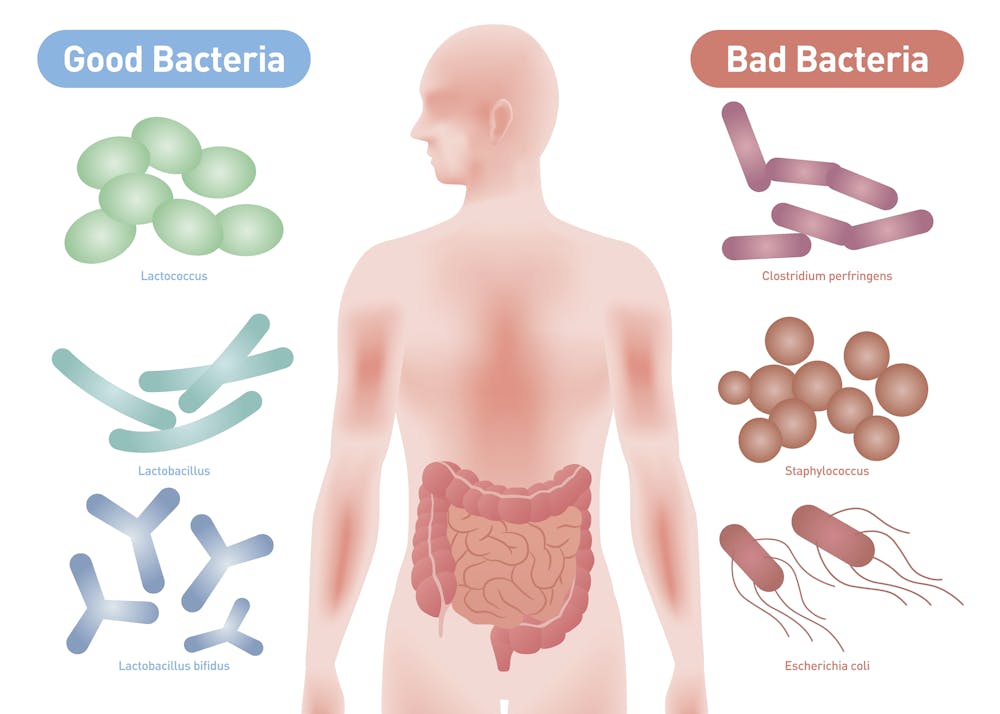
Good bacteria help the immune system ward off harmful microbes. chombosan/iStock/Getty Images Plus
How do resident bacteria keep you healthy?
Our immune defense is part of a complex biological response against harmful pathogens, such as viruses or bacteria. However, because our bodies are inhabited by trillions of mostly beneficial bacteria, virus and fungi, activation of our immune response is tightly regulated to distinguish between harmful and helpful microbes.
Our bacteria are spectacular companions diligently helping prime our immune system defenses to combat infections. A seminal study found that mice treated with antibiotics that eliminate bacteria in the gut exhibited an impaired immune response. These animals had low counts of virus-fighting white blood cells, weak antibody responses and poor production of a protein that is vital for combating viral infection and modulating the immune response.
In another study, mice were fed Lactobacillus bacteria, commonly used as probiotic in fermented food. These microbes reduced the severity of influenza infection. The Lactobacillus-treated mice did not lose weight and had only mild lung damage compared with untreated mice. Similarly, others have found that treatment of mice with Lactobacillus protects against different subtypes ofinfluenzavirus and human respiratory syncytial virus – the major cause of viral bronchiolitis and pneumonia in children.
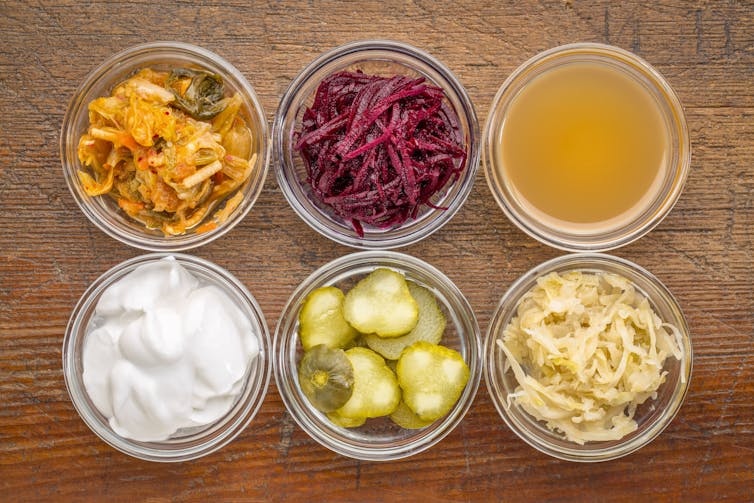
Fermented foods like kimchi, red beets, apple cider vinegar, coconut milk yogurt, cucumber pickles and sauerkraut can help provide beneficial bacteria. marekuliasz/iStock/Getty Images PlusChronic disease and microbes
Patients with chronic illnesses including Type 2 diabetes, obesity and cardiovascular disease exhibit a hyperactive immune system that fails to recognize a harmless stimulus and is linked to an altered gut microbiome.
In these chronic diseases, the gut microbiome lacks bacteria that activate immune cells that block the response against harmless bacteria in our guts. Such alteration of the gut microbiome is also observed in babies delivered by cesarean section, individuals consuming a poor diet and the elderly.
Research in my laboratory focuses on identifying gut bacteria that are critical for creating a balanced immune system, which fights life-threatening bacterial and viral infections, while tolerating the beneficial bacteria in and on us.
Given that diet affects the diversity of bacteria in the gut, my lab studies show how diet can be used as a therapy for chronic diseases. Using different foods, people can shift their gut microbiome to one that boosts a healthy immune response.
A fraction of patients infected with SARS-CoV-2, the virus that causes COVID-19 disease, develop severe complications that require hospitalization in intensive care units. What do many of those patients have in common? Old age and chronic diet-related diseases like obesity, Type 2 diabetes and cardiovascular disease.
Minority communities continue to bear the brunt of the pandemic. Blake Nissen for The Boston Globe via Getty Images
Discovering microbes that predict COVID-19 severity
The COVID-19 pandemic has inspired me to shift my research and explore the role of the gut microbiome in the overly aggressive immune response against SARS-CoV-2 infection.
My colleagues and I have hypothesized that critically ill SARS-CoV-2 patients with conditions like obesity, Type 2 diabetes and cardiovascular disease exhibit an altered gut microbiome that aggravates acute respiratory distress syndrome.
Several studies described in one recent review have identified an altered gut microbiome in patients with COVID-19. However, identification of specific bacteria within the microbiome that could predict COVID-19 severity is lacking.
To address this question, my colleagues and I recruited COVID-19 hospitalized patients with severe and moderate symptoms. We collected stool and saliva samples to determine whether bacteria within the gut and oral microbiome could predict COVID-19 severity. The identification of microbiome markers that can predict the clinical outcomes of COVID-19 disease is key to help prioritize patients needing urgent treatment.
We demonstrated, in a paper which has not yet been peer reviewed, that the composition of the gut microbiome is the strongest predictor of COVID-19 severity compared to patient’s clinical characteristics commonly used to do so. Specifically, we identified that the presence of a bacterium in the stool – called Enterococcus faecalis– was a robust predictor of COVID-19 severity. Not surprisingly, Enterococcus faecalis has been associated with chronicinflammation.
Enterococcus faecalis collected from feces can be grown outside of the body in clinical laboratories. Thus, an E. faecalis test might be a cost-effective, rapid and relatively easy way to identify patients who are likely to require more supportive care and therapeutic interventions to improve their chances of survival.
Bacteria from the gut microbiome are responsible for the proper activationof those T-regulatorycells. Thus, researchers like me need to take repeated patient stool, saliva and blood samples over a longer time frame to learn how the altered microbiome observed in COVID-19 patients can modulate COVID-19 disease severity, perhaps by altering the development of the T-regulatory cells.
As a Latina scientist investigating interactions between diet, microbiome and immunity, I must stress the importance of better policies to improve access to healthy foods, which lead to a healthier microbiome. It is also important to design culturally sensitive dietary interventions for Black and Latinx communities. While a good-quality diet might not prevent SARS-CoV-2 infection, it can treat the underlying conditions related to its severity.
Please note that obesity is regarded as a chronic illness.
Let me reprint a paragraph from the article:
In the U.S., 117 million individuals – about half the adult population – suffer from Type 2 diabetes, obesity, cardiovascular disease or a combination of them. That suggests that half of American adults carry a faulty microbiome army.
This is not funny. Good eating, typically the Mediterranean diet, is not difficult.






 Ellen Furlong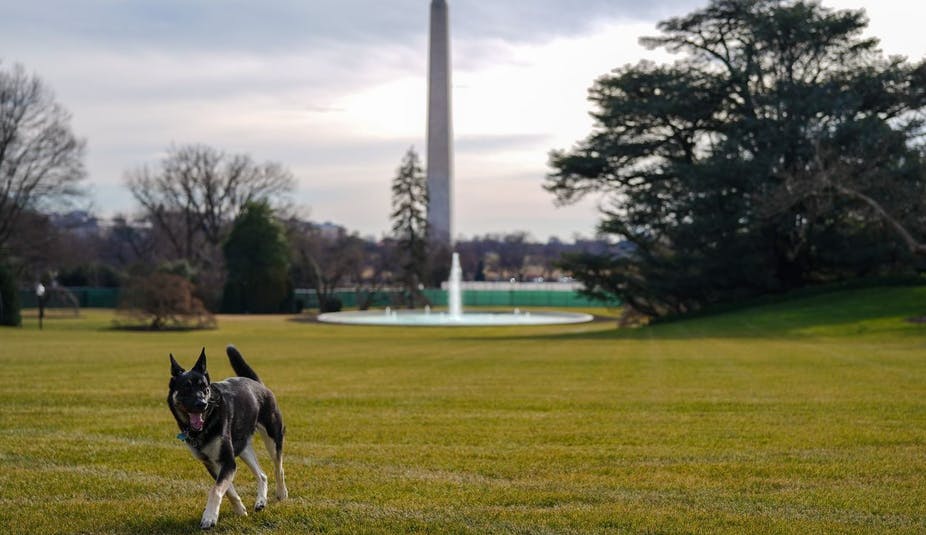
 Ana Maldonado-Contreras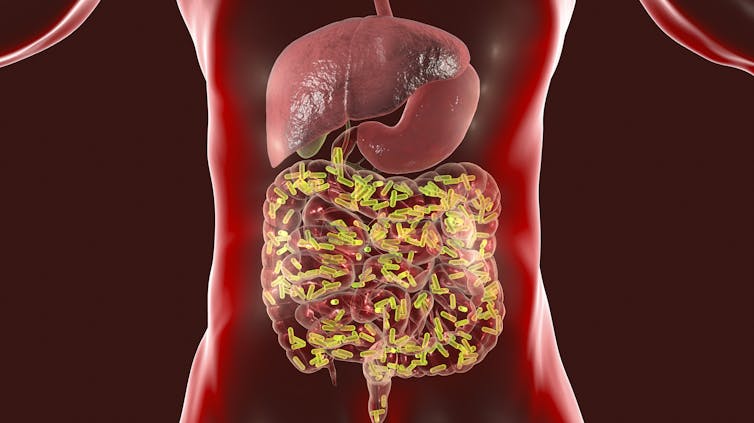


 Learning from Dogs