Category: Musings

Nostalgia!

Dan sent me a wonderful photo a couple of days ago!

His covering email also included:

Here was my favourite car of all time. A 1957 Ford hard-top convertible. 312 cu. in. V8 rebuilt with 3/4 race cam and Holly 950 com 4 barrel carb. Reverse traction masters and front lift. Borg-Warner T-10 4 speed with reverse lock out.

Dan Gomez

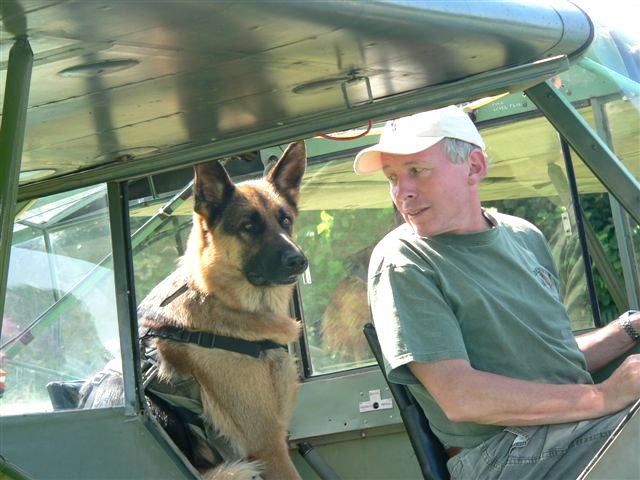
Dan went on to add: Tana our wonderful Silver Grey German Shepherd and yes, that’s little bro Chris Gomez at 12 or 13. I was 19 and in Pasadena City College just before going to Switzerland to study French (and ski!) and then into the Navy during the Vietnam War.

Fifty-seven years ago!

How time flies.

A Reunion to break one’s heart.

Tyler is reunited with his dog.

I have a folder where I put items that I think would make a good post. I have 1,139 items at present. Now many of them have been shared with you but by no means all of them. They are a constant reminder of the many ways in which the dog has, and is, the perfect companion for us humans.

Take this story that was published in The Dodo in March.

ooOOoo

This Boy’s Reunion With His Dog Will Totally Make Your Day

They never thought they’d see each other again ❤️

By Lily Feinn, Published on the 26th March, 2021

Earlier this month, a 10-year-old boy named Tyler Bandy got the best present he could ask for. As he walked in the door, he was immediately overwhelmed by love and kisses from an old friend — his dog, Bruiser.

STORYFUL/JAMIE BANDY

In January, Bruiser, a gray and white pit bull, was on a walk when he ran after a rabbit and got lost.

The Bandy family did everything they could to try and locate Bruiser. They posted fliers around their Florida neighborhood, posted on Facebook, put out old clothes in front of their home so he could smell them and repeatedly checked their local animal control.

FACEBOOK/JAMIE BANDY

But as the weeks passed and no leads were found, the family was “starting to lose hope,” according to Tyler’s mom, Jamie Bandy.“

That’s when the phone rang,” the Highlands County Sheriff’s Office wrote on Facebook. “Turns out their dog had been picked up by somebody on their way to Highlands County and, after a couple of months, it wound up in the hands of our animal services folks.”

STORYFUL/JAMIE BANDY

A staff member at animal services thought the pup looked familiar and, after some digging on social media, she found out why. Bruiser was returned to his parents, but they kept his arrival secret so that they could surprise Tyler.

“To say Bruiser had a joyous homecoming would be putting it lightly,” the Highlands County Sheriff’s Office said. 

You can watch the emotional reunion here:

Tyler was shocked when he came home and saw Bruiser, and both were overjoyed. Tyler immediately started sobbing and hugging his best friend, while Bruiser showered him with licks, wagging his tail as hard as possible.

“[Tyler] was simply overcome when his parents surprised him with his best friend,” the Highlands County Sheriff’s Office said. “The two have been inseparable since.”

ooOOoo

Just another account of a young boy reunited with his dog. But then so much more than that. In this young man’s mind he had lost the one dear creature in his life. Perhaps made worse because Bruiser just disappeared one day. It was what we adults call unfinished business.

Then after a number of weeks fate stepped in and Bruiser was returned and Bruiser and Tyler were reunited. I am going to repeat that sentence towards the end of the piece which shows the response of Bruiser and Tyler. It just doesn’t get any better. “Tyler immediately started sobbing and hugging his best friend, while Bruiser showered him with licks, wagging his tail as hard as possible.”

Beautiful!

What goes around comes around!

Another account of dogs bonding with humans.

Chernobyl is a name that anyone born before, say, 1970 will associate with a terrible nuclear accident in Russia.

As Wikipedia put it:

The Chernobyl disaster was a nuclear accident that occurred on Saturday 26 April 1986, at the No. 4 reactor in the Chernobyl Nuclear Power Plant, near the city of Pripyat in the north of the Ukrainian SSR in the Soviet Union. It is considered the worst nuclear disaster in history both in terms of cost and casualties, and is one of only two nuclear energy accidents rated at seven—the maximum severity—on the International Nuclear Event Scale, the other being the 2011 Fukushima Daiichi nuclear disaster in Japan. The initial emergency response, together with later decontamination of the environment, ultimately involved more than 500,000 personnel and cost an estimated 18 billion Soviet rubles—roughly US$68 billion in 2019, adjusted for inflation.

But recently BBC Future spoke of the bond that the guards and the abandoned dogs made.

Read it below: (Unfortunately you will have to go here to view the stunning photographs because the BBC prevents them being republished! But it is still a very interesting article.)

ooOOoo

The guards caring for Chernobyl’s abandoned dogs

The descendants of pets abandoned by those fleeing the Chernobyl disaster are now striking up a curious relationship with humans charged with guarding the contaminated area.

It wasn’t long after he arrived in the irradiated landscape of the Chernobyl Exclusion Zone that Bogdan realised his new job came with some unexpected companions. From his first days as a checkpoint guard in Chernobyl, he has shared the place with a pack of dogs.

Bogdan (not his real name) is now in his second year of working in the zone and has got to know the dogs well. Some have names, some don’t. Some stay nearby, others remain detached – they come and go as they please. Bogdan and the other guards feed them, offer them shelter, and occasionally give them medical care. They bury them when they die.

All the dogs are, in a sense, refugees of the 1986 disaster in which Reactor No. 4 at the Chernobyl Nuclear Power Plant exploded. In the aftermath, tens of thousands of people were evacuated from the Ukrainian city of Pripyat. They were told to leave their pets behind. (Read more about the long-term toll of the Chernobyl disaster.)

Soviet soldiers shot many of the abandoned animals in an effort to prevent the spread of contamination. But, undoubtedly, some of the animals hid and survived. Thirty-five years later, hundreds of stray dogs now roam the 2,600km (1,000 sq mile) Exclusion Zone put in place to restrict human traffic in and out of the area. Nobody knows which of the dogs are directly descended from stranded pets, and which may have wandered into the zone from elsewhere. But they are all dogs of the zone now.

Their lives are perilous. They are at risk from radioactive contamination, wolf attacks, wildfires and starvation, among other threats. The dogs’ average lifespan is just five years, according to the Clean Futures Fund, a non-governmental organisation that monitors and provides care for dogs living within the Exclusion Zone.

That dogs inhabit this ruined place is well known – some of them have even become minor celebrities on social media. Clean Futures Fund co-founder Lucas Hixson, who gave up a research career to look after the animals, offers virtual tours of the Exclusion Zone featuring the dogs.

But less is known about the local workers who interact with these canines on a daily basis.

Jonathon Turnbull, a PhD candidate in geography at the University of Cambridge, realised it might be worth collecting these people’s stories.

“If I wanted to know the dogs,” he says, “I needed to go to the people who know them best – and that was the guards.”

What he discovered is a heart-warming story of the guards’ relationship with the animals they encounter in this abandoned environment – a tale that provides insights into the deep bond between humans and dogs.

The guards sometimes go to the trouble of helping the dogs by pulling out ticks embedded in their skin, or by giving them rabies injections

For instance, the guards have given several of the dogs nicknames. According to Turnbull, there’s Alpha, whose name refers to a type of radiation, and Tarzan, a dog well-known to Chernobyl tourists, who can do tricks on command and who lives near the famous Duga radar installation built by the Soviets. Then there is Sausage – a short, fat dog that likes to warm herself in the winter by lying on heating pipes. These pipes serve one of the buildings used by workers in the Exclusion Zone who are part of ongoing efforts to decommission and decontaminate the ruined power plant.

Access to the Chernobyl Exclusion Zone requires a permit, so guards are tasked with controlling checkpoints on roads in and out of the area. People who dodge these checkpoints to trespass in the Exclusion Zone are known as “stalkers”. Guards report them to the police.

When Turnbull, who lives in Ukraine’s capital Kyiv, started making regular visits to the zone, he met Bogdan, and other checkpoint guards. They were reluctant to talk at first so he had to win them over. Then he offered them to chance to take part in his research, which he says was a “turning point”. His idea was to give the guards disposable cameras and ask them to take pictures of the dogs – not posed portraits but scenes of everyday life. The guards only had one other request – “please, please – bring food for the dogs”. So Turnbull did.

The photos taken by the guards revealed how much they had developed companionships with the wandering dogs of the Exclusion Zone.

Turnbull published some of the resulting images and material from interviews with the guards in a paper in December. More recently, he interviewed one of the study participants again on behalf of BBC Future. The guard in question has asked not to be identified to avoid disciplinary action at work, so we refer to him here by the pseudonym “Bogdan”.

When Bogdan walks around the abandoned streets of the zone to check for stalkers, the dogs happily accompany him, he says. They always appear eager to see whether he, or a passing tourist, might be carrying food. Should a companion dog get distracted or run off to chase an animal, it always eventually returns to Bogdan, he adds.

You might also like:

The loyalty goes both ways. Turnbull says the guards sometimes go to the trouble of helping the dogs by pulling out ticks embedded in their skin, or by giving them rabies injections.

Wolves, dogs and other animals could in theory carry radioactive contamination, or genetic mutations potentially passed on by breeding, to places outside the Exclusion Zone

Monitoring who comes and goes from the Exclusion Zone sometimes makes for a dull occupation. But there are always dogs nearby.

At some checkpoints, the guards have more or less adopted some of the animals. They feed them and give them shelter. But not all are so tame. During his research, one guard told Turnbull, “We can’t inject Arka because she bites.”

Another participant spoke of one dog that was even more difficult to approach. It refuses to be touched at all. “You should just give her a pan [of food] and go. She waits until you leave and then she eats,” the guard explained.

The dogs sometimes bark at strangers on first sight, that’s their nature, says Bogdan. But so long as they don’t feel threatened, they sometimes calm down and wag their tails. Occasionally it even seems as though they’re smiling, he adds.

Generally, visitors to Chernobyl are advised not to touch the dogs, for fear that the animals may be carrying radioactive dust. It’s impossible to know where the dogs roam and some parts of the Exclusion Zone are more contaminated than others.

There is wildlife living in the Chernobyl Exclusion Zone besides dogs. In 2016, Sarah Webster, a US government wildlife biologist who was working at the University of Georgia at the time, and colleagues published a paper in which they revealed how mammals, from wolves to boars and red foxes, had colonised the Exclusion Zone. Camera trap data showed that the animals’ numbers were not noticeably lower in those areas where radioactive contamination is higher.

Animals living in the Exclusion Zone are not necessarily confined there. A later studyby Webster and colleagues, published in 2018, detailed the movements of a wolf tagged with a GPS device. It travelled 369km (229 miles) from its home range in the zone, taking a long arc to the south-east, then north-east again, eventually entering Russia.

Wolves, dogs and other animals could in theory carry radioactive contamination, or genetic mutations potentially passed on by breeding, to places outside the Exclusion Zone.

“We know it’s happening but we don’t understand the extent or the magnitude,” says Webster.

Turnbull says the guards do not generally worry about radiation, though they might occasionally use dosimeters to check a dog over.

It actually seems as though the dogs, through the companionship they offer, end up reassuring those who interact with them regularly, says Greger Larson, an archaeologist who studies animal domestication at the University of Oxford and who was not involved in Turnbull’s research.

“They’re kind of putting themselves in the shoes of the dogs,” he suggests, referring to the guards. “If the dog is fine, that means you’re fine.”

But in truth, this may only be a false sense of security.

“It’s an uncanny environment,” notes Turnbull. “You can’t see the danger. You’re constantly aware that it might be there but everything looks normal.”

Despite the fact that the dogs could pose a risk in terms of radioactivity, guards like Bogdan instead emphasise the benefits of having them around. For example, he claims to know dogs that bark in noticeably different ways depending on what they have spotted in the distance – a human stranger, a vehicle, a wild animal. Because of these helpful warning signals, Bogdan thinks of the dogs as “assistants”.

What’s happening in the Exclusion Zone is an echo of interactions with dogs that are known to have occurred within human civilisations for thousands of years, says Larson.

“We find this for the last 15,000 years or more, this is what people do, they make very close associations with not just dogs but a lot of domestic animals […] to sort of say, ‘this is our attachment to the landscape’,” he explains.

All over the world, there are dogs that inhabit a similar, in-between state – not quite fully domesticated, not quite fully wild. These are the feral dogs that roam cities and industrial areas looking for food, the ones that may become to some extent adopted by people but still wouldn’t be considered pets.

Chernobyl’s dogs also live in this sort of space, on the edge of domestication, but there is a difference argues Webster, who has participated in a separate study of Turnbull’s in the past.

“The Exclusion Zone is very different in that it’s abandoned by humans,” she says. “The only people in that landscape on a day-to-day basis, really, are the guards.” As such, the dogs’ opportunities for befriending humans are very limited.

While the outside world remains fascinated by the dogs, and their story, for many guards the connection runs much deeper. Bogdan says he is often asked why the dogs ought to be allowed to stay in the Exclusion Zone. “They give us joy,” he replies. “For me personally, this is a kind of symbol of the continuation of life in this radioactive, post-apocalyptic world.”

ooOOoo

What is so fascinating is that this interaction between the dogs and the people is an echo of the first interaction between hunter/gatherers and wolves of, perhaps, 25,000 years ago or more. And the guards of today and the dogs, whom Larson calls his assistants, are perfectly bonded.

It just goes to show that ‘what goes around comes around’!

It’s not just us who are social

How about plants!

Yes, a deeply interesting post from The Conversation website shows how plants thrive by communicating and much more.

Now this post doesn’t have a dog within sniffing distance but I still wanted to share it with you.

ooOOoo

Plants thrive in a complex world by communicating, sharing resources and transforming their environments

April 14, 2021. 

By Beronda L. Montgomery

Professor of Biochemistry and Molecular Biology & Microbiology and Molecular Genetics; Interim Assistant Vice President of Research & Innovation, Michigan State University.

As a species, humans are wired to collaborate. That’s why lockdowns and remote work have felt difficult for many of us during the COVID-19 pandemic. 

For other living organisms, social distancing comes more naturally. I am a plant scientist and have spent years studying how light cues affect plants, from the very beginning of a plant’s life cycle – the germination of seeds – all the way through to leaf drop or death. In my new book, “Lessons from Plants,” I explore what we can learn from the environmental tuning of plant behaviors. 

One key takeaway is that plants have the ability to develop interdependence, but also to avoid it when being connected could be damaging. Generally, plants are constantly communicating and engaged with other organisms in their ecosystems. But when these ongoing connections threaten to cause more harm than good, plants can exhibit a form of social distancing.

The power of connection and interdependence

When conditions are good, most plants are networkers. The vast majority of plants have fungi that live on or within their roots. Together, the fungi and roots form structures known as mycorrhizae, which resemble a netlike web.

Mycorrhizae increase their host plants’ ability to absorb water and nutrients, such as nitrogen and phosphate, through their roots. In return, the plants share sugars that they produce through photosynthesis with their fungal partners. Thus, the fungi and host plants are powerfully interconnected, and depend on one another to survive and thrive. 

Mycorrhizal connections can link multiple plants in a functioning network. When plants produce more sugars than they need, they can share them via this interconnected root-fungal network. By doing so, they ensure that all plants in the community have access to the energy they need to support their growth.

Put another way, these connections extend beyond a single host plant and its fungal partner. They create communitywide relationships and interdependent networks of plants and fungi. Factors in the external environment, such as the amount of light available for photosynthesis and the composition of soil around the plants, fine-tune the connections in these networks.

Mycorrhizhae also serve as communication channels. Scientists have documented that plants pass defensive chemicals, such as substances that promote resistance against insect pests, to other plants via fungal networks. These connections also allow a plant that has been attacked by aphids or other such pests to signal to neighboring plants to preemptively activate their own defense responses.

Mycorrhizhae are living communities of plant roots and fungi that benefit mutually from their relationship.

When it’s safer to keep your distance

Sharing resources or information that helps other plants ward off danger is a valuable example of the power of connectedness and interdependence in plant ecosystems. Sometimes, however, surviving requires plants to disconnect. 

When environmental cues such as light or nutrients become scarce enough that a host plant can produce enough sugars through photosynthesis to support only its own growth, staying actively interconnected in a larger community network could be dangerous. Under such conditions, the host plant would lose more from sharing limited sugar supplies than it would gain from the network in water and nutrients. 

At times like these, plants can limit mycorrhizal connections and development by restricting how many materials they exchange with their fungal partners and avoiding making new connections. This is a form of physical distancing that protects the plants’ ability to support themselves when they have limited energy supplies so they can survive for the long term. 

When conditions improve, plants can resume sharing with their fungal partners and establish additional connections and interdependence. Once again, they can benefit from sharing resources and information about the ecosystem with their extended plant and fungal communities.

Recognizing kin and collaboration

Social distancing isn’t the only trick plants use to make their way in the world. They also recognize related plants and tune their abilities to share or compete accordingly. When the plants that are interconnected by a fungal network are close genetic relatives, they share more sugars with the fungi in that network than they do when the other plants are more distantly related.

Prioritizing kin may feel highly familiar to us. Humans, like other biological organisms, often actively contribute to help our kin survive. People sometimes speak of this as working to ensure that the “family name” will live on. For plants, supporting relatives is a way to ensure they carry on their genes. 

Plants can also transform aspects of their environment to better support their growth. Sometimes essential nutrients that are present in soil are “locked up” in a form that plants can’t absorb: For example, iron can become bound up with other chemicals in forms very similar to rust. When this happens, plants can excrete compounds from their roots that essentially dissolve these nutrients into a form that the plants can readily use

Plants can transform their environments in this way either individually or collectively. Plant roots can grow in the same direction, in a collaborative process known as swarming that is similar to bee swarms or bird flocks. Such swarming of roots enables the plants to release a lot of chemicals in a particular soil region, which frees up more nutrients for the plants’ use.

Trees use fungal networks to send one another messages – and some species hijack the system to sabotage their rivals.

Better together

Behaviors like mycorrhizal symbiosis, kin recognition and collaborative environmental transformation suggest that overall, plants are better together. By staying in tune with their external environment, plants can determine when working together and fostering interdependence is better than going it alone. 

When I reflect on these tunable connections and interdependence between plants and fungi, I draw constant inspiration – especially during this pandemic year. As we make our way in a constantly changing world, plants offer all kinds of lessons for humans about independence, interdependence and supporting each other.

ooOOoo

I agree with Professor Montgomery. Who would have though it! Plants do indeed offer strong social lessons for us humans. Maybe that explains why trees, especially trees, have such a profound, beautiful appeal to yours truly as well as many other people.

Going to close with a photograph taken of our trees and pond here at home.

They are communicating!

A few of Jean’s paintings

That came via the sale of Jean’s bike.

Yesterday we drove down to Phoenix, Oregon to deliver the Sun Tricycle to the new owners. Daniel and Cherie were a delightful couple, albeit more my age than younger. But they had been through one heck of a disaster. Because last year they were both asked to flee the fires with very little notice and only recently had they found a new home and were still settling in.

Daniel rides his trike and wanted to get one for Cherie. We were delighted with the sale and we hope we all will see each other in the near future.

Anyway, Daniel is quite an artist and Jean mentioned she used to paint before the Parkinson’s tremor made it much more difficult. But Daniel insisted on photographs being taken of a few of Jean’s paintings and sent to them via email.

Here they are.

Sammy
Victor

Pharaoh
Ben fishing
Ben fishing
Mariachis

Just thought they made a nice change!

Serendipity

Funny how things fall out!

My son, Alex, recently sent me a link to a blog he had come across. It was to a website called https://aircooledbug.co.uk

It was about Andrew Coyne who with his wife, Renée, had come across to America in order to have an operation on his dog, Alfred. It was very moving. I then made contact with Andrew and asked him if I could have permission to republish. It was granted. Furthermore, Andrew went on to say:

Hi Paul,

The only place we could find to perform surgery and give him immunotherapy was the US. Getting to the US a massive challenge as the lock down restrictions and freedom of movement issues implemented by governments here and in the EU stopped us being able to travel. Hence chartering a private jet direct to New York.

Alfred is currently doing well with us here in the US and will not return to the UK. We will move here with him permanently and make our home in the one place that gave him a chance. 

Kind regards,
Anthony

So I am going to devote my next two posts to republishing two posts from Andrew’s blog. The first today is Coming to America.

ooOOoo

Coming to America

April 3, 2021 By Mr Coyne

The relief that knowing we would travel brought was unmeasurable. Private jets don’t come cheap, even discounted empty legs, but in this instance it didn’t matter. It was a welcome solution.

Up until the world was introduced to Covid-19, I had been a regular traveller to the US both with Renée who’s American, and on business as thinkerdoer work with a lot of US companies. I had an ESTA in place and checked it was still valid on Monday after we decided to take the flight to NYC.  On Tuesday morning it was pulled! I’m still not sure why but it would seem to be a response from the Biden Administration to control the recently announced ‘UK variant’. Mark at Charter-A and his team scrambled to get clearance for me from the US using our marriage certificate from Cornwall to prove I was a spouse of a US citizen and this initially appeared to satisfy them and clearance given.

The most unusual thing I have ever seen at airport security

On Wednesday morning we set off to Stansted. Somewhere on the M11 the phone rang, it was Mark saying the US had pulled my clearance again due to me visiting ‘red list’ countries in the last few months. Utter nonsense, and I explained the last place I had travelled was the US just prior to the lockdown when I visited North Dakota and Arizona. I even volunteered my bank statements to prove my case. We waited at the Inflite Executive Jet Centre at Stansted with our luggage already loaded for clearance. Eventually the US backed down and removed their marker, but this now meant reapplying for entry. The decision was made to leave the jet on the tarmac overnight and return the following day to give us time to organise it. Partly this was because the crew had already started logging hours and by the time a clear to fly issued we’d need a new crew. Not that it would have mattered, but I thought I would not be flying and the one time in my life I have paid for a private jet it would be the dog flying on it, not me. And Renée of course.

America, we are coming in hot!

“The best part was we were truly on our way to get Alfred some help, a chance to save him

Thursday went smoothly. We turned up, parked the car, got on the jet, flew to NYC. On a commercial flight there are little increments of comfort between Economy, Premium Economy, Business and First. Compared to flying private those classes of travel are all the same. No difference. It’s all cattle class. The whole aircraft to ourselves, big luxurious seats, a sofa, your own bathroom with Diptyque toiletries. Want a lay flat bed? Just tell your own crew and they make you one up.  And Alfred was free to sit where he wanted, roam around, was fed a chicken dinner off a china plate, and was even able to chase a ball along the aisle. The best part was we were truly on our way to get Alfred some help, a chance to save him.

We were arriving just in time

We didn’t need reminding of the difficulties ahead. The novelty of traveling like rock stars soon faded when mid flight he suffered a seizure. By now I am well versed in how to deal with this, and Renée is able to spot the warning signs with incredible accuracy. I  got him to the bathroom with a soft towel and comforted him just as his little body went into a full grand mal seizure. Since his diagnosis Alfie had been on strong barbiturate and steroid medication which had suppressed the seizures. Something that would only last so long. We were 10 days without a seizure and this a clear indication the efficacy of the medication was reducing, and the tumour growing. We were arriving just in time.

I LOVE this!

Carry on allowance an improvement over commercial.

ooOOoo

I am going to reproduce the contents of an email that I sent Anthony yesterday morning. It sums up how we feel about what Anthony and Renée are doing.

Dear Anthony,

I have now read very carefully your blog especially your posts of the last few weeks.

They are beautiful. In the sense of describing what you feel towards Alfred. Dogs bond to humans unconditionally. You love Alfred unconditionally.

It’s a little after 5am here in Southern Oregon. Jean and I are sitting back on top of our bed having had recently our first morning coffees. On the bed is also Oliver, an ex-rescue Labrador crossed with a Border Collie. Oliver’s bond with me is so precious. Beyond words but not beyond feelings!

I am going to write a couple of posts that essentially republish your posts about you getting Alfred to Minneapolis. But beyond that Jean and I want to wish you every success in Alfred’s treatment. Is there anything more practical that we can do to help? We are in our 70s. We are both English. We met in Mexico in December, 2007. Jean was rescuing dogs, spay or neutering them, then finding homes for them mainly in Arizona. I flew with my GSD, Pharaoh, to LAX from London, in 2008. Then down to Mexico. We came to the USA in 2010 to be married and to live with our then 16 dogs. Subsequently we came to Oregon in 2012.

I am so grateful for my son highlighting your blog.

With very best wishes,

Paul

Our very own Oliver!

Another country but still the familiar dog

A dog nicks a large bone

This is a delightful story about a dog in the country of Columbia. It just goes to show that dogs are, in the main, universally admired and loved. The story was originally published on The Dodo.

ooOOoo

Clever Dog Sneaks Into Pet Store And Makes Off With A Giant Bone

The cutest little criminal 🐶

By Stephen Messenger

Published on 19th March, 2021

This is Agroveterinaria Los Paisas, a pet store and animal clinic in the town of Andalucia, Colombia.

It’s also the scene of a rather adorable crime.

VICTORIA ANDREA VIVIANA

The other day, Victoria Andrea Viviana was working in the shop, helping customers, when a certain someone evidently saw her distraction as a golden opportunity.

It was a dog. A dog with a plan.

While no one was looking, the dog quietly snuck into the store and slipped behind the counter. Then the object of his little mission became clear. He’d come to slyly steal a giant bone — but his getaway didn’t go unnoticed.

Here’s that scene on video:

“I was surprised by the cunning with which the dog took the bone,” Viviana told The Dodo. “One of our clients wanted to stop him, but he was very agile.”

The store had been robbed. But the culprit behind the crime was soon found out.

It was the dog’s own mom who turned him in.

VICTORIA ANDREA VIVIANA

“[The woman who owns the dog] came in to pay for the bone he stole, but we obviously didn’t take her money,” Vivian said. “It is something that happened unexpectedly, and the dog was able to amuse many people who watched the video.”

In the end, there were no hard feelings.

“The dog will always be welcome here,” Vivian said, “as well as any other animal who wants to visit.”

ooOOoo

Not much more to say except that our dogs everywhere are extraordinary in their similarity.

In fact, I am composing a post about the evolution of dogs and humans to show how far back we all go. I am not sure when it will see the light of day!

Picture Parade Three Hundred and Eighty-Two

Just a few photographs of humming birds taken from our deck.

oooo

oooo
oooo
oooo
oooo
oooo

We were lucky in that they seemed to ignore the camera and the dogs!

Not just us humans who enjoy a pizza!

A rare sight!

Once again a recent post on The Dodo I felt was worthy of a share.

See what I felt when you read the following:

ooOOoo

Wild Coyote Discovers Her Favorite New Dinner

“It was nearly half a pizza.”

A man in California who took up wildlife photography a decade ago had never seen anything quite like what he saw this fall — and he was lucky he had his camera with him.

Every morning, Russell Greaves, of Huntington Beach, California, goes out to the Bolsa Chica Ecological Reserve behind his house to immerse himself in that slice of the natural world. He often sees coyotes, enough that he’s begun to recognize individuals in the area.

“A lot of people here just love the coyotes,” Greaves told The Dodo over the phone, during his morning walk on Tuesday.

Russell Greaves

One morning in October, he saw a familiar wild coyote. It was a mom who had given birth to a litter of pups six months before.

“She had had four pups,” Greaves said. “The pups would come out and play around, while dad went out to hunt. But they’re out on their own now.”

Russell Greaves

It was nice to see the mom again — but there was something different about her. And as she got closer, Greaves couldn’t help but laugh.

Russell Greaves

Somehow, the mother coyote had found a pizza — and she decided to go ahead and take it with her.

“It was nearly half a pizza,” Greaves said. It’s not certain where the coyote managed to find this enormous meal. Greaves said that there are some homeless people who camp out in the woods and perhaps she swiped it from them.

Since her pups had already gone out on their own, she probably wasn’t planning on sharing, Greaves speculated. “I thought, ‘This has got to be for herself.’”

Russell Greaves

More important than this meme-worthy sight is the balance the residents of the area have struck with the natural world — something sorely lacking in other communities across the country, where coyotes are often brutally hunted in killing contests.

Admittedly, not everyone loves the coyotes quite as much as Greaves does, but many people are fascinated by the wild family living nearby, and people take precautions to ensure a peaceful coexistence. “We tell people to not feed the coyotes. They’re not here to eat human food,” Greaves said. “We tell people who are walking their little dogs to be careful because the coyotes are around.”

Russell Greaves

“The coyotes come back to the same habitat because they like it here,” Greaves added.

And the coyotes are lucky to have people like Greaves, who love having them there.

—————

You can help people coexist with coyotes and other wildlife — to learn how, visit Project Coyote. You can also donate to the wildlife reserve.

ooOOoo

Just another wildlife story of endless fascination about the animal kingdom.

What’s a stray dog need? Food and caring!

Another international story of love and caring for our dogs.

This time about homeless or stray dogs and in Peru. Again it was written by Stephen Messenger and was shared on The Dodo website. Again it is about the fundamental goodness that is in a great many humans spanning continents.

ooOOoo

Nice Restaurant Owner Prepares A Free Meal For Every Stray Dog Who Visits

“They pay us with their happiness and wagging tails” ❤️
By Stephen Messenger
Published on the 26th February, 2021

One evening five years ago, an unexpected customer dropped by Gerardo Ortiz’s restaurant, Ajilalo, in Peru. It was a stray dog, a look of hunger in her eyes.

Ortiz could have easily turned the dog away. But he didn’t.

Restaurante – Ajilalo

That evening, Ortiz offered the dog a free meal, made just for her.

And thus began an adorable tradition that continues to this day.

Restaurante – Ajilalo

Each evening, from then on, the hungry dog came and received a free meal from Ortiz’s restaurant.

But it didn’t take long for word of Ortiz’s kindness and generosity to spread among the community of local stray pups.

More dogs began to arrive with that first visitor— and Ortiz welcomed them all with a meal.

Restaurante – Ajilalo

Nowadays, numerous stray dogs arrive to the doors of Ortiz’s restaurant each night. Many are regular “customers,” while others are first-timers — all hoping to fill their bellies thanks to Ortiz’s kindness.

Restaurante – Ajilalo

Often, as Ortiz is working, he’ll look up and see a new dog’s face at the front — waiting politely to see if the rumor that free food can found there is true.

It always is.

Restaurante – Ajilalo

“For me, they are the best customers,” Ortiz told The Dodo.

And his human customers hardly take that as a slight. Inspired by Ortiz, they often bring food for the visiting dogs as well.

Restaurante – Ajilalo

“Thankfully, our clients have reacted well to the dogs,” Ortiz said. “They are affectionate toward them.”

Restaurante – Ajilalo

Ultimately, Ortiz’s sweet routine of feeding all the stray dogs who visit does more than keep them from being hungry. It lets them know that their lives matter — a truth that Ortiz is happy to prove to them each and every day.

Restaurante – Ajilalo

“They do not pay us with money, but they pay us with their happiness and wagging tails,” Ortiz said. “They are very grateful, and we enjoy giving more than receiving. Since I was a child, I have loved animals. My mother always taught us to help others, both people and animals. She’s my inspiration.”

ooOOoo

This is such a wonderful share. Snr Ortiz confirms what we know absolutely. That people who care for animals care for so much more. As Gerardo says: “It lets them know that their lives matter.

I am minded to remember when I first met Jean in December, 2007. Jean was living in San Carlos, Northern Mexico, and had been for many years. Her husband, Ben, had died in 2005.

Jean was rescuing street dogs off the streets of San Carlos and surrounding areas, caring for them, neutering or spaying them, and then finding homes for them mainly in Arizona, USA. Many, many dogs owed their lives to Jean’s love for those dogs. In 2010, after I had gone out to San Carlos with my Pharaoh to live with Jean and her dogs in 2008, we came North to Arizona to find a U.S. home and be married. We came through the Mexican-US border with 16 dogs, all of them with their paperwork in order. I will always recall the American border agent, after I had approached him with all the paperwork, leaning out of his booth and calling to the agent in the next booth: “Hey Jake, there’s a guy here with sixteen dogs!

Jean and I were married in Payson, AZ on the 20th November, 2010.

Mr and Mrs Handover

Very sweet memories and the start of a loving era in our lives.

Loving each other and loving our dogs!