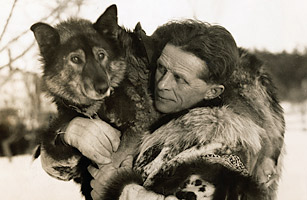
Category: Morality

Sands of time

“Lives of great men all remind us, we can make our lives sublime, and, departing, leave behind us, footprints on the sands of time.” Longfellow.
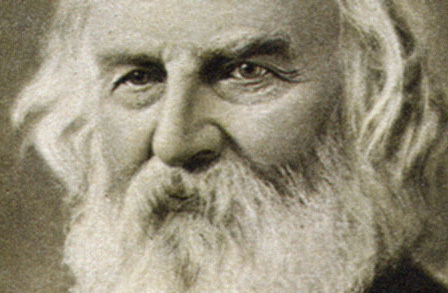
Longfellow, the only American writer honored in the Poets’ Corner of Westminster Abbey.

Longfellow has been dead for 130 years, as of last March, but of his many wonderful words that have stayed with us over the last century and more, these must be some of the more familiar.  (Or am I showing my appalling lack of literary knowledge?)

Following on from yesterday’s post about the scary mathematics of climate change,  this really is the ONE thing that we have to learn from dogs; from nature.  If we don’t live in harmony with our planet pretty damn soon, then this particular civilisation is not far from extinction.  Let me remind you of a key paragraph from yesterday,

It’s simple math: we can burn 565 more gigatons of carbon and stay below 2°C of warming — anything more than that risks catastrophe for life on earth. The only problem? Fossil fuel corporations now have 2,795 gigatons in their reserves, five times the safe amount. And they’re planning to burn it all — unless we rise up to stop them.

Ergo, we do not have endless time available to us!

Otherwise the footprints left on those sands of time will be nothing more than the next civilisation pondering from time to time why those Atlantacists that sunk beneath the waves were unable to do anything to save their world!

If you think I’m being a tad excitable, then see what Rob Hopkins wrote recently over at Transition Culture.

New Economics Foundation’s ’100 Months’ campaign today reaches its midway point.  It was launched in August 2008 based on the understanding that the time that remains to us to avoid the likelihood of runaway climate change is limited, and based on the science at the time, there was a closing window of opportunity to do something meaningful about it.

Then adding,

“The question here is “what should we do differently?”  The answer is “pretty much just about everything”.  Nationally and internationally, while the scale and pace of climate change are accelerating, meaningful responses are dwindling.  Part of our collective paralysis comes from the fact that we struggle to imagine a world with less energy, less consumerism, less annual GDP growth.  What will it look like, sound like, feel like?  Does it inevitably mean that you should start seeking out your cave on Dartmoor [Devon in South-West England, PH] as we speak, and developing a taste for slugs?  Of course not.

Shortly before the 100 Months campaign began, I was part of initiating an experiment to see what a self-organised response to climate change might look like, one based on rebuilding community, on the belief that what is needed is people, everywhere, making their communities happier, healthier, lower-carbon, and more resilient, in a huge variety of ways.

Rob Hopkins was also asked to write a piece for the UK’s Guardian Newspaper in recognition that we are half-way through that 100-month campaign.  Here’s how Rob concluded that piece,

Transition Bath set up an energy company which has raised £250,000 in shares from local people. Transition town Totnes’ Transition Streets programme has enabled almost 700 local householders to reduce their carbon emissions while rediscovering a sense of community on their streets. Bristol soon sees the launch of the Bristol Pound, the UK’s first citywide transition complementary currency. Transition Brixton’s Brixton Energy is installing community-owned renewables supported by local people. Check out transitionnetwork.org to get a sense of the amazing projects under way.

At its core, this is about the belief that our best way forward is for communities to build local resilience in order to be able to better face the shocks of the present and the uncertainties of the future, from economic crisis to climate change, seeing increased community resilience as economic development. It’s a process of plugging the leaks in our local economies, seeing every leak as a potential new business, new livelihood, new apprenticeship opportunity.

Of course we need government responses, and international responses, but all of those will struggle without a vibrant bottom-up movement of ordinary people showing what’s possible and how thrilled they are by those possibilities. So although the answer is “pretty much just about everything”, I would argue that seeing this as a once-in-a-lifetime opportunity for entrepreneurship, vision and action is where our successful navigation of the next 50 months lies.

Think about it!  What are you doing today?
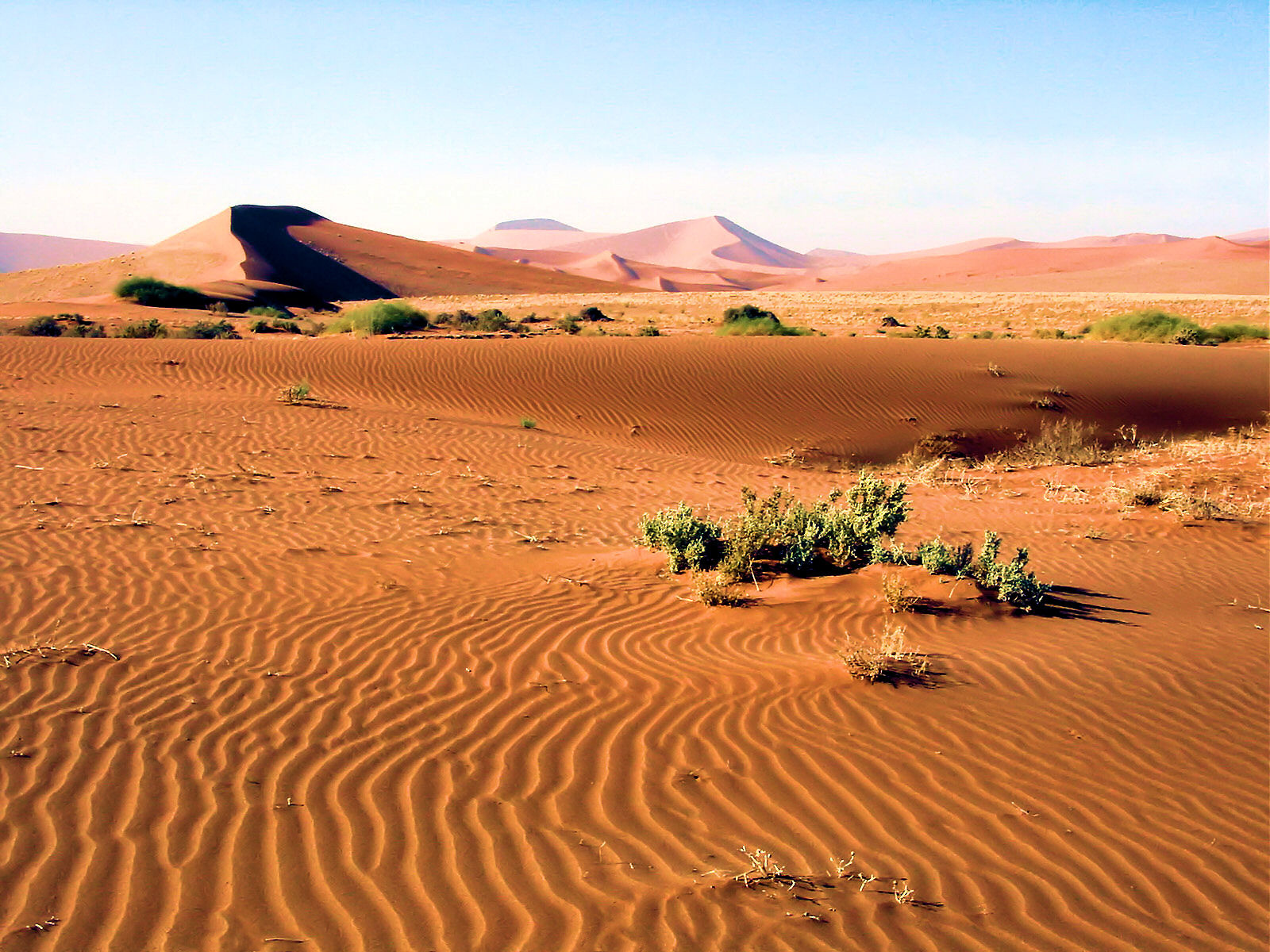
An image of the future?

Changing the mathematics of the climate!

An important plea to support a major road tour by the 350.org team.

Bill McKibben

There are a number of key players in the movement to arrest the affects of man on the world’s future climate and one of those is Bill McKibben.  His organisation, 350.org, has been at the forefront of raising the public’s awareness as to the terrible consequences of not changing our ways pretty damn soon.

As Wikipedia puts it,

William Ernest “Bill” McKibben (born 1960) is an American environmentalist, author, and journalist who has written extensively on the impact of global warming. He is the Schumann Distinguished Scholar at Middlebury College. In 2010, the Boston Globe called him “probably the nation’s leading environmentalist”  and Time magazine described him as “the world’s best green journalist.”

Anyway, something came in to my ‘in-box’ the other day that I wanted to share with all Learning from Dogs readers.  This is what was said,

Friends,

The reaction to our announcement of our national “Do the Math” road tour has been utterly pheneomenal.

Case in point: the event in Boston sold out in 24 hours. We’re trying to find another, larger venue to seat everyone, but the main point is this: this tour is going to be huge, and you need to be part of it.

Get your tickets here (math.350.org), and please do spread the word to everyone you know.

See you on the road,

Bill for the 350.org team

P.S. If you haven’t gotten a chance to read our first announcement, I’ve included it below.

 oooOOOooo

Dear Friends,

We’re getting ready for our most ambitious venture yet.

From November 7th to December 3rd, I’ll be on the road, visiting 20 cities in 20 nights (with a few days for travel in between) to help bring together the movement we need to make sure this planet has a future that we can all appreciate.

We’re calling it the Do the Math tour, but it’s not (thank heaven) just going to be me standing in front of a microphone.The goal is to jump-start the kind of movement that I discussed in the article I wrote for Rolling Stone about the scary new math of climate change. We will bring together musicians, artists and voices from across the movement to work together on directly confronting the financial and political might of the fossil fuel industry.

If you are near one of our stops, I want to make sure you’re there with us. You’re exactly the people we need to be there — folks who understand the climate math already, have experience in the movement, and are willing to step up to do more.


Click to check out the tour and RSVP

These events will need to be big, and reach beyond our normal circle of friends. That’s why we need to make sure that everyone knows that something big is underway. Can you take a moment to share the Do the Math tour site with your social networks?

       
Click to share on Facebook                 Click to share on Twitter

Also, just a heads up — we’re going to be putting together a live web event so that everyone who doesn’t happen to be near a tour stop can still get together and get a campaign started in their community. Our team is still hammering out the details for the exact date and time, but please keep an eye out — we absolutely need you in this fight.

I do a lot of talks to big groups, but this is a new kind of undertaking for me, and for 350.org. We’re trying to quickly build up some serious momentum, which is why we’ve gone to great lengths to make this a very different kind of event.

Not only will we have music and guests like Naomi Klein, Jim Hansen, Desmond Tutu, in person and via video, this event is also the kickoff to some serious organizing in your community. This tour will launch our next big mission — a campaign to directly confront the economic power of the fossil fuel industry. Our message will be crystal clear: it’s not OK to sacrifice our future for the sake of one industry’s bottom line. Divestment is one important tool that we’ll discuss, but we’re ready for many other tactics as well.

Over the past few months our planet gave stark warning signs that humans have never seen before. The Arctic melted, breaking every record. The Great Plains sweltered. The West burned. This roadshow is the next big step — but the price of admission, besides the ticket, is a willingness to really go to work to change the world in the year ahead. That’s why we need you this November.

The stakes have never been this high, and I’ve never been more serious.

Please join us: math.350.org

–Bill McKibben for 350.org

So go across to that Tour site, where you will read this,

On November 7th, we’re hitting the road to jumpstart the next phase of the climate movement.

It’s simple math: we can burn 565 more gigatons of carbon and stay below 2°C of warming — anything more than that risks catastrophe for life on earth. The only problem? Fossil fuel corporations now have 2,795 gigatons in their reserves, five times the safe amount. And they’re planning to burn it all — unless we rise up to stop them.

This November, Bill McKibben and 350.org are hitting the road to build the movement that will change the terrifying math of the climate crisis.

and see the link to the Tour locations and dates.

TOUR DATES & TICKETS

***Click a city to sign up and buy tickets.***

Don’t see your town on the map? You can still get involved by signing up here.

ABOUT THE TOUR

This won’t be your typical lecture.

Each event will be a unique and interactive experience, unlike any talk you’ve been to before. It will pick up where Bill McKibben’s landmark Rolling Stone article left off — and everyone who comes will be asked to join a growing movement that is strong enough to stand up to the fossil fuel industry. Together we’ll mount an unprecedented campaign to cut off the industry’s financial and political support by divesting our schools, churches and government from fossil fuels.

This won’t be easy: we’re up against the most profitable, powerful, and dangerous industry in history. But we have our own currency: creativity, courage and if needed, our bodies.

Never let it be said that we, as in all of us, don’t have the power to change the world.  Oh, and feel free to circulate today’s post.

The thinking dog

Science embraces what many intuitively know: Animals have consciousness.

This was published on the Big Think website at the end of August.

Scientists Give Animals Consciousness

Nick Clairmont on August 29, 2012, 2:34 PM

What’s The Big Idea?

Scientists have given animals consciousness. Not through complex manipulation of the brain or through genetic manipulation, but by publicly acknowledging the consensus, for the first time in such a straightforward way, that non-human animals, including some of our evolutionarily distant cousins, have awareness and experience like we do.

The declaration, called The Cambridge Declaration On Consciousness, was signed at the Francis Crick Memorial Conference of Consciousness in Human and Non-Human Animals in the presence of Stephen Hawking in July in Cambridge, U.K. by an international group of scientists including cognitive neuroscientists, neuropharmacologists, neurophysiologists, neuroanatomists and computational neuroscientists.

What do they mean by consciousness? The Declaration treats it as the same as the phrase, “subjective experience.” Philosophers who share this view of consciousness with the scientists often say that something is conscious if there is “something that it is like” to be that thing. So, according to this, a rock is not conscious, because there is nothing “that it is like to be a rock.”

The signing marked the first formalization of the scientific consensus about the consciousness of several non-mammals, including birds, octopuses and even bees.

So if we now turn to that Conference held in Cambridge, England under the subject of Consciousness in Human and and Non Human Animals, we see how that declaration reads,

We declare the following: “The absence of a neocortex does not appear to preclude an organism from experiencing affective states. Convergent evidence indicates that non-human animals have the neuroanatomical, neurochemical, and neurophysiological substrates of conscious states along with the capacity to exhibit intentional behaviors. Consequently, the weight of evidence indicates that humans are not unique in possessing the neurological substrates that generate consciousness. Nonhuman animals, including all mammals and birds, and many other creatures, including octopuses, also possess these neurological substrates.”

The full document is really worth reading, by the way.

There is much more about the conference including some remarkable videos here, from which I will select two.  The first one, in particular, is very moving, and upsetting!  Be warned!

OK, forgive me but I’m going to state the obvious!  Just read the entry on Wikipedia about Orangutans.

Orangutans are among the most intelligent primates and use a variety of sophisticated tools, also constructing elaborate sleeping nests each night from branches and foliage. The apes have been extensively studied for their learning abilities. There may even be distinctive cultures within populations. Field studies of the apes were pioneered by primatologist Birutė Galdikas. Both orangutan species are considered to be Endangered with the Sumatran orangutan being Critically Endangered. Human activities have decimated the populations and ranges of both species. Threats to wild orangutan populations include poaching, habitat destruction and the illegal pet trade. There are several conservation and rehabilitation organisations dedicated to the survival of orangutans in the wild.

‘Among the most intelligent primates‘! Yet again, an example of mankind treating the planet as a disposable item!  A quick web search came across the Orangutan Foundation so as well as being saddened and angry, there is something we can do; support them.

The second video from that Conference website is about the intelligence of dolphins – enjoy!

Back to the Big Think article, which concludes,

What’s The Significance?

The signatories have indicated that we cannot, at least certainly not for the reasons we have been giving, ignore the fact that animals have the same type of experiences that gives us a reason to treat other humans humanely.

Beyond the ethical ramifications, this declaration is another step in a long line of conclusions that the animal brain displays remarkable plasticity and is able to accomplish highly complex tasks in multiple ways.

While anyone who has gone to a zoo or owned a pet has at least temporarily thought of animals as conscious, there is still a large contingent that strongly believes that humans are exceptional in some morally and scientifically significant way. But, as Christof Koch, who co-presented the declaration notes, “The belief in human exceptionalism, so strongly rooted in the Judeo-Christian view of the world, flies in the face of all evidence for the structural and behavioral continuity between animals and people.”

Well done those scientists!

The best and the worst of mankind – the worst.

This makes me so sick I can’t find an appropriate heading!

Just read this from the October edition of The National Geographic magazine!

Ivory Worship

Thousands of elephants die each year so that their tusks can be carved into religious objects. Can the slaughter be stopped?

By Bryan Christy

Photographs by Brent Stirton, Reportage by Getty Images

IN JANUARY 2012 A HUNDRED RAIDERS ON HORSEBACK CHARGED OUT OF CHAD INTO CAMEROON’S BOUBA NDJIDAH NATIONAL PARK, SLAUGHTERING HUNDREDS OF ELEPHANTS—entire families—in one of the worst concentrated killings since a global ivory trade ban was adopted in 1989. Carrying AK-47s and rocket-propelled grenades, they dispatched the elephants with a military precision reminiscent of a 2006 butchering outside Chad’s Zakouma National Park. And then some stopped to pray to Allah. Seen from the ground, each of the bloated elephant carcasses is a monument to human greed. Elephant poaching levels are currently at their worst in a decade, and seizures of illegal ivory are at their highest level in years. From the air too the scattered bodies present a senseless crime scene—you can see which animals fled, which mothers tried to protect their young, how one terrified herd of 50 went down together, the latest of the tens of thousands of elephants killed across Africa each year. Seen from higher still, from the vantage of history, this killing field is not new at all. It is timeless, and it is now.

The full terrible article is here – if you have the stomach to read it.

Photograph by Brent Stirton, Reportage by Getty Images
To keep the ivory from the black market, a plainclothes ranger hacks the tusks off a bull elephant killed illegally in Kenya’s Amboseli National Park. In the first half of this year six park rangers died protecting Kenya’s elephants; meanwhile, rangers killed 23 poachers.

Sticks and stones

I make no apologies for today’s post being more emotional and sentimental.

The phrase ‘sticks and stones may break my bones but names will never hurt me‘ is well known throughout the English-speaking world and surprisingly goes back some way.  A quick web search found that in the The Christian Recorder of March 1862, there was this comment:

Remember the old adage, ‘Sticks and stones will break my bones, but words will never harm me’. True courage consists in doing what is right, despite the jeers and sneers of our companions.

So if in 1862 the saying was referred to as an ‘old adage’ then it clearly pre-dated 1862 by some degree.

A few days ago, Dusty M., here in Payson, AZ, sent me a short YouTube video called The Power of Words.  I’m as vulnerable as the next guy to needing being reminded about what’s important in this funny old world.  Then I started mulling over the tendency for all of us to be sucked into a well of doom and gloom.  Take my posts on Learning from Dogs over the last couple of days, as an example.

There is no question that the world in which we all live is going through some extremely challenging times but anger and negativity is not going to be the answer.  As that old reference spelt out so clearly, “True courage consists in doing what is right, despite the jeers and sneers of our companions.”

So first watch the video,

then let me close by reminding us all that courage is yet something else we can learn from dogs.

Togo the husky

In 1925, a ravaging case of diphtheria broke out in the isolated Alaskan village of Nome. No plane or ship could get the serum there, so the decision was made for multiple sled dog teams to relay the medicine across the treacherous frozen land. The dog that often gets credit for eventually saving the town is Balto, but he just happened to run the last, 55-mile leg in the race. The sled dog who did the lion’s share of the work was Togo. His journey, fraught with white-out storms, was the longest by 200 miles and included a traverse across perilous Norton Sound — where he saved his team and driver in a courageous swim through ice floes.

More about Togo another day.

Hear no evil; or is that hear no climate change?

A new angle on the famous ‘hear no evil, see no evil, speak no evil’ saying!

What climate change??

That new angle being ‘hear no climate change, see no climate change, speak no climate change!‘

So what has prompted this outburst from me?  It started with me seeing a truly scary graph that was on Peter Sinclair’s Climate Crock blogsite on the 20th September.  That was the graph that was published yesterday on Learning from Dogs under the post title of It’s not rocket science!  If you didn’t see that graph yesterday, don’t read further on until you have looked at it.

Thus while today’s post could easily be interpreted as yet another blogpost from yet another writer about climate change, that is not the case.  What I am doing is taking a quick trip across a few recently published items that really do make it utterly clear what is happening to the Earth’s biosphere, all in support of a very simple question to two gentlemen who are currently in the news; stay with me for all to become clear!

First, back to the blogsite Climate Crocks.  Under the title of Climate Denial Crock of the Week was a recent post by Peter Sinclair about a video from Dr. Jennifer Francis of Rutger’s Institute of Marine and Coastal Sciences.  (Go to that link to watch the video.)

However, this is what caught my eye, (an interview between Dr. Francis and Peter Sinclair).

What she told me in a recent interview was that the sea ice record is not something that we just pay attention to in September – there will, in fact, be reverberations that will make fall and winter “very interesting” around the globe.

Then it was easy to come across this piece on The Weather Channel website,

An unusually strong storm formed off the coast of Alaska on August 5 and tracked into the center of the Arctic Ocean, where it slowly dissipated over the next several days. The center of the storm was located in the middle of the Arctic Ocean.

On Wednesday, the National Snow and Ice Data Center concluded Arctic sea ice is at its lowest late-August level since records began, and the area covered by ice has continued to shrink in September. Since 1979, the 1.54 million square miles of ice is the smallest coverage on record at the North Pole, the report states.

With so many questions surrounding these latest findings, perhaps one of the most immediate is whether this melting of sea ice will affect the upcoming winter across the United States and Northern Hemisphere. Is it possible that a lack of Arctic sea ice could change weather patterns across the globe?

Four meteorologists spoke about these possibilities, and while they didn’t say dramatic weather shifts are imminent in the short-term, they did give some thoughts on what could happen.

One of the meteorologists was Dr. Jeff Masters, Director of Meteorology, Weather Underground. He wrote,

In my December 2011 blog post, I discuss research by Dr. Jennifer Francis of Rutgers University, who found that Arctic sea ice loss may significantly affect the upper-level atmospheric circulation, slowing its winds and increasing its tendency to make contorted high-amplitude loops. High-amplitude loops in the upper level wind pattern (and associated jet stream) increases the probability of persistent weather patterns in the Northern Hemisphere, potentially leading to extreme weather due to longer-duration cold spells, snow events, heat waves, flooding events, and drought conditions.

Several studies published in 2012 have linked Arctic sea ice loss to an increase in probability of severe winter weather in Western Europe, Eastern North America and Eastern Asia.

Then if one goes to that December 2011 blog post, one reads this,

“The question is not whether sea ice loss is affecting the large-scale atmospheric circulation…it’s how can it not?” That was the take-home message from Dr. Jennifer Francis of Rutgers University, in her talk “Does Arctic Amplification Fuel Extreme Weather in Mid-Latitudes?“, presented at last week’s American Geophysical Union meeting in San Francisco. Dr. Francis presented new research in review for publication, which shows that Arctic sea ice loss may significantly affect the upper-level atmospheric circulation, slowing its winds and increasing its tendency to make contorted high-amplitude loops. High-amplitude loops in the upper level wind pattern (and associated jet stream) increases the probability of persistent weather patterns in the Northern Hemisphere, potentially leading to extreme weather due to longer-duration cold spells, snow events, heat waves, flooding events, and drought conditions.

Further on in that blog post, one reads,

Arctic sea ice loss can slow down jet stream winds

Dr. Francis looked at surface and upper level data from 1948 – 2010, and discovered that the extra heat in the Arctic in fall and winter over the past decade had caused the Arctic atmosphere between the surface and 500 mb (about 18,000 feet or 5,600 meters) to expand. As a result, the difference in temperature between the Arctic (60 – 80°N) and the mid-latitudes (30 – 50°N) fell significantly. It is this difference in temperature that drives the powerful jet stream winds that control much of our weather. The speed of fall and winter west-to-east upper-level winds at 500 mb circling the North Pole decreased by 20% over the past decade, compared to the period 1948 – 2000, in response to the extra warmth in the Arctic. This slow-down of the upper-level winds circling the pole has been linked to a Hot Arctic-Cold Continents pattern that brought cold, snowy winters to the Eastern U.S. and Western Europe during 2009 – 2010 and 2010 – 2011.

OK, nearly finished!  Stay with me for one last item.  Did you note in that blog post (the first section quoted) this, “Dr. Francis presented new research in review for publication …“?  Here’s the Abstract from that publication, from which one reads,

Evidence linking Arctic amplification to extreme weather in mid-latitudes

Key Points

  • Enhanced Arctic warming reduces poleward temperature gradient
  • Weaker gradient affects waves in upper-level flow in two observable ways
  • Both effects slow weather patterns, favoring extreme weather

Jennifer A. Francis, Institute of Marine and Coastal Sciences, Rutgers University, New Brunswick, New Jersey, USA

Stephen J. Vavrus, Center for Climatic Research, University of Wisconsin-Madison, Madison, Wisconsin, USA

So to the point of both yesterday’s Post and the information above.

Will someone tell me why Messrs Barack Obama and Willard Mitt Romney so fervently adopt the stance of ‘hear no climate change, see no climate change, speak no climate change!‘

It’s not as though it’s unimportant!!

It’s not rocket science!

A graph that more or less says it all.

I am indebted to Peter Sinclair for his permission to reproduce the graph below.  It was embedded in his post on Climate Crocks on the 20th September, a post he not unreasonably called The Planetary Emergency.

As Peter wrote,

As you can see from the graphic above, the actual observations of arctic sea ice melt are far outstripping the climate model predictions of just a few years ago, that the denial-sphere continues to call “alarmist”. Apparently, not alarming enough.

Read the rest of Peter’s post here.

The point of publishing this on Learning from Dogs is simply as an introduction to a post coming out tomorrow called Hear no evil; or is that hear no climate change?, the purpose of which is to ask a very simple question of the two gentlemen wishing to reside in the White House as President of the USA for another four years.  All revealed tomorrow!

A study of man’s behaviours.

A reflection on why living in harmony with Planet Earth seems so challenging.

John Hurlburt is the ‘mover and shaker’ behind a series of talks and discussions under the overall title of Everything Fits Together, part of the adult education umbrella of St Paul’s Episcopal Church here in Payson, AZ.  John generously asked if I would lead the discussion tonight (19th) along the theme of Nature and Faith.  I plan to close the session with these words and the compelling video that was on Learning from Dogs last Friday A planet worth protecting.

oooOOOooo

Man – a study in behaviours.

The relationship between Planet Earth and man goes back a very long way. But what of today?

There is little doubt that many people, even with the minimum of awareness about the world in which we live, are deeply worried. On so many fronts there are forbidding and scary views. It feels as though all the certainty of past times has gone; as if all the trusted models of society are now broken. Whether we are talking politics, economics, employment or the environment, nothing seems to be working.

Why might this be?

It would be easy to condemn man’s drive for progress and an insatiable self-centredness as the obvious causes of our society failing in widespread ways. But in my view that’s too simple an explanation. It’s much more complex.

I propose that the challenges we all face today have their roots in the dawning of our evolution. Let’s remind ourselves how far back that goes.

The earliest documented members of the genus Homo are Homo habilis which evolved around 2.3 million years ago. Homo habilis was the first species for which we have positive evidence of the use of stone tools.

A theory known as Recent African Ancestry theory, postulates that modern humans evolved in Africa possibly from Homo heidelbergensis and migrated out of the continent some 50,000 to 100,000 years ago, replacing local populations of Homo erectus and Homo neanderthalensis.

Thus for tens of thousands of years, the behaviours of humans have served our species well, by definition. Ergo, mankind has evolved as the result of mankind’s behaviours. Behaviours that may have changed little over those countless years.

So one might speculate that these behaviours have been potentially damaging to the ultimate survival of our species, perhaps hugely damaging, for a very long time. But because man’s population footprint has been so small for 99% of eternity the consequences have not impinged on the planet until now. Let’s reflect on those population figures.

Until the development of agriculture, around the 11th millennium BC, the world population was stable at around one million persons, as man lived out a subsistence hunter-gatherer existence. By about 2000 years ago the global population of man had climbed to around 300 million. It took another 1,200 years for that global population to reach the first billion, as it did in 1804.

However, just 123 years later, in 1927, the two-billionth baby was born. The three-billionth baby was born in 1960, just 33 years later! Only a further 14 years slip by for the four-billionth baby to be born in 1974. Another blink of the geological eyelid and 13 years later, in 1987, along comes the five-billionth bundle of joy. Around October 1999, the sixth-billionth baby is born! It is likely that we are in a world where there are now seven billion people! Indeed, the world population clock estimates that on September 12th, a week ago, the world population was 7,039,725,283 persons.

About a billion every decade. The equivalent of a growth of 100 million each and every year, or around 270,000 every single day! Or if you prefer 11,250 an hour (Remember that’s the net growth, births minus deaths, of the population of humans on this planet!)

Combine man’s behaviours with this growth of population and we have the present situation. A totally unsustainable situation on a planet that is our only home.

The only viable solution is to amend our behaviours. To tap into the powers of integrity, self-awareness and mindfulness and change our game.

All of us, no exceptions, have to work with the fundamental, primary relationships we have with each other and with the planet upon which we all depend. We need the birth of a new level of consciousness; of our self, of each other and of the living, breathing planet. A new consciousness that will empower change. We need spiritual enlightenment. We need a spiritual bond with this beautiful planet.

Over eons of time, Planet Earth has favoured our evolution. Now, today, not tomorrow, it is time to favour our beautiful planet with our love and with our faith. It is the ultimate decision for our species.


oooOOOooo

If you need a reminder of how beautiful our planet is (and I’m sure the majority of LfD readers don’t require that reminder) then go back and watch David Attenborough’s video and voice-over to the song What a Wonderful World.

I will close by inserting into this post, the video that Martin Lack included in a recent comment to my post The wind doth blow!

Loving our planet!

While Learning from Dogs trawls around a wide variety of topics, the theme behind the writings is, as the banner says on the home page: Dogs are integrous animals. We have much to learn from them.

Integrity, defined more or less universally as the ‘adherence to moral and ethical principles; soundness of moral character; honesty.‘

Please trust me that this position is taken not from the perspective of the writer, I’m struggle with ‘right’ and ‘wrong’ as much as the next guy.  No, this position is the result of one very simple and stark vision: If we don’t understand pretty damn soon what we, as in mankind, are doing to our planet, both directly and indirectly, then we are living through the era of the end of civilised man; these are the last times.

The relationship between man and the dog is ancient beyond contemplation.  It is widely believed by scientists who study the history of man that, at the very least, dogs assisted man in evolving from hunter-gatherers to farmers.  But some scientists believe that without the support of dogs, man never would had made the transition to farming.  Either way the relationship goes back more than 10,000 years.

So what on earth does that have to do with integrity?  Simply that alongside millions of us, dogs offer us the examples of loyalty, faith, meditation, patience, truth in love; an example of an adherence to moral and ethical principles; soundness of moral character; honesty.‘  In a single word: integrity!

OK, now that I have got that off my chest, to the topic of today’s post.  For some months now I have subscribed to the blog run by The Permaculture Research Institute of Australia.  It has much that will be useful for Jean and me when we move to Oregon in November.  But also, not infrequently, the Institute highlights deeper, more fundamental, issues.

Thus it was that a few days ago, my attention was drawn to an item with the title of  We Need Your Help to End the Era of Ecocide.  It was about the work of English woman, Polly Higgins.  I’m ashamed to say that I had not heard of her before!  A very quick search came across the website Eradicating Ecocide, from which one quickly learns that Polly,

In March 2010 international barrister and award winning author Polly Higgins proposed to the United Nations that Ecocide be made the fifth Crime Against Peace. There are currently four Crimes Against Peace: genocide, war crimes, crimes of aggression and crimes against humanity. Ecocide is the missing fifth crime – it is a crime against humanity, against current and future generations, and against all life on Earth.

Wow, that makes sense.  So what is ecocide? Again, Eradicating Ecocide offers the answer,

Back to the specific topic.  This is a copy of what is the latest news item on the Eradicating Ecocide website and it is reproduced in full.  I’ve included the Editor’s introduction from the Permaculture News website, as I couldn’t say it any better.

oooOOOooo

We need your help to end this era of Ecocide

Editor’s Note: We’ve covered a little of Polly Higgin’s important work before (see here and here). If you’re not already familiar with Polly’s work, I would strongly encourage you to check out the web pages and videos linked to below, as well as our aforementioned pieces. Permaculturists dream of whole earth restoration, but our efforts, whilst essential, are, if I may, largely piecemeal. The reason for this is that for every positive step someone makes, an industry or government does, or allows, something significantly more destructive to take place that more than overshadows it. We will never break out of this destructive cycle unless we make environmental destruction illegal, and hold the people responsible accountable. As you are able, please support Polly’s work. If you cannot donate, please at least do what you can to share and circulate this page.

Polly Higgins

I have something I would like to share with you. Today myself and my team have reached zero. The pot is now bare and our funding resources are in urgent need of replenishing. In the past year your donations of over £200,000 funded my and my team’s work; we planted some incredible seeds in the run up to the Rio Earth Summit. Out of that we have had some wonderful successes; in the past year alone we have held a mock Ecocide Trial in the UK Supreme Court, the University of London launched their Ecocide Project, I have travelled to countries and spoken on many platforms, I launched my second book Earth is our Business, I have been awarded Overall Champion by the PEA awards, I have started a training programme for others to learn how to become a Voice for the Earth and I have submitted a concept paper, Closing the door to dangerous industrial activity to all government’s around the world. All this has been done with the help of your money and without it none of this would have been at all possible.

Yesterday we held an emergency meeting; despite the enormous efforts of our fundraiser over the past few months we have been unable to raise more than a few thousand pounds. We are looking squarely at the future and we see enormous opportunity to take forward all that I have already achieved; just think how close we are to making this law a reality.

Everything we do is governed by permaculture ethics; people care, earth care and fair share. Ecocides occur when we take far more than our fair share, which affects both our people and our Earth. To ensure we live within our planetary limits, a law of Ecocide creates a legal framework that can ensure we all live in peaceful enjoyment.

Please help me to continue to build upon all of this good work; now more than ever people care, earth care and fair share matters. Together we can end the era of Ecocide.

With love for the Earth,

Polly

oooOOOooo

If you read this and want to share this Post, feel free to so do.  If you want to do that and more, then:

How you can help

  • Set up a direct debit.
  • Give a one-off donation.
  • Do a direct bank transfer.
  • Send a cheque to us at 6 Highbury Corner, Highbury Crescent, London N5 1RD. Please write your cheque out to our charity, The Earth Community Trust.
  • In the US you can donate via the Iris Arts and Education Group 1856 San Antonio Ave, Berkeley, California 94707. Please write your cheque out to our charity, The Earth Community Trust.
  • Please become one of our funding volunteers. We are seeking a team of people to help us fundraise. This can be done in a number of ways. If you think you can help, please email our intern Nina: nina (at) eradicatingecocide.com
  • We are seeking a volunteer for 2 weeks full time to come into our London office: please email Louise with your CV: louise (at) eradicatingecocide.com

And don’t forget to go to the Eradicating Ecocide website to become more aware and then take action!  Speaking of becoming more aware, do watch this video.

Let’s risk it for animals!

Looking at the human-animal relationship, from the perspective of the animal.

This is a guest post from Virginia Ingram.  Virginia is becoming more involved in the animal rescue movement.  As such, she knows only too well how vital it is to give so many precious animals a second chance.

In a very real sense we, as in mankind, owe our humanity to dogs and other animals.  As I wrote here in the essay What is love?

“But understanding animals and empathizing with them also triggered other changes in humanity’s evolution, Shipman said.

All those things allow people to live with people. Once people have domesticated animals, they start to live in stable groups. They have fields, crops and more permanent dwellings.”

We owe so much!

So with that in mind, here is Virginia’s guest post.

oooOOOooo

WE CAN MAKE A DIFFERENCE

Recently I started to question the time I spend on the internet reading articles, essays and recommendations of books about all things concerned with animals. I receive animal stories from friends, acquaintances and business associates from all corners of the globe. I love to get them because, well….. hey, I really enjoy them!

After I read them I forward them to others who I think will also enjoy them. They make me feel warm and fuzzy. They are enlightening, poignant, humorous, inspiring and sometimes heart-rending. I find I cannot ignore any cute email containing animal pictures even though I may have already seen it a dozen times before. Give me a story about a dog who ate a popsicle and to me ‘that’s entertainment’ as they say. We human beings love to feel moved by great stories and these communications are full of it. I am such a sap when it comes to animal stories; so many of us are.

But here is the rub. What do the animals get out of it?

We chuckle and get our jollies from these incredible beings from a distance on the World Wide Web but the fact of the matter is that so many of these wonderful creatures end up unwanted, uncared for or even starved and beaten in shelters across the world.

Unknown and uncared for!

What gives? Why is there such a disconnect? How can we love animals from a distance and not be concerned with the abuses that go on in our own environment?

We know that there are those who don’t understand that animals have feelings and emotions, that they experience deep loss and sadness as well as happiness and joy. What can we do raise to the consciousness of human beings who don’t get it?

I think it involves sticking our collective necks out. I think that we need to be ready to risk some things. It might involve changing or damaging a relationship with someone who is acting in irresponsible ways towards animals. We need to be ready to risk it.

Do you see it on your own street? Maybe it’s a neighbor who leaves their dog on a chain in the yard on weekends regardless of weather or exposure to other animals. Maybe it’s the guy next door who ‘forgets’ to feed his animal.

Let’s stand up for these animals who have no voice. Let’s be advocates for these amazing creatures who cannot be their own advocate. Let’s hold humans accountable. Let’s risk a friendship and say something, make that difficult phone call on behalf of a animal. Let’s talk to people about animal issues and problems. Let’s try to change the weak laws that do not properly address animal cruelty. Let’s summon our courage and do the unpopular things which will enhance the quality of life for these precious beings.

Can you imagine how animals feel when they have been turned over to an animal shelter by the person whom they loved more than themselves?  Trust me, the sense of abandonment and fear, the bewilderment in their eye is excruciating to observe. I have seen it not from the distance of my computer but in person. Let’s DO something to change all this. It’s time to get involved.

By all means keep the cute emails going but for every minute we spend on the internet, reading the books and enjoying the emails let’s put the same amount of time into getting something done to improve the lives of animals. Stand up, walk out the door, volunteer or donate money. We can help the suffering. We can make a difference.

oooOOOooo

Powerful words indeed.  Don’t know about you but I read a strength of feeling that was very moving.  A clear message that we must never turn the head, never just ‘tut tut’ but do something.  Even if only befriending a stray animal.  Because one might argue that even that feral dog without a home is demonstrating something all of us on this green planet need to understand; living a sustainable life!

Finally, living proof of what we can give an animal when we care and love it.  The dog in the picture below is Loopy, a dog that Jean rescued in Mexico many years ago.  She was so badly hurt by humans that it took Jean six months before Loopy would let Jean touch and hug her.

When I came on the scene, my gender was against me.  It took me twelve months before Loopy trusted me.  Now she will come to me and let me place my face against hers in the most loving, caring embrace that one can imagine.

So why the fearful look on Loopy’s face as she turns away from the camera?  Somehow the camera is reminding Loopy of some sort of weapon that was used to beat her!

Loopy

As Virginia so lovingly wrote, “We can help the suffering. We can make a difference.“