Category: Morality

The power of a photograph

No words to say how I feel!

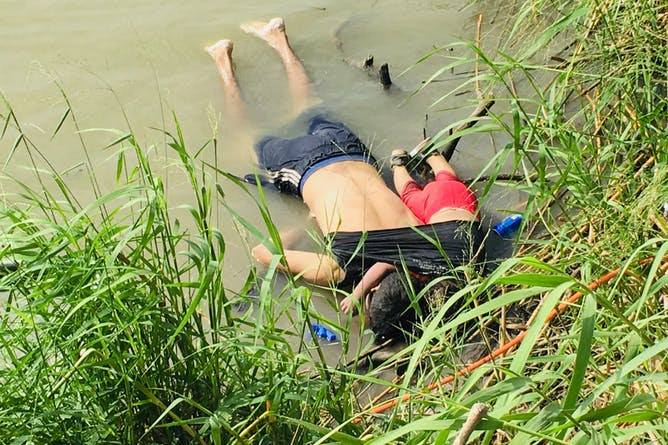
The bodies of Salvadoran migrant Oscar Alberto Martínez Ramírez and his daughter lie on the bank of the Rio Grande in Matamoros, Mexico. AP Photo/Julia Le Duc

This is a terrible photograph. It has been widely shown but that doesn’t make it any less terrible.

Patrice Ayme recently wrote about the tragedy but for today I am republishing the article in The Conversation.

ooOOoo

How much power can one image actually have?

By

Associate Professor, School of Journalism and Communication, University of Oregon

Professor of Psychology, University of Oregon

When the Associated Press published Julia Le Duc’s photograph of a drowned Salvadoran man, Óscar Alberto Martínez Ramírez, and his 23-month old daughter Valeria, it sparked outrage on social media. According to Le Duc, Ramírez had attempted to cross the Rio Grande after realizing he couldn’t present himself to U.S. authorities to request asylum.

But beyond raising awareness via Twitter and Facebook feeds, does an image like this one have the power to sway public opinion or spur politicians to take action?

As journalism and psychology scholars interested in the effects of imagery, we study the ability of jarring photos and videos to move people from complacency to action. While graphic imagery can have an immediate impact, the window of action – and caring – is smaller than you’d think.

A political catalyst?

Photographs and videos – through their perceived authenticity – can have an effect on people.

Research suggests that the graphic photo of slain Emmett Till in his open casket served as a “political catalyst” in mobilizing Americans to action in the civil rights movement. Similarly, news images have been credited as playing an important role in ending the Vietnam War.

But not all scholars agree. A recent article argued that it was a “myth” that the iconic “napalm girl” photo swayed public opinion and hastened the end of the Vietnam War.

Did the ‘napalm girl’ significantly shift public opinion on the Vietnam War? manhhai/flickr, CC BY

We must also look to psychology to understand the impacts of emotional news content. Research demonstrates that audiences need an emotional connection – and not merely a “just-the-facts” reporting approach – as “prerequisite for political action” when it comes to appreciating the importance of distant mass suffering. And imagery can trigger this emotional connection by overcoming the psychic numbing that occurs when casualties mount, images blur and lost lives become merely dry statistics.

Images from Syria

In April 2017, gut-wrenching images seem to have awakened the world to the human atrocities happening in Syria. Following a chemical bomb attack in the town of Khan Sheikhoun, graphic photos and videos documented the horrific effects of the banned nerve agent sarin. Millions bore witness to excruciating human suffering: gasping, choking, writhing and dying. More than 500 people were injured, with at least 86 deaths, including 28 children.

The vivid, closeup images of sarin attack victims were resonant enough to break through the complacency of people and politicians accustomed to bad news emerging from the war-torn nation. In President Trump’s response – which included a retaliatory missile strike – he seemed to recognize the value of the Syrian lives depicted in the horrific photos and videos.

Syrian doctors treat a child following a suspected chemical attack in the town of Khan Sheikhoun, northern Idlib province, Syria. Edlib Media Center, via AP, File

“When you kill innocent children,” he said during a news conference, “that crosses many, many lines, beyond a red line – many, many lines.”

The limits of an image

Nonetheless, even though the attacks may have briefly heightened U.S. concerns over the wars in Syria, the photographic documentation of the suffering in Syria wasn’t new.

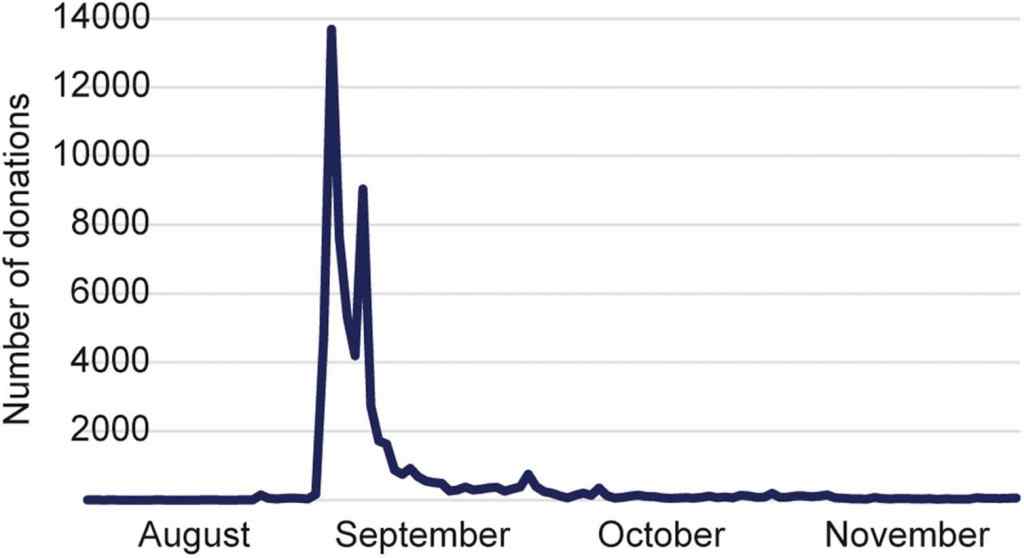
The 2015 photos of a tiny Syrian boy’s lifeless body resting face down in the sand similarly stirred the world’s collective consciousness. Within hours of its release, the photo had reached 20 million people through Twitter, with many more millions seeing it on the front pages of newspapers the next day. Afterwards, government restrictions on accepting refugees were loosened while private donations to organizations like the Red Cross spiked dramatically.

A year later haunting images of a young boy in the back of an ambulance, caked in dirt and blood, galvanized the world.

But the emotional and compassionate responses to both photographs were short-lived. The bombing of civilians in Syria continued. Refugees continued risking their lives to escape the war zone.

After a photograph of a dead Syrian boy went viral in 2015, the number of daily donations to a Swedish Red Cross campaign designated specifically for aiding Syrian refugees spiked dramatically – but only for a brief window. Proceedings of the National Academy of Sciences of the United States of America, CC BY-SA

Since the publication of Le Duc’s photo of the dead migrants, supportive politicians may feel emboldened to sound the alarm on the plight of Central American migrants. Donations to immigrant aid organizations might briefly spike.

But it seems that a photograph, no matter how emotionally devastating, can only do so much.

Yes, it can create a window of time when we’re motivated to act, and we’ll usually do so if we have effective options to pursue. This could mean a charitable donation at the individual level or, collectively, a surge of political will. However, psychology research from the “arithmetic of compassion” suggests that sympathy for distant human suffering declines when we’re presented with rising body counts. Sometimes we’re discouraged by the scope of the problem and this stops us from doing things that actually make a difference – even if partial solutions can save lives. Other times, if the options for helping others seem too narrow or ineffective, we’ll turn away and stop caring.

Images can alert us to the horrors of violence, mass migration and poverty. But as we have seen time and again, photographs and news footage of human suffering generally precipitate a short-term emotional reaction, rather than a sustained humanitarian response.

ooOOoo

As one reads the article it is much more than a comment on a single image despite how terrible that photograph may be.

The two scientists set out to show that the period that we are alarmed or terrified or just plain sad at the state of nations is rather short.

Maybe it’s the self-protective nature of our species that does this.

But it still doesn’t diminish the horror of that top photograph.

How a dog saved a family

This is a story of a very real emergency.

I have taken it from BoredPanda, not a site that I frequent, but this is such a marvellous account of how dogs make, every day, a real difference to the lives of people.

It’s been taken from a Twitter account so my apologies for the ‘staccato’ effect.

ooOOoo

Man Shares A Heartwarming Story About How His Dog Saved His House From Burning Down

Dogs… if only there was a word that would show how much we adore these adorable creatures that we get to call our most loyal friends and also beloved family members. Here at Bored Panda, dogs (amongst other animals) have a very special place, despite the fact that they can do the worst things, we still adore them. Also, today’s story teaches us that just because your puppy did something wrong, don’t be too quick to punish them since they might compensate it by doing something truly heroic.

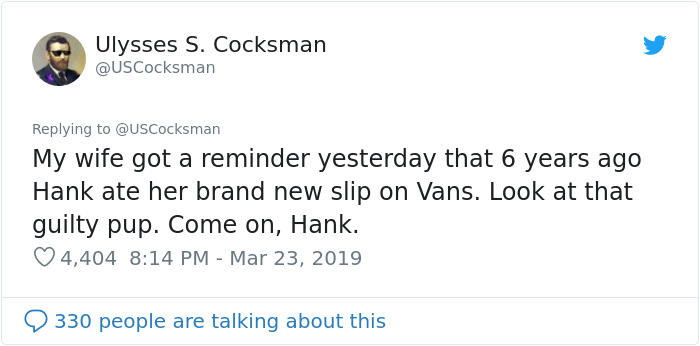
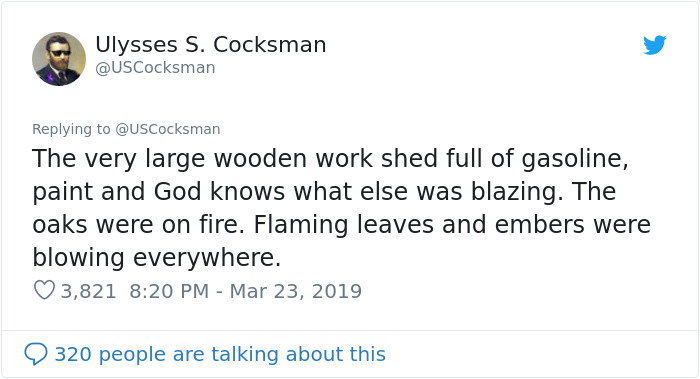
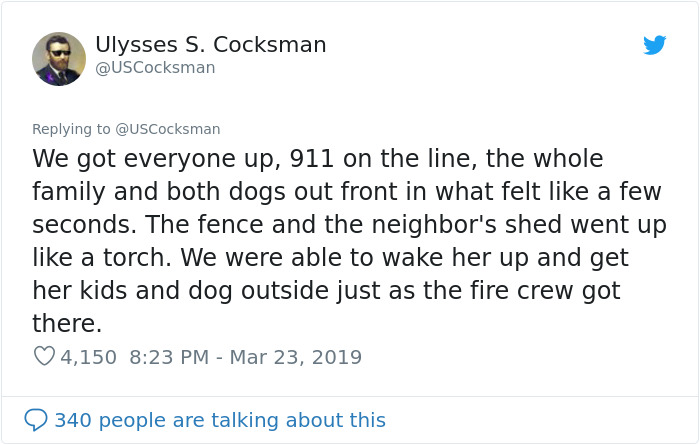
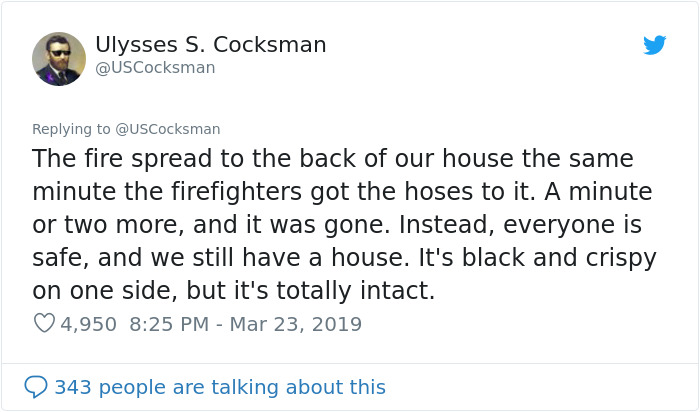
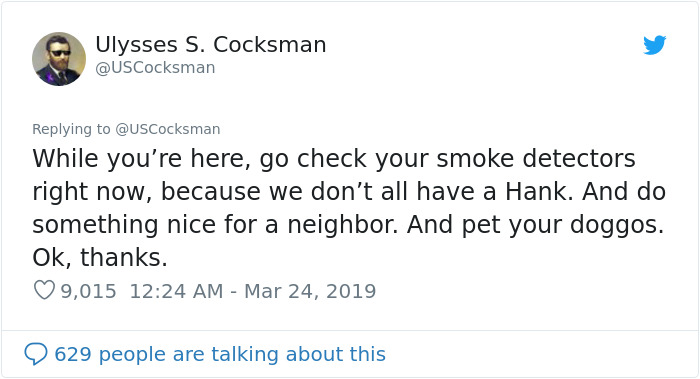
Recently, one Twitter user shared a heartwarming story about his dog Hank saving his entire family from fire

Hank even got some presents dedicated to his heroic act

People online were not only touched by this story, but they also think Hank deserves to chew all of the shoes in the world.

ooOOoo

What would we do without our dear dogs!

Being a lover of dogs shows no constraints!

Try a pharmacist from Turkey!

I love this recent story from the Daily Dodo.

It concerns a Turkish pharmacist who is also a dog lover.

Look, here’s the story:

ooOOoo

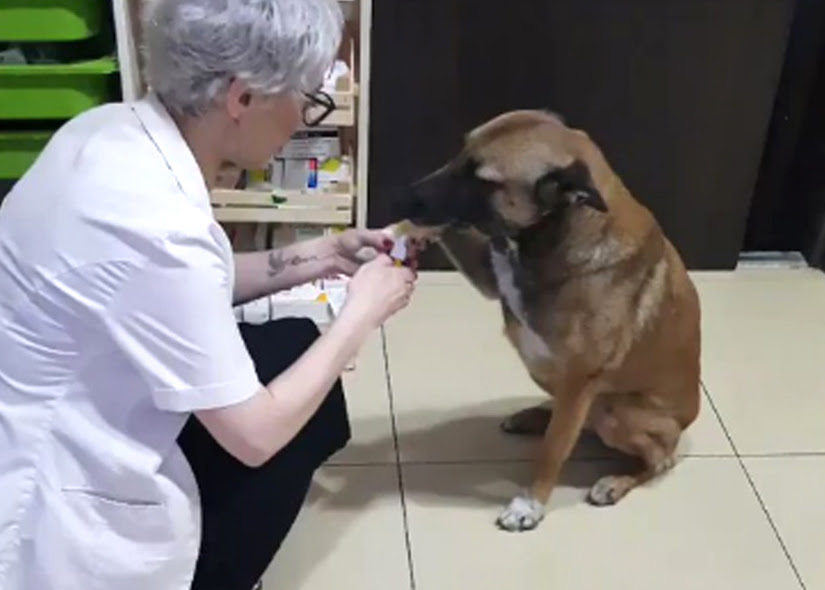
Pharmacist Sees Stray Dog At The Door And Realizes She’s Asking For Help”

“She was saying, ‘I trust you.'”

Puppy Mills, Part Two

Part Two of this guest post from Monika.

ooOOoo

One of the more alarming facts surrounding the audit was a lack of enforcement against violators. Enforcement has been ineffective, particularly against the worst of the worst where little or no action against a majority of violators resulted. Of the enforcement decisions for 68 sampled violators, 71% (48) resulted in no action taken, 6%  (4) received a “Letter of Information,” 19% (13) received an Official Warning and 4% (3) resulted in Stipulation. In 2007 the AC discontinued using Letter of Information as an enforcement option. Only 20 of 68 dealers (nearly 30%) were cited for repeat violations.

States with Animal Cruelty Laws

Only 5 states have a subsequent-offense felony cruelty law (Arkansas, Idaho, North & South Dakota, Mississippi); and 5 States have a misdemeanor cruelty law (Alaska, Iowa, Nevada, Ohio, Pennsylvania, the remaining 40 states have a first-offense felony cruelty law.

We all know that puppy mills put profit over the health and well-being of the dogs but here are a few of the worst examples cited in the Audit.

Example No. 1. With 83 adult dogs, a Oklahoma breeder was sited with 20 violations during 5 inspections from April 2006 to December 2007. Lack of adequate vet care for 3 dogs hair-loss over their entire bodies and raw, irritated spots on their skins. Despite continuing violations, no enforcement actions were taken due to the agency’s lenient practices against repeat violators.

During another visit, AC cited breeder for another 11 violations (one involving a dog that had been bitten by another and left untreated for at least 7 days which resulted in the flesh around the wound rotting away to the bone! The inspector required the dog be taken to a local vet who immediately euthanized it. The case was referred to IES for investigation but only after another violation was documented. AC recommended a stipulation, yet as of early June 2009 (11 months following visit), violator had not been fined.

Example No. 2 was another OK facility with 219 adult dogs. Breeder was cited for 29 violations (including 9 repeats) during 3 inspections from February 2006 to January 2007. Yet the AC did not take enforcement action, but did request an investigation in November 2007 when another inspection revealed five dogs were found dead and other starving dogs resorted to cannibalism. When asked why dogs were not confiscated when the first dead and starving dogs were discovered, inspector cited its own regulations require violator be given opportunity to correct condition before confiscation can occur. Despite those conditions, the AC did not immediately confiscate the survivors, resulting in another 22 dogs dying before the breeder’s license was revoked and surviving dogs were rehomed within a year.

Example No. 3  involved a Ohio facility with 88 adult dogs. Breeder was cited for 23 violations including 7 repeats during 3 inspections from August 2005 to January 2008. An official warning was sent in July 2007 and in a subsequent visit in January 2008, found the same violations with another official warning sent rather than a more severe penalty. When asked by a more serious action was not taken, the regional manager indicated ‘breeder was making progress’ with a ‘reasonable opportunity’ to comply. National instructions state official warning can be sent if no other action was taken against a violator in the previous 3 years. Four months later in June 2008, breeder was cited for another 9 violations (4 repeats) yet the inspector recommended no enforcement action. Upon re-inspection 4 months later, breeder was cited for 4 more violations (including 3 repeats); AC took no enforcement action noting violator was “making credible progress.”

The USDA accompanied 19 of the 99 inspectors to observe dealer facility inspections. While many inspectors are highly committed, inspections are conducted timely and thoroughly and significant efforts are made to improve humane treatment of covered animals, it was noted that at least 6 inspectors did not correctly report direct or repeat violations. Some inspectors did not always document violations with sufficient evidence and direct violations were not reported. The Agency Guide defines a direct violation as one that “has a high potential to adversely affect the health and well-being of the animal” which include: “infestation with large numbers of ticks, fleas, or other parasites” and “excessive accumulations of fecal or other waste material to the point where odors, disease hazards, or pest control problems exist.” In such cases, a facility must be re-inspected within 45 days to ensure that the violator has taken timely actions to treat the suffering animals. By contrast, an indirect violation is one that “does not have a high potential to adversely affect the health and well-being of the animal.” Minor violations include: “inadequate records” and “surfaces not resistant to moisture.” In such cases, a re-inspection may not occur for up to a year.

Major deficiencies of the APHIS administration of the AWA cited in the Audit included:

  • AC’s enforcement process was ineffective against problematic dealers.
  • AC inspectors failed to cite or document violations properly to support enforcement actions.
  • AC inspectors failed to Cite or document violations properly to support enforcement actions.
  • APHIS’ new penalty worksheet calculated minimal penalties. Although APHIS previously agreed to revise its penalty worksheet to produce “significantly higher” penalties for violators of AWA, the agency continued to assess minimal penalties that did not deter violators. This occurred because the new worksheet allowed reductions up to 145 percent of the maximum penalty.
  • APHIS misused guidelines to lower penalties for AWA violators. In completing penalty worksheets, APHIS misused its guidelines in 32 of the 94 cases we reviewed to lower the penalties for AWA violators. Specifically, violations were inconsistently counted and applied “good faith” reductions without merit. A reduction in “no history of violations” when there was a prior history; and  arbitrarily changed the gravity of some violations and the business size. AC assessed lower penalties as an incentive to encourage violators to pay a stipulated amount rather than exercise their right to a hearing.
  • Some large breeders circumvented AWA by selling animals over the Internet. Large breeders that sell AWA-covered animals over the Internet are exempt from AC’s inspection and licensing requirements due to a loophole in AWA resulting in an increasing number of unlicensed breeders are not monitored for their animals’ overall health and humane treatment.

While the USDA does not advocate assessing maximum penalties, at a time when Congress tripled the authorized maximum penalty to “strengthen fines for violations,” actual penalties were down 20 percent less through the use of a new worksheet as compared to the one previously used.

I could go on, but to do so belies cold hard facts that trying to stem puppy mills is a bit like playing a ‘Whack-A-Mole.”

Bottom line, what the Audit tells us is: (1) red tape saddles agencies with convoluted regulations that are difficult to implement or monitor, due in part to (2) the sheer number of puppy mills and (3) a lack of adequate number of inspections conducted.

No doubt resources are limited but until such time as the economics of keeping puppy mills in business is reduced, they will continue to operate with impunity. The resulting advice is make sure your breeder is legit and don’t succumb to adorable puppy faces in pet shop windows.

I shudder to think how many of Elsa’s pups are out there because who easily resists puppies? It makes me wonder how many of them have genetic diseases due to poor breeding practices (in Elsa’s case epilepsy which was diagnosed just two weeks following her adoption), but other dogs seized at the same mill with her suffered from Sebaceous Adenitis (which is also most likely an autosomal recessive inherited disease), Addison’s Disease and one whose severe aggressive behavior (due to lack of socialization) was deemed so severe, he was considered unable to be rehabilitated in any way as to place him and heartbreakingly was euthanized. Bottom line, please adopt, don’t shop (or only use a reputable breeder). Only then can the sheer numbers of puppy mill facilities be reduced and heartbreaking stories like Elsa’s be stemmed.

Live, love bark! 🐾
Tails Around the Ranch

ooOOoo

We must spread the word far and wide that puppy mills have to be brought down by publicity and  lack of business.

Only when the last puppy mill goes out of business can we relax.

Finally, here’s a picture of a million miles from a puppy mill!

Melissa Lentz

Puppy Mills, Part One!

A guest post from Monika McDonald

If there’s one thing that raises the blood pressure of an animal lover, especially a dog lover, it’s a puppy mill.

I am very grateful for Monika to have sent me this piece, and for it to be her first guest post.

Here it is!

ooOOoo

Puppy Mills

By Monika McDonald

Puppy Mills…a topic that’s near and dear to my heart. Elsa, a Standard Poodle who probably lived 4 years or more in a mill, was rescued from a Northern Colorado puppy mill along with 8 other Standards (you can  read her story at the link). She was basically feral, shy but very sweet and curious and showed signs there was a lovely sweet companion beneath the matted filthy hair.

Recently I was given the opportunity to write a guest post for Paul at Learning from Dogs. Hold on to your hankies while I share some of the more disturbing facts uncovered from various sources. After much negative media coverage concerning large-scale dog dealers (i.e. breeders and brokers) failing to adequately monitor humane treatment for the animals under their care, the United States Department of Agriculture conducted an audit in 2010, some findings of which are noted below. Although Elsa was rescued through the local poodle rescue organization, I’m also featuring another group, the National Mill Dog Rescue group, headquartered in Colorado Springs, Colorado.

It is estimated there may be as many as 15,000 mills throughout the country, with a large number located in the heartland of the US. Simply put, puppy mills are dog breeding operations that put profit over the health and well-being of the dogs.

They can be a large or small operation, licensed by the USDA or unlicensed. It should be noted that in order to sell to a pet store, a breeder must be licensed, though many violate that requirement. According to the USDA, breeders…breed and raise animals on the premises whereas brokers negotiate or arrange for the purchase, sale or transport of animals in commerce. Puppy mills may house anywhere from hundreds to thousands of dogs, however smaller does not necessarily mean better.

Elsa was rescued from a very small mill with the same horrific conditions as the large ones. Puppy mills are everywhere, but a large concentration is located in the Midwest. Missouri has the largest number of puppy mills in the United States. Amish and Mennonite communities (particularly in Ohio, Indiana, and Pennsylvania) also run a large number of puppy mills.

Breeding parents spend their lives in 24-hour confinement in cages often stacked on top of each other. Protection from heat, cold, or inclement weather is rare and dogs live in filthy, unsanitary conditions receiving little or no veterinary care (some puppy mill owners often provide veterinary care without anesthesia or vet training). Female dogs are bred every heat cycle and are killed (or offered at auction) when they can no longer produce litters. Puppies are often taken from their mothers too young and can develop serious health or behavioral issues due to the conditions in which they are bred and shipped. Genetic diseases often result from the over-breeding. The bottom line is that puppy mills are all about profits. Any money spent on veterinary care, quality food, shelter, or staff to care for the dogs cuts into the profit margin.

Where are puppy mill puppies sold? Two primary sales outlets for puppies bred in  mills are pet stores, and the Internet. Nearly all puppies sold at pet stores come from puppy mills. Pet stores are the primary sales outlet for puppy mills and are essential for keeping puppy mills in business. Both licensed and unlicensed mills sell to pet stores with many mills selling to pet stores without the required license and not held accountable. Puppies are bred in mills and then shipped all over the country. Shipping conditions are inhumane. They can be forced to go up to 12 hours without food or water, and confined in a small space where diseases can be easily transmitted. Many puppies do not survive.

Background Info. In 1966, Congress passed Public Law 89-544, known as the Laboratory Animal Welfare Act, to regulate the humane care and handling of dogs, cats, and other laboratory animals. In 1970 the law was amended (Public Law 91-579), changing the name to Animal Welfare Act (with subsequent amendments passed in 1970, 1976, 1985, 1990, 2002, 2007, and 2008). In 2010 the USDA conducted an audit of the Animal and Plant Health Inspection Service’s (APHIS) Animal Care unit (AC) who are responsible for enforcing the act (the “Audit)”. Data cited is compiled from that Audit.

Inspections Conducted in FYs 2006-2008

Years

2006

2007

2008

No. of Inspectors

99

101

99

No. of Inspections*

17,978

16,542

15,722

Average Inspections Per Inspector

182

164

159

* These numbers include inspections on all licensees (i.e., dealers and exhibitors) and registrants (i.e., research facilities) under AWA.
ooOOoo
Tomorrow I will publish Part Two of Puppy Mills.

Mixed feelings!

The dog does a wonderful act of discovery!

There was an item on BBC News recently that shows the devotion of dogs towards humans. Yet the story also shows how cruel a young mother can be towards her own baby.

Here it is:

ooOOoo

Dog rescues baby buried alive in field in Thailand

17 May 2019
KHAOSOD -The dog helped raise the alarm after discovering the baby.

A dog in northern Thailand has rescued a newborn baby after it was buried alive, allegedly by its teenage mother.

The baby boy is said to have been abandoned by his mother, 15, to hide her pregnancy from her parents.

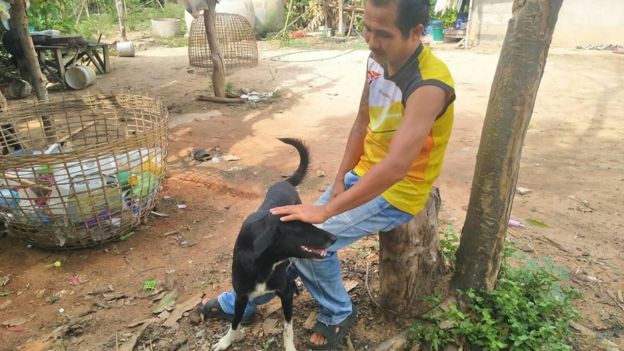
Ping Pong the dog was barking and digging in a field in Ban Nong Kham village. Its owner says he then noticed a baby’s leg sticking out of the earth.

Locals rushed the baby to hospital where doctors cleaned him up and declared he was healthy.

Ping Pong’s owner, Usa Nisaikha, says it lost the use of one of its legs after being hit by a car.

He told Khaosod Newspaper: “I kept him because he’s so loyal and obedient, and always helps me out when I go to the fields to tend to my cattle. He’s loved by the entire village. It’s amazing.

KHAOSOD – Ping Pong is disabled since being hit by a car.

The newborn’s mother has been charged with child abandonment and attempted murder.

Panuwat Puttakam, an officer at Chum Phuang police station, told the Bangkok Post she was now in the care of her parents and a psychologist.

He said that she regrets her actions.

The girl’s parents have decided to raise the baby.

ooOOoo

There’s no pardoning a woman who buries alive her baby. I don’t care what age she was; the mother that is. If she is old enough to become pregnant she is old enough to know better.

In stark contrast is Ping Pong, the dog, who despite having only three legs worked furiously to unearth the baby and did so without harming the infant.


Saturday smile!

A delightful story of one man’s bravery for another – dog!

This was published on The Daily Dodo a week ago and really does need retelling.

It shows how much we love our dogs.

ooOOoo

Man Jumps Into An NYC River To Save A Drowning Dog

Photo Credit: Erin O’Donnell

Ever since she was adopted from North Shore Animal League in March 2017, Harper has been absolutely head over heels for her mom, Erin O’Donnell, but is definitely a little nervous in new situations and can take some time to warm up to new people.

“She is a sweetheart but very anxious outside and around strangers,” O’Donnell told The Dodo.

On Saturday, O’Donnell was performing with the Brooklyn Irish Dance Company in Manhattan and left Harper in Brooklyn with friends and a trusted dog walker. Harper and her dog walker were out taking a stroll when a cab recklessly ran a stop sign and hit both the dog walker and Harper.

Both were OK and only sustained minor injuries, but poor Harper was so scared and shaken up that she ran and ran and ran — until she reached the East River, and jumped right in.

Still in a panic, Harper swam with determination and ferocity, and while at first onlookers thought she was just a dog with an owner nearby going for a swim, they soon realized that wasn’t the case at all.

“I was at the Brooklyn Barge celebrating my B’day when we saw a dog ‘going for a swim,’” Gabe Castellanos wrote in a post on Instagram. “The day grew hot and we all figured a nice swim could do us all a service. We assumed the owner was on shore keeping a watchful eye until a patron ran up to the north side of the Barge with a panicked voice saying that the dog, Harper, had run away.”

Photo Credit: Lorenzo Fonda

It was around that time that everyone began to notice Harper losing speed. The river was incredibly cold, and with the amount of energy Harper was exerting in her panicked state, it was likely that she wouldn’t be able to keep herself afloat for very much longer. This fact settled in for Castellanos, and he immediately knew he had to do something about it.

Castellanos happens to be a graduate of SUNY Maritime College and has extensive water survival skills knowledge — and so he decided he was going in.

“Since there was no sign of her making an attempt to swim back to shore, I knew something had to be done,” Castellanos told The Dodo. “I looked on the barge for any type of floating device to use if I were to jump from the end, but then I noticed there was a life vest, so I grabbed it.”

At this point, a crowd of about 300 people had gathered, invested in Harper and her well-being, and as soon as everyone realized what Castellanos was about to do, they all broke out into cheers of encouragement. Lorenzo Fonda, a Brooklyn-based filmmaker and artist, was hanging out at the Brooklyn Barge when he suddenly realized what was happening, and quickly began recording the entire ordeal.

Photo Credit: Lorenzo Fonda

Knowing the water was going to be cold and the conditions less than ideal, Castellanos strategized quickly with those around him as he prepared to jump into the water. He stripped down to his underwear, climbed over the rails, and then lowered himself as close to the water as he possibly could before letting go and diving in.

“There was a grand cheer when I entered the water,” Castellanos said. “After that, I was no longer focused on the crowds and my surroundings but focused on my breathing and swimming over to Harper. The crowds went mute during my swim. I’m sure they were still cheering, but I could not hear anything other than the water.”

Harper was still swimming at a steady pace, and Castellanos had to work hard to catch up with her. As soon as she realized someone was swimming towards her, she became even more panicked and tried as hard as she could to swim away from him.

Castellanos was persistent, though, and even though Harper struggled and lashed out a bit out of fear when he finally reached her, he stayed calm and determined and was finally able to secure her.

Cheers erupted from all over when Castellanos finally had Harper safely in his arms, and the pair quickly returned to shore. Both were exhausted and needed medical attention to make sure everything was OK, but luckily they were both completely fine, and are now recovering at their respective homes.

Photo Credit: Lorenzo Fonda

O’Donnell was in the middle of a performance when all of this occurred, and didn’t find out until later about Harper’s river adventure and the man who saved her life.

“Her paws are in rough shape, so she will need some trendy boots for a few weeks, but otherwise she’s in great spirits,” O’Donnell said. “It is definitely so refreshing to see the positive responses from people at the Brooklyn Barge and on social media expressing their sympathy for Harper and praising Gabe, who definitely saved the day.”

As an innocent onlooker that day, Castellanos didn’t have to do anything to help. He could have just sat by and watched and let someone else handle it, but instead he took a leap of faith and ended up saving Harper’s life, making him a true hero.

ooOOoo

I take my hat off to Gabe Castellanos. It’s something that 99.9% of us wouldn’t do yet Gabe didn’t think twice. OK, he had specific training but still there was a degree of risk. But he took it!

So well done, Mr. Gabe Castellanos!

Back to Coyotes!

Hunting, and not for food!

We hate hunting. Period.

It’s sort of alright when the person needs to hunt to stay alive. But in the Western world the incidence of that is pretty remote.

So when author Jim wrote about coyotes and hunting I had to share it with you (and, for the record, both Jean and I are atheists).  Published with Jim’s permission.

ooOOoo

The Incredible Coyote and Western Morality

How killing for fun is not only a Christian Right, but a value

By Jim, August 5th 2018.

Christian vulgarity has reigned it’s bullets down on the North American coyote for over 100 years. The longest standing extermination order in history has killed millions of coyotes and continues its bounty program in most states. Competitive hunts sponsored throughout the nation each year with cash prizes and trophies instill to our kids the right obligation to kill for fun.

“One morning in the late 1930s, the biologist Adolph Murie stood near a game trail in Yellowstone National Park and watched a passing coyote joyously toss a sprig of sagebrush in the air with its mouth, adroitly catch it, and repeat the act every few yards. At the time, Mr. Murie was conducting a federal study intended to prove, definitively, that the coyote was “the archpredator of our time.” But Mr. Murie, whose work ultimately exonerated the animals, was more impressed by that sprig-tossing — proof, he believed, of the joy a wild coyote took in being alive in the world” (1)

The majority of politicians have failed to address this with any passion, and being the good, high moral standard western value Christians that they are, continue the killing spree. A useless torture that drives the coyote without mercy and without effect. “Under persecution, the biologists argued, evolved colonizing mechanisms kicked in for coyotes. They have larger litters. If alpha females die, beta females breed. Pressured, they engage an adaptation called fission-fusion, with packs breaking up and pairs and individuals scattering to the winds and colonizing new areas. In full colonization mode, the scientists found, coyotes could withstand as much as a 70 percent yearly kill rate without suffering any decline in their total population”.

Hunters have their ultimate victim to hunt—one that can outbreed the continued onslaught. How fun is it? While the coyote is hunted for sport, they die in earnest. Leave them to experience their joy, and populations will mitigate in their own necessary way.

Christian values and morals once again are superior delayed in common decency and way off the mark—unless your talking killing for sport.

ooOOoo

I want to add a couple of comments that were left on the post:

Not many christians are bothered by this. Why should they, when you hear them quote from their holy book, that god commanded them to subdue the earth.

It is for this very reason that many christians are nonchalant when we talk about climate change

oooo

The price paid for pointlessly killing predators is a dear one. Moreover, all needless killing of animals is wrong, says the immoral, convinced atheist.

oooo

(to which Jim replied)

Part of the doctrine is to subdue and have dominion. To hell with inferior, soulless life. The ripple effect of what was once naturally flowing is tragic and painful.

Enough said!

Boonrod has a home!

Good news to our earlier story.

On April 30th I published a story that had been on the BBC News website about a dog that had been rescued from the sea some 200+ kilometres from the Thai coast.

It drew a fair amount of replies.

Then Margaret from Tasmania left a reply that contained the link to an article in the Bangkok Post. It was very good news!

ooOOoo

Rescue dog heads to new home in Khon Kaen

29 Apr 2019

WRITER: GARY BOYLE

ORIGINAL SOURCE/WRITER: ASSAWIN PAKKAWAN

Vitisak Payalaw sits behind Boonrod, the dog he helped rescue from the ocean, as he prepares to take him from a shelter in Hat Yai district, Songkhla, to his home in Khon Kaen on Saturday. (Photo from Boonrod Facebook account)

Seafaring dog Boonrod is heading to a new life in Khon Kaen with his new owner — one of the oil rig workers who rescued him from the ocean in a story that captured international attention.

“We’re leaving,” owner Vitisak Payalaw posted in a message on the Boonrod Facebook page on Saturday evening.

Mr Vitisak, an planner of Chevron Thailand Exploration and Production, met Boonrod — in Thai — on Saturday for the first time since the team found him to an oil platform in the Gulf of Thailand about 220km from the shore in Songkhla on April 12.

How Boonrod got there remains a mystery, but it is believed that he must have fallen off a trawler. After helping rescue the deepwater dog, Mr Vitisak offered to be his new owner.

The exhausted animal was brought ashore on April 15 and lodged at Dog Smile House, a shelter in Hat Yai district of the southern province, with financial support from the US oil firm and Watchdog Thailand, a non-profit group.

Boonrod appeared delighted to see Mr Vitisak and the other members of the oil rig team who rescued him.

Mr Vitisak said he was taking annual leave from his work at the oil platform to transport the dog to his home in Khon Kaen, almost 1,500km from Hat Yai. The house in the northeastern province has been prepared to accomodate a new resident, the Chevron employee added.

Mr Vitisak asked for privacy and requested that well-wishers not visit his new pet at his parents’ home in Khon Kaen. But fans are welcome to greet Boonrod when he walks the dog, he added.

He also encouraged other animal lovers to adopt pets if they can.

The story of Boonrod was carried by global news agencies, including CNN. He can be followed on his Facebook page.

ooOOoo

We love stories like that!

Good luck to Boonrod and to his new friends.

Burn Baby, Burn.

A rather depressing essay from Tom Englehardt.

The world is getting hotter. That’s a fact!

And no amount of stuffing one’s head under the pillow is going to change that fact.

We must take note of all the many articles and stories about the warming of the planet. Because we need to change the way we are responding. Not from climate change but to climate crisis.

I’m republishing a recent essay from Tom Engelhardt, with his permission, because he articulates perfectly where we are heading.

ooOOoo

Suicide Watch on Planet Earth

As the Flames Began to Rise, the Arsonists Appeared
By Tom Engelhardt, April 25th, 2019

As Notre Dame burned, as the flames leapt from its roof of ancient timbers, many of us watched in grim horror. Hour after hour, on screen after screen, channel after channel, you could see that 850-year-old cathedral, a visiting spot for 13 million people annually, being gutted, its roof timbers flaring into the evening sky, its steeple collapsing in a ball of fire. It was dramatic and deeply disturbing — and, of course, unwilling to be left out of any headline-making event, President Trump promptly tweeted his advice to the French authorities: “Perhaps flying water tankers could be used to put it out. Must act quickly!” No matter that water from such planes would probably have taken the cathedral’s towers down and endangered lives as well — “the equivalent,” according to a French fire chief, “of dropping three tons of concrete at 250 kilometers per hour [on] the ancient monument.”

Still, who could doubt that watching such a monument to the human endeavor being transformed into a shell of its former self was a reminder that everything human is mortal; that, whether in a single lifetime or 850 years, even the most ancient of our artifacts, like those in Iraq and Syria recently, will sooner or later be scourged by the equivalent of (or even quite literally by) fire and sword; that nothing truly lasts, even the most seemingly permanent of things like, until now, Notre Dame?

That cathedral in flames, unlike so much else in our moment (including you-know-who in his every waking moment), deserved the front-and-center media attention it got. Historically speaking, it was a burning event of the first order. Still, it’s strange that the most unnerving, deeply terrifying burning underway today, not of that ancient place of worship that lived with humanity for so many tumultuous centuries but of the planet itself, remains largely in the background.

When the cathedral in which Napoleon briefly crowned himself emperor seemed likely to collapse, it was certifiably an event of headline importance. When, however, the cathedral (if you care to think of it that way) in which humanity has been nurtured all these tens of thousands of years, on which we spread, developed, and became what we are today — I mean, of course, the planet itself — is in danger of an unprecedented sort from fires we continue to set, that’s hardly news at all. It’s largely relegated to the back pages of our attention, lost any day of the week to headlines about a disturbed, suicidal young woman obsessed with the Columbine school massacre or an attorney general obsessed with protecting the president.

And let’s not kid ourselves, this planet of ours is beginning to burn — and not just last week or month either. It’s been smoldering for decades now. Last summer, for instance, amid global heat records (Ouargla, Algeria, 124 degrees Fahrenheit; Hong Kong, over 91 degrees Fahrenheit for 16 straight days; Nawabsha, Pakistan, 122 degrees Fahrenheit; Oslo, Norway, over 86 degrees Fahrenheit for 16 consecutive days; Los Angeles, 108 degrees Fahrenheit), wildfires raged inside the Arctic Circle. This March, in case you hadn’t noticed — and why would you, since it’s gotten so little attention? — the temperature in Alaska was, on average, 20 degrees (yes, that is not a misprint) above normal and typical ice roads between villages and towns across parts of that state were melting and collapsing with deaths ensuing.

Meanwhile, in the Antarctic, ice is melting at a rate startling to scientists. If the process accelerates, global sea levels could rise far faster than expected, beginning to drown coastal cities like Miami, New York, and Shanghai more quickly than previously imagined. Meanwhile, globally, the wildfire season is lengthening. Fearsome fires are on the rise, as are droughts, and that’s just to begin to paint a picture of a heating planet and its ever more extreme weather systems and storms, of (if you care to think of it that way) a Whole Earth version of Notre Dame.

The Arsonists Arrive

As was true with Notre Dame, when it comes to the planet, there were fire alarms before an actual blaze was fully noted. Take, for example, the advisory panel of scientists reporting to President Lyndon Johnson on the phenomenon of global warming back in 1965. They would, in fact, predict with remarkable accuracy how our world was going to change for the worse by this twenty-first-century moment. (And Johnson, in turn, would bring the subject up officially for perhaps the first time in a Special Message to Congress on February 5, 1965, 54 years before Alexandria Ocasio-Cortez’s Green New Deal proposal.) As that panel wrote at the time, “Through his worldwide industrial civilization, Man is unwittingly conducting a vast geophysical experiment. Within a few generations he is burning the fossil fuels that slowly accumulated in the earth over the past 500 million years…” In other words, the alarm was first sounded more than half a century ago.

When it comes to climate change, however, as the smoke began to appear and, in our own moment, the first flames began to leap — after all, the last four years have been the hottest on record and, despite the growth of ever less expensive alternative energy sources, carbon dioxide emissions into the atmosphere are still rising, not falling — no firemen arrived (just children). There were essentially no adults to put out the blaze. Yes, there was the Paris climate accord but it was largely an agreement in principle without enforcement power of any genuine sort.

In fact, across significant parts of the planet, those who appeared weren’t firefighters at all, but fire feeders who will likely prove to be the ultimate arsonists of human history. In a way, it’s been an extraordinary performance. Leaders who vied for, or actually gained, power not only refused to recognize the existence of climate change but were quite literally eager to aid and abet the phenomenon. This is true, for instance, of the new president of Brazil, Jair Bolsonaro, who came to power prepared to turn the already endangered carbon sink of the Amazon rain forest into a playground for corporate and agricultural destroyers. It is similarly true in Europe, where right-wing populist movements have begun to successfully oppose gestures toward dealing with climate change, gaining both attention and votes in the process. In Poland, for instance, just such a party led by President Andrzej Duda has come to power and the promotion of coal production has become the order of the day.

And none of that compared to developments in the richest, most powerful country of all, the one that historically has put more greenhouse gas emissions into the atmosphere than any other. On taking office, Donald Trump appointed more climate-change deniers to his cabinet than might have previously seemed possible and swore fealty to “American energy dominance,” while working to kneecap the development of alternative energy systems.  He and his men tried to open new areas to oil and gas drilling, while in every way imaginable striving to remove what limits there had been on Big Energy, so that it could release its carbon emissions into the atmosphere unimpeded. And as the planetary cathedral began to burn, the president set the mood for the moment (at least for his vaunted “base”) by tweeting such things as “It’s really cold outside, they are calling it a major freeze, weeks ahead of normal. Man, we could use a big fat dose of global warming!” or, on alternative energy, “You would be doing wind, windmills, and if it doesn’t if it doesn’t blow you can forget about television for that night… Darling, I want to watch television. I’m sorry, the wind isn’t blowing.”

Among those who will someday be considered the greatest criminals in history, don’t forget the Big Energy CEOs who, knowing the truth about climate change from their own hired scientists, did everything they could to increase global doubts by funding climate-denying groups, while continuing to be among the most profitable companies around. They even hedged their bets by, among other things, investing in alternative energy and using it to more effectively drill for oil and natural gas.

Meanwhile, of course, the planet that had proven such a comfortable home for humanity was visibly going down. No, climate change won’t actually destroy the Earth itself, just the conditions under which humanity (and so many other species) thrived on it. Sooner or later, if the global temperature is indeed allowed to rise a catastrophic seven degrees Fahrenheit or four degrees Celsius, as an environmental impact statement from the Trump administration suggested it would by 2100, parts of the planet could become uninhabitable, hundreds of millions of human beings could be set in desperate motion, and the weather could intensify in ways that might be nearly unbearable for human habitation. Just read David Wallace-Wells’s The Uninhabitable Earth, if you doubt me.

This isn’t even contestable information anymore and yet it’s perfectly possible that Donald Trump could be elected to a second term in 2020. It’s perfectly possible that more right-wing populist movements could sweep into power in Europe. It’s perfectly possible that Vladimir Putin’s version of great powerdom — a sagging Russian petro-state — could continue on its present globally warming path well into the future.

Understand this: Trump, Bolsonaro, Duda, Putin, and the others are just part of human history. Sooner or later, they will be gone. Climate change, however, is not part of human history (whatever it may do to civilization as we know it). Its effects could, in human terms, last for almost unimaginable periods of time. It operates on a different time scale entirely, which means that, unlike the tragedies and nightmares of human history, it is not just a passing matter.

Of course, the planet will survive, as will some life forms (as would be true even if humanity were to succumb to that other possible path to an apocalypse, a nuclear holocaust resulting in “nuclear winter”).  But that should be considered small consolation indeed.

Putting the Planet on a Suicide Watch

Consider global warming a story for the ages, one that should put Notre Dame’s near-destruction after almost nine centuries in grim perspective. And yet the planetary version of burning, which should be humanity’s crisis of all crises, has been met with a general lack of media attention, reflecting a lack of just about every other kind of attention in our world (except by those outraged children who know that they are going to inherit a degraded world and are increasingly making their displeasure about it felt).

To take just one example of that lack of obvious attention, the response of the mega-wealthy to the burning of Notre Dame was an almost instantaneous burst of giving. The euro equivalent of nearly a billion dollars was raised more or less overnight from the wealthiest of French families and other .01%ers. Remind me of the equivalent for climate change as the planet’s spire threatens to come down?

As for arsonists like Donald Trump and the matter of collusion, there’s not even a question mark on the subject. In the United States, such collusion with the destroyers of human life on Planet Earth is written all over their actions. It’s beyond evident in the appointment of former oil and gas lobbyists and fellow travelers to positions of power. Will there, however, be the equivalent of a Mueller investigation? Will the president be howling “witch hunt” again? Not a chance. When it comes to Donald Trump and climate change, there will be neither a Mueller Report, nor the need for a classic Barr defense. And yet collusion — hell, yeah! The evidence is beyond overwhelming.

We are, of course, talking about nothing short of the ultimate crime, but on any given day of our lives, you’d hardly notice that it was underway. Even for an old man like me, it’s a terrifying thing to watch humanity make a decision, however inchoate, to essentially commit suicide. In effect, there is now a suicide watch on Planet Earth. Let’s hope the kids can make a difference.

Tom Engelhardt is a co-founder of the American Empire Project and the author of a history of the Cold War, The End of Victory Culture. He runs TomDispatch.com and is a fellow of the Type Media Center. His sixth and latest book is A Nation Unmade by War (Dispatch Books).

Follow TomDispatch on Twitter and join us on Facebook. Check out the newest Dispatch Books, John Feffer’s new dystopian novel (the second in the Splinterlands series) Frostlands,Beverly Gologorsky’s novel Every Body Has a Story, and Tom Engelhardt’s A Nation Unmade by War, as well as Alfred McCoy’s In the Shadows of the American Century: The Rise and Decline of U.S. Global Power and John Dower’s The Violent American Century: War and Terror Since World War II.

Copyright 2019 Tom Engelhardt

ooOOoo

Tom and I are of the same age, give or take a year or two, and I have long been worried about the state of things. Part of me thinks that I won’t live long enough to experience the worst of this climate crisis and that my grandchild will have to sort it out. But then another part of me thinks that this is accelerating and we are already experiencing weather and climate that is strange and …..

I don’t know!