Igor the bulldog had never spent a day without his family. From day one, he has been loved, doted on, and the center of the family’s attention. So when the family planned a vacation to a place where Igor couldn’t go, there was a lot of guilt and worry over how he would do on his own.
That’s when Igor’s dad came up with an amazing plan. While Igor would have to go into a kennel, it wasn’t going to be just any kennel. The plan was kept as a surprise for both Igor and the rest of the family, until it was time to leave. And what a surprise it was!
Friends, treats, bones and a home away from home is everything a dog could want! It also probably helped the family feel a bit better about leaving him behind. It’s not often people go to such amazing lengths to make sure their dog is comfortable!
Igor’s family came back from vacation and brought him back to the real version of home, but we’re pretty sure Igor won’t mind the next time they decide to head off without him!
Do animals feel pain in the way that we humans do?
Last week, shortly after Paloma had been let out for a ‘call of nature’, she emitted the most terrible of screams. No other dog had gone near her and there was no immediate explanation for the heart-rending cry.
While this was not the first time that Paloma had suddenly cried out for no apparent reason this was by far the worst cry that Paloma had made so Jean and I thought that an immediate visit to our local vet practice was sensible, that being Lincoln Road Veterinary Clinic. We were seen by Dr. Goodbrod and he came to the conclusion that she had a spinal disc problem: Paloma is thirteen years old.
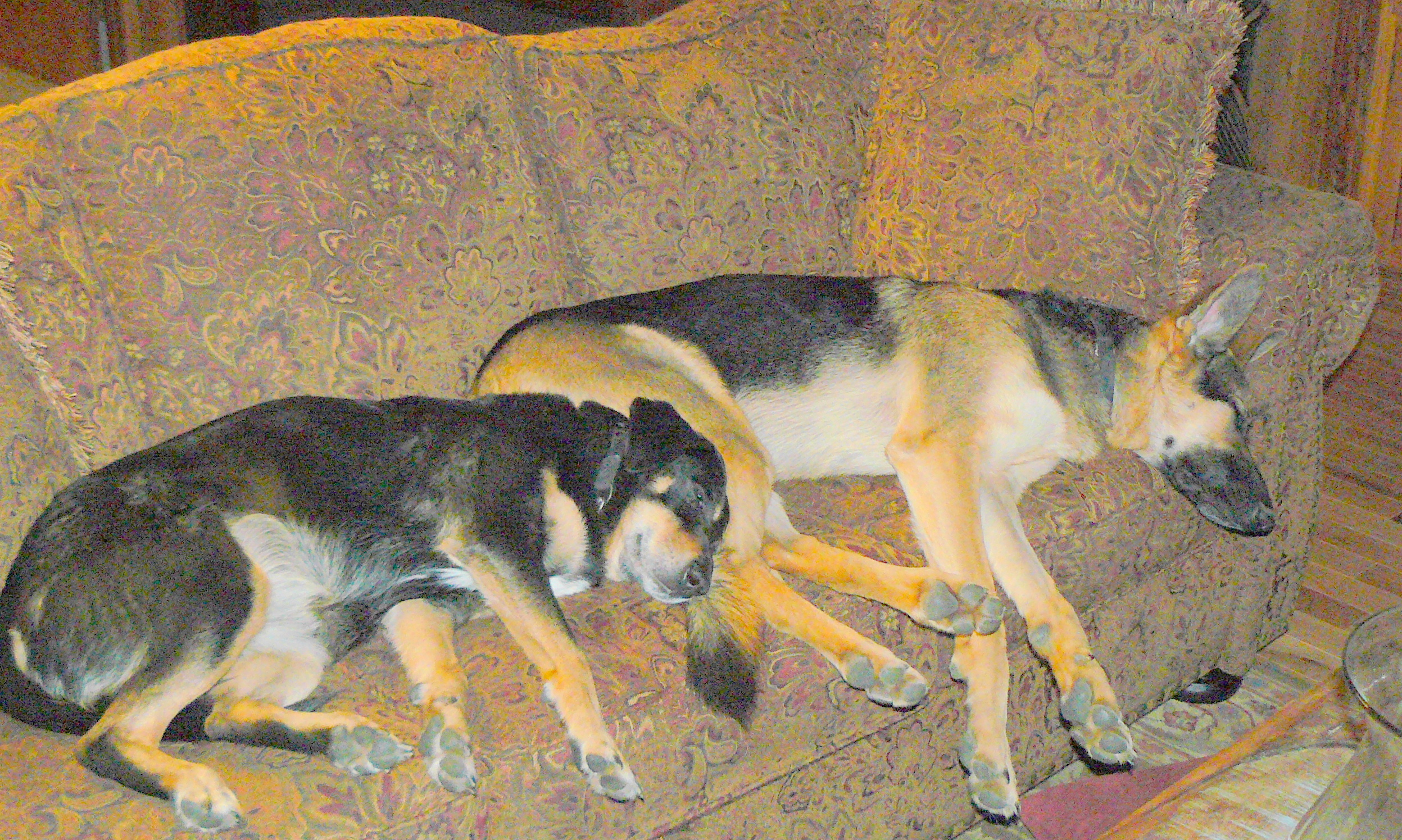
Paloma, December 29th 2011
All of which serves as a relevant introduction to a recent essay over on The Conversationblogsite. The essay was written by Professor Andrea Nolan, who became Principal and Vice-Chancellor of Edinburgh Napier University in July 2013. (Andrea graduated as a veterinary surgeon from Trinity College Dublin, Ireland.) Her essay is called Do animals feel pain like we do? and is republished here within the terms of The Conversation blogsite.
ooOOoo
Do animals feel pain like we do?
July 7, 2015 6.35am EDT
Not hard to read. Eddy Van 3000, CC BY-SA
Pain is a complex experience involving sensory and emotional components: it is not just about how it feels, but also how it makes you feel. And it is these unpleasant feelings that cause the suffering we humans associate with pain.
The science of suffering is well documented in the book of the same name by Patrick Wall. We know that animals certainly feel physical pain, but what is less clear is whether this emotional suffering that we feel can be said to be true of animals. And if it is, how we go about measuring it.
As a subjective emotion, pain can be experienced even in the absence of physical tissue damage, and the level of feeling can be modified by other emotions including fear, memory and stress. Pain also has different dimensions – it is often described in terms of intensity but it also has “character”, for example the pain of a pin-prick is very different from that of a toothache, a slipped disc or labour pain. Nearly all of us have experienced pain in our lives, but for each person, the experience is uniquely individual.
To understand or appreciate others’ pain we mostly rely on what they report. But there are many who either cannot communicate their pain verbally, babies for example, or effectively, like those with dementia or learning disabilities. In these situations, others must use a range of factors to judge the presence of pain and its impact on the individual.
Pain is not all bad – it serves a protective function, to keep us away from further danger, to help us heal, for example by stopping us from putting weight on a sprained ankle. But if it isn’t managed effectively it can have a major negative impact on our lives inducing fear, anger, anxiety or depression – all emotions which may in turn exacerbate it. And chronic pain is a major concern to millions of individuals and to our societies around the world.
Pain in animals
The nature of pain is perhaps even more complex in animals. How pain is sensed and the physical processes behind this are remarkably similar and well conserved across mammals and humans. There are also many similarities in pain behaviours across the species, for example they may stop socialising with people and/or other animals, they may eat less, they may vocalise more and their heart rate may rise. The capacity of animals to suffer as sentient creatures is well established and enshrined in law in many countries, however we don’t understand well how they actually experience pain.
Some aspects of the experience and expression of pain are not likely to be the same as in humans. First, animals cannot verbally communicate their pain. Dogs may yelp and you may notice behaviour change but what about your pet rabbit, cat, tortoise or horse? Animals rely on human observers to recognise pain and to evaluate its severity and impact. Without the ability to understand soothing words that explain that following surgery to repair a bone fracture, their pain will be managed (hopefully) and will subside, animals may also suffer more when in pain than we do.
Loud and clear. William Heron, CC BY-SA
The debate around animals’ capacity to experience pain and suffer raged in the 20th century, but as we developed a greater understanding of pain, and studied its impact on the aspects of animal life that we could measure, we veterinary surgeons, along with many behavioural and animal scientists, recognised the significant impact of untreated pain, and we now believe this experience causes them to suffer.
Similarly many studies in a range of domestic animals have indicated that animals who have had surgery but not had adequate pain relief demonstrate behaviours reflective of pain which are alleviated when they are treated with analgesics such as morphine.
We also know that it is not just our dogs and cats that can suffer pain – there is an equally strong evidence base for the presence and negative impact of pain in sheep, cattle, pigs and horses among other species. But recognising pain in these different species is part of the complexity associated with animal pain. Managing it in animals that we rear for food and those that we keep as companions is equally challenging.
Behavioural disturbances have long been recognised as potential indicators of the presence of pain in animals. However it is important to recognise that each species manifests its own sometimes unique pain-related behaviours or behavioural disturbances in different ways, often rooted in the evolutionary process, so prey species, for example, are less likely to “advertise” an increased vulnerability to predators. Dogs may become aggressive, or quiet, or may stop socialising with “their” humans and other dogs. Sheep, on the other hand, may appear largely the same when casually observed.
Some expressions of pain however may be conserved. A recent paper suggested commonality in some features of facial expression during acute pain experiences in several animal species and humans.
These findings and much other work are being incorporated into tools to evaluate animal pain, because in the words of Lord Kelvin, the great Glaswegian scientist behind the Kelvin temperature scale, said: “When you cannot measure it, when you cannot express it in number … you have scarcely, in your thoughts, advanced to the stage of science, whatever the matter may be”.
So in order to treat and manage pain effectively we must measure it.
And there is a huge demand for these tools. The Glasgow Composite Pain Scale, a simple tool to measure acute pain in dogs and first published in 2007, has been translated into six languages. It is used in veterinary practices to measure pain to treat it effectively. It has also been used to evaluate the effectiveness of new analgesic drugs that are being developed by animal health companies. Tools to measure the impact of chronic pain, such as osteoarthritis, on the quality of life of dogs are now available and are a significant advance in managing chronic conditions.
There is now a global effort to raise awareness of pain in animals. Recently the World Small Animal Veterinary Association launched the Global Pain Council and published a treatise for vets and animal keepers worldwide to promote pain recognition, measurement and treatment. Dogs may be man’s best friend, but for all those who work with, care for and enjoy the company of animals, understanding how their pain feels is essential to improving the quality of their lives.
ooOOoo
Back to Paloma. Dr. Goodbrod prescribed muscle relaxers and a mild pain killer.
Dear, sweet Paloma. Found by Jean on a Mexican street in Guaymas in 2005 with her eight puppies. Jean found homes for all the eight puppies in the USA and adopted Paloma because she was very wild.
Sent in to me by Cynthia Gomez, and it’s just gorgeous.
Marieles Dinner – Funny dog eats elegant at table
Published on Nov 22, 2013
Mariele, the German Shorthaired Pointer is the top model. She likes to eat in high-class places.
This little show took place in summer 2013. Mariele is sitting at the table and is looking forward to getting served. It took just a few training lessons for Mariele to get used to the situation because there is nothing further to do for her as to sit quite comfortable on a cushion and wait patiently for the food to come. Mariele is 12 years old and in younger years she worked as a rescue dog. She loves to make new experiences and she is very gentle. The temptation to wolf down sausages and meat would have been too strong to her. So we decided to serve carrots and potatoes which she likes too — but not too much…
We got inspired by TWO DOGS DINING — thank you very much.
It showed a dog dancing to music, or quite possibly, a dog scratching its back against a wall that someone had cleverly set to music. The video had been sent to me by Chris Gomez.
Then Dan, a brother to Chris, and a close personal friend of mine for 35+ years, sent me the following. This is in a different league to Saturday’s little video. This raises questions as to how the dog was trained to perform like this? How long did it take? What’s the story behind the display?
All I could discover, from the blog Sun Gazing was, “This dog dance was performed at The Open European Championships and totally blew the crowd away.”
Trust me, this is going to have you spellbound!
Enjoy!
If anyone can provide the answers to my earlier questions then Dan and I would love to hear from you.
A young Pharaoh already embracing contentment. September, 2003.
Sidney Bloch, who is Emeritus Professor in Psychiatry at the University of Melbourne, recently published an essay over on the blogsite The Conversation. (Greatly recommended, by the way.)
His essay was about happiness versus contentment and certainly touched a few spots in this old Englishman’s psyche, contented as I am in this rural part of Oregon. However, until now I had never stopped to think about the difference between being happy and being contented.
So, I think you are going to enjoy Professor Bloch’s views, that now follow. His essay is republished, with permission, just as it was presented on The Conversation.
ooOOoo
Happiness is an illusion, here’s why you should seek contentment instead.
June 29, 2015 4.07pm EDT
Feeling content means having a deep-seated, abiding acceptance of oneself and one’s worth, together with a sense of self-fulfilment, meaning and purpose. James Theophane/Flickr, CC BY-SA
I want to share a personal view of what it is to be happy and how it differs from feeling content. Let me begin with a clinical story.
They met at a party; it was love at first sight just like one reads about in romantic novels. They married following an exhilarating courtship, and since they shared an eagerness to raise a family, Jennifer soon announced the joyful news of her pregnancy. They called their baby Annie after Adam’s late mother.
They felt blessed; every moment since their first encounter had been nothing but pleasurable. Everyone who knew them concurred that their lives as a couple had been replete with happiness.
Tragically, it was not to endure. Their first setback occurred only days after Annie’s birth. She was sleeping fitfully and her colic stubbornly persisted. Jennifer felt utterly demoralised as a new mother. Her mounting sense of guilt and melancholy led to her admission to a psychiatric ward (her first ever encounter with psychiatry); the fear of her harming Annie or herself spread through the family and circle of friends.
And then, quite shockingly, despite the most diligent medical and nursing care, Jennifer met her death after jumping off a second floor balcony. Her family and friends plunged into deep grief; the medical professionals who had looked after her were similarly bereft.
An elusive goal
Having worked as a psychiatrist for over four decades and got to know dozens of men, women, and children of diverse backgrounds and with unique life stories, I have witnessed many a sad narrative, although suicide has mercifully been a rare event.
These experiences, in tandem with a lifelong fascination with what makes people tick, have led me most reluctantly to the judgement that while we may savour happiness episodically, it will invariably be disrupted by unwelcome negative feelings. Still, most of humankind will continue to harbour the expectation of living happily and remain oblivious that this wishful fantasy is an unconscious way of warding off the threat of psychic pain.
Rather than confront and demoralise those who have sought my help, I have gently but honestly responded to their plaintive yearning (“all I want is just to be happy”), by highlighting an inherent human sentiment. Namely that clinging to the fiction of being able to avoid suffering and enjoying a continuing state of pleasure is tantamount to self-deception.
I have offered them the hope – but not a guarantee – that they have the potential to lead a more fulfilling life than hitherto by participating in a challenging, and at times even distressing process of self-exploration whose purpose is to enhance self understanding and acceptance of the reality-bound emotional state I call contentment.
You may retort: “But you treat people who are miserable, pessimistic and self-deprecating, surely you must be hopelessly biased.” I would readily understand your reaction but suggest that all of us, not just those in treatment, crave happiness and are repeatedly frustrated by its elusiveness.
Most of humankind continues to harbour the expectation of living happily and remains oblivious that this wishful fantasy is an unconscious way of warding off the threat of psychic pain. Kate Ter Haar/Flickr, CC BY-SA
As the father of psychoanalysis Sigmund Freud emphasised in his 1930 essay, Civilization and Its Discontents, we are much more vulnerable to unhappiness than its opposite. That’s because we are constantly threatened by three forces: the fragility of our physical self, “doomed” by ageing and disease; the external world, with its potential to destroy us (through floods, fires, storms and earthquakes, for example); and our unpredictably complicated relationships with other people (regarded by Freud as the most painful source of unhappiness).
So, am I simply a misanthrope? I hope not but I am inclined to agree with Elbert Hubbard, the American artist and philosopher, who said, “Life is just one damn thing after another“.
We only have to think about the 50 million people who are currently displaced and unlikely to find a secure haven anytime soon, or the 2.2 billion people – including millions of children – who live on less than US$2 a day to appreciate the validity of that remark.
A better option
Given the formidable obstacles to chasing after happiness or promoting its sustainability if we are lucky enough to come by it, what options do human beings have? I have not come across any meaningful approach to this question, even from the unswervingly confident proponents of the contemporary school of positive psychology.
So, I espouse the following: given that we have the means to distinguish between happiness and contentment, we can examine how they differ and, in so doing, identify an alternative to the futile pursuit of happiness.
Happiness, derived from the Norse word hap, means luck or chance; the phrase happy-go-lucky illustrates the association. Many Indo-European languages similarly conflate the feeling of happiness and luck. Glück in German, for instance, can be translated as either happiness or chance, while eftihia, the Greek word for happiness, is derived from ef, meaning good, and tixi, luck or chance.
Thus, a mother may have the good fortune to feel ecstatic when responding to her infant’s playfulness, only to see it evaporate a couple of years later and be replaced by the initial features of autism. In the story we started this article with, Jennifer may have persevered had her baby slept peacefully and not been assailed by colicky pain in her first few weeks of life.
Contentment is derived from the Latin contentus and usually translated as satisfied. No multiple meanings here to confuse us. In my view, feeling content refers to a deep-seated, abiding acceptance of one’s self and one’s worth together with a sense of self-fulfilment, meaning and purpose.
And, most critically, these assets are valued and nurtured whatever the circumstances, or even especially when they are distressing or depressing.I have had the privilege of knowing men and women who suffered grievously as children in the ghettoes and concentration camps of Nazi Europe but emerged from their nightmare to face the challenge of seeking strengths, emotional and spiritual, within themselves. With the passage of time, many succeeded in achieving a sense of deep-seated contentment.
What these survivors have clearly demonstrated is that accepting and respecting oneself, coupled with determining what is personally meaningful, stand a greater chance of accomplishment, even if never completed, than a relentless and ultimately futile pursuit of happiness. What’s more, contentment has the potential to serve as a robust foundation upon which episodes of joy and pleasure can be experienced and cherished.
ooOOoo
I read the essay on The Conversation out aloud to Jeannie yesterday morning and we both found it a very wise and insightful reflection.
Seems to me that there’s another aspect of life that we could learn from our wonderful dogs!
Yesterday’s post was the concluding part of Professor Bekoff’s essay about the world of the dog’s mind. (Part One is here.)
I do hope you all read the essay because it revealed just how complex and wonderful is the brain of man’s oldest friend.
A couple of week’s ago, the UK Daily Mail newspaper published an item with the heading of: What’s your dog trying to tell YOU? Scientists discover animals’ bark can reveal whether it is scared or lonely…and can even be used to tell its gender and age.
This is how the article opened:
Ever wondered what your dog’s trying to tell you with its bark? Well, now there is a computer program able to do just that – and you’d be surprised at just what your pet is able to communicate.
Scientists developed the program after discovering dogs aren’t just trying to attract attention, or scaring off intruders when they bark.
Amazingly, the bark could also let you know the gender and age of your pet – as well as whether it is scared, happy or even lonely.
The Daily Mail quoted a very similar article that appeared in The Independent newspaper on the 29th May. The Independent article included this:
A dog bark may sound like one loud, irritating racket but scientists have discovered that they actually give away information about the animal.
Researchers have developed a computer program which can determine the sex and age of a dog through its bark – a development they say has the potential to help vets diagnose pets.
Scientists analysed 800 barks recorded from eight dogs in seven different situations and developed complex algorithms that were able to predict the gender, age and context of the barker.
The researchers said “canine communication” has been heavily studied over the past decade. However, most of the research has focused on studying how dogs understand human communication, such as hand gestures and voice recognition. This is the first time that the sex and age of domestic dogs have been predicted with the help of sound analysis, they said.
Of the two articles, the one in The Independent seems easiest on the eye so I recommend you read it in full if the subject piques your interest. However, The Daily Mail did include the following video:
I’m not going to repeat my full introduction to Professor Bekoff’s essay from yesterday other than to repeat this:
Thus with Marc Bekoff’s generous permission, here is his essay in full. (I’ve taken the decision to split this long essay into two parts.)
Finally, Professor Bekoff includes numerous ‘html’ links within his essay to other materials. I’ve cheated by saving quite some time adding those links but have underlined the linked phrase in question, apart from the very early chapters that do have ‘html’ links. Please go to the site of the original essay to explore further those links.
Marc Bekoff and friend.
ooOOoo
Butts and Noses: Secrets and Lessons from Dog Parks (Concluding Part)
Dog parks are gold mines of information about the behavior of dogs and humans
Are dogs really our best friends and are we really their best friends?
I’m asked these questions a lot and I always say it’s simply not so that dogs are “unconditional lovers.” They discriminate among humans just like we discriminate among dogs. And, while dogs might love “too much,” they’re very careful about to whom they open up. So, sometimes — perhaps very often — dogs are our best friends and we are their best friends but we all know of picky dogs and the horrific abuse to which dogs are subjected.
Are dogs really free at a dog park?
I often hear something like, “Oh I love coming to the dog park because my dog is so free” – and then she’s/he’s called back constantly when he plays too roughly or strays too far. People surely differ in how much control they exert, but some just don’t give their dog the opportunity to play, sniff, and hump. Control freaks often abound and they don’t realize it. Patrick Jackson, in the essay to which I referred above, writes about how “caretakers become ‘control managers’ who must negotiate problems related to a variety of dog behaviors, especially mounting, aggression, and waste management.” He’s right on the mark, but there are also those who get upset when play gets a bit rough, even when the dogs obviously are enjoying themselves.
Do dogs display dominance?
Yes, they do, just like many other animals. There is major confusion and mistakes among many “dog people” about what dominance really means, and dogs, like numerous other animals, do indeed use various forms of dominance in their social interactions. However, this does not mean that dominance is equated with overt aggression and physical harm nor that we need to dominate them in order to live in harmony with them (for more on this topic and the fact that dominance is not a myth please see this essay and and and references therein).
Why do dogs mount and hump?
Here are some of the statements I hear about dog mounting and humping: “Oh my God, my dog was fixed to stop this stuff.” “Oh, that’s easy, it’s always to dominate the other dog.” “Domination.” “Dogs are hyper-sexual because of domestication.” There are many reasons why dogs hump and there’s not a single answer (please see this essay and references therein).
Do Dogs feel shame and guilt?
While I hear numerous stories about shame and guilt, the simple and most correct answer is that we really don’t know. While we’re not all that good at reading guilt this does not mean that they do not feel guilt (please see this essay and references therein).
Do dogs get jealous?
Yes they do and a study published in 2014 showed this to be the case (please see this essay and references therein). I often hear very compelling stories about jealousy in dogs.
Do dogs get bored?
Yes, of course they do, just as do many other mammals, especially those living in various conditions of captivity. It’s clear that researchers and zoo administrators, for example, recognize that animals get bored, hence the numerous enrichment programs that are designed to relieve the animals’ boredom. The detailed research of Francois Wemelsfelder is a wonderful place to begin to learn about boredom in animals (see also the essays listed here).
Do dogs suffer from PTSD and other psychological disorders?
Yes they do as do many other animals.
Do dogs mind being used as service dogs or in animal assisted therapy?
Because dogs are such a variable lot, it’s impossible to say something like, “Of course they do.” The correct answer is that because dogs vary in personality and temperament there are some who would mind it and some who won’t. I’ve met many in each camp and I’m sure many readers have as well.
Are there Attention Deficit Dogs (ADD’s)?
I often hear people say that their dogs don’t hear them or that they ignore them most of the time. While there are many reasons why this might be so, it’s entirely possible that there are dogs who get so excited they simply don’t respond to their human’s requests. But, it’s also possible that some dogs do suffer from attention deficit disorder and hyperactivity.
How often does social play escalate into serious aggressive encounters?
We all know that play behavior predominates at dog parks and that dogs have fun when they play (see also) and that play is very contagious. Dogs play socially with one another, often involving objects, and they also play alone with objects or just go berserk on their own because it feels good. Dogs can play very roughly and still be in control and there are distinct “rules of social play” that help to keep even a vigorous interaction well within bounds so that there’s really little or no worry that play will escalate into aggression. Nonetheless, I hear this statement a lot: “Oh whenever dogs play it turns into aggression.” It doesn’t. My own observations suggest that it seems escalation happens more in large groups in which dogs can’t read one another’s subtle signals that “this still is play,” but it is very rare. Dogs can be rather fair. I want to say a bit more on this topic because it seems to be major reason why dogs are called back to their human or that humans break up rough-and-tumble play.
Although my students and I haven’t kept detailed records on this aspect of play for dogs, we all agree that play didn’t turn into serious fighting in more than around 2% of the 1000s of play bouts we’ve observed. Current observations at dog parks around Boulder, Colorado support our conclusion. And, for the approximately 1000 play bouts that my students and I observed in wild coyotes, mainly youngsters, on only about five occasions did we see play fighting escalate into serious fighting. Along these lines, Shyan, Fortune, and King (2003) discovered that fewer than 0.5% of play fights in dogs developed into conflict, and only half of these were clearly aggressive encounters. In this case our intuitions were right on the mark. Of course, there may be dogs who simply bite too hard or slam too hard into their play partners when they get highly aroused and lost in play, and this results in an aggressive encounter of varying intensity. But that is the exception rather than the rule, for play fighting only very rarely escalates into real fighting. Because play is a foundation of fairness there is a good deal of cooperation among the players as they negotiate the ongoing interaction so that it remains playful. I think one can make a good case for their having a theory of mind. Nonetheless, we still need more data on this aspect of play as well.
Do older dogs play less than younger dogs?
While this is true of wild animals who have to work harder to survive and to thrive, older dogs play a lot when they can and we really need more data on this question.
Do dogs have a theory of mind?
We don’t know. While some studies suggest they don’t, we need more “naturalistic” research especially when dogs are socially interacting. Because play is a foundation of fairness and there is a good deal of cooperation among the players as they negotiate the ongoing interaction so that it remains playful. Perhaps dogs even know what their playmates are thinking and feeling. Do they have a theory of mind? While I think so, we still need more data on this aspect of play as well.
Why do dogs roll and writhe on their back?
It could be to impart an odor. A wild canid known as the raccoon dog who lives in South America has a scent gland on its back. Dogs might also roll on their back to mask their own odor. And, of course, it might feel really good so why not do it? I love watching dogs writhe on their back and they look like they’re in doggie heaven.
Do dogs have a sense of time? The “two minute warning”
We really don’t know much at all about the dog’s sense of time. Yet, people often use what I call the “two minute warning” and ask their dog if it’s okay if they leave in 2 minutes, or people tell their dog something like, “You have 5 minutes more to play with your friends before we go to the store.” They also ask their dog, “What the hell took you so long, I’ve been calling you for minutes?” or “Where were you when I called you?” I can well imagine the dog thinking something like, “Huh?”
Why do dogs snort?
While there are physical reasons why dogs snort, recent research shows that dogs sort odors in their nose, forcing out those that aren’t relevant or salient, hence the snort and often a good deal of snot (for more on the fascinating dog’s nose please see this essay and this.
Why do dogs try to pee and nothing comes out?
This is called “dry marking” and we know that lifting a leg as if the dog is peeing serves as a visual signal to tell others he is. Often a dog will “dry mark” and then pee a few seconds later, so it’s clear their bladder isn’t empty. A study I did years ago with some students showed that dogs do this more often when there are other dogs around who can see them and then pee a bucket.
Why do dogs scratch the ground after they pee or poop?
They do this for a number of possible reasons and there isn’t a simple answer to this question.
Poop central: Why do people talk so much about dog poop at dog parks?
People also talk about poop a lot as if they’re freer to do so with their dog. Matthew Gilbert notes, “poop was more of a thing at the park than I had expected.” (p. 66) He also talks about a “stray bowel movement” as a “voluminous and frozen still life” (p, 67). Dog poop is a ripe area for future research.
Why do dogs stick their noses into butts, groins, and ears?
It’s a way of greeting and social investigation, but there haven’t been any studies of which I’m aware that provide any details about why they do this, even to their dog friends or humans. It’s been suggested that some animals might pick up information on the food others have eaten.
Are there breed specific odors?
Many people report that on their first encounter with other dogs, members of the same breed prefer one another and treat breed members differently from individuals of different breeds. There’s been some discussion that there may be a common odor to members of the same breed. However, my reading of available information is that we really know little about this question right now.
Do dogs know what they look like?
While dogs know what they smell like, they don’t know what they look like, or might they? Research done on birds in the 1960s suggests that they might learn their own color from reflections in water. So, I suppose dogs might know what they look like if they’ve seen their own reflection, but we need much more research about this question.
Why do dogs circle before lying down?
Dogs do not always circle before lying down, as some authors claim. They likely do it to flatten or soften the ground, and may also be looking around to see who’s around before they relax. In a study some of my students did years ago they reported that the dogs they watched circled around 65% of the time, but more detailed studies are needed.
Why does the hair on a dog’s back stand up?
This is called piloerection (sort of like goose bumps) and indicates that a dog is highly aroused but not necessarily aggressive. Many other species, including birds, show the same (sympathetic nervous system) response.
Dogs and humans: Why do people open up at dog parks?
Dogs can easily serve as icebreakers and social catalysts. People often open up at dog parks and talk to friends about things they likely don’t talk about in other arenas. They seem to feel safe among kinfolks. Some people began talking to me about pretty personal stuff within a minute of meeting them such as a woman who decided that she didn’t like her BFF because of how she treated a dog she just rescued, and a woman who, after meeting someone for around 10 seconds, decided that the woman wasn’t a good dog owner because she was suffering from bipolar disorder but didn’t know it! Some people – men and women, alike – have told me that dogs are social magnets and make it easy to meet other people who also are out with their canine BFF. These discussions often have very interesting “conclusions.” Enough on that for now …
Why do dogs eat grass?
There are many reasons and Stanley Coren has written a good myth-debunking essay on this. He notes that dogs do not eat grass to cause vomiting to relieve stomach distress. While it’s possible that some dogs do, we need a lot more research on this question.
More questions for a future essay
The list of questions can go on and on, and some questions I’ll consider in the future include: Why do dogs chase their tail? Why do dogs bark and what sort of barks are there? Why do dogs bark and howl at sirens? Why does my dog hoard tennis balls? Are dogs territorial as are wolves? Why do dogs pee/scent mark so much? Why do dogs sniff pee so much even when it’s their friends’ pee? Why do males sometimes squat when they pee and why do females sometimes lift their leg? Do dogs have a sense of self? Studies of “yellow snow” suggest they do. Are they conscious? (Of course they are, and scientists agree.) Why do dogs sniff and eat frozen turds? Why do dogs eat gooey feces? Why do dogs dig holes and then lie in them? Why do dogs scrape their butt on the ground? Why do people openly disparage their dog and then tell them they love them? (I often hear something like, “Oh, he’s really retarded, but I love him” or “You are so fat!” or “My goodness, your breath stinks!). Do dogs pick up on these mixed signals?“ Do dogs have a “little dog” complex? Do dogs make and use tools? (They do.) Why do dogs drink filthy water? How do dogs pick their mates? Do dogs dream? Do dogs get heartburn? Do dogs sweat? Do dogs understand baby talk? (People are well known to talk to dogs as if they’re infant humans.) What does “feral” mean? How did wolves become dogs? (Please see essays by Mark Derr.) What’s the difference between a socialized animal and a domesticated animal? (A wolf who likes humans is a socialized wolf. A domesticated wolf is a dog.) Do dogs really live in the moment? (No, their past clearly influences their behavior — just ask anyone who’s rescued an abused dog — and they think about the future — just watch a dog waiting for a frisbee or a ball to be thrown and watch them track the trajectory, although tracking might not be conscious, even in humans.)
Where to from here? There are many holes in the database and dog parks are gold mines of information.
It’s important to stress that there here are many holes in the database, and people find this very surprising because of many popular dog books that purport to “tell it like it is,” as if there are facts about this or that question. Dog parks are wonderful places for studies in dog-dog ethology and anthrozoology, the study of human-animal interactions, and I hope this essay will stimulate people to conduct formal studies and encourage citizen scientists to share their stories that can be used to generate further more systematic studies.
Studies in dog parks, that some may call “too uncontrolled,” may also shed light on questions that are being debated among different groups of researchers, for example, whether dogs follow human gazing or pointing and how well they perform these activities, or if dogs have a theory of mind. And, let’s face it, some laboratory studies also are rather uncontrolled, mainly because dogs are such a mixed bag of participants as might be the researchers themselves. Watching animals in their “natural habitats,” and dog parks might qualify as such, has shed much light on various aspects of behavior that are difficult to study in captivity or in other more controlled environs. Although many lab studies of dogs are likely more controlled than those conducted on free-running dogs, many people have seen behavior patterns that warrant reinvestigation in more ecologically relevant situations.
I continue to learn a lot about dog and human behavior when I visit dog parks. People often feel free to offer advice even when they knew who I am and what I do for a living. But, on a number of occasions, I chose to keep some distance to determine if their comments and explanations to other people (and often to the dogs) differ from when they know I’m around. For the most part, they did not. For example, I’ve been told that “familiar dogs definitely play differently from unfamiliar dogs,” that “humping is always about dominance,” that “dogs know what other dogs are thinking and feeling and they also know the same about people,” and that “know-it-all researchers ought to get off their butts and out of the ivory tower and watch dogs in the field.” On a few occasions some people made it clear that I had a lot to learn about dogs and they could teach me some valuable lessons. When I agreed, they were very surprised, and over the years I’ve had many interesting discussions that have made me re-evaluate what we know and don’t know about dog behavior and dog-human interactions. Concerning two of the areas above, we actually don’t know if familiar dogs play differently from unfamiliar dogs (I’ve got a student studying this) and, as I mentioned above, there’s not just one explanation for humping. Anyway …
There are numerous research projects just waiting to be done as we watch dogs romp here and there and have fun, meet old friends and strangers, and negotiate social relationships with other dogs and humans. I’m aware that I may have missed some studies so I hope readers will send me the details and share them in the comments section for this essay.
Dog behavior, in all of its kaleidoscopic forms, is an incredibly exciting field of research
Dogs openly share with us a lot about what they know and what they’re thinking and feeling, and we just have to be keen enough and patient enough to figure it all out. Dogs also are wonderful social catalysts and social magnets and they can help us learn a lot about ourselves. The arena of inquiry about dog-dog behavior and dogs and their humans truly is deep and boundless and there are numerous opportunities for studies at dog parks, where dogs frolic and sometimes cower and have to learn to deal with a wide variety of social situations with other dogs and humans, and at other places where dogs and humans congregate. And, as I mentioned before, talking about “the dog” can often be misleading and perilous.
Dog behavior, in all of its kaleidoscopic forms, is an incredibly exciting field of research, and I really look forward to seeing further studies of the above and other questions. When people tell me they’re having trouble coming up with a research project I humbly ask them if they’ve thought about dogs, and then the conversation gets going and going and going ….
Marc Bekoff’s latest books are Jasper’s story: Saving moon bears (with Jill Robinson), Ignoring nature no more: The case for compassionate conservation, Why dogs hump and bees get depressed, and Rewilding our hearts: Building pathways of compassion and coexistence.The Jane effect: Celebrating Jane Goodall (edited with Dale Peterson) has recently been published. (marcbekoff.com; @MarcBekoff)
ooOOoo
Now I don’t know about you but I found this essay both fascinating and wonderfully interesting. If I ever get the chance to publish other essays or information from the good Professor you can bet your life that I will, and without hesitation!
Part One of a stunningly interesting essay from Professor Marc Bekoff.
As a newbie yet-to-be published author I am technically at the stage of having a completed draft that Jeannie and a close friend are proof-reading. Then after corrections, it is going to be released to some ‘beta’ readers who will give me some early feedback. (Too scary to even think of just now!)
OK, with that admission out of the way, let me move on to my ‘draft’ chapter on play; in Part Four of the book. In researching what is known about the way that dogs play and what lessons there are for us humans, I came across an essay by Marc Bekoff, Ph.D. Marc is Professor Emeritus of Ecology and Evolutionary Biology at the University of Colorado, Boulder. His essay had been published in May on the website of Psychology Today. It was incredibly interesting and full of material for the book!
Within a few minutes of me sending Professor Bekoff an email requesting permission to include quotations in my ‘draft’ chapter, he had responded in the affirmative. I had also sought his permission to publish the essay here on Learning from Dogs. Again, a very quick, positive reply.
Thus with Marc Bekoff’s generous permission, here is his essay in full. (I’ve taken the decision to split this long essay into two parts.)
Finally, Professor Bekoff includes numerous ‘html’ links within his essay to other materials. I’ve cheated by saving quite some time adding those links but have underlined the linked phrase in question, apart from the very early chapters that do have ‘html’ links. Please go to the site of the original essay to explore further those links.
Marc Bekoff and friend.
ooOOoo
Butts and Noses: Secrets and Lessons from Dog Parks (Part One)
Dog parks are gold mines of information about the behavior of dogs and humans
I love going to dog parks. So, too, do dogs and their people. Dog parks are a fascinating recent and growing cultural phenomenon. Indeed, I go rather often to what I call my field sites, for that’s what they are, to study play behavior and other aspects of dog behavior including urination and marking patterns, greeting patterns, social interactions including how and why dogs enter, become part of, and leave short-term and long-term groups, and social relationships. I also study human-dog interactions and when I study how humans and dogs interact I also learn a lot about the humans. For example, I often hear how happy people are that their dogs are free to run here and there or free to be dogs when they’re at the dog park. Often, they say this while they’re constantly calling them back to them even when the dog is simply sniffing here or there or looking for a friend. They also call them to break up play when they think it’s gotten out of hand. You call this free?
Two works to which I often go when thinking about social dynamics at dog parks are Matthew Gilbert’s book titled Off the Leash: A Year at the Dog Park and Sonoma State University’s Patrick Jackson‘s essay called “Situated Activities in a Dog Park: Identity and Conflict in Human-Animal Space.” Linda Case writes about Dr. Jackson’s study and she is not a fan of dog parks because she feels they’re not safe and because “Dog park people frequently behave badly by not being responsible dog owners and by being inconsiderate and uncaring towards other people and their dogs.” We really need empirical studies on the safety issue. After having spent countless hours at dog parks I’ve never entertained drawing this conclusion, but there aren’t any detailed data on this topic of which I’m aware. However, on occasion, but hardly regularly, I’ve marveled at just how inconsiderate a very few people can be. But, as part of the gossip network among the other people, I often hear that a given person behaves like this even in non-dog park situations. On a few ocassions I’ve had a rather inconsiderate person ask me why their dog has bad manners and rather than get involved I call attention to some interesting dog-dog interactions.
Most people realize that “dogs are in” and countless scientific and popular essays (see also New Directions in Canine Behavior, Julie Hecht’s “Dog Spies,” and essays written for Psychology Today by writers including Mark Derr, Stanley Coren, Jessica Pierce, and yours truly) and books have been published in the past decade or so about these fascinating mammals. The bottom line is that a plethora of detailed data — and the database is rapidly increasing — clearly show that dogs are thinking, clever, and feeling sentient beings, and viewing them as sort of robotic machines is incredibly misleading and academically corrupt (please see this essay). This does not mean that they are “doggy Einsteins,” however, ample data from numerous different research groups around the world clearly show that dogs are rather complex and incredibly interesting mammals who deserve a good deal of further study. Perhaps even René Descartes would consider changing his views on nonhuman animals (animals) as unfeeling machines given the enormous amount of empirical evidence on sentience in animals.
Why do dogs do this and that? Canine confidential
“Why do dogs do this and that?” The purpose of this short essay, that can be conceived as a field guide to the extremely interesting and largely unknown world of the fascinating dogs with whom we share our lives, is to provide some lessons in dog behavior from observations and questions arising from visits to various dog parks, especially around Boulder, Colorado where I live. I see myself as “a naturalist in a dog park” and aim to show here, via a series of questions, what we know and don’t know about many different aspects of dog behavior. Dogs are often called social catalysts – icebreakers or lubricants — for social interactions with other dogs and they often open the door for pretty frank and wide-ranging conversations among familiar and unfamiliar humans. It always amazes me how dogs free up humans to talk about things they might be more reluctant to share in other venues including what they really think about their human “BFF’s — best friends forever” — and the infamous “3 p’s,” namely, pee, poop, and puke. Often when I get home and look at my notes I view them as “canine confidential.” So, what follows is a sampler of many “why” questions, including why dogs hump, why they sniff butts, genitals, and ears, why they play, and why they organize themselves the ways they do. There are also many “what” questions such as “What do they know?”, “What are they thinking?”, and “What are they feeling?” in different contexts. The list of questions is endless and I’m sure those that follow can easily mutate in many, many more.
People who are lucky enough to share their world with a dog often think they know it all. And, while they do know a good deal about what their canine buddy is thinking and feeling and what they want and need, there really are large gaps in the scientific database. As I mentioned above, there are numerous anecdotes about why dogs do this or that, and, taken together, they form their own pool of data. However, while the claim that “the plural of anecdote is data” applies in some cases, many mysteries still loom in what we actually know about the world of dogs.
Furthermore, often there is no single “right” answer to a question — even some of the most commonly asked queries — and that’s just fine. Dogs compose a highly variable group of mammals — I often say “the dog” doesn’t really exist — so it’s not surprising that just when we think we have a solid handle on what they’re thinking and feeling and why they do what they’re doing an exception or three arises. Surely, the early experience of individual dogs influences their later behavior. So, while we know a lot, people are often amazed by how little we know and that hard and fast answers can’t be given to some common questions.
Visiting dog parks can be wonderful educational experiences. Visits, some lasting hours on end each and every day, can be myth breakers and icebreakers, and also provide information about why dogs are doing this or that. People are always asking questions about why their dog is doing something and really want to know what we know. They also freely offer advice to other people about why their dog is doing something and how they can treat various problems such as shyness, aggressiveness, and why dogs ignore what their human is asking them to do. And, as I wrote above, dogs also are icebreakers – “social catalysts” the academics call them — and get people to talk with one another and to talk about things.
The questions below range from interests about basic dog behavior such as why do dogs stick their noses where they do, and why they play, bark, pee, eat turds, and roll on their back, to more lofty questions about whether dogs have a theory of mind and whether they know what they look like and if they know who they are. A good number of questions deal with dogs’ butts and noses, hence the title of this brief essay (motivated, of course, by the famous rock group, Guns N’ Roses). Butts and noses — including other “private parts” – figure into a number of the questions below. We all know dogs put their noses in places where we couldn’t imagine there would be anything of interest, and also place their active snouts, often on their first introduction, to other dogs and humans, in places that make us rather uneasy. We don’t greet friends or strangers by immediately licking their mouth or with a genital sniff or slurp. There also are many general questions that don’t center on anatomical features that figure largely in the world of the dog. I’ll answer each question briefly with what we know from various types of research, with some stories where they’re available, and note where we really need more information. It’s entirely possible that I have missed a given study (or studies) and I apologize for the oversights and look forward to hearing from readers.
While we know a lot about dogs, there are holes in the database, so the future is chock full of exciting research. Readers will discover that what we often take to be the gospel about dog behavior frequently isn’t all that well supported by published empirical research or even detailed observations. While good stories are interesting and can serve to stimulate more “controlled” research, in and of themselves they don’t constitute “data” as do detailed and more focused studies (I’ll suggest below that studies in dog parks may be more “ecologically relevant” than studies in laboratories and help to settle on-going debates among different research groups). In some ways, then, this essay is sort of a myth-buster and a fun way not only to learn about dogs but also to stimulate further research about dogs and dogs and humans. So, here we go.
While Jean and I no longer attend meetings of the Southern Oregon Beekeepers Association, the meetings are a little too far away for us, I still subscribe to their email updates. Thus that’s how I was informed of a most incredible set of photographs on the National Geographic website. Here’s how the article opens:
Researchers take advantage of photography technology developed by the U.S. Army to capture beautiful portraits of bees native to North America.
Text by Jane J. Lee
Photography by Sam Droege, USGS
Bees are the workhorses of the insect world. By transferring pollen from one plant to another, they ensure the next generation of the fruits, nuts, vegetables, and wildflowers we so enjoy.
There are 4,000 species of North American bees living north of Mexico, says Sam Droege, head of the bee inventory and monitoring program at the U.S. Geological Survey (USGS).
Only 40 of them are introduced species, including the European honeybee. (See “Pictures: Colored Honey Made by Candy-Eating French Bees.”)
Most of the natives are overlooked because “a lot of them are super tiny,” Droege says. “The bulk of the bees in the area are about half the size of a honeybee.”
The native species also go unnoticed because they don’t sting, he adds. They quietly go about their business gathering pollen from flowers in gardens, near sand dunes, or on the edges of parks.
The bee pictured above is a species of carpenter bee from the Dominican Republic known as Xylocopa mordax. It nests in wood or yucca stems, and is closely related to the U.S. species that chews through the wood in backyard decks.
Trust me when I say that to view these images, and more, in their breathtaking beauty you need to go here and revel in what you see and read. Plus, in the text above I didn’t include the many links that are in the Nat Geo site’s version – so go there!
The natural world is so deserving of man’s care and protection.
Like most young boys I was on a bicycle at a very young age. Then once sufficiently old to drive a motor car that was the end of bike riding for almost forever. Except that a few months ago the argument for anaerobic exercise as a means of delaying the worst of all the ailments that come with an ageing body (and mind!) convinced me to get back on a bike. That was made a lot easier because a small group of close neighbours ride three times a week and that seemed an opportunity not to be missed.
Those same neighbours supported, and recommended, a local bike shop in Grants Pass and I have ‘borrowed’ this picture of the store from their website.
Views of the interior of Don’s Bike Center, Grants Pass, Oregon.
Having now been riding an average of 35 miles a week for the last ten or twelve weeks, I can vouch for the benefits it is providing.
Logically, therefore, it was going to be much better if Jean could come with me, and the rest of the riding group, each week. But there was a small challenge: Jean had never ridden a bike in her life. Horses, yes! Bicycles, no!
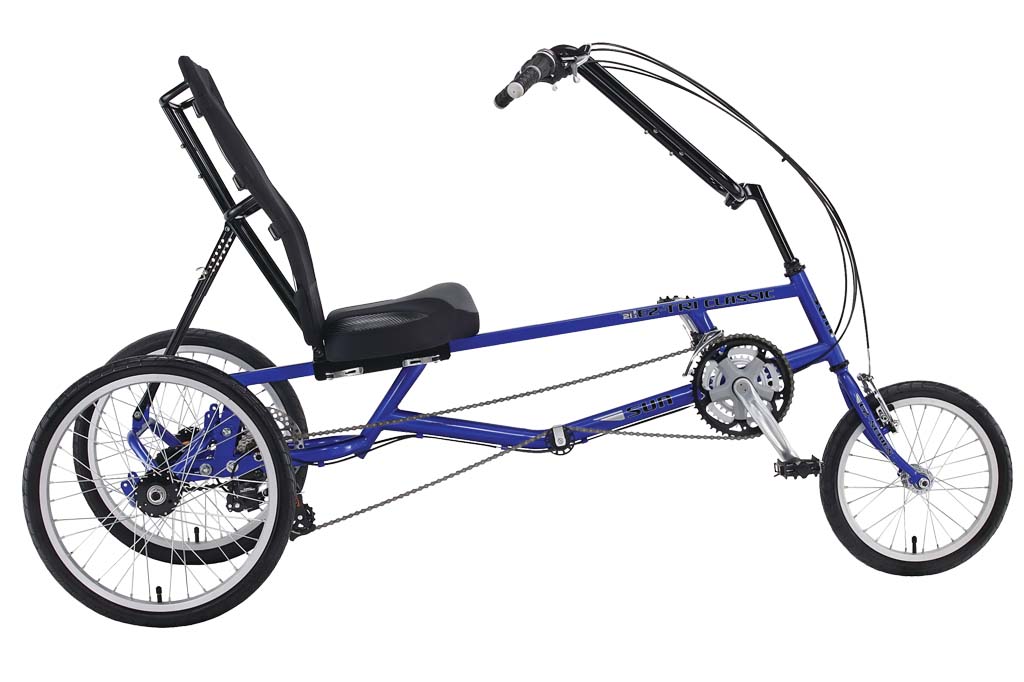
Eric over at the bike centre lent Jean a two-wheeler to try but very quickly it was clear that Jean would not easily develop the confidence to ride on our local roads. The next suggestion from Erik was a tricycle! Not one that was designed in the days of Noah and his Arc but a modern model of the ‘recumbent’ design. In particular, one manufactured by Sun Bicycles. Here’s an image of the trike from the Sun’s website.
Sun EZ Tri Classic SX
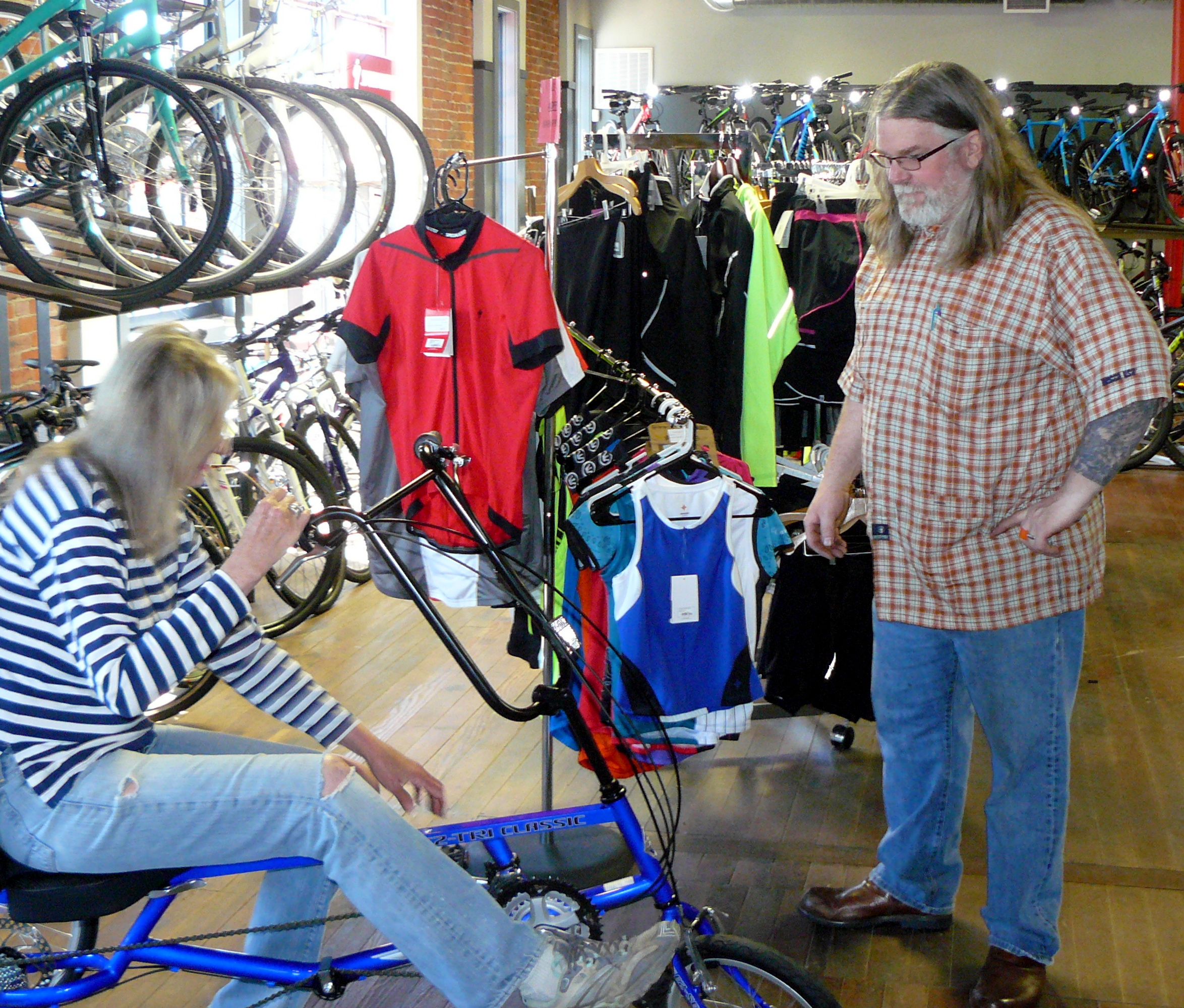
Thus it came about that last Friday Jean and I went over to Don’s Bike Center to collect her new bike.
Eric at the store checking that the bike was properly set up for Jean.
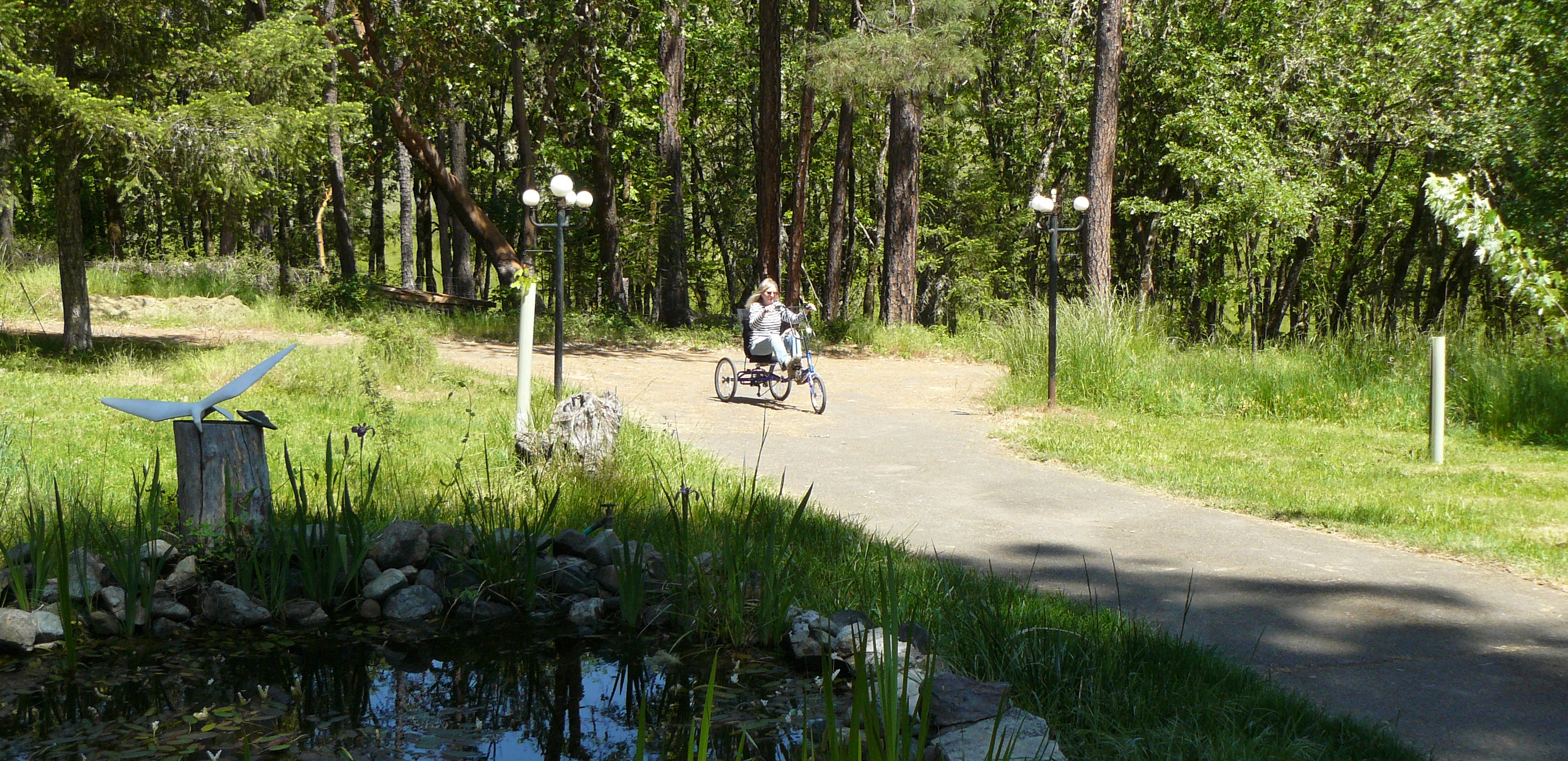
Then once home it was time for Jean to learn a number of very new skills. At first just by riding around our turning circle in front of the house.
Then trying out our quarter-mile driveway that includes a couple of steep gradients; well steep for a cycle rider!
Another view of Jean getting to know her new bike here at home.
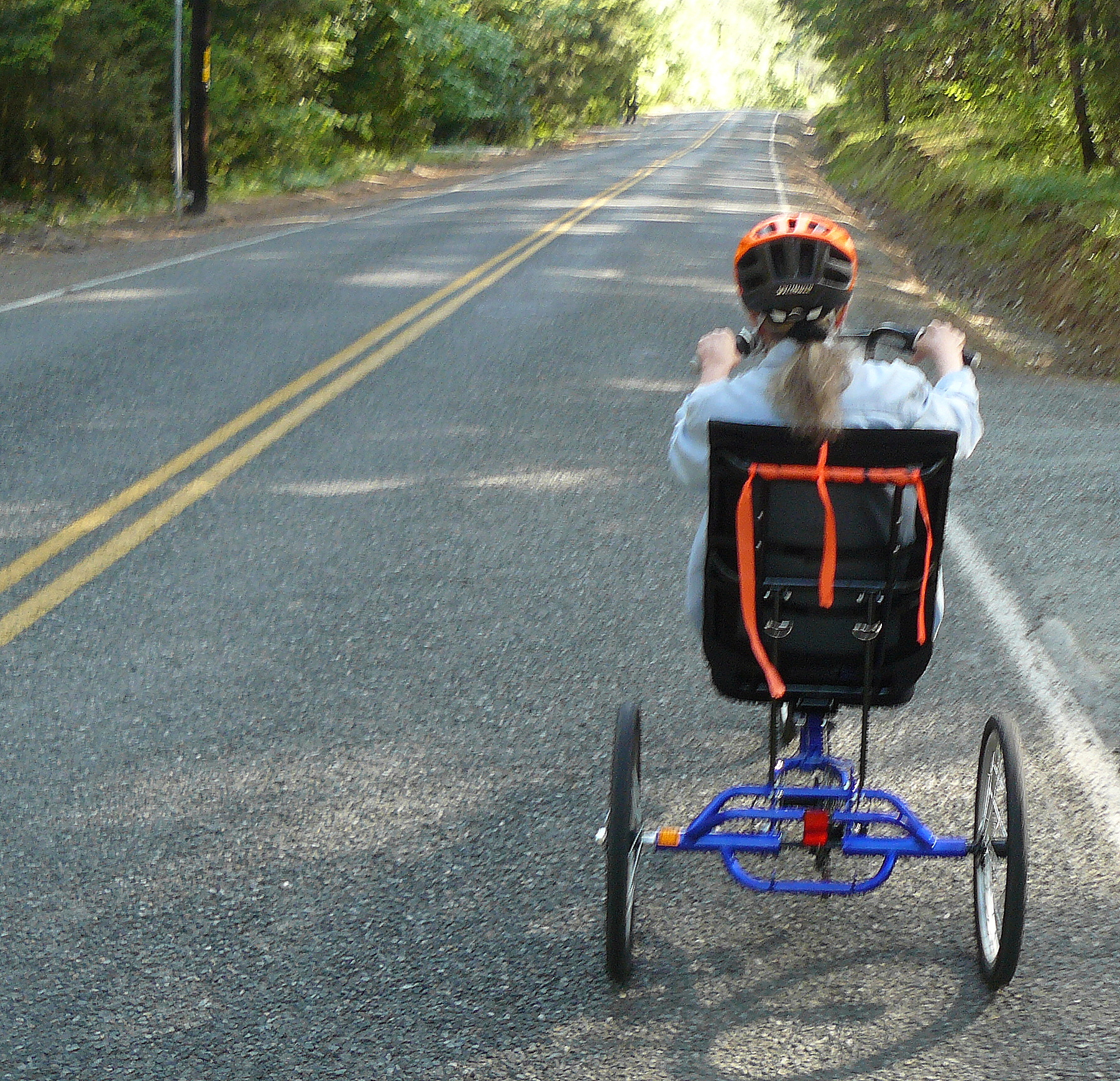
Then, deep breath, time to put on the safety helmet and go for a short ride on Hugo Road, our local road that runs past our property.
Slightly blurred image as I had the camera in my hand as I was riding behind Jean.
So all’s well that ends well!
Jean coming up the road towards the driveway entrance!
I will embarrass Jean by saying to my dear readers that Jean is already getting familiar with riding her trike and it won’t be too long before our riding group will be increased by one Mrs. Handover on her bike!
The things we do to stay healthy in our increasing years!








 Learning from Dogs