Category: History

Mature, healthy trees.

Continuing the metaphor that our trees offer us.

In yesterday’s post I offered up the idea that:

The analogy with planting trees is very apt. For any clown can plant the tree but parenting that young tree into a mature forty-foot high beauty takes professional management.

That post had been inspired by a recent essay over at Patrice Ayme’s Thoughts regarding the observation by Andy Grove, the founder of Intel, that promoting start-ups without the commensurate focus on growing those start-ups into viable commercial concerns was strategically and politically incorrect. Back to that essay for a further extract:

However, American-based manufacturing is not on the agenda of Silicon Valley or the political agenda of the United States. Venture capitalists actually told me it was obsolete (before stepping in their private jets). That omission, according to Mr. Grove, is a result of anotherunquestioned truism”: “that the free market is the best of all economic systems — the freer the better.” To Mr. Grove, or Mr. Trump, or yours truly, that belief is flawed.

Andy Grove: “Scaling used to work well in Silicon Valley. Entrepreneurs came up with an invention. Investors gave them money to build their business. If the founders and their investors were lucky, the company grew and had an initial public offering, which brought in money that financed further growth.” 

The triumph of free-market principles over planned economies in the 20th century, Mr. Grove said, did not make those principles infallible or immutable. There was room for improvement, he argued, for what he called “job-centric” economics and politics. In a job-centric system, job creation would be the nation’s No. 1 objective, with the government setting priorities and arraying the forces necessary to achieve the goal, and with businesses operating not only in their immediate profit interest but also in the interests of “employees, and employees yet to be hired.”

As even the New York Times now admits, the situation has degenerated since 2010. Although the employment rate halved, in a slave state, everybody is employed. But neither the economy, nor the society, let alone progress and civilization are doing better.

“Insecure, low-paying, part-time and dead-end jobs are prevalent. On the campaign trail, large groups of Americans are motivated and manipulated on the basis of real and perceived social and economic inequities.

Conditions have worsened in other ways. In 2010, one of the arguments against Mr. Grove’s critique was that exporting jobs did not matter as long as much of the corporate profits stayed in the United States. But just as American companies have bolstered their profits by exporting jobs, many now do so by shifting profits overseas through tax-avoidance maneuvers.

The result is a high-profit, low-prosperity nation. “All of us in business,” Mr. Grove wrote, “have a responsibility to maintain the industrial base on which we depend and the society whose adaptability — and stability — we may have taken for granted.” Silicon Valley and much of corporate America have yet to live up to that principle.”

If we return to that analogy of the tree, think how long and how much attention must be put into the conditions that will promote not only sustained growth of that young tree but growth to the point where it can propogate its own saplings.

As it is for young companies. The skills that company managers require to nurture that company to the point of self-sustaining maturity are many and varied. But they are underpinned by the need to be truthful and trustworthy, to be devoted to the employees of the company and to instill in all who work, and finance, that company to “love the customer”. Not just those customers that are the big spenders but also, and especially so, the many, many smaller clients that can make or break a company’s reputation.

So with that in mind let’s take a peek at USA LLC and UK Ltd.

Here are the closing paragraphs from Patrice’s essay:

Our corruption is not just an economic and social problem, a political problem, and a civilizational problem, as it was under Aristotle.  It is a problem for the entire planet.

We empowered a demagogue“, laments Mr. Kristof. His true calling, and that of the Main Stream Media, was to empower plutocrats, and their obsequious servants. How sad they are.

Patrice Ayme’

Then there is Richard Murphy in the UK who writes the blog Tax Research UK. In a recent post, entitled The Party Political Problem he opened, thus:

I like being outside the fray of party politics. I wasn’t born with a sufficient capacity for compromise to believe that any political party has all the answers to all questions. And yet, equally, I can admire those who can make the sacrifice to take part in this process. It is, for better or worse, at the heart of democratic politics.

That demands that it be done well. This requirement is predicated on three things. The first is a willingness to pretend you have the answer to all things. The second is a leadership that knows this is not true and which as a result respects its opponents. The third is an acute appreciation of the fact that compromise in pursuit of a higher goal, whilst saving face, is the ultimate political aim: nothing really happens without the accommodation of others.

He then closes his post:

Passion, dogma and steadfastness, come what may, are not what makes party politics.

Conviction based on wisdom, understanding and compassion does.

But these qualities remain in far too short supply, even if they’re not quite out of stock, yet.

And that’s the party political problem.

Many people both ‘sides of the pond’ would nod heads in agreement with that.

My final peek is into an essay that was recently published by the quarterly journal The Baffler. The essay was from David Graeber under the heading of Despair Fatigue. Opening:

Is it possible to become bored with hopelessness?

There is reason to believe something like that is beginning to happen in Great Britain. Call it despair fatigue.

For nearly half a century, British culture, particularly on the left, has made an art out of despair. This is the land where “No Future for You” became the motto of a generation, and then another generation, and then another. From the crumbling of its empire, to the crumbling of its industrial cities, to the current crumbling of its welfare state, the country seemed to be exploring every possible permutation of despair: despair as rage, despair as resignation, despair as humor, despair as pride or secret pleasure. It’s almost as if it’s finally run out.

and closing, thus:

Twenty-first century problems are likely to be entirely different: How, in a world of potentially skyrocketing productivity and decreasing demand for labor, will it be possible to maintain equitable distribution without at the same time destroying the earth? Might the United Kingdom become a pioneer for such a new economic dispensation? The new Labour leadership is making the initial moves: calling for new economic models (“socialism with an iPad”) and seeking potential allies in high-tech industry. If we really are moving toward a future of decentralized, small, high-tech, robotized production, it’s quite possible that the United Kingdom’s peculiar traditions of small-scale enterprise and amateur science—which never made it particularly amenable to the giant bureaucratized conglomerates that did so well in the United States and Germany, in either their capitalist or socialist manifestations—might prove unusually apt. It’s all a colossal gamble. But then, that’s what historical change is like.

In other words, it’s this!

One of the age-old maxims from professional company managers is:

It’s always a case of putting people before profits!

Putting people before profits should be in the front of the minds of all our leaders and masters; both sides of the ‘pond’.

Or in tree language investing in this:

Clown work! (This is a Red Maple, by the way!)
An American Red Maple sapling.

to achieve this:

A mature American Red Maple tree.

Come on good people, we really do need healthy, mature trees in our 21st C. societies.

New growth required!

New trees offer a good metaphor!

As regular followers of this place know (and a huge thank-you to you all) much of last Friday was spent planting trees in a grassy meadow just to the East of our house.

P1150940
A part view of the area where the trees were planted: Kentucky Coffeetrees; Northern Catalpas; a Red Maple, Eastern Redcedars.

An hour before I sat down to write this post (now 13:30 PST yesterday) I didn’t have a clue as to what to write. Then I read Patrice Ayme’s latest essay and, wow, it punched me in the face. For it resonated so strongly with a few other recent readings.

Patrice’s essay was called Trump A Demagogue? So What? and it opened thus:

“We empowered a demagogue” laments the New York Times ostensibly bleeding heart liberal, the kind Mr. Kristof, in his false “Mea Culpa” editorial, “My Shared Shame: How The Media Made Trump”. By this, Mr. Kristof means that Mr. Trump is a bad person. However, Mr. Kristof’s choice of the word “demagogue” is revealing. (Actually it’s not really his choice: “demagogue” is not Mr. Kristof’s invention: he just repeats like a parrot the most prominent slogan of the worldwide campaign of insults against Trump).

Trump a demagogue? Is Mr. Sanders a “demagogue”, too? (As much of the financial and right-wing press has it: for The Economist and the Financial Times, Trump and Sanders are both “demagogues” and that’s their main flaw.)

To understand fully the word “demagogue” one has to understand a bit of Greek, and a bigger bit of Greek history.

Then later on in that essay, Patrice goes on to quote Andy Grove:

A hard day may be coming for global plutocrats ruling as they do thanks to their globalization tricks. And I am not exactly naive. Andy Grove, founder of Intel, shared the general opinion that much of globalization was just theft & destitution fostering an ominous future (the Hungarian immigrant to the USA who was one of the founders of Intel). He pointed out, an essay he wrote in 2010 that Silicon Valley was squandering its competitive edge in innovation by neglecting strong job growth in the United States.

Mr. Grove observed that: …”it was cheaper and thus more profitable for companies to hire workers and build factories in Asia than in the United States. But… lower Asian costs masked the high price of offshoring as measured by lost jobs and lost expertise. Silicon Valley misjudged the severity of those losses, he wrote, because of a “misplaced faith in the power of start-ups to create U.S. jobs.”

Silicon Valley makes its money from start-ups. However, that phase of a business is different from the scale-up phase, when technology goes from prototypes to mass production. Both phases are important. Only scale-up is an engine for mass job growth — and scale-up is vanishing in the United States (especially with jobs connected to Silicon Valley). “Without scaling,” Mr. Grove wrote, “we don’t just lose jobs — we lose our hold on new technologies” and “ultimately damage our capacity to innovate…

The underlying problem isn’t simply lower Asian costs. It’s our own misplaced faith in the power of startups to create U.S. jobs. Americans love the idea of the guys in the garage inventing something that changes the world. New York Times columnist Thomas L. Friedman recently encapsulated this view in a piece called “Start-Ups, Not Bailouts.” His argument: Let tired old companies that do commodity manufacturing die if they have to. If Washington really wants to create jobs, he wrote, it should back startups.

Friedman is wrong. Startups are a wonderful thing, but they cannot by themselves increase tech employment.”

Spot on! For in my previous life I was the founder of two businesses. First up was Dataview Ltd, based in Colchester, that was formed in the late 1970s and soon became the global distributor of the word processing software Wordcraft, written by Englishman Pete Dowson. Dataview also initiated the ‘dongle’, a software/hardware security device to protect Wordcraft.

The Wordcraft dongle.

The second company founded by me was Aviation Briefing Ltd ‘AvBrief’ that is still going today, albeit with me no longer involved!

So I can reinforce, with hundreds of hours of lost sleep and tears, that growing a company and increasing employment, especially the employment of great technical people, is a very different matter to the start-up phase.

Frankly, regarding Dataview, it was only the luck of meeting Sid Newman that saved my bacon. For within 12 months of starting trading I was already sinking under the load of trying to be the number one salesman (that I was good at) and being the company general manager (that I was total crap at). Sid had years of experience at general management and very quickly let me get on with what I really loved – opening up Wordcraft distributorships all over the world.

The analogy with planting trees is very apt. For any clown can plant the tree but parenting that young tree into a mature forty-foot high beauty takes professional management.

Clown work! (This is a Red Maple, by the way!)

Tomorrow I will return and offer a viewpoint as to how we, as in society, are currently bereft of professional managers.

Where to for democracy?

Good people must resist what is going on!

My sub-heading was prompted by that very well-known saying, “All that evil requires to succeed is for good people to do nothing.”

That saying came to me when I was reading a recent essay published by Professor Richard Murphy over in the UK. I am referring to his article entitled: Nature reckons science is watching as democracy rides over a cliff.

Here’s the extent of Richard’s short post:

This comes from Colin Macilwain in the latest edition of the massively influential journal ‘Nature’, and I quote in the public interest and as it reinforces the arguments I have made today:

But at the top [of science] there is paralysis: leading scientific organizations do little except chase money and reinforce the ruling nexus of politics and finance — even since the financial crisis of 2008, which discredited the free-market philosophy that underpins that nexus. I argued years ago (see Nature479, 447; 2011) that scientific leaders had failed to respond in any meaningful way to that collapse, and I’m still waiting.

The political structure of the West is in deep trouble, and should it fall apart, there will be plenty of blame to go around. Most will go to political and financial elites, or to rowdy mobs. But some will belong to people in the middle who have taken public funds, defended elites and then stood back and watched as democracy got ridden over a cliff.

I think that fair comment and recommend the rest.

If one now goes across to that post from Colin here’s what one would read in the opening paragraphs:

The elephant in the room we can’t ignore

16 March 2016

The annual meeting of the American Association for the Advancement of Science (AAAS) in Washington DC last month was one of the best I’ve witnessed in more than 20 years of regular attendance. The policy sessions were packed and genuinely stimulating. I met tons of smart, influential people I hadn’t seen for ages, and we all enjoyed a good chinwag about how better to engage with the public — the meeting’s theme for 2016.

The only trouble was what was going on outside the hotel — in the United States and the world at large.

Colin then makes the point that is neatly articulated in the extract that was published by Professor Murphy and is republished above.

I don’t have any answers other than wanting to share this with you, dear reader. For decent, ordinary folk must be aware of the multiple threats to our Western democracy that are taking place.

Just as I want to share with you an example of what a good honest person and his adorable Labrador get up to. An example from my old country (and Richard Murphy’s home country).

ooOOoo

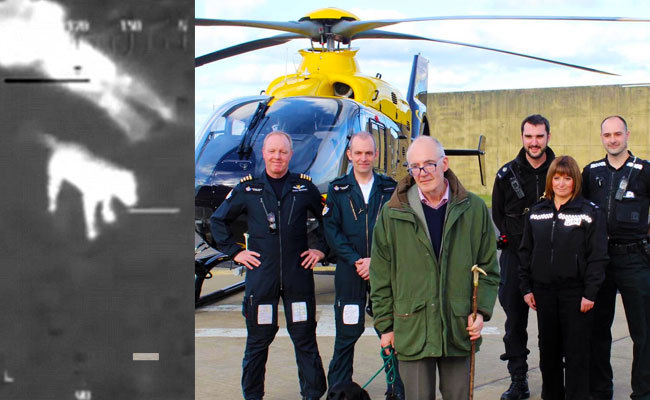
Dog Refuses to Leave the Side of Near-Death Man Trapped in Mud

3171690.large

When one false step left Martin Kay literally drowning in ice-cold mud in the English countryside, he quickly found out who his two best friends are. Turns out one of them is a dog.

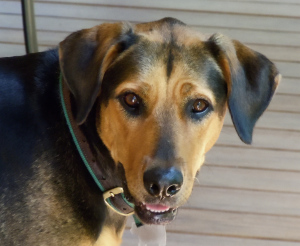
Holly Blue is a typical Labrador who has never met a tree trunk or a blade of grass that doesn’t smell good. So when Martin took out her leash one recent afternoon, his dog was over-the-moon with expectation of the crisp afternoon air and a landscape of wintery fields. Neither of them had any inkling that this simple walk would soon turn catastrophic.

This day, the two set out along a different route through England’s historic Thornham Parva village. Though it was a very cold day, the skies were clear and there was no reason for concern, or so it seemed.

“I hadn’t walked that route for about two years,” Martin said. “When I came across the mud, I tested the ground at the side and it felt firm, but as I walked into the middle the ground began to sink. I called for help but nobody heard me.”

Minutes turned into hours and Martin simply couldn’t extricate himself from the mud. Holly Blue circled anxiously, but there was nothing the dog could do except to stand guard beside her friend. She never left his side.

“I eventually drifted off,” Martin said. “I wasn’t optimistic about being found, but I wasn’t panicking – it was too cold for that!”

Fortunately, Martin’s good friend was scheduled to pick him up that day and when Martin didn’t return home, his friend grew concerned enough to call the police. Martin was reported missing to the police at 7:30 in the evening. Other friends and neighbors had already begun searching for Martin themselves, but they were all focused on his usual route, not realizing that he’d gone in a different direction.

Police used a thermal imaging camera during helicopter sweeps from above. After some time they came across a heat signature that appeared to be the warm body of dog curled up at the edge of the bog. According to police, indeed Holly Blue was found first, and sighting her led them to Martin. Watch a portion of the rescue below.

Police Constables Luke Allard and Clare Wayman were the first on the ground.

“The field was in the middle of nowhere and we were relying on the light from the helicopter and torch light,” Allard said. “When I got to Mr Kay I took hold of his hand and he wouldn’t let go – I told him he would have to let go or I wouldn’t be able to help him.”

Unfortunately Allard and Wayman began getting stuck themselves while trying to extricate Martin, so they covered him with their own jackets to keep him warm while waiting for reinforcements.

Martin was in and out of consciousness as he was taken to West Suffolk Hospital. When he awoke, he was told how Holly Blue had helped save his life.

“It was the first and the last time she had been called into action,” Martin said in an interview with Global News. “She’s a very loyal dog.”

ooOOoo

Now compare the behaviourial values of Martin Kay, Holly Blue and everyone else who ensured this had a happy ending with those being demonstrated in the first part of this post!

It’s no sinecure to say, once again, how urgent it is for humankind to learn from our fabulous dogs!

Living on.

They will always live on in our hearts and minds.

I follow the blog belas bright ideas.

Recently, she posted a beautiful poem to commemorate the nine years of having Susami in their lives. It is republished here with Bela’s kind permission.

ooOOoo

dscn0130

There is a presence, here
and now; the bellows of breath,
warmth of blood, the feeling,
even if imagined,
that we are connected, one
to the other.

We each have our memories,
after all.

Your passing removes that utterly,
and somehow the same hand
lying on the same fur and flesh
will sense void, not even spirit,
not even that.

One can forgive the athiest,
or even theist their doubts,
props, religions. For this
at least is real:
This. Here. Now.
Tomorrow it will be gone.

And no matter in visions I linger
in the numinous; despite
in the garden I witness the alchemy
of decay transforming
into green and vibrant,
the loss of a loving companion
is egregious, indeed.

ooOOoo

Bela explained how Susami came to them:

This sweet being has been with us only nine years, since she was about 10-12 weeks old. Her previous steward, a multiply-pierced and -tattooed young woman, had to find a home for her. We were on our way to the east coast to deal with some business, and I had taken our good friend Kevin with me to the local feed store to get the horse stocked up on alfalfa pellets (it was during a long drought). I saw the pup with a bandage on her leg before, and asked the gal what was wrong with her. I later learned from the store owner (who thanked me many, many times for giving Susami a good home) that the dog had been severely abused. (She never did tell me specifics, so I was left to wonder.) The young woman tried her best, but there were forces beyond her control in her environment. When I saw Susami again, we had to take her, but how? I asked Kev if he would watch yet one more animal for us while we were gone, and he happily agreed! So she joined our chocolate Lab who we brought with us to Hawaii from northern Maine (a Non-rescue). He was Thrilled to have that little creature’s companionship.

Going to close with the exquisite words from Suzanne Clothier that Dr. Jim Goodbrod used in the foreword to my book:

There is a cycle of love and death that shapes the lives of those who choose to travel in the company of animals. It is a cycle unlike any other. To those who have never lived through its turnings or walked its rocky path, our willingness to give our hearts with full knowledge that they will be broken seems incomprehensible. Only we know how small a price we pay for what we receive. Our grief, no matter how powerful it may be, is an insufficient measure of the joy we have been given.

(Suzanne Clothier: Bones Would Rain from the Sky: Deepening Our Relationships with Dogs.)

Suzanne’s words cannot be bettered when it comes to the death of a beloved dog.

Susami, you will not be forgotten.

In honour of St Patrick’s Day.

With huge thanks to Sally McCarthy.

Sally reposted this video that was seen on Paul Goosen’s Facebook page.

Is there no end to what our wonderful dogs can do!

The meaning of it all!

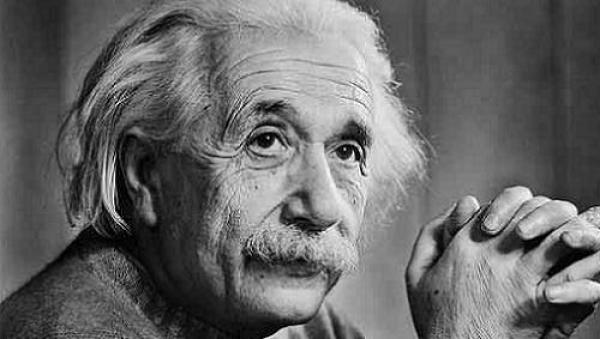
Celebrating the life and times of Albert Einstein.

Albert-EinsteinYesterday was the centenary of the birth of Albert Einstein (14 March 1879 – 18 April 1955). It has been widely reported. For example, a piece on the EarthSky blog:

March 14, 1879. This is the anniversary of the birth of Albert Einstein, undoubtedly the most famous scientist of the modern era.

Einstein was born in Ulm, Germany, where an uncle – Jakob Einstein, an engineer – introduced him to science and math. At age 17, he enrolled in the Swiss Polytechnic Institute after failing the entrance exam the previous year. He graduated in 1900, and in 1902 he became a junior patent examiner in the Swiss Patent Office in Bern, Switzerland, where he specialized in electrical devices.

The year 1905 came to be known as Einstein’s Miracle Year. He was 26 years old, and in that year he published four papers that reshaped physics.

Now before you read on let me proclaim that today’s post has absolutely nothing to do with dogs! (Unless dogs exist in parallel universes!)

But a recent documentary that was published on Top Documentary Films was really fascinating and incredibly well presented. Thus, in terms of the likes of you and I better understanding what Einstein revealed about our universe, I couldn’t resist sharing it with you all today. It is just 29 minutes long.

STORYLINE

One hundred years have passed since Albert Einstein first unleashed his highly influential Theory of General Relativity unto the world. These revelations charted a future course of scientific pursuit, and never cease to inform our understanding of the universe today. In celebration of that impressive legacy, the documentary short Einstein’s Extraordinary Universe travels to three research facilities in different regions across the globe, and shows us how Einstein’s work continues to challenge, shape and inspire the scientific discoveries of tomorrow.

The film opens in Tuscany. Under the shadows of Galileo’s groundbreaking work on gravity research, a group of astrophysicists are exploring Einstein’s theories related to the occurrence of gravitational waves through space and time. Can modern technologies and advanced scientific intellect result in actual proof of such waves?

Viewers are then taken to the world’s largest underground laboratory. Hidden far beneath Italy’s Gran Sasso mountains, the lab serves as a home to researchers who work tirelessly to prove another of Einstein’s grandiose theories: the existence of dark matter. The vast majority of our universe is made up of materials that we have not yet been able to detect through forces of light and energy. The dedicated team who toil away in this impressive underground lair hope they can lay the groundwork in changing that.

The filmmakers’ next stop is Switzerland, where they are given a tour of one of the most impressive displays of scientific testing technology on the planet. Housed by the European Organization for Nuclear Research, or CERN, the Large Hadron Collider is the most powerful particle accelerator on the planet, and is being used to question and examine the substance of all matter in our universe.

Through each destination on this incredible journey, what amazes most is how prescient Einstein’s theories have proven even after a century has passed. His work continues to test the limits of our scientific understanding, and sets a groundwork from which researchers still strive for answers. Featuring a plethora of illuminating interviews with many top figures in the fields of scientific study, Einstein’s Extraordinary Universe is certain to delight seasoned science geeks and novices alike.

What an extraordinary mind he had!

The arrow of time.

Everything, eventually, falls into decay.

What is deeply fascinating, at a number of levels, is how time only goes one way. At every single level of our experience, from the scale of the universe down to the tiniest particle known to science, it all flows forward. The arrow of time!

I was reminded of this interesting question of time in a book that has been published by a local Oregon author, John Taylor Our Curious UNIVERSE (the book is not available online otherwise I would have linked to it.)

It got me thinking of age. How we are all aging. How there is nothing that we can do to stop it. How the only thing we can do is to change our relationship with age. That then reminded me of an item that was published on The Conversation site a week ago that I wanted to share with you – share within the terms provided by The Conversation. The article was called It’s time to measure 21st century aging with 21st century tools.

ooOOoo

It’s time to measure 21st century aging with 21st century tools

March 4, 2016

Disclosure statement

The research was conducted in the framework of the European Research Council ERC-2012-AdG 323947-Re-Ageing

Sergei Scherbov receives funding from the European Research Council ERC-2012-AdG 323947-Re-Ageing

oooo

The populations of most countries of the world are aging, prompting a deluge of news stories about slower economic growth, reduced labor force participation, looming pension crises, exploding health care costs and the reduced productivity and cognitive functioning of the elderly.

These stories are dire, in part because the most widely used measure of aging – the old-age dependency ratio, which measures the number of older dependents relative to working-age people – was developed a century ago and implies the consequences of aging will be much worse than they are likely to be. On top of that, this ratio is used in political and economic discussions of topics such as health care costs and the pension burden – things it was not designed to address.

Turning 65 in 2016 doesn’t mean the same thing as hitting 65 in 1916. So instead of relying on the old-age dependency ratio to figure out the impact of aging, we propose using a series of new measures that take changes in life expectancy, labor participation and health spending into account. When you take these new realities into account, the picture looks a lot brighter.

 How facts from the census questionnaire were tabulated into statistics in 1950. The U.S. National Archives/Flickr
How facts from the census questionnaire were tabulated into statistics in 1950. The U.S. National Archives/Flickr

Our tools to measure aging have aged

The most commonly used measure of population aging is the “old-age dependency ratio,” which is the ratio of the number of people 65 years or older to those 20 to 64.

But, since the old-age dependency ratio was introduced in the early 1900s, most countries have experienced a century of rising life expectancy, and further increases are anticipated.

For instance, in 1914, life expectancy at birth in Sweden was 58.2 years (average for both sexes). By 2014, it had risen to 82.2 years. In 1935, when the U.S Social Security Act was signed into law, 65-year-olds were expected to live 12.7 more years, on average. In 2013, 65 year-olds may expect to live 19.5 years more.

But these changes aren’t reflected in the conventional statistics on aging. Nor is the fact that many people don’t just stop working when they turn 65, and that people are staying healthier for longer.

To get a better sense of what population aging really means today, we decided to develop a new set of measures that take these new realities into account to replace the old-age dependency ratio. And instead of one ratio, we created several ratios to evaluate health care costs, labor force participation and pensions.

Who retires at 65 anymore?

One of these new realities is that the number of people working into their late 60’s and beyond is going up. In 1994, 26.8 percent of American men aged 65-69 participated in the labor force. That figure climbed to 36.1 percent in 2014 and is forecast to reach 40 percent by 2024. And the trend is similar for even older men, with 17 percent of those aged 75-79 expected to still be working in a decade, up from just 10 percent in 1994.

Clearly, these older people did not get the message that they were supposed to become old-age dependents when they turned 65.

Depot Supervisor Eric Headley, 74, takes a call on his mobile phone while at work for Pimlico Plumbers in London July 29, 2010. Britain announced plans to scrap the fixed retirement age next year, saying it wanted to give people the chance to work beyond 65, but business leaders warned the move would create serious problems. REUTERS/Suzanne Plunkett (BRITAIN - Tags: POLITICS SOCIETY) - RTR2GUL1
Depot Supervisor Eric Headley, 74, takes a call on his mobile phone while at work for Pimlico Plumbers in London July 29, 2010. Britain announced plans to scrap the fixed retirement age next year, saying it wanted to give people the chance to work beyond 65, but business leaders warned the move would create serious problems. REUTERS/Suzanne Plunkett.

This isn’t unique to the U.S. Rates like these in many countries have been rising. In the U.K., for instance, the labor force participation rate of 65- to 69-year-old men was 24.2 percent in 2014, and in Israel it was 50.2 percent, up from 14.8 percent and 27.4 percent, respectively, in 2000. In part this is because older people now often have better cognitive functioning than their counterparts who were born a decade earlier.

So, instead of assuming that people work only from ages 20 to 64 and become old-age dependents when they hit 65, we have computed “economic dependency ratios” that take into account observations and forecasts of labor force participation rates. This tells us how many adults not in the labor force there are for every adult in the labor force, giving us a more accurate picture than using 65 as a cutoff point. We used forecasts produced by the International Labour Organization to figure this out.

The old-age dependency ratio in the U.S. is forecast to increase by 61 percent from 2013 to 2030. But using our economic dependency ratio, the ratio of adults in the labor force to adults not in the labor force increases by just 3 percent over that period.

Clearly, doom and gloom stories about U.S. workers having to support so many more nonworkers in the future may need to be reconsidered.

Is the health care burden going to be so high?

Another reality is that while health care costs will go up with an older population, they won’t rise as much as traditional forecasts estimate.

Instead of assuming that health care costs rise dramatically on people’s 65th birthdays, as the old-age dependency ratio implicitly does, we have produced an indicator that takes into account the fact that most of the health care costs of the elderly are incurred in their last few years of life. Increasing life expectancy means those final few years happen at ever later ages.

In Japan, for example, when the burden of the health care costs of people aged 65 and up on those 20-64 years old is assessed using only the conventional old-age dependency ratio, that burden is forecast to increase 32 percent from 2013 to 2030. When we compute health care costs based on whether people are in the last few years of their lives, the burden increases only 14 percent.

Pension ages are going up

The last reality we considered concerns pensions.

In most OECD countries, the age at which someone can begin collecting a full public pension is rising. In a number of countries, such as Sweden, Norway and Italy, pension payouts are now explicitly linked to life expectancy.

In Germany, the full pension age will rise from 65 to 67 in 2029. In the U.S., it used to be 65, is now 66 and will soon rise to 67.

Instead of assuming that everyone receives a full public pension at age 65, which is what the old-age dependency ratio implicitly does, we have computed a more realistic ratio, called the pension cost dependency ratio, that incorporates a general relationship between increases in life expectancy and the pension age. The pension cost dependency ratio shows how fast the burden of paying public pensions is likely to grow.

For instance, in Germany, the old-age dependency ratio is forecast to rise by 49 percent from 2013 to 2030, but 65-year-old Germans will not be eligible for a full pension in 2030. Our pension cost dependency ratio increases by 26 percent over the same period. Instead of indicating that younger Germans will have to pay 49 percent more to support pensioners in 2030 compared to what they paid in 2013, taking planned increases in the full pension age into account, we see that the increase is 26 percent.

Pranom Chartyothin, a 72-year-old bus conductor, sells and collects bus tickets in downtown Bangkok, Thailand, February 3, 2016. Such scenes will only become more common in Thailand as its population rapidly ages, unlike its neighbours with more youthful populations. The World Bank estimates the working-age population will shrink by 11 percent by 2040, the fastest contraction among Southeast Asia's developing countries. Thailand's stage of economic development, the rising cost of living and education, and a population waiting longer to get married are among the reasons it is ageing more quickly than its neighbours. An effective contraception programme in the 1970s also played a part, said Sutayut Osornprasop, a human development specialist at the World Bank in Thailand. Picture taken February 3, 2016. REUTERS/Jorge Silva TPX IMAGES OF THE DAY - RTX269SM
Pranom Chartyothin, a 72-year-old bus conductor, sells and collects bus tickets in downtown Bangkok, Thailand, February 3, 2016. Such scenes will only become more common in Thailand as its population rapidly ages, unlike its neighbours with more youthful populations. The World Bank estimates the working-age population will shrink by 11 percent by 2040, the fastest contraction among Southeast Asia’s developing countries. Thailand’s stage of economic development, the rising cost of living and education, and a population waiting longer to get married are among the reasons it is ageing more quickly than its neighbours. An effective contraception programme in the 1970s also played a part, said Sutayut Osornprasop, a human development specialist at the World Bank in Thailand. Picture taken February 3, 2016. REUTERS/Jorge Silva.

Sixty-five just isn’t that old anymore

In addition to this suite of measures focused on particular aspects of population aging, it is also useful to have a general measure of population aging. We call our general measure of population aging the prospective old-age dependency ratio.

People do not suddenly become old-age dependents on their 65th birthdays. From a population perspective, it makes more sense to classify people as being old when they are getting near the end of their lives. Failing to adjust who is categorized as old based on the changing characteristics of people and their longevity can make aging seem faster than it will be.

In our prospective old-age dependency ratio, we define people as old when they are in age groups where the remaining life expectancy is 15 years or less. As life expectancy increases, this threshold of old age increases.

In the U.K., for instance, the conventional old-age dependency ratio is forecast to increase by 33 percent by 2030. But when we allow the old-age threshold to change with increasing life expectancy, the resulting ratio increases by just 13 percent.

Populations are aging in many countries, but the conventional old-age dependency ratio makes the impact seem worse than it will be. Fortunately, better measures that do not exaggerate the effects of aging are now just a click away.

ooOOoo

Yes, we live in interesting times!

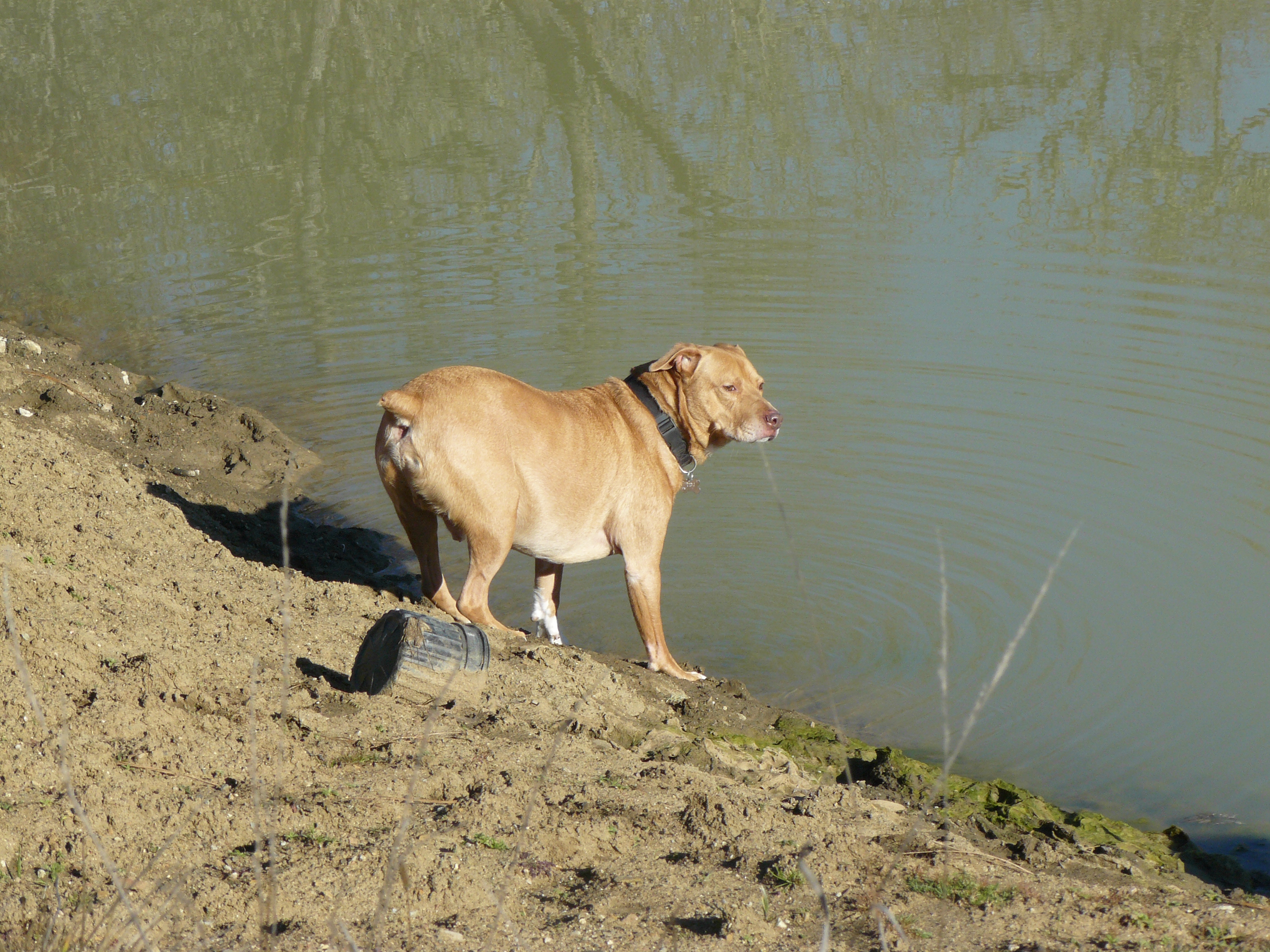
Pit Bulls – an alternative view

Dangerous dogs very, very rarely exist.

I’m not going to rant on about there never being a dangerous dog just as me saying that there never is a dangerous person is clearly factually incorrect. But they are rare!

In yesterday’s post, I shared the terrible news about Stella, a female Pit Bull mix, that because of her breed, and nothing else, has been locked up by The Devon and Cornwall Police for over two years. Sharon Stone’s petition over on the Care@ website has, at the time of writing this yesterday, received nearly 16,000 signings!

To support the proposition that for the vast majority of dogs, of all breeds, it is how they are loved and cared for by us humans that makes the difference, let me republish a post from a couple of years ago. For we have a Pit Bull mix here at home and he is the most wonderful, caring dog one could ever wish for. Here’s that post.

ooOOoo

Meet the dogs – Casey

On to dog number five.

If you are new to this series then Ruby’s story of last week will link you to all the dogs written about so far. Today, here is Jean’s account of how Casey became part of the family.

ooOOoo

Casey

Casey, at home; picture taken a month ago.

Every Friday, the Payson Roundup newspaper would devote a full page to the Humane Society, displaying some of the cats and dogs they had for adoption. I would read about each animal and quietly wish I could bring them all home.

I was particularly taken with one dog that had appeared several times in this Friday page. His name was Casey and he was a six-year-old Pit Bull mix. Unfortunately, at home (we were then living in Payson, AZ) we were ‘maxed out’ with a total of 14 dogs in three different sections of our house. We just couldn’t take Casey.

I had volunteered to be a dog-walker at the Humane Society dog shelter. But after two sessions walking dogs, I just couldn’t look at these sad little faces without breaking down in tears. I switched my efforts to working at the Society’s Thrift Store. That was great fun and, at least, it felt as though I was still helping the animals. Nonetheless, I was very impressed with the animal shelter. They did their utmost to re-home the animals in their care.

Ruby’s ‘pack’ here at home included Phoebe and Tess, rescue dogs from Mexico. Recently, Phoebe had died with leukaemia and Tess with bone cancer leaving Ruby on her own. Ruby was a dog that didn’t mix at all well with the other dogs, as was explained in last week’s post.

The next Friday, the Payson Roundup showed the Society’s ‘lonely hearts club’, highlighting animals that had been in care for a long time. The first dog shown was Casey. I telephone Chandra, the lady responsible for adoptions, and asked if Paul and I could bring Ruby to the shelter to find a companion for her. When we were at the shelter, Chandra asked us if we had anything against Pit Bulls. Of course we didn’t. Ruby was introduced to Casey and, as they say, the rest was history. Casey and Ruby right from the start were just wonderful together.

Ruby behind Casey.
Ruby behind Casey.

Subsequently, I learned from Chandra that Casey had been in care for over a year and, had we not taken him home, his days were numbered at the shelter. There were many cheers and tears when I signed the adoption paper for Casey.

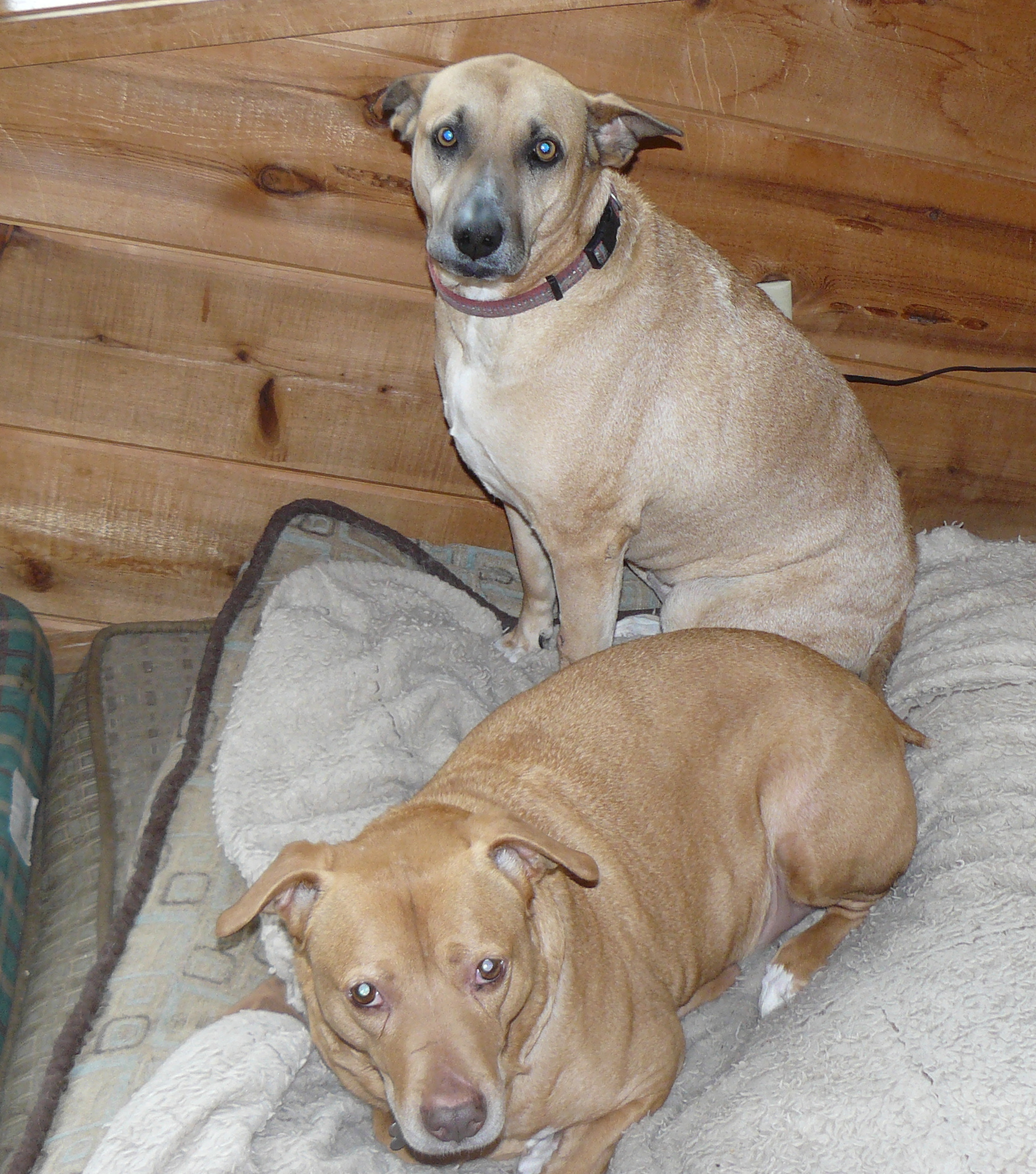
Casey now lives in the kitchen group here in Oregon: Paloma, Ruby, Lilly and Casey. As with all our dogs, Casey is so happy to have our 14 acres to play in. He is also the sweetest natured of dogs and will try to climb on to your lap at the first opportunity. I have always been a great advocate of Pit Bulls and Pit Bull mixes and have never come across a mean one.

Thus, if you are in the position to adopt a dog, please consider Pit Bulls and Pit Bull mixes for the Pit Bull is a much-maligned breed.

Casey demonstrating a dog's focussing skills!
Casey demonstrating a dog’s focussing skills!

ooOOoo

If there is any news about Stella’s fate I will share that with all you dear readers without delay.

Interconnections Three

Is there a case for optimism? You bet there is!

To be honest, at a personal level I just don’t know the answer to that question. It seems to depend on the mood that Jean and I are in at any particular time. All I can fall back on is that well-used saying from me: “Never underestimate the power of unintended consequences”.

In other words, we shouldn’t underestimate the strength of millions of good people when their demands start reaching out to those in power. (And whatever your reaction to this post, please don’t miss watching the inspirational Al Gore speech towards the end of this post.)

Recently over on the Grist site there was an article about the critical changes that each and every one of us should be making. I want to share it with you in full.

ooOOoo

Want to fight climate change? Here are the 7 critical life changes you should make

Interconnections Two

Continuing the stark assessment of where we are today.

In yesterday’s post I covered the first five of the eleven facts about sea-level rise. Here are the rest of those facts.

ooOOoo


11 alarming facts about sea-level rise

Russell McLendon, February 26, 2016.

6. Sea levels could rise another 1.3 meters (4.3 feet) in the next 80 years.

sea-level rise mapThis map shows areas that would flood (marked in red) due to 1-meter sea-level rise. (Photo: NASA)

In another study published this month, scientists report that global sea levels will likely rise 0.5 to 1.3 meters (1.6 to 4.3 feet) by the end of this century if greenhouse gas emissions aren’t rapidly reduced. Even if last year’s Paris Agreement does spur ambitious climate policy, sea levels are still projected to rise 20 to 60 cm (7.8 to 23.6 inches) by 2100. Taken with the longer-term effects from melting ice sheets in Greenland and Antarctica, that means any strategy to endure sea-level rise must involve adaptation plans as well as efforts to slow the trend.

7. Up to 216 million people currently live on land that will be below sea level or regular flood levels by 2100.

coastal flooding in Typhoon FitowHigher sea levels can exacerbate storm surges, like this 2013 flood in Wenzhou, China. (Photo: STR/AFP/Getty Images)

Of the estimated 147 million to 216 million people in harm’s way, between 41 million and 63 million live in China. Twelve nations have more than 10 million people living on land at risk from sea-level rise, including China as well as India, Bangladesh, Vietnam, Indonesia and Japan. Bangladesh is especially vulnerable, identified by the U.N. as the country most in danger from rising seas. Once the ocean rises by 1.5 meters (4.9 feet) next century, it will affect 16 percent of Bangladesh’s land area and 15 percent of its population — that’s 22,000 km2 (8,500 mi2) and 17 million people.

The situation is also urgent for low-lying island nations like Kiribati, the Maldives, the Marshall Islands and the Solomon Islands, where land is already so close to sea level that a few inches make a world of difference. Some are even mulling mass relocations — the government of Kiribati, for one, has a web page outlining its strategy for “migration with dignity.” A town on Taro Island, the capital of Choiseul Province in the Solomon Islands, is also planning to move its entire population in response to rising seas. The small community of Newtok, Alaska, has already begun the difficult process of transplanting itself away from the encroaching coast.

8. Sea-level rise can contaminate water used for drinking and irrigation.

saltwater intrusionSea-level rise can aid saltwater intrusion of freshwater aquifers, as seen in this schematic illustration. (Image: NRC.gov)

In addition to surface flooding, sea-level rise can both push up the freshwater table and contaminate it with seawater, a phenomenon known as saltwater intrusion. Many coastal areas rely on aquifers for drinking water and irrigation, and once they’re tainted by saltwater they may be unsafe for humans as well as crops.

It is possible to remove salt from water, but the process is complex and costly. San Diego County recently opened the Western Hemisphere’s largest desalination plant, for example, and several other sites are proposed in the state. Yet that may not be practical for many coastal communities, especially in less wealthy nations.

9. It can also threaten coastal plant and animal life.

loggerhead sea turtle hatchlingFloods fueled by rising seas may harm baby sea turtles, like these South African loggerheads. (Photo: Jeroen Looyé/Flickr)

Humans aren’t the only ones who’ll suffer as sea levels rise. Any coastal plants or animals that can’t quickly move to new, less flood-prone habitats could face dire consequences. As one 2015 study noted, sea turtles have a long-established habit of laying eggs on beaches, which need to stay relatively dry for their babies to hatch.

Inundation for one to three hours reduced egg viability by less than 10 percent, the study’s authors found, but six hours underwater cut viability by about 30 percent. “All embryonic developmental stages were vulnerable to mortality from saltwater inundation,” the researchers write. Even for hatchlings that do survive, being starved of oxygen in the egg could lead to developmental problems later in life, they add.

Other beach life may also be at risk, including plants. A recent study found that some salt marshes can adapt, both by growing vertically and by moving inland, but not all flora will be so fortunate. “Trees have to work harder to pull water out of salty soil; as a result, their growth can be stunted — and if the soil is salty enough, they will die, a common sign of sea-level rise,” Climate Central explains. “Even trees that are especially suited to salty soil can’t survive repeated flooding by seawater.”

10. Global flood damage for large coastal cities could cost $1 trillion a year if cities don’t take steps to adapt.

sea-level rise in TokyoThis Google Earth simulation shows a Tokyo neighborhood with 1.3-meter sea-level rise. (Image: Google Earth)

The average global losses from flooding in 2005 were about $6 billion, but the World Bank estimates they’ll rise to $52 billion per year by 2050 based on socioeconomic changes alone. (That means things like increasing coastal populations and property value). If you add the effects of sea-level rise and sinking land — which is happening even faster in some places — the cost could surge to $1 trillion per year.

11. It’s too late to stop sea-level rise — but not too late to save lives from it.

iceberg off GreenlandA full moon shines over an iceberg that broke off Greenland’s Jakobshavn Glacier. If the entire Greenland ice sheet melted, sea levels would rise about 6 meters, or 20 feet. (Photo: Joe Raedle/Getty Images)

Unfortunately, CO2 emissions linger in the atmosphere for centuries, and today’s CO2 levels have already committed Earth to dangerous sea-level rise. About 99 percent of all freshwater ice resides in two ice sheets: one in Antarctica and one in Greenland. Both are expected to melt if humanity’s CO2 output isn’t curbed quickly, but the question is when — and how much damage we still have time to prevent.

The Greenland ice sheet is smaller and melting more quickly. If it completely melted, sea levels would rise by about 6 meters (20 feet). The Antarctic ice sheet has been more buffered from warming so far, but it’s hardly immune, and would raise the ocean by 60 meters (200 feet) if it melted. (Estimates vary widely on how long these ice sheets might survive — while most expect they’ll take centuries or millennia to melt, a controversial 2015 paper suggested it could happen much more quickly.)

Sea levels have naturally risen and receded for billions of years, but they’ve never risen this quickly in modern history — and they’ve never had so much human help. It’s unclear what effect they’ll have on our species, but what is clear is that our descendants will still be dealing with this problem long after we’re all gone. Giving them a head start on a solution is the least we can do.

“With all the greenhouse gases we already emitted, we cannot stop the seas from rising altogether, but we can substantially limit the rate of the rise by ending the use of fossil fuels,” says Anders Levermann, a climate scientist at Columbia University and co-author of the new study on future sea-level rise. “We try to give coastal planners what they need for adaptation planning, be it building dikes, designing insurance schemes for flooding or mapping long-term settlement retreat.”

As another recent study pointed out, any policy decisions made in the next few years and decades “will have profound impacts on global climate, ecosystems and human societies — not just for this century, but for the next ten millennia and beyond.”

ooOOoo

Tomorrow, in the final part of this three-part posting I will look at some positive things that we can all be doing now.

But let me leave you with a rather beautiful consequence of these changing times. As seen over on Grist:

ooOOoo

Incredible glacier art pays homage to our disappearing ice