Category: History

Underground magic

A trip to the Oregon Caves National Monument & Preserve.

A week ago when our family guests were staying with us we decided it would be a treat for all of us to visit the very famous Oregon Caves – it was not a disappointment.

P1160302
Morten and Marius gathering information.

The history of the caves does involve a dog.

Apparently Elijah Davidson discovered the caves in 1874 when he was out with Bruno, his dog, and it disappeared. The dog had fallen down a fissure that Elijah managed to squeeze into and, bingo!, there was the most incredible deep cave ahead of him. (Watch the video below for a fuller description of how the cave was discovered.)

Joaquin Millers Chapel This is a room seen on the cave tour. It is called Joaquin Miller's Chapel and it is named after the author, Joaquin Miller because he wrote about Oregon Caves in Sunset magazine.
Joaquin Millers Chapel
This is a room seen on the cave tour. It is called Joaquin Miller’s Chapel and it is named after the author, Joaquin Miller because he wrote about Oregon Caves in Sunset magazine.

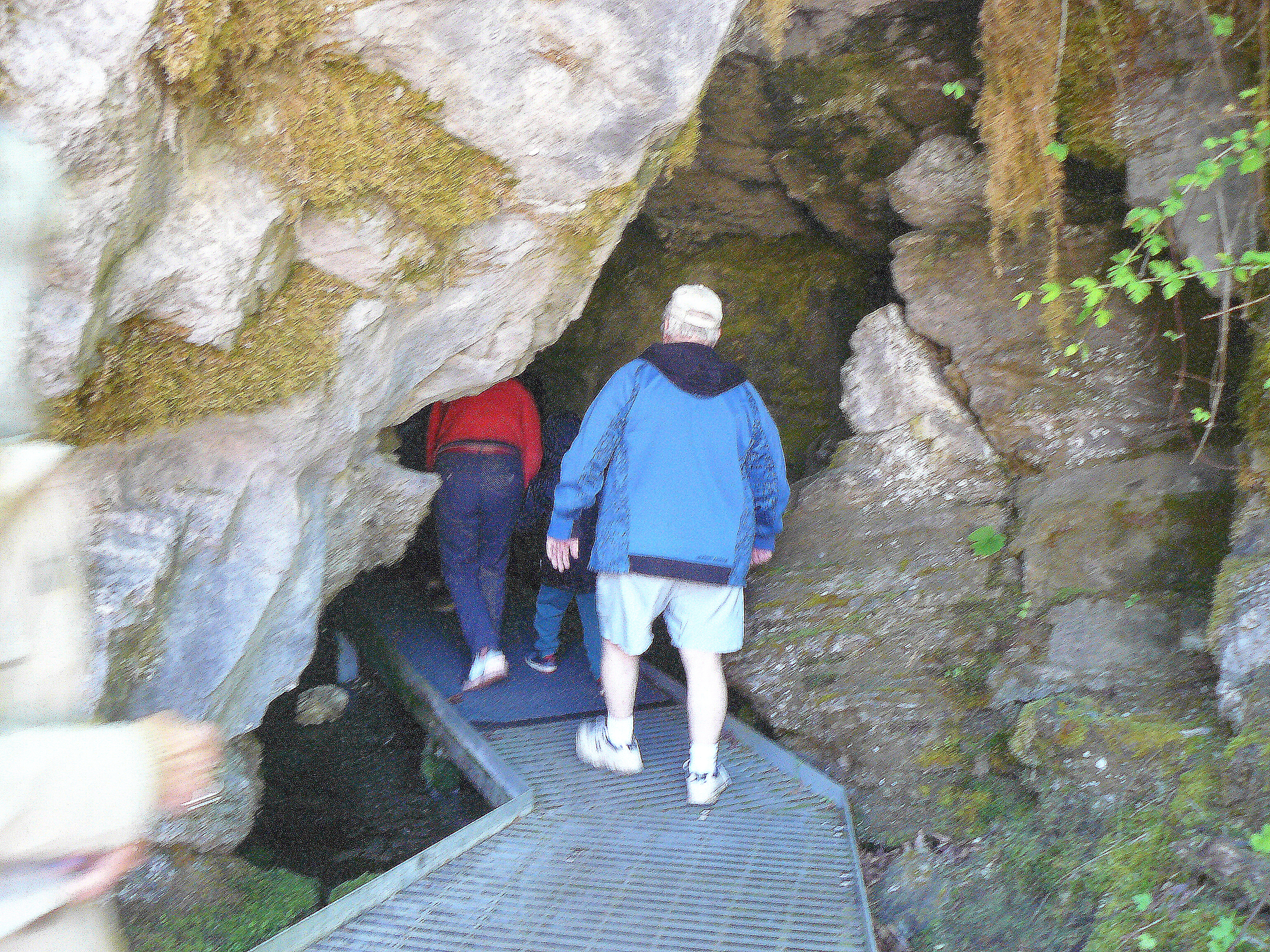
Clearly today’s visitors to the cave enter in a more gentle fashion!

P1160309WikiPedia has a very good description of the caves, from which I quote:

Oregon Caves National Monument and Preserve is a National Monument and Preserve in the northern Siskiyou Mountains of southwestern Oregon in the United States. The main part of the 4,558-acre (1,845 ha) park, including the marble cave and a visitor center, is located 20 miles (32 km) east of Cave Junction, on Oregon Route 46. A separate visitor center in Cave Junction occupies 4 acres (1.6 ha) of the total. Both parts of the monument, managed by the National Park Service, are in southwestern Josephine County, near the Oregon–California border. The climate is generally mild even at the cave’s elevation of about 4,000 feet (1,200 m) above sea level, but icicles can form at the cave entrance, and winter snow sometimes blocks the park highway.

Elijah Davidson, a resident of nearby Williams, discovered the cave in 1874. Over the next two decades, private investors failed in efforts to run successful tourist ventures at the publicly owned site. After passage of the Antiquities Act by the United States Congress, President William Howard Taft established Oregon Caves National Monument, to be managed by the United States Forest Service, in 1909. The popularity of the automobile, construction of paved highways, and promotion of tourism by boosters from Grants Pass led to large increases in cave visitation during the late 1920s and thereafter. Among the attractions at the remote monument is the Oregon Caves Chateau, a six-story hotel built in a rustic style in 1934. It is a National Historic Landmark and is part of the Oregon Caves Historic District within the monument. The Park Service, which assumed control of the monument in 1933, offers tours of the cave from mid-April through early November. In 2014, the monument was expanded by about 4,000 acres (1,600 ha) and re-designated a National Monument and Preserve. In addition, the River Styx, which flows through the cave and emerges as Cave Creek, was named to the National Wild and Scenic Rivers System.

Oregon Caves is a solutional cave, with passages totaling about 15,000 feet (4,600 m), that formed in marble. The parent rock was originally limestone that metamorphosed to marble during the geologic processes that created the Klamath Mountains, including the Siskiyous. Although the limestone formed about 190 million years ago, the cave itself is no older than a few million years. Valued as a tourist cave, the cavern also has scientific value; sections of the cave that are not on tour routes contain fossils of national importance.

Daughter Maija, grandson Morten and your truly just having exited the cave.
Daughter Maija, grandson Morten and yours truly just having exited the cave.

Between Marius and myself we took a great number of photographs but many of them can’t compare to the quality of photos found on the web.

For example here’s one of my pictures:

P1160322and here’s one taken from the National Parks Service website:
These are formations known as soda straws and like soda straws they are hollow tubes. They are made up of the mineral calcite.

Won’t go on! (But I will post a collection of photographs, both from me and Marius and found online in a future Picture Parade.)

What I will do is to close with this YouTube video. It is 17 minutes long but very interesting and, hopefully, an inspiration to others to come and visit this incredible geological site.

Happy Holidays to all!

Continuing the puppy theme.

A republication of an earlier post.

Puppies Are Demanding

Our new young puppy is consuming a great deal of attention and time!

As regular readers will know (and your readership is so much appreciated) last Tuesday I published the news that we had taken on a new puppy. He is settling in incredibly well but consuming heaps of attention; as well he should.

So rather than struggle to be creative with today’s post, I’m cheating by going back to the last time I wrote about a new arrival to our flock; namely puppy Cleo. If you will forgive me, I’m going to republish the post I wrote for puppy Cleo back on April 8th, 2012.

But before so doing, let me explain that our latest arrival has gone through a name change. The previous owners had named the young pup Smokey but we were not comfortable with that name; Jean especially so. So Smokey is now Ollie!

ooOOoo

The arrival of Cleo brings us back to eleven dogs.

Way back in 2003 when I became the proud ‘Dad’ of Pharaoh, my German Shepherd dog that you see on the home page of Learning from Dogs, Sandra Tucker who ran the GSD Breeders Jutone, where Pharaoh was born, gave me some advice. Sandra said that when Pharaoh was getting on in life, then bring in a German Shepherd puppy. Apparently, there were two solid reasons why this made sense. The first was that Pharaoh would teach the new puppy many of the skills and disciplines that Pharaoh had learnt as a young dog and, secondly, the puppy would keep Pharaoh active.

Now we know this to be true because years later when Pharaoh had his own mini pack here in Payson, we introduced a new ‘rescue’ puppy called Sweeny. Pharaoh took an instant like to him and became very tolerant to Sweeny’s ‘games’.

Hi! I’m Pharaoh, going to be my buddy? (February, 2011)

But as adorable as Sweeny is, Jean understood the deep reasons why I always wanted a German Shepherd in our lives. So when a chance encounter in Payson Feed Store between Jean and Brendon S. revealed that Brendon had a litter of German Shepherd puppies for sale, just a couple of miles outside Payson, the temptation was irresistible!

Thus a few days ago, Jean and I went round to Brendon’s home and spent a couple of hours mingling with the puppies and their GSD mother. They all looked excellent dogs and a review of their blood lines showed that their genetic background included German stock not too far back. It was difficult to select any one pup as they were all wonderful animals. But one youngster seemed to catch Jean’s eye.

Little bit of bonding going on!

Then the next test was to introduce Pharaoh to the puppies. That took place last Friday and it was wonderful to see how well he coped with the onslaught of puppies!

More puppies that one could shake a stick at!

In the end, we ran out of reasons not to follow Sandra’s advice from all those years ago and we agreed terms on a young female GSD that, inevitably, was christened Cleopatra (Cleo) by Jean!

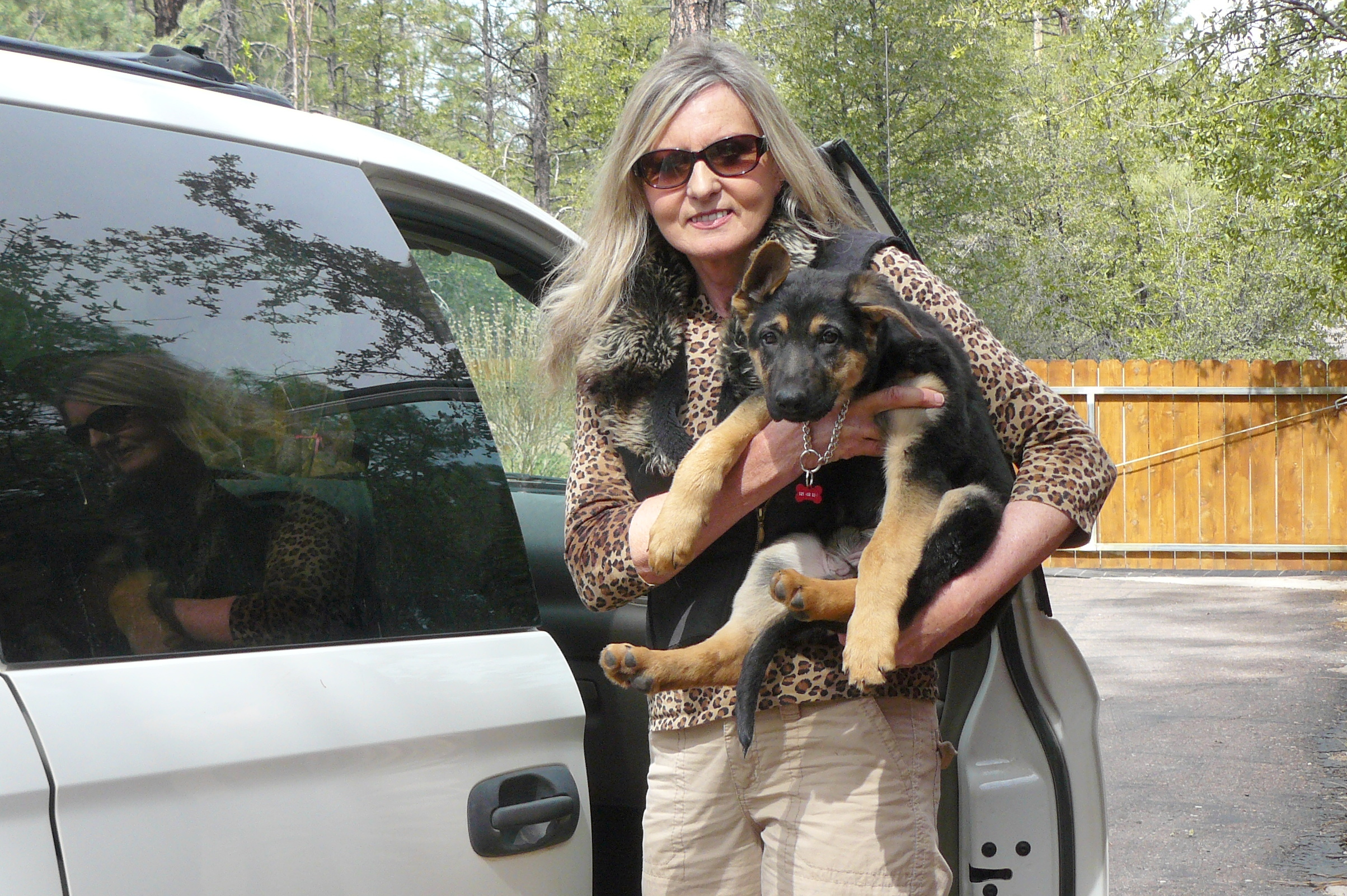
Cleo meet your new Mum!

Then yesterday, Saturday, we went back round to collect young Cleo, meeting Brendan’s wife Ebony in the process. The following photographs record some of the key moments.

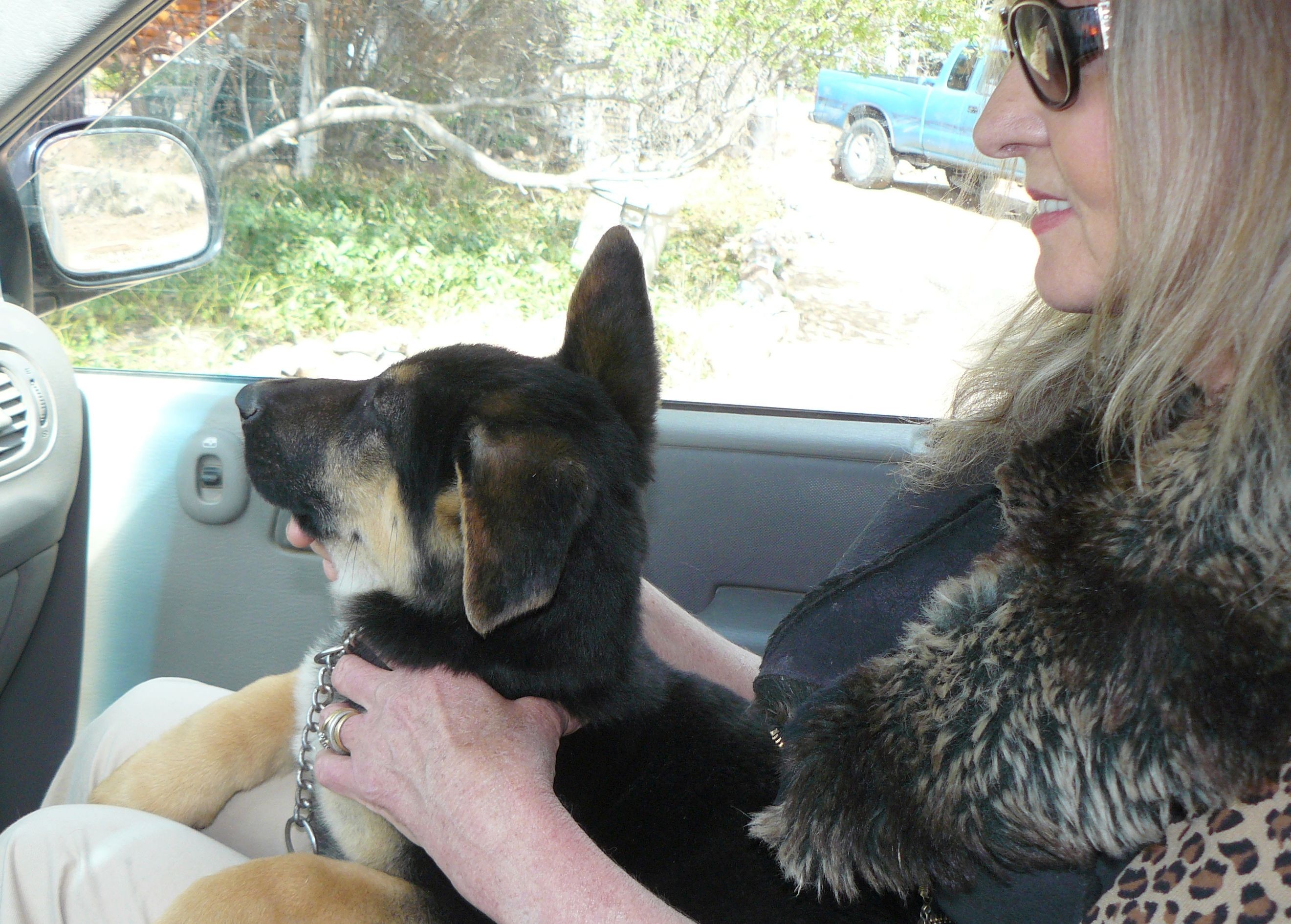
Homeward bound to a new life!
Next step is to meet the gang!
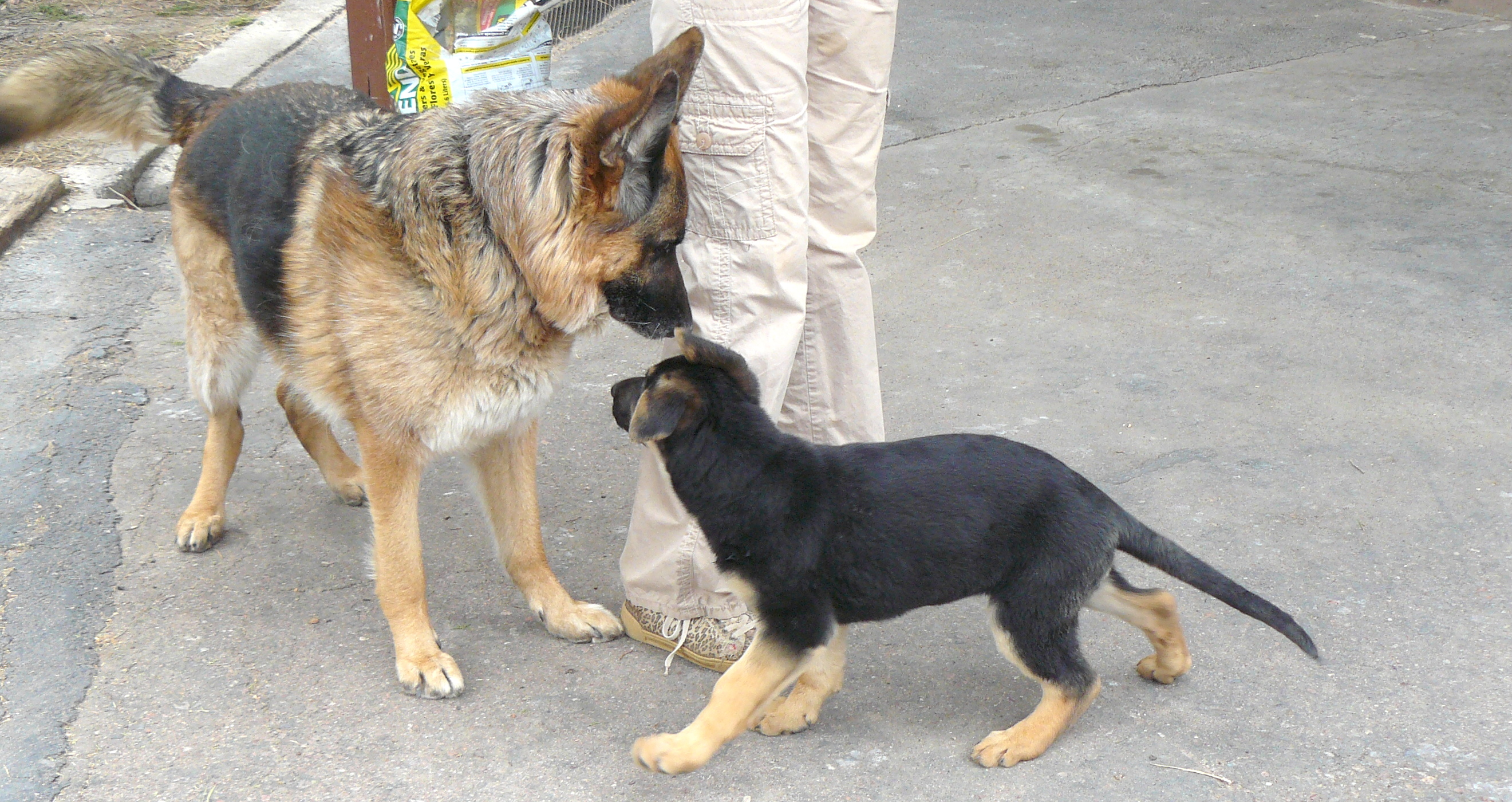
Welcome, young lady. I’m the boss around here!
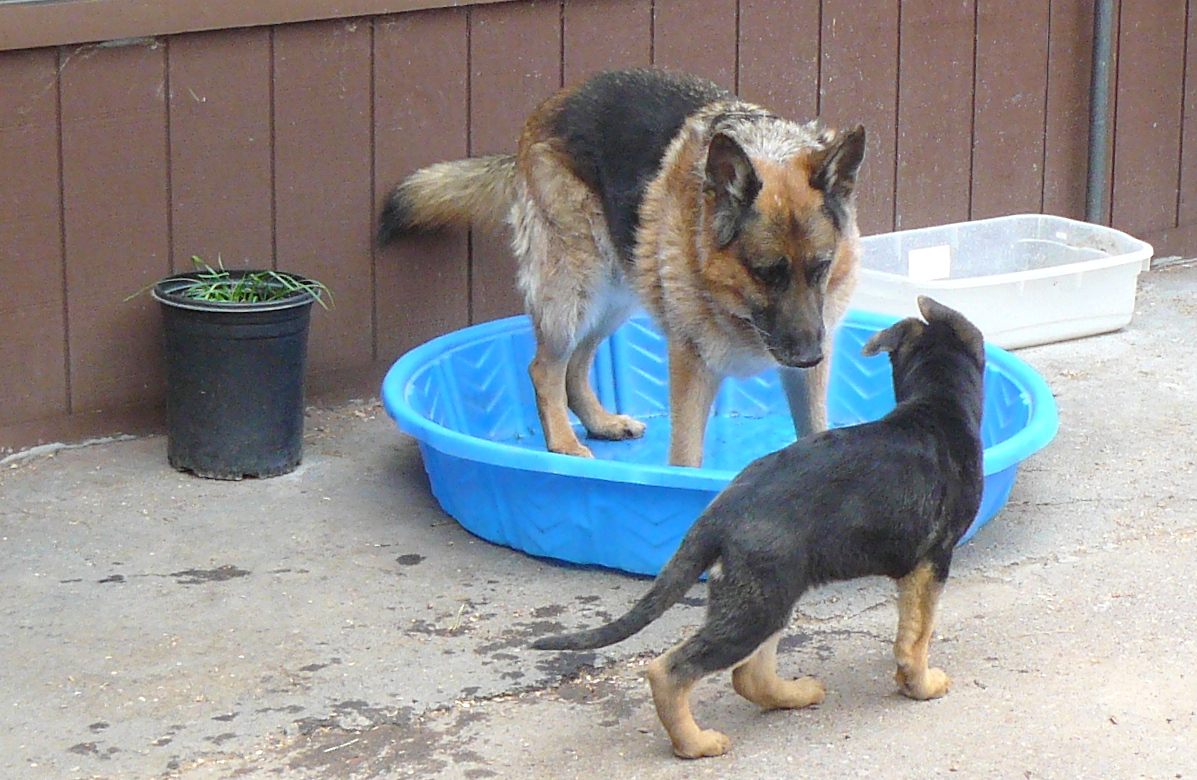
It’s my pool but you can use it!
Hey Sweeny, fancy having one’s own woods to play in!
She’ll do! Nice addition to my family!

So there we are. Back up to eleven dogs, five chickens, six cats, and a fish!

Finally, a big thanks to Sandra of Jutone for her guidance in the last few days.

ooOOoo

Back to the present to leave you with a picture of puppy Ollie happily playing with Cleo and Hazel. More pictures of Ollie on Sunday.

L-R Ollie, Cleo and Hazel.

ooOOoo

How the years slip by.

The ancient roots of the relationship.

The recent news of finding a dog graveyard that is 2,000 years old.

Before going on to today’s post, can I just remind you kind folks that as of today, and for the rest of this week, we have family guests staying with us here in Oregon.

IMG_1368
Grandson Morten responding to his mother, Maija, taking a picture of him and Marius, as they wait to board the aircraft for San Francisco yesterday morning.

Thus from tomorrow until the end of the coming weekend my posts will be a preponderance of republications of previous posts. Plus my attention to you dear readers will be less than you are accustomed to.

Now on to today’s post that was kindly sent to me by Chris Gomez. Thanks Chris.

ooOOoo

2,000-Year-Old Dog Graveyard Discovered in Siberia

Feeding one’s inner wolves.

The wisdom of ancient minds.

The following was published by Val Boyco recently over on her blog Find Your Middle Ground.

It is republished here with Val’s very kind permission.

ooOOoo

* How to Feed your White Wolf

Let’s hear it for (shelter) cats.

Just to demonstrate that Learning from Dogs isn’t wall-to-wall about dogs!

Over the years that I have been writing in this place it has been mentioned before that as well as us having our dogs we also have cats. When Jeannie and I moved up from Mexico to the USA in 2010 we came with six cats, all of them cats that Jean had rescued off local streets down in San Carlos, Mexico.

Four years ago, when we moved up from Arizona to this present home here in Merlin, Southern Oregon, we built a cat run that was attached to the garage. Then about a year ago we brought what was now four cats into the house. The cats are in their own rooms during the day but mingle with the ‘living room’ group of dogs in the evening. The cats are not let outside for we fear that they would be grabbed by a passing coyote or similar before they learnt to return home in the evening.

All of which is my preamble to an article that was published a month ago over on the Care2 Causes site, and is republished here within Care2’s terms.

ooOOoo

10 Reasons to Adopt a Shelter Cat

3010560.largeBy: s.e. smith June 9, 2016

About s.e. Follow s.e. at @realsesmith

Once every eight seconds, an unwanted cat or dog is euthanized somewhere in the United States thanks to pet overpopulation and limited shelter capacity. No one likes to think about that reality, but you can do your small part to help. In addition to supporting organizations that promote an aggressive national spay and neuter policy, facilitate no-kill shelter transitions and work with communities to address specific issues like feral cat colonies, you can adopt a shelter cat (or dog!).

If you’re thinking of adding a cat to your life (and really, why stop with one?), here are ten compelling reasons to consider a shelter cat over one from a breeder or a pet store.

10. Shelter cats come in all shapes, sizes and colors.

If you want a kitten, shelters are usually overflowing with them, especially during spring kitten season. If you’re interested in an adolescent feline or even a more mature companion, shelters have those too. In fact, many are really excited by potential adopters who want to take on an older kitty, because mature cats tend to linger in shelters longer because many people prefer kittens. If you’re looking for a cat to accompany an older adult or someone who’s not as mobile, a mellow older cat might be a great fit.

9.  Shelter cats are ready to go!

They’re spayed or neutered, immunized, dewormed, microchipped and assessed for behavioral issues by the skilled staff at the shelter. They’ve also been trained to use the litterbox in most cases, so you don’t have to worry about an awkward and potentially smelly transition to living at your house. Many also come with a certificate for a free first visit to the vet, and some shelters have a take-home package with food, toys and other goodies. You’re all set up for your first year of pet ownership, and your pet will be healthy, because the shelter has a vested interest in keeping its animals happy and healthy, while pet stores and unscrupulous breeders do not.

8.  Shelter staff can help you pick the perfect companion.

Adopting an animal is a big commitment, and not all cats are the same. If you come in with your family, the shelter staff can get to know you, introduce you to some prospects, and help with the matchmaking process. They’re motivated to make sure cats find their forever homes, and they won’t lead you astray when it comes to, well, rescuing a stray. Shelter staff can also provide you with information about the adjustment period if you’ve never had a cat before.

7. Turns out you can teach an old cat new tricks.

(Note that when she’s tired of it, she’s not afraid to make her opinion known!)

6. Set an example!

There are a lot of myths about cats living in animal shelters, like claims that they’re damaged, feral or broken in some way. In fact, the vast majority of unwanted animals are happy, healthy and well-adjusted, they just need loving homes to get comfortable and let their personalities come up. By adopting a shelter cat, you can encourage other people to do the same; talking about your positive experiences and introducing people to your cat will help reduce the stigma about adopting from a rescue group.

If you want to adopt a special-needs animal, you’re certainly welcome to. Shelters are particularly choosy when it comes to homing out cats with medical problems, but they are always happy to hear people are interested, committed and ready to give a cat with some extra needs a home to share.

5. Adult cats are low maintenance.

If you want a cat in your life but you don’t have a lot of time for teaching a kitten how to use the litterbox, stay away from the toilet paper roll, and stop wreaking havoc on your shoes, an adult cat is definitely for you. Adult cats already know the lay of the land and they tend to settle into routines quickly, making them great housemates. And if you travel a lot, consider adopting cats as a pair so they can keep each other company. A shelter often has a pair of cats whom they’d love to see go out together because they’re relatives or they’ve developed a close bond.

4. You’ll feel better.

Companion animals offer a number of mental health benefits. Having a pet of any species around can make people feel happier and more balanced, and the routine of caring for and interacting with a pet like a cat can improve mood and reduce the sense of isolation. Cats are especially great companion animals for people who don’t have the energy or ability to care for a dog, but still want someone around the house to keep them company.

3. Shelter cats have varied personalities.

Cats are incredibly diverse, personality-wise. They can be shy and outgoing, playful or more reserved, fascinated by sinks or horrified by water. If you haven’t had the pleasure of having a cat in your life yet, a shelter cat might totally change the way you view these delightful animals.

Check out some of the personalities on display at the Los Alamos Animal Shelter:

2. Don’t support animal cruelty.

Pet stores source their animals from a variety of places, and those cute kittens in the window might come from an abusive kitten mill where cats endure horrible conditions to produce animals for the pet trade. The sale of companion animals in general promotes the continued existence of exploitative breeders that view cats as cash drawers, not living beings. By turning away from companion animals offered for sale and choosing to adopt, you’ll be voting with your wallet. And that adoption fee? Will be a lot lower than buying an animal from a petstore or breeder.

1. You’ll save a life.

Even if your local shelter is no-kill (which is great! consider an extra donation to help them with operational costs), adopting shelter cats to get them out of the shelter system and into living homes reduces the strain on shelters and frees up space for more homeless animals. No-kill shelters often rescue from facilities that euthanize, so by adopting from them, you’re opening up another slot for a kitty who’d otherwise be on death row. If you live in an area where there is a kill shelter or where animal care and control adopts out animals, please consider looking there first for a new cat. Some organizations maintain “kill lists” published by shelters, listing animals slated for euthanasia within the next few days, and you might find your new companion on just such a list.

ooOOoo
 Even if just one person who reads this makes a commitment to take on a shelter cat it will be one less cat on a ‘kill list’.

Affairs of the heart.

Warning: Emotional post coming up!

This is the second time I have used Affairs of the Heart as a title to a post. The previous time was January 20th, 2012 (and I’m republishing that post tomorrow). How time flies!

Indeed, in a little over two week’s time, on July 15th, all you dear, dear readers and I will be celebrating me writing this blog for seven years! Indeed, how time flies!

Yesterday, John Zande from down in Brazil, another great friend of this place, posted a comment that included a most powerful video. His comment was, “Not sure if this link will work, but this is a lovely story of an adoption that saved a life.

Sue Dreamwalker watched the video and responded:

John that was one amazing video, still wiping away tears.. Thank you.. Through our choices we CAN make Changes in our lives..:-)❤

I then followed Sue with this comment, written at 05:45 local time (PDT) yesterday:

John, Jean awoke just a few moments ago and I have just played your video in front of us both. It is so beautiful and important that I want some time to fully compose my response. Plus Jean and I need some time to stop weeping!

Just had this idea to feature your video and my reply as tomorrow’s post.

Thank you, John, for sharing this. Thank you so much.

Even if you watched this video yesterday do watch it again before continuing. Same applies to those that haven’t yet watched it. Do that now! 🙂

So now we head for my emotional response to that video.

Change is inevitable. Another word for change would be time. Time is the most fundamental principle of the Universe. Call it the Arrow of Time. It flows only in one direction. From order to disorder.
Or to put it in the words of physics (my emboldening in 2.2):
en·tro·py
ˈentrəpē/
noun
noun: entropy; plural noun: entropies; symbol: S
  1. 1.
    Physics
    a thermodynamic quantity representing the unavailability of a system’s thermal energy for conversion into mechanical work, often interpreted as the degree of disorder or randomness in the system.
  2. 2.
    lack of order or predictability; gradual decline into disorder.
    “a marketplace where entropy reigns supreme”
    synonyms: deterioration, degeneration, crumbling, decline, degradation, decomposition, breaking down, collapse; More

Entropy – “the gradual decline into disorder.

It has to be that way. For evolution is a product of the decline of one variant of life (plant, animal, insect, higher order ‘animals’, etc. ) and a new aspect of that life emerging (or not). That’s how it has to be for the beauty of life, the beauty of life in all its forms (even including politicians! 😉 ). Life is a function of a “gradual decline into disorder“.

I’m not a religious person, nor is Jean, and do not believe in any form of afterlife. When I die that’s it.

I was born in 1944. I am ageing. I have suffered some brain atrophy that means that my recall is terrible. I know that the ageing process is going to continue. It scares me. At least it motivates me to keep as physically and mentally fit as I can.

I have tried hard most of my life to stay fit, physically and mentally. I’m only now aware of the reward of such an attitude.

But I haven’t been emotionally fit. In the sense of not truly knowing who I am and what my values are. That darkness was illuminated for me in the Summer of 2007, thanks to Jon.

That very moving video of Eric and Peety speaks of Eric being saved by Peety. I so deeply understand Eric.

For in December, 2007, just a few months after Jon (as in being the best we can be) made me fully aware of my distorted view of myself I travelled out to Mexico and met Jean and all her dogs.

Jean has saved me. Directly from the love, companionship and  intimate friendship that she offers me. But Jean has also saved me indirectly. By that I mean from me living my daily life these last nearly ten years surrounded by the most beautiful dogs that one could imagine. Those dogs, each one of them in their own special way, also offering me love, companionship and intimate friendship.

Prior to December, 2007 I didn’t know how to feel my true emotions and, in consequence, didn’t know how to express them. Jean and the dogs have enabled me to feel my true emotions, and to express them.  Dozens of things pain me and it’s rare day when I don’t have the odd weep or two. However, dozens of things please me each day and now bring out a laugh, or a giggle. Even better, dozens of times each day I am loved by our dogs and the gift that goes with that love is me feeling so beautifully accepted; accepted in an utterly unconditional manner.

The love given to me from our dogs and the love from my beautiful Jean make it so easy for me to be good to myself. That love, from Jeannie and the dogs, has been a gift to me beyond my imagination.

I have hanging on my office wall a framed print of a poem by Roy Croft. I gave it to Jeannie on the first anniversary of our marriage. I want to share Roy Croft’s words with you. For they so beautifully describe the gift of love I receive from Jean. But in a way that I suspect Mr. Croft didn’t imagine when he first penned his poem, his words also so beautifully describe the gift of love I receive from our dogs.

ooOOoo

“Love” by Roy Croft

I love you,

Not only for what you are,
But for what I am
When I am with you.

oo

I love you,
Not only for what
You have made of yourself,
But for what
You are making of me.
I love you
For the part of me
That you bring out;
I love you
For putting your hand
Into my heaped-up heart
And passing over
All the foolish, weak things
That you can’t help
Dimly seeing there,
And for drawing out
Into the light
All the beautiful belongings
That no one else had looked
Quite far enough to find.

oo

I love you because you
Are helping me to make
Of the lumber of my life
Not a tavern
But a temple;
Out of the works
Of my every day
Not a reproach
But a song.

oo

I love you
Because you have done
More than any creed
Could have done
To make me good
And more than any fate
Could have done
To make me happy.
You have done it
Without a touch,
Without a word,
Without a sign.
You have done it
By being yourself.
Perhaps that is what
Being a friend means,
After all.

ooOOoo

If you have read my post through to the end, thank you!

Brexit – now what happens?

Here’s what is going to happen.

In the run-up to the EU referendum by the UK this Brit was tempted several times to offer an opinion on what I thought was the best decision. But I resisted. (I was qualified to vote as an overseas voter and had voted for Remain.)

My resistance was because it seemed inappropriate to pass any form of opinion before the die had been cast, so to speak. I hadn’t been living in the country for over eight years and, inevitably, was out of touch with feelings.

The Conversation blogsite yesterday had a series of articles on the aftermath of the Brexit decision but the one that seemed most useful to share with you all was an article by Gavin Barrett,  a Professor of European Constitutional and Economic Law at University College in Dublin. For many readers, including me, both within and without the UK this seemed a valuable primer.

ooOOoo

Britain votes to leave the EU, Cameron quits – here’s what happens next

June 23, 2016 11.41pm EDT

image-20160624-30267-wvhvty
Leave ahead. Anthony Devlin / PA Wire

Author

Of days and nights.

That magnificient night sky above us.

On Sunday evening Jean and I were invited around to Jim and Janet’s place as their regular summer movie nights swung back into the calendar.

Around 10pm local time the night sky just shone with stars and planets and my old friend The Plough, or Big Dipper (Ursa Major), was up there pointing the way to the North Star.

BigdipISSThen as we all prepared to return to our homes, around 11pm, there was the wonderful, fabulous full Moon.

So it’s a special day today as for the first time in almost fifty years both the full moon and the Summer Solstice fall on the same day. Or better put over on Time and Date:

First June Solstice Full Moon in Decades

In 2016, a full Moon, also commonly known as Strawberry Moon, will coincide with the June Solstice. The 2 events haven’t occurred on the same day since 1967 and will not coincide again until 2062.

Now technically the exact moment of the Solstice was yesterday evening at 22:34 UTC. Or to put it as it was mentioned over on EarthSky:

On June 20, 2016, the moon turns full at 11:02 UTC. The solstice arrives some 11.5 hours later, at 22:34 UTC.

I will close with the gorgeous photograph of that full moon, again courtesy of that EarthSky article.

Rising nearly full moon – near San Francisco, California – on June 19, 2016 via EarthSky Facebook friend Amy Van Artsdalen.

I must admit that there’s a strange feeling inside me knowing that this was the last time that I will see such a coincidence of full moon and summer solstice.

Picture parade one hundred and fifty-two

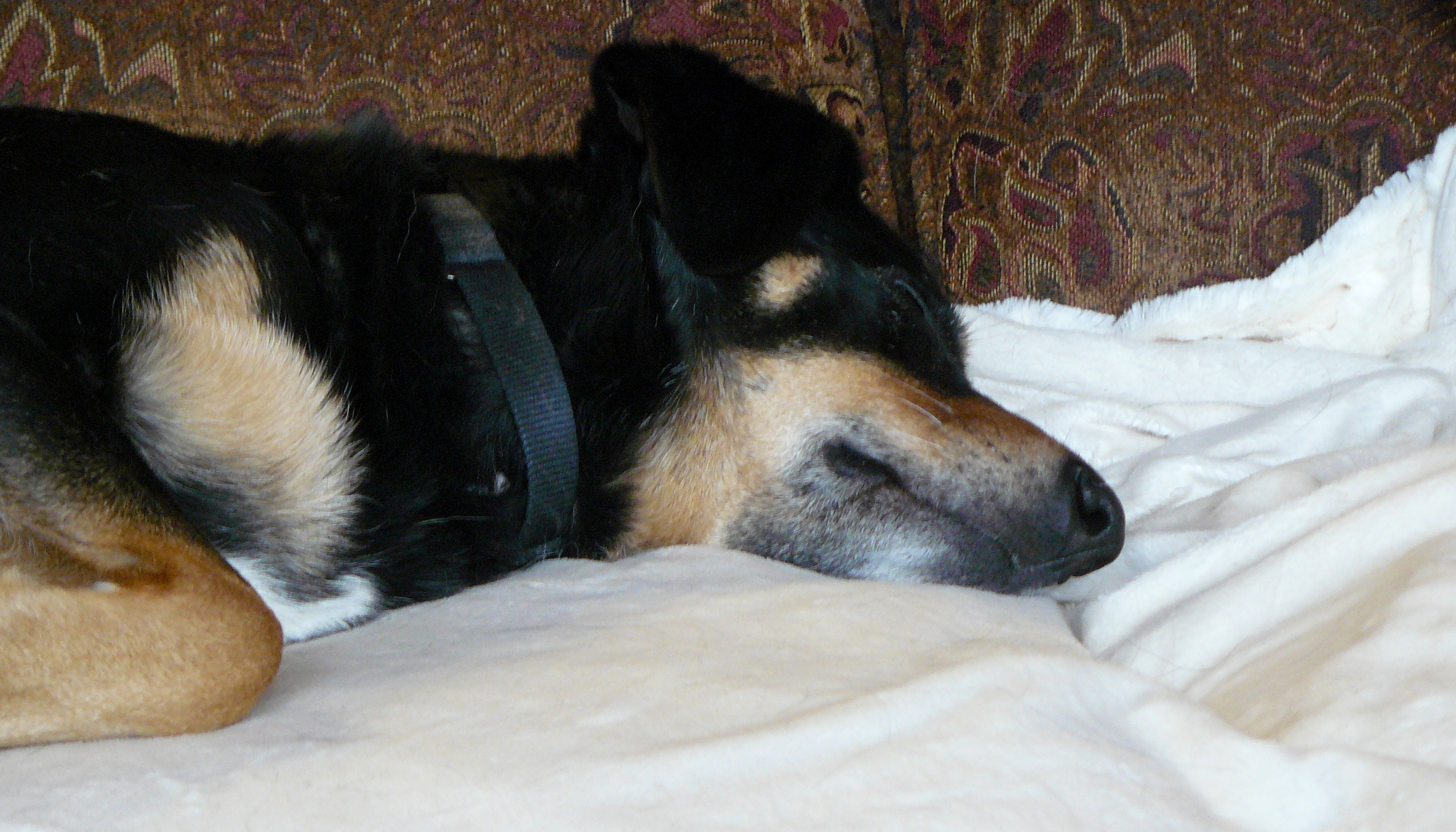
In memory of a very beautiful dog: Hazel.

(Must admit that when I was posting last week’s picture parade I had no idea that today’s would be in memory of Hazel. The lesson of always trying to live in the present!)

Hazel offering such openness and love in her eyes. June, 2014.

oooo

Pharaoh, and Hazel, Dhalia and little Sweeny. January, 2012.
Pharaoh, and Hazel, Dhalia (also no longer with us) and little Sweeny. January, 2012.

oooo

Hazel - January, 2012.
Hazel – January, 2012.

oooo

Hazel doing what she did so well - sleeping. April, 2013.
Hazel doing what she did so well – sleeping. April, 2013.

oooo

The purity of a dog's heart!
The purity of a dog’s heart!
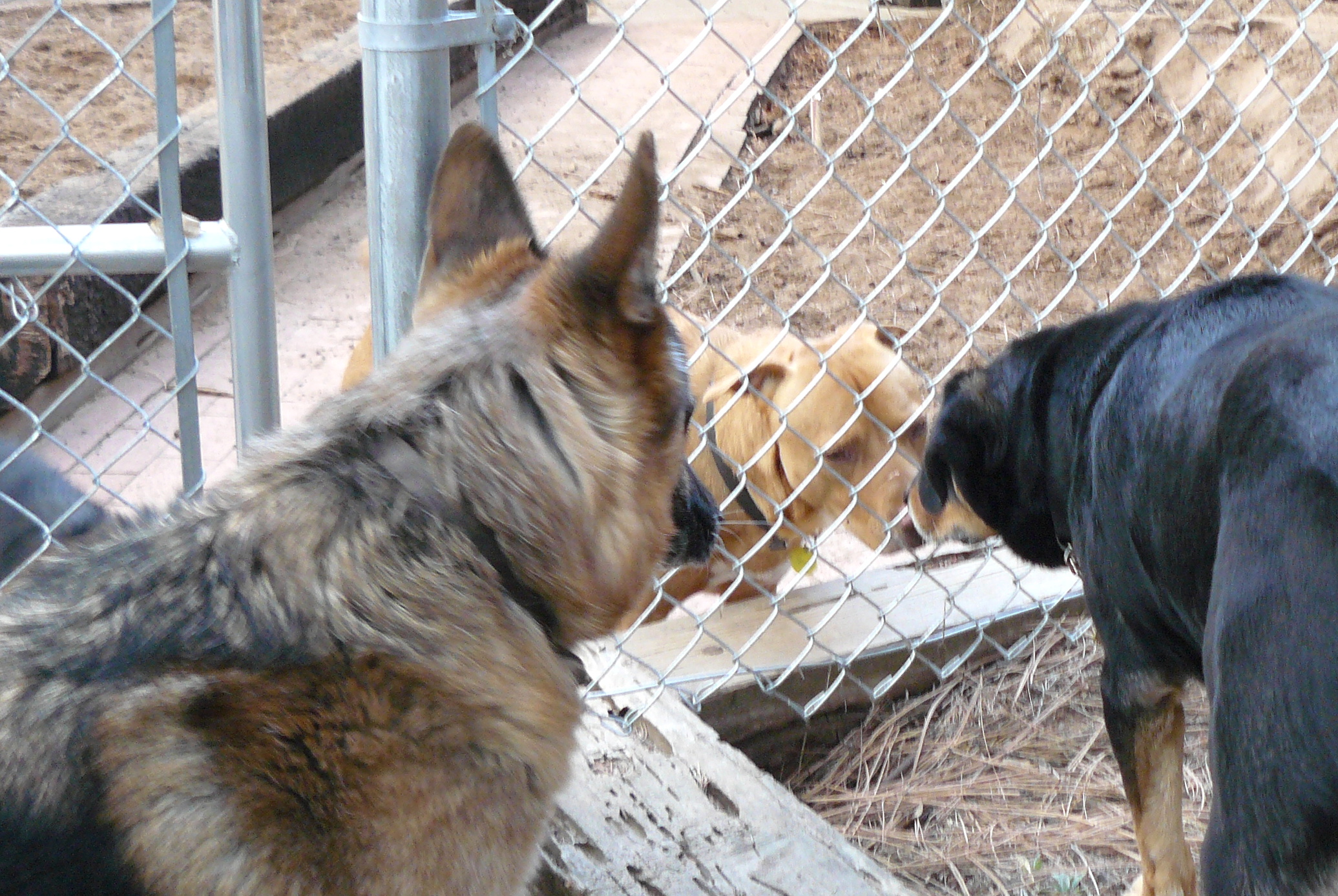
Pharaoh and Hazel saying 'Hi' through the fence to Kaycee. February, 2012.
Pharaoh and Hazel saying ‘Hi’ through the fence to Kaycee. February, 2012.

oooo

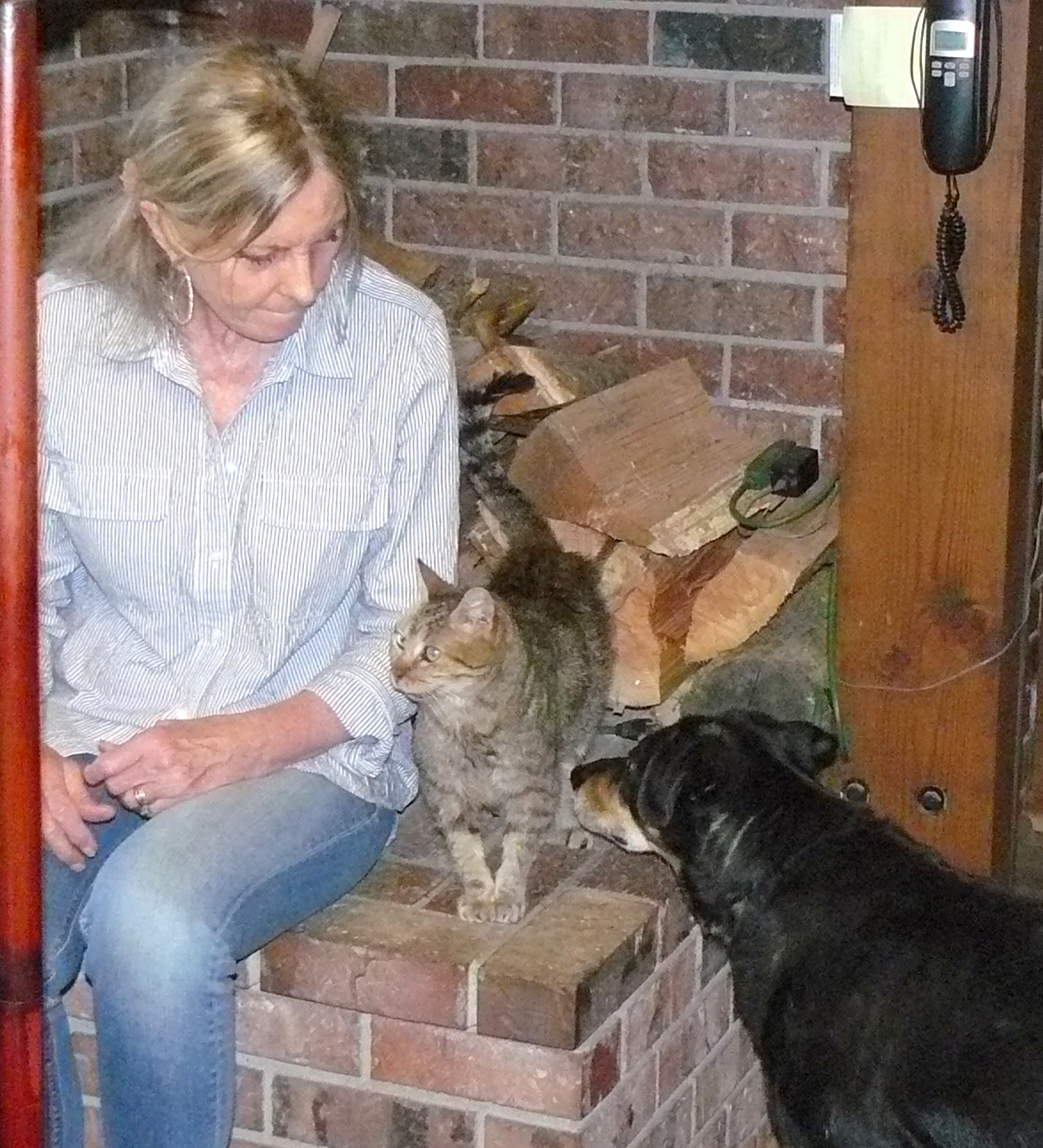
Jeannie, Hazel and cat feeling trust for each other. November, 2015.

oooo

Hazel asleep alongside Cleo. May, 2014.

oooo

Picture taken by our guest Don Reeve of Hazel (and me). April, 2015.

oooo

Come here, Hazel! I need some loving! October, 2013.

And I shall close today’s picture parade with the photograph I included in yesterday’s eulogy. For more than any other photograph this one has the camera looking deep into Hazel’s soul.

P1140387-001

Of dogs and play.

Part Two of Professor Bekoff’s essay.

I sitting in front of my PC writing this in what will be, by the time you read this, yesterday afternoon. One way and another it was quite an emotional day sharing the sad news of Hazel’s death with so many both in this blogging place and where we live here in Merlin, North-West of Grants Pass, Oregon.

So not going to say any more about Hazel until I have collected my thoughts about our vet’s response to Hazel’s death and what may flow from that. I should be able to post that update tomorrow.

For today, let me offer you Part Two of Marc Bekoff’s essay. Part One was yesterday.

ooOOoo

Butts and Noses: Secrets and Lessons from Dog Parks (Concluding Part)

Dog parks are gold mines of information about the behavior of dogs and humans

Post published by Marc Bekoff Ph.D. on May 16, 2015 in Animal Emotions

Are dogs really our best friends and are we really their best friends?

I’m asked these questions a lot and I always say it’s simply not so that dogs are “unconditional lovers.” They discriminate among humans just like we discriminate among dogs. And, while dogs might love “too much,” they’re very careful about to whom they open up. So, sometimes — perhaps very often — dogs are our best friends and we are their best friends but we all know of picky dogs and the horrific abuse to which dogs are subjected.

Are dogs really free at a dog park?

I often hear something like, “Oh I love coming to the dog park because my dog is so free” – and then she’s/he’s called back constantly when he plays too roughly or strays too far. People surely differ in how much control they exert, but some just don’t give their dog the opportunity to play, sniff, and hump. Control freaks often abound and they don’t realize it. Patrick Jackson, in the essay to which I referred above, writes about how “caretakers become ‘control managers’ who must negotiate problems related to a variety of dog behaviors, especially mounting, aggression, and waste management.” He’s right on the mark, but there are also those who get upset when play gets a bit rough, even when the dogs obviously are enjoying themselves.

Do dogs display dominance?

Yes, they do, just like many other animals. There is major confusion and mistakes among many “dog people” about what dominance really means, and dogs, like numerous other animals, do indeed use various forms of dominance in their social interactions. However, this does not mean that dominance is equated with overt aggression and physical harm nor that we need to dominate them in order to live in harmony with them (for more on this topic and the fact that dominance is not a myth please see this essay and and and references therein).

Why do dogs mount and hump?

Here are some of the statements I hear about dog mounting and humping: “Oh my God, my dog was fixed to stop this stuff.” “Oh, that’s easy, it’s always to dominate the other dog.” “Domination.” “Dogs are hyper-sexual because of domestication.” There are many reasons why dogs hump and there’s not a single answer (please see this essay and references therein).

Do Dogs feel shame and guilt?

While I hear numerous stories about shame and guilt, the simple and most correct answer is that we really don’t know. While we’re not all that good at reading guilt this does not mean that they do not feel guilt (please see this essay and references therein).

Do dogs get jealous?

Yes they do and a study published in 2014 showed this to be the case (please see this essay and references therein). I often hear very compelling stories about jealousy in dogs.

Do dogs get bored?

Yes, of course they do, just as do many other mammals, especially those living in various conditions of captivity. It’s clear that researchers and zoo administrators, for example, recognize that animals get bored, hence the numerous enrichment programs that are designed to relieve the animals’ boredom. The detailed research of Francois Wemelsfelder is a wonderful place to begin to learn about boredom in animals (see also the essays listed here).

Do dogs suffer from PTSD and other psychological disorders?

Yes they do as do many other animals.

Do dogs mind being used as service dogs or in animal assisted therapy?

Because dogs are such a variable lot, it’s impossible to say something like, “Of course they do.” The correct answer is that because dogs vary in personality and temperament there are some who would mind it and some who won’t. I’ve met many in each camp and I’m sure many readers have as well.

Are there Attention Deficit Dogs (ADD’s)?

I often hear people say that their dogs don’t hear them or that they ignore them most of the time. While there are many reasons why this might be so, it’s entirely possible that there are dogs who get so excited they simply don’t respond to their human’s requests. But, it’s also possible that some dogs do suffer from attention deficit disorder and hyperactivity.

How often does social play escalate into serious aggressive encounters?

We all know that play behavior predominates at dog parks and that dogs have fun when they play (see also) and that play is very contagious. Dogs play socially with one another, often involving objects, and they also play alone with objects or just go berserk on their own because it feels good. Dogs can play very roughly and still be in control and there are distinct “rules of social play” that help to keep even a vigorous interaction well within bounds so that there’s really little or no worry that play will escalate into aggression. Nonetheless, I hear this statement a lot: “Oh whenever dogs play it turns into aggression.” It doesn’t. My own observations suggest that it seems escalation happens more in large groups in which dogs can’t read one another’s subtle signals that “this still is play,” but it is very rare. Dogs can be rather fair. I want to say a bit more on this topic because it seems to be major reason why dogs are called back to their human or that humans break up rough-and-tumble play.

Although my students and I haven’t kept detailed records on this aspect of play for dogs, we all agree that play didn’t turn into serious fighting in more than around 2% of the 1000s of play bouts we’ve observed. Current observations at dog parks around Boulder, Colorado support our conclusion. And, for the approximately 1000 play bouts that my students and I observed in wild coyotes, mainly youngsters, on only about five occasions did we see play fighting escalate into serious fighting. Along these lines, Shyan, Fortune, and King (2003) discovered that fewer than 0.5% of play fights in dogs developed into conflict, and only half of these were clearly aggressive encounters. In this case our intuitions were right on the mark. Of course, there may be dogs who simply bite too hard or slam too hard into their play partners when they get highly aroused and lost in play, and this results in an aggressive encounter of varying intensity. But that is the exception rather than the rule, for play fighting only very rarely escalates into real fighting. Because play is a foundation of fairness there is a good deal of cooperation among the players as they negotiate the ongoing interaction so that it remains playful. I think one can make a good case for their having a theory of mind. Nonetheless, we still need more data on this aspect of play as well.

Do older dogs play less than younger dogs?

While this is true of wild animals who have to work harder to survive and to thrive, older dogs play a lot when they can and we really need more data on this question.

Do dogs have a theory of mind?

We don’t know. While some studies suggest they don’t, we need more “naturalistic” research especially when dogs are socially interacting. Because play is a foundation of fairness and there is a good deal of cooperation among the players as they negotiate the ongoing interaction so that it remains playful. Perhaps dogs even know what their playmates are thinking and feeling. Do they have a theory of mind? While I think so, we still need more data on this aspect of play as well.

Why do dogs roll and writhe on their back?

It could be to impart an odor. A wild canid known as the raccoon dog who lives in South America has a scent gland on its back. Dogs might also roll on their back to mask their own odor. And, of course, it might feel really good so why not do it? I love watching dogs writhe on their back and they look like they’re in doggie heaven.

Do dogs have a sense of time? The “two minute warning”

We really don’t know much at all about the dog’s sense of time. Yet, people often use what I call the “two minute warning” and ask their dog if it’s okay if they leave in 2 minutes, or people tell their dog something like, “You have 5 minutes more to play with your friends before we go to the store.” They also ask their dog, “What the hell took you so long, I’ve been calling you for minutes?” or “Where were you when I called you?” I can well imagine the dog thinking something like, “Huh?”

Why do dogs snort?

While there are physical reasons why dogs snort, recent research shows that dogs sort odors in their nose, forcing out those that aren’t relevant or salient, hence the snort and often a good deal of snot (for more on the fascinating dog’s nose please see this essay and this.

Why do dogs try to pee and nothing comes out?

This is called “dry marking” and we know that lifting a leg as if the dog is peeing serves as a visual signal to tell others he is. Often a dog will “dry mark” and then pee a few seconds later, so it’s clear their bladder isn’t empty. A study I did years ago with some students showed that dogs do this more often when there are other dogs around who can see them and then pee a bucket.

Why do dogs scratch the ground after they pee or poop?

They do this for a number of possible reasons and there isn’t a simple answer to this question.

Poop central: Why do people talk so much about dog poop at dog parks?

People also talk about poop a lot as if they’re freer to do so with their dog. Matthew Gilbert notes, “poop was more of a thing at the park than I had expected.” (p. 66) He also talks about a “stray bowel movement” as a “voluminous and frozen still life” (p, 67). Dog poop is a ripe area for future research.

Why do dogs stick their noses into butts, groins, and ears?

It’s a way of greeting and social investigation, but there haven’t been any studies of which I’m aware that provide any details about why they do this, even to their dog friends or humans. It’s been suggested that some animals might pick up information on the food others have eaten.

Are there breed specific odors?

Many people report that on their first encounter with other dogs, members of the same breed prefer one another and treat breed members differently from individuals of different breeds. There’s been some discussion that there may be a common odor to members of the same breed. However, my reading of available information is that we really know little about this question right now.

Do dogs know what they look like?

While dogs know what they smell like, they don’t know what they look like, or might they? Research done on birds in the 1960s suggests that they might learn their own color from reflections in water. So, I suppose dogs might know what they look like if they’ve seen their own reflection, but we need much more research about this question.

Why do dogs circle before lying down?

Dogs do not always circle before lying down, as some authors claim. They likely do it to flatten or soften the ground, and may also be looking around to see who’s around before they relax. In a study some of my students did years ago they reported that the dogs they watched circled around 65% of the time, but more detailed studies are needed.

Why does the hair on a dog’s back stand up?

This is called piloerection (sort of like goose bumps) and indicates that a dog is highly aroused but not necessarily aggressive. Many other species, including birds, show the same (sympathetic nervous system) response.

Dogs and humans: Why do people open up at dog parks?

Dogs can easily serve as icebreakers and social catalysts. People often open up at dog parks and talk to friends about things they likely don’t talk about in other arenas. They seem to feel safe among kinfolks. Some people began talking to me about pretty personal stuff within a minute of meeting them such as a woman who decided that she didn’t like her BFF because of how she treated a dog she just rescued, and a woman who, after meeting someone for around 10 seconds, decided that the woman wasn’t a good dog owner because she was suffering from bipolar disorder but didn’t know it! Some people – men and women, alike – have told me that dogs are social magnets and make it easy to meet other people who also are out with their canine BFF. These discussions often have very interesting “conclusions.” Enough on that for now …

Why do dogs eat grass?

There are many reasons and Stanley Coren has written a good myth-debunking essay on this. He notes that dogs do not eat grass to cause vomiting to relieve stomach distress. While it’s possible that some dogs do, we need a lot more research on this question.

More questions for a future essay

The list of questions can go on and on, and some questions I’ll consider in the future include: Why do dogs chase their tail? Why do dogs bark and what sort of barks are there? Why do dogs bark and howl at sirens? Why does my dog hoard tennis balls? Are dogs territorial as are wolves? Why do dogs pee/scent mark so much? Why do dogs sniff pee so much even when it’s their friends’ pee? Why do males sometimes squat when they pee and why do females sometimes lift their leg? Do dogs have a sense of self? Studies of “yellow snow” suggest they do. Are they conscious? (Of course they are, and scientists agree.) Why do dogs sniff and eat frozen turds? Why do dogs eat gooey feces? Why do dogs dig holes and then lie in them? Why do dogs scrape their butt on the ground? Why do people openly disparage their dog and then tell them they love them? (I often hear something like, “Oh, he’s really retarded, but I love him” or “You are so fat!” or “My goodness, your breath stinks!). Do dogs pick up on these mixed signals?“ Do dogs have a “little dog” complex? Do dogs make and use tools? (They do.) Why do dogs drink filthy water? How do dogs pick their mates? Do dogs dream? Do dogs get heartburn? Do dogs sweat? Do dogs understand baby talk? (People are well known to talk to dogs as if they’re infant humans.) What does “feral” mean? How did wolves become dogs? (Please see essays by Mark Derr.) What’s the difference between a socialized animal and a domesticated animal? (A wolf who likes humans is a socialized wolf. A domesticated wolf is a dog.) Do dogs really live in the moment? (No, their past clearly influences their behavior — just ask anyone who’s rescued an abused dog — and they think about the future — just watch a dog waiting for a frisbee or a ball to be thrown and watch them track the trajectory, although tracking might not be conscious, even in humans.)

Where to from here? There are many holes in the database and dog parks are gold mines of information.

It’s important to stress that there here are many holes in the database, and people find this very surprising because of many popular dog books that purport to “tell it like it is,” as if there are facts about this or that question. Dog parks are wonderful places for studies in dog-dog ethology and anthrozoology, the study of human-animal interactions, and I hope this essay will stimulate people to conduct formal studies and encourage citizen scientists to share their stories that can be used to generate further more systematic studies.

Studies in dog parks, that some may call “too uncontrolled,” may also shed light on questions that are being debated among different groups of researchers, for example, whether dogs follow human gazing or pointing and how well they perform these activities, or if dogs have a theory of mind. And, let’s face it, some laboratory studies also are rather uncontrolled, mainly because dogs are such a mixed bag of participants as might be the researchers themselves. Watching animals in their “natural habitats,” and dog parks might qualify as such, has shed much light on various aspects of behavior that are difficult to study in captivity or in other more controlled environs. Although many lab studies of dogs are likely more controlled than those conducted on free-running dogs, many people have seen behavior patterns that warrant reinvestigation in more ecologically relevant situations.

I continue to learn a lot about dog and human behavior when I visit dog parks. People often feel free to offer advice even when they knew who I am and what I do for a living. But, on a number of occasions, I chose to keep some distance to determine if their comments and explanations to other people (and often to the dogs) differ from when they know I’m around. For the most part, they did not. For example, I’ve been told that “familiar dogs definitely play differently from unfamiliar dogs,” that “humping is always about dominance,” that “dogs know what other dogs are thinking and feeling and they also know the same about people,” and that “know-it-all researchers ought to get off their butts and out of the ivory tower and watch dogs in the field.” On a few occasions some people made it clear that I had a lot to learn about dogs and they could teach me some valuable lessons. When I agreed, they were very surprised, and over the years I’ve had many interesting discussions that have made me re-evaluate what we know and don’t know about dog behavior and dog-human interactions. Concerning two of the areas above, we actually don’t know if familiar dogs play differently from unfamiliar dogs (I’ve got a student studying this) and, as I mentioned above, there’s not just one explanation for humping. Anyway …

There are numerous research projects just waiting to be done as we watch dogs romp here and there and have fun, meet old friends and strangers, and negotiate social relationships with other dogs and humans. I’m aware that I may have missed some studies so I hope readers will send me the details and share them in the comments section for this essay.

Dog behavior, in all of its kaleidoscopic forms, is an incredibly exciting field of research

Dogs openly share with us a lot about what they know and what they’re thinking and feeling, and we just have to be keen enough and patient enough to figure it all out. Dogs also are wonderful social catalysts and social magnets and they can help us learn a lot about ourselves. The arena of inquiry about dog-dog behavior and dogs and their humans truly is deep and boundless and there are numerous opportunities for studies at dog parks, where dogs frolic and sometimes cower and have to learn to deal with a wide variety of social situations with other dogs and humans, and at other places where dogs and humans congregate. And, as I mentioned before, talking about “the dog” can often be misleading and perilous.

Dog behavior, in all of its kaleidoscopic forms, is an incredibly exciting field of research, and I really look forward to seeing further studies of the above and other questions. When people tell me they’re having trouble coming up with a research project I humbly ask them if they’ve thought about dogs, and then the conversation gets going and going and going ….

Marc Bekoff’s latest books are Jasper’s story: Saving moon bears (with Jill Robinson), Ignoring nature no more: The case for compassionate conservation, Why dogs hump and bees get depressed, and Rewilding our hearts: Building pathways of compassion and coexistence. The Jane effect: Celebrating Jane Goodall (edited with Dale Peterson) has recently been published. (marcbekoff.com; @MarcBekoff)

ooOOoo

Take care all you good people and all your lovely animals.