Keep Your Dog Healthy and Fit With This Essential Care Guide
Keeping your dog healthy and fit is a priority if you want to ensure he lives a long and happy life, but it can be difficult to know where to start. It’s important to make sure that your pup stays active, eats the right food, and gets the proper amount of exercise, but there’s more you can do to help him get fit and maintain great health. Use this guide from Learning from Dogs to create a wellness strategy for your four-legged friend and give him the long life he deserves.
Help Your Dog Stay Active
It’s important to keep your pup active throughout the day, especially if he spends time home alone while you’re at work. Take him on walks or let them run around in the yard; these activities will help keep them physically fit as well as mentally stimulated, and you can hire a pet sitter or dog-walker to help out. If you live in an area that isn’t very dog-friendly, look for a local dog park where he can run around safely.
Stimulate His Mind
While physical activity is crucial for your pet, there are also many toys and products available on the market that can help increase his activity levels. Investing in dog puzzles, treat dispensers, and chew toys can help keep your dog entertained while also providing an opportunity to burn off some extra energy throughout the day. This will also work to prevent behavioral issues if he spends time alone.
Improve His Diet With Quality Food
Investing in higher-quality food for your pup is essential for their health and well-being. Look for foods that are made with natural ingredients and provide all the nutrients they need. Avoid foods with artificial colors, flavors, and preservatives as these could potentially be harmful to your dog’s health.
You can also try air-dried food, which is cooked slowly to ensure it retains the maximum amount of nutrients and flavor. This option deserves a look, as it is also low in carbs and higher in protein than wet food options. You can even order a sample to check it out for yourself before investing.
Regulate Meals and Treats
In addition to making sure he has the right type of food, it’s important to feed your dog the required amount of food each day according to his size and age. Too little or too much could lead to health issues down the line. Additionally, limit treats, as they can contain high amounts of sugar which could lead to weight gain or other health problems over time.
Get Professional Advice
If you notice that your pup needs to lose a significant amount of weight, Chewy says that it’s best to work with a vet who can provide advice on how best to do so safely without causing harm or stress to him. Doing it this way will guarantee that your weight loss plan is secure, and you’ll still be able to give him the best possible nutrition. This is especially important if your dog is older.
Prepare With The Right Gear
Having quality gear like durable leashes and harnesses when taking your pet out for walks is essential for their safety as well as yours. Investing in quality gear now will save you money in the long run, as it will last longer than cheaper alternatives which may break easily over time due to wear and tear. Look for a harness that is comfortable and adjustable in a durable fabric.
Treat Your Dog with the Love They Deserve
Keeping your dog safe, comfortable, and healthy can go a long way toward ensuring that he’s with you for a long time. By feeding him high-quality dog food, making sure he gets enough exercise, and investing in the right gear, you can give your dog many more years. Just make sure you consult your vet with any issues along the way.
We can – and should – learn a lot from our four-legged friends and their ability to give unconditional love. Check out Learning from Dogs online to find inspiration for loving and living your life every day.
ooOOoo
All very sound advice and, once again, Penny is to be thanked for submitting this guest post. Thank you, Penny!
Now I can’t recall where I saw these facts; I suspect they were emailed to me.
Whatever, it doesn’t matter, for they are amazing!
ooOOoo
1. Dogs have an incredible sense of smell—up to 100,000 times better than ours! They have more than 220 million olfactory receptors in their noses, while humans only have around 5 million.
2. Dogs can recognize up to 250 words and gestures, and they can even understand the tone of voice we use when we’re speaking to them.
3. Dogs can see in the dark better than us. They have a layer of cells in their eyes called the tapetum lucidum which reflects light back into the retina and helps them to see better in low light.
4. Dogs can sense when something is wrong or when you’re feeling down. They’ll often come and sit with you or give you extra cuddles when you’re feeling blue.
5. Dogs have an incredible sense of direction and can find their way back home from miles away. They use a combination of smell, sight and sound to remember the route they took.
6. Dogs can often tell when you’re about to sneeze. They have a special ability to sense subtle changes in our body language, and they can detect the slight changes that happen right before you sneeze.
7. Dogs can also tell when you’re happy or sad. They have the ability to sense changes in our breathing, body temperature, and even the amount of sweat we produce.
8. Dogs can sense when you’re getting sick. They can detect changes in your scent that you don’t even notice, and they’ll often come and comfort you when you’re feeling unwell.
9. Dogs can sense when someone is going to epileptic seizures or diabetic shock. They can detect the changes in smell, behavior and body chemistry that occur before a seizure or shock happens.
10. Dogs can detect certain types of cancer. They’re able to sniff out volatile organic compounds (VOCs) in the breath, urine or sweat of a person with cancer, which is why some organizations are training dogs to use their noses to detect cancer in humans.
The range of expertise in looking after our dear dogs is incredible. I have long followed Who Will Let the Dogs Out but today wanted to republish a very recent article, hopefully with permission.
ooOOoo
Tiny Municipal Shelter Outside Nashville Has Only One Employee
By Cara Sue Achterberg. 14th February, 2023
In Robertson County, Tennessee, just outside Nashville, there are actually three municipal shelters. In addition to the Robertson shelter written about in the previous post, we also stopped at a tiny shelter ten minutes away— Greenbrier Animal Control.
This small shelter has ten kennels and was currently housing 12 dogs. Shelbie is the only ACO and employee for the small shelter. She works seven days a week 365 days a year. The only days she’s had off since she began work there three years ago were this past winter when she had Covid.
Shelbie does everything at the tiny, age-worn shelter – the cleaning and the caring, and running the animal control calls, and pretty much anything that needs done. Several of the outdoor kennels do not have covered roofs. The roofs are at the shelter, but Shelbie is only one person (and a tiny one at that), so she can’t get them put on by herself. She could use a hand with the roofs, and with lots of things, but the only ones she and the dogs have are her own.
The city animal control budget covers food, supplies, and a few other things, like Shelbie’s uniforms, but it doesn’t cover vaccines, deworming, or spay/neuter. Shelbie knows that anything she adopts out locally is likely to send puppies back her way. She depends on CASA Transport to help get animals out, so the shelter doesn’t become overcrowded.
Shelbie took the job because she loves animals and because she’s always been an advocate for not killing shelter animals. One of the dogs, Denali, has been at the shelter almost as long as she has. “He’s special and he needs a special kind of home,” she told me.
She loves her job, but would really love for the city to hire someone to help on the weekends so that she could have more time for herself (and her FIVE children ages 4-10).
We set up a few peanut butter boards and left Shelbie with lots of food, treats, bones, and collars, but joked with her that we wished we had a person in the truck we could leave with her. Every time we make these trips we meet remarkable people like Shelbie. I’m sure she isn’t getting rich on this job and I’d guess she sees some pretty awful situations. It is not just back breaking work, it’s heartbreaking.
There are so many people, just like Shelbie, who are quietly saving lives through their own dedication and sacrifice. They inspire me to keep pushing for change, for any way to make the situation better.
I don’t understand why Robertson County, which serves 72,000 residents, has not only the county shelter, but two city shelters (we were not able to visit Springfield animal control). Greenbriar is in the county and it took us about ten minutes to get from one to the other. To me, clearly an outsider (but one who has visited over 100 shelters in 12 states), it makes more sense to combine the three shelters in the new building that Robertson County is building.
Surely, by combining budgets and staff, they could have one excellent facility with plenty of help, and likely save money in the bargain. Plus, then Shelbie wouldn’t be working seven days a week and handling animals all by herself (not that she isn’t more than capable of doing so as she’s done it for three years now). That’s just my observation, unlikely to be embraced.
Until we start looking for common sense solutions like regional public shelters, the lives of too many animals will depend on the decency and the willingness of people like Shelbie to sacrifice so much to do the work very few will.
If you’d like to help Shelbyville Animal shelter, consider shopping their Amazon wishlist.
Until each one has a home,
Cara
If you want to learn more, be sure to subscribe to this blog. And help us spread the word by sharing this post with others. Visit our website to learn more.
Learn more about what is happening in our southern shelters and rescues in the book, One Hundred Dogs & Counting:One Woman, Ten Thousand Miles, and a Journey Into the Heart of Shelters and Rescues (Pegasus Books, 2020). It’s the story of a challenging foster dog who inspired me to travel south to find out where all the dogs were coming from. It tells the story of how Who Will Let the Dogs Out began. Find it anywhere books are sold. A portion of the proceeds of every book sold go to help unwanted animals in the south.
Watch our Emmy-nominated, award-winning short documentary about rescue in western Tennessee here.
A fascinating article about the fossilisation of teeth.
Change is a constant! That’s not my saying but it is still a very good one. There are many, many articles online about the pace of change and I am not going to pick a particular one; you can do that yourself if you are interested.
But I am going to republish an article about the fossilisation of teeth. It was published on January 25th, 2023 and it was an article in The Conversation.
ooOOoo
Fossil teeth reveal how brains developed in utero over millions of years of human evolution – new research
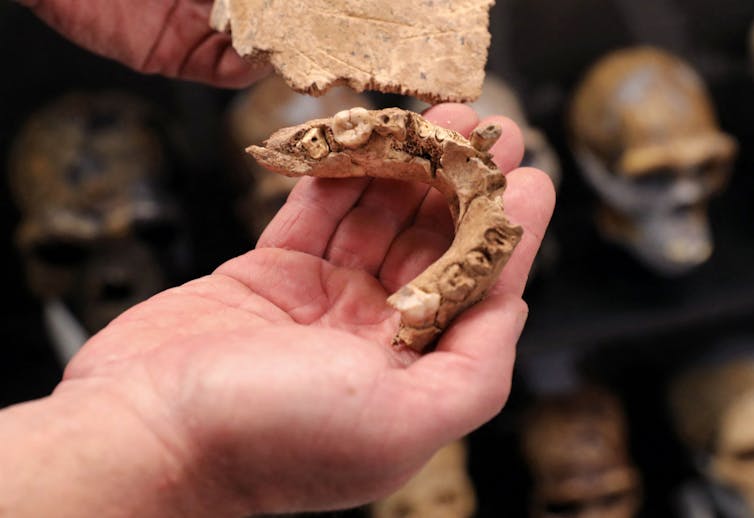
Any hominid fossil find with molar teeth can be plugged into a new equation that reveals its species’ prenatal growth rate. Gil Cohen-Magen/AFP via Getty Images
Fossilized bones help tell the story of what human beings and our predecessors were doing hundreds of thousands of years ago. But how can you learn about important parts of our ancestors’ life cycle – like pregnancy or gestation – that leave no obvious trace in the fossil record?
The large brains, relative to overall body size, that are a defining characteristic of our species make pregnancy and gestation particularly interesting to paleoanthropologists like me. Homo sapiens’ big skulls contribute to our difficult labor and delivery. But the big brains inside are what let our species really take off.
My colleagues and I especially wanted to know how fast our ancestors’ brains grew before birth. Was it comparable to fetal brain growth today? Investigating when prenatal growth and pregnancy became humanlike can help reveal when and how our ancestors’ brains became more like ours than like our ape relatives’.
To investigate the evolution of prenatal growth rates, we focused on the in-utero development of teeth – which do fossilize. By building a mathematical model using the relative lengths of molar teeth, we were able to track evolutionary changes in prenatal growth rates in the fossil record. Based on our model, it looks as if pregnancy and prenatal growth became more humanlike than chimplike almost 1 million years ago.
But human pregnancy, and particularly labor and delivery, cost a lot of energy and are often dangerous. The large fetal brain requires a lot of nutrients during development. The rate of embryonic growth during gestation, also known as the prenatal growth rate, exacts a metabolic and physiological toll on the gestating parent. And the tight fit of the infant’s head and shoulders through the pelvic canal during delivery can lead to death, for both the mother and child.
As a trade-off to those potential downsides, there must be a really good reason to have such large heads. The justification is all the abilities that come along with having a big human brain. The evolution of our large brain contributed to our species’ dominance and is associated with increased use of technology and tools, creation of art and the ability to survive in diverse landscapes, among other advances.
The timing and sequence of events that led to the evolution of our large brains is entangled with the ability to find and process more resources, through the use of tools and cooperative group work, for example.
By investigating changes in prenatal growth, we are also investigating changes in how parents gathered food resources and distributed them to their offspring. These increasing resources would have also helped drive the evolution of an even bigger brain. Understanding more about when prenatal growth and pregnancy became humanlike at the same time reveals information about when and how our brains did too.
Humans have the highest prenatal growth rate of all primates living today, at 0.41 ounces/day (11.58 grams/day). Gorillas, for example, have a much larger adult body size than humans, but their prenatal growth rate is only 0.29 ounces/day (8.16 grams/day). Because more than a quarter of all human brain growth is completed during gestation, the rate of prenatal growth directly relates to how big an adult brain grows. How and when Homo sapiens‘ high prenatal growth rate evolved has been a mystery, until now.
What teeth can tell about prenatal growth
Researchers have spent centuries investigating variation in fossilized skeletal remains. Unfortunately brains – let alone gestation and prenatal growth rate – don’t fossilize.
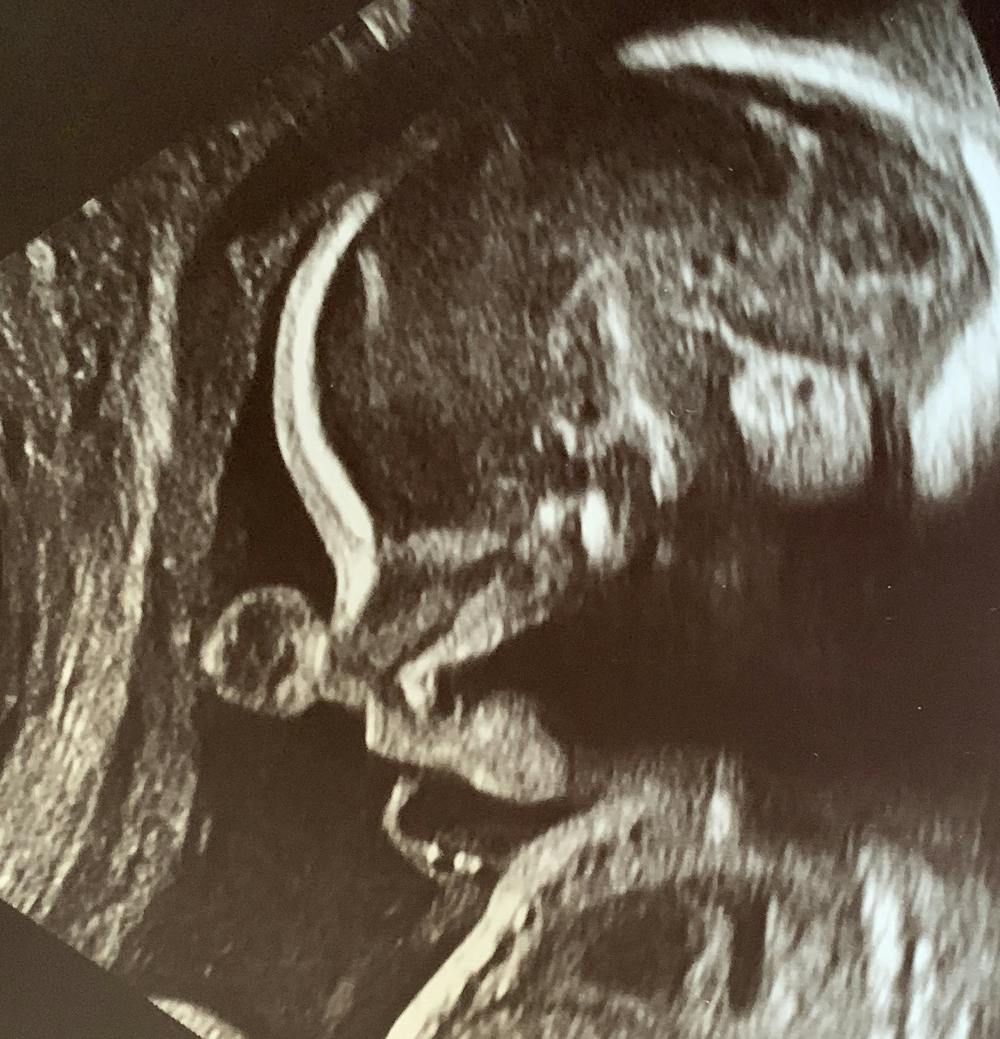
The developing brain of a human being gestating at 26 weeks. Tesla Monson
But my colleagues and I started thinking about how teeth develop very, very early in utero. Your permanent adult teeth started developing long before you were born, when you were just a 20-week-old fetus. Tooth enamel is more than 95% inorganic, and the vast majority of everything we see in the vertebrate fossil record is teeth, or has teeth.
Building off this realization, we decided to investigate the relationship between prenatal growth rate, brain size and the lengths of teeth.
We measured the teeth of 608 recently living primates from skeletal collections all around the world. We compared those measurements to rates of prenatal growth that we calculated from average gestation length and mass at birth for each species. We also looked at endocranial volume – essentially how much space is inside the skull – as a proxy for brain size.
Because prenatal growth is so tightly correlated with relative molar lengths, we were able to use this statistical relationship to generate a mathematical equation that predicts prenatal growth rate from teeth alone. With this equation, we can take a few molar teeth from an extinct fossil species and reconstruct exactly how fast their offspring grew during gestation.
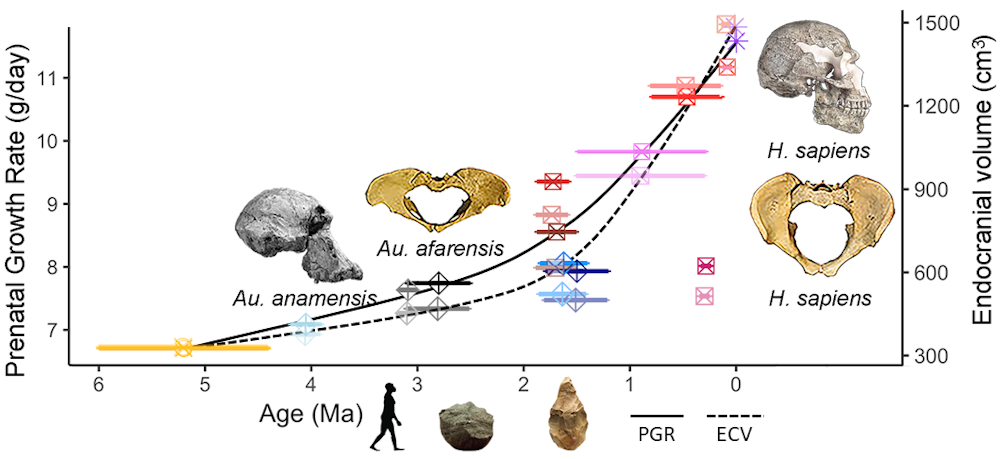
Using the new equation, researchers found that prenatal growth rates increased over millions of years of human and hominid evolution. Tesla Monson, CC BY-ND
Using our new method, we then reconstructed prenatal growth rates for 13 fossil species, building a timeline of changes over the past 6 million years of human and hominid evolution. “Hominid” describes all the species on the human side of the family tree after the split about 6 million to 8 million years ago from the common ancestor we shared with chimpanzees. From our new research, we now know that prenatal growth rates increased throughout hominid evolution, reaching a humanlike rate that exceeds what we see in all other apes less than 1 million years ago.
A fully human prenatal growth rate appeared with the evolution of our species Homo sapiens only around 200,000 years ago. But other hominid species living in the past 200,000 years, such as Neanderthals, also had “human” prenatal growth rates. Which genes were involved in these changes in growth rate remains to be investigated.
Now, for the first time, we can add to that list knowing what pregnancy and gestation were like for that individual and other members of its species. Teeth can even indirectly hint at the emergence of human consciousness, via evolving brain size.
Interestingly, our model suggests that prenatal growth rates started increasing well before the emergence of our Homo sapiens species. We can hypothesize that having a fast prenatal growth rate was necessary for growing that big brain and evolving human consciousness and cognitive abilities.
These are the sorts of big-picture questions this research lets us start to formulate now – all from just a few teeth.
Tesla Monson is the Assistant Professor of Anthropology at Western Washington University.
This may not make the daily headlines but, personally, I think that is a shame. The discovery has all sorts of implications for life, including ancient life, on this planet. And speaking of life let us bear a thought for the carnage that is happening in Turkey at this present time. A BBC headline:
A rescue operation is under way across much of southern Turkey and northern Syria following a huge earthquake that has killed more than 2,300 people
Penny Martin has previously written some guest posts for Learning from Dogs and here she is again with today’s post. The subject is not directly about dogs but trying to turn around one’s life; and that is something that most of us have faced up to at some point in their past.
(I think the references to Learning from Dogs are not needed but I’m not Penny!)
ooOOoo
Six Simple Self-Improvement Strategies for Your Health and Career
By Penny Martin,
Published 24th January, 2023.
Are you trying to turn your life around? Focusing on improving your self-care habits, your relationships, and your career prospects can yield change your life for the better. Furthermore, Learning From Dogs can introduce you to all of the benefits of becoming a dog owner! Here’s how to invest in your education, upgrade your resume, explore business ownership, and adopt healthy routines.
Advance Your Education
If you’re looking to move up in your career, you may want to head back to school to earn another degree. It’s okay if you’re not able to commit to attending courses at a physical campus – instead, consider studying through an online degree program. This will allow you to simultaneously work and care for your family. Double-check that any online programs you’re considering are accredited and that you can easily afford the tuition. You can choose a major like marketing, education, information technology, business, healthcare administration, and more.
Update Your Resume
Perhaps you’re hunting for a new job. Make sure to revise and update your resume prior to sending out applications! To make the process easier, just pick out a free resume template from an online library – this free resume may help. Then, you’ll input your work history. Finally, you can spruce up this document with a photo or a color scheme.
Consider Entrepreneurship
What if you’re frustrated with your boss, and you feel like working at a traditional 9-to-5 job is holding you back? If you’ve got a business idea, you can always register for LLC status for limited liability and tax breaks. Remember, if you form an LLC, you’ll have to choose a registered agent who can handle communications regarding your formation documents with law firms, tax agencies, and the government. You can hire a registered agent or service for help in this area.
Health and Fitness
Even as you prioritize your career, it’s still important to take care of your physical and emotional well-being. As you plan out meals each week, The Every Girl recommends cooking with lots of leafy greens and incorporating plant-based protein into your diet. Furthermore, try to block off a few workout sessions per week in your schedule. You might want to sign up for a gym membership.
Pick Up a Good Book
Reading is a great use of your downtime, especially if you’re on a self-improvement journey! Healthline states that reading can reduce your stress levels, prevent cognitive decline, and even alleviate symptoms of depression. Plus, you’ll be able to learn more about topics that you’re interested in! You might want to choose books that cover subjects related to self-help, like nutrition, fitness, meditation, or time management.
If you feel like you don’t have time to read, consider how you could cut down on screen time. Alternatively, you could listen to audiobooks while you commute to work or do chores around the house.
Get a Dog
If you could use another companion, consider getting a dog! Owning a dog can significantly improve your mental health. Canadian Living states that having a dog around actually decreases your blood pressure, boosts your levels of mood-enhancing hormones, and even helps you make friends in your neighborhood – taking your dog for walks helps you connect with other local dog owners!
Self-improvement is a lifelong process. When you take small steps in the right direction, you’ll be able to look back in a year and feel proud of how far you’ve come. With these tips, you can earn another degree, put together an impressive resume, become a pet owner, open your own business, and more!
Are you thinking about getting a dog? Read all about the benefits on Learning from Dogs! Visit the blog today to find out why getting a dog might be right for you.
Let me publish again the opening remarks that are on the home page of this blog:
Dogs live in the present – they just are! Dogs make the best of each moment uncluttered by the sorts of complex fears and feelings that we humans have. They don’t judge, they simply take the world around them at face value. Yet they have been part of man’s world for an unimaginable time, at least 30,000 years. That makes the domesticated dog the longest animal companion to man, by far!
There was a recent item on The Conversation that is being shared with you all today. It is about the role of meditation and mindfulness is keeping one healthy, and I sense this will be a popular article!
ooOOoo
Meditation and mindfulness offer an abundance of health benefits and may be as effective as medication for treating certain conditions
Assistant Professor of Psychiatry and Behavioral Neurosciences, Wayne State University
Published January 12th, 2023
Many people look to diet trends or new exercise regimens – often with questionable benefit – to get a healthier start on the new year. But there is one strategy that’s been shown time and again to boost both mood and health: meditation.
In late 2022, a high-profile study made a splash when it claimed that meditation may work as well as a common drug named Lexapro for the treatment of anxiety. Over the past couple of decades, similar evidence has emerged about mindfulness and meditation’s broad array of health benefits, for purposes ranging from stress and pain reduction to depression treatments to boosting brain health and helping to manage excessive inflammation and long COVID-19.
Despite the mounting body of evidence showing the health benefits of meditation, it can be hard to weigh the science and to know how robust it is.
I am very excited about how meditation can be used as a tool to provide powerful new insights into the ways the mind and brain work, and to fundamentally change a person’s outlook on life. And as a mental health researcher, I see the promise of meditation as a low- or no-cost, evidence-based tool to improve health that can be relatively easily integrated into daily life.
Meditation requires some training, discipline and practice – which are not always easy to come by. But with some specific tools and strategies, it can be accessible to everyone.
What are mindfulness and meditation?
There are many different types of meditation, and mindfulness is one of the most common. Fundamentally, mindfulness is a mental state that, according to Jon Kabat-Zinn a renowned expert in mindfulness-based practices, involves “awareness that arises through paying attention, on purpose, in the present moment, non-judgmentally.”
This means not ruminating about something that happened in the past or worrying about that to-do list. Being focused on the present, or living in the moment, has been shown to have a broad array of benefits, including elevating mood, reducing anxiety, lessening pain and potentially improving cognitive performance.
Mindfulness is a skill that can be practiced and cultivated over time. The goal is that, with repetition, the benefits of practicing mindfulness carry over into everyday life – when you aren’t actively meditating. For example, if you learn that you aren’t defined by an emotion that arises transiently, like anger, then it may be harder to stay angry for long.
The health benefits of meditation and other strategies aimed at stress reduction are thought to stem from increasing levels of overall mindfulness through practice. Elements of mindfulness are also present in practices like yoga, martial arts and dance that require focusing attention and discipline.
The vast body of evidence supporting the health benefits of meditation is too expansive to cover exhaustively. But the studies I reference below represent some of the top tier, or the highest-quality and most rigorous summaries of scientific data on the topic to date. Many of these include systematic reviews and meta-analyses, which synthesize many studies on a given topic.
Mindfulness-based programs also show promise as a treatment option for anxiety disorders, which are the most common mental disorders, affecting an estimated 301 million people globally. While effective treatments for anxiety exist, many patients do not have access to them because they lack insurance coverage or transportation to providers, for instance, or they may experience only limited relief.
It’s important to note, however, that for those affected by mental or substance use disorders, mindfulness-based approaches should not replace first-line treatments like medicine and psychotherapy such as cognitive behavioral therapy. Mindfulness strategies should be seen as a supplement to these evidence-based treatments and a complement to healthy lifestyle interventions like physical activity and healthy eating.
How does meditation work? A look into the brain
Studies show that regular meditators experience better attention control and improved control of heart rate, breathing and autonomic nervous system functioning, which regulates involuntary responses in the body, such as blood pressure. Research also shows that people who meditate have lower levels of cortisol – a hormone involved in the stress response – than those who don’t.
A recent systematic review of neuroimaging studies showed that focused attention meditation is associated with functional changes in several brain regions involved in cognitive control and emotion-related processing. The review also found that more experienced meditators had stronger activation of the brain regions involved in those cognitive and emotional processes, suggesting that the brain benefits improve with more practice.
This research does have limits. These include a lack of a consistent definition for the types of programs used, and a lack of rigorously controlled studies. In gold-standard randomized controlled trials with medications, study participants don’t know whether they are getting the active drug or a placebo.
In contrast, in trials of mindfulness-based interventions, participants know what condition they are assigned to and are not “blinded,” so they may expect that some of the health benefits may happen to them. This creates a sense of expectancy, which can be a confounding variable in studies. Many meditation studies also don’t frequently include a control group, which is needed to assess how it compares with other treatments.
Benefits and wider applications
Compared with medications, mindfulness-based programs may be more easily accessible and have fewer negative side effects. However, medication and psychotherapy – particularly cognitive behavioral therapy – work well for many, and a combination approach may be best. Mindfulness-based interventions are also cost-effective and have better health outcomes than usual care, particularly among high-risk patient populations – so there are economic benefits as well.
Researchers are studying ways to deliver mindfulness tools on a computer or smartphone app, or with virtual reality, which may be more effective than conventional in-person meditation training.
Importantly, mindfulness is not just for those with physical or mental health diagnoses. Anyone can use these strategies to reduce the risk of disease and to take advantage of the health benefits in everyday life, such as improved sleep and cognitive performance, elevated mood and lowered stress and anxiety.
Where to get started?
Many recreation centers, fitness studios and even universities offer in-person meditation classes. For those looking to see if meditation can help with the treatment of a physical or mental condition, there are over 600 clinical trialscurrently recruiting participants for various conditions, such as pain, cancer and depression.
If you want to try meditation from the comfort of your home, there are many free online videos on how to practice, including meditations for sleep, stress reduction, mindful eating and more. Several apps, such as Headspace, appear promising, with randomized controlled trials showing benefits for users.
The hardest part is, of course, getting started. However, if you set an alarm to practice every day, it will become a habit and may even translate into everyday life – which is the ultimate goal. For some, this may take some time and practice, and for others, this may start to happen pretty quickly. Even a single five-minute session can have positive health effects.
ooOOoo
This is a comprehensive article on a most important topic.
For whatever is happening in our world it is getting busier especially for those that are a great deal younger than me.
During the holidays, it’s typical for people to indulge in special foods. Being a pet owner myself, I know that many pet parents want to give their fur babies special treats as well.
Here are some of the most common food-related crises we veterinarians encounter in the animal ER during the holidays, and what to do if they happen.
Fatty food risks
Turkey with gravy is probably among the most popular holiday meals. And most dogs or cats would certainly agree with their humans that roast turkey is delicious.
However, the fat contained in turkey skin – and the excess of fatty, greasy foods that can accompany it, such as gravy, butter and bacon – don’t go down well with cats and dogs. Pets that ingest an overload of fats may develop pancreatitis, an inflammation of the pancreas, the organ that helps break down fat, protein and carbs.
Pancreatitis causes the pancreas to leak digestive enzymes and ultimately “digest” itself. If untreated, pancreatitis can affect other organ systems such as the kidneys and the liver and even cause blood clotting.
The most common symptoms of pancreatitis include vomiting and diarrhea. Pets that may have pancreatitis should be rushed to the closest veterinary hospital or ER. The vet will perform diagnostic blood tests, including a specific test for pancreatic enzymes called pancreatic lipase immunoreactivity or cPLI/fPLI.
Treatment for pancreatitis mostly involves dealing with its symptoms. The pet receives IV fluids to help establish electrolytes balance, with added anti-nausea and pain medications to stop the vomiting. Antibiotics may be necessary, as well as liver protectants and probiotics, and a special diet.
Onion offenses and bread badness
If only turkey were the sole problem! Many other common holiday ingredients can also harm pets.
Several allium species common to holiday cooking, such as leeks, garlic, onions, chives and shallots, can be healthy for people. For dogs and cats, though, alliums are toxic. If ingested, they can cause hemolytic anemia – a decreased number of red blood cells.
The signs of hemolytic anemia, which normally appear a few days after ingestion, include vomiting, diarrhea, lethargy and jaundice.
To treat hemolytic anemia in pets, veterinarians do blood tests to determine whether a transfusion is necessary. They address the symptoms of allium intoxication with IV fluids, antioxidants and anti-nausea drugs.
Yeast-risen foods like rolls and breads are also holiday dinner staples that people should keep away from their pets. The yeast in these foods can ferment in a pet’s warm stomach and produce toxic levels of ethanol. In pets, ethanol toxicity may lead to metabolic acidosis, which can cause sudden drop in blood glucose, respiratory depression, seizures and cardiac arrest.
Normally, pet owners do not suspect metabolic acidosis until it is almost too late, because it has few outward symptoms. So if there’s a possibility that a pet has swallowed any type of cooked or raw yeast dough, get it to a veterinary ER right away.
By the way, pets can also experience ethanol toxicity by lapping up cocktails or beer, so keep alcoholic drinks out of their reach as well.
No chocolate for pets
Now, what about a favorite holiday treat – chocolate?
Substances that may actually attract humans to chocolate – methylxanthines like theobromine and caffeine – are toxic to both dogs and cats. When vets provide emergency treatment for chocolate ingestion, we typically hear that children shared their candy with their beloved pet.
Pets that ingest chocolate can develop “chocolate intoxication,” a condition in which methylxanthines accumulate in the body and make them sick. Signs of chocolate intoxication in pets include tremors, increased heart rate, vomiting, diarrhea, restlessness and even seizures.
Chocolate intoxication in pets is a medical emergency. The pet needs to have its stomach emptied and receive support therapy with IV fluids and activated charcoal. The vet will probably want to know the type and how much chocolate the pet ate, because some kinds of chocolate, such as baking chocolate, can have worse toxic effects.
Chocolate also has a lot of fat, so the cat or dog’s pancreas will not enjoy it either.
Grapes and dogs don’t mix
How about fruits? Well, there is a fruit very toxic to dogs that often shows up at holiday gatherings: grapes, both fresh and dehydrated into raisins.
If eaten, the tartaric acid in grapes or raisins may cause acute kidney disease. Common signs of acute kidney disease in dogs are vomiting, intermittent diarrhea and increased intake of water.
Acute kidney disease in dogs is a medical emergency. If it is suspected, the pet should be rushed to a veterinary hospital or ER right away. Treatment is typically limited to stabilizing the pet with IV fluids.
Sweet for people, poison to pets
While xylitol toxicity is one of the more common emergencies we veterinarians see these days, it’s still largely unknown among pet owners.
Xylitol is an artificial sweetener often used in sugar-free products. While safe for humans, for cats and dogs it’s a fast-acting and potentially deadly poison.
Ingesting even the smallest amount of xylitol can cause a pet’s liver to rapidly release insulin, causing hypoglycemia – unusually low blood glucose levels. Within 30 minutes, the pet will experience symptoms such as vomiting, lethargy and seizures and lose coordination of its limbs – called ataxia.
Emergency treatment for a pet with xylitol toxicity involves giving the animal IV fluids containing dextrose to raise its blood glucose level and carefully monitoring its progress.
The bottom line? Several delicious foods that are safe for humans can be very dangerous for pets in general – not just cats and dogs, but also birds, reptiles and pocket pets like mice, hamsters and gerbils. So make the holidays special for furry or feathery babies by giving them treats from the pet food store or veterinarian’s office, and keep them away from the kitchen counter and trash can.
Countless numbers of people have dreamt that they can communicate with animals and I would imagine an enormous percentage of those would have dreamt that they can communicate with dogs.
Certainly of the three dogs we have alive still here at home (we had in the past some fifteen dogs) Oliver below appears to understand much of what is said to him by me and Jean
If one goes to the YouTube website then one is introduced to Anna Breytenbach who has made it her life’s passion to better communicate with animals. Here’s a small piece from the extensive WikiPedia entry:
In her twenties she decided to pursue her passion for wildlife (big cats in particular) by becoming a cheetah handler at a conservation education project. On moving to America, she explored wolf and other predator conservation. She has also served on committees for wolf, snow leopard, cheetah and mountain lion conservation.
Anna Breytenbach and friend
So now we come to this video of Anna and Diablo, more properly called Spirit, (and the video will make that clear).
Arjan Postma explains the background to the film:
I just want to share this message as much as possible without any commercial intent, personal benefit or whatsoever. All used materials and therefore copyrights do not belong to me. I hope you enjoy discovering and watching this story and skill as much as I did: What if you could talk to animals and have them talk back to you? Anna Breytenbach has dedicated her life to what she calls interspecies communication. She sends detailed messages to animals through pictures and thoughts. She then receives messages of remarkable clarity back from the animals. In this section, Anna transforms a deadly snarling leopard into a relaxed content cat. The amazing story of how leopard Diabolo became Spirit… I found the source of this amazing documentary here: http://www.cultureunplugged.com/docum… This is the first full length documentary film on the art of animal communication. Nominated for Best Long Documentary, Best Director of “Jade Kunlun” Awards of 2012 World Mountain Documentary Festival of Qinghai China. Director: Craig Foster | Producer: Vyv Simson | Narrator: Swati Thiyagarajan Genre: Documentary | Produced In: 2012.
The promotion for this TED Talk appeared in my ‘in box’ last week and I was curious as to its contents. So I watched the talk on Sunday afternoon and was amazed. This is so much more significant to all of us than the title suggests.
First watch the talk.
Then some background to Jane, who is a ecosystem scientist:
Dr. Tamara Jane Zelikova works at the intersection of climate science and policy. Her work focuses on advancing the science of carbon removal and she has published in scientific journals like Nature and Proceedings of the National Academy of Sciences, written and contributed to climate policy reports and published articles in popular media outlets like Scientific American. She is currently the executive director of the Soil Carbon Solutions Center at Colorado State University, where she works with leading scientists to build the tools and approaches needed to accelerate the deployment of credible soil-based climate solutions, measure their impacts and bring them to scale.
That then led me to the Soil Carbon Solutions Center website and this is a site you should visit. A little piece from their About section:
Unlocking the potential of soil for a more sustainable planet
Soil is one of the largest natural carbon reservoirs and an important climate mitigation tool that is ready to deploy today. Accelerating the adoption of regenerative agricultural practices that build soil carbon on working lands offers the potential to substantially draw down atmospheric carbon while improving the environmental, economic and social sustainability of food, fiber and bioenergy production.
Another very useful guest post from Penny Martin who is becoming a very regular contributor to this place. This time Penny writes about being on a budget, aren’t we all, but still keeping your dog safe and happy.
Six Ways to Make Your Home and Yard Dog-Friendly on a Budget
By Penny Martin.
Dogs add many wonderful things to their owners’ lives; however, owning a dog can be a drain on your bank account. According to statistics, the average American dog owner spends $1,480 per year on dog expenses. These tips can help you make your home and yard more dog-friendly without breaking the bank.
1. Add a Fence
Dogs need exercise, a place to go to the bathroom and a chance to sniff around and be a dog. However, if you don’t have a yard with a secure fence, it isn’t safe to allow your dog outside without a leash. Even a well-trained dog may run off to chase a squirrel, greet a strange dog or go exploring. This puts your dog at risk of being hit by a car, getting in a fight with another dog or animal or becoming lost. Adding a fence to your yard allows you to enjoy time with your pet off leash without risking your pet’s safety.
2. Add a Backyard Pool
Not every dog loves to swim, but many do. You can give your dog a place to cool off and have some fun without spending a lot of money by purchasing a wading pool or a small stock tank. If you think your dog would enjoy more than splashing around, search for a dog-friendly place in your area where you can inexpensively take your dog to swim. However, don’t just toss your pup into the deep end. Not all dogs are natural swimmers. Many facilities that have pools for dogs offer swimming lessons.
3. Create Shady Spots
Dogs love to run and play and on hot days they can easily overheat. Help your dogs stay cool by making sure they have plenty of shady spots to hang out. One inexpensive way to do this is to purchase a portable awning. You can set the awning up anywhere in your yard and put it away when you no longer need it. Trees are also a good source of shade, but it is important to keep your trees maintained.
4. Remove Dead Trees and Branches
Dead trees create a safety hazard and provide a home for pests. Have a professional local tree service remove any dead trees and branches in your yard before they cause an injury or accident. Do not try to remove the tree yourself. Professionals have the right gear, tools and safety training to remove the tree safely and without damaging your property. Read online reviews before you reach out to contractors. Get at least three estimates and make sure to ask whether stump grinding and disposal are included in the price.
5. Buy Trash Cans With Lids
Trash cans are smelly, full of tasty food and plenty of stuff to shred. It is no wonder that most dogs love to root through them. However, spoiled food, sharp objects or toxic materials can injure or sicken your dog. Avoid this problem by purchasing trash cans with lids that lock.
6. Remove Dangerous Plants
Many plants can be harmful to dogs who ingest them. Research the plants in your yard and remove any that could cause a problem.
Owning dogs is not a cheap endeavor. However, you can make your home safe and comfortable for them without spending all your savings by adding a fence and pool, creating shady spots, removing dead trees, purchasing garbage cans with lockable lids, and getting rid of poisonous plants.
ooOOoo
Here at home, because we live in a rural location, dead trees and branches are an ever-present problem. Luckily our dogs don’t seem to be drawn to them but the issue of pests is a different matter. We have thirteen acres of which half is forest and it is all too much for a contractor. Correction: It is all too expensive for us!
For the wider audience of readers this, I am sure, offers very good advice and is another great post from Penny.








 Learning from Dogs