S. Korea is the only country in the world with large-scale, commercial dog meat farms.
Frankly, I wasn’t planning to publish a post today. But then in came an email from John Zande, he of the blog The Superstitious Naked Ape, and this is what I read: “Paul, hi… Really good news. The following email links to a petition supporting a bill that will end the dog meat trade in Korea. I know you’ll want to sign it. Share it around, too.”
S. Korea is the only country in the world with large-scale, commercial dog meat farms. The animals live in disease and filth, and at slaughter are often savagely beaten just because people believe torture makes the meat taste better.
But a new bill could finally stop the cruelty. Rep. Lee Sang-don of the Bareunmirae Party has proposed legislation to exclude dogs from the Livestock Industry Act, effectively prohibiting dog farming.
The bill comes just before summer, a season of terror for dogs in South Korea — and we must speak out to help this lifesaving legislation succeed.
This time of year brings the gruesome Bok Nal Dog Eating Days, when millions of dogs are strung up, hung by the neck in a slow, painful death, and butchered for meat.
During Bok Nal — which occurs over three days believed to be the hottest of the season — more dogs are killed and eaten in the country than during the entire rest of the year, usually in the form of boshintang, or dog meat soup.
The dog meat is wrongly thought to have a “cooling effect” — even though in other parts of Asia, it is believed to have the opposite effect, and is eaten in winter instead.
S. Korea’s current leader, President Moon Jae-In, has compassion for animals and has even adopted a dog rescued from the meat trade, named Tory. Furthermore, activists throughout S. Korea are calling for an end to dog and cat meat, which is not only horrifically cruel, but tarnishes their international reputation. Most S. Koreans are against dog meat, and want the cruelty to end.
Sign this petition to urge S. Korean Ambassador Joe Yoon Je and President Moon to show the world they are a great and compassionate nation, and work to pass this bill and end all dog and cat meat in the nation.
I should add the closing part of that email that John sent to me.
There is simply no reason for this horrific industry to go on. Be part of our voice to DEFEAT DOG MEAT.
Thank you for doing your part to help stop animal cruelty.
Lady Freethinker is a registered 501(c)(3) nonprofit media organization dedicated to creating a free and compassionate world for all species. Your donation is tax deductible to the fullest extent allowed by law.
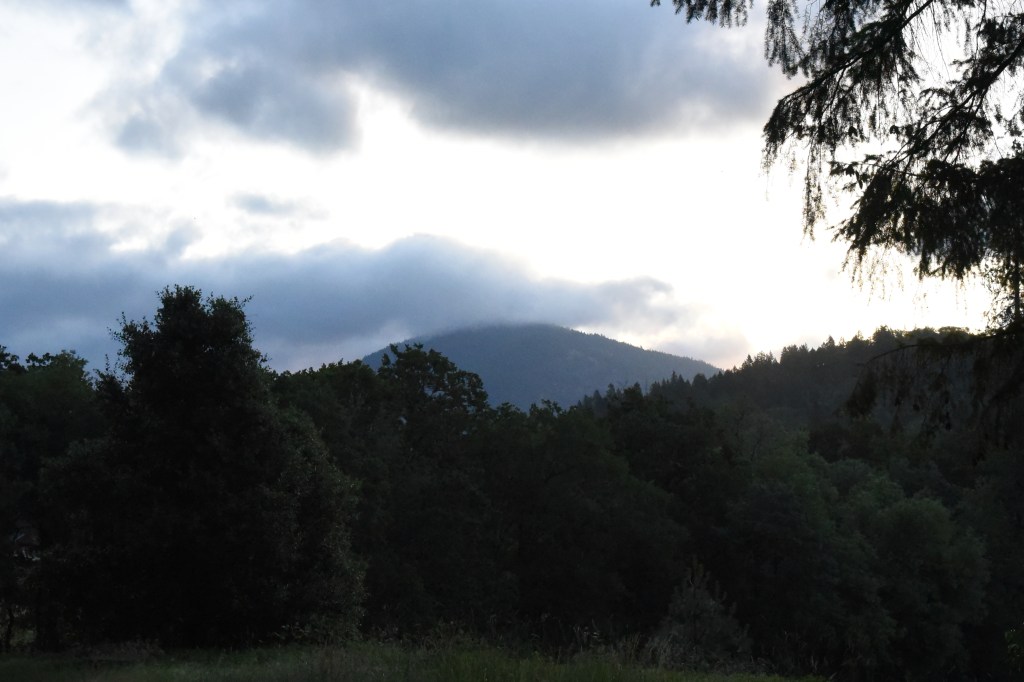
The weather at 6am didn’t bode well with a brisk wind blowing clouds across the summit of Mt. Sexton.
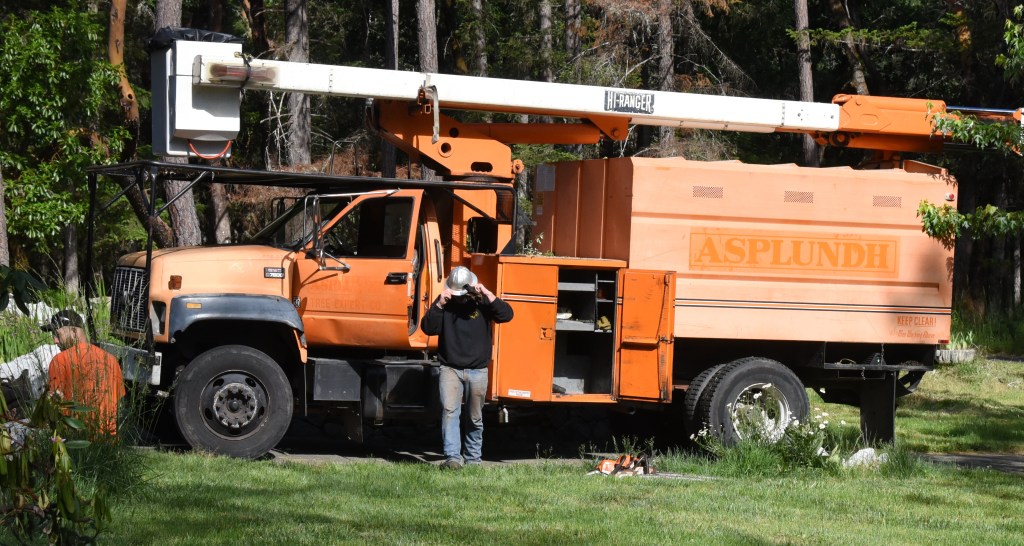
Lyman from Liberty Tree Enterprises arrived bright and early on Wednesday morning to set about felling the dead fir close to the North-East corner of our rear deck.
It was this dead fir, pictured to the left, that had had the wireless antenna installed on it soon after we moved in to Merlin, OR, back in 2012.
How the day would go was a bit of a guessing game: Would we need a new antenna because it would be broken when the tree hit the ground?; Would Outreach be out to see us reasonably soon after we called them to say that the tree was down?; Would there be complications that were unforeseen at this early stage of the ‘project’?
Well we wouldn’t have long to find out.
Lyman and his assistant were very careful in ensuring that the face of the cut, that would direct exactly where the tree fell, was aligned perfectly. I was very impressed with the care and attention put into this aspect of the felling process.
Then it was time to make the cut on the other side of the trunk and hammer in the wedges that would cause the tree to fall. At one point there was a gust of wind that had the tall trunk rocking on the base. We all held our breath.
But at 09:33 down it came!
Down it came perfectly. (Later I counted the rings to discover that the tree was 65 years old!)
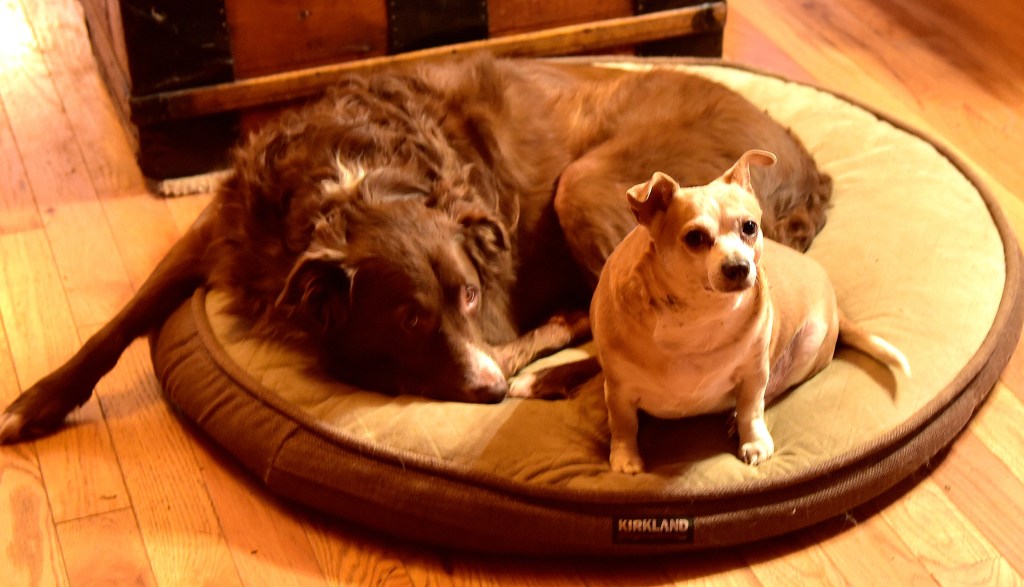
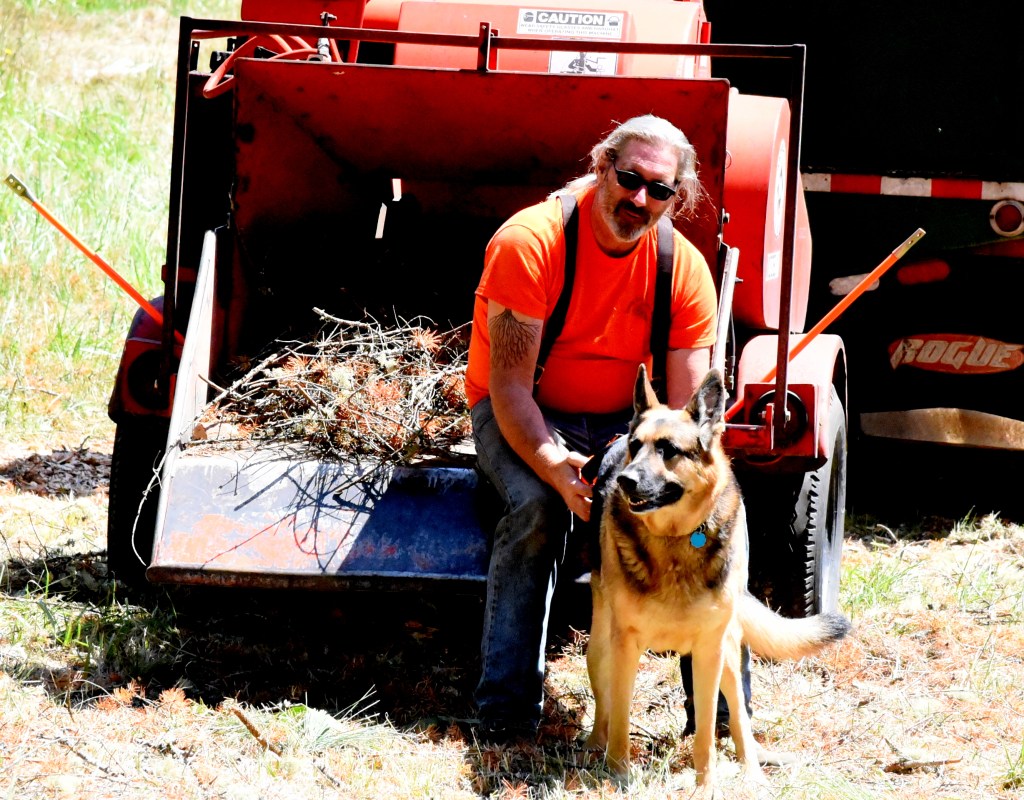
Then it was a case of cutting off all the limbs and shredding them up on site. Inevitably the dogs took an interest!
Here’s Cleo making friends with Lyman.
On to stage two.
Outreach had been called and to our great relief we were told that Doug and Jennifer, the Outreach rigging crew, should be along later in the afternoon.
The two of them arrived and quickly established that the existing antenna had survived the drop!
Therefore, it wasn’t long before Doug was climbing another fir also conveniently close to the deck.
Doug earning his living big time!
And within the hour it was time to power up the router, switch on my iMAC and test for a signal!
The old antenna installed in its new home!
Yes!
All was working and working well.
As you good people will understand it was too late in the day to sort out a post for yesterday.
Plus I needed a few hours to catch up on emails and stuff and then sort out the photographs that I had taken that day.
Then, yesterday afternoon, I sat down and ‘penned’ today’s post for you all.
Will you, please, consider taking one of these puppies!
I closed last Saturday’s post with this plea: “If only there wasn’t a single dog in need of adoption in the world!”
That plea is being used to introduce today’s post. An article that was recently read on the Smart News section from The Smithsonian magazine website.
I have republished it, hopefully without infringing copyrights, because it’s a story that needs to be circulated as far and wide as possible.
ooOOoo
Chernobyl Puppies Going Up for Adoption in the U.S.
Now in quarantine, the pups are expected to come to the U.S. this summer in search of their forever homes.
Please for to adopt us, Comrade. (Chernobyl Exclusion Zone Authority) By Jason Daleysmithsonian.com , May 16, 2018
In 1986, the Chernobyl nuclear power plant melted down, sending nearby residents fleeing the disaster zone. And sadly, most pets got left behind. Over the last 32 years, the surviving pups have multiplied, creating a community of hundreds that live in the Chernobyl Exclusion Zone and another 250 that live on the grounds of the former power plant itself.
Now, a dozen of those homeless puppies will head to the United States for adoption, reports Matt Novak at Gizmodo.
According to the Russian website Meduza, Ukrainian authorities have captured 200 of the stray Chernobyl puppies. They are currently keeping them in a 45-day quarantine in the city of Slavutych, and then a dozen will be shipped to the United States.
“We have rescued the first puppies, they are now in our adoption shelter going through the quarantine and decontamination process,” Lucas Hixson, co-founder of the U.S.-based Clean Futures Fund, a non-profit created to take care of Chernobyl clean-up workers, their families and the dogs tells Novak. “The goal is 200 dogs but will likely be more in the long run. My hope is to get 200 dogs rescued and adopted in the next 18 months and then go from there.”
The pups have a heartbreaking story, as The Guardian’s Julie McDowell detailed earlier this year. During the evacuation, more than 120,000 people were herded onto buses to escape the meltdown of the Unit 4 reactor, leaving most of their valuables and their pets behind. Many dogs tried to follow their owners onto the buses but were kicked off. People left notes on their doors asking authorities not to kill their animals, but Soviet Army squads were dispatched to put down as many contaminated animals as they could find.
Some of the dogs survived the army and the radiation, rebuilding their community as a pack. The Clean Futures Fund reports that the 250 dogs living on the grounds of the former power plant were likely driven out of the surrounding forests by wolves and a lack of food. Another 225 dogs roam Chernobyl City and hundreds of others live and scrounge at security checkpoints and throughout the woods and abandoned communities in the Exclusion Zone. Most of the dogs around the plant are under the age of 4 or 5, and clean-up workers at the site sometimes feed and tend to sick animals.
But last year, after becoming aware of the animals, The Clean Futures Fund decided the pups needed a more permanent solution. That’s why they’ve implemented a three-year program in the Exclusion Zone to spay and neuter 1,000 animals and vaccinate them against rabies. At their first clinic last August, the Fund spayed and neutered 350 dogs and cats in the area. Each animal was tested for radiation, given antibiotics, vaccinated for rabies and microchipped. Each dog’s vital data was also recorded.
For the next clinic scheduled for June, the Fund has also partnered with researchers from the University of South Carolina. The team will study the dogs for signs of radiation poisoning as well as genetic damage and disruptions to the dogs’ microbiomes, reports Mary Katherine Wildeman at The Post and Courier. The team will sedate the dogs and look for tumors and cataracts, which can signal radiation poisoning.
Understanding the impacts of radiation exposure is becoming increasingly important, says Timothy Mousseau, a researcher who has studied radiation in the birds, insects and small animals of Chernobyl and will lead the project. Exposure rates in daily life from medical treatments and other sources are on the rise, with the average yearly dose Americans receive doubling in the last 20 years alone.
There is no word when or where the dozen Chernobyl pups will go up for adoption. But even if you’re not lucky enough to have one of the reminders of Soviet-era nuclear power at the foot of your bed, it’s still possible to see the place for yourself and hand out treats to some of the remaining pups. There’s a booming tourism industry in the area to visit the eerie ghost towns and surprisingly quiet and beautiful green space that has overtaken the Zone.
ooOOoo
I am going to contact The Clean Futures Fund to see how one can register a potential interest in taking one of these puppies.
In the meantime, is there any reader who would be interested in having a puppy? Send me an email if so.
Already there are some places in the USA that are experiencing some pretty hot days. For instance, at the time of me writing this introduction, around 2pm last Friday, the temperature in Phoenix, Arizona is 97 deg F. (36 deg C.) That’s perfectly hot enough for us humans even before we think of dogs. Especially dogs that have thicker coats.
Over to Wendy!
ooOOoo
Regulating the Body Temperature of Your Thick-Haired Dog during the Summer.
by Wendy Lipscomb, May 9th, 2018
Summer brings in many outdoor activities such as hiking, swimming, running and going for a picnic or maybe going out just for a walk. There is nothing wrong with taking your dog out with you if you know how to regulate your pet’s body temperature.
Humans regulate their body temperature by sweating but animals do not have this property. Dogs do sweat very slightly from their nose and paws but that cannot help them regulate their body temperature. Dogs regulate their body temperature by panting; when a dog breathes through his mouth the saliva evaporates cooling down the blood in the veins. Put another way, the air that a dog breathes passes through its nasal passage before reaching its lungs. The air is cooled when it is passed through that nasal passage.
Therefore, it becomes even harder for dogs to regulate their body temperature when the sun is shining down, and also when the humidity in the air increases. This builds up a pressure on the dog’s lungs and heart as he breathes in and out more frequently to regulate his body temperature.
But you can take some measures to help your pet to regulate his body temperature during summer outdoors.
No doubt about it that dogs are super active animals and love to go outdoors. But while taking them out in those summer months it is easy to forget that the paws of our dogs are very sensitive and they can be burned by walking on the pavement and roads in the daytime. So, invest in good protective booties or apply paw wax to protect your dog’s paws.
In addition, your dog can also get sunburned by excessive exposure to the sun. Therefore, either limit the exposure of sun for your four footers or visit your vet clinic so that they can recommend a good sunscreen for your dog.
Another thing that you can consider while going out in the summer is that if you are traveling in a car and stop for rest never ever leave your furry companion in a locked or closed car. Because in summer your car becomes extremely hot by trapping the heat inside. If you leave your pet inside a hot car it can suffocate within minutes. Yes, within minutes!
Always carry a bottle of water to keep your dog hydrated. Create breeze for your dog to make the hot temperature tolerable for them. The breeze helps in cooling sweat and will make your dog feel relaxed. For this purpose buy a shop fan that is portable; a good option to create a breeze to keep yourself and your dog cool.
The above-mentioned tips are general tips that you must keep in your mind to implement in the summer. However, thick-haired dogs require a little more attention to maintain their safe body temperature.
People have the misconception that a dog with thick hair will suffer more during summer but let me tell you that thick-haired dogs are good at regulating their body temperatures. The fur of thick-coated dogs helps them to stay warm in winter and in summer their fur works as insulators and protects their skin from direct exposure to the sun. Bathing For Thick-Haired Dog:
Well, fleas and ticks are around all of the year. Fleas can survive outside for long periods of time, particularly in a warm and sticky climate. As mentioned previously, summer bring in more heat, humidity and more outdoor time. Thus, it is the peak time for your thick-haired dog to catch fleas or ticks. Therefore, bathing your dog regularly is as important as anything else because it will not only help your dog to regulate his body temperature but bathing will also help you and your puppy be rid of these tiny crawlies as flea bites can cause redness, irritation, allergy and even illness such as Lyme diseases. It is recommended to use a good quality flea shampoo to get rid of fleas. Always examine the ingredients of the shampoo to avoid buying one with harsh chemicals because it may cause a reaction to your dog’s skin. You should not Shave Your Dog in summer:
People ask me if I am going to shave my thick-haired dog in the summer? The answer to this question is “No”. Thick-haired dogs have two layers of hairs. The long-guard hairs protect the dogs in the winter from snow and the inner layer helps them to stay warm in those same winters. However, these dogs shed their undercoat in the summer and they are left with only long-guard hairs that insulate dogs from heat and protects them from sunburn.
Shaving your double-coated dog is not a good idea because shaving changes the texture of the coat. Your dog sheds off his inner coat in the summer. If you shave his coat his hair will soon start growing back and you will see that the soft and fluffy inner coat will grow first and later on the guard-hairs will combine with them. In addition to this, the texture of the new coat will be sticky and your dog will bring in whatever he passes through and that sticks to his new coat.
Moreover, the combination of the new growing inner and outer coat will also make your dog feel hotter on summer days. Brush Your Dog Frequently:
Instead of shaving your dog’s coat, try to brush it every alternate day. Brushing your dog’s coat with a fine-toothed comb will untangle the hairs and it will also help in removing the winter undercoat of your thick-haired four-footer. This will increase air circulation and will make your dog feel cool and comfortable.
ooOOoo
I asked Wendy for a little about herself. This is what she sent in:
Wendy is a self-employed beauty therapist, mother of two; life-long pet parent and lover of dogs who somehow manages to squeeze in the time to satisfy another of her loves – writing. Wendy is the founder, main contributor to and editor of TotallyGoldens.com
So no other way than to close this post with the message: Stay Cool Peeps!
(Brandy! Take Note!)
Jean and Brandy at a local yard sale back in June 2016.
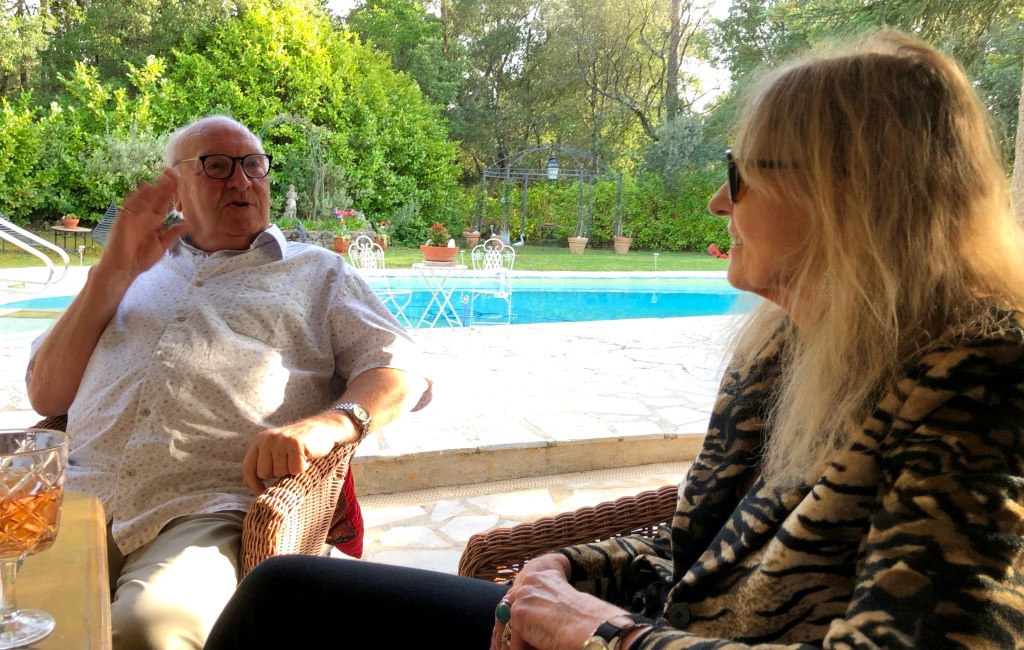
We were in Reggie and Chris’s villa in the village of La Croix des Luques inland from the Cote d’Azur, Southern France.
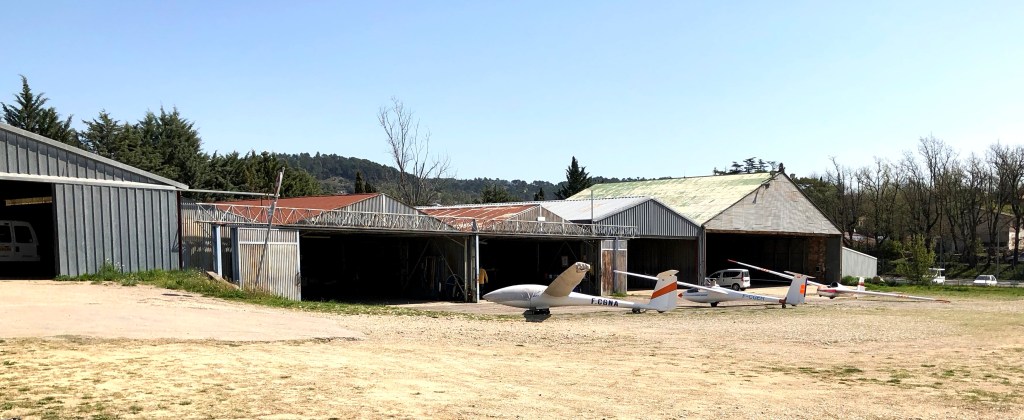
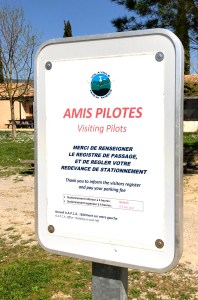
I quickly realised that their villa was not far from the world-famous sailplaning airfield at Fayence. Or LES PLANEURS DE FAYENCE as it is known. Reggie gladly offered to take Jean and me across to the airfield.
Many years ago, when I was living and working in Colchester, Essex, I became a very keen and active pilot with the Rattlesden Gliding Club in Suffolk eventually qualifying as a gliding instructor. So when Reggie suggested that I see about getting a dual flight at the Fayence Club I didn’t need asking twice.
Unfortunately, they couldn’t accommodate my wishes before we had to leave France so that opportunity had to be let go.
Another opportunity, this time for Jeannie, was taken advantage of. Chris was a member of a local art class and while we were going to be there the class would be meeting at the villa. Would Jean like to take part?
Jean is a good amateur artist, as many of her paintings and sketches around our house attest to. So that did take place and it was a wonderful afternoon for all concerned.
oooo
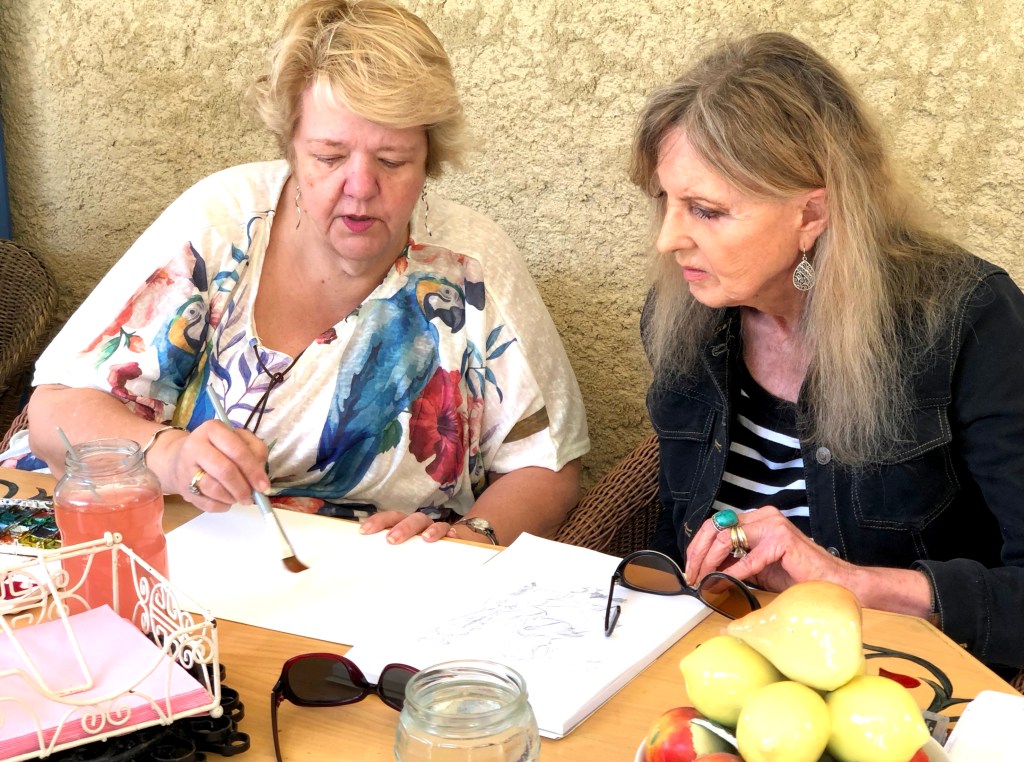
Stella, Christine’s sister, working alongside my Jeannie.
Then on a subsequent day Reggie and Chris took us for a drive along the beautiful coastline that is the essence of the Cote d’Azur.
To reach the coast Reggie took a route that went down towards Frejus and Saint-Raphael and then joined the coast road just west of Le Dramont.
I found this was stirring up very old memories. For my father, a Chartered Architect, had a passion for this part of France and every summer back in the 1950s took the four of us (Mum, Dad, me and my sister Elizabeth) for a month’s holiday. Thus many of the coastal town names had echoes from over 60 years ago. (Father died in December, 1956 of cancer.)
As we drove along, I reminisced aloud to Reggie and Chris that when I was 15 my mother decided that it would be a good thing for me to do a student exchange with a French boy. It was arranged and in the early part of the summer of 1959 in to our house in Preston Road, Wembley came Philippe, whose home was in Paris.
Then in about 4 weeks it was my turn to accompany Philippe back to Paris. It was a very ornate apartment with an air of luxury living and I felt very lost in the place. Apparently, Philippe’s father was a director with Air France.
Anyway, the father announced just a couple of days after I had arrived that all the family the following day would be flying from Paris to Nice airport, (with Air France, of course!) to then spend a month at the family’s French villa in the coastal town of Antheor.
On me mentioning Antheor Reggie immediately exclaimed that we were just a few miles from going through Antheor and that we should stop there. I wondered if I would remember anything of the place.
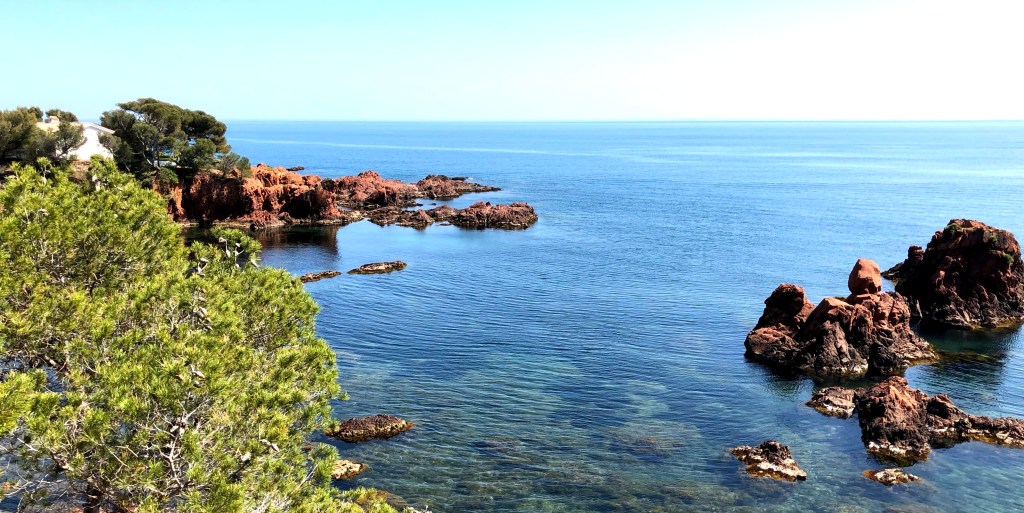
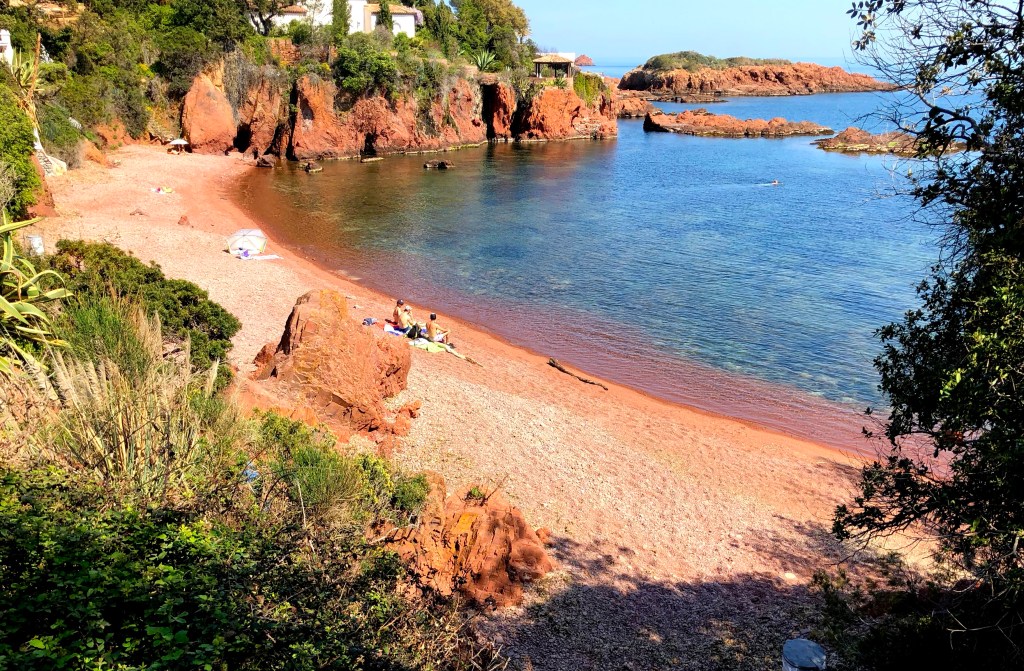
Well I did!! To my amazement when we stopped to look down at the beaches below the level of the road I thought that we were very close to the beach in front of the villa at Antheor where I used to swim, frequently on my own, every day that I stayed there.
I told everyone to stay where they were and ran on to the next beach.
Bingo!!
It was the same beach that I now recalled so clearly.
Swimming memories from 1959!
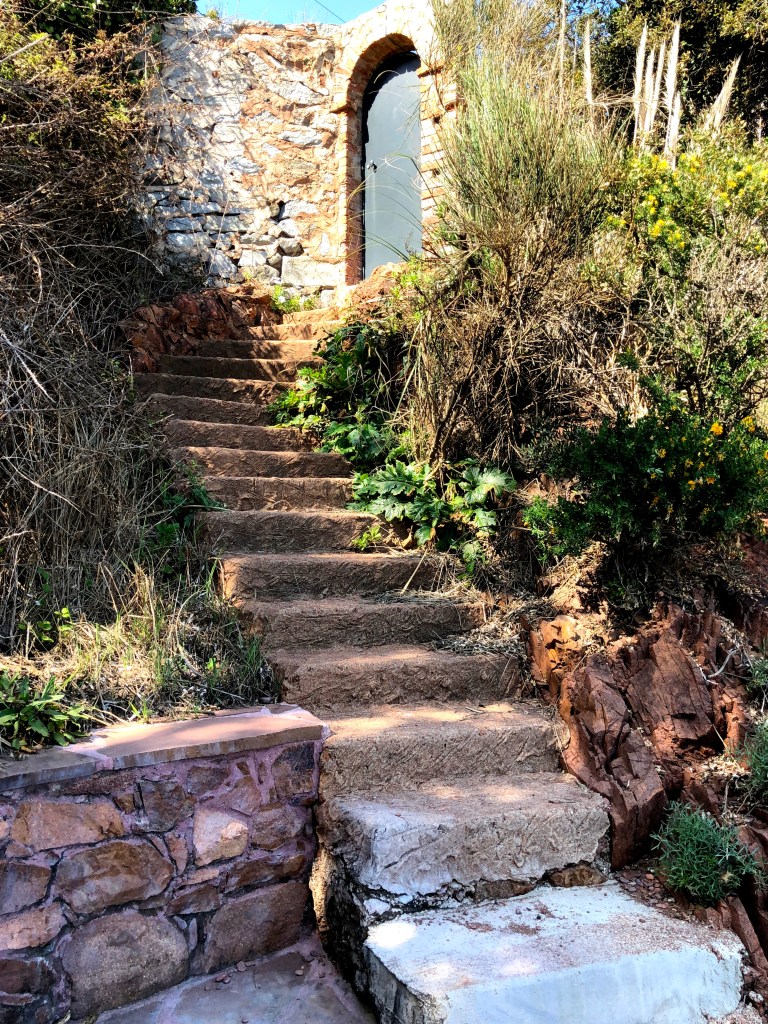
Even more amazing for me was that the iron gate and steep stone steps down to the beach were still there, albeit no longer being used as a more modern set of steps was in place.
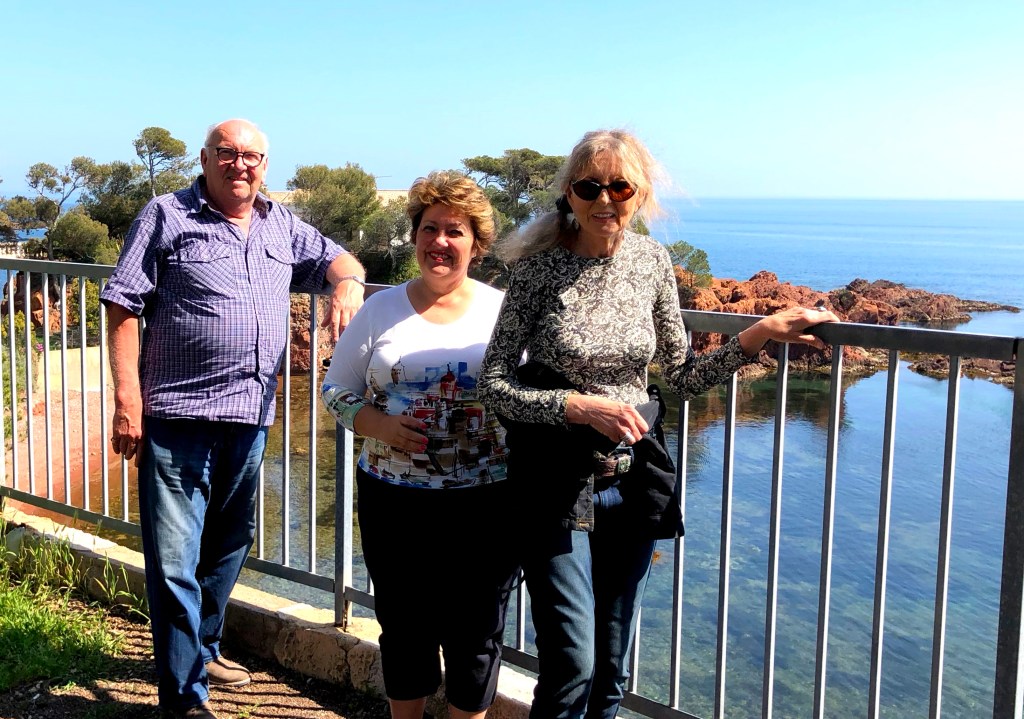
By this time, the others had arrived at the head of the new steps and were looking down at me as I became truly lost in days so very long ago.
I have no recollection why back then the rest of the family so rarely came down to the beach that was so close to where their villa was. Indeed, it was just a case of crossing the coast road, much quieter in those years, and descending the steps to the beach.
But for this London boy it was bliss beyond measure. Maybe at some level it reminded me of family holidays for our, as in sister Elizabeth and me, father’s death was still a painful memory.
I stood still and just looked at the beach and at the sea and was transported so very clearly back to the times when I swam around the rocks, wearing a face mask and snorkel, just lost forever in what one could see underwater.
Then it was time to return to the car and resume our delightful drive.
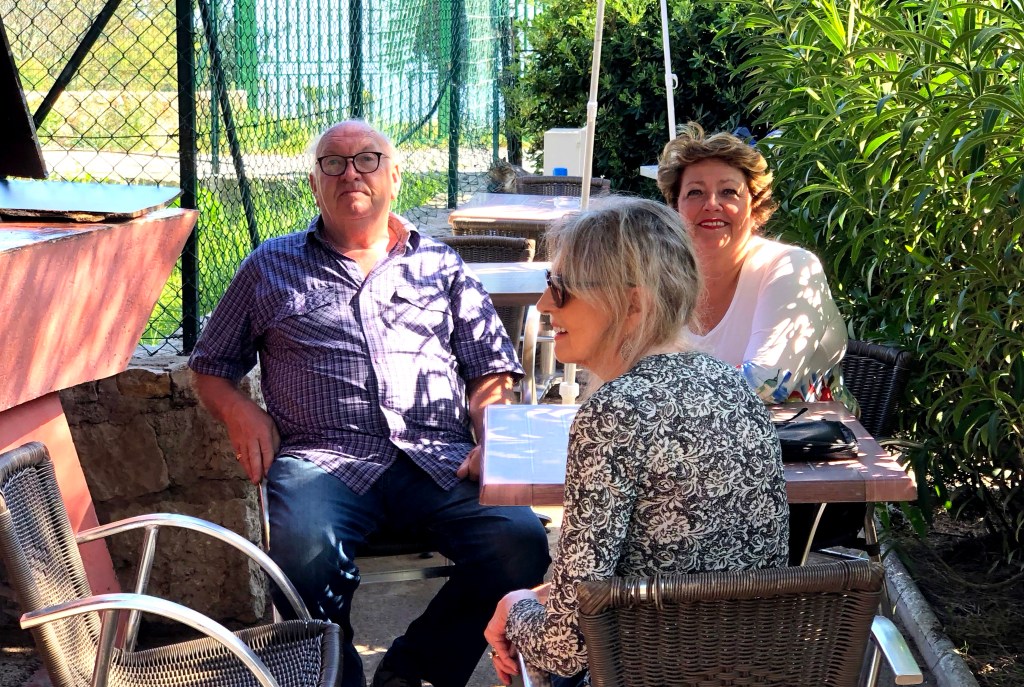
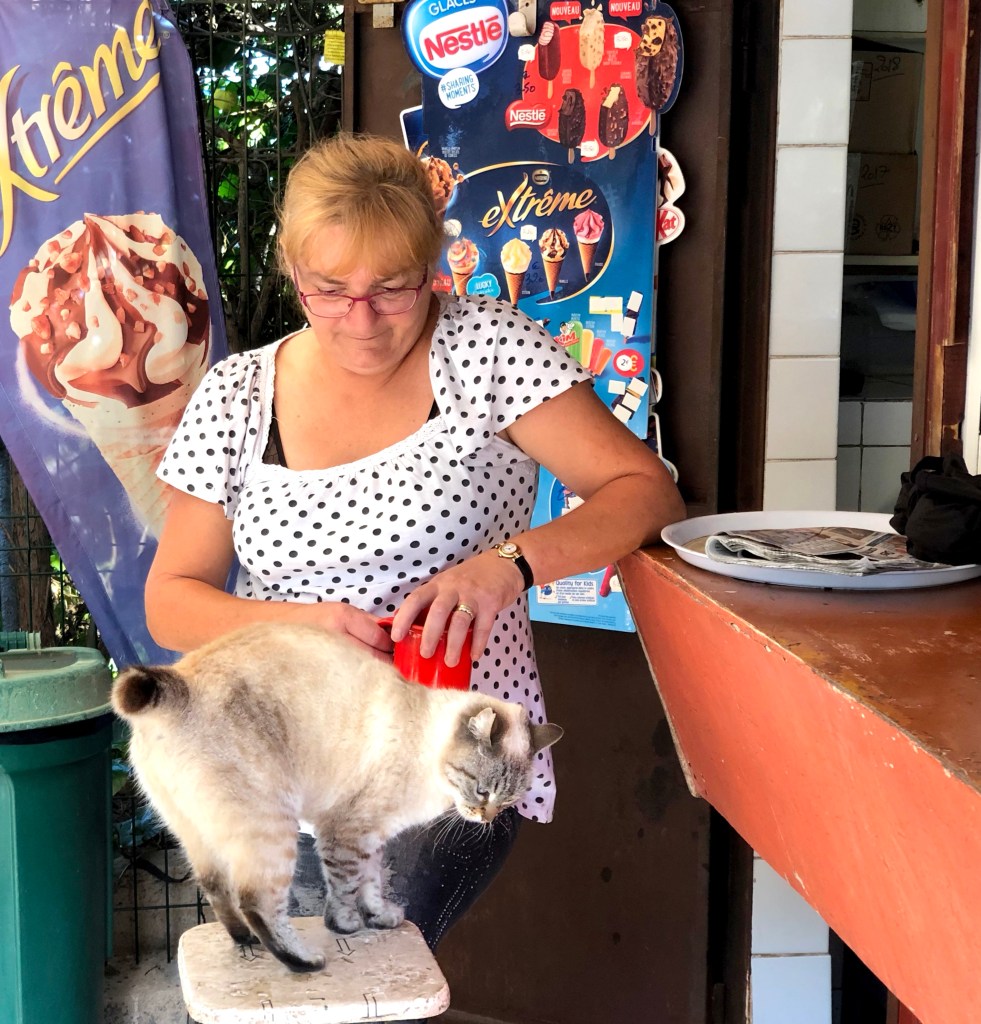
Soon after we stopped at a small beach cafe for an afternoon drink of something cool.
Everything, well for me at least, still seemed a little unreal; a little larger than life! I think that’s what inspired me to take the photograph above of the cafe proprietor and her cat!
Then we moved on again.
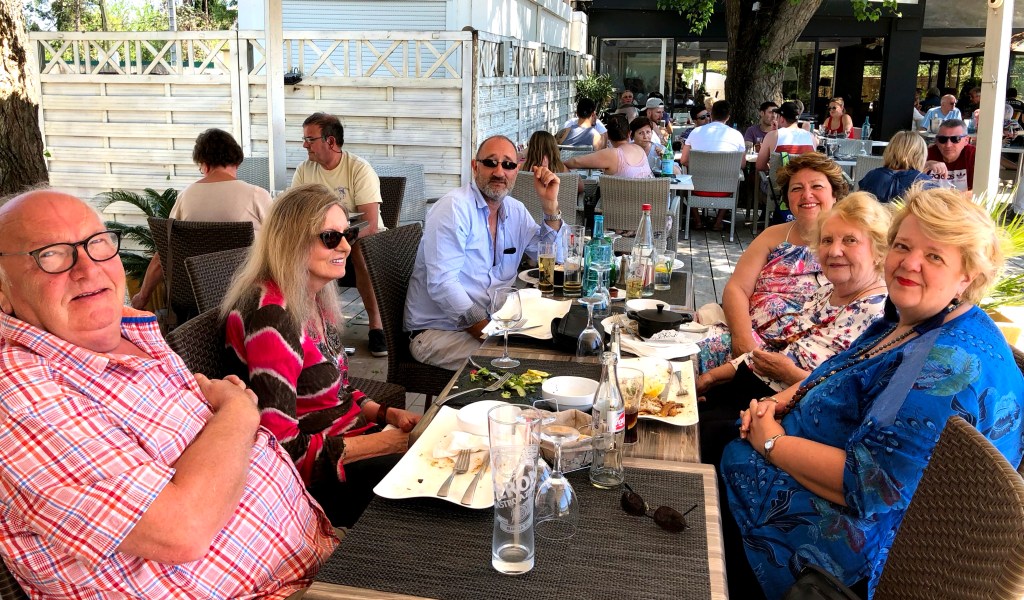
In due course, to another delightful evening meal somewhere local. The French expression “en famille” says it all!
These wonderful days were going by far too quickly!
In a flash it was Tuesday and Jean and I were being driven to Nice airport for another easyJet flight. But instead of returning to Bristol we had booked an easyJet flight into Gatwick. Because the last 36-hours of our vacation were being spent with my daughter’s family.
Maija’s husband, Marius, who is employed by The Royal National Theatre, near Waterloo Bridge on the south bank of the River Thames in London, frequently is working evenings but in order to spend time with me and Jeannie he had taken a day’s holiday on the 25th.
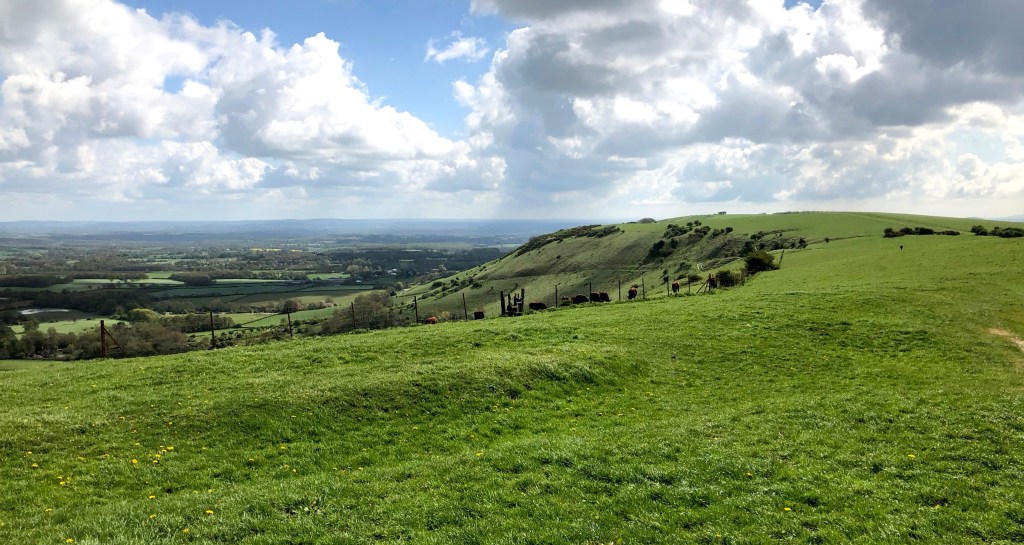
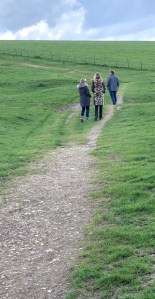
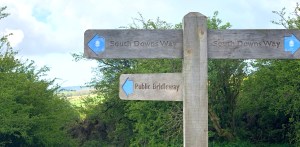
Our last day of our vacation dawned bright and sunny. It was a school day for Morten and after he had left for school Marius and Maija suggested going for a walk along the South Downs. Perfect!
For those unfamiliar with the South Downs let me quote a little of what may be read on Wikipedia.
The South Downs are a range of chalk hills that extends for about 260 square miles (670 km2)[1] across the south-eastern coastal counties of England from the Itchen Valley of Hampshire in the west to Beachy Head, near Eastbourne, East Sussex, in the east. The Downs are bounded on the northern side by a steep escarpment, from whose crest there are extensive views northwards across the Weald. The South Downs National Park forms a much larger area than the chalk range of the South Downs and includes large parts of the Weald.
The South Downs are characterised by rolling chalk downland with close-cropped turf and dry valleys, and are recognised as one of the most important chalk landscapes in England.[2] The range is one of the four main areas of chalkdownland in southern England.[3]
It is a beautiful place to walk.
It was a magical way of spending our last day.
Again, I was aware of stirrings in my old memory box from many years ago, possibly when I might have taken young Alex and Maija for a walk along the Downs, or something along those lines.
But today it meant so much for Jeannie and me to be with Maija and Marius for this gorgeous walk.
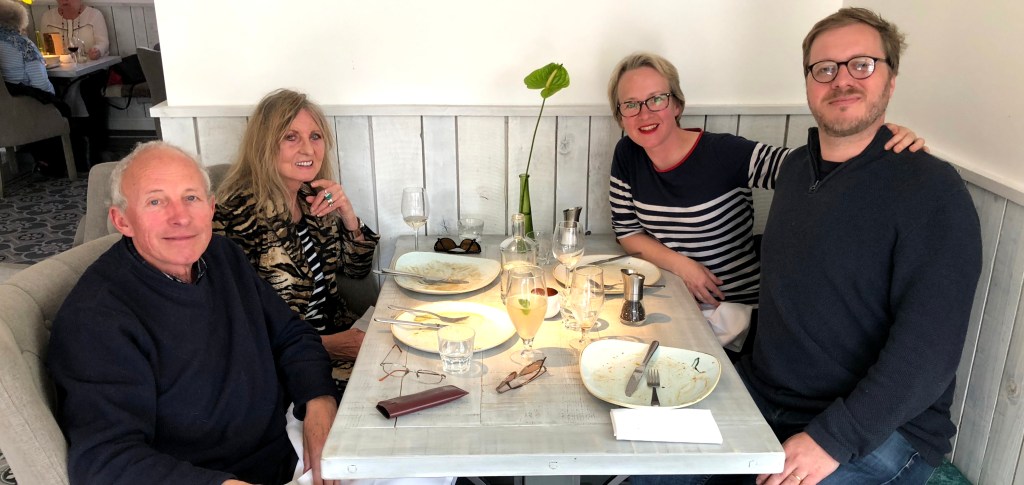
A couple of hours later we found a place to have a late lunch and asked the lady serving our table to take a photograph of all four of us!
Obviously, we had to be home in time for Morten’s return from school.
Those last hours of that day were focussed on keeping Morten company. What else mattered!
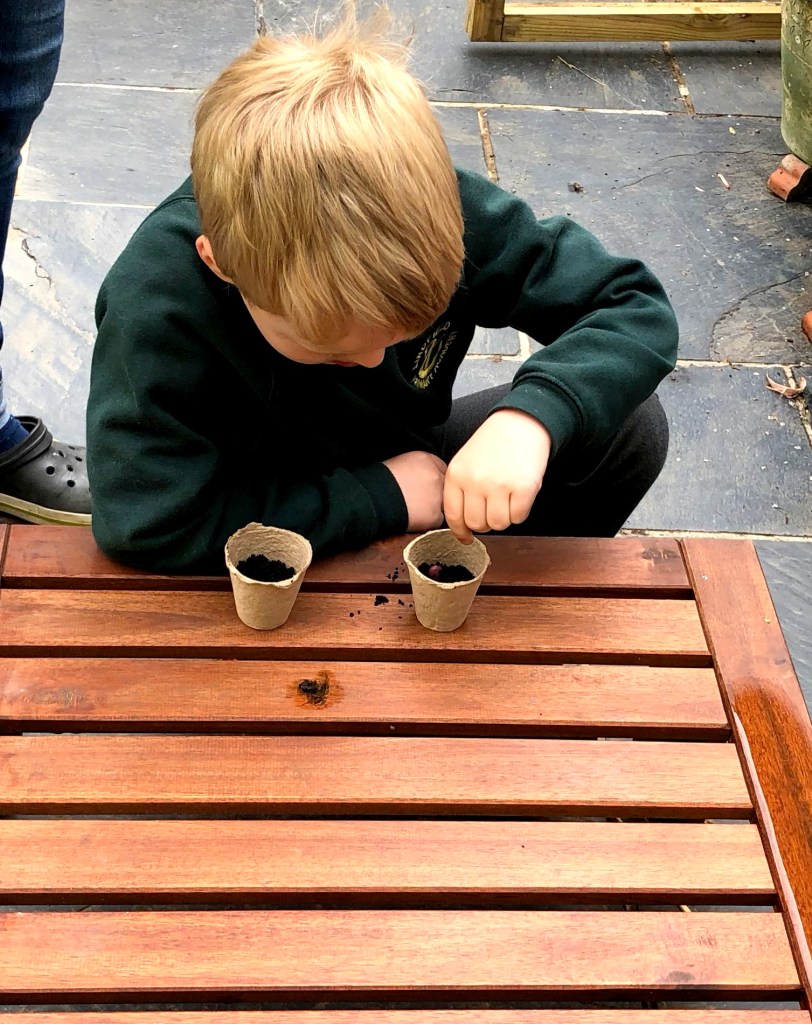
So the last photograph of the whole vacation is the one below. A picture taken of Morten planting some seeds that were bought while we were out that day.
We arrived back in Portland, Oregon around 6pm on the 26th and too late to drive all the way back to Merlin.
So after we had collected the car from the long-term parking we stopped off at the first motel that we saw heading though southern Portland.
Then around 11am on Friday, 27th April we pulled up in front of the house to be greeted by six very loving and contented dogs. Well done, Jana!
That evening those contented dogs demonstrating their happiness did more than anything to communicate a precious message.
Alex drove us across to Bristol airport mid-morning on the 18th April for our flight, courtesy of easyJet, from Bristol to Nice.
The days with Alex and Lisa had been so wonderful yet had gone by so very quickly. Thank goodness that Alex and Lisa had already made plans to come and see us again in Merlin sometime during August. It made the parting a little less painful.
Our flight was a good one and departed on time and quickly climbed into a beautiful Spring sky.
Looking down on the beautiful planet underneath us I tried very hard not to think of the 8,000 or so litres of aviation fuel that Alex estimated our Airbus would burn on this 90-minute flight. (Alex is a Commercial pilot flying for an airline out of Bristol.)
But no time to get too introspective about the wake we humans are leaving on the face of Planet Earth because before Jean and I had really got our heads around the fact that we would shortly be seeing Reggie and his wife, Chris, our aircraft was positioning itself over Nice in readiness for landing at Nice airport.
The metropolis that is present-day Nice.
Reggie and Christine’s house was situated at La Croix des Luques, about an hour’s drive from Nice and up in the beautiful countryside that lay inland from the Cote d’Azur; that famous coastal region to the East of Toulon that boasted such places as Cannes, St. Tropez, Monaco and, of course, Nice itself. It was glorious countryside and in some ways familiar with the forested country back in Merlin, Oregon.
By 5pm French time we were at the house and Jean and Reggie were catching up in earnest!
I had a very strong sense that the next six days were going to be very relaxing and very entertaining.
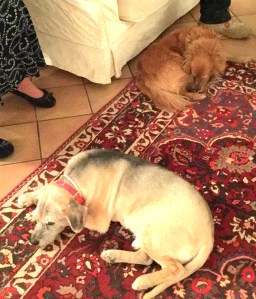
Merlin curled up on the carpet below Hugo.
Plus Reggie and Chris had two dogs; two wonderful dogs. But talk about the fickle finger of fate. For their two dogs were named Merlin and Hugo! And, I should hasten to add, named before we moved from Arizona to Oregon in 2012.
Seriously!
To put that into context for any new readers of this place, where Jean and I live in Southern Oregon is on Hugo Road, Merlin!
Tomorrow will be the last day of sharing the details with you all of our vacation.
It will cover the balance of the time that we spent with Reggie and Chris in the South of France, a most amazing ‘blast from the past’ for yours truly, our return to England and another stay, just for 36 hours this time with Maija, Marius and Morten, then on the 26th our return flight to Portland.
We had arrived in England, via Gatwick airport, yesterday, as in Monday the 9th April, and were staying with Maija and family until Friday when Jean and I travelled up to London to meet my sister Eleanor.
So these three days were to be spent doing as many fun things as we could; it being the Easter school holiday week so Morten was at home each day.
Thus today’s post is a fairly quick run through of all the things that we did.
First thing on Tuesday morning was to see how adept young Morten was in riding his bike.
Thankfully it was dry but still overcast. The forecast was for the weather to improve over the coming days. But whatever the weather we were not going to let it get in the way.
Maija mentioned that Wakehurst, part of Kew Royal Botanical Gardens was close by and we readily agreed to go there. As the Kew website explains:
Our wild botanic garden on the High Weald of West Sussex has over 500 acres of beautiful ornamental gardens, woodlands and a nature reserve. Wakehurst is also home to the Millennium Seed Bank, the largest wild seed conservation project in the world.
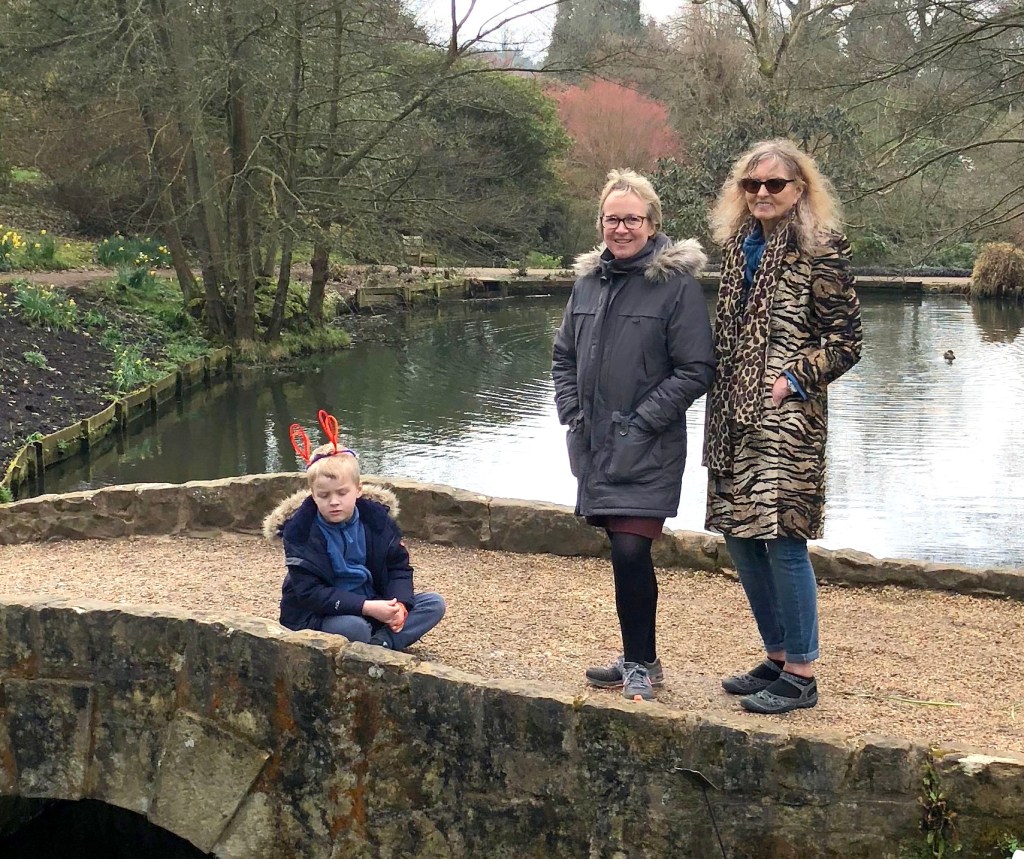
Morten got it into his head to ‘dress up’!
He is a very lively young man!
Wakehurst was a very tranquil place.
As well as the beautiful grounds it was possible to buy plants.
Slowly the weather improved.
In the blink of an eye it was Wednesday and the plan that day was a visit to the Bluebell Railway. As the website offers:
The volunteer-run Bluebell Line was the UK’s first preserved standard gauge passenger railway, re-opening part of the Lewes to East Grinstead line of the old London Brighton & South Coast Railway in 1960. Since then it has developed into one of the largest tourist attractions in Sussex, yet it still remains true to its objectives of the preservation for posterity of a country branch line, its steam locomotives, coaches and goods stock, signalling systems, stations and operating practices.
One’s never too old to go on a steam railway!
Sheffield Park Station, East Sussex
As the above photograph shows it was another day of intermittent rain and low clouds.
But did that stop four people having a fun time???
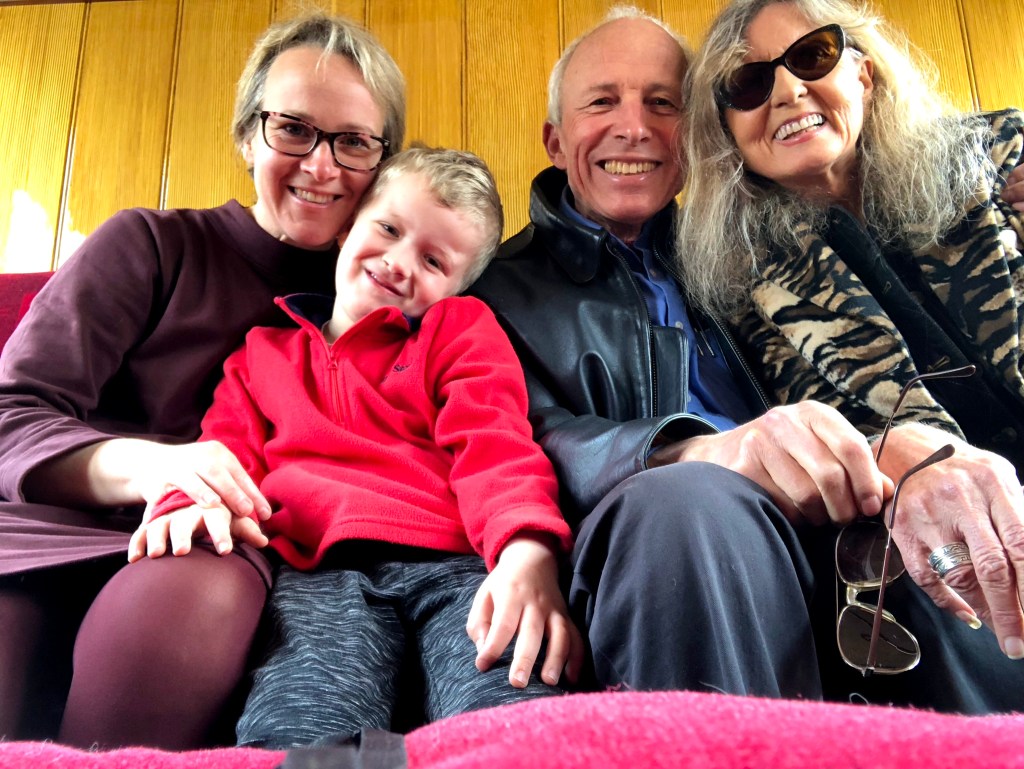
A ‘self-pic’ of four happy faces aboard the Bluebell train.
On the Thursday, the 12th, Maija had an engagement in London in connection with her company, SOUND UK, and Jeannie and I were in charge of Morten for the day.
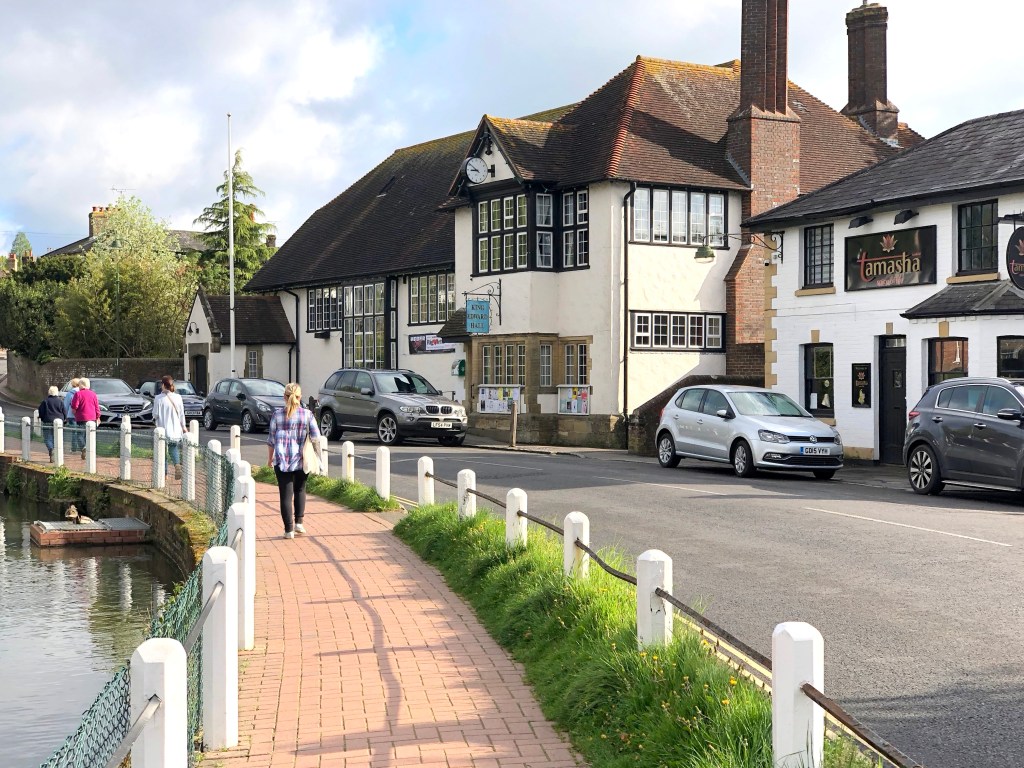
Well I think that was the arrangement although Morten woke up with very clear ideas as to how the day was to be spent. Primarily walking into Lindfield village so he could show Jean and me all the places of note!
Lindfield is the classic English village complete with cricket field, village pond and a pub or two. As Wikipedia offers:
The village stands on high ground above the upper reaches of the River Ouse. It is situated close to both the natural beauty of the High Weald and to Haywards Heath with its amenities and station on the main London-Brighton railway line.
Lindfield has a rich historic and architectural heritage. The ancient High Street, lined with lime trees, has over forty medieval and post medieval timber-framed houses, with many individual shops. At the bottom of the High Street is a natural spring-fed pond with fish, ducks, and herons. Beyond lies the Common which, over the centuries, has witnessed many events – fairs, festivals, bonfire celebrations and sporting activities; cricket has been played there since 1747. Today, it is still central to village celebrations and leisure activities. In addition to the Common there is Pickers’ Green, providing pitches for cricket, football, stoolball and a children’s play area.
History
The High Street follows an ancient north-south track that has existed for thousands of years, long before the Romans built a major road, the London to Brighton Way, a mile to the west of the village.
Lindfield first appeared as Lindefeldia, ‘open land with lime trees’, in a Saxon charter of 765 AD, in which King Ealdwulf granted lands for the building of a Minster church. When the Domesday Book was compiled the lands were held by the Archbishop of Canterbury.[4]
King Edward III recognised the importance of medieval Lindfield and in 1343 granted the town a royal charter to hold a market every Thursday and two annual eight-day fairs. For centuries the fairs continued each April and August with the summer fair becoming one of the largest sheep sales in Sussex.[5]
Lindfield was once part of the thriving Wealden iron industry. As early as 1539, William Levett of Buxted, a county curate with a thriving sideline in iron and armaments, was recorded as extracting iron ore at Lindfield. Later the Henslowe family of Lindfield were actively engaged in the iron milling business in association with Ralph Hogge, parson Levett’s former servant and later a major ironmaster in his own right.
In 1841 the London-Brighton railway opened, passing to the west of the parish with a ‘Station for Cuckfield and Lindfield Towns’ on open land that was to become the town of Haywards Heath. The construction of the Ouse Valley branch line reached Lindfield in 1866 with a proposed station to the north of All Saints’ Church but the line was abandoned for financial reasons.
Charles Eamer Kempe, a leading church stained glass designer and manufacturer lived at Lindfield until his death in 1907. Kempe renovated and redecorated an Elizabethan manor house near the village which he renamed Old Place,[6] from where he entertained clients and professional partners. Internally the house was appointed to the highest standard of Victorian splendour. After his death in the 1930s, the house was partitioned into six individual residences, with the main reception rooms forming part of the new “East Wing”.[7]
Lindfield also had a children’s play area which is where I snapped this photograph of Morten on that Thursday.
Then before we knew it the morning of Friday, 13th was upon us and it was time to catch the train up to London.
However these days with Morten had put in place a precious bond that was one of the primary reasons for us coming to England.
In tomorrow’s post I offer the experiences of meeting Eleanor, Richard and my son Alex.
Our recent vacation to see family in England and France.
Dear friends, I have my fingers tightly crossed that today’s post and the posts for the rest of the week aren’t going to come across as too indulgent!
For what I have planned this week is to share the experiences that Jean and I had when we flew from Oregon to Europe, leaving on 8th April and returning on the 26th.
Come the day of our departure the morning presented low clouds and persistent rain. It was a four-hour drive North on Highway I-5 and our plan was to be away by 8am. Our home-sitter cum pet-sitter, Jana, would be arriving around 9:30.
Inevitably, I couldn’t sleep that well and it was not long after 7:30am that Jean and I drove down our driveway to start the journey to Portland International Airport. It was rain the whole way and not an easy drive; to say the least. Especially when overtaking the many trucks when the spray was pretty grim!
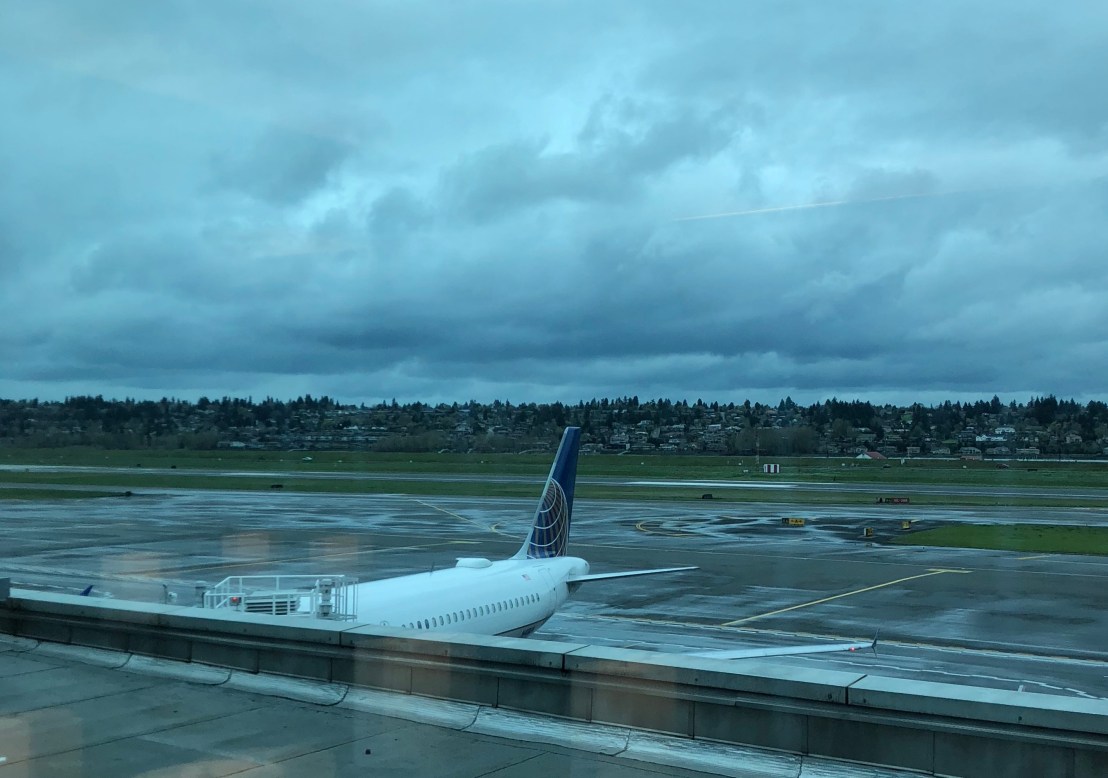
The Portland skies were just as wet and dreary as the drive up had been.
Anyway, we had arrived without any hitches and it was time to forget about the car for nearly three weeks and start getting ourselves into holiday mood.
Then on the very dot of the scheduled time for departure, as in 15:40, our Icelandic Air flight FI664 rotated skywards en route for London Gatwick via a short stop at Reykjavik.
Airborne!
To our great amazement the total flight time of over ten hours passed reasonably smoothly and before we knew it we were catching a taxi from London Gatwick to my daughter’s house in the village of Lindfield just 20 minutes away from the airport.
By mid-day on Monday the 12th we were at my daughter’s house and sitting down to a lunch snack with Maija, my daughter, and Morten, my seven-year-old grandson.
The plan was to spend a few days with Maija, and her husband Marius, and above all with Morten and I will cover what we did over those days in tomorrow’s post.
Why is is that some things so profoundly affect one?
In working my way through magazines and other stuff that I wanted to read following being away for nearly three weeks, I came across a report published by the University of Exeter, back in England, about the effect of climate change on the Great Barrier Reef.
Deteriorating Great Barrier Reef hushed: young fish no longer hear their way home
Degraded coral reefs are far quieter than five years ago, and no longer sound like a suitable habitat to young fish searching for a place to live and breed, according to research published today in Proceedings of the National Academy of Sciences USA.
Baby fish looking for a home can use noisy coral reef sounds including snapping shrimp clicks, damselfish chirps, and clownfish chattering to locate and select suitable habitat. But that “coral reef orchestra” has been quietened following recent cyclone and coral-bleaching damage on the Great Barrier Reef, raising fears that young fish may no longer hear their way home.
An international team of scientists, led by the University of Exeter, carried out field experiments on the Northern Great Barrier Reef and found that reefs sound much quieter and less acoustically diverse than they did before three years of cyclones and coral bleaching.
The soundscapes of these recently-degraded reefs are less attractive to juvenile fishes attracting 40% fewer fish compared to the sound of previous healthy reefs.
Lead author Tim Gordon, a marine biologist at the University of Exeter, said: “It’s heart-breaking to hear. The usual pops, chirps, snaps and chatters of countless fish and invertebrates have disappeared. The symphony of the sea is being silenced.”
This loss of attractiveness of reef sounds to fish in the sea could have devastating consequences for reefs.
I know I am far from being alone in feeling great sadness at this aspect of our changing planet.
So before I republish the rest of that University of Exeter paper take a few minutes and watch this YouTube video about the Australian Barrier Reef
Then listen to this mp3 file that is a recording of the sounds of a healthy reef.
This is the balance of that news item published by the University.
Fish communities are instrumental to maintaining healthy reefs by removing algae, facilitating coral growth, contributing to nutrient cycles and keeping food webs in balance. Damaged reefs with healthy fish populations recover faster than reefs that have lost their fish.
Harry Harding, co-author from the University of Bristol, explains: “If fish aren’t hearing their way home anymore, that could be bad news for the recovery prospects of reefs. Fish play critical roles on coral reefs, grazing away harmful algae and allowing coral to grow. A reef without fish is a reef that’s in trouble.”
Coral reef animals produce a dazzling array of sounds to communicate with each other while hunting, to warn each other about the approach of predators and to impress each other during courtship. Together, these sounds combine to form a soundscape that can be heard for miles around. This soundscape provides a valuable cue for young fish to locate and select habitat after a period of early development in the open ocean.
Gordon said: “Being able to hear the difference really drives home the fact that our coral reefs are being decimated. Some of the most beautiful places on Earth are dying due to human activity, and it is up to us to fix it.”
The scientists from the University of Exeter, University of Bristol, Cefas (Centre for Environment, Fisheries and Aquaculture Science), Duke University (USA), the Australian Institute of Marine Science and James Cook University (Australia) built experimental reefs from coral rubble on sand flats, then used underwater loudspeakers to broadcast healthy coral reef sounds or degraded coral reef sounds, to see which sounds attracted more young fish.
Senior author Steve Simpson, Associate Professor in Marine Biology & Global Change at the University of Exeter, said: “Over the last 15 years my research group have discovered how important sound can be for fish to locate and select specific reefs. We have marvelled at the remarkable diversity and complexity of coral reef soundscapes. But in the last few years the reefs we know and love have died before our eyes. And the deserted and crumbling rubble fields have turned eerily quiet.”
Professor Simpson added: “If the reefs have gone quiet, then the chances of the next generation of fish recolonising the reefs are much reduced. Without fish, the reefs can’t recover.”
Warming seas increase the frequency and severity of coral bleaching events worldwide, as higher temperatures cause a breakdown in the relationship between corals and the zooxanthellae that they host in their tissue, providing their energy through photosynthesis.
This bleaching recently killed up to 80% of corals in some areas of the Great Barrier Reef, and bleaching events of this nature are happening worldwide four times more frequently than they used to.
Reductions in carbon emissions are needed to reduce this damage, as Gordon explains: “The damage we’ve done to reefs worldwide is horrific, but the fight isn’t over yet. If we can fulfil our international commitments to dramatically reduce carbon emissions, it’s still possible to protect some of the reefs that are left. The time for action is now.”









 instructor. So when Reggie suggested that I see about getting a dual flight at the Fayence Club I didn’t need asking twice.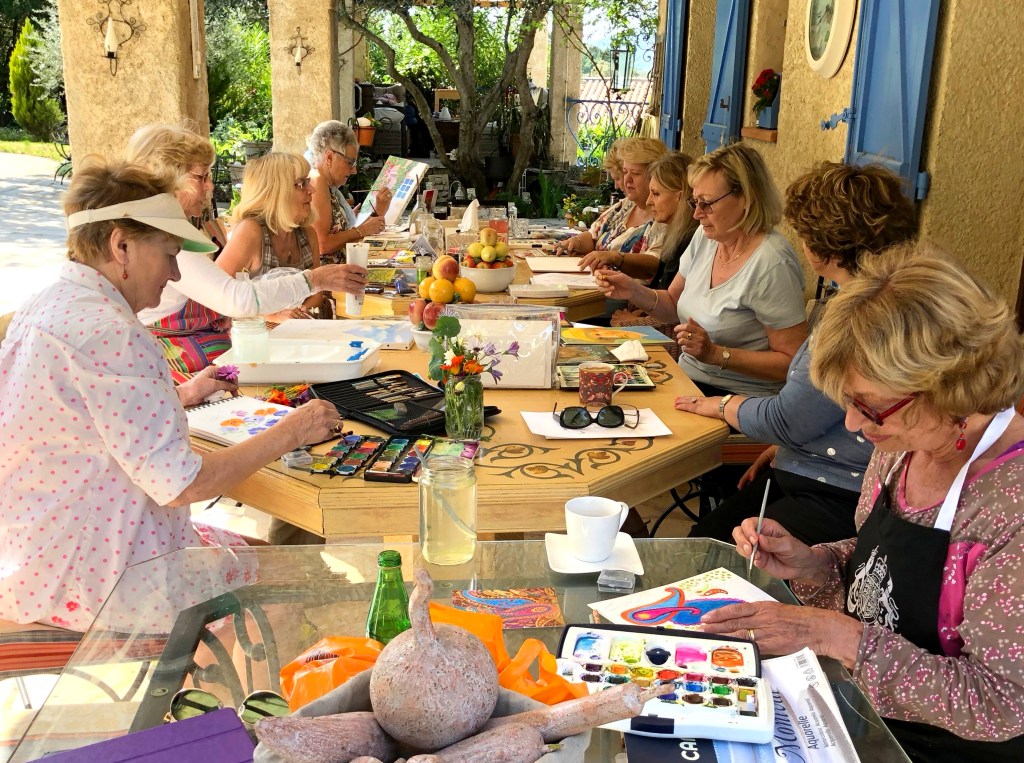
 By this time, the others had arrived at the head of the new steps and were looking down at me as I became truly lost in days so very long ago.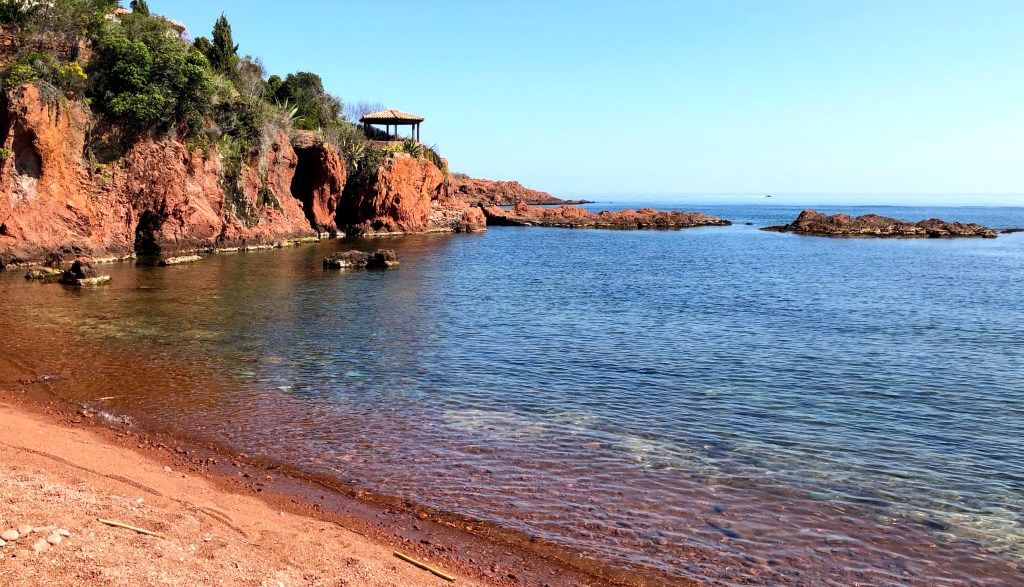
 km2)
km2)