Category: Education

A future apocalypse?

How many of us really, truly care about the future?

If you sense a heartfelt plea in my sub-heading then you will not be wrong.

What has happened to our instincts for our survival?

What strikes me as so tragic is that if I asked you to guess the topic of today’s post before you read on, the odds are that you would chose from any number of subjects that reveal a society hell-bent on self-extinction!

OK, let me get to the point.

A little over 10 days ago I republished a George Monbiot essay that spoke about the madness of chicken production in the UK. Mr. Monbiot’s essay was called Fowl Deeds and was within my post called We are what we eat!

Well George Monbiot has just published a sequel to Fowl Deeds that I am going to republish in this place tomorrow.

But what I am going to offer for today, as a prelude to tomorrow’s post, is a YouTube video of a BBC Panorama program that was screened earlier on in May. The program was called Antibiotic Apocalypse and was about the threat of increasing resistance to modern Antibiotics.

Why does this make such an important prelude?

Because as you will see when you watch the Panorama program much of our ‘factory’ food comes from animals that are fed antibiotics!

How to close?

All that comes to mind is a wonderful throwaway remark from a old boy, village resident, when supping a pint of bitter in The Church House Inn; what used to be my local pub in my home village of Harberton, Devon.  This is what he said:

All the world’s a little queer except thee and me, and I ha’ me doubts about thee!

church-house-inn
Interior of The Church House Inn, Harberton, Devon.

Indeed, all the world is more than a ‘little queer’!

The social strength of communities

A solid reminder of a key lesson from dogs.

I was researching for a chapter on Communities for my book and came across a wonderful essay by an Erik Kennedy. It was so brimful of common-sense that I wanted to share it with you.

The essay was entitled: On the Social Lives of Cavemen. Here’s how it opens:

essays

by erik d kennedy

On the Social Lives of Cavemen

Tribal Living in the Modern World

May 2011

Introduction: The Gustatory Lives of Cavemen

We may be the pinnacle of millions of years of evolution, but we’re throwing our birthright straight out the window of our comfortable suburban homes. In this essay, we’re going to discuss walking across our family-sized lawn, climbing over our questionably large picket fence, and retrieving that birthright.

Then a little later on, Mr Kennedy writes (my emphasis):

The Tribe

Human beings are no strangers to group living. Call it a family trait. Our closest animal relatives spend a good bulk of their time eating bugs off of their friends’ back. While I’m overjoyed we’re not social in that manner, I’m less pleased that we’re not social more to that degree. In study after study, having and spending time with close friends is consistently correlated with happiness and well-being. And yet, the last few decades in America have seen a remarkable decline in many things associated with being in a tight-knit social circle—things like family and household size, club participation, and number of close friends. Conversely, we’ve seen an increase in things associated with being alone—TV, commutes, and the internet, for example.

This trend is quite unhealthy. It’s no surprise that humans are social animals—but it may be surprising that we’re such social animals that merely joining a club halves your chance of death in the next year—or that living in a close-knit town of three-generation homes can almost singlehandedly keep you safe from heart disease.

Any of you that have a few dogs around you at home know what wonderful close-knit groups they make. Frequently highlighted here on Learning from Dogs.

Group of wild dogs from a photograph taken by George Lepp.

Dogs offer many beautiful examples of the benefits of community. For the reason that their ancient genes, long before they became domesticated animals, still guide their behaviours. When dogs lived in the wild, their natural pack size was around fifty animals. There were just three dogs that had pack status; the alpha, beta and omega dogs. Or more usefully described as the Mentor, Minder and Nanny dogs. (As is still the case in wild dog pack families.)

As has been explained previously in this place, all three dogs of status, wild or domesticated, are born into their respective roles, with their ‘duties’ in their pack being instinctive. There was no such thing as competition for that role as all the other dogs in that natural pack grouping would be equal participants with no ambitions to be anything else.

One doesn’t need to reflect for very long before the obvious question arises: If fifty dogs is the optimum number for a pack of dogs, is there a limit to the number of people we can have in the human equivalent of a pack?

Well, says anthropologist Robin Dunbar, that number is about 150 persons. Robin Dunbar achieved fame by drawing a graph that plotted primates’ social group size as a function of their brain sizes. He inputted the average human brain size into his model, and up came the number 150. Beyond that number is past the upper bounds for both hunter-gatherer tribes and Palaeolithic farming villages. More than that, it appears that everything from startup employee counts to online social networks show this number as a fairly consistent maximum for creating and maintaining close social ties.

Once more, a great lesson from our dogs – wrap the strength of a community around you.

The winds of time

Time from two very different perspectives.

solstice

I’m writing this post approaching midnight (UTC) on the afternoon of Tuesday, 26th May, 2015.  In other words, approaching 00:00 UTC 27/05/15. (Or, in American speak 05/27/15.)

In fewer than four weeks it will be the moment of the Summer solstice, as in the Northern Hemisphere’s Mid-Summer’s Day. More precisely explained over on EarthSky.org together with a number of very interesting facts:

The solstice comes on June 21, 2015 at 16:38 UTC. For North American time zones, that places the solstice at 12:38 p.m. EDT, 11:38 a.m. CDT, 10:38 a.m. MDT and 9:38 a.m. PDT.

The planet Earth has been in orbit around the sun for a very long time!  Time beyond imagination. By comparison, in a very short time one species alone, namely homo sapiens, has altered the biosphere of Planet Earth. It’s almost beyond comprehension!

To expand on that notion, let me republish an essay from TomDispatch from last September.  Republished with the kind permission of Tom Engelhardt.

ooOOoo

Tomgram: Rebecca Solnit, What to Do When You’re Running Out of Time

Posted by Rebecca Solnit at 8:09am, September 18, 2014.
Follow TomDispatch on Twitter @TomDispatch.

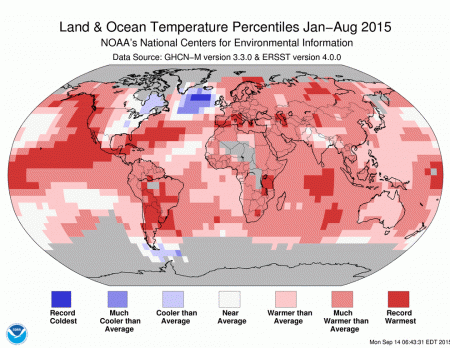
Just when no one needed more lousy news, the U.N.’s weather outfit, the World Meteorological Organization (WMO), issued its annual Greenhouse Gas Bulletin. It offered a shocking climate-change update: the concentrations of long-lasting greenhouse gases in the Earth’s atmosphere (carbon dioxide, methane, and nitrous oxide) rose at a “record-shattering pace” from 2012 to 2013, including the largest increase in CO2 in 30 years — and there was a nasty twist to this news that made it even grimmer.

While such increases reflected the fact that we continue to extract and burn fossil fuels at staggering rates, something else seems to be happening as well. Both the oceans and terrestrial plant life act as carbon sinks; that is, they absorb significant amounts of the carbon dioxide we release and store it away. Unfortunately, both may be reaching limits of some sort and seem to be absorbing less. This is genuinely bad news if you’re thinking about the future warming of the planet. (As it happens, in the same period, according to the Yale Project on Climate Change Communication, parts of the American public stopped absorbing information in no less striking fashion: the number of those who believe that global warming isn’t happening rose 7% to 23%.)

So consider this a propitious moment for a major climate-change demonstration, possibly the largest in history, in New York City this Sunday. [Ed: it turned out to be the largest climate march in history.] As the WMO’s Secretary-General Michel Jarraud pointed out, there is still time to make a difference. “We have the knowledge and we have the tools,” he said, “for action to try to keep temperature increases within 2°C to give our planet a chance and to give our children and grandchildren a future. Pleading ignorance can no longer be an excuse for not acting.” As TomDispatch regular Rebecca Solnit, author of the indie bestseller Men Explain Things to Me, points out, the pressure of mass movements can sometimes turn history upside down. Of course, the only way to find out if climate change is a candidate for this treatment is to get out in the streets. So, for those of you anywhere near New York, see you this Sunday! Tom

The Wheel Turns, the Boat Rocks, the Sea Rises

Change in a Time of Climate Change 
By Rebecca Solnit

There have undoubtedly been stable periods in human history, but you and your parents, grandparents, and great-grandparents never lived through one, and neither will any children or grandchildren you may have or come to have. Everything has been changing continuously, profoundly — from the role of women to the nature of agriculture. For the past couple of hundred years, change has been accelerating in both magnificent and nightmarish ways.

Yet when we argue for change, notably changing our ways in response to climate change, we’re arguing against people who claim we’re disrupting a stable system. They insist that we’re rocking the boat unnecessarily.

I say: rock that boat. It’s a lifeboat; maybe the people in it will wake up and start rowing. Those who think they’re hanging onto a stable order are actually clinging to the wreckage of the old order, a ship already sinking, that we need to leave behind.

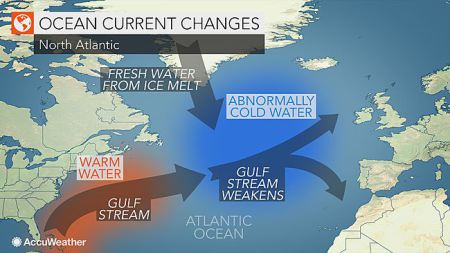
As you probably know, the actual oceans are rising — almost eight inches since 1880, and that’s only going to accelerate. They’re also acidifying, because they’re absorbing significant amounts of the carbon we continue to pump into the atmosphere at record levels. The ice that covers the polar seas is shrinking, while the ice shields that cover Antarctica and Greenland are melting. The water locked up in all the polar ice, as it’s unlocked by heat, is going to raise sea levels staggeringly, possibly by as much as 200 feet at some point in the future, how distant we do not know. In the temperate latitudes, warming seas breed fiercer hurricanes.

The oceans are changing fast, and for the worse. Fish stocks are dying off, as are shellfish. In many acidified oceanic regions, their shells are actually dissolving or failing to form, which is one of the scariest, most nightmarish things I’ve ever heard. So don’t tell me that we’re rocking a stable boat on calm seas. The glorious 10,000-year period of stable climate in which humanity flourished and then exploded to overrun the Earth and all its ecosystems is over.

But responding to these current cataclysmic changes means taking on people who believe, or at least assert, that those of us who want to react and act are gratuitously disrupting a stable system that’s working fine. It isn’t stable. It is working fine — in the short term and the most limited sense — for oil companies and the people who profit from them and for some of us in the particularly cushy parts of the world who haven’t been impacted yet by weather events like, say, the recent torrential floods in Japan or southern Nevada and Arizona, or the monsoon versions of the same that have devastated parts of India and Pakistan, or the drought that has mummified my beloved California, or the wildfires of Australia.

The problem, of course, is that the people who most benefit from the current arrangements have effectively purchased a lot of politicians, and that a great many of the rest of them are either hopelessly dim or amazingly timid. Most of the Democrats recognize the reality of climate change but not the urgency of doing something about it. Many of the Republicans used to — John McCain has done an amazing about-face from being a sane voice on climate to a shrill denier — and they present a horrific obstacle to any international treaties.

Put it this way: in one country, one party holding 45 out of 100 seats in one legislative house, while serving a minority of the very rich, can basically block what quite a lot of the other seven billion people on Earth want and need, because a two-thirds majority in the Senate must consent to any international treaty the U.S. signs. Which is not to say much for the president, whose drill-baby-drill administration only looks good compared to the petroleum servants he faces, when he bothers to face them and isn’t just one of them. History will despise them all and much of the world does now, but as my mother would have said, they know which side their bread is buttered on.

As it happens, the butter is melting and the bread is getting more expensive. Global grain production is already down several percent thanks to climate change, says a terrifying new United Nations report. Declining crops cause food shortages and rising food prices, creating hunger and even famine for the poorest on Earth, and also sometimes cause massive unrest. Rising bread prices were one factor that helped spark the Arab Spring in 2011. Anyone who argues that doing something about global warming will be too expensive is dodging just how expensive unmitigated climate change is already proving to be.

It’s only a question of whether the very wealthy or the very poor will pay. Putting it that way, however, devalues all the nonmonetary things at stake, from the survival of myriad species to our confidence in the future. And yeah, climate change is here, now. We’ve already lost a lot and we’re going to lose more, but there’s a difference between terrible and apocalyptic. We still have some control over how extreme it gets. That’s not a great choice, but it’s the choice we have. There’s still a window open for action, but it’s closing. As the Secretary-General of the World Meteorological Society, Michel Jarraud, bluntly put it recently, “We are running out of time.”

New and Renewable Energies

The future is not yet written. Look at the world we’re in at this very moment. The Keystone XL tar sands pipeline was supposed to be built years ago, but activists catalyzed by the rural and indigenous communities across whose land it would go have stopped it so far, and made what was supposed to be a done deal a contentious issue. Activists changed the outcome.

Fracking has been challenged on the state level, and banned in townships and counties from upstate New York to central California. (It has also been banned in two Canadian provinces, France, and Bulgaria.) The fossil-fuel divestment movement has achieved a number of remarkable victories in its few bare years of existence and more are on the way. The actual divestments and commitments to divest fossil fuel stocks by various institutions ranging from the city of Seattle to the British Medical Association are striking. But the real power of the movement lies in the way it has called into question the wisdom of investing in fossil fuel corporations. Even mainstream voices like the British Parliament’s Environmental Audit Committee and publications like Forbes are now beginning to question whether they are safe places to put money. That’s a sea change.

Renewable energy has become more efficient, technologically sophisticated, and cheaper — the price of solar power in relation to the energy it generates has plummeted astonishingly over the past three decades and wind technology keeps getting better. While Americans overall are not yet curtailing their fossil-fuel habits, many individuals and communities are choosing other options, and those options are becoming increasingly viable. A Stanford University scientist has proposed a plan to allow each of the 50 states to run on 100% renewable energy by 2050.

Since, according to the latest report of the U.N.’s Intergovernmental Panel on Climate Change, fossil fuel reserves still in the ground are “at least four times larger than could safely be burned if global warming is to be kept to a tolerable level,” it couldn’t be more important to reach global agreements to do things differently on a planetary scale. Notably, most of those carbon reserves must be left untapped and the modest steps already taken locally and ad hoc show that such changes are indeed possible and that an encouraging number of us want to pursue them.

ooOOoo

In case you are wondering why this TomDispatch essay has been published in this place some ten months after it first appeared over at TD, it is simply because I made a note to leave it for a few months to see if the benefit of some hindsight put the essay into context.

Here’s the context.

In the month of September, 2014, when this essay was published over on TomDispatch, the Atmospheric CO2 monthly average was 395.26 ppm. In April, 2015 it was 403.26 ppm. I can’t spell it out any better than what is written on the home page of CO2Now.org:

What the world needs to watch

Global warming is mainly the result of CO2 levels rising in the Earth’s atmosphere. Both atmospheric CO2 and climate change are accelerating. Climate scientists say we have years, not decades, to stabilize CO2 and other greenhouse gases.

To help the world succeed, CO2Now.org makes it easy to see the most current CO2 level and what it means. So, use this site and keep an eye on CO2. Invite others to do the same. Then we can do more to send CO2 in the right direction.

Sharing Ideas.

There’s no limit to learning.

I can’t recall how but recently I came across an online source of analysis, ideas and research that calls itself The Conversation. In their folder How we’re different, (in part) they explain:

The Conversation US launched as a pilot project in October 2014. It is an independent source of news and views from the academic and research community, delivered direct to the public.

Our team of professional editors work with university and research institute experts to unlock their knowledge for use by the wider public.

Access to independent, high quality, authenticated, explanatory journalism underpins a functioning democracy. Our aim is to promote better understanding of current affairs and complex issues. And hopefully allow for a better quality of public discourse and conversation.

We aim to help rebuild trust in journalism. All authors and editors sign up to our Editorial Charter. All contributors must abide by our Community Standards policy. We only allow authors to write on a subject on which they have proven expertise, which they must disclose alongside their article. Authors’ funding and potential conflicts of interest must also be disclosed. Failure to do so carries a risk of being banned from contributing to the site.

The Conversation launched in Australia in March 2011 and​ the UK in May 2013.

So with no further ado, and within the terms of The Conversation, may I share:

What does it mean to preserve nature in the Age of Humans?

Ben A Minteer, Arizona State University and Stephen Pyne, Arizona State University

Is the Earth now spinning through the “Age of Humans?” More than a few scientists think so. They’ve suggested, in fact, that we modify the name of the current geological epoch (the Holocene, which began roughly 12,000 years ago) to the “Anthropocene.” It’s a term first put into wide circulation by Nobel-Prize winning atmospheric chemist Paul Crutzen in an article published in Nature in 2002. And it’s stirring up a good deal of debate, not only among geologists.

The idea is that we needed a new planetary marker to account for the scale of human changes to the Earth: extensive land transformation, mass extinctions, control of the nitrogen cycle, large-scale water diversion, and especially change of the atmosphere through the emission of greenhouse gases. Although naming geological epochs isn’t usually a controversial act, the Anthropocene proposal is radical because it means that what had been an environmental fixture against which people acted, the geological record, is now just another expression of the human presence.

It seems to be a particularly bitter pill to swallow for nature preservationists, heirs to the American tradition led by writers, scientists and activists such as John Muir, Aldo Leopold, David Brower, Rachel Carson and Edward Abbey. That’s because some have argued the traditional focus on the goal of wilderness protection rests on a view of “pristine” nature that is simply no longer viable on a planet hurtling toward nine billion human inhabitants.

Given this situation, we felt the time was ripe to explore the impact of the Anthropocene on the idea and practice of nature preservation. Our plan was to create a salon, a kind of literary summit. But we wanted to cut to the chase: What does it mean to “save American nature” in the age of humans?

We invited a distinguished group of environmental writers – scientists, philosophers, historians, journalists, agency administrators and activists – to give it their best shot. The essays appear in the new collection, After Preservation: Saving American Nature in the Age of Humans.

Getting the chronology right, it turns out, matters less than we might think. The historian J R McNeill recounts the difficulty in fixing a clear start date for the Anthropocene. (Should it coincide with the late Pleistocene megafaunal extinctions? The rise of agriculture? The birth of the industrial era in the 19th century? The mid-20th century uptick in carbon emissions?) Wherever we peg it, McNeill argues, the future of nature preservation in America will increasingly be shaped by environmental traditions more congruent with notions of a human-driven world.

Is humanity now ‘too big for nature?’ (Photo by Mark Klett)
Trails of Weekend Explorers, near Hanksville, CC BY-NC-ND

It’s a view shared by ecologist Erle Ellis. We’ve simply “outgrown” nature, Ellis argues, and so we have to become more comfortable within the “used and crowded planet” we’ve made. Andrew Revkin, author of the Dot Earth environmental blog for the New York Times, sounds a similar theme, arguing that the whole idea of “saving” a nature viewed outside the human presence is an anachronism. What we need instead, he suggests, is to focus on restoring a bipartisan politics able to cope with the challenges of living in and managing a human-driven world.

But all this talk of a more human-driven world and a species that is now “too big for nature” is dismissed by wilderness activist Dave Foreman, who spies a dark future awaiting us if we continue on the current path. Foreman condemns the vision of the “Anthropoceniacs” who he argues are promoting nothing less than the technological takeover of life on the planet. We need to remind ourselves, he writes, “that we are not gods.”

The need for humility courses throughout After Preservation. But it’s joined by an equally strong plea for pragmatism and more intelligent control. As science journalist Emma Marris writes, the desire to restrain ourselves in nature may ironically prove self-defeating if it means we can’t intervene to prevent present and future species extinctions. The biologist Harry Greene echoes this view with his manifesto to “rewild” the Anthropocene by actively introducing cheetahs, elephants, camels and lions to North America as proxies for the long-lost megafauna of the Pleistocene. It’s a rebooting of the wilderness idea – or maybe a wilderness 2.0 – for the technological age.

Regardless of how the Anthropocene debate plays out, environmental science and policy experts Norm Christensen and Jack Ward Thomas remind everyone how hard it is to implement whatever we want on the ground without unexpected consequences. Thomas, a former chief of the US Forest Service, describes how the unpredictability of ecosystems can result in cases in which the preservationist agenda becomes complicated as ecosystems change in surprising ways (for instance, when an unplanned growth in the barred owl population starts to displace the protected northern spotted owl in the Pacific Northwest).

The Anthropocene has become an environmentalist Rorshach. (Photo by Mark Klett)
Computer Monitor Washed Down Stream by Flood Waters, Salt River, CC BY-NC-ND

Much of the discussion of the Anthropocene must hinge on values. But many of our authors conclude that it also needs grounding in a deeper and more nuanced understanding of history. As historians Donald Worster and Curt Meine point out, even if purist notions of the wilderness may no longer be realistic in the Anthropocene, it would be a grave mistake to jettison our environmental traditions and the commitment to protecting as much wildness as we can.

Even so, many suggest that nature conservation will have to evolve in order to reflect a more diverse constituency, an urban population not well served by the older preservationist values and images. Or, as ecologist Michelle Marvier and The Nature Conservancy’s Hazel Wong sum it up, “Move over, Grizzly Adams.”

The debate wasn’t settled at the end of After Preservation but we didn’t expect it to be. The argument has deep roots, as the writer and climate activist Bill McKibben reminds us in his coda to the book. And in one way or another, pragmatists and preservationists have been at odds since the birth of the American conservation movement in the late 19th century. The Anthropocene debate is only the most recent replaying of this enduring struggle.

What way forward? We think John McPhee probably got it about right nearly forty years ago in his memorable portrait of modern Alaska, Coming into the Country:

Only an easygoing extremist would preserve every bit of country. And extremists alone would exploit it all. Everyone else has to think the matter through – choose a point of tolerance, however much the point might tend to one side.

Our hope is that After Preservation will help us choose that point of tolerance as we puzzle through the environmental ethos of the Anthropocene. We’ve little choice: it’s going to be a challenge confronting the meaning and work of nature preservation for some time to come.

The Conversation

Ben A Minteer is Arizona Zoological Society Endowed Chair at Arizona State University.
Stephen Pyne is Regents Professor in the School of Life Sciences at Arizona State University.

This article was originally published on The Conversation.
Read the original article.

ooOOoo

No matter what people tell you, words and ideas can change the world.” Robin Williams

The Irish Wolfhound – a guest post.

Please join me in welcoming Jamie Ryder.

I have made it very clear in more than one post that the most rewarding aspect of this world of blogging is the way that we connect with others unrestricted by culture, age and location. Today’s guest post is a classic example of that.

About a week ago I had a Jamie Ryder sign up to follow Learning from Dogs. As I always do when a new follower is also a blogger I went across to his place and left a ‘thank you’ note. I liked what Jamie was writing and invited him to offer a guest post for this place.

All of which explains how I came across the author of the blog Wings and Wild Hearts and how subsequently Jamie offered the following post.

ooOOoo

Walking with a gentle giant – The Irish Wolfhound

The Irish Wolhound.
The Irish Wolhound.

Owning a dog is a rewarding experience. They are intelligent, affectionate, loveable creatures and enrich our lives. Every breed is different, and some have greater reputations than others. One of the most fabled breeds is the Irish Wolfhound. Growing to an average of 120 lbs for males and 105 lbs for females, these behemoths are the tallest breed of domestic dog in the world. Their size might be intimidating, but Irish Wolfhounds are gentle giants with a friendly and loyal disposition.

This noble breed has its origin as a hunting dog. In ancient times, Irish Wolfhounds were used in battle to pull men down from horses or chariots. They were bred to hunt elk, boars and wolves, from which they receive their name. Irish Wolfhounds were used extensively by kings and nobles, with the number of dogs relating to prestige of title and rank. Despite the famed reputation, Irish Wolfhounds began to decline and would have disappeared if not for a renewed interest in the breed in the mid-1800s.

Irish Wolfhounds are intelligent and gentle, showing a strong desire for human companionship. They are intensely loyal to their owners and are friendly to strangers. Owning a dog of this size comes with a number of requirements that shouldn’t be taken lightly.

Irish Wolfhounds can be plagued by various illnesses like bone cancer, dilated cardiomyopathy and bloat. As a short-lived species they have a life-span of 6-8 years. They are house dogs who love being in a calm environment, and aren’t suited to apartments because of their size. Irish Wolfhounds need roughly 40 minutes of exercise per day in a large and securely fenced yard. Be sure to avoid exercising the dog an hour before meal time and two hours after as it will help reduce the risk of bloat.

A secure fence is needed to stop the dog from chasing other animals. As a sighthound they have a high prey drive and need to be kept on a lead when out for walks. Puppies shouldn’t be taken out on walks until they’re at least 6 months old. Starting them off with short 3-5 minute walks will help build them up, but be aware that giant breeds are prone to joint problems.

Irish Wolfhounds don’t make good guard dogs because of their friendly disposition, although their size is enough to deter most intruders. The breed makes a wonderful companion to children, though it’s best to supervise younger children as the dog may accidentally knock them over. Potential owners should be aware of these factors and think carefully about budget, living space and the time to manage such a large dog.

wolfhound3

Several organisations have shown their appreciation for the breed. The Irish Wolfhound Club was founded in 1885 and is the oldest club of its kind. Members breed, showcase and safeguard the future of the species while offering helpful tips to would-be owners. The Irish Wolfhound Club Of America take part in a rescue campaign to support owners who can’t look after their dogs anymore.

Irish Wolfhounds are robust and beautiful pets that are perfect additions to any family. If you’re looking for a long-lived companion then an Irish Wolfhound isn’t for you. But if you’re looking for an animal that gives plenty of love, care and sloppy kisses then you couldn’t do any better.

What beautiful dogs!

Jamie Ryder was born in Manchester, England and still calls the city his home. A life long appreciator of animals, Jamie enjoys writing about all creatures great and small. His blog is dedicated to showcasing the beauty of the natural world and raising awareness for animal charities. In his spare time Jamie works as a copywriter and is studying to achieve a Masters in Creative Writing at Manchester Metropolitan University.

ooOOoo

Thanks Jamie for that post.

Standing for our puppies

Protecting the health of our puppies.

Making sure this is as widely known as possible.

With kind thanks to Dog Leader Mysteries for permission to republish in full.

ooOOoo

Puppy Nylabone Bone Recall

Puppies need to chew so give them something safe.

Keep your dog healthy

Please buy your dog food and your dog products from a local pet store or a farm supply. Ask if the business owners or managers subscribe to daily updates on potentially harmful foods, treats and supplements. Ask if they track all lists of recalled pet products everyday they are open.

Use a trustworthy pet food store

A caring and knowledgeable store will pull all recall items each morning then ship them back to the sellers before the pet shop opens their doors to the public. They don’t want your dog getting sick from anything they sell. Naturally, they want to keep your business and have you refer friends and others to shop with them.

The old saying, “An ounce of prevention is worth a pound of cure” is certainly valuable in many ways to dog lovers. Be picky when it comes to buying and giving products to your dog for eating or chewing.

We shop at Western Farm because they assure us that they check all product recalls and pull them off the shelf to be returned to each company that produced any and all pet product recalls.

Recalled Nylabone puppy chews 2015.

Salmonella tainted Neptune, NJ Nylabones

“April 22, 2015 — Nylabone Products of Neptune, NJ is recalling one lot of its Puppy Starter Kit dog chews because they have the potential to be contaminated with Salmonella.” The Dog Food Advisor

“The recalled Puppy Starter Kit consists of one lot of dog chews that were distributed nationwide, to Canada and through one domestic online mail order facility. The recalled product comes in a 1.69 ounce package marked with Lot #21935 and UPC 0-18214-81291-3 and with an expiration date of 3/22/18.”

A few responses on Dog Food Advisor

“Be so careful with chew bones, especially if your dog’s a fast eater. I lost a wonderful friend due to a blocked intestine. It was a large chunk of a “digestible” chew bone.”

“I just bought these for my puppy not too long ago. And he chewed up the dark bone and ate it! Next thing I know… He was throwing up for the next 24 hrs – 7 times! Took him to vet and they diagnosed him with an intestinal infection….. Wonder if it was because of the nylabone!”

“Same with my dog! Vomiting and peeing blood! He has a urinary tract infection they said. Same symptoms of salmonella. Call nylabone!! They should foot your vet bills!”

Read more on the Dog Food Advisor

Action, return & complaint

“Consumers who have purchased the affected product should discontinue use of the chews and may return the unused portion to the place of purchase for a full refund.

Those with questions may contact the company at 877-273-7527, Monday through Friday from 8 am – 5 pm Central time. After hours and weekend calls are covered by a third-party poison control center.

U.S. citizens can report complaints about FDA-regulated pet food products by calling the consumer complaint coordinator in your area. Or go to http://www.fda.gov/petfoodcomplaints.

Canadians can report any health or safety incidents related to the use of this product by filling out the Consumer Product Incident Report Form.” The Dog Food Advisor

“Consumers who have purchased 1.69 oz. packages of the Puppy Starter Kit from affected Lot 21935, UPC 0-18214-81291-3, Expiration date of 3/22/18, should discontinue use of the product and may return the unused portion to the place of purchase for a full refund. Consumers with questions may contact the company at 1-877-273-7527, Monday through Friday from 8:00 am – 5:00 pm Central time (after hours/weekends covered by third-party poison control center).” FDA.gov “Safety Recall

Visit The Dog Food Advisor

Get free dog food recall alerts sent to you by email. Subscribe to The Dog Food Advisor’s recall notification list now. [Jean and I have done this!]

ooOOoo

Great alert to all dog owners and I am certain that Deborah, over at Dog Leader Mysteries, would have no problem in this being shared and circulated as far and wide as possible.

Only one way to close!

With a picture of a puppy!

Picture taken of puppy Cleo on the 13th April, 2012 when she was then aged 11 weeks.

Back to trees

This week is starting to develop into a theme!

On Monday I published a post Hope Has A Place. It was based upon the hauntingly beautiful track of the same name from Enya. Then yesterday, serendipitously, came The watering hole. Both of those posts, although miles apart in terms of content, nonetheless seemed to subscribe to a common theme. That being that the more that everyday people, good common folk from all around the world, share their feelings, the more likely that those self-same people will make a difference. A positive difference!

Now don’t get me wrong! By presenting these recent posts I am not setting myself up to be anything other than just another everyday person and dog lover who just happens to enjoy sharing stuff via this blog.

Regular readers of this place will recall that a week ago I celebrated Earth Day with a post called Our beautiful, life-giving trees. It included this picture:

We must sing for our trees.

Then on the following day in a post called Now life-giving geese (by the way, the five baby goslings are doing really well!) I included this photograph:

A baby oak.
And sing for them at all ages!

Yesterday morning I received the latest post from Sue Dreamwalker. It was an impassioned plea to do something and to stop the madness. Sue, in turn, had republished the post that had appeared on Endless Light and Love.

The theme that seems to be developing this week, unplanned I should hasten to add, is that it is all too easy to be overwhelmed by the scale of change that has to take place, must take place, if this generation (I’m a 1944 baby) can die knowing that it will be alright in the end. Because it is my generation that has been responsible, has created the circumstances, for the end of life as we have all known it if nothing is done, and done in the next decade or two.

So to trees.

Our trees are both a symbol for and an indicator of the overall health of our planet.

To close off this part of my two-day post, please watch this short video.

Uploaded on Apr 1, 2015
Trees give us beauty, shade, food, clean water, oxegen, medicine, housing, fresh air, habitat and happiness. For the cost of a craft beer, or a couple of cups of coffee you can protect a specific threatened forest. Each Stand for Trees certificate offsets 1 ton of carbon from the atmosphere while providing income to local forest communities. Income that supports education, healthcare, clean water and sustainable livelihoods. Trees stand for us, isn’t it time we stand for trees?

Tomorrow, I will return to hope. Perhaps better written, return with hope.

Giving in to Nature.

The power of Nature might surprise you!

The last two posts have offered two aspects of our bountiful Nature. First we had Earth Day and the celebration of our trees. Then yesterday we had the celebration of the birth of five Canada Geese goslings.

So it seemed appropriate to continue the theme for another day.

Earlier this month there was an article over on MNN that I saved for later use simply because the message it offered was counter-intuitive. Here’s how that article opened:

Deforestation vs. nature: The winner might surprise you

Large-scale tree-planting projects, abandoned farmland help balance out rain forest destruction.

By: Michael Graham Richard
Wed, Apr 08, 2015 at 10:11 AM

Forest canopy heights are highest near the equator and generally decrease the closer forests are to the poles. (Photo: NASA)

For decades, we’ve been hearing about how the world’s forests are under attack, how the equivalent of “36 football fields of the world’s forests are being cut every minute.” With all this pressure on nature, could the Earth possibly be getting greener? Not a chance, right? Surprisingly, that’s what a team of scientists discovered when they looked at two decades’ worth of data from satellites that use a technique called “passive microwave remote sensing,” which allows researchers to measure how much biomass, or living matter, is present on the surface of the planet.

The researchers found that despite ongoing deforestation in the rain forests of South America and Southeast Asia — a huge problem, regardless of what happens elsewhere — other regions outside the tropics, such as Africa and Australia, have been improving enough to offset the losses. Some of the more unexpected sources of this extra biomass are farmland abandoned after the fall of communism where forests have spontaneously regrown in the former Soviet republics, as well as in areas of China where large-scale tree planting projects took place.

What really caught my eye was another photo from NASA that showed the biomass stored in trees in the USA.

The concentration of biomass stored in trees in the U.S. The darkest greens reveal the areas with the densest, tallest, and most robust forest growth. (Photo: NASA)

But as the article reminded readers:

We’re only talking about biomass quantities being offset, though; the loss of rain forests also mean the loss of many species of animals and plants, as well as unique habitats that can’t be replaced by other regions elsewhere, such as the savannah of Africa or the Australian Outback. So while this is good news, we can’t declare victory over deforestation just yet!

Nonetheless, I am sure that I am not the only one to welcome this reminder of the power of Nature. Or in the closing words of that MNN article:

In the period between 2003-2012, the total amount of vegetation above the ground has increased by about 4 billion tonnes of carbon. Any way you slice in, 4 billion tonnes is significant!

This is particularly important because around 25 percent of the CO2 that we release into the atmosphere by burning formerly buried hydrocarbons is absorbed by plants, so having more of them can help slow down (but not stop) climate change, and there’s a limit to plants’ rate of absorption. Still, it’s nice to get good news for a change …

While it may be a long way yet from them being tonnes of carbon, let me close with three pictures of ‘increasing tree biomass‘ right here on Hugo Road in Merlin, Oregon.

The oak.
The oak.

oooo

The madrone.
The madrone.

oooo

The cedar.
The cedar.

Nature really does have all the answers to man’s long-term survival.

Writing 101 Day Three

Practice makes perfect.

Again, here is the WordPress theme for the day:

Day Three: Commit to a Writing Practice

Today’s Prompt: Write about the three most important songs in your life — what do they mean to you?

Nailing Brahms’ Hungarian Dance Number 5 on your alto sax. Making perfect pulled pork tacos. Drawing what you see. Or, writing a novel. Each requires that you make practice a habit.

Today, try free writing. To begin, empty your mind onto the page. Don’t censor yourself; don’t think. Just let go. Let the emotions or memories connected to your three songs carry you.

Today’s twist: You’ll commit to a writing practice. The frequency and the amount of time you choose to spend today — and moving forward — are up to you, but we recommend a minimum of fifteen uninterrupted minutes per day.

The basic unit of writing practice is the timed exercise. – Natalie Goldberg

Author Natalie Goldberg says to “burn through to first thoughts, to that place where energy is unobstructed by social politeness or the internal censor.” Here are some of her rules of free writing practice from Writing Down the Bones, which we recommend you keep in mind:

  • Keep your hand moving. (Don’t pause to reread the line you’ve just written. That’s stalling and trying to get control of what you’re saying.)
  • Don’t cross out. (That is editing as you write. Even if you write something you didn’t mean to write, leave it.)
  • Don’t worry about spelling, punctuation, grammar. (Don’t even care about staying within the margins and lines on the page.)
  • Lose control.
  • Don’t think. Don’t get logical.
  • Go for the jugular. (If something comes up in your writing that is scary or naked, dive right into it. It probably has lots of energy.)

Jorge Luis Borges said: “Writing is nothing more than a guided dream.” So, what are you waiting for? Get writing. Fifteen minutes. Go. And then, do it again tomorrow, and the day after, and the day after.

Now having written a daily post for well over five years, I’m comfortable with the concept of committing to a writing practice.

Thus I’m going to republish something that gets to the heart of more worldly matters – keeping a smile on your face in these ‘interesting’ times. It comes from a blog that I recently started following: One Regular Guy Writing about Food, Exercise and Living Longer.

ooOOoo

How You Can Benefit from a Positive View on Your Life – WSJ

Regular readers know that I have embraced the theory of positive psychology. I have written a number of posts on the benefits of a positive point of view. You can find an index of them at the end of this post.

Meanwhile, I was thrilled to see Elizabeth Bernstein’s piece in the Personal Journal of Tuesday’s Wall Street Journal entitled “It’s Healthy to Put a Good Spin on Your Life.

think +ve

In a study of a large number of adults in their mid to late 50’s researchers found that “when people displayed higher levels of agency, communion and redemption and lower levels of contamination, their mental health improved. They consider good mental health to be low levels of depression and high levels of life satisfaction and psychological and social well-being.

They explained the four keys to good mental health as follows:

• Agency—Did the subjects feel able to influence and respond to events in life, or did they feel battered around by the whims of external forces?
• Communion—Are the people connected to others or disconnected?
• Redemption—Did the subjects take a negative experience and find some positive outcome?
• Contamination—Did they tell narratives of good things turning bad?

I would like to point you to a post I wrote in May of 2011 called Super Tools for Handling Stress.

In it I quoted Maggie Crowley, Psy.D., a Health Psychologist at the center for Integrative Medicine and Wellness at Northwestern Memorial Physicians Group.

Dr. Crowley listed the following as maladaptive coping strategies:

*Demand our circumstances be different
*Devalue ourselves and others
*Demean/blame ourselves and others
*When the above fail to work, do we choose another strategy?
*Or, do we double our ill-conceived efforts and feed our downward spiral.

She said that we needed something to shift our mental gears out of the stressful/fearful response that triggers that damaging cascade of negative emotion. She suggested the following activities that set off the parasympathetic approach:

*Practicing appreciation
*Making choices that are positive
*Using constructive language
*Employing our strengths and personal power.

I think that there is a great similarity between the four keys to good mental health mentioned in the Journal and the points made by Dr. Crowley in dealing with stressors.

Regarding positive psychology, I have found it answered a lot of questions for me. If you are interested you can explore it in the following posts:

What is Positive Psychology?
How to Harness Positive Psychology for You – Harvard
Breaking down 8 Barriers to Positive Thinking – Infographic
11 Ways to Become a Better, More Positive You
How to Become a Positive Thinker
7 Exercises That Train Your Brain to Stay Positive
Positive, Happy People Suffer Less Pain

Tony.

ooOOoo

This is such incredibly powerful and useful advice with lots of further reading to boot!

For we are bombarded with negative news from all quarters and having a healthy relationship with oneself and, thence, with the world around us is, in the end, what life is all about.

Seeing the bigger picture.

Look beyond appearance and prejudice.

I had in mind to republish a recent George Monbiot essay but then saw this post from Alex Jones’ blog The Liberated Way.  It seemed a perfect follow-on to yesterday’s Picture parade ninety.  It is republished with Alex’s kind permission.

ooOOoo

Look beyond appearance and prejudice

Everything in nature is good says the philosopher Heraclitus. Humans love to divide everything into good and bad, thus missing the beauty of what nature offers in the blindness of their prejudices.

A few years ago, I intervened to save a baby crow from traffic and school children, taking it to a veterinarian surgery, who had the contacts of people who could look after it. The receptionist annoyed me on seeing the bird describing it as “evil.”

In fact, if people can look beyond the superstitious nonsense surrounding these black feathered birds, there is an intelligent empathy lurking inside these beautiful corvids. If humans, dolphins and octopuses are in the top division of “intelligent” animals, the corvids, including magpies, jackdaws, ravens, crows, choughs and rooks, are in the same division. The corvids use tools, play, can problem-solve, express empathy and have a rudimentary sense of self based on experiments showing they recognise themselves in a mirror. The BBC recently reported how a child had developed a close relationship with crows she was feeding in the garden, birds that were leaving her gifts. A flood of feedback by readers revealed that gift-giving by corvids to those showing kindness to them was common around the world.

The symbol of my town port is the raven. My business carries the logo of the raven, a symbol for me of its intelligence. The stories of various archetypes such as Apollo, the Celtic Mercury and Odin had ravens as their messenger birds, who symbolised memory, thought, wisdom, intelligence, and the gathering or delivery of knowledge.

The sad situation is that most people blind themselves to the beauty of a living thing like a crow or raven, based on appearance and prejudice, so that they will do it harm, even though it might manifest the very qualities of intelligence and empathy that humans admire but often appear to lack.

ooOOoo

There was a recent TED Talk that fits very nicely with today’s theme. It’s just fifteen minutes long. Enjoy.

What do you call a veterinarian that can only take care of one species? A physician. In this short and fascinating talk, Barbara Natterson-Horowitz shares how a species-spanning approach to health can improve medical care of the human animal — particularly when it comes to mental health.

Tomorrow things on Learning from Dogs are going to change for a spell. More details in twenty-four hours!