Category: Education

Yet another dog food recall

Dear Fellow Dog Lover,

Because you signed up on our website and asked to be notified, I’m sending you this special recall alert.

On October 2, 2015, K-9 Kraving Dog Food of Baltimore, Maryland, announced the recall of its Chicken Patties dog food because the product has the potential to be contaminated with Salmonella and Listeria mitocytogenes.

Salmonella and Listeria are bacteria that can affect the health of both pets and humans.

To learn which products are affected, please visit the following link: K-9 Kraving Raw Dog Food Recall of October 2015

Please be sure to share the news of this alert with other pet owners.

Mike Sagman, Editor
The Dog Food Advisor

P.S. Not already on our dog food recall notification list yet? Sign up to get critical dog food recall alerts sent to you by email. There’s no cost for this service.

No hiding place!

I am referring to my forthcoming book!

Layout 1

Late yesterday evening, I loaded onto a memory stick the final version of my manuscript, 32 black & white photographs, and a list of the captions to said photographs.

Around 4pm this afternoon (Tuesday PDT), that memory stick will be passed to Deborah Perdue of Illumination Graphics. It is Deborah who designed the cover of the book, as shown above, and is handling all the interior design work to ensure that the book is visually attractive, and that the final print file is perfect. Once there has been a final check for any typos, then the print file will go to IngramSparks, who I am using for my Print on Demand requirements plus other services, as their website fully describes. (There will be an eBook version as well.)

Deborah Perdue
Deborah Perdue

I met Deborah the first time I was invited to a monthly meeting in nearby Grants Pass of AIM, an acronym for Authors Innovative Marketing: a group of authors who work together to help sell their books. Deborah is an author in her own right and an AIM member.

However, this post is much less about me promoting my book than me applauding the incredible, professional talents of Deborah and Joni Wilson, my editor, who was recommended by Deborah. If there is anyone out there thinking of writing their first book, or has another one in the pipeline, I couldn’t recommend too strongly Deborah and Joni.

Joni has spent dozens of hours, literally, going through my manuscript time and again recommending changes. Her degree of attention to detail simply beggars belief.  Here’s a tiny example of that showing my marked-up draft, followed by Joni’s recommended amendments:

In March 2013 there was a study published in the PLOS ONE10 scientific journal that revealed, according to lead author Dr. Robert Losey(1) talking with Discovery News:

Dog burials appear to be more common in areas where diets were rich in aquatic foods because these same areas also appear to have had the densest human populations and the most cemeteries. . . .(2)

If the practice of burying dogs was solely related to their importance in procuring terrestrial game, we would expect to see them in the Early Holocene (around 9,000 years ago), when human subsistence practices were focused on these animals. . . .

Further, we would expect to see them in later

Losey(1) Comment [JW6]: Your reference is only for the journal article. The quote below does not appear in the journal article. Instead these words are what Losey said to Discovery News about the article. See http://news.discovery.com/animals/pets/prehistoric-dog-lovers-profiled-130521.htm. I added this to reference 10.

. . . .(2) Comment [JW7]: These ellipses indicate that the text was left out of the original article—it is not quoted verbatim here.

I wanted Joni to share a few words with you and this is what she wrote.

ooOOoo

Joni Wilson
Joni Wilson

Words to Share

While I was an advisor for a college nursing program, I met many older adults who often lamented that they wished they could have had become students when they were younger. To them, it seemed a bit awkward to be going back to nursing school in their later years. I shared with them that their life experiences and what they had learned would serve them well to become better nurses. Everything that had occurred in their lives to this point had prepared them for the next part of the journey.

Those words struck home with me, as I too have had a wealth of experiences to prepare me for where I am now. From nursing to religion to liberal arts degrees; from single life to married life to parenting, and then back to single life; from working with hospitals, corporations, religious institutions, and celebrities, I have learned a lot from the people who have crossed my path.

I am now a fulltime freelancer, providing professional editing and formatting services for individuals and businesses, sharing what I’ve learned during a lifetime of interacting with others in various situations. I have met the most incredible people from around the world who have written their thoughts and feelings and want to share their expertise and wisdom through writing fiction or nonfiction, usually ebook or print books, but also websites, blogs, brochures, and manuals.

How envious I am of authors who are able to express themselves—to tell a story, to share a passion, or to express a concern! It’s incredible the way that words can be used! I do not consider myself a writer, but instead I help mold the words to help the author say what they really mean to say in the most acceptable, reader-friendly manner. I’ve found that my talents include attention to detail; knowledge of spelling, grammar, and punctuation; and a perception to discern if things just seem a bit off. I offer suggestions for revisions of words, phrases, or formatting, always remembering that these are the author’s words and I’m helping to fine tune the finished product.

I love what I do—the people I meet through their words, the new concepts that I’m introduced to that help me grow to create a better life, and the knowledge that our paths intersect because we have something to share with one another.

ooOOoo

I consider myself very fortunate to have Deborah and Joni alongside me.

But that was then, and this is now! This is a moment that is difficult to define in emotional terms. But I am aware that it won’t be long before the marketplace votes with their feet, so to speak, as to whether they like the book or not.

I would be less than human if I didn’t admit to a slight fear of failure. Hence the title to today’s post!

The truth about Pit Bull dogs.

Like all dogs, they are beautiful animals.

Previously, I have mentioned the authors’ group AIM, that meets monthly in Grants Pass.

One of the authors is Frank Morin and he and I have a monthly chit-chat lunch together. Not so long ago, Frank posted a link on his Facebook page to the following video that shows the truth about Pit Bull dogs.

We have a Pit Bull here at home. His name is Casey and he is the perfect gentleman. You would never know that he was in a care centre for over a year because no one would give him a home, for there is not an emotional scar on him!


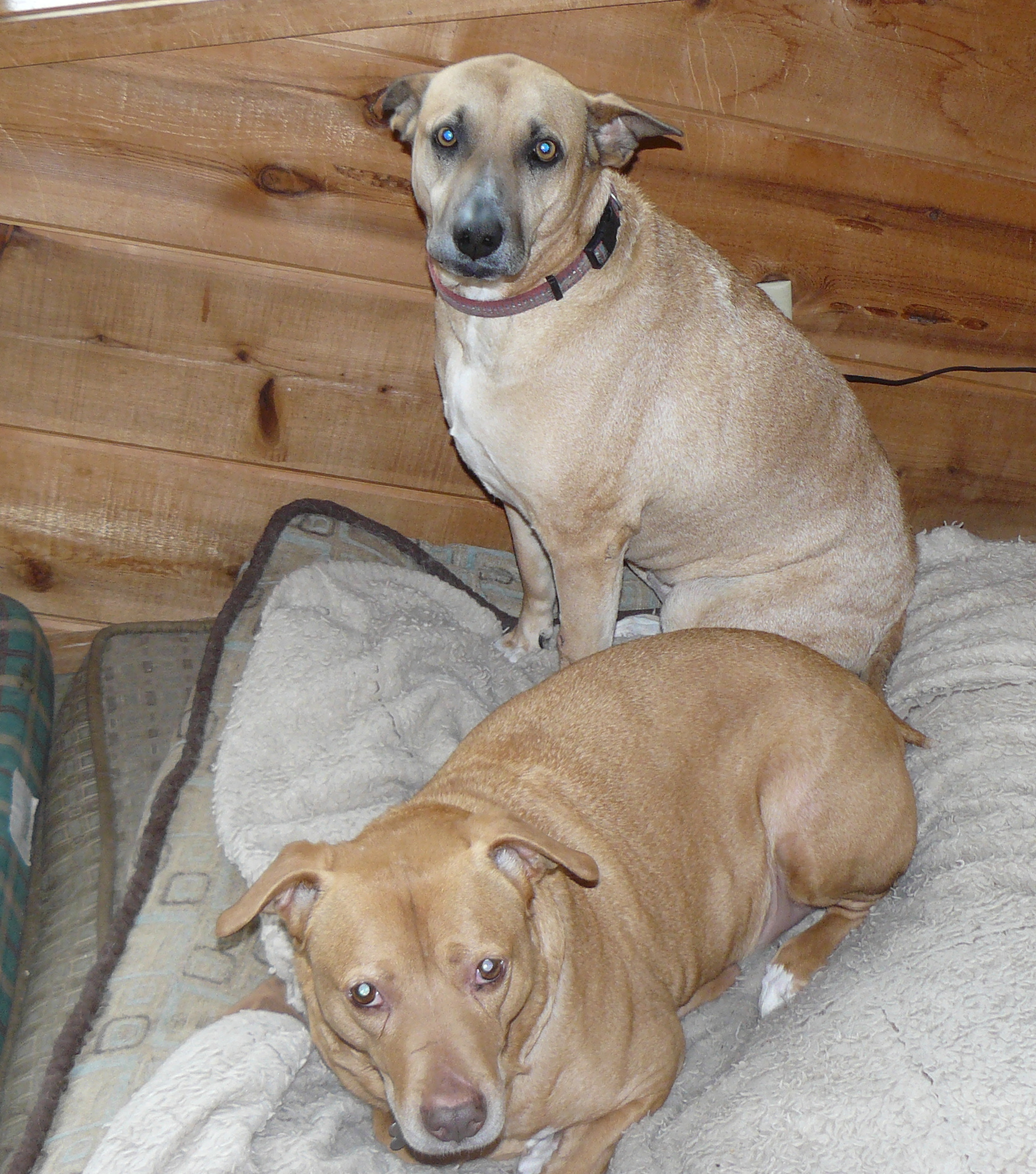
Ruby behind Casey.
Casey, in the foreground, sharing Ruby’s bed as they are great friends.

Please ensure you and your dogs have a great weekend.

Ageing brains.

A postscript to yesterday’s post.

There was a comment left on yesterday’s post that seemed a delightful reason to stay with the topic; more or less!  This was the comment left by Tony.

“at the age of 70, I am already noticing the creeping onset of reduced verbal IQ, cognitive decline, and worry about the onset of dementia….”

Paul, I am 75 and lost an aunt to Alzheimer’s and a mother to dementia. I consider myself to also be at risk. There seems no defense, yet, against Alzheimer’s, but cardiovascular exercise is absolutely one against dementia. Cardio sends oxygen molecules to the brain which actually create new neurotransmitters. Check out my Page – Important Facts About Your Brain (and Exercise Benefits).

Nine days ago, dear friend Bob Derham from my UK days, emailed me the following (in turn, it had been sent on to Bob):

ooOOoo

I’m only sending this to the brightest of my older friends

This test will keep that dreaded disease that effects your memory at bay!

New Senior’s Exam, you only need 4 correct out of 10 questions to pass.

1) How long did the Hundred Years’ War last?

2) Which country makes Panama hats?

3) From which animal do we get cat gut?

4) In which month do Russians celebrate the October Revolution?

5) What is a camel’s hair brush made of?

6) The Canary Islands in the Pacific are named after what animal?

7) What was King George VI’s first name?

8) What color is a purple finch?

9) Where are Chinese gooseberries from?

10) What is the color of the black box in a commercial airplane?

Remember, you need only 4 correct answers to pass.

Check your answers below ….

Continue reading “Ageing brains.” →

A scientific view of domestication.

Of our dogs, of course!

You may recall that back on the 15th of this month, I posted a Note to Readers that spoke about my need to be focused on the editing of my manuscript. Here’s part of that note:

Dear readers, we are talking hours of revisions that I need, and want, to make.

All of which is my way of saying that if my posts over the next couple of weeks more strongly lean on the republishing of other material then you will understand why. In all cases I will endeavour to republish articles that are likely to interest you, of course!

Late yesterday, I completed the many revisions to the manuscript recommended by Joni Wilson but still have more days of formatting changes ahead.

Thus another republication of an item, this time an article that appeared on the Smithsonian website.

ooOOoo

Domestication Seems to Have Made Dogs a Bit Dim

Thanks to their relationship with us, dogs are less adept at solving tricky puzzles than their wolf relatives

It's OK, buddy. We're here to help. (stelo/iStock)
It’s OK, buddy. We’re here to help. (stelo/iStock)

By Rachel Nuwer, smithsonian.com, September 15, 2015

Dogs are considered some of the most intelligent animals on the planet. Thanks to a relationship with humans that dates back tens of thousands of years, dogs can respond to emotions, recognize numerous words and be trained to follow commands.

Notably, these seemingly smart accomplishments all hinge on the partnership between our two species. Now, however, tests of canine problem-solving skills indicate that dogs rely on humans so much that we actually seem to be dumbing them down.

Most studies that investigate dog intelligence assume that certain interactions with humans are indicative of higher cognitive function. In one experiment, for example, dogs and human-socialized wolves were presented with a canine version of the Kobayashi Maru — an unopenable box that contained food.

When confronted with a difficult task, dogs often turn to us—their human masters—for guidance, indicating their puzzlement with a cock of the head and eyes that seem to implore for help. Indeed, the dogs in the study quickly gave up and simply stared at the nearest human. The wolves, on the other hand, sought out no such help and persisted at trying to solve the impossible puzzle on their own.

Researchers usually interpret such findings as a sign of dogs’ intelligence; the wolves kept trying to win the no-win scenario, while the dogs knew that humans could help out with tasks they themselves could not solve.

But depending on humans for help is not necessarily a cognitive asset, points out Monique Udell, an assistant professor of animal and rangeland sciences at Oregon State University.

If dogs only turn to humans when presented with an impossible task—not a solvable one—then their “look back” behavior would indeed be advantageous. On the other hand, if they simply throw their paws up at the slightest hint of cognitive challenge, then that could indicate “a conditioned inhibition of problem-solving behavior,” as Udell puts it. Like a child whose parents always give away the answers to homework, dogs may be overly reliant on us, she surmised.

To test this hypothesis, Udell presented ten pet dogs and ten human-socialized wolves with a solvable puzzle. Sausage was placed inside a sealed plastic tub with a lid that included a bit of rope. With some paw and mouth finagling, the lid could be opened.

She also included ten shelter dogs in the study, because past research shows that shelter dogs are initially less responsive to humans compared to established pets. These animals acted as a sort of intermediary between hyper-socialized dogs and wolves.

Crazy smart, like a wolf. (Kaphoto/iStock)

Udell presented the canines with the puzzle box both in the presence of humans—an owner, caretaker or familiar person—and without any person nearby. Each time, the animals had two minutes to figure out how to get at the sausage. Subjects that failed in both trials were given a third and final try in which they also received verbal encouragement from their human friend.

Udell’s findings, reported today in the journal Biology Letters, were telling. In the presence of humans, just one pet dog and none of the shelter dogs managed to open the box. Eight out of ten of the wolves, however, succeeded in enjoying the sausage treat inside.

Wolves also spent more time chipping away at the problem and more time staring at the box, as if working out how to open it. Both pet and shelter dogs, on the other hand, did the opposite—they gave up more quickly and stared at humans instead of the box, seemingly asking for help.

When humans were not around, the findings were similar—nearly all of the wolves figured out how to open the box, while just one shelter dog and no pet dogs succeeded. In the third and final trial, dogs that had failed in both of the prior tests performed a bit better when humans encouraged them.

With some human cheerleading, four of nine shelter animals and one of eight pet dogs opened the box, and all spent more time trying to open the box and looking at the box than they did when they were either alone or when their human friends remained silent.

Udell’s results indicate that dogs do seem to be overly dependent on us compared to their wild relatives, although the cause of this—whether biological, environmental or both—still needs to be worked out.

Lucky for pet pooches, however, we humans will no doubt always be there to help them navigate all of life’s tricky plastic containers.

ooOOoo

Read more here.

Picking up on that last sentence, luckily for us humans our dogs will always be there to help us in innumerable ways, especially giving us unconditional love.


Adopting senior dogs

Don’t shop: Adopt.

We have always adopted dogs on the basis of their need, never letting age come into it. In the years before I knew Jean she was rescuing dogs off the streets of Mexico, again without regard to breed, age, condition or temperament.

So this recent article on Mother Nature Network struck me as important. Please share it.

ooOOoo

Don’t be afraid to adopt an older dog, says photographer

An abandoned dog named Sunny made Lori Fusaro realize that ‘no dog should die alone’ and inspired her to start a photography project to benefit senior pets.

By: Laura Moss, July 22, 2013

Photo: Lori Fusaro
Photo: Lori Fusaro


The hardest part of loving a pet is having to say goodbye. That’s why the idea of adopting an older animal made dog lover Lori Fusaro so uneasy.

“I thought it would just be too sad and painful,” Fusaro told Today.com, “I didn’t think my heart could take it, so I wasn’t willing to open myself up.”

old2

But that all changed in June 2012 when Fusaro met Shady while she was photographing dogs at the South Los Angeles Animal Shelter. Shady was 16 years old with infected eyes and a large cancerous tumor on her leg.

“She was so sad and depressed. She wouldn’t even lift her head for a treat. I didn’t think I could adopt her and I left the shelter without her. But her face never left my mind. She kept popping into my thoughts.”

As she contemplated adoption, Fusaro sought out more information on the dog.

“I thought Shady was a stray that found her way into the shelter,” she wrote on her blog. “Turns out I was wrong. Living her entire life with a family and then dumped because she was too old. With this new information, her face haunts me even more.”

Fusaro couldn’t stand the idea of the gentle dog dying alone, so she took her home and changed her name to Sunny.

“I always come back to the idea that no dog should have to die alone. Even if she got just two months of joyous, happy life, it’s worth it for my heartbreak,” she said.
Watching Sunny transform from an anxious shelter dog into the happy family member she is today inspired Fusaro to start Silver Hearts, a photography project that showcases senior pets and the joy they bring to people’s lives.

“When I realized that there were probably hundreds of Sunnys languishing in shelters, I knew I had to do something about it. Silver Hearts became a way that I could use my photography to show these dogs as loving, happy souls that have a zest for living and deserve to spend their golden years in a loving home.”

Fusaro visited families across the United States to photograph their dogs and share their compelling stories. Many of the dogs were taken to shelters because they got sick or old or because the families could no longer afford to care for them.

Although older dogs are often calmer — and already house-trained — they’re typically the highest-risk animals in a shelter. Fusaro hopes her photographs can help change that.

She wants to turn her pictures into a book, with proceeds from sales going to three rescue organizations that help find homes for older dogs: Peace of Mind Dog Rescue in Grove, Calif., Willy’s Happy Endings in Woodlawn, Tenn., and Louie’s Legacy Animal Rescue in Ohio and New York.

She launched a Kickstarter campaign to try to raise money to self-publish the book, but failed to make the fundraising goal. Fusaro is now considering other methods of publication.

“When I look back at my unwillingness to adopt an older dog, it was more about my own selfishness — about not wanting to feel that pain, not wanting to make hard decisions,” Fusaro said. “But every dog is important. Every dog deserves a home. I finally just boiled it down to love. That’s the most important thing.”

Lori explains why she photographs senior dogs in the video below.

ooOOoo

Abandoned and homeless dogs so desperately need the love of caring owners.

Seeing the truth in our mirror.

A sombre reflection on the killing abilities of man.

I was in two minds as to whether to post this today for it is certainly a grim reminder of the less desirable aspects of our species.

In the end, I decided to so do because it needs to be shared and if it changes the mindset of just one person it will have been worthwhile. I was originally seen by me on the EarthSky blogsite.

ooOOoo

Want to see Earth’s super predator? Look in the mirror.

Our efficient killing technologies have given rise to the human super predator. Our impacts are as extreme as our behavior, says study.

Rope trawl for midwater trawling. Photo credit: NOAA

Extreme human predatory behavior is responsible for widespread wildlife extinctions, shrinking fish sizes and disruptions to global food chains, according to research published in the August 21 edition of the journal Science these are extreme outcomes that non-human predators seldom impose, according to the article.

Lead researcher Chris Darimont is a professor of geography at the University of Victoria. Darimont said:

Our wickedly efficient killing technology, global economic systems and resource management that prioritize short-term benefits to humanity have given rise to the human super predator. Our impacts are as extreme as our behavior and the planet bears the burden of our predatory dominance.

A coastal wolf is hunting salmon in British Columbia, Canada. Photo credit: Guillaume Mazille

The team’s global analysis indicates that humans typically exploit adult fish populations at 14 times the rate than do marine predators. Humans also hunt and kill large land carnivores such as bears, wolves and lions at nine times the rate that these predatory animals kill each other in the wild.

Researchers noted that in some cases, dwindling species of predatory land carnivores are more aggressively hunted for trophies, due to the premium placed on rare prey.

The result of human activity on wildlife populations is far greater than natural predation. Research suggests that socio-political factors can explain why humans repeatedly overexploit. Technology explains how: Humans use advanced killing tools, cheap fossil fuel, and professional harvesters – like high-volume commercial fishing fleets – to overcome the defensive adaptations of prey.

Humanity also departs fundamentally from predation in nature by targeting adult quarry.Co-author Tom Reimchen is a biology professor at University of Victoria. He said:

Whereas predators primarily target the juveniles or ‘reproductive interest’ of populations, humans draw down the ‘reproductive capital’ by exploiting adult prey.

During four decades of fieldwork on Haida Gwaii, an archipelago on the northern coast of British Columbia, Reimchen looked at how human predators differ from other predators in nature. Reimchen’s predator-prey research revealed that predatory fish and diving birds overwhelmingly killed juvenile forms of freshwater fish. Collectively, 22 predator species took no more than five per cent of the adult fish each year. Nearby, Reimchen observed a stark contrast: fisheries exclusively targeted adult salmon, taking 50 per cent or more of the runs.

The authors conclude with an urgent call to reconsider the concept of “sustainable exploitation” in wildlife and fisheries management. A truly sustainable model, they argue, would mean cultivating cultural, economic and institutional change that places limits on human activities to more closely follow the behavior of natural predators. Darimont said:

We should be protecting our wildlife and marine assets as an investor would in a stock portfolio.

Enjoying EarthSky? Sign up for our free daily newsletter today!

Bottom line: According to research published in the August 21, 2015 edition of Science, extreme human predatory behavior is responsible for widespread wildlife extinctions, shrinking fish sizes and disruptions to global food chains.

Read more from the University of Victoria

ooOOoo

Chris Darimont really put his finger on the spot in my opinion when he was quoted,”We should be protecting our wildlife and marine assets as an investor would in a stock portfolio.”

Going to close today’s post by repeating what is presented on the Welcome page of Learning from Dogs, namely:

As man’s companion, protector and helper, history suggests that dogs were critically important in man achieving success as a hunter-gatherer. Dogs ‘teaching’ man to be so successful a hunter enabled evolution, some 20,000 years later, to farming, thence the long journey to modern man. But in the last, say 100 years, that farming spirit has become corrupted to the point where we see the planet’s plant and mineral resources as infinite. Mankind is close to the edge of extinction, literally and spiritually.

Dogs know better, much better! Time again for man to learn from dogs!

My argument rests!

Down under dogs!

A guest post all the way from Australia.

A few days ago I received a friendly email from Alex in Sydney, Australia.

My name is Alex and I work for Spoilt Rotten Dogs, a boutique dog care centre in Sydney.

In an effort to improve community awareness and knowledge about dog care, we are looking at contributing to high profile blogs like Learning From Dogs by sharing tips and information provided by professional carers, vets, and groomers. I’ve learned from your site that you are looking for guest contributors.

I’ve recently written a post that I think fits pretty well with your site especially that you are based in Australia. It’s about the best places in Sydney to walk your dog. I’m sure your readers will find it really helpful.

I politely replied to Alex pointing out that Learning from Dogs was based in Southern Oregon and not Australia and thus a guest essay on walking one’s dog in Sydney was unlikely to have huge reader appeal! 😉

Unperturbed, Alex then replied with a guest essay that seemed much more pertinent to dog lovers right across the world. It now follows but not before I declare that there is no connection between this blog and Alex’s dog care centre. The following image is taken from the home page of the website for Spoilt Rotten Dogs.

ooOOoo

welcome-to-spoiltrottendogs

5 Tips to Dog Proof Your Backyard

Regardless of the fact that you really love your dogs, you cannot keep your eyes on them and supervise their activities all the time. However, this doesn’t set you free from the responsibilities that you have towards your pets either.

In order to ensure that they are living in a safe, secure, and hygienic environment, it is necessary to observe some basic safety precautions. These safety measures will not only ensure that your pets are far away from all types of risks and dangers but will also put an end to the complaints that you have been receiving for their ill behaviour when they start barking when someone passes by or stands near the backyard fence.

For your assistance, here we present you 5 useful tips to dog proof your backyard.

Fencing the Yard

Creating a boundary around your backyard is the first and foremost step to ensuring your pets’ safety. It keeps your dog inside your property and safe from other animals roaming around the neighbourhood. It is suggested that you choose the material of the fence, depending on the temperament of your dog. If your dog gets excited or furious when it sees someone around the yard, use opaque fences. You can opt for reed fencing that is neat, cheap, and also helps in maintaining privacy. On the other hand, if your dog has a calm nature, you can use regular wooden fences to surround your yard.

Sheltering for All Weathers

It has been observed that dogs are very sensitive to climatic changes. Whether it’s the scorching heat of the summers or chilly winds of the winter, your dogs need an appropriate home to maintain their body temperature. Instead of considering the entire open yard as their home, you should place a small yet spacious doghouse for them to live in.

Internal Dangers

It’s not just external dangers or outsiders that can cause harm to your dog, as there are several things inside your backyard that can put your pet into trouble. Wondering about those? Sharp and pointed tools, pest traps and pest treating chemicals, as well as pools, toxic plants, and so on; can all cause harm to your beloved dogs. Therefore, keep all such items and areas, out of your dogs’ reach.

Additional Airlocks

Airlocks are not very common around homes but you must have seen them in dog parks. These are additional fences that are set in front of the gates to ensure that even if the main gates are not closed properly, dogs cannot leave the premises and are thus, kept inside.

Maximum Supervision

Last but certainly the most essential tip is to supervise your dog as much as possible. You cannot expect them to maintain discipline and follow your set of rules. Instead, you can spend more time with them and train them to keep themselves safe from such troubles.

So, check on your pets timely to ensure they are away from all types of dangers and take the measures necessary to safeguard their well being.

ooOOoo

Seems like sound advice.

The art of stillness.

Another fabulous lesson we can learn from our dogs.

Stillness. It is a very simple, single word yet, somehow, it sounds as though it belongs to a different age. As though stillness is a very long way from the modern society that millions and millions of us subscribe to.

The dog is the master of being still. Being still, either from just laying quietly watching the world go by, or being still from being fast asleep. The ease at which they can find a space on a settee, a carpeted corner of a room, the covers of a made-up bed, and stretch out and be still, simply beggars belief. Dogs offer us humans the most wonderful quality of stillness that we should all practice. Dogs reveal their wonderful relationship with stillness.

Now watch this entrancing talk from Pico Iyer.

Published on Nov 26, 2014
The place that travel writer Pico Iyer would most like to go? Nowhere. In a counterintuitive and lyrical meditation, Iyer takes a look at the incredible insight that comes with taking time for stillness. In our world of constant movement and distraction, he teases out strategies we all can use to take back a few minutes out of every day, or a few days out of every season. It’s the talk for anyone who feels overwhelmed by the demands for our world.

Why you should listen.

Acclaimed travel writer Pico Iyer began his career documenting a neglected aspect of travel — the sometimes surreal disconnect between local tradition and imported global pop culture. Since then, he has written ten books, exploring also the cultural consequences of isolation, whether writing about the exiled spiritual leaders of Tibet or the embargoed society of Cuba.

Iyer’s latest focus is on yet another overlooked aspect of travel: how can it help us regain our sense of stillness and focus in a world where our devices and digital networks increasing distract us? As he says: “Almost everybody I know has this sense of overdosing on information and getting dizzy living at post-human speeds. Nearly everybody I know does something to try to remove herself to clear her head and to have enough time and space to think. … All of us instinctively feel that something inside us is crying out for more spaciousness and stillness to offset the exhilarations of this movement and the fun and diversion of the modern world.”

What others say

“[Iyer] writes the kind of lyrical, flowing prose that could make Des Moines sound beguiling.” — Los Angeles Times

When dark shadows fall across our hearts.

One of the most important lessons we can learn from our dogs: coping with death.

In writing about the lesson of death that we can learn from our dogs I am, of course, speaking of our own death, of the inevitability of our death. That largely unspoken truth that Sharon Salzberg described in her book Faith: “What does it mean to be born in a human body, vulnerable and helpless, then to grow old, get sick and die, whether we like it or not?” [page 34.]

Anyone who has loved a dog has most likely been intimately involved in the end of that dog’s life. It is, to my mind, the ultimate lesson that dogs offer us: how to be at peace when we die and how to leave that peace blowing like a gentle breeze through the hearts of all the people who loved us.

Our beloved dogs have much shorter life spans than us, thus almost everyone who has loved a dog will have had to say goodbye to that gorgeous friend at some point in their lives. Very sadly, perhaps, saying goodbye to more than one loved dog.

All of which is my introduction to a recent essay published on The Conversation blogsite. The essay is written by Bernard Rollin, Professor of Philosophy, Animal Sciences and Biomedical Sciences at Colorado State University. The essay is called: When is it ethical to euthanise your pet?

ooOOoo

When is it ethical to euthanize your pet?

August 12, 2015 6.18am EDT

In the 1960s, I knew people who, before going on vacation, would take their dogs to a shelter to be euthanized. They reasoned that it was cheaper to have a dog euthanized – and buy a new one upon returning – than pay a kennel fee.

Two decades later, I was working at Colorado State’s veterinary hospital when a group of distraught bikers on Harley-Davidsons pulled up carrying a sick chihuahua. The dog was intractably ill, and required euthanasia to prevent further suffering. Afterwards, the hospital’s counselors felt compelled to find the bikers a motel room: their level of grief was so profound that the staff didn’t think it was safe for them to be riding their motorcycles.

These two stories illustrate the drastic change in how animals have been perceived. For thousands of years, humans have kept animals as pets. But only during the past 40 years have they come to be viewed as family.

While it’s certainly a positive development that animals are being treated humanely, one of the downsides to better treatment mirrors some of the problems the (human) health care system faces with end-of-life care.

As with humans, in many cases the lives of pets are needlessly prolonged, which can cause undue suffering for the animals and an increased financial burden for families.

The growth of veterinary medicine and ethics

In 1979, I began teaching veterinary medical ethics at Colorado State University’s veterinary school, the first such course ever taught anywhere in the world.

A year later, the veterinary school hired an oncologist to head up a new program on animal oncology. Soon, our clinic was applying human therapeutic modalities to animal cancer. The visionary head of the veterinary program also hired a number of counselors to help pet owners manage their grief – another first in veterinary circles.

I’d been under the impression that people would be reluctant to spend much money on animal treatments, so I was genuinely shocked when the following April, the Wall Street Journal reported individuals spending upwards of six figures on cancer treatments for their pets.

As a strong advocate for strengthening concern for animal welfare in society, I was delighted with this unprecedented turn of events. I soon learned that concern for treating the diseases of pets besides cancer had also spiked precipitously, evidenced by a significant increase in veterinary specialty practices.

One of the family

So what’s behind the shift in how pets are perceived and treated?

For one, surveys conducted over the last two decades indicate an increasing number of pet owners who profess to view their animals as “members of the family.” In some surveys, the number is as high as 95% of respondents, but in nearly all surveys the number is higher than 80%.

In addition, the breakdown of nuclear families and the uptick of divorce rates have contributed to singles forming tighter bonds with companion animals.

Such attitudes and trends are likely to engender profound changes in societal views of euthanasia. Whereas before, many owners didn’t think twice about putting down a pet, now many are hesitant to euthanize, often going to great lengths to keep sick animals alive.

Vets caught in the middle

However, veterinarians continue to experience extensive stress as they experience two opposite – but equally trying – dilemmas: ending an animal’s life too soon, or waiting too long.

In a paper that I published entitled Euthanasia and Moral Stress, I described the significant stress experienced by veterinarians, veterinary technicians and humane society workers. Many chose their profession out of a desire to improve the lot of animals; instead, they invariably ended up euthanizing large numbers of them, often for unethical reasons.

These ranged from “I got the dog to jog with me, and now it’s too old to run,” to “If I die, I want you to euthanize the animal because I know it can’t bear to live without me.”

In other cases, the animal is experiencing considerable suffering, but the owner is unwilling to let the animal go. With owners increasingly viewing pets as family members, this has become increasingly common, and many owners fear the guilt associated with killing an animal too soon.

Ironically this, too, can cause veterinarians undue trauma: they know the animal is suffering, but there’s nothing they can do about it unless the owner gives them permission.

The consequences are manifest. One recent study showed that one in six veterinarians has considered suicide. Another found an elevated risk of suicide in the field of veterinary medicine. Being asked to kill healthy animals for owner convenience doubtless is a major contribution.

How to manage the decision to euthanize

Here is my suggestion to anyone who is thinking about getting a pet: when you first acquire it, create a list of everything you can find that makes the animal happy (eating a treat, chasing a ball, etc). Put the list away until the animal is undergoing treatment for a terminal disease, such as cancer. At that point, return to the list: is the animal able to chase a ball? Does the animal get excited about receiving a treat?

If the animal has lost the ability to have positive experiences, it’s often easier to let go.

This strategy can be augmented by pointing out the differences between human and animal consciousness. As philosopher Martin Heidegger has pointed out, for humans much of life’s meaning is derived from balancing past experiences with future aspirations, such as wishing to see one’s children graduate or hoping to see Ireland again.

Animals, on the other hand, lack the linguistic tools to allow them to anticipate the future or create an internal narrative of the past. Instead, they live overwhelmingly in the present. So if a pet owner is reluctant to euthanize, I’ll often point out that the animal no longer experiences pleasant “nows.”

In the end, managing euthanasia represents a major complication of the augmented status of pets in society. Ideally, companion animal owners should maintain a good relationship with their general veterinary practitioner, who has often known the animal all of its life, and can serve as a partner in dialogue during the trying times when euthanasia emerges as a possible alternative to suffering.

ooOOoo

So much to learn from these beautiful creatures and so many ways to return the unlimited love we receive from them.