I wrote down the title of today’s post a few days back. Jean and I had just watched the BBC Panorama Special regarding Amazon UK. It had been screened on the 25th November and was described:
It’s the online retailer that has transformed the way we shop, but how does Amazon treat the workers who retrieve our orders? Working conditions in the company’s giant warehouses have been condemned by unions as among the worst in Britain. Panorama goes undercover to find out what happens after we fill our online shopping basket.
Or more fully reported in a BBC News item, as this extract reveals:
A BBC investigation into a UK-based Amazon warehouse has found conditions that a stress expert said could cause “mental and physical illness”.
Prof Michael Marmot was shown secret filming of night shifts involving up to 11 miles of walking – where an undercover worker was expected to collect orders every 33 seconds.
It comes as the company employs 15,000 extra staff to cater for Christmas.
Amazon said in a statement worker safety was its “number one priority”.
Undercover reporter Adam Littler, 23, got an agency job at Amazon’s Swansea warehouse. He took a hidden camera inside for BBC Panorama to record what happened on his shifts.
He was employed as a “picker”, collecting orders from 800,000 sq ft of storage.
A handset told him what to collect and put on his trolley. It allotted him a set number of seconds to find each product and counted down. If he made a mistake the scanner beeped.
Adam Littler went undercover as a “picker” at Amazon’s Swansea warehouse
“We are machines, we are robots, we plug our scanner in, we’re holding it, but we might as well be plugging it into ourselves”, he said.
The 30-minute Panorama programme is on YouTube and is included in this post just below.
As I started to explain, the reaction to watching the Panorama programme was to feel sickened by the way these workers were being treated.
Not helped when yesterday, the UK Daily Mail newspaper added their own story of another undercover reporting operation at Amazon. Here’s an extract from the last third of the piece, reported by Carole Cadwalladr:
It is taxes, of course, that pay for the roads on which Amazon’s delivery trucks drive, and the schools in which its employees are educated.
Taxes that all its workers pay, and that, it emerged in 2012, Amazon tends not to pay.
On UK sales of £4.2 billion in 2012, it paid £3.2 million in corporation tax. In 2006, it transferred its UK business to Luxembourg and reclassified its UK operation as simply an ‘order fulfilment’ business.
The Luxembourg office employs 380 people. The UK operation employs 21,000. You do the sums.
Brad Stone tells me that tax avoidance is built into the company’s DNA. From the very beginning it has been ‘constitutionally oriented to securing every possible advantage for its customers, setting the lowest possible prices, taking advantage of every known tax loophole or creating new ones’.
In Swansea I chat to someone called Martin for a while. It’s Saturday, the sun is shining and the warehouse has gone quiet. The orders have been turned off like a tap.
‘It’s the weather,’ he says. ‘When it rains, it can suddenly go mental.’ We clear away boxes and the tax issue comes up.
‘There was a lot of anger here,’ he says. ‘People were very bitter about it. But I’d always say to them: “If someone told you that you could pay less tax, do you honestly think you would volunteer to pay more?”’
He’s right. And the people who were angry were also right. It’s an unignorable fact of modern life that, as Stuart Roper of Manchester Business School tells me, ‘some of these big brands are more powerful than governments. They’re wealthier. If they were countries, they would be pretty large economies.
‘They’re multinational and the global financial situation allows them to ship money all over the world. And the Government is so desperate for jobs that it has given away large elements of control.’
MPs like to attack Amazon and Starbucks and Google for not paying their taxes, but they’ve yet to actually create legislation compelling them to do so.
Then if that wasn’t sufficient to make me want to live on a desert island, along comes George Monbiot pointing out that even the BBC, to me the most respected and trusted news organisation on the planet, has been economical with the truth.
The BBC’s disgraceful failure to reveal who its contributors are speaking for.
By George Monbiot, published on the Guardian’s website 29th November 2013
Do the BBC’s editorial guidelines count for anything? I ask because it disregards them every day, by failing to reveal the commercial interests of its contributors.
Let me give you an example. Yesterday the Today programme covered the plain packaging of cigarettes. It interviewed Mark Littlewood, director-general of the Institute of Economic Affairs, an organisation which calls itself a thinktank.
Mishal Husain introduced Mark Littlewood as “the director of the Institute of Economic Affairs, and a smoker himself”.
It’s bad enough when the BBC interviews people about issues of great importance to corporations when it has no idea whether or not they are funded by those companies, and makes no effort to find out.
It’s even worse when those interests have already been exposed, yet the BBC still fails to mention them.
Then along came three items that pulled my back from the brink of despair and disgust.
The first came from the blog of the UK’s Transition Network, Transition Times. Rob Hopkins wrote an article on December 5th called The day I closed my Amazon account. Please read it if you feel unsettled by the Amazon situation. The last two paragraphs are:
Me, I resolve to buy less, but better. Less, but longer-lasting. Less, but local. The thought of where we will end up in 5 years time, 10 years time, 20 years time, if companies like Amazon continue as they are, really frightens me. It’s not good, it’s not right. It’s not about our needs, it’s about the needs of huge investors. I want a different world for my boys.
I can’t, on my own, do that much about it. I can’t insist that the UK government legislate so that, as in Holland, the Recommended Retail Price (RRP) is the legal minimum at which any book can be sold, although I think that is grounds for a really timely campaign. Because of that, Amazon don’t really operate in Holland. Bring back the RRP for books here, and let’s have a level playing field. As I say, I can’t do much, but I can withdraw my support. I just have withdrawn my support. It feels surprisingly unsettling, as one does after ending a relationship, but it was the right thing to do. It may be a drop in the ocean, but if enough people do it….
The second was coming across something called The Restart Project in London. I had never heard of them before. But it gets better because these London folk are part of a global movement. Which in the words of The Restart Project can be explained thus:
A spontaneous, global, grassroots repair movement
Sitting in London, we at The Restart Project have been inspired by Holland, the US, Australia, and now we realize that there are many more community repair and fixit groups than we ever knew of before… Milan, Barcelona, Finland, the list just grows.
Some groups have regular events in their own spaces and some are pop-up groups.
The most remarkable thing is that we are not just all doing similar things, we are doing them in the same way and with similar motivations
1) learning, skillsharing and community are a premium. No judgment. Openness and inclusivity, all are made to feel welcome.
2) the idea is NOT a freebie fix. The idea is that people get involved in the repair, taking responsibility for their stuff and taking back control. It’s about behaviour change, not just about waste prevention
and
3) importantly – fun!
Please help us map repair groups, to connect people to their local repair gurus and fixit friends – and who knows, inspire the creation of more.
“Just repair, don’t despair!”
Just repair, don’t despair! That shouted out at me. The more that the world we live in is consumed by the power-brokers and greed-mongers. The more that our traditional view of politics is seen to be out-dated and incorrect, then the more we have do within our own lives, within our own communities and with our friends, loved ones and families to show we can repair our world a darn site quicker than the ‘dark forces’ can break it.
My third example of hope is tomorrow in a post called The power of self.
It’s really terribly easy – we just have to leave the oil in the ground!
The current issue of The Economist has an article on page 43, under The Americas section, headed Cheap at the price.
It’s a review of the biggest oil auction this year.
A single bid for a vast field shows the weakness of Brazil’s state-led approach to developing its oil reserves
SIX years after discovering giant offshore“pré-sal” oil deposits, so called because they lie beneath a thick layer of salt under the ocean bed, Brazil has finally auctioned the rights to develop some of its deeply buried wealth. On October 21st the Libra field, off Rio de Janeiro’s coast (see map), was sold to a consortium led by Petrobras, Brazil’s state-controlled oil firm, and including France’s Total, Anglo-Dutch Shell and China’s state-owned CNOOC and CNPC. Libra’s estimated 8 billion-12 billion barrels of recoverable oil make it the biggest oil prospect in the world to be auctioned this year. Once it reaches peak production, sometime in the next decade, it should increase Brazil’s output from 2.1m to about 3.5m barrels per day.
The article was critical of the way Brazil managed the auction resulting in just one consortium bidding, against the expectation there would be strong competition for the oil from possibly 40 companies despite the huge costs in extracting it from over 6,000 metres (nearly 20,000 feet) below sea-level. The article didn’t even hint at the madness of even thinking it should be extracted but I guess that’s The Economist for you.
So with that in mind, let me turn to a recent essay from TomDispatch by world-renown climate-change activist Bill McKibben. As regular readers will be aware Tom Engelhardt of the TomDispatch blog has given blanket permission for TD essays to be republished here on Learning from Dogs.
oooOOOooo
Tomgram: Bill McKibben, Can Obama Ever Stand Up to the Oil Industry?
Recently, “good” news about energy has been gushing out of North America, where a cheering crowd of pundits, energy experts, and government officials has been plugging the U.S. as the “Saudi Arabia” of the twenty-first century. You know, all that fracking and those luscious deposits of oil shale and gas shale just waiting to be pounded into shape to fill global gas tanks for an energy-rich future. And then, of course, just to the north there are those fabulous Canadian tar sands deposits whose extraction is reportedly turning parts of Alberta into an environmental desert. And that isn’t all.
From the melting Arctic, where the Russians and others are staking out energy claims, to the southernmost tip of South America, the dream of new energy wealth is being pursued with a fervor and avidity that is hard to take in. In distant Patagonia, an Argentinean government not previously known for its friendliness to foreign investment has just buddied up with Chevron to drill “around the clock in pursuit of a vast shale oil reservoir that might be the world’s next great oil field.” Huzzah and olé!
And can you even blame the Argentinean president for her choice? After all, who wants to be the country left out of the global rush for new energy wealth? Who wants to consider the common good of the planet, when your country’s finances may be at stake? (As with the Keystone XL pipeline protest movement here, so in Argentina, there actually are environmentalists and others who are thinking of the common good, but they’re up against the state, the police, and Chevron — no small thing.) All of this would, of course, be a wondrous story — a planet filled with energy reserves beyond anyone’s wildest dreams — were it not for the fact that such fossil fuel wealth, such good news, is also the nightmarish bad news of our lives, of perhaps the lifetime of humanity.
There is an obvious disconnect between what is widely known about climate change and the recent rush to extract “tough energy” from difficult environments; between the fires — and potential “mega-fire” — burning wildly across parts of overheated Australia and its newly elected government run by a conservative prime minister, essentially a climate denier, intent on getting rid of that country’s carbon tax. There is a disconnect between hailing the U.S. as the new Saudi Arabia and the recent report of the prestigious Intergovernmental Panel on Climate Change warning that fossil fuel reserves must be kept in the ground — or else. There is a disconnect between what our president says about climate change and the basic energy policies of his administration. There is a disconnect between what the burning of fossil fuels will do to our environment and the urge of just about every country on this planet to exploit whatever energy reserves are potentially available to it, no matter how “dirty,” no matter how environmentally destructive to extract.
Somewhere in that disconnect, the remarkable Bill McKibben, whose new book, Oil and Honey: The Education of an Unlikely Activist, is at the top of my personal reading list, has burrowed in and helped to create a global climate change movement. In this country, it’s significantly focused on the Keystone XL pipeline slated, if built, to bring tar sands oil from Canada to the Gulf Coast. For the last several years at TomDispatch, McKibben has kept us abreast of the most recent developments in that movement. Here is his latest report from the tar sands front. Tom
X-Ray of a Flagging Presidency Will Obama Block the Keystone Pipeline or Just Keep Bending?
By Bill McKibben
As the battle over the Keystone XL pipeline has worn on — and it’s now well over two years old — it’s illuminated the Obama presidency like no other issue. It offers the president not just a choice of policies, but a choice of friends, worldviews, styles. It’s become an X-ray for a flagging presidency. The stakes are sky-high, and not just for Obama. I’m writing these words from Pittsburgh, amid 7,000 enthusiastic and committed young people gathering to fight global warming, and my guess is that his choice will do much to determine how they see politics in this country.
Let us stipulate at the start that whether or not to build the pipeline is a decision with profound physical consequences. If he approves its construction, far more of the dirtiest oil on Earth will flow out of the tar sands of Alberta, Canada, and reach the U.S. Gulf Coast. Not just right away or for a brief period, but far into the future, since the Keystone XL guarantees a steady flow of profits to oil barons who have their hearts set on tripling production in the far north.
The history of oil spills and accidents offers a virtual guarantee that some of that oil will surely make its way into the fields and aquifers of the Great Plains as those tar sands flow south. The greater and more daunting assurance is this, however: everything that reaches the refineries on the Gulf Coast will, sooner or later, spill into the atmosphere in the form of carbon, driving climate change to new heights.
In June, President Obama said that the building of the full pipeline — on which he alone has the ultimate thumbs up or thumbs down — would be approved only if “it doesn’t significantly exacerbate the problem of carbon pollution.” By that standard, it’s as close to a no-brainer as you can get.
These days, however, as no one will be surprised to hear, brainless things happen in Washington more often than not, and there’s the usual parade of the usual suspects demanding that Keystone get built. In mid-October, a coalition that included Exxon, Chevron, ConocoPhillips, and Royal Dutch Shell, not to mention the U.S. Chamber of Commerce, the National Association of Manufacturers, and the Business Roundtable, sent Obama a letter demanding that he approve Keystone in order to “maintain investor confidence,” a phrase almost guaranteed to accompany bad ideas. A report last week showed that the Koch brothers stood to earn as much as $100 billion in profits if the pipeline gets built (which would come in handy in helping fund their endless assault on unions, poor people, and democracy).
But don’t think it’s just Republican bigwigs and oil execs rushing to lend the pipeline a hand. Transcanada, the pipeline’s prospective builder, is at work as well, and Obama’s former communications director Anita Dunn is now on the Transcanada dime, producing TV ads in support of the pipeline. It’s a classic example of the kind of influence peddling that knows no partisan bounds. As the activists at Credo put it: “It’s a betrayal of the commitments that so many of us worked so hard for, and that Dunn herself played a huge role in shaping as top strategist on the 2008 campaign and communications director in the White House.”
Credo’s Elijah Zarlin, who worked with Dunn back in 2008, wrote that attack on her. He was the guy who wrote all those emails that got so many of us coughing up money and volunteering time during Obama’s first run for the presidency, and he perfectly exemplifies those of us on the other side of this divide — the ones who actually believed Dunn in 2008, the ones who thought Obama was going to try to be a different kind of president.
On energy there’s been precious little sign of that. Yes, the Environmental Protection Agency has put in place some new power plant regulations, and cars are getting better mileage. But the president has also boasted again and again about his “all of the above” energy policy for “increasing domestic oil production and reducing our dependence on foreign oil.” It has, in fact, worked so well that the United States will overtake Russia this year as the biggest combined oil and natural gas producer on the planet and is expected to pass Saudi Arabia as the number one oil producer by 2017.
His administration has okayed oil drilling in the dangerous waters of the Arctic and has emerged as the biggest backer of fracking. Even though he boasts about marginal U.S. cuts in carbon emissions, his green light to fracking means that he’s probably given more of a boost to releases of methane— another dangerous greenhouse gas — than any man in history. And it’s not just the environment. At this point, given what we know about everything from drone warfare to NSA surveillance, the dream of a progressive Obama has, like so many dreams, faded away.
The president has a handy excuse, of course: a truly terrible Congress. And too often — with the noble exception of those who have been fighting for gay rights and immigration reform — he’s had little challenge from progressives. But in the case of Keystone, neither of those caveats apply: he gets to make the decision all by himself with no need to ask John Boehner for a thing, and people across the country have made a sustained din about it. Americans have sent record numbers of emails to senators and a record number of comments to the State Department officials who oversee a “review” of the pipeline’s environmental feasibility; more have gone to jail over this issue than any in decades. Yet month after month, there’s no presidential decision.
There are days, in fact, when it’s hard to muster much fire for the fight (though whenever I find my enthusiasm flagging, I think of the indigenous communities that have to live amid the Mordor that is now northern Alberta). The president, after all, has already allowed the construction of the southern half of the Keystone pipeline, letting Transcanada take land across Texas and Oklahoma for its project, and setting up the beleaguered communities of Port Arthur, Texas, for yet more fumes from refineries.
Stopping the northern half of that pipeline from being built certainly won’t halt global warming by itself. It will, however, slow the expansion of the extraction of tar sands, though the Koch brothers et al. are busy trying to find other pipeline routes and rail lines that would get the dirtiest of dirty energy out of Canada and into the U.S. via destinations from Michigan to Maine. These pipelines and rail corridors will need to be fought as well — indeed the fights are underway, though sometimes obscured by the focus on Keystone. And there are equally crucial battles over coal and gas from the Appalachians to the Pacific coast. You can argue that the president’s people have successfully diverted attention from their other environmental sins by keeping this argument alive long past the moment at which it should have been settled and a decision should have been made.
At this point, in fact, only the thought of those 900,000 extra barrels a day of especially nasty oil coming out of the ground and, via that pipeline, into refineries still makes the fight worthwhile. Oh, and the possibility that, in deciding to block Keystone, the president would finally signal a shift in policy that matters, finally acknowledge that we have to keep most of the carbon that’s still in the ground in that ground if we want our children and grandchildren to live on a planet worth inhabiting.
If the president were to become the first world leader to block a big energy project on the grounds of its effects on climate, it might help dramatically reset the international negotiations that he allowed to go aground at Copenhagen in 2009 — the biggest foreign policy failure of his first term.
But that cascade of “ifs” depends on Obama showing that he can actually stand up to the oil industry. To an increasingly disillusioned environmental movement, Keystone looks like a last chance.
President Obama turned 52-years-old on August 4th this year. Michelle, his wife, will be 50-years-old next January, 17th. Their children, Malia and Sasha, are aged 15 and 12 respectively.
Thus this family of four are all sufficiently young to be alive when the consequences of burning all this oil will be very painfully obvious, when all the power and money in the world will come to naught.
So it strikes me that young Malia and Sasha should be shown where Planet Earth’s master circuit-breaker is located. Would be such a shame to leave the lights on when there’s no-one at home.
North America burning bright – an image from NASA.
My post last Monday, The lure of patterns, appears to have resonated far and wide. In the sense of many echoes reinforcing the perilous nature of our present times and the desperately uncertain decades ahead. Tomorrow I shall be writing specifically about those echoes.
Those echoes, as I chose to call them, were kicked off by a recent item on the blog Economic Populist. The item was called Maps of Economic Disaster and had some sickening information. Such as:
Today 15% of Americans live in poverty. Below is a county map showing the previous year’s poverty rate and we see once again the South has high concentrations.
People are living on the edge. People living in liquid asset poverty is a whopping 43.9%. This means 132.1 million people lack the savings to cover basic expenses for three months if they lose their job, have a medical emergency or some other sort of crisis. The below map** breaks down that percentage state by state. Pretty much half the country is living on the edge, paycheck to paycheck.
** I’ve not included that map but it may be seen here. However, I did want to republish the closing map.
Finally, the next map shows how income inequality has grown in United States over time. The gini index is a measure of income inequality, the higher then index gets, the worse income inequality is. If there is ever a map which shows the the destruction of the U.S. middle class, it is this one.
[N.B.The following map is an automated GIF so just left-click on it to see the sequence. That sequence is essentially a coloured graphical image of each year, from 1977 through to 2012. Don’t struggle with it. All you have to note are the changing colours. More colours towards the green end of the spectrum indicate a worsening gini index, i.e. a worsening measure of income inequality. ]
America is clearly in dire straights and the above maps it all out. Why then has this government, this Congress not put wages and jobs as jobs #1 is a good question. Why America hasn’t outright revolted, demanding this government do so is a better one.
oooo
George Monbiot.
Let me now turn to George Monbiot, a British writer known for his environmental and political activism. WikiPedia describes Mr. Monbiot, in part, as:
Here are some of the things I love: my family and friends, salt marshes, arguments, chalk streams, Russian literature, kayaking among dolphins, diversity of all kinds, rockpools, heritage apples, woods, fishing, swimming in the sea, gazpacho, ponds and ditches, growing vegetables, insects, pruning, forgotten corners, fossils, goldfinches, etymology, Bill Hicks, ruins, Shakespeare, landscape history, palaeoecology, Gavin and Stacey and Father Ted.
Here are some of the things I try to fight: undemocratic power, corruption, deception of the public, environmental destruction, injustice, inequality and the misallocation of resources, waste, denial, the libertarianism which grants freedom to the powerful at the expense of the powerless, undisclosed interests, complacency.
Here is what I fear: other people’s cowardice.
There was a recent essay concerning the UK’s energy strategy posted by George Monbiot published in the Guardian on the 22nd October. It is also on his website.
The essay opens, thus [my emphasis]:
Fiscal Meltdown
The government is betting the farm on a nuclear technology that might soon look as hip as the traction engine.
Seven years ago, I collected all the available cost estimates for nuclear power. The US Nuclear Energy Institute suggested a penny a kilowatt hour. The Royal Academy of Engineering confidently predicted 2.3p. The British government announced that in 2020 the price would be between 3 and 4p. The New Economics Foundation guessed that it could be anywhere between 3.4 and 8.3p. 8.3 pence was so far beyond what anyone else forecast that I treated it as scarcely credible. It falls a penny short of the price now agreed by the British government.
Mr. Monbiot’s essay concludes:
An estimate endorsed by the chief scientific adviser at the government’s energy department suggests that, if integral fast reactors were deployed, the UK’s stockpile of nuclear waste could be used to generate enough low-carbon energy to meet all UK demand for 500 years. These reactors would keep recycling the waste until hardly any remained: solving three huge problems – energy supply, nuclear waste and climate change – at once. Thorium reactors use an element that’s already extracted in large quantities as an unwanted by-product of other mining industries. They recycle their own waste, leaving almost nothing behind.
To build a plant at Hinkley Point which will still require uranium mining and still produce nuclear waste in 2063 is to commit to 20th-Century technologies through most of the 21st. In 2011 GE Hitachi offered to build a fast reactor to start generating electricity from waste plutonium and (unlike the Hinkley developers) to carry the cost if the project failed. I phoned the government on Monday morning to ask what happened to this proposal. I’m still waiting for an answer.
That global race the prime minister keeps talking about? He plainly intends to lose.
NB. I edited out the links to a comprehensive set of references to make the essay easier to read off the screen. But all the facts reported by Mr. Monbiot may be seen here.
oooo
Just two more or less random pieces of writing that have graced my ‘in-box’. Nothing scientific about my selection; just the sense that they are representative of the reams and reams of articles, essays and reports coming in on an almost daily basis from right across the world showing an ever-increasing credibility gap between the peoples of many nations and those who purport to serve those peoples in their respective Governments.
Frankly, I can’t even imagine how or when we will ‘transition’ out of this present period. But one thing I am sure about. This schism between us, the people, and those who govern us is unsustainable!
How the foreclosure crisis was a boon for the super wealthy.
For some time now, must be quite a few years, I have subscribed to Yves Smith’s Naked Capitalism blog. I do so for a number of reasons.
Thus it was that a few days ago I read with a mixture of anger and disgust an article about the consequences of the foreclosure crisis on the wealthy. Within a few hours of me requesting by email permission to republish that article on Learning from Dogs came the reply from Yves granting such permission.
This is Naked Capitalism fundraising week. 53 donors [now well over 400, Ed.] have already invested in our efforts to shed light on the dark and seamy corners of finance. Join us and participate via our Tip Jar or another credit card portal, WePay in the right column, or read about why we’re doing this fundraiser and other ways to donate, such as by check, as well as our current goal, on our kickoff post.
It’s a welcome departure to see Adam Davidson’s weekly column in the New York Times, which usually puts a happy face on how the 1% are winning the class war in America, have a guest writer look at the other side of the story.
Catherine Rampell has a short but compelling piece on how the foreclosure crisis was wealth transfer from lower and middle income families to the rich. Her points are simple: the typical person who lost their home wasn’t a greedhead who bought too much house or refied to buy flat panel TVs and go on cruises (if you hang out with mortgage types, you’ll get a big dose of profligate consumer urban legend). The people who were like that (and there were some) for the most part were in subprime loans that reset in 2007 and 2008 and were in the early wave of foreclosures. The people who’ve lost their homes in later foreclosures were overwhelmingly people who had the bad fortune to buy late in the housing bubble (so when the bust hit, they had negative equity and couldn’t use lower rates to refi into cheaper payments) and took economic hits as a direct result of the crisis (hours cuts and job losses; other people who were hurt were in the more typical “shit happens” categories, like suffering medical problems, with their situation made much worse by their inability to sell or refinance their home).
Rampell’s contribution is to look at the phenomenon of investors, both big and small, and how they’ve bought properties at foreclosure and then flipped them. Separately, Josh Rosner recently released the astonishing statistic: that sales of owner-occupied properties showed only a 1% gain in the last 12 months. The gains that have been driving the indexes were all in investor owned properties. Some flipped to other investors. In hot markets, local investors have been doing “mini-bulks,” acquiring small portfolios to sell to private equity investors, some without renovating them, others with modest fix-ups. Others sold them to homebuyers.
Rampell uses the example of a couple who believed that renting was throwing away their money, and had the bad luck to buy a moderately-priced fixer-upper in early 2007. Each wage earner saw their income drop and unable to get a loan modification, they lost their home. Their $309,000 Seattle home went to an investor for $155,000 in the summer of 2011. That investor just sold it to a homeowner for $290,000, not far below what the hapless couple paid for it. But the new buyer paid all cash.
Rampell tells us:
Of the 87,062 foreclosures in the last five years that were bought by corporate investors and have been flipped, about a quarter were sold for at least $100,000 more than what the investor originally paid, according to [an online real estate listings site] Redfin (Although it’s impossible to know how much investors spent on upgrades or renovations.)….
The boom-bust-flip phenomenon is just one of the most obvious ways that research suggests the financial crisis has benefited the upper class while brutalizing the middle class. Rents have risen at twice the pace of the overall cost-of-living index, partly because middle-class families can’t get the credit they need to buy. That means “landlords can raise rents with impunity,” says Glenn Kelman, chief executive of Redfin. And according to a report by David Autor, the M.I.T. economist, job losses during and after the recession were concentrated in midskilled and midwage jobs, like white-collar sales, office and administrative jobs; and blue-collar production, craft, repair and operative jobs. Employment for higher-skilled workers, on the other hand, has grown substantially.
There is a second way foreclosures have served as a wealth transfer to the capitalist classes. Foreclosures don’t necessarily result in evictions. Banks often leave properties in a “zombie” state, starting foreclosures but not completing them, leaving the owner who thought he was foreclosed on still on the hook for property taxes. Another variant which is much less damaging is to leave the homeowner in place. I recently met an investor who is acquiring homes in Atlanta. The day after he buys a house, he goes to introduce himself to the former homeowner to see if he can work out a deal to keep them in place as tenant. In the overwhelming majority of cases, he can. “They were paying $1100 on their mortgage and the bank wouldn’t give them a mod. I’ll let them rent for $700, which is way above what they’d have gotten if they wrote the principal down to the price at which I bought the house. And I tell the tenants I’d be happy to sell the home to them.” We didn’t discuss details, but it sounded as if he’d be willing to structure rent to own deals (where part of the rent would go to a down payment on the house).
He was clear that his business depended on what he saw as value destroying behavior by banks. He described how he’d recently bought a home and when he went for his usual visit to the house, a well-dressed black man met him and invited him in, saying he’d be out in 30 days and assumed it wasn’t a problem. The new owner saw the house was in impeccable shape. He chatted with the owner a bit and found out he was a bodybuilder with a high-end training business. He asked the homeowner: “You look like you take good care of yourself and the house. You’d been paying on time. What happened?”
The trainer told him that he’d bought the house at the peak of the cycle for $160,000. The house was clearly now worth way less. He tried to get the bank to modify it to a principal balance of $100,000. The bank wouldn’t consider it. “So I bought a house which is comparable to this one for $50,000 and gave this one up.”
In this case, the homeowner had enough cash to arbitrage himself. The investor told me he’d bought the foreclosed home for $40,000. Had the bank cut a deal for $100,000 (and who knows, the homeowner might have accepted a higher number), it would have come out way ahead. But that also assumes that the bank owned the mortgage. It’s pretty much a given that the bank was a servicer, and as we’ve seen again and again, servicers don’t have the incentives or the infrastructure to do mods. So investor in the mortgages lose, homeowners lose. The winners are the banks as inefficient looters (the money they skim off the servicing is chump change relative to the damage done by negligent and predatory servicing) and the investors who profit by picking up the pieces. This is isn’t a well-functioning economic system, it’s rentier capitalism. And it’s looking more and more like a doomsday machine for what remains of the middle class.
oooOOOooo
Can’t add anything polite to this! Except, to say it’s a very long way from integrity!
As is the way of things, my post yesterday, The growth of empathy, unwittingly set the scene for today’s post. Here’s why!
In yesterday’s post I mentioned Fukushima and the power of blogging in connecting so many all across the world. Maurice Barry, who writes his own blog, left a comment:
Regarding Fukashima I’m still left wondering whether the real problem is the lack of social conscience in the top level leaders or the apathy of ordinary people like you and I who let them carry out their plans.
To which I replied, “Maybe just the power of 20:20 hindsight?”
So to today’s post.
One of the items in yesterday’s Naked Capitalism Links was the headline: Is there a media blackout on the fracking flood disaster in Colorado?That caught my eye and in a moment I had gone across to the blogsite: Bluedaze Drilling Reform.
This is what I read:
Is there a media blackout on the fracking flood disaster in Colorado?
I will update this post as residents send me pictures and video.
We need the national news stations to go cover the environmental disaster that’s happening in Colorado right now.
This picture taken by a resident is from yesterday.
From an email.
I see you’ve noticed the underwater wells in Weld County, Colorado. Amazing; we’ve emailed the Denver TV stations, other media, and state and local politicians. We’ve sent pictures that our members have taken. It’s like the media and politicians have been TOLD not to say anything about it. There has been no mention of the gas wells on the Denver newscasts either last night or this evening although all stations have had extensive and extended flood coverage. You can see underwater wells in the background of some of the newscast videos, and yet the reporters say absolutely nothing.
Here’s a picture one of our members took yesterday in Weld County, Colorado. We’ve got tons more on our website. Check it out. The tanks are tipping and, in some cases, have fallen over. They have to be leaking toxins into the flood waters. There have to be hundreds if not thousands of underwater well pads in Weld County as a result of the flooding.
Please publicize this in Texas since our media people and politicians have gone silent!
The reason I called today’s post ‘Questions without answers’ was because there are so many complex issues today. So many issues that cannot be understood in simple ‘question and answer’ ways. But one hope of finding answers to the complex questions of these times is through the sharing, caring ways of communicating that so many can access. No more passionately demonstrated than by TXSharon in her About section of her blog.
Finally, I shall leave you with another great dog picture from Chris Snuggs. So beautifully appropriate to the complex world we live in.
A reposting of an article by Jon Lavin, first published on the 3rd July, 2010.)
Conscientiousness isn’t all it’s cracked out to be!
(Foreword from Paul.)
Jon is one of those rare individuals who not only has been committed to a path of self-awareness for more than 30 years but who has also studied incredibly hard so as to be able to help others and do so from a base of real competence, as his own Blog describes.
But then I realised the great strength in what Jon has written. It is this.
There are many notable teachers to whom thousands upon thousands have turned to for a deeper understanding of what life is all about. As far back as time itself, teachers have surfaced and given spiritual guidance to those that come in need. But it’s very difficult to read or listen to these great teachers and connect with the fact that they were born, as we are all born, with nothing. And all of them, like many of us, went through Hell on wheels to come out the other side with a greater self-awareness and a deeper understanding of the real truths in nature. Like all of us who wish to rise above our present place they first acknowledged their own frailties. It is the starting point.
So, let me get to the point. Jon has the awareness and understanding to offer real help to those that seek answers that are currently beyond reach. Jon’s article is an wonderful illustration that he experiences the same fears and feelings of helplessness that you and I feel. You and I and Jon and all of humanity are much more closely connected than we realise.
Paul H.
oooOOOooo
To see in is to see out!
I’ve been running my own business for about 12 years now. In the beginning it started because I had a thirst for wanting to make a difference in small business in our local area and a passion for wanting to do it through working with people directly, on their behaviours. Still have, really.
I think this came as a form of acknowledgement to the few exceptional people managers I experienced while I was employed, and the all too common, terrible ones.
I was also mentored by a group of people to whom no developmental tool was barred. My eyes were well and truly opened to how a change of view could change outcomes.
The final boot up the backside was redundancy in the late 90s. I was all ready to go and just needed a kick.
My work ethic, trained at home and then through an engineering apprenticeship, was to conscientiously work hard and try hard and to treat people the way you want to be treated. Nothing wrong with that. I assumed automatic reward would follow as long as I did those things.
Over time I wised up and became a bit less idealistic and a little more politically aware but carried on in much the same way.
Much later I found myself embarking on a whole new adventure, with a lovely wife and family, all dependent on me, with a few contacts to start getting work from!
It took a year before the first jobs came in that didn’t necessitate robbing the almost non-existent savings and redundancy payment just to keep food on the table. Then, work slowly picked up and it started to get quite good for a one-man band. We were able to go on holiday once a year, camping, but still great, and then abroad.
All the time, I beavered away, trying hard, being very conscientious, as I’d been brought up to be, but slowly getting very stressed.
Time was when it took Friday night to de-stress, then 3 days, then 10 days and recently, not at all.
So faced with this present downturn, which is likely to go on for much longer than any of the others I’ve seen and survived, I’m wondering just what new strategy to adopt. Money is already getting very tight and everything is feeling very ‘hand to mouth’. Can’t really see one month in front of the other.
I notice our local farmer who I went to school with but didn’t really know.
I’ve got degrees, lived abroad, can speak Finnish fluently, (what use is that, I hear you say!), and can turn my hand to most things, but I still feel quite dis-empowered and at a bit of a loss.
My farmer friend is always smiling, he’s got a flock of geese he’s fattening up, the same with his beef cattle, does livery for half a dozen horses or so, has fields planted with various cereal crops, and has his finger in lots of different pies – and definitely does not look stressed. He is also renting his land plus another farm.
I honestly don’t know what to make of this all except for a few really important things – the importance of diversification, relationships and appreciating what you’ve got, especially people things, here, in the now.
I have also come to the realisation that I still haven’t cracked the main thing with being self-employed, and that is replacing fear with trust.
It’s been said by various enlightened people that we see a reflection of the world we hold in mind. Going forward into this brave new world I would like to see opportunities rather than fear, I will diversify into things which make more use of my wide range of talents, and I will swap fear for trust.
John Hurlburt writing as ‘an old lamplighter‘ has been a regular contributor to Learning from Dogs. Indeed, just last Friday in my rather introspective post, Maybe home is found in our quietness, I included John’s beautiful Evening Meditation. The day before that post, John sent me the following (the picture below is my contribution to John’s essay!) It’s a reflection on both the absurdity of modern times and the simplicity of the answers.
oooOOOOoo
Our interconnected world.
Bird Seed!
In return for a local pet store patronage, today’s cost savings included free bird seed. Meanwhile, our economic system squanders our common wealth.
The agendas of rich and powerful people who don’t want anything to change are reflected by FAUX News. What we have on our hands is an absurd interpretation of reality, which is made up as they go along. Politics has become a game of “Can You Top This”; with no limits. There’s a question about our collective level of sanity.
Our shared crisis mounts as our demographic increases and our natural resources are depleted accordingly. The fact is that we’re beyond the carbon limits the atmosphere requires to maintain the inclusive well-being of life on earth. And we’re damaging the surface layer of the planet that sustains us all in the process.
The answers are simple and natural. Here are five quick examples and a conclusion of sorts.
1. Diesel fuels run the majority of the world’s heavy machinery. Switching from carbon-based diesel fuels to natural bio-fuels, as per the original design by Rudolf Diesel, would have a profound effect on carbon pollution as well as fostering green innovation and industry. No modification of any on-line diesel engines would be required. As a matter of fact, they’d probably run more efficiently.
Solution: Economic advantage of using bio-fuels.
2. Re-establishing human rights may be best accomplished through increased awareness of our fragile unity as a species. The openness, honesty and integrity of Creation lights the way each day and lends serenity to our reflections.
Solution: Accept that deliberate human war and related destruction of the earth is empty, has no future, and is contrary to the purpose of human life.
Incidentally, when we put a natural floor under the global economy we’ll save our collective bacon in the process. Transitioning military forces to support green economic development opportunities might be a possibility if we decide to take life seriously enough to make a real difference.
3. Re-establishing a realistic base for a global economy that’s swollen 25 times beyond any material planetary resource foundation may best be accomplished by transitioning to green industries that benefit our planet, nations, communities and the sanctity of life in general. A modification to our technically driven financial system is needed.
Solution: Isaac Asimov; “I Robot” (the laws of robotics)
4. Re-establishing common law with inclusive equality and justice may be best accomplished by an in-depth examination of personal beliefs values, motives and actions in terms of respect for whatever Higher Power we may believe there to Be, compassion for Creation and the realization that we’re all living in and on the same life boat.
Solution: Education, formation and transformation based upon the facts of reality that we know in our present state of development and the far greater Reality which transcends our being and our current understanding based upon reason alone.
For example, Einstein’s General and Special Theories of Relativity tell us that we are in the process of turning inside out without breaking. A phrase that comes to mind is “transrational reality”. When we step beyond “self” we see the world through new eyes.
5. Agreeing on an equitably interactive and enforceable world-wide corporate, government, labor, and service organization wage scale may best be accomplished by listening to the voices of economic reason which tell us that money is only a symbol.
Rationale: Everything fits together. Change is constant. Life needs to adapt to survive. In Unity there is strength. At our best, we care for the earth and each other.
Inclusive solution: Surrender to Reality. The global system is broken, Resources are limited. It’s time to wake up. It’s time to change. A sustainable and growing green economy benefits everyone on earth.
Bottom Line
Love lights the way
Faith is stronger than fear
Hope springs Eternal
I read a recent article posted by Rob Hopkins on the Transition Culture blogsite, a blog that I subscribe to. Those who are unfamiliar with Rob, the Transition Culture site has his background, from which I quote this snippet:
Rob Hopkins, with a familiar Totnes building in the background.
“Rob Hopkins brings humour, imagination and vision to the great challenges of our time, and argues that what is needed, above all else, at this time in history, is “engaged optimism”. The rapidly-spreading Transition movement which he was pivotal in establishing, is an embodiment of that. Nicholas Crane, presenter of BBC2’s recent ‘Town’ series, recently referred to Transition as “the biggest urban brainwave of the century”.
Anyway, back to the article. It struck me as so absurd that I tried my hand at asking Rob for permission to republish. Back, almost immediately, came his positive reply. Thank you, Rob.
Oh, and before going to Rob’s article, for those that, like me, are a bit rusty on the composition of the G8, here’s a Wikipedia extract:
The Group of Eight (G8) is a forum for the governments of the world’s eight wealthiest countries. The forum originated with a 1975 summit hosted by France that brought together representatives of six governments: France, West Germany, Italy, Japan, the United Kingdom, and the United States, thus leading to the name Group of Six or G6. The summit became known as the Group of Seven or G7 the following year with the addition of Canada. The G7, that is active even after the creation of the G8, is composed by 7 of 8 of the wealthiest countries on Earth (as net wealth and not GDP). In 1997, Russia was added to the group which then became known as the G8. The European Union is represented within the G8 but cannot host or chair summits.
Now without any further ado, here is that article.
oooOOOooo
12 Jun 2013
Why even the G8 prefer vibrant, diverse local economies really …
If there was one picture that captured the times we are living through it is this. It appeared on the BBC website recently with the following caption:
Kevin McGuire walks his dog past a vacant shop in Belcoo, Northern Ireland. The empty shop is one of a number that have had graphics placed on the windows to make them look like working shops ahead of the G8 summit which takes place nearby later this month.
Let’s take that a bit more slowly. Here is a shop, one of many that has gone out of business due, among other things, to the growth-fixated policies of the G8, situated in a place G8 ministers will be driven past en route to their summit. Rather than their being able to see how things are actually unfolding in the real world, the division and misery being caused by their approach to the economy, the windows have been plastered with stickers that present it as a fully-stocked, thriving shop. As singer/comic Mitch Benn put it on BBC Radio 4′s The Now Show on Friday, ”the last thing you’d want would be for a bunch of people meeting to fix the economy to see how bad the economy’s got”.
County Fermanagh’s district council sanctioned the fake retail units as part of a £1m makeover before it hosts the G8 summit. The event takes place on 17 and 18 June at the Lough Erne golf resort near Enniskillen. The chief executive of Fermanagh District Council has defended the optical illusion.
“It was aimed at undeveloped sites at the entrance to the town and then right throughout the county in terms of the other towns and villages, looking at those vacant properties and really just trying to make them look better and more aesthetically pleasing,” says Brendan Hegarty
Here’s the thing that fascinated me most though. It’s the kind of shop they chose to portray it as. They didn’t print up large stickers that would present the shop as being a Tesco Metro, a Sainsbury’s Local, an Aldi perhaps, or even branch of one of the banks that contributed significantly to our getting into this mess in the first place. They didn’t make one huge sticker, one false façade, that showed a new shopping precinct, glittering with all the usual chain stores that dominate every such precinct. Or a Travelodge perhaps. Rather they set out deliberately and in considerable detail to portray the kind of vibrant, local, independent business that has either become extinct, or which survives in spite of, rather than because of, the policies of the G8. Here’s another one…
The windows are hung with delicious-looking hams, the display features meats and a whole range of delicious local produce, beautifully arranged. Although the cut-and-paste nature of the graphic design rather gives the game away (the same arrangements of hams appear two or three times), what they are trying to portray here is that most endangered of species, the local, independent butcher.
In the mid-1990s there were 22,000 butchers in the UK, by 2010 there were just 6,553. The independent butcher is making something of a spirited fightback though, although certainly not aided, in any sense, by the G8. The butcher that would have occupied that shop no longer exists, most likely because a supermarket opened nearby and completely shifted the balance of the Belcoo economy (any readers from Belcoo who might like to write in and tell us what led to this shop’s demise would be most welcome).
The other day I spoke to Nick Sherwood of REconomy Herefordshire, who has co-ordinated the Herefordshire Economic Evaluation (the second such piece of work, the Totnes one already being published, and Brixton’s coming soon). Our conversation will be published here soon, but one of the things that really struck me was the following:
We estimate that the top five major supermarkets in Herefordshire account for between 71% – 83% of all household expenditure on ‘brought home’ food and drink, or up to £180m annually. In addition, around £30m per year is spent in the smaller ‘chain’ supermarkets.
Their conclusion is that the true ‘local spend’ figure, i.e through local, independent businesses in Herefordshire, could be around 16% of the total. In terms of a national version of that figure, the best I can find is the figure from the Portas Review that states that 8,000 supermarkets now account for over 97% of all UK grocery sales. Although clearly other smaller supermarkets account for some of the remaining sales, let’s assume, for argument’s sake, that nationally, 3% of what we spend on groceries goes out through local and independent businesses.
I would imagine that everyone seeks an economy that is able to provide jobs, economic activity, stronger and happier communities and community resilience, while also skilfully reducing its carbon emissions on the scale required. The question of our times though, as far as I’m concerned, is whether that is best achieved by expanding the 97% of our economy currently dominated by huge supermarkets, the kinds of enterprise that the UK government and the G8 see as leading the push for growth, or protecting and enhancing the 3%?
It’s a vital question, because at the moment the push to eradicate the 3% altogether, or at least squeeze it a lot harder, continues apace. Yet that 3% is better suited to meeting those core needs of ours. As the recent report by Localise West Midlands on ‘community economic development’ states:
Our research has found strong evidence that local economies with higher levels of SMEs and local ownership perform better in terms of employment growth (especially disadvantaged and peripheral areas), the local multiplier effect, social and economic inclusion, income redistribution, health, civic engagement and well-being than places heavily reliant on inward investment where there are fewer, larger, remotely owned employers.
A study focusing on New Orleans compared 179,000 square feet of retail space that is home to 100 independent businesses to the same-sized space that is home to a single supermarket. The former generated $105 million in sales with $34 million staying in the local economy, while the latter generated $50 million in sales with just $8 million staying locally, and necessitated 300,000 square feet of parking space (see graphic below).
Santander’s ‘Market of Hope’ which I wrote about here last year is a great example of how a city can be fed by looking at large retail spaces in such a way that they boost and support the local independent economy rather than undermine it. When Sir Terry Leahy, CEO of Tesco, was asked whether there was any alternative to supermarkets, replied:
“… queueing at one store than trudging down Watford High Street in the rain to another shop … is this what people actually want to go back to?”
But no, it’s not about “going back”, rather about going forward in a way that meets our needs rather than those of the City of London. What we now know is that even G8 ministers would rather pass through High Streets populated with small, independent butchers, bakers, grocers, would rather see shop windows overflowing with delicious food, trusting that the relationship they have built up with the shopkeeper over many years will mean that he/she stocks the best produce they can find. It feels right. It’s human scale. It makes sense. It’s an economy that is ours, it belongs to local people, to the local economy. Even G8 ministers would now appear to prefer a shopping experience that actually involves interacting with other human beings rather than wandering anonymously around a superstore and then cashing yourself out at the end.
The core argument of The Power of Just Doing Stuff, published on Friday, is that if we really want to achieve our goals of jobs, economic activity, stronger and happier communities and community resilience, while also skilfully reducing our carbon emissions on the scale required, we’d be better off focusing on growing the 3% rather than the 97%. It’s a pretty simple idea, and, to me at least, a blindingly obvious one, but that doesn’t mean it’s easy.
However, the experience is that this fightback has already begun. The explosion of new bakeries, pop-up shops, community renewable energy projects, craft breweries, independent record shops, complementary currencies and communities acquiring their own assets is already happening around us, but it needs us to get behind it, to put our shoulders, our spending power, our sheer bloody will, to making it 10%, 30% 70%. If we want a stable climate, reduced energy vulnerability, economic stability, and a healthy human culture, we really have no choice. As Maria van der Hoeven of the IEA said recently at the launch of a World Energy OutlookSpecial Report, Redrawing the Energy-Climate Map, ”the path we are currently on is more likely to result in a temperature increase of between 3.6 °C and 5.3 °C”.
Fortunately, it’s a push that is life-enhancing, thrill-generating and in which we discover a resourcefulness, a kindness and a passion in ourselves that we may have forgotten was there. I’ll leave you with a quote from the book, from Helen Cunningham of DE4 Food, a social enterprise food hub in Derbyshire that grew out of Transition Matlock. The project grew from helping a local farmer with lambing and has grown into an innovative new business:
“Never in my life did I imagine that I’d be able to bring lambs into the world! It wasn’t a skill I ever expected to have. It was such a different thing from what we were doing in the rest of our lives, and I think from then we’ve all thought “OK, we can learn these new skills, we can learn how to lamb, we can learn how to grow vegetables and learn how to do Excel Profit and Loss sheets and whatever.” I think we all just really wanted to change the way we live, and change our own personal lives and to change things and live different lives ourselves as well as a different life in our community”.
You can pre-order your copy of The Power of Just Doing Stuff here.
oooOOOooo
As has been said before, and undoubtedly will be said many times more, it really is a very strange world we live in!
Starting with Monday’s video of Carl Sagan reminding us all that Planet Earth is just a grain of sand in the vast cosmos right through to yesterday’s Dealing with madness post, much of the week has been reminding us all of one very fundamental truth. No better expressed than in a comment from Patrice Ayme [my emphasis]:
… there is no healthy man without a healthy world.
Regulars will have noted the high levels of debate this week. Thank you all for those comments.
I have also received a couple of emails with feedback and comments, sent to me on a personal basis. One of those emails had such a powerful message that I begged for permission to publish it on Learning from Dogs. I was asked to keep the author’s identity private but, trust me, it is from someone I know well who subscribes to ideas of integrity and honesty in spades.
The author also strongly recommended publishing in association with his personal essay an extract from Chris Hedges’ book “Death of the Liberal Class”. That extract follows straight on from the essay.
oooOOOooo
Reflections from a Vietnam Combat Veteran
War is an unnatural dichotomy. Both sides are morally and materially diminished. A future World War would most probably finish us as the self-appointed predominant intelligent species on planet earth. It seems worth noting that German industrialists coordinated fundamentalist propaganda to foster the bigotry, hatred and fear which fueled their profitable war engines prior to World War II.
United States commercial media today reflects a financially dominated military-industrial culture with liberty and justice for sale. The results are divisive and lead to both a declared international war against nebulous assailants we have been taught to dislike and an internal political war that has polarized our once fair nation.
We’ve stopped investing in the future in response to radicals who want to destroy government, human rights and what remains of the earth’s surface resources. There is an emerging police state mentality on display with a variety of candidates for local dictator.
It’s well past time for moderate republicans to ignore their uber-conservative brethren. It’s well past time for moderate democrats to renounce their corporate ties. This will only happen when our financial and political leaders awaken to the reality of what is in the best long-term interests for all life on this planet rather than our present unsustainable global economy.
To complicate the problem, our planet is under attack by a swarm of vociferous human locusts seeking profit without regard to the consequences. Meanwhile, despite human denial, the universe continues to emerge. Species which do not adapt to change do not survive.
It’s important to remember that we’re in the midst of a battle that’s as old as the conscious awareness of the human species. We generally have very little idea of the inclusive nature of our being; let alone the nature of our collective being as a species. We have as yet to learn how to surrender to reality. The battle is with our own species.
Committing collective suicide for quarterly profit is not a sane way of life. What we’ve created is a neo-feudal global economy without any foundation that feeds on an empire of consumption. When we combine a neo-feudal economy with neo-fascist politics we arrive at a moral and biological dead end.
The coup d’état of the current Corporate State is the Citizen’s United ruling that makes money a form of free speech. Money has no DNA. In case anyone missed how the “occupy” movement was crushed, there’s no question that we’re rapidly criminalizing all forms of dissent. These actions are being taking under the 1917 Espionage Act and related state secrets acts. No discernment of moral value is considered and no public hearings are conducted. People who speak up are locked up. We’ve become a fearful and secretive population.
Our self-appointed elite power structure is completely irrational in its belief that human reason is our ultimate power and money is its servant. We are made of the stuff of the stars. At best, we’re in our adolescence as a species. We think we know the answers rather than admitting our ignorance. What little we know is vastly less than what we have as yet to learn. We are often unaware of being unaware.
The lives we presently lead can not be sustained in ways that we have become accustomed to; ways we take for granted. What’s going to need to change? The simple answer is everything. Our species has systemically corrupted the small part of the cosmos which sustains our being. Nature has no sense of humor, no patience for human squabbles and no financial interest.
Fortunately, we already know what we need to do to adapt. We know how nature works through the wisdom of our earth sciences. The answer is simple. Love the earth. Love life. Share compassion. Educate, naturally energize, and transform. The resulting process of change will help re-establish a realistic world economic foundation.
The following selection is taken from the first chapter of the book, published in October 201 by Nation Books.
In a traditional democracy, the liberal class functions as a safety valve. It makes piecemeal and incremental reform possible. It offers hope for change and proposes gradual steps toward greater equality. It endows the state and the mechanisms of power with virtue. It also serves as an attack dog that discredits radical social movements, making the liberal class a useful component within the power elite.
But the assault by the corporate state on the democratic state has claimed the liberal class as one of its victims. Corporate power forgot that the liberal class, when it functions, gives legitimacy to the power elite. And reducing the liberal class to courtiers or mandarins, who have nothing to offer but empty rhetoric, shuts off this safety valve and forces discontent to find other outlets that often end in violence. The inability of the liberal class to acknowledge that corporations have wrested power from the hands of citizens, that the Constitution and its guarantees of personal liberty have become irrelevant, and that the phrase consent of the governed is meaningless, has left it speaking and acting in ways that no longer correspond to reality. It has lent its voice to hollow acts of political theater, and the pretense that democratic debate and choice continue to exist.
The liberal class refuses to recognize the obvious because it does not want to lose its comfortable and often well-paid perch. Churches and universities—in elite schools such as Princeton, professors can earn $180,000 a year—enjoy tax-exempt status as long as they refrain from overt political critiques. Labor leaders make lavish salaries and are considered junior partners within corporate capitalism as long as they do not speak in the language of class struggle. Politicians, like generals, are loyal to the demands of the corporate state in power and retire to become millionaires as lobbyists or corporate managers. Artists who use their talents to foster the myths and illusions that bombard our society live comfortably in the Hollywood Hills.
The media, the church, the university, the Democratic Party, the arts, and labor unions—the pillars of the liberal class—have been bought off with corporate money and promises of scraps tossed to them by the narrow circles of power. Journalists, who prize access to the powerful more than they prize truth, report lies and propaganda to propel us into a war in Iraq. Many of these same journalists assured us it was prudent to entrust our life savings to a financial system run by speculators and thieves. Those life savings were gutted. The media, catering to corporate advertisers and sponsors, at the same time renders invisible whole sections of the population whose misery, poverty, and grievances should be the principal focus of journalism.
In the name of tolerance—a word the Rev. Dr. Martin Luther King Jr., never used—the liberal church and the synagogue refuse to denounce Christian heretics who acculturate the Christian religion with the worst aspects of consumerism, nationalism, greed, imperial hubris, violence, and bigotry. These institutions accept globalization and unfettered capitalism as natural law. Liberal religious institutions, which should concern themselves with justice, embrace a cloying personal piety expressed in a how-is-it-with-me kind of spirituality and small, self-righteous acts of publicly conspicuous charity. Years spent in seminary or rabbinical schools, years devoted to the study of ethics, justice, and morality, prove useless when it comes time to stand up to corporate forces that usurp religious and moral language for financial and political gain.
Universities no longer train students to think critically, to examine and critique systems of power and cultural and political assumptions, to ask the broad questions of meaning and morality once sustained by the humanities. These institutions have transformed themselves into vocational schools. They have become breeding grounds for systems managers trained to serve the corporate state. In a Faustian bargain with corporate power, many of these universities have swelled their endowments and the budgets of many of their departments with billions in corporate and government dollars. College presidents, paid enormous salaries as if they were the heads of corporations, are judged almost solely on their ability to raise money. In return, these universities, like the media and religious institutions, not only remain silent about corporate power but also condemn as “political” all within their walls who question corporate malfeasance and the excesses of unfettered capitalism.
Unions, organizations formerly steeped in the doctrine of class struggle and filled with members who sought broad social and political rights for the working class, have been transformed into domesticated negotiators with the capitalist class. Cars rolling off the Ford plants in Michigan were said to be made by UAW Ford. But where unions still exist, they have been reduced to simple bartering tools, if that. The social demands of unions in the early twentieth century that gave the working class weekends off, the right to strike, the eight-hour workday, and Social Security, have been abandoned. Universities, especially in political science and economics departments, parrot the discredited ideology of unregulated capitalism and have no new ideas. The arts, just as hungry as the media or the academy for corporate money and sponsorship, refuse to address the social and economic disparities that create suffering for tens of millions of citizens. Commercial artists peddle the mythical narrative, one propagated by corporations, self-help gurus, Oprah and the Christian Right, that if we dig deep enough within ourselves, focus on happiness, find our inner strength, or believe in miracles, we can have everything we desire.
Such magical thinking, a staple of the entertainment industry, blinds citizens to corporate structures that have made it impossible for families to lift themselves out of poverty or live with dignity. But perhaps the worst offender within the liberal class is the Democratic Party.
The party consciously sold out the working class for corporate money. Bill Clinton, who argued that labor had nowhere else to go, in 1994 passed the North American Free Trade Agreement (NAFTA), which betrayed the working class. He went on to destroy welfare and in 1999 ripped down the firewalls between commercial and investment banks to turn the banking system over to speculators. Barack Obama, who raised more than $600 million to run for president, most of it from corporations, has served corporate interests as assiduously as his party. He has continued the looting of the U.S. Treasury by corporations, refused to help the millions of Americans who have lost their homes because of bank repossessions or foreclosures, and has failed to address the misery of our permanent class of unemployed.
Populations will endure the repression of tyrants, as long as these rulers continue to manage and wield power effectively. But human history has demonstrated that once those in positions of power become redundant and impotent, yet insist on retaining the trappings and privileges of power, their subject populations will brutally discard them. Such a fate awaits the liberal class, which insists on clinging to its positions of privilege while at the same time refusing to play its traditional role within the democratic state. The liberal class has become a useless and despised appendage of corporate power. And as corporate power pollutes and poisons the ecosystem and propels us into a world where there will be only masters and serfs, the liberal class, which serves no purpose in the new configuration, is being abandoned and discarded. The death of the liberal class means there is no check to a corporate apparatus designed to enrich a tiny elite and plunder the nation. An ineffectual liberal class means there is no hope, however remote, of a correction or a reversal. It ensures that the frustration and anger among the working and middle classes will find expression outside the confines of democratic institutions and the civilities of a liberal democracy.
The second of two essays reflecting the ‘New World Order’.
Yesterday, I introduced the first essay from Patrice Ayme. Today, the second essay is a complete ‘copy and paste‘ as it appeared on TomDispatch. The importance of such writers as Patrice Ayme, the authors that are published on TomDispatch, and many more besides, is beyond measure. As the old saying goes, “The only thing required for evil to triumph is for good men to do nothing“.
So without further ado, here is that TomDispatch essay.
oooOOOooo
Tomgram: Mattea Kramer and Jo Comerford, Congress Tweeted While America Burned
[Note for TomDispatch Readers:Those of you who were struck by the recent TD piece “You Are a Guinea Pig: How Americans Became Exposed to Biohazards in the Greatest Uncontrolled Experiment Ever Launched” shouldn’t miss last Sunday’s fascinating Bill Moyers interview with its authors, David Rosner and Gerald Markowitz, who have written the new book Lead Wars: The Politics of Science and the Fate of America’s Children. Tom]
Three days after the terrorist attacks of September 11, 2001, Congress passed a joint resolution called an Authorization for Use of Military Force (AUMF). You might remember it. In layman’s terms, it was a carte blanche for the Bush administration to go to war wherever it wanted, whenever it wanted, however it wanted, under the guise of fighting anyone who “planned, authorized, committed, or aided” the September 11th attackers, or “harbored” any terrorists or terror organizations connected to the attacks. That document, more than any other, launched the Global War on Terror or GWOT. President Obama long ago ditched the name and acronym, but he kept the global war.
And don’t expect that to change. On Thursday, Assistant Secretary of Defense Michael Sheehan went before Congress and insisted that the Defense Department couldn’t be more “comfortable” with AUMF, as it was written, and that not a word should be altered or amended for changed circumstances. The Pentagon was so comfortable, in fact, that its officials foresee using that resolution to continue its drone-powered “dirty wars” in the Greater Middle East and Africa for years to come. “In my judgment,” Sheehan said, “this is going to go on for quite a while, yes, beyond the second term of the president… I think it’s at least 10 to 20 years.”
So there you have it. The military got its blank check for overseas wars, for sending out the drones and the special operations forces, and has no plans to change that before 2023, if not 2033. In other words, for at least the next decade, the GWOT, whatever label it’s given, will continue to be the central fixture of American foreign policy. It’s not going anywhere. Today, TomDispatch regulars Mattea Kramer and Jo Comerford of the invaluable National Priorities Project look at the “homeland” a decade into the future, as the effects of Congress’s austerity policies sink in. Put the two together and what a grim scene you have: a country investing in war in distant lands as it crumbles here at home. Andy Kroll
The streets are so much darker now, since money for streetlights is rarely available to municipal governments. The national parks began closing down years ago. Some are already being subdivided and sold to the highest bidder. Reports on bridges crumbling or even collapsing are commonplace. The air in city after city hangs brown and heavy (and rates of childhood asthma and other lung diseases have shot up), because funding that would allow the enforcement of clean air standards by the Environmental Protection Agency is a distant memory. Public education has been cut to the bone, making good schools a luxury and, according to the Department of Education, two of every five students won’t graduate from high school.
It’s 2023 — and this is America 10 years after the first across-the-board federal budget cuts known as sequestration went into effect. They went on for a decade, making no exception for effective programs vital to America’s economic health that were already underfunded, like job training and infrastructure repairs. It wasn’t supposed to be this way.
Traveling back in time to 2013 — at the moment the sequester cuts began — no one knew what their impact would be, although nearly everyone across the political spectrum agreed that it would be bad. As it happened, the first signs of the unraveling which would, a decade later, leave the United States a third-world country, could be detected surprisingly quickly, only three months after the cuts began. In that brief time, a few government agencies, like the Federal Aviation Administration (FAA), after an uproar over flight delays, requested — and won — special relief. Naturally, the Department of Defense, with a mere $568 billion to burn in its 2013 budget, also joined this elite list. On the other hand, critical spending for education, environmental protection, and scientific research was not spared, and in many communities the effect was felt remarkably soon.
Robust public investment had been a key to U.S. prosperity in the previous century. It was then considered a basic part of the social contract as well as of Economics 101. As just about everyone knew in those days, citizens paid taxes to fund worthy initiatives that the private sector wouldn’t adequately or efficiently supply. Roadways and scientific research were examples. In the post-World War II years, the country invested great sums of money in its interstate highways and what were widely considered the best education systems in the world, while research in well-funded government labs led to inventions like the Internet. The resulting world-class infrastructure, educated workforce, and technological revolution fed a robust private sector.
Austerity Fever
In the early years of the twenty-first century, however, a set of manufactured arguments for “austerity,” which had been gaining traction for decades, captured the national imagination. In 2011-2012, a Congress that seemed capable of doing little else passed trillions of dollars of what was then called “deficit reduction.” Sequestration was a strange and special case of this particular disease. These across-the-board cuts, instituted in August 2011 and set to kick in on January 2, 2013, were meant to be a storm cloud hanging over Congress. Sequestration was never intended to take effect, but only to force lawmakers to listen to reason — to craft a less terrible plan to reduce deficits by a wholly arbitrary $1.2 trillion over 10 years. As is now common knowledge, they didn’t come to their senses and sequestration did go into effect. Then, although Congress could have cancelled the cuts at any moment, the country never turned back.
It wasn’t that cutting federal spending at those levels would necessarily have been devastating in 2013, though in an already weakened economy any cutbacks would have hurt. Rather, sequestration proved particularly corrosive from the start because all types of public spending — from grants for renewable energy research and disadvantaged public schools to HIV testing — were to be gutted equally, as if all of it were just fat to be trimmed. Even monitoring systems for possible natural disasters like river flooding or an imminent volcanic eruption began to be shut down. Over time the cuts would be vast: $85 billion in the first year and $110 billion in each year after that, for more than $1 trillion in cuts over a decade on top of other reductions already in place.
Once lawmakers wrote sequestration into law they had more than a year to wise up. Yet they did nothing to draft an alternate plan and didn’t even start pointing out the havoc-to-come until just weeks before the deadline. Then they gave themselves a couple more months — until March 1, 2013 — to work out a deal, which they didn’t. All this is, of course, ancient history, but even a decade later, the record of folly is worth reviewing.
If you remember, they tweeted while Rome burned. Speaker of the House John Boehner, for instance, sent out dozens of tweets to say Democrats were responsible: “The president proposed sequester, had 18 mo. to prioritize cuts, and did nothing,” he typically wrote, while he no less typically did nothing. For his part, Senate Majority Leader Harry Reid tweeted back: “It’s not too late to avert the damaging #sequester cuts, for which an overwhelming majority of Republicans voted.” And that became the pattern for a decade of American political gridlock, still not broken today.
Destruction Begins
March 1st came and went, so the budgetary axe began to fall.
At first, it didn’t seem so bad. Yes, the cuts weren’t quite as across the board as expected. The meat industry, for example, protested because health inspector furloughs would slow its production lines, so Congress patched the problem and spared those inspectors. But meat production aside, there was a sense that the cuts might not be so bad after all.
They were to be doled out based on a formula for meeting the arbitrary target of $85 billion in reductions in 2013, and no one knew precisely what would happen to any given program. In April, more than a month after the cuts had begun, the White House issued the president’s budget proposal for the following year, an annual milestone that typically included detailed information about federal spending in the current year. But across thousands of pages of documents and tables, the new budget ignored sequestration, and so reported meaningless 2013 numbers, because even the White House couldn’t say exactly what impact these cuts would have on programs and public investment across the country.
As it happened, they didn’t have to wait long to find out. The first ripples of impact began to spread quickly indeed. Losing some government funding, cancer clinics in New Mexico and Connecticut turned away patients. In Kentucky, Oregon, and Montana, shelters for victims of domestic violence cut services. In New York, Maryland, and Alabama, public defenders were furloughed, limiting access to justice for low-income people. In Illinois and Minnesota, public school teachers were laid off. In Florida, Michigan, and Mississippi, Head Start shortened the school year, while in Kansas and Indiana, some low-income children simply lost access to the program entirely. In Alaska, a substance abuse clinic shut down. Across the country, Meals on Wheels cut four million meals for seniors in need.
Only when the FAA imposed furloughs on its air traffic controllers did public irritation threaten to boil over. Long lines and airport delays ensued, and people were angry. And not just any people — people who had access to members of Congress. In a Washington that has gridlocked the most routine business, lawmakers moved at a breakneck pace, taking just five days to pass special legislation to solve the problem. To avoid furloughs and shorten waits for airline passengers, they allowed the FAA to spend funds that had been intended for long-term airport repairs and improvements.
Flights would leave on time — at least until runways cracked and crumbled. (You undoubtedly remember the scandal of 2019 at Cincinnati International Airport, when a bright young candidate for Senate met her demise in a tragic landing mishap.)
And then, of course, the Pentagon asked for an exemption, too. We’re talking about the military behemoth of planet Earth, which in 2013 accounted for 40% of military spending globally, its outlays exceeding the next 10 largest militaries combined. It, too wanted a special exemption for some of its share of the cutbacks.
Meat inspectors, the FAA, and the Department of Defense enjoyed special treatment, but the rest of the nation was, as the history books recount, not so lucky. Children from middle-class and low-income families saw ever fewer resources at school, closing doors of opportunity. The young, old, and infirm found themselves with dwindling access to basic resources such as health care or even a hot dinner. Federal grants to the states dried up, and there was less money in state budgets for local priorities, from police officers to lowly streetlights.
And remember that, just as the sequestration cuts began, carbon concentration in the atmosphere breached 400 parts per million. (Climate scientists had long been warning that the level should be kept below 350 for human security.) Unfortunately, as with the groundbreaking research that led to the Internet, it takes money to do big things, and the long-term effects of cutting environmental protection, general research, and basic infrastructure meant that the U.S. government would do little to stem the extreme weather that has, in 2023, become such a part of our world and our lives.
Looking back from a country now eternally in crisis, it’s clear that a Rubicon was crossed back in 2013. There was then still a chance to reject across-the-board budget cuts that would undermine a nation built on sound public investment and shared prosperity. At that crossroads, some fought against austerity. Losing that battle, others argued for a smarter approach: close tax loopholes to raise new revenue, or reduce waste in health care, or place a tax on carbon, or cut excessive spending at the Pentagon. But too few Americans — with too little influence — spoke up, and Washington didn’t listen. The rest of the story, as you well know, is history.
Mattea Kramer is Research Director at National Priorities Project, where Jo Comerford is Executive Director. Both are TomDispatch regulars. They wrote A People’s Guide to the Federal Budget.







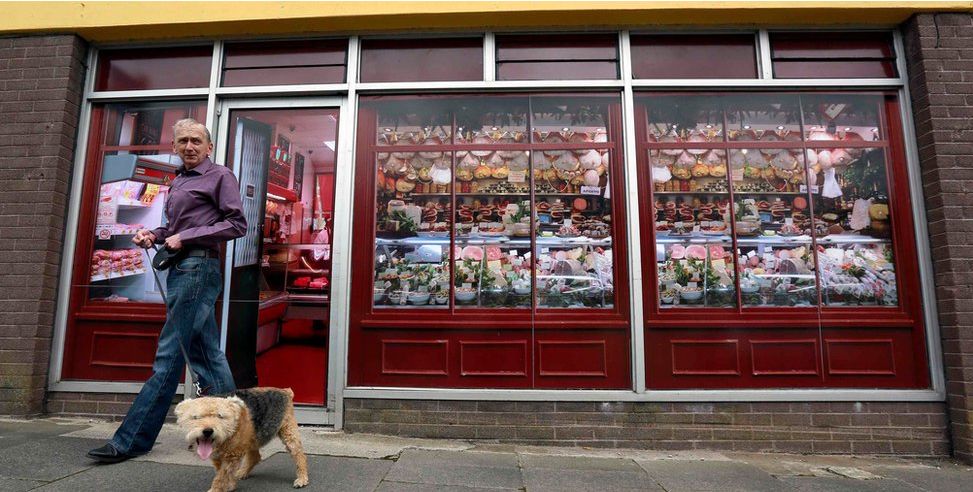

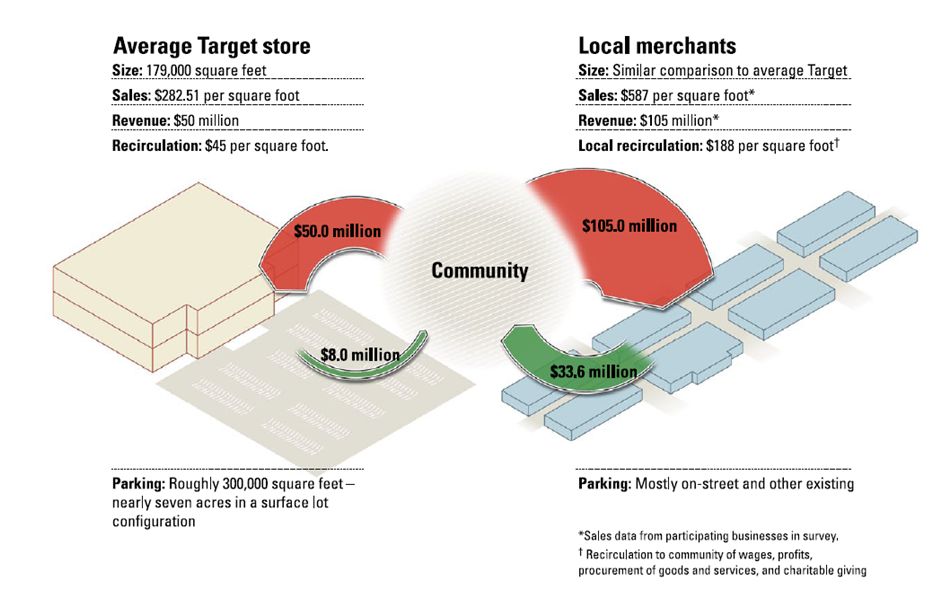


 Learning from Dogs