Category: Dogs

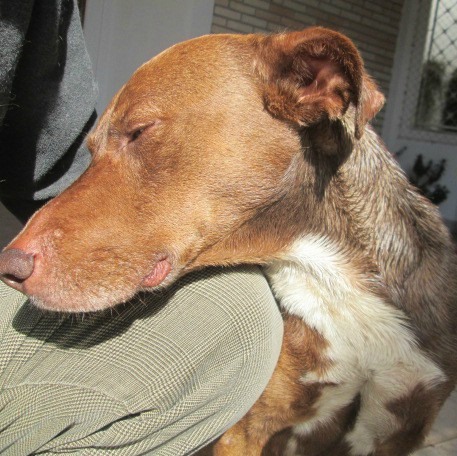
Settling in to a new home

Anyone who emails me this is impossible to resist!

Hi,
I work on behalf of petsbyplane.com, and I recently noticed your blog while I was looking around for a few resources on pets and taking pets by plane!

I know sometimes it’s hard to create new content all the time and sometimes you probably find yourself needing blog content at learningfromdogs.com

I’m looking for high-quality sites like yours that I can contribute quality articles to in order to continue to build my profile, win a Pulitzer Prize and eventually take over the Universe.

Well another person trying to take over the Universe seems to fit the pattern of these present times so what the hell!

ooOOoo

Seven Techniques to Create a Safe New Home for Your Dog

by John Stuart.

Whether you are moving houses and you have to transport your dog or you are bringing a new dog into your house, you have to be prepared. Dogs can easily be stressed out by changes. They can become anxious, which will impact their behavior and even their eating habits. By doing your research beforehand and knowing how to handle various situations, you can be fully prepared on moving day and you can ensure your dog will enjoy his new home from the very first day.

1. Think about Transportation
If you’re bringing a dog home from a shelter, you will need to pick him up with a car and a dog crate. It’s strongly recommended to put your dog in a crate while you are driving since you don’t know yet how it will react to so many new things and environments. This way, you will be able to focus on driving and getting to your destination safely.

If, on the other hand, you are moving houses with your pet, you have to decide if you want to use a professional pet moving company or do it all by yourself. Moving to a different state or country will imply travelling by car or plane. Depending on the situation, you have to get informed about vaccines, plane tickets and necessary documents.

2. Keep Your Dog away from the Commotion on Moving Day
To keep your dog stress-free, consider taking him to a friend’s house while you pack up your last things or move out furniture. By keeping him away from the commotion, you are shielding him from unnecessary stress. Make sure not to pack all of your dog’s favorite toys. Keep a few around at all times as these will comfort and soothe your dog during anxious hours.

3. Make Sure the New Home Is Ready to Receive Your Dog
Moving with your pet is stressful. You have to take care of dozens of things at the same time. An important thing you shouldn’t forget to do is to check the new house is prepared for your dog. If you are renting, make sure the landlord accepts pets. You will probably have to make a deposit and even pay monthly rent for your dog. If the house has a backyard, ensure there are no gaps in the fence or other hazardous plants or objects. Inspect the rooms as well and eliminate dangerous things such as exposed wires, shabby furniture, old cans of paint or cleaning products.

4. Keep a Schedule
Dogs thrive on routine, so keep that in mind even when moving houses. You might not be able to go back to your schedule on the first day, but try to get back on track as soon as possible. Feed your dog at the same hours and take him for walks as you used to before.

5. Take it Easy
New surroundings can be overwhelming for your dog. There are new places, smells, sounds and people to get used to. He might be anxious at first, and even refuse to eat, but he will easily adjust to the new settings in his own time. The best thing you can do through this entire experience is to be very patient and talk encouragingly to him. If you want to start training him, start on day one. Be generous with the treats and occasionally repay good behavior with a new toy.

When you’re introducing your dog to the neighbors and showing him around new places, always keep him on a leash. He might be too excited to contain his happiness and you never know how he will react.

6. Find a Veterinarian Before Moving
You should ask your veterinarian for recommendations before moving. Get in touch with your new vet prior to the move and make sure they are fully equipped to take care of your pet. It’s essential to find a trustworthy vet before moving so you can have the peace of mind that your dog will be in good hands no matter what happens.

7. Give Your Dog a Lot of Attention and Love
Even if moving occupies your whole time, you should always make time to play with your dog and show him that he is loved. This will help him cope better with the situation and will help calm him down. If you would like to train your dog but don’t know how, reach out to a professional trainer. Give your dog the attention he needs and he will have a smoother transition and adjust to the new environment in no time.

ooOOoo

So what part of the Universe do you intend to start taking over first, John?

A new home for Max!

Can you help John Zande find a loving home for this recent rescue?

I can’t recall when John Zande and I first made contact but it was a while ago. John lives in Brazil and is the author of the book The Owner Of All Infernal Names. (Read by me and much recommended.)

John also writes from time to time on his blogsite: The Superstitious Naked Ape. Again, much recommended by me.

Anyway, I awoke yesterday morning to find an email from John. This is what John had written:

Morning Paul, hope everything is fine up there. I have a question. We rescued a dog the other day (part pit bull), lovely fellow, but needs a lot of nursing to get him back to health. Vet thinks he’s around 2 years old. I’d say closer to 1.5. We have him here, in the front of the house (keeping our animals inside and out the back), but he’s a barker. Not aggressive, but seems to enjoy “responding” to other dogs in the street barking… of which there are too many. Do you have any tricks for teaching a dog not to bark? I’ve tried putting him on a leash back on the house (to keep him from the front gate) as a sort of conditioning, but that hasn’t seemed to of worked. I bought a muzzle and put that on when he’s barking, but that hasn’t worked either. Any ideas?

Obviously I looked across at Jean, mentioned the email from John, and read it out to here wondering what would be her advice.

John,

A very good morning in return.

I have just shared your email with Jean and she offered the following.

Namely, that he is most likely barking for attention. If you have the time then stay with him and each time he barks say “No!” firmly and when he stops give him a treat as a reward.

Jean acknowledges that this a difficult one but let’s take it one step at a time. Let us know what you do.

Want me to make it a post on the blog? Do you have a photo of him?

Best of luck!

Paul

John is full in terms of taking on rescues just now and is looking for a caring home for this lovely-looking boy; his name is Max by the way.

Here are some photographs of Max.

oooo

oooo

oooo

What a kind, loving face!

These are some photos from last Thurs, when we got him. He’s put on some weight since. He was covered in oil, and his blood test has come back: low platelets, and ticks disease. Yeah, I’ve been out with him heaps, sitting with him and spending time. He knows its wrong, but seems to react to everything and every noise. I introduced the girl dogs to him this morning, and he was great. No problem. No aggression. Didn’t stop him barking, though 🙂 Our street has some noisy dogs (bad owners), so I guess he’s having trouble responding.
He is lovely. Would love to keep him, but we’re full, and can’t afford another. Had to get him off the street, though. He was in real trouble.
PLEASE!!! Can anyone find Max a home? If finding the money to transport Max to that new home is going to be an issue then I’m sure we can ‘pass the hat around’ to resolve that challenge.
The main thing is to find Max a home!
Finally …. my apologies to a number of you who have sent in guest posts for this place. You are not forgotten but you do understand why this plea from John had to be published today!


Picture Parade Two Hundred and Nineteen

Endless wonderful photographs of our pets!

I was going to offer more of Tanja Brandt’s photos for you today but during the week Belinda, who lives here on Hugo Road, sent me some pictures that I couldn’t wait to share with you.

oooo

oooo

oooo

oooo

oooo

oooo

oooo

Aren’t we so very lucky to have these wonderful creatures in our lives!

Healthy dogs!

15 Research Backed Health Benefits Of Having A Dog

In so many walks of life there are so many competing claims as to this or that and trying to get to the truth is so frequently hard work. No more so than understanding the essence of what to do to stay fit and healthy. Yes, I had in mind you and me when I wrote that last sentence but it applies equally as well to our beloved dogs.

So of course I welcomed this email that came to me not that long ago.

Hi Paul,

I’m Mat Coulton (the owner of Wileypup.com).

I won’t waste your time and get straight to the point, we recently released a kickarse blog post: ’15 Research Backed Health Benefits Of Having A Dog’ AND I was checking out your site and noticed you are linking to an article from wikipedia.org on the same topic in your article Pets – Learning from Dogs: https://learningfromdogs.com/tag/pets/
Our guide goes into much more detail. It’s up to date and quotes more trustable sources. It’s littered with cool custom graphics and images. It would be a great addition to your page, and add value to your readers.

Now, of course, Wileypup is a commercial business about which I have no knowledge or experience but that’s no reason not to share Mat’s article. I asked Mat to pen a few words about himself:

Mat Coulton has worked with dogs for just under a decade and is the founder of WileyPup, a doggy lover’s website that provides great tips and advice for paw parents everywhere.

Here is that article.

ooOOoo

15 Research Backed Health Benefits Of Having A Dog

Is this fur ball that follows me around like a shadow, constantly looking at me with those puppy dog eyes no matter what age they are, really that healthy for me? Routine situations like leaving them at home is an everyday mini heartbreak.
Don’t even start us on holidays where we try and think of any possible way to bring them with us and instead feel guilty as hell when they give us that aforementioned puppy eyes when we slowly close the door behind us, hearts breaking ever so slightly again.

BUT!!! We all know that’s just because we love them so much! Read on…

[Ed: You will have to go here to go through each of those benefits. Please do for the benefits are comprehensive and well researched.]

It is a popularly held belief that dogs make our lives better, especially if you ask a dog owner! We wanted to take some time to look into this concept a little deeper to see if there is scientific research to support the idea that there are actual health benefits from canine companionship.

What we found was surprising, even to us! We found 15 ways in which research has shown positive health effects from time spent with dogs!

Although much of the research on how pups effect our health has been done in clinical settings with therapy and companion dogs, there is plenty of reason to believe that dog ownership can have positive effects on our health as well (1, 2, 3).

With rising healthcare costs, the positive effects of dogs on our overall health and their role in assisting in the work of healthcare professionals continue to be avid areas of scientific study (4, 5, 6). In this article, we will be breaking down some of that research for you.

We will start by looking at the physical health benefits of dog ownership and companionship followed by a look at their contribution to better mental and emotional health outcomes. Then we will look at the special contribution dogs are making in the quality of life for a variety of special needs populations. Finally, we will look at the larger social impact of canine companions in our lives.

ooOOoo

I must say that many, many of you who have dogs in their lives will not be surprised by the findings spelled out by Mat.

Book Two!

November is book-writing month for me.

Thus, good people, I shall be distracted for much of the month because despite the fact that book number two is a non-fiction book, as was my first, I am still using National Novel Writing Month (NaNoWriMo) as my motivational tool to achieve 50,000 words before the 1st December. Ergo, November’s focus is on writing an average of 1,666 words a day, not blogging.

Last time, with my book Learning from Dogs, I did share much of what I was writing each day both in 2014 and 2015. This time I will not.

However, I would like to share the draft Introduction to this second book that I wrote yesterday.

ooOOoo

Introduction

It was a beautiful late-October evening. Not a breath of wind stirred the branches of the tall pines that soared up into the night sky around our house. Even a half-moon high in that sky out to the South didn’t diminish the mystery and magic of the stars that seemed to go on forever. It never ceased to fascinate me how wonderful it was to lose one’s mind in a dark night sky and ponder on the fact that in that instant, in that moment of my life, I was seeing the light from a star that had been travelling for hundreds or thousands of years.

Thus it was this evening around 9:30pm when I had gone outside with all our dogs for their nightly leg-stretch before bedtime. Our six most beautiful dogs: Ruby; Cleo; Sweeny; Pedy; Oliver; and Brandy. There I was utterly oblivious to the sniffing and rustling in the piles of newly fallen Autumn leaves that were everywhere because so quickly once outside the house I had looked up above my head to that night sky and become lost.

But to be returned to this very sweet present moment when ever so gently I felt Brandy’s soft shoulder touch my lower left thigh and then lean into me in what was so characteristic of him.

I lent forward and placed the side of my face alongside Brandy’s warm, furry face and became as lost as I was in that starry sky. Now, however, it was as real and tangible a loss, if one could describe it as such, as that night sky above was as unreal and mysterious. For it was me being lost in the love that Brandy was sending me, in his breathing, in his posture, in his closeness to me, in his whole demeanour and in my own deep emotional loving reply to Brandy.

Then it clicked. A philosophical click that was as bright and clear as that fabulous half-moon.

This is how I would introduce my book. The book that I had committed to write in the month of November. The book that I was going to start writing the next day but hitherto hadn’t a clue as to how I was going to set the scene.

For my next book was an exploration into the relationships that dogs and humans form with each other.

Brandy’s story since he had been part of my life, and the life of my sweet, dear Jean, was a story of just how incredible, glorious and special the love between a human and a dog can be. How the weeks and months since that fateful day on the 9th April, 2016 when we first met Brandy had given me the inspiration to go as far as I could in describing and understanding what having a dog in one’s life truly meant.
Welcome to The Dog And I.

ooOOoo

So hope all you good people will understand if my blogging activity is varied and replies to responses likewise a bit ‘up and down’. It is likely I will be re-posting quite frequently items that have previously been shown on Learning from Dogs.

Beware of antifreeze

A very timely reminder!

The other day we went to buy more hay and feed from our local supplier The Red Barn on Upper River Road in Grants Pass.

Tyler, the owner, was distraught having just returned from urgently running his dog in to see Dr. Russ at local Lincoln Road Vet Clinic. The reason being that his dog had eaten some rat poison that he had put out on one of the upper floors of the barn.

Later I was discussing this with our good friend, Jim Goodbrod, also a Doctor of Veterinary Medicine (DVM), and Jim said that so long as the dog is caught quickly and taken to a vet it is unlikely that it would leave the dog with any permanent harm.

However, Jim then went on to say that especially at this time of the year the thing that vets see far too often is dogs who have drunk antifreeze that car owners put into their radiators ahead of the winter season.

Jim stressed that dogs very rarely are unharmed after having contact with antifreeze. Even a teaspoonful was sufficient to kill a cat and cause severe kidney damage in dogs!

So it was essential to spread the word.

No better done than by offering you this video. Watch it! Especially through to the end where Dr. Barker offers clear advice as to what to do if you suspect antifreeze poisoning of your dog or cat.

Published on Nov 23, 2014

If this prevents even a single dog or cat from being poisoned by antifreeze then that’s a win!
So spread the word!

Picture Parade Two Hundred and Eighteen

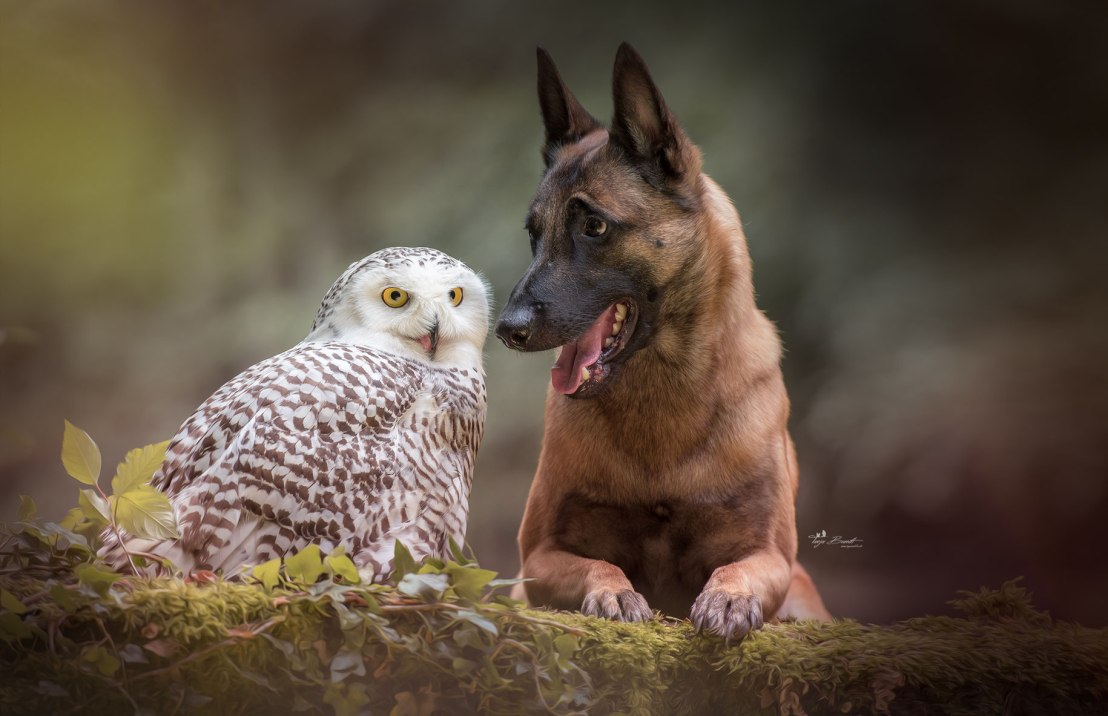
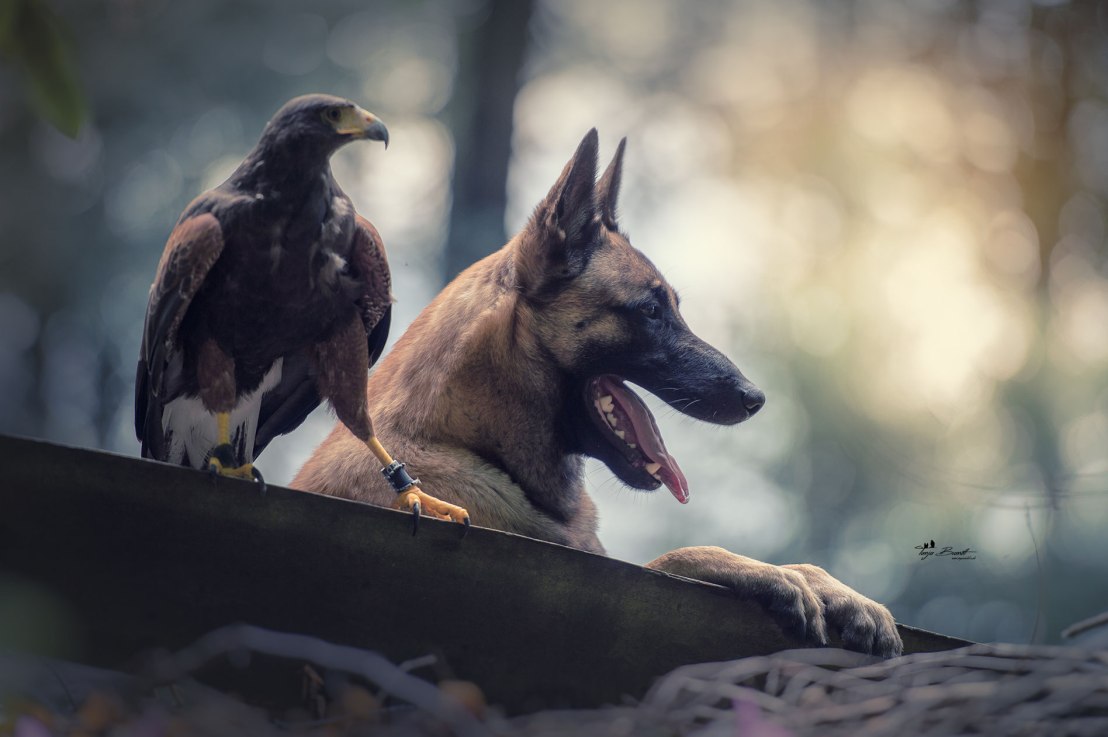
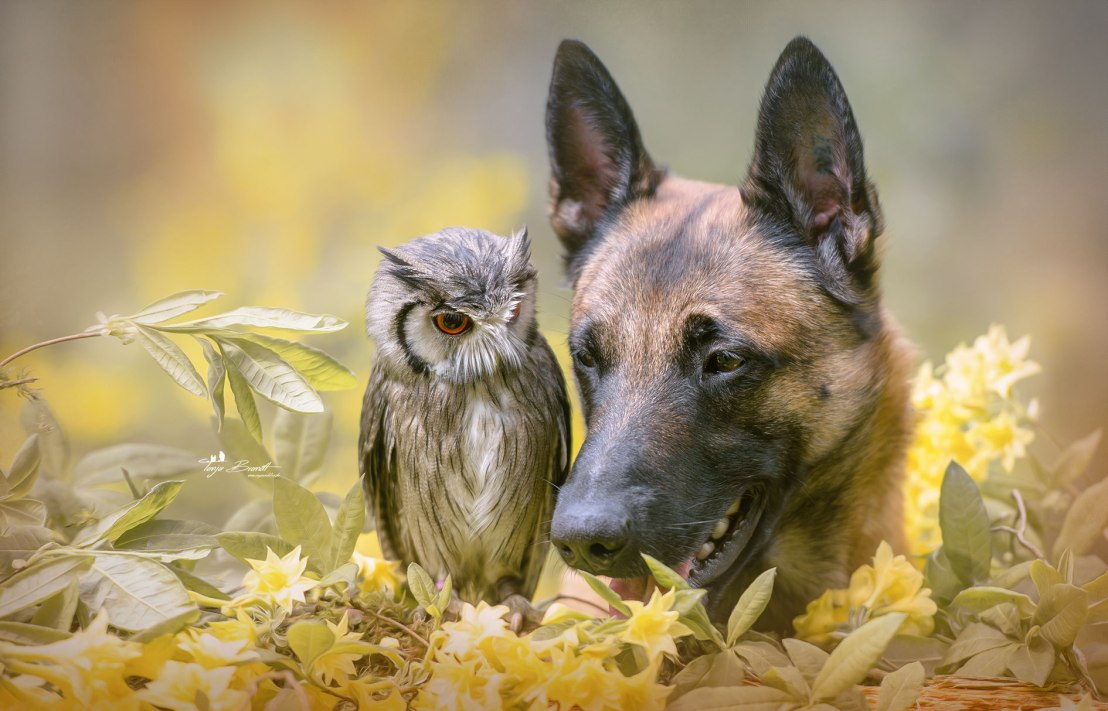
Another Sunday, another Picture Parade, another Tanja Brandt collection.

Moving on to Tanja’s photographs from her Ingo and Friends 3 collection.

oooo

oooo

oooo

oooo

oooo

oooo

Another seven of these most incredible photographs in a week’s time.

You all take care out there and give your dogs a big squeeze from Jeannie and me.

Dream on my beautiful dog

Science shows that animals, including dogs, do dream!

I wanted to republish a recent and serious article written by George Monbiot but couldn’t bear to push back against the wonderful video of yesterday. Those loving ripples are still spreading across my consciousness and, I’m sure, that’s the same for you.

Consciousness, sleep, and dreaming are fascinating states of the mind. Previously thought exclusively the states of human minds. But not so!

ooOOoo

Do Animals Dream?

By: Care2 Causes Editors October 22, 2017

About Care2 Follow Care2 at @care2

Written by Sy Montgomery, coauthor of Tamed and Untamed: Close Encounters of the Animal Kind

The electric eel exhibit at the New England Aquarium has a feature that makes it a favorite. Whenever the eel is hunting or stunning prey, the charge powers a voltmeter above his tank. It lights up when the eel is using his electricity, and allows you to see the invisible—like magic.

One day I saw another magical thing happen in the tank. Thanks to the voltmeter, I was able to watch the eel dream.

It happened when I was standing in front of the exhibit with Scott Dowd, the lead aquarist for the freshwater gallery, watching the eel resting motionless at the bottom of the tank. “I think he’s asleep,” I said to my companion.

“Yes, that eel is catching some serious z’s,” he agreed.

Being hard-core fish enthusiasts, we continued to watch transfixed while the electric eel slept. And that’s when it happened: A big flash shot across the voltmeter display—and another and another.

Electric eels hunt while swimming forward, wagging their heads to and fro, sending out electric signals that bounce back to them, sort of like a dolphin’s echolocation. But he was still motionless. So what was the flash for?

“I thought the eel was asleep!” I said to Dowd.

“He is asleep,” he replied.

We realized at once what we were almost surely witnessing. The electric eel was dreaming.

“It would appear that not only do men dream,” Aristotle wrote in History of Animals, “but horses also, and dogs, and oxen; aye, and sheep and goats. . . .”

It was obvious: Like most of us, Aristotle had watched sleeping dogs twitch their ears, paddle their paws, and bark in their sleep. Surely other animals dreamed as well.

But since Aristotle’s day, more “modern” thinkers denied that animals could dream. Complex and mysterious, dreams were considered the exclusive province of so-called higher minds.

As brain research advanced, however, researchers were forced to concede that Aristotle was right. Animals do dream.

And now we are even able to glimpse what they dream about.

Since the 1960s scientists have understood that our dreams happen during the rapid eye movement (REM) phase of the sleep cycle. During this time our muscles are normally paralyzed by the pons of the brain stem, so that we don’t act out our dreams. In 1965 researchers removed the pons from the brain stems of cats.* They discovered the cats would get up and walk around, move the head as if to follow prey, and pounce as if on invisible mice—all
while asleep.

By 2007 we would get an even more vivid picture of animals’ dreams. Massachusetts Institute of Technology scientists Matthew Wilson and graduate student Kenway Louie recorded the activity of rats’ brains while the animals were running a maze. Neurons fire in distinct patterns while a rat in a maze performs particular tasks. The researchers repeatedly saw the exact same patterns reproduced while the rats slept—and they saw this so clearly they could tell what point in the maze the rat was dreaming about and whether an individual rat was running or walking in his dreams.

The rats’ dreams arose from the hippocampus, the same area in the brain that seems to drive humans’ dreams. It’s an area known to record and store memories, and that supports the notion that one important function of dreams is to help us remember what we have learned. Of course, it’s important to a lab rat to remember the right way to run a maze.

So if rats dream of running mazes, what do birds dream about? Singing.

University of Chicago professor Daniel Margoliash conducted experiments on zebra finches. Like most birds, zebra finches aren’t born knowing their songs; they learn them, and young birds spend much of their days learning and rehearsing the song of their species. While awake, neurons in the forebrain known as the robustus archistrialis fire when the bird sings particular notes. The researcher was able to determine the individual notes based on the firing pattern of the neurons. While the birds were asleep, their neurons fired in the same order—as if they were singing in their dreams.

Much less work has been done on fish than on mammals and birds. No one has found REM sleep in fish—yet. But that does not mean they don’t dream. Interestingly, no one has discovered REM sleep in whales, either. But whales almost surely dream. They are long-lived, social animals with very big brains much like our own, and for whom long-term memory consolidation is crucial.

And if you were looking for rapid eye movement in sleeping owls, you’d never see it—because owls’ eyes are fixed in their sockets. That’s why they need to turn their heads around, Exorcist-style. Yet owls’ brain waves show they dream, too.

Fish do sleep, however—that much is well known. It’s been carefully documented that if zebra fish are deprived of sleep (because pesky researchers keep waking them up), they have trouble swimming the next day—just as a person would have trouble concentrating after a dreamless night.

What might an electric eel dream about? The voltmeter at the New England Aquarium showed us the answer: hunting and shocking prey.

This excerpt is from Sy Montgomery and Elizabeth Marshall Thomas Tamed and Untamed: Close Encounters of the Animal Kind (Chelsea Green Publishing, October 2017) and is printed with permission from the publisher.

*Care2 stands firmly against animal testing and believes it to be a cruel and unnecessary practice for which there are viable alternatives, such as computer modeling.

ooOOoo

A young Pharaoh asleep, and dreaming?? September, 2003.

Four-legged gardening.

Another great guest post from Emily Ridgewell.

Last October 4th, just three weeks ago tomorrow, I introduced Emily Ridgewell to you. She had written a guest post for us Return to the Movies. It was well-received.

For many, the next few weeks are an important time of the year to do a spot of gardening. A time when dog-owners allow their loved ones to ‘help’, especially in the digging department. But are our gardens as safe for dogs as many of us might like to believe? Emily’s second guest post addresses that question.

ooOOoo

How to Create a Dog-Friendly Garden

by Emily Ridgewell, October 18th, 2017

Being a pet owner is not only a great pleasure but also a huge responsibility. While most of the people think that taking care of dog only included feeding and walking it three times a day, the truth is that being a good dog owner means much more than that. There are plenty of unobvious things that might pose potential threats to the health and wellbeing of dogs, and plants from home garden is a telling example of such threats.

Turns out, not all home plants are equal and your favorite flowers might be a poison for your dog if ingested. The consequences might be serious, which is why it’s important for you as a responsible dog owner to ensure your home garden is dog-friendly and learn what to do if your dog ingested a poisonous plant. The goal of this article is to help you on this matter.

Basic Rules to Follow

Before listing all home plants and flowers that might pose threat to your dog, it makes sense to say a bit about general rules of creating a dog-friendly garden. After all, it is not about the right or wrong plants only.

  • If possible, choose robust plants

Young plants or plants with especially delicate stems might not survive if your dog will run through them every now and then. That’s why you are strongly advised to plant large and robust plants like astilbe, hardy geranium, or lavender.

  • Remember to protect your garden

If you don’t want your home garden to be ruined by a happy running dog, make sure your garden has clearly defined boundaries and borders. Low-growing box hedge serves perfectly for this matter.

  • Be careful using chemicals

The importance of this point is paramount. Plenty of gardeners use non-organic slug pellets and other chemicals when taking care of a garden. If you own a dog, the only option for you is to learn how to deal with snails and slugs organically and avoid any chemicals altogether.

  • Choose gentle materials

If you want garden decorations, avoid sharp stones and kinds of materials that might become extremely hot under the sun or too slippery when wet.

Which home plants and flowers are not dog-friendly?

By now you know the most common rules you should follow when creating a dog-friendly garden. Now it is time to learn which particular plants and flowers might be dangerous for dogs and should be avoided at all cost.

All poisonous plants range from slightly toxic (those that might cause vomiting, but nothing more serious) to extremely toxic (those that might cause serious health problems, including death). The list of plants that are dangerous to dogs is long, so it makes sense to divide all plants into subcategories.

In the case with perennial flowers, you should avoid Foxglove, Mums, Lenten Rose, Bleeding Hearts, Hosta, Lily-of-the-valley, Monkshood, Yarrow, and Iris. Speaking of vines, your home garden should not have Morning Glory, English Ivy, Clematis, Bittersweets, Boston Ivy, and Wisteria. As for annuals, you’d better stay away from Lantana and Begonia. The list of poisonous shrubs includes Rose of Sharon, Hydrangea, Yew Bushes, Burning Bush, Azalea Genus, Boxwood, Daphne, and Andromeda. You should also be careful with certain trees, including American Holly, Golden Chain, Oak Trees, Yellow Bird of Paradise, and Oleander.

Armed with this information, you should not have any problems creating a beautiful and dog-friendly home garden. Just make sure to double-check all plants that you decide to plant and refer to common sense when choosing home garden decorations.

ooOOoo

 I thought this was valuable information and a very helpful article from Emily.

Then wanted to close this post by sharing with you an example of how our dogs help with the gardening around here.

But all I could find was this photograph of Cleo ‘thinking’ of doing the front lawn.

Win some: Lose some!

Picture Parade Two Hundred and Seventeen

More incredible Ingo and Friends photographs

Again, taken from here and offered to you good people with Tanja Brandt’s very kind permission.

Ingo and Friends

oooo

oooo

oooo

oooo

oooo

oooo

oooo

oooo

oooo

oooo

oooo

oooo

oooo

Oh, I do wish I spoke good German. For I would love to call Tanja and chat with her about how she generates such incredible, wonderful pictures.

Any German speakers out there!!