Both Emily’s previous guest posts were received very well by you. There was Four-legged Gardening, published here last October 24th, and Return To The Movies that came out on the 4th of that same month.
Now Emily writes about something that is never far away from us these days, irrespective of age: depression. And the strongly positive role of pets. Great guest post but first let me re-introduce you to Emily.
Emily Ridgewell is an arts professional and a pet enthusiast from sunny LA. Emily has a creative energy and an aesthetic sense of living, where everything beautiful is worth sharing. She loves her yorkie Olivia and writes original and fun articles on ways to learn and improve your pet-best friend’s life. She finds exciting new things to explore and experience! Don’t forget to connect with her on Twitter: @ridgewell_j
ooOOoo
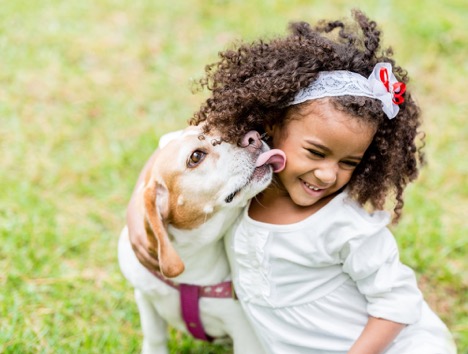
The Role of Pets in Depression and Bullying in Kids
Kids today are faced with more stress and worry than ever, and childhood depression is on the rise because of it. Recent studies have shown almost 10% of children and adolescents experience depression. One of the main sources of depression among children is being the victim of bullying. Unfortunately, bullying doesn’t discriminate and can happen to boys and girls of any ethnic, racial, religious, or socio-economic background. Lasting effects of being bullied include having low self-esteem and negative self-image, unhappiness at school and difficulty focusing, and trouble establishing healthy relationships with peers.
Interestingly enough, these side effects are found in the bullies as well as their victims. Both are more likely to experience depressive symptoms than those who have never been involved in bullying. They also are more likely to have coexisting mental health issues, such as Oppositional Defiance Disorder, Attention Deficit Disorder, and Clinical Depression and Anxiety. If left unaddressed, these feeling of depression and low self-worth can lead to chronic levels of mental health issues, isolation, and even suicidal ideation.
The first line of defense for parents is arming themselves with strategies to help their children cope with feelings of depression and address them when they first appear. First and foremost, they need to recognize the signs of depression. Then they need to put their heads together and come up with a plan to help their child combat it. Use resources such as your pediatrician, teachers, and school counselors to help develop a long term plan. In the meantime, one of the most effective and immediate ways to help them at home is by getting a pet.
Pets have several benefits that help combat depression and help your child feel happier, more whole, and well connected. First of all, they offer uncomplicated, unconditional love. They don’t say hurtful things, get angry over petty misunderstandings, or hold grudges. They simply love and express joy every time they see their owners. They also offer constant companionship. Having a pet means never having to feel alone or isolated. Additionally, the act of petting a dog or cat (or any other pet, for that matter) offers physical touch and provides comfort, creating a soothing effect and releasing feel-good endorphins in the brain. In turn, this reduces stress and anxiety and helps your child feel calmer and more emotionally balanced.
Further, having a pet means your child will have an added responsibility. Contrary to what you may originally think, a new responsibility provides a distraction and offers a positive focus instead of what’s bothering him.. Plus, he’ll feel good about himself for taking care of something that needs him. He will feel capable, and this bolsters self-esteem and causes a ripple effect in all aspects of her life. It’s a win-win situation.
If you opt for a dog, part of the responsibilities will be walking it. This earns another point in the fight against depression for a couple of reasons. It will make your child be physically active, a well-known tool for negating depressive symptoms. It also is an excellent way to increase social interaction. People are always wanting to touch a puppy, and this leads to a natural conversation when they ask permission. Even if your child is anxious about talking to new people, dogs and pets are automatic ice breakers. Talking about their pet can easily guide the conversation with very little pressure on your child to generate small talk. If they are engaging in conversation, they are less likely to feel isolated and will benefit mentally from the interaction.
Of course, pet ownership isn’t something you should jump into lightly. Be sure to choose the right pet for your child and teach him the right way to handle and care for it. With care and supervision, your child and her pet will become fast friends in no time. While there is no quick fix for depression, owning a pet has multiple benefits which will show their impact quickly. Having an unconditional friend to love can work wonders for building confidence and self-esteem and combatting the negative effects of bullying and depression.
ooOOoo
Emily is spot on. Pets, especially dogs, are the epitome of loving us humans unconditionally and that connection is precious beyond words. Being able to hug or cuddle a dog, frequently as an ad-hoc impulse, is about as comforting a place that us humans, well certainly this human, can get.
Sitting in front of the television of an evening and having a cat snuggle up next to one and start purring is a very close second-best!
Getting to the truth of what is or is not good for our dogs.
As many will understand so very often I am acting more as a messenger than an authoritative source in this place. It is very difficult for me, almost impossible indeed, for me to verify the validity of what is posted here.
On January 11th, I published a guest post from Kathreen Miller. Her article was called Is Organic Food Really Good For Your Dog To Eat?
Yesterday, local good friend and neighbour, Jim Goodbrod, sent me an email pointing out a number of weaknesses in Kathreen’s article and giving me permission to republish what he wrote as a post on Learning from Dogs.
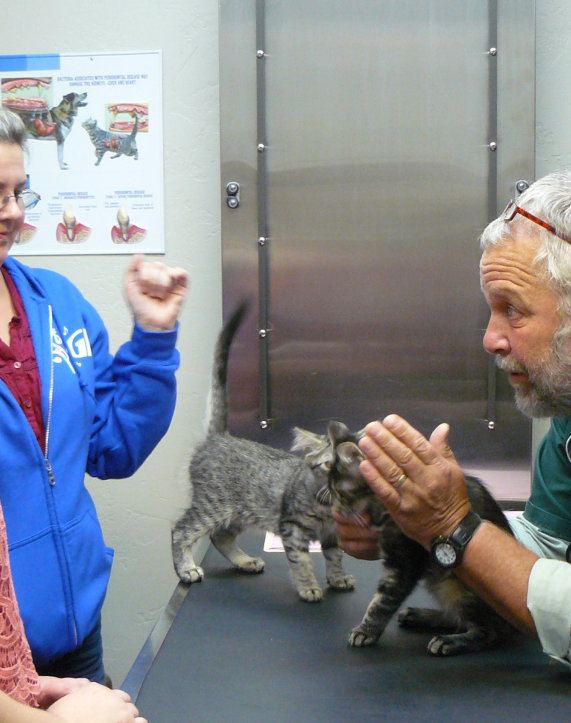
Jim is an experienced Doctor of Veterinary Medicine (DVM) and has frequently advised us, both professionally and informally, about our own dogs and cats. We trust him fully. Jim attends a couple of local vet clinics including Lincoln Road Veterinary Clinic in Grants Pass to where we take our pets when required.
Dr. Jim seeing a patient at Lincoln Road Vet.
Here is Jim’s update published with his kind permission and unchanged by me apart from some minor formatting amendments including italicising some phrases.
ooOOoo
Hey Paul …
Regarding your post of 1-11-18, a guest post by Kathreen Miller concerning canine diet, I feel the need (justified or not) to clarify a few points. She seems to be a big proponent of “organic diets” and lest your readers be misled, I think we need to define what is meant by “organic”.
The legal definition of “organic” is codified by the USDA National Organic Program (NOP) in 7 CFR 205. Pet foods and pet treats must comply with these regulations or they may not legally use the word “organic” on the label. If you read these regulations, you will find that “organic” refers only to the handling and processing of ingredients and products.
These regulations cover: ingredient sourcing, ingredient handling, manufacturing, and labeling & certification of products wanting to use the word “organic” in their labeling.
However, these rules are not considered by NOP as a means to ensure safer, healthier, or more nutritious foods. In fact, there is no regulatory distinction in the tolerable levels of pesticides, drugs, or other residues allowed in organic vs conventional products (even though lower residues may in fact be a result).
Rather, the “organic” label is viewed as a confirmation of the organic production process, and the purchaser is left to his or her own determination as to whether the costs merit the perceived benefits. The bottom line is that “organic” refers to the processing of a product, and makes no guarantees as to the quality or digestibility of ingredients, safety, nutritional value or health benefits of the product.
A savvy pet owner, in order to ensure her dog’s optimal nutritional health, would be better advised to follow guidelines outlined by WSAVA or AAHA (or other reputable source) rather than to reflexively reach for the dog food that says “organic” on the label. The “organic” label does not necessarily mean a diet is good or bad, but it has nothing to do with the nutritional adequacy of the diet and hence your dog’s health.
Another point: Kathreen seems to buy into the popular myth that plant-based ingredients (like corn) are poorly digested fillers that provide little nutritional value and can cause allergies. Corn provides a good source of carbohydrates, essential amino acids, protein, and essential fatty acids in the diets of dogs and cats. It is highly digestible and is not a common cause of allergies. It is actually a very good nutrient as an ingredient in pet food.
My last point is regarding the product “Pet Bounce” that Kathreen endorses as a treatment for arthritic pain in dogs. This product is labelled as homeopathic and as such is nothing more than a placebo.
It has been proven over and over and over again that homeopathic remedies are nothing but water and perform no better than placebos in numerous clinical trials. Reading the list of ingredients, one can see that it contains:
1) Belladonna 6X
2)Caulphyllum 6C
3) Colchicum autumnale 200C
4) Apis mellifica 30C
5) Rhus toxicodendron 200C
6) Ruta graveolens 6X.
Anyone familiar with homeopathic nomenclature knows that, for example, the Apis mellifica 30C designation means that this particular herb is diluted in water 1 to or (that’s 1 followed by 60 zeroes!).
To put it into perspective, that’s equivalent to 1 molecule of this substance in a sphere of water 90 million miles in diameter (approximately the distance of the earth to the sun). That’s a 30C dilution.
At a 200C dilution, the treating substance is diluted more than the total number of atoms in the known universe!
Regardless of any medicinal properties these herbs may have, they are so fantastically diluted that there is not one molecule present in the final solution.
I defy any reasonable person to tell me that this so-called remedy is effective to treat anything and consists of anything more than a water placebo.
My problem with this kind of snake oil is that well-meaning pet owners waste their money (~$50.00 per bottle!) on this useless product, believing all the hype and thinking that they are improving the quality of their dog’s life, meanwhile squandering the opportunity to actually help their dog with an effective and evidence-based treatment.
Kathreen seems to be a nice and well-intentioned woman, but I don’t know what qualifies her as a “pet health expert”, other than her own opinion. According to her profile (from your blog) she lives in Chicago with her daughter and dog “Buddy” and listens to music, watches TV, and travels. That’s it? Nothing more??
Sometime over the next few days I will write a post about an amazing connection that Jean made, via Richard in England, with Colin Potter. He is the founder of the site Fight Parkinson’s.
It is mentioned as an introduction to today’s post because Colin stresses the critical importance of the right diet for us humans.
But now I want to go straight to a guest post sent to me by Kathreen Miller on the topic of diet for our dogs.
ooOOoo
Is Organic Food Really Good For Your Dog To Eat?
by Kathreen Miller
If you are searching for information related to organic food for dogs, then you’re probably a firm believer in animal rights and how food affects their health. . Maybe you are also considering how your dog will follow a vegan diet. Or how an organic diet can help improve your pet’s health?
You must understand that dogs require protein-rich foods. Therefore, you should look for balanced and high-quality food so that your pet’s health is not deteriorated. A low intake of protein in your pet could result in anemia which again causes joint pain in dogs.
Pet Bounce is one of the best dog pain medications to allefviate the joint pain in pet dogs.
Therefore, read this article to get information about organic food for a dog and how to make it a part of their regular diet. You might have some questions in your mind. You might think how can you make your dog eat organic food? Is it good for dogs? Before you start such kind of diet for your pet you need to do some research.
Consult a veterinary doctor and speak to him/her about the deficiency and advantage of an organic diet. You need to understand that the stomach of dogs is fragile. An instant change in the diet of a dog makes them suffer from diarrhea or bad breath. The change of diet in your dog should be slow.
If you are starting with organic food for your pet, then initially you need to give them organic food once a week. This will make your dog habitual and accustomed to organic food.
During this time period, you need to ensure that your dog gets a mix of normal as well as organic diet. Then after a considerable period of time, slowly increase the organic food proportion, and finally making it one hundred percent.
Besides, if you are considering about giving your dog the homemade diet then you must know which vegetables and fruits aren’t consumed by your dog. This is of utmost importance as a few vegetables can be toxic to your dog’s digestion. Visit a professional canine nutritionist to receive expert guidance. Also take your dog for health checkups.
This is to make sure that your dog will eat their new food and does not suffer from any diseases.
Why is Organic Food Important for Your Dog?
It is correct, that organic food for dogs is created with natural methods and does not contain any type of additives, preservatives, and artificial colorants. Also, the organic food should be grown in a completely natural manner. But remember, that all organic food brands won’t be entirely free from the preservatives.
Is Organic food Good for Dog’s Health?
As long as you obey the advice of your veterinary doctor, organic food is very good for the health of your dog. If you satisfy the requirements of your dogs, and their health is good, then we can have the idea that organic diet is good for the dogs. There are many types of organic foods. But what makes them bad or good is the range to which they satisfy the animal requirements for the nutrients.
Also, ensure that dogs must get a regular and high intake of protein and they never eat the excess quantity of corn. Since for dogs, corns are not easy to digest.
ooOOoo
I am delighted to add a little about Kathreen’s background.
Kathreen Miller is a pet health expert. She lives in Chicago with her daughter and a dog named “Buddy”. She regularly contributes her write ups to pet health related websites and blogs. In her Free time, she loves listening to music, watching TV and traveling.
On her Pet Bounce site there is an informative article about joint pain in dogs.
Thanks Kathreen for composing this guest post.
I have taken the liberty of grabbing a copy of one of the photos from the Pet Bounce site.
We must do all we can to keep our dogs fit and healthy for as many years as possible!
As seen through the eyes of an Australian shepherd dog.
Slowly perking up each day, so thought it would be good to share this short, delightful video with you all. As presented on the Mother Nature Network site.
When you think about dog sleds, you may think about a team of huskies pulling a sled across a snowy and icy landscape.
Perhaps you should change that image to an Australian shepherd confidently riding a sled down a hill.
Secret, a 3-year-old Aussie shepherd and the canine companion to 17-year-old human Mary, took advantage of there finally being enough snow to get some sledding in. And by “some” we mean around 50 shots down the hill, according to Mary’s Instagram caption. Secret drags her sled all the way to the top of the hill, hops on and gets her own snowy version of zoomies on as she slides down the hill. Once at the bottom, it’s right back up again, sled in mouth.
December 21, 2017 — Primal Pet Foods of Fairfield, California, is voluntarily recalling specific lots of 5 of its freeze-dried poultry products because their grind size exceeds the ideal size of ground bone to be fed to dogs and cats.
What’s Recalled?
Affected products include Primal Canine and Feline Freeze-Dried Poultry Formulas.
This is a Primal production specification issue – it poses absolutely no risk to human health.
We have very precise requirements as to how our foods are to be produced so they preform optimally.
We require our meat and bones be ground down to a coarseness of 1/8″
Over a single production run, the wrong grind plate was used and the product was ground at 1/4″ coarseness, which is a 1/8″ variance to our specifications.
We became aware that food produced over a single production run did not meet our precise specifications and may not preform optimally, particularly for small dogs and cats.
We are not comfortable having product in the market that doesn’t meet our precise specifications and deliver optimal experience to the consumer and pet.
This decision is entirely voluntary and the FDA is not involved at all.
What to Do?
The company asks that affected products be returned to the Primal retailer from where they were originally purchased for full credit.
Those unable to return the product directly to the retailer are invited to contact Primal Customer Service at 866-566-4652 extension 2 or by email at support@primalpetfoods.com
U.S. citizens can report complaints about FDA-regulated pet food products by calling the consumer complaint coordinator in your area.
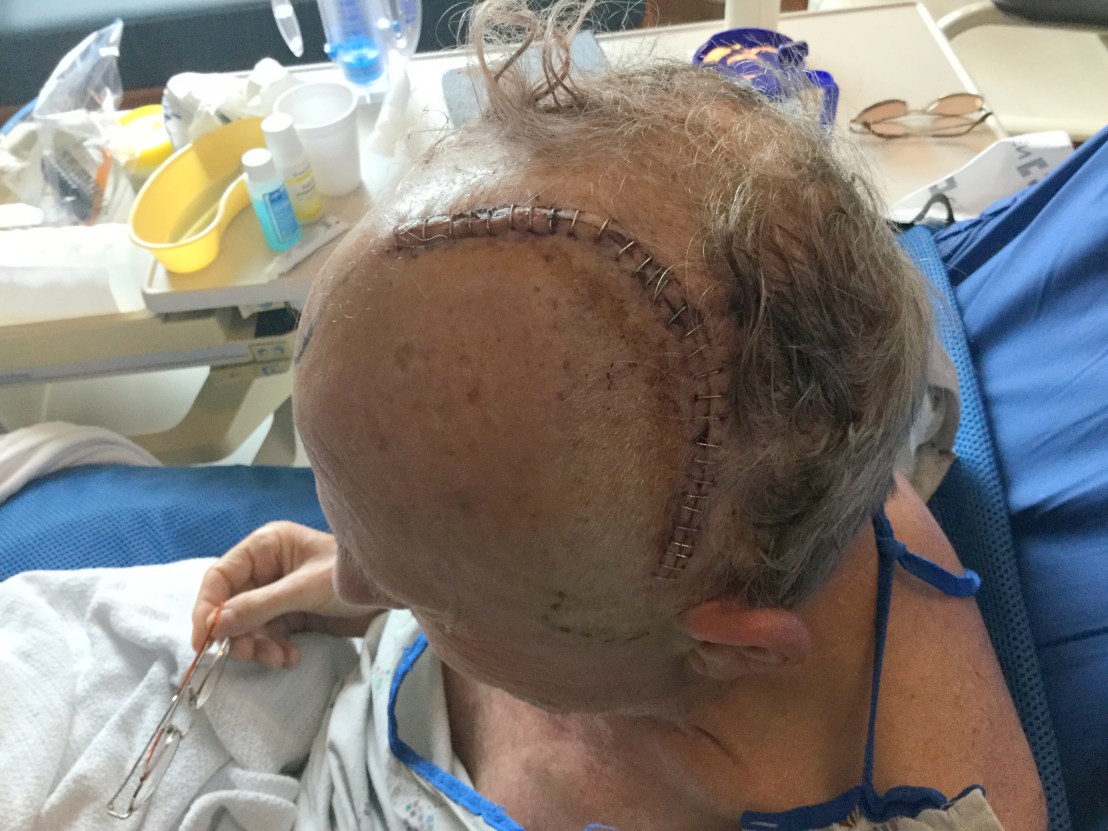
As many of you read, last Friday I was discharged from the PeaceHealth Sacred Medical Center in Eugene, Oregon and returned home around 4pm.
It was quite a week as these photos demonstrate. (The background to the event is here and here.)
How I looked still in ICU on Boxing Day. Photo taken by neighbour Dordie who came up with Jeannie to visit me!General view of a very happy chap!Photo taken on last Wednesday after I had been transferred to the Department of Neurology.
So!!
It is important that I take it very gently and that means, inevitably, that my blogging is going to be very ad-hoc. Possibly for a few weeks!
The next important step is returning to the hospital this coming Wednesday to have the staples removed and a further cognitive check.
But I shall be OK and thank you all for your interest and concern in my escapade!
All of the dogs, especially Brandy and Cleo, are watching over me! (Over and beyond being loved beyond measure by Jeannie!)
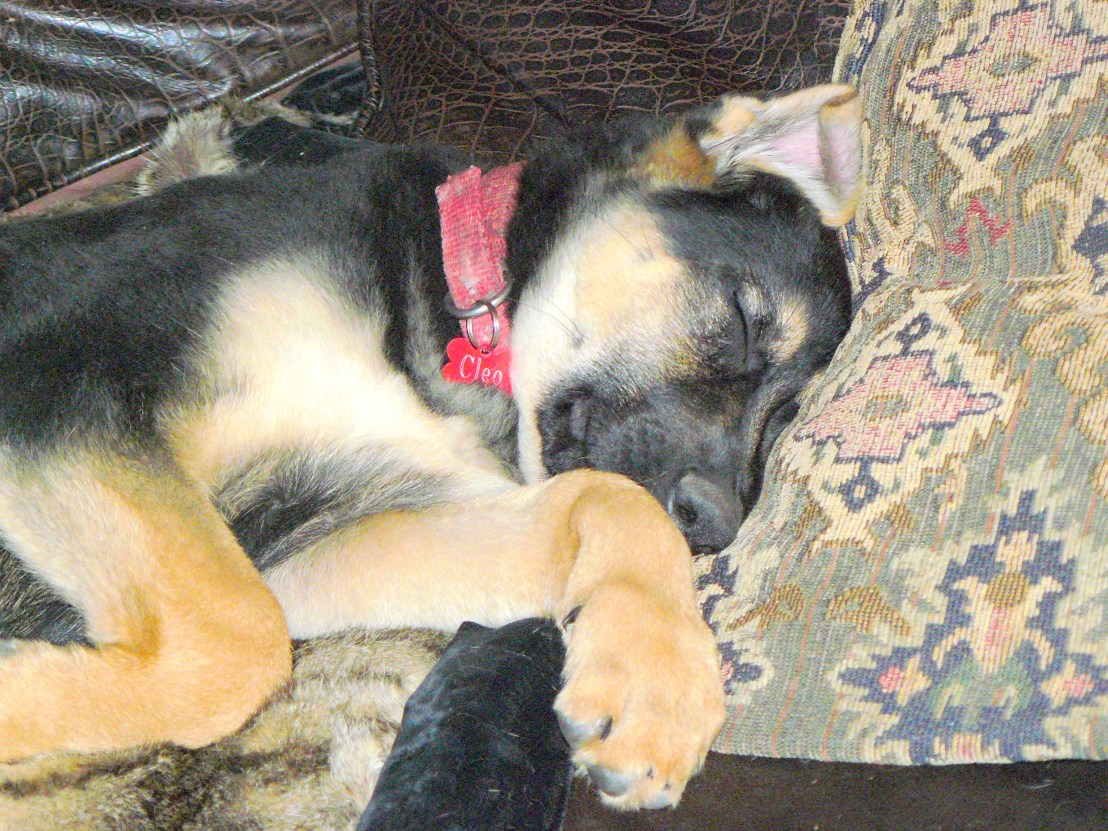
Brandy – as pure as it gets!Cleo living, and sleeping, in the present moment.
I live in the San Francisco Bay Area and we’re in the midst of rainy season. It never let up today. It’s only the second time in the life of my dogs that I didn’t get them out for a walk. I tried, but they didn’t want to go. Particularly on days like today, it’s important that I find other indoor activities to keep them stimulated and tire them out. Here are a few of my rainy day tricks:
1. Train
Behaviorist, Dr. Ian Dunbar, says that mental activity tires a dog out more than physical exercise. Gina is a high-drive dog. I often joke that the more I exercise her, the better shape she’s in and the more she exercise she needs. Add some agility training to the mix, and she tires out much faster. Did you ever notice how tired you are when you’ve taxed your brain at work all day? It’s the same for dogs. Instead of doing one long training session, best to add in a few minutes of training frequently throughout the day.
2. Teach Impulse Control
There is no better place to start teaching impulse control than indoors, where there are less distractions than outdoors. Tonight, I placed strips of sweet potato on Sanchez and Gina’s paws and had them wait for my cue to eat them. Gina is much better at “Look at me,” so that was added to the “leave it” cue. They waited, and waited, and waited… and were rewarded with a yummy sweet potato treat after I released them with “OK.”
3. Nose work
K9 Nose Work defines this sport as “the fun search and scenting activity for virtually all dogs and people. This easy to learn activity and sport builds confidence and focus in many dogs, and provides a safe way to keep dogs fit and healthy through mental and physical exercise.”
I enrolled Sanchez in classes a couple of years ago, and now we play “find” games at home. I hide pieces of liver in boxes spread throughout the living room. He searches for the piece of liver and is rewarded with more liver in the box when he finds it. He LOVES this search game.
4. Work for food and treats
Instead of just placing down a food bowl, have your dog work for her food or treats. She’ll slow down her intake of dinner and treats while using her mental abilities when you use a food puzzle. Other choices are stuffing soft food, such as a banana and almond butter, in a kong and then freezing it.
5. Tug
Tugging is not a game of war. It is a game of play and is a way to bond with your dog. It’s commonly used to increase drive and focus before agility runs. Tugging is also a great training tool during high distraction environments, an opportunity to reinforce “that’s enough” (meaning “game over, release the toy”), and it’s helped Gina tremendously with dog distraction. Tugging has been a way of teaching her that the best things in life happen in reinforcement zone with me, not with the stranger dog running by. Rain or shine, this is part of our daily routine. But, when we can’t get outside for walks, we do more tugging indoors, as it really tires her out.
6. Retrieve
Even though I have two Labrador Retrievers, Sanchez no longer retrieves. He’s 13 1/2 and he’d prefer to lay on his dog bed and have me bring him his toy. However, I want to engage him when I play a fun game of retrieve with Gina. So, I toss her ball down the stairs. She retrieves it and while she’s running up the stairs to bring me back the ball for the next round, I toss treats to Sanchez down the stairs. He uses his nose to find them. Fun for all! We generally do this nightly, no matter the weather.
ooOOoo
Lisa’s description of her Sanchez: “… he’d prefer to lay on his dog bed and have me bring him his toy.” sounds like my kind dog to me! 😉
The German shepherd is another intelligent and active breed. Though German shepherds are large, the AKC reports they have a medium energy level. And the organization characterizes the German shepherd as “a loyal family pet and a good guard dog, the ideal choice for many families.” The AKC notes with a German shepherd (and other breeds), “Training is one of the most important responsibilities you have as a dog owner. Basic obedience training will make your dog a better companion and strengthen the bond between the two of you.”
Poorly trained German shepherds can develop behaviors, such as excessive barking, digging, and food stealing. But this dog breed responds well to training. According to the German Shepherd Dog Club of America, your German shepherd needs “you to be the leader of the pack, providing structure and guidance.” Another way to bond with your dog? Regular grooming. The German shepherd’s thick coat requires weekly grooming.
12. Italian greyhound
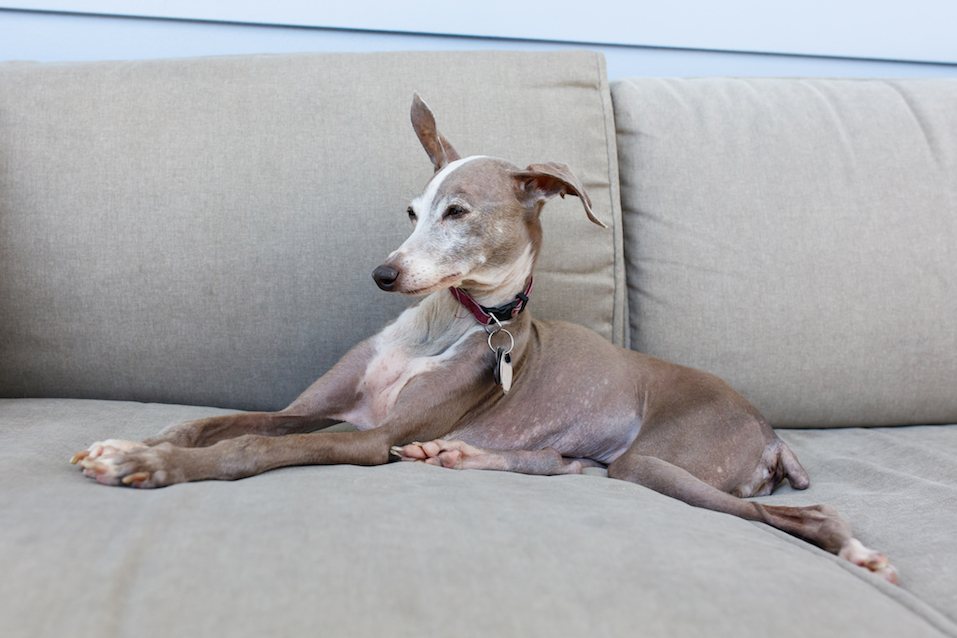
Italian greyhound | iStock.com/Rauluminate
Don’t be intimidated by the Italian greyhound’s speed or graceful looks. The AKC reports this breed is “generally easy to train and prefers to spend most of his time with his owner. They like attention and affection, and are a peaceful, gentle friend to adults and children.” If you have large dogs or active children, you’ll need to make sure your Italian greyhound doesn’t get injured by rough play. But for the most part, this dog breed will be happy to run and play — before curling up with you to be a couch potato.
Because of their small size, Italian greyhounds can live happily in an apartment just as well as in settings with more space. The breed generally stays quite healthy. And because these dogs have a short coat, they need only weekly grooming with a soft brush. In fact, the AKC characterizes them as one of the easiest dog breeds to groom. They love to cuddle and don’t want to be ignored. And in general, they’d prefer to chill in your lap or on your bed, rather than on the floor.
13. Labrador retriever
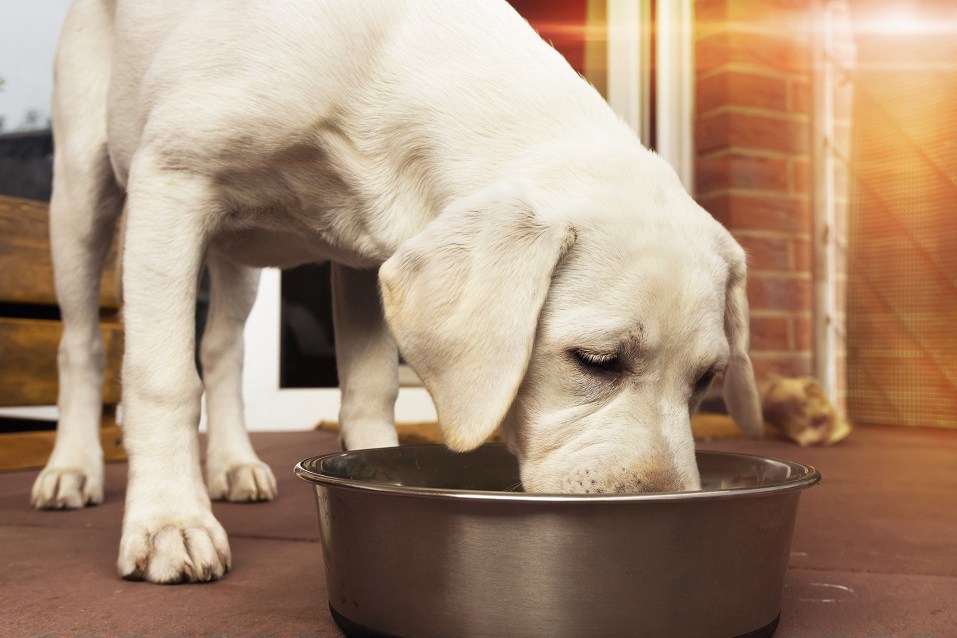
Labrador | iStock.com/manushot
America loves Labs. So it probably doesn’t surprise you to hear these adorable dogs are easy to own. Labs can learn just about anything that you throw at them. The AKC reports Labs are friendly and outgoing. They make great companions, show dogs, hunting dogs, guide dogs, and service dogs. Labs also make great family dogs because they get along easily with children and with other pets. Plus, they have a short coat that requires only occasional grooming.
So it’s no accident the Labrador retriever is the most popular dog in America. They live long and healthy lives. They have playful personalities, and they want to entertain and help you. Plus, they’re good companions for athletic people and can even train as canine athletes themselves.
However, Labrador retrievers qualify as what the AKC calls a “very active” dog breed. So don’t expect them to lounge on the couch all day. “Don’t confuse his laid-back personality for low energy,” the organization warns. “The Labrador retriever is extremely active — he’s never met a backyard he didn’t like.”
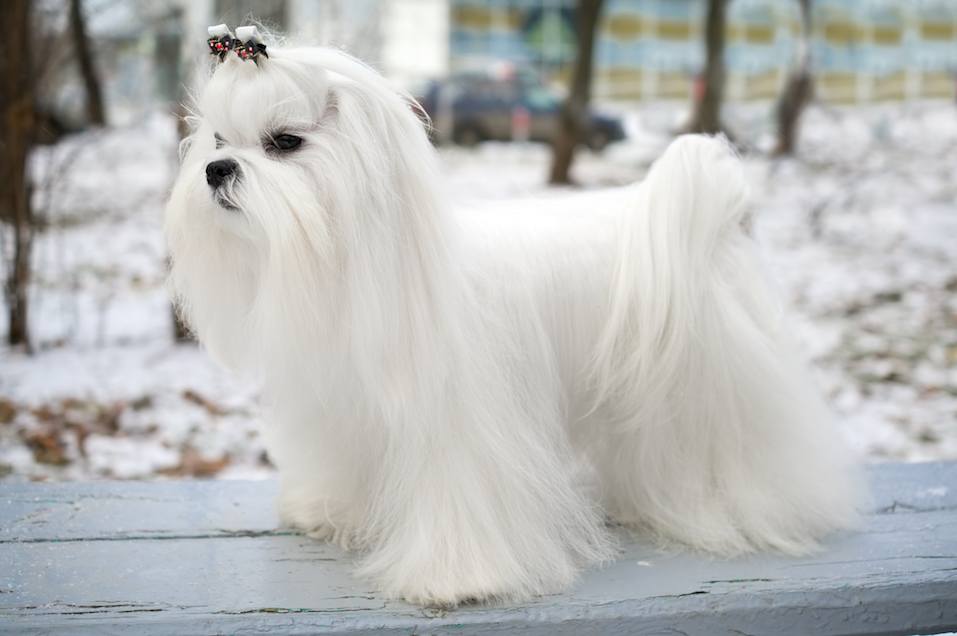
14. Maltese
Maltese | iStock.com/Laures
Another people-pleasing dog who will be easy to own and spend time with is the Maltese. According to the AKC, the Maltese is a “classic lapdog” who’s “somewhat active.” These dogs like brisk walks, playtime, and learning new tricks. However, the organization warns that Maltese are “highly intelligent and know very well how to use their charm to get their way. If given the chance, they become easily spoiled. This isn’t a problem for dog-savvy owners, but many pet owners will give in, often resulting in a pet with poor manners.”
Though they’re energetic and playful — which makes them great family dogs — many breeders don’t sell them to homes with young children. As a tiny puppy, a Maltese can be seriously injured if stepped on or dropped by a child. However, the Maltese is known as one of the few small dogs who aren’t susceptible to any major genetic ailments. So if it’s important to you that you choose a dog likely to stay in good health, the Maltese might be a good match for you.
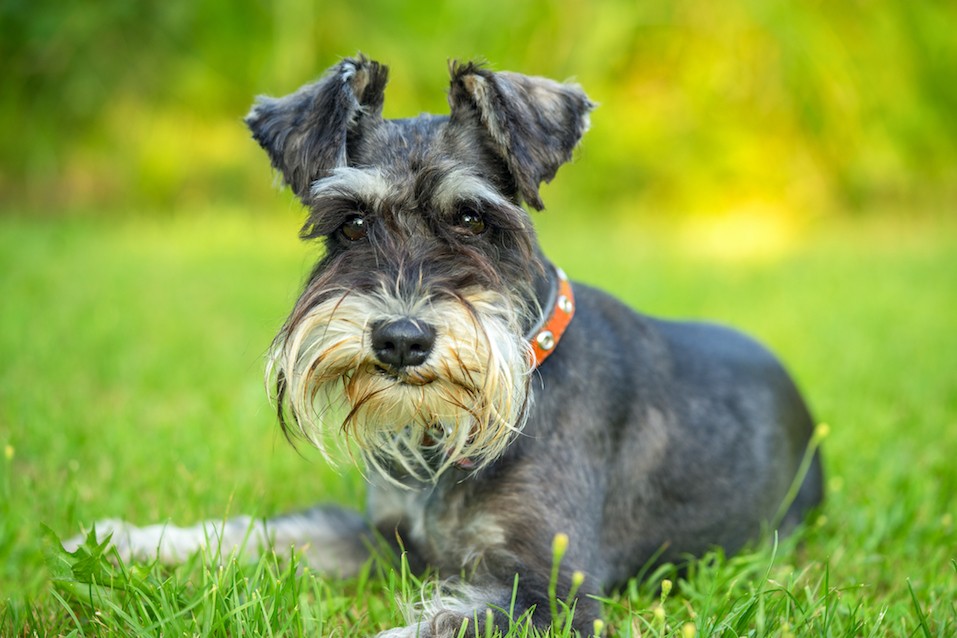
15. Miniature schnauzer
Miniature schnauzer | iStock.com/Elen11
The miniature schnauzer is a fast learner. The AKC characterizes the breed as “friendly,” “obedient,” and “smart” — three characteristics that many pet owners want in a dog. Another desirable trait? According to the AKC, the miniature schnauzer is “highly adaptable.” He can “make himself at home anywhere as long as his people are close by.” This small dog breed has a moderate energy level. And because these dogs crave human companionship, they are “obedient to commands” and can be trained for all kinds of activities.
According to the AKC, this dog breed is “small enough to adapt to apartment life but tireless enough to patrol acres of farmland.” The breed is generally healthy and long-lived. They have outgoing personalities and will stay loyal to their family. Just keep in mind this terrier likes to bark. So proper training will play an essential part in helping him to curb that behavior.
16. Papillon
A young papillon | iStock.com/Bigandt_Photography
Unlike many other small dogs, the papillon has a big appetite for exercise and activity. The AKC reports this dog breed has a medium energy level and generally needs to stay “very active.” In fact, these dogs “love to play outdoors but they can be easily entertained and exercised indoors as well.” This dog breed is very intelligent, but the AKC promises these alert and friendly dogs are “easily trained.”
Plus, Animal Planet characterizes the papillon as “one of the most obedient and responsive of the toy breeds.” Though some can be timid, they are often friendly toward strangers and other animals. And the papillon also makes a good family dog because the breed likes children. They have a medium-length coat without an undercoat, though they still require regular brushing.
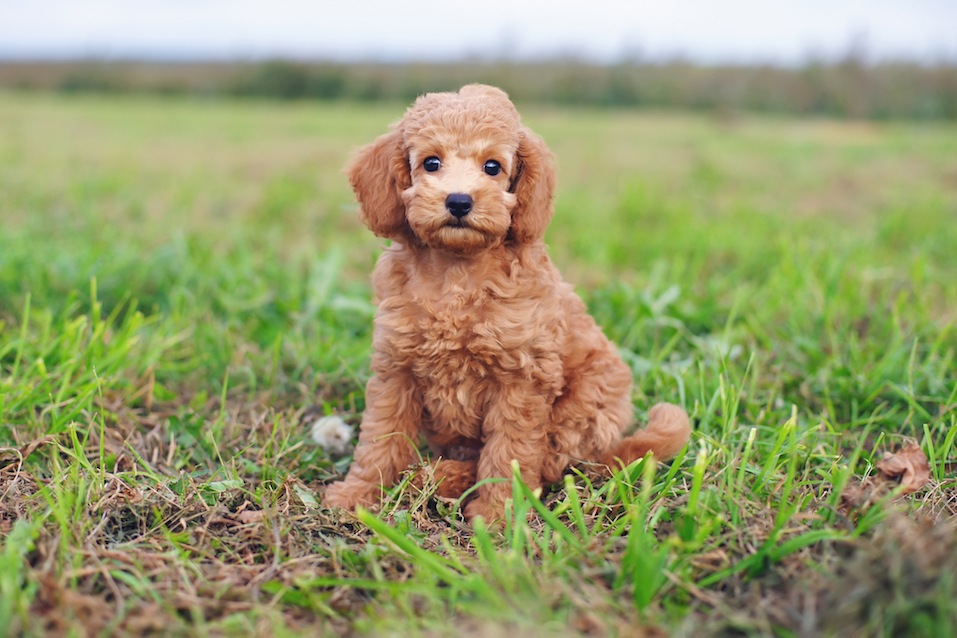
17. Poodle
Many people know the poodle is a highly intelligent dog breed. And even though intelligence doesn’t always ensure a dog responds well to training, the AKC promises that the poodle “excels in obedience training.” Although some poodles can be stubborn, proper training mitigates that trait.
The AKC notes, “There’s the old stereotype of poodles as a foofy velvet-pillow dogs looking down their long noses at us. Not true. Poodles are eager-to-please, highly trainable ‘real dogs.’ They like to work closely with their humans and can master all kinds of tricks and dog sports.”
Modern Dog Magazine reports of the standard, miniature, and toy poodle, “All poodles are lively, fun-loving, affectionate, and intelligent, and many owners say the breed has a sense of humor to rival Seinfeld’s.” The miniature poodle can be shy around strangers. But the standard is outgoing. They have a medium energy level and enjoy walking, running, and swimming. Just be aware this dog breed’s long coat, while somewhat hypoallergenic, does require regular professional grooming.
18. Pug
Like the bulldog, the pug has a grumpy face that might make you think he’s not so friendly. But don’t let looks deceive you. The AKC characterizes the pug as “even-tempered, charming, mischievous and loving.” These dogs aren’t natural athletes, but the AKC advises that “they do have strong legs and endless curiosity — exercise both.” These extroverted dogs love children and adults alike. And according to the AKC, “Pug people say their breed is the perfect house dog. Pugs are happy living in the city or country, with kids or grandparents, and as the family’s only pet or among other animals.”
This dog breed has no problem making friends with complete strangers. PetWave calls this dog breed a “shadow” because pugs “love to glue themselves to their owners’ sides and stay close to the action.”
And though some people think they’re more difficult to train than other dog breeds, that’s largely because they’re easily distracted. The pug sheds but needs minimal grooming. And you will need to monitor your dog’s diet to keep him healthy because, according to the AKC, “pugs live to eat.”
19. Rottweiler
Rottweiler puppy | iStock.com/Carmelka
The AKC also recommends the Rottweiler as one of the smartest dog breeds. This medium-sized dog also has a medium energy level, according to the AKC. But let’s just get this out of the way: A Rottweiler won’t be one of the easiest dog breeds for you if you can’t give him two solid workouts each day. But their need for daily exercise is at least somewhat offset by their minimal grooming needs.
PetWave reports though this breed has gained something of a reputation as an attack dog, “this is not their true nature.” The publication explains that for Rottweilers “to be vicious, they must be trained that way.”
Often, dogs who spend their days isolated from people are the ones who develop unpleasant traits. The AKC explains, “Obedience training and socialization are musts” for this dog breed. “Rottweilers love their people and may behave in a clownish manner toward family and friends, but they are also protective of their territory and do not welcome strangers until properly introduced.”
20. Shetland sheepdog
Sheltie | iStock.com/lgerghi
The Shetland sheepdog also has a reputation for intelligence. But that won’t work against you with a Sheltie, as it can in other dog breeds. According to the AKC, this dog loves “learning new tricks. Shelties are easy to train and are world-class competitors in obedience, agility, and herding trials.” And the AKC advises, “The Sheltie will reach his best potential [as] a companion when given training in basic manners at the very minimum.”
PetWave characterizes the Shetland sheepdog as “an all-around family dog.” They like indoor and outdoor activities. And they get along well with children, as well as with other pets. These small dogs can live in an apartment if they get daily walks and regular opportunities to run. Shelties have a dense double coat and need weekly grooming.
21. Mutt
A lovable mutt | iStock.com/suemack
Not everybody wants to buy a purebred dog from a breeder or search for one at the local shelter. And you don’t have to pick a purebred dog, even if you’re a novice dog owner just hoping for a pup who will be easy to train and care for. The AKC, of course, notes you can better predict a dog’s traits if you know his lineage. But you can often make an educated guess at which breeds are in a mutt’s genetics. And there are some very good reasons to choose a mixed-breed dog instead of a purebred.
For one, the incidence of many genetic disorders is higher in purebred dogs than in mixed-breed dogs. Plus, by staying open to adopting a mixed-breed dog instead of a pedigreed dog, you’ll be able to adopt a shelter dog who needs a home, not just a puppy who was specifically bred to be sold for top dollar. Additionally, purebred and mixed-breed dogs show no significant differences in terms of their trainability. So a mutt is just as likely to learn to be obedient and attentive as a pedigreed dog.
ooOOoo
What better way than to close this short series with a Mutt!
 Emily Ridgewell is an arts professional and a pet enthusiast from sunny LA. Emily has a creative energy and an aesthetic sense of living, where everything beautiful is worth sharing. She loves her yorkie Olivia and writes original and fun articles on ways to learn and improve your pet-best friend’s life. She finds exciting new things to explore and experience! Don’t forget to connect with her on Twitter: @ridgewell_j