Category: Dogs

Of art, and science.

The learning and healing journey continues with Hazel.

The title to today’s post came from Dr. Jim Goodbrod, DVM. When he and I were taking a walk yesterday Jim mentioned that diagnosing exactly what an animal is suffering from is as much an art as it is a science.

Jim and Janet are close friends and neighbours who live a couple of roads away. Jim also attends the Lincoln Road Vet Clinic on a part-time basis. Off his own volition he has been speaking with Dr. Codd (Russ) about the situation with Hazel and the pair of them are showing incredible devotion to getting to the bottom of what is happening.

So, like yesterday’s post, today is being offered to you in the spirit of information. Forgive me if I repeat the caution from yesterday. (This is being written at 4pm on April 19th, 2016.)

CAUTION: The following is offered by way of information reaching out to other loving dog owners. Please do not assume I have any specialist veterinarian knowledge and please do not take the following as a replacement for seeing your own vet.

Late on Sunday afternoon Hazel was becoming so weak and lethargic that Jean and I feared that she wouldn’t make it through the night. So it was wonderful to see that she was alive and still connected to the world at 6am yesterday; Monday. Nonetheless, Hazel had not eaten since Saturday afternoon and was only drinking very small amounts of water. We made the decision to ring the Clinic as soon as they opened on Monday at 8am. They recommended that Hazel be brought in to go on to an IV drip to boost her anti-fungal intake and also to receive an anti-nausea intake to help her regain an appetite. But there was the question hanging over everyone that if this was a fungal infection, as in Coccidioidomycosis, that is not present in the Oregonian soil but is found in the drier parts of the USA and Mexico then why had it been such a long time before it brought Hazel down?

Jean also had this suspicion that Hazel might be suffering from a form of ‘Tick Fever’ that is very common in Mexico.

So off we went to the Clinic again. There were discussions about the whole situation.
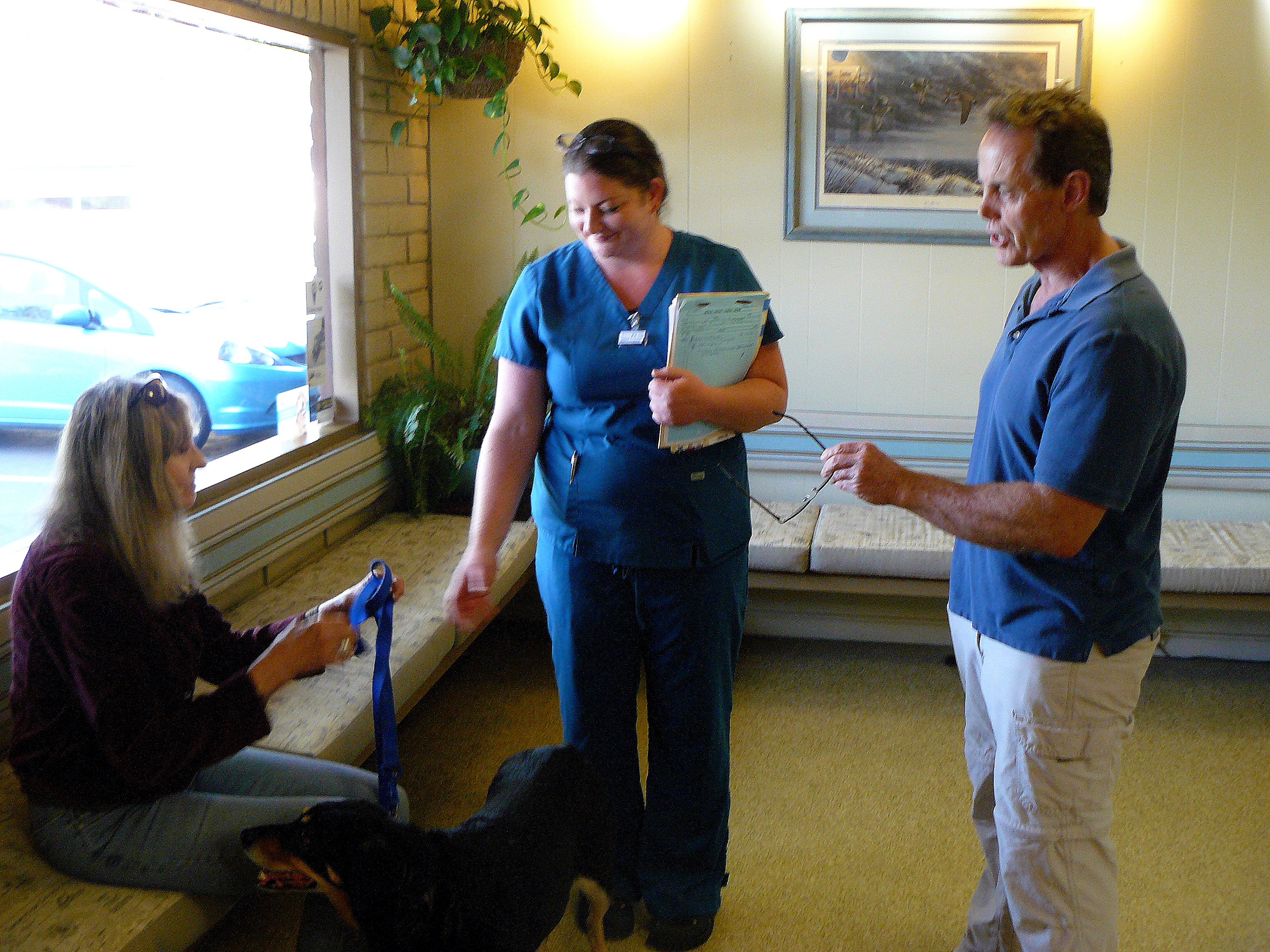
Dr. Codd (RHS) speaking with Jean at the Clinic.

Dr. Codd took a quick blood test and, bingo, it revealed that Hazel was showing that she had, or had had in the past, an Ehrlichia Infection; a tick-borne infection.

The lower of the left-hand spots is the indicator of a past or present Ehrlichia Infection.

The cure for that was a course of Doxycycline.

So now we are looking at battling two separate diseases.

The blood that was taken from Hazel last Friday, when she also had radiographs taken of her lungs, had been sent for a ‘titre’ that would confirm one way or another if her lungs were suffering from a fungal infection. Those results will be available on Wednesday or Thursday of this week.
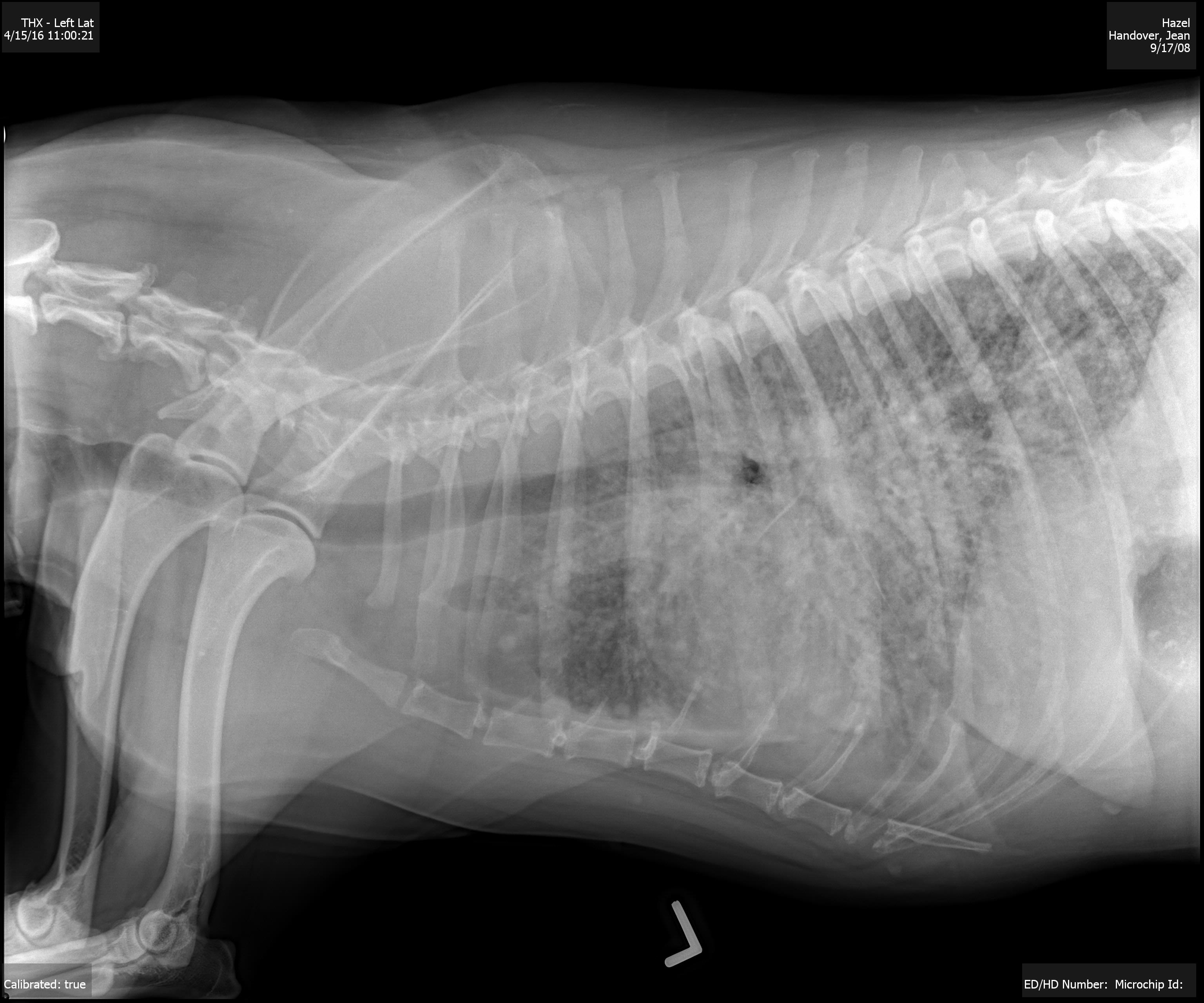
One of the radiographs taken of Hazel.

Back to Hazel’s lack of appetite. One of the side-effects of Fluconazole is that it depresses appetite. Getting Hazel eating again was becoming a priority. It seemed to make sense that until we had confirmation of whether or not Hazel had a lung fungal infection, for which taking Fluconazole would be an excellent course of action, we should pause in her dose until the results were in. To speed up the return of an appetite Dr. Jim prescribed a short course of Mirtazipine.

So that’s about it for the time being. Except for Jean and me to say how much we appreciate the art and the science that is being so skillfully offered by the Clinic. (As of 19:00 PDT yesterday Hazel was eating again! 🙂 )
Great team effort!
Great team effort!

Their “Special Love of Animals” comes over in spades!
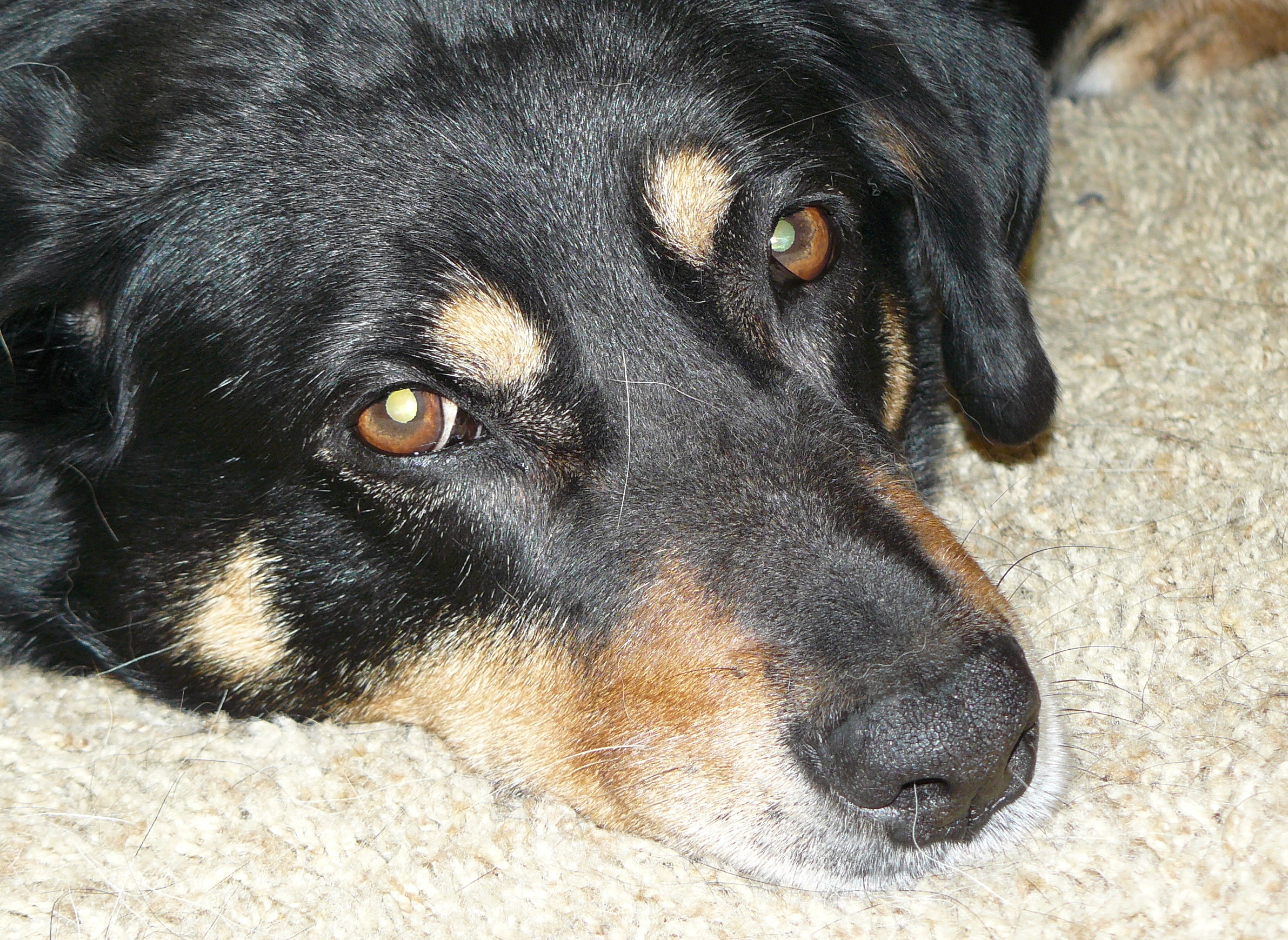
Please keep Hazel in your thoughts.

Hazel has recently become rather ill.

CAUTION: The following is offered by way of information reaching out to other loving dog owners. Please do not assume I have any specialist veterinarian knowledge and please do not take the following as a replacement for seeing your own vet.

Hazel

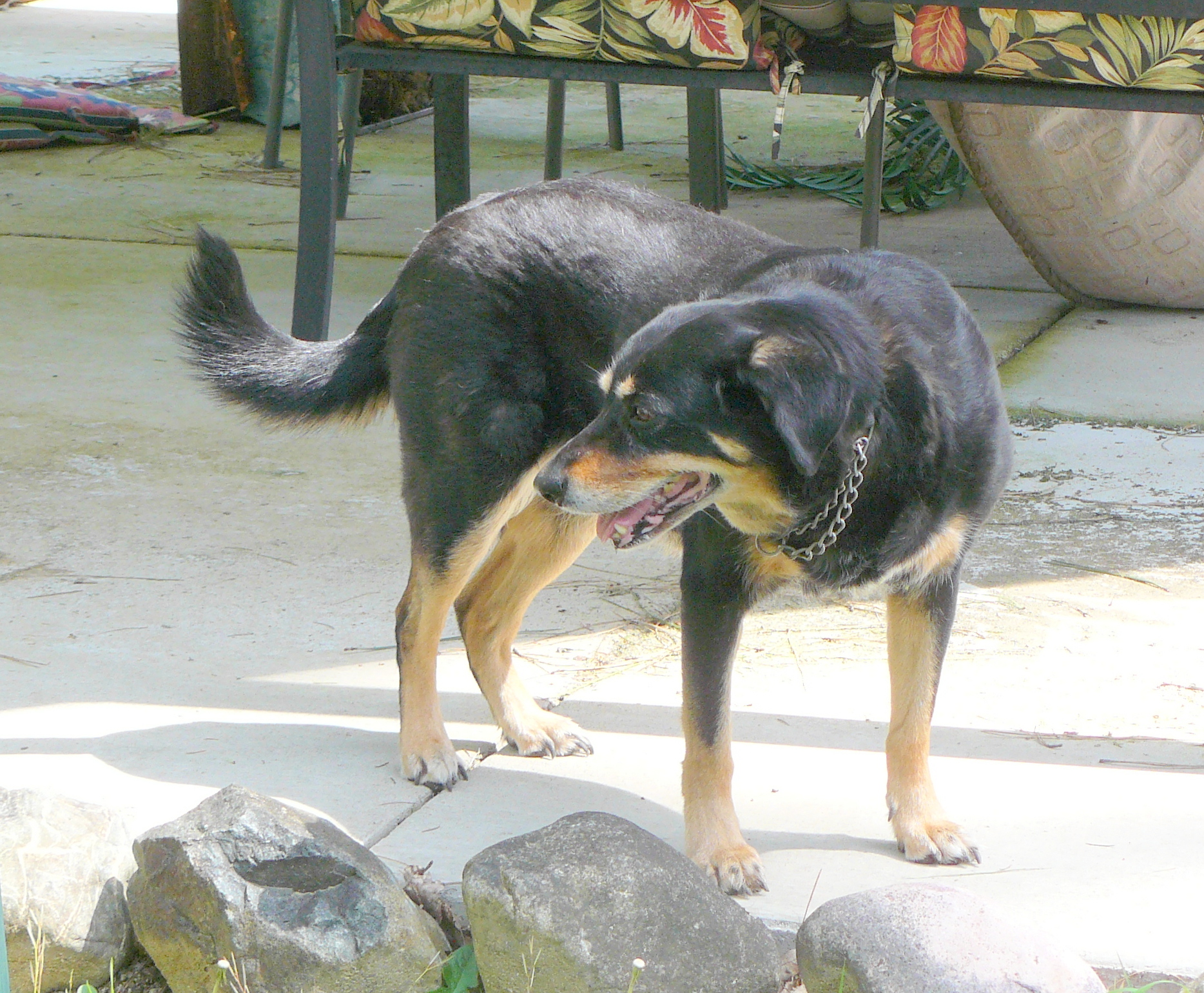
Picture of Hazel taken in the last twenty-four hours.
Picture of Hazel taken in March, 2014.

The story of how this wonderful dog came into our lives was published over two years ago.

About three or four weeks ago we noticed that Hazel’s bark was changing, almost as though she had a sore throat. In every other way she continued being the happy, lively dog that she is.

Then very suddenly last Thursday she started sicking up white, foamy bile and went off her food. Hazel rapidly became lethargic and lacking any vigour. Last Friday we took Hazel to our local Lincoln Road Vet Clinic and she was seen by Dr. Russ Codd, DVM. He took xrays that showed that Hazel’s lungs were far from being as clear as they should be. Potentially, Dr. Codd said that we could be looking at one of three things:

  1. Some form of bronchial pnemonia,
  2. A fungal infection of the lungs,
  3. Cancer.

In view of the fact that Hazel hadn’t been coughing that ruled out 1.

Dr. Codd forwarded the xray pictures to a specialist. Later came the information that the spherules in her lungs, as seen on the xray pictures, were not as would be expected with a cancer diagnosis. Dr. Codd concluded that Hazel was indicating a fungal lung infection. Especially as this is commonly found in hot, drier parts of the USA and Mexico. Hazel was an ex-rescue from Mexico and for a couple of years we lived in Payson, Arizona.

The medical term for the disease is Coccidioidomycosis and I republish a little of what may be read over on the Pet MD website:

Coccidioidomycosis in Dogs

Mycosis is the medical term for any disorder caused by a fungus. Coccidioidomycosis comes from inhalation of a soil-borne fungus which normally affects the dog’s respiratory system. However, it is known (even likely) to spread out into other body systems.

The fungus spores begin in the lungs as round spherules, and live in a parasitic stage in the lungs until they grow large enough to rupture, releasing hundreds of endospores, which then begin a parasitic stage in the tissues, growing and rupturing, spreading out (disseminating) into the body perpetually. Endospores can also take a faster route through the body by way of the lymphatic and blood vessel systems, resulting in systemic infection — meaning the entire body will be affected. Coccidioidomycosis sets in from 7 to 20 days after exposure, though some dogs can develop immunity and never show any symptoms, especially younger dogs.

Dogs that are susceptible to the infection can become ill from only a small amount of the Coccidioides fungus, and fewer than 10 fungus spores are needed to cause the disorder. And though uncommon, Coccidioidomycosis is a deadly disease that originates mainly in the arid, hot regions of the western and southwestern regions of the U.S., and in several Central and South American countries. Coccidioidomycosis affects many different types of mammals, but tends to occur more commonly in dogs than cats. This infection is also known as valley fever, California fever, Cocci, and desert fever.

The condition or disease described in this medical article can affect both dogs and cats. If you would like to learn more about how this disease affects cats, please visit this page in the PetMD health library.

Dr. Codd recommended getting Hazel on a course of antibiotics with Fluconazole being his first choice. That commenced on Friday afternoon.

Early today (Monday) Dr. Codd will be seeking to narrow down the diagnosis with further analysis of Hazel’s blood being undertaken because while he was confident that it is a fungal infection he wanted to confirm precisely the nature of the infection.

I will publish more information as it comes to hand and close with these photographs taken yesterday afternoon.

Hazel taking a very slow walk outside.

oooo

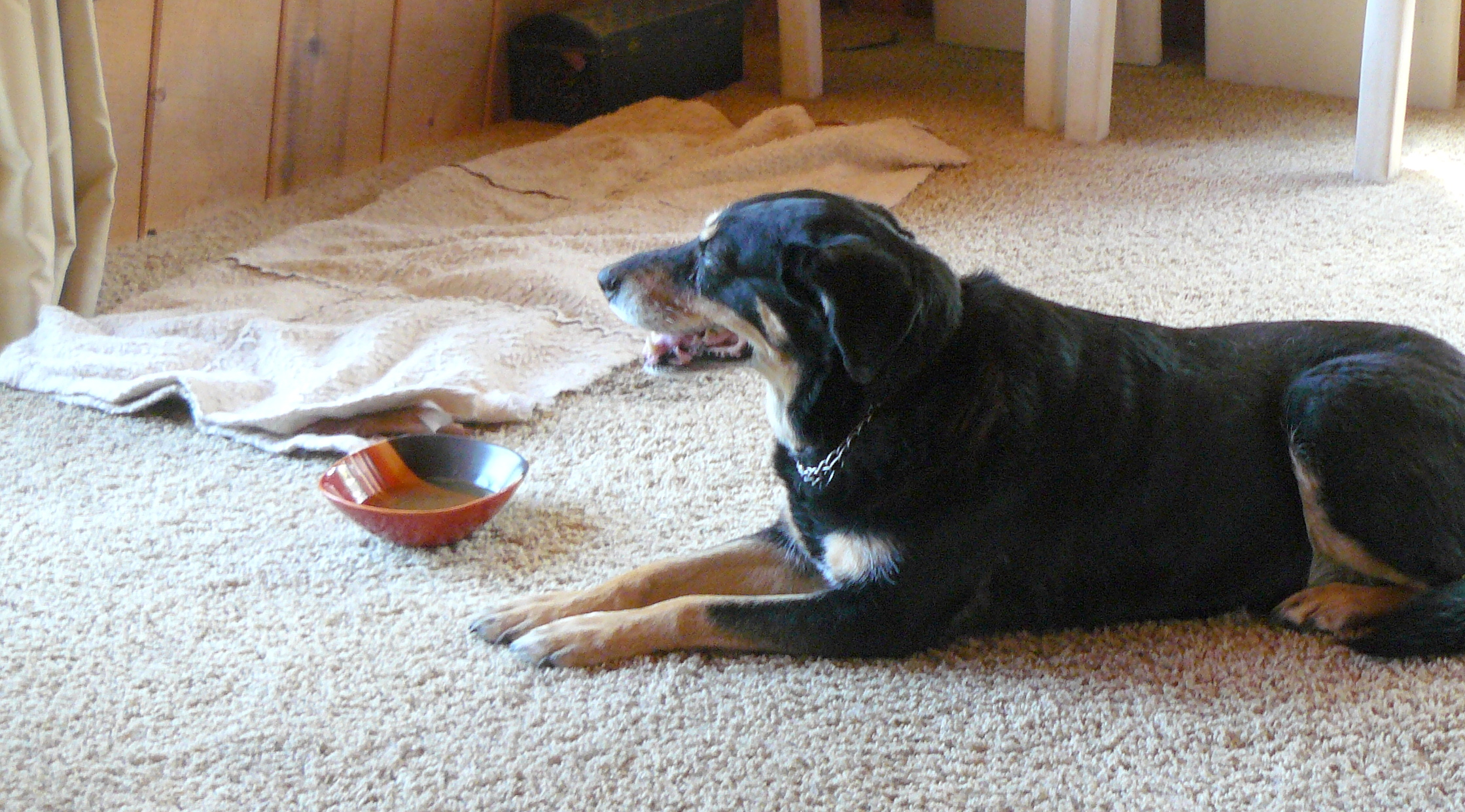
But most of the time she just wanted to be left on her own in our bedroom.

We are holding Hazel very close to our hearts just now.

Picture parade one hundred and forty-three

The final selection of Dog Tired!

(Links to previous selections can be seen here.)

dt22oooo

dt23oooo

dt24oooo

dt25oooo

dt26oooo

dt270000

I can’t close without thanking once again Larry and Janell from next door who sent all these wonderful photographs to be shared with you. How on earth can one follow those up?

Have a wonderful week and return to find out!

Two-wheeling dog!

As shown by my sister, Eleanor, on her Facebook page.

There once was a dog named Dog and this dog rode a motorcycle complete with goggles.

Travel safely however you and your dogs do it!

In praise of the ‘mutt’.

Welcome to Territorio de Zaguates, or “Land of the Strays”.

When it comes to loving stray dogs I thought that the friends of John Zande and his wife were showing the rest of the world how to do it. For it is my understanding that Sandra and her partner down in Brazil are providing a home for around 300 ex-rescue dogs.

Then I came across this recent item over on Mother Nature News about 700 rescued ‘mutts’ living in a doggie paradise.

Here’s the full article:

ooOOoo

700 rescued mutts live the life at Costa Rica’s ‘Land of the Strays’

Catie Leary

April 13, 2016.
Dogs frolic in a lush green field at the Territorio de Zaguates dog sanctuary in Costa Rica. (Photo: Territorio de Zaguates)

Welcome to Territorio de Zaguates, or “Land of the Strays,” an amazing, privately funded, volunteer-run animal sanctuary in Costa Rica where no mutt is turned away.

Located less than an hour outside the bustling capital city of San José, this doggie safe haven is home to hundreds of abandoned canines that have been given a second chance at life.

This is no ordinary animal sanctuary, though. After all, when you live in a place as beautiful as Costa Rica, you take advantage of what the landscape provides. That’s why volunteers lead the ragtag pack of rescued mutts on scenic hikes through the gorgeous mountains nearly every day. It’s a sight to behold.

 A volunteer at Territorio de Zaguates leads a pack of dogs up a hill. (Photo: Territorio de Zaguates)
A volunteer at Territorio de Zaguates leads a pack of dogs up a hill. (Photo: Territorio de Zaguates)

Aside from the free-range mountain hikes with breathtaking scenery, Territorio de Zaguates functions just like any other animal rescue or sanctuary.

“First thing we do when a new dog gets here is spay/neuter, vaccinate and get rid of parasites,” the organization explains on its Facebook page. “Then we assess if the dog requires any other type of special treatment [and] put them in quarantine if necessary.”

Once this initial processing is completed, the new dog is released into the general population, where it can either be adopted by a loving human or spend the rest of its days frolicking in what is essentially a doggy paradise.

There are all kinds of mutts living at Territorio de Zaguates. (Photo: Territorio de Zaguates)

What makes Territorio de Zaguates even more special is the creative approach to finding the dogs forever homes.

To encourage adoption, every doggie resident at the sanctuary is not only given a name, but also a customized “breed” name based on the dog’s phenotypic traits. These one-of-a-kind breed monikers include memorable titles like “Alaskan collie fluffy terrier” and the “chubby-tailed German doberschnauzer.”

The resounding message behind this strategy is that when you adopt a mutt, you’re adopting a unique breed. Learn more about this clever campaign in the video below:


Caso: Territorio de Zaguates from GARNIER BBDO on Vimeo.

As any animal rescuer will know, maintaining such an massive sanctuary requires an enormous amount of time, money and labor. But thanks to a host of charitable donors and an eager base of volunteers, the sanctuary is a great success.

“We have a very small staff but still we manage to do everything from daily picking up the poo and disposing of it properly, to feeding and medicating the dogs, and everything in between,” a spokesperson for the organization writes.

Continue below for just a glimpse of what life is like for these adorable pups at Territorio de Zaguates:

Mattresses are provided for the dogs to lounge on throughout the day. (Photo: Territorio de Zaguates)

Mattresses provide natural lounge spots for the dogs throughout the day.

A pack of rescued dogs take a leisurely walk in the woods with a few of the sanctuary's hard-working volunteers. (Photo: Territorio de Zaguates)
A pack of rescued dogs take a leisurely walk in the woods with a few of the sanctuary’s hard-working volunteers. (Photo: Territorio de Zaguates)

The pack takes a leisurely hike in the woods with a few of the sanctuary’s hard-working volunteers and some prospective dog adopters

Photo: Territorio de Zaguates)

Lunch time at Territorio de Zaguates means serious business, which is why kibble donations are so important!

Cushy bed donations are also very important for the sanctuary. (Photo: Territorio de Zaguates)

In addition to food, comfy dog beds are also a much welcomed donation item for the sanctuary!

A volunteer leads the pack downhill. (Photo: Territorio de Zaguates)

A sanctuary volunteer leads the pack downhill during a scenic hike through the mountains.

(Photo: Territorio de Zaguates)

In case you were wondering where all those yummy kibble donations went … behold the trough

(Photo: Territorio de Zaguates)

A few of the sanctuary’s senior residents rest on the steps of the facility. Even if the pups aren’t adopted out, they’ll always be guaranteed a luxurious forever home at the sanctuary.

(Photo: Territorio de Zaguates)

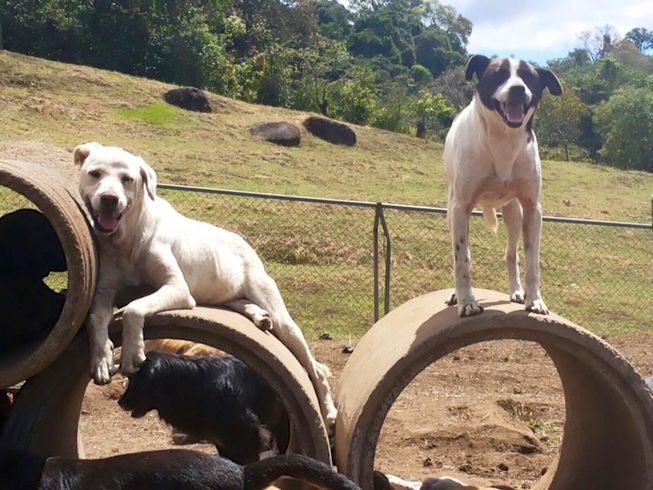
Concrete drainage pipes makes excellent (and sturdy!) makeshift dog houses

(Photo: Territorio de Zaguates)

Rescued dogs hang out in the shade of the sanctuary’s many trees

(Photo: Territorio de Zaguates)

A nice refreshing dip … in some drinking water

(Photo: Territorio de Zaguates)

After a long, fun-filled day of being a dog, there’s nothing like cuddling up with a friend and snoozing before dinner time

ooOOoo

Well it certainly puts our ten dogs in the shade!

In doing a trawl through YouTube I came across this video that I will use to close off today’s post. Chances are that, as with me, you won’t understand the voice-over but it won’t diminish your pleasure at looking at these dogs.

Published on Jul 3, 2014

“Territorio de Zaguates” ubicado en las hermosas montañas de Costa Rica, es un albergue de animales donde se le da casa, comida, atención veterinaria, ejercicio, esparcimiento y cariño a 700 perros callejeros víctimas del maltrato, el abuso, el abandono y la negligencia humana.
–ENGLISH– “Territorio de Zaguates” is a No-kill-shelter in the beautiful mountains of Costa Rica that provides home, food, vet care, exercise, recreation and affection to over 700 stray dogs, victims of neglect, abandonment and abuse.

Actually, let me close off today’s post with these two sets of words from the story above:

Once this initial processing is completed, the new dog is released into the general population, where it can either be adopted by a loving human or spend the rest of its days frolicking in what is essentially a doggy paradise.

“essentially a doggy paradise.”

The resounding message behind this strategy is that when you adopt a mutt, you’re adopting a unique breed.

That is so true! Each and every dog, especially an ex-rescue dog, is a unique breed.

Time – Like the flick of a finger.

Five years has just gone by in a flash.

A few weeks ago I was speaking to Larry, one of our lovely neighbours who, as with me, is the wrong side of 65 (as with me, by quite a lump) and he was bemoaning how more quickly time seems to pass by the older one gets. It had never previously crossed my mind but in that instant I knew exactly what Larry meant.

For today I have been a Permanent Resident (aka Green Card holder) for precisely five years. And in seven months time I will be 72 years old. Where did it all go!

So it seemed very appropriate for others who are staring at their ‘senior’ years to republish an item that recently appeared on the Dr. Sinatra website. It is all about the amazing benefits of regular exercise.

ooOOoo

To Live a Longer Life, Even Moderate Exercise Gives You Big Benefits

by Dr. Stephen Sinatra
Filed Under: Heart Health, General Health
Last Reviewed 02/29/2016

As you know, exercise is essential for your heart and overall health. Now, a new study published in the journal Medicine & Science in Sports & Exercise has quantified the powerful impact exercise can have on the length of your life.

For this study, researchers looked at data collected in the National Health and Nutrition Examination Study which included 3,000 participants ages 50-79. All of the study participants wore highly sensitive activity trackers, called accelerometers, for seven days. Then, they compared the participants’ activity levels with recorded deaths during the following eight years. What they found is that the participants who had the lowest level of activity were five times more likely to have died during the follow-up period than those participants who had the highest activity level. Those with the lowest level of activity were also three times more likely to have died than those who had moderate activity levels.

There’s no question that inactivity is a prominent risk factor for many health problems, and even minimal amounts of regular activity can have immediate benefits. Plus, for seniors the benefits of exercise go far beyond good cardiovascular health, increasing strength and flexibility so you can stay independent in your senior years.

What Type of Exercise Should You Do?

My answer is always the one that you will enjoy and stick with for the long-term—whether it’s walking, tennis, dancing, swimming or another activity you enjoy. My personal favorites are pilates and yoga, which are good for range of motion, flexibility, and strength.

But regardless of the type of activity you choose, here are some tips to get you started:

  • If you haven’t exercised in a long time and you have a medical condition such as osteoarthritis or cardiovascular disease, talk to your doctor about what kind of limits you may need to abide by. You don’t want to take on more than your body can handle. Also, consider having your feet checked for irregularities that require shoe inserts.
  • Start slowly and pace yourself. Should you experience shortness of breath or pain in your chest or arms, see your doctor as soon as possible. If you feel ill, stop. If symptoms persist after 3–5 minutes of rest, seek medical attention immediately. Symptoms may occur up to an hour after exercising, so be mindful of how you feel as you cool down and resume your regular activities.
  • The joints, ligaments, tendons, and muscles aren’t as forgiving as they were when we were younger, and they require an appropriate level of training. If you train with weights—even light ones—you must use correct form to avoid microtrauma and aggravation to joints. A personal trainer who is experienced in working with middle-agers and seniors can help with this. Long term, strengthening the muscles around ailing joints can help reduce pain.
  • Warning signs that you may be doing too much exercise include light-headedness or dizziness, palpitations, jaw pain, tingling or numbness in the arms, a tight feeling in the lungs, and shortness of breath (being unable to carry on a conversation).

Now it’s your turn: What are your exercise goals?

You May Also Be Interested In:

ooOOoo

 And to close this post with nothing at all to do with exercise but everything to do with loving a dog, here’s a picture of Brandy taken on Tuesday morning.

Very good exercise for the heart! :-)
Very good exercise for the heart! 🙂

In celebration of new dogs

An introduction to Lexi.

Yesterday, my good friend of over 40 years, Dan Gomez, left a reply to our introductory post for Brandy. Despite how long I have been blogging it’s rare for Dan to drop in. Indeed, yesterday may well have been his first comment in this place: “Beautiful animal, Paul and Jean! He’s going to have a wonderful country home too!”

Well it wasn’t that long ago that Dan’s previous dog, Bella, died tragically and about a month ago Dan sent me a couple of pictures and a short video of their new dog: Lexi.

So staying with the theme of new members of our respective families, here are a few glimpses of Lexi.

Lexi at Rancho Mirage.

oooo

oooo

Lexi at two months old - 26th March, 2016.
Lexi at two months old – 26th March, 2016.

As Dan said in his covering email:

What a fine animal! Sweet, adventurous, obedient, beautiful and loves the wet!
Saved our life and Bella would be proud.
May all those across the world that welcome and treasure their dogs live happy, safe and peaceful lives.

A loving welcome to Brandy!

Yes, we are back up to ten dogs.

Funny how things go!

On Saturday morning Jean and two girl friends, Janet and Pam from close by, went to a $1 Clothing Fair. The Fair sold off donated garments raising money for a local charity for abused women. After they had had their fill of clothes Janet suggested going to a garage sale about three miles from home.

It turned out to be a couple and their daughter that were selling off stuff in advance of having to move to a much smaller house including needing to re-home their dog.

There in the garage was the dog, a beautiful tan coloured Great Pyrenees, as they are known in North America. Or as Wikipedia explains:

The Pyrenean Mountain Dog, known as the Great Pyrenees in North America, is a large breed of dog used as a livestock guardian dog. It should not be confused with the Pyrenean Mastiff.

Jean, of course, went up to fondle the dog and enquired as to how they were going to re-home him. Taking the dog to a local dog shelter was mentioned by way of reply.

I heard all about this when Jean returned and we quickly agreed we should offer the dog a new home.

So after a quick lunch we both went to meet the dog.

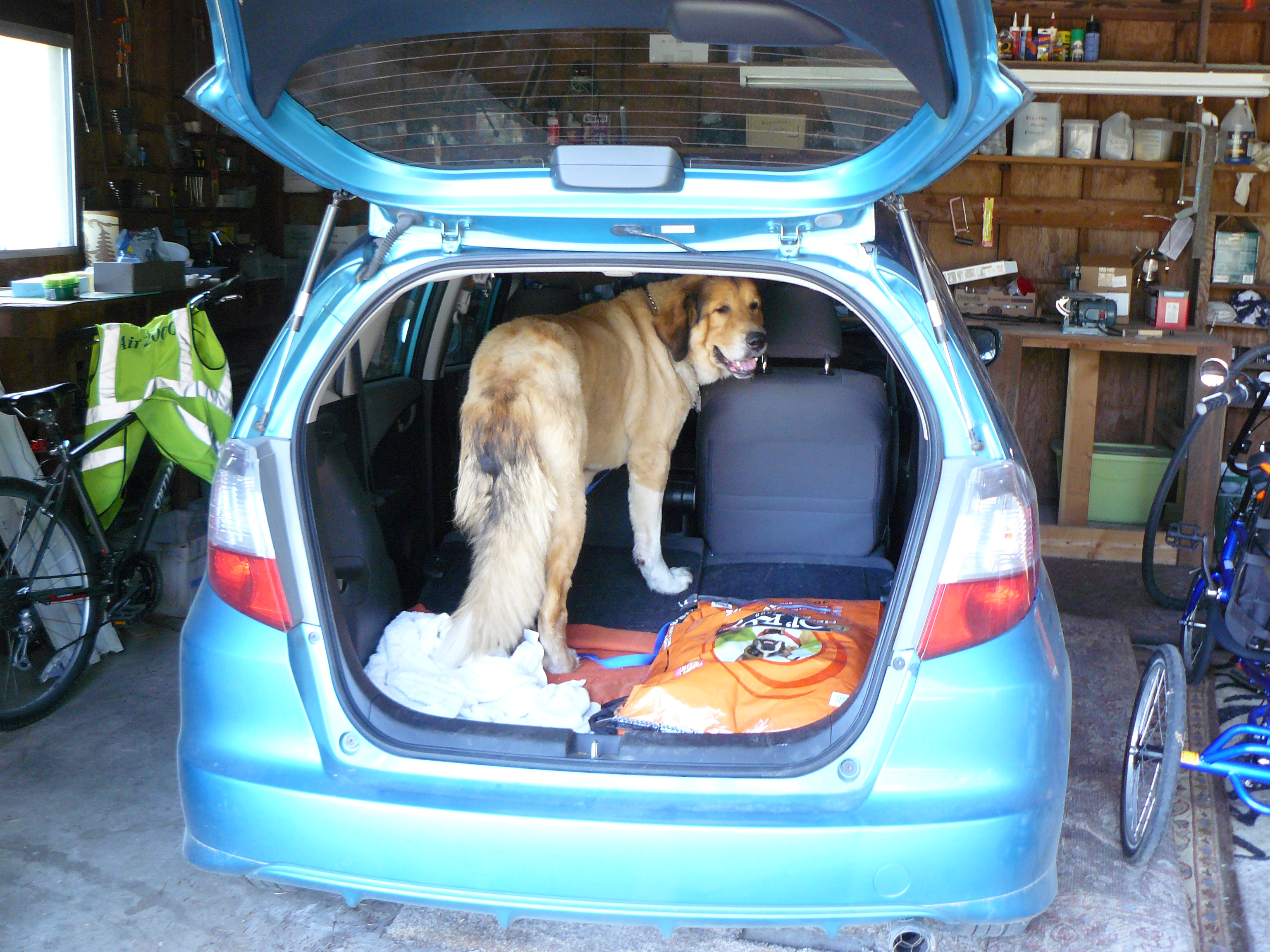
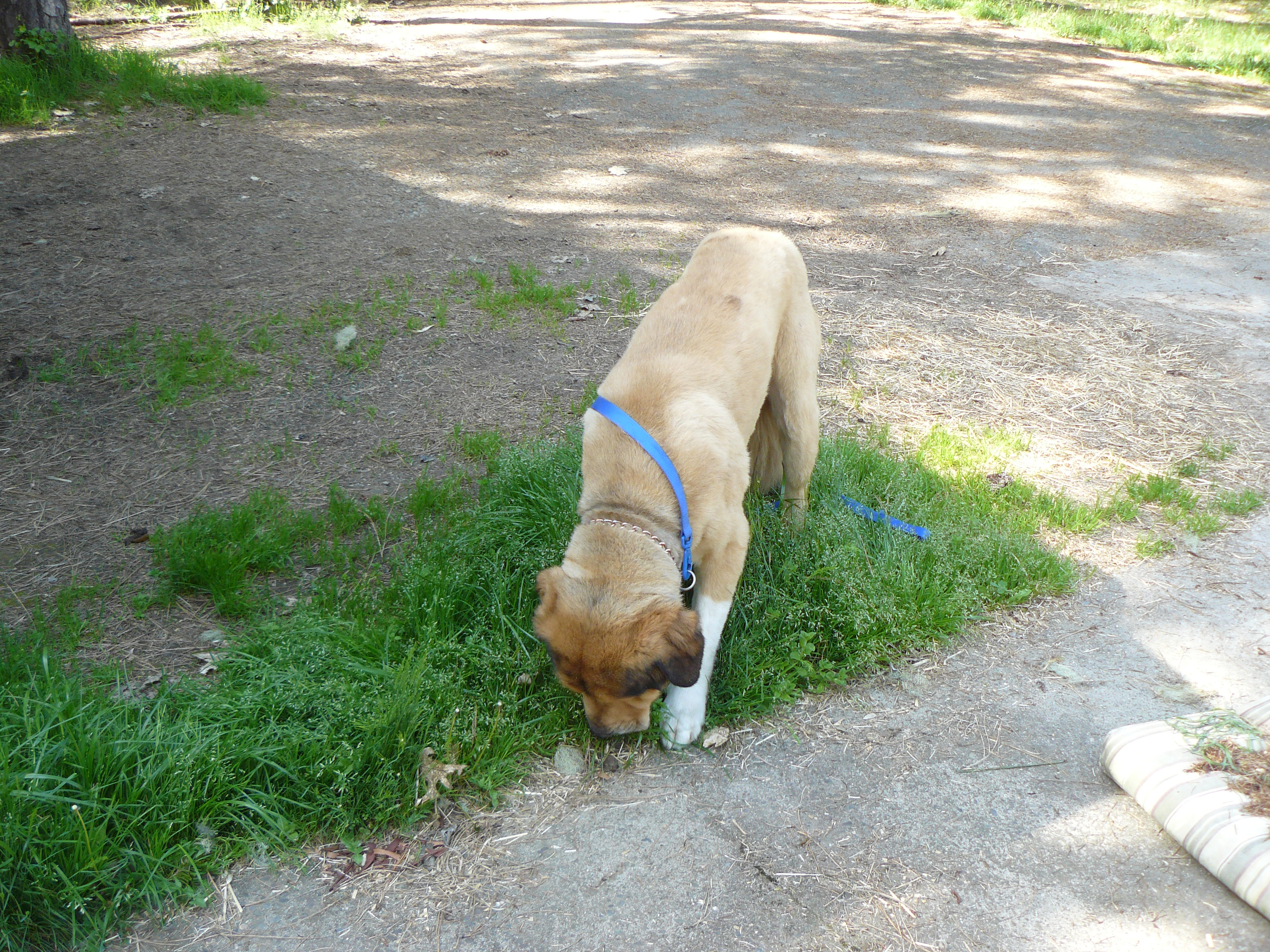
An hour later Jean and I returned home with Brandy! He is gorgeous and here are some photographs of the first few hours of welcoming Brandy to his new place. Note: Brandy was recently shaved by his owners thus coat-wise doesn’t quite look like the Great Pyrenees that he is (possibly with a slight cross with a Mastiff but Dr. Jim doesn’t think so).

Brandy's first look at his new home from the back of the car in the garage.
Brandy’s first look at his new home from the back of the car in the garage.
Brandy signalling that he is ready for big changes!
First sniff of our grass.
Brandy, welcome!
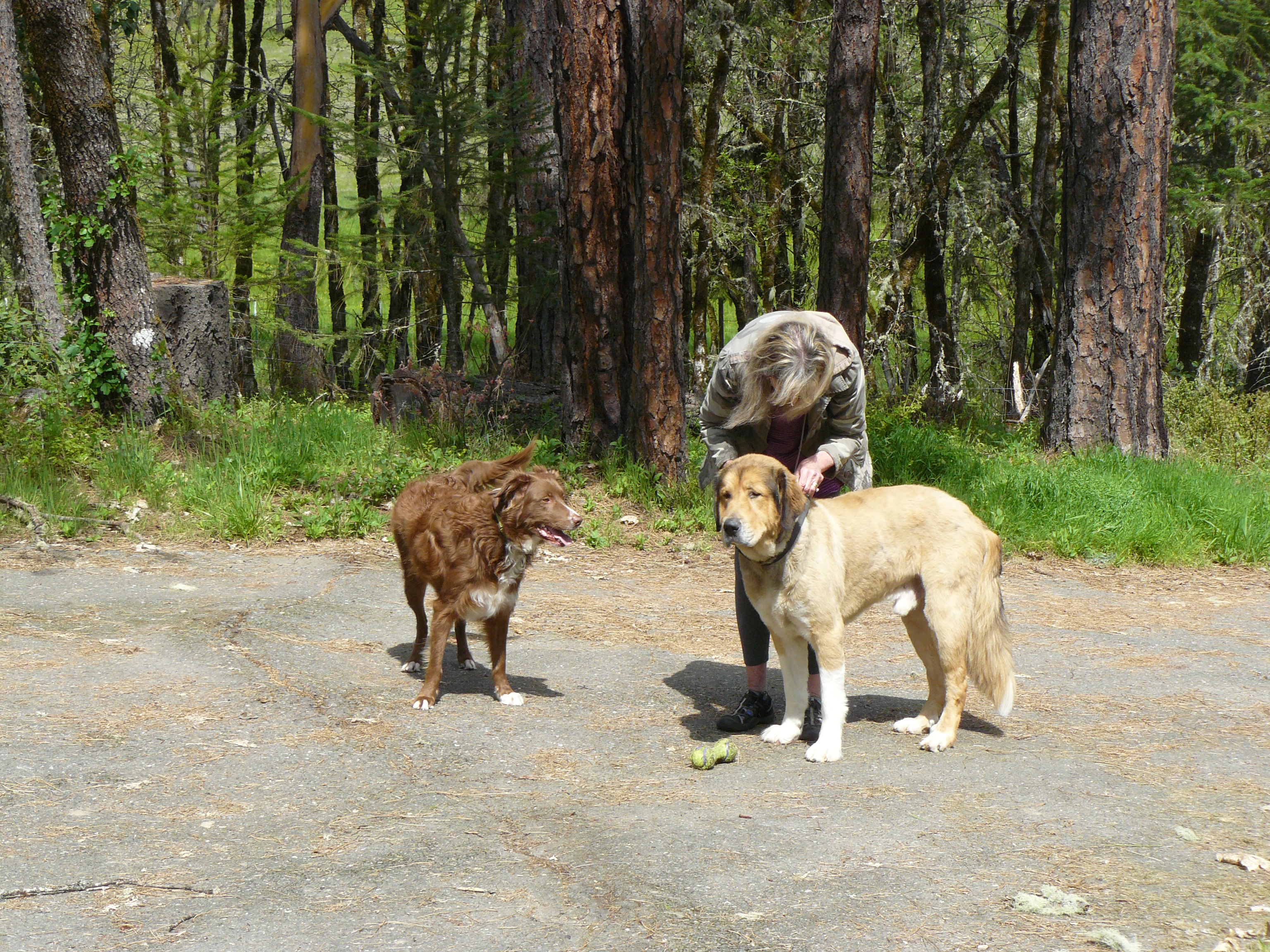
Brandy, welcome!
So far, so very good!
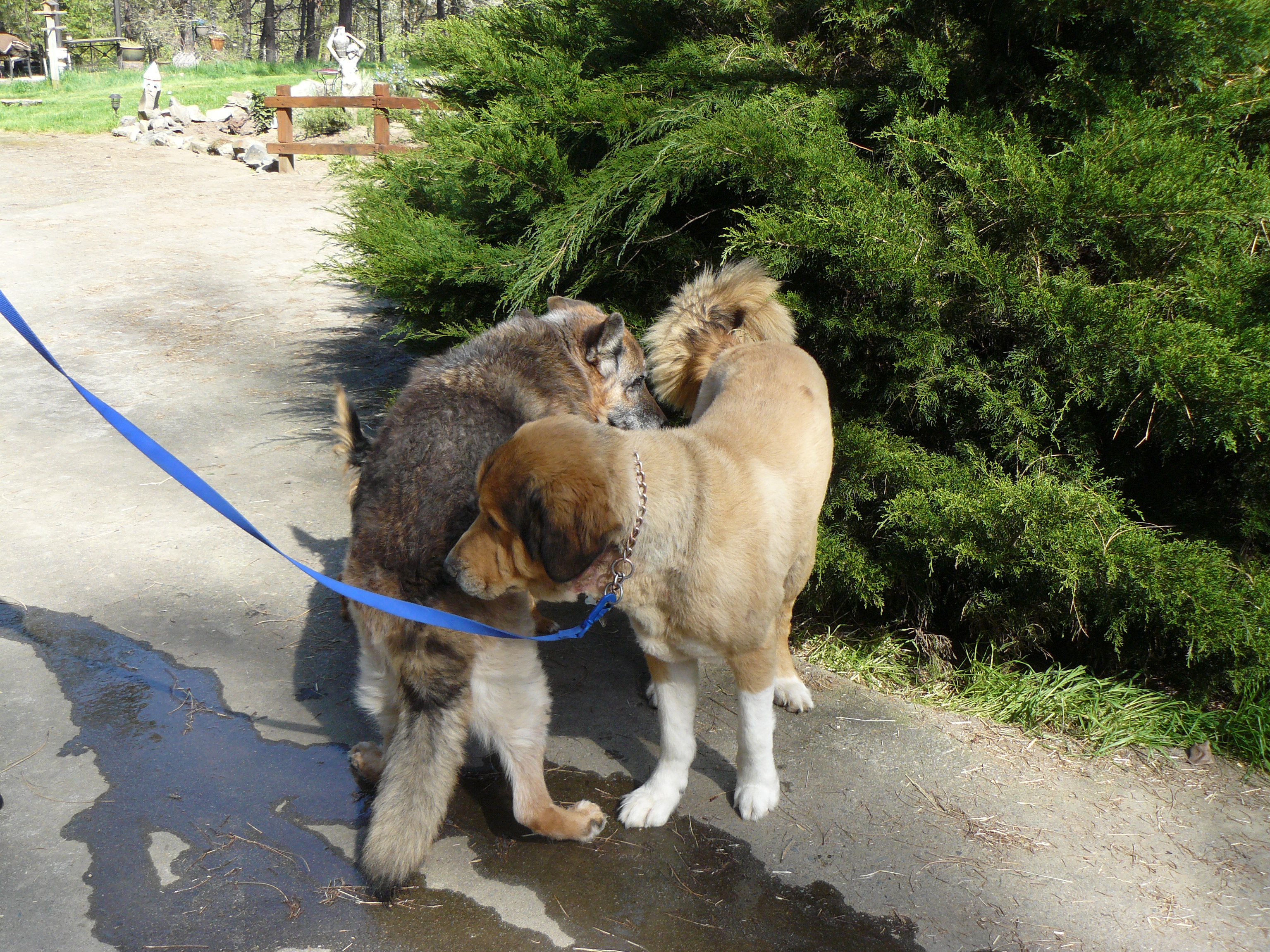
Now the meet and greet with, of course, first up being the old king!
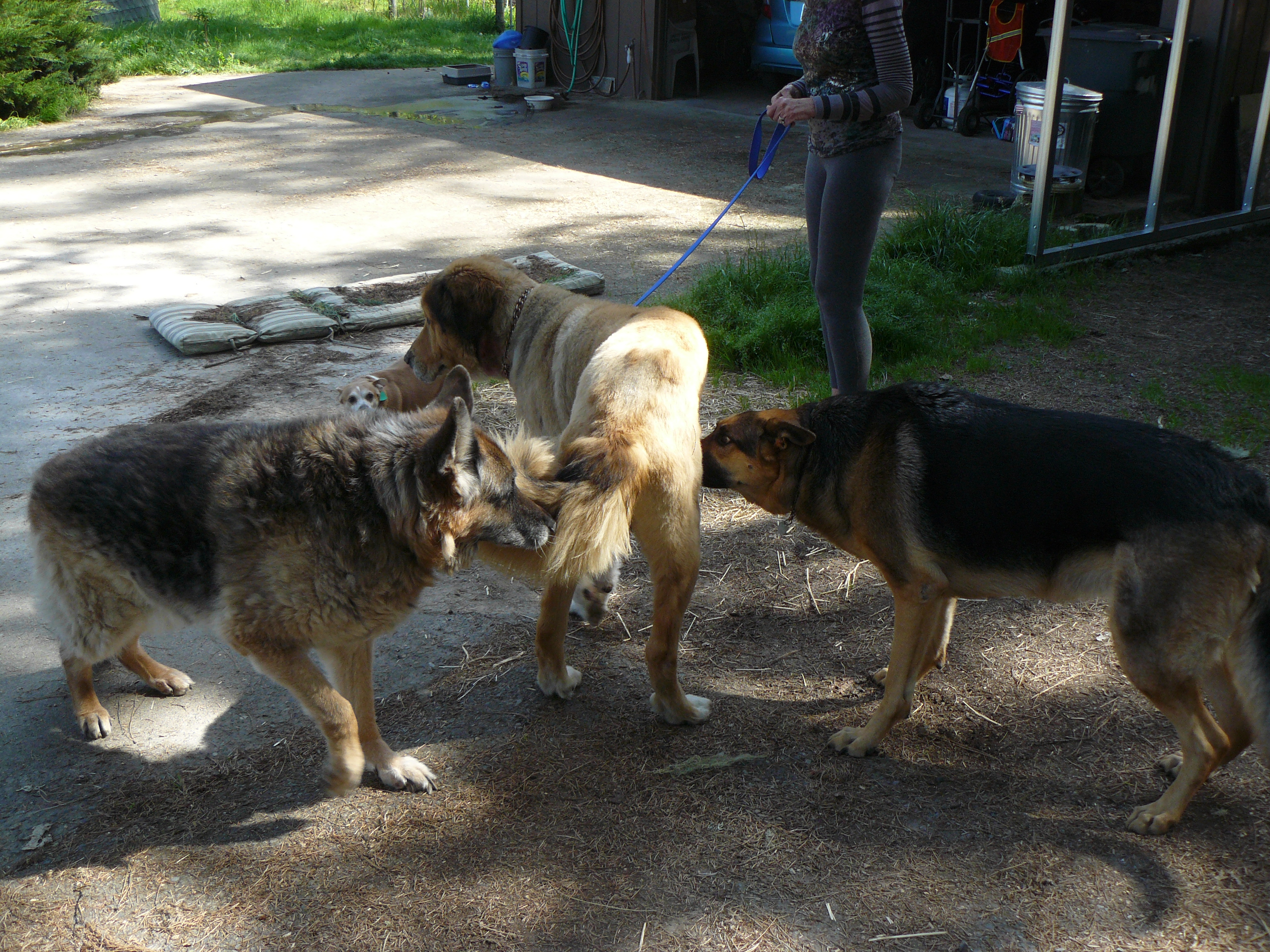
And it didn't stop with Pharaoh!
And it didn’t stop with Pharaoh!
More smells than you could shake a stick at!
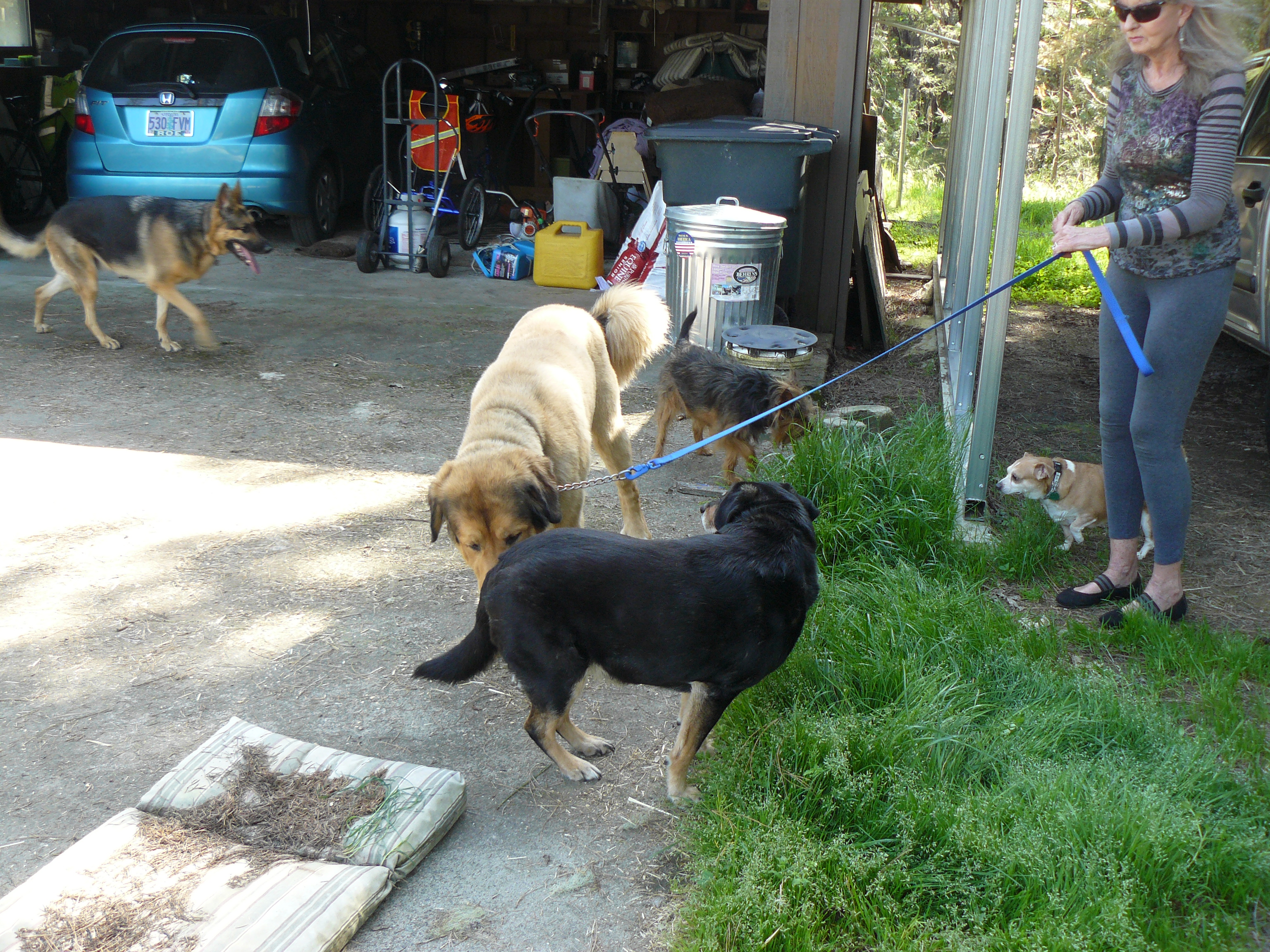
Yet more new friends to meet!
Then time to settle down at home.
What an adorable boy he is going to be.
Sunday morning and everything is still going well.
Just another dog for Jeannie to love.
Just another dog for Jeannie and me to love.

Apparently, Brandy is a three-year-old dog but hasn’t yet been neutered. As soon as Brandy has settled down we will get Dr. Jim to check him over thoroughly over at Lincoln Road Vet Clinic, make sure everthing is fine and perform the neutering. (It was neighbour Dr. Jim who wrote the foreword to my book, by the way.)

So that was our weekend – how was yours?

Picture parade one hundred and forty-two

Dog tired: selection three

You can backtrack previous selections by going here.

dt15oooo

dt16oooo

dt17oooo

dt18oooo

dt19oooo

dt20oooo

dt21oooo

What a wonderful Sunday smile!

The final selection will be in a week’s time.

As always, you and your wonderful pets be happy.

The essence of our relationship with dogs.

Woman Rescues Burned Puppy and He Grows Up to Save Her Life

This wonderful story was recently published on the Care2 site and is republished here to share with you all and to underline the importance of always trying to find your next pet from a rescue shelter.

ooOOoo

Woman Rescues Burned Puppy and He Grows Up to Save Her Life

2997475.largeBy: Laura S. April 6, 2016

About Laura

Editor’s note: This post was originally published on January 7, 2013. We are republishing it for your reading pleasure. Enjoy!

Anyone who has ever saved an animal will tell you that its the kind of experience that shakes up your DNA. You won’t regrow hair on a balding head or suddenly run a four-minute-mile, but there is a pulse of positive energy that churns through the human body much like a twister. In some cases, fragments of that emotional explosion are powerful enough to be credited with modern medical miracles. And for one Texas woman, the experience was profound enough to help wake her from a coma.

My Name is Danielle…

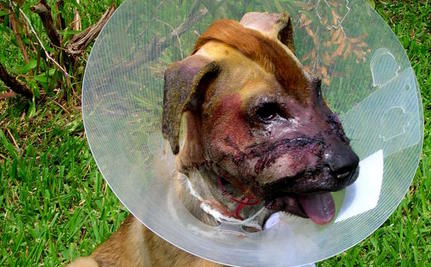
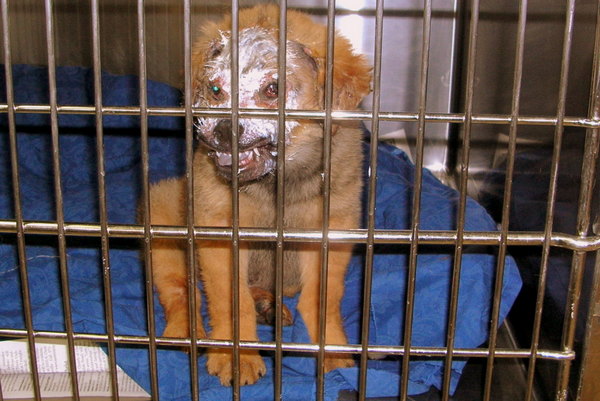
“My name is Danielle and it’s been over a year since something terrible happened to me. I am ready now to share my story,” explained the letter we received recently from veterinary technician Danielle Torgerson of Killeen, Texas. ”Four years ago somebody brought a puppy to the clinic. I was not assigned to that room but I was in the second room when I felt something pull me into the hallway. It was strange, but I glanced into the other exam room and saw a puppy on the table. He looked at me with so much pain and despair. A man had brought him in for a ‘sting’ but I knew instantly that was not the case. The puppy was horribly burned on the head like somebody had poured gasoline over him and set him on fire. He was there to be euthanized.”

But Danielle’s conscience began to wrestle down the injustice of extinguishing this young life before it had known the simple joys that every dog should know. She wondered if he might be able to have a bed of his own. Could there be walks through the park in the cool evening air? Was it possible that this puppy might wake up each morning beside a person whose first words were his name?

“I asked the vet if something could be done,” Danielle recalls. “He said that treatment could be carried out, but only with lots of money.”

The Rescue Begins

And that was all Danielle needed to hear. She wasn’t wealthy, but she was determined and if there was a chance at recovery, she’d already made up her mind to take it. So Danielle had the man who brought in the puppy sign over custody to her. She then contacted Dr. Elaine Caplin in Austin and the puppy was brought in for a surgical consulation to see what could be done.

“He was not able to eat or drink because part of his mouth was melted,” Danielle recalls.

Skingraft surgery was undertaken to reconstruct the mouth and soon the puppy’s condition improved dramatically and he began to function on his own.

Danielle named the puppy D’Artagnan (who served Louis XIV as captain of the Musketeers of the Guard) or Mister D for short and introduced him to other dogs and cats who welcomed him.

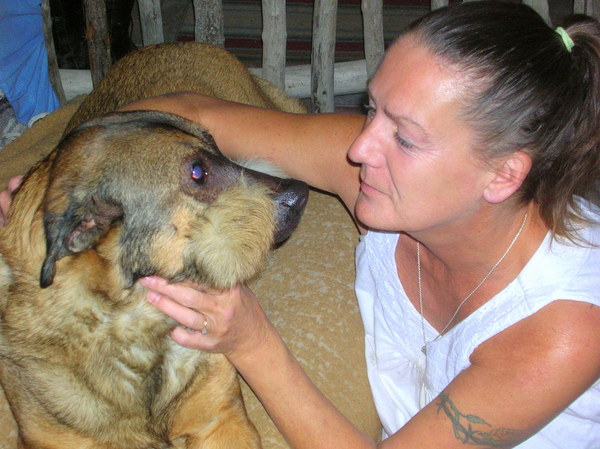
Mister D began to grow into a large dog and earned a reputation for his generous nature. “He allows all the cats to sleep with him and we have actually seen him share food with other dogs. He picks out pieces of food and gives it to them.”

All grown up.
All grown up.
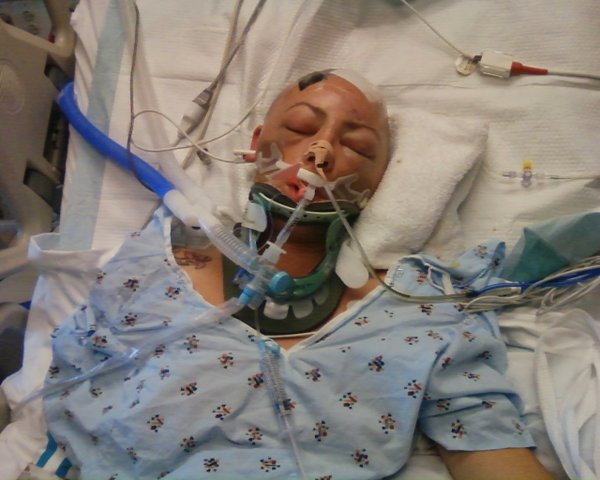
But in the street, Mister D is sometimes regarded as a beast.“He looks like a werewolf with his skin grafts and people are kind of scared,” Danielle explains. “But he truly is my loving angel and I know that saving him is what helped save me.”You see, last year, Danielle was in a terrible motorcycle accident when she tried to avoid a collision with a car. Within seconds, she was on the ground bleeding with a broken skull and awaiting a lifelight helicopter to a trauma center where doctors would find no brain function.Photo00811For 12 days, Danielle lay motionless in her pale blue hospital gown while her mother, who flew in from Germany, went back and forth between the hospital and Danielle’s home to take care of not only her dying daughter, but of the animals who meant the world to her.

At night, Danielle’s ex-husband would help look after the pets so that her mother could spend more time with Danielle, and try to get some rest, but everyone feared the worst.

But in the silence of the mind, a louder voice came from Danielle’s soul.

“I had to get back to Mister D and my other ‘kids’ because they needed me and I needed them,” Danielle says of her sense that she carried that desperate need to be reunited with her pets, despite the lack of medical evidence that she was processing those emotions during her coma.

I Had to Wake Up for My Animals

“After 12 days, a miracle happened,” Danielle says tearfully. “I woke up. The doctors and nurses have told me that the first words that I uttered were ‘Mister D.’”

For several weeks, Danielle remained in rehabilitation while she learned to walk and to fully speak again. It seemed so painfully long for her to be away from the ones she loved and that motivated her to work harder each day.

“When I finally got home, Mister D was so happy,” Danielle said. “He checked on me all the time. When he felt that I was hurting, he would put his paw very carefully on my head and sigh. I truly know that if it was not for Mister D, I would not be here. He has become my musketeer, my protector and has given me the security and protection that I never had from people.”

together-todayNow fully recovered, Danielle’s greatest hope is that her story will inspire others to rescue animals. She asks people to consider rescuing, rather than buying pets and explains that “the bond between you is one that can never be broken.”

ooOOoo

Please help share this message of the bond and love that is possible between us and our pets and to always consider taking on rescues.