Category: Dogs

History of the Pyrenean Mastiff

The breed background history of our Brandy.

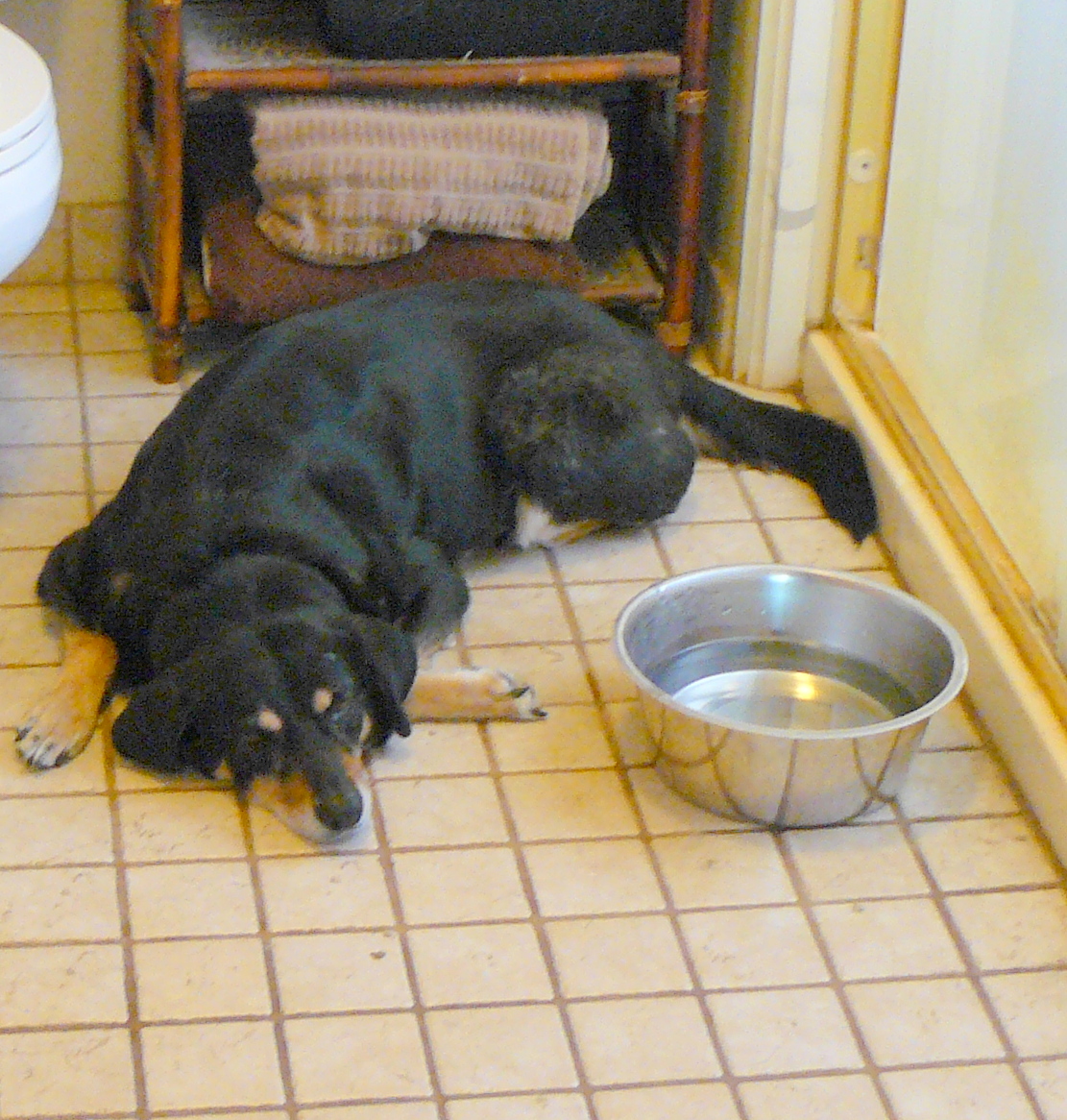
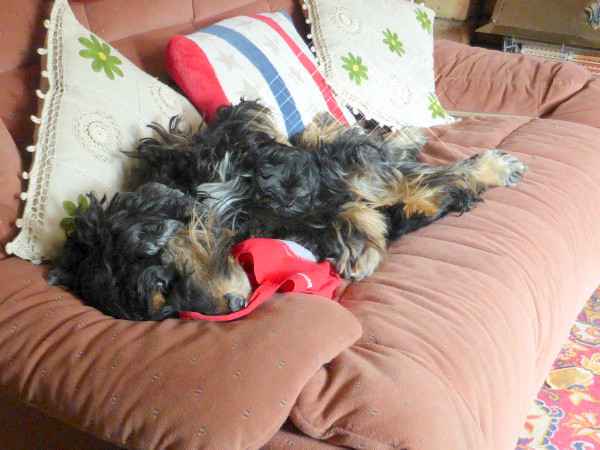
P1150956
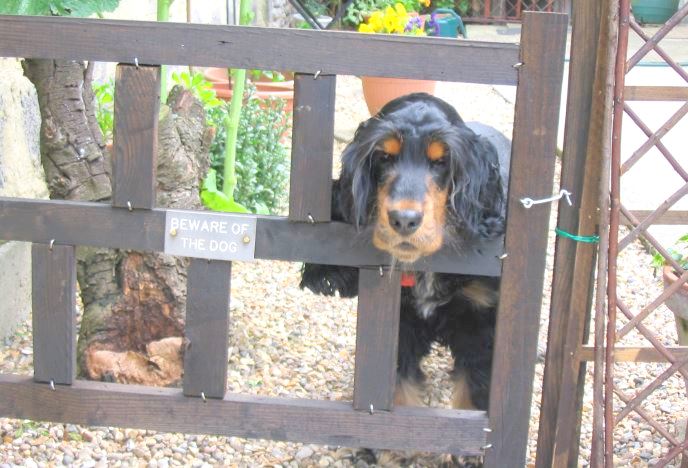
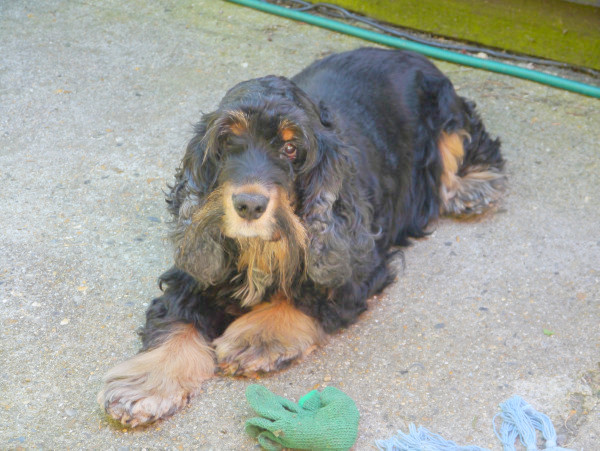
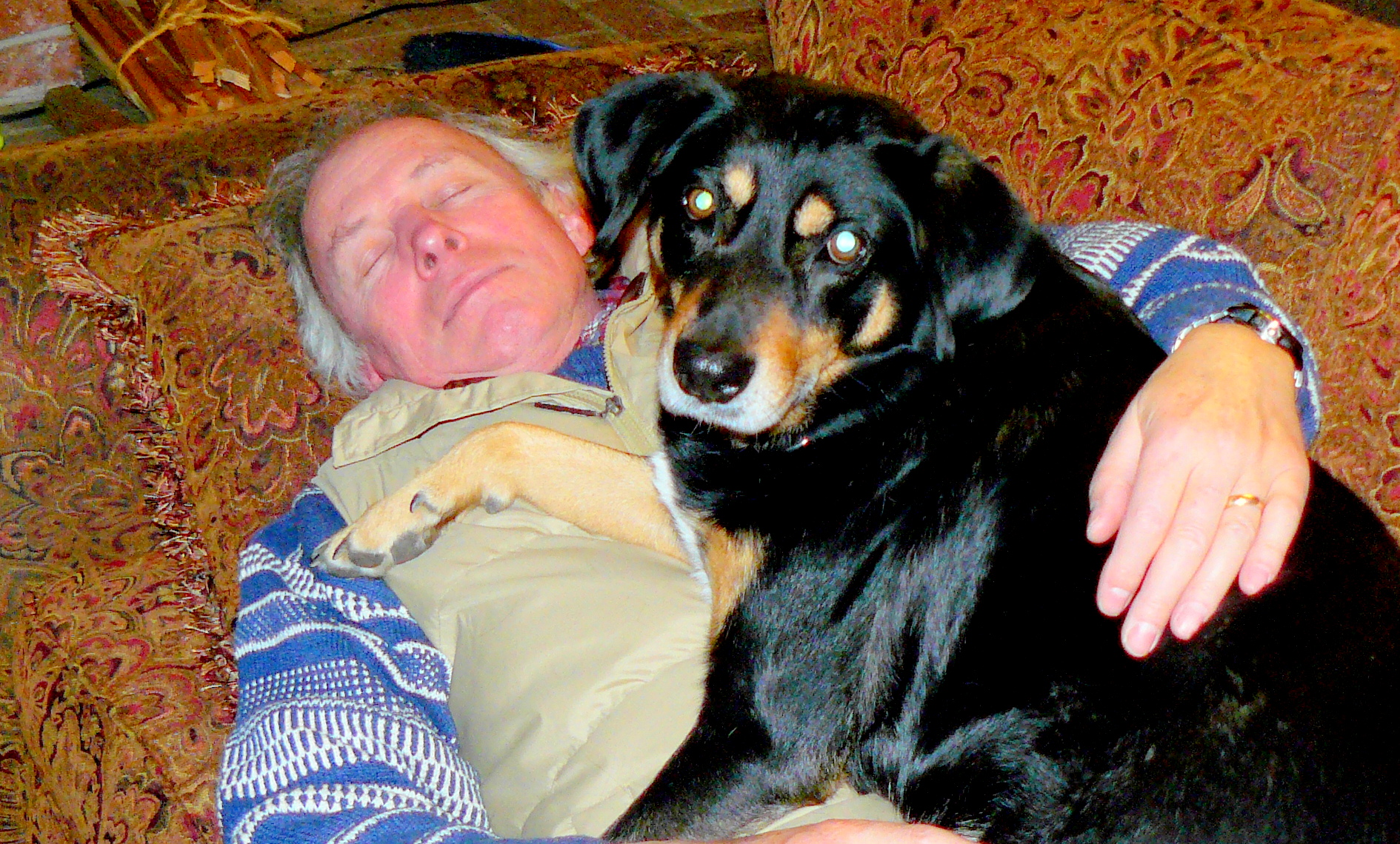
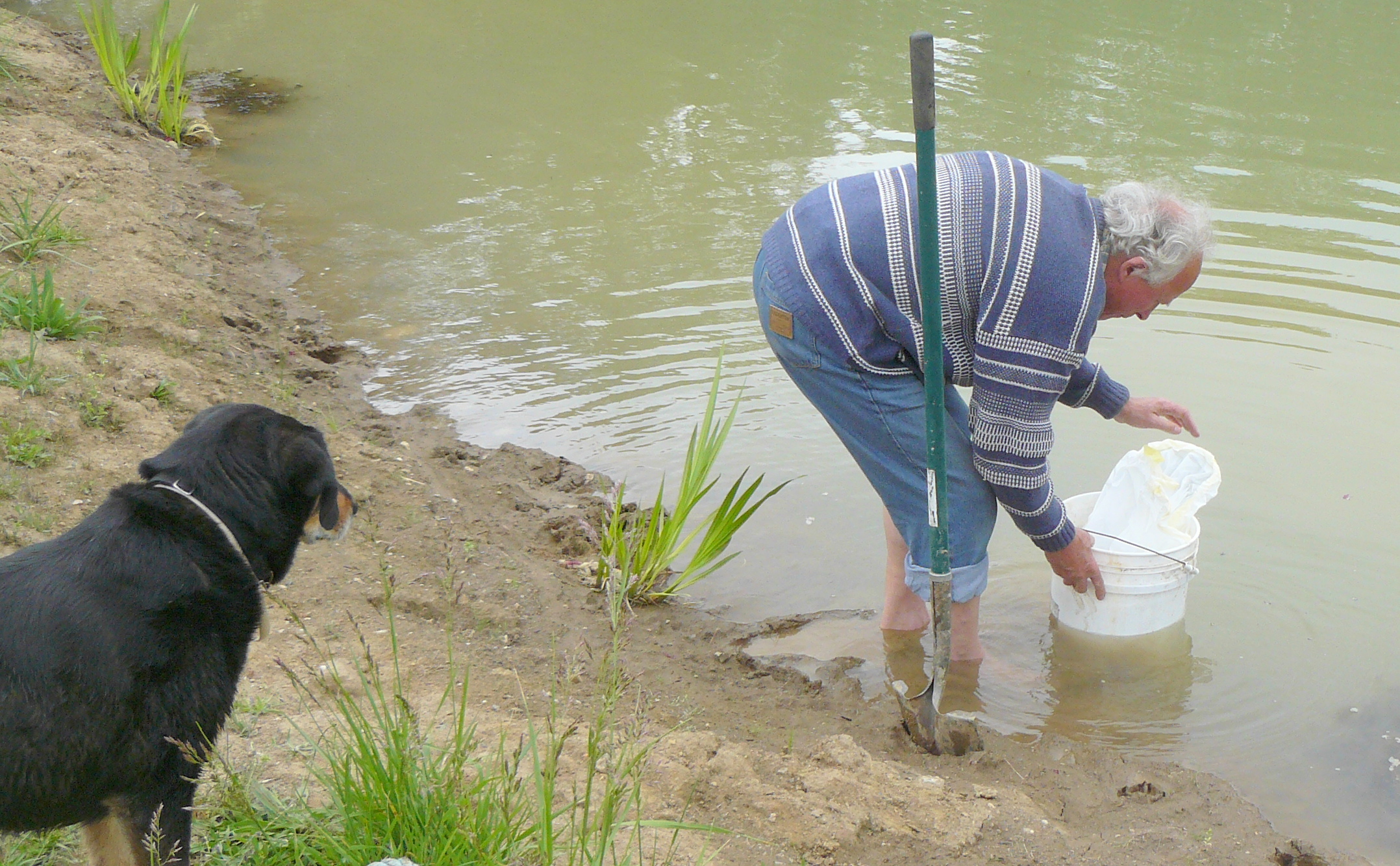
Our Brandy!

In yesterday’s post I wrote about how we determined that our Brandy was a Pyrenean Mastiff (Spanish Mastin del Pirineo). In that search, into both the breeder and the history of the breed, we came across the website of De La Tierra Kennels located in Quartz Hill, California who are Pyrenean Mastiff breeders. As they state on their website:

Tierra Alta were the first kennel to introduce the Mastin del Pirineo to the U.S.A. Our kennels have produced excellent show potential pups bred from the finest imported and now domestic stock available – Tajadera del Tio Roy, Castillo de Ali, Do Limoeiro, De Domus, El Bellotero, Rocaforte, Larresalkoak, Del Paso del Oso, Moralet, Wela Brillante, Springstrand, Iirismaan, Bondadoso and Farma Stekot, Murtoi’s, Del Mostin and Can Cabot. Our foundation mostines are imports directly from Spain, Italy, Finland and the Czech Republic. Our kennels have also exported to Canada, Europe and Mexico. Our kennel has the broadest bloodlines for the PM in the U.S.A. and the largest number of Pyrenean Mastiffs in the country.

and two paragraphs later:

A Moment In History!

Breeder of Pyrenean Mastiffs since 1996: Tierra Alta kennels were proud to announce the arrival of the first Pyrenean Mastiff litter born in the U.S.A. October 1st, 1997

It was then quickly discovered that there is a breed association for Pyrenean Mastiffs and almost as quickly revealed that the breed association shares the same telephone number as the breeders. Nonetheless, I’m going to republish the history of the breed as it is presented on the website of the PMCA Pyrenean Mastiff Club of America.

ooOOoo

Mastin de los Pirineos – Pyrenean Mastif

image12Statue of the Molossus Belonging to Olympias, daughter of the Molossian King Pyrrhus

Edited By Brian Vesey-Fitzgerald – “The Book Of The Dog

THE SPANISH MASTIFF & THE PYRENEAN MASTIFF THE HISTORY OF SPAIN

In the Middle Ages, the Christians in the north and the Moslems in the south of the Iberian peninsula were fighting against each other for the control of the land that would one day become known as Espana. In the Christian kingdoms, the business of wool and lambs was the livelihood of the people. At that time existed two hegemonic kingdoms in the yet unborn Spain, Castilla and Aragon. In these kingdoms, each having a very different way of life, were born two breeds of dogs.

In the wide and flat Castilla, the Mastin Espanol (Spanish Mastiff); in the heterogeneous and abrupt Aragon, the Mastin del Pirineo (Pyrenean Mastiff). The system of “trashumancia” in Castilla was completely homogeneous. The big herds had a lot of very detailed rules imposed by the “Honrado Concejo de la Mesta”. These rules included the way to treat the dogs, which was important, since these dogs defended the flocks from many risky situations across many thousands of miles. These big and valiant dogs are the breed we know today as the Spanish Mastiff.

In the kingdom of Aragon, the “Honrado Concejo de la Mesta” had no authority, and the herding rules differed from one valley to the next. The Pyreneans were home to many wolves and bears, and here another magnificent protector, the Pyrenean Mastiff or “Mostin”(from the old aragonish language) was employed.

As the centuries passed these systems continued. The river Ebro remained the border between these two excellent molosser breeds up until our day.

The Spanish Mastiff and Pyrenean Mastiff are both molossoid breeds. The Spanish Mastiff has a shorter coat, slightly bigger head and a little more skin on the throat. The Pyrenean Mastiff has a longer coat and his color is always white with an obligatory mask around the eyes and on the ears. In both cases, the texture of the coat is hard, not soft or wooly. In both breeds the head is important, the structure powerful, a wide chest and round ribs. The expression of the Spanish Mastiff is much “sweeter” than that of the expressive face of the Pyrenean Mastiff.

These two magnificent canine giants have conquered the hearts of many. They are both breeds of excellent temperament and indescribable charm. These Mastiff dogs do not require extensive care. They are healthy breeds that require to spend their days with someone who will be more of a friend and companion than just an “owner’. They are proud, strong and sure of themselves and a great piece of the history of Spain.

ASPECTS OF THE PYRENEAN MASTIFF

The dog we know as the Pyrenean Mastiff belongs to the breed of very big molosus dogs. These dogs were the guardians of the Aragonien sheep herds protecting them from predators such as the wolf and bear. The Mastiff from Navarra and Cataluna are included in the Pyrenean Mastiff of today. They were also used to protect houses, farms and castles.

In their work of protecting the herd they were assisted by the shepherd dog today known as Gos d’Atura Catala. In order to protect themselves while working the Pyrenean Mastiff used to wear a special collar called a “carlanca” generally made of iron with sharp protruding spikes. The collar was an extraordinary help in case of an attack from wolves or bears.

The time eventually came when the herds worst predators disappeared from the Pyreneas. This was around 1930 to 1940. The question of what to do with such a big dog with a large appetite was pondered by the farmers. Due to the lack of interest in this big dog it gradually began to disappear. This could have been disastrous for the breed had it not have been for a few big dog lovers who adopted the task of the breeds survival.

It was hard to feed such a big dog during the period just after the Spanish Civil War but it was obviously one that was accomplished. The great-great-grandchildren of these dogs are the seeds that have been used to revive the breed today. The Pyrenean Mastiff is part of the common origin of the molosus or molususlupoides to guard the livestock. It was distributed within different breeds in the southern part of Europe from Turkey to Portugal and from Caucaso to Sierra Morena.

In the Spanish breed the molosus factor dominates the lupoide one and its structure with a big skull, strong bones and round ribs makes it difficult to rest. The Pyrenean Mastiff is a rectangular dog, thick, big head and wide breast. The ears should be implanted over the eyes line and not too big. The eyes should be intelligent and dark. Overall the Pyrenean Mastiff shall show his power and his strength. The base color of the coat should always be white. The eyes and ears should always be colored. The hair should be long and thick. The Pyrenean Mastiff character is noble, tame with the children and with the people who get along well with the dog, but implacable with those who dare to challenge him.

Often people who are unfamiliar with the breed may say that these dogs are very big and very stupid. Those who refer to the breed in this context are usually more familiar with the barking-attacking anyone or anything without any reason type of dog. The Pyrenean Mastiff is and was a very calm dog possibly due to the fact that his function depended on that. It is a very self reliant dog and barks very little. However if necessary it can be extremely aggressive although it only comes to this point if there really is no other way out. The Pyrenean Mastiff is quiet, good and equilibrated in practically all circumstances. The Pyrenean Mastiff is a dog happy to put on a collar and walk patiently by the side of his owner.

“To each his own” as the saying is known. However in the case of the Pyrenean Mastiff there are some helpful points to look for in the breed: More importance should be placed on the massivity than the size, and to the head rather than the tail. A deeper breast than the elbows rather than shorter and poor. Preferably a too aggressive dog to a too timid one. A deep face profile to a “wolf- thin” profile. A dog with open toes, but extremely strong bones rather than one with perfect toes and too light in the bones or too flat of a breast and ribs. It is more important to seek maybe some incorrect teeth in a powerful and big head rather than some perfect teeth in a “wolfie” head. The ultimate dog is strong, rustic, powerful and full of typicity rather than an “elegant” or “harmonic” or “changed” one.

As previously noted ten to twelve years after the Spanish Civil War the breed was less abundant. With the onset of the seventies, lover of the Spanish dog breeds began to research dogs in the mountains and in the rest of Aragon for the dog that perhaps could belong to the beloved Spanish breed, the old and great molossus from Aragon. The Club del Mastin del Pirineo de Espana (Spanish Pyrenean Mastiff Club) was founded in 1977. It is an association where all breeders, owners and lovers of the breed united to become the most important club dedicated to a Spanish breed. Some years after their beginning the only *monographic book about the Pyrenean Mastiff was written by the club. The international history of the Pyrenean Mastiff is only beginning. Today there are about 4000 Pyrenean Mastiffs in their homeland of Spain.

ORIGIN

Origin: Spain.

The Pyrenean mastiff is a native of the southern slopes of the Pyrenees mountains. The mastiff was developed in the region of the Pyrenean Mountains that stretches from Aragon to Navarra. The breed was once known as the Navarra mastiff. The breed was at one time almost extinct but has gained new interest in recent years. It is still rare despite this. It is also known as the Mastiff of Navarre and the Mastin d’Aragon.

The Pyrenean mastiff should not be confused with its French counterpart, the Great Pyrenees.

The Phoenecian traders acquired mastiffs in Assyria and Sumeria. These dogs were sold in Spain where they were to be bred as working dogs and their heritage can be traced back to the great Asiatic mastiffs.

Description: It is a strong, powerful and tall dog of elegant beauty. Ideal height at the withers for males is 32 inches/81 cm and 29 1/2 inches/75 cm for females. Life expectancy is about 12 -14 years.

The Pyrenean mastiff has such a light step that it hardly leaves any footprints. It posesses a large, long and strong head and long muzzle with a black nose. The skull is slightly rounded, broad and convex, prominent occiput and a wide, deep muzzle. The head should be massive and broad. The neck is powerful and surrounded by loose skin and hanging double dewlaps. The face is symmetrical and the eyes are small and dark with the lower eye lid showing. The ears are pointed and pendant. Although the ears can be cropped and the tail docked, this is not recommended. The tail is carried low and has a fringe and should have a curl at the tip and although it stands up when active, is never carried over the back. The body should be rectangular, well muscled and with strong bone. The back is level, slightly hollow and more inclined toward the withers.

The Pyrenean mastiff has a thick, abundant and coarse coat that is medium long on the body but is slightly longer on the throat and neck. Coat colors most frequently seen are white with markings either golden, any shade of grey, black or badger, sand, red or marbling markings on the sides of the head and ears and the beginning of the neck. Markings may also be found on the posterior. Least prized dogs are those to have black and white markings. No matter what the markings the main body color is always white. A few large patches on the body are permissible but not in all white or tricolored dogs. The fore and hindquarters are strong with plenty of bone and muscle. The forefeet are not very large with toes that are closed and well arched. Double dewclaws on the hindlegs are typical but NOT obligatory in this breed.

TEMPERAMENT

Silent, friendly and intelligent

Uses: The Pyrenean mastiff is a flock guardian, hunter of wild game, personal guardian and working dog. It is an excellent sheep protector, resistant to cold weather and capable of fighting off predators such as wolves.

Every Spring, for many centuries, the shepherds of the Pyrenees would move their large flocks from the lower mountain plains to grazing areas in the high, mountain valleys. The Pyrenean mastiff aided in moving and protecting these flocks during the trip. Four or five dogs would take charge of up to a thousand sheep. The mastiff was equipped with a heavy spiked collar known as a “carlanca” in order to protect the neck during a wolf attack. The mastiff was regognized as a distinct breed in the latter part of the last century. It is a reliable, obedient and protective companion.

All along the southern third part of Europe, from Caucase to Sierra Morena and from Lisboa to Stambul, exist, and have existed during centuries past, molosoid and lupo – molosoid large breeds of dogs. These dogs are dedicated traditionally to guard the ewe herds, and have adapted both their physical and mental abilities to the different circumstances, countries, climates, etc., where their jobs have taken them.

We have known guarding breeds such as the Anatolian Karabash, the Komondor, the Ovtcharka, the Kuvasz, the Polish Tatra, the Maremma – Abruzzese, the Pyrenean Mountain Dog, the Mastin Espanol, the Rafeiro de Alentejo, the Estrela Mountain Dog and others. Among them, one of the more fascinating breeds is the Pyrenean Mastiff (Mastin de los Pirineos). This breed is one of the most primitive breeds of flock guardian dogs.

The Pyrenean Mastiff, like the Mastin Espanol (Spanish Mastiff) breed, was influenced in the past from the blood of molosser dogs coming probably to Spain through the South (Cadiz or “Gadir”) proceeding from Asia in the Phoenecian boats. This influence produced two different types of large and powerful dogs perfectly adapted for the job that would be required to do for so many centuries, protecting the lambs against the wolf and the bear.

There were two molossoid Spanish breeds, the Mastin del Pirineo and the Mastin Espanol. The first of these two lived in the north – east part of Spain and the latter in the center, in the area of Castilla and Leon. In the middle age times when both breeds became established, the lands of Aragon and Cataluna were independent and this was where the Pyrenean Mastiff was living. The Mastin del Pirineo can compare his history to that of the Pyrenean Mountain Dog because they have many breed similarities.

Imagine that the Pyreneans valleys direction was north-south and both sides belonged to the Navarra-Aragon-Cataluna crown or in essence to Spain. This situation changed in 1659, when Mazarino, the Regent of France and Philippe IV, King of Spain signed a decree through which France acquired the Northern side of the Pyreneans. From that time on, the French raised their dogs in their own direction and style, hence leading to a characteristic type that later became known as Chien de Montagne des Pyrenees (Pyrenean Mountain Dog/Great Pyrenees). In the Southern Pyrenees, the Spanish chose to remain with the traditional type dogs, working dogs that were more primitive and wide, less refined and homogeneous. During the international expansion that the official cynology has experienced in our twentieth century, both breeds have had opposite appeal.

The Pyrenean Mountain Dog (Great Pyrenees) has enjoyed great recognition due to the excellent selection efforts of the French breeders and those of other countries also. The Spanish Pyrenean Mastiff was barely surviving as a breed, still working in his traditional role as guardian of the lambs, until the middle of this century when the last wolf was killed off in the Spanish Pyreneans. In the forties and fifties Spain was in poor shape, still trying to recuperate from the effects of a civil war. A large breed such as this, that eats a lot and with no useful job to perform in its homeland became a heavier burden on the people during such hard times and with each passing year their numbers began to diminish as a pure breed. In the seventies, a new passion grew among many people who had an interest in the Spanish breed. Gradually the Pyrenean Mastiff began to make a comeback, although far from the wolves and lambs, but closer to a bigger friend, man.

Today people are beginning to once again take an interest in the Pyrenean Mastiff. If luck is on the side of this large and wonderful Spanish breed, it will this time enjoy the recognition that it rightfully deserves.

 Information provided by Rafael Malo

Story translated and edited by Karin S.Graefe

ooOOoo

 I closed yesterday’s post with these words:

Further research on this breed has turned up some very interesting information. Come back tomorrow to read that and what we discovered when we spoke to the breeder.

Well you have had the interesting information and later I had a wonderful conversation with Karin Graefe of that breeder; De La Tierra Alta Kennels in Oakdale, California. (See footnote.)

In a web search for other PM breeders I came across Pyrenean Mastiffs de Monte Sano based in Alabama. Here’s what you read on their website home page:

6728899Pyrenean Mastiffs de Monte Sano owner, Victoria Betterton, is an active member of the Pyrenean Mastiff Club of Spain (Club Del Mastín Del Pirineo De España (C.M.P.E)) and is the US representative for the club. 


Located in Huntsville Alabama, we have done a lot of research into the Pyrenean Mastiff breed and have worked hard to bring wonderful specimens to the USA.  Our dogs are the result of the vision of breeders that are among the best in Italy and Spain.  These breeders have become good friends as these dogs are now a loving part of our family.


The Pyrenean Mastiff has recently been added to the American Kennel Club’s (AKC’s) Foundation Stock Service (FSS).  Our breeding dogs are registered with FSS as well as with both the Federación Canófila de Puerto Rico (FCPR) for Fédération Cynologique Internationale (FCI) approved registry purposes, and the United Kennel Club (UKC) for show purposes.  All our dogs and their offspring can also be registered with all of the smaller clubs that accept FCI approved or UKC registrations such as the American Rare Breed Association (ARBA). 

I called them and it was Victoria who took the call. I explained the circumstances of Brandy coming into our lives and then sent her an email with some photographs of Brandy. This was her reply:

Hi Paul,

It could be that Brandy has Pyrenean Mastiff in him, but I doubt he is purebred. The jowls, and especially the coloring is not characteristic.  He doesn’t have near the droop in the lip of typical PMs, and he is missing way too much white, especially on the nose.  While there are PMs with darker muzzles, they always have some white or they are not considered correct for the breed.  I’d say he is definitely a mix of something and PM or GP.  If you could trace the owner by microchip, you may be able to find out.

He is a beautiful dog.  I wonder why they clipped him.  I never clip mine.  The hair protects from cold and heat both.

Best Regards, Vicki Betterton

Clearly more to find out!

Footnote:

Later in the afternoon I had a most delightful conversation with Karin Graefe of De la Tierra Alta Kennels in California who came up with another possible explanation of Brandy’s roots. More of that another day. But can’t resist telling you that in my call with Karin it was very quickly established that she joins me and Jean in being another Londoner as she was born in Kensington. Small world at times!

Our Pyrenean Mastiff

Now we understand who our Brandy is!

Back on the 11th April, I published a post A loving welcome to Brandy. I explained, with regard to a garage sale that Jean and friends had gone to that Saturday morning:

It turned out to be a couple and their daughter that were selling off stuff in advance of having to move to a much smaller house including needing to re-home their dog.

There in the garage was the dog, a beautiful tan coloured Great Pyrenees, as they are known in North America.

At that time, when Jean had been speaking to the mother of the house, Jean thought she heard the dog being described as: “He’s a Pyrenean with some Mastiff in him.” In other words, a Great Pyrenees crossed with a Mastiff.

Having never before come across either a Great Pyranees or a Pyrenean Mastiff, when I first laid eyes on Brandy a couple of hours later it never occured to me to query his breed. To the extent that just last Thursday I published a post where the sub-title explained: Looking into the history of the Great Pyrenees dog.

Then, quite by chance, we came across some photographs of other Great Pyrenees.

Such as this one:

great-pyreneesand this one:

GreatPyrenees_heroThen the penny dropped! Our Brandy didn’t even come close to looking like these dogs so he can’t be a Great Pyrenees (Pyrenean Mountain Dog in UK ‘speak’.).

P1150956
No question about it: Brandy is not a Great Pyrenees.

It then didn’t take us long to realise that most likely the woman had described Brandy as a Pyrenean Mastiff but hadn’t spoken sufficiently clearly for Jean to hear that.

So here are some pictures of the Pyrenean Mastiff from the web.

pyrenean-mastiff-02oooo

pyrenean-mastiff-pyrenean-mountain-dog-breedThe resemblance of our Brandy with these ‘web’ pictures is spot on: our Brandy is a Pyrenean Mastiff. Plus there is only one breeder in the USA located in Southern California. We will be speaking with them today (Monday).

Our Brandy is a Pyrenean Mastiff!

Further research on this breed has turned up some very interesting information. Come back tomorrow to read that and what we discovered when we spoke to the breeder.

So who is Brandy?

Looking into the history of the Great Pyrenees dog.

This coming Saturday will be one month since Brandy entered our lives and to say he has been a gorgeous addition to our family is an understatement!

I was looking at him yesterday afternoon at feeding time (usually 3pm) and just saw his size in comparison to the window ledge and the chair next to him: he is a large dog!

Two things raced through my mind, the first being to grab a camera and take the following shot,

P1160098and the second to research the history of this breed. (But I should immediately say that Brandy is not purebred Pyrenean and has a little Bull Mastiff within him.)

That second item was but a quick web search away for top of the list of returns was an article on the website of the Great Pyrenees Club of America. The article was appropriately headed: History of the Great Pyrenees. It is fully linked to the source website so, fingers crossed, it is OK to republish here. I hope you find it as interesting as we did.

ooOOoo

History of the Great Pyrenees

Dog of the Mountains

These dogs take their name from the mountain range in southwestern Europe, where they long bwdomhave been used as guardians of the flocks. In the United States they are called Great Pyrenees. In the United Kingdom and on the continent of Europe, they are known as the Pyrenean Mountain Dog. In their native France, they are Le Chien de Montagne des Pyrenees or Le Chien des Pyrenees. Whatever the name, it is a beautiful, primarily white dog with a “certain elegance” which for centuries has been the working associate of peasant shepherds high on the mountain slopes.

The breed likely evolved from a group of principally white mountain flock guard dogs that originated ten or eleven thousand years ago in Asia Minor. It is very plausible that these large white dogs arrived in the Pyrenees Mountains with their shepherds and domestic sheep about 3000 BC. There they encountered the indigenous people of the area, one of which were the Basques, descendants of Cro-Magnon Man. In the isolation of the Pyrenees Mountains over these millenniums, the breed developed the characteristics that make it unique to the group of flock guardian dogs in general and the primarily white members of that group.

The Great Pyrenees is a lupomolossoid as opposed to a molossoid. While there has surely been some cross-breeding over the many centuries, the Great Pyrenees is not a mastiff nor are its lupomolossoid ancestors principally from the mastiff family. There are other dogs of the region, such as the Pyrenean Mastiff, and the Spanish Mastiff that fill that description. It is no coincidence that the Great Pyrenees is approximately the same size as the European Grey Wolf.

A Peasant’s Dog

The Great Pyrenees is a mountain shepherd’s dog. Over this long period of time the Great Pyrenees developed a special relationship with the shepherd, its family, and the flock.

In 1407, French writings tell of the usefulness of these “Great Dogs of the Mountains” as guardians of the Chateau of Lourdes. In 1675, they were adopted as the Royal Dog of France by the Dauphin in the court of King Louis XIV, and subsequently became much sought after by nobility. Having a precocious sense of smell and exceptionally keen eyesight, each dog was counted equal to two men, be it as guard of the chateaux, or as invaluable companion of shepherds. While their royal adoption is interesting, the dogs main fame was from their ageless devotion to their mountain flocks, shepherds, and shepherds’ family. When not working the flocks, you would find “Patou,” as he is lovingly called, laying on the mat in the front doorway of the shepherds’ humble dwellings.

Across the Ocean

In 1662, dogs were carried to Newfoundland by Basque fishermen as companions and guardians of the new Settlement. Here it was they became mated with the black curly coated retriever, favorite of the English settlers. This cross resulted in the formation of the Landseer (black and white) Newfoundland. In 1824, General Lafayette introduced the first pair to America by bringing over two males to his friend, J.S. Skinner, author of “The Dog and the Sportsman”.

In 1850, Britain’s Queen Victoria owned a Pyrenean Mountain Dog, and in 1885-86, the first Pyrenean Mountain Dogs were registered with the Kennel Club in London and shown at the Crystal Palace.

In 1870, Pyrenean blood was used with that of other large breeds to help bring back the St. Bernard after that noble dog’s numbers had been so greatly depleted by avalanches and distemper at the hospice in Switzerland. It was not until 1909 that the first Pyrenean Mountain Dogs were introduced into England for breeding purposes by Lady Sybil Grant, daughter of Lord Roseberry. It was twenty-six years later (1935) that Pyreneans were again bred in a kennel in England. At that time, Mme. Jeanne Harper Trois Fontaines started her de Fontenay Kennel at Hyde Heath, Amersham, later becoming well known the world over and accounting for many exports to distant lands.

Reconstitution

By the late 1800’s and early 1900’s the state of the breed had deteriorated due to the vanishing of the natural predator foes in the mountains and the practices of many unscrupulous breeders selling to naive tourists through the region.

In 1907 Monsieur Dretzen from Paris, along with Count de Bylandt of Holland and Monsieur Byasson of Argeles Gazost, formed the Club du Chien des Pyrenées (CCP) a.k.a. Argeles Club in Argeles Gazost. They combed the mountains for a group of “faultlessly typical” specimens. Monsieur Dretzen took these dogs back to his kennel in Paris. Also in 1907, the Pastoure Club at Lourdes, Hautes Pyrenées, France, was organized to perpetuate interest in the breed. Each club wrote a breed standard.

After the decimating effects of World War I, the breed’s numbers and quality had been severely compromised. A few dedicated breeders, headed by Monsieur Senac Lagrange, worked to restore the breed to its former glory. They joined together the remnants of the two former clubs and formed the Reunion des Amateurs de Chiens Pyreneans which still exists today. It was this club that was responsible for the breed standard being published in 1927. This standard has served as a basis for all current standards for the breed. After World War II, it was again Monsieur Senac-Lagrange who took the lead in getting the breed back on its feet from the devastating effects of the German occupation.

First Kennel in the U.S.A.

In 1931, Mr. and Mrs. Francis V. Crane imported several specimens to seriously launch the breed in North America with the founding of the Basquaerie Kennels at Needham, Massachusetts. Their lifelong efforts on behalf of the breed provided the breed with an atmosphere in which it could thrive and prosper. They imported important breeding stock out of Europe just before the Continent was closed by World War II. The American Kennel Club accorded the Great Pyrenees official recognition in February, 1933, and beginning April, 1933, separate classification began for the breed at licensed shows.

Today the Great Pyrenees is a working dog as well as a companion and family dog. Most of our dogs never see a show ring, but they are trusted and beloved members in homes and may function as livestock guardian dogs on farms and ranches. The Great Pyrenees is proving itself very versatile, gaining fame as therapy dogs, rescue dogs, and many activities with its human companions. They are very social dogs in the family and get along extremely well with other animals that belong to the shepherd, farmer, or family. They are wary of strangers in the work environment (this includes the home). They adapt easily to other situations such as dog shows, and make extraordinary ambassadors for the breed in many settings such as hospitals, old age homes, with children, etc. They have a special ability to identify and distinguish predators or unwelcome intruders. They are nurturing of small, young, or sick animals.

A publication of the Great Pyrenees Club of America, Inc. revised 1991, 2005

ooOOoo

I must repeat a couple of sentences from that last paragraph (my highlighting):

The Great Pyrenees is proving itself very versatile, gaining fame as therapy dogs, rescue dogs, and many activities with its human companions. They are very social dogs in the family and get along extremely well with other animals that belong to the shepherd, farmer, or family.

Frankly, I don’t know how we would have coped with what Hazel has been suffering with if Jean and I hadn’t had the bountiful, unconditional love from Brandy.

Oh, and speaking of Hazel …..

P1160102

…. here she is tucking into her second meal of the day alongside Mr. Big!

Fingers tightly crossed dear, sweet Hazel may be beating the infection! (You see, I did say all your loving wishes were making a difference!)

Hazel’s sonogram.

Nothing life-threatening found!

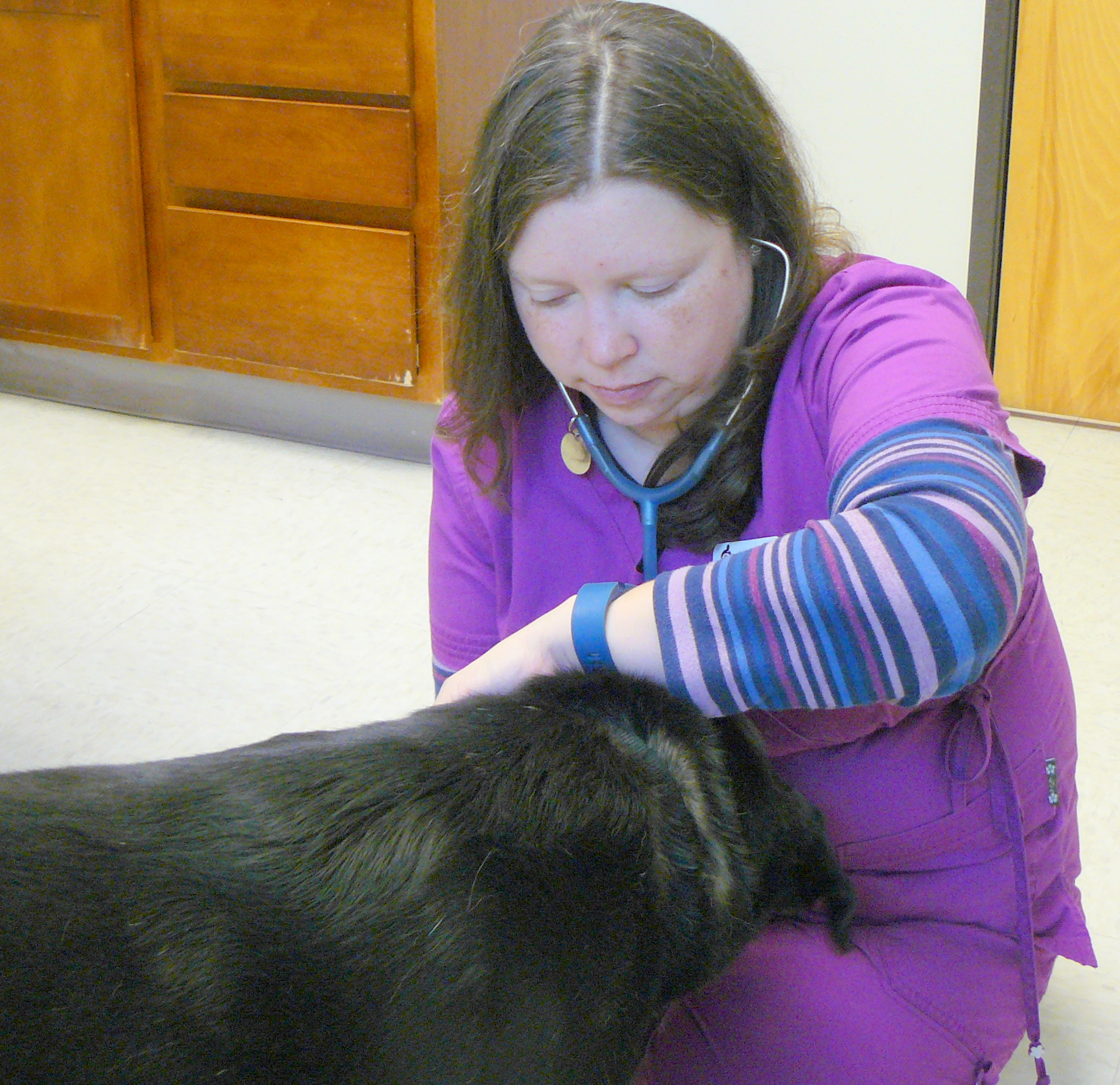
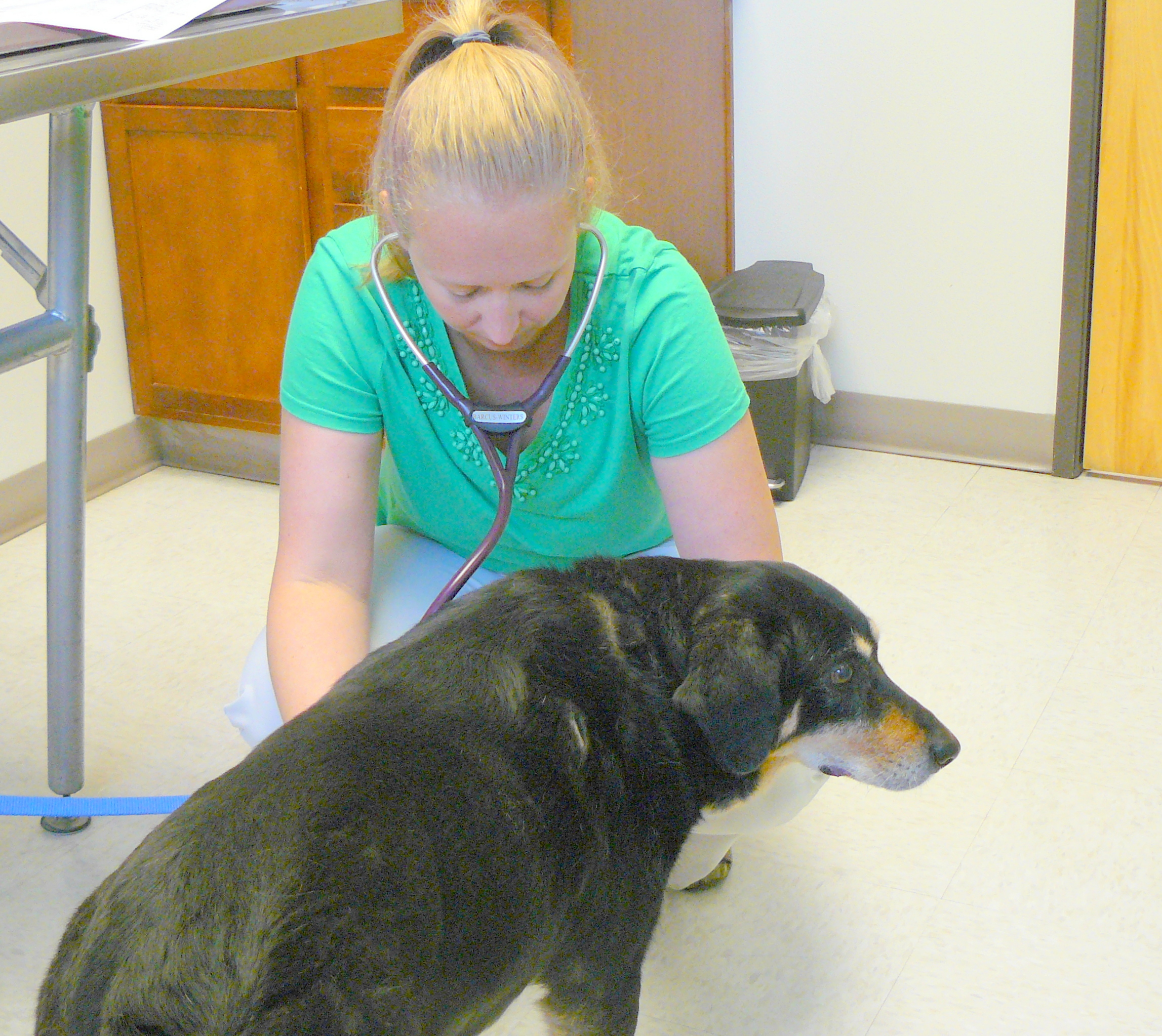
I’m writing this post at 5pm yesterday (Tuesday) shortly after we returned home from collecting Hazel from Lincoln Road Vet Clinic following her earlier examination by Dr. Parker using his mobile sonogram.

Hazel at the clinic shortly before she was taken in by the staff.

The good news is that Dr. Parker did not find any sign of trauma or life-threatening illnesses in Hazel’s body especially focusing on her abdomen.

Dr. Parker to the left being assisted by clinic staff as he examines Hazel ultra-sonically.

(I should be quick to say that I left my camera with one of the technicians and wasn’t present. Indeed, Jean and I did not get to meet Dr. Parker.)

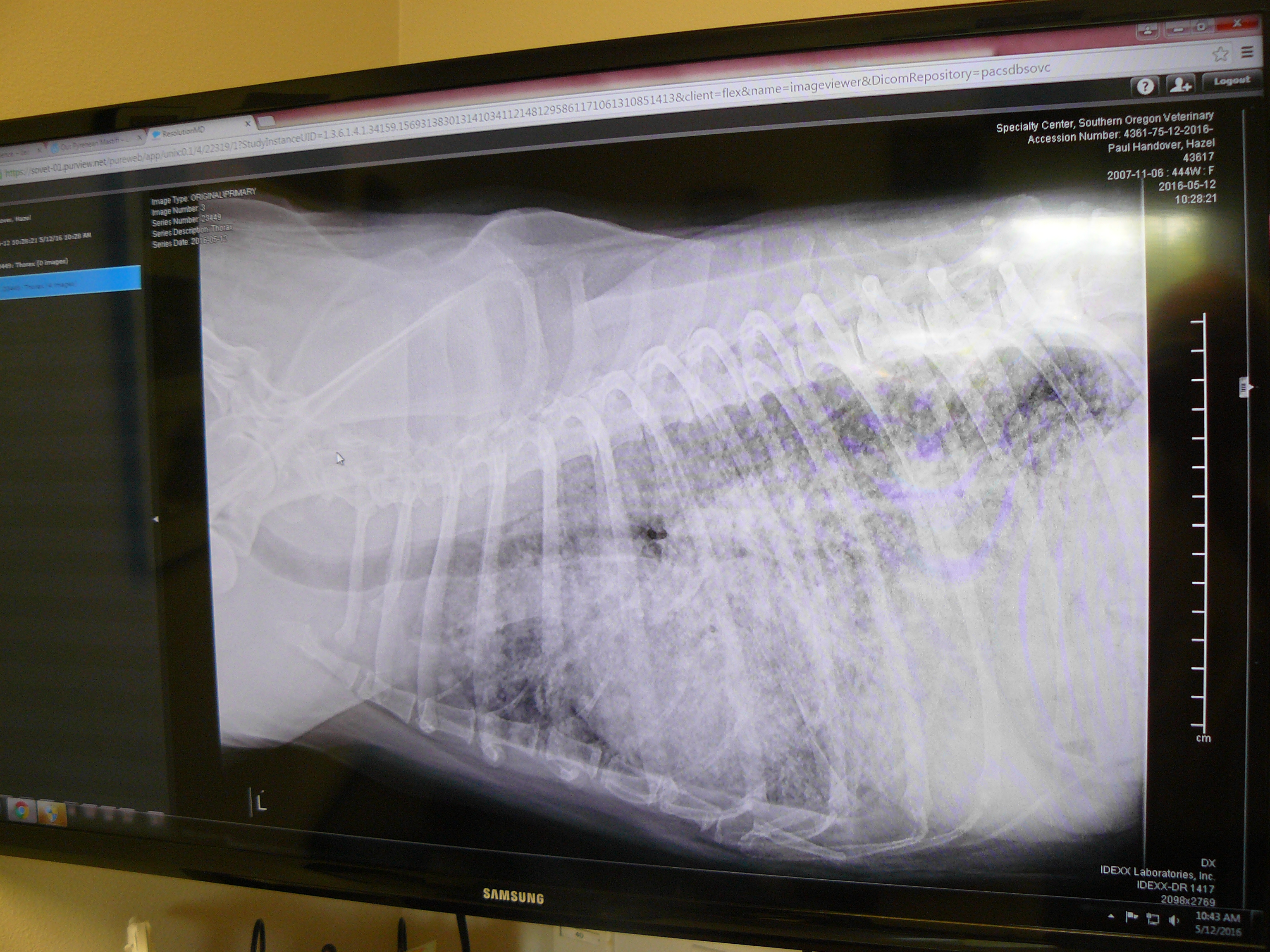
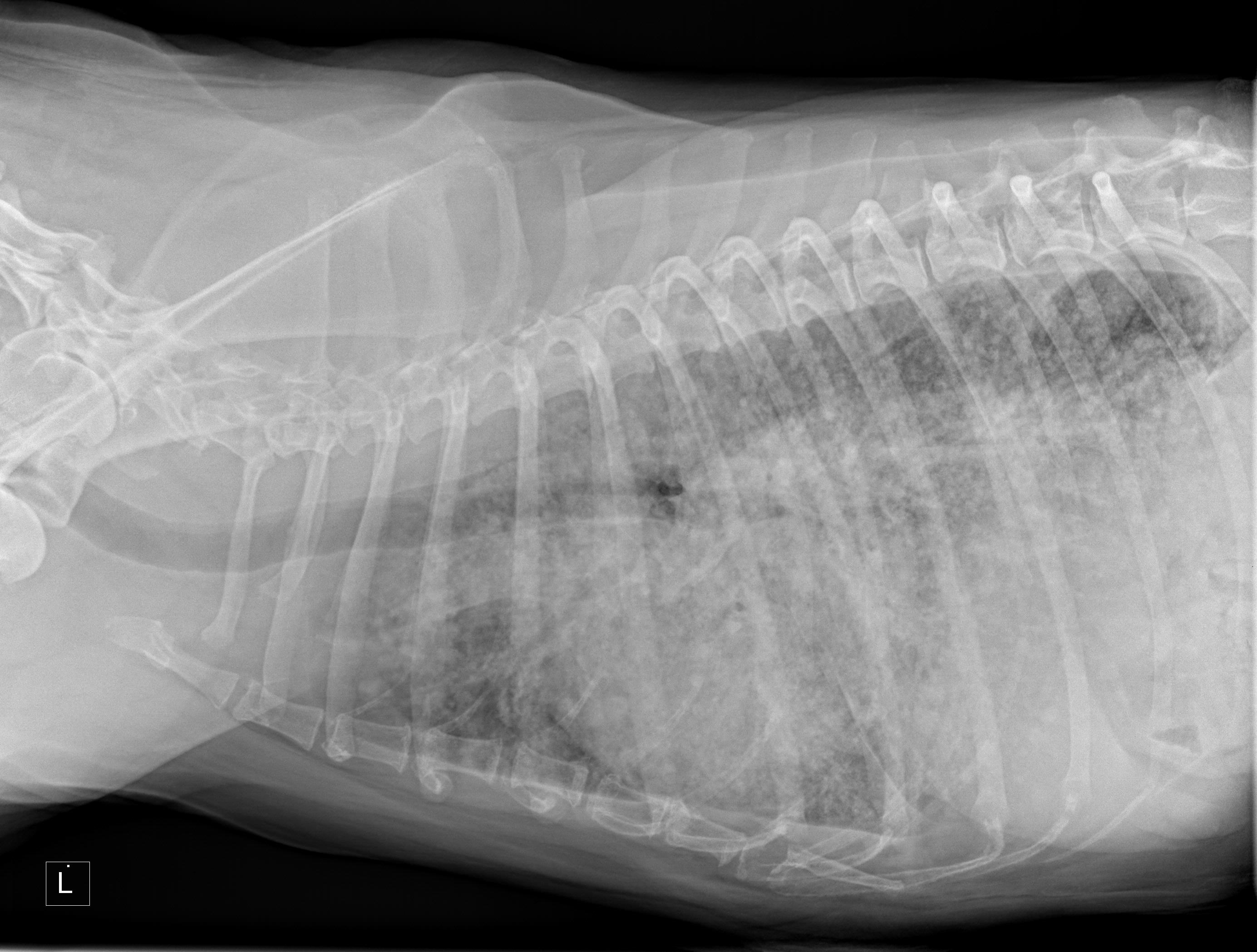
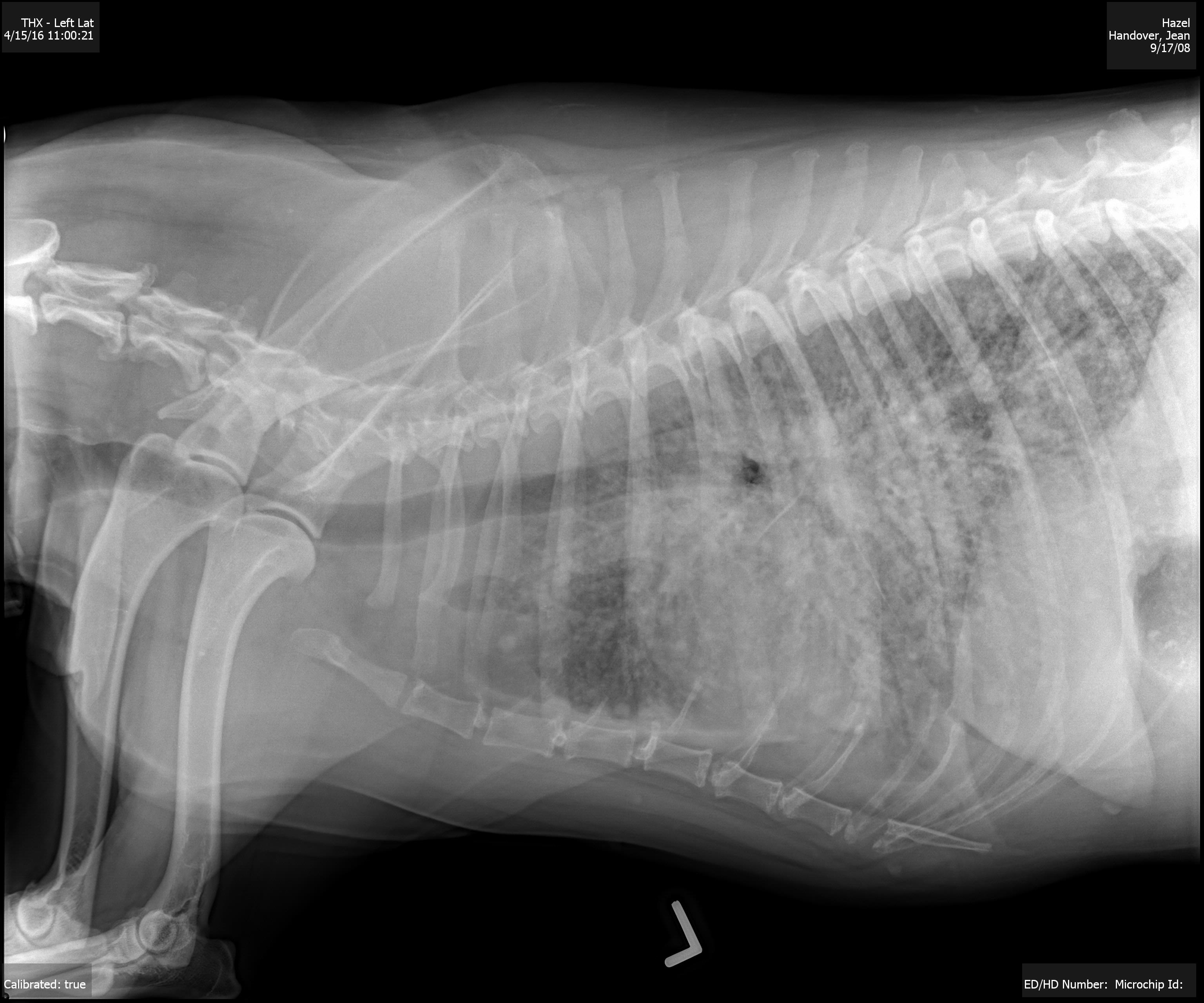
Dr. Parker, who is a board-certified veterinarian doctor, came to the conclusion that the most likely cause of Hazel’s illness was the fungal lung infection, as Dr. Codd and the radiologist supposed.

Nothing frightening seen!

To try and narrow down the exact fungal infection a further blood sample was taken and the lab results should be known in three or four days time.

Dr. Codd, in his briefing to Jean and me when we collected Hazel late afternoon, said that his recommendation based on the lack of any notable findings from the scan could be summarised as follows:

  • Regard treating the fungal infection as the number one priority,
  • Hold off from treating the tick fever in the interim,
  • Dose Hazel with 100mg of Fluconazole twice a day even if she is eating hardly anything,
  • The measure is whether Hazel, with a very small food intake, can take that dosage without vomiting,
  • Add a B12 tonic to her diet with immediate effect,
  • Give Hazel appetite stimulant medicine,
  • Consider the hemp oil (as queried by me) if the proper dosage can be determined.

(Petspeopleandlife: Hazel’s current weight is 53 lbs (24 kg). Any advice?)

Back home again albeit still feeling a little drowsy!

Thus while we have not yet got to the bottom of what precisely is the nature of Hazel’s infection at least we know there isn’t anything else silently killing her.

Thank you so much, dear readers, for taking so much interest in Hazel and for sending your love and caring wishes – it’s working! 🙂

We all need rescuing from time to time!

This rescued lovebird has found a friend for life in Jackson the dog — and unlimited free rides!

Yesterday was a rather stressful day what with worrying about Hazel and arranging for her ultra-sonic scan, and one or two other goings on.

So this short little video seemed the perfect offering for all of you good people.

First seen over on the Care2 site.

Hazel – Change of tack

Still a long way from getting to the bottom of what is ailing Hazel.

In my last post about Hazel I opened by saying:

In the last post on Hazel’s condition, back last Thursday, I passed on Dr. Codd’s observation, “… that by not having Hazel on her meds we were, of course, letting the fungal infection continue its damage.”

Dr. Codd also recommended reducing the dosage of the Fluconazole to lower its side effect of suppressing appetite.

So since then, with outstanding care and patience, Jean has been coaxing Hazel to eat just sufficient food for Hazel to be able to take the Fluconazole, for her fungal infection in her lungs, and Doxycycline, for her tick infection. (Mind you, Hazel is still a long way from eating reliably.)

That was a week ago and while, at best, Hazel is just eating sufficient to take her meds she is far from improving to any noticeable degree. But she is not eating enough food to stabilise her weight and yesterday morning Jean was worried we might lose her if we didn’t rethink what was going on.

Jean is attempting to get Hazel to eat many times each day.

A Sunday morning call to Dr. Jim Goodbrod brought us the advice to re-think the evidence.

  • The titre results were negative but because there are so many variants of fungal infection that was discounted.
  • The film of Hazel’s lungs show what the radiologist described as a clear case of fungal infection.
  • However, if that infection had been in the past, before Hazel was taken in by us down in Mexico, and that infection had ceased, that film could be showing scarring in the lungs.
  • The positive result for Tick Fever showed evidence of antibodies not antigens. That might be interpreted as a previous incident.

Jim liaised with Dr. Codd and it was agreed that further examinations needed to be conducted to obtain a clear, unambiguous diagnosis and that in the interim we stop giving Hazel any medications and offer her body systems a bit of a rest.

One option being discussed is to call in a mobile sonogram or ultra-sonic scanner. There is a very expert doctor in the area who uses such a mobile device and scans can be taken of Hazel’s abdomen and lungs here at home.

Because we will do everything to try and return Hazel to good health.

P1160083More information will be passed to you just as soon as it is to hand.

Don’t stop hugging your dog.

Two views on a recent science news item.

Last Wednesday, dear friend Dan Gomez sent me an email that was headed Going to be controversial. It simply contained a link to a recent ScienceAlert item: You need to stop hugging your dog, study finds. I have to admit that my response was a rather rude one! Here’s how that article opened:

With their sweet faces, soft fur, and huge dumb grins, dogs were basically born to be hugged. As a species, they evolved over thousands of years with one clear path – to garner our attention and affection, and profit from all the benefits awarded to ‘Man’s best friend’. But along the way, they’ve had to make some serious trade-offs.

A family dog will never be the leader of the pack. It will be closed in, told when and where to pee, and now, preliminary data from a new study suggests that in return for room and board, our dogs suffer through our hugs.

I know, I know, it’s tough to hear, but bear with us, because it’s not all terrible news. Maybe your dog is cool with hugs. Maybe it finds your hugs annoying, but affection is affection, so it’ll take what it can get. Or maybe it freaking hates hugs and you’re stressing the crap out of it. All dogs are different, you just need to know how to read them.

Anyway, I was delighted to see the Care2 blogsite put out a slightly different assessment. I have great pleasure in republishing that Care2 article in full.

ooOOoo

No, We Don’t Really Need to Stop Hugging Our Dogs

3175758.largeBy: Laura Goldman, April 28, 2016

About Laura

On the feel-good scale of one to 10, tenderly wrapping your arms around your dog and giving your pooch a gentle squeeze rates a solid 10, am I right?

But for dogs, the feeling apparently isn’t mutual, at least according to research by dog-training expert Dr. Stanley Coren, a psychology professor at the University of British Columbia.

Coren examined 250 images on Google and Flickr of people hugging dogs. In his blog “The Data Says ‘Don’t Hug the Dog!’” on Psychology Today, he noted that 81.6 percent of the dogs showed some symptoms of stress, anxiety or discomfort.

“I can summarize the data quite simply by saying that the results indicated that the Internet contains many pictures of happy people hugging what appear to be unhappy dogs,” Coren wrote.

The reason dogs dislike hugs, Coren explained, is because when they are threatened or otherwise under stress, their natural instinct is to run away, so being wrapped in our arms prevents them from doing what comes naturally. This can raise their stress levels.

“Save your hugs for your two-footed family members and lovers,” Coren wrote. “It is clearly better from the dog’s point of view if you express your fondness for your pet with a pat, a kind word and maybe a treat.”

I think it’s important to note that Coren’s study was not peer reviewed (i.e., it has not been approved by other scientists as being legit), nor was it published in any scientific journal, but only on PsychologyToday.com. “This is a set of casual observations,” Coren told the Washington Post in regard to all the recent media attention to his findings.

With this in mind, I decided to conduct my own non-peer-reviewed study for Care2.com. (I’ve been writing professionally about dogs for years and have had them as pets for most of my life, so that makes me kinda-sorta an expert, in my humble opinion.)

For my research, instead of passively Googling photos, I actively hugged two very willing study participants: my dogs, Leroy and Ella.

Leroy (that’s him getting hugged in my profile picture) seemed to enjoy the hug; he wagged his tail and the corners of his mouth curled up in what could be interpreted as a smile. Although Ella, who is a nervous dog, tensed her body at first, she relaxed after a few seconds and calmly rested her chin on my shoulder.

My conclusion: Dogs don’t hate hugs. While I wouldn’t recommend walking up to a strange dog and giving him a big ol’ bear hug, I don’t think there’s any need to stop hugging our own dogs based on Coren’s casual observations.

Neither does Corey Cohen, a companion animal behavior therapist. He told the New York Times the dogs in the photos Coren studied may have appeared anxious because they didn’t like having their pictures taken, or perhaps they were being forced to pose.

“My dogs love being hugged,” Cohen said, probably speaking on behalf of many of us dog owners. “I can definitely tell. Their facial expression changes: ‘Oh, give me more!’”

How to Tell if Your Dog Enjoys Hugs

If you’re not quite sure whether your dog likes to be hugged, here are some of the signs that he’s not into it, according to Coren and Erica Lieberman, a New York City dog trainer and behavior consultant.

  • Your dog turns his head away as you hug him.
  • He closes or half-closes his eyes. “Alternatively, dogs will often show what is commonly called a ‘half-moon eye’ or ‘whale eye,’ which is where you can see the white portion of the eyes at the corner or the rim,” Coren wrote.
  • He lowers his ears.
  • He licks his lips.
  • He yawns.
  • Lieberman told the New York Times that people should look for what she called “cutoff signals” when hugging their dogs. If dogs “shake off” after the hug, just as they shake off water after a bath, it means they didn’t enjoy it.

If your dog shows none of these warning signals, I say go ahead – hug it out.

Photo credit: Stephen Depolo

ooOOoo

 I shall be hoping that Dan Gomez gets to read today’s post!

The most beautiful bond of all.

I am referring to the one between human and animal.

The millions of people who love their pets probably never stop to think about how far that love would extend. As I observe Jean’s patience in coaxing Hazel to take food, time and time again each day, it never crosses my mind that there would be a limit to that devotion from her.

When I think about our animals and the special relationships we have with them all, dogs, horses and cats, never for a moment do I weigh up the pros and cons, despite there being many limitations when one stops and ponders the fact. Like the fact that Jean and I have not been away for a honeymoon or any other vacation together since we were married in 2010.

All it takes is for a dog to rub its head against my leg, or a cat to curl up on my lap, or a horse to give in to a hug around its head, something that happens many times each day, and I am content.

However, the following article that appeared on the Care2 blogsite really underlined how much people will give for their animals.

ooOOoo

7 Times Humans Went the Distance for Animals

3175047.largeBy: Lindsay Patton, April 24, 2016

A story recently went viral about a Colombian man who risked his life to save a dog that was hanging from a balcony. The dog, who belongs to the man’s upstairs neighbors, was caught in the railing and was close to falling to the ground. The neighbor, whose name is Diego Andrés Dávila Jimenez, made a dangerous climb from his balcony up to his neighbors’ in order to save the dog.

For animal lovers, there wouldn’t be a second thought about doing the same, whether it was their own pet, someone else’s or an animal in the wild. People go great lengths for animals every day. Here are just a few inspirational examples of them.

Ric O’Barry Does Jail Time for Dolphins

In 1970, Ric O’Barry founded The Dolphin Project and since then, he has dedicated his life to saving dolphins. His life’s work hasn’t been easy, though. O’Barry – who was featured in the 2009 documentary The Cove –  has been detained, fined and threatened for his dolphin activism. In January, he was detained at a Japanese airport on his way to monitor the annual dolphin hunt in Taiji. By now, being detained is nothing new to O’Barry, as it happens nearly every time he visits Japan for the hunt. In August, O’Barry was arrested in Japan for not carrying his passport. Still, he carries on with his mission to rescue dolphins.

Adam Warwick saved a black bear from drowning

When a bear is roaming around a neighborhood, sedating it is one of the only safe options. That’s what Florida wildlife officers did when they got a call about a black bear wandering around an Alligator Point neighborhood. The officers shot the bear with a tranquillizer dart, but the bear ran away and headed straight into water, where he would eventually fall asleep and drown. Biologist Adam Warwick came to the bear’s rescue and pulled the 400-pound bear back on land. The bear was then safely transported back to its home in a national forest.

Motorist fights traffic to save injured dog

A Mexican woman was driving down a busy highway when she saw a dog get hit by a car and lay injured on the side of a crash barrier. Nobody stopped or slowed down as they drove by, leaving her to try to dodge traffic to get to the dog. The timid dog tried to limp away, but she eventually gained its trust and took it to an area vet to have its injuries treated.

Man saves a stranger’s dog that was blown off a pier

An Australian woman was walking her Shih Tzu-Maltese Bibi on a pier when a strong gust of wind picked the dog up and carried him into the water. Raden Soemawinata was at the pier scattering his grandmother’s ashes when he saw the Bibi in the water and immediately jumped in to save him. Soemawinata humbly told media that “it wasn’t such a great feat.” We think otherwise.

Two Norwegian men save lamb from drowning

Three friends were out taking pictures when they noticed a lamb struggling in choppy waters. Two of the young men worked together to rescue the lamb, while the other used the camera to take incredible pictures of the rescue. They pulled the lamb to safety and reunited it with its flock.

Randy Jordan removes hooks from sharks

Most people try to avoid sharks. Randy Jordan has made a mission to help them. The diver frequently noticed fishing hooks caught in sharks’ mouths, so he made it his mission to remove the hooks from the sharks he encountered. He worked with scientists in order to find the safest way – for himself and the sharks – to have the hooks removed. Jordan has gone on to free multiple sharks from the painful hooks.

Men save baby giraffe in crocodile-infested waters

For four hours, a baby giraffe tried to keep its head above the Uaso Nyiro river’s harsh waters. The Kenyan river is not only fast moving, but is home to many crocodiles. A group of men ignored the river’s danger and waded through the water to pull the giraffe back onto land.

Photo Credit: AmazonCARES

ooOOoo

With so many reminders, especially in the media, of the greed and selfishness of people it really does one good to read these seven examples of how wonderful is the bond between humans and animals.


Chew on this!

Why it’s impossible to actually be a vegetarian!

Jean and I are both vegetarians. Indeed, Jean has been a ‘veggie’ for decades and I swung inline with her when we started being together in 2008.

So it was natural (pun unintended!) for my eyes to notice a recent item that was published over on The Conversation.

Not only is it an interesting article but it also saved my bacon (pun intended!) when I was running out of time and wondering what to post for today.

The article is republished here within the generous terms of The Conversation.

ooOOoo

Why it’s impossible to actually be a vegetarian

April 26, 2016

In a sense, aren’t they one and the same? 'Heads' via www.shutterstock.com
In a sense, aren’t they one and the same? ‘Heads’ via http://www.shutterstock.com

In case you’ve forgotten the section on the food web from high school biology, here’s a quick refresher.

Plants make up the base of every food chain of the food web (also called the food cycle). Plants use available sunlight to convert water from the soil and carbon dioxide from the air into glucose, which gives them the energy they need to live. Unlike plants, animals can’t synthesize their own food. They survive by eating plants or other animals.

Clearly, animals eat plants. What’s not so clear from this picture is that plants also eat animals. They thrive on them, in fact (just Google “fish emulsion”). In my new book, “A Critique of the Moral Defense of Vegetarianism,” I call it the transitivity of eating. And I argue that this means one can’t be a vegetarian.

Chew on this

I’ll pause to let the collective yowls of both biologists and (erstwhile) vegetarians subside.

A transitive property says that if one element in a sequence relates in a certain way to a second element, and the second element relates in the same way to a third, then the first and third elements relate in the same way as well.

Take the well-worn trope “you are what you eat.” Let’s say instead that we are “who” we eat. This makes the claim more personal and also implies that the beings who we make our food aren’t just things.

How our food lives and dies matters. If we are who we eat, our food is who our food eats, too. This means that we are who our food eats in equal measure.

Plants acquire nutrients from the soil, which is composed, among other things, of decayed plant and animal remains. So even those who assume they subsist solely on a plant-based diet actually eat animal remains as well.

This is why it’s impossible to be a vegetarian.

For the record, I’ve been a “vegetarian” for about 20 years and nearly “vegan” for six. I’m not opposed to these eating practices. That isn’t my point. But I do think that many “vegetarians” and “vegans” could stand to pay closer attention to the experiences of the beings who we make our food.

For example, many vegetarians cite the sentience of animals as a reason to abstain from eating them. But there’s good reason to believe that plants are sentient, too. In other words, they’re acutely aware of and responsive to their surroundings, and they respond, in kind, to both pleasant and unpleasant experiences.

Check out the work of plant scientists Anthony Trewavas, Stefano Mancuso, Daniel Chamowitz and František Baluška if you don’t believe me. They’ve shown that plants share our five senses – and have something like 20 more. They have a hormonal information-processing system that’s homologous to animals’ neural network. They exhibit clear signs of self-awareness and intentionality. And they can even learn and teach.

It’s also important to be aware that “vegetarianism” and “veganism” aren’t always eco-friendly. Look no further than the carbon footprint of your morning coffee, or how much water is required to produce the almonds you enjoy as an afternoon snack.

A word for the skeptics

I suspect how some biologists may respond: first, plants don’t actually eat since eating involves the ingestion – via chewing and swallowing – of other life forms. Second, while it’s true that plants absorb nutrients from the soil and that these nutrients could have come from animals, they’re strictly inorganic: nitrogen, potassium, phosphorus and trace amounts of other elements. They’re the constituents of recycled minerals, devoid of any vestiges of animality.

As for the first concern, maybe it would help if I said that both plants and animals take in, consume or make use of, rather than using the word “eat.” I guess I’m just not picky about how I conceptualize what eating entails. The point is that plants ingest carbon dioxide, sunlight, water and minerals that are then used to build and sustain their bodies. Plants consume inasmuch as they produce, and they aren’t the least bit particular about the origins of the minerals they acquire.

With respect to the second concern, why should it matter that the nutrients drawn by plants from animals are inorganic? The point is that they once played in essential role in facilitating animals’ lives. Are we who we eat only if we take in organic matter from the beings who become our food? I confess that I don’t understand why this should be. Privileging organic matter strikes me as a biologist’s bias.

Then there’s the argument that mineral recycling cleanses the nutrients of their animality. This is a contentious claim, and I don’t think this is a fact of the matter. It goes to the core of the way we view our relationship with our food. You could say that there are spiritual issues at stake here, not just matters of biochemistry.

Changing how we view our food

Let’s view our relationship with our food in a different way: by taking into account the fact that we’re part of a community of living beings – plant and animal – who inhabit the place that we make our home.

We’re eaters, yes, and we’re also eaten. That’s right, we’re part of the food web, too! And the well-being of each is dependent on the well-being of all.

From this perspective, what the self-proclaimed “farmosopher” Glenn Albrecht calls sumbiotarianism (from the Greek word sumbioun, to live together) has clear advantages.

Sumbioculture is a form of permaculture, or sustainable agriculture. It’s an organic and biodynamic way of farming that’s consistent with the health of entire ecosystems.

Sumbiotarians eat in harmony with their ecosystem. So they embody, literally, the idea that the well-being of our food – hence, our own well-being – is a function of the health of the land.

In order for our needs to be met, the needs and interests of the land must come first. And in areas where it’s prohibitively difficult to acquire the essential fats that we need from pressed oils alone, this may include forms of animal use – for meat, manure and so forth.

Simply put, living sustainably in such an area – whether it’s New England or the Australian Outback – may well entail relying on animals for food, at least in a limited way.

All life is bound together in a complex web of interdependent relationships among individuals, species and entire ecosystems. Each of us borrows, uses and returns nutrients. This cycle is what permits life to continue. Rich, black soil is so fertile because it’s chock full of the composted remains of the dead along with the waste of the living.

Indeed, it’s not uncommon for indigenous peoples to identify veneration of their ancestors and of their ancestral land with the celebration of the life-giving character of the earth. Consider this from cultural ecologist and Indigenous scholar-activist Melissa Nelson:

The bones of our ancestors have become the soil, the soil grows our food, the food nourishes our bodies, and we become one, literally and metaphorically, with our homelands and territories.

You’re welcome to disagree with me, of course. But it’s worth noting that what I propose has conceptual roots that may be as old as humanity itself. It’s probably worth taking some time to digest this.

ooOOoo

In reflecting on how to close this post I couldn’t help thinking that “The bones of our ancestors have become the soil, ” presumably includes the bones of our dogs! Leading me to ponder that maybe our dogs from old are nourishing our bodies; I would like to think that is the case.

Hazel is pulling through!

The powerful combination of good medicine and unconditional love.

In the last post on Hazel’s condition, back last Thursday, I passed on Dr. Codd’s observation, “… that by not having Hazel on her meds we were, of course, letting the fungal infection continue its damage.”

Dr. Codd also recommended reducing the dosage of the Fluconazole to lower its side effect of suppressing appetite.

So since then, with outstanding care and patience, Jean has been coaxing Hazel to eat just sufficient food for Hazel to be able to take the Fluconazole, for her fungal infection in her lungs, and Doxycycline, for her tick infection. (Mind you, Hazel is still a long way from eating reliably.)

Yesterday, (Saturday) Hazel was showing clear signs of feeling better but still having to be hand-fed by Jean.

Then this morning (Sunday) she really was perky and readily came out for a walk with the other dogs.

First time in recent days when Hazel has shown an interest in the world around her.

oooo

A return of a gesture unique to Hazel that we haven't seen in ages! :-)
A return of a head gesture unique to Hazel that we haven’t seen in ages! 🙂

More generally, Dr. Jim was trying to track down supporting details to the observation made by Dr. Russ:

Namely, that there was evidence that fungal infections can lay dormat for quite long periods of time.

Jim sent me the following email:

Paul  …
The following article is the one and only reference I have found so far that refers to the possible dormancy of this fungal infection.  In paragraph 2 (Clinical Disease) I have highlighted it in red.  I have to admit, I was skeptical.
Jim

The article was:

Coccidioidomycosis (Zoonotic)
Last updated on 2/4/2011.

Contributors:
Rhea V. Morgan DVM, DACVIM, DACVO

Synonyms:
San Joaquin Valley Fever
Valley Fever

This is that domancy aspect from that paper that Jim highlighted (in red):

The incubation period in the dog is 1 to 3 weeks.1,2 The organism can remain dormant, with exposure preceding the onset of clinical signs by 3 years or more.1,3 Although people may acquire the disease from the same sources as domestic animals and the mycelial forms are highly infectious, with one exception the disease has not been transmitted from animals to people. One published report exists of transmission to a veterinary assistant via the bite of an infected cat.15

Meanwhile, over in Brandy’s corner, he has very quickly healed after his neutering operation last Thursday. It was fair to say that he was not a happy chappy when he arrived home that day.

Didn't like that!
Didn’t like that!

oooo

And I can't even lick my balls!
And I can’t even lick my balls!

But his cone was off by Saturday and he is back to the wonderful, bouncing dog we all love so much. (Can’t believe that last Saturday was only the second week that Brandy had been with us; he has so quickly woven his way into all our hearts.)

Checking out the stables yesterday (Sunday) morning.

oooo

Behind that placid expression is the most docile, loving brain and heart one could ever wish for!

Returning to Hazel we are still some way from knowing that she has returned to a fully fit dog but the love and caring sent her way by all of you out there has been precious beyond imagination.

Thank You All!