Category: Dogs

Picture Parade One Hundred and Ninety-Eight

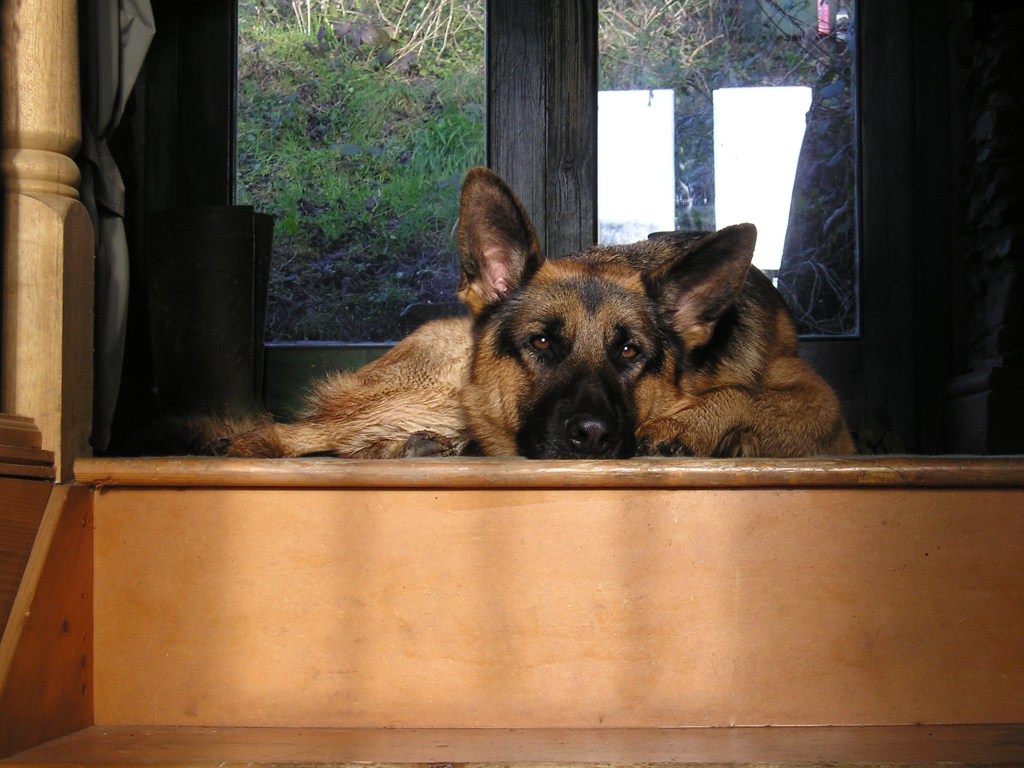
In celebration of Pharaoh’s 14th birthday yesterday.

(Long-term followers of this place will have seen many of these photos before.)

Just being a dog!

oooo

Luckily the training paid off! Pharaoh was fabulous around sheep!

oooo

Pharaoh riding the back of the Piper Super Cub

oooo

Pharaoh enjoying Bummer Creek.

oooo

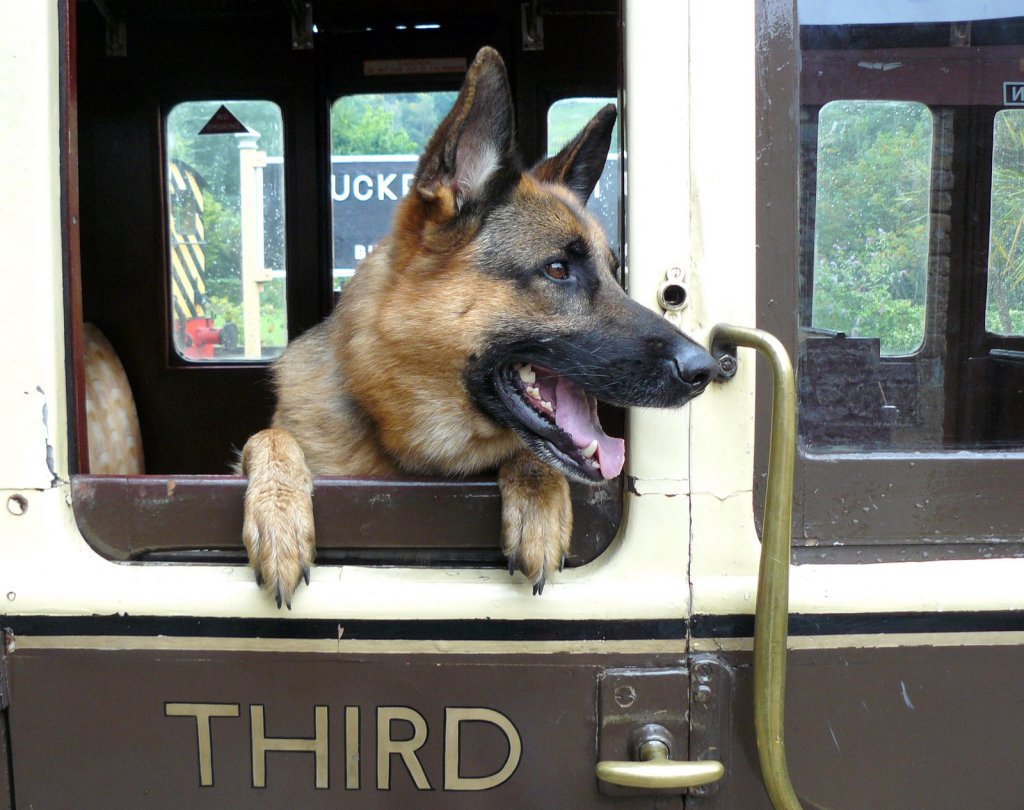
On board the Dart Valley Steam Railway stopped at Buckfastleigh Station.

oooo

Pharaoh, relaxing in a Devon garden.

oooo

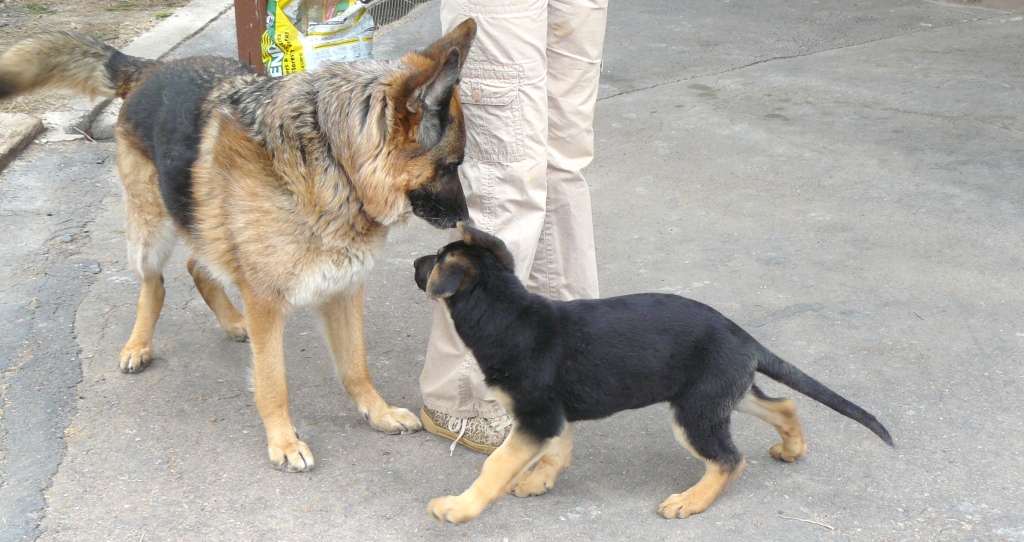
First meeting between Pharaoh and Cleo; April 7th, 2012.

oooo

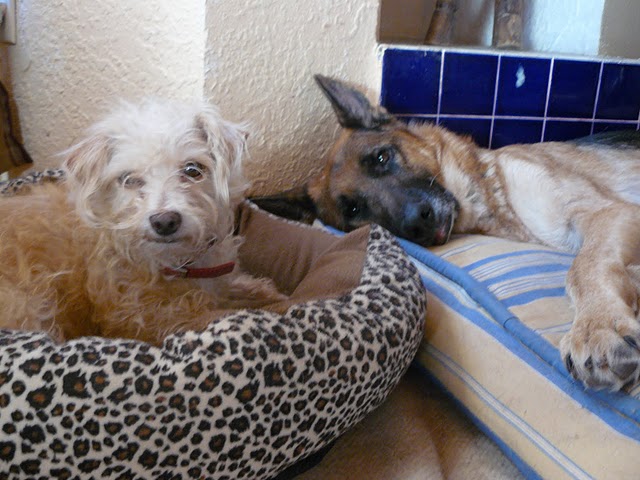
Pharaoh with little Poppy, a stray found on a Mexican building site

oooo

Hi Pedy, I’m the bossman around here. Name’s Pharaoh and you’ll be OK.

oooo

Taken on the afternoon of Pharaoh’s birthday, June 3rd 2017.

oooo

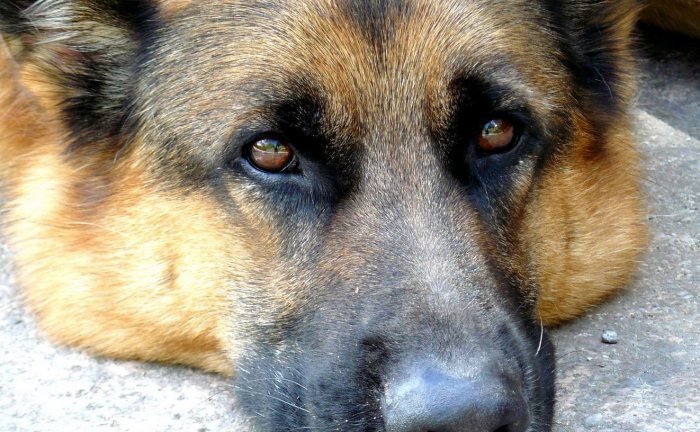
The face of a King of dogs!

Happy Birthday dear Pharaoh

Beloved Pharaoh was born this day in 2003

I’m just going to share a few photos today and then devote tomorrow’s Picture Parade to other photographs of this wonderful, noble, indomitable friend.

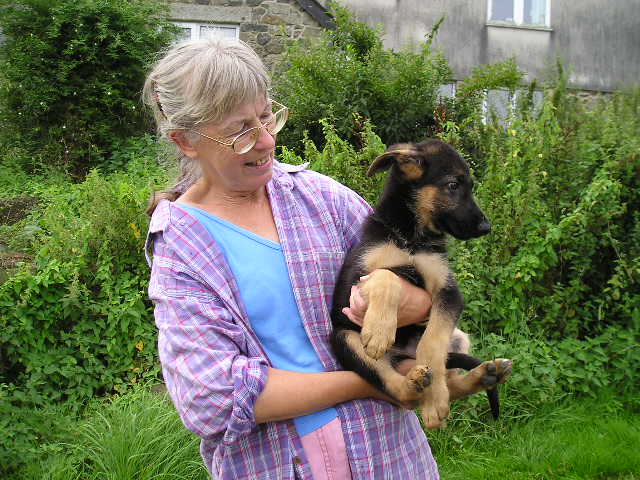
The first day that Pharaoh was passed across to me. Devon, June 2003.

oooo

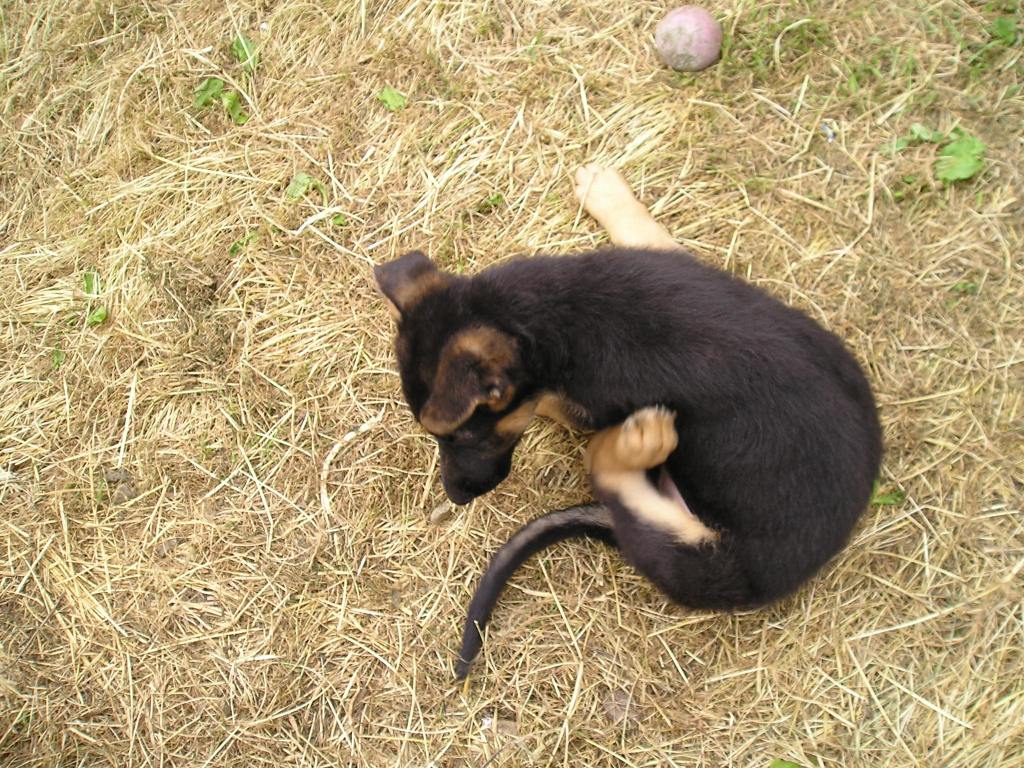
Puppy Pharaoh settling in to his new home.

oooo

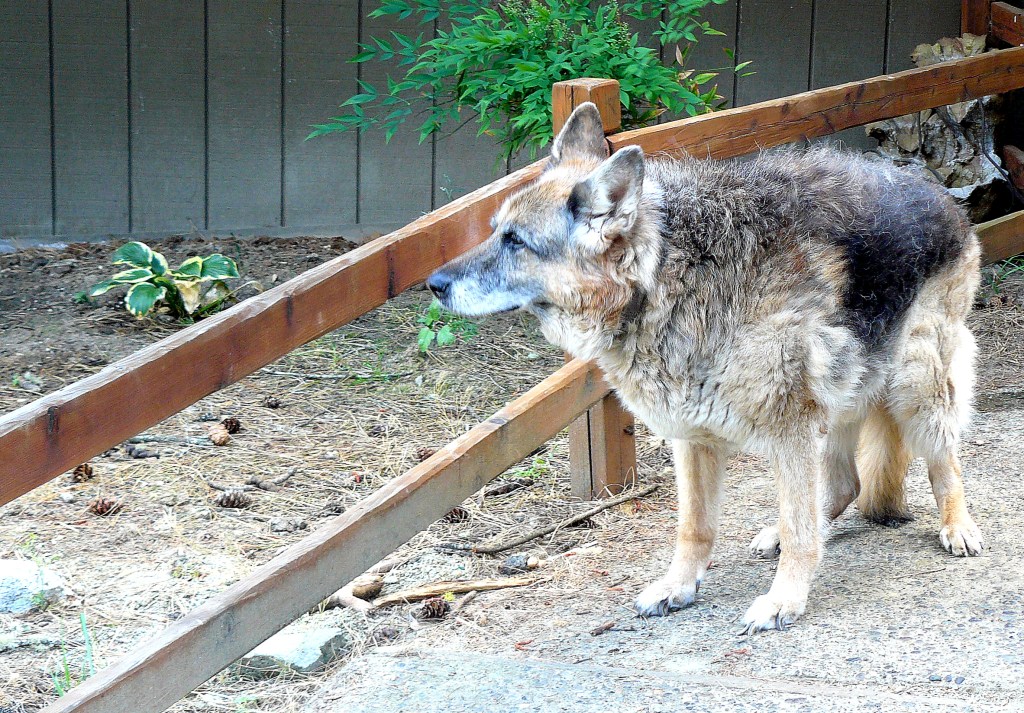
Grand old man of 14!

Happy Birthday, Pharaoh, with fondest love from Jeannie and me and so, so many others who have known you directly and via the pages of this blog!

Doesn’t time fly!

Up, up and away!

Apologies in advance for this being possibly of limited interest to others.

A couple of years after I left IBM UK and formed my own company, Dataview Ltd., based in Colchester, Essex, I formed both a personal and business relationship with a Roger Davis.

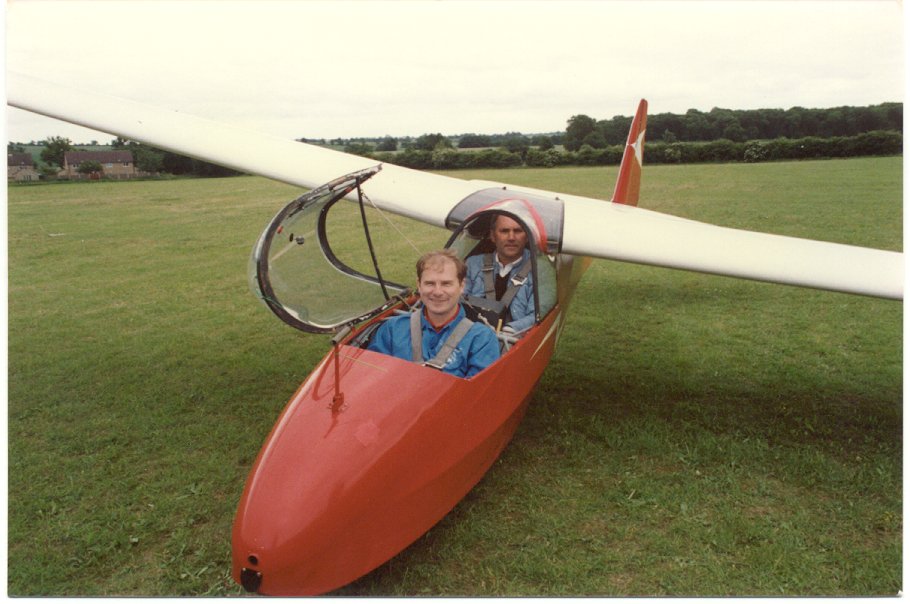
That relationship exposed me to gliding, or sail-planing in American speak, for Roger was a volunteer instructor at Rattlesden Gliding Club in Suffolk that flew from an ex-wartime aerodrome of the same name.

Thus on the 7th June, 1981, I was taken up for two air-experience circuits in a two-seater glider known as a ‘K7’. I was immediately hooked! Those experience flights leading to a 4-minute flight (flight number 46) on the 6th September, 1981 that has the remark in my pilot’s log book: Solo!

Now fast forward to October, 1984 and my log book shows me attending a gliding instructor’s course at Lasham, resulting in me being issued with a British Gliding Association (BGA) Assistant Instructor Rating on the 14th October. (105/84).


A K-7 two-seat glider.

A few days ago, Roger sent me a link to the following video.

It’s a compilation of photos, cartoons from the pen of dear Bob White, and videos. A little over eleven minutes long I do hope some of you find it of interest.

Published on May 29, 2017
Slide show produced from photos and images produced by Mark Taylor for Rattlesden Gliding Club’s 25 anniversary in 2001. Shows a collection of members involved from those early days, including some cartoons produced by Bob White whenever there was a notable event, or incident as well!

Let me close with this photograph!

Roger Davis with Sheila, his lovely wife, gliding over Lake Taupo in New Zealand.

(All those years ago, Roger and Sheila had a beautiful Old English Sheepdog. His name was Morgan and he was a wonderful, loving dog.)

So is there anyone reading this who has experienced gliding?

The ways our dogs speak to the world.

A republication of my post from August, 2016.

I am sharing this with you again because it so nicely complements the posts of the previous two days.


The ways our dogs speak to the world.

First published August 8th, 2016.

Dogs are very vocal creatures.

Anyone who has been close to dogs in their lives knows that they are frequently very vocal creatures. Likewise, anyone who has been close to a dog or two quickly learns to understand the basic emotions being conveyed by a dog’s vocal sounds.

But, nonetheless, there was an item over on the Care2.com site recently that provided a comprehensive tutorial on listening and interpreting the sounds from our dogs. I wanted to share it with you today.

ooOOoo

How to Interpret Your Dog’s Growls

1387750.large By: Vetstreet.com August 3, 2016

Speaking growls!

No better way to follow yesterday’s post.

Yesterday, I shared an article that had appeared on the Care2 site on the topic of the latest scientific inquiries into how dogs understand what we humans say. That had originally been published in September of 2015.

Published just three days ago, again via the Care2 site, was another article about the language of communication between our beloved dogs and us.

Here is is:

ooOOoo

Humans Can Understand Dogs by the Sound of Their Growls

By: Elise Moreau May 27, 2017

About Elise Follow Elise at @elisem0reau

Dogs and humans certainly share a special bond. Previous research has shown that dogs in fact do understand what we’re saying and that they also try to figure out what we’re thinking by taking on our perspectives. Now, there’s evidence that humans can understand dogs too — by the sounds they make when they growl.

In this study, recordings of three different types of dog growls were taken from 18 different dogs of various breeds and sizes. They included aggressive guarding growls that were triggered when other dogs approached the growling dogs’ food, playful growls during a game of tug-of-war between dogs and threatened growls from dogs that were approached by strangers.

The guarding growls were typically longer and more drawn out than the playful growls, which were were shorter and more repetitive. The guarding growls could be differentiated from the threatened growls by their pitch and loudness, with the guarding growls having a lower and more intense pitch so that it sounded like it was coming from a bigger dog.

Forty participants were recruited to interpret the dog growls by listening to two sets of the recordings. For the first set, they were asked to judge the emotion behind each growl using a scale that measured the degree of aggressiveness, fear, sadness, happiness, and playfulness that they could pick up on. For the second set, they were asked to choose whether the dog growls came from a dog that was guarding food, playing, or feeling threatened.

It turns out that people can interpret dog growls accurately more often than not. The participants had a 63-percent overall accuracy rate for interpreting the dog growls. Playful growls were easiest to identify at an 81-percent accuracy rate while guarding growls had an accuracy rate of 60 percent followed by threatened growls at 50 percent.

The results suggest that humans are pretty good at interpreting dog growls in a broader context given that it was much easier to identify the playful growls from the other two. The guarding growls and the threatened growls both share displays of aggression, which could explain why it was a little more difficult for the participants to accurately identify them.

What’s even more interesting is that women and people who were already dog owners showed higher accuracy rates of identifying the growls. The researchers pointed out that women are known to have higher emotional sensitivity, which may help explain why their interpretations were more accurate. Likewise, dog owners probably used their experience to identify the growls, suggesting that people can be trained to get better at learning to understand dogs.

The researchers say that learning to identify the differences in dog growls could help reduce aggression in dogs as well as improve their behavior. So whether you’re a dog owner yourself or know someone who owns a dog, it might be an interesting experiment to tune in to the subtle sounds of their growls to see if you can understand what they’re trying to communicate.

Want to know more about what your dog’s growling means? Here’s some extra information on how to interpret your dog’s growls.

ooOOoo

That last link did provide more valuable information for us dog lovers.

I republished it last August but it will certainly stand being shared with you again. Ergo, I will repeat that post from last year tomorrow.

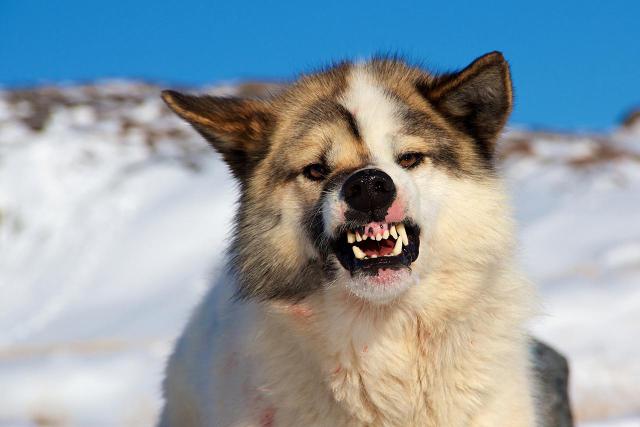
Can’t resist closing with a picture of a dog speaking growl found randomly on the web.

There’s a nice doggy!

The science of understanding between dogs and humans.

How our dogs process what we say to them.

A couple of weeks ago I wrote a post Talking to One’s Dog. Many of you stopped by and left your comments, all of which was to confirm how much speaking to your dogs (and cats) is part of normal life for you.

I finished that post writing:

Let me close by reminding all you good people of yet another wonderful aspect of the relationship between humans and dogs. In that we all know the dog evolved from the grey wolf. But had you pondered on the fact that wolves don’t bark! Yes, they howl but they do not bark.

There is good science to underpin the reason why dogs evolved barking; to have a means of communicating with us humans.

Every person who has a dog in their life will instinctively understand the meaning of most, if not all, of the barks their dog utters.

Anyway, I was going through some websites yesterday and, quite by chance, came across that science that I referred to above. It was in a Care2 article published last September and I am republishing it below.

ooOOoo

Yes, Dogs Apparently Do Understand What We’re Saying

By: Laura Goldman, September 5, 2016

About Laura Follow Laura at @lauragoldman

You might want to start spelling out some words around your dog. According to a new study, not only do dogs comprehend what we’re trying to tell them by the tone of our voices, but they can also even understand what it is we’re saying — sort of.

Neuroscientist Attila Andics and his fellow researchers at the Eotvos Lorand University in Budapest discovered that just like human brains, a dog’s brain reacts to both the meaning of a word and how it is spoken. Just like us, the left hemisphere of a dog’s brain responds to meaning, while the right hemisphere responds to intonation.

The study, published August 30 in the journal Science, shows that even non-primate mammals who cannot speak can still comprehend the meanings of words in a speech-filled environment. This suggests that the ability of our brains to process words is not unique to humans, and may have evolved much earlier than previously thought.

Not only could these results help make communicating with our dogs more efficient, but the study sheds new light on the origin of words during language evolution. “What makes words uniquely human is not a special neural capacity, but our invention of using them,” Andics said in a press release.

While previous studies have observed dogs to see how they understand us, this is the first one that took a look inside their brains using magnetic resonance imaging (MRI). The 13 participants were all family pets. They included six border collies, five golden retrievers, a Chinese crested dog and a German shepherd.

To be tested, the dogs were first trained to lie still for eight minutes in the MRI machine while wearing headphones and a radio-frequency coil. (Based on the wagging tail of a Golden Retriever in the video below, this didn’t seem to bother at least one of the participants.) Their brain activity was recorded as they listened to a recording of their trainer saying, in both positive and neutral tones, words of praise – like “Good boy!” and “Well done!” – as well as neutral words like “however” and “as if.”

Not too surprisingly, the positively spoken positive words got a big reaction in the reward centers of the dogs’ brains. The positive words spoken neutrally and neutral words spoken with positive tones? Not so much.

Regardless of how they were spoken, the dogs processed the meaningful words in the left hemisphere of their brains. They processed intonation in the right hemisphere.

“There’s no acoustic reason for this difference,” Andics told Science. “It shows that these words have meaning to dogs. They integrate the two types of information to interpret what they heard, just as we do.”

Of course, this doesn’t mean dogs understand every single thing we say (although a Border Collie named Chaser understands over 1,000 words, which is pretty doggone remarkable).

Julie Hecht, a Ph.D. student studying canine behavior and cognition at City University of New York, offers this advice in Scientific American: “Before discussing this with your dog — ‘I knew you could understand me this whole time!’ — the caveat to this research is that a dog processing words — registering, ‘Ah! That’s familiar!’ — and a dog understanding words as you intend are not necessarily the same thing.”

Photo credit: Thinkstock

ooOOoo

I have recounted this example before about how well our dogs listen to Jean and me.

For we take our dogs out for some playtime each day after our lunch. Years ago we used to chat about whether or not to have a cup of tea before taking the dogs for a walk. But pretty quickly once they heard the word “walk’ spoken aloud they were all crowding around the front door.

Then it was a case of spelling out the word: “W – A – L – K”. That lasted for, oh, two or three days.

Then it was using a variety of phrases that we thought would be meaningless to the dogs. That didn’t work!

And on and on.

Now, as soon as we are finishing up our food they are at the door. Jean and I now delay our hot drink to later on!

The most beautiful human – animal relationship in the world!

Picture Parade One Hundred and Ninety-Seven

Continuing with Janet’s wonderful pictures.

(The last set from Janet were published a fortnight ago.)

oooo

oooo

oooo

oooo

oooo

oooo

oooo

Going to round off today’s picture parade with a photograph of our growing Canadian geese goslings. The photograph was taken at 7:30pm two evenings ago. I would imagine that we aren’t that far off them all taking to the wing!

Dogs and Mud

Have a wonderful day all of you!

The post on Thursday exploring why dogs like to roll in smelly things prompted me to see what I could find on YouTube.

I found this one!

Now if that doesn’t win the prize for the best dog rolling in mud award then I don’t know what would.

But in my search on YouTube, I also came across the following that was too delightful not to include in today’s post.

Fondest wishes to you all.

The roll of the dice

Or observing Lady Luck in great form!

We all know that so many things in life have two sides to them. As in a positive and negative side. Which ‘side’ we look at has more to do with ourselves, again as you all know.

So when I republished an essay from Patrice Ayme a little over a year ago about the loss of the ice in Antarctica I was in harmony with Patrice’s gloomy stance:

I have written for years that a runaway Antarctica was certain, with half the icy continent melting rather spectacularly on an horizon of two centuries at most, and probably much less than that. This rested on the fact that half of Antarctica rests on nothing but bedrock at the bottom of the sea. At the bottom of what should naturally be the sea, in the present circumstances of significant greenhouse gas concentrations.

But Lady Luck comes into view and we have this: (Courtesy of Mother Nature Network.)

ooOOoo

Global warming is making Antarctica green again, and it’s stunning

At current rates, it’s not crazy to think that the Antarctic peninsula could eventually become forested again.

Bryan Nelson May 19, 2017

From white to green: plant life is booming in Antarctica as the climate warms. (Photo: Matt Amesbury, University of Exeter/Flickr)

When you think of Antarctica, you probably imagine a frigid, windswept, icy, inhospitable domain; the whitest, most barren canvas on Earth. That’s pretty much the way the Southern continent has been for at least the last 3 million years, since the last time atmospheric carbon dioxide levels approached their current levels. But times, they are a-changing.

The effects of global warming are beginning to radically alter the Antarctic landscape in some surprising ways. Scientists say it’s like looking back in time, to an epoch when this bleached terrain was actually green. Mossy mats are rapidly spreading across the thawed, exposed soils at unprecedented rates, transforming the land from a place of desolation, to a place of viridescence.

At the very least, we’re getting a peek at Antarctica’s future, which like its past was green and filled with plant-life, reports the Washington Post.

“This is another indicator that Antarctica is moving backward in geologic time — which makes sense, considering atmospheric CO2 levels have already risen to levels that the planet hasn’t seen since the Pliocene, 3 million years ago, when the Antarctic ice sheet was smaller, and sea-levels were higher,” said Rob DeConto, a glaciologist at the University of Massachusetts, Amherst.

“If greenhouse gas emissions continue unchecked, Antarctica will head even further back in geologic time… perhaps the peninsula will even become forested again someday, like it was during the greenhouse climates of the Cretaceous and Eocene, when the continent was ice free.”

So far, the greening of Antarctica is mostly limited to the peninsula, where two different species of mosses are fanning out at a startling clip, at four to five times the rate seen just a few decades ago. They gain a footing in the summers, when the frozen ground thaws, then freeze back over in the winter. But these layers-upon-layers are thickening, generating an increasingly detailed record of Antarctica’s warming climate.

It’s perhaps only a matter of time before grasses, bushes, perhaps even trees begin to sprout. As beautiful as a forested Antarctica might be to imagine, it’s important to remember that this isn’t necessarily a good thing. Climate change is an ambiguous beast; Antarctica might be getting greener, but deserts elsewhere in the world are expanding, sea levels are rising, and weather is becoming more severe.

“These changes, combined with increased ice-free land areas from glacier retreat, will drive large-scale alteration to the biological functioning, appearance, and landscape of the [Antarctic peninsula] over the rest of the 21st century and beyond,” wrote the authors of the study, which was published in the journal Current Biology.

Lead author Matthew Amesbury added: “Even these relatively remote ecosystems, that people might think are relatively untouched by human kind, are showing the effects of human induced climate change.”

ooOOoo

 Sorry to drag out this old saw of mine, but it is so perfect: “I can predict anything except those things that involve the future”!

Because I am still staying with the Lady Luck theme but this time going from the vastness of the Southern polar regions to something a little closer to home. (Again, seen on Mother Nature Network.)

ooOOoo

Pit bull on ‘death row’ at shelter gets new life as police dog

Leonard recently became Ohio’s first ever pit bull K-9.
Jenn Savedge    May 19, 2017

Leonard found his forever home with Ohio’s Clay Township police force. (Photo: Union County Humane Society/Facebook)

When Leonard, a stout young pit bull, arrived on the doorstep of the Union County Humane Society in Ohio a few months ago, the staff had little hope for his prospects of being adopted. Leonard was deemed “aggressive,” and that meant he was more likely to be euthanized than sent home with a new family. But Jim Alloway, the center director, saw something different in the dog. And thanks to his observation, Leonard has a future that includes work, play and lots of belly rubs.

As luck would have it, Alloway has an extensive background of working with police dogs. He realized Leonard’s aggression was really a very strong desire to play. Whenever someone was holding something, Leonard wanted it and would try to grab it. As a pet in the average family, this may not be a desirable trait. But this strong “prey drive” made him a great candidate for training as a police dog.

So Alloway called Storm Dog K-9 training. After an initial round of testing, Mike Pennington, the owner of the training facility, agreed to take Leonard on and train him to sniff out narcotics. (Leonard wasn’t a good candidate for tracking and catching suspects because he loves people way too much.)

Before his training with Pennington, Leonard didn’t even know basic commands. But after a few weeks of hard work — which his trainers said he absolutely loved — Leonard was fully certified as a police dog, becoming Ohio’s first pit bull K-9 officer.

Leonard was paired with Terry Mitchell, Clay Township’s Chief of Police. Mitchell told the local ABC affiliate that he was unsure at first about the idea of using a pit bull as a K-9. But the pair bonded immediately.

“I scheduled a time to come down and see him, and after about 10 minutes, I knew this was the dog for us,” Mitchell said.

Leonard officially started work with the force this week. When he has his police vest on, Mitchell says the pup is all business and ready to tackle his narcotics-sniffing job. Off-duty though, Leonard is just a sweet, playful pup, hopping on Mitchell’s lap for evening naps. Oh, and according to Mitchell, he snores horribly.

Leonard — and Mitchell — couldn’t be happier.

ooOOoo

Wonder how long it will be before we have happy ex-rescue dogs frolicking through the forests of Antarctica!!

A love for the wild!

Why can’t we leave nature to do what’s best for our world!

Now, I would be the first to ‘tut-tut’ a little over my sub-heading. For here I am sitting in front of a computer in a room in a reasonably-sized home that undoubtedly has denuded the natural world formerly underneath the present foundations.

Thirteen acres orientated West-East.

Plus, as the property boundary shown on the above picture confirms, about 50% of our acreage is no longer wilderness.

Ergo, it is impossible for humans to live on this planet without there being consequences that conflict with the natural order of the wild.

But homes to live in are one thing. A planned madness for the Lake District in Northern England is another thing altogether.

Read this latest essay from George Monbiot, republished with Mr. Monbiot’s kind permission.

ooOOoo

Fell Purpose

The attempt to turn the Lake District into a World Heritage site would be a disaster

By George Monbiot, published in the Guardian 9th May 2017

If this bid for power succeeds, the consequences for Britain will be irreversible. It will privilege special interests over the public good, shut out the voices of opposition and damage the fabric of the nation, perhaps indefinitely. No, I’m not writing about the election.

In the next few weeks Unesco, the UN’s cultural organisation, will decide whether or not to grant World Heritage status to the Lake District. Once the decision is made, it is effectively irreversible.

Shouldn’t we be proud that this grand scenery, that plays such a prominent role in our perceptions of nationhood, will achieve official global recognition? On the contrary, we should raise our voices against it. World Heritage status would lock the Lake District into its current, shocking state, ensuring that recovery becomes almost impossible.

Stand back from the fells and valleys and try to judge this vista as you would a landscape in any other part of the world. What you will see is the great damage farming has inflicted: wet deserts grazed down to turf and rock; erosion gullies from which piles of stones spill; woods in which no new trees have grown for 80 years, as every seedling has been nibbled out by sheep; dredged and canalised rivers, empty of wildlife and dangerous to the people living downstream; tracts of bare mountainside on which every spring is a silent one. Anyone with ecological knowledge should recoil from this scene.

This photo was used as the frontispiece of the “State of Conservation” section of the bid documents. It is meant to show how beautiful the fells are. If we saw it anywhere else, we would recognise it as an environmental disaster.

The documents supporting the bid for world heritage status are lavishly illustrated with photos, that inadvertently reveal what has happened to the national park. But this slow-burning disaster goes almost unmentioned in the text. On the contrary, the bid repeatedly claims that the park is in “good physical condition”, and that the relationship between grazing and wildlife is “harmonious”. Only on page 535, buried in a table, is the reality acknowledged: 75% of the sites that are meant to be protected for nature are in “unfavourable condition”.

This is another photo from the bid document, showing St John’s Beck in Thirlmere. The beck is notorious for its flashy response to rainfall – rising dangerously fast. It’s not hard to see why. As the photo shows, it has been dredged and canalised on behalf of the farmers in the valley, and now contains almost no natural features that can slow the flow.

This great national property has degenerated into a sheepwrecked wasteland. And the national park partnership, that submitted the bid, wants to keep it this way: this is the explicit purpose of its attempt to achieve world heritage status. It wants to preserve the Lake District as a “cultural landscape”. But whose culture? Whose landscape? There are only 1080 remaining farms in the district. Should the entire national park be managed for their benefit? If so, why? The question isn’t raised, let alone answered.

I can see the value and beauty of the traditional shepherding culture in the Lake District. I can also see that the farming there, reliant on subsidies, quad bikes and steel barns, now bears little relationship to traditional practice. As the size of landholdings has increased, it looks ever more like ranching and ever less like the old system the bid describes. The bid’s claim that farming there is “wholly authentic in terms of … its traditions, techniques and management systems” is neither intelligible nor true. Remnants of the old shepherding culture tend to be represented ceremonially, as its customs are mostly disconnected from the farm economy.

Shepherding is not the only cultural legacy in play. The other is that the Lake District is the birthplace of the modern conservation movement. Inspired by the Picturesque and Romantic movements, much of our environmental ethic and the groups representing it, such as the National Trust, originated here. Attempts to preserve natural beauty in the district began in the mid-18th century, with complaints against the felling of trees around Derwent Water. Today, the national park cares so little for this legacy that, as the bid admits, “there are no data available” on the condition of the Lake District’s woodlands.

The small group favoured by this bid sees environmental protection as anathema. Farmers’ organisations in the Lake District have fought tooth and nail against conservation measures. They revile the National Trust and the RSPB, whose mild efforts to protect the land from overgrazing are, with the help of a lazy and compliant media, treated like bubonic plague. As one of these farming groups exults, world heritage status “gives us a powerful weapon” that they can wield against those who seek to limit their impacts. If the plan is approved, this world heritage site would be a 230,000-hectare monument to overgrazing and ecological destruction.

30 years ago, this was a bare sheep pasture (with a couple of seeding birch trees). This is a photo I took (with my failing phone) on a hill elsewhere in Britain. It gives an idea of what parts of the Lake District fells could look like if they were allowed to recover.

This is not the only sense in which the bid is unsustainable. Nowhere in its 700 pages is Brexit mentioned. It was obviously written before the referendum, and has not been updated. Yet the entire vision relies, as the bid admits, on the economic viability of the farming system, which depends in turn on subsidies from the European Union.

Without these payments, there would be no sheep farming in the Lake District: it operates at a major loss. European subsidies counteract this loss, delivering an average net farm income of £9,600. Unsurprisingly, people are leaving the industry in droves: the number of farms in the national park is declining by 2% a year. And this is before the payments cease.

What is the national park partnership, that prepared this bid, going to do – march people onto the fells at gunpoint and demand they continue farming? Or does it hope that the government, amid the massacre of public investment that will follow Brexit, will not only match but exceed the £3bn of public money currently being passed to UK farmers by the European Union? Your guess is as good as mine. This omission alone should disqualify the bid.

The failure to mention this fatal issue looks to me like one of many attempts to pull the Herdwick wool over Unesco’s eyes. The entire bid is based on a fairy tale, a pretence that the rural economy of the Lake District hasn’t changed for 200 years. If Unesco grants world heritage status on these grounds, it will inflict irreparable harm on both our natural heritage and its own good standing.

The hills, whose clothes so many profess to admire, are naked. The narrative we are being asked to support is false. The attempt to ensure that the ecological disaster zone we call the Lake District National Park can never recover from its sheepwrecking is one long exercise in woolly thinking.

http://www.monbiot.com

ooOOoo

When one reads this one is left with a feeling of great sadness. A sadness that our ‘movers and shakers’ can’t resist the urge to meddle. Can’t understand the beauty that is found in nature in the raw.

Earlier on I illustrated how our own property has ‘interfered’ with the wilderness of this most beautiful Oregonian countryside. But as I hope to show you with the following photographs taken on our property back in 2014 that wild beauty can be hung on to in some measure.

Looking upstream along Bummer Creek from the driveway bridge.

oooo

Looking farther downstream from the bridge.

oooo

Pharaoh also appreciating the wild.

Finally, back to that Unesco proposition.

The details may be found on the Unesco site here: http://whc.unesco.org/en/tentativelists/5673/

I have sent a message to Unesco asking if the views of the public are being taken into account and, if so, how those views are to be communicated to Unesco. If you wish to contact them then the details are on this page: http://whc.unesco.org/en/world-heritage-centre/

Any replies from Unesco will be posted here.

UPDATE 0815 PDT May 22nd.

My email yesterday to Unesco was ‘bounced back’ as an invalid email address (despite me using the email address on the Unesco website!!).

But following George Monbiot’s reply to me, giving me the name of James Bridge (jbridge@unesco.org.uk) at Unesco, I have now sent Mr. Bridge the following email:

Dear Mr. Bridge,

I write as a British citizen, born a Londoner in 1944, to protest in the strongest possible terms to the proposal to turn the English Lake District into a World Heritage Site. This is your Tentative List reference http://whc.unesco.org/en/tentativelists/5673/.

Would you please provide me with the details of where or whom within Unesco I can write setting out in detail my objections to this proposal?

Your soonest reply would be very much appreciated.

Sincerely,

Paul Handover

I won’t hold my breath over getting a quick reply.